
Article

Alkylation of Benzene with Benzyl Chloride: Comparative Study Between Commercial MOFs and Metal Chloride Catalysts


Department of Chemical and Environmental Engineering, University of Oviedo, 33006 Oviedo, Spain
*
Author to whom correspondence should be addressed.
Catalysts 2025, 15(11), 1075; https://doi.org/10.3390/catal15111075
Submission received: 22 October 2025 / Revised: 9 November 2025 / Accepted: 11 November 2025 / Published: 13 November 2025
(This article belongs to the Collection Catalytic Conversion and Utilization of Carbon-Based Energy)

Abstract

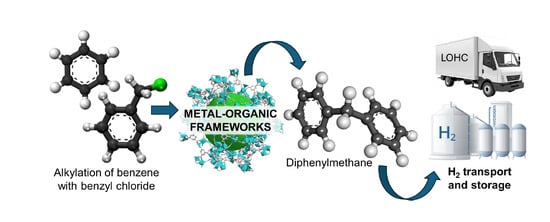
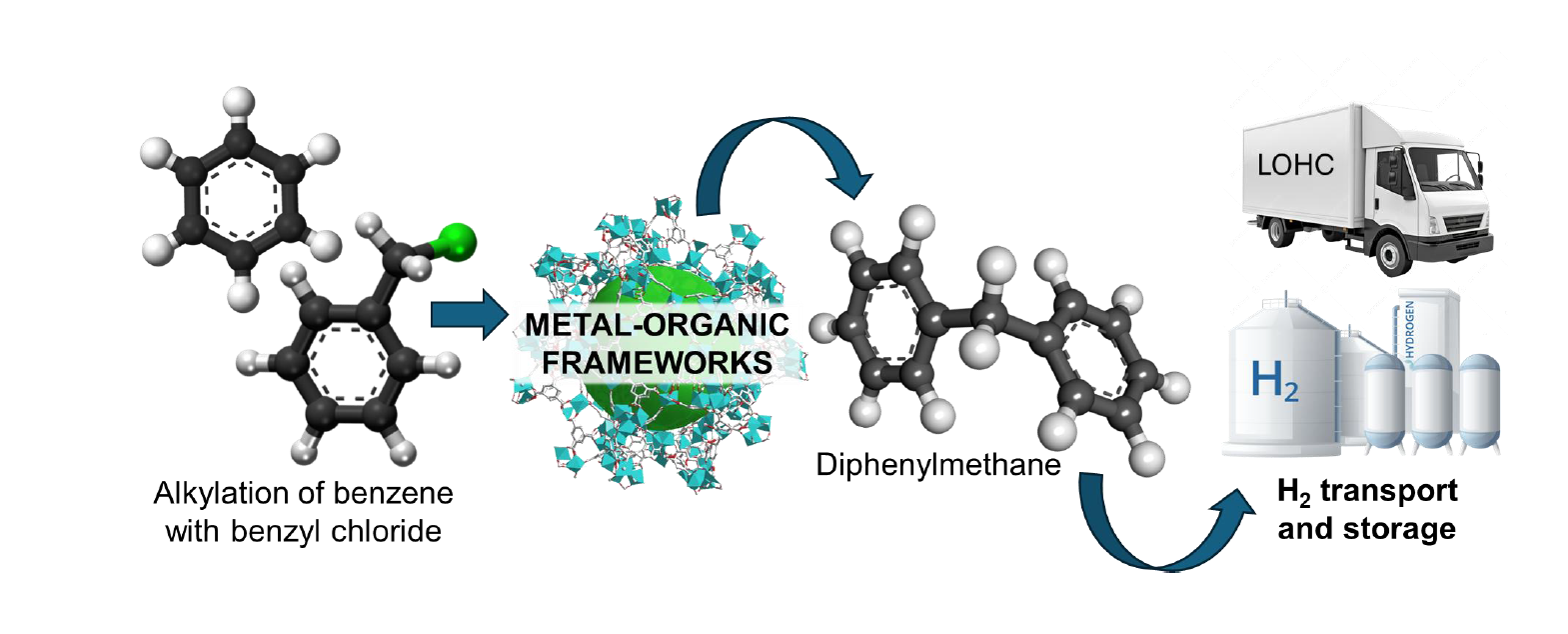
Diphenylmethane, recently recognized as a candidate for liquid organic hydrogen carrier systems, is traditionally produced by alkylation of benzene with benzyl chloride using homogeneous catalysts. In the current context, the need for a transition toward processes that reduce environmental impact and move toward sustainability has become increasingly evident. In this work, the benzylation of benzene by benzyl chloride using metal–organic frameworks (MOFs) as catalysts is proposed, as alternative materials that combine the advantages of homogeneous and heterogeneous catalysis. Reaction experiments were carried out in an isothermal batch reactor with commercial Basolite C300 and Basolite F300 MOFs, based on Cu and Fe as active species, respectively. The results demonstrate catalytic activity using both proposed catalysts under the studied conditions, with the results of the Fe-based MOF being more favorable, given the greater standard reduction potential of Fe. Compared with their corresponding metal chlorides, the proposed MOFs improve the alkylation activity. Based on a two-step reaction mechanism, a pseudo first-order kinetic model has been developed for the reaction with MOFs as catalysts. The kinetic parameters were obtained by fitting the model to the experimental data, demonstrating good agreement and validating the proposed mechanistic pathway.

Graphical Abstract

1. Introduction

The current transition toward sustainable chemical processes, together with the Principles of Green Chemistry and the reduction in environmental impact, is leading to increasingly severe environmental legislation. Consequently, the application of these new regulations implies the transformation of many traditional industrial processes into green alternative procedures, with lower environmental footprint, but without compromising industrial efficiency. In this context, the synthesis of diphenylmethane (DPM) appears as one of these processes that requires this transition immediately. DPM is an important intermediate in the chemical industry, widely used in the synthesis of pharmaceutical compounds [1], fine chemistry (as fragrances, dyes, pesticides, etc.) [2], or as a monomer for the synthesis of polycarbonate resins [3]. Moreover, DPM and its derivatives have been proposed as substitutes for harmful PCBs in the formulation of insulating materials such as dielectric oils, further increasing their industrial relevance [4,5]. The importance of DPM has been particularly maximized in recent years, after being identified as a potential candidate substance for liquid organic hydrogen carrier (LOHC) systems, as a novel hydrogen energy storage method [6]. In fact, it has a high hydrogen storage capacity of 6.7% [7]. Liquid organic hydrogen carriers are important and useful in the circular economy for enabling efficient hydrogen storage and transport, but to truly enhance their sustainability performance, their manufacture must also adhere to environmentally responsible practices.
Traditionally, DPM is produced through the so-called Friedel–Crafts reaction, involving the alkylation of benzene by benzyl chloride in the presence of strong Lewis acid catalysts. This process is carried out in the liquid phase using homogeneous catalysts such as AlCl3, BF3, TiCl4, FeCl3, ZnCl2, H2SO4, HF, or HNO3 [2]. The inherent limitations associated with homogeneous acid catalysis, in terms of corrosion, toxicity, complexity of catalyst recovery, and limited catalyst recycling, reveal the need to develop alternative processes based on solid heterogeneous catalysts, which improve the process sustainability [3,8,9]. Over the past few decades, extensive research efforts have been focused on the development of solid catalysts with high activity and selectivity for the Friedel–Crafts alkylation reactions. The proposed materials include, among others, zeolites [4,9,10,11,12], sulfated metal oxides [13], ionic liquids [14], mesoporous metal-silicates [3,5,15], ion exchange resins [16], clays with metallic ions [17,18], and metal chlorides and oxides supported on mesoporous materials [8,11,19]. A large range of different metal ions in the catalytic structures has also been studied (including species such as Fe, Ga, Ni, In, Zn, Cu, Cr, etc.) [8,17,19], revealing Fe as one of the most effective and promising active components for the benzene alkylation with benzyl chloride due to its redox properties. Although Friedel–Crafts alkylation is an acid-catalyzed reaction, numerous studies have shown that, in systems containing redox-active transition metals such as Fe, the redox properties can play a complementary role in the activation of the reactants [5,8,12,20,21]. These studies have demonstrated that Fe3+/Fe2+ centers in different materials (such as oxides or zeolites) can actively participate in organic reactions through mixed acid–redox mechanisms.
In this context, metal–organic frameworks (MOFs) have emerged as promising candidates for the alkylation of benzene. MOFs are a family of porous crystalline materials, consisting of metal ions/clusters coordinated with organic ligands to form the dimensional assembly, therefore leading to atomic dispersion of the core metal ions. Their physicochemical properties result in a combination of the advantages of homogeneous and heterogeneous catalysis [22,23]: They offer uniform, well-defined, and isolated metal active sites, allowing them to mimic both the efficiency and mechanism of reaction of homogeneous catalysts, and they do so on a solid support that can be recovered and recycled. Preliminary studies reveal the efficient catalytic activity of MOFs in different Friedel–Crafts alkylation reactions [20,24,25,26,27,28]. Specifically, Horcajada et al. synthesized a home-made three-dimensional-MIL-100(Fe) MOF and tested it on the benzylation of benzene with benzyl chloride, demonstrating its superior activity in comparison with an analog MIL-100(Cr) MOF and classical zeolites such as HBEA and HY [20]. This study evidences the catalytic potential of MIL-100-type MOFs for benzene alkylation reactions with benzyl chloride and highlights the need for a more in-depth investigation into the catalytic behavior of this family of compounds. The advantages of these materials lie not only in their properties, but in recent years, significant progress has been made in their sustainable synthesis, using waste [29] and environmentally friendly compounds as raw materials [30], and green technologies [31].
Based on these considerations, the present work aims to explore the performance of Basolite F300 as a catalyst for the aforementioned reaction, taking advantage of the well-established redox activity and proven catalytic performance of Fe. Both MIL-100(Fe) and Basolite F300 share an iron(III) trimesate framework; however, while the former possesses a well-defined crystalline structure, Basolite F300 exhibits a more distorted framework, which is more representative of large-scale or waste-based production and may influence its reactivity [32,33]. Additionally, the effect of substituting the central metal, Fe, with Cu—while maintaining trimesic acid as the ligand—was evaluated using Basolite C300, whose structure closely resembles that of HKUST-1 [33]. Cu can be considered a suitable alternative metal due to its comparable redox versatility and lower cost. Moreover, the Fe- and Cu-based MOFs proposed in this study are among the few transition metal frameworks that are both stable and commercially available. Their high stability and extensive structural knowledge make them reliable benchmark catalysts. Finally, the activity of these structured catalysts was compared with that of traditional transition metal halide catalysts, and a kinetic model was developed to represent the reaction behavior using both MOF catalysts.

2. Results and Discussion

2.1. Reaction Studies

2.1.1. Commercial Metal–Organic Frameworks for Benzene Benzylation with Benzyl Chloride

The catalytic activity of the selected MOFs, Basolite C300 and Basolite F300, in the alkylation of benzene with benzyl chloride has been tested under constant reaction conditions for 4 h. Basolite C300 is a commercial version of HKUST-1, and its framework Cu3(BTC)2, is constituted with Cu2+ as a central metal atom coordinated to 1,3,5-benzenetricarboxylic acid (BTC) as a ligand. On the other hand, Basolite F300 is the commercial analog of MIL-100(Fe), whose framework consists of Fe3+ ions coordinated to the same BTC ligand. While both materials are based on metal–BTC coordination, their structures differ significantly in terms of topology, crystallinity, and porosity, which can lead to distinct catalytic properties. Figure 1 represents the X-ray diffraction (XRD) patterns of both MOF-type catalysts used in this study. Basolite C300 exhibits the characteristic diffraction pattern of HKUST-1, revealing a highly crystalline structure, while, on the contrary, the Basolite F300 X-ray diffraction profile shows poor crystallinity, which corresponds to a distorted structure of crystalline MIL-100(Fe). Previous studies have demonstrated that Basolite F300 presents a semi-amorphous nature based on nanocrystalline domains within an amorphous matrix, with X-ray diffraction and pair distribution function (PDF) analyses confirming the presence of trimers within tetrahedral assemblies, characteristic of the MOF [32,33].
Their textural properties, obtained by N2 adsorption at 77 K, are also notably different (Table 1). The surface area of Cu-based MOF is in the range of 1500–2100 m2/g, as indicated by the manufacturer. This value is significantly higher than that of the Fe-based MOF, around 900–1000 m2/g. This difference is mainly attributed to the larger micropore volume of the Cu-based MOF, consistent with its well-ordered crystalline structure.
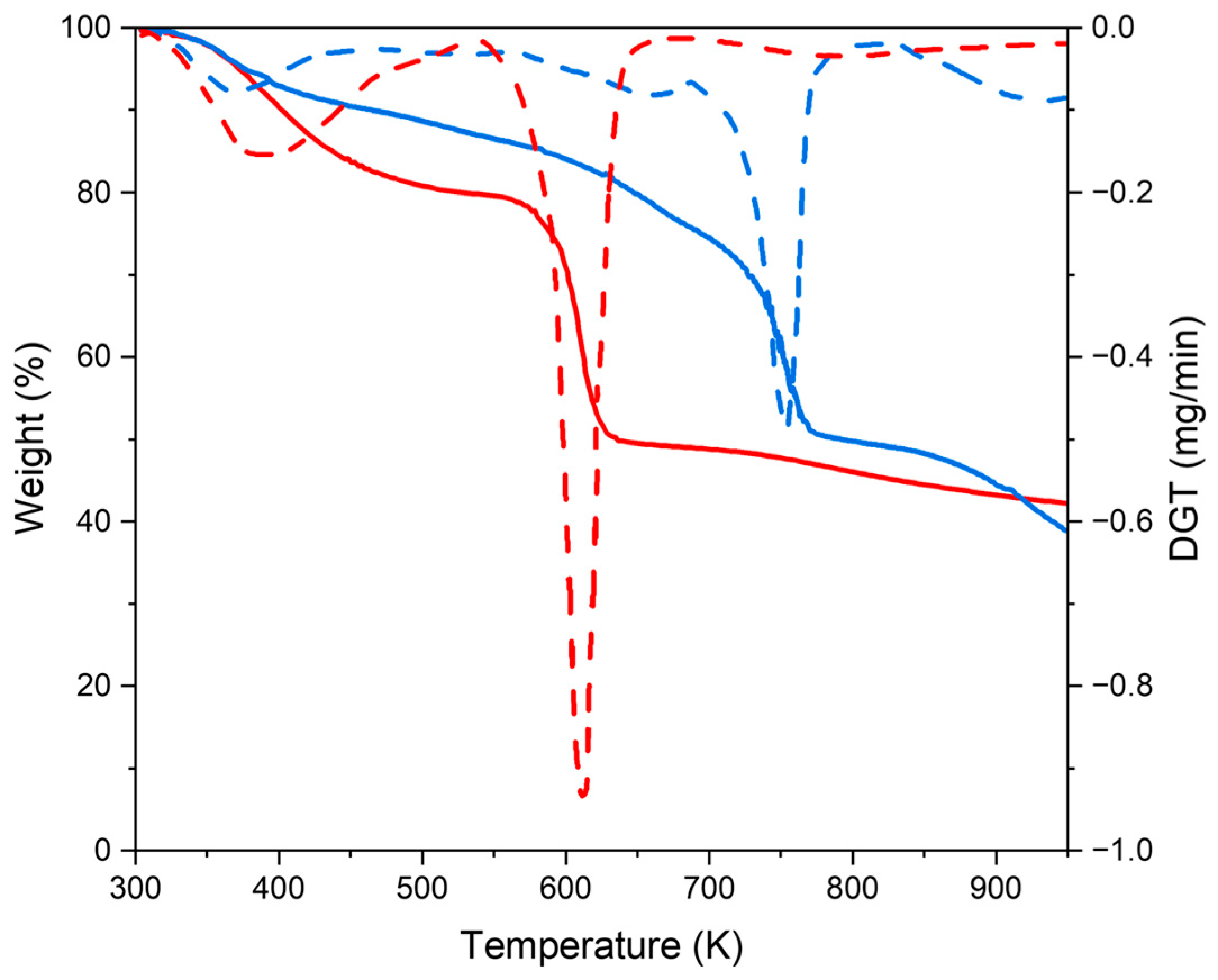
Preceding these experiments, the thermal stability of the metal–organic frameworks themselves was evaluated to determine the maximum temperature that can be used during the reaction without negatively affecting the structure of the materials. Thermogravimetric (TG) and derivative thermogravimetric (DTG) profiles for both MOF-type materials are shown in Figure 2. Basolite C300 presents a two-stage decomposition. The first mass loss is associated with a DTG peak around 370–390 K, and can be attributed to the desorption of water adsorbed in the structure. The second and more pronounced weight loss occurs between 570 and 630 K, corresponding to the structural decomposition of the Cu-based framework into CuO. Basolite F300 also exhibits a light water desorption peak at 370 K, followed by a gradual and continuous mass loss while temperature increases, with a final DTG peak around 750 K, indicative of the complete structural decomposition of the material.
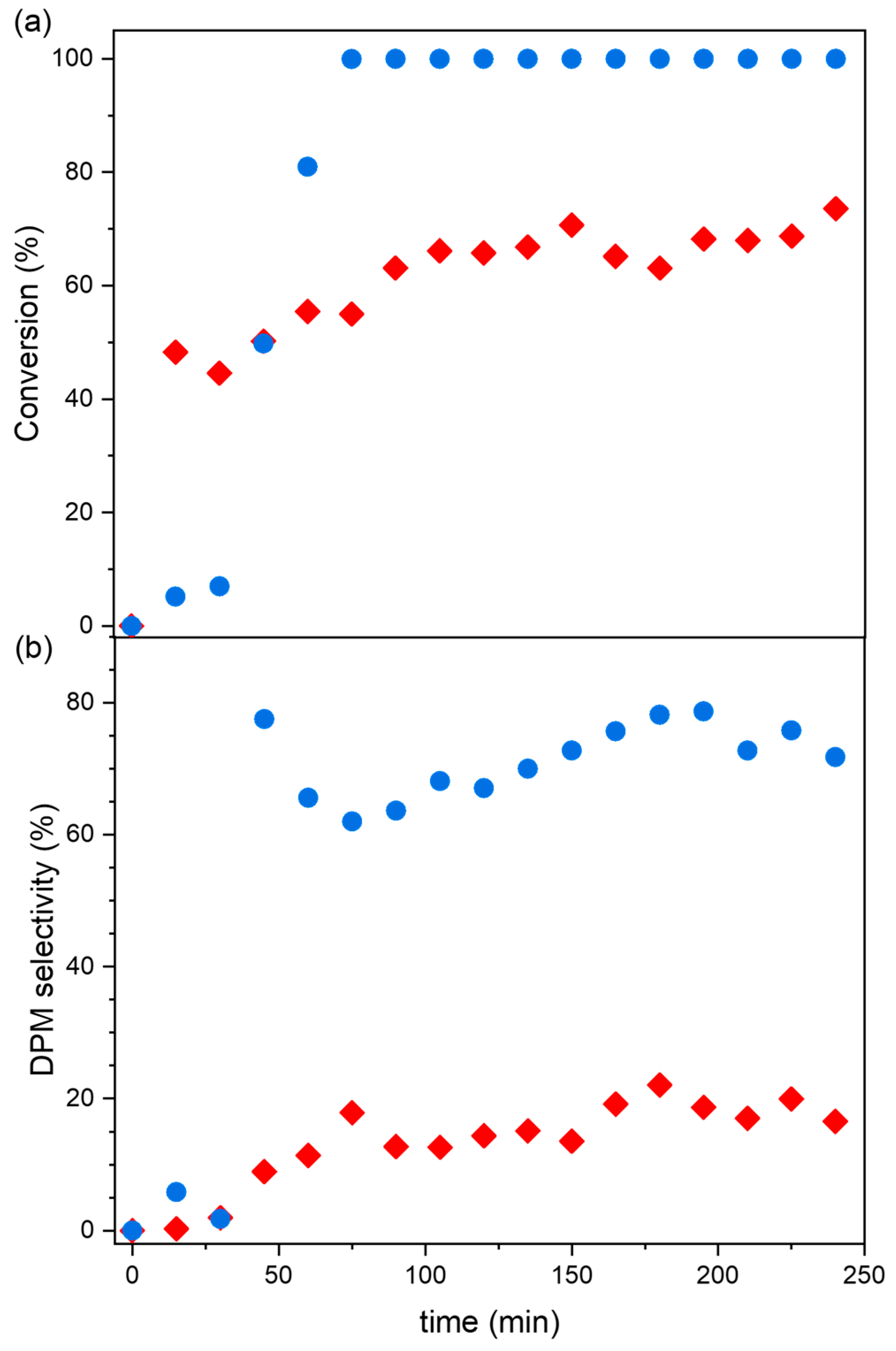
Figure 3 summarizes the results obtained with both MOFs, in terms of benzyl chloride conversion (a) and selectivity to diphenylmethane (b) at 353 K.
After 2 h of reaction, a final conversion of approximately 73% is reached when using Basolite C300, with a selectivity towards diphenylmethane of around 16.5% and to undesired polybenzyl compounds below 3.2% at the maximum point. Complete conversion is obtained when operating with Basolite F300 as catalyst, with a selectivity to diphenylmethane of around 72%. Similarly, significant formation of polybenzyl by-products has been detected, which reaches a selectivity of approximately 18%. The behavior of the iron-based Basolite MOF is clearly superior to that of its copper-based counterpart, with final product-to-converted-reactant molar yields of 72% and 12%, respectively. As previously reported, the redox properties of the metal ions in the catalyst play an important role in the catalytic activity of the alkylation reaction of benzene [5,8,12,20,21]. These authors (and subsequent works by other researchers [34]) suggested that the most oxidized form of the metal (Fe(III), Cu(II)) stabilizes the benzyl radical formed during the homolytic cleavage of the C–Cl bond in benzyl chloride, through the formation of a benzyl carbocation (Ph–CH2+), accompanied by the reduction of the metal. This stabilization is enhanced as the corresponding reduction step is thermodynamically more favorable. In this case, the Fe3+/Fe2+ redox pair (E0 = 0.771 V) has a higher standard reduction potential compared to the Cu2+/Cu+ couple (E0 = 0.153 V), indicating a greater tendency of Fe3+ to accept electrons. This enhanced electron-accepting capability may facilitate electron transfer processes during the catalytic cycle, potentially favoring the higher catalytic activity observed with Fe-based catalysts. Similar behavior has been previously reported in the work of Horcajada et al. [20], where they attribute the high activity observed with MIL-100(Fe) compared to its counterpart MIL-100(Cr) as catalysts for this same reaction, to the ability of Fe3+ to transform into Fe2+, facilitating the activation of both benzene and benzyl chloride. In the context of Friedel–Crafts reactions, it should be considered that comparative acidity studies have shown that Fe-BTC presents a higher total acidity and a higher density of strong acid sites than Cu-BTC, which is attributed to the greater polarizing power of Fe3+ relative to Cu2+, suggesting cooperative acid–redox activation in this reaction [35]. In addition, the structure and dimensionality of the catalysts can also have a great influence on the catalytic activity [36]. As can be observed, results with Basolite F300 show an initial period of time (30–40 min) with no detectable conversion activity, followed by a sudden shift to complete conversion, which is not present in the experiment with Basolite C300. This induction period for the reaction was also observed for other catalysts such as ZSM-5 type zeolite modified with different metal ions (Fe, Zn, Ga, In) [12], Fe-SBA or Fe-KIT mesoporous ferrosilicates [3,36], or Fe-MOR [9]. The reported induction periods vary from a few minutes in some materials to close to an hour for others, as was observed for the Fe-MOR catalyst. This induction time is typically attributed to the effects of inhibition by moisture in the reaction medium (from the catalyst or reactants) or to diffusion limitations of the reactants towards the active centers in the pores, although in this study, the structural characteristics of the MOFs could also play a role. Basolite C300 presents a highly crystalline structure with well-defined pores (Dp = 3.2 nm), as observed in the XRD and BET analysis. The relatively small pore size could introduce diffusion limitations, which may slow down the overall reaction rate compared to mesoporous materials, but no induction period is observed for this catalyst. In contrast, Basolite F300 is characterized by a topologically disordered network, lacking long-range order, which translates into the lower crystallinity detected in the XRD diffractograms. This structural disorder may influence reactant diffusion and the accessibility of active sites, since it has been previously related to a consequent deformation of the pore geometry, affecting their accessibility and pore volume [37]. Nevertheless, it is important to note that similar induction periods were previously observed in other Fe-containing catalysts with well-ordered structures, suggesting that the induction phenomenon is multifactorial and likely related primarily to the chemical activation of Fe centers, such as removal of coordinated water molecules, local rearrangement of Fe species, or changes in the coordination environment/solvation, that make the metal centers catalytically active. Once these transformations occur, the reaction can proceed faster over Basolite F300 than over Basolite C300, due to Basolite F300’s larger pores (Dp = 5.8 nm), which reduce diffusion limitations, and its higher total acidity, leading to more effective electrophile activation.
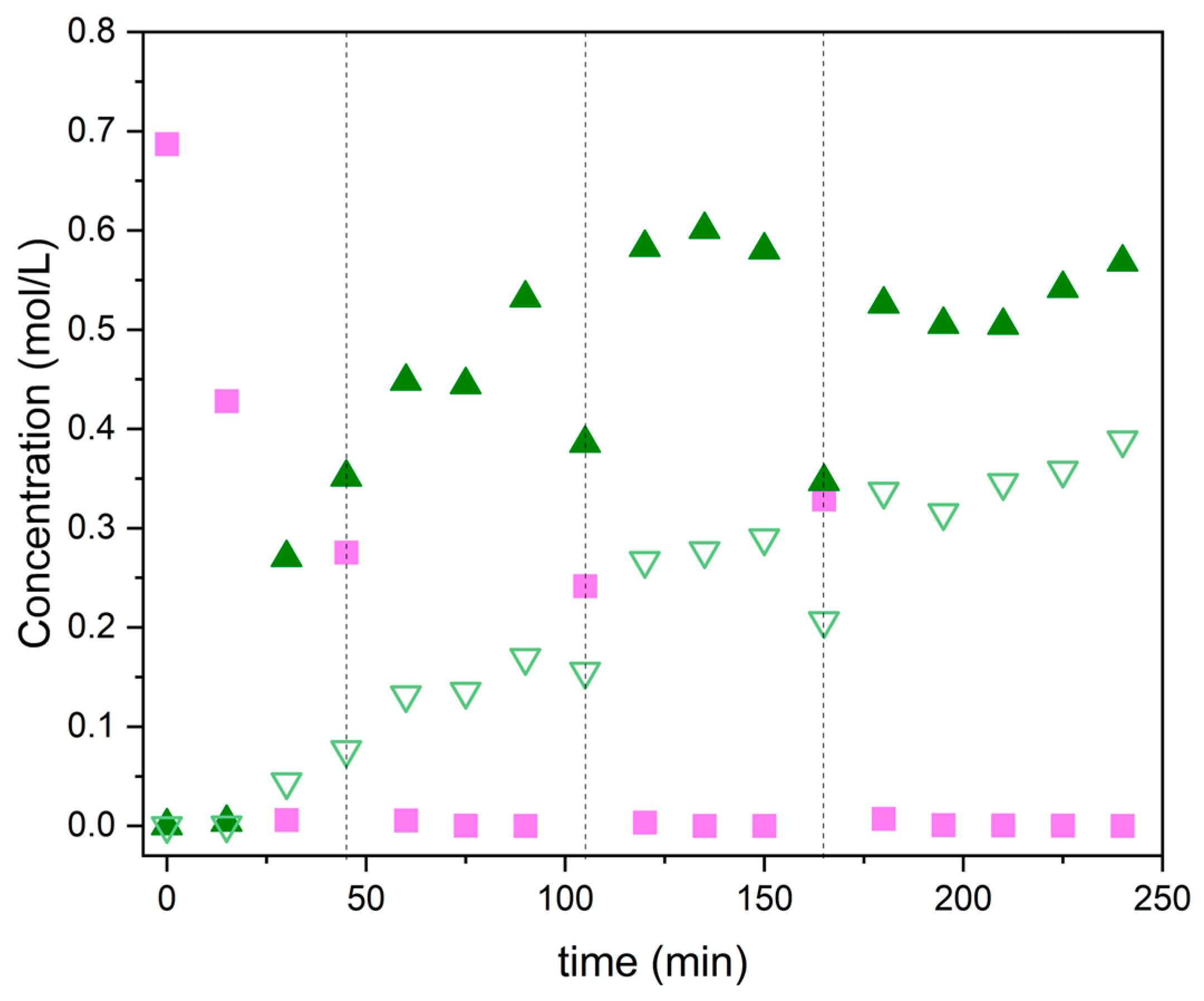
The activity of both catalysts at lower reaction temperatures was evaluated by running the reaction at 323 K, with no activity detected for either MOF. Additionally, for the catalyst with superior performance, Basolite F300, supplementary tests were carried out to study its stability and lifetime. In this experiment, once complete conversion of benzyl chloride on a fresh catalyst was reached, the same initial quantity of benzyl chloride (2.16 mL) was introduced into the reaction mixture already containing an excess of benzene at 353 K to start a new reaction with the same benzene-to-benzyl chloride ratio. Reusability experiments based on the recovery of the used catalysts were not possible because of the low catalyst loads used in these experiments. Benzyl chloride injections were repeated three times, with a period of 45 min allowed to lapse at complete conversion between injections, for four total reaction cycles, as depicted in Figure 4. Experimental results show that Basolite F300 remains active in the benzylation process without a significant change in its catalytic performance. As observed, no induction period was detected when extra benzyl chloride was added to the reaction mixture after the completion of the reaction. This supports the previously proposed hypothesis that catalyst activation involves structural or chemical changes, such as removal of coordinated water molecules or reorganization of the local Fe environment, that occur during the first use. Once these changes take place, the active sites become accessible and reactive, and the catalyst remains in this activated form throughout the reaction. Furthermore, for periods in which the limiting reactant is fully converted, it can be seen that the diphenylmethane concentration is constant, while polybenzyl compound production continues to increase even though the reactant is apparently depleted. This can be attributed to the higher availability of the limiting reactant during the reaction, which favors side reactions, as previously reported in the literature [21].

2.1.2. Catalytic Performance Comparison with Metal Chloride Catalysts and Reported Heterogeneous Catalysts

The direct comparison between the performances of the catalysts proposed in this work, based on commercial MOFs, and other catalysts previously reported in the literature presents certain complexity due to the differences in operating conditions. As explained in the experimental section, the use of the turn-over rate, TOR, can be helpful for making these comparisons, but also presents limitations that can negatively influence the obtained value. The comparison discussed here is summarized in Table 2, which includes the most relevant results along with the corresponding reaction conditions.
The experimental results for the benzene alkylation reaction with benzyl chloride using Basolite C300 as the catalyst (Figure 3) reveal a logarithmic increase in conversion during the first 2 h of the reaction, before reaching a plateau. This behavior has been previously observed with other Cu-based catalysts, such as Cu ion-exchanged clays [18]. Cu-HMS-25 has also been proposed as a catalyst for this reaction in the literature, under the same operating conditions (temperature, initial molar reactant ratio, reaction sample volume) [38]. With this catalyst, a 50% conversion of benzyl chloride is reported after 45 min, which is very similar to the behavior observed in this study, although it presents a higher selectivity to DPM, close to 68% compared to 17% obtained in this work. Comparing the TOR at 45 min of reaction reveals that this material is significantly more active than the proposed Cu-MOF, with a TOR of 68 mmol BC/mol Cu·s, compared to the 20.2 mmol BC/mol Cu·s obtained for Basolite C300 in this study. This substantial difference in catalytic activity may be attributed to the distinct structural characteristics of the materials, which can influence the accessibility of copper active sites. Additionally, CuCl2/Al2O3 has also been proposed as catalyst for this reaction in the literature [8]. The experimental data reported in that study indicate a benzyl chloride conversion of 87.6% after 180 min of reaction, with a selectivity to diphenylmethane of 91.6%. However, the amount of catalyst used is significantly higher. When compared in terms of TOR, the value obtained for CuCl2/Al2O3 at 180 min of reaction is 1.5 mmol BC/mol Cu·s, while for Basolite C300, TOR is 6.8 mmol BC/mol Cu·s, nearly five times greater. Although these findings provide a useful reference, it is important to note that the calculation of TOR in high-conversion scenarios is not always reliable, as kinetically controlled conditions cannot be ensured, and factors such as diffusion limitations, deactivation, or product accumulation may hinder the interpretation of TOR.
The consideration of this limitation is particularly relevant for Fe-based catalysts, both in this work and in previous studies, where full conversion is typically achieved within short reaction times. In the present work, it was observed that after an initial induction period of 30 min, conversion increases abruptly in 30 min. This extremely high reaction rate has also been reported for the equivalent MOF MIL-100(Fe), which, after a shorter induction period of 5 min, reaches full conversion in less than 8 min when the reaction is conducted at 343 K, with a benzene–benzyl chloride ratio of 10 and higher catalyst loading [20]. However, MIL-100(Fe) exhibits a selectivity toward diphenylmethane close to 100%, which is significantly higher than the 72% obtained in this work. Given the commented constraints, an average TOR for each catalyst has been estimated based on the total reaction time required to reach full conversion, normalized to the mass of active metal in each catalyst. The calculated TOR values should be considered as semi-quantitative and primarily practical for comparative purposes under the specific conditions tested, rather than as intrinsic kinetic descriptors. The value obtained in this work for the Basolite F300 catalyst corresponds to 22.2 mmol BC/mol Fe·s, which is very similar to the value reported for the MIL-100(Fe) MOF, with a TOR of 26.0 mmol BC/mol Fe·s under similar reaction conditions [20]. Other catalysts in a comparable activity range include FeKIT-5(12) [3], showing a TOR of 29.4 mmol BC/mol Fe·s, and Fe-M-MOR [9], with a TOR of 44.5 mmol BC/mol Fe·s upon reaching full benzyl chloride conversion. The catalytic activity of these materials is significantly higher than that of FeCl3/Al2O3 (TOR = 1.6 mmol BC/mol Fe·s) [8], but remains lower than that of more active systems such as Fe-HMS-50 [15], with TOR = 87.7 mmol BC/mol Fe·s, or 2.5 wt.% Fe-ZSM-5 [4], which achieves a TOR of 78.5 mmol BC/mol Fe·s, exhibiting clearly enhanced performance.
Among the conventional homogeneous catalysts typically employed in the alkylation of benzene with benzyl chloride, AlCl3 is the most common Lewis acid catalyst. Previous studies have shown that AlCl3 can achieve complete benzyl chloride conversion at 358 K within the first 30 min of reaction, with a selectivity to diphenylmethane of around 58%. However, this required a relatively high catalyst loading (0.094 mol Al mol−1 BC) and a low benzene-to-benzyl chloride feed ratio of 3 mol B mol−1 BC (TOR = 5.9 mmol BC mol−1 Al s−1) [39]. In comparison, other homogeneous metal chlorides such as CuCl2 and FeCl3 exhibit conversions of around 90% and selectivities between 44 and 52% at 353 K within the first hour of reaction, employing similarly high metal loadings (0.07–0.09 mol M mol−1 BC) and B-BC ratios near 19 mol B mol−1 BC, which are more comparable to the value used in this work (TOR = 3–7 mmol BC mol−1 M s−1) [40]. Under similar conditions, the heterogeneous Fe-MOF catalyst proposed in this work achieved full conversion with a selectivity of 72% at 353 K in 1.25 h, using a B-BC ratio of 15 mol B mol−1 BC but with a substantially lower metal loading (0.01 mol M mol−1 BC), indicating improved catalytic performance (TOR = 22.2 mmol BC mol−1 Fe s−1). Although the data from these different studies are not strictly comparable due to variations in operating conditions, they nevertheless suggest that the proposed catalyst exhibits a higher intrinsic efficiency than traditional Lewis acids. To further contextualize the catalytic performance of the proposed catalysts and enable a direct comparison with the corresponding homogeneous systems, additional experiments were carried out using equivalent metal chloride catalysts under comparable reaction conditions. This allows a direct comparison in terms of activity and selectivity. The reactions were run at 353 K with a benzene-to-benzyl chloride molar ratio of 15, adjusting the catalyst amount so that the total metal content is equal to that used in the experiments with metal–organic framework catalysts.
Results with CuCl2 as a catalyst revealed extremely low activity under the conditions studied, with limited formation of diphenylmethane after 4 h (maximum selectivity of 3% at 353 K). This can be related to an insufficient quantity of active phase in the reaction system (Cu–benzyl chloride ratio used in this work: 4.7 mg/mL), considering that previous experiments with CuCl2 in the literature [8] reach 64.6% of benzyl chloride conversion (with 39.6% of selectivity to diphenylmethane) in 180 min, but operate with a Cu–benzyl chloride ratio that is significantly higher, at 190 mg/mL. Catalysis with Basolite C300 does not present these obstacles, reaching 74% of conversion with 16.8% of selectivity under exactly the same reaction conditions, as shown in the previous section. This indicates the benefits of near-atomic metal dispersion in MOF-based catalysts when compared with bulk materials.
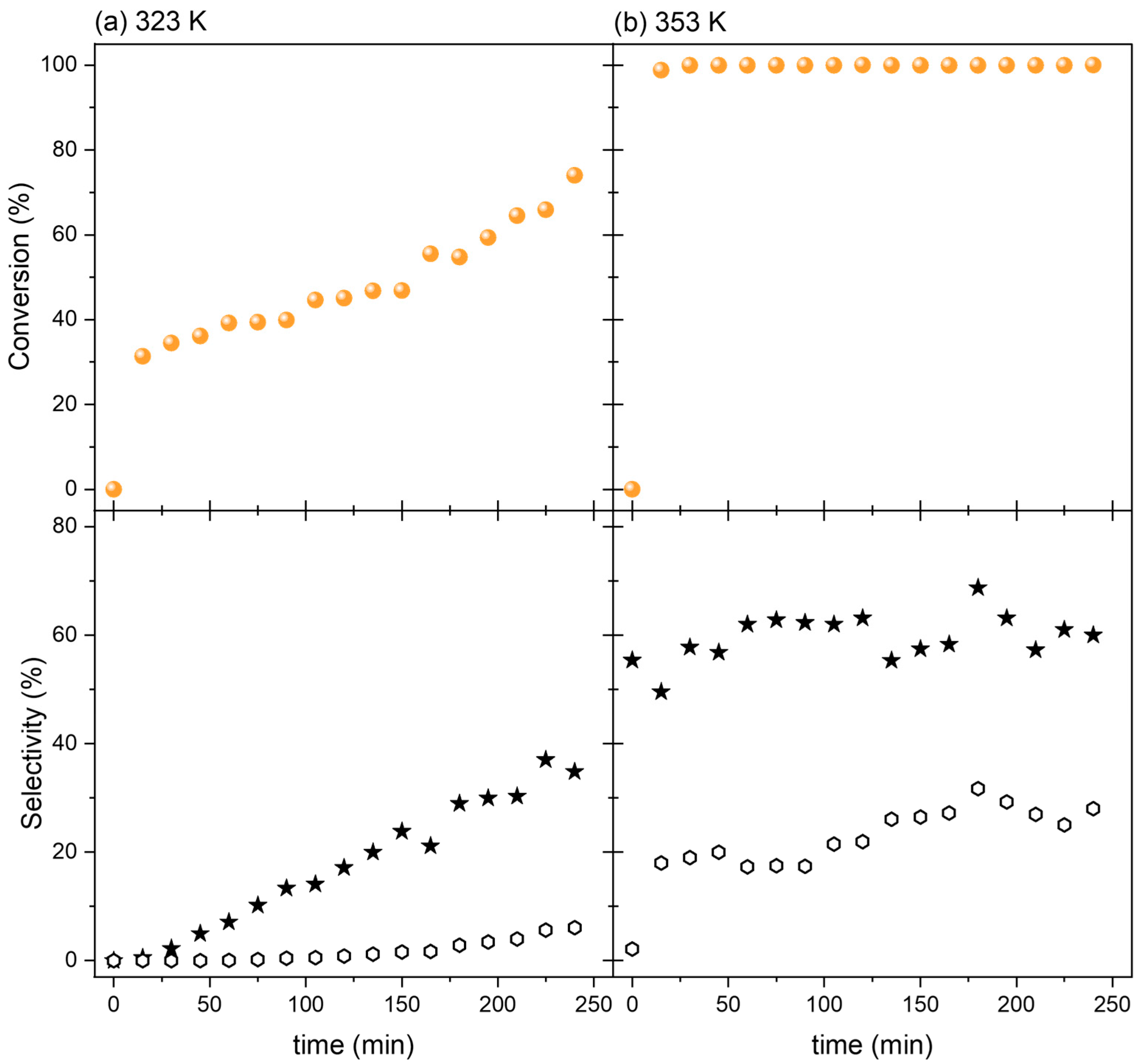
Regarding the reaction with FeCl3 (Figure 5), complete conversion of benzyl chloride was observed after 15 min of reaction at 353 K, with 62% selectivity to diphenylmethane and 28% to polybenzyl derivatives (overall yield to diphenylmethane: 62%). A comparable performance was observed using the fresh Basolite F300 proposed in this work, reaching complete conversion in the first 15 min of reaction, with a 70% of selectivity to diphenylmethane and 25% to polybenzyl products. When the reaction was conducted at 323 K, conversion increased progressively from 32% to 74% over 4 h, highlighting the strong temperature dependence of the process (selectivity: 35% to diphenylmethane and 6% to polybenzylated compounds). Experiments reported in the literature for this catalyst showed lower activity, 64% of conversion at 353 K, linked to 51.6% of selectivity to polybenzyl derivatives (47.4% to diphenylmethane), despite employing a higher catalyst-to-reactant ratio [8]. These discrepancies could be attributed to insufficient mixing, leading to mass transfer limitations, or to inaccuracies in temperature regulation.

2.2. Kinetic Modeling

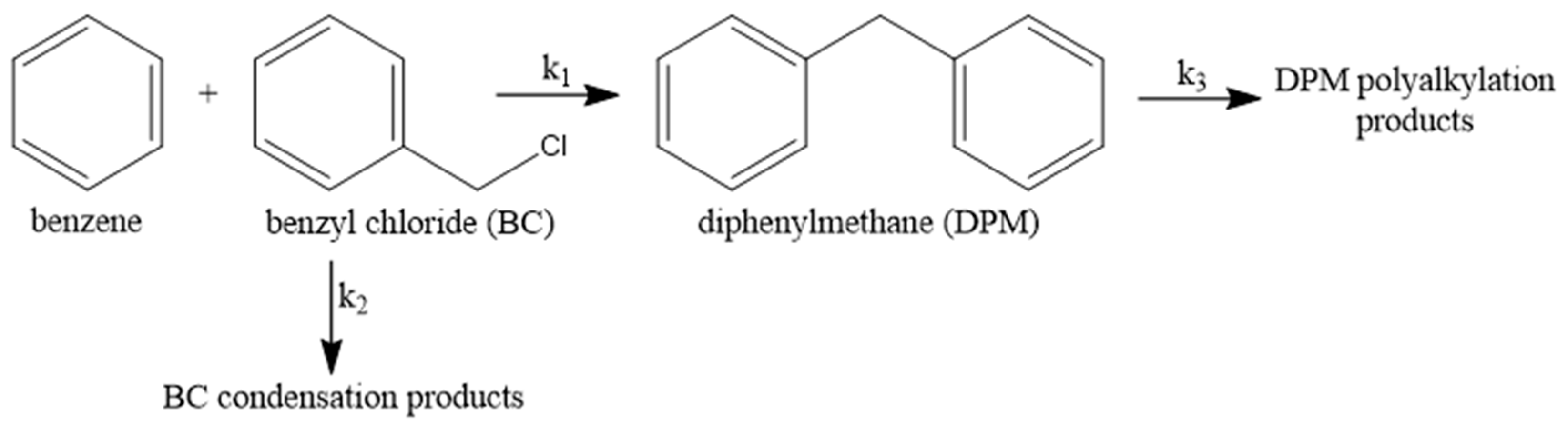
The main reaction mechanism for the benzene alkylation with benzyl chloride proposed in the literature follows two consecutive stages: benzyl chloride activation on the redox sites of the catalyst (limiting step), and the electrophilic substitution reaction of benzene. Based on this mechanism and previous experimental data, the reaction rate for the benzene alkylation with benzyl chloride has been reported to follow a serial-parallel scheme, as shown in Scheme 1 [4]. This behavior has been demonstrated to adjust to a pseudo first-order kinetic law when using zeolites and when supporting metal chloride materials as catalysts [4,12,17].
In this work, the suitability of this model for the reaction in the presence of MOFs as catalysts was also validated. The kinetic equations for the main compounds used for modeling correspond to the following:
d C B C d t = k 1 C B C k 2 C B C
d C D P M d t = k 1 C B C k 3 C D P M
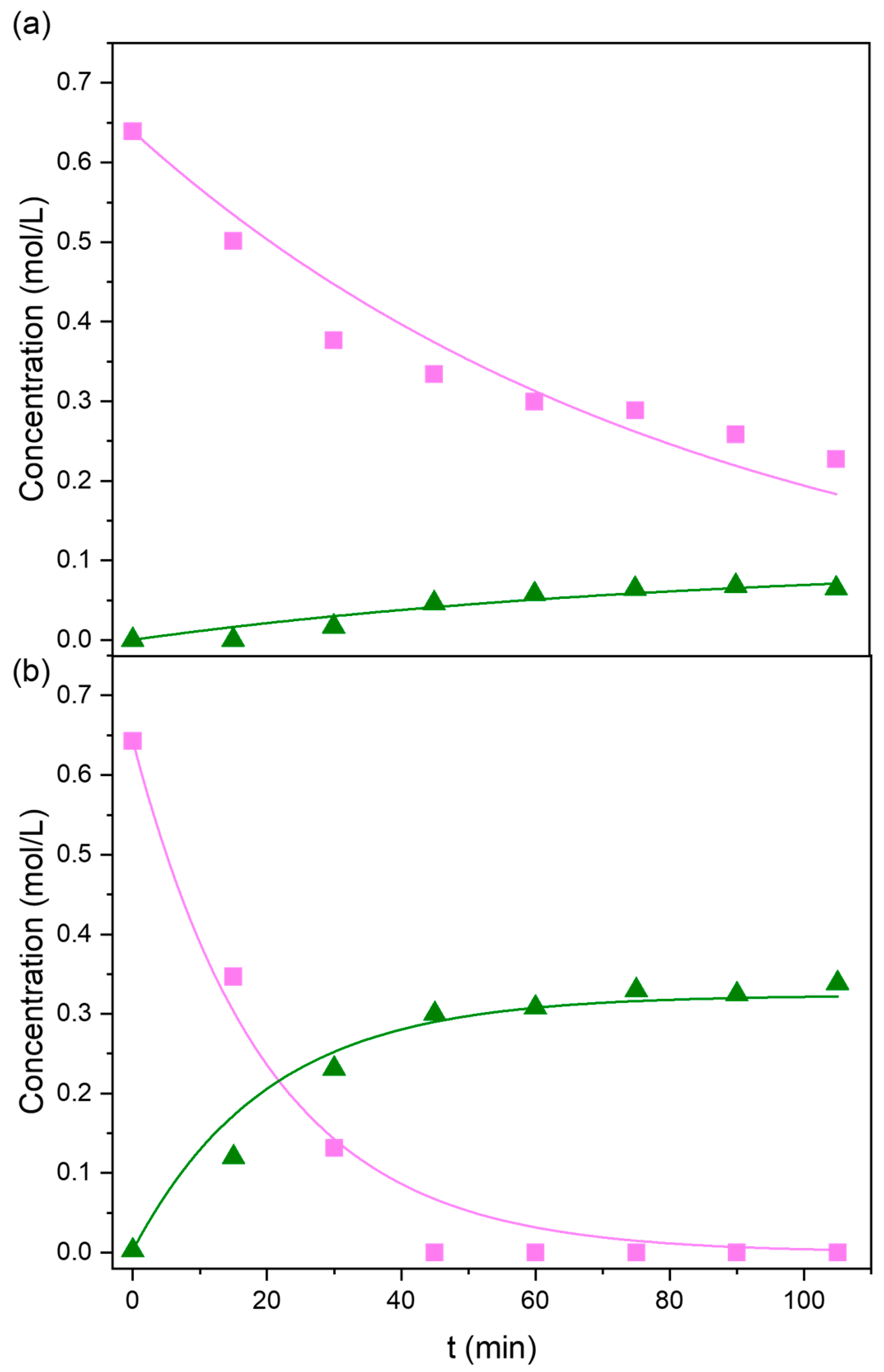
where CBC and CDPM are the molar concentrations of benzyl chloride and diphenylmethane, respectively, at a given time. Although the selectivity toward benzyl chloride condensation products was non-negligible in some cases (always below 18%), their absolute concentrations were too low to be reliably used for kinetic fitting. Nonetheless, the formation pathways of the benzyl chloride condensation products were incorporated into the reaction scheme, and the associated rate constants were fitted accordingly. In the case of Basolite F300, the induction period has also been corrected before the kinetic fit. The obtained fitting parameters for Basolite C300 and Basolite F300 are shown in Table 3, all adjusted with regression coefficients R2 above 0.98.
The model predictions are depicted as solid lines and compared to the experimental data, represented as symbols, in Figure 6, for both Basolite C300 (a) and Basolite F300 (b). A great agreement between the two confirms the validity of the model within the range of operating conditions of the experiments. Other kinetic orders and possible mechanisms have been tested without improving the fit. The kinetic constants obtained from the modeling provide valuable insights into the reaction mechanisms involved. As can be observed, the value of k3, corresponding to the polyalkylation of DPM into its derivatives, was found to be effectively zero, indicating that this pathway does not occur under the experimental conditions and with the materials used in this study. As expected, the comparison between catalysts shows a clear difference in their activity. The Cu-based catalyst exhibited a significantly lower reaction rate than the Fe-based catalyst, with the kinetic constant for diphenylmethane formation being approximately one order of magnitude lower with the first one. Additionally, with this catalyst, the kinetic constants for the two parallel reaction pathways, to diphenylmethane and polybenzyl derivates, are of similar magnitude, suggesting a competitive mechanism, with both routes contributing comparably to the overall reaction. The results with Basolite F300 are in the range of those obtained with materials such as Fe-ZSM-5 [4], although the material studied here exhibits a slightly higher tendency toward the formation of condensation products.

3. Materials and Methods

3.1. Catalysts and Chemicals

The commercial metal–organic frameworks Basolite C300 or Cu-BTC [Cu3(C9H3O6)2] and Basolite F300 or Fe-BTC (C9H3FeO6), supplied by BASF (96%; mass basis purity), were used as heterogeneous catalysts for the alkylation reaction experiments. Considering their air sensitivity, both materials were stored in a desiccator prior to use. For comparison, the reaction was also performed with commonly used metal chloride catalysts, including iron(III) chloride hexahydrate (99%, Sigma-Aldrich, St. Louis, MO, USA) and copper(II) chloride dihydrate (99%, Panreac, Glenview, IL, USA). Both chemicals were used as received, without further purification.
Benzene (99.7%, Riedel-de Haën, Charlotte, NC, USA) and benzyl chloride (99.5%, Acros) were used as reactants during the experiments, as received. Diphenylmethane (99%, Sigma Aldrich, St. Louis, MO, USA) was required for the calibration of the analytical techniques.

3.2. Catalysts Characterization

The physicochemical properties of the heterogeneous catalysts used in this work (Fe-BTC and Cu-BTC) were characterized according to different techniques.
The crystallographic structures of the materials were determined by X-ray diffraction using a Philips X’Pert Pro powder diffractometer (Amsterdam, Netherlands), working with the Cu-Kα line in the range of 2θ = 5–85° at a constant scanning rate of 0.02°/s.
The textural properties were estimated by nitrogen adsorption–desorption process at 77 K using a Micromeritics ASAP 2020 analyzer (Norcross, GA, USA). The specific surface area (SBET) was calculated according to the Brunauer–Emmett–Teller (BET) method, whereas the micropore volume (Vmicropores) was obtained using the Harkins and Jura t method. The average pore diameter (Dp) and mesopore volume (Vmesopores), were determined from the desorption branch using the Barrett–Joyner–Halenda (BJH) method.
Bulk chemical composition was determined by inductively coupled plasma mass spectrometry (ICP-MS) in an Agilent model HP 7500c octapole system (Santa Clara, CA, USA). Analyses were performed using 100 mg of sample, which was digested in a 1% HNO3 solution at a dilution ratio of 1:250. The digestion process was carried out using microwave-assisted decomposition to ensure complete dissolution of the samples.
Additionally, the thermal decomposition behavior of each material was evaluated by thermogravimetric analysis (TGA) using TG-DSC equipment (Setaram, Sensys, Lyon, France). During these experiments, 20 mg of each sample was placed in a Pt crucible, with a second Pt crucible containing an equal mass of α-alumina as the inert reference. The measurements were conducted under a pure N2 flow of 20 mL/min, with the temperature increased from 298 K to 973 K at a constant heating rate of 5 K/min.

3.3. Reaction Analysis

The alkylation reactions were carried out in an isothermal batch reactor with magnetic stirring (500 rpm). The reactor consists of a three-necked conical-bottom flask (50 cm3), connected to a reflux condenser to prevent the loss of reactants or products through evaporation, a thermometer for monitoring the real temperature of the reaction mixture, and a septum for sample withdrawal via syringe. During the experiments, the reactor is immersed in a distilled-water bath, the temperature of which is regulated using a thermostatically controlled heating plate.
For a standard reaction, the reactor is initially charged with the specified volume of benzene and the appropriate amount of catalyst. Magnetic stirring and controlled heating are applied until the system reaches the boiling point of benzene (353 K). At this instant, benzyl chloride is introduced through the septum port in the required amount to operate with a benzene-to-benzyl chloride molar ratio of 15:1, and this constitutes the starting time of the reaction. The excess of benzene in the reaction mixture reduces the extent of undesired secondary reactions (mainly dibenzylbenzene or tribenzylbenzene production), as demonstrated previously with other catalysts in the literature [15,21,38]. In a typical experiment, the reactant volumes correspond to 25 mL of benzene and 2.16 mL of benzyl chloride. The amount of catalyst used, whether MOF or metal chloride catalysts, is adjusted in each reaction to operate with 4.9 mg of Fe/mL benzyl chloride or 5.7 mg of Cu/mL benzyl chloride, depending on the experimental test. This approach allows a direct comparison of the catalytic performance under equivalent metal ion concentrations. The metal content in the MOF-type structures was determined by ICP-MS, revealing a 21%wt. of Fe for Basolite F300 and 24.6%wt. of Cu for Basolite C300. Throughout the reaction, liquid samples are collected at regular time intervals (15 min) to monitor the evolution of the concentrations of the different species involved in the reaction mechanism. The samples are filtered (0.45 µm) and diluted in benzene at a 1:20 volume ratio prior to analysis.

3.4. Analytical and Characterization Techniques

Liquid samples were analyzed by gas chromatography using a Shimadzu GC-2010. The GC is equipped with a 15 m long CP-Sil 5 CB capillary column and a flame ionization detector (FID). The analysis was carried out according to the following temperature program: 303 K for 5 min, then a ramp of 5 K/min up to 483 K, holding for 10 min. The error associated with the analysis (based on the standard deviation) was estimated to be less than 5%. The identification of the different products was verified with GC-MS (Shimadzu GC/MS QP2010 Plus, Kyoto, Japan), using an HP-5MS capillary column (30 m length). All gases used in GC-FID and GC-MS, with a 99.99% purity, were supplied by Air Liquide (Paris, France).
Commercial standards of benzyl chloride and diphenylmethane were used for peak assignment and calibration. Polybenzyl compounds were quantified using the extended effective carbon number method, based on the calculation of relative response factors using the flame ionization detector [41]. For simplicity, and considering the low concentration of polybenzyl products detected during the reactions when compared with the diphenylmethane production, all these polybenzyl by-products were grouped and considered as trimers.
The results of the analysis were used to calculate benzyl chloride conversion ( χ t , %), selectivity ( φ , %), and productivity or yield (η, %) according to the following expressions:
χ t = C B C , 0 C B C , t C B C , 0 · 100
φ i , t = C i , t C B C , 0 C B C , t ν B C ν i · 100
η i , t = χ t ·   φ i , t
where CBC is the molar concentration of benzyl chloride (limiting reactant) and Ci is the molar concentration of the product i (diphenylmethane or sum of by-products), and both are denoted with the subscript 0 at time zero and subscript t at a given reaction time, and ν i is the stoichiometric coefficient of compound i.
To enable a precise and rigorous comparison between catalysts, for both catalysts evaluated in this study and those reported in the literature, the turn-over rate (TOR) is calculated. TOR is defined as the number of moles of benzyl chloride converted per mol of metal ion and per unit time.
T O R = C B C , 0 V   χ t t w c a t x m e t a l 1 M
where CBC,0 is the initial concentration of benzyl chloride in mmol/mL, V the volume of reactant mixture in the reactor expressed in mL, χ t the benzyl chloride conversion at instant t, t the selected reaction time in s, wcat is the mass of catalyst used for each experiment in g, x m e t a l is the weight fraction of metal in the catalyst, and M is the atomic mass of the metal ion. This normalization of the catalytic activity can be useful for comparisons, but it has to be taken into account that its application has limitations: The information available in the literature is not always enough for TOR calculation, and the data used for it must reflect the intrinsic activity of the catalyst, avoiding factors such as deactivation, mass transfer limitations, or excess catalyst, that can underestimate the real TOR value.
Based on the experimental data, the study also includes a kinetic model proposal. The model is solved using a MATLAB code (MATLAB R2024b), for performing all the calculations and solving the set of ordinary differential equations (ode45). The fitting of the unknown parameters from the model (e.g., parameters of the kinetic equation) is accomplished by the least-square method, using the MATLAB function lsqcurvefit. This method is traditionally considered the most reliable for estimating fitting parameters.

4. Conclusions

In this study, the viability of the reaction of alkylation of benzene with benzyl chloride in the presence of commercial metal–organic-framework catalysts containing Cu (Basolite C300) and Fe (Basolite F300) has been demonstrated. The redox properties of the metal ions have been shown to play a key role in the reaction, making the Fe-containing MOF significantly more active than its Cu counterpart. The results indicate that the atomic dispersion of the metal in MOF-based catalysts improves their catalytic activity in the benzene alkylation reaction compared to traditional metal chloride catalysts. Based on a two-step reaction pathway (benzyl chloride activation and electrophilic substitution of benzene), a pseudo first-order kinetic model that accurately represents the reaction behavior for both studied MOFs has been proposed and fitted.

Author Contributions

S.O. and E.D. designed the experiments, I.G. completed experiment sampling, and R.P. performed data analysis and wrote the first draft of the manuscript. S.O. and E.D. contributed to the research and writing of the paper. All authors have read and agreed to the published version of the manuscript.

Funding

This research received no funding.

Data Availability Statement

The original contributions presented in this study are included in the article. Further inquiries can be directed to the corresponding author.

Acknowledgments

The authors would like to thank the support provided by the University of Oviedo, Oviedo, Spain.

Conflicts of Interest

The authors declare no conflicts of interest.

Abbreviations

The following abbreviations are used in this manuscript:
BBenzene
BCBenzyl chloride
BETBrunauer–Emmett–Teller
BJHBarrett–Joyner–Halenda
BTC1,3,5-benzenetricarboxylic acid
DPMDiphenylmethane
DTGDerivative thermogravimetric
FIDFlame ionization detector
GCGas chromatograph
ICP-MSInductively coupled plasma mass spectrometry
LOHCLiquid organic hydrogen carrier
MMetal
MOFsMetal–organic frameworks
MSMass spectrometer
PCBPolychlorinated biphenyls
PDFPair distribution function
TGThermogravimetric
TGAThermogravimetric analysis
TORTurn-over rate
XRDX-ray diffraction

References

  1. Li, S.; Han, Q.; Ma, Y.-Y.; Zhang, S.-M.; Du, J.; Han, Z.-G. Polyoxometalate-encapsulated copper-organic complexes for efficient C-H bond oxidation of alkylbenzenes. J. Mol. Struct. 2025, 1342, 142686. [Google Scholar] [CrossRef]
  2. Schmidt, R.; Griesbaum, K.; Behr, A.; Biedenkapp, D.; Voges, H.-W.; Garbe, D.; Paetz, C.; Collin, G.; Mayer, D.; Höke, H.; et al. Ullmann’s Encyclopedia of Industrial Chemistry; Wiley & Sons: Hoboken, NJ, USA, 2014; pp. 1–74. [Google Scholar]
  3. Anand, C.; Priya, S.V.; Lawrence, G.; Dhawale, D.S.; Varghese, S.; Wahab, M.A.; Prasad, K.S.; Vinu, A. Cage type mesoporous ferrosilicate catalysts with 3D structure for benzylation of aromatics. Catal. Today 2013, 204, 125–131. [Google Scholar] [CrossRef]
  4. Díaz, E.; Ordóñez, S.; Vega, A.; Auroux, A.; Coca, J. Benzylation of benzene over Fe-modified ZSM-5 zeolites: Correlation between activity and adsorption properties. Appl. Catal. A-Gen. 2005, 295, 106–115. [Google Scholar] [CrossRef]
  5. Arafat, A.; Alhamed, Y. Catalytic activity of mesoporous catalysts in Friedel–Crafts benzylation of benzene. J. Porous Mat. 2009, 16, 565–572. [Google Scholar] [CrossRef][Green Version]
  6. Diaz, E.; Rapado-Gallego, P.; Ordóñez, S. Systematic evaluation of physicochemical properties for the selection of alternative liquid organic hydrogen carriers. J. Energy Storage 2023, 59, 106511. [Google Scholar] [CrossRef]
  7. Ramadhani, S.; Dao, Q.N.; Imanuel, Y.; Ridwan, M.; Sohn, H.; Jeong, H.; Kim, K.; Yoon, C.W.; Song, K.H.; Kim, Y. Advances in catalytic hydrogenation of liquid organic hydrogen carriers (LOHCs) using high-purity and low-purity hydrogen. ChemCatChem 2024, 16, e202401278. [Google Scholar] [CrossRef]
  8. Salavati-Niasari, M.; Hasanalian, J.; Najafian, H. Alumina-supported FeCl3, MnCl2, CoCl2, NiCl2, CuCl2, and ZnCl2 as catalysts for the benzylation of benzene by benzyl chloride. J. Mol. Catal. A Chem. 2004, 209, 209–214. [Google Scholar] [CrossRef]
  9. Leng, K.; Sun, S.; Wang, B.; Sun, L.; Xu, W.; Sun, Y. Benzylation of benzene with benzyl chloride on iron-containing mesoporous mordenite. Catal. Commun. 2012, 28, 64–68. [Google Scholar] [CrossRef]
  10. Choudhary, V.R.; Jana, S.K.; Kiran, B.P. Alkylation of benzene by benzyl chloride over H-ZSM-5 zeolite with its framework Al completely or partially substituted by Fe or Ga. Catal. Lett. 1999, 59, 217–219. [Google Scholar] [CrossRef]
  11. Choudhary, V.R.; Jana, S.K.; Mamman, A.S. Benzylation of benzene by benzyl chloride over Fe-modified ZSM-5 and H-β zeolites and Fe2O3 or FeCl3 deposited on micro-, meso- and macro-porous supports. Microporous Mesoporous Mat. 2002, 56, 65–71. [Google Scholar] [CrossRef]
  12. Choudhary, V.R.; Jana, S.K. Benzylation of benzene by benzyl chloride over Fe-, Zn-, Ga- and In-modified ZSM-5 type zeolite catalysts. Appl. Catal. A-Gen. 2002, 224, 51–62. [Google Scholar] [CrossRef]
  13. Koyande, S.N.; Jaiswal, R.G.; Jayaram, R.V. Reaction kinetics of benzylation of benzene with benzyl chloride on sulfate-treated metal oxide catalysts. Ind. Eng. Chem. Res. 1998, 37, 908–913. [Google Scholar] [CrossRef]
  14. Kim, D.-S.; Ahn, W.-S. Diphenylmethane synthesis using ionic liquids as lewis acid catalyst. Korean J. Chem. Eng. 2003, 20, 39–43. [Google Scholar] [CrossRef]
  15. Bachari, K.; Millet, J.M.M.; Benaïchouba, B.; Cherifi, O.; Figueras, F. Benzylation of benzene by benzyl chloride over iron mesoporous molecular sieves materials. J. Catal. 2004, 221, 55–61. [Google Scholar] [CrossRef]
  16. Lachter, E.R.; Pinto, M.M.; Marques, M.R.C. Alkylation of benzene with alcohols and benzyl chloride catalyzed by ion exchange resins. React. Polym. 1991, 15, 258. [Google Scholar] [CrossRef]
  17. Choudhary, V.R.; Jana, S.K. Benzylation of benzene and substituted benzenes by benzyl chloride over InCl3, GaCl3, FeCl3 and ZnCl2 supported on clays and Si-MCM-41. J. Mol. Catal. A-Chem. 2002, 180, 267–276. [Google Scholar] [CrossRef]
  18. Cseri, T.; Békássy, S.; Figueras, F.; Rizner, S. Benzylation of aromatics on ion-exchanged clays. J. Mol. Catal. A Chem. 1995, 98, 101–107. [Google Scholar] [CrossRef]
  19. Ali, T.T.; Narasimharao, K.; Ahmed, N.S.; Basahel, S.; Al-Thabaiti, S.; Mokhtar, M. Nanosized iron and nickel oxide zirconia supported catalysts for benzylation of benzene: Role of metal oxide support interaction. Appl. Catal. A-Gen. 2014, 486, 19–31. [Google Scholar] [CrossRef]
  20. Horcajada, P.; Surblé, S.; Serre, C.; Hong, D.-Y.; Seo, Y.-K.; Chang, J.-S.; Grenèche, J.-M.; Margiolaki, I.; Férey, G. Synthesis and catalytic properties of MIL-100(Fe), an iron(iii) carboxylate with large pores. Chem. Commun. 2007, 27, 2820–2822. [Google Scholar] [CrossRef]
  21. Hentit, H.; Bachari, K.; Ouali, M.S.; Womes, M.; Benaichouba, B.; Jumas, J.C. Alkylation of benzene and other aromatics by benzyl chloride over iron-containing aluminophosphate molecular sieves. J. Mol. Catal. A Chem. 2007, 275, 158–166. [Google Scholar] [CrossRef]
  22. Dhakshinamoorthy, A.; Li, Z.; Garcia, H. Catalysis and photocatalysis by metal organic frameworks. Chem. Soc. Rev. 2018, 47, 8134–8172. [Google Scholar] [CrossRef]
  23. Li, B.; Ma, J.-G.; Cheng, P. Constructing high-performance heterogeneous catalysts through interface engineering on metal–organic framework platforms. Acc. Mater. Res. 2025, 6, 411–421. [Google Scholar] [CrossRef]
  24. Phan, N.T.S.; Le, K.K.A.; Phan, T.D. MOF-5 as an efficient heterogeneous catalyst for Friedel–Crafts alkylation reactions. Appl. Catal. A-Gen. 2010, 382, 246–253. [Google Scholar] [CrossRef]
  25. Nguyen, L.T.L.; Nguyen, C.V.; Dang, G.H.; Le, K.K.A.; Phan, N.T.S. Towards applications of metal–organic frameworks in catalysis: Friedel–Crafts acylation reaction over IRMOF-8 as an efficient heterogeneous catalyst. J. Mol. Catal. A Chem. 2011, 349, 28–35. [Google Scholar] [CrossRef]
  26. Rahmani, E.; Rahmani, M. Al-based MIL-53 metal organic framework (MOF) as the new catalyst for Friedel–Crafts alkylation of benzene. Ind. Eng. Chem. Res. 2018, 57, 169–178. [Google Scholar] [CrossRef]
  27. Rahmani, E.; Rahmani, M. Alkylation of benzene over Fe-based metal organic frameworks (MOFs) at low temperature condition. Microporous Mesoporous Mat. 2017, 249, 118–127. [Google Scholar] [CrossRef]
  28. Lawrence, A.S.; Sivakumar, B.; Rokhum, S.L.; Biswas, S.; Cirujano, F.G.; Dhakshinamoorthy, A. Engineering of active sites in Metal-Organic Frameworks for Friedel–Crafts alkylation. ChemCatChem 2025, 17, e202401477. [Google Scholar] [CrossRef]
  29. Wang, J.-H.; Kong, F.; Liu, B.-F.; Ren, N.-Q.; Ren, H.-Y. Preparation strategies of waste-derived MOF and their applications in water remediation: A systematic review. Coord. Chem. Rev. 2025, 533, 216534. [Google Scholar] [CrossRef]
  30. Chang, M.; Tang, C.; Wang, C.-C.; Zhao, C. From ore to MOF: A case of MIL-100(Fe) production from iron ore concentrates. Prog. Nat. Sci. Mater. Int. 2024, 34, 66–73. [Google Scholar] [CrossRef]
  31. Guesh, K.; Caiuby, C.A.D.; Mayoral, Á.; Díaz-García, M.; Díaz, I.; Sanchez-Sanchez, M. Sustainable preparation of MIL-100(Fe) and its photocatalytic behavior in the degradation of methyl orange in water. Cryst. Growth Des. 2017, 17, 1806–1813. [Google Scholar] [CrossRef]
  32. Sapnik, A.F.; Ashling, C.W.; Macreadie, L.K.; Lee, S.J.; Johnson, T.; Telfer, S.G.; Bennett, T.D. Gas adsorption in the topologically disordered Fe-BTC framework. J. Mater. Chem. A 2021, 9, 27019–27027. [Google Scholar] [CrossRef]
  33. Ursueguía, D.; Díaz, E.; Ordóñez, S. Densification-induced structure changes in Basolite MOFs: Effect on low-pressure CH4 adsorption. Nanomaterials 2020, 10, 1089. [Google Scholar] [CrossRef] [PubMed]
  34. Hamdy, M.S.; Mul, G.; Jansen, J.C.; Ebaid, A.; Shan, Z.; Overweg, A.R.; Mashmeyer, T. Synthesis, characterization, an unique catalytic performance of mesoporous Fe-TUD1 in Friedel-Crafts benzylation of benzene. Catal. Today 2005, 100, 255–260. [Google Scholar] [CrossRef]
  35. Autié-Castro, G.; Reguera, E.; Cavalcante, C.L.; Araujo, A.S.; Rodríguez-Castellón, E. Surface acid-base properties of Cu-BTC and Fe-BTC MOFs. An inverse gas chromatography and n-butylamine thermo desorption study. Inorg. Chim. Acta 2020, 507, 119590. [Google Scholar] [CrossRef]
  36. Anand, C.; Srinivasu, P.; Alam, S.; Balasubramanian, V.V.; Sawant, D.P.; Palanichamy, M.; Murugesan, V.; Vinu, A. Highly active three-dimensional cage type mesoporous ferrosilicate catalysts for the Friedel–Crafts alkylation. Microporous Mesoporous Mat. 2008, 111, 72–79. [Google Scholar] [CrossRef]
  37. Autie-Castro, G.; Autie, M.A.; Rodríguez-Castellón, E.; Aguirre, C.; Reguera, E. Cu-BTC and Fe-BTC metal-organic frameworks: Role of the materials structural features on their performance for volatile hydrocarbons separation. Colloid Surf. A Physicochem. Eng. Asp. 2015, 481, 351–357. [Google Scholar] [CrossRef]
  38. Bachari, K.; Cherifi, O. Benzylation of benzene and other aromatics by benzyl chloride over copper-mesoporous molecular sieves materials. Catal. Commun. 2006, 7, 926–930. [Google Scholar] [CrossRef]
  39. Chaube, V.D. Benzylation of benzene to diphenylmethane using zeolite catalysts. Catal. Commun. 2004, 5, 321–326. [Google Scholar] [CrossRef]
  40. Bachari, K.; Cherifi, O. Study of the benzylation of benzene and other aromatics by benzyl chloride over transition metal chloride supported mesoporous SBA-15 catalysts. J. Mol. Catal. A Chem. 2006, 260, 19–23. [Google Scholar] [CrossRef]
  41. Scanlon, J.T.; Willis, D.E. Calculation of flame ionization detector relative response factors using the effective carbon number concept. J. Chromatogr. Sci. 1985, 23, 333–340. [Google Scholar] [CrossRef]
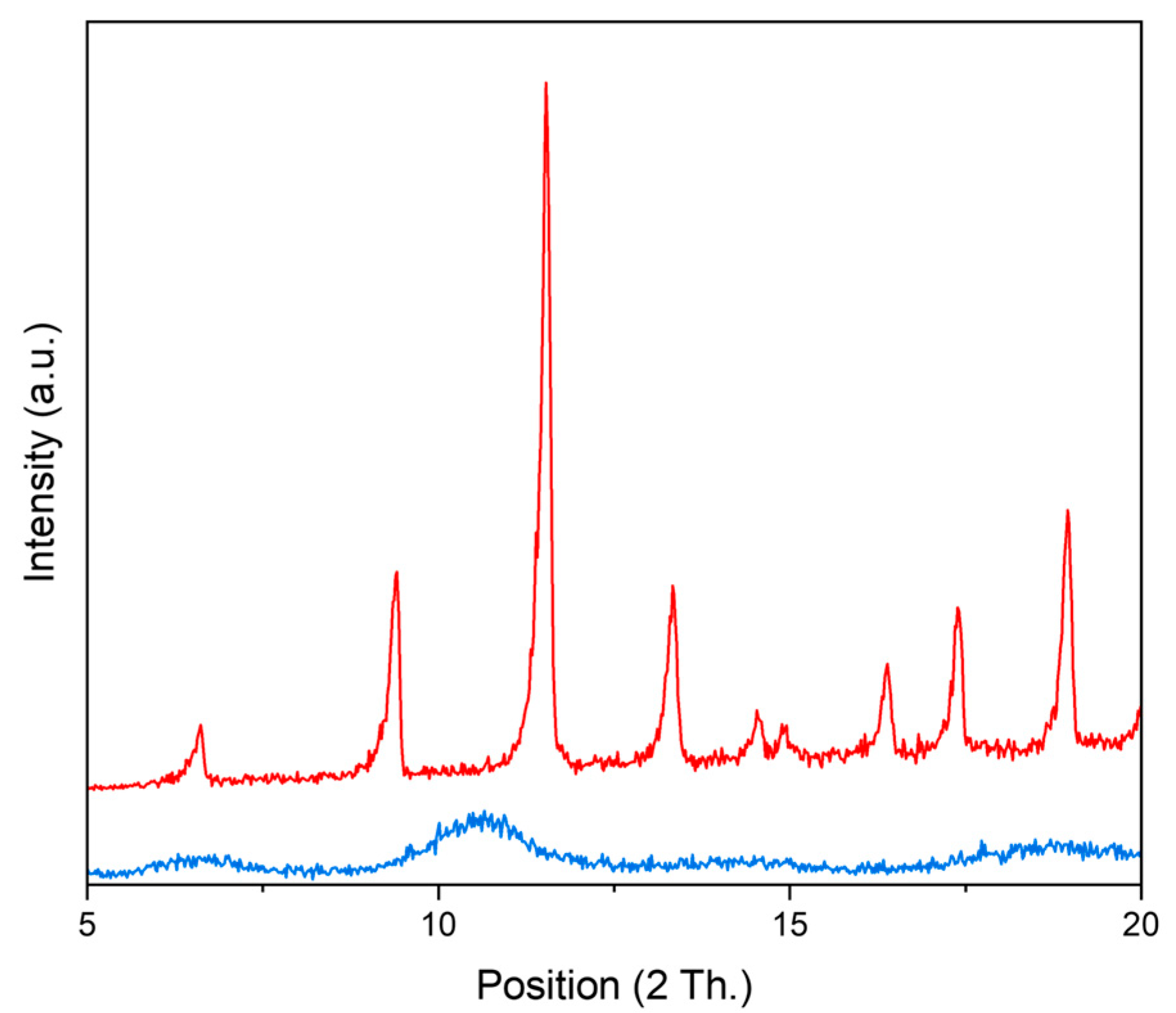
Figure 1. XRD patterns for commercial metal–organic frameworks Basolite C300 (red) and Basolite F300 (blue).
Catalysts 15 01075 g001
Figure 2. TG (solid lines) and DTG (dashed lines) curves of MOF-type catalysts Basolite C300 (red) and Basolite F300 (blue).
Catalysts 15 01075 g002
Figure 3. Catalytic performance of Basolite C300 (◆) and Basolite F300 (●) for the alkylation of benzene with benzyl chloride: (a) benzyl chloride conversion and (b) selectivity to diphenylmethane (DPM). Reaction conditions: benzene-to-benzyl chloride molar ratio of 15:1, 353 K, 50 mg of catalyst, 25.2 mL of reactant mixture.
Catalysts 15 01075 g003
Figure 4. Concentration evolution with time for benzyl chloride (■), diphenylmethane (▲), and polybenzyl derivates () in the recyclability test, with Basolite F300 as catalyst for the alkylation of benzene with benzyl chloride: The beginning of a new cycle is marked with dashed lines. Reaction conditions: benzene-to-benzyl chloride molar ratio of 15:1, at 353 K, with 50 mg of catalyst.
Catalysts 15 01075 g004
Figure 5. Catalytic performance of FeCl3 for the alkylation of benzene with benzyl chloride, at (a) 323 K and (b) 353 K: benzyl chloride conversion (●), selectivity to diphenylmethane (★), and selectivity to polybenzyl products (). Reaction conditions: benzene-to-benzyl chloride molar ratio of 15:1, with 10.5 mg of Fe, and 25.2 mL of reactant mixture.
Catalysts 15 01075 g005
Scheme 1. Proposed reaction pathway for alkylation of benzene with benzyl chloride (BC) to diphenylmethane (DPM) [4].
Catalysts 15 01075 sch001
Figure 6. Kinetic model fitting for concentration of benzyl chloride (■) and diphenylmethane (▲) evolution with time in alkylation of benzene over (a) Basolite C300 and (b) Basolite F300. Reaction conditions: benzene-to-benzyl chloride molar ratio of 15:1, at 353 K, with 50 mg of catalyst.
Catalysts 15 01075 g006
Table 1. Textural properties of the commercial metal–organic frameworks used as catalysts in the present work.
TradenameFrameworkSBET
(m2/g)
Microporosity
(m2/g)
Vmicropores
(cm3/g)
Vmesopores
(cm3/g)
Dp (nm)
Basolite F300Fe(BTC)9626450.300.085.8
Basolite C300Cu3(BTC)2151412680.560.053.2
Table 2. Catalytic performance comparison for alkylation of benzene with benzyl chloride over heterogeneous and homogeneous catalysts (B = Benzene, BC = Benzyl chloride, M = Metal).
CatalystB:BC molM:BC molT (K)t (h) χ (%) φ i , t (%)TOR (mmolBC/molM·s)Ref.
Cu-based catalysts
Basolite C300150.0103530.6750.216.820.2This work
Cu-HMS-25150.0033530.7550.069.668.0[38]
CuCl2/Al2O3170.0553533.0087.691.41.5[8]
Basolite C300150.0103533.0076.216.56.8This work
Fe-based catalysts
FeCl3/Al2O3170.0553533.0098.497.61.6[8]
Basolite F300150.0103531.25100.072.022.2This work
MIL-100(Fe)100.0383430.28100.0100.026.0[20]
FeKIT-5(12)150.0163530.58100.0100.029.4[3]
Fe-M-MOR170.0123430.50100.0100.044.5[9]
Fe-ZSM-5150.0023531.48100.045.078.5[4]
Fe-HMS-50150.0023532.00100.0100.087.7[15]
Homogeneous catalysts
AlCl330.0943580.50100.058.05.9[39]
CuCl2190.0863530.8690.043.83.4[40]
FeCl3190.0713530.5190.052.36.9[40]
Table 3. Fitting parameters of the proposed kinetic model for benzene alkylation with benzyl chloride in the presence of Basolite MOFs as catalysts.
Catalystk1 103 (min−1)k2 103 (min−1)k3 105 (min−1)
Basolite C3001.8410.00.64
Basolite F30025.025.10.0
Disclaimer/Publisher’s Note: The statements, opinions and data contained in all publications are solely those of the individual author(s) and contributor(s) and not of MDPI and/or the editor(s). MDPI and/or the editor(s) disclaim responsibility for any injury to people or property resulting from any ideas, methods, instructions or products referred to in the content.