Triptolide: A Narrative Review of Its Traditional Use, Derivatives, Pharmacology, Antitumor Effect, and Clinical Applications

Simple Summary
Abstract
1. Introduction
2. Plant TwHF Characteristics and Geographic Distribution
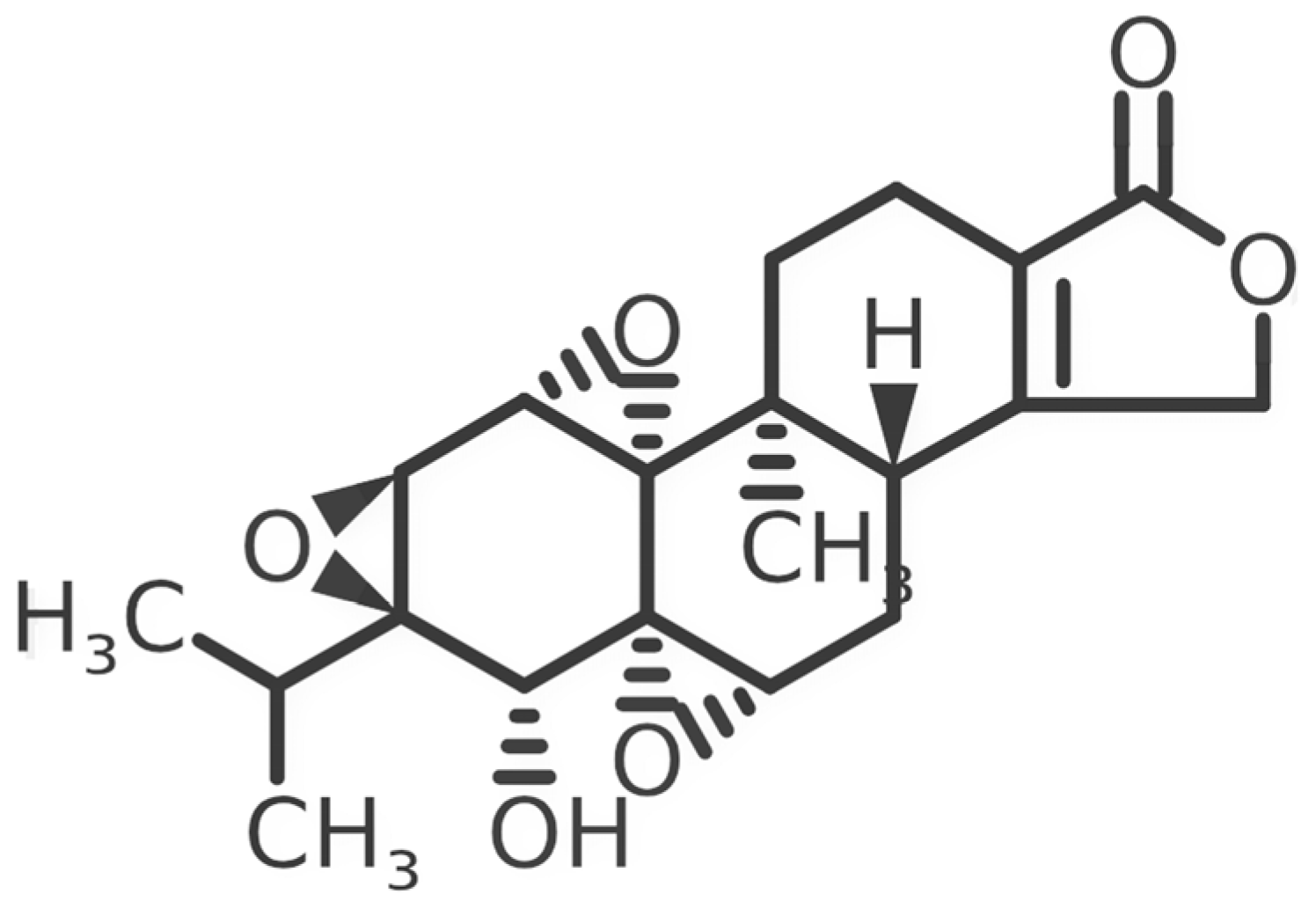
3. Traditional Uses of TwHF and Chemical Structure of TPL

| The Name or Origin of Traditional Uses | Main Components | Usage | Reference |
|---|---|---|---|
| TwHF | Leaves of TWHF | Itchy skin, external use | https://www.hnysfww.com/mobile/goods.php?id=9024 (accessed on 12 November 2025) |
| TwHF | Flower of TWHF, Lindera aggregata (Sims) Kosterm | Skin sores, external use | https://www.hnysfww.com/mobile/goods.php?id=9024 (accessed on 12 November 2025) |
| HUO BA HUA GEN Tablet | Root of T. hypoglaucum | Psoriasis, chronic nephritis | https://d.wanfangdata.com.cn/periodical/CiBQZXJpb2RpY2FsQ0hJU29scjkyMDI2MDMwNjE2NTI1NxIUemd6eHlqaHNienoyMDAzMDcwMTgaCGxiMmY4enkz (accessed on 12 November 2025) https://d.wanfangdata.com.cn/periodical/CiBQZXJpb2RpY2FsQ0hJU29scjkyMDI2MDMwNjE2NTI1NxINemhwZjIwMDAwMjAzMhoIbHdxZ3g0bDQ%3D (accessed on 12 November 2025) |
| Tripterygium glycosides tablets | Tripterygium glycosides | Rheumatoid arthritis, nephrotic syndrome, | https://d.wanfangdata.com.cn/periodical/CiBQZXJpb2RpY2FsQ0hJU29scjkyMDI2MDMwNjE2NTI1NxIUZ3VhbmdkeXh5eGIyMDAyMDMwMzYaCHN4OXhleXdq (accessed on 12 November 2025) |
| TwHF tablets | Triptolide | Rheumatoid arthritis, nephrotic syndrome, | https://d.wanfangdata.com.cn/thesis/Ch1UaGVzaXNOZXdTb2xyOVMyMDI2MDExNzA4NTkxNhIHWTgwMzUzNRoIZDZkZmNuc3g%3D (accessed on 12 November 2025) https://d.wanfangdata.com.cn/periodical/CiBQZXJpb2RpY2FsQ0hJU29scjkyMDI2MDMwNjE2NTI1NxINdGp6eTIwMjEwMjAxNhoINTR6aDV0d24%3D (accessed on 12 November 2025) |
| Jin Guan Tablets | TwHF, Dipsacus asper Wall. ex Henry, Chinese yam, Asarum heterotropoides F. Schmidt, etc. | Rheumatoid arthritis, ankylosing spondylitis | https://d.wanfangdata.com.cn/periodical/CiBQZXJpb2RpY2FsQ0hJU29scjkyMDI2MDMwNjE2NTI1NxIOenh5amgyMDA5MDIwMDIaCGtvcWpjemNy (accessed on 12 November 2025) |
| Shuangniu Trauma Medicinal Wine | Root of TwHF, aconitum kusnezoffii, safflower, etc. | Traumatic injuries, external | http://m.zhongyoo.com/yaojiu/5114.html (accessed on 12 November 2025) |
| Kidney disease prescription | TwHF, Chrysanthemum, dandelion, bittercress | Nephrotic syndrome | [17] |
| Anti-rheumatic wine | TwHF, Clematis chinensis, Rehmannia root, Polygonatum sibiricum | Rheumatoid arthritis | https://d.wanfangdata.com.cn/periodical/CiBQZXJpb2RpY2FsQ0hJU29scjkyMDI2MDMwNjE2NTI1NxINaGJ6eTIwMDMwMzAwMxoIOG95bDVjOXQ%3D (accessed on 12 November 2025) |
| God’s Response All-Effective Ointment | TwHF, Aconitum kusnezoffii, Linderae sibiricum, Areca catechu | All wind-induced swelling and toxic diseases | http://ethnobotany.cn/ (accessed on 12 November 2025) |
| Insecticide | TwHF | Insecticides to larva | [18] |
4. Pharmacology
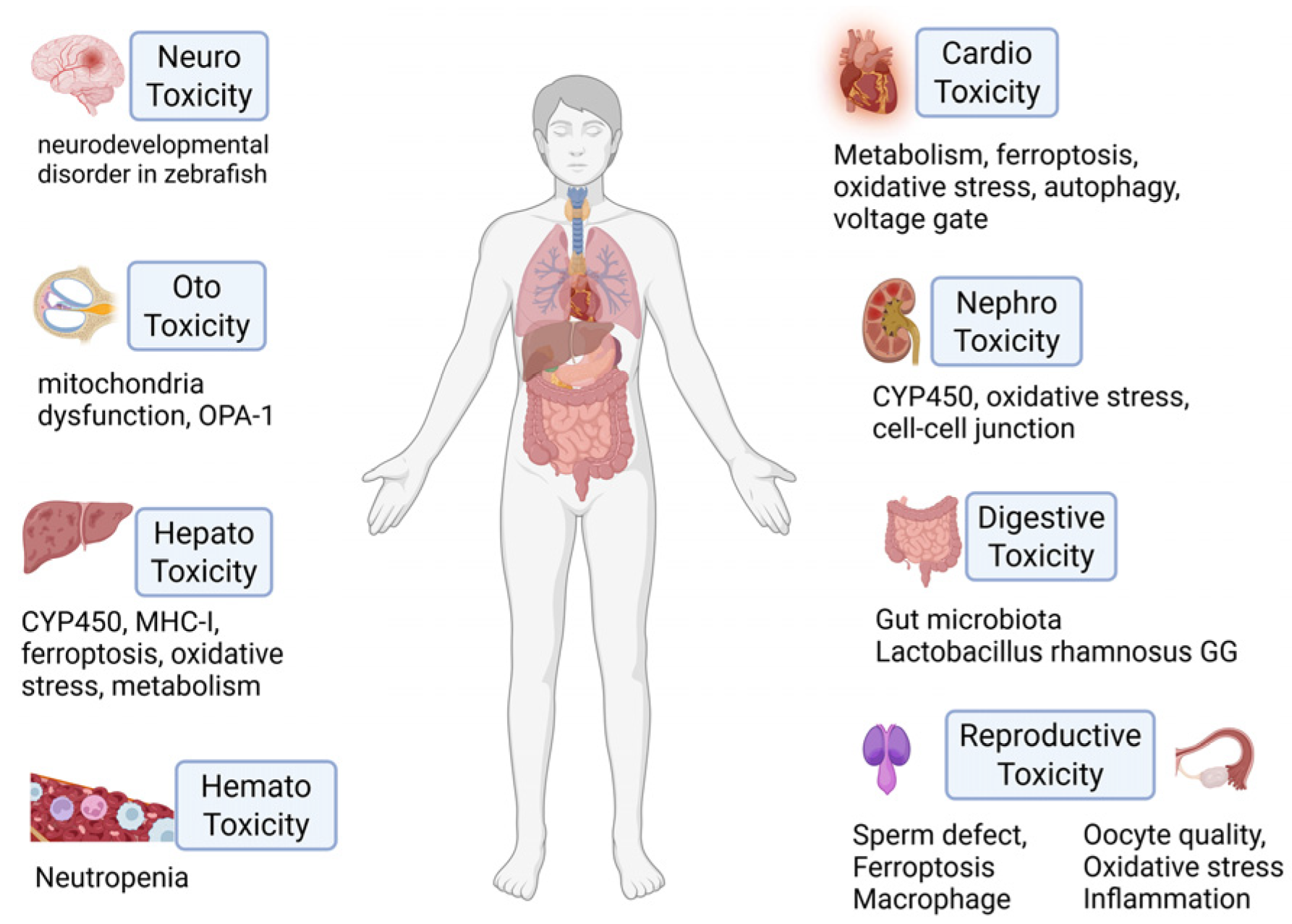
4.1. Toxicity
4.2. PK
4.3. Molecular Docking
5. TPL Derivations and Delivery System
5.1. Chemical Structure of TPL’s Derivation
5.2. TPL Delivery
| Name | Molecular Formula * | Advantage | Reference |
|---|---|---|---|
| TPL |  | [16] | |
| ZT01 |  | Strong anti-inflammatory effects and low toxicity; obviously beneficial effect on DSS-induced colitis | [75] |
| PG490-88 (Omtriptolide) |  | Highly effective in prevention of murine GVHD via inhibition of alloreactive T cell expansion through interleukin-2 production | [76] |
| LLDT-8 |  | Inhibits T cell activation; reduces toxicity | [77] |
| LLDT-246 |  | Suppresses NF-κB signaling by interpreting AKT/GSK3β/mTOR pathway on HCT-116 cells | [78] |
| LLDT-288 | 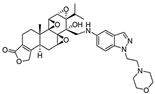 | Efficacy in human prostate xenograft mice model with obviously low toxicity; no inhibitory effects on CYP450 isoforms | [79] |
| LLDT-67 | 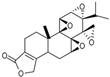 | Neuroprotective effect: enhances NGF synthesis in astrocytes in the midbrain and rescue dopaminergic neurons indirectly through TrkA activation | [65] |
| Epoxide-transposition analogues of triptolide |  | Cytotoxicity to A549+HT29 | [80] |
| MRx-102 | Not available | Decreased leukemia burden and increased survival time in mouse; Inhibited Wnt pathway in lung cancer | [67,81] |
| TP-disulfide-CR7 (TP-S-S-CR7) |  | Reduce toxicity to skin and organ; No effect on the intracellular ROS; | [82] |
| Triptolidyl 2-(1-methylpiperidine-1-yl) acetate and a series of C-14 triptolide derivatives (17 types) | 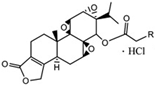 | Decreases toxicity and increases water solubility; efficacy on imatinib-resistant CML | [83] |
| TRC4 |  | Decreases the nuclear retinoid X receptor-α; inactivates AKT and induces apoptosis | [64] |
| TPL-memantine |  | Neuroprotective effect against Aβ1–42 toxicity; inhibitory effect against LPS-induced TNF-α production | [84] |
| Minnelide |  | Increases water solubility and bioavailability; reduces systemic toxicity; clinical trial for leukemia, pancreatic and gastric cancer | [2,85] |
| Tryptophan (Trp), Valine (Val), and Lysine (Lys) conjugated to TPL |  | Pancreatic-cancer-selective delivery system; increases cytotoxicity | [86] |
| Triptolide aminoglycoside (TPAG) |  | Increases kidney-targeting efficiency; protective effect against renal ischemia/reperfusion injury; low systemic toxicity | [87] |
| TP-CSO | 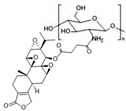 | Increases water solubility; reduces systemic toxicity; increases half-life in blood circulation | [3] |
| Cet-TPL |  | Target-specific cytotoxicity against EGFR-expressing cancer cells; reduced in vivo toxicity | [88] |
| CCTP | Not available | Reduced in vivo toxicity | [89] |
| CK21 |  | Inhibits NF-kB pathway; increases intracellular ROS; reduces toxicity in vivo | [90] |
| CL20 | 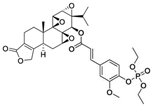 | Strong cytotoxicity to human hepatoma | [91] |
| AS1411-triptolide conjugate (AS-TP) |  | In situ triptolide release and increases intra-tumor triptolide accumulation; increases anti-TNBC efficacy and reduces in vivo toxicity | [92] |
| TPL loaded nanoparticle platform composed of L-ascorbate palmitate | Not available | Increases water solubility; reduces systemic toxicity; inhibits the erosion of synovitis and bone tissue | [93] |
| TP-PEG-SS assembled with ginsenoside Rg3 and lecithin to form nanovesicles | 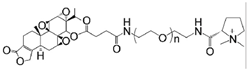 | Targets mitochondria and M2 macrophage; selectively accumulates in the tumor; improves the immunosuppressive tumor microenvironment | [94] |
| Functionally modified triptolide liposome (FA+TPP-TP-Lips) |  | Accumulates in tumor tissues; improves their targeted delivery to mitochondria; reduces systemic toxicity | [95] |
| TP-P1 |  | Improves water solubility and rapid release; inhibits acute myeloid leukemia in vivo; enhances the efficacy of FLT3 inhibitors | [96] |
| TPDMSA | 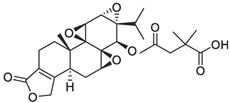 | Suppresses influenza A virus replication and regulates innate immune response | [97] |
| TPL@TFBF | Not available | Triggers systemic antitumor immune responses; induces ferroptosis and pyroptosis; synthetic effects when combined with immune checkpoint blockade | [98] |
| A10 (one silyl ether-based linker conjugated with antibody drug) | 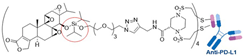 | Targeted cytotoxicity for cells with high PD-L1 expression; bystander killing effect on cells with low PD-L1 expression; accumulates in tumor tissues | [99] |
| C60-SMEDDS/TP | Not available | Reduces toxicity to normal tissues | [100] |
| Na2GA&TP-BM | Not available | Increases cytotoxicity to tumor cells; increases water solubility; extends the blood circulation time with less system toxicity | [101] |
| TP-siRC@tHyNPs | Not available | Enhances targeted delivery through DR5 receptor; prolongs the half-life of TP and decreases its in vivo toxicity | [71] |
| Triptolidiol | 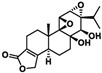 | NLRP3 inhibitor; regulates inflammasome assembly and activation by decreasing K63-linked ubiquitination | [102] |
| TP-DEA2 |  | Improves water solubility; reduces toxicity; inhibits pulmonary fibrosis by reducing the secretion of a-SMA in fibroblasts | [103] |
| A9 (TPO–furoxan conjugation) | 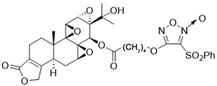 | Enhances water solubility and safety; integrates NO-mediated ROS induction and FOCM inhibition | [104] |
| TP-PSP | Not available | Kidney-targeted delivery; enhances water solubility and reduces renal, cardiac, gastrointestinal, and hepatic toxicity | [105] |
| STP1 |  | Modulates the differentiation of B cells into plasma cells and T cells into Tfh cells; regulates B-cell receptor and T-cell receptor signaling by directly targeting Fyn kinase | [106] |
6. The Antitumor Mechanism and Preclinical Studies of TPL
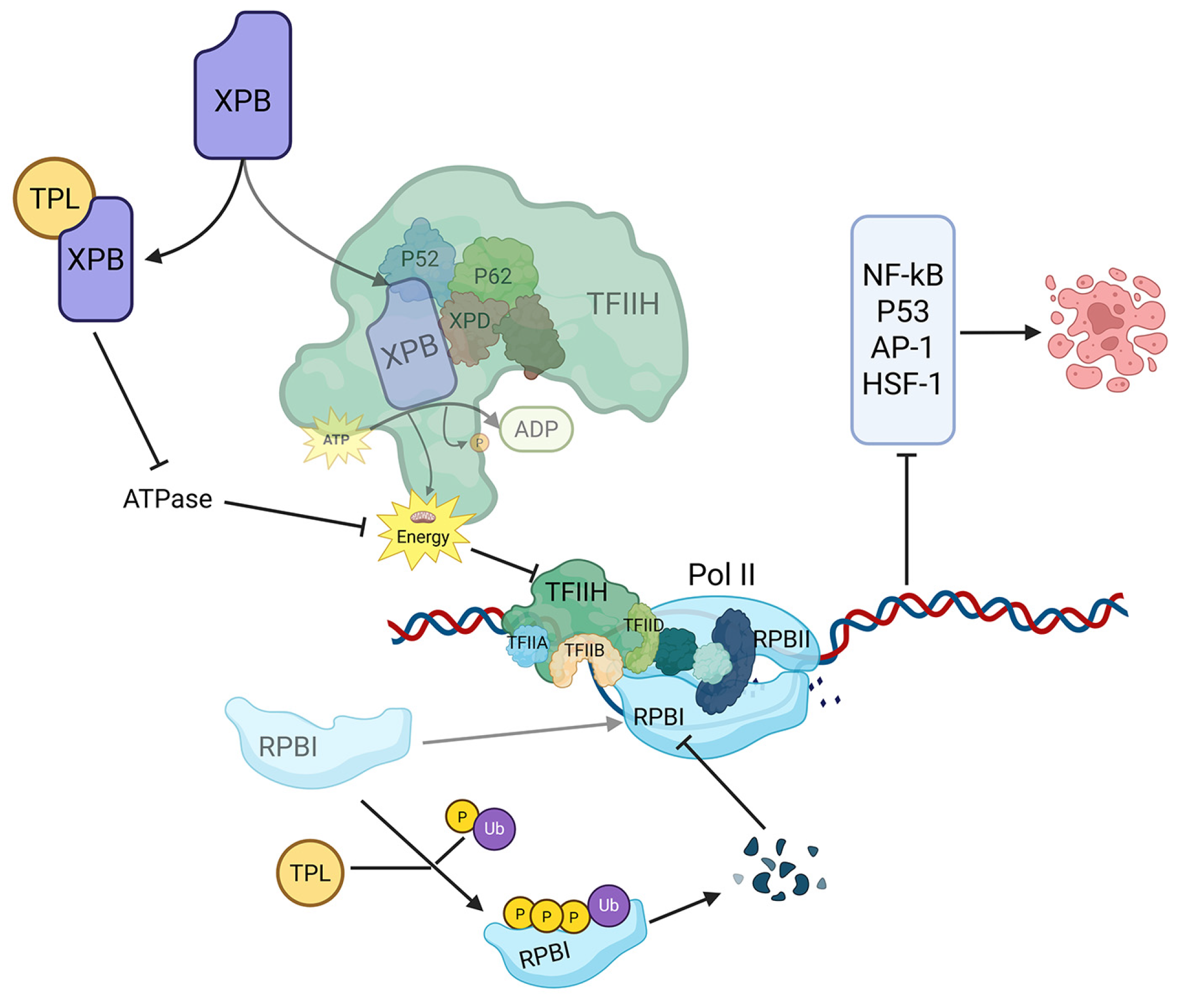
6.1. XPB and RPB1 Are the Major Targets of TPL
6.2. Glioma
6.3. Pancreatic Tumor
6.4. Leukemia
6.5. Lung Cancer
6.6. Other Cancers
7. Clinical Trial
| ID | Title | Tumor Type | Phase | Intervention | Status | Conclusion | Reference * |
|---|---|---|---|---|---|---|---|
| NCT04896073 | Superenhancer Inhibitor Minnelide in Advanced Refractory Adenosquamous Carcinoma of the Pancreas | Advanced Refractory Adenosquamous Carcinoma of the Pancreas | II | Minnelide | Completed | Platform data without publication. A total of 16 patients were enrolled and 12 patients completed the trial. The investigator provided baseline characteristics including age, sex, ethnicity, race, and region. In term of side effects, 8.7–25% patients showed grade 4 side effects, mainly related to blood cell (anemia, platelet and white blood cell) count decrease, without grade 5 side effects. However, most importantly, neither patient showed complete response nor partial response. Overall survival found to be 4.91 (1.96–7.85) months. | [149] |
| NCT03117920 | A Phase II, International Open Label Trial of Minnelide in Patients with Refractory Pancreatic Cancer | Refractory Pancreatic Cancer | II | Minnelide | Completed | No results posted on the platform or publication. | ClinicalTrials.gov (NCT03117920) |
| NCT05566834 | Minnelide Capsules Alone and in Combination with Paclitaxel in Advanced Gastric Cancer (AGC) | Advanced Gastric Cancer | I | Minnelide | Completed | Minnelide alone at a dose of 1.25 mg was tolerable for AGC patients and the combination of Minnelide and paclitaxel exhibited meaningful clinical efficacy alongside a manageable safety profile. | [147] |
| NCT01927965 | Study of Minnelide in Patients with Advanced GI Tumors | Advanced Gastrointestinal Carcinoma | I | Minnelide | Completed | The trial identified a dose and schedule of Minnelide in patients with refractory GI cancers and observed efficacy of Minnelide treatment. Grade ≥ 3 toxicities occurred in 69% of patients; the most common side effect was neutropenia (38%). | [148] |
| NCT05166616 | Minnelide and Osimertinib for the Treatment of Advanced EGFR Mutated Non-small-cell Lung Cancer | Advanced EGFR Mutated NSCLC | Ib | Minnelide + osimertinib | Recruiting | ClinicalTrials.gov (NCT05166616) | |
| NCT03129139 | A Phase 1, Multi-Center, Open-Label, Dose-Escalation, Safety, Pharmacokinetic, and Pharmacodynamic Study of Minnelide Capsules Given Alone or in Combination with Protein-Bound Paclitaxel in Patients With Advanced Solid Tumors | Advanced Solid Tumors | I | Minnelide | Recruiting | ClinicalTri-als.gov (NCT03129139) | |
| NCT05557851 | Minnelide Along with Abraxane Plus Gemcitabine in Patients With Metastatic Adenocarcinoma of the Pancreas | Metastatic Adenocarcinoma of the Pancreas | Ib | Minnelide + Abraxane + gemcitabine | Recruiting | ClinicalTri-als.gov (NCT05557851) | |
| NCT03760523 | Dose Escalation Study of Minnelide in Relapsed or Refractory Acute Myeloid Leukemia | Relapsed or Refractory Acute Myeloid Leukemia | I | Minnelide | Terminated | Two dose-limiting toxicity events occurred. | ClinicalTri-als.gov (NCT03760523) |
| NCT03347994 | Minnelide in Adult Patients with Relapsed or Refractory Acute Myeloid Leukemia (AML) | Relapsed or Refractory AML | I | Minnelide | Withdrawn | Discordance in contractual language and terms. | ClinicalTri-als.gov (NCT03347994) |
8. Conclusions
Author Contributions
Funding
Data Availability Statement
Acknowledgments
Conflicts of Interest
Abbreviations
| TPL | triptolide |
| ROS | reactive oxygen species |
| GPX4 | glutathione peroxidase 4 |
| PK | pharmacokinetic |
| DMG | diffuse midline glioma |
| Cmax | maximum concentration |
| Tmax | time to maximum concentration |
| TwHF | Tripterygium wilfordii Hook. f. |
| HCC | hepatocellular carcinoma |
| MOFs | metal–organic frameworks |
| NSCLC | non-small-cell lung cancer |
| PLGA | Poly (lactic-co-glycolic acid) |
| TF | transcription factor |
| AGC | advanced gastric cancer |
| AML | acute myeloid leukemia |
References
- Tao, X.; Lipsky, P.E. The Chinese Anti-Inflammatory and Immunosuppressive Herbal Remedy Tripterygium wilfordii Hook F. Rheum. Dis. Clin. North Am. 2000, 26, 29–50. [Google Scholar] [CrossRef]
- Rodriguez-Blanco, J.; Salvador, A.D.; Suter, R.K.; Swiderska-Syn, M.; Palomo-Caturla, I.; Kliebe, V.; Shahani, P.; Peterson, K.; Turos-Cabal, M.; Vieira, M.E.; et al. Triptolide and Its Prodrug Minnelide Target High-Risk Myc-Amplified Medulloblastoma in Preclinical Models. J. Clin. Investig. 2024, 134, e171136. [Google Scholar] [CrossRef] [PubMed]
- Wang, X.; Zeng, H.; Zhu, X.; Xu, D.; Tian, Q.; Wang, C.; Zhao, L.; Zhao, J.; Miao, M.; Wu, X. TP-CSO: A Triptolide Prodrug for Pancreatic Cancer Treatment. Molecules 2022, 27, 3686. [Google Scholar] [CrossRef]
- Shi, Y.F.; Liu, L.; He, L.L.; Ye, J.; Lin, Z.J.; Yuan, D.L.; Deng, M.M.; Fang, Z.H.; Carter, B.Z.; Xu, B. Combining Triptolide with Abt-199 Is Effective against Acute Myeloid Leukemia through Reciprocal Regulation of Bcl-2 Family Proteins and Activation of the Intrinsic Apoptotic Pathway. Cell Death Dis. 2020, 11, 555. [Google Scholar] [CrossRef]
- Titov, D.V.; Gilman, B.; He, Q.L.; Bhat, S.; Low, W.K.; Dang, Y.; Smeaton, M.; Demain, A.L.; Miller, P.S.; Kugel, J.F.; et al. Xpb, a Subunit of Tfiih, Is a Target of the Natural Product Triptolide. Nat. Chem. Biol. 2011, 7, 182–188. [Google Scholar] [CrossRef] [PubMed]
- Hou, W.; Liu, B.; Xu, H. Triptolide: Medicinal Chemistry, Chemical Biology and Clinical Progress. Eur. J. Med. Chem. 2019, 176, 378–392. [Google Scholar] [CrossRef] [PubMed]
- Li, M.; Li, J.; Tang, Q.; Zhu, Y. Potential Antitumor Activity of Triptolide and Its Derivatives: Focused on Gynecological and Breast Cancers. Biomed. Pharmacother. 2024, 180, 117581. [Google Scholar] [CrossRef]
- Cui, D.; Zhang, C.; Zhang, L.; Zheng, J.; Wang, J.; He, L.; Jin, H.; Kang, Q.; Zhang, Y.; Li, N.; et al. Natural Anti-Cancer Products: Insights from Herbal Medicine. Chin. Med. 2025, 20, 82. [Google Scholar] [CrossRef]
- Feng, K.; Li, X.; Bai, Y.; Zhang, D.; Tian, L. Mechanisms of Cancer Cell Death Induction by Triptolide: A Comprehensive Overview. Heliyon 2024, 10, e24335. [Google Scholar] [CrossRef]
- AbdulHussein, A.H.; Al-Taee, M.M.; Radih, Z.A.; Aljuboory, D.S.; Mohammed, Z.Q.; Hashesh, T.S.; Riadi, Y.; Hadrawi, S.K.; Najafi, M. Mechanisms of Cancer Cell Death Induction by Triptolide. Biofactors 2023, 49, 718–735. [Google Scholar] [CrossRef]
- Xu, T.; Zhu, Y.; Ge, S.; Liu, S.B. The Roles of Tpl in Hematological Malignancies. Hematology 2023, 28, 2231765. [Google Scholar] [CrossRef]
- Cui, D.; Xu, D.; Yue, S.; Yan, C.; Liu, W.; Fu, R.; Ma, W.; Tang, Y. Recent Advances in the Pharmacological Applications and Liver Toxicity of Triptolide. Chem. Biol. Interact. 2023, 382, 110651. [Google Scholar] [CrossRef] [PubMed]
- He, X.; Wang, N.; Zhang, Y.; Huang, X.; Wang, Y. The Therapeutic Potential of Natural Products for Treating Pancreatic Cancer. Front. Pharmacol. 2022, 13, 1051952. [Google Scholar] [CrossRef] [PubMed]
- Wei, J.; Yan, Y.; Chen, X.; Qian, L.; Zeng, S.; Li, Z.; Dai, S.; Gong, Z.; Xu, Z. The Roles of Plant-Derived Triptolide on Non-Small Cell Lung Cancer. Oncol. Res. 2019, 27, 849–858. [Google Scholar] [CrossRef] [PubMed]
- Liu, C.; Wang, J.; Ko, Y.Z.; Shiao, M.S.; Wang, Y.; Sun, J.; Yuan, Q.; Wang, L.; Chiang, Y.C.; Guo, L. Genetic Diversities in Wild and Cultivated Populations of the Two Closely-Related Medical Plants Species, Tripterygium wilfordii and T. Hypoglaucum (Celastraceae). BMC Plant Biol. 2024, 24, 195. [Google Scholar] [CrossRef]
- Kupchan, S.M.; Court, W.A.; Dailey, R.G., Jr.; Gilmore, C.J.; Bryan, R.F. Triptolide and Tripdiolide, Novel Antileukemic Diterpenoid Triepoxides from Tripterygium wilfordii. J. Am. Chem. Soc. 1972, 94, 7194–7195. [Google Scholar] [CrossRef]
- Chen, Y.; Gong, Z.; Chen, X.; Tang, L.; Zhao, X.; Yuan, Q.; Cai, G. Tripterygium wilfordii Hook F (a Traditional Chinese Medicine) for Primary Nephrotic Syndrome. Cochrane Database Syst. Rev. 2013, 2013, CD008568. [Google Scholar] [CrossRef]
- Luo, D.Q.; Zhang, X.; Tian, X.; Liu, J.K. Insecticidal Compounds from Tripterygium wilfordii Active against Mythimna Separata. Z. Naturforsch. C J. Biosci. 2004, 59, 421–426. [Google Scholar] [CrossRef]
- Jiang, H.Y.; Bao, Y.N.; Lin, F.M.; Jin, Y. Triptolide Regulates Oxidative Stress and Inflammation Leading to Hepatotoxicity Via Inducing Cyp2e1. Hum. Exp. Toxicol. 2021, 40, S775–S787. [Google Scholar] [CrossRef]
- Lu, Y.; Xie, T.; Zhang, Y.; Zhou, F.; Ruan, J.; Zhu, W.; Zhu, H.; Feng, Z.; Zhou, X. Triptolide Induces Hepatotoxicity Via Inhibition of Cyp450s in Rat Liver Microsomes. BMC Complement. Altern. Med. 2017, 17, 15. [Google Scholar] [CrossRef]
- Xiao, X.; Zhang, T.; Huang, J.; Zhao, Q.; Li, F. Effect of Cyp3a4 on Liver Injury Induced by Triptolide. Biomed. Chromatogr. 2020, 34, e4864. [Google Scholar] [CrossRef] [PubMed]
- Zhang, H.; Yuan, Z.; Wang, J.; Tang, Q.; Miao, Y.; Yuan, Z.; Huang, X.; Zhu, Y.; Nong, C.; Zhang, L.; et al. Triptolide Leads to Hepatic Intolerance to Exogenous Lipopolysaccharide and Natural-Killer-Cell Mediated Hepatocellular Damage by Inhibiting Mhc Class I Molecules. Phytomedicine 2023, 109, 154621. [Google Scholar] [CrossRef]
- Zou, M.; Nong, C.; Yu, Z.; Cai, H.; Jiang, Z.; Xue, R.; Huang, X.; Sun, L.; Zhang, L.; Wang, X. The Role of Invariant Natural Killer T Cells and Associated Immunoregulatory Factors in Triptolide-Induced Cholestatic Liver Injury. Food Chem. Toxicol. 2020, 146, 111777. [Google Scholar] [CrossRef] [PubMed]
- Guo, L.; Yang, Y.; Ma, J.; Xiao, M.; Cao, R.; Xi, Y.; Li, T.; Huang, T.; Yan, M. Triptolide Induces Hepatotoxicity by Promoting Ferroptosis through Nrf2 Degradation. Cell Biol. Toxicol. 2024, 40, 94. [Google Scholar] [CrossRef] [PubMed]
- Hu, S.; Tang, B.; Lu, C.; Wang, S.; Wu, L.; Lei, Y.; Tang, L.; Zhu, H.; Wang, D.; Yang, S. Lactobacillus Rhamnosus Gg Ameliorates Triptolide-Induced Liver Injury through Modulation of the Bile Acid-Fxr Axis. Pharmacol. Res. 2024, 206, 107275. [Google Scholar] [CrossRef]
- Shen, Q.; Wang, J.; Yuan, Z.; Jiang, Z.; Shu, T.; Xu, D.; He, J.; Zhang, L.; Huang, X. Key Role of Organic Cation Transporter 2 for the Nephrotoxicity Effect of Triptolide in Rheumatoid Arthritis. Int. Immunopharmacol. 2019, 77, 105959. [Google Scholar] [CrossRef]
- Sun, L.; Li, H.; Huang, X.; Wang, T.; Zhang, S.; Yang, J.; Huang, S.; Mei, H.; Jiang, Z.; Zhang, L. Triptolide Alters Barrier Function in Renal Proximal Tubular Cells in Rats. Toxicol. Lett. 2013, 223, 96–102. [Google Scholar] [CrossRef]
- Lu, J.; Zhang, Y.; Dong, H.; Sun, J.; Zhu, L.; Liu, P.; Wen, F.; Lin, R. New Mechanism of Nephrotoxicity of Triptolide: Oxidative Stress Promotes Cgas-Sting Signaling Pathway. Free Radic. Biol. Med. 2022, 188, 26–34. [Google Scholar] [CrossRef]
- Li, M.; Hu, T.; Tie, C.; Qu, L.; Zheng, H.; Zhang, J. Quantitative Proteomics and Targeted Fatty Acids Analysis Reveal the Damage of Triptolide in Liver and Kidney. Proteomics 2017, 17, 1700001. [Google Scholar] [CrossRef]
- Li, J.; Jin, J.; Li, M.; Guan, C.; Wang, W.; Zhu, S.; Qiu, Y.; Huang, M.; Huang, Z. Role of Nrf2 in Protection against Triptolide-Induced Toxicity in Rat Kidney Cells. Toxicol. Lett. 2012, 213, 194–202. [Google Scholar] [CrossRef] [PubMed]
- Wang, W.; Yang, Y.; Xiong, Z.; Kong, J.; Fu, X.; Shen, F.; Huang, Z. Inhibition of Glycogen Synthase Kinase 3beta Ameliorates Triptolide-Induced Acute Cardiac Injury by Desensitizing Mitochondrial Permeability Transition. Toxicol. Appl. Pharmacol. 2016, 313, 195–203. [Google Scholar] [CrossRef] [PubMed]
- Xi, Y.; Zhang, Y.; Pan, J.; Chen, S.; Lu, S.; Shen, F.; Huang, Z. Triptolide Dysregulates Glucose Uptake Via Inhibition of Ikkbeta-Nf-Kappab Pathway by P53 Activation in Cardiomyocytes. Toxicol. Lett. 2020, 318, 1–11. [Google Scholar] [CrossRef]
- Xi, Y.; Wang, W.; Wang, L.; Pan, J.; Cheng, Y.; Shen, F.; Huang, Z. Triptolide Induces P53-Dependent Cardiotoxicity through Mitochondrial Membrane Permeabilization in Cardiomyocytes. Toxicol. Appl. Pharmacol. 2018, 355, 269–285. [Google Scholar] [CrossRef]
- Yang, Y.; Wang, W.; Xiong, Z.; Kong, J.; Qiu, Y.; Shen, F.; Huang, Z. Activation of Sirt3 Attenuates Triptolide-Induced Toxicity through Closing Mitochondrial Permeability Transition Pore in Cardiomyocytes. Toxicol. In Vitro 2016, 34, 128–137. [Google Scholar] [CrossRef] [PubMed]
- Qi, X.M.; Zhang, W.Z.; Zuo, Y.Q.; Qiao, Y.B.; Zhang, Y.L.; Ren, J.H.; Li, Q.S. Nrf2/Nrf1 Signaling Activation and Crosstalk Amplify Mitochondrial Biogenesis in the Treatment of Triptolide-Induced Cardiotoxicity Using Calycosin. Cell Biol. Toxicol. 2024, 41, 2. [Google Scholar] [CrossRef]
- Tan, G.; Qin, Z.; Jiang, S.; Zhang, L.; Zhang, G.; Huang, M.; Huang, Z.; Jin, J. Mitoq Alleviates Triptolide-Induced Cardiotoxicity Via Activation of P62/Nrf2 Axis in H9c2 Cells. Toxicol. In Vitro 2023, 86, 105487. [Google Scholar] [CrossRef]
- Huang, C.; Xue, L.F.; Hu, B.; Liu, H.H.; Huang, S.B.; Khan, S.; Meng, Y. Calycosin-Loaded Nanoliposomes as Potential Nanoplatforms for Treatment of Diabetic Nephropathy through Regulation of Mitochondrial Respiratory Function. J. Nanobiotechnol. 2021, 19, 178. [Google Scholar] [CrossRef]
- An, F.; Zhao, R.; Xuan, X.; Xuan, T.; Zhang, G.; Wei, C. Calycosin Ameliorates Advanced Glycation End Product-Induced Neurodegenerative Changes in Cellular and Rat Models of Diabetes-Related Alzheimer’s disease. Chem. Biol. Interact. 2022, 368, 110206. [Google Scholar] [CrossRef]
- Qi, X.M.; Qiao, Y.B.; Zhang, Y.L.; Wang, A.C.; Ren, J.H.; Wei, H.Z.; Li, Q.S. Pgc-1alpha/Nrf1-Dependent Cardiac Mitochondrial Biogenesis: A Druggable Pathway of Calycosin against Triptolide Cardiotoxicity. Food Chem. Toxicol. 2023, 171, 113513. [Google Scholar] [CrossRef]
- Xu, Y.; Li, W.; Wen, R.; Sun, J.; Liu, X.; Zhao, S.; Zhang, J.; Liu, Y.; Zhao, M. Voltage-Gated Sodium Channels, Potential Targets of Tripterygium wilfordii Hook. F. To Exert Activity and Produce Toxicity. J. Ethnopharmacol. 2023, 311, 116448. [Google Scholar] [CrossRef] [PubMed]
- Liu, X.; Chen, C.; Han, D.; Zhou, W.; Cui, Y.; Tang, X.; Xiao, C.; Wang, Y.; Gao, Y. Slc7a11/Gpx4 Inactivation-Mediated Ferroptosis Contributes to the Pathogenesis of Triptolide-Induced Cardiotoxicity. Oxid. Med. Cell Longev. 2022, 2022, 3192607. [Google Scholar] [CrossRef]
- Wang, S.R.; Chen, X.; Ling, S.; Ni, R.Z.; Guo, H.; Xu, J.W. Microrna Expression, Targeting, Release Dynamics and Early-Warning Biomarkers in Acute Cardiotoxicity Induced by Triptolide in Rats. Biomed. Pharmacother. 2019, 111, 1467–1477. [Google Scholar] [CrossRef] [PubMed]
- Romero, N.G.; Gutierrez, G.; Teixido, E.; Li, L.; Klose, J.; Leung, P.C.; Canigueral, S.; Fritsche, E.; Barenys, M. Developmental Neurotoxicity Evaluation of Three Chinese Herbal Medicines in Zebrafish Larvae by Means of Two Behavioral Assays: Touch-Evoked Response and Light/Dark Transition. Reprod. Toxicol. 2023, 121, 108469. [Google Scholar] [CrossRef] [PubMed]
- Huang, Y.Y.; Zhang, Q.; Zhang, J.N.; Zhang, Y.N.; Gu, L.; Yang, H.M.; Xia, N.; Wang, X.M.; Zhang, H. Triptolide up-Regulates Metabotropic Glutamate Receptor 5 to Inhibit Microglia Activation in the Lipopolysaccharide-Induced Model of Parkinson’s Disease. Brain Behav. Immun. 2018, 71, 93–107. [Google Scholar] [CrossRef]
- Gao, J.P.; Sun, S.; Li, W.W.; Chen, Y.P.; Cai, D.F. Triptolide Protects against 1-Methyl-4-Phenyl Pyridinium-Induced Dopaminergic Neurotoxicity in Rats: Implication for Immunosuppressive Therapy in Parkinson’s Disease. Neurosci. Bull. 2008, 24, 133–142. [Google Scholar] [CrossRef] [PubMed]
- Li, J.; Chen, D.; Suo, J.; Li, J.; Zhang, Y.; Wang, Y.; Deng, Z.; Zhang, Q.; Ma, B. Triptolide Induced Spermatogenesis Dysfunction Via Ferroptosis Activation by Promoting K63-Linked Gpx4 Polyubiquitination in Spermatocytes. Chem. Biol. Interact. 2024, 399, 111130. [Google Scholar] [CrossRef] [PubMed]
- Cheng, S.Y.; Yang, Y.F.; Wang, Y.L.; Yue, Z.P.; Chen, Y.Z.; Wang, W.K.; Xu, Z.R.; Li, L.F.; Shen, H.; Qi, Z.M.; et al. Triptolide Exposure Triggers Ovarian Inflammation by Activating Cgas-Sting Pathway and Decrease Oocyte Quality in Mouse. Food Chem. Toxicol. 2025, 196, 115201. [Google Scholar] [CrossRef]
- Zhang, H.R.; Li, Y.P.; Shi, Z.J.; Liang, Q.Q.; Chen, S.Y.; You, Y.P.; Yuan, T.; Xu, R.; Xu, L.H.; Ouyang, D.Y.; et al. Triptolide Induces Panoptosis in Macrophages and Causes Organ Injury in Mice. Apoptosis 2023, 28, 1646–1665. [Google Scholar] [CrossRef]
- Tang, X.; Wang, C.; Hsieh, Y.; Wang, C.; Wang, J.; Han, Z.; Cong, N.; Ma, R.; Chi, F. Triptolide Induces Toxicity in Inner Ear Stem Cells Via Promoting DNA Damage. Toxicol. In Vitro 2019, 61, 104597. [Google Scholar] [CrossRef]
- Song, W.; Liu, M.; Wu, J.; Zhai, H.; Chen, Y.; Peng, Z. Preclinical Pharmacokinetics of Triptolide: A Potential Antitumor Drug. Curr. Drug Metab. 2019, 20, 147–154. [Google Scholar] [CrossRef]
- Zhu, S.; Wang, X.; Zheng, Z.; Zhao, X.E.; Bai, Y.; Liu, H. Synchronous Measuring of Triptolide Changes in Rat Brain and Blood and Its Application to a Comparative Pharmacokinetic Study in Normal and Alzheimer’s Disease Rats. J. Pharm. Biomed. Anal. 2020, 185, 113263. [Google Scholar] [CrossRef] [PubMed]
- Guan, Y.M.; Shen, Q.; He, L.F.; Chen, L.M.; Zang, Z.; Liu, L.; Zhu, W.F.; Li-Hua, C.; Liu, H.N. Pharmacokinetics and Tissue Distribution of Combined Triptolide and Paeoniflorin Regimen for Percutaneous Administration in Rats Assessed by Liquid Chromatography-Tandem Mass Spectrometry. Evid. Based Complement. Alternat Med. 2021, 2021, 8864273. [Google Scholar] [CrossRef] [PubMed]
- Guo, Z.; Wang, H.; Sun, J.; Ma, Y.; Cui, X.; Kou, S.; Jiang, Z.; Zhang, L.; Wang, X.; Wang, T.; et al. The Intestinal Absorption of Triptolide for the Treatment of Rheumatoid Arthritis Is Mediated by Transporters. Int. Immunopharmacol. 2024, 143, 113440. [Google Scholar] [CrossRef]
- Liu, Y.T.; Hu, Y.Q.; Wang, Y.L.; Huang, K.; Chen, G.F.; Zhou, H.; Liu, C.H.; Yang, T. Antibiotic Pretreatment Promotes Orally-Administered Triptolide Absorption and Aggravates Hepatotoxicity and Intestinal Injury in Mice. J. Ethnopharmacol. 2022, 292, 115224. [Google Scholar] [CrossRef]
- Pinzi, L.; Rastelli, G. Molecular Docking: Shifting Paradigms in Drug Discovery. Int. J. Mol. Sci. 2019, 20, 4331. [Google Scholar] [CrossRef]
- Zhai, M.; Chen, T.; Shao, M.; Yang, X.; Qi, Y.; Kong, S.; Jiang, L.; Yang, E. Unveiling the Molecular Mechanisms of Haitang-Xiaoyin Mixture in Psoriasis Treatment Based on Bioinformatics, Network Pharmacology, Machine Learning, and Molecular Docking Verification. Comput. Biol. Chem. 2025, 115, 108352. [Google Scholar] [CrossRef] [PubMed]
- An, X.; Fan, D.; Yin, Z.; Zhang, J.; Zhou, Y.; Tian, R.; Yan, M. Prediction of the Potential Mechanism of Triptolide in Improving Diabetic Nephropathy by Utilizing a Network Pharmacology and Molecular Docking Approach. Front. Biosci. (Landmark Ed.) 2022, 27, 94. [Google Scholar] [CrossRef]
- Zhu, W.; Li, Y.; Zhao, J.; Wang, Y.; Li, Y.; Wang, Y. The Mechanism of Triptolide in the Treatment of Connective Tissue Disease-Related Interstitial Lung Disease Based on Network Pharmacology and Molecular Docking. Ann. Med. 2022, 54, 541–552. [Google Scholar] [CrossRef]
- Song, X.; Zhang, Y.; Dai, E.; Wang, L.; Du, H. Prediction of Triptolide Targets in Rheumatoid Arthritis Using Network Pharmacology and Molecular Docking. Int. Immunopharmacol. 2020, 80, 106179. [Google Scholar] [CrossRef]
- Shen, J.; Fang, Y.; Xu, N.; Chen, H.; Zhu, M.; Li, D.; Chu, Z.; Sunagawa, M.; Liu, Y.; Wang, H.; et al. Exploring the Mechanism of Triptolide Inhibiting the Motility of Fibroblast-Like Synoviocytes in Rheumatoid Arthritis Via Rhoa/Rho-Associated Kinase Axis, Based on Network Pharmacology, Molecular Docking and Molecular Dynamics Simulations. Front. Pharmacol. 2025, 16, 1545514. [Google Scholar] [CrossRef] [PubMed]
- Li, X.; Shan, Y.; Wang, S.; Wang, J.; Heng, X. Triptolide Induces Apoptosis of Glioma Cells by Inhibiting Nf-Kappab Activation During Oxidative Stressv. Sci. Rep. 2024, 14, 29740. [Google Scholar] [CrossRef]
- Seo, E.J.; Dawood, M.; Hult, A.K.; Olsson, M.L.; Efferth, T. Network Pharmacology of Triptolide in Cancer Cells: Implications for Transcription Factor Binding. Investig. New Drugs 2021, 39, 1523–1537. [Google Scholar] [CrossRef]
- Noel, P.; Von Hoff, D.D.; Saluja, A.K.; Velagapudi, M.; Borazanci, E.; Han, H. Triptolide and Its Derivatives as Cancer Therapies. Trends Pharmacol. Sci. 2019, 40, 327–341. [Google Scholar] [CrossRef]
- Wang, P.Y.; Zeng, W.J.; Liu, J.; Wu, Y.L.; Ma, Y.; Zeng, Z.; Pang, J.Y.; Zhang, X.K.; Yan, X.; Wong, A.S.T.; et al. Trc4, an Improved Triptolide Derivative, Specifically Targets to Truncated Form of Retinoid X Receptor-Alpha in Cancer Cells. Biochem. Pharmacol. 2017, 124, 19–28. [Google Scholar] [CrossRef]
- Wu, D.D.; Huang, L.; Zhang, L.; Wu, L.Y.; Li, Y.C.; Feng, L. Lldt-67 Attenuates Mptp-Induced Neurotoxicity in Mice by up-Regulating Ngf Expression. Acta Pharmacol. Sin. 2012, 33, 1187–1194. [Google Scholar] [CrossRef]
- Chen, Y.; Zhang, L.; Ni, J.; Wang, X.; Cheng, J.; Li, Y.; Zhen, X.; Cao, T.; Jia, J. Lldt-8 Protects against Cerebral Ischemia/Reperfusion Injury by Suppressing Post-Stroke Inflammation. J. Pharmacol. Sci. 2016, 131, 131–137. [Google Scholar] [CrossRef] [PubMed]
- Carter, B.Z.; Mak, D.H.; Shi, Y.; Fidler, J.M.; Chen, R.; Ling, X.; Plunkett, W.; Andreeff, M. Mrx102, a Triptolide Derivative, Has Potent Antileukemic Activity in Vitro and in a Murine Model of Aml. Leukemia 2012, 26, 443–450. [Google Scholar] [CrossRef] [PubMed]
- Xu, H.; Liu, B. Triptolide-Targeted Delivery Methods. Eur. J. Med. Chem. 2019, 164, 342–351. [Google Scholar] [CrossRef] [PubMed]
- Liu, H.; Shen, M.; Zhao, D.; Ru, D.; Duan, Y.; Ding, C.; Li, H. The Effect of Triptolide-Loaded Exosomes on the Proliferation and Apoptosis of Human Ovarian Cancer Skov3 Cells. Biomed. Res. Int. 2019, 2019, 2595801. [Google Scholar] [CrossRef]
- Li, L.; He, D.; Guo, Q.; Zhang, Z.; Ru, D.; Wang, L.; Gong, K.; Liu, F.; Duan, Y.; Li, H. Exosome-Liposome Hybrid Nanoparticle Codelivery of Tp and Mir497 Conspicuously Overcomes Chemoresistant Ovarian Cancer. J. Nanobiotechnology 2022, 20, 50. [Google Scholar] [CrossRef]
- Gu, Y.; Li, A.; Zeng, Y.; He, M.; Qi, F.; Liu, R.; Cai, H.; Li, D.; Tang, X.; Fu, Z.; et al. Engineering Hybrid Nanoparticles for Targeted Codelivery of Triptolide and Cyp3a4-Sirna against Pulmonary Metastatic Melanoma. Sci. Adv. 2025, 11, eadv6990. [Google Scholar] [CrossRef] [PubMed]
- Li, Z.; Lan, J.; Wu, Y.; Ding, Y.; Zhang, T. Homotypic Cell Membrane-Camouflaged Biomimetic Plga Nanoparticle Loading Triptolide for the Treatment of Hepatocellular Carcinoma. Drug Deliv. 2024, 31, 2354687. [Google Scholar] [CrossRef]
- Li, Z.; Yang, G.; Han, L.; Wang, R.; Gong, C.; Yuan, Y. Sorafenib and Triptolide Loaded Cancer Cell-Platelet Hybrid Membrane-Camouflaged Liquid Crystalline Lipid Nanoparticles for the Treatment of Hepatocellular Carcinoma. J. Nanobiotechnol. 2021, 19, 360. [Google Scholar] [CrossRef]
- Wu, H.; Jin, M.; Liu, Y.; Wang, S.; Liu, C.; Quan, X.; Jin, M.; Gao, Z.; Jin, Y. A Self-Targeting Mofs Nanoplatform for Treating Metastatic Triple-Negative Breast Cancer through Tumor Microenvironment Remodeling and Chemotherapy Potentiation. Int. J. Pharm. 2024, 664, 124625. [Google Scholar] [CrossRef]
- Fu, J.; Zang, Y.; Zhou, Y.; Chen, C.; Shao, S.; Shi, G.; Wu, L.; Zhu, G.; Sun, T.; Zhang, D.; et al. Exploring a Novel Triptolide Derivative Possess Anti-Colitis Effect Via Regulating T Cell Differentiation. Int. Immunopharmacol. 2021, 94, 107472. [Google Scholar] [CrossRef]
- Chen, B.J.; Liu, C.; Cui, X.; Fidler, J.M.; Chao, N.J. Prevention of Graft-Versus-Host Disease by a Novel Immunosuppressant, Pg490-88, through Inhibition of Alloreactive T Cell Expansion. Transplantation 2000, 70, 1442–1447. [Google Scholar] [CrossRef]
- Fu, Y.F.; Zhu, Y.N.; Ni, J.; Zhong, X.G.; Tang, W.; Zhou, R.; Zhou, Y.; Dong, J.R.; He, P.L.; Wan, H.; et al. (5r)-5-Hydroxytriptolide (Lldt-8), a Novel Triptolide Derivative, Prevents Experimental Autoimmune Encephalomyelitis Via Inhibiting T Cell Activation. J. Neuroimmunol. 2006, 175, 142–151. [Google Scholar] [CrossRef]
- Li, M.; Wang, X.; Liu, M.; Qi, X.; Li, J. Nf-Kappab Signaling Inhibition and Anticancer Activities of Lldt-246 on Human Colorectal Cancer Hct-116 Cells in Vitro. Biomed. Pharmacother. 2014, 68, 527–535. [Google Scholar] [CrossRef]
- Xu, H.; Fan, X.; Zhang, G.; Liu, X.; Li, Z.; Li, Y.; Jiang, B. Lldt-288, a Novel Triptolide Analogue Exhibits Potent Antitumor Activity in Vitro and in Vivo. Biomed. Pharmacother. 2017, 93, 1004–1009. [Google Scholar] [CrossRef] [PubMed]
- Aoyagi, Y.; Hitotsuyanagi, Y.; Hasuda, T.; Fukaya, H.; Takeya, K.; Aiyama, R.; Matsuzaki, T.; Hashimoto, S. Semisynthesis of C-Ring Modified Triptolide Analogues and Their Cytotoxic Activities. Bioorg. Med. Chem. Lett. 2006, 16, 1947–1949. [Google Scholar] [CrossRef] [PubMed]
- Reno, T.A.; Tong, S.W.; Wu, J.; Fidler, J.M.; Nelson, R.; Kim, J.Y.; Raz, D.J. The Triptolide Derivative Mrx102 Inhibits Wnt Pathway Activation and Has Potent Anti-Tumor Effects in Lung Cancer. BMC Cancer 2016, 16, 439. [Google Scholar] [CrossRef] [PubMed]
- Tian, T.; Song, Y.; Li, K.; Sun, Y.; Wang, Q. Synthesis, Characterization, and Evaluation of Triptolide Cell-Penetrating Peptide Derivative for Transdermal Delivery of Triptolide. Mol. Pharm. 2018, 15, 560–570. [Google Scholar] [CrossRef] [PubMed]
- Xu, F.; Shi, X.; Li, S.; Cui, J.; Lu, Z.; Jin, Y.; Lin, Y.; Pang, J.; Pan, J. Design, Synthesis, and Biological Evaluation of Novel Water-Soluble Triptolide Derivatives: Antineoplastic Activity against Imatinib-Resistant Cml Cells Bearing T315i Mutant Bcr-Abl. Bioorg. Med. Chem. 2010, 18, 1806–1815. [Google Scholar] [CrossRef] [PubMed]
- Ning, C.; Mo, L.; Chen, X.; Tu, W.; Wu, J.; Hou, S.; Xu, J. Triptolide Derivatives as Potential Multifunctional Anti-Alzheimer Agents: Synthesis and Structure-Activity Relationship Studies. Bioorg. Med. Chem. Lett. 2018, 28, 689–693. [Google Scholar] [CrossRef]
- Chugh, R.; Sangwan, V.; Patil, S.P.; Dudeja, V.; Dawra, R.K.; Banerjee, S.; Schumacher, R.J.; Blazar, B.R.; Georg, G.I.; Vickers, S.M.; et al. A Preclinical Evaluation of Minnelide as a Therapeutic Agent against Pancreatic Cancer. Sci. Transl. Med. 2012, 4, 156ra139. [Google Scholar] [CrossRef]
- Lou, D.; Lou, Z.; Lin, Y.; Shangguan, H.; Lin, Y.; Luo, Q.; Zhang, H.; Lin, G.; Chen, R.; Kou, L.; et al. Atb(0,+)-Targeted Delivery of Triptolide Prodrugs for Safer and More Effective Pancreatic Cancer Therapy. Bioorg. Med. Chem. Lett. 2021, 33, 127728. [Google Scholar] [CrossRef]
- Qi, B.; Wang, X.; Zhou, Y.; Han, Q.; He, L.; Gong, T.; Sun, X.; Fu, Y.; Zhang, Z. A Renal-Targeted Triptolide Aminoglycoside (Tpag) Conjugate for Lowering Systemic Toxicities of Triptolide. Fitoterapia 2015, 103, 242–251. [Google Scholar] [CrossRef] [PubMed]
- Zhang, K.; Ma, Y.; Guo, Y.; Sun, T.; Wu, J.; Pangeni, R.P.; Lin, M.; Li, W.; Horne, D.; Raz, D.J. Cetuximab-Triptolide Conjugate Suppresses the Growth of Egfr-Overexpressing Lung Cancers through Targeting RNA Polymerase II. Mol. Ther. Oncolytics 2020, 18, 304–316. [Google Scholar] [CrossRef]
- Zeng, H.; Zhu, X.; Tian, Q.; Yan, Y.; Zhang, L.; Yan, M.; Li, R.; Li, X.; Wang, G.; Ma, J.; et al. In Vivo Antitumor Effects of Carboxymethyl Chitosan-Conjugated Triptolide after Oral Administration. Drug Deliv. 2020, 27, 848–854. [Google Scholar] [CrossRef]
- Tian, Q.; Zhang, P.; Wang, Y.; Si, Y.; Yin, D.; Weber, C.R.; Fishel, M.L.; Pollok, K.E.; Qiu, B.; Xiao, F.; et al. A Novel Triptolide Analog Downregulates Nf-Kappab and Induces Mitochondrial Apoptosis Pathways in Human Pancreatic Cancer. eLife 2023, 12, e85862. [Google Scholar] [CrossRef]
- Cheng, C.; Li, G.; Zheng, G.; Yu, C. Design and Synthesis of Cinnamic Acid Triptolide Ester Derivatives as Potent Antitumor Agents and Their Biological Evaluation. Bioorg. Med. Chem. Lett. 2022, 67, 128760. [Google Scholar] [CrossRef]
- Chen, Y.; Yang, J.; Wang, C.; Wang, T.; Zeng, Y.; Li, X.; Zuo, Y.; Chen, H.; Zhang, C.; Cao, Y.; et al. Aptamer-Functionalized Triptolide with Release Controllability as a Promising Targeted Therapy against Triple-Negative Breast Cancer. J. Exp. Clin. Cancer Res. 2024, 43, 207. [Google Scholar] [CrossRef]
- Li, M.; Wang, G.; Yan, Y.; Jiang, M.; Wang, Z.; Zhang, Z.; Wu, X.; Zeng, H. Triptolide and L-Ascorbate Palmitate Co-Loaded Micelles for Combination Therapy of Rheumatoid Arthritis and Side Effect Attenuation. Drug Deliv. 2022, 29, 2751–2758. [Google Scholar] [CrossRef] [PubMed]
- Wang, J.; Cui, J.; Chen, Y.; Zhou, H.; Li, X.; Wu, X.; Zhou, R.; Zeng, H. Self-Assembled Triptolide Prodrug Nanovesicles Loading with Ginsenoside Rg3 for Double-Targeted Therapy of Pancreatic Cancer. Mater. Today Bio 2025, 33, 102004. [Google Scholar] [CrossRef]
- Zhou, L.; Du, Y.; Shang, Y.; Xiang, D.; Xia, X. A Novel Triptolide Nano-Liposome with Mitochondrial Targeting for Treatment of Hepatocellular Carcinoma. Int. J. Nanomed. 2024, 19, 12975–12998. [Google Scholar] [CrossRef] [PubMed]
- Kang, D.; Pan, X.; Song, Y.; Liu, Y.; Wang, D.; Zhu, X.; Wang, J.; Hu, L. Discovery of a Novel Water-Soluble, Rapid-Release Triptolide Prodrug with Improved Drug-Like Properties and High Efficacy in Human Acute Myeloid Leukemia. Eur. J. Med. Chem. 2022, 243, 114694. [Google Scholar] [CrossRef] [PubMed]
- Jiang, N.; Quan, L.; Zhou, Y.; Cheng, Y.; Li, H.; Chen, X.; Li, R.; Liu, D. Exploring the Anti-Influenza Virus Activity of Novel Triptolide Derivatives Targeting Nucleoproteins. Bioorg Chem. 2022, 129, 106118. [Google Scholar] [CrossRef]
- Wang, S.; Guo, Q.; Xu, R.; Lin, P.; Deng, G.; Xia, X. Combination of Ferroptosis and Pyroptosis Dual Induction by Triptolide Nano-Mofs for Immunotherapy of Melanoma. J. Nanobiotechnol. 2023, 21, 383. [Google Scholar] [CrossRef]
- Wang, H.; Huangfu, S.; Wei, D.; Sun, Z.; Wu, Y.; Yu, X.; Jiang, B.; Chen, H. Triptolide-Based Cleavable Antibody-Drug Conjugates for Pancreatic Cancer. Eur. J. Med. Chem. 2025, 295, 117798. [Google Scholar] [CrossRef]
- Xu, B.; Wang, Z.; Zhang, H.; Xu, X.; Tang, M.; Wang, G.; Ding, Z.; Yu, R.; Ding, M.; Zhang, T.; et al. The Cytoprotective Effect of C60 Derivatives in the Self-Microemulsifying Drug Delivery System against Triptolide-Induced Cytotoxicity in Vitro. Molecules 2024, 29, 4073. [Google Scholar] [CrossRef]
- Zhu, D.; Zhang, Q.; Chen, Y.; Xie, M.; Li, J.; Yao, S.; Li, M.; Lou, Z.; Cai, Y.; Sun, X. Mechanochemical Preparation of Triptolide-Loaded Self-Micelle Solid Dispersion with Enhanced Oral Bioavailability and Improved Anti-Tumor Activity. Drug Deliv. 2022, 29, 1398–1408. [Google Scholar] [CrossRef]
- Ding, M.Y.; Ning, C.; Chen, S.R.; Yin, H.R.; Xu, J.; Wang, Y. Discovery of Natural Product Derivative Triptolidiol as a Direct Nlrp3 Inhibitor by Reducing K63-Specific Ubiquitination. Br. J. Pharmacol. 2025, 182, 4876–4893. [Google Scholar] [CrossRef]
- Chen, Y.; Liang, M.; Li, W.; Yang, Z.; Yan, X.; Wu, L.; Yu, Q.; Chen, Y.; Chen, Y.; Xu, Y.; et al. Water-Soluble and Predictable-Release Triptolide Prodrugs Block Bleomycin-Induced Pulmonary Fibrosis in Mice. Eur. J. Med. Chem. 2024, 279, 116839. [Google Scholar] [CrossRef]
- Tian, Y.; Guan, J.; Luo, H.; Ning, Q.; Yang, X.; Ma, J.; Zang, Y.; Li, C.; Lai, F.; Zhang, D. Novel Nitric Oxide-Releasing Triptolidenol Derivatives Suppress Gastric Cancer by Targeting the Folate One-Carbon Metabolism Pathway and Inducing Ros Accumulation. Eur. J. Med. Chem. 2026, 309, 118772. [Google Scholar] [CrossRef] [PubMed]
- Qiao, P.; Chen, S.; Zhao, M.; Ju, Z.; Chen, J.; Xu, W.; Mao, L. Polygonatum Sibiricum Polysaccharide-Based Novel Triptolide Delivery Derived from Classic Compatibility Principles in Traditional Chinese Medicine: Simultaneous Renal Protection and Toxicity Attenuation in Diabetic Nephropathy. Int. J. Biol. Macromol. 2026, 349, 150848. [Google Scholar] [CrossRef]
- Ding, Q.Y.; Zhou, Y.; Luo, H.W.; Wei, Y.Z.; Feng, Y.F.; Zhang, D.M.; Wu, L.; Chen, C.J.; Zang, Y.D.; Zhang, T.T. Triptolide Derivative Stp1 Ameliorates Murine Systemic Lupus Erythematosus Via Targeting Fyn Kinase. Acta Pharmacol. Sin. 2026. [Google Scholar] [CrossRef]
- Vispe, S.; DeVries, L.; Creancier, L.; Besse, J.; Breand, S.; Hobson, D.J.; Svejstrup, J.Q.; Annereau, J.P.; Cussac, D.; Dumontet, C.; et al. Triptolide Is an Inhibitor of RNA Polymerase I and II-Dependent Transcription Leading Predominantly to Down-Regulation of Short-Lived mRNA. Mol. Cancer Ther. 2009, 8, 2780–2790. [Google Scholar] [CrossRef]
- Manzo, S.G.; Zhou, Z.L.; Wang, Y.Q.; Marinello, J.; He, J.X.; Li, Y.C.; Ding, J.; Capranico, G.; Miao, Z.H. Natural Product Triptolide Mediates Cancer Cell Death by Triggering Cdk7-Dependent Degradation of RNA Polymerase II. Cancer Res. 2012, 72, 5363–5373. [Google Scholar] [CrossRef] [PubMed]
- Lin, J.; Chen, L.; Lin, Z.; Zhao, M. Inhibitory Effect of Triptolide on Glioblastoma Multiforme in Vitro. J. Int. Med. Res. 2007, 35, 490–496. [Google Scholar] [CrossRef] [PubMed]
- Yu, D.; Liu, Y.; Zhou, Y.; Ruiz-Rodado, V.; Larion, M.; Xu, G.; Yang, C. Triptolide Suppresses Idh1-Mutated Malignancy Via Nrf2-Driven Glutathione Metabolism. Proc. Natl. Acad. Sci. USA 2020, 117, 9964–9972. [Google Scholar] [CrossRef]
- Zhang, L.; Yu, J.S. Triptolide Reverses Helper T Cell Inhibition and Down-Regulates Ifn-Gamma Induced Pd-L1 Expression in Glioma Cell Lines. J. Neuro-Oncol. 2019, 143, 429–436. [Google Scholar] [CrossRef]
- Shu, M.; Li, C.; Zhong, C.; Huang, T.; Wang, X.; Tan, Y.; Zhao, W.; Xie, X. Effects of Triptolide on Radiosensitivity of Human Glioma Cells and Its Mechanism. J. BUON 2021, 26, 1549–1555. [Google Scholar]
- Wu, H.; Cao, P.; Wang, H.; Wang, W.; Yu, H.; You, C.; Shen, T.; Yang, S.; Hu, Z.; Zhou, T.; et al. Postoperative Injection of a Triptolide-Preloaded Hydrogel Prevents the Recurrence of Glioblastoma by Dual-Pathway Activation of Ferroptosis. Small 2024, 20, e2406036. [Google Scholar] [CrossRef] [PubMed]
- Liaw, K.; Sharma, R.; Sharma, A.; Salazar, S.; Appiani La Rosa, S.; Kannan, R.M. Systemic Dendrimer Delivery of Triptolide to Tumor-Associated Macrophages Improves Anti-Tumor Efficacy and Reduces Systemic Toxicity in Glioblastoma. J. Control. Release 2021, 329, 434–444. [Google Scholar] [CrossRef]
- Liu, X.; Zhao, P.; Du, X.; Hou, J.; Zhang, G.; Zhang, W.; Yang, L.; Chen, Y. Let-7b-5p Promotes Triptolide-Induced Growth-Inhibiting Effects in Glioma by Targeting Igf1r. Naunyn Schmiedebergs Arch. Pharmacol. 2024, 397, 5909–5925. [Google Scholar] [CrossRef]
- Li, X.; Su, Y.; Lin, N.; Chen, Y.; Li, Z.; Zhang, Z.; Zhao, X.; Zeng, H. Lycium barbarum Polysaccharide-Stabilized Selenium Nanoparticles Deliver Triptolide to Induce Apoptosis for Pancreatic Cancer in Vitro and in Vivo. ACS Omega 2025, 10, 17108–17122. [Google Scholar] [CrossRef] [PubMed]
- Su, D.; Bao, Q.; Wang, X.; Qian, J.; Zhang, M.; Chen, J.; Wu, X. Sstr-Mediated Precision Delivery: Overcoming Triptolide’s Limitations through Octreotide Conjugation in Pancreatic Cancer Treatment. ACS Med. Chem. Lett. 2025, 16, 1048–1057. [Google Scholar] [CrossRef] [PubMed]
- Moser, R.; Annis, J.; Nikolova, O.; Whatcott, C.; Gurley, K.; Mendez, E.; Moran-Jones, K.; Dorrell, C.; Sears, R.C.; Kuo, C.; et al. Pharmacologic Targeting of Tfiih Suppresses Kras-Mutant Pancreatic Ductal Adenocarcinoma and Synergizes with Trail. Cancer Res. 2022, 82, 3375–3393. [Google Scholar] [CrossRef]
- Modi, S.; Giri, B.; Gupta, V.K.; Lavania, S.; Sethi, V.; Sharma, N.S.; Pandey, S.; Vickers, S.; Dudeja, V.; Saluja, A.K. Minnelide Synergizes with Conventional Chemotherapy by Targeting Both Cancer and Associated Stroma Components in Pancreatic Cancer. Cancer Lett. 2022, 537, 215591. [Google Scholar] [CrossRef]
- Noel, P.; Hussein, S.; Ng, S.; Antal, C.E.; Lin, W.; Rodela, E.; Delgado, P.; Naveed, S.; Downes, M.; Lin, Y.; et al. Triptolide Targets Super-Enhancer Networks in Pancreatic Cancer Cells and Cancer-Associated Fibroblasts. Oncogenesis 2020, 9, 100. [Google Scholar] [CrossRef]
- Kim, S.T.; Kim, S.Y.; Lee, J.; Kim, K.; Park, S.H.; Park, Y.S.; Lim, H.Y.; Kang, W.K.; Park, J.O. Triptolide as a Novel Agent in Pancreatic Cancer: The Validation Using Patient Derived Pancreatic Tumor Cell Line. BMC Cancer 2018, 18, 1103. [Google Scholar] [CrossRef]
- McGinn, O.; Gupta, V.K.; Dauer, P.; Arora, N.; Sharma, N.; Nomura, A.; Dudeja, V.; Saluja, A.; Banerjee, S. Inhibition of Hypoxic Response Decreases Stemness and Reduces Tumorigenic Signaling Due to Impaired Assembly of Hif1 Transcription Complex in Pancreatic Cancer. Sci. Rep. 2017, 7, 7872. [Google Scholar] [CrossRef]
- Liu, Y.; Chen, F.; Wang, S.; Guo, X.; Shi, P.; Wang, W.; Xu, B. Low-Dose Triptolide in Combination with Idarubicin Induces Apoptosis in Aml Leukemic Stem-Like Kg1a Cell Line by Modulation of the Intrinsic and Extrinsic Factors. Cell Death Dis. 2013, 4, e948. [Google Scholar] [CrossRef]
- Deng, M.; Huang, P.; Wang, L.; Jiang, Y.; Guo, Z.; Duan, H.; Zha, J.; Zhao, H.; Li, G.; Xu, B. The Synergy of Tpl and Selinexor in Mll-R Acute Myeloid Leukemia Via Rap1/Raf/Mek Pathway-Mediated Myc Downregulation. Transl. Oncol. 2025, 57, 102399. [Google Scholar] [CrossRef]
- Shi, Y.; Zhao, H.; Ye, J.; Li, Z.; Deng, M.; Zha, J.; Zhou, Y.; Zeng, H.; Lin, Y.; Pu, X.; et al. Low-Dose Triptolide Enhances Antitumor Effect of Jq1 on Acute Myeloid Leukemia through Inhibiting RNA Polymerase II in Vitro and in Vivo. Mol. Carcinog. 2020, 59, 1076–1087. [Google Scholar] [CrossRef]
- Pigneux, A.; Mahon, F.X.; Uhalde, M.; Jeanneteau, M.; Lacombe, F.; Milpied, N.; Reiffers, J.; Belloc, F. Triptolide Cooperates with Chemotherapy to Induce Apoptosis in Acute Myeloid Leukemia Cells. Exp. Hematol. 2008, 36, 1648–1659. [Google Scholar] [CrossRef] [PubMed]
- Zhao, H.; Shi, P.; Deng, M.; Jiang, Z.; Li, Y.; Kannappan, V.; Wang, W.; Li, P.; Xu, B. Low Dose Triptolide Reverses Chemoresistance in Adult Acute Lymphoblastic Leukemia Cells Via Reactive Oxygen Species Generation and DNA Damage Response Disruption. Oncotarget 2016, 7, 85515–85528. [Google Scholar] [CrossRef] [PubMed]
- Li, H.; Hui, L.; Xu, W.; Shen, H.; Chen, Q.; Long, L.; Zhu, X. Modulation of P-Glycoprotein Expression by Triptolide in Adriamycin-Resistant K562/A02 Cells. Oncol. Lett. 2012, 3, 485–489. [Google Scholar] [CrossRef] [PubMed]
- Yuan, L.; Jiang, X.; Jia, G.; Li, Z.; Wang, M.; Hu, S.; Yang, J.; Liang, F.; Zhang, F.; Gao, L.; et al. Minnelide Exhibits Antileukemic Activity by Targeting the Ars2/Mir-190a-3p Axis. Phytomedicine 2024, 130, 155724. [Google Scholar] [CrossRef]
- Giri, B.; Gupta, V.K.; Yaffe, B.; Modi, S.; Roy, P.; Sethi, V.; Lavania, S.P.; Vickers, S.M.; Dudeja, V.; Banerjee, S.; et al. Pre-Clinical Evaluation of Minnelide as a Therapy for Acute Myeloid Leukemia. J. Transl. Med. 2019, 17, 163. [Google Scholar] [CrossRef]
- Lee, K.Y.; Park, J.S.; Jee, Y.K.; Rosen, G.D. Triptolide Sensitizes Lung Cancer Cells to Tnf-Related Apoptosis-Inducing Ligand (Trail)-Induced Apoptosis by Inhibition of Nf-Kappab Activation. Exp. Mol. Med. 2002, 34, 462–468. [Google Scholar] [CrossRef]
- Tai, C.J.; Wu, A.T.; Chiou, J.F.; Jan, H.J.; Wei, H.J.; Hsu, C.H.; Lin, C.T.; Chiu, W.T.; Wu, C.W.; Lee, H.M.; et al. The Investigation of Mitogen-Activated Protein Kinase Phosphatase-1 as a Potential Pharmacological Target in Non-Small Cell Lung Carcinomas, Assisted by Non-Invasive Molecular Imaging. BMC Cancer 2010, 10, 95. [Google Scholar] [CrossRef]
- Meng, G.; Wang, W.; Chai, K.; Yang, S.; Li, F.; Jiang, K. Combination Treatment with Triptolide and Hydroxycamptothecin Synergistically Enhances Apoptosis in A549 Lung Adenocarcinoma Cells through Pp2a-Regulated Erk, P38 Mapks and Akt Signaling Pathways. Int. J. Oncol. 2015, 46, 1007–1017. [Google Scholar] [CrossRef]
- Zheng, L.; Jia, J.; Dai, H.; Wan, L.; Liu, J.; Hu, L.; Zhou, M.; Qiu, M.; Chen, X.; Chang, L.; et al. Triptolide-Assisted Phosphorylation of P53 Suppresses Inflammation-Induced Nf-Kappab Survival Pathways in Cancer Cells. Mol. Cell Biol. 2017, 37, e00149-17. [Google Scholar] [CrossRef]
- Jiang, N.; Dong, X.P.; Zhang, S.L.; You, Q.Y.; Jiang, X.T.; Zhao, X.G. Triptolide Reverses the Taxol Resistance of Lung Adenocarcinoma by Inhibiting the Nf-Kappab Signaling Pathway and the Expression of Nf-Kappab-Regulated Drug-Resistant Genes. Mol. Med. Rep. 2016, 13, 153–159. [Google Scholar] [CrossRef]
- Ren, J.; Zhao, S.; Lai, J. Triptolide Restrains the Growth, Invasion, Stemness, and Glycolysis of Non-Small Cell Lung Cancer Cells by Pfkfb2-Mediated Pi3k/Akt Pathway. Chem. Biol. Drug Des. 2024, 103, e14450. [Google Scholar] [CrossRef]
- Zhang, R.; Zhang, Q.; Deng, F.; Liu, L. Potential Applications of Pfkfb in Cancer Treatment Strategies. Int. J. Biol. Macromol. 2025, 320, 145860. [Google Scholar] [CrossRef] [PubMed]
- Li, L.B.; Yang, L.X.; Liu, L.; Liu, F.R.; Li, A.H.; Zhu, Y.L.; Wen, H.; Xue, X.; Tian, Z.X.; Sun, H.; et al. Targeted Inhibition of the Hnf1a/Shh Axis by Triptolide Overcomes Paclitaxel Resistance in Non-Small Cell Lung Cancer. Acta Pharmacol. Sin. 2024, 45, 1060–1076. [Google Scholar] [CrossRef] [PubMed]
- Xie, Y.; Ding, J.; Gao, J.; Zhang, J.; Cen, S.; Zhou, J. Triptolide Reduces Pd-L1 through the Egfr and Ifn-Gamma/Irf1 Dual Signaling Pathways. Int. Immunopharmacol. 2023, 118, 109993. [Google Scholar] [CrossRef] [PubMed]
- Shi, J.; Wang, Y.; Wu, Y.; Li, J.; Fu, C.; Li, Y.; Xie, X.; Fan, X.; Hu, Y.; Hu, C.; et al. Tumor Microenvironment Ros/Ph Cascade-Responsive Supramolecular Nanoplatform with Ros Regeneration Property for Enhanced Hepatocellular Carcinoma Therapy. ACS Appl. Mater. Interfaces 2024, 16, 7576–7592. [Google Scholar] [CrossRef]
- Liu, W.; Sun, C.; Dai, Y.; Wang, H.; Ashrafizadeh, M.; Conde, J.; Yang, L.; He, W. A Tumor Microenvironment-Responsive Zr-Mof Nanosystem for Co-Delivering Sihif-1alpha and Triptolide Enhances Photodynamic Therapy in Esophageal Cancer by Amplifying Ros Generation and Reversing Hypoxia. Mater. Today Bio 2025, 34, 102183. [Google Scholar] [CrossRef]
- Wang, S.; Jiang, H.; Wang, J.; Wu, H.; Wu, T.; Ni, M.; Zhao, Q.; Ji, Y.; Zhang, Z.; Tang, C.; et al. Superior in Vitro Anticancer Effect of Biomimetic Paclitaxel and Triptolide Co-Delivery System in Gastric Cancer. J. Biomed. Res. 2021, 35, 327–338. [Google Scholar] [CrossRef]
- Fang, K.; Sun, Y.; Yang, J.; Hu, X.; Chen, M.; Li, R.; Yang, X.; Fan, T.; Wu, J.; Tong, X.; et al. A Dual Stimuli-Responsive Nanoplatform Loaded Pt(Iv) -Triptolide Prodrug for Achieving Synergistic Therapy toward Breast Cancer. Adv. Healthc. Mater. 2023, 12, e2301328. [Google Scholar] [CrossRef]
- Chen, P.; Zhong, X.; Song, Y.; Zhong, W.; Wang, S.; Wang, J.; Huang, P.; Niu, Y.; Yang, W.; Ding, Z.; et al. Triptolide Induces Apoptosis and Cytoprotective Autophagy by Ros Accumulation Via Directly Targeting Peroxiredoxin 2 in Gastric Cancer Cells. Cancer Lett. 2024, 587, 216622. [Google Scholar] [CrossRef] [PubMed]
- Kuo, C.S.; Yang, C.Y.; Lin, C.K.; Lin, G.J.; Sytwu, H.K.; Chen, Y.W. Triptolide Suppresses Oral Cancer Cell Pd-L1 Expression in the Interferon-Gamma-Modulated Microenvironment in Vitro, in Vivo, and in Clinical Patients. Biomed. Pharmacother. 2021, 133, 111057. [Google Scholar] [CrossRef] [PubMed]
- Xiao, Y.; Yin, J.; Liu, P.; Zhang, X.; Lin, Y.; Guo, J. Triptolide-Induced Cuproptosis Is a Novel Antitumor Strategy for the Treatment of Cervical Cancer. Cell Mol. Biol. Lett. 2024, 29, 113. [Google Scholar] [CrossRef] [PubMed]
- Lim, S.H.; Saluja, A.; Vickers, S.; Hong, J.Y.; Kim, S.T.; Lavania, S.; Pandey, S.; Gupta, V.K.; Velagapudi, M.R.; Lee, J. The Safety and Efficacy Outcomes of Minnelide Given Alone or in Combination with Paclitaxel in Advanced Gastric Cancer: A Phase I Trial. Cancer Lett. 2024, 597, 217041. [Google Scholar] [CrossRef]
- Borazanci, E.; Saluja, A.; Gockerman, J.; Velagapudi, M.; Korn, R.; Von Hoff, D.; Greeno, E. First-in-Human Phase I Study of Minnelide in Patients with Advanced Gastrointestinal Cancers: Safety, Pharmacokinetics, Pharmacodynamics, and Antitumor Activity. Oncologist 2024, 29, 132–141. [Google Scholar] [CrossRef]
- Skorupan, N.; Ahmad, M.I.; Steinberg, S.M.; Trepel, J.B.; Cridebring, D.; Han, H.; Von Hoff, D.D.; Alewine, C. A Phase II Trial of the Super-Enhancer Inhibitor Minnelide in Advanced Refractory Adenosquamous Carcinoma of the Pancreas. Future Oncol. 2022, 18, 2475–2481. [Google Scholar] [CrossRef]
- Song, J.; He, G.N.; Dai, L. A Comprehensive Review on Celastrol, Triptolide and Triptonide: Insights on Their Pharmacological Activity, Toxicity, Combination Therapy, New Dosage Form and Novel Drug Delivery Routes. Biomed. Pharmacother. 2023, 162, 114705. [Google Scholar] [CrossRef]
- Bao, S.; Yi, M.; Xiang, B.; Chen, P. Antitumor Mechanisms and Future Clinical Applications of the Natural Product Triptolide. Cancer Cell Int. 2024, 24, 150. [Google Scholar] [CrossRef] [PubMed]
- Wang, N.; Min, X.; Ma, N.; Zhu, Z.; Cao, B.; Wang, Y.; Yong, Q.; Huang, J.; Li, K. The Negative Impact of Triptolide on the Immune Function of Human Natural Killer Cells. Pharmaceuticals 2023, 16, 458. [Google Scholar] [CrossRef] [PubMed]
- Sun, W.; Sanderson, P.E.; Zheng, W. Drug Combination Therapy Increases Successful Drug Repositioning. Drug Discov. Today 2016, 21, 1189–1195. [Google Scholar] [CrossRef] [PubMed]


Disclaimer/Publisher’s Note: The statements, opinions and data contained in all publications are solely those of the individual author(s) and contributor(s) and not of MDPI and/or the editor(s). MDPI and/or the editor(s) disclaim responsibility for any injury to people or property resulting from any ideas, methods, instructions or products referred to in the content. |
© 2026 by the authors. Licensee MDPI, Basel, Switzerland. This article is an open access article distributed under the terms and conditions of the Creative Commons Attribution (CC BY) license.
Share and Cite
Geng, Y.; Kritzer, B.; Nazarian, J. Triptolide: A Narrative Review of Its Traditional Use, Derivatives, Pharmacology, Antitumor Effect, and Clinical Applications. Cancers 2026, 18, 1196. https://doi.org/10.3390/cancers18081196
Geng Y, Kritzer B, Nazarian J. Triptolide: A Narrative Review of Its Traditional Use, Derivatives, Pharmacology, Antitumor Effect, and Clinical Applications. Cancers. 2026; 18(8):1196. https://doi.org/10.3390/cancers18081196
Chicago/Turabian StyleGeng, Yibo, Bettina Kritzer, and Javad Nazarian. 2026. "Triptolide: A Narrative Review of Its Traditional Use, Derivatives, Pharmacology, Antitumor Effect, and Clinical Applications" Cancers 18, no. 8: 1196. https://doi.org/10.3390/cancers18081196
APA StyleGeng, Y., Kritzer, B., & Nazarian, J. (2026). Triptolide: A Narrative Review of Its Traditional Use, Derivatives, Pharmacology, Antitumor Effect, and Clinical Applications. Cancers, 18(8), 1196. https://doi.org/10.3390/cancers18081196