Advancements and Challenges in Mouse Models for NK Cell-Based Cancer Immunotherapy

 , , and
Simple Summary
Abstract
1. Introduction
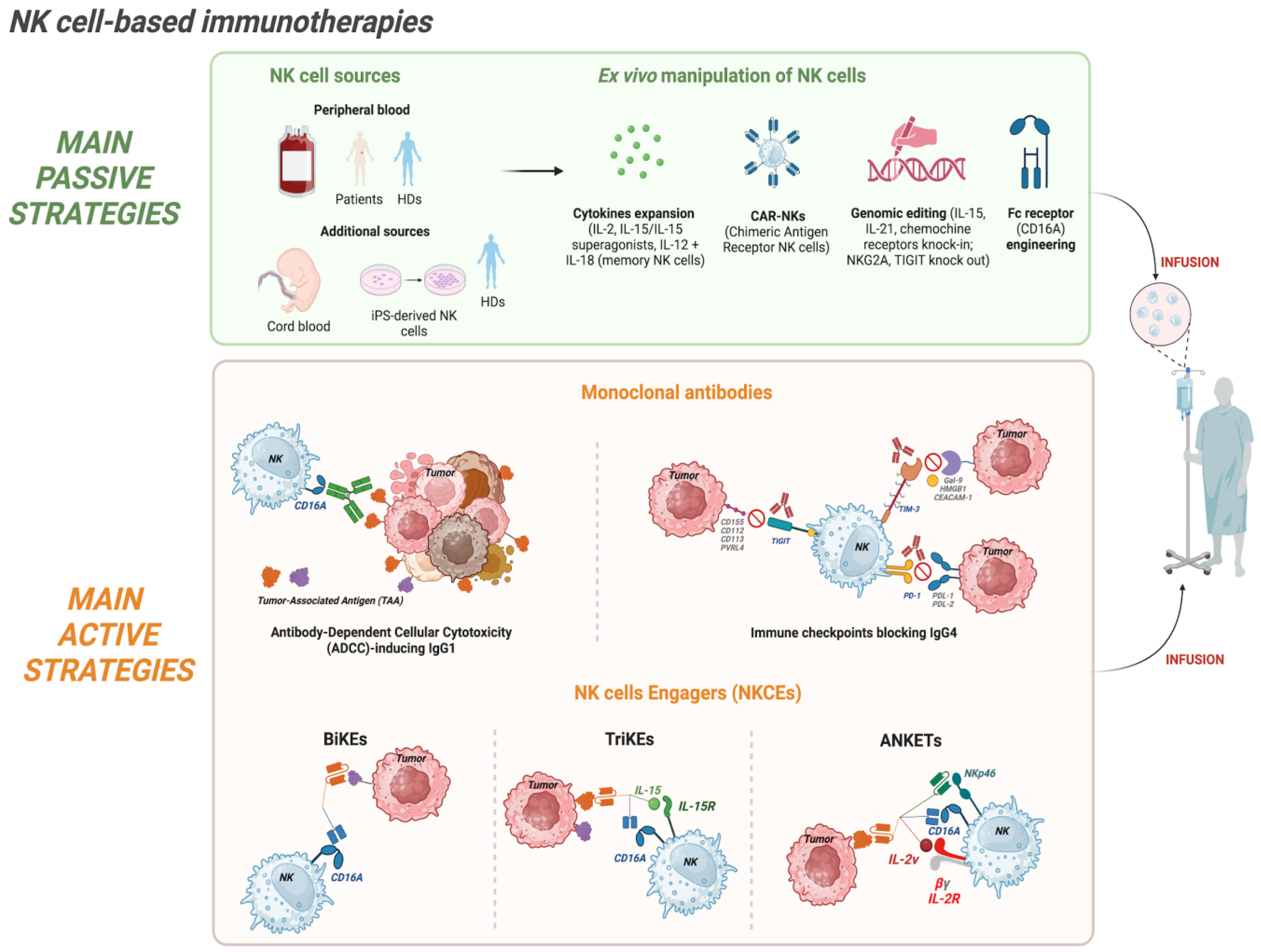
2. NK Cell-Based Immunotherapies in Oncology: Approaches, Mechanisms, and Challenges
2.1. Passive Strategies: Adoptive NK Cell Transfer
2.2. Active Strategies: NK Cell Engagers (NKCEs)
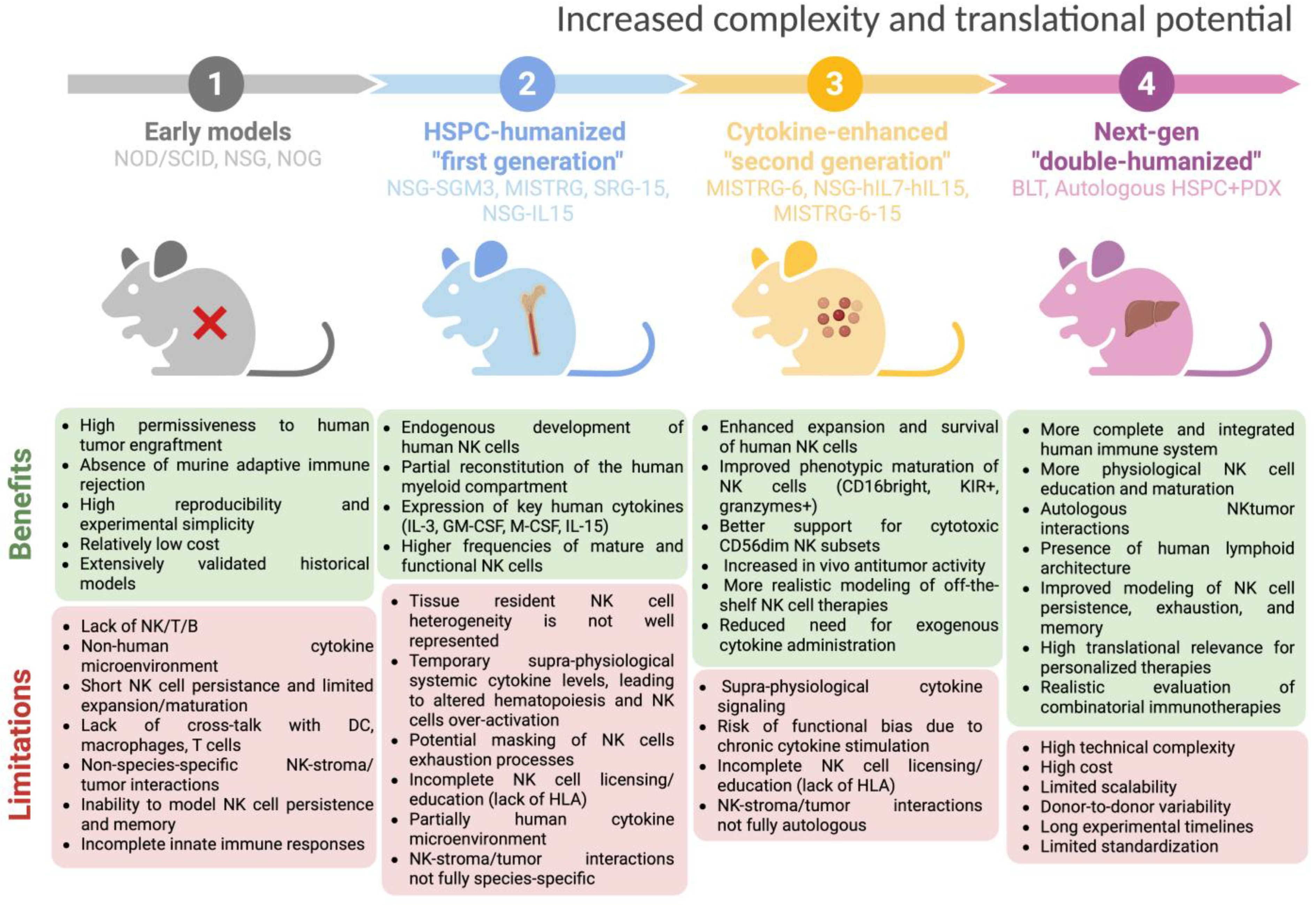
3. Preclinical Humanized Mouse Models for Assessing NK Cell-Based Strategies
3.1. Early Immunodeficient Models
3.2. Progress Towards the First Humanized Immunodeficient Models to Study Human NK Cells
3.3. Tumor Type-Specific Considerations in Preclinical NK Cell Studies
4. Burning Challenges and Limitations of Current Humanized Mouse Models for Studying NK Cell-Based Therapies
5. Next-Generation Humanized Mouse Models and Innovative Technologies Unraveling Human NK Cell Dynamics in Tumor Immunity
6. Conclusions and Future Perspectives
Author Contributions
Funding
Data Availability Statement
Acknowledgments
Conflicts of Interest
Abbreviations
| ADCC | Antibody-Dependent Cellular Cytotoxicity |
| ALL | Acute Lymphoblastic Leukemia |
| AML | Acute Myeloid Leukemia |
| ANKETs | Antibody-based NK cell Engager Therapeutics |
| BBB | Blood–Brain Barrier |
| B-NHL | B-cell Non-Hodgkin Lymphoma |
| BiKEs | Bispecific NK cell Engagers |
| BM | Bone Marrow |
| CAR-NK | Chimeric Antigen Receptor-Natural Killer |
| CIML | Cytokine Induced Memory-Like |
| CRS | Cytokine Release Syndrome |
| DC | Dendritic Cell |
| GBM | Glioblastoma Multiforme |
| GvHD | Graft-versus-Host Disease |
| HD | Healthy Donor |
| hESCs | Human Embryonic Stem Cells |
| HSC | Hematopoietic Stem Cell |
| HSPCs | Hematopoietic Stem and Progenitor Cells |
| hu-BLT | Human BM Liver Thymus |
| IL-2 | Interleukin-2 |
| IL-2v | IL-2 variant |
| ILC | Innate Lymphoid Cell |
| iPSC | Induced Pluripotent Stem Cell |
| KIR | Killer Ig-like Receptor |
| mAbs | Monoclonal Antibodies |
| MISTRG | M-CSFh/h IL-3/GM-CSFh/h SIRPαh/h TPOh/h RAG2−/− IL2Rg−/− |
| NCR | Natural Cytotoxicity Receptor |
| NK | Natural Killer |
| NKCEs | NK Cell Engagers |
| NOD/SCID | Non-Obese Diabetic/Severe Combined Immunodeficient |
| NOG | NOD/Shi-scid/IL2Rγnull |
| NSG | NOD/SCID/γcnull |
| NSG-IL15 | Transgenic for Human IL-15 |
| NSG-SGM3 | NOD-scid IL2rγ−/− Transgenic for Human SCF, GM-CSF, and IL-3 |
| PB | Peripheral Blood |
| PDX | Patient Derived Xenograft |
| sc RNA-seq | Single-cell RNA Sequencing |
| scFv | Single-chain variable Fragment |
| SRG-15 | RAG2−/− IL2Rg−/− Transgenic for Human IL-15 |
| TAAs | Tumor-Associated Antigens |
| TAMs | Tumor-Associated Macrophages |
| TCEs | T Cell Engagers |
| TME | Tumor Microenvironment |
| Tregs | Regulatory T cells |
| TriKEs | Trispecific NK Cell Engagers |
| UBC | Umbilical Cord Blood |
References
- Chiossone, L.; Dumas, P.Y.; Vienne, M.; Vivier, E. Author Correction: Natural killer cells and other innate lymphoid cells in cancer. Nat. Rev. Immunol. 2018, 18, 726. [Google Scholar] [CrossRef] [Scilit] [PubMed]
- Bellora, F.; Castriconi, R.; Dondero, A.; Carrega, P.; Mantovani, A.; Ferlazzo, G.; Moretta, A.; Bottino, C. Human NK cells and NK receptors. Immunol. Lett. 2014, 161, 168–173. [Google Scholar] [CrossRef] [Scilit] [PubMed]
- Rebuffet, L.; Melsen, J.E.; Escalière, B.; Basurto-Lozada, D.; Bhandoola, A.; Björkström, N.K.; Bryceson, Y.T.; Castriconi, R.; Cichocki, F.; Colonna, M.; et al. High-dimensional single-cell analysis of human natural killer cell heterogeneity. Nat. Immunol. 2024, 25, 1474–1488. [Google Scholar] [CrossRef] [Scilit] [PubMed]
- Scoville, S.D.; Freud, A.G.; Caligiuri, M.A. Modeling Human Natural Killer Cell Development in the Era of Innate Lymphoid Cells. Front. Immunol. 2017, 8, 360. [Google Scholar] [CrossRef] [Scilit]
- Quatrini, L.; Della Chiesa, M.; Sivori, S.; Mingari, M.C.; Pende, D.; Moretta, L. Human NK cells, their receptors and function. Eur. J. Immunol. 2021, 51, 1566–1579. [Google Scholar] [CrossRef] [Scilit]
- Borrego, F.; Robertson, M.J.; Ritz, J.; Peña, J.; Solana, R. CD69 is a stimulatory receptor for natural killer cell and its cytotoxic effect is blocked by CD94 inhibitory receptor. Immunology 1999, 97, 159–165. [Google Scholar] [CrossRef] [Scilit]
- Anfossi, N.; André, P.; Guia, S.; Falk, C.S.; Roetynck, S.; Stewart, C.A.; Breso, V.; Frassati, C.; Reviron, D.; Middleton, D.; et al. Human NK cell education by inhibitory receptors for MHC class I. Immunity 2006, 25, 331–342. [Google Scholar] [CrossRef] [Scilit]
- Sivori, S.; Pende, D.; Quatrini, L.; Pietra, G.; Della Chiesa, M.; Vacca, P.; Tumino, N.; Moretta, F.; Mingari, M.C.; Locatelli, F.; et al. NK cells and ILCs in tumor immunotherapy. Mol. Asp. Med. 2021, 80, 100870. [Google Scholar] [CrossRef] [Scilit]
- Ni, L.; Dong, C. New B7 Family Checkpoints in Human Cancers. Mol. Cancer Ther. 2017, 16, 1203–1211. [Google Scholar] [CrossRef] [Scilit]
- Moretta, A.; Bottino, C.; Vitale, M.; Pende, D.; Cantoni, C.; Mingari, M.C.; Biassoni, R.; Moretta, L. Activating receptors and coreceptors involved in human natural killer cell-mediated cytolysis. Annu. Rev. Immunol. 2001, 19, 197–223. [Google Scholar] [CrossRef] [Scilit]
- Freud, A.G.; Mundy-Bosse, B.L.; Yu, J.; Caligiuri, M.A. The broad spectrum of human natural killer cell diversity. Immunity 2017, 47, 820–833. [Google Scholar] [CrossRef] [Scilit] [PubMed]
- Peng, H.; Sun, R. Liver-resident NK cells and their potential functions. Cell. Mol. Immunol. 2017, 14, 890–894. [Google Scholar] [CrossRef] [Scilit] [PubMed]
- Lugthart, G.; Melsen, J.E.; Vervat, C.; van Ostaijen-Ten Dam, M.M.; Corver, W.E.; Roelen, D.L.; van Bergen, J.; van Tol, M.J.D.; Lankester, A.C.; Schilham, M.W. Human Lymphoid Tissues Harbor a Distinct CD69+CXCR6+ NK Cell Population. J. Immunol. 2016, 197, 78–84. [Google Scholar] [CrossRef] [Scilit] [PubMed]
- Melsen, J.E.; Lugthart, G.; Vervat, C.; Kielbasa, S.M.; van der Zeeuw, S.A.J.; Buermans, H.P.J.; van Ostaijen-Ten Dam, M.M.; Lankester, A.C.; Schilham, M.W. Human Bone Marrow-Resident Natural Killer Cells Have a Unique Transcriptional Profile and Resemble Resident Memory CD8+ T Cells. Front. Immunol. 2018, 9, 1829. [Google Scholar] [CrossRef] [Scilit]
- López-Botet, M.; De Maria, A.; Muntasell, A.; Della Chiesa, M.; Vilches, C. Adaptive NK cell response to human cytomegalovirus: Facts and open issues. Semin. Immunol. 2023, 65, 101706. [Google Scholar] [CrossRef] [Scilit]
- Vivier, E.; Raulet, D.H.; Moretta, A.; Caligiuri, M.A.; Zitvogel, L.; Lanier, L.L.; Yokoyama, W.M.; Ugolini, S. Innate or adaptive immunity? The example of natural killer cells. Science 2011, 331, 44–49. [Google Scholar] [CrossRef] [Scilit]
- Zimmer, J.; Andrès, E.; Hentges, F. NK cells and Treg cells: A fascinating dance cheek to cheek. Eur. J. Immunol. 2008, 38, 2942–2945. [Google Scholar] [CrossRef] [Scilit]
- Pedroza-Pacheco, I.; Shah, D.; Domogala, A.; Luevano, M.; Blundell, M.; Jackson, N.; Thrasher, A.; Madrigal, A.; Saudemont, A. Regulatory T cells inhibit CD34+ cell differentiation into NK cells by blocking their proliferation. Sci. Rep. 2016, 6, 22097. [Google Scholar] [CrossRef] [Scilit]
- Pedroza-Pacheco, I.; Madrigal, A.; Saudemont, A. Interaction between natural killer cells and regulatory T cells: Perspectives for immunotherapy. Cell. Mol. Immunol. 2013, 10, 222–229. [Google Scholar] [CrossRef] [Scilit]
- Viel, S.; Marçais, A.; Guimaraes, F.S.-F.; Loftus, R.; Rabilloud, J.; Grau, M.; Degouve, S.; Djebali, S.; Sanlaville, A.; Charrier, E.; et al. TGF-β inhibits the activation and functions of NK cells by repressing the mTOR pathway. Sci. Signal. 2016, 9, ra19. [Google Scholar] [CrossRef] [Scilit]
- Joshi, S.; Sharabi, A. Targeting myeloid-derived suppressor cells to enhance natural killer cell-based immunotherapy. Pharmacol. Ther. 2022, 235, 108114. [Google Scholar] [CrossRef] [Scilit]
- Tumino, N.; Di Pace, A.L.; Besi, F.; Quatrini, L.; Vacca, P.; Moretta, L. Interaction Between MDSC and NK Cells in Solid and Hematological Malignancies: Impact on HSCT. Front. Immunol. 2021, 12, 638841. [Google Scholar] [CrossRef] [Scilit] [PubMed]
- Bruno, A.; Mortara, L.; Baci, D.; Noonan, D.M.; Albini, A. Myeloid Derived Suppressor Cells Interactions with Natural Killer Cells and Pro-angiogenic Activities: Roles in Tumor Progression. Front. Immunol. 2019, 10, 771. [Google Scholar] [CrossRef] [Scilit] [PubMed]
- Di Ceglie, I.; Carnevale, S.; Rigatelli, A.; Grieco, G.; Molisso, P.; Jaillon, S. Immune cell networking in solid tumors: Focus on macrophages and neutrophils. Front. Immunol. 2024, 15, 1341390. [Google Scholar] [CrossRef] [Scilit]
- Palmer, N.; Khakoo, S.; Sanchez-Elsner, T.; Vallejo, A.F. Enhancing natural killer cell anti-tumour activity through macrophage manipulation. Front. Immunol. 2025, 16, 1656925. [Google Scholar] [CrossRef] [Scilit] [PubMed]
- Kuznetsova, A.V.; Glukhova, X.A.; Beletsky, I.P.; Ivanov, A.A. NK cell activity in the tumor microenvironment. Front. Cell Dev. Biol. 2025, 13, 1609479. [Google Scholar] [CrossRef] [Scilit]
- Peng, L.; Sferruzza, G.; Yang, L.; Zhou, L.; Chen, S. CAR-T and CAR-NK as cellular cancer immunotherapy for solid tumors. Cell. Mol. Immunol. 2024, 21, 1089–1108. [Google Scholar] [CrossRef] [Scilit]
- Basar, R.; Daher, M.; Rezvani, K. Next-generation cell therapies: The emerging role of CAR-NK cells. Blood Adv. 2020, 4, 5868–5876. [Google Scholar] [CrossRef] [Scilit]
- Laskowski, T.J.; Biederstädt, A.; Rezvani, K. Natural killer cells in antitumour adoptive cell immunotherapy. Nat. Rev. Cancer 2022, 22, 557–575. [Google Scholar] [CrossRef] [Scilit]
- Liu, S.; Galat, V.; Galat, Y.; Lee, Y.K.A.; Wainwright, D.; Wu, J. NK cell-based cancer immunotherapy: From basic biology to clinical development. J. Hematol. Oncol. 2021, 14, 7. [Google Scholar] [CrossRef] [Scilit]
- Shimasaki, N.; Jain, A.; Campana, D. NK cells for cancer immunotherapy. Nat. Rev. Drug Discov. 2020, 19, 200–218. [Google Scholar] [CrossRef] [Scilit] [PubMed]
- Ma, S.; Yu, J.; Caligiuri, M.A. Natural killer cell-based immunotherapy for cancer. J. Immunol. 2025, 214, 1444–1456. [Google Scholar] [CrossRef] [Scilit] [PubMed]
- Blunt, M.D.; Khakoo, S.I. Harnessing natural killer cell effector function against cancer. Immunother. Adv. 2023, 4, ltad031. [Google Scholar] [CrossRef] [Scilit] [PubMed]
- Myers, J.A.; Miller, J.S. Exploring the NK cell platform for cancer immunotherapy. Nat. Rev. Clin. Oncol. 2021, 18, 85–100. [Google Scholar] [CrossRef] [Scilit]
- Biederstädt, A.; Rezvani, K. Engineered natural killer cells for cancer therapy. Cancer Cell 2025, 43, 1987–2013. [Google Scholar] [CrossRef] [Scilit]
- Miller, J.S.; Soignier, Y.; Panoskaltsis-Mortari, A.; McNearney, S.A.; Yun, G.H.; Fautsch, S.K.; McKenna, D.; Le, C.; Defor, T.E.; Burns, L.J.; et al. Successful adoptive transfer and in vivo expansion of human haploidentical NK cells in patients with cancer. Blood 2005, 105, 3051–3057. [Google Scholar] [CrossRef] [Scilit]
- Wang, W.; Erbe, A.K.; Hank, J.A.; Morris, Z.S.; Sondel, P.M. NK Cell-Mediated Antibody-Dependent Cellular Cytotoxicity in Cancer Immunotherapy. Front. Immunol. 2015, 6, 368. [Google Scholar] [CrossRef] [Scilit]
- Wiernik, A.; Foley, B.; Zhang, B.; Verneris, M.R.; Warlick, E.; Gleason, M.K.; Ross, J.A.; Luo, X.; Weisdorf, D.J.; Walcheck, B.; et al. Targeting natural killer cells to acute myeloid leukemia In Vitro with a CD16 × 33 bispecific killer cell engager and ADAM17 inhibition. Clin. Cancer Res. 2013, 19, 3844–3855. [Google Scholar] [CrossRef] [Scilit]
- Gleason, M.K.; Ross, J.A.; Warlick, E.D.; Lund, T.C.; Verneris, M.R.; Wiernik, A.; Spellman, S.; Haagenson, M.D.; Lenvik, A.J.; Litzow, M.R.; et al. CD16 × CD33 bispecific killer cell engager (BiKE) activates NK cells against primary MDS and MDSC CD33+ targets. Blood 2014, 123, 3016–3026. [Google Scholar] [CrossRef] [Scilit]
- Oh, F.; Felices, M.; Kodal, B.; Miller, J.S.; Vallera, D.A. Immunotherapeutic Development of a Tri-Specific NK Cell Engager Recognizing BCMA. Immuno 2023, 3, 237–249. [Google Scholar] [CrossRef] [Scilit]
- Fenis, A.; Demaria, O.; Gauthier, L.; Vivier, E.; Narni-Mancinelli, E. New immune cell engagers for cancer immunotherapy. Nat. Rev. Immunol. 2024, 24, 471–486. [Google Scholar] [CrossRef] [Scilit] [PubMed]
- Zhu, A.; Bai, Y.; Nan, Y.; Ju, D. Natural killer cell engagers: From bi-specific to tri-specific and tetra-specific engagers for enhanced cancer immunotherapy. Clin. Transl. Med. 2024, 14, e70046. [Google Scholar] [CrossRef] [Scilit] [PubMed]
- Demaria, O.; Gauthier, L.; Vetizou, M.; Blanchard Alvarez, A.; Vagne, C.; Habif, G.; Batista, L.; Baron, W.; Belaïd, N.; Girard-Madoux, M.; et al. Antitumor immunity induced by antibody-based natural killer cell engager therapeutics armed with not-alpha IL-2 variant. Cell Rep. Med. 2022, 3, 100783. [Google Scholar] [CrossRef] [Scilit] [PubMed]
- Li, T.; Niu, M.; Zhang, W.; Qin, S.; Zhou, J.; Yi, M. CAR-NK cells for cancer immunotherapy: Recent advances and future directions. Front. Immunol. 2024, 15, 1361194. [Google Scholar] [CrossRef] [Scilit]
- Liu, E.; Marin, D.; Banerjee, P.; Macapinlac, H.A.; Thompson, P.; Basar, R.; Nassif Kerbauy, L.; Overman, B.; Thall, P.; Kaplan, M.; et al. Use of CAR-Transduced Natural Killer Cells in CD19-Positive Lymphoid Tumors. N. Engl. J. Med. 2020, 382, 545–553. [Google Scholar] [CrossRef] [Scilit]
- Karagiannis, P.; Kim, S.I. iPSC-Derived Natural Killer Cells for Cancer Immunotherapy. Mol. Cells 2021, 44, 541–548. [Google Scholar] [CrossRef] [Scilit]
- Chen, M.; Zhang, B.; Mu, X.; Zhang, B.; Yang, T.; Zhang, G.; Gu, Y.; Pei, B.; Liang, S. Recent advances in tumor immunotherapy based on NK cells. Front. Immunol. 2025, 16, 1595533. [Google Scholar] [CrossRef] [Scilit]
- Lizana-Vasquez, G.D.; Torres-Lugo, M.; Dixon, R.B.; Powderly, J.D.; Warin, R.F. The application of autologous cancer immunotherapies in the age of memory-NK cells. Front. Immunol. 2023, 14, 1167666. [Google Scholar] [CrossRef] [Scilit]
- Sakamoto, N.; Ishikawa, T.; Kokura, S.; Okayama, T.; Oka, K.; Ideno, M.; Sakai, F.; Kato, A.; Tanabe, M.; Enoki, T.; et al. Phase I clinical trial of autologous NK cell therapy using novel expansion method in patients with advanced digestive cancer. J. Transl. Med. 2015, 13, 277. [Google Scholar] [CrossRef] [Scilit]
- Tarannum, M.; Romee, R.; Shapiro, R.M. Innovative Strategies to Improve the Clinical Application of NK Cell-Based Immunotherapy. Front. Immunol. 2022, 13, 859177. [Google Scholar] [CrossRef] [Scilit]
- Kundu, S.; Durkan, L.; O’Dwyer, M.; Szegezdi, E. Protocol for isolation and expansion of natural killer cells from human peripheral blood scalable for clinical applications. Biol. Methods Protoc. 2025, 10, bpaf015. [Google Scholar] [CrossRef] [Scilit]
- Khanal, S.; Bhattarai, N. A Scalable Protocol for Ex Vivo Production of CAR-Engineered Human NK Cells. Methods Protoc. 2025, 8, 102. [Google Scholar] [CrossRef] [Scilit] [PubMed]
- McErlean, E.M.; McCarthy, H.O. Non-viral approaches in CAR-NK cell engineering: Connecting natural killer cell biology and gene delivery. J. Nanobiotechnology 2024, 22, 552. [Google Scholar] [CrossRef] [Scilit] [PubMed]
- Lamb, M.G.; Rangarajan, H.G.; Tullius, B.P.; Lee, D.A. Natural killer cell therapy for hematologic malignancies: Successes, challenges, and the future. Stem Cell Res. Ther. 2021, 12, 211. [Google Scholar] [CrossRef] [Scilit] [PubMed]
- Harada, Y.; Teraishi, K.; Ishii, M.; Ban, H.; Yonemitsu, Y. Clinical Applications of Natural Killer Cells. In Natural Killer Cells; IntechOpen: London, UK, 2017. [Google Scholar] [CrossRef] [Scilit]
- Lim, O.; Jung, M.Y.; Hwang, Y.K.; Shin, E.C. Present and Future of Allogeneic Natural Killer Cell Therapy. Front. Immunol. 2015, 6, 286. [Google Scholar] [CrossRef] [Scilit]
- Klingemann, H. The NK-92 cell line—30 years later: Its impact on natural killer cell research and treatment of cancer. Cytotherapy 2023, 25, 451–457. [Google Scholar] [CrossRef] [Scilit]
- Sun, J.; Elliott, M.; Souza-Fonseca-Guimaraes, F. Engineered iPSC-derived natural killer cells: Recent innovations in translational innate anti-cancer immunotherapy. Clin. Transl. Immunol. 2025, 14, e70045. [Google Scholar] [CrossRef] [Scilit]
- Grimm, E.A.; Mazumder, A.; Zhang, H.Z.; Rosenberg, S.A. Lymphokine-activated killer cell phenomenon. Lysis of natural killer-resistant fresh solid tumor cells by interleukin 2-activated autologous human peripheral blood lymphocytes. J. Exp. Med. 1982, 155, 1823–1841. [Google Scholar] [CrossRef] [Scilit]
- Ali, A.K.; Nandagopal, N.; Lee, S.H. IL-15–PI3K–AKT–mTOR: A Critical Pathway in the Life Journey of Natural Killer Cells. Front. Immunol. 2015, 6, 355. [Google Scholar] [CrossRef] [Scilit]
- Pillet, A.H.; Thèze, J.; Rose, T. Interleukin (IL)-2 and IL-15 have different effects on human natural killer lymphocytes. Hum. Immunol. 2011, 72, 1013–1017. [Google Scholar] [CrossRef] [Scilit]
- Yang, Y.; Lundqvist, A. Immunomodulatory Effects of IL-2 and IL-15; Implications for Cancer Immunotherapy. Cancers 2020, 12, 3586. [Google Scholar] [CrossRef] [Scilit] [PubMed]
- Rhode, P.R.; Egan, J.O.; Xu, W.; Hong, H.; Webb, G.M.; Chen, X.; Liu, B.; Zhu, X.; Wen, J.; You, L.; et al. Comparison of the superagonist complex, ALT-803, to IL15 as cancer immunotherapeutics in animal models. Cancer Immunol. Res. 2016, 4, 49–60. [Google Scholar] [CrossRef] [Scilit] [PubMed]
- Terrén, I.; Orrantia, A.; Astarloa-Pando, G.; Amarilla-Irusta, A.; Zenarruzabeitia, O.; Borrego, F. Cytokine-Induced Memory-Like NK Cells: From the Basics to Clinical Applications. Front. Immunol. 2022, 13, 884648. [Google Scholar] [CrossRef] [Scilit] [PubMed]
- Leong, J.W.; Chase, J.M.; Romee, R.; Schneider, S.E.; Sullivan, R.P.; Cooper, M.A.; Fehniger, T.A. Preactivation with IL-12, IL-15, and IL-18 Induces CD25 and a Functional High-Affinity IL-2 Receptor on Human Cytokine-Induced Memory-like Natural Killer Cells. Biol. Blood Marrow Transplant. 2014, 20, 463–473. [Google Scholar] [CrossRef] [Scilit]
- Kennedy, P.R.; Felices, M.; Miller, J.S. Challenges to the broad application of allogeneic natural killer cell immunotherapy of cancer. Stem Cell Res. Ther. 2022, 13, 165. [Google Scholar] [CrossRef] [Scilit]
- Fang, F.; Xie, S.; Chen, M.; Li, Y.; Yue, J.; Ma, J.; Shu, X.; He, Y.; Xiao, W.; Tian, Z. Advances in NK cell production. Cell. Mol. Immunol. 2022, 19, 460–481. [Google Scholar] [CrossRef] [Scilit]
- Ran, G.H.; Lin, Y.Q.; Tian, L.; Zhang, T.; Yan, D.M.; Yu, J.H.; Deng, Y.C. Natural killer cell homing and trafficking in tissues and tumors: From biology to application. Signal Transduct. Target. Ther. 2022, 7, 205. [Google Scholar] [CrossRef] [Scilit]
- Jørgensen, L.V.; Christensen, E.B.; Barnkob, M.B.; Barington, T. The clinical landscape of CAR NK cells. Exp. Hematol. Oncol. 2025, 14, 46. [Google Scholar] [CrossRef] [Scilit]
- Müller, S.; Bexte, T.; Gebel, V.; Kalensee, F.; Stolzenberg, E.; Hartmann, J.; Koehl, U.; Schambach, A.; Wels, W.S.; Modlich, U.; et al. High Cytotoxic Efficiency of Lentivirally and Alpharetrovirally Engineered CD19-Specific Chimeric Antigen Receptor Natural Killer Cells Against Acute Lymphoblastic Leukemia. Front. Immunol. 2020, 10, 3123. [Google Scholar] [CrossRef] [Scilit]
- Herrera, L.; Santos, S.; Vesga, M.A.; Anguita, J.; Martin-Ruiz, I.; Carrascosa, T.; Juan, M.; Eguizabal, C. Adult peripheral blood and umbilical cord blood NK cells are good sources for effective CAR therapy against CD19 positive leukemic cells. Sci. Rep. 2019, 9, 18729. [Google Scholar] [CrossRef] [Scilit]
- Liu, E.; Tong, Y.; Dotti, G.; Shaim, H.; Savoldo, B.; Mukherjee, M.; Orange, J.; Wan, X.; Lu, X.; Reynolds, A.; et al. Cord blood NK cells engineered to express IL-15 and a CD19-targeted CAR show long-term persistence and potent antitumor activity. Leukemia 2018, 32, 520–531. [Google Scholar] [CrossRef] [Scilit]
- Zhang, Y.; Zhang, C.; He, M.; Xing, W.; Hou, R.; Zhang, H. Co-expression of IL-21-Enhanced NKG2D CAR-NK cell therapy for lung cancer. BMC Cancer 2024, 24, 119. [Google Scholar] [CrossRef] [Scilit] [PubMed]
- Wang, X.; Luo, W.; Chen, Z.; Li, C.; Zhou, J.; Huang, Z.; Tang, L.; Wu, J.; Wu, Z.; Li, Y.; et al. Co-expression of IL-15 and CCL21 strengthens CAR-NK cells to eliminate tumors in concert with T cells and equips them with PI3K/AKT/mTOR signal signature. J. Immunother. Cancer 2025, 13, e010822. [Google Scholar] [CrossRef] [Scilit] [PubMed]
- Carlsten, M.; Levy, E.; Karambelkar, A.; Li, L.; Reger, R.; Berg, M.; Peshwa, M.V.; Childs, R.W. Efficient mRNA-Based Genetic Engineering of Human NK Cells with High-Affinity CD16 and CCR7 Augments Rituximab-Induced ADCC against Lymphoma and Targets NK Cell Migration toward the Lymph Node-Associated Chemokine CCL19. Front. Immunol. 2016, 7, 105. [Google Scholar] [CrossRef] [Scilit] [PubMed]
- Feigl, F.F.; Stahringer, A.; Peindl, M.; Dandekar, G.; Koehl, U.; Fricke, S.; Schmiedel, D. Efficient Redirection of NK Cells by Genetic Modification with Chemokine Receptors CCR4 and CCR2B. Int. J. Mol. Sci. 2023, 24, 3129. [Google Scholar] [CrossRef] [Scilit]
- Hasan, M.F.; Campbell, A.R.; Croom-Perez, T.J.; Oyer, J.L.; Dieffenthaller, T.A.; Robles-Carrillo, L.D.; Cash, C.A.; Eloriaga, J.E.; Kumar, S.; Andersen, B.W.; et al. Knockout of the inhibitory receptor TIGIT enhances the antitumor response of ex vivo expanded NK cells and prevents fratricide with therapeutic Fc-active TIGIT antibodies. J. Immunother. Cancer 2023, 11, e007502. [Google Scholar] [CrossRef] [Scilit]
- Bexte, T.; Alzubi, J.; Reindl, L.M.; Wendel, P.; Schubert, R.; Salzmann-Manrique, E.; von Metzler, I.; Cathomen, T.; Ullrich, E. CRISPR-Cas9 based gene editing of the immune checkpoint NKG2A enhances NK cell mediated cytotoxicity against multiple myeloma. Oncoimmunology 2022, 11, 2081415. [Google Scholar] [CrossRef] [Scilit]
- Bexte, T.; Albinger, N.; Al Ajami, A.; Wendel, P.; Buchinger, L.; Gessner, A.; Alzubi, J.; Särchen, V.; Vogler, M.; Rasheed, H.M.; et al. CRISPR/Cas9 editing of NKG2A improves the efficacy of primary CD33-directed chimeric antigen receptor natural killer cells. Nat. Commun. 2024, 15, 8439. [Google Scholar] [CrossRef] [Scilit]
- Qiao, W.; Dong, P.; Chen, H.; Zhang, J. Advances in Induced Pluripotent Stem Cell-Derived Natural Killer Cell Therapy. Cells 2024, 13, 1976. [Google Scholar] [CrossRef] [Scilit]
- Zhu, H.; Blum, R.H.; Bernareggi, D.; Ask, E.H.; Wu, Z.; Hoel, H.J.; Meng, Z.; Wu, C.; Guan, K.L.; Malmberg, K.J.; et al. Metabolic Reprograming via Deletion of CISH in Human iPSC-Derived NK Cells Promotes In Vivo Persistence and Enhances Anti-tumor Activity. Cell Stem Cell 2020, 27, 224–237.e6. [Google Scholar] [CrossRef] [Scilit]
- Cai, R.; Lu, B.; Zhao, X.; Zhou, S.; Li, Y. iPSC-derived NK cells engineered with CD226 effectively control acute myeloid leukemia. Exp. Hematol. Oncol. 2025, 14, 93. [Google Scholar] [CrossRef] [Scilit]
- Snyder, K.M.; Dixon, K.J.; Davis, Z.; Hosking, M.; Hart, G.; Khaw, M.; Matson, A.; Bjordahl, R.; Hancock, B.; Shirinbak, S.; et al. iPSC-derived natural killer cells expressing the FcγR fusion CD64/16A can be armed with antibodies for multitumor antigen targeting. J. Immunother. Cancer 2023, 11, e007280. [Google Scholar] [CrossRef] [Scilit] [PubMed]
- Fukutani, Y.; Kurachi, K.; Torisawa, Y.S.; Miyata, K.; Hayashi, M.; Sasaki, K.; Saitoh, K.; Watanabe, S.; Hasegawa, Y.; Naritomi, Y.; et al. Human iPSC-derived NK cells armed with CCL19, CCR2B, high-affinity CD16, IL-15, and NKG2D complex enhance anti-solid tumor activity. Stem Cell Res. Ther. 2025, 16, 373. [Google Scholar] [CrossRef] [Scilit] [PubMed]
- Gauthier, M.; Laroye, C.; Bensoussan, D.; Boura, C.; Decot, V. Natural killer cells and monoclonal antibodies: Two partners for successful antibody dependent cytotoxicity against tumor cells. Crit. Rev. Oncol. Hematol. 2021, 160, 103261. [Google Scholar] [CrossRef] [Scilit] [PubMed]
- Vincken, R.; Armendáriz-Martínez, U.; Ruiz-Sáenz, A. ADCC: The rock band led by therapeutic antibodies, tumor and immune cells. Front. Immunol. 2025, 16, 1548292. [Google Scholar] [CrossRef] [Scilit]
- Rugo, H.S.; Im, S.A.; Cardoso, F.; Cortés, J.; Curigliano, G.; Musolino, A.; Pegram, M.D.; Wright, G.S.; Saura, C.; Escrivá-de-Romaní, S.; et al. Efficacy of Margetuximab vs Trastuzumab in Patients with Pretreated ERBB2-Positive Advanced Breast Cancer: A Phase 3 Randomized Clinical Trial. JAMA Oncol. 2021, 7, 573–584. [Google Scholar] [CrossRef] [Scilit]
- Vo, D.N.; Alexia, C.; Allende-Vega, N.; Morschhauser, F.; Houot, R.; Menard, C.; Tarte, K.; Cartron, G.; Villalba, M. NK cell activation and recovery of NK cell subsets in lymphoma patients after obinutuzumab and lenalidomide treatment. Oncoimmunology 2017, 7, e1409322. [Google Scholar] [CrossRef] [Scilit]
- Van der Horst, H.J.; Nijhof, I.S.; Mutis, T.; Chamuleau, M.E.D. Fc-Engineered Antibodies with Enhanced Fc-Effector Function for the Treatment of B-Cell Malignancies. Cancers 2020, 12, 3041. [Google Scholar] [CrossRef] [Scilit]
- Abdeldaim, D.T.; Schindowski, K. Fc-Engineered Therapeutic Antibodies: Recent Advances and Future Directions. Pharmaceutics 2023, 15, 2402. [Google Scholar] [CrossRef] [Scilit]
- Dixon, K.J.; Wu, J.; Walcheck, B. Engineering Anti-Tumor Monoclonal Antibodies and Fc Receptors to Enhance ADCC by Human NK Cells. Cancers 2021, 13, 312. [Google Scholar] [CrossRef] [Scilit]
- Chu, Y.; Nayyar, G.; Jiang, S.; Rosenblum, J.M.; Soon-Shiong, P.; Safrit, J.T.; Lee, D.A.; Cairo, M.S. Combinatorial immunotherapy of N-803 (IL-15 superagonist) and dinutuximab with ex vivo expanded natural killer cells significantly enhances in vitro cytotoxicity against GD2+ pediatric solid tumors and in vivo survival of xenografted immunodeficient NSG mice. J. Immunother. Cancer 2021, 9, e002267. [Google Scholar] [CrossRef] [Scilit] [PubMed]
- Antosova, Z.; Podzimkova, N.; Tomala, J.; Augustynkova, K.; Sajnerova, K.; Nedvedova, E.; Sirova, M.; de Martynoff, G.; Bechard, D.; Moebius, U.; et al. SOT101 induces NK cell cytotoxicity and potentiates antibody-dependent cell cytotoxicity and anti-tumor activity. Front. Immunol. 2022, 13, 989895. [Google Scholar] [CrossRef] [Scilit] [PubMed]
- Patel, S.P.; Alonso-Gordoa, T.; Banerjee, S.; Wang, D.; Naidoo, J.; Standifer, N.E.; Palmer, D.C.; Cheng, L.Y.; Kourtesis, P.; Ascierto, M.L.; et al. Phase 1/2 study of monalizumab plus durvalumab in patients with advanced solid tumors. J. Immunother. Cancer 2024, 12, e007340. [Google Scholar] [CrossRef] [Scilit] [PubMed]
- Felices, M.; Vallera, D.A.; McElmurry, R.; Lenvik, A.J.L.; Chu, S.; Todhunter, D.; Taras, E.P.; Tolar, J.; Blazar, B.R.; Miller, J.S. CD16-IL15-CD33 Trispecific Killer Engager (TriKE) induces NK cell expansion, persistence, and myeloid blast antigen specific killing. J. Immunol. 2016, 196, 75.8. [Google Scholar] [CrossRef] [Scilit]
- Phung, S.K.; Miller, J.S.; Felices, M. Bi-specific and Tri-specific NK Cell Engagers: The New Avenue of Targeted NK Cell Immunotherapy. Mol. Diagn. Ther. 2021, 25, 577–592. [Google Scholar] [CrossRef] [Scilit]
- Gauthier, L.; Virone-Oddos, A.; Beninga, J.; Rossi, B.; Nicolazzi, C.; Amara, C.; Blanchard-Alvarez, A.; Gourdin, N.; Courta, J.; Basset, A.; et al. Control of acute myeloid leukemia by a trifunctional NKp46-CD16a-NK cell engager targeting CD123. Nat. Biotechnol. 2023, 41, 1296–1306. [Google Scholar] [CrossRef] [Scilit]
- Reusing, S.B.; Vallera, D.A.; Manser, A.R.; Vatrin, T.; Bhatia, S.; Felices, M.; Miller, J.S.; Uhrberg, M.; Babor, F. CD16 × CD33 Bispecific Killer Cell Engager (BiKE) as potential immunotherapeutic in pediatric patients with AML and biphenotypic ALL. Cancer Immunol. Immunother. 2021, 70, 3701–3708. [Google Scholar] [CrossRef] [Scilit]
- Schmitt, N.; Siegler, J.J.; Beck, A.; Müller, T.; Kozlowska, I.; Sarlang, S.; Reusch, U.; Knackmuss, S.; Medina-Echeverz, J.; Koch, J.; et al. The bispecific innate cell engager AFM28 eliminates CD123+ leukemic stem and progenitor cells in AML and MDS. Nat. Commun. 2025, 16, 7793. [Google Scholar] [CrossRef] [Scilit]
- Kiefer, A.; Prüfer, M.; Röder, J.; Pfeifer Serrahima, J.; Bodden, M.; Kühnel, I.; Oberoi, P.; Wels, W.S. Dual Targeting of Glioblastoma Cells with Bispecific Killer Cell Engagers Directed to EGFR and ErbB2 (HER2) Facilitates Effective Elimination by NKG2D-CAR-Engineered NK Cells. Cells 2024, 13, 246. [Google Scholar] [CrossRef] [Scilit]
- Felices, M.; Lenvik, T.R.; Kodal, B.; Lenvik, A.J.; Hinderlie, P.; Bendzick, L.E.; Schirm, D.K.; Kaminski, M.F.; McElmurry, R.T.; Geller, M.A.; et al. Potent Cytolytic Activity and Specific IL15 Delivery in a Second-Generation Trispecific Killer Engager. Cancer Immunol. Res. 2020, 8, 1139–1149. [Google Scholar] [CrossRef] [Scilit]
- Winidmanokul, P.; Panya, A.; Okada, S. Tri-specific killer engager: Unleashing multi-synergic power against cancer. Explor. Target. Anti-Tumor Ther. 2024, 5, 432–448. [Google Scholar] [CrossRef] [Scilit] [PubMed]
- Colomar-Carando, N.; Gauthier, L.; Merli, P.; Loiacono, F.; Canevali, P.; Falco, M.; Galaverna, F.; Rossi, B.; Bosco, F.; Caratini, M.; et al. Exploiting Natural Killer Cell Engagers to Control Pediatric B-cell Precursor Acute Lymphoblastic Leukemia. Cancer Immunol. Res. 2022, 10, 291–302. [Google Scholar] [CrossRef] [Scilit] [PubMed]
- Shouse, A.N.; LaPorte, K.M.; Malek, T.R. Interleukin-2 signaling in the regulation of T cell biology in autoimmunity and cancer. Immunity 2024, 57, 414–428. [Google Scholar] [CrossRef] [Scilit] [PubMed]
- Conant, E.F.; Fox, K.R.; Miller, W.T. Pulmonary edema as a complication of interleukin-2 therapy. Am. J. Roentgenol. 1989, 152, 749–752. [Google Scholar] [CrossRef] [Scilit]
- Demaria, O.; Vetizou, M.; Remark, R.; Chiossone, L.; Vagne, C.; Courtois, R.; Denis, C.; Maguer, A.; Le Floch, F.; Represa, A.; et al. Preclinical assessment of IPH6501, a first-in-class IL2v-armed tetraspecific NK cell engager directed against CD20 for R/R B-NHL, in comparison with a CD20-targeting T cell engager. J. Clin. Oncol. 2024, 42, 7030. [Google Scholar] [CrossRef] [Scilit]
- Shang, J.; Hu, S.; Wang, X. Targeting natural killer cells: From basic biology to clinical application in hematologic malignancies. Exp. Hematol. Oncol. 2024, 13, 21. [Google Scholar] [CrossRef] [Scilit]
- Shin, M.H.; Oh, E.; Minn, D. Current Developments in NK Cell Engagers for Cancer Immunotherapy: Focus on CD16A and NKp46. Immune Netw. 2024, 24, e34. [Google Scholar] [CrossRef] [Scilit]
- Zhang, F.; Samarkhazan, H.S.; Pooraskari, Z.; Bayani, A. Beyond CAR-T: Engineered NK cell therapies (CAR-NK, NKCEs) in next-generation cancer immunotherapy. Crit. Rev. Oncol. Hematol. 2025, 214, 104912. [Google Scholar] [CrossRef] [Scilit]
- Huan, T.; Guan, B.; Li, H.; Tu, X.; Zhang, C.; Tang, B. Principles and current clinical landscape of NK cell engaging bispecific antibody against cancer. Hum. Vaccin. Immunother. 2023, 19, 2256904. [Google Scholar] [CrossRef] [Scilit]
- Van der Loo, J.C.M.; Hanenberg, H.; Cooper, R.J.; Luo, F.Y.; Lazaridis, E.N.; Williams, D.A. Nonobese Diabetic/Severe Combined Immunodeficiency (NOD/SCID) Mouse as a Model System to Study the Engraftment and Mobilization of Human Peripheral Blood Stem Cells. Blood 1998, 92, 2556–2570. [Google Scholar] [CrossRef] [Scilit]
- Ito, M.; Hiramatsu, H.; Kobayashi, K.; Suzue, K.; Kawahata, M.; Hioki, K.; Ueyama, Y.; Koyanagi, Y.; Sugamura, K.; Tsuji, K.; et al. NOD/SCID/γ c null mouse: An excellent recipient mouse model for engraftment of human cells. Blood 2002, 100, 3175–3182. [Google Scholar] [CrossRef] [Scilit]
- Ito, M.; Kobayashi, K.; Nakahata, T. NOD/Shi-scid IL2rγnull (NOG) mice more appropriate for humanized mouse models. Curr. Top. Microbiol. Immunol. 2008, 324, 53–76. [Google Scholar] [CrossRef] [Scilit]
- Castriconi, R.; Dondero, A.; Cilli, M.; Ognio, E.; Pezzolo, A.; De Giovanni, B.; Gambini, C.; Pistoia, V.; Moretta, L.; Moretta, A.; et al. Human NK cell infusions prolong survival of metastatic human neuroblastoma-bearing NOD/scid mice. Cancer Immunol. Immunother. 2007, 56, 1733–1742. [Google Scholar] [CrossRef] [Scilit] [PubMed]
- Evert, J.S.H.-V.; Cany, J.; Van den Brand, D.; Oudenampsen, M.; Brock, R.; Torensma, R.; Bekkers, R.L.; Jansen, J.H.; Massuger, L.F.; Dolstra, H. Umbilical cord blood CD34+ progenitor-derived NK cells efficiently kill ovarian cancer spheroids and intraperitoneal tumors in NOD/SCID/IL2Rgnull mice. Oncoimmunology 2017, 6, e1320630. [Google Scholar] [CrossRef] [Scilit] [PubMed]
- Siegler, U.; Kalberer, C.P.; Nowbakht, P.; Sendelov, S.; Meyer-Monard, S.; Wodnar-Filipowicz, A. Activated natural killer cells from patients with acute myeloid leukemia are cytotoxic against autologous leukemic blasts in NOD/SCID mice. Leukemia 2005, 19, 2215–2222. [Google Scholar] [CrossRef] [Scilit] [PubMed]
- Shiokawa, M.; Takahashi, T.; Murakami, A.; Kita, S.; Ito, M.; Sugamura, K.; Ishii, N. In vivo assay of human NK-dependent ADCC using NOD/SCID/γcnull (NOG) mice. Biochem. Biophys. Res. Commun. 2010, 399, 733–737. [Google Scholar] [CrossRef] [Scilit]
- Parodi, M.; Astigiano, S.; Carrega, P.; Pietra, G.; Vitale, C.; Damele, L.; Grottoli, M.; Guevara Lopez, M.L.; Ferracini, R.; Bertolini, G.; et al. Murine models to study human NK cells in human solid tumors. Front. Immunol. 2023, 14, 1209237. [Google Scholar] [CrossRef] [Scilit]
- Kim, J.T.; Bresson-Tan, G.; Zack, J.A. Current Advances in Humanized Mouse Models for Studying NK Cells and HIV Infection. Microorganisms 2023, 11, 1984. [Google Scholar] [CrossRef] [Scilit]
- Rongvaux, A.; Willinger, T.; Martinek, J.; Strowig, T.; Gearty, S.V.; Teichmann, L.L.; Saito, Y.; Marches, F.; Halene, S.; Palucka, A.K.; et al. Corrigendum: Development and function of human innate immune cells in a humanized mouse model. Nat. Biotechnol. 2017, 35, 1211. [Google Scholar] [CrossRef] [Scilit]
- De Jong, M.; Maina, T. Of Mice and Humans: Are They the Same?—Implications in Cancer Translational Research. J. Nucl. Med. 2010, 51, 501–504. [Google Scholar] [CrossRef] [Scilit]
- Mun, S.; Lee, H.J.; Kim, P. Rebuilding the microenvironment of primary tumors in humans: A focus on stroma. Exp. Mol. Med. 2024, 56, 527–548. [Google Scholar] [CrossRef] [Scilit] [PubMed]
- Xu, H.; Lin, S.; Zhou, Z.; Li, D.; Zhang, X.; Yu, M.; Zhao, R.; Wang, Y.; Qian, J.; Li, X.; et al. New genetic and epigenetic insights into the chemokine system: The latest discoveries aiding progression toward precision medicine. Cell. Mol. Immunol. 2023, 20, 739–776. [Google Scholar] [CrossRef] [Scilit] [PubMed]
- Chamberlain, G.; Wright, K.; Rot, A.; Ashton, B.; Middleton, J. Murine mesenchymal stem cells exhibit a restricted repertoire of functional chemokine receptors: Comparison with human. PLoS ONE 2008, 3, e2934. [Google Scholar] [CrossRef] [Scilit] [PubMed]
- Horowitz, N.B.; Mohammad, I.; Moreno-Nieves, U.Y.; Koliesnik, I.; Tran, Q.; Sunwoo, J.B. Humanized Mouse Models for the Advancement of Innate Lymphoid Cell-Based Cancer Immunotherapies. Front. Immunol. 2021, 12, 648580. [Google Scholar] [CrossRef] [Scilit]
- Zlotnik, A.; Yoshie, O.; Nomiyama, H. The chemokine and chemokine receptor superfamilies and their molecular evolution. Genome Biol. 2006, 7, 243. [Google Scholar] [CrossRef] [Scilit]
- Wunderlich, M.; Chou, F.-S.; Mizukawa, B.; Link, K.A.; Mulloy, J.C. A New Immunodeficient Mouse Strain, NOD/SCID IL2Rγ−/− SGM3, Promotes Enhanced Human Hematopoietic Cell Xenografts with a Robust T Cell Component. Blood 2009, 114, 3524. [Google Scholar] [CrossRef] [Scilit]
- Herndler-Brandstetter, D.; Shan, L.; Yao, Y.; Stecher, C.; Plajer, V.; Lietzenmayer, M.; Strowig, T.; de Zoete, M.R.; Palm, N.W.; Chen, J.; et al. Humanized mouse model supports development, function, and tissue residency of human natural killer cells. Proc. Natl. Acad. Sci. USA 2017, 114, E9626–E9634. [Google Scholar] [CrossRef] [Scilit]
- Brehm, M.A.; Aryee, K.-E.; Bruzenksi, L.; Greiner, D.L.; Shultz, L.D.; Keck, J. Transgenic expression of human IL15 in NOD-scid IL2rgnull (NSG) mice enhances the development and survival of functional human NK cells. J. Immunol. 2018, 200, 103.20. [Google Scholar] [CrossRef] [Scilit]
- Aryee, K.E.; Burzenski, L.M.; Yao, L.C.; Keck, J.G.; Greiner, D.L.; Shultz, L.D.; Brehm, M.A. Enhanced development of functional human NK cells in NOD-scid-IL2rgnull mice expressing human IL15. FASEB J. 2022, 36, e22476. [Google Scholar] [CrossRef] [Scilit]
- Abeynaike, S.A.; Huynh, T.R.; Mehmood, A.; Kim, T.; Frank, K.; Gao, K.; Zalfa, C.; Gandarilla, A.; Shultz, L.; Paust, S. Human Hematopoietic Stem Cell Engrafted IL-15 Transgenic NSG Mice Support Robust NK Cell Responses and Sustained HIV-1 Infection. Viruses 2023, 15, 365. [Google Scholar] [CrossRef] [Scilit]
- Farnault, L.; Sanchez, C.; Baier, C.; Le Treut, T.; Costello, R.T. Hematological malignancies escape from NK cell innate immune surveillance: Mechanisms and therapeutic implications. J. Immunol. Res. 2012, 2012, 421702. [Google Scholar] [CrossRef] [Scilit] [PubMed]
- Ni, J.; Hölsken, O.; Miller, M.; Hammer, Q.; Luetke-Eversloh, M.; Romagnani, C.; Cerwenka, A. Adoptively transferred natural killer cells maintain long-term antitumor activity by epigenetic imprinting and CD4+ T cell help. Oncoimmunology 2016, 5, e1219009. [Google Scholar] [CrossRef] [Scilit] [PubMed]
- Magnani, C.F.; Mezzanotte, C.; Cappuzzello, C.; Bardini, M.; Tettamanti, S.; Fazio, G.; Cooper, L.J.N.; Dastoli, G.; Cazzaniga, G.; Biondi, A.; et al. Preclinical Efficacy and Safety of CD19CAR Cytokine-Induced Killer Cells Transfected with Sleeping Beauty Transposon for the Treatment of Acute Lymphoblastic Leukemia. Hum. Gene Ther. 2018, 29, 602–613. [Google Scholar] [CrossRef] [Scilit] [PubMed]
- Oelsner, S.; Wagner, J.; Friede, M.E.; Pfirrmann, V.; Genßler, S.; Rettinger, E.; Buchholz, C.J.; Pfeifer, H.; Schubert, R.; Ottmann, O.G.; et al. Chimeric antigen receptor-engineered cytokine-induced killer cells overcome treatment resistance of pre-B-cell acute lymphoblastic leukemia and enhance survival. Int. J. Cancer 2016, 139, 1799–1809. [Google Scholar] [CrossRef] [Scilit]
- Chung, S.W.; Xie, Y.; Suk, J.S. Overcoming physical stromal barriers to cancer immunotherapy. Drug Deliv. Transl. Res. 2021, 11, 2430–2447. [Google Scholar] [CrossRef] [Scilit]
- Navin, I.; Lam, M.T.; Parihar, R. Design and Implementation of NK Cell-Based Immunotherapy to Overcome the Solid Tumor Microenvironment. Cancers 2020, 12, 3871. [Google Scholar] [CrossRef] [Scilit]
- Tong, L.; Jiménez-Cortegana, C.; Tay, A.H.M.; Wickström, S.; Galluzzi, L.; Lundqvist, A. NK cells and solid tumors: Therapeutic potential and persisting obstacles. Mol. Cancer 2022, 21, 206. [Google Scholar] [CrossRef] [Scilit]
- Liu, W.N.; Harden, S.L.; Tan, S.L.W.; Tan, R.J.R.; Fong, S.Y.; Tan, S.Y.; Liu, M.; Karnik, I.; Shuen, T.W.H.; Toh, H.C.; et al. Single-cell RNA sequencing reveals anti-tumor potency of CD56+ NK cells and CD8+ T cells in humanized mice via PD-1 and TIGIT co-targeting. Mol. Ther. 2024, 32, 3895–3914. [Google Scholar] [CrossRef] [Scilit]
- Flieswasser, T.; Van den Eynde, A.; Freire Boullosa, L.; Melis, J.; Hermans, C.; Merlin, C.; Lau, H.W.; Van Audenaerde, J.; Lardon, F.; Smits, E.; et al. Targeting CD70 in combination with chemotherapy to enhance the anti-tumor immune effects in non-small cell lung cancer. Oncoimmunology 2023, 12, 2192100. [Google Scholar] [CrossRef] [Scilit]
- Marchetti, L.; Engelhardt, B. Immune cell trafficking across the blood-brain barrier in the absence and presence of neuroinflammation. Vasc. Biol. 2020, 2, H1–H18. [Google Scholar] [CrossRef] [Scilit]
- Wilson, E.H.; Weninger, W.; Hunter, C.A. Trafficking of immune cells in the central nervous system. J. Clin. Investig. 2010, 120, 1368–1379. [Google Scholar] [CrossRef] [Scilit] [PubMed]
- Desland, F.A.; Hormigo, A. The CNS and the Brain Tumor Microenvironment: Implications for Glioblastoma Immunotherapy. Int. J. Mol. Sci. 2020, 21, 7358. [Google Scholar] [CrossRef] [Scilit] [PubMed]
- Andersen, B.M.; Akl, C.F.; Wheeler, M.A.; Chiocca, E.A.; Reardon, D.A.; Quintana, F.J. Glial and myeloid heterogeneity in the brain tumour microenvironment. Nat. Rev. Cancer 2021, 21, 786–802. [Google Scholar] [CrossRef] [Scilit] [PubMed]
- Hansen, L.J.; Jackson, C.M. The glioma microenvironment and its impact on antitumor immunity. Neurooncol Adv. 2025, 7, iv19–iv31. [Google Scholar] [CrossRef] [Scilit]
- Balatsoukas, A.; Rossignoli, F.; Shah, K. NK cells in the brain: Implications for brain tumor development and therapy. Trends Mol. Med. 2022, 28, 194–209. [Google Scholar] [CrossRef] [Scilit]
- Kmiecik, J.; Zimmer, J.; Chekenya, M. Natural killer cells in intracranial neoplasms: Presence and therapeutic efficacy against brain tumours. J. Neuro-Oncol. 2014, 116, 1–9. [Google Scholar] [CrossRef] [Scilit]
- Fares, J.; Davis, Z.B.; Rechberger, J.S.; Toll, S.A.; Schwartz, J.D.; Daniels, D.J.; Miller, J.S.; Khatua, S. Advances in NK cell therapy for brain tumors. NPJ Precis. Oncol. 2023, 7, 17. [Google Scholar] [CrossRef] [Scilit]
- Frederico, S.C.; Zhang, X.; Hu, B.; Kohanbash, G. Pre-clinical models for evaluating glioma targeted immunotherapies. Front. Immunol. 2023, 13, 1092399. [Google Scholar] [CrossRef] [Scilit]
- Morimoto, T.; Nakazawa, T.; Matsuda, R.; Maeoka, R.; Nishimura, F.; Nakamura, M.; Yamada, S.; Park, Y.S.; Tsujimura, T.; Nakagawa, I. Antitumor Effects of Intravenous Natural Killer Cell Infusion in an Orthotopic Glioblastoma Xenograft Murine Model and Gene Expression Profile Analysis. Int. J. Mol. Sci. 2024, 25, 2435. [Google Scholar] [CrossRef] [Scilit]
- Akter, F.; Simon, B.; de Boer, N.L.; Redjal, N.; Wakimoto, H.; Shah, K. Pre-clinical tumor models of primary brain tumors: Challenges and opportunities. Biochim. Biophys. Acta Rev. Cancer 2021, 1875, 188458. [Google Scholar] [CrossRef] [Scilit]
- Sahu, U.; Barth, R.F.; Otani, Y.; McCormack, R.; Kaur, B. Rat and Mouse Brain Tumor Models for Experimental Neuro-Oncology Research. J. Neuropathol. Exp. Neurol. 2022, 81, 312–329. [Google Scholar] [CrossRef] [Scilit] [PubMed]
- Dave, B.; Tailor, J. Human stem cell models to unravel brain cancer. BMC Cancer 2024, 24, 1465. [Google Scholar] [CrossRef] [Scilit] [PubMed]
- El Meskini, R.; Iacovelli, A.J.; Kulaga, A.; Gumprecht, M.; Martin, P.L.; Baran, M.; Householder, D.B.; Van Dyke, T.; Weaver Ohler, Z. A preclinical orthotopic model for glioblastoma recapitulates key features of human tumors and demonstrates sensitivity to a combination of MEK and PI3K pathway inhibitors. Dis. Model. Mech. 2015, 8, 45–56. [Google Scholar] [CrossRef] [Scilit] [PubMed]
- Ishikawa, E.; Tsuboi, K.; Takano, S.; Uchimura, E.; Nose, T.; Ohno, T. Intratumoral injection of IL-2-activated NK cells enhances the antitumor effect of intradermally injected paraformaldehyde-fixed tumor vaccine in a rat intracranial brain tumor model. Cancer Sci. 2004, 95, 98–103. [Google Scholar] [CrossRef] [Scilit]
- Hatae, R.; Watchmaker, P.B.; Yamamichi, A.; Kyewalabye, K.; Okada, K.; Phyu, S.; Goretsky, Y.; Haegelin, J.; Pineo-Cavanaugh, P.; Gallus, M.; et al. Comparative evaluation of CAR-expressing T-, NK-, NKT-cells, and macrophages in an immunocompetent mouse glioma model. Neurooncol Adv. 2025, 7, vdaf074. [Google Scholar] [CrossRef] [Scilit]
- Look, T.; Sankowski, R.; Bouzereau, M.; Fazio, S.; Sun, M.; Buck, A.; Binder, N.; Mastall, M.; Prisco, F.; Seehusen, F.; et al. CAR T cells, CAR NK cells, and CAR macrophages exhibit distinct traits in glioma models but are similarly enhanced when combined with cytokines. Cell Rep. Med. 2025, 6, 101931. [Google Scholar] [CrossRef] [Scilit]
- Srivastava, R.; Labani-Motlagh, A.; Chen, A.; Bohorquez, J.A.; Qin, B.; Dodda, M.; Yang, F.; Ansari, D.; Patel, S.; Ji, H.; et al. Development of a human glioblastoma model using humanized DRAG mice for immunotherapy. Antib. Ther. 2023, 6, 253–264. [Google Scholar] [CrossRef] [Scilit]
- Takei, J.; Furudate, K.; Nagaoka-Kamata, Y.; Iwaloye, O.; Jepson, C.E.; Blucas, M.T.; Saito, K.; Welner, R.S.; Van Meir, E.G.; Kamata, M.; et al. Exploring the immune environment of glioblastoma through single-cell RNA sequencing in humanized mouse models. bioRxiv 2025. [Google Scholar] [CrossRef] [Scilit]
- Klein, E.; Hau, A.C.; Oudin, A.; Golebiewska, A.; Niclou, S.P. Glioblastoma Organoids: Pre-Clinical Applications and Challenges in the Context of Immunotherapy. Front. Oncol. 2020, 10, 604121. [Google Scholar] [CrossRef] [Scilit]
- Chuprin, J.; Buettner, H.; Seedhom, M.O.; Greiner, D.L.; Keck, J.G.; Ishikawa, F.; Shultz, L.D.; Brehm, M.A. Humanized mouse models for immuno-oncology research. Nat. Rev. Clin. Oncol. 2023, 20, 192–206. [Google Scholar] [CrossRef] [Scilit]
- Allen, T.M.; Brehm, M.A.; Bridges, S.; Ferguson, S.; Kumar, P.; Mirochnitchenko, O.; Palucka, K.; Pelanda, R.; Sanders-Beer, B.; Shultz, L.D.; et al. Humanized immune system mouse models: Progress, challenges and opportunities. Nat. Immunol. 2019, 20, 770–774. [Google Scholar] [CrossRef] [Scilit]
- Chen, J.; Liao, S.; Xiao, Z.; Pan, Q.; Wang, X.; Shen, K.; Wang, S.; Yang, L.; Guo, F.; Liu, H.F.; et al. The development and improvement of immunodeficient mice and humanized immune system mouse models. Front. Immunol. 2022, 13, 1007579. [Google Scholar] [CrossRef] [Scilit] [PubMed]
- Cooper, M.A.; Fehniger, T.A.; Turner, S.C.; Chen, K.S.; Ghaheri, B.A.; Ghayur, T.; Carson, W.E.; Caligiuri, M.A. Human natural killer cells: A unique innate immunoregulatory role for the CD56bright subset. Blood 2001, 97, 3146–3151. [Google Scholar] [CrossRef] [Scilit] [PubMed]
- Poli, A.; Michel, T.; Thérésine, M.; Andrès, E.; Hentges, F.; Zimmer, J. CD56bright natural killer (NK) cells: An important NK cell subset. Immunology 2009, 126, 458–465. [Google Scholar] [CrossRef] [Scilit] [PubMed]
- Bellora, F.; Castriconi, R.; Dondero, A.; Reggiardo, G.; Moretta, L.; Mantovani, A.; Moretta, A.; Bottino, C. The interaction of human natural killer cells with either unpolarized or polarized macrophages results in different functional outcomes. Proc. Natl. Acad. Sci. USA 2010, 107, 21659–21664. [Google Scholar] [CrossRef] [Scilit]
- Vivier, E.; Tomasello, E.; Baratin, M.; Walzer, T.; Ugolini, S. Functions of natural killer cells. Nat. Immunol. 2008, 9, 503–510. [Google Scholar] [CrossRef] [Scilit]
- Yin, L.; Wang, X.-J.; Chen, D.-X.; Liu, X.-N.; Wang, X.-J. Humanized mouse model: A review on preclinical applications for cancer immunotherapy. Am. J. Cancer Res. 2020, 10, 4568–4584. Available online: https://pmc.ncbi.nlm.nih.gov/articles/PMC7783739/ (accessed on 5 December 2025).
- Sungur, C.M.; Wang, Q.; Ozantürk, A.N.; Gao, H.; Schmitz, A.J.; Cella, M.; Yokoyama, W.M.; Shan, L. Human NK cells confer protection against HIV-1 infection in humanized mice. J. Clin. Investig. 2022, 132, e162694. [Google Scholar] [CrossRef] [Scilit]
- Shen, M.; Liu, Y.; Shao, L.; Qu, M.; Song, S.; Sun, W.; Zhang, H. Unraveling NK cell heterogeneity through single-cell sequencing: Insights from physiological and tumor contexts for clinical applications. Front. Immunol. 2025, 16, 1612352. [Google Scholar] [CrossRef] [Scilit]
- Hashemi, E.; Malarkannan, S. Tissue-Resident NK Cells: Development, Maturation, and Clinical Relevance. Cancers 2020, 12, 1553. [Google Scholar] [CrossRef] [Scilit]
- Le, T.; Reeves, R.K.; McKinnon, L.R. The functional diversity of tissue-resident natural killer cells against infection. Immunology 2022, 167, 28–39. [Google Scholar] [CrossRef] [Scilit] [PubMed]
- Pan, Z.; Ye, Y.S.; Liu, C.; Li, W. Role of liver-resident NK cells in liver immunity. Hepatol. Int. 2025, 19, 315–324. [Google Scholar] [CrossRef] [Scilit] [PubMed]
- Filipovic, I.; Sönnerborg, I.; Strunz, B.; Friberg, D.; Cornillet, M.; Hertwig, L.; Ivarsson, M.A.; Björkström, N.K. 29-Color Flow Cytometry: Unraveling Human Liver NK Cell Repertoire Diversity. Front. Immunol. 2019, 10, 2692. [Google Scholar] [CrossRef] [Scilit] [PubMed]
- Soleimanian, S.; Yaghobi, R. Harnessing Memory NK Cell to Protect Against COVID-19. Front. Pharmacol. 2020, 11, 560516. [Google Scholar] [CrossRef] [Scilit]
- Brownlie, D.; Scharenberg, M.; Mold, J.E.; Hård, J.; Kekäläinen, E.; Buggert, M.; Nguyen, S.; Wilson, J.N.; Al-Ameri, M.; Ljunggren, H.G.; et al. Expansions of adaptive-like NK cells with a tissue-resident phenotype in human lung and blood. Proc. Natl. Acad. Sci. USA 2021, 118, e2016580118. [Google Scholar] [CrossRef] [Scilit]
- Wei, X.W.; Zhang, Y.C.; Wu, F.; Tian, F.J.; Lin, Y. The role of extravillous trophoblasts and uterine NK cells in vascular remodeling during pregnancy. Front. Immunol. 2022, 13, 951482. [Google Scholar] [CrossRef] [Scilit]
- Faas, M.M.; de Vos, P. Uterine NK cells and macrophages in pregnancy. Placenta 2017, 56, 44–52. [Google Scholar] [CrossRef] [Scilit]
- Ferlazzo, G.; Pack, M.; Thomas, D.; Paludan, C.; Schmid, D.; Strowig, T.; Bougras, G.; Muller, W.A.; Moretta, L.; Münz, C. Distinct roles of IL-12 and IL-15 in human natural killer cell activation by dendritic cells from secondary lymphoid organs. Proc. Natl. Acad. Sci. USA 2004, 101, 16606–16611. [Google Scholar] [CrossRef] [Scilit]
- Thomas, R.; Yang, X. NK-DC Crosstalk in Immunity to Microbial Infection. J. Immunol. Res. 2016, 2016, 6374379. [Google Scholar] [CrossRef] [Scilit]
- Chijioke, O.; Münz, C. Dendritic cell derived cytokines in human natural killer cell differentiation and activation. Front. Immunol. 2013, 4, 365. [Google Scholar] [CrossRef] [Scilit]
- Huntington, N.D.; Legrand, N.; Alves, N.L.; Jaron, B.; Weijer, K.; Plet, A.; Corcuff, E.; Mortier, E.; Jacques, Y.; Spits, H.; et al. IL-15 trans-presentation promotes human NK cell development and differentiation In Vivo. J. Exp. Med. 2009, 206, 25–34. [Google Scholar] [CrossRef] [Scilit] [PubMed]
- Flahou, C.; Morishima, T.; Takizawa, H.; Sugimoto, N. Fit-For-All iPSC-Derived Cell Therapies and Their Evaluation in Humanized Mice with NK Cell Immunity. Front. Immunol. 2021, 12, 662360. [Google Scholar] [CrossRef] [Scilit] [PubMed]
- Mian, S.A.; Anjos-Afonso, F.; Bonnet, D. Advances in Human Immune System Mouse Models for Studying Human Hematopoiesis and Cancer Immunotherapy. Front. Immunol. 2021, 11, 619236. [Google Scholar] [CrossRef] [Scilit] [PubMed]
- Zalfa, C.; Paust, S. Natural Killer Cell Interactions with Myeloid Derived Suppressor Cells in the Tumor Microenvironment and Implications for Cancer Immunotherapy. Front. Immunol. 2021, 12, 633205. [Google Scholar] [CrossRef] [Scilit]
- Guil-Luna, S.; Sedlik, C.; Piaggio, E. Humanized Mouse Models to Evaluate Cancer Immunotherapeutics. Annu. Rev. Cancer Biol. 2021, 5, 119–136. [Google Scholar] [CrossRef] [Scilit]
- Gu, A.; Li, J.; Li, M.Y.; Liu, Y. Patient-derived xenograft model in cancer: Establishment and applications. MedComm 2025, 6, e70059. [Google Scholar] [CrossRef] [Scilit]
- Jin, J.; Yoshimura, K.; Sewastjanow-Silva, M.; Song, S.; Ajani, J.A. Challenges and Prospects of Patient-Derived Xenografts for Cancer Research. Cancers 2023, 15, 4352. [Google Scholar] [CrossRef] [Scilit]
- Jackson, S.J.; Thomas, G.J. Human tissue models in cancer research: Looking beyond the mouse. Dis. Model. Mech. 2017, 10, 939–942. [Google Scholar] [CrossRef] [Scilit]
- Olson, B.; Li, Y.; Lin, Y.; Liu, E.T.; Patnaik, A. Mouse Models for Cancer Immunotherapy Research. Cancer Discov. 2018, 8, 1358–1365. [Google Scholar] [CrossRef] [Scilit]
- Stripecke, R.; Münz, C.; Schuringa, J.J.; Bissig, K.D.; Soper, B.; Meeham, T.; Yao, L.C.; Di Santo, J.P.; Brehm, M.; Rodriguez, E.; et al. Innovations, challenges, and minimal information for standardization of humanized mice. EMBO Mol. Med. 2020, 12, e8662. [Google Scholar] [CrossRef] [Scilit]
- Morcillo-Martín-Romo, P.; Valverde-Pozo, J.; Ortiz-Bueno, M.; Arnone, M.; Espinar-Barranco, L.; Espinar-Barranco, C.; García-Rubiño, M.E. The Role of NK Cells in Cancer Immunotherapy: Mechanisms, Evasion Strategies, and Therapeutic Advances. Biomedicines 2025, 13, 857. [Google Scholar] [CrossRef] [Scilit] [PubMed]
- Paolini, R.; Molfetta, R. Dysregulation of DNAM-1-Mediated NK Cell Anti-Cancer Responses in the Tumor Microenvironment. Cancers 2023, 15, 4616. [Google Scholar] [CrossRef] [Scilit] [PubMed]
- Carrega, P.; Morandi, B.; Costa, R.; Frumento, G.; Forte, G.; Altavilla, G.; Ratto, G.B.; Mingari, M.C.; Moretta, L.; Ferlazzo, G. Natural killer cells infiltrating human nonsmall-cell lung cancer are enriched in CD56brightCD16− cells and display an impaired capability to kill tumor cells. Cancer 2008, 112, 863–875. [Google Scholar] [CrossRef] [Scilit] [PubMed]
- Jia, H.; Yang, H.; Xiong, H.; Luo, K.Q. NK cell exhaustion in the tumor microenvironment. Front. Immunol. 2023, 14, 1303605. [Google Scholar] [CrossRef] [Scilit]
- Bi, J.; Tian, Z. NK cell exhaustion. Front. Immunol. 2017, 8, 760. [Google Scholar] [CrossRef] [Scilit]
- Kim, J.T.; Zack, J.A. A humanized mouse model to study NK cell biology during HIV infection. J. Clin. Investig. 2022, 132, e165620. [Google Scholar] [CrossRef] [Scilit]
- Rafei, H.; Basar, R.; Acharya, S.; Hsu, Y.S.; Liu, P.; Zhang, D.; Bohn, T.; Liang, Q.; Mohanty, V.; Upadhyay, R.; et al. CREM is a regulatory checkpoint of CAR and IL-15 signalling in NK cells. Nature 2025, 643, 1076–1086. [Google Scholar] [CrossRef] [Scilit]
- Xu, X.; Cao, P.; Wang, M.; Wan, Y.; Sun, S.; Chen, Y.; Liu, Y.; Su, T.; Gao, G.; Liu, X.; et al. Signaling intact membrane-bound IL-15 enables potent anti-tumor activity and safety of CAR-NK cells. Front. Immunol. 2025, 16, 1658580. [Google Scholar] [CrossRef] [Scilit]
- Feng, D.; Sun, L.; Hu, D.; Wu, J.; Xu, F.; Kong, X.; Yang, R.; Jiang, G.; Jiang, L.; Wang, S.; et al. Expression of membrane-bound Interleukin-15 sustains the growth and survival of CAR-NK cells. Int. Immunopharmacol. 2025, 166, 115577. [Google Scholar] [CrossRef] [Scilit]
- Felices, M.; Lenvik, A.J.; McElmurry, R.; Chu, S.; Hinderlie, P.; Bendzick, L.; Geller, M.A.; Tolar, J.; Blazar, B.R.; Miller, J.S. Continuous treatment with IL-15 exhausts human NK cells via a metabolic defect. JCI Insight 2018, 3, e96219. [Google Scholar] [CrossRef] [Scilit]
- Matsuda, M.; Ono, R.; Iyoda, T.; Endo, T.; Iwasaki, M.; Tomizawa-Murasawa, M.; Saito, Y.; Kaneko, A.; Shimizu, K.; Yamada, D.; et al. Human NK cell development in hIL-7 and hIL-15 knockin NOD/SCID/IL2rgKO mice. Life Sci. Alliance 2019, 2, e201800195. [Google Scholar] [CrossRef] [Scilit]
- Chen, A.; Knöbl, V.; Walzer, O.; Hauser, J.; Neuwirth, I.; Frank, M.; Braun, N.; Duvnjak, S.; Reisecker, J.; Stecher, C.; et al. Comparison of NSG-Quad and MISTRG-6 humanized mice for modeling circulating and tumor-infiltrating human myeloid cells. Mol. Ther. Methods Clin. Dev. 2025, 33, 101487. [Google Scholar] [CrossRef] [Scilit]
- Chiorazzi, M.; Martinek, J.; Krasnick, B.; Zheng, Y.; Robbins, K.J.; Qu, R.; Kaufmann, G.; Skidmore, Z.; Juric, M.; Henze, L.A.; et al. Autologous humanized PDX modeling for immuno-oncology recapitulates features of the human tumor microenvironment. J. Immunother. Cancer 2023, 11, e006921. [Google Scholar] [CrossRef] [Scilit] [PubMed]
- Kaur, K.; Topchyan, P.; Jewett, A. Supercharged Natural Killer (sNK) Cells Inhibit Melanoma Tumor Progression and Restore Endogenous NK Cell Function in Humanized BLT Mice. Cancers 2025, 17, 2430. [Google Scholar] [CrossRef] [Scilit] [PubMed]
- Kaur, K.; Jewett, A. Differences in Tumor Growth and Differentiation in NSG and Humanized-BLT Mice; Analysis of Human vs. Humanized-BLT-Derived NK Expansion and Functions. Cancers 2022, 15, 112. [Google Scholar] [CrossRef] [Scilit] [PubMed]
- van Bergen, J.; Thompson, A.; van Pel, M.; Retière, C.; Salvatori, D.; Raulet, D.H.; Trowsdale, J.; Koning, F. HLA Reduces Killer Cell Ig-like Receptor Expression Level and Frequency in a Humanized Mouse Model. J. Immunol. 2013, 190, 2880–2885. [Google Scholar] [CrossRef] [Scilit]
- Landtwing, V.; Raykova, A.; Pezzino, G.; Béziat, V.; Marcenaro, E.; Graf, C.; Moretta, A.; Capaul, R.; Zbinden, A.; Ferlazzo, G.; et al. Cognate HLA absence in trans diminishes human NK cell education. J. Clin. Investig. 2016, 126, 3772–3782. [Google Scholar] [CrossRef] [Scilit]
- Li, L.; Mohanty, V.; Dou, J.; Huang, Y.; Banerjee, P.P.; Miao, Q.; Lohr, J.G.; Vijaykumar, T.; Frede, J.; Knoechel, B.; et al. Loss of metabolic fitness drives tumor resistance after CAR-NK cell therapy and can be overcome by cytokine engineering. Sci. Adv. 2023, 9, eadd6997. [Google Scholar] [CrossRef] [Scilit]
- Pham, T.T.; Chenoweth, A.; Patel, N.; Banu, A.; Osborn, G.; Blower, P.J.; Karagiannis, S.N.; Ma, M.T. In Vivo PET Imaging of 89Zr-Labeled Natural Killer Cells and the Modulating Effects of a Therapeutic Antibody. J. Nucl. Med. 2024, 65, 1035–1042. [Google Scholar] [CrossRef] [Scilit]
- Sato, N.; Stringaris, K.; Davidson-Moncada, J.K.; Reger, R.; Adler, S.S.; Dunbar, C.; Choyke, P.L.; Childs, R.W. In-vivo tracking of adoptively transferred natural killer-cells in rhesus macaques using 89Zirconium-oxine cell labeling and PET imaging. Clin. Cancer Res. 2020, 26, 2573–2581. [Google Scholar] [CrossRef] [Scilit]



| Mouse Model | Humanization Strategy | NK Cell Reconstitution | NK Subset Distribution | Functional Maturation and Activity | Tumor Infiltration/In Vivo Relevance | |
|---|---|---|---|---|---|---|
| Early immunodeficient models | NOD/SCID | T− B− (residual NK activity) | Very low | Not physiologic | Short-term cytotoxicity | Limited, transient |
| NSG | T− B− NK− (IL2Rγ−/−) | Very low | Infused NK phenotype only | Limited survival and function | Weak tumor control | |
| NOG | T− B− NK− (IL2Rγ−/−) | Very low | Infused NK phenotype only | Poor | Limited | |
| First-generation humanized models | NSG-SGM3 | hSCF, hGM-CSF, hIL-3 transgenic | Low–moderate | Predominantly CD56bright | Partial maturation | Limited |
| MISTRG | hM-CSF, hIL-3/GM-CSF, hTPO, hSIRPα knock-in | Moderate–high | More mature NK cells | Improved cytotoxicity | Improved vs. NSG | |
| SRG-15 | hIL-15 knock-in + hSIRPα | High | Balanced CD56bright/CD56dim | Robust ADCC | Efficient tumor infiltration | |
| NSG-IL15 | Constitutive or knock-in hIL-15 | High | Both major subsets present | High perforin/granzyme expression | Strong tumor control | |
| Cytokine-enhanced second generation models | NSG-hIL7-hIL15 | Human IL-7 + IL-15 knock-in/transgenic | Very high | Expanded NK compartment | Strong cytotoxicity | High infiltration |
| MISTRG6 | MISTRG + human IL-6 knock-in | High | Functionally competent NK cells | Supports immune–tumor crosstalk | Autologous tumor control | |
| MISTRG6-15 | MISTRG6 + human IL-15 knock-in | High | Tissue-heterogeneous NK cells | Models chronic activation and exhaustion | Tissue-dependent responses | |
| Double-humanized next generation models | hu-BLT | HSPCs + human liver and thymus grafts | Moderate | Circulating and tissue NK cells | IFN-γ production, cytotoxicity | Tumor infiltration reported |
| Autologous humanized host + matched PDX | Pt-derived BM CD34+ HSPCs + matched PDX | Moderate–high | Patient-specific NK composition | Activates innate immunity in autologous TME | Patient-matched tumor–immune interactions |
Disclaimer/Publisher’s Note: The statements, opinions and data contained in all publications are solely those of the individual author(s) and contributor(s) and not of MDPI and/or the editor(s). MDPI and/or the editor(s) disclaim responsibility for any injury to people or property resulting from any ideas, methods, instructions or products referred to in the content. |
© 2026 by the authors. Licensee MDPI, Basel, Switzerland. This article is an open access article distributed under the terms and conditions of the Creative Commons Attribution (CC BY) license.
Share and Cite
Vitale, C.; Ruiba, A.; Dondero, A.; Serra, M.; Tassistro, A.; Bottino, C.; Castriconi, R. Advancements and Challenges in Mouse Models for NK Cell-Based Cancer Immunotherapy. Cancers 2026, 18, 384. https://doi.org/10.3390/cancers18030384
Vitale C, Ruiba A, Dondero A, Serra M, Tassistro A, Bottino C, Castriconi R. Advancements and Challenges in Mouse Models for NK Cell-Based Cancer Immunotherapy. Cancers. 2026; 18(3):384. https://doi.org/10.3390/cancers18030384
Chicago/Turabian StyleVitale, Chiara, Alessia Ruiba, Alessandra Dondero, Martina Serra, Alice Tassistro, Cristina Bottino, and Roberta Castriconi. 2026. "Advancements and Challenges in Mouse Models for NK Cell-Based Cancer Immunotherapy" Cancers 18, no. 3: 384. https://doi.org/10.3390/cancers18030384
APA StyleVitale, C., Ruiba, A., Dondero, A., Serra, M., Tassistro, A., Bottino, C., & Castriconi, R. (2026). Advancements and Challenges in Mouse Models for NK Cell-Based Cancer Immunotherapy. Cancers, 18(3), 384. https://doi.org/10.3390/cancers18030384