Potential of Higher Resolution Synchrotron Radiation Tomography Using Crystal Analyzer-Based Imaging Techniques for Differential Diagnosis of Human Lung Cancers

 , ,
, ,
Simple Summary
Abstract
1. Introduction
2. Materials and Methods
2.1. Tissue Preparation
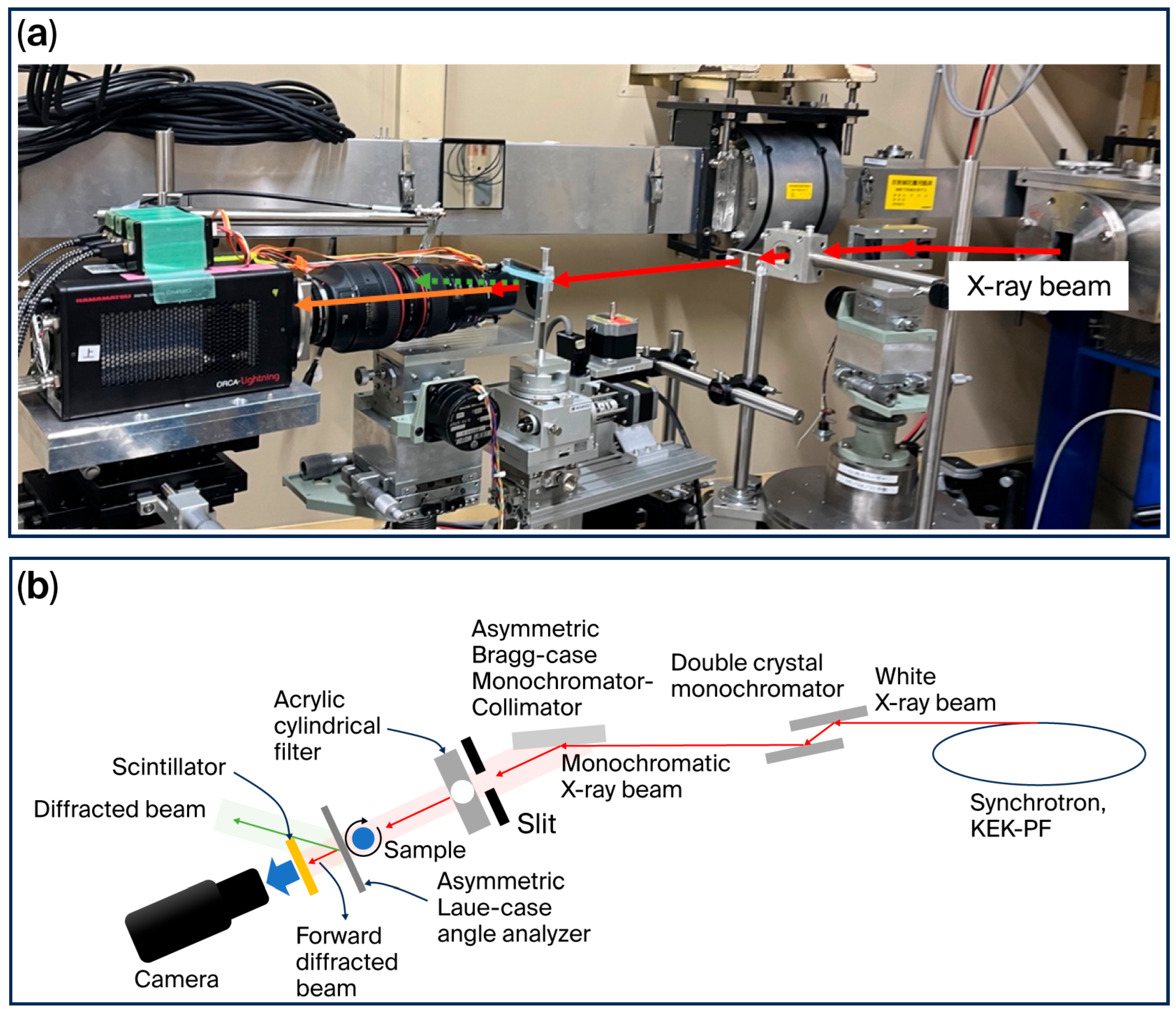
2.2. X-Ray Source and Experimental Setup
2.3. Imaging Parameters, Acquisition, and Reconstruction
2.4. Comparison with Histopathology
3. Results
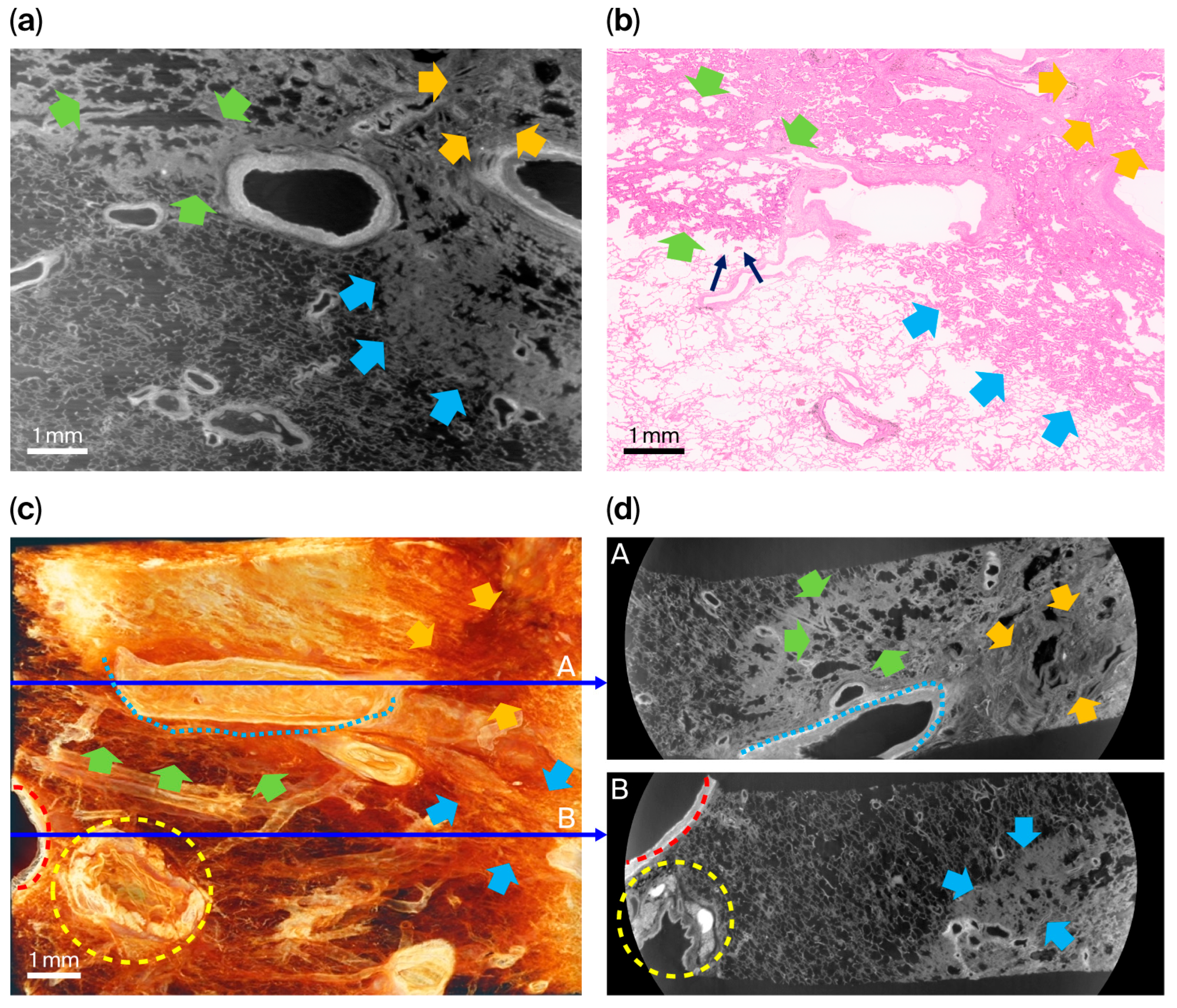
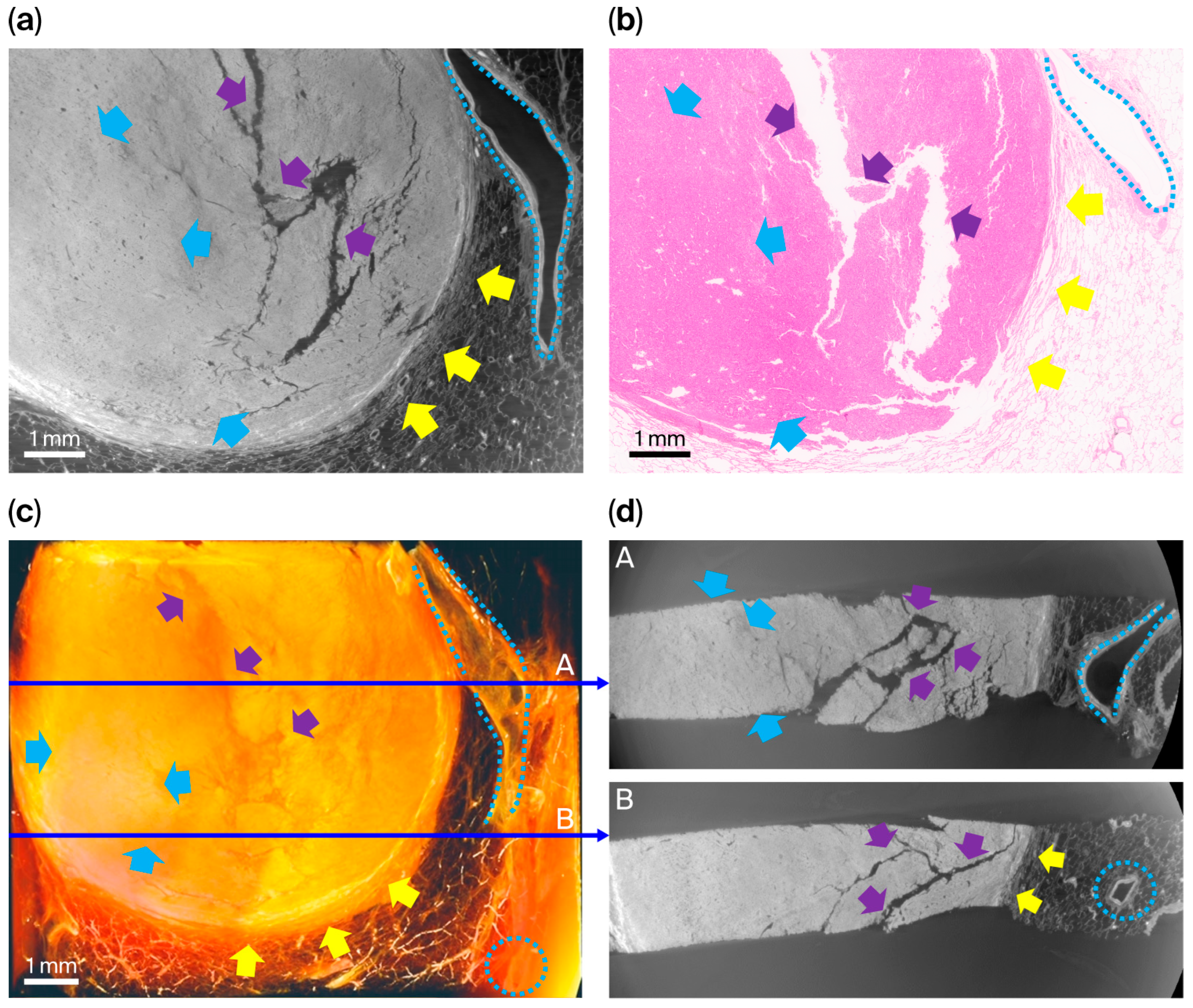
3.1. Comparison of Images from Primary Adenocarcinoma, Acinar-Predominant
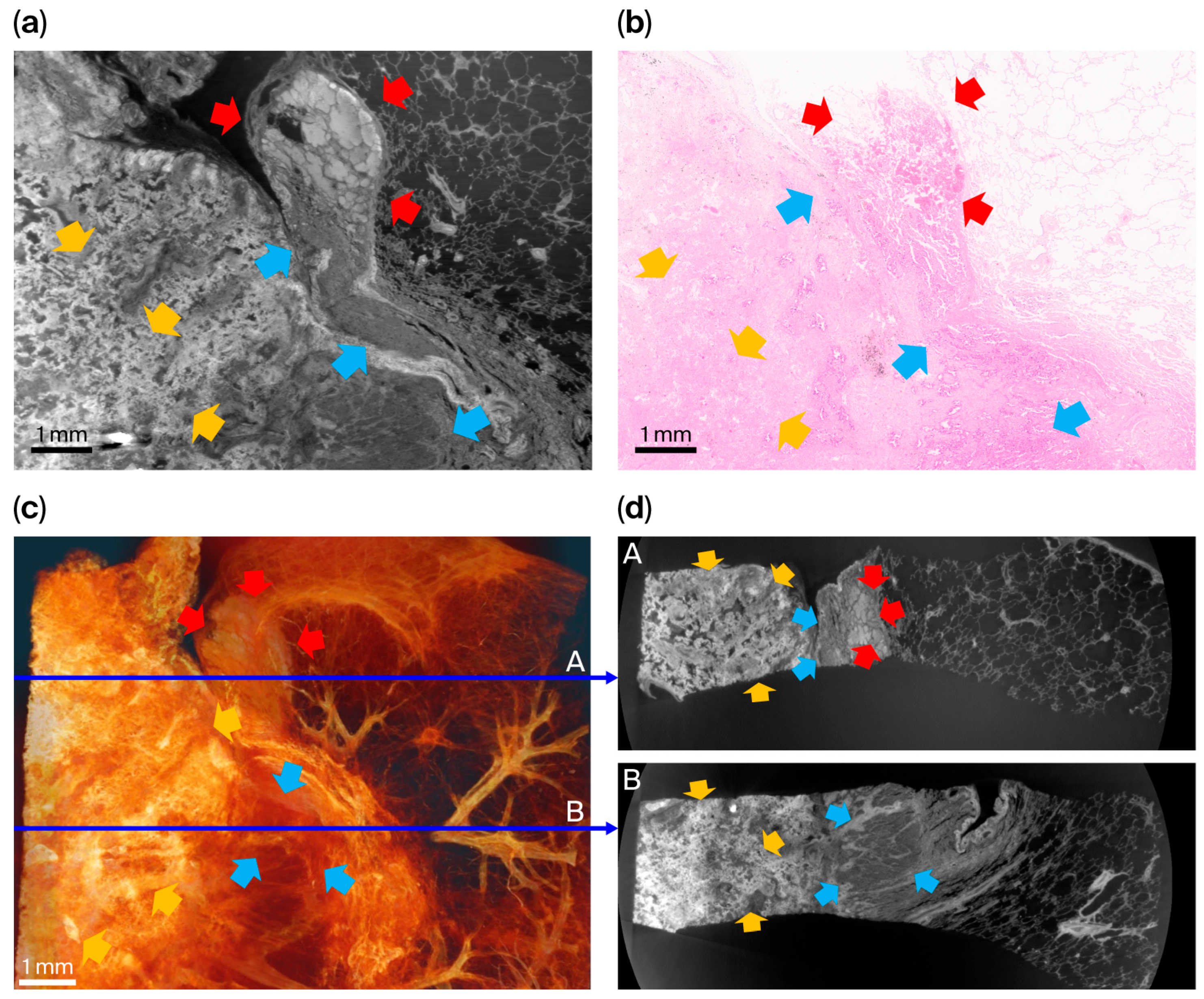
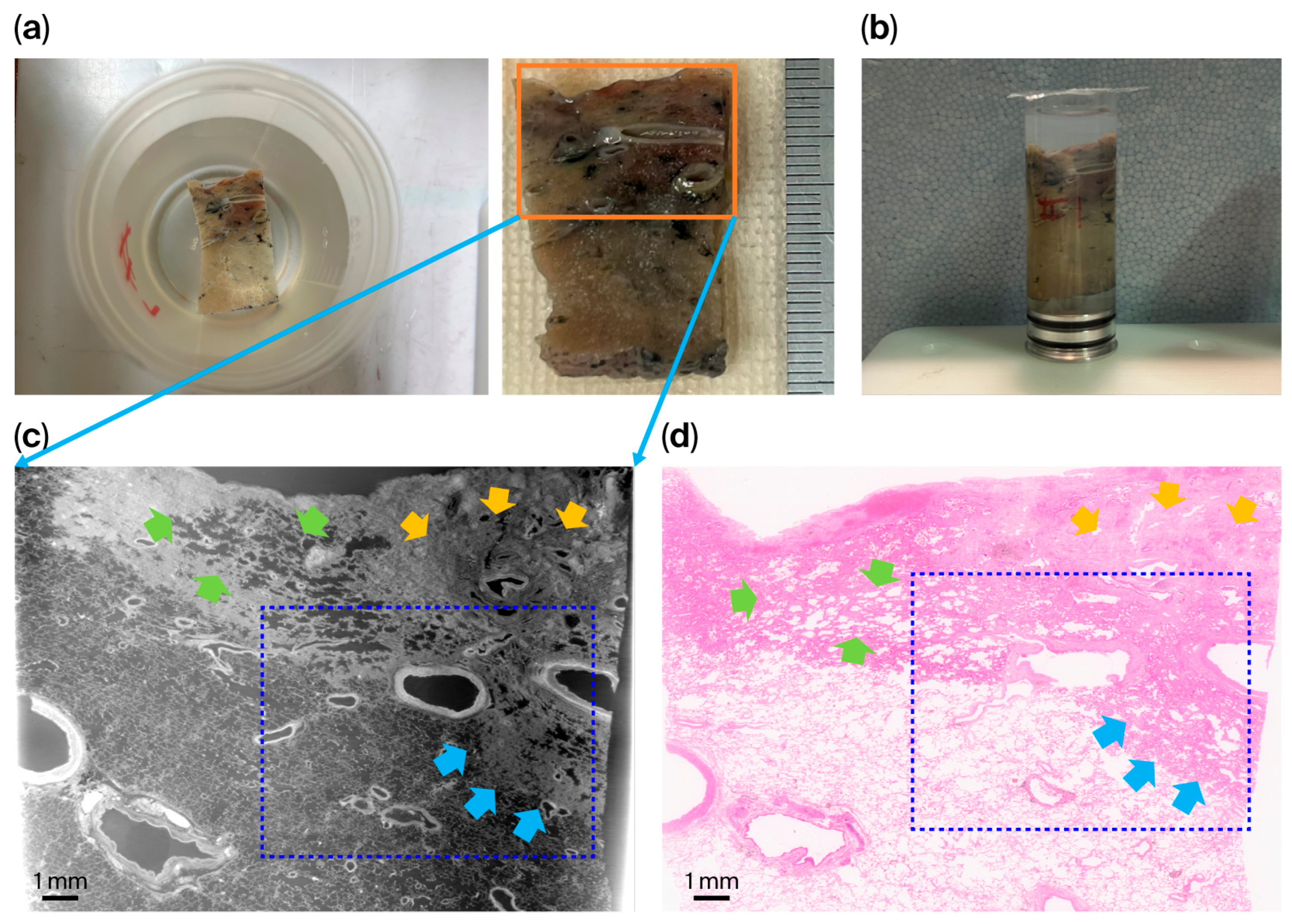
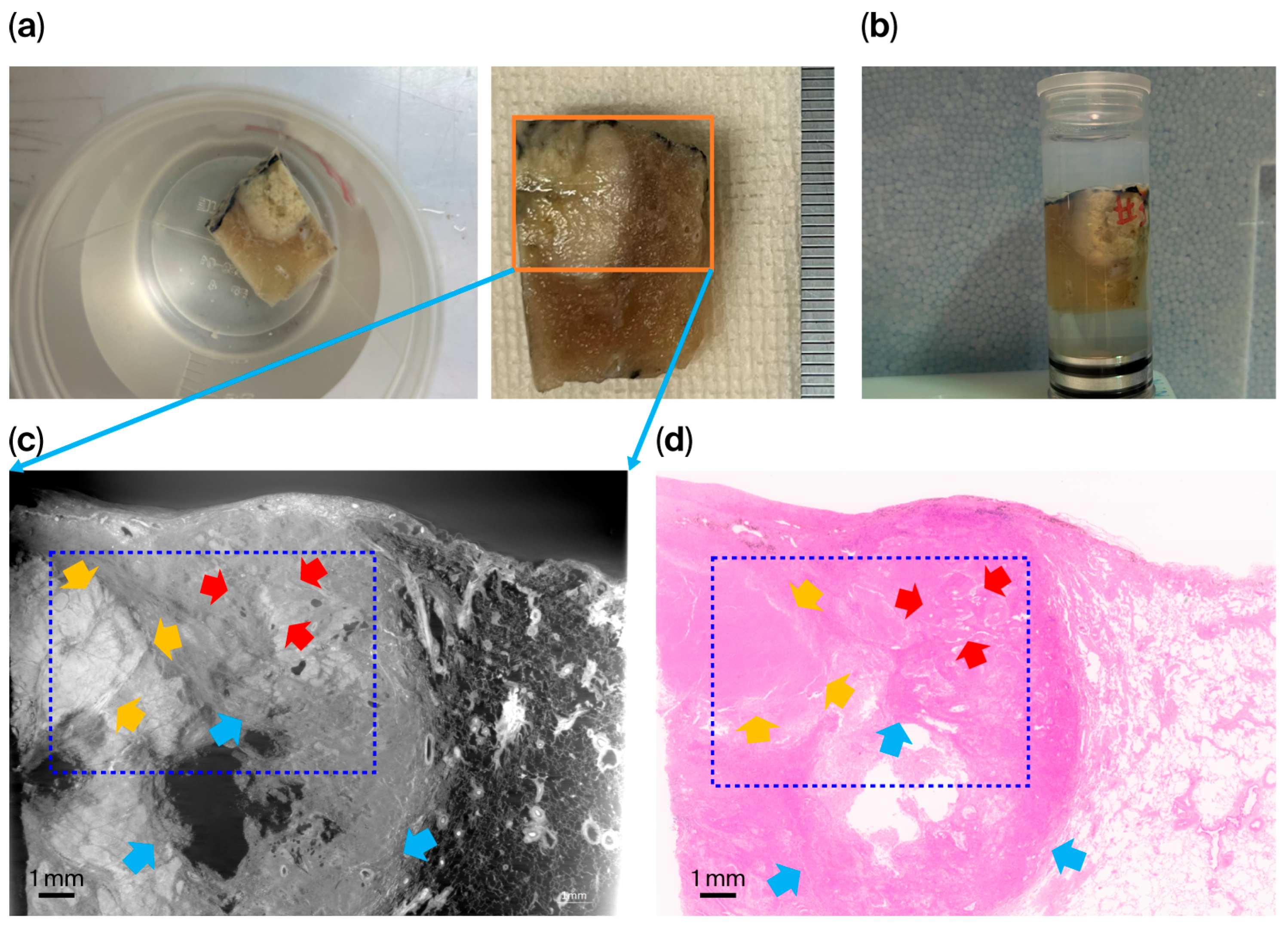
3.2. Images from Primary Adenocarcinoma Resected After CCRT
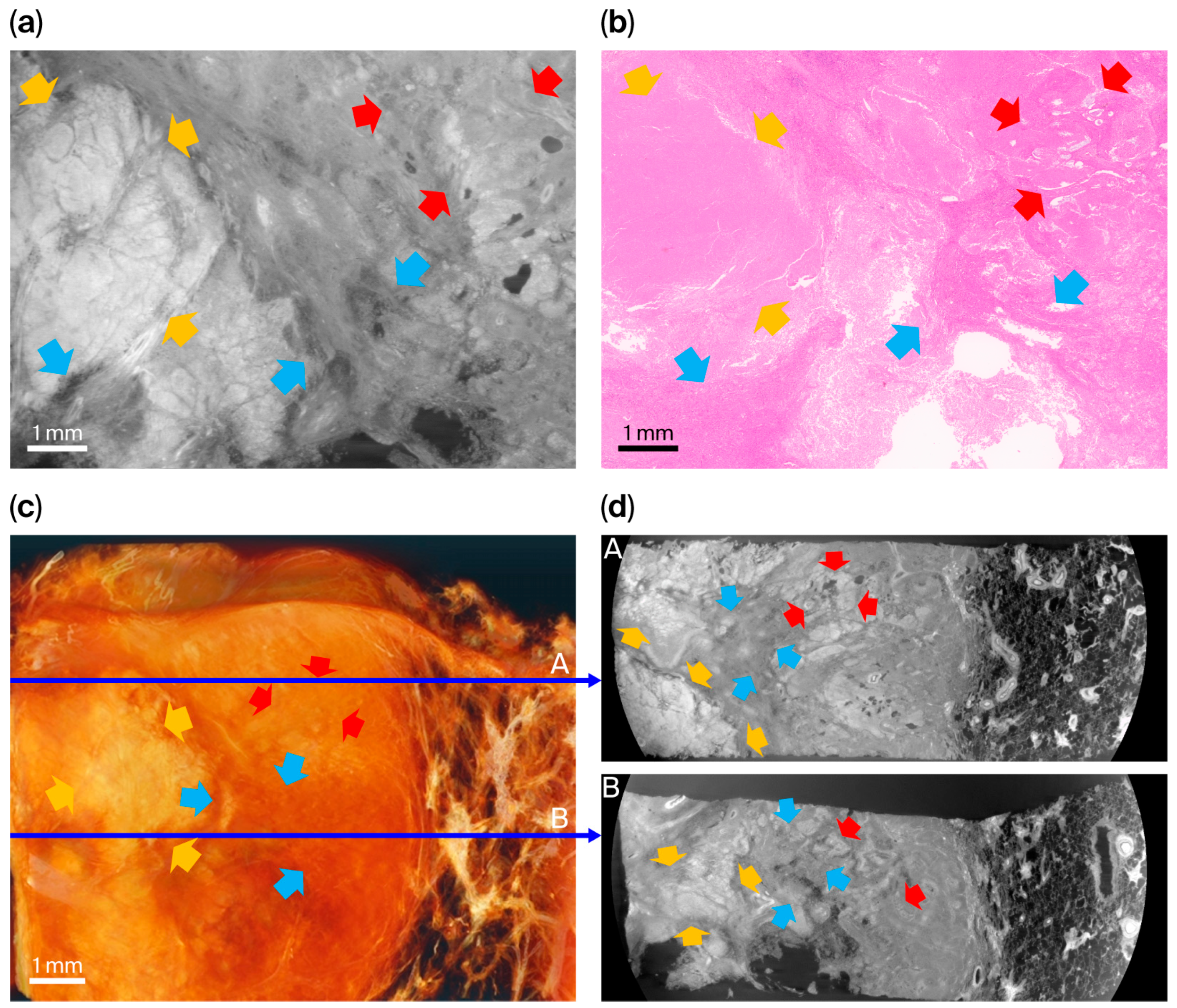
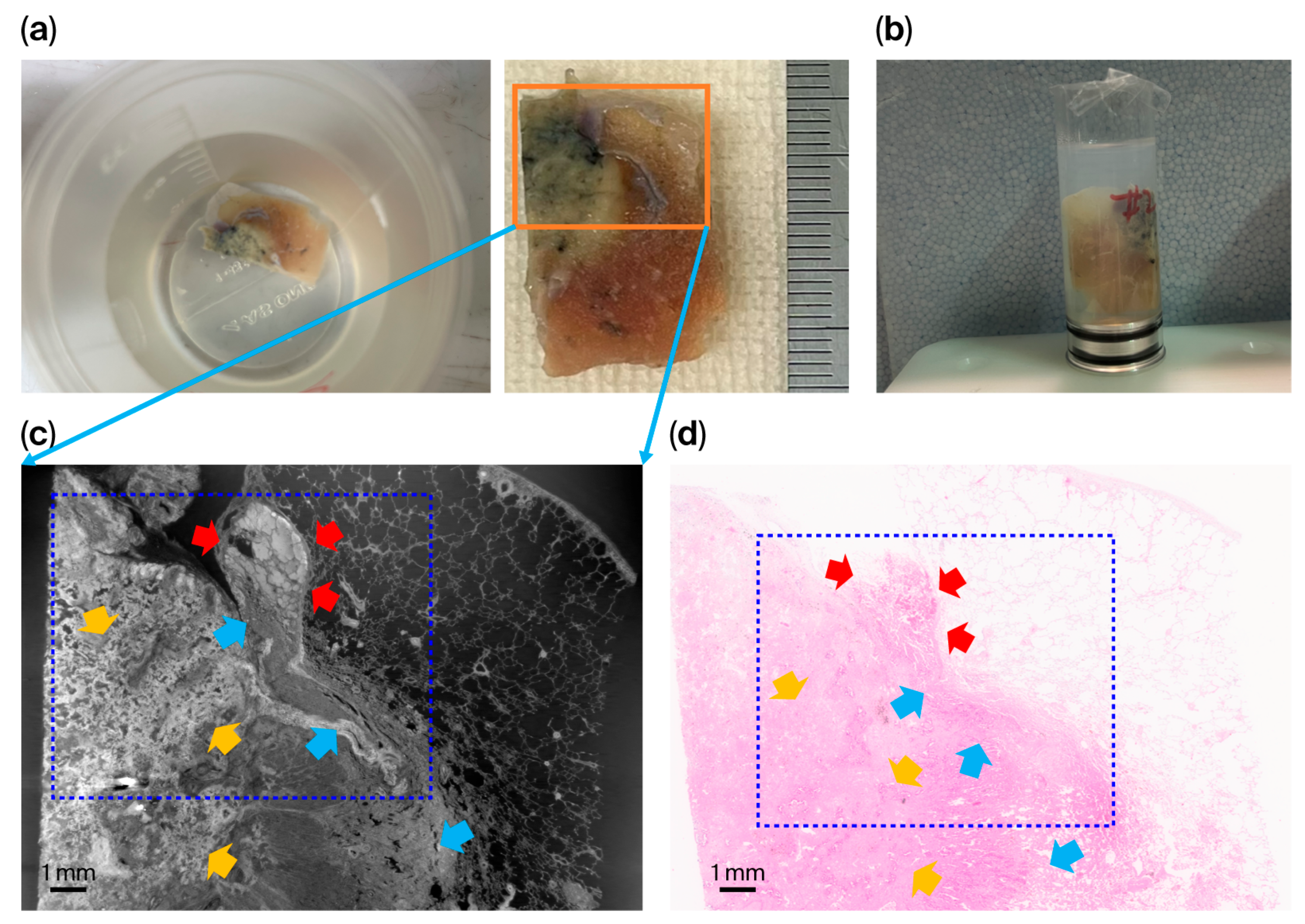
3.3. Images from Squamous Cell Carcinoma (Figure 4)

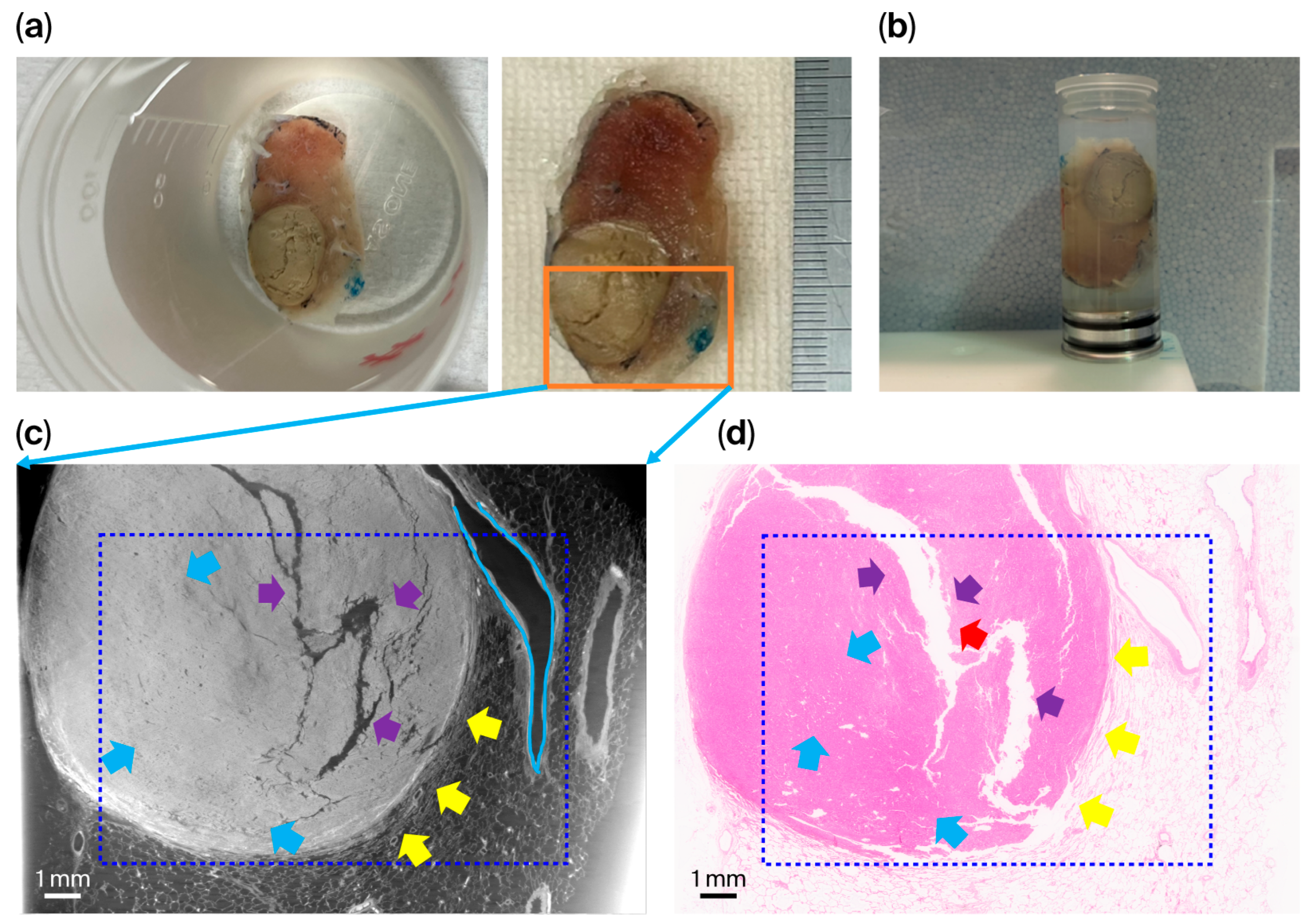
3.4. Images of Metastatic Carcinoma from Hepatic Cellular Carcinoma
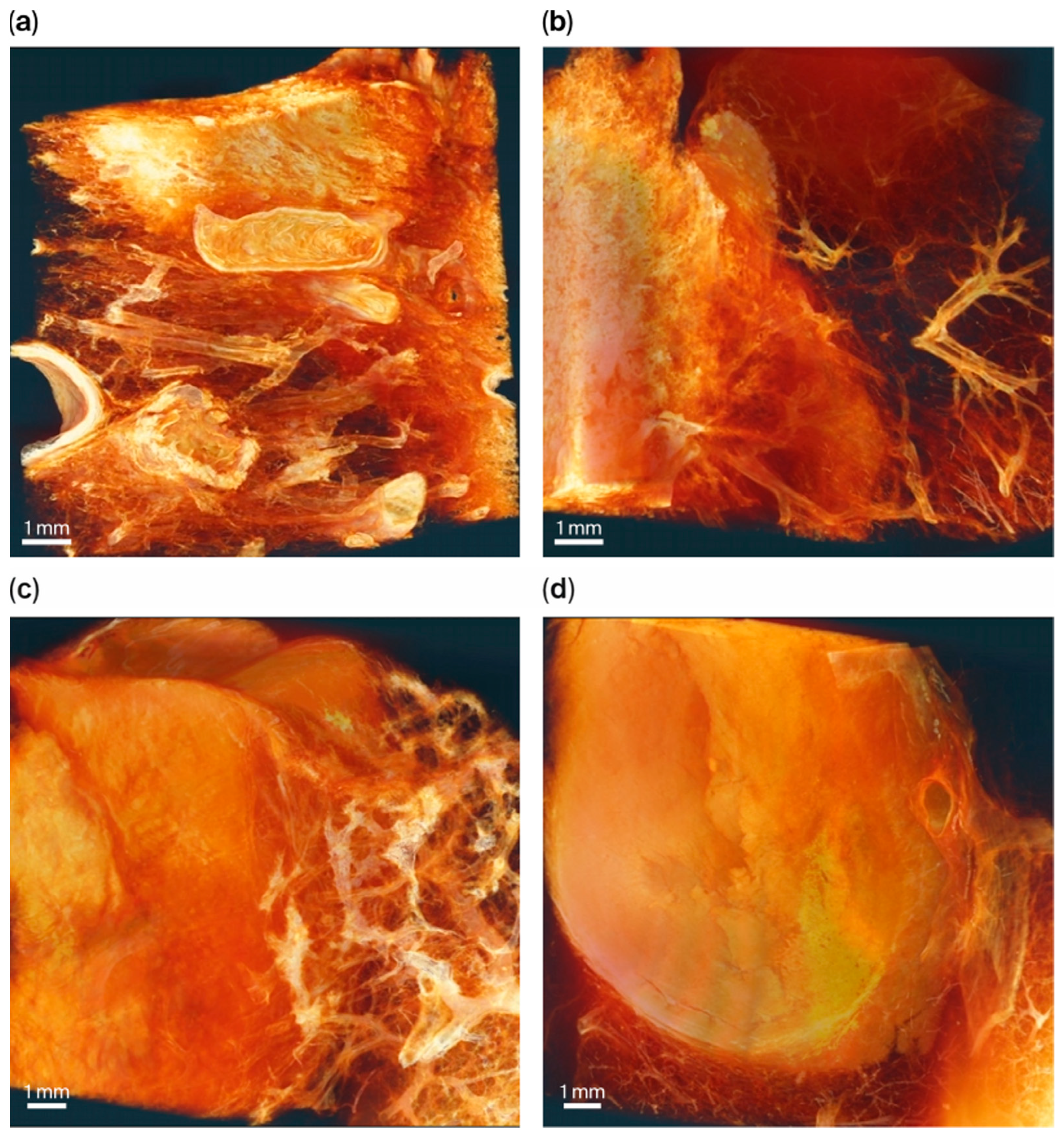
3.5. Three-Dimensional Segmentation Reconstruction Images of All Specimens
4. Discussion
5. Conclusions
6. Patents
Supplementary Materials
Author Contributions
Funding
Institutional Review Board Statement
Informed Consent Statement
Data Availability Statement
Acknowledgments
Conflicts of Interest
Abbreviations
| CT | Computed Tomography |
| PCI | Phase-Contrast Imaging |
| XDFI | X-ray Dark-Field Imaging |
| PF | Photon Factory |
| SR | Synchrotron Radiation |
| KEK | High Energy Accelerator Research Organization |
| IRB | Institutional Review Board |
| RLL | Right Lower Lobe |
| CCRT | Concurrent Chemoradiation Therapy |
| HCC | Hepatocellular Carcinoma |
| H&E | Hematoxylin and Eosin |
| AMC | Asymmetric Monochromator Collimator |
| LAA | Laue-type Angle Analyzer |
| FOV | Field of View |
| μm | Micrometer |
| 3D | Three-dimensional |
| CMOS | Complementary Metal-Oxide Semiconductor |
| LuAG: Ce | Lutetium Aluminum Garnet doped with Cerium |
| GPU | Graphic Process Unit |
| MC | Monochromator Collimator |
| μCT | Micro-computed Tomography |
| STAS | Spreading tumor cells Through Air Spaces |
| ESRF | European Synchrotron Radiation Facility |
| SYRMEP | SYnchrotron Radiation for MEdical Physics |
| IMBL | Imaging and Medical Beamline |
| MRT | Microbeam Radiation Therapy |
| NRF | National Research Foundation of Korea |
| MSIT | Ministry of Science and ICT |
| ICT | Information and Communication Technology |
Appendix A
Appendix A.1

| Variable | Conventional Microscopy of Stained Tissue Section | μ-CT 1 Based on Absorption Contrast Imaging | SR Tomography XDFI |
|---|---|---|---|
| Source | Visible light | Tube X-ray | Synchrotron X-ray |
| Physical quantity | Color difference by tissue staining | Linear Attenuation | Phase/refraction |
| (pixels) | Optical absorbance and scattering | coefficient | (electron density gradient, δ) |
| from stains (chromophores) | |||
| Soft tissue | High enough after staining | Generally limited | High soft-tissue contrast |
| contrast | (cellular detail to nuclei) | without contrast | (edge enhancement, |
| phase sensitivity) | |||
| Spatial resolution | ≈2.0~0.5 μm per pixel | ≈3.0~30 μm voxel | ≈1~10 μmvoxel |
| (typical) | (diffraction-limited bright field) | (depends on imaging condition) | (beamline optics dependent) |
| Field of view | mm scale per objective frame | Several cm × several cm | 23.5 × 14.3 mm2 (in our setting) |
| (whole slide by scanning) | (depends on geometry and detector) | (mosaicking extends coverage) | |
| 3D imaging quality | Intrinsically 2D | True isotropic 3D volume | True 3D volume with phase- |
| related definition; may benefit from | |||
| phase retrieval for quantitation | |||
| Sample preparation | Fixation, embedding | Often minimal; optional | Often minimal; no heavy-ion stain |
| Sectioning (3~5 μm), staining | iodine/metal stains to boost contrast | required for soft-tissue contrast | |
| Sample destruction | Yes (sectioning) | No (non-destructive) | No (non-destructive) |
| Common artifacts | Shrinkage, tearing, folding | Beam hardening, ring artifacts | Edge-enhancement halos |
| Staining variability | Motion artifacts | Phase-wrapping | |
| Alignment/calibration errors | |||
| Measurement time | Long due to large | 10 s~several hours | Tens of minutes–several hours |
| volume of slices and staining | (depends on imaging condition, | (depends on imaging condition, | |
| e.g., exposure time, | e.g., exposure time, | ||
| number of projections) | number of projections) |
Appendix A.2


References
- De Wever, W.; Verschakelen, J.; Coolen, J. Role of Imaging in Diagnosis, Staging and Follow-up of Lung Cancer. Curr. Opin. Pulm. Med. 2014, 20, 385–392. [Google Scholar] [CrossRef] [Scilit] [PubMed]
- Gillaspie, E.A.; Allen, M.S. Computed Tomographic Screening for Lung Cancer: The Mayo Clinic Experience. Thorac. Surg. Clin. 2015, 25, 121–127. [Google Scholar] [CrossRef] [Scilit]
- Adams, S.J.; Stone, E.; Baldwin, D.R.; Vliegenthart, R.; Lee, P.; Fintelmann, F.J. Lung Cancer Screening. Lancet 2023, 401, 390–408. [Google Scholar] [CrossRef] [Scilit]
- Nicholson, A.G.; Tsao, M.S.; Beasley, M.B.; Borczuk, A.C.; Brambilla, E.; Cooper, W.A.; Dacic, S.; Jain, D.; Kerr, K.M.; Lantuejoul, S.; et al. The 2021 Who Classification of Lung Tumors: Impact of Advances since 2015. J. Thorac. Oncol. 2022, 17, 362–387. [Google Scholar] [CrossRef] [Scilit]
- Patharia, P.; Sethy, P.K.; Nanthaamornphong, A. Advancements and Challenges in the Image-Based Diagnosis of Lung and Colon Cancer: A Comprehensive Review. Cancer Inform. 2024, 23, 11769351241290608. [Google Scholar] [CrossRef] [Scilit]
- Koç, M.M.; Aslan, N.; Kao, A.P.; Barber, A.H. Evaluation of X-Ray Tomography Contrast Agents: A Review of Production, Protocols, and Biological Applications. Microsc. Res. Tech. 2019, 82, 812–848. [Google Scholar] [CrossRef] [Scilit]
- Tao, S.; He, C.; Hao, X.; Kuang, C.; Liu, X. Principles of Different X-Ray Phase-Contrast Imaging: A Review. Appl. Sci. 2021, 11, 2971. [Google Scholar] [CrossRef] [Scilit]
- Quenot, L.; Bohic, S.; Brun, E. X-Ray Phase Contrast Imaging from Synchrotron to Conventional Sources: A Review of the Existing Techniques for Biological Applications. Appl. Sci. 2022, 12, 9539. [Google Scholar] [CrossRef] [Scilit]
- Albers, J.; Svetlove, A.; Duke, E. Synchrotron X-Ray Imaging of Soft Biological Tissues–Principles, Applications and Future Prospects. J. Cell Sci. 2024, 137, jcs261953. [Google Scholar] [CrossRef] [Scilit] [PubMed]
- Ritman, E.L. Micro-Computed Tomography of the Lungs and Pulmonary-Vascular System. Proc. Am. Thorac. Soc. 2005, 2, 477–480. [Google Scholar] [CrossRef] [Scilit]
- Norvik, C.; Westöö, C.K.; Peruzzi, N.; Lovric, G.; van der Have, O.; Mokso, R.; Jeremiasen, I.; Brunnström, H.; Galambos, C.; Bech, M.; et al. Synchrotron-Based Phase-Contrast Micro-Ct as a Tool for Understanding Pulmonary Vascular Pathobiology and the 3-D Microanatomy of Alveolar Capillary Dysplasia. Am. J. Physiol. Lung Cell. Mol. Physiol. 2020, 318, L65–L75. [Google Scholar] [CrossRef] [Scilit] [PubMed]
- Liu, H.; Jiao, Z.; Han, W.; Jing, B. Identifying the Histologic Subtypes of Non-Small Cell Lung Cancer with Computed Tomography Imaging: A Comparative Study of Capsule Net, Convolutional Neural Network, and Radiomics. Quant. Imaging Med. Surg. 2021, 11, 2756. [Google Scholar] [CrossRef] [Scilit]
- Gunaseelan, I.; Zadeh, A.A.; Arhatari, B.; Maksimenko, A.; Hall, C.; Hausermann, D.; Kumar, B.; Fox, J.; Quiney, H.; Lockie, D.; et al. Propagation-Based Phase-Contrast Imaging of the Breast: Image Quality and the Effect of X-Ray Energy and Radiation Dose. Br. J. Radiol. 2023, 96, 20221189. [Google Scholar] [CrossRef] [Scilit]
- Saccomano, M.; Albers, J.; Tromba, G.; Radmilović, M.D.; Gajović, S.; Alves, F.; Dullin, C. Synchrotron Inline Phase Contrast µct Enables Detailed Virtual Histology of Embedded Soft-Tissue Samples with and without Staining. Synchrotron Radiat. 2018, 25, 1153–1161. [Google Scholar] [CrossRef] [Scilit]
- Albers, J.; Wagner, W.L.; Fiedler, M.O.; Rothermel, A.; Wünnemann, F.; Di Lillo, F.; Dreossi, D.; Sodini, N.; Baratella, E.; Confalonieri, M.; et al. High Resolution Propagation-Based Lung Imaging at Clinically Relevant X-Ray Dose Levels. Sci. Rep. 2023, 13, 4788. [Google Scholar] [CrossRef] [Scilit]
- Romano, M.; Bravin, A.; Wright, M.D.; Jacques, L.; Miettinen, A.; Hlushchuk, R.; Dinkel, J.; Bartzsch, S.; Laissue, J.A.; Djonov, V.; et al. X-Ray Phase Contrast 3d Virtual Histology: Evaluation of Lung Alterations after Microbeam Irradiation. Int. J. Radiat. Oncol. Biol. Phys. 2022, 112, 818–830. [Google Scholar] [CrossRef] [Scilit] [PubMed]
- Ando, M.; Sunaguchi, N.; Wu, Y.; Do, S.; Sung, Y.; Louissaint, A.; Yuasa, T.; Ichihara, S.; Gupta, R. Crystal Analyser-Based X-Ray Phase Contrast Imaging in the Dark Field: Implementation and Evaluation Using Excised Tissue Specimens. Eur. Radiol. 2014, 24, 423–433. [Google Scholar] [CrossRef] [Scilit]
- Ando, M.; Nakao, Y.; Jin, G.; Sugiyama, H.; Sunaguchi, N.; Sung, Y.; Suzuki, Y.; Sun, Y.; Tanimoto, M.; Kawashima, K.; et al. Improving Contrast and Spatial Resolution in Crystal Analyzer-Based X-Ray Dark-Field Imaging: Theoretical Considerations and Experimental Demonstration. Med. Phys. 2020, 47, 5505–5513. [Google Scholar] [CrossRef] [Scilit]
- Ando, M.; Sunaguchi, N.; Shimao, D.; Pan, A.; Yuasa, T.; Mori, K.; Suzuki, Y.; Jin, G.; Kim, J.-K.; Lim, J.-H.; et al. Dark-Field Imaging: Recent Developments and Potential Clinical Applications. Phys. Med. 2016, 32, 1801–1812. [Google Scholar] [CrossRef] [Scilit]
- Ando, M.; Sunaguchi, N.; Sung, Y.; Shimao, D.; Kim, J.-K.; Li, G.; Suzuki, Y.; Yuasa, T.; Mori, K.; Ichihara, S.; et al. Crystal-Based X-Ray Medical Imaging Using Synchrotron Radiation and Its Future Prospect. In Synchrotron Radiation Applications; World Scientific: Singapore, 2018; pp. 287–342. [Google Scholar]
- Ando, M.; Chikaura, Y.; Endo, T.; Gupta, R.; Huo, Q.; Hyodo, K.; Ichihara, S.; Mori, K.; Nakao, Y.; Ohura, N.; et al. Tissue Visualization Using X-Ray Dark-Field Imaging Towards Pathological Goal. In Proceedings of the 11th International Conference on Synchrotron Radiation Instrumentation (SRI 2012), Lyon, France, 9–13 July 2012. [Google Scholar]
- Ando, M.; Gupta, R.; Iwakoshi, A.; Kim, J.-K.; Shimao, D.; Sugiyama, H.; Sunaguchi, N.; Yuasa, T.; Ichihara, S. X-Ray Dark-Field Phase-Contrast Imaging: Origins of the Concept to Practical Implementation and Applications. Phys. Med. 2020, 79, 188–208. [Google Scholar] [CrossRef] [Scilit] [PubMed]
- Emons, J.; Fasching, P.A.; Wunderle, M.; Heindl, F.; Rieger, J.; Horn, F.; Pelzer, G.; Ritter, A.; Weber, T.; Radicke, M.; et al. Assessment of the Additional Clinical Potential of X-Ray Dark-Field Imaging for Breast Cancer in a Preclinical Setup. Ther. Adv. Med. Oncol. 2020, 12, 1758835920957932. [Google Scholar] [CrossRef] [Scilit] [PubMed]
- Shimao, D.; Sunaguchi, N.; Yuasa, T.; Ando, M.; Mori, K.; Gupta, R.; Ichihara, S. X-Ray Dark-Field Imaging (Xdfi)—A Promising Tool for 3d Virtual Histopathology. Mol. Imaging Biol. 2021, 23, 481–494. [Google Scholar] [CrossRef] [Scilit]
- Sunaguchi, N.; Yuasa, T.; Huo, Q.; Ichihara, S.; Ando, M. Refraction-Contrast Tomosynthesis Imaging Using Dark-Field Imaging Optics. Appl. Phys. Lett. 2011, 99, 103704. [Google Scholar] [CrossRef] [Scilit]
- Sunaguchi, N.; Yuasa, T.; Huo, Q.; Ando, M. Convolution Reconstruction Algorithm for Refraction-Contrast Computed Tomography Using a Laue-Case Analyzer for Dark-Field Imaging. Opt. Lett. 2011, 36, 391–393. [Google Scholar] [CrossRef] [Scilit]
- Yi, E.; Han, S.-M.; Chang, J.-E.; Kim, H.-T.; Kim, J.-K.; Seo, S.-J.; Chung, J.-H.; Jheon, S. Synchrotron Tomographic Images from Human Lung Adenocarcinoma: Three-Dimensional Reconstruction and Histologic Correlations. Microsc. Res. Tech. 2017, 80, 1141–1148. [Google Scholar] [CrossRef] [Scilit]
- Yi, E.; Sunaguchi, N.; Lee, J.H.; Kim, C.-Y.; Lee, S.; Jheon, S.; Ando, M.; Seok, Y. Synchrotron Radiation-Based Refraction-Contrast Tomographic Images Using X-Ray Dark-Field Imaging Optics in Human Lung Adenocarcinoma and Histologic Correlations. Diagnostics 2021, 11, 487. [Google Scholar] [CrossRef] [Scilit]
- Yi, E.; Sunaguchi, N.; Lee, J.H.; Seo, S.-J.; Lee, S.; Shimao, D.; Ando, M. Synchrotron Radiation Refraction-Contrast Computed Tomography Based on X-Ray Dark-Field Imaging Optics of Pulmonary Malignancy: Comparison with Pathologic Examination. Cancers 2024, 16, 806. [Google Scholar] [CrossRef] [Scilit] [PubMed]
- Butnor, K.J. Controversies and Challenges in the Histologic Subtyping of Lung Adenocarcinoma. Transl. Lung Cancer Res. 2020, 9, 839–846. [Google Scholar] [CrossRef] [Scilit]
- Berezowska, S.; Maillard, M.; Keyter, M.; Bisig, B. Pulmonary Squamous Cell Carcinoma and Lymphoepithelial Carcinoma–Morphology, Molecular Characteristics and Differential Diagnosis. Histopathology 2024, 84, 32–49. [Google Scholar] [CrossRef] [Scilit] [PubMed]
- Sunaguchi, N.; Yuasa, T.; Shimao, D.; Huang, Z.; Ichihara, S.; Nishimura, R.; Iwakoshi, A.; Kim, J.-K.; Gupta, R.; Ando, M. Superimposed Wavefront Imaging of Diffraction-Enhanced X-Rays: Sparsity-Aware Ct Reconstruction from Limited-View Projections. Int. J. Comput. Assist. Radiol. Surg. 2025, 20, 653–663. [Google Scholar] [CrossRef] [Scilit]
- Lu, L.; Xu, H. An Update on the Classification of Lung and Pleural Tumors. J. Clin. Transl. Pathol. 2023, 3, 106–113. [Google Scholar] [CrossRef] [Scilit]
- Reichmann, J.; Verleden, S.E.; Kühnel, M.; Kamp, J.C.; Werlein, C.; Neubert, L.; Müller, J.-H.; Bui, T.Q.; Ackermann, M.; Jonigk, D.; et al. Human Lung Virtual Histology by Multi-Scale X-Ray Phase-Contrast Computed Tomography. Phys. Med. Biol. 2023, 68, 115014. [Google Scholar] [CrossRef] [Scilit]
- Ramchandar, A. Analysis of Segmentation Performance in AI-Denoised Propagation-Based X-Ray Phase-Contrast Computed Tomography of the Breast. Mater’s Thesis, University of Canterbury, Christchurch, New Zealand, 2025. [Google Scholar]
- Travis, W.D.; Dacic, S.; Wistuba, I.; Sholl, L.; Adusumilli, P.; Bubendorf, L.; Bunn, P.; Cascone, T.; Chaft, J.; Chen, G.; et al. Iaslc Multidisciplinary Recommendations for Pathologic Assessment of Lung Cancer Resection Specimens after Neoadjuvant Therapy. J. Thorac. Oncol. 2020, 15, 709–740. [Google Scholar] [CrossRef] [Scilit]
- Zamir, A.; Endrizzi, M.; Hagen, C.K.; Vittoria, F.A.; Urbani, L.; De Coppi, P.; Olivo, A. Robust Phase Retrieval for High Resolution Edge Illumination X-Ray Phase-Contrast Computed Tomography in Non-Ideal Environments. Sci. Rep. 2016, 6, 31197. [Google Scholar] [CrossRef] [Scilit] [PubMed]
- Gassert, F.T.; Urban, T.; Frank, M.; Willer, K.; Noichl, W.; Buchberger, P.; Schick, R.; Koehler, T.; von Berg, J.; Fingerle, A.A.; et al. X-Ray Dark-Field Chest Imaging: Qualitative and Quantitative Results in Healthy Humans. Radiology 2021, 301, 389–395. [Google Scholar] [CrossRef] [Scilit]
- Sen, A.; Troncoso, P.; Venkatesan, A.; Pagel, M.D.; Nijkamp, J.A.; He, Y.; Lesage, A.-C.; Woodland, M.; Brock, K.K. Correlation of in-Vivo Imaging with Histopathology: A Review. Eur. J. Radiol. 2021, 144, 109964. [Google Scholar] [CrossRef] [Scilit] [PubMed]
- Gao, Y.; Jiang, Y.; Peng, Y.; Yuan, F.; Zhang, X.; Wang, J. Medical Image Segmentation: A Comprehensive Review of Deep Learning-Based Methods. Tomography 2025, 11, 52. [Google Scholar] [CrossRef] [Scilit]
- Ahmad, I.S.; Dai, J.; Xie, Y.; Liang, X. Deep Learning Models for Ct Image Classification: A Comprehensive Literature Review. Quant. Imaging Med. Surg. 2025, 15, 962–1011. [Google Scholar] [CrossRef] [Scilit]
- Birnbacher, L.; Willner, M.; Velroyen, A.; Marschner, M.; Hipp, A.; Meiser, J.; Koch, F.; Schröter, T.; Kunka, D.; Mohr, J.; et al. Experimental Realisation of High-Sensitivity Laboratory X-Ray Grating-Based Phase-Contrast Computed Tomography. Sci. Rep. 2016, 6, 24022. [Google Scholar] [CrossRef] [Scilit]
- Preusche, O. Choosing Sensitivity to Reduce X-Ray Dose in Medical Phase Contrast Imaging. Opt. Express 2018, 26, 10339–10357. [Google Scholar] [CrossRef] [Scilit] [PubMed]
- Wan, S.; Arhatari, B.D.; Nesterets, Y.I.; Mayo, S.C.; Thompson, D.; Fox, J.; Kumar, B.; Prodanovic, Z.; Hausermann, D.; Maksimenko, A.; et al. Effect of X-Ray Energy on the Radiological Image Quality in Propagation-Based Phase-Contrast Computed Tomography of the Breast. J. Med. Imaging 2021, 8, 052108. [Google Scholar] [CrossRef] [Scilit]
- Walsh, C.L.; Tafforeau, P.; Wagner, W.L.; Jafree, D.J.; Bellier, A.; Werlein, C.; Kühnel, M.P.; Boller, E.; Walker-Samuel, S.; Robertus, J.L. Imaging Intact Human Organs with Local Resolution of Cellular Structures Using Hierarchical Phase-Contrast Tomography. Nat. Methods 2021, 18, 1532–1541. [Google Scholar] [CrossRef] [Scilit]
- Cloetens, P.; Daillant, J.; Detlefs, C.; Drnec, J.; Frey, J.; Hernandez, J.-A.; Honkimaki, V.; Krisch, M.; Martínez-Criado, G.; McCarthy, J.; et al. The Esrf: Four Years of Extremely Brilliant Science. Synchrotron Radiat. News 2025, 38, 4–9. [Google Scholar] [CrossRef] [Scilit]
- Vijayakumar, J.; Dejea, H.; Mirone, A.; Muzelle, C.; Meyer, J.; Jarnias, C.; Dollman, K.; Zabler, S.; Paolasini, L.; Bellier, A.; et al. Multiresolution Phase-Contrast Tomography on Bm18, a New Beamline at the European Synchrotron Radiation Facility. Synchrotron Radiat. News 2024, 37, 16–25. [Google Scholar] [CrossRef] [Scilit]
- Schaeper, J.J.; Tafforeau, P.; Kampshoff, C.A.; Thomas, C.; Meyer, A.; Stadelmann, C.; Liberman, M.C.; Moser, T.; Salditt, T. 3D Imaging of the Human Temporal Bone by X-Ray Phase-Contrast Tomography. npj Imaging 2025, 3, 21. [Google Scholar] [CrossRef] [Scilit] [PubMed]
- Rahmani, S.; Jafree, D.J.; Lee, P.D.; Tafforeau, P.; Brunet, J.; Nandanwar, S.; Zhou, Y.; Jacob, J.; Bellier, A.; Ackermann, M.; et al. Mapping the Arterial Vascular Network in an Intact Human Kidney Using Hierarchical Phase-Contrast Tomography. npj Imaging 2025, 3, 39. [Google Scholar] [CrossRef] [Scilit] [PubMed]
- Brunet, J.; Walsh, C.L.; Tafforeau, P.; Dejea, H.; Cook, A.C.; Bellier, A.; Engel, K.; Jonigk, D.D.; Ackermann, M.; Lee, P.D. Hierarchical Phase-Contrast Tomography: A Non-Destructive Multiscale Imaging Approach for Whole Human Organs. Presented at the Developments in X-Ray Tomography XV, San Diego, CA, USA, 19–22 August 2024. [Google Scholar]
- Donato, S.; Peña, L.M.A.; Bonazza, D.; Formoso, V.; Longo, R.; Tromba, G.; Brombal, L. Optimization of Pixel Size and Propagation Distance in X-Ray Phase-Contrast Virtual Histology. J. Instrum. 2022, 17, C05021. [Google Scholar] [CrossRef] [Scilit]
- Wagner, W.L.; Wuennemann, F.; Pacilé, S.; Albers, J.; Arfelli, F.; Dreossi, D.; Biederer, J.; Konietzke, P.; Stiller, W.; Wielpütz, M.O. Towards Synchrotron Phase-Contrast Lung Imaging in Patients—A Proof-of-Concept Study on Porcine Lungs in a Human-Scale Chest Phantom. Synchrotron Radiat. 2018, 25, 1827–1832. [Google Scholar] [CrossRef] [Scilit]
- Longo, E.; Contillo, A.; D’Amico, L.; Prašek, M.; Saccomano, G.; Sodini, N.; Dullin, C.; Dreossi, D.; Tromba, G. Syrmep Beamline: State of the Art, Upgrades and Future Prospects. Eur. Phys. J. Plus 2024, 139, 880. [Google Scholar] [CrossRef] [Scilit]
- Tromba, G.; Longo, R.; Abrami, A.; Arfelli, F.; Astolfo, A.; Bregant, P.; Brun, F.; Casarin, K.; Chenda, V.; Dreossi, D. The Syrmep Beamline of Elettra: Clinical Mammography and Bio-Medical Applications. In Proceedings of the 6th International Conference on Medical Applications of Synchrotron Radiation, Melbourne, Australia, 15–18 February 2010. [Google Scholar]
- Stevenson, A.W.; Crosbie, J.C.; Hall, C.J.; Häusermann, D.; Livingstone, J.; Lye, J.E. Quantitative Characterization of the X-Ray Beam at the Australian Synchrotron Imaging and Medical Beamline (Imbl). Synchrotron Radiat. 2017, 24, 110–141. [Google Scholar] [CrossRef] [Scilit]
- Arhatari, B.D.; Stevenson, A.W.; Abbey, B.; Nesterets, Y.I.; Maksimenko, A.; Hall, C.J.; Thompson, D.; Mayo, S.C.; Fiala, T.; Quiney, H.M.; et al. X-Ray Phase-Contrast Computed Tomography for Soft Tissue Imaging at the Imaging and Medical Beamline (Imbl) of the Australian Synchrotron. Appl. Sci. 2021, 11, 4120. [Google Scholar] [CrossRef] [Scilit]
- Arbid, J.F.; Brennan, P.C.; Awwad, D.A.; Lewis, S.J.; Hausermann, D.; Engels, E.; Warrillow, M.; Jimenez, Y.A.; Hall, C.J.; Leatham, T.A. Women’s Tolerance of Breast Propagation-Based Phase-Contrast Computed Tomography (Pb-Ct) Positioning Procedure. Radiography 2025, 31, 103092. [Google Scholar] [CrossRef] [Scilit] [PubMed]
- Ahlers, J.N.; Amico, L.D.; Bast, H.; Costello, L.F.; Donnelley, M.; Alloo, S.J.; Harker, S.A.; How, Y.Y.; Croughan, M.K.; Pollock, J.A.; et al. High-Energy X-Ray Phase-Contrast Ct of an Adult Human Chest Phantom. Sci. Rep. 2025, 15, 29314. [Google Scholar] [CrossRef] [Scilit] [PubMed]
- Pelliccia, D.; Poole, C.M.; Livingstone, J.; Stevenson, A.W.; Smyth, L.M.L.; Rogers, P.A.W.; Haüsermann, D.; Crosbie, J.C. Image Guidance Protocol for Synchrotron Microbeam Radiation Therapy. Synchrotron Radiat. 2016, 23, 566–573. [Google Scholar] [CrossRef] [Scilit]
- Paino, J.; Barnes, M.; Engels, E.; Davis, J.; Guatelli, S.; de Veer, M.; Hall, C.; Häusermann, D.; Tehei, M.; Corde, S.; et al. Incorporating Clinical Imaging into the Delivery of Microbeam Radiation Therapy. Appl. Sci. 2021, 11, 9101. [Google Scholar] [CrossRef] [Scilit]
- Dimmock, M.; McKinley, J.; Massey, A.; Hausermann, D.; Tam, N.; Stewart, E.; Cowling, C.; Sim, J.; Brennan, P.C.; Gureyev, T.; et al. Designing a Breast Support Device for Phase Contrast Tomographic Imaging: Getting Ready for a Clinical Trial. Br. J. Radiol. 2022, 95, 20211243. [Google Scholar] [CrossRef] [Scilit]
- Xiao, C.; Zhang, J.; Li, Y.; Xie, M.; Sun, D. Application of Synchrotron Radiation in Fundamental Research and Clinical Medicine. Biomedicines 2025, 13, 1419. [Google Scholar] [CrossRef] [Scilit]
- Eling, L.; Kefs, S.; Keshmiri, S.; Balosso, J.; Calvet, S.; Chamel, G.; Drevon-Gaud, R.; Flandin, I.; Gaudin, M.; Giraud, L.; et al. Neuro-Oncologic Veterinary Trial for the Clinical Transfer of Microbeam Radiation Therapy: Acute to Subacute Radiotolerance after Brain Tumor Irradiation in Pet Dogs. Cancers 2024, 16, 2701. [Google Scholar] [CrossRef] [Scilit]


| Case No. | Age | Gender | Tumor Location | Pathologic Stage | Histopathological Description |
|---|---|---|---|---|---|
| #1 | 84 | Woman | RLL 1 | Primary lung cancer (pT2N0M0) | Adenocarcinoma, acinar-predominant |
| #2 | 65 | Woman | RLL | Primary lung cancer (pT2N0M0) | Adenocarcinoma, acinar-predominant; post CCRT 2 |
| #3 | 77 | Man | RLL | Primary lung cancer (pT2N0M0) | Squamous cell carcinoma, keratinizing |
| #4 | 63 | Woman | RLL | Metastatic lung cancer from HCC | Metastatic hepatocellular carcinoma |
| Variable | Condition | |
|---|---|---|
| Incident X-ray | ||
| X-ray energy | Monochromatic 19.8 keV | |
| Diffraction plane of double-crystal (MC 1) | Symmetric Bragg-case Si (111) 23 H × 21 V mm2 | |
| Number of photons | Approximately 108 photons/mm2/s | |
| Measurement time for sample | 3 h | |
| AMC 2 | ||
| Diffraction plane | Asymmetric Bragg-case Si (111) | |
| Thickness | 20.5 mm | |
| Area | 124.8 H × 42.8 V mm2 | |
| Asymmetric angle | 5.4° | |
| LAA 3 | ||
| Diffraction plane | Asymmetric Bragg-case Si (111) | |
| Thickness | 166 μm | |
| Area | 55 H × 50 V mm2 | |
| Asymmetric angle | 5.0° | |
| Sample stage | ||
| Step angle | 0.144° | |
| Rotation angle | 360° | |
| Number of projections | 2500 | |
| X-ray camera | data | |
| Optic camera | ORCA-Lightning digital CMOS 5 camera | |
| Hamamatsu Photonics K. K | ||
| FOV 4 | 14.6 H’ × 12.7 V mm2 | |
| Pixel size | 2.75 μm | |
| X-ray scintillator | LuAG: Ce 6 thickness: 100 μm | |
| Lens optics | 85 mm, F1.2, Canon inc. (Tokyo, Japan) | |
Disclaimer/Publisher’s Note: The statements, opinions and data contained in all publications are solely those of the individual author(s) and contributor(s) and not of MDPI and/or the editor(s). MDPI and/or the editor(s) disclaim responsibility for any injury to people or property resulting from any ideas, methods, instructions or products referred to in the content. |
© 2025 by the authors. Licensee MDPI, Basel, Switzerland. This article is an open access article distributed under the terms and conditions of the Creative Commons Attribution (CC BY) license.
Share and Cite
Yi, E.; Sunaguchi, N.; Lee, J.H.; Woo, M.; Kang, Y.; Seo, S.-J.; Shimao, D.; Lee, S. Potential of Higher Resolution Synchrotron Radiation Tomography Using Crystal Analyzer-Based Imaging Techniques for Differential Diagnosis of Human Lung Cancers. Cancers 2026, 18, 82. https://doi.org/10.3390/cancers18010082
Yi E, Sunaguchi N, Lee JH, Woo M, Kang Y, Seo S-J, Shimao D, Lee S. Potential of Higher Resolution Synchrotron Radiation Tomography Using Crystal Analyzer-Based Imaging Techniques for Differential Diagnosis of Human Lung Cancers. Cancers. 2026; 18(1):82. https://doi.org/10.3390/cancers18010082
Chicago/Turabian StyleYi, Eunjue, Naoki Sunaguchi, Jeong Hyeon Lee, Miyoung Woo, Youngjin Kang, Seung-Jun Seo, Daisuke Shimao, and Sungho Lee. 2026. "Potential of Higher Resolution Synchrotron Radiation Tomography Using Crystal Analyzer-Based Imaging Techniques for Differential Diagnosis of Human Lung Cancers" Cancers 18, no. 1: 82. https://doi.org/10.3390/cancers18010082
APA StyleYi, E., Sunaguchi, N., Lee, J. H., Woo, M., Kang, Y., Seo, S.-J., Shimao, D., & Lee, S. (2026). Potential of Higher Resolution Synchrotron Radiation Tomography Using Crystal Analyzer-Based Imaging Techniques for Differential Diagnosis of Human Lung Cancers. Cancers, 18(1), 82. https://doi.org/10.3390/cancers18010082