Article

Associations of Obesity with Function and Patient-Reported Outcomes Among Rural Advanced Cancer Patients: A Cross-Sectional Analysis of the Nurse AMIE Randomized Controlled Trial

1
Division of Hematology Oncology, Department of Medicine, School of Medicine, University of Pittsburgh, UPMC Hillman Cancer Center, Pittsburgh, PA 15232, USA
2
Department of Physical Therapy, School of Health and Rehabilitation Sciences Data Center, University of Pittsburgh, Pittsburgh, PA 15219, USA
3
American Cancer Society, Atlanta, GA 30303, USA
4
Department of Family and Community Medicine, Penn State College of Medicine, The Pennsylvania State University, Hershey, PA 17036, USA
5
Department of Public Health Sciences, Penn State College of Medicine, The Pennsylvania State University, Hershey, PA 17033, USA
*
Author to whom correspondence should be addressed.
Cancers 2026, 18(1), 6; https://doi.org/10.3390/cancers18010006
Submission received: 20 November 2025 / Revised: 16 December 2025 / Accepted: 18 December 2025 / Published: 19 December 2025
(This article belongs to the Special Issue Obesity and Cancers)

Simple Summary

The relationship between obesity and physical function among rural cancer patients is not well understood. High prevalence of obesity in rural areas may have a detrimental effect on physical functioning and health-related quality of life. This analysis examined the association between obesity and subjective and objective physical function, identifying that higher obesity levels may be correlated with poorer physical function among rural cancer survivors. These findings suggest that additional supportive care may be needed to support physical function among rural advanced cancer patients experiencing obesity.

Abstract

Background/Objectives: Obesity is a common comorbidity but there remains limited understanding on how higher obesity rates in rural areas may impact physical function decline and other health domains among cancer patients. This study addresses this gap by examining the association between body mass index (BMI) and physical function among a cohort of rural advanced cancer patients. Methods: This cross-sectional analysis uses baseline data from the Nurse AMIE trial (NCT04673019). Individuals were categorized as ‘normal weight’ (BMI ≤ 25 kg/m2), ‘overweight’ (BMI > 25 to 30 kg/m2), and ‘obese’ (BMI > 30 kg/m2). Objective physical function was measured by the Short Physical Performance Battery (SPPB) and subjective physical function and health domains were measured using surveys (PROMIS; SF-36). Results: Of 348 patients included, 88 (25.3%) were classified as ‘normal weight’, 107 (30.7%) as ‘overweight’, and 153 (44.0%) as ‘obese’. Average age was 64.8 years (SD = 12.2), 46% (n = 160) were female, 95% were white (n = 331), and 52% (n = 182) were Stage 4. Total SPPB scores revealed poorer functioning with higher BMI (M ± SD: BMI ≤ 25 kg/m2: 9.1 ± 2.3; BMI > 25–30 kg/m2: 8.3 ± 3.1; BMI > 30 kg/m2: 8.1 ± 2.8; p = 0.04). Similarly, scores from the SF-36 revealed subjective physical function was lower with higher BMI (BMI ≤ 25 kg/m2: 57.9 ± 29.1; BMI > 25–30 kg/m2: 53.7 ± 28.0; BMI > 30 kg/m2: 47.6 ± 27.6; p = 0.004). Participants reported lower levels of energy and greater fatigue with higher BMI (BMI ≤ 25 kg/m2: 49.8 ± 26.1; BMI > 25–30 kg/m2: 45.1 ± 24.6; BMI > 30 kg/m2: 40.7 ± 22.6; p = 0.01). Conclusions: Higher BMI is associated with poorer physical function and increased fatigue among rural advanced cancer patients, highlighting the need for supportive care related to physical function in this at-risk group.

1. Introduction

Obesity, defined as a body mass index (BMI) greater than 30 kg/m2, is a growing epidemic in the United States and globally [1,2,3]. Strong evidence indicates that being overweight (BMI > 25 kg/m2) is associated with an increased risk of 13 types of cancer including breast, colorectal, pancreatic, and liver [4,5]. Obesity is not only associated with an increased risk of developing cancer, but may also be linked to recurrence, increased treatment-related adverse effects, and decreased overall survival [6,7,8,9]. Evidence shows that obesity is associated with a 14% increased risk of overall mortality, 17% increased risk of cancer-specific mortality, and 13% increased risk of recurrence [6]. Treatment-related adverse effects that have been shown to increase with obesity include, but are not limited to, lymphedema, chemotherapy-induced peripheral neuropathy, and cardiotoxicity [10,11,12]. The dual burden of obesity and cancer requires additional research to understand treatment-related and long-term side effects and the impact on health-related quality of life.
In addition to treatment-related adverse effects, obesity may cause increased inflammation and physical deconditioning that compound the effect of cancer-related decline in function and energy [5]. Higher BMI has been shown to correlate with decreased upper- and lower-body function [13,14]. It has been hypothesized that higher levels of obesity may contribute to poor function by limiting mobility and flexibility, increasing chronic pain, and development of cardiovascular disease and arthritis [15,16,17]. Unfortunately for cancer patients and survivors, this combination of inflammation and reduced physical reserve may magnify pain, delay recovery, and diminish overall health-related quality of life [18,19,20]. Previous research has demonstrated a correlation between higher BMI and poorer quality of life, more comorbidities, and poorer physical functioning in cancer patients [19,20,21]. Additional work is needed to understand effects in those diagnosed with advanced cancer who may be facing a more difficult treatment course or who may have more complex symptom profiles that also contribute to poorer functional abilities.
The prevalence of obesity is not evenly distributed throughout the country. It has been shown that the prevalence of obesity is higher in rural (36%) versus urban areas (30%) [22,23]. For those diagnosed with cancer in rural areas, the disparity in obesity prevalence is just one of several risk factors leading to poorer overall survival, functional limitations, and lower health-related quality of life [24,25]. Rural populations face limited access to high quality cancer prevention and treatment services, higher prevalence of advanced stage at diagnosis, and greater symptom burden [26,27,28]. To best support the health and long-term outcomes for rural cancer patients, there is a need for focused research to understand the intersection between obesity and symptom burden, quality of life, and physical function. We sought to explore these associations using baseline data from the Nurse AMIE trial conducted among rural advanced cancer patients.

2. Materials and Methods

Nurse AMIE is a randomized controlled trial examining the effect of a tablet-based supportive care intervention on symptom management and overall survival among advanced cancer patients living in rural areas. Information about the study protocol and aims has been previously published [29]. This analysis uses baseline data from the Nurse AMIE trial to describe the association between obesity and objective and subjective physical function and patient-reported health.
Eligibility for the Nurse AMIE trial included diagnosis with stage 3 or 4 cancer of any tumor site or a cancer deemed ‘advanced’ by a clinician for those that are not staged. Participants must have lived in a rural area of Pennsylvania or West Virginia defined as residing in a county with a Rural Urban Continuum Code (RUCC) of 4–9 [30] or a zip code associated with a Rural-Urban Commuting Area (RUCA) code of 4–10 [31]. All participants were enrolled within the first six months of initiating their current treatment and had a clinician defined life expectancy of at least six months. Full eligibility for the trial has been published elsewhere [29]. Potential participants were identified through the electronic medical record and permission to approach was given by the treating clinician. Patients were approached for consent and measurements at a regularly scheduled clinic visit between May 2022 and March 2025. All study activities were reviewed and approved by the WCG Institutional Review Board (www.wcgclinical.com) and the trial was registered with ClinicalTrials.gov as NCT05221606 on 27 January 2022. Trial reporting follows the CONSORT 2025 reporting guidelines (https://www.consort-spirit.org/).

2.1. Measurements

Demographic variables were collected using a self-report survey and included age, gender, marital status, race, ethnicity, education, employment, household number, and income. Clinical history related to cancer type, stage, and treatment were ascertained from the electronic medical record. Height and weight were collected from the medical record using clinic measurements on the day of consent. Body mass index (BMI) was calculated as weight in kilograms divided by height in meters squared. BMI was categorized as ‘normal weight’ (BMI ≤ 25 kg/m2), ‘overweight’ (BMI > 25 to 30 kg/m2), and ‘obese’ (BMI > 30 kg/m2).
Patient-reported health outcomes and health-related quality of life were assessed using the Patient-Reported Outcomes Measurement Information System Preference (PROMIS PROPr) survey [32] and the Medical Outcomes Study 36-item Short Form Survey (SF-36) [33]. The PROMIS domains include anxiety, depression, sleep, and cognition. The SF-36 subscales include general health perceptions, physical functioning, physical and emotional health problems, pain, emotional well-being, social functioning, and energy/fatigue. Subjective physical function was assessed using the physical functioning scale of the SF-36. The Short Physical Performance Battery (SPPB) was used to objectively assess physical function in-person by trained research staff. The SPPB includes a total score as well as sub scores for standing balance, gait speed, and repeated chair stands [34].

2.2. Statistical Analysis

Continuous measures were summarized with means and standard deviations and categorical measures were summarized with frequencies and percentages. Means for quantitative variables were compared among BMI groups with one-way ANOVA F-tests and proportions for categorical variables were compared with the chi-square or Fisher’s exact test. Covariates for adjustments were chosen according to between group differences with a p-value of 0.10 or less. Adjusted models utilized ANCOVA with covariates age, tumor type, and household number. All tests were two-sided and statistical significance was set at an alpha level of 0.05. Post hoc comparisons were adjusted with the Benjamini–Hochberg procedure. Statistical analyses were performed in SAS version 9.4.

3. Results

3.1. Sample Demographics

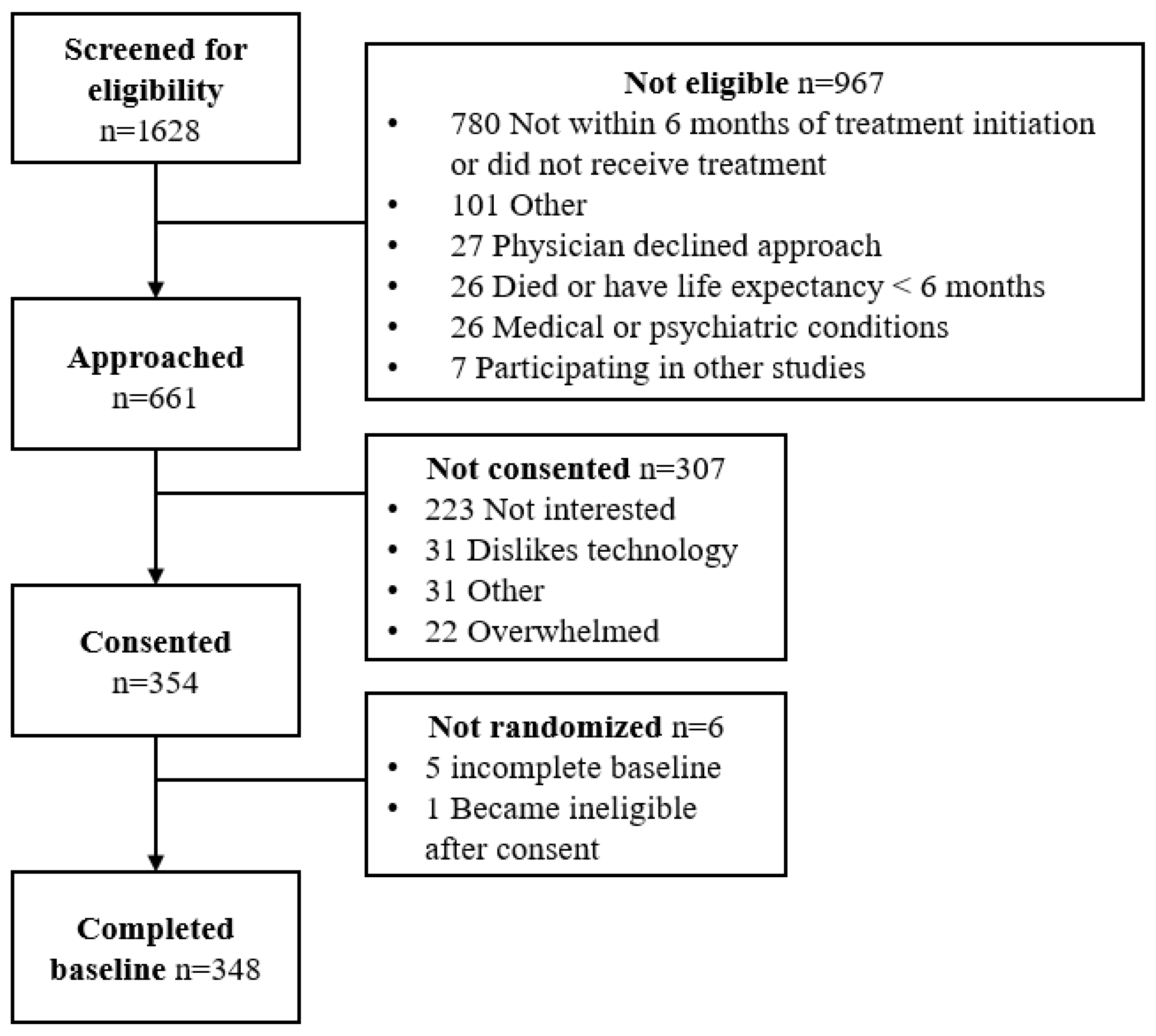
A total of 348 advanced cancer patients were enrolled and randomized in the Nurse AMIE trial (Figure 1). Of these, 88 (25.3%) had a normal weight (BMI ≤ 25 kg/m2), 107 (30.7%) were overweight (BMI > 25 to 30 kg/m2), and 153 (44.0%) were classified as obese (BMI > 30 kg/m2) (Table 1). The mean BMI of the sample was 30.0 kg/m2 (SD = 7.2; Range: 14.3 to 56.9 kg/m2). The average age of participants at consent was 64.8 years (SD = 12.2) with no differences by BMI category at an alpha level of 0.05. Gender did not differ by BMI category with 46% (n = 160) of the sample overall being female. The majority of the sample identified as white (95%, n = 331).
Most participants were married or living with a partner (68%) and marital status did not differ significantly among BMI categories. The number of people living in the household varied among BMI groups (p < 0.0001). Prevalence of overweight and obesity did not differ by education or employment status with 49% (n = 171) having at least some college level education and 52% (n = 177) being retired. Annual household income did not differ between BMI categories with 43% (n = 149) of the sample having a household income of $50,000 or greater.

3.2. Clinical Characteristics

Cancer stage did not differ significantly among BMI categories with 32% (n = 110) of participants diagnosed in Stage 3, 52% (n = 182) diagnosed in Stage 4, and 16% (n = 56) diagnosed as advanced. Treatment modalities did not differ by BMI category. Most participants (88%, n = 307) received chemotherapy only. The most common cancer sub-types were colorectal (18%, n = 64), lung (17%, n = 58), hematologic (14%, n = 48), prostate (10%, n = 36), and breast (10%, n = 35) (Table 1).

3.3. Objective and Subjective Physical Function

Total scores for the SPPB were highest in the BMI less than or equal to 25 kg/m2 group and lowest in the BMI over 30 kg/m2 group (M ± SD: BMI ≤ 25 kg/m2: 9.05 ± 2.28; BMI > 25 to 30 kg/m2: 8.26 ± 3.05; BMI > 30 kg/m2: 8.12 ± 2.77; p = 0.04) (Table 2). A similar pattern was observed for the standing balance test, the repeated chair stands, and the SF-36 physical function subscore. Participants classified as normal weight had the highest mean scores followed by those in the overweight category and those classified as obese for both the standing balance test (M ± SD: BMI ≤ 25 kg/m2: 3.57 ± 0.72; BMI > 25 to 30 kg/m2: 3.23 ± 1.16; BMI > 30 kg/m2: 3.26 ± 1.05; p = 0.04) and the repeated chair stands (M ± SD: BMI ≤ 25 kg/m2: 2.30 ± 1.38; BMI > 25 to 30 kg/m2: 1.90 ± 1.43; BMI > 30 kg/m2: 1.79 ± 1.37; p = 0.02). Gait speed was not found to differ by BMI category. Similarly to the SPPB scores, participant self-reported physical function from the SF-36 was significantly lower across BMI categories (M ± SD: BMI ≤ 25 kg/m2: 57.93 ± 29.10; BMI > 25 to 30 kg/m2: 53.74 ± 27.96; BMI > 30 kg/m2: 47.59 ± 27.57; p = 0.02). These associations remained significant in models adjusted for age, tumor type, and household number (Table 2).

3.4. Health Outcomes and Quality of Life

No differences were detected in overall physical and emotional health; however, general health perceptions differed among BMI categories after adjustment for covariates. Participants classified as obese rated their general health lower than those with a normal or overweight BMI classification (M ± SD: BMI ≤ 25 kg/m2: 53.37 ± 23.88; BMI > 25 to 30 kg/m2: 53.37 ± 20.80; BMI > 30 kg/m2: 47.88 ± 21.18; p = 0.03). Additionally, participants with obesity reported lower levels of energy and greater fatigue compared to those with a normal or overweight BMI (M ± SD: BMI ≤ 25 kg/m2: 49.77 ± 26.11; BMI > 25 to 30 kg/m2: 45.10 ± 24.58; BMI > 30 kg/m2: 40.68 ± 22.60; unadjusted p = 0.02; adjusted p = 0.01). There were no differences in the pain, emotional well-being, or social functioning domains of the SF-36 or the PROMIS domains of anxiety, depression, sleep disturbance, and cognition.

4. Discussion

Our findings suggest that rural advanced cancer patients with higher BMI have worse physical function and higher fatigue. No associations were observed between BMI category and other patient-reported outcomes such as anxiety, sleep disturbance, and depression. Importantly, the high prevalence of people with a BMI greater than 25 kg/m2 in this sample (75%) underscores the need for targeted behavioral interventions that address physical function in rural cancer populations. Rural populations often face barriers to supportive care, including limited access to rehabilitation services, exercise programs, and nutrition counseling [26]. Tailored interventions may help address these barriers and mitigate obesity-related associations with poorer function and fatigue and improve overall quality of life.
The worse physical functioning among patients with a higher BMI observed in both the objective and subjective measures is clinically meaningful. Poor physical function not only impacts gross motor function, but also the level of functioning needed to live independently. Patients with lower reported physical function, particularly those who are self-reporting limited physical functioning, may have challenges with the Activities of Daily Living (ADL) like bathing, cooking, and cleaning. Up to one-half of cancer patients globally have been found to need assistance with ADLs, so decreased physical functioning associated with obesity may have an impact on caregiver burden and healthcare utilization [35]. For rural cancer patients who already face a barrier to accessing supportive care, this impact of obesity on physical function may be significant. Combined with the higher levels of fatigue that were observed in this cohort, these findings underscore the importance of addressing obesity to support and maintain mobility, balance, and coordination among rural cancer patients.
The lack of an association between obesity and psychosocial and patient-reported outcomes like anxiety, sleep disturbance, depression, and pain among patients in our sample needs further explanation. Previous research has largely compared rural versus urban populations concluding that rural cancer patients have higher rates of psychosocial distress [28,36]. When considering this intra-rural analysis, it is possible that the level of rurality or the level of access to supportive care services acts as a confounder to the association between obesity and psychosocial outcomes. This further supports the need for targeted interventions which consider not only the symptom profile of a patient, but also the complex social and contextual characteristics of rural life.

4.1. Implications and Future Directions

Findings from this work highlight the need for targeted interventions addressing obesity-related associations with poorer physical functioning and fatigue in rural cancer care. Poor physical function has significant implications for daily living, healthcare utilization, and quality of life among advanced cancer patients. Additional research should explore longitudinal patterns related to obesity and function among rural patients with advanced cancer to understand how obesity influences trajectories of physical function, fatigue, and health-related quality of life over time. Intervention development to address disparities in physical function in this population would benefit from qualitative work exploring patient perspectives on the barriers, facilitators, and contextual factors related to behavior change. Greater understanding of the characteristics of rural communities may better explain how social, environmental, and resource-related factors influence health behaviors and outcomes in rural populations and offer a more targeted approach for addressing this disparity.

4.2. Strengths and Limitations

This study offers a novel focus on the association between obesity and function among rural advanced cancer patients, a population which has had a dearth of research evidence related to health outcomes. The use of both objective and subjective measures of function increases the reliability and validity of outcome assessment. An additional strength is the use of clinical measures rather than participant self-report for BMI, increasing the validity of the findings. However, a limitation of utilizing BMI as a measure of body size is that it may not fully capture body composition or overall health. Another limitation to consider for this work is that cross-sectional data does not allow for determination of temporal or causal relationships, limiting the ability to infer directionality between observed associations. The generalizability of these findings is narrow since the sample is predominately white, relatively small, and from a single geographic region. There are other factors that may also contribute to poor function, such as comorbid conditions, which were not collected for this sample and should be explored in future work.

5. Conclusions

This study provides novel evidence that obesity in rural patients with advanced cancer may be associated with worse objective and subjective physical function and greater fatigue. Findings highlight the need for targeted interventions addressing physical function and fatigue in this high-risk population. These results underscore the importance of tailoring supportive care strategies to the specific symptom profiles influenced by obesity in rural cancer care.

Author Contributions

Conceptualization, K.H.S.; methodology, K.H.S., J.M., N.S. and W.A.C.; formal analysis, C.S. and C.G.P.; data curation, S.B.; writing—original draft preparation, S.J.W.-P.; writing—review and editing, all authors.; supervision, K.H.S.; project administration, S.B., S.E.D. and K.H.S.; funding acquisition, K.H.S., J.M., N.S. and W.A.C. All authors have read and agreed to the published version of the manuscript.

Funding

Funding was provided by the National Cancer Institute (P30CA047904 and R01CA254659).

Institutional Review Board Statement

The Nurse AMIE study was reviewed and approved by the WCG IRB (www.wcgclinical.com), approved code: 20216947, approved date: 27 January 2022.

Informed Consent Statement

Informed consent was obtained from all subjects involved in the study.

Data Availability Statement

The data that support the findings of this study are available from the corresponding author upon reasonable request.

Acknowledgments

We thank the clinicians who allowed us to recruit their patients and the patients who agreed to participate.

Conflicts of Interest

There are no conflicts of interest to disclose. Funders had no input into interpretation of the data.

Abbreviations

The following abbreviations are used in this manuscript:
BMIBody Mass Index
SPPBShort Physical Performance Battery
PROMISPatient-Reported Outcomes Measurement Information System Preference
SF-36Medical Outcomes Study 36-item Short Form Survey
RUCCRural Urban Continuum Code
RUCARural-Urban Commuting Area

References

  1. Emmerich, S.D.; Fryar, C.D.; Stierman, B.; Ogden, C.L. Obesity and Severe Obesity Prevalence in Adults: United States, August 2021–August 2023. NCHS Data Brief; 2024. Available online: https://pubmed.ncbi.nlm.nih.gov/39808758/ (accessed on 19 November 2025).
  2. Baskin, M.L.; Ard, J.; Franklin, F.; Allison, D.B. Obesity Reviews. In Prevalence of Obesity in the United States; Wiley Online Library: Hoboken, NJ, USA, 2005; Available online: https://onlinelibrary.wiley.com/doi/full/10.1111/j.1467-789X.2005.00165.x (accessed on 27 October 2025).
  3. Kopelman, P.G. Obesity as a Medical Problem. Nature 2000, 404, 635–643. [Google Scholar] [CrossRef]
  4. Lauby-Secretan, B.; Scoccianti, C.; Loomis, D.; Grosse, Y.; Bianchini, F.; Straif, K. International Agency for Research on Cancer Handbook Working Group Body Fatness and Cancer—Viewpoint of the IARC Working Group. N. Engl. J. Med. 2016, 375, 794–798. [Google Scholar] [CrossRef]
  5. Friedenreich, C.M.; Ryder-Burbidge, C.; McNeil, J. Physical Activity, Obesity and Sedentary Behavior in Cancer Etiology: Epidemiologic Evidence and Biologic Mechanisms. Mol. Oncol. 2021, 15, 790–800. [Google Scholar] [CrossRef]
  6. Petrelli, F.; Cortellini, A.; Indini, A.; Tomasello, G.; Ghidini, M.; Nigro, O.; Salati, M.; Dottorini, L.; Iaculli, A.; Varricchio, A.; et al. Association of Obesity with Survival Outcomes in Patients with Cancer: A Systematic Review and Meta-Analysis. JAMA Netw. Open 2021, 4, e213520. [Google Scholar] [CrossRef]
  7. Pati, S.; Irfan, W.; Jameel, A.; Ahmed, S.; Shahid, R.K. Obesity and Cancer: A Current Overview of Epidemiology, Pathogenesis, Outcomes, and Management. Cancers 2023, 15, 485. [Google Scholar] [CrossRef]
  8. Basen-Engquist, K.; Chang, M. Obesity and Cancer Risk: Recent Review and Evidence. Curr. Oncol. Rep. 2011, 13, 71–76. [Google Scholar] [CrossRef] [PubMed]
  9. Wolin, K.Y.; Carson, K.; Colditz, G.A. Obesity and Cancer. Oncologist 2010, 15, 556–565. [Google Scholar] [CrossRef] [PubMed]
  10. Kaboré, E.G.; Guenancia, C.; Vaz-Luis, I.; Di Meglio, A.; Pistilli, B.; Coutant, C.; Cottu, P.; Lesur, A.; Petit, T.; Dalenc, F. Association of Body Mass Index and Cardiotoxicity Related to Anthracyclines and Trastuzumab in Early Breast Cancer: French CANTO Cohort Study. PLoS Med. 2019, 16, e1002989. [Google Scholar] [CrossRef] [PubMed]
  11. Slawinski, C.G.V.; Barriuso, J.; Guo, H.; Renehan, A.G. Obesity and Cancer Treatment Outcomes: Interpreting the Complex Evidence. Clin. Oncol. 2020, 32, 591–608. [Google Scholar] [CrossRef]
  12. Mizrahi, D.; Park, S.B.; Li, T.; Timmins, H.C.; Trinh, T.; Au, K.; Battaglini, E.; Wyld, D.; Henderson, R.D.; Grimison, P. Hemoglobin, Body Mass Index, and Age as Risk Factors for Paclitaxel-and Oxaliplatin-Induced Peripheral Neuropathy. JAMA Netw. Open 2021, 4, e2036695. [Google Scholar] [CrossRef]
  13. Apovian, C.M.; Frey, C.M.; Wood, G.C.; Rogers, J.Z.; Still, C.D.; Jensen, G.L. Body Mass Index and Physical Function in Older Women. Obes. Res. 2002, 10, 740–747. [Google Scholar] [CrossRef]
  14. Pataky, Z.; Armand, S.; Müller-Pinget, S.; Golay, A.; Allet, L. Effects of Obesity on Functional Capacity. Obesity 2014, 22, 56–62. [Google Scholar] [CrossRef]
  15. Simopoulos, A.P.; van Itallie, T.B. Body Weight, Health, and Longevity. Ann. Intern. Med. 1984, 100, 285–295. [Google Scholar] [CrossRef] [PubMed]
  16. Csige, I.; Ujvárosy, D.; Szabó, Z.; Lőrincz, I.; Paragh, G.; Harangi, M.; Somodi, S. The Impact of Obesity on the Cardiovascular System. J. Diabetes Res. 2018, 2018, 3407306. [Google Scholar] [CrossRef] [PubMed]
  17. Jensen, G.L. Obesity and Functional Decline: Epidemiology and Geriatric Consequences. Clin. Geriatr. Med. 2005, 21, 677–687. [Google Scholar] [CrossRef]
  18. Doll, K.M.; Kalinowski, A.K.; Snavely, A.C.; Irwin, D.E.; Bensen, J.T.; Bae-Jump, V.L.; Kim, K.H.; Van Le, L.; Clarke-Pearson, D.L.; Gehrig, P.A. Obesity Is Associated with Worse Quality of Life in Women with Gynecologic Malignancies: An Opportunity to Improve Patient-Centered Outcomes. Cancer 2015, 121, 395–402. [Google Scholar] [CrossRef]
  19. Smits, A.; Lopes, A.; Das, N.; Bekkers, R.; Galaal, K. Quality of Life in Ovarian Cancer Survivors: The Influence of Obesity. Int. J. Gynecol. Cancer 2015, 25, 616–621. [Google Scholar] [CrossRef]
  20. Lippi, L.; de Sire, A.; Folli, A.; Turco, A.; Moalli, S.; Marcasciano, M.; Ammendolia, A.; Invernizzi, M. Obesity and Cancer Rehabilitation for Functional Recovery and Quality of Life in Breast Cancer Survivors: A Comprehensive Review. Cancers 2024, 16, 521. [Google Scholar] [CrossRef] [PubMed]
  21. Gomez, D.; Jimenez-Fonseca, P.; Fernández, A.M.; Castellanos, P.C.; Arbizu, M.V.; Cabañes, R.M.; Estellés, D.L.; Ferreira, E.; del Rio, J.; García, T.G.; et al. Impact of Obesity on Quality of Life, Psychological Distress, and Coping on Patients with Colon Cancer. Oncologist 2021, 26, e874–e882. [Google Scholar] [CrossRef]
  22. Trivedi, T.; Liu, J.; Probst, J.; Merchant, A.; Jones, S.; Martin, A.B. Obesity and Obesity-Related Behaviors among Rural and Urban Adults in the USA. Rural Remote Health 2015, 15, 217–227. [Google Scholar] [CrossRef]
  23. Cohen, S.A.; Cook, S.K.; Kelley, L.; Foutz, J.D.; Sando, T.A. A Closer Look at Rural-Urban Health Disparities: Associations Between Obesity and Rurality Vary by Geospatial and Sociodemographic Factors. J. Rural Health 2017, 33, 167–179. [Google Scholar] [CrossRef]
  24. Moss, J.L.; Pinto, C.N.; Mama, S.K.; Rincon, M.; Kent, E.E.; Yu, M.; Cronin, K.A. Rural–Urban Differences in Health-Related Quality of Life: Patterns for Cancer Survivors Compared to Other Older Adults. Qual. Life Res. 2021, 30, 1131–1143. [Google Scholar] [CrossRef]
  25. Lashbrook, M.; Bernardes, C.M.; Kirshbaum, M.N.; Valery, P.C. Physical Functioning and Psychological Morbidity among Regional and Rural Cancer Survivors: A Report from a Regional Cancer Centre. Aust. J. Rural Health 2018, 26, 211–219. [Google Scholar] [CrossRef]
  26. Bhatia, S.; Landier, W.; Paskett, E.D.; Peters, K.B.; Merrill, J.K.; Phillips, J.; Osarogiagbon, R.U. Rural–Urban Disparities in Cancer Outcomes: Opportunities for Future Research. JNCI J. Natl. Cancer Inst. 2022, 114, 940–952. [Google Scholar] [CrossRef] [PubMed]
  27. Zahnd, W.E.; Fogleman, A.J.; Jenkins, W.D. Rural–Urban Disparities in Stage of Diagnosis among Cancers with Preventive Opportunities. Am. J. Prev. Med. 2018, 54, 688–698. [Google Scholar] [CrossRef] [PubMed]
  28. Weaver, K.E.; Geiger, A.M.; Lu, L.; Case, L.D. Rural-urban Disparities in Health Status among US Cancer Survivors. Cancer 2013, 119, 1050–1057. [Google Scholar] [CrossRef]
  29. Schmitz, K.H.; Baker, S.; Werts-Pelter, S.J.; Doerksen, S.; Patterson, C.G.; Ahmed, M.; Scalise, R.; Vincent, A.; Desroches, C.; Sobolewski, M.; et al. Nurse AMIE Randomized Controlled Trial to Address Symptom Management among Rural Advanced Cancer Patients: Addressing Malignancies in Everyday Life. Contemp. Clin. Trials 2025, 155, 108005. [Google Scholar] [CrossRef] [PubMed]
  30. Rural-Urban Continuum Codes|Economic Research Service. Available online: https://www.ers.usda.gov/data-products/rural-urban-continuum-codes#.U0VBhleG-Hs (accessed on 27 October 2025).
  31. Rural-Urban Commuting Area Codes|Economic Research Service. Available online: https://www.ers.usda.gov/data-products/rural-urban-commuting-area-codes (accessed on 27 October 2025).
  32. Dewitt, B.; Feeny, D.; Fischhoff, B.; Cella, D.; Hays, R.D.; Hess, R.; Pilkonis, P.A.; Revicki, D.A.; Roberts, M.S.; Tsevat, J. Estimation of a Preference-Based Summary Score for the Patient-Reported Outcomes Measurement Information System: The PROMIS®-Preference (PROPr) Scoring System. Med. Decis. Making 2018, 38, 683–698. [Google Scholar] [CrossRef]
  33. Ware, J.E.; Sherbourne, C.D. The MOS 36-item short-form health survey (SF-36). I. Conceptual framework and item selection. Med. Care 1992, 30, 473–483. [Google Scholar] [CrossRef] [PubMed]
  34. Guralnik, J.M.; Simonsick, E.M.; Ferrucci, L.; Glynn, R.J.; Berkman, L.F.; Blazer, D.G.; Scherr, P.A.; Wallace, R.B. A Short Physical Performance Battery Assessing Lower Extremity Function: Association with Self-Reported Disability and Prediction of Mortality and Nursing Home Admission. J. Gerontol. 1994, 49, M85–M94. [Google Scholar] [CrossRef]
  35. Neo, J.; Fettes, L.; Gao, W.; Higginson, I.J.; Maddocks, M. Disability in Activities of Daily Living among Adults with Cancer: A Systematic Review and Meta-Analysis. Cancer Treat. Rev. 2017, 61, 94–106. [Google Scholar] [CrossRef] [PubMed]
  36. Burris, J.L.; Andrykowski, M. Disparities in Mental Health between Rural and Nonrural Cancer Survivors: A Preliminary Study. Psychooncology 2010, 19, 637–645. [Google Scholar] [CrossRef] [PubMed]
Figure 1. Participant flow chart.
Cancers 18 00006 g001
Table 1. Participant Characteristics, Overall and by BMI category.
CharacteristicOverall
(N = 348)
BMI Categoryp-Value
≤25 kg/m2
(n = 88)
>25 to 30 kg/m2
(n =107)
>30 kg/m2
(n = 153)
No. (%)No. (%)No. (%)No. (%)
Age at consent in years, mean (SD)64.8 (12.2)65.4 (11.8)66.6 (10.1)63.2 (13.6)0.08
Sex
   Female160 (46)48 (55)39 (36)73 (48)0.12
   Male180 (52)38 (43)65 (62)77 (50)
   Unknown8 (2)2 (2)3 (3)3 (2)
Race
   Non-white10 (3)3 (3)3 (3)4 (3)0.92
   White331 (95)83 (94)102 (95)146 (95)
   Unknown7 (2)2 (2)2 (2)3 (2)
Current marital status
   Single or never married 28 (8)3 (3)8 (7)17 (11)0.53
   Currently married or living with a partner237 (68)58 (66)74 (69)105 (69)
   Divorced or separated 47 (14)15 (17)15 (14)17 (11)
   Widowed or widower 29 (8)10 (11)8 (7)11 (7)
   Unknown7 (2)2 (2)2 (2)3 (2)
Number living in household
   One54 (16)15 (17)20 (19)19 (12)<0.0001 *
   Two191 (55)42 (48)73 (68)76 (50)
   More than 295 (27)29 (33)11 (10)55 (36)
   Unknown8 (2)2 (2)3 (3)3 (2)
Number contributing to household income
   Zero 7 (2)2 (2)2 (2)3 (2)0.79
   One 92 (26)26 (30)25 (23)41 (27)
   Two 220 (63)51 (58)74 (69)95 (62)
   More than 221 (6)7 (8)3 (3)11 (7)
   Unknown 8 (2)2 (2)3 (3)3 (2)
Educational attainment
   9th–11th grade21 (6)4 (5)4 (4)13 (8)0.76
   HS graduate/GED 149 (43)40 (45)46 (43)63 (41)
   Some college 99 (28)23 (26)29 (27)47 (31)
   College graduate or post graduate degree72 (21)19 (22)26 (24)27 (18)
   Unknown7 (2)2 (2)2 (2)3 (2)
Employment
   Working now 66 (19)15 (17)20 (19)31 (20)0.49
   Only temporarily laid off, on sick leave, or on maternity leave16 (5)2 (2)6 (6)8 (5)
   Looking for work or unemployed 2 (1)1 (1)1 (1)0 (0)
   Retired 177 (52)50 (57)61 (57)66 (43)
   Disabled, permanently or temporarily 58 (17)13 (15)13 (12)32 (21)
   Keeping house 9 (3)2 (2)2 (2)5 (3)
   Other or Unknown20 (6)5 (6)3 (4)11 (7)
Annual household income (pre-tax)
   Less than $10,000 17 (5)5 (6)6 (6)6 (4)0.79
   $10,000 to $24,999 53 (15)14 (16)19 (19)20 (13)
   $25,000 to $49,999 90 (26)24 (27)31 (29)35 (23)
   $50,000 to $74,999 75 (22)20 (23)18 (17)37 (24)
   $75,000 to $99,999 38 (11)6 (7)12 (11)20 (13)
   $100,000 and greater36 (10)7 (8)10 (9)19 (12)
   Unknown39 (12)12 (14)11 (10)16 (11)
Stage of cancer
   Stage 3110 (32)24 (27)41 (38)45 (29)0.33
   Stage 4 182 (52)52 (59)50 (47)80 (52)
   Advanced 56 (16)12 (14)16 (15)28 (18)
Cancer treatment
   Chemotherapy307 (88)76 (86)92 (86)139 (91)0.36
   Radiation 10 (3)3 (3)2 (2)5 (3)
   Chemotherapy and Radiation23 (7)8 (9)10 (9)5 (3)
   Other 8 (2)1 (1)3 (3)4 (3)
Tumor type 0.002
   Breast35 (10)5 (6)11 (10)19 (12)
   Colorectal64 (18)18 (20)20 (19)26 (17)
   Esophageal12 (3)5 (6)5 (5)2 (1)
   Head and neck11 (3)6 (7)2 (2)3 (2)
   Hematologic48 (14)14 (16)13 (12)21 (14)
   Lung58 (17)16 (18)25 (23)17 (11)
   Melanoma10 (3)0 (0)3 (3)7 (5)
   Ovarian13 (4)2 (2)5 (5)6 (4)
   Pancreas14 (4)9 (10)1 (1)4 (3)
   Prostate36 (10)2 (2)12 (11)22 (14)
   Renal11 (3)1 (1)3 (3)7 (5)
   Other36 (10)10 (11)7 (7)19 (12)
Body mass index a (kg/m2), mean (SD)30.0 (7.2)22.1 (2.2)27.4 (1.4)36.5 (5.5)
RUCC ≥ 79 (3)2 (2)3 (3)4 (3)1.00
RUCA ≥ 785 (24)17 (19)30 (28)38 (25)0.37
Continuous variables compared between groups with one-way ANOVA F-test. Categorical variables compared with the chi-square or Fisher’s exact test. a Calculated as weight in kilograms divided by height in meters squared. * p-value comparing 25 or under to >25 to 30 = 0.002, p-value comparing 25 or under to >30 = 0.77, p-value comparing >25 to 30 to >30 = 0.0003 (post hoc comparisons adjusted with the Benjamini–Hochberg procedure).
Table 2. Function, Symptoms, and Quality of Life, Overall and by BMI category.
VariableOverall (N = 348)BMI Categoryp Value ap Value b
≤25 kg/m2
(n = 88)
>25 to 30 kg/m2
(n =107)
>30 kg/m2
(n = 153)
No.Mean (SD)No.Mean (SD)No.Mean (SD)No.Mean (SD)
PROMIS c
   Anxiety 33551.24 (9.47)8452.03 (10.03)10249.95 (8.66)14951.67 (9.64)0.240.78
   Depression 33349.13 (8.86)8548.78 (9.16)10348.12 (8.55)14550.04 (8.87)0.220.21
   Sleep 33151.63 (7.67)8350.83 (8.11)9950.65 (6.53)14952.71 (8.01)0.060.06
   Cognition 33050.26 (8.38)8550.69 (8.61)9950.80 (8.16)14649.66 (8.41)0.500.64
SPPB d
   SPPB total score3478.40 (2.77)889.05 (2.28)1068.26 (3.05)1538.12 (2.77)0.040.01
   Standing balance test3473.33 (1.02)883.57 (0.72)1063.23 (1.16)1533.26 (1.05)0.040.04
   Gait speed score3473.12 (1.18)883.18 (1.05)1063.14 (1.28)1533.07 (1.18)0.740.57
   Repeated chair stands3471.95 (1.40)882.30 (1.38)1061.90 (1.43)1531.79 (1.37)0.020.003
SF-36 e
   Physical functioning34052.09 (28.33)8657.93 (29.10)10453.74 (27.96)15047.59 (27.57)0.020.004
   Physical health problems34031.13 (40.34)8635.85 (43.63)10430.29 (39.67)15029.00 (38.87)0.440.42
   Pain34063.13 (26.45)8666.19 (27.62)10464.88 (25.57)15060.17 (26.24)0.170.19
   General health perceptions34050.94 (21.89)8653.37 (23.88)10453.37 (20.80)15047.88 (21.18)0.070.03
   Emotional well-being33873.59 (19.30)8675.07 (18.75)10374.72 (18.73)14971.96 (20.00)0.380.09
   Emotional health problems33966.18 (41.60)8569.02 (40.76)10470.03 (40.78)15061.89 (42.50)0.240.25
   Social functioning34063.86 (27.97)8663.95 (29.54)10465.87 (28.84)15062.42 (26.49)0.630.16
   Energy/fatigue33844.34 (24.34)86 49.77 (26.11)10345.10 (24.58)14940.68 (22.60)0.020.01
Abbreviations: PROMIS, Patient-Reported Outcomes Measurement Information System; SPPB, Short Physical Performance Battery; SF-36, Medical Outcomes Study 36-Item Short Form Survey. a One-way ANOVA. b ANCOVA with covariates age, tumor type, and household number. c Scale of 0 to 100 with higher values indicating greater prevalence of the symptom. d Scale of 0 to 12 for the total score and 0 to 4 for the subscales with higher values indicating greater function. e Scale of 0 to 100 with higher values indicating greater function except for the pain scale which is reversed.
Disclaimer/Publisher’s Note: The statements, opinions and data contained in all publications are solely those of the individual author(s) and contributor(s) and not of MDPI and/or the editor(s). MDPI and/or the editor(s) disclaim responsibility for any injury to people or property resulting from any ideas, methods, instructions or products referred to in the content.