
Detection of Human Papillomavirus (HPV) in HPV-Associated Oropharyngeal Squamous Cell Carcinoma: A Review of Diagnostic Approach and Its Importance for the Head and Neck Oncologist

 , and
, and
Simple Summary
Abstract
1. Introduction
2. Summary of Currently Available Tests for Diagnosis
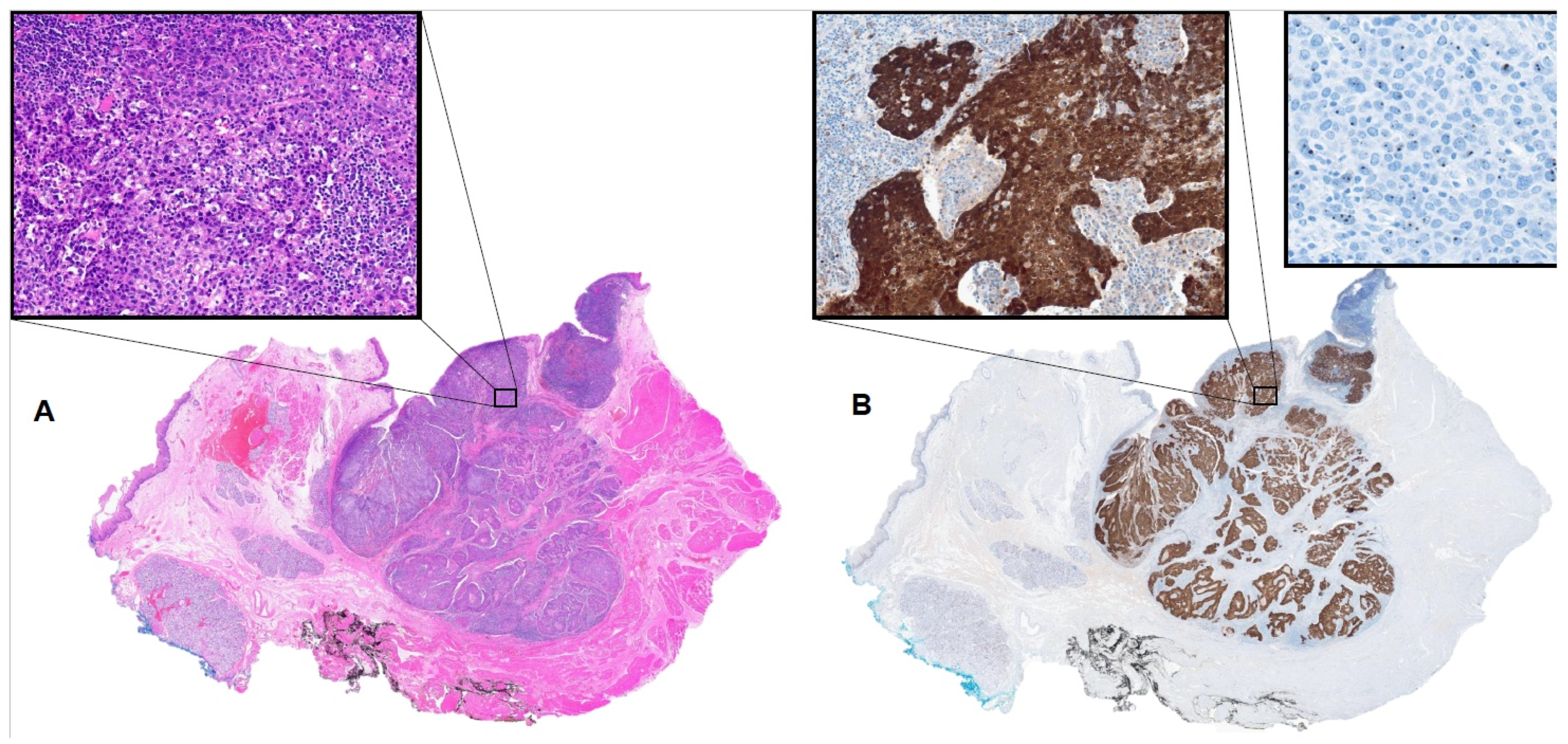
2.1. p16 Immunohistochemistry (IHC)
2.2. HPV-Specific Testing
2.2.1. Nucleic Acid-Based Detection
2.2.2. The Next Frontier: Biomarker-Driven Precision Medicine
3. Discussion
4. Conclusions
Author Contributions
Funding
Conflicts of Interest
Abbreviations
References
- Siegel, R.L.; Giaquinto, A.N.; Jemal, A. Cancer Statistics, 2024. CA Cancer J. Clin. 2024, 74, 12–49. [Google Scholar] [CrossRef] [PubMed]
- Blot, W.J.; McLaughlin, J.K.; Winn, D.M.; Austin, D.F.; Greenberg, R.S.; Preston-Martin, S.; Bernstein, L.; Schoenberg, J.B.; Stemhagen, A.; Fraumeni, J.F. Smoking and Drinking in Relation to Oral and Pharyngeal Cancer. Cancer Res. 1988, 48, 3282–3287. [Google Scholar]
- Centers for Disease Control and Prevention. National Youth Tobacco Survey, 2011–2022; Analysis by the American Lung Association Epidemiology and Statistics Unit Using SPSS Software. 2002–2009, 2023 from MMWRs; Centers for Disease Control and Prevention: Atlanta, GA, USA, 2023. [Google Scholar]
- Azagba, S.; Shan, L.; Latham, K.; Manzione, L. Trends in Binge and Heavy Drinking among Adults in the United States, 2011–2017. Subst. Use Misuse 2020, 55, 990–997. [Google Scholar] [CrossRef]
- Ellington, T.D.; Henley, S.J.; Senkomago, V.; O’Neil, M.E.; Wilson, R.J.; Singh, S.; Thomas, C.C.; Wu, M.; Richardson, L.C. Trends in Incidence of Cancers of the Oral Cavity and Pharynx—United States 2007–2016. MMWR Morb. Mortal. Wkly. Rep. 2020, 69, 433–438. [Google Scholar] [CrossRef]
- Roman, B.R.; Aragones, A. Epidemiology and Incidence of HPV-Related Cancers of the Head and Neck. J. Surg. Oncol. 2021, 124, 920–922. [Google Scholar] [CrossRef]
- Adelstein, D.J.; Ismaila, N.; Ku, J.A.; Burtness, B.; Swiecicki, P.L.; Mell, L.; Beitler, J.J.; Gross, N.; Jones, C.U.; Kaufman, M.; et al. Role of Treatment Deintensification in the Management of P16+ Oropharyngeal Cancer: ASCO Provisional Clinical Opinion. J. Clin. Oncol. Off. J. Am. Soc. Clin. Oncol. 2019, 37, 1578–1589. [Google Scholar] [CrossRef]
- Kompelli, A.R.; Morgan, P.; Li, H.; Harris, W.; Day, T.A.; Neskey, D.M. Prognostic Impact of High-Risk Pathologic Features in HPV-Related Oropharyngeal Squamous Cell Carcinoma and Tobacco Use. Otolaryngol. Head Neck Surg. 2019, 160, 855–861. [Google Scholar] [CrossRef]
- Dahlstrom, K.R.; Garden, A.S.; William, W.N.; Lim, M.Y.; Sturgis, E.M. Proposed Staging System for Patients With HPV-Related Oropharyngeal Cancer Based on Nasopharyngeal Cancer N Categories. J. Clin. Oncol. 2016, 34, 1848–1854. [Google Scholar] [CrossRef] [PubMed]
- Marks, M.A.; Chaturvedi, A.K.; Kelsey, K.; Straif, K.; Berthiller, J.; Schwartz, S.M.; Smith, E.; Wyss, A.; Brennan, P.; Olshan, A.F.; et al. Association of Marijuana Smoking with Oropharyngeal and Oral Tongue Cancers: Pooled Analysis from the INHANCE Consortium. Cancer Epidemiol. Biomark. Prev. 2014, 23, 160–171. [Google Scholar] [CrossRef]
- Chen, P.-J.; Chen, Y.-Y.; Lin, C.-W.; Yeh, Y.-T.; Yeh, H.-W.; Huang, J.-Y.; Yang, S.-F.; Yeh, C.-B. Effect of Periodontitis and Scaling and Root Planing on Risk of Pharyngeal Cancer: A Nested Case—Control Study. Int. J. Environ. Res. Public. Health 2020, 18, 8. [Google Scholar] [CrossRef]
- Rodríguez-Molinero, J.; Migueláñez-Medrán, B.D.C.; Puente-Gutiérrez, C.; Delgado-Somolinos, E.; Martín Carreras-Presas, C.; Fernández-Farhall, J.; López-Sánchez, A.F. Association between Oral Cancer and Diet: An Update. Nutrients 2021, 13, 1299. [Google Scholar] [CrossRef]
- Egawa, N.; Egawa, K.; Griffin, H.; Doorbar, J. Human Papillomaviruses; Epithelial Tropisms, and the Development of Neoplasia. Viruses 2015, 7, 3863–3890. [Google Scholar] [CrossRef]
- Michaud, D.S.; Langevin, S.M.; Eliot, M.; Nelson, H.H.; Pawlita, M.; McClean, M.D.; Kelsey, K.T. High-Risk HPV Types and Head and Neck Cancer. Int. J. Cancer 2014, 135, 1653–1661. [Google Scholar] [CrossRef] [PubMed]
- Muñoz, N.; Bosch, F.X.; de Sanjosé, S.; Herrero, R.; Castellsagué, X.; Shah, K.V.; Snijders, P.J.F.; Meijer, C.J.L.M.; on behalf of International Agency for Research on Cancer Multicenter Cervical Cancer Study Group. Epidemiologic Classification of Human Papillomavirus Types Associated with Cervical Cancer. N. Engl. J. Med. 2003, 348, 518–527. [Google Scholar] [CrossRef]
- Kreimer, A.R.; Clifford, G.M.; Boyle, P.; Franceschi, S. Human Papillomavirus Types in Head and Neck Squamous Cell Carcinomas Worldwide: A Systematic Review. Cancer Epidemiol. Biomark. Prev. 2005, 14, 467–475. [Google Scholar] [CrossRef]
- Gillison, M.L.; Chaturvedi, A.K.; Anderson, W.F.; Fakhry, C. Epidemiology of Human Papillomavirus–Positive Head and Neck Squamous Cell Carcinoma. J. Clin. Oncol. 2015, 33, 3235–3242. [Google Scholar] [CrossRef]
- Mehanna, H.; Taberna, M.; von Buchwald, C.; Tous, S.; Brooks, J.; Mena, M.; Morey, F.; Grønhøj, C.; Rasmussen, J.H.; Garset-Zamani, M.; et al. Prognostic Implications of P16 and HPV Discordance in Oropharyngeal Cancer (HNCIG-EPIC-OPC): A Multicentre, Multinational, Individual Patient Data Analysis. Lancet Oncol. 2023, 24, 239–251. [Google Scholar] [CrossRef]
- Du, E.; Mazul, A.L.; Farquhar, D.; Brennan, P.; Anantharaman, D.; Abedi-Ardekani, B.; Weissler, M.C.; Hayes, D.N.; Olshan, A.F.; Zevallos, J.P. Long-Term Survival in Head and Neck Cancer: Impact of Site, Stage, Smoking, and Human Papillomavirus Status. Laryngoscope 2019, 129, 2506–2513. [Google Scholar] [CrossRef] [PubMed]
- Ang, K.K.; Harris, J.; Wheeler, R.; Weber, R.; Rosenthal, D.I.; Nguyen-Tân, P.F.; Westra, W.H.; Chung, C.H.; Jordan, R.C.; Lu, C.; et al. Human Papillomavirus and Survival of Patients with Oropharyngeal Cancer. N. Engl. J. Med. 2010, 363, 24–35. [Google Scholar] [CrossRef]
- Benson, E.; Li, R.; Eisele, D.; Fakhry, C. The Clinical Impact of HPV Tumor Status upon Head and Neck Squamous Cell Carcinomas. Oral Oncol. 2014, 50, 565–574. [Google Scholar] [CrossRef] [PubMed]
- Pike, L.R.G.; Royce, T.J.; Mahal, A.R.; Kim, D.W.; Hwang, W.L.; Mahal, B.A.; Sanford, N.N. Outcomes of HPV-Associated Squamous Cell Carcinoma of the Head and Neck: Impact of Race and Socioeconomic Status. J. Natl. Compr. Cancer Netw. 2020, 18, 177–184. [Google Scholar] [CrossRef]
- Mahal, B.A.; Catalano, P.J.; Haddad, R.I.; Hanna, G.J.; Kass, J.I.; Schoenfeld, J.D.; Tishler, R.B.; Margalit, D.N. Incidence and Demographic Burden of HPV-Associated Oropharyngeal Head and Neck Cancers in the United States. Cancer Epidemiol. Biomark. Prev. 2019, 28, 1660–1667. [Google Scholar] [CrossRef] [PubMed]
- Lewis, J.S.; Beadle, B.; Bishop, J.A.; Chernock, R.D.; Colasacco, C.; Lacchetti, C.; Moncur, J.T.; Rocco, J.W.; Schwartz, M.R.; Seethala, R.R.; et al. Human Papillomavirus Testing in Head and Neck Carcinomas: Guideline from the College of American Pathologists. Arch. Pathol. Lab. Med. 2018, 142, 559–597. [Google Scholar] [CrossRef] [PubMed]
- Zumsteg, Z.S.; Luu, M.; Rosenberg, P.S.; Elrod, J.K.; Bray, F.; Vaccarella, S.; Gay, C.; Lu, D.J.; Chen, M.M.; Chaturvedi, A.K.; et al. Global Epidemiologic Patterns of Oropharyngeal Cancer Incidence Trends. J. Natl. Cancer Inst. 2023, 115, 1544–1554. [Google Scholar] [CrossRef]
- Tota, J.E.; Best, A.F.; Zumsteg, Z.S.; Gillison, M.L.; Rosenberg, P.S.; Chaturvedi, A.K. Evolution of the Oropharynx Cancer Epidemic in the United States: Moderation of Increasing Incidence in Younger Individuals and Shift in the Burden to Older Individuals. J. Clin. Oncol. 2019, 37, 1538–1546. [Google Scholar] [CrossRef]
- Faraji, F.; Rettig, E.M.; Tsai, H.-L.; El Asmar, M.; Fung, N.; Eisele, D.W.; Fakhry, C. The Prevalence of Human Papillomavirus in Oropharyngeal Cancer Is Increasing Regardless of Sex or Race, and the Influence of Sex and Race on Survival Is Modified by Human Papillomavirus Tumor Status. Cancer 2019, 125, 761–769. [Google Scholar] [CrossRef]
- Bastien, A.J.; Amin, L.; Vasquez, M.; Cong, I.; Luu, M.; Laszlo, M.; Yen, S.; Thompson, H.; Teitelbaum, E.L.; Jang, J.K.; et al. Baseline Weight Recovery and Mortality Risk in Head and Neck Cancer. Head Neck 2025, 47, 139–149. [Google Scholar] [CrossRef] [PubMed]
- Lewis, J.S.; Beadle, B.; Bishop, J.A.; Chernock, R.D.; Colasacco, C.; Kalicanin, T.; Krane, J.F.; Lacchetti, C.; Moncur, J.T.; Rocco, J.W.; et al. Human Papillomavirus Testing in Head and Neck Carcinomas: Guideline Update. Arch. Pathol. Lab. Med. 2025, 149, e115–e150. [Google Scholar] [CrossRef]
- Caudell, J.J.; Gillison, M.L.; Maghami, E.; Spencer, S.; Pfister, D.G.; Adkins, D.; Birkeland, A.C.; Brizel, D.M.; Busse, P.M.; Cmelak, A.J.; et al. NCCN Guidelines® Insights: Head and Neck Cancers, Version 1.2025: Featured Updates to the NCCN Guidelines. J. Natl. Compr. Canc. Netw. 2022, 20, 224–234. [Google Scholar] [CrossRef]
- Chaturvedi, A.K.; Freedman, N.D.; Abnet, C.C. The Evolving Epidemiology of Oral Cavity and Oropharyngeal Cancers. Cancer Res. 2022, 82, 2821–2823. [Google Scholar] [CrossRef]
- Koyfman, S.A.; Ismaila, N.; Crook, D.; D’Cruz, A.; Rodriguez, C.P.; Sher, D.J.; Silbermins, D.; Sturgis, E.M.; Tsue, T.T.; Weiss, J.; et al. Management of the Neck in Squamous Cell Carcinoma of the Oral Cavity and Oropharynx: ASCO Clinical Practice Guideline. J. Clin. Oncol. 2019, 37, 1753–1774. [Google Scholar] [CrossRef] [PubMed]
- Hibbert, J.; Halec, G.; Baaken, D.; Waterboer, T.; Brenner, N. Sensitivity and Specificity of Human Papillomavirus (HPV) 16 Early Antigen Serology for HPV-Driven Oropharyngeal Cancer: A Systematic Literature Review and Meta-Analysis. Cancers 2021, 13, 3010. [Google Scholar] [CrossRef] [PubMed]
- Nelson, H.H.; Pawlita, M.; Michaud, D.S.; McClean, M.; Langevin, S.M.; Eliot, M.N.; Kelsey, K.T. Immune Response to HPV16 E6 and E7 Proteins and Patient Outcomes in Head and Neck Cancer. JAMA Oncol. 2017, 3, 178. [Google Scholar] [CrossRef]
- Augustin, J.; Outh-Gauer, S.; Mandavit, M.; Gasne, C.; Grard, O.; Denize, T.; Nervo, M.; Mirghani, H.; Laccourreye, O.; Bonfils, P.; et al. Evaluation of the Efficacy of the 4 Tests (P16 Immunochemistry, Polymerase Chain Reaction, DNA, and RNA in Situ Hybridization) to Evaluate a Human Papillomavirus Infection in Head and Neck Cancers: A Cohort of 348 French Squamous Cell Carcinomas. Hum. Pathol. 2018, 78, 63–71. [Google Scholar] [CrossRef]
- Bussu, F.; Sali, M.; Gallus, R.; Petrone, G.; Zannoni, G.F.; Autorino, R.; Dinapoli, N.; Santangelo, R.; Vellone, V.G.; Graziani, C.; et al. Human Papillomavirus (HPV) Infection in Squamous Cell Carcinomas Arising from the Oropharynx: Detection of HPV DNA and P16 Immunohistochemistry as Diagnostic and Prognostic Indicators—A Pilot Study. Int. J. Radiat. Oncol. Biol. Phys. 2014, 89, 1115–1120. [Google Scholar] [CrossRef]
- Benzerdjeb, N.; Tantot, J.; Blanchet, C.; Philouze, P.; Mekki, Y.; Lopez, J.; Devouassoux-Shisheboran, M. Oropharyngeal Squamous Cell Carcinoma: P16/P53 Immunohistochemistry as a Strong Predictor of HPV Tumour Status. Histopathology 2021, 79, 381–390. [Google Scholar] [CrossRef]
- Fakhry, C.; Lacchetti, C.; Perez-Ordonez, B. Human Papillomavirus Testing in Head and Neck Carcinomas: ASCO Clinical Practice Guideline Endorsement Summary of the CAP Guideline. J. Oncol. Pract. 2018, 14, 613–617. [Google Scholar] [CrossRef]
- Bishop, J.A.; Ma, X.-J.; Wang, H.; Luo, Y.; Illei, P.B.; Begum, S.; Taube, J.M.; Koch, W.M.; Westra, W.H. Detection of Transcriptionally Active High-Risk HPV in Patients with Head and Neck Squamous Cell Carcinoma as Visualized by a Novel E6/E7 mRNA in Situ Hybridization Method. Am. J. Surg. Pathol. 2012, 36, 1874–1882. [Google Scholar] [CrossRef]
- Rooper, L.M.; Gandhi, M.; Bishop, J.A.; Westra, W.H. RNA In-Situ Hybridization Is a Practical and Effective Method for Determining HPV Status of Oropharyngeal Squamous Cell Carcinoma Including Discordant Cases That Are P16 Positive by Immunohistochemistry but HPV Negative by DNA In-Situ Hybridization. Oral Oncol. 2016, 55, 11–16. [Google Scholar] [CrossRef] [PubMed]
- Suresh, K.; Shah, P.V.; Coates, S.; Alexiev, B.A.; Samant, S. In Situ Hybridization for High Risk HPV E6/E7 mRNA in Oropharyngeal Squamous Cell Carcinoma. Am. J. Otolaryngol. 2021, 42, 102782. [Google Scholar] [CrossRef]
- Jakobsen, K.K.; Carlander, A.-L.F.; Bendtsen, S.K.; Garset-Zamani, M.; Lynggaard, C.D.; Grønhøj, C.; Von Buchwald, C. Diagnostic Accuracy of HPV Detection in Patients with Oropharyngeal Squamous Cell Carcinomas: A Systematic Review and Meta-Analysis. Viruses 2021, 13, 1692. [Google Scholar] [CrossRef]
- Van Doorn, L.-J.; Molijn, A.; Kleter, B.; Quint, W.; Colau, B. Highly Effective Detection of Human Papillomavirus 16 and 18 DNA by a Testing Algorithm Combining Broad-Spectrum and Type-Specific PCR. J. Clin. Microbiol. 2006, 44, 3292–3298. [Google Scholar] [CrossRef]
- Venuti, A.; Paolini, F. HPV Detection Methods in Head and Neck Cancer. Head Neck Pathol. 2012, 6, 63–74. [Google Scholar] [CrossRef]
- Holsinger, F.C.; Ismaila, N.; Adkins, D.R.; Barber, B.R.; Burnette, G.; Fakhry, C.; Galloway, T.J.; Goepfert, R.P.; Miles, B.A.; Paleri, V.; et al. Transoral Robotic Surgery in the Multidisciplinary Care of Patients with Oropharyngeal Squamous Cell Carcinoma: ASCO Guideline. J. Clin. Oncol. 2025, 43, 1369–1392. [Google Scholar] [CrossRef] [PubMed]
- AJCC Cancer Staging Manual; Amin, M.B., Edge, S.B., Greene, F.L., Byrd, D.R., Brookland, R.K., Washington, M.K., Gershenwald, J.E., Compton, C.C., Hess, K.R., Sullivan, D.C., et al., Eds.; American Joint Committee on Cancer: Chicago IL, USA; Springer: Berlin/Heidelberg, Germany, 2017; ISBN 978-3-319-40617-6. [Google Scholar]
- Bastien, A.J.; Ng, J.; Cong, I.; Garcia, J.; Walgama, E.S.; Luu, M.; Jang, J.K.; Mita, A.C.; Scher, K.S.; Moyers, J.T.; et al. Patient Perceptions Underlying ctDNA Molecular Surveillance for HPV(+) Oropharyngeal Squamous Cell Carcinoma. Oral Oncol. 2024, 156, 106894. [Google Scholar] [CrossRef] [PubMed]
- Broglie, M.A.; Jochum, W.; Michel, A.; Waterboer, T.; Foerbs, D.; Schoenegg, R.; Stoeckli, S.J.; Pawlita, M.; Holzinger, D. Evaluation of Type-Specific Antibodies to High Risk-Human Papillomavirus (HPV) Proteins in Patients with Oropharyngeal Cancer. Oral Oncol. 2017, 70, 43–50. [Google Scholar] [CrossRef]
- Dahlstrom, K.R.; Anderson, K.S.; Field, M.S.; Chowell, D.; Ning, J.; Li, N.; Wei, Q.; Li, G.; Sturgis, E.M. Diagnostic Accuracy of Serum Antibodies to Human Papillomavirus Type 16 Early Antigens in the Detection of Human Papillomavirus-Related Oropharyngeal Cancer. Cancer 2017, 123, 4886–4894. [Google Scholar] [CrossRef] [PubMed]
- Holzinger, D.; Wichmann, G.; Baboci, L.; Michel, A.; Höfler, D.; Wiesenfarth, M.; Schroeder, L.; Boscolo-Rizzo, P.; Herold-Mende, C.; Dyckhoff, G.; et al. Sensitivity and Specificity of Antibodies against HPV16 E6 and Other Early Proteins for the Detection of HPV16-Driven Oropharyngeal Squamous Cell Carcinoma. Int. J. Cancer 2017, 140, 2748–2757. [Google Scholar] [CrossRef]
- Lang Kuhs, K.A.; Kreimer, A.R.; Trivedi, S.; Holzinger, D.; Pawlita, M.; Pfeiffer, R.M.; Gibson, S.P.; Schmitt, N.C.; Hildesheim, A.; Waterboer, T.; et al. Human Papillomavirus 16 E6 Antibodies Are Sensitive for Human Papillomavirus-Driven Oropharyngeal Cancer and Are Associated with Recurrence. Cancer 2017, 123, 4382–4390. [Google Scholar] [CrossRef]
- Spector, M.E.; Sacco, A.G.; Bellile, E.; Taylor, J.M.G.; Jones, T.; Sun, K.; Brown, W.C.; Birkeland, A.C.; Bradford, C.R.; Wolf, G.T.; et al. E6 and E7 Antibody Levels Are Potential Biomarkers of Recurrence in Patients with Advanced-Stage Human Papillomavirus-Positive Oropharyngeal Squamous Cell Carcinoma. Clin. Cancer Res. 2017, 23, 2723–2729. [Google Scholar] [CrossRef]
- Day, A.T.; Fakhry, C.; Tiro, J.A.; Dahlstrom, K.R.; Sturgis, E.M. Considerations in Human Papillomavirus-Associated Oropharyngeal Cancer Screening: A Review. JAMA Otolaryngol. Head Neck Surg. 2020, 146, 656–664. [Google Scholar] [CrossRef]
- Martin-Gomez, L.; Giuliano, A.R.; Fulp, W.J.; Caudell, J.; Echevarria, M.; Sirak, B.; Abrahamsen, M.; Isaacs-Soriano, K.A.; Hernandez-Prera, J.C.; Wenig, B.M.; et al. Human Papillomavirus Genotype Detection in Oral Gargle Samples Among Men With Newly Diagnosed Oropharyngeal Squamous Cell Carcinoma. JAMA Otolaryngol. Head Neck Surg. 2019, 145, 460. [Google Scholar] [CrossRef]
- Fakhry, C.; Lacchetti, C.; Rooper, L.M.; Jordan, R.C.; Rischin, D.; Sturgis, E.M.; Bell, D.; Lingen, M.W.; Harichand-Herdt, S.; Thibo, J.; et al. Human Papillomavirus Testing in Head and Neck Carcinomas: ASCO Clinical Practice Guideline Endorsement of the College of American Pathologists Guideline. J. Clin. Oncol. 2018, 36, 3152–3161. [Google Scholar] [CrossRef]
- Wiedorn, K.H.; Kühl, H.; Galle, J.; Caselitz, J.; Vollmer, E. Comparison of In-Situ Hybridization, Direct and Indirect in-Situ PCR as Well as Tyramide Signal Amplification for the Detection of HPV. Histochem. Cell Biol. 1999, 111, 89–95. [Google Scholar] [CrossRef]
- Kenny, D.; Shen, L.-P.; Kolberg, J.A. Detection of Viral Infection and Gene Expression in Clinical Tissue Specimens Using Branched DNA (bDNA) In Situ Hybridization. J. Histochem. Cytochem. 2002, 50, 1219–1227. [Google Scholar] [CrossRef]
- Keung, E.S.; Souers, R.J.; Bridge, J.A.; Faquin, W.C.; Graham, R.P.; Hameed, M.R.; Lewis, J.S.; Merker, J.D.; Vasalos, P.; Moncur, J.T. Comparative Performance of High-Risk Human Papillomavirus RNA and DNA In Situ Hybridization on College of American Pathologists Proficiency Tests. Arch. Pathol. Lab. Med. 2020, 144, 344–349. [Google Scholar] [CrossRef] [PubMed]
- Simoens, C.; Gheit, T.; Ridder, R.; Gorbaslieva, I.; Holzinger, D.; Lucas, E.; Rehm, S.; Vermeulen, P.; Lammens, M.; Vanderveken, O.M.; et al. Accuracy of High-Risk HPV DNA PCR, P16(INK4a) Immunohistochemistry or the Combination of Both to Diagnose HPV-Driven Oropharyngeal Cancer. BMC Infect. Dis. 2022, 22, 676. [Google Scholar] [CrossRef] [PubMed]
- Prigge, E.-S.; Arbyn, M.; von Knebel Doeberitz, M.; Reuschenbach, M. Diagnostic Accuracy of p16INK4a Immunohistochemistry in Oropharyngeal Squamous Cell Carcinomas: A Systematic Review and Meta-Analysis. Int. J. Cancer 2017, 140, 1186–1198. [Google Scholar] [CrossRef] [PubMed]
- Schache, A.G.; Liloglou, T.; Risk, J.M.; Filia, A.; Jones, T.M.; Sheard, J.; Woolgar, J.A.; Helliwell, T.R.; Triantafyllou, A.; Robinson, M.; et al. Evaluation of Human Papilloma Virus Diagnostic Testing in Oropharyngeal Squamous Cell Carcinoma: Sensitivity, Specificity, and Prognostic Discrimination. Clin. Cancer Res. 2011, 17, 6262–6271. [Google Scholar] [CrossRef]
- Tanaka, H.; Suzuki, M.; Takemoto, N.; Fukusumi, T.; Eguchi, H.; Takai, E.; Kanai, H.; Tatsumi, M.; Horie, M.; Takenaka, Y.; et al. Performance of Oral HPV DNA, Oral HPV mRNA and Circulating Tumor HPV DNA in the Detection of HPV-Related Oropharyngeal Cancer and Cancer of Unknown Primary. Int. J. Cancer 2022, 150, 174–186. [Google Scholar] [CrossRef]
- Rosenthal, M.; Huang, B.; Katabi, N.; Migliacci, J.; Bryant, R.; Kaplan, S.; Blackwell, T.; Patel, S.; Yang, L.; Pei, Z.; et al. Detection of HPV Related Oropharyngeal Cancer in Oral Rinse Specimens. Oncotarget 2017, 8, 109393–109401. [Google Scholar] [CrossRef] [PubMed]
- Fakhry, C.; Blackford, A.L.; Neuner, G.; Xiao, W.; Jiang, B.; Agrawal, A.; Gillison, M.L. Association of Oral Human Papillomavirus DNA Persistence With Cancer Progression After Primary Treatment for Oral Cavity and Oropharyngeal Squamous Cell Carcinoma. JAMA Oncol. 2019, 5, 985–992. [Google Scholar] [CrossRef]
- Loermann, G.; Kolb, M.; Prascevic, D.; Siemert, J.; Wiegand, S.; Zebralla, V.; Pirlich, M.; Stöhr, M.; Dietz, A.; Wald, T.; et al. High-Risk Human Papillomavirus (HR-HPV) DNA Detection in Mouthwashes for Diagnosis of HPV-Driven Oropharynx Cancer and Its Curative Therapy—A Feasibility Study. J. Clin. Med. 2022, 11, 5509. [Google Scholar] [CrossRef]
- Zeng, P.Y.F.; Cecchini, M.J.; Barrett, J.W.; Shammas-Toma, M.; De Cecco, L.; Serafini, M.S.; Cavalieri, S.; Licitra, L.; Hoebers, F.; Brakenhoff, R.H.; et al. Immune-Based Classification of HPV-Associated Oropharyngeal Cancer with Implications for Biomarker-Driven Treatment de-Intensification. EBioMedicine 2022, 86, 104373. [Google Scholar] [CrossRef]
- Wilde, D.C.; Castro, P.D.; Bera, K.; Lai, S.; Madabhushi, A.; Corredor, G.; Koyuncu, C.; Lewis, J.S.; Lu, C.; Frederick, M.J.; et al. Oropharyngeal Cancer Outcomes Correlate with P16 Status, Multinucleation and Immune Infiltration. Mod. Pathol. 2022, 35, 1045–1054. [Google Scholar] [CrossRef]
- Vrinceanu, D.; Dumitru, M.; Bratiloveanu, M.; Marinescu, A.; Serboiu, C.; Manole, F.; Palade, D.O.; Costache, A.; Costache, M.; Patrascu, O. Parotid Gland Tumors: Molecular Diagnostic Approaches. Int. J. Mol. Sci. 2024, 25, 7350. [Google Scholar] [CrossRef]
- Craig, S.G.; Anderson, L.A.; Schache, A.G.; Moran, M.; Graham, L.; Currie, K.; Rooney, K.; Robinson, M.; Upile, N.S.; Brooker, R.; et al. Recommendations for Determining HPV Status in Patients with Oropharyngeal Cancers under TNM8 Guidelines: A Two-Tier Approach. Br. J. Cancer 2019, 120, 827–833. [Google Scholar] [CrossRef]
- Maxwell, J.H.; Ferris, R.L.; Gooding, W.; Cunningham, D.; Mehta, V.; Kim, S.; Myers, E.N.; Johnson, J.; Chiosea, S. Extracapsular Spread in Head and Neck Carcinoma: Impact of Site and Human Papillomavirus Status. Cancer 2013, 119, 3302–3308. [Google Scholar] [CrossRef] [PubMed]
- Wreesmann, V.B.; Katabi, N.; Palmer, F.L.; Montero, P.H.; Migliacci, J.C.; Gönen, M.; Carlson, D.; Ganly, I.; Shah, J.P.; Ghossein, R.; et al. Influence of Extracapsular Nodal Spread Extent on Prognosis of Oral Squamous Cell Carcinoma. Head Neck 2016, 38, E1192–E1199. [Google Scholar] [CrossRef] [PubMed]
- Mermod, M.; Tolstonog, G.; Simon, C.; Monnier, Y. Extracapsular Spread in Head and Neck Squamous Cell Carcinoma: A Systematic Review and Meta-Analysis. Oral Oncol. 2016, 62, 60–71. [Google Scholar] [CrossRef]
- Lydiatt, W.M.; Patel, S.G.; O’Sullivan, B.; Brandwein, M.S.; Ridge, J.A.; Migliacci, J.C.; Loomis, A.M.; Shah, J.P. Head and Neck Cancers—Major Changes in the American Joint Committee on Cancer Eighth Edition Cancer Staging Manual. CA Cancer J. Clin. 2017, 67, 122–137. [Google Scholar] [CrossRef]
- Ho, A.S.; Huang, S.H.; O’Sullivan, B.; Luu, M.; Evans, M.; Ferris, R.L.; Lewis, J.S.; Seethala, R.R.; Yom, S.S.; Mehanna, H.; et al. Derivation and Validation of the AJCC9V Pathological Stage Classification for HPV-Positive Oropharyngeal Carcinoma: A Multicentre Registry Analysis. Lancet Oncol. 2025, 26, 1113–1122. [Google Scholar] [CrossRef]
- Bouvard, V.; Nethan, S.T.; Singh, D.; Warnakulasuriya, S.; Mehrotra, R.; Chaturvedi, A.K.; Chen, T.H.-H.; Ayo-Yusuf, O.A.; Gupta, P.C.; Kerr, A.R.; et al. IARC Perspective on Oral Cancer Prevention. N. Engl. J. Med. 2022, 387, 1999–2005. [Google Scholar] [CrossRef]
- Amanian, A.; Ishii, M.; Fakhry, C.; London, N.R. Epidemiologic Trends in Human Papillomavirus–Associated Sinonasal Squamous Cell Carcinoma. JAMA Otolaryngol. Head Neck Surg. 2024, 150, 609. [Google Scholar] [CrossRef] [PubMed]
- Kakkar, A.; Satapathy, S.; Sikka, K.; Tanwar, P.; Deo, S.; Jain, D. Evaluation of High-Risk Human Papillomavirus in Sinonasal Papillomas and Squamous Cell Carcinomas. Virchows Arch. Int. J. Pathol. 2023, 483, 381–392. [Google Scholar] [CrossRef]
- Wenda, N.; Zech, H.B.; Barde, M.; Ramke, L.; Hoffmann, A.S.; Clauditz, T.; Wagner, S.; Gosepath, J.; Betz, C.S. Discordance Between P16-Expression and HPV-Status in Sinonasal Carcinoma: A Multicenter Retrospective Study. Cancers 2025, 17, 3135. [Google Scholar] [CrossRef]
- Rotsides, J.M.; Oliver, J.R.; Moses, L.E.; Tam, M.; Li, Z.; Schreiber, D.; Jacobson, A.S.; Hu, K.S.; Givi, B. Socioeconomic and Racial Disparities and Survival of Human Papillomavirus–Associated Oropharyngeal Squamous Cell Carcinoma. Otolaryngol. Neck Surg. 2021, 164, 131–138. [Google Scholar] [CrossRef] [PubMed]


| World Health Organization (WHO) 5th Edition | American Joint Committee on Cancer (AJCC) 8th Edition | National Comprehensive Cancer Network (NCCN) Guidelines | College of American Pathologists (CAP) | American Society of Clinical Oncology (ASCO) Guidelines | |
|---|---|---|---|---|---|
| HPV testing | No dedicated guideline or position statement on this topic | • p16 testing by IHC or HPV by ISH | • p16 testing by IHC and direct HPV testing | • p16 testing by IHC as primary surrogate marker • In certain cases, proceed with direct HPV testing (typically ISH) | • p16 testing by IHC as primary surrogate marker • In certain cases, proceed with direct HPV testing (typically ISH) |
| Technique | Sensitivity | Specificity | Sources |
|---|---|---|---|
| p16 immunohistochemistry (IHC) | 94–100% | 79–91% | [45,55] |
| DNA in situ hybridization (ISH) | 85–88% | 88–97% | [29,56,57,58] |
| RNA in situ hybridization (ISH) | 88–95% | 97–100% | [35,59,60] |
| HPV DNA PCR | 98–100% | 84–93% | [42,59,61] |
| Combining p16 IHC with HPV DNA PCR or RNA ISH | 93–97% | 96–100% | [35,59,60] |
| Circulating tumor HPV DNA | 81–93% | 95–98% | [42,45,62] |
| Oral HPV wash (oral rinse) | 50–84% | 85–98% | [53,63,64,65] |
Disclaimer/Publisher’s Note: The statements, opinions and data contained in all publications are solely those of the individual author(s) and contributor(s) and not of MDPI and/or the editor(s). MDPI and/or the editor(s) disclaim responsibility for any injury to people or property resulting from any ideas, methods, instructions or products referred to in the content. |
© 2025 by the authors. Licensee MDPI, Basel, Switzerland. This article is an open access article distributed under the terms and conditions of the Creative Commons Attribution (CC BY) license.
Share and Cite
Bastien, A.J.; Manzoor, D.; Walgama, E.S.; Scher, K.S.; Jang, J.K.; Moyers, J.; Zumsteg, Z.S.; Ho, A.S.; Mallen-St. Clair, J. Detection of Human Papillomavirus (HPV) in HPV-Associated Oropharyngeal Squamous Cell Carcinoma: A Review of Diagnostic Approach and Its Importance for the Head and Neck Oncologist. Cancers 2026, 18, 56. https://doi.org/10.3390/cancers18010056
Bastien AJ, Manzoor D, Walgama ES, Scher KS, Jang JK, Moyers J, Zumsteg ZS, Ho AS, Mallen-St. Clair J. Detection of Human Papillomavirus (HPV) in HPV-Associated Oropharyngeal Squamous Cell Carcinoma: A Review of Diagnostic Approach and Its Importance for the Head and Neck Oncologist. Cancers. 2026; 18(1):56. https://doi.org/10.3390/cancers18010056
Chicago/Turabian StyleBastien, Amanda J., Daniel Manzoor, Evan S. Walgama, Kevin S. Scher, Julie K. Jang, Justin Moyers, Zachary S. Zumsteg, Allen S. Ho, and Jon Mallen-St. Clair. 2026. "Detection of Human Papillomavirus (HPV) in HPV-Associated Oropharyngeal Squamous Cell Carcinoma: A Review of Diagnostic Approach and Its Importance for the Head and Neck Oncologist" Cancers 18, no. 1: 56. https://doi.org/10.3390/cancers18010056
APA StyleBastien, A. J., Manzoor, D., Walgama, E. S., Scher, K. S., Jang, J. K., Moyers, J., Zumsteg, Z. S., Ho, A. S., & Mallen-St. Clair, J. (2026). Detection of Human Papillomavirus (HPV) in HPV-Associated Oropharyngeal Squamous Cell Carcinoma: A Review of Diagnostic Approach and Its Importance for the Head and Neck Oncologist. Cancers, 18(1), 56. https://doi.org/10.3390/cancers18010056