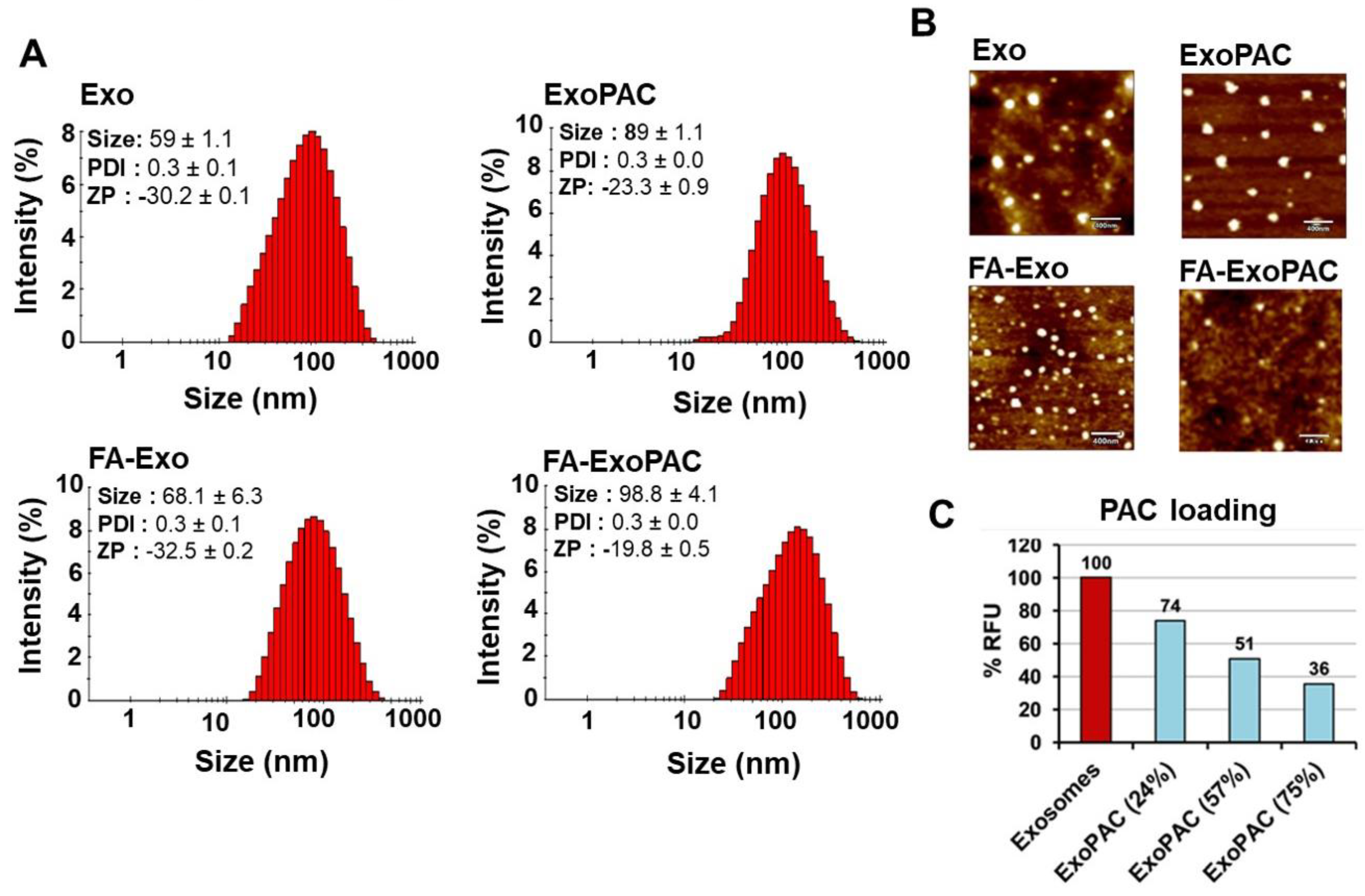
Correction: Kandimalla et al. Targeted Oral Delivery of Paclitaxel Using Colostrum-Derived Exosomes. Cancers 2021, 13, 3700

 ,
,  ,
,  , ,
, , Figure and Table Legend
Error in Figure
Reference
- Kandimalla, R.; Aqil, F.; Alhakeem, S.S.; Jeyabalan, J.; Tyagi, N.; Agrawal, A.; Yan, J.; Spencer, W.; Bondada, S.; Gupta, R.C. Targeted Oral Delivery of Paclitaxel Using Colostrum-Derived Exosomes. Cancers 2021, 13, 3700. [Google Scholar] [CrossRef] [PubMed]

Disclaimer/Publisher’s Note: The statements, opinions and data contained in all publications are solely those of the individual author(s) and contributor(s) and not of MDPI and/or the editor(s). MDPI and/or the editor(s) disclaim responsibility for any injury to people or property resulting from any ideas, methods, instructions or products referred to in the content. |
© 2025 by the authors. Licensee MDPI, Basel, Switzerland. This article is an open access article distributed under the terms and conditions of the Creative Commons Attribution (CC BY) license (https://creativecommons.org/licenses/by/4.0/).
Share and Cite
Kandimalla, R.; Aqil, F.; Alhakeem, S.S.; Jeyabalan, J.; Tyagi, N.; Agrawal, A.; Yan, J.; Spencer, W.; Bondada, S.; Gupta, R.C. Correction: Kandimalla et al. Targeted Oral Delivery of Paclitaxel Using Colostrum-Derived Exosomes. Cancers 2021, 13, 3700. Cancers 2025, 17, 2955. https://doi.org/10.3390/cancers17182955
Kandimalla R, Aqil F, Alhakeem SS, Jeyabalan J, Tyagi N, Agrawal A, Yan J, Spencer W, Bondada S, Gupta RC. Correction: Kandimalla et al. Targeted Oral Delivery of Paclitaxel Using Colostrum-Derived Exosomes. Cancers 2021, 13, 3700. Cancers. 2025; 17(18):2955. https://doi.org/10.3390/cancers17182955
Chicago/Turabian StyleKandimalla, Raghuram, Farrukh Aqil, Sara S. Alhakeem, Jeyaprakash Jeyabalan, Neha Tyagi, Ashish Agrawal, Jun Yan, Wendy Spencer, Subbarao Bondada, and Ramesh C. Gupta. 2025. "Correction: Kandimalla et al. Targeted Oral Delivery of Paclitaxel Using Colostrum-Derived Exosomes. Cancers 2021, 13, 3700" Cancers 17, no. 18: 2955. https://doi.org/10.3390/cancers17182955
APA StyleKandimalla, R., Aqil, F., Alhakeem, S. S., Jeyabalan, J., Tyagi, N., Agrawal, A., Yan, J., Spencer, W., Bondada, S., & Gupta, R. C. (2025). Correction: Kandimalla et al. Targeted Oral Delivery of Paclitaxel Using Colostrum-Derived Exosomes. Cancers 2021, 13, 3700. Cancers, 17(18), 2955. https://doi.org/10.3390/cancers17182955