
The Thermal Ablation with MRgFUS: From Physics to Oncological Applications
by
 , ,
, ,
Mario Leporace
1,* ,
,
Ferdinando F. Calabria
1,
Roberto Siciliano
2,
Carlo Capalbo
3,4,
Dimitrios K. Filippiadis
5 and 
Roberto Iezzi
6,7
1
Department of Nuclear Medicine and Theragnostics, “Mariano Santo” Cosenza Hospital, 87100 Cosenza, Italy
2
Operative Medical Physics Unit, Cosenza Hospital, 87100 Cosenza, Italy
3
Department of Pharmacy, Health and Nutritional Sciences, University of Calabria, 87036 Rende, Italy
4
Complex Operative Oncology Unit, Annunziata Hospital Cosenza, 87100 Cosenza, Italy
5
2nd Department of Radiology, University General Hospital “ATTIKON”, Medical School, National and Kapodistrian University of Athens, 12462 Athens, Greece
6
Department of Diagnostic Imaging, Oncologic Radiotherapy and Hematology, Fondazione Policlinico Universitario Agostino Gemelli IRCCS, 00100 Rome, Italy
7
Facoltà Di Medicina E Chirurgia, Università Cattolica del Sacro Cuore, 00100 Roma, Italy
*
Author to whom correspondence should be addressed.
Cancers 2025, 17(1), 36; https://doi.org/10.3390/cancers17010036
Submission received: 5 December 2024
/
Revised: 18 December 2024
/
Accepted: 23 December 2024
/
Published: 26 December 2024
(This article belongs to the Special Issue Medical Imaging and Artificial Intelligence in Cancer)
Simple Summary
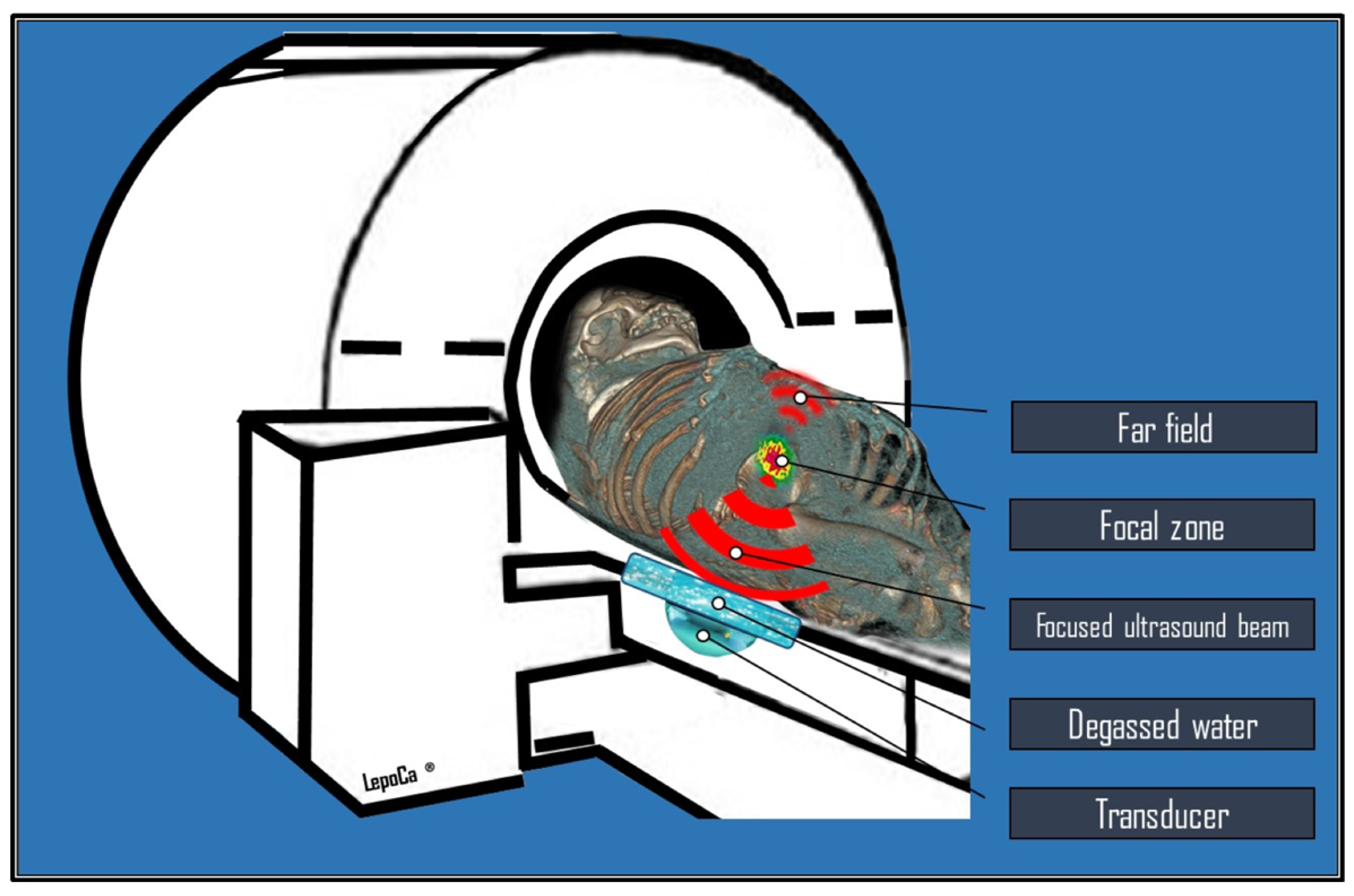
Magnetic Resonance-guided Focused Ultrasound (MRgFUS) represents a groundbreaking advancement in ultrasound-based cancer treatments. This innovative technology integrates high-intensity focused ultrasound (HIFU) or low-intensity focused ultrasound (LIFU) with a magnetic resonance imaging (MRI) system. In this paper, the physical principles of focused ultrasound, the basic technical aspects of MRgFUS, and its current and prospective oncologic applications will be briefly explored.
Abstract
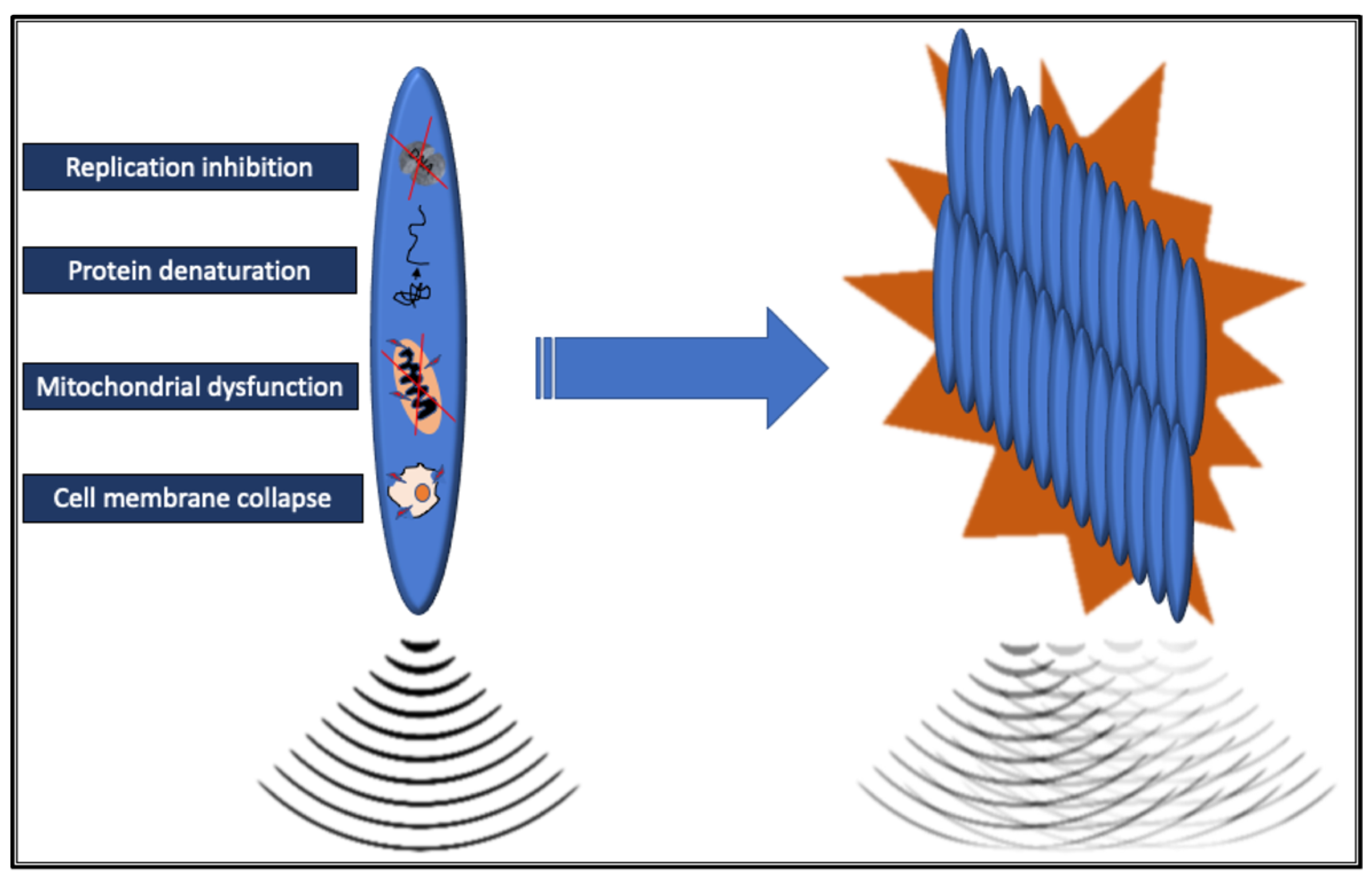
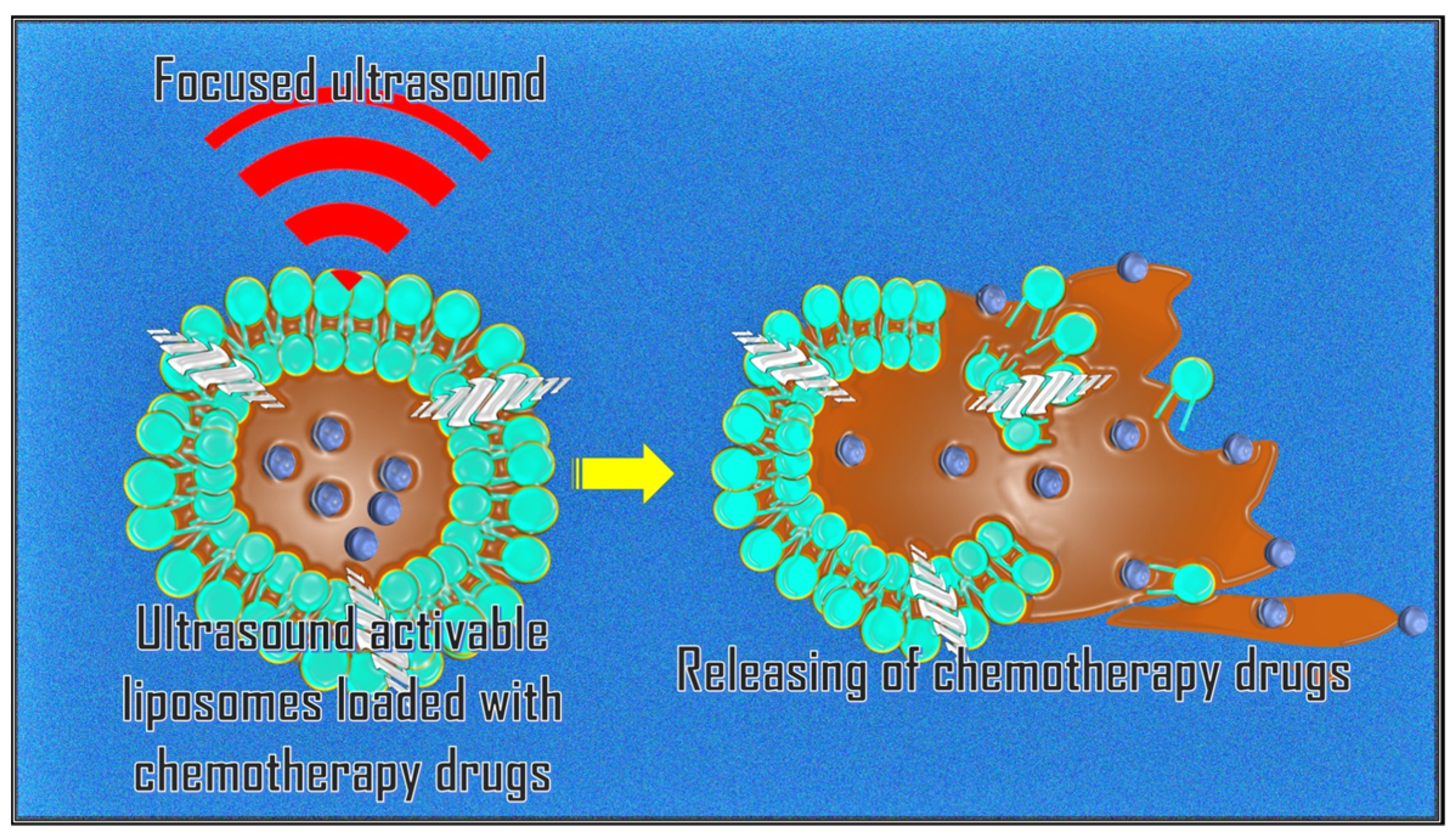
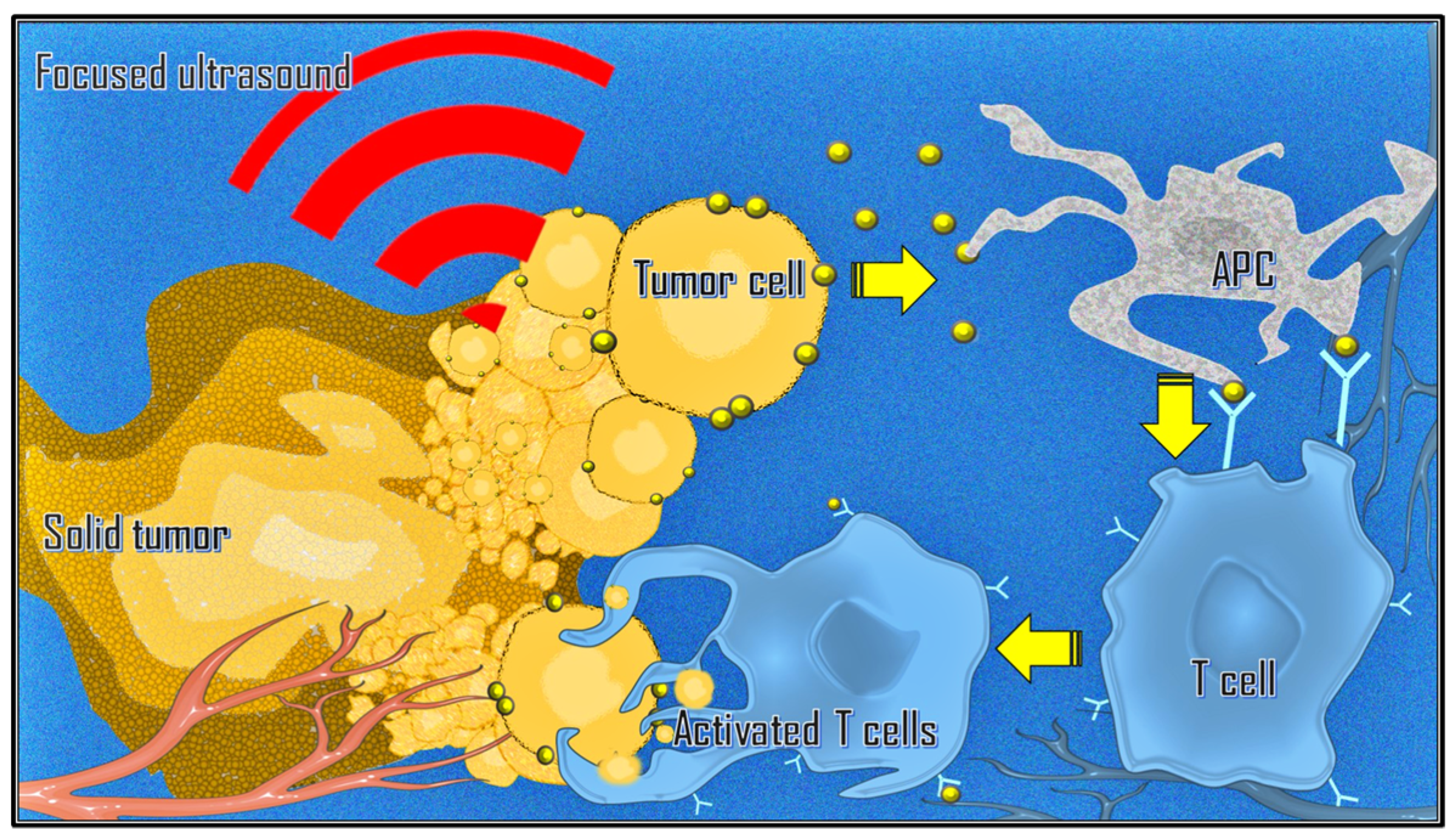
The growing interest in minimal and non-invasive therapies, especially in the field of cancer treatment, highlights a significant shift toward safer and more effective options. Ablative therapies are well-established tools in cancer treatment, with known effects including locoregional control, while their role as modulators of the systemic immune response against cancer is emerging. The HIFU developed with magnetic resonance imaging (MRI) guidance enables treatment precision, improves real-time procedural control, and ensures accurate outcome assessment. Magnetic Resonance-guided Focused Ultrasound (MRgFUS) induces deep coagulation necrosis within an elliptical focal area, effectively encompassing the entire tumor site and allowing for highly targeted radical ablation. The applications of MRgFUS in oncology are rapidly expanding, offering pain relief and curative treatment options for bone metastatic lesions. Additionally, the MRgFUS plays an effective role in targeted optional therapies for early prostate and breast cancers. Emerging research also focuses on the potential uses in treating abdominal cancers and harnessing capabilities to stimulate immune responses against tumors or to facilitate the delivery of anticancer drugs. This evolving landscape presents exciting opportunities for improving patient outcomes and advancing cancer treatment methodologies. In neuro-oncology, MRgFUS utilizes low-intensity focused ultrasound (LIFU) along with intravenous microbubbles to open the blood-brain barrier (BBB) and enhance the intra-tumoral delivery of chemotherapy drugs.
Keywords:
HIFU; LIFU; MRgFUS; oncology; thermal ablation