Renal Carcinoma and Angiogenesis: Therapeutic Target and Biomarkers of Response in Current Therapies

 ,
,  , and
, and
Abstract
Simple Summary
Abstract
1. Introduction
2. Methods
3. Angiogenesis in Renal Cancer
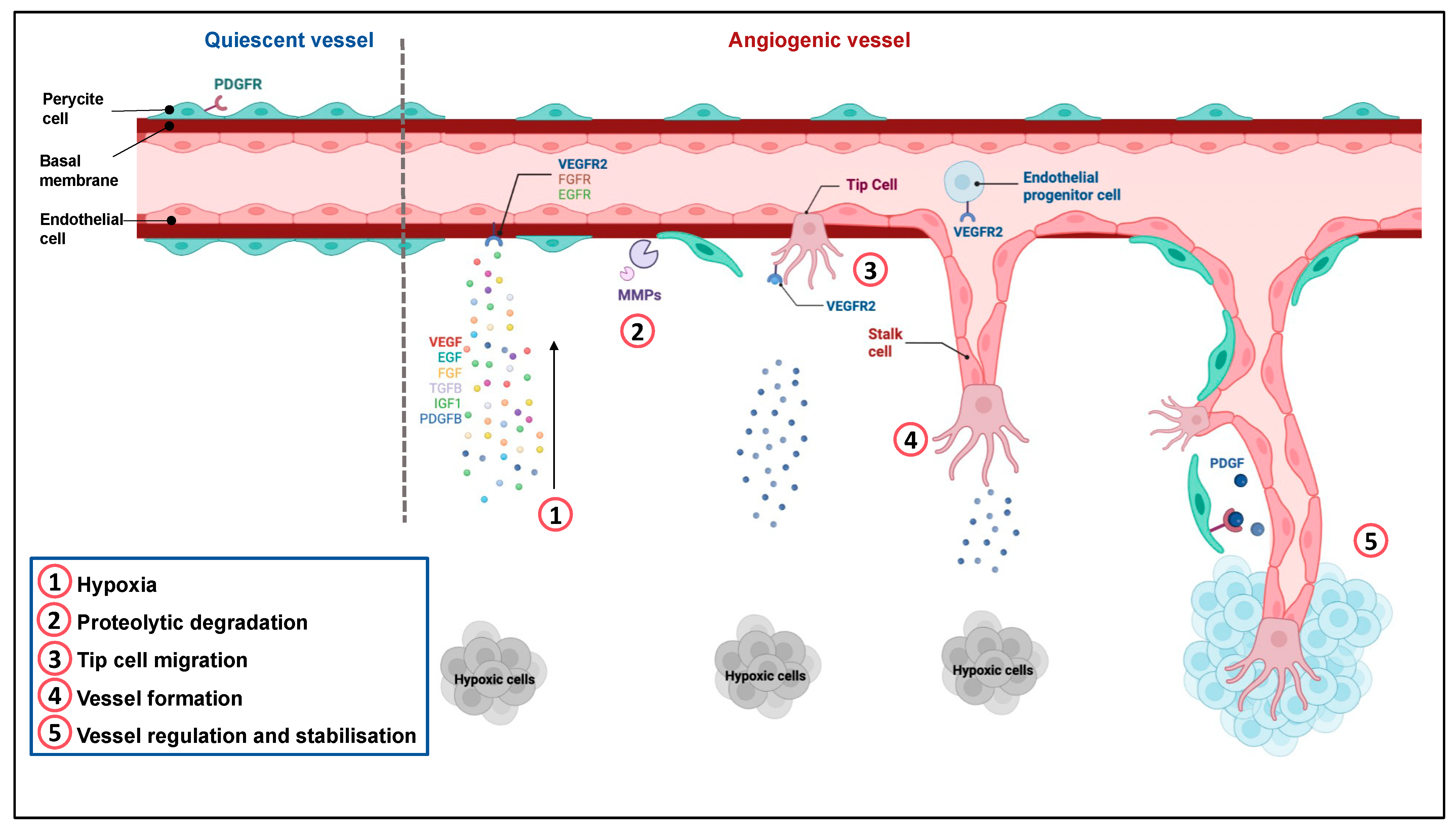
3.1. Angiogenesis
3.2. Place of VEGF-A in Cancer Angiogenesis
3.2.1. Angiogenic Switch
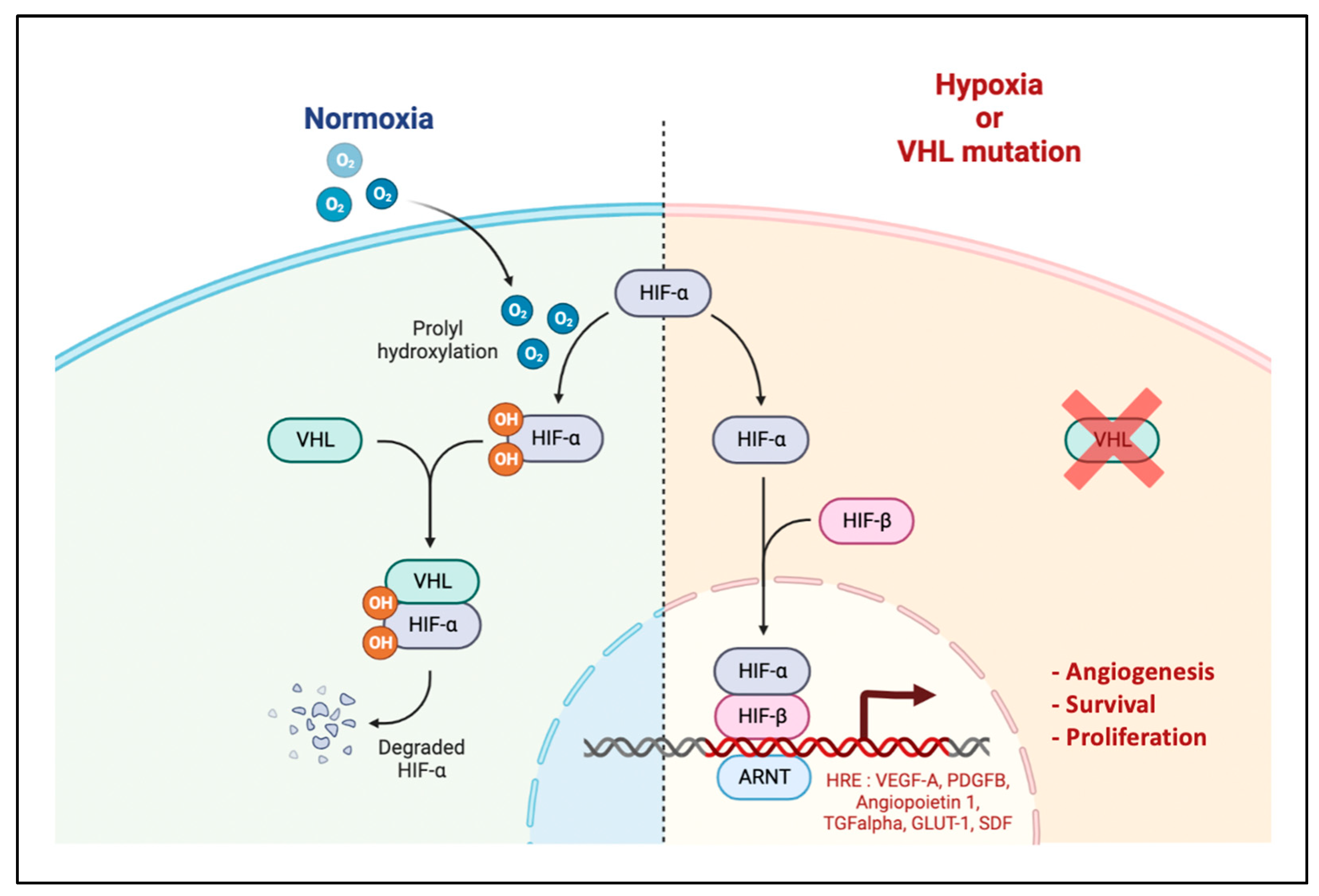
3.2.2. VHL and PBRM1 Inactivation in RCC
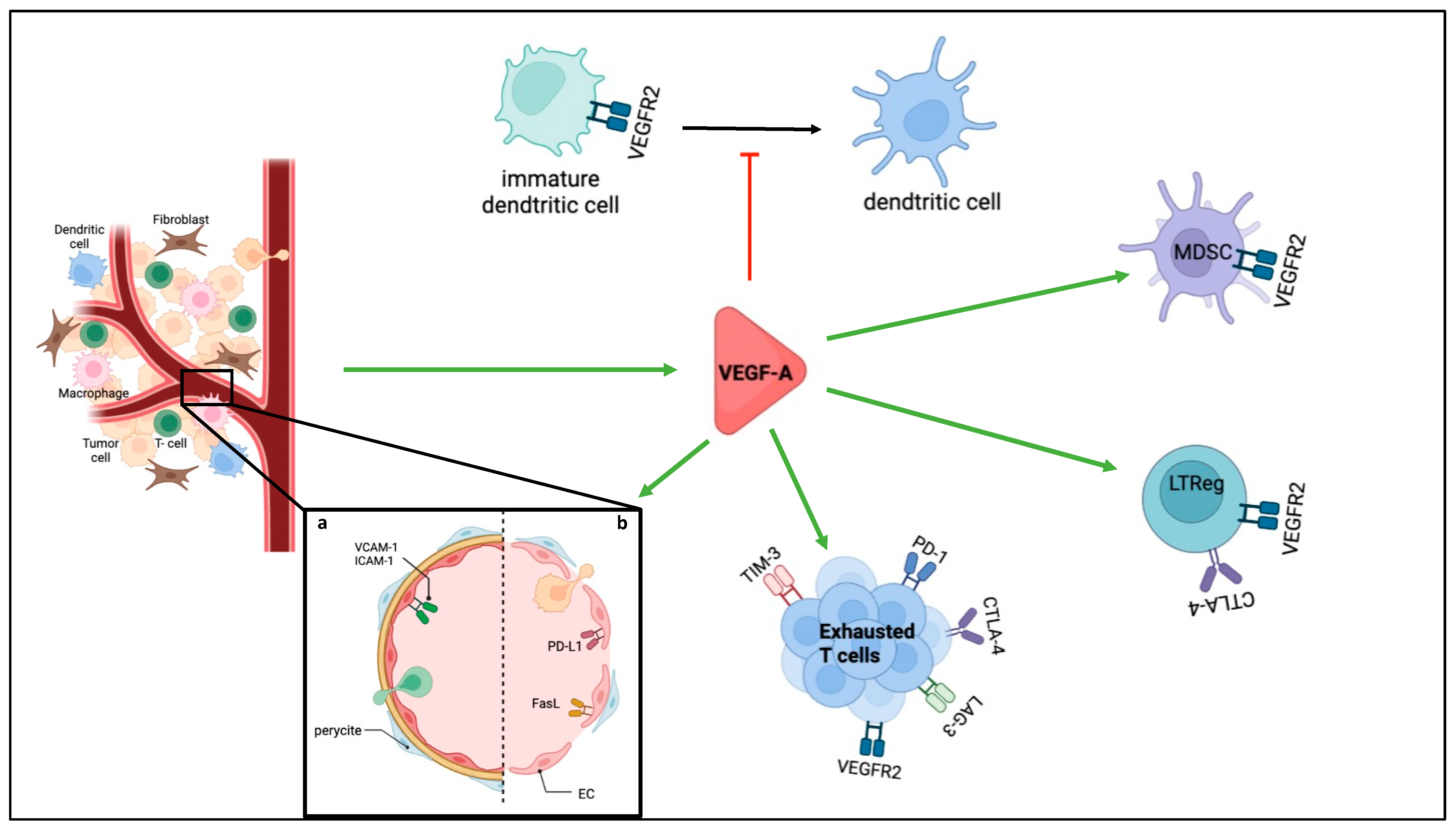
3.2.3. VEGF-A Promotes Immunosuppression
3.3. Tumour Angiogenesis Contributes to Drug Resistance in RCC
3.3.1. Resistance to TKI
3.3.2. Resistance to ICI
4. Angiogenesis Related Biomarkers in ccRCC
4.1. Angiogenesis Blood Biomarkers
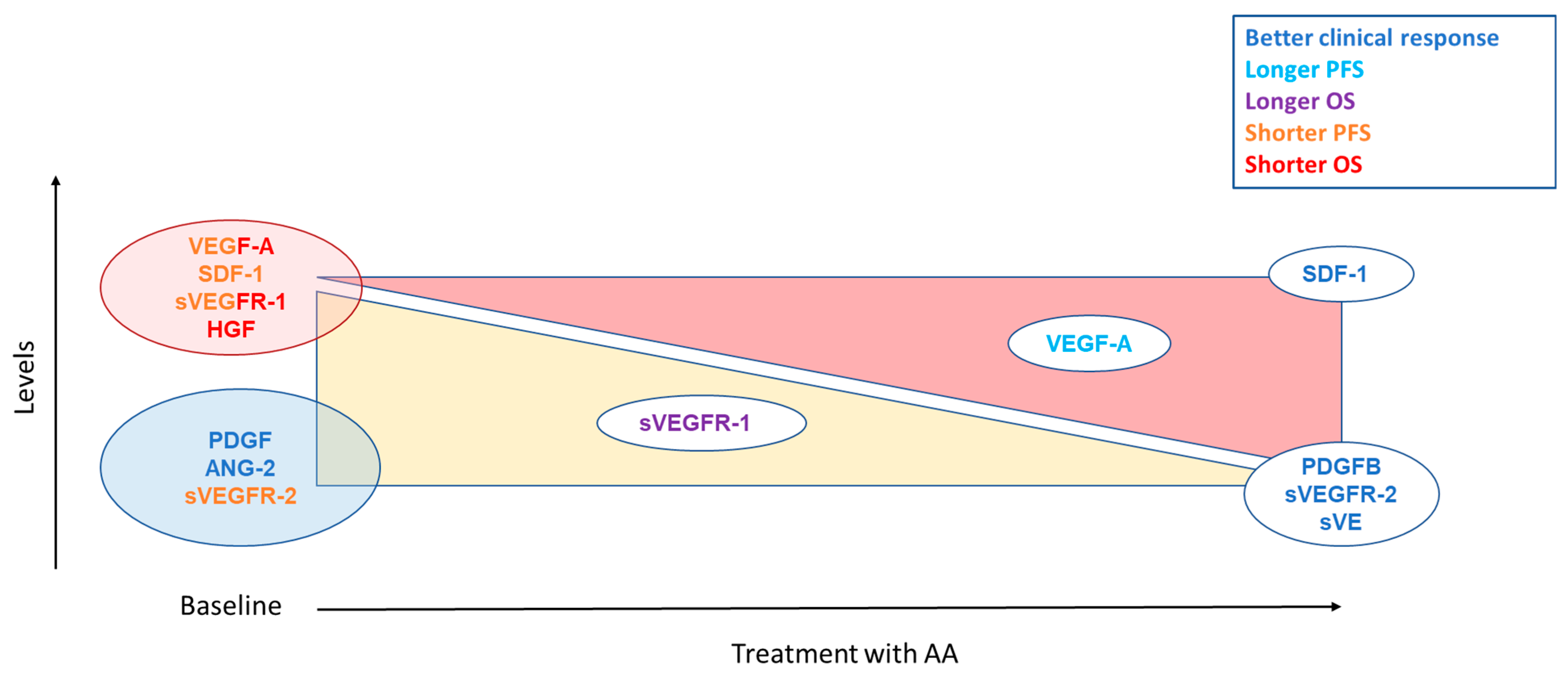
4.1.1. Circulating Markers Related to VEGF-A Pathway
4.1.2. Other Proangiogenic Pathways
4.1.3. Circulating Endothelial Cells
4.1.4. Single Nucleotide Polymorphisms (SNP)
4.2. Angiogenesis-Related Tumour Tissue Biomarkers
4.2.1. Specific Protein Expression
4.2.2. Tumour Vessel Characterization
4.2.3. mRNA Expression
4.2.4. DNA Levels: Somatic Mutations
5. Discussion
6. Conclusions
Author Contributions
Funding
Acknowledgments
Conflicts of Interest
References
- Bray, F.; Ferlay, J.; Soerjomataram, I.; Siegel, R.L.; Torre, L.A.; Jemal, A. Global Cancer Statistics 2018: GLOBOCAN Estimates of Incidence and Mortality Worldwide for 36 Cancers in 185 Countries. CA Cancer J. Clin. 2018, 68, 394–424. [Google Scholar] [CrossRef]
- Cancer Survival in England—Adults Diagnosed—Office for National Statistics. Available online: https://www.ons.gov.uk/peoplepopulationandcommunity/healthandsocialcare/conditionsanddiseases/datasets/cancersurvivalratescancersurvivalinenglandadultsdiagnosed (accessed on 20 October 2022).
- Folkman, J.; Long, D.M.; Becker, F.F. Growth and Metastasis of Tumor in Organ Culture. Cancer 1963, 16, 453–467. [Google Scholar] [CrossRef] [PubMed]
- Mauge, L.; Terme, M.; Tartour, E.; Helley, D. Control of the Adaptive Immune Response by Tumor Vasculature. Front. Oncol. 2014, 4, 61. [Google Scholar] [CrossRef] [PubMed]
- Deleuze, A.; Saout, J.; Dugay, F.; Peyronnet, B.; Mathieu, R.; Verhoest, G.; Bensalah, K.; Crouzet, L.; Laguerre, B.; Belaud-Rotureau, M.-A.; et al. Immunotherapy in Renal Cell Carcinoma: The Future Is Now. Int. J. Mol. Sci. 2020, 21, E2532. [Google Scholar] [CrossRef] [PubMed]
- George, D.J.; Lee, C.-H.; Heng, D. New Approaches to First-Line Treatment of Advanced Renal Cell Carcinoma. Ther. Adv. Med. Oncol. 2021, 13, 17588359211034708. [Google Scholar] [CrossRef] [PubMed]
- Motzer, R.J.; Hutson, T.E.; Tomczak, P.; Michaelson, M.D.; Bukowski, R.M.; Oudard, S.; Negrier, S.; Szczylik, C.; Pili, R.; Bjarnason, G.A.; et al. Overall Survival and Updated Results for Sunitinib Compared with Interferon Alfa in Patients with Metastatic Renal Cell Carcinoma. J. Clin. Oncol. 2009, 27, 3584–3590. [Google Scholar] [CrossRef] [PubMed]
- Sternberg, C.N.; Hawkins, R.E.; Wagstaff, J.; Salman, P.; Mardiak, J.; Barrios, C.H.; Zarba, J.J.; Gladkov, O.A.; Lee, E.; Szczylik, C.; et al. A Randomised, Double-Blind Phase III Study of Pazopanib in Patients with Advanced and/or Metastatic Renal Cell Carcinoma: Final Overall Survival Results and Safety Update. Eur. J. Cancer 2013, 49, 1287–1296. [Google Scholar] [CrossRef]
- Motzer, R.J.; Escudier, B.; McDermott, D.F.; George, S.; Hammers, H.J.; Srinivas, S.; Tykodi, S.S.; Sosman, J.A.; Procopio, G.; Plimack, E.R.; et al. Nivolumab versus Everolimus in Advanced Renal-Cell Carcinoma. N. Engl. J. Med. 2015, 373, 1803–1813. [Google Scholar] [CrossRef]
- Motzer, R.J.; Rini, B.I.; McDermott, D.F.; Arén Frontera, O.; Hammers, H.J.; Carducci, M.A.; Salman, P.; Escudier, B.; Beuselinck, B.; Amin, A.; et al. Nivolumab plus Ipilimumab versus Sunitinib in First-Line Treatment for Advanced Renal Cell Carcinoma: Extended Follow-up of Efficacy and Safety Results from a Randomised, Controlled, Phase 3 Trial. Lancet Oncol. 2019, 20, 1370–1385. [Google Scholar] [CrossRef]
- Chevrier, S.; Levine, J.H.; Zanotelli, V.R.T.; Silina, K.; Schulz, D.; Bacac, M.; Ries, C.H.; Ailles, L.; Jewett, M.A.S.; Moch, H.; et al. An Immune Atlas of Clear Cell Renal Cell Carcinoma. Cell 2017, 169, 736–749.e18. [Google Scholar] [CrossRef]
- Kasherman, L.; Siu, D.H.W.; Woodford, R.; Harris, C.A. Angiogenesis Inhibitors and Immunomodulation in Renal Cell Cancers: The Past, Present, and Future. Cancers 2022, 14, 1406. [Google Scholar] [CrossRef] [PubMed]
- Powles, T.; ESMO Guidelines Committee. Electronic address: Clinicalguidelines@esmo.org Recent EUpdate to the ESMO Clinical Practice Guidelines on Renal Cell Carcinoma on Cabozantinib and Nivolumab for First-Line Clear Cell Renal Cancer: Renal Cell Carcinoma: ESMO Clinical Practice Guidelines for Diagnosis, Treatment and Follow-Up. Ann. Oncol. 2021, 32, 422–423. [Google Scholar] [CrossRef] [PubMed]
- Genetic Analysis of Primary Renal Cell Carcinoma to Determine Treatment Approaches: Expert Review of Precision Medicine and Drug Development: Vol 6, No 2. Available online: https://www.tandfonline.com/doi/abs/10.1080/23808993.2021.1874822 (accessed on 21 October 2022).
- Schmidt, A.L.; Siefker-Radtke, A.; McConkey, D.; McGregor, B. Renal Cell and Urothelial Carcinoma: Biomarkers for New Treatments. Am. Soc. Clin. Oncol. Educ. Book 2020, 40, 1–11. [Google Scholar] [CrossRef] [PubMed]
- D’Aniello, C.; Berretta, M.; Cavaliere, C.; Rossetti, S.; Facchini, B.A.; Iovane, G.; Mollo, G.; Capasso, M.; Pepa, C.D.; Pesce, L.; et al. Biomarkers of Prognosis and Efficacy of Anti-Angiogenic Therapy in Metastatic Clear Cell Renal Cancer. Front. Oncol. 2019, 9, 1400. [Google Scholar] [CrossRef] [PubMed]
- Argentiero, A.; Solimando, A.G.; Krebs, M.; Leone, P.; Susca, N.; Brunetti, O.; Racanelli, V.; Vacca, A.; Silvestris, N. Anti-Angiogenesis and Immunotherapy: Novel Paradigms to Envision Tailored Approaches in Renal Cell-Carcinoma. J. Clin. Med. 2020, 9, 1594. [Google Scholar] [CrossRef] [PubMed]
- Carmeliet, P.; Jain, R.K. Molecular Mechanisms and Clinical Applications of Angiogenesis. Nature 2011, 473, 298–307. [Google Scholar] [CrossRef]
- Viallard, C.; Larrivée, B. Tumor Angiogenesis and Vascular Normalization: Alternative Therapeutic Targets. Angiogenesis 2017, 20, 409–426. [Google Scholar] [CrossRef]
- Roskoski, R. Vascular Endothelial Growth Factor (VEGF) Signaling in Tumor Progression. Crit. Rev. Oncol. Hematol. 2007, 62, 179–213. [Google Scholar] [CrossRef]
- Lugano, R.; Ramachandran, M.; Dimberg, A. Tumor Angiogenesis: Causes, Consequences, Challenges and Opportunities. Cell Mol. Life Sci. 2020, 77, 1745–1770. [Google Scholar] [CrossRef]
- Canavese, M. Vascular Endothelial Growth Factor: An Overview Across Multiple Disease Conditions. Am. J. Pharmacol. Toxicol. 2015, 10, 1–12. [Google Scholar] [CrossRef][Green Version]
- Shibuya, M. VEGF-VEGFR Signals in Health and Disease. Biomol. Ther. 2014, 22, 1–9. [Google Scholar] [CrossRef] [PubMed]
- Hicklin, D.J.; Ellis, L.M. Role of the Vascular Endothelial Growth Factor Pathway in Tumor Growth and Angiogenesis. J. Clin. Oncol. 2005, 23, 1011–1027. [Google Scholar] [CrossRef] [PubMed]
- Meléndez-Rodríguez, F.; Roche, O.; Sanchez-Prieto, R.; Aragones, J. Hypoxia-Inducible Factor 2-Dependent Pathways Driving Von Hippel-Lindau-Deficient Renal Cancer. Front. Oncol. 2018, 8, 214. [Google Scholar] [CrossRef] [PubMed]
- Jonasch, E.; Donskov, F.; Iliopoulos, O.; Rathmell, W.K.; Narayan, V.K.; Maughan, B.L.; Oudard, S.; Else, T.; Maranchie, J.K.; Welsh, S.J.; et al. Belzutifan for Renal Cell Carcinoma in von Hippel-Lindau Disease. N. Engl. J. Med. 2021, 385, 2036–2046. [Google Scholar] [CrossRef]
- Dengler, V.L.; Galbraith, M.; Espinosa, J.M. Transcriptional Regulation by Hypoxia Inducible Factors. Crit. Rev. Biochem. Mol. Biol. 2014, 49, 1–15. [Google Scholar] [CrossRef]
- Ferrara, N. Vascular Endothelial Growth Factor: Basic Science and Clinical Progress. Endocr. Rev. 2004, 25, 581–611. [Google Scholar] [CrossRef]
- Kut, C.; Mac Gabhann, F.; Popel, A.S. Where Is VEGF in the Body? A Meta-Analysis of VEGF Distribution in Cancer. Br. J. Cancer 2007, 97, 978–985. [Google Scholar] [CrossRef]
- Choueiri, T.K.; Vaziri, S.A.J.; Jaeger, E.; Elson, P.; Wood, L.; Bhalla, I.P.; Small, E.J.; Weinberg, V.; Sein, N.; Simko, J.; et al. Von Hippel-Lindau Gene Status and Response to Vascular Endothelial Growth Factor Targeted Therapy for Metastatic Clear Cell Renal Cell Carcinoma. J. Urol. 2008, 180, 860–865; discussion 865–866. [Google Scholar] [CrossRef]
- Voss, M.H.; Hakimi, A.A.; Pham, C.G.; Brannon, A.R.; Chen, Y.-B.; Cunha, L.F.; Akin, O.; Liu, H.; Takeda, S.; Scott, S.N.; et al. Tumor Genetic Analyses of Patients with Metastatic Renal Cell Carcinoma and Extended Benefit from MTOR Inhibitor Therapy. Clin. Cancer Res. 2014, 20, 1955–1964. [Google Scholar] [CrossRef]
- Gao, W.; Li, W.; Xiao, T.; Liu, X.S.; Kaelin, W.G. Inactivation of the PBRM1 Tumor Suppressor Gene Amplifies the HIF-Response in VHL-/- Clear Cell Renal Carcinoma. Proc. Natl. Acad. Sci. USA 2017, 114, 1027–1032. [Google Scholar] [CrossRef]
- Varela, I.; Tarpey, P.; Raine, K.; Huang, D.; Ong, C.K.; Stephens, P.; Davies, H.; Jones, D.; Lin, M.-L.; Teague, J.; et al. Exome Sequencing Identifies Frequent Mutation of the SWI/SNF Complex Gene PBRM1 in Renal Carcinoma. Nature 2011, 469, 539–542. [Google Scholar] [CrossRef]
- Nargund, A.M.; Pham, C.G.; Dong, Y.; Wang, P.I.; Osmangeyoglu, H.U.; Xie, Y.; Aras, O.; Han, S.; Oyama, T.; Takeda, S.; et al. The SWI/SNF Protein PBRM1 Restrains VHL-Loss-Driven Clear Cell Renal Cell Carcinoma. Cell Rep. 2017, 18, 2893–2906. [Google Scholar] [CrossRef] [PubMed]
- Hakimi, A.A.; Voss, M.H.; Kuo, F.; Sanchez, A.; Liu, M.; Nixon, B.G.; Vuong, L.; Ostrovnaya, I.; Chen, Y.-B.; Reuter, V.; et al. Transcriptomic Profiling of the Tumor Microenvironment Reveals Distinct Subgroups of Clear Cell Renal Cell Cancer: Data from a Randomized Phase III Trial. Cancer Discov. 2019, 9, 510–525. [Google Scholar] [CrossRef]
- McDermott, D.F.; Huseni, M.A.; Atkins, M.B.; Motzer, R.J.; Rini, B.I.; Escudier, B.; Fong, L.; Joseph, R.W.; Pal, S.K.; Reeves, J.A.; et al. Clinical Activity and Molecular Correlates of Response to Atezolizumab Alone or in Combination with Bevacizumab versus Sunitinib in Renal Cell Carcinoma. Nat. Med. 2018, 24, 749–757. [Google Scholar] [CrossRef] [PubMed]
- Miao, D.; Margolis, C.A.; Gao, W.; Voss, M.H.; Li, W.; Martini, D.J.; Norton, C.; Bossé, D.; Wankowicz, S.M.; Cullen, D.; et al. Genomic Correlates of Response to Immune Checkpoint Therapies in Clear Cell Renal Cell Carcinoma. Science 2018, 359, 801–806. [Google Scholar] [CrossRef]
- Choueiri, T.K.; Kaelin, W.G. Targeting the HIF2-VEGF Axis in Renal Cell Carcinoma. Nat. Med. 2020, 26, 1519–1530. [Google Scholar] [CrossRef]
- Cines, D.B.; Pollak, E.S.; Buck, C.A.; Loscalzo, J.; Zimmerman, G.A.; McEver, R.P.; Pober, J.S.; Wick, T.M.; Konkle, B.A.; Schwartz, B.S.; et al. Endothelial Cells in Physiology and in the Pathophysiology of Vascular Disorders. Blood 1998, 91, 3527–3561. [Google Scholar] [PubMed]
- Goel, S.; Duda, D.G.; Xu, L.; Munn, L.L.; Boucher, Y.; Fukumura, D.; Jain, R.K. Normalization of the Vasculature for Treatment of Cancer and Other Diseases. Physiol. Rev. 2011, 91, 1071–1121. [Google Scholar] [CrossRef]
- Noman, M.Z.; Hasmim, M.; Lequeux, A.; Xiao, M.; Duhem, C.; Chouaib, S.; Berchem, G.; Janji, B. Improving Cancer Immunotherapy by Targeting the Hypoxic Tumor Microenvironment: New Opportunities and Challenges. Cells 2019, 8, E1083. [Google Scholar] [CrossRef]
- Huinen, Z.R.; Huijbers, E.J.M.; van Beijnum, J.R.; Nowak-Sliwinska, P.; Griffioen, A.W. Anti-Angiogenic Agents—Overcoming Tumour Endothelial Cell Anergy and Improving Immunotherapy Outcomes. Nat. Rev. Clin. Oncol. 2021, 18, 527–540. [Google Scholar] [CrossRef]
- Griffioen, A.W.; Damen, C.A.; Blijham, G.H.; Groenewegen, G. Tumor Angiogenesis Is Accompanied by a Decreased Inflammatory Response of Tumor-Associated Endothelium. Blood 1996, 88, 667–673. [Google Scholar] [CrossRef] [PubMed]
- Shetty, S.; Weston, C.J.; Oo, Y.H.; Westerlund, N.; Stamataki, Z.; Youster, J.; Hubscher, S.G.; Salmi, M.; Jalkanen, S.; Lalor, P.F.; et al. Common Lymphatic Endothelial and Vascular Endothelial Receptor-1 Mediates the Transmigration of Regulatory T Cells across Human Hepatic Sinusoidal Endothelium. J. Immunol. 2011, 186, 4147–4155. [Google Scholar] [CrossRef]
- Motz, G.T.; Coukos, G. Deciphering and Reversing Tumor Immune Suppression. Immunity 2013, 39, 61–73. [Google Scholar] [CrossRef] [PubMed]
- Kammertoens, T.; Friese, C.; Arina, A.; Idel, C.; Briesemeister, D.; Rothe, M.; Ivanov, A.; Szymborska, A.; Patone, G.; Kunz, S.; et al. Tumour Ischaemia by Interferon-γ Resembles Physiological Blood Vessel Regression. Nature 2017, 545, 98–102. [Google Scholar] [CrossRef] [PubMed]
- Gabrilovich, D.I.; Chen, H.L.; Girgis, K.R.; Cunningham, H.T.; Meny, G.M.; Nadaf, S.; Kavanaugh, D.; Carbone, D.P. Production of Vascular Endothelial Growth Factor by Human Tumors Inhibits the Functional Maturation of Dendritic Cells. Nat. Med. 1996, 2, 1096–1103. [Google Scholar] [CrossRef] [PubMed]
- Mimura, K.; Kono, K.; Takahashi, A.; Kawaguchi, Y.; Fujii, H. Vascular Endothelial Growth Factor Inhibits the Function of Human Mature Dendritic Cells Mediated by VEGF Receptor-2. Cancer Immunol. Immunother. 2007, 56, 761–770. [Google Scholar] [CrossRef]
- Strauss, L.; Volland, D.; Kunkel, M.; Reichert, T.E. Dual Role of VEGF Family Members in the Pathogenesis of Head and Neck Cancer (HNSCC): Possible Link between Angiogenesis and Immune Tolerance. Med. Sci. Monit. 2005, 11, BR280–BR292. [Google Scholar]
- Ohm, J.E.; Gabrilovich, D.I.; Sempowski, G.D.; Kisseleva, E.; Parman, K.S.; Nadaf, S.; Carbone, D.P. VEGF Inhibits T-Cell Development and May Contribute to Tumor-Induced Immune Suppression. Blood 2003, 101, 4878–4886. [Google Scholar] [CrossRef]
- Khan, K.A.; Kerbel, R.S. Improving Immunotherapy Outcomes with Anti-Angiogenic Treatments and Vice Versa. Nat. Rev. Clin. Oncol. 2018, 15, 310–324. [Google Scholar] [CrossRef]
- Joosten, S.C.; Hamming, L.; Soetekouw, P.M.; Aarts, M.J.; Veeck, J.; van Engeland, M.; Tjan-Heijnen, V.C. Resistance to Sunitinib in Renal Cell Carcinoma: From Molecular Mechanisms to Predictive Markers and Future Perspectives. Biochim. Biophys. Acta 2015, 1855, 1–16. [Google Scholar] [CrossRef] [PubMed]
- Van Beijnum, J.R.; Nowak-Sliwinska, P.; Huijbers, E.J.M.; Thijssen, V.L.; Griffioen, A.W. The Great Escape; the Hallmarks of Resistance to Antiangiogenic Therapy. Pharmacol. Rev. 2015, 67, 441–461. [Google Scholar] [CrossRef] [PubMed]
- Lai, Y.; Zhao, Z.; Zeng, T.; Liang, X.; Chen, D.; Duan, X.; Zeng, G.; Wu, W. Crosstalk between VEGFR and Other Receptor Tyrosine Kinases for TKI Therapy of Metastatic Renal Cell Carcinoma. Cancer Cell. Int. 2018, 18, 31. [Google Scholar] [CrossRef] [PubMed]
- Zhou, L.; Liu, X.-D.; Sun, M.; Zhang, X.; German, P.; Bai, S.; Ding, Z.; Tannir, N.; Wood, C.G.; Matin, S.F.; et al. Targeting MET and AXL Overcomes Resistance to Sunitinib Therapy in Renal Cell Carcinoma. Oncogene 2016, 35, 2687–2697. [Google Scholar] [CrossRef]
- Yakes, F.M.; Chen, J.; Tan, J.; Yamaguchi, K.; Shi, Y.; Yu, P.; Qian, F.; Chu, F.; Bentzien, F.; Cancilla, B.; et al. Cabozantinib (XL184), a Novel MET and VEGFR2 Inhibitor, Simultaneously Suppresses Metastasis, Angiogenesis, and Tumor Growth. Mol. Cancer Ther. 2011, 10, 2298–2308. [Google Scholar] [CrossRef] [PubMed]
- Hao, Z.; Wang, P. Lenvatinib in Management of Solid Tumors. Oncologist 2020, 25, e302–e310. [Google Scholar] [CrossRef]
- Sharma, R.; Kadife, E.; Myers, M.; Kannourakis, G.; Prithviraj, P.; Ahmed, N. Determinants of Resistance to VEGF-TKI and Immune Checkpoint Inhibitors in Metastatic Renal Cell Carcinoma. J. Exp. Clin. Cancer Res. 2021, 40, 186. [Google Scholar] [CrossRef] [PubMed]
- Liu, X.-D.; Hoang, A.; Zhou, L.; Kalra, S.; Yetil, A.; Sun, M.; Ding, Z.; Zhang, X.; Bai, S.; German, P.; et al. Resistance to Antiangiogenic Therapy Is Associated with an Immunosuppressive Tumor Microenvironment in Metastatic Renal Cell Carcinoma. Cancer Immunol. Res. 2015, 3, 1017–1029. [Google Scholar] [CrossRef] [PubMed]
- Monti, M.; Lunardini, S.; Magli, I.A.; Campi, R.; Primiceri, G.; Berardinelli, F.; Amparore, D.; Terracciano, D.; Lucarelli, G.; Schips, L.; et al. Micro-RNAs Predict Response to Systemic Treatments in Metastatic Renal Cell Carcinoma Patients: Results from a Systematic Review of the Literature. Biomedicines 2022, 10, 1287. [Google Scholar] [CrossRef]
- Kumar, M.M.; Goyal, R. LncRNA as a Therapeutic Target for Angiogenesis. Curr. Top. Med. Chem. 2017, 17, 1750–1757. [Google Scholar] [CrossRef] [PubMed]
- Zhu, Y.; Liu, X.; Wang, Y.; Pan, Y.; Han, X.; Peng, B.; Zhang, X.; Niu, S.; Wang, H.; Ye, Q.; et al. DMDRMR Promotes Angiogenesis via Antagonizing DAB2IP in Clear Cell Renal Cell Carcinoma. Cell Death Dis. 2022, 13, 1–12. [Google Scholar] [CrossRef]
- Ou, Y.; Dai, X.; Chen, X.; Chen, Y.; Wu, S.; Zhou, Q.; Yang, C.; Jiang, H. Circ-AFAP1 Promote Clear Cell Renal Cell Carcinoma Growth and Angiogenesis by the Circ-AFAP1/MiR-374b-3p/VEGFA Signaling Axis. Cell Death Discov. 2022, 8, 68. [Google Scholar] [CrossRef]
- Romero-Laorden, N.; Doger, B.; Hernandez, M.; Hernandez, C.; Rodriguez-Moreno, J.F.; Garcia-Donas, J. Predictive Biomarker Candidates to Delineate Efficacy of Antiangiogenic Treatment in Renal Cell Carcinoma. Clin. Transl. Oncol. 2016, 18, 1–8. [Google Scholar] [CrossRef]
- Escudier, B.; Eisen, T.; Stadler, W.M.; Szczylik, C.; Oudard, S.; Staehler, M.; Negrier, S.; Chevreau, C.; Desai, A.A.; Rolland, F.; et al. Sorafenib for Treatment of Renal Cell Carcinoma: Final Efficacy and Safety Results of the Phase III Treatment Approaches in Renal Cancer Global Evaluation Trial. J. Clin. Oncol. 2009, 27, 3312–3318. [Google Scholar] [CrossRef]
- Rioux-Leclercq, N.; Fergelot, P.; Zerrouki, S.; Leray, E.; Jouan, F.; Bellaud, P.; Epstein, J.I.; Patard, J.-J. Plasma Level and Tissue Expression of Vascular Endothelial Growth Factor in Renal Cell Carcinoma: A Prospective Study of 50 Cases. Hum. Pathol. 2007, 38, 1489–1495. [Google Scholar] [CrossRef]
- Patard, J.-J.; Rioux-Leclercq, N.; Masson, D.; Zerrouki, S.; Jouan, F.; Collet, N.; Dubourg, C.; Lobel, B.; Denis, M.; Fergelot, P. Absence of VHL Gene Alteration and High VEGF Expression Are Associated with Tumour Aggressiveness and Poor Survival of Renal-Cell Carcinoma. Br. J. Cancer 2009, 101, 1417–1424. [Google Scholar] [CrossRef]
- Zurita, A.J.; Jonasch, E.; Wang, X.; Khajavi, M.; Yan, S.; Du, D.Z.; Xu, L.; Herynk, M.H.; McKee, K.S.; Tran, H.T.; et al. A Cytokine and Angiogenic Factor (CAF) Analysis in Plasma for Selection of Sorafenib Therapy in Patients with Metastatic Renal Cell Carcinoma. Ann. Oncol. 2012, 23, 46–52. [Google Scholar] [CrossRef] [PubMed]
- Porta, C.; Paglino, C.; De Amici, M.; Quaglini, S.; Sacchi, L.; Imarisio, I.; Canipari, C. Predictive Value of Baseline Serum Vascular Endothelial Growth Factor and Neutrophil Gelatinase-Associated Lipocalin in Advanced Kidney Cancer Patients Receiving Sunitinib. Kidney Int. 2010, 77, 809–815. [Google Scholar] [CrossRef]
- Mauge, L.; Mejean, A.; Fournier, L.; Pereira, H.; Etienne-Grimaldi, M.-C.; Levionnois, E.; Caty, A.; Abadie-Lacourtoisie, S.; Culine, S.; Le Moulec, S.; et al. Sunitinib Prior to Planned Nephrectomy in Metastatic Renal Cell Carcinoma: Angiogenesis Biomarkers Predict Clinical Outcome in the Prospective Phase II PREINSUT Trial. Clin. Cancer Res. 2018, 24, 5534–5542. [Google Scholar] [CrossRef]
- Peña, C.; Lathia, C.; Shan, M.; Escudier, B.; Bukowski, R.M. Biomarkers Predicting Outcome in Patients with Advanced Renal Cell Carcinoma: Results from Sorafenib Phase III Treatment Approaches in Renal Cancer Global Evaluation Trial. Clin. Cancer Res. 2010, 16, 4853–4863. [Google Scholar] [CrossRef] [PubMed]
- Choueiri, T.K.; Escudier, B.; Powles, T.; Mainwaring, P.N.; Rini, B.I.; Donskov, F.; Hammers, H.; Hutson, T.E.; Lee, J.-L.; Peltola, K.; et al. Cabozantinib versus Everolimus in Advanced Renal-Cell Carcinoma. N. Engl. J. Med. 2015, 373, 1814–1823. [Google Scholar] [CrossRef] [PubMed]
- Lee, C.-H.; Motzer, R.J.; Glen, H.; Michaelson, M.D.; Larkin, J.; Minoshima, Y.; Kanekiyo, M.; Ikezawa, H.; Sachdev, P.; Dutcus, C.E.; et al. Correlative Serum Biomarker Analyses in the Phase 2 Trial of Lenvatinib-plus-Everolimus in Patients with Metastatic Renal Cell Carcinoma. Br. J. Cancer 2021, 124, 237–246. [Google Scholar] [CrossRef] [PubMed]
- Deprimo, S.E.; Bello, C.L.; Smeraglia, J.; Baum, C.M.; Spinella, D.; Rini, B.I.; Michaelson, M.D.; Motzer, R.J. Circulating Protein Biomarkers of Pharmacodynamic Activity of Sunitinib in Patients with Metastatic Renal Cell Carcinoma: Modulation of VEGF and VEGF-Related Proteins. J. Transl. Med. 2007, 5, 32. [Google Scholar] [CrossRef]
- Gruenwald, V.; Beutel, G.; Schuch-Jantsch, S.; Reuter, C.; Ivanyi, P.; Ganser, A.; Haubitz, M. Circulating Endothelial Cells Are an Early Predictor in Renal Cell Carcinoma for Tumor Response to Sunitinib. BMC Cancer 2010, 10, 695. [Google Scholar] [CrossRef]
- Kontovinis, L.F.; Papazisis, K.T.; Touplikioti, P.; Andreadis, C.; Mouratidou, D.; Kortsaris, A.H. Sunitinib Treatment for Patients with Clear-Cell Metastatic Renal Cell Carcinoma: Clinical Outcomes and Plasma Angiogenesis Markers. BMC Cancer 2009, 9, 82. [Google Scholar] [CrossRef]
- Cinque, A.; Capasso, A.; Vago, R.; Lee, M.W.; Floris, M.; Trevisani, F. The Role of Circulating Biomarkers in the Oncological Management of Metastatic Renal Cell Carcinoma: Where Do We Stand Now? Biomedicines 2021, 10, 90. [Google Scholar] [CrossRef]
- Polena, H.; Creuzet, J.; Dufies, M.; Sidibé, A.; Khalil-Mgharbel, A.; Salomon, A.; Deroux, A.; Quesada, J.-L.; Roelants, C.; Filhol, O.; et al. The Tyrosine-Kinase Inhibitor Sunitinib Targets Vascular Endothelial (VE)-Cadherin: A Marker of Response to Antitumoural Treatment in Metastatic Renal Cell Carcinoma. Br. J. Cancer 2018, 118, 1179–1188. [Google Scholar] [CrossRef]
- Mauge, L.; Galy-Fauroux, I.; Elaidi, R.-T.; Dhia, L.B.; Bertil, S.; Bennamoun, M.; Chevreau, C.M.; Borchiellini, D.; Pannier, D.; Maillet, D.; et al. 686P Angiogenesis Related Blood Biomarkers of Response to Checkpoint Inhibitors (IO) and VEGFR-TKI in Metastatic Renal Cell Carcinoma (MRCC): Results from the BIONIKK Prospective Trial. Ann. Oncol. 2021, 32, S704. [Google Scholar] [CrossRef]
- McDermott, D.F.; Sosman, J.A.; Sznol, M.; Massard, C.; Gordon, M.S.; Hamid, O.; Powderly, J.D.; Infante, J.R.; Fassò, M.; Wang, Y.V.; et al. Atezolizumab, an Anti–Programmed Death-Ligand 1 Antibody, in Metastatic Renal Cell Carcinoma: Long-Term Safety, Clinical Activity, and Immune Correlates from a Phase Ia Study. JCO 2016, 34, 833–842. [Google Scholar] [CrossRef] [PubMed]
- Martini, J.-F.; Plimack, E.R.; Choueiri, T.K.; McDermott, D.F.; Puzanov, I.; Fishman, M.N.; Cho, D.C.; Vaishampayan, U.; Rosbrook, B.; Fernandez, K.C.; et al. Angiogenic and Immune-Related Biomarkers and Outcomes Following Axitinib/Pembrolizumab Treatment in Patients with Advanced Renal Cell Carcinoma. Clin. Cancer Res. 2020, 26, 5598–5608. [Google Scholar] [CrossRef]
- Rao, L.; Veirman, K.D.; Giannico, D.; Saltarella, I.; Desantis, V.; Frassanito, M.A.; Solimando, A.G.; Ribatti, D.; Prete, M.; Harstrick, A.; et al. Targeting Angiogenesis in Multiple Myeloma by the VEGF and HGF Blocking DARPin ® Protein MP0250: A Preclinical Study. Oncotarget 2018, 9, 13366–13381. [Google Scholar] [CrossRef] [PubMed]
- Liu, Y.; Tran, H.T.; Lin, Y.; Martin, A.; Zurita, A.J.; Sternberg, C.N.; Amado, R.G.; Pandite, L.N.; Heymach, J. Plasma Cytokine and Angiogenic Factors (CAFs) Predictive of Clinical Benefit and Prognosis in Patients (Pts) with Advanced or Metastatic Renal Cell Cancer (MRCC) Treated in Phase III Trials of Pazopanib (PAZO). JCO 2011, 29, 334. [Google Scholar] [CrossRef]
- Tran, H.T.; Liu, Y.; Zurita, A.J.; Lin, Y.; Baker-Neblett, K.L.; Martin, A.-M.; Figlin, R.A.; Hutson, T.E.; Sternberg, C.N.; Amado, R.G.; et al. Prognostic or Predictive Plasma Cytokines and Angiogenic Factors for Patients Treated with Pazopanib for Metastatic Renal-Cell Cancer: A Retrospective Analysis of Phase 2 and Phase 3 Trials. Lancet Oncol. 2012, 13, 827–837. [Google Scholar] [CrossRef] [PubMed]
- Smadja, D.M.; Mauge, L.; Sanchez, O.; Silvestre, J.-S.; Guerin, C.; Godier, A.; Henno, P.; Gaussem, P.; Israël-Biet, D. Distinct Patterns of Circulating Endothelial Cells in Pulmonary Hypertension. Eur. Respir. J. 2010, 36, 1284–1293. [Google Scholar] [CrossRef]
- Lin, Y.; Weisdorf, D.J.; Solovey, A.; Hebbel, R.P. Origins of Circulating Endothelial Cells and Endothelial Outgrowth from Blood. J. Clin. Investig. 2000, 105, 71–77. [Google Scholar] [CrossRef] [PubMed]
- Touzot, F.; Moshous, D.; Cros, G.; Frange, P.; Chomton, M.; Frémond, M.-L.; Neven, B.; Cavazzana, M.; Fischer, A.; Blanche, S.; et al. Circulating Endothelial Cells as Markers of Endothelial Dysfunction during Hematopoietic Stem Cell Transplantation for Pediatric Primary Immunodeficiency. J. Allergy Clin. Immunol. 2014, 134, 1203–1206. [Google Scholar] [CrossRef]
- Rafii, S.; Lyden, D.; Benezra, R.; Hattori, K.; Heissig, B. Vascular and Haematopoietic Stem Cells: Novel Targets for Anti-Angiogenesis Therapy? Nat. Rev. Cancer 2002, 2, 826–835. [Google Scholar] [CrossRef]
- Vroling, L.; van der Veldt, A.A.M.; de Haas, R.R.; Haanen, J.B.A.G.; Schuurhuis, G.J.; Kuik, D.J.; van Cruijsen, H.; Verheul, H.M.W.; van den Eertwegh, A.J.M.; Hoekman, K.; et al. Increased Numbers of Small Circulating Endothelial Cells in Renal Cell Cancer Patients Treated with Sunitinib. Angiogenesis 2009, 12, 69–79. [Google Scholar] [CrossRef]
- Farace, F.; Gross-Goupil, M.; Tournay, E.; Taylor, M.; Vimond, N.; Jacques, N.; Billiot, F.; Mauguen, A.; Hill, C.; Escudier, B. Levels of Circulating CD45(Dim)CD34(+)VEGFR2(+) Progenitor Cells Correlate with Outcome in Metastatic Renal Cell Carcinoma Patients Treated with Tyrosine Kinase Inhibitors. Br. J. Cancer 2011, 104, 1144–1150. [Google Scholar] [CrossRef] [PubMed]
- Yoder, M.C.; Mead, L.E.; Prater, D.; Krier, T.R.; Mroueh, K.N.; Li, F.; Krasich, R.; Temm, C.J.; Prchal, J.T.; Ingram, D.A. Redefining Endothelial Progenitor Cells via Clonal Analysis and Hematopoietic Stem/Progenitor Cell Principals. Blood 2007, 109, 1801–1809. [Google Scholar] [CrossRef] [PubMed]
- Xu, C.-F.; Bing, N.X.; Ball, H.A.; Rajagopalan, D.; Sternberg, C.N.; Hutson, T.E.; de Souza, P.; Xue, Z.G.; McCann, L.; King, K.S.; et al. Pazopanib Efficacy in Renal Cell Carcinoma: Evidence for Predictive Genetic Markers in Angiogenesis-Related and Exposure-Related Genes. J. Clin. Oncol. 2011, 29, 2557–2564. [Google Scholar] [CrossRef]
- Scartozzi, M.; Bianconi, M.; Faloppi, L.; Loretelli, C.; Bittoni, A.; Del Prete, M.; Giampieri, R.; Maccaroni, E.; Nicoletti, S.; Burattini, L.; et al. VEGF and VEGFR Polymorphisms Affect Clinical Outcome in Advanced Renal Cell Carcinoma Patients Receiving First-Line Sunitinib. Br. J. Cancer 2013, 108, 1126–1132. [Google Scholar] [CrossRef][Green Version]
- Kim, J.J.; Vaziri, S.A.J.; Rini, B.I.; Elson, P.; Garcia, J.A.; Wirka, R.; Dreicer, R.; Ganapathi, M.K.; Ganapathi, R. Association of VEGF and VEGFR2 Single Nucleotide Polymorphisms with Hypertension and Clinical Outcome in Metastatic Clear Cell Renal Cell Carcinoma Patients Treated with Sunitinib. Cancer 2012, 118, 1946–1954. [Google Scholar] [CrossRef]
- Beuselinck, B.; Karadimou, A.; Lambrechts, D.; Claes, B.; Wolter, P.; Couchy, G.; Berkers, J.; Paridaens, R.; Schöffski, P.; Méjean, A.; et al. Single-Nucleotide Polymorphisms Associated with Outcome in Metastatic Renal Cell Carcinoma Treated with Sunitinib. Br. J. Cancer 2013, 108, 887–900. [Google Scholar] [CrossRef][Green Version]
- Beuselinck, B.; Karadimou, A.; Lambrechts, D.; Claes, B.; Wolter, P.; Couchy, G.; Berkers, J.; van Poppel, H.; Paridaens, R.; Schöffski, P.; et al. VEGFR1 Single Nucleotide Polymorphisms Associated with Outcome in Patients with Metastatic Renal Cell Carcinoma Treated with Sunitinib—A Multicentric Retrospective Analysis. Acta Oncol. 2014, 53, 103–112. [Google Scholar] [CrossRef] [PubMed]
- Beuselinck, B.; Jean-Baptiste, J.; Schöffski, P.; Couchy, G.; Meiller, C.; Rolland, F.; Allory, Y.; Joniau, S.; Verkarre, V.; Elaidi, R.; et al. Validation of VEGFR1 Rs9582036 as Predictive Biomarker in Metastatic Clear-Cell Renal Cell Carcinoma Patients Treated with Sunitinib. BJU Int. 2016, 118, 890–901. [Google Scholar] [CrossRef] [PubMed]
- Verbiest, A.; Lambrechts, D.; Van Brussel, T.; Couchy, G.; Wozniak, A.; Méjean, A.; Lerut, E.; Oudard, S.; Verkarre, V.; Job, S.; et al. Polymorphisms in the Von Hippel-Lindau Gene Are Associated with Overall Survival in Metastatic Clear-Cell Renal-Cell Carcinoma Patients Treated With VEGFR Tyrosine Kinase Inhibitors. Clin. Genitourin. Cancer 2018, 16, 266–273. [Google Scholar] [CrossRef] [PubMed]
- Dornbusch, J.; Zacharis, A.; Meinhardt, M.; Erdmann, K.; Wolff, I.; Froehner, M.; Wirth, M.P.; Zastrow, S.; Fuessel, S. Analyses of Potential Predictive Markers and Survival Data for a Response to Sunitinib in Patients with Metastatic Renal Cell Carcinoma. PLoS ONE 2013, 8, e76386. [Google Scholar] [CrossRef]
- Stubbs, C.; Bardoli, A.D.; Afshar, M.; Pirrie, S.; Miscoria, M.; Wheeley, I.; Porfiri, E. A Study of Angiogenesis Markers in Patients with Renal Cell Carcinoma Undergoing Therapy with Sunitinib. Anticancer Res. 2017, 37, 253–259. [Google Scholar] [CrossRef] [PubMed]
- Trávníček, I.; Branžovský, J.; Kalusová, K.; Hes, O.; Holubec, L.; Pele, K.B.; Ürge, T.; Hora, M. Tissue Biomarkers in Predicting Response to Sunitinib Treatment of Metastatic Renal Cell Carcinoma. Anticancer Res. 2015, 35, 5661–5666. [Google Scholar]
- Paule, B.; Bastien, L.; Deslandes, E.; Cussenot, O.; Podgorniak, M.-P.; Allory, Y.; Naïmi, B.; Porcher, R.; de La Taille, A.; Menashi, S.; et al. Soluble Isoforms of Vascular Endothelial Growth Factor Are Predictors of Response to Sunitinib in Metastatic Renal Cell Carcinomas. PLoS ONE 2010, 5, e10715. [Google Scholar] [CrossRef] [PubMed]
- Terakawa, T.; Miyake, H.; Kusuda, Y.; Fujisawa, M. Expression Level of Vascular Endothelial Growth Factor Receptor-2 in Radical Nephrectomy Specimens as a Prognostic Predictor in Patients with Metastatic Renal Cell Carcinoma Treated with Sunitinib. Urol. Oncol. 2013, 31, 493–498. [Google Scholar] [CrossRef]
- Del Puerto-Nevado, L.; Rojo, F.; Zazo, S.; Caramés, C.; Rubio, G.; Vega, R.; Chamizo, C.; Casado, V.; Martínez-Useros, J.; Rincón, R.; et al. Active Angiogenesis in Metastatic Renal Cell Carcinoma Predicts Clinical Benefit to Sunitinib-Based Therapy. Br. J. Cancer 2014, 110, 2700–2707. [Google Scholar] [CrossRef] [PubMed]
- Garcia-Donas, J.; Leandro-García, L.J.; González Del Alba, A.; Morente, M.; Alemany, I.; Esteban, E.; Arranz, J.A.; Climent, M.A.; Gallardo, E.; Castellano, D.E.; et al. Prospective Study Assessing Hypoxia-Related Proteins as Markers for the Outcome of Treatment with Sunitinib in Advanced Clear-Cell Renal Cell Carcinoma. Ann. Oncol. 2013, 24, 2409–2414. [Google Scholar] [CrossRef] [PubMed]
- Patel, P.H.; Chadalavada, R.S.; Ishill, N.M.; Patil, S.; Reuter, V.E.; Motzer, R.J.; Chaganti, R.S. Hypoxia-Inducible Factor (HIF) 1α and 2α Levels in Cell Lines and Human Tumor Predicts Response to Sunitinib in Renal Cell Carcinoma (RCC). JCO 2008, 26, 5008. [Google Scholar] [CrossRef]
- Motzer, R.J.; Hutson, T.E.; Hudes, G.R.; Figlin, R.A.; Martini, J.-F.; English, P.A.; Huang, X.; Valota, O.; Williams, J.A. Investigation of Novel Circulating Proteins, Germ Line Single-Nucleotide Polymorphisms, and Molecular Tumor Markers as Potential Efficacy Biomarkers of First-Line Sunitinib Therapy for Advanced Renal Cell Carcinoma. Cancer Chemother. Pharmacol. 2014, 74, 739–750. [Google Scholar] [CrossRef]
- Bauman, T.M.; Huang, W.; Lee, M.H.; Abel, E.J. Neovascularity as a Prognostic Marker in Renal Cell Carcinoma. Hum. Pathol. 2016, 57, 98–105. [Google Scholar] [CrossRef]
- Welsh, S.J.; Thompson, N.; Warren, A.; Priest, A.N.; Barrett, T.; Ursprung, S.; Gallagher, F.A.; Zaccagna, F.; Stewart, G.D.; Fife, K.M.; et al. Dynamic Biomarker and Imaging Changes from a Phase II Study of Pre- and Post-Surgical Sunitinib. BJU Int. 2022, 130, 244–253. [Google Scholar] [CrossRef]
- Rautiola, J.; Lampinen, A.; Mirtti, T.; Ristimäki, A.; Joensuu, H.; Bono, P.; Saharinen, P. Association of Angiopoietin-2 and Ki-67 Expression with Vascular Density and Sunitinib Response in Metastatic Renal Cell Carcinoma. PLoS ONE 2016, 11, e0153745. [Google Scholar] [CrossRef]
- Inamura, K.; Amori, G.; Yuasa, T.; Yamamoto, S.; Yonese, J.; Ishikawa, Y. Relationship of B7-H3 Expression in Tumor Cells and Tumor Vasculature with FOXP3+ Regulatory T Cells in Renal Cell Carcinoma. Cancer Manag. Res. 2019, 11, 7021–7030. [Google Scholar] [CrossRef] [PubMed]
- Wang, L.; Kang, F.-B.; Shan, B.-E. B7-H3-Mediated Tumor Immunology: Friend or Foe? Int. J. Cancer 2014, 134, 2764–2771. [Google Scholar] [CrossRef]
- Qin, X.; Zhang, H.; Ye, D.; Dai, B.; Zhu, Y.; Shi, G. B7-H3 Is a New Cancer-Specific Endothelial Marker in Clear Cell Renal Cell Carcinoma. OncoTargets Ther. 2013, 6, 1667–1673. [Google Scholar] [CrossRef] [PubMed]
- Seeber, A.; Klinglmair, G.; Fritz, J.; Steinkohl, F.; Zimmer, K.-C.; Aigner, F.; Horninger, W.; Gastl, G.; Zelger, B.; Brunner, A.; et al. High IDO-1 Expression in Tumor Endothelial Cells Is Associated with Response to Immunotherapy in Metastatic Renal Cell Carcinoma. Cancer Sci. 2018, 109, 1583–1591. [Google Scholar] [CrossRef] [PubMed]
- Beuselinck, B.; Verbiest, A.; Couchy, G.; Job, S.; de Reynies, A.; Meiller, C.; Albersen, M.; Verkarre, V.; Lerut, E.; Méjean, A.; et al. Pro-Angiogenic Gene Expression Is Associated with Better Outcome on Sunitinib in Metastatic Clear-Cell Renal Cell Carcinoma. Acta Oncol. 2018, 57, 498–508. [Google Scholar] [CrossRef] [PubMed]
- Yang, J.-F.; Shi, S.-N.; Xu, W.-H.; Qiu, Y.-H.; Zheng, J.-Z.; Yu, K.; Song, X.-Y.; Li, F.; Wang, Y.; Wang, R.; et al. Screening, Identification and Validation of CCND1 and PECAM1/CD31 for Predicting Prognosis in Renal Cell Carcinoma Patients. Aging 2019, 11, 12057–12079. [Google Scholar] [CrossRef] [PubMed]
- Brannon, A.R.; Reddy, A.; Seiler, M.; Arreola, A.; Moore, D.T.; Pruthi, R.S.; Wallen, E.M.; Nielsen, M.E.; Liu, H.; Nathanson, K.L.; et al. Molecular Stratification of Clear Cell Renal Cell Carcinoma by Consensus Clustering Reveals Distinct Subtypes and Survival Patterns. Genes Cancer 2010, 1, 152–163. [Google Scholar] [CrossRef] [PubMed]
- Cancer Genome Atlas Research Network Comprehensive Molecular Characterization of Clear Cell Renal Cell Carcinoma. Nature 2013, 499, 43–49. [CrossRef] [PubMed]
- Chen, F.; Zhang, Y.; Şenbabaoğlu, Y.; Ciriello, G.; Yang, L.; Reznik, E.; Shuch, B.; Micevic, G.; De Velasco, G.; Shinbrot, E.; et al. Multilevel Genomics-Based Taxonomy of Renal Cell Carcinoma. Cell Rep. 2016, 14, 2476–2489. [Google Scholar] [CrossRef] [PubMed]
- Beuselinck, B.; Job, S.; Becht, E.; Karadimou, A.; Verkarre, V.; Couchy, G.; Giraldo, N.; Rioux-Leclercq, N.; Molinié, V.; Sibony, M.; et al. Molecular Subtypes of Clear Cell Renal Cell Carcinoma Are Associated with Sunitinib Response in the Metastatic Setting. Clin. Cancer Res. 2015, 21, 1329–1339. [Google Scholar] [CrossRef]
- Verbiest, A.; Couchy, G.; Job, S.; Zucman-Rossi, J.; Caruana, L.; Lerut, E.; Oyen, R.; de Reyniès, A.; Laguerre, B.; Rioux-Leclercq, N.; et al. Molecular Subtypes of Clear Cell Renal Cell Carcinoma Are Associated with Outcome during Pazopanib Therapy in the Metastatic Setting. Clin. Genitourin. Cancer 2018, 16, e605–e612. [Google Scholar] [CrossRef]
- Verbiest, A.; Couchy, G.; Job, S.; Caruana, L.; Lerut, E.; Oyen, R.; de Reyniès, A.; Tosco, L.; Joniau, S.; Van Poppel, H.; et al. Molecular Subtypes of Clear-Cell Renal Cell Carcinoma Are Prognostic for Outcome After Complete Metastasectomy. Eur. Urol. 2018, 74, 474–480. [Google Scholar] [CrossRef]
- Rosenbloom, K.R.; Armstrong, J.; Barber, G.P.; Casper, J.; Clawson, H.; Diekhans, M.; Dreszer, T.R.; Fujita, P.A.; Guruvadoo, L.; Haeussler, M.; et al. The UCSC Genome Browser Database: 2015 Update. Nucleic Acids Res. 2015, 43, D670–D681. [Google Scholar] [CrossRef]
- Motzer, R.J.; Choueiri, T.K.; McDermott, D.F.; Powles, T.; Vano, Y.-A.; Gupta, S.; Yao, J.; Han, C.; Ammar, R.; Papillon-Cavanagh, S.; et al. Biomarker Analysis from CheckMate 214: Nivolumab plus Ipilimumab versus Sunitinib in Renal Cell Carcinoma. J. Immunother. Cancer 2022, 10, e004316. [Google Scholar] [CrossRef]
- Jee, B.; Seo, E.; Park, K.; Kim, Y.R.; Byeon, S.-J.; Lee, S.M.; Chung, J.H.; Song, W.; Sung, H.H.; Jeon, H.G.; et al. Molecular Subtypes Based on Genomic and Transcriptomic Features Correlate with the Responsiveness to Immune Checkpoint Inhibitors in Metastatic Clear Cell Renal Cell Carcinoma. Cancers 2022, 14, 2354. [Google Scholar] [CrossRef] [PubMed]
- Rini, B.I.; Powles, T.; Atkins, M.B.; Escudier, B.; McDermott, D.F.; Suarez, C.; Bracarda, S.; Stadler, W.M.; Donskov, F.; Lee, J.L.; et al. Atezolizumab plus Bevacizumab versus Sunitinib in Patients with Previously Untreated Metastatic Renal Cell Carcinoma (IMmotion151): A Multicentre, Open-Label, Phase 3, Randomised Controlled Trial. Lancet 2019, 393, 2404–2415. [Google Scholar] [CrossRef] [PubMed]
- Motzer, R.J.; Robbins, P.B.; Powles, T.; Albiges, L.; Haanen, J.B.; Larkin, J.; Mu, X.J.; Ching, K.A.; Uemura, M.; Pal, S.K.; et al. Avelumab plus Axitinib versus Sunitinib in Advanced Renal Cell Carcinoma: Biomarker Analysis of the Phase 3 JAVELIN Renal 101 Trial. Nat. Med. 2020, 26, 1733–1741. [Google Scholar] [CrossRef] [PubMed]
- Vano, Y.-A.; Elaidi, R.; Bennamoun, M.; Chevreau, C.; Borchiellini, D.; Pannier, D.; Maillet, D.; Gross-Goupil, M.; Tournigand, C.; Laguerre, B.; et al. Nivolumab, Nivolumab-Ipilimumab, and VEGFR-Tyrosine Kinase Inhibitors as First-Line Treatment for Metastatic Clear-Cell Renal Cell Carcinoma (BIONIKK): A Biomarker-Driven, Open-Label, Non-Comparative, Randomised, Phase 2 Trial. Lancet Oncol. 2022, 23, 612–624. [Google Scholar] [CrossRef] [PubMed]
- Schraml, P.; Struckmann, K.; Hatz, F.; Sonnet, S.; Kully, C.; Gasser, T.; Sauter, G.; Mihatsch, M.J.; Moch, H. VHL Mutations and Their Correlation with Tumour Cell Proliferation, Microvessel Density, and Patient Prognosis in Clear Cell Renal Cell Carcinoma. J. Pathol. 2002, 196, 186–193. [Google Scholar] [CrossRef]
- Yao, M.; Yoshida, M.; Kishida, T.; Nakaigawa, N.; Baba, M.; Kobayashi, K.; Miura, T.; Moriyama, M.; Nagashima, Y.; Nakatani, Y.; et al. VHL Tumor Suppressor Gene Alterations Associated with Good Prognosis in Sporadic Clear-Cell Renal Carcinoma. J. Natl. Cancer Inst. 2002, 94, 1569–1575. [Google Scholar] [CrossRef] [PubMed]
- Kim, J.H.; Jung, C.W.; Cho, Y.H.; Lee, J.; Lee, S.-H.; Kim, H.Y.; Park, J.; Park, J.-O.; Kim, K.; Kim, W.S.; et al. Somatic VHL Alteration and Its Impact on Prognosis in Patients with Clear Cell Renal Cell Carcinoma. Oncol. Rep. 2005, 13, 859–864. [Google Scholar] [PubMed]
- Smits, K.M.; Schouten, L.J.; van Dijk, B.A.C.; Hulsbergen-van de Kaa, C.A.; Wouters, K.A.D.; Oosterwijk, E.; van Engeland, M.; van den Brandt, P.A. Genetic and Epigenetic Alterations in the von Hippel-Lindau Gene: The Influence on Renal Cancer Prognosis. Clin. Cancer Res. 2008, 14, 782–787. [Google Scholar] [CrossRef]
- Rini, B.I. Current Status and Future Directions of Molecular Markers in Renal Cell Carcinoma. Curr. Opin. Urol. 2006, 16, 332–336. [Google Scholar] [CrossRef] [PubMed]
- Vasudev, N.S.; Goh, V.; Juttla, J.K.; Thompson, V.L.; Larkin, J.M.G.; Gore, M.; Nathan, P.D.; Reynolds, A.R. Changes in Tumour Vessel Density upon Treatment with Anti-Angiogenic Agents: Relationship with Response and Resistance to Therapy. Br. J. Cancer 2013, 109, 1230–1242. [Google Scholar] [CrossRef] [PubMed]
- Choueiri, T.K.; Fay, A.P.; Gagnon, R.; Lin, Y.; Bahamon, B.; Brown, V.; Rosenberg, J.E.; Hutson, T.E.; Baker-Neblett, K.L.; Carpenter, C.; et al. The Role of Aberrant VHL/HIF Pathway Elements in Predicting Clinical Outcome to Pazopanib Therapy in Patients with Metastatic Clear-Cell Renal Cell Carcinoma. Clin. Cancer Res. 2013, 19, 5218–5226. [Google Scholar] [CrossRef] [PubMed]
- Fay, A.P.; de Velasco, G.; Ho, T.H.; Van Allen, E.M.; Murray, B.; Albiges, L.; Signoretti, S.; Hakimi, A.A.; Stanton, M.L.; Bellmunt, J.; et al. Whole-Exome Sequencing in Two Extreme Phenotypes of Response to VEGF-Targeted Therapies in Patients with Metastatic Clear Cell Renal Cell Carcinoma. J. Natl. Compr. Cancer Netw. 2016, 14, 820–824. [Google Scholar] [CrossRef][Green Version]
- Ho, T.H.; Choueiri, T.K.; Wang, K.; Karam, J.A.; Chalmers, Z.; Frampton, G.; Elvin, J.A.; Johnson, A.; Liu, X.; Lin, Y.; et al. Correlation between Molecular Subclassifications of Clear Cell Renal Cell Carcinoma and Targeted Therapy Response. Eur. Urol. Focus 2016, 2, 204–209. [Google Scholar] [CrossRef]
- Braun, D.A.; Ishii, Y.; Walsh, A.M.; Van Allen, E.M.; Wu, C.J.; Shukla, S.A.; Choueiri, T.K. Clinical Validation of PBRM1 Alterations as a Marker of Immune Checkpoint Inhibitor Response in Renal Cell Carcinoma. JAMA Oncol. 2019, 5, 1631–1633. [Google Scholar] [CrossRef]
- Braun, D.A.; Hou, Y.; Bakouny, Z.; Ficial, M.; Sant’ Angelo, M.; Forman, J.; Ross-Macdonald, P.; Berger, A.C.; Jegede, O.A.; Elagina, L.; et al. Interplay of Somatic Alterations and Immune Infiltration Modulates Response to PD-1 Blockade in Advanced Clear Cell Renal Cell Carcinoma. Nat. Med. 2020, 26, 909–918. [Google Scholar] [CrossRef]
- Liu, X.-D.; Kong, W.; Peterson, C.B.; McGrail, D.J.; Hoang, A.; Zhang, X.; Lam, T.; Pilie, P.G.; Zhu, H.; Beckermann, K.E.; et al. PBRM1 Loss Defines a Nonimmunogenic Tumor Phenotype Associated with Checkpoint Inhibitor Resistance in Renal Carcinoma. Nat. Commun. 2020, 11, 2135. [Google Scholar] [CrossRef]
- Wang, T.; Lu, R.; Kapur, P.; Jaiswal, B.S.; Hannan, R.; Zhang, Z.; Pedrosa, I.; Luke, J.J.; Zhang, H.; Goldstein, L.D.; et al. An Empirical Approach Leveraging Tumorgrafts to Dissect the Tumor Microenvironment in Renal Cell Carcinoma Identifies Missing Link to Prognostic Inflammatory Factors. Cancer Discov. 2018, 8, 1142–1155. [Google Scholar] [CrossRef]
- Ebos, J.M.L.; Lee, C.R.; Christensen, J.G.; Mutsaers, A.J.; Kerbel, R.S. Multiple Circulating Proangiogenic Factors Induced by Sunitinib Malate Are Tumor-Independent and Correlate with Antitumor Efficacy. Proc. Natl. Acad. Sci. USA 2007, 104, 17069–17074. [Google Scholar] [CrossRef]
- Lindauer, A.; Di Gion, P.; Kanefendt, F.; Tomalik-Scharte, D.; Kinzig, M.; Rodamer, M.; Dodos, F.; Sörgel, F.; Fuhr, U.; Jaehde, U. Pharmacokinetic/Pharmacodynamic Modeling of Biomarker Response to Sunitinib in Healthy Volunteers. Clin. Pharmacol. Ther. 2010, 87, 601–608. [Google Scholar] [CrossRef] [PubMed]



| Transcriptomic Classification | Angiogenic Profile Based on mRNA Expression of: | Angio High Group | Treatment | Pronostic/ Predictive | Refs. |
|---|---|---|---|---|---|
| ccA ccB | FLT4, FLT1, VEGFB, ENG, KDR, BAI1 | ccA | ø | Good Poor | [117] |
| M1 M2 M3 M4 | ø | M1 | ø | Good Intermediate Poor intermediate | [118] |
| CC-e.1 CC-e.2 CC-e.3 | ø | CC-e.2 | ø | Intermediate Good Poor | [119] |
| ccrcc1 ccrcc2 ccrcc3 ccrcc4 | VEGF-A, FLT1, KDR, and HIF2A | ccrcc3 >ccrcc2 | sunitinib | Shorter PFS and OS Shorter PFS and OS | [115,120] |
| Cluster 1 Cluster 2 Cluster 3 Cluster 4 | CDH5, ELTD1, CLEC14A, LDB2, ECSCR, MYCT1, RHOJ, VWF, TIE1, KDR, ESAM, CD93, PTPRB, GPR116, SPARCL1, EMCN, ROBO4, ENG, TEK, S1PR1 | Cluster 3 | Pazopanib vs. sunitinib | Angio-high Signature: -Better ORR -Longer PFS and OS Angio-high Macro-low group: -Longer PFS and OS Cluster 4: Shorter OS | [35] |
| ø | VEGF-A, KDR, ESM1, PECAM1, ANGPTL4, CD34 | N/A | NI Or sunitinib | Angio high -Sunitinib: longer PFS -NI: NS | [124] |
| 1 2 3 | Angio signature not detailed | Subtype 2 | Nivolumab Or NI | Longer OS | [125] |
| ø | VEGF-A, PECAM1, ANGPLT4, ESM1, FLT1, CD34, KDR | N/A | AB or A or sunitinib | Angio high - Better prognosis -Sunitinib: Better ORR. Longer PFS -AB and B: NS Angio low -AB: Longer PFS | [36,126] |
| ø | VEGF-A, KDR, ESM1, PECAM1, ANGPTL4, CD34 | N/A | AA versus sunitinib | Angio high -Sunitinib: Longer PFS -AA: NS Angio low -AA: Longer PFS | [127] |
Publisher’s Note: MDPI stays neutral with regard to jurisdictional claims in published maps and institutional affiliations. |
© 2022 by the authors. Licensee MDPI, Basel, Switzerland. This article is an open access article distributed under the terms and conditions of the Creative Commons Attribution (CC BY) license (https://creativecommons.org/licenses/by/4.0/).
Share and Cite
Guillaume, Z.; Auvray, M.; Vano, Y.; Oudard, S.; Helley, D.; Mauge, L. Renal Carcinoma and Angiogenesis: Therapeutic Target and Biomarkers of Response in Current Therapies. Cancers 2022, 14, 6167. https://doi.org/10.3390/cancers14246167
Guillaume Z, Auvray M, Vano Y, Oudard S, Helley D, Mauge L. Renal Carcinoma and Angiogenesis: Therapeutic Target and Biomarkers of Response in Current Therapies. Cancers. 2022; 14(24):6167. https://doi.org/10.3390/cancers14246167
Chicago/Turabian StyleGuillaume, Zoé, Marie Auvray, Yann Vano, Stéphane Oudard, Dominique Helley, and Laetitia Mauge. 2022. "Renal Carcinoma and Angiogenesis: Therapeutic Target and Biomarkers of Response in Current Therapies" Cancers 14, no. 24: 6167. https://doi.org/10.3390/cancers14246167
APA StyleGuillaume, Z., Auvray, M., Vano, Y., Oudard, S., Helley, D., & Mauge, L. (2022). Renal Carcinoma and Angiogenesis: Therapeutic Target and Biomarkers of Response in Current Therapies. Cancers, 14(24), 6167. https://doi.org/10.3390/cancers14246167