A Dissolving Microneedle Design for Poorly Water-Soluble Drugs for Enhanced Skin Permeation and Transdermal Delivery Fabricated Using 3D Printing

Abstract
1. Introduction
2. Materials and Methods
2.1. Materials
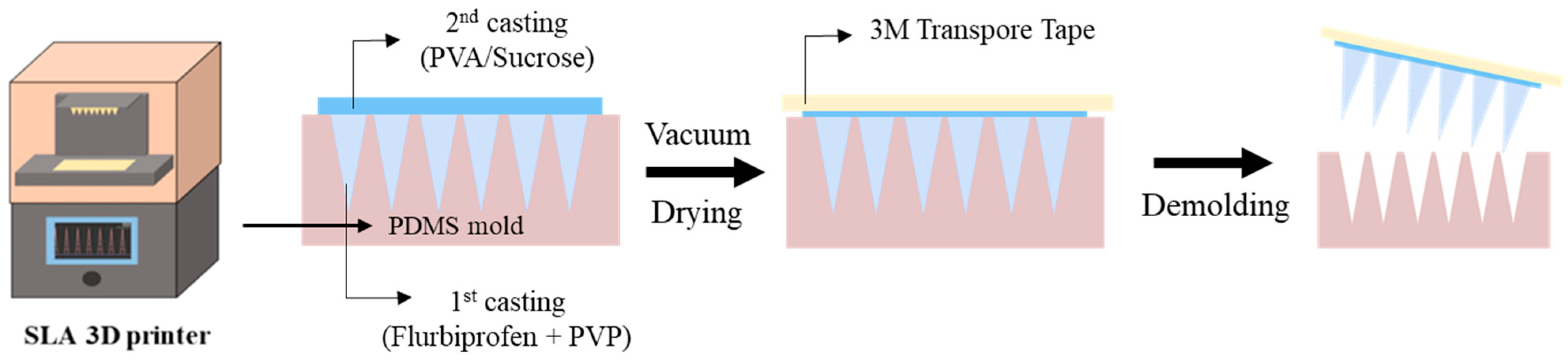
2.2. Design and Fabrication of MNs Using 3D Printing
2.3. Fabrication of DMNs
2.4. Morphology and Characteristics of MNs
2.4.1. Morphological Characterization
2.4.2. Mechanical Characterization and Insertion Performance
2.5. Ex Vivo Skin Penetration Studies
2.6. Skin Permeation Studies
2.7. Solubility Test
3. Results and Discussion
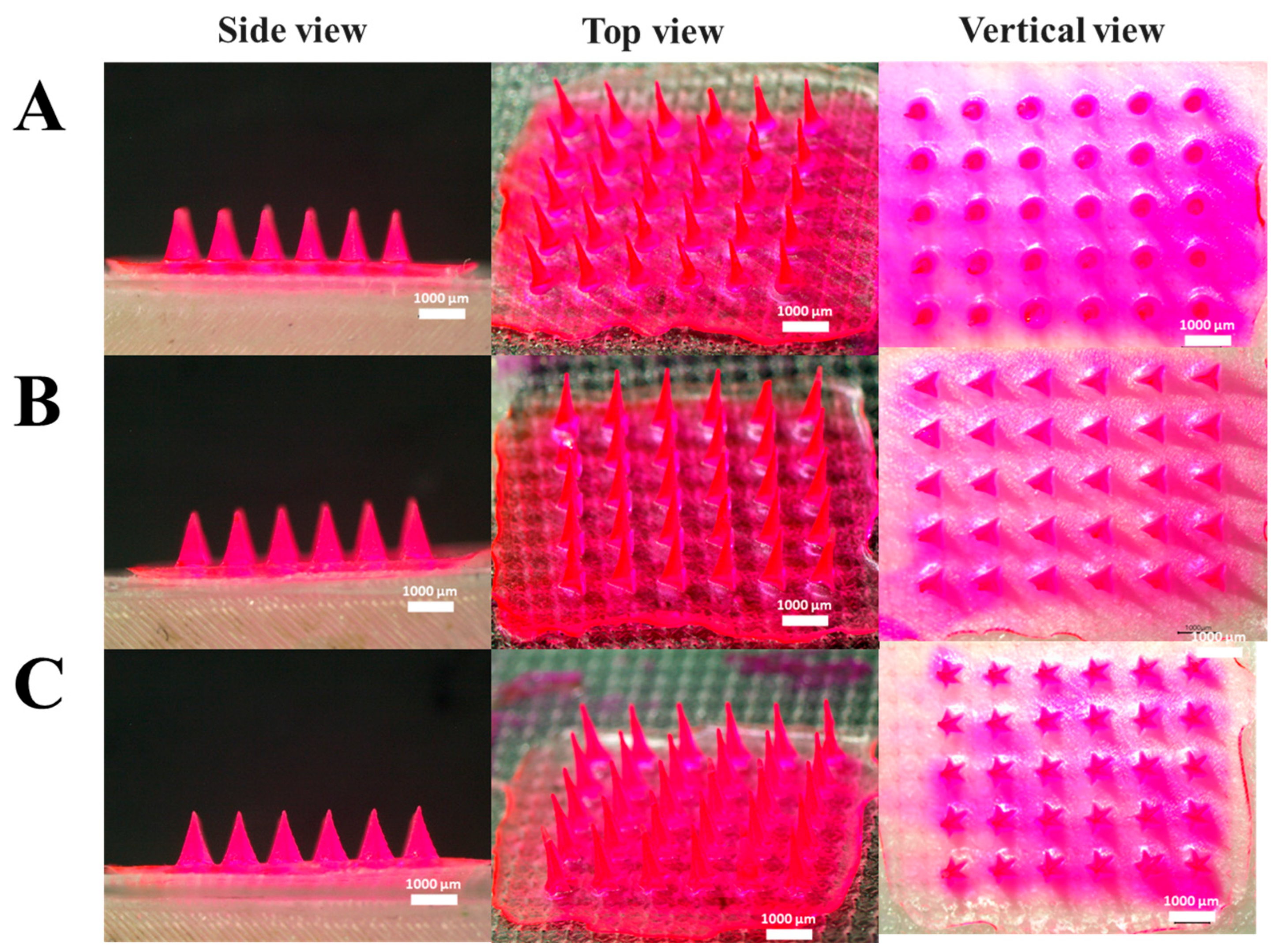
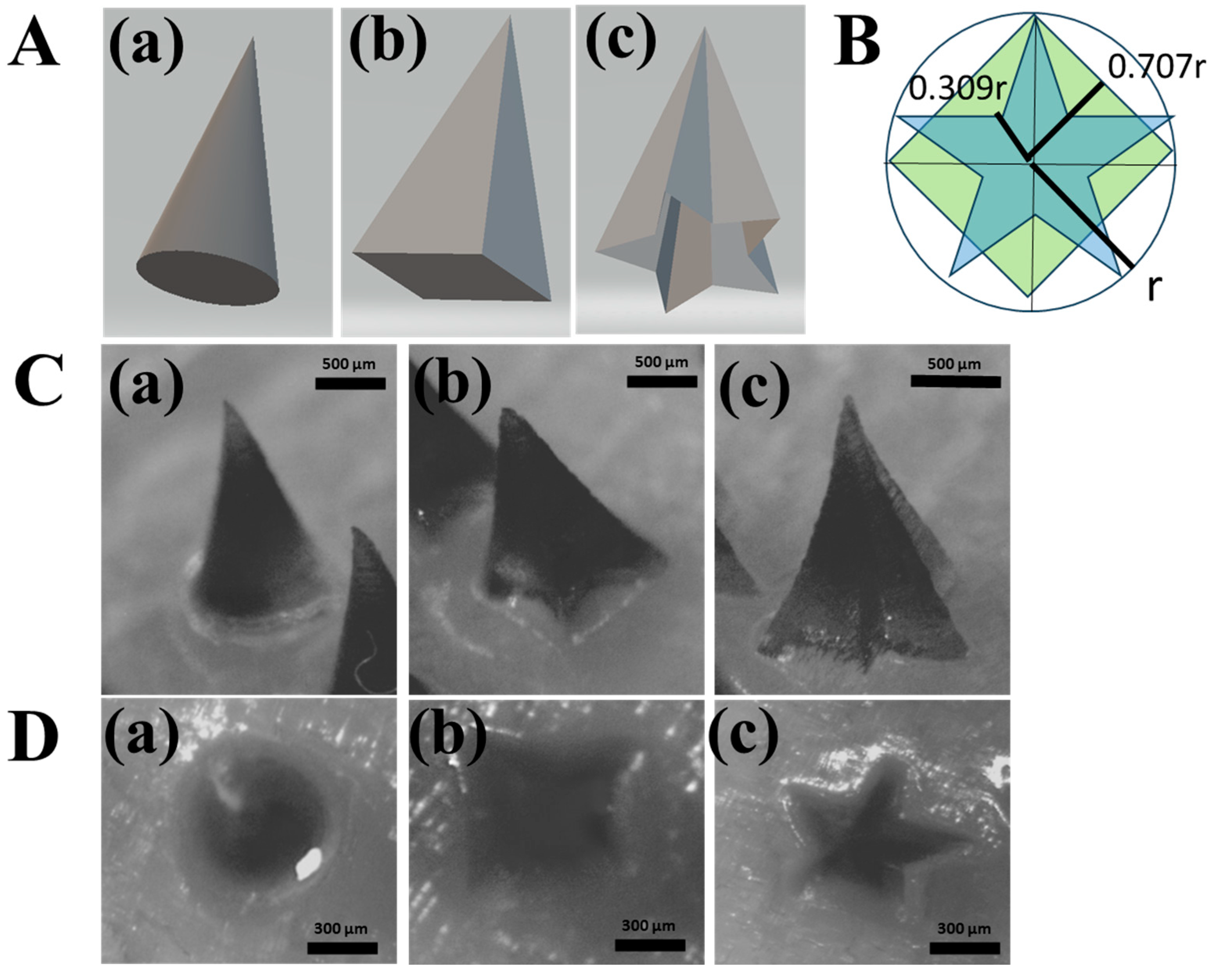
3.1. 3D Printing Conditions and MN Design Optimization
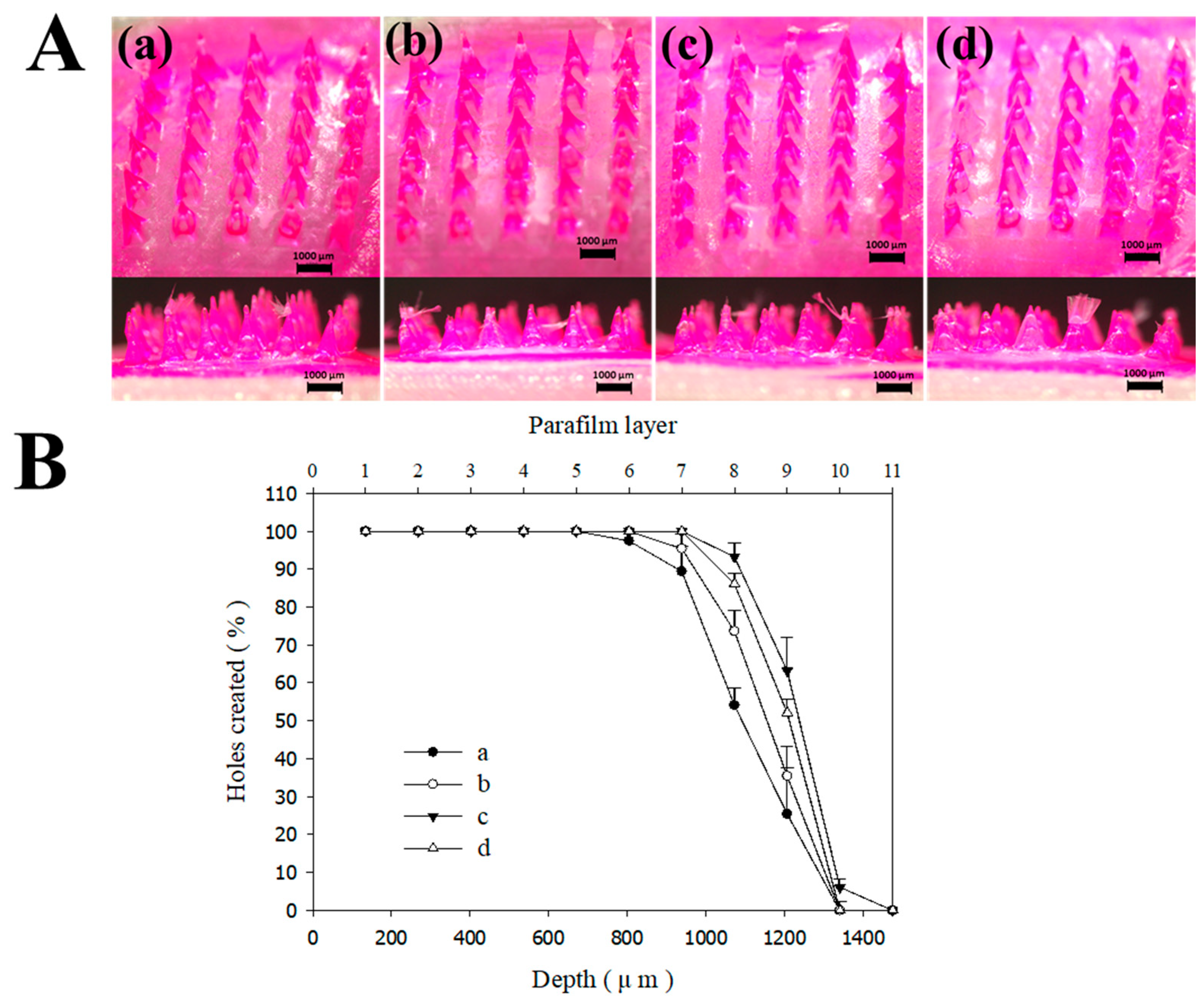
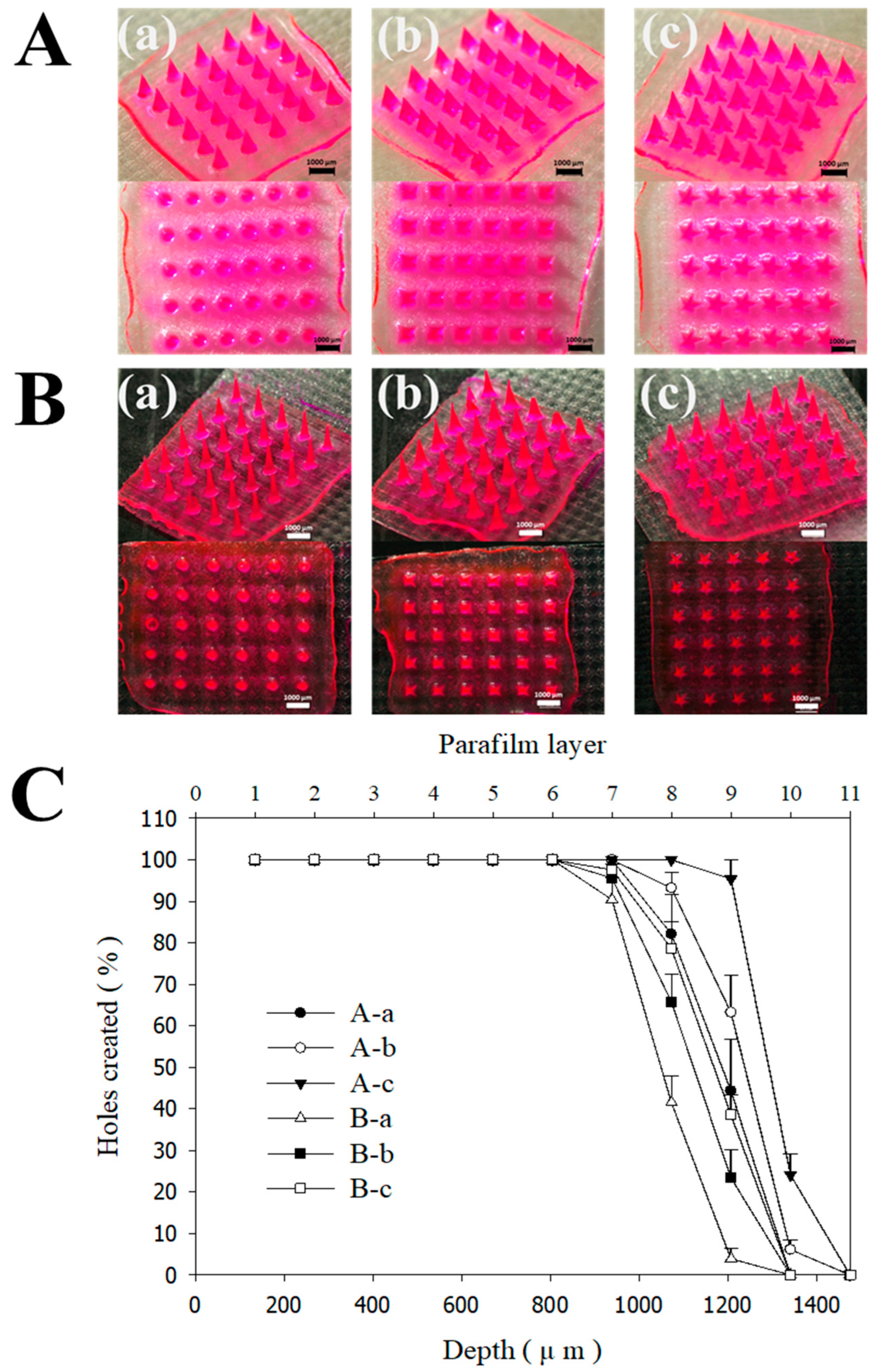
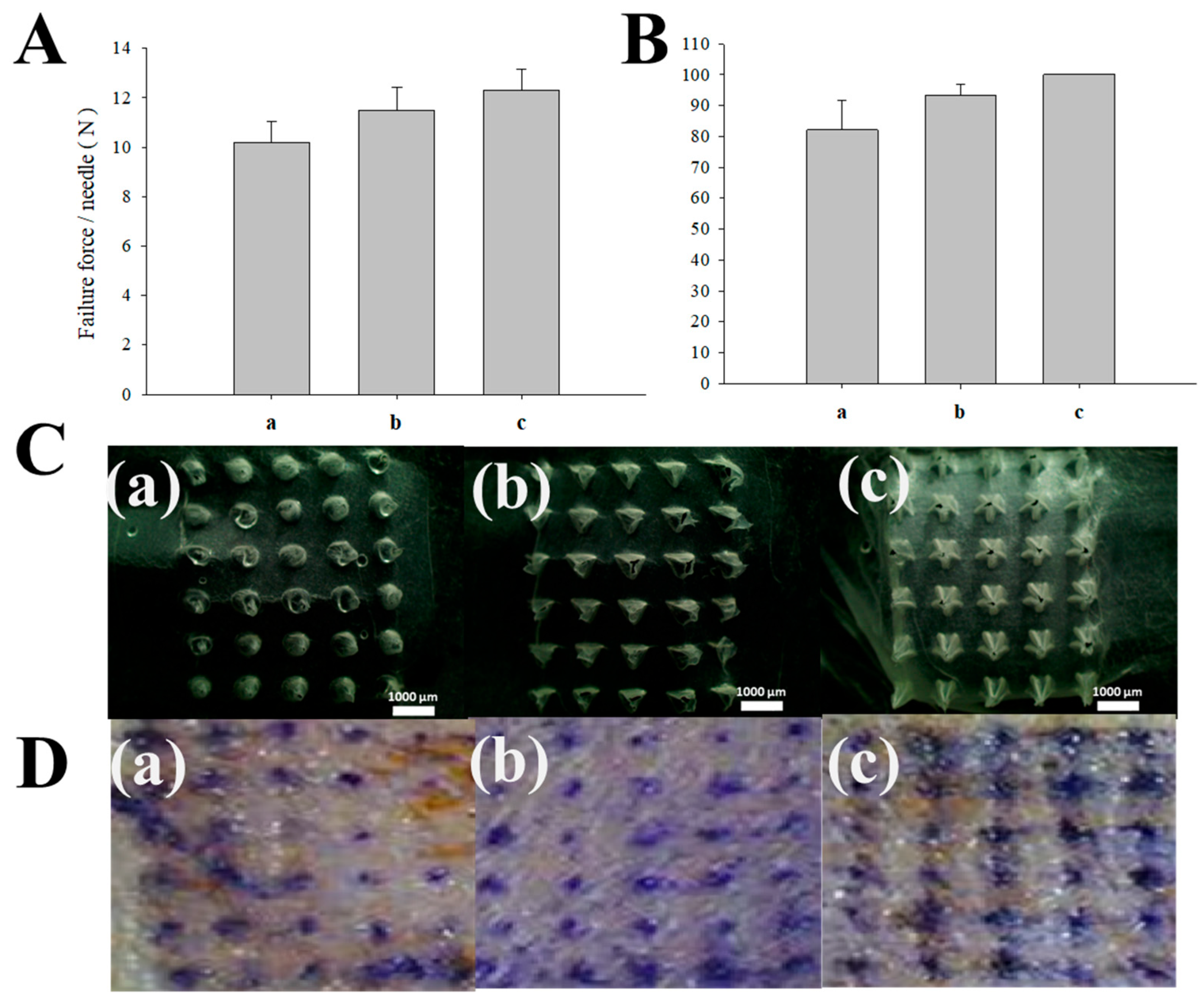
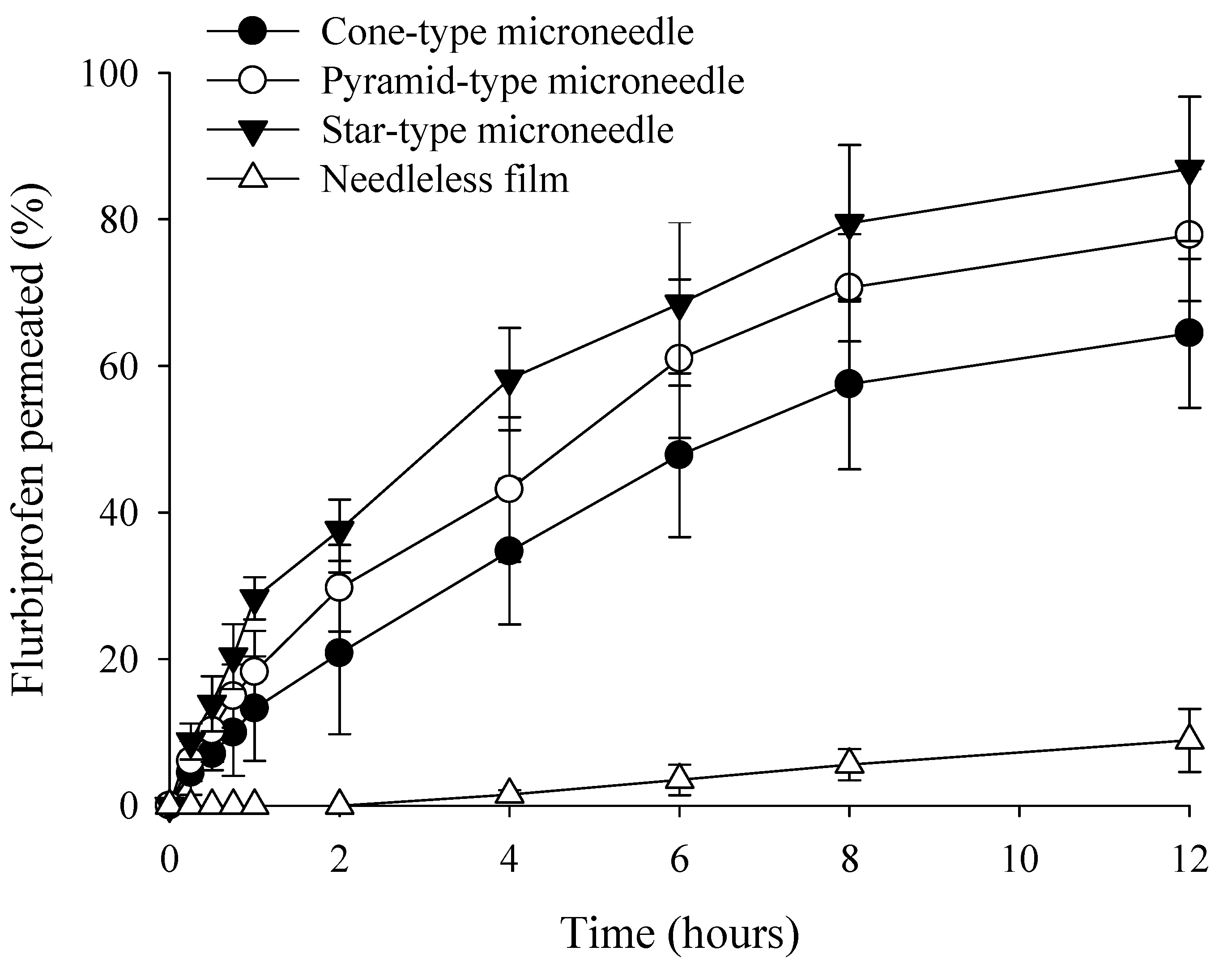
3.2. Mechanical Hardness and Skin Permeability According to MN Design
4. Conclusions
Supplementary Materials
Funding
Institutional Review Board Statement
Informed Consent Statement
Data Availability Statement
Conflicts of Interest
References
- Yu, H.; Kim, J.S.; Kim, D.W.; Park, E.S.; Youn, Y.S.; Ud Din, F.; Kim, J.O.; Ku, S.K.; Jin, S.G.; Choi, H.G. Novel composite double-layered dressing with improved mechanical properties and wound recovery for thermosensitive drug, Lactobacillus brevis. Compos. Part B Eng. 2021, 225, 109276. [Google Scholar] [CrossRef]
- Sivadasan, D.; Madkhali, O.A. The design features, quality by design approach, characterization, therapeutic applications, and clinical considerations of transdermal drug delivery systems—A comprehensive review. Pharmaceuticals 2024, 17, 1346. [Google Scholar] [CrossRef]
- Han, A.S.; Kim, J.; Park, J.W.; Jin, S.G. Novel acyclovir-loaded film-forming gel with enhanced mechanical properties and skin permeability. J. Drug Deliv. Sci. Technol. 2022, 70, 103213. [Google Scholar] [CrossRef]
- Cho, Y.S.; Yoon, H.; Jin, S.G. Novel Saccharomyces cerevisiae-Loaded Polyvinylpyrrolidone/SiO2 Nanofiber for Wound Dressing Prepared Using Electrospinning Method. Materials 2024, 17, 2903. [Google Scholar] [CrossRef]
- Jung, J.H.; Jin, S.G. Microneedle for transdermal drug delivery: Current trends and fabrication. J. Pharm. Investig. 2021, 51, 503–517. [Google Scholar] [CrossRef]
- Liu, L.C.; Chen, Y.H.; Lu, D.W. Overview of recent advances in nano-based ocular drug delivery. Int. J. Mol. Sci. 2023, 24, 15352. [Google Scholar] [CrossRef]
- Wu, C.; Zong, Z.; Hua, F.; Wu, J.; Shen, Y.; Tian, Y.; Chen, Y. Advances in Microneedle Drug Delivery for Obesity: Mechanisms, Applications, and Perspectives. Int. J. Nanomed. 2025, 20, 15213–15234. [Google Scholar] [CrossRef]
- Albadr, A.A.; Tekko, I.A.; Vora, L.K.; Ali, A.A.; Laverty, G.; Donnelly, R.F.; Thakur, R.R.S. Rapidly dissolving microneedle patch of amphotericin B for intracorneal fungal infections. Drug Deliv. Transl. Res. 2022, 12, 931–943. [Google Scholar]
- Li, Y.; Bi, D.; Hu, Z.; Yang, Y.; Liu, Y.; Leung, W.K. Hydrogel-forming microneedles with applications in oral diseases management. Materials 2023, 16, 4805. [Google Scholar] [CrossRef]
- Chakraborty, R.; Afrose, N.; Kuotsu, K. Novel synergistic approaches of protein delivery through physical enhancement for transdermal microneedle drug delivery: A review. J. Drug Deliv. Sci. Technol. 2023, 84, 104467. [Google Scholar] [CrossRef]
- Bhadale, R.S.; Londhe, V.Y. Solid microneedle assisted transepidermal delivery of iloperidone loaded film: Characterization and Skin deposition studies. J. Drug Deliv. Sci. Technol. 2023, 79, 104028. [Google Scholar] [CrossRef]
- Halder, J.; Rath, G.; Rai, V.K. Cyclosporine coated microneedle for transcutaneous delivery: Characterization, in vitro evaluation, and in vivo anti-psoriatic efficacy against IMQ-induced psoriasis. J. Drug Deliv. Sci. Technol. 2022, 73, 103450. [Google Scholar] [CrossRef]
- Woo, M.R.; Kim, J.S.; Cheon, S.; Ji, S.H.; Park, S.; Woo, S.; Kim, J.O.; Jin, S.G.; Choi, H.G. Microneedles integrated with crystallinity control for poorly water-soluble drugs: Enhanced bioavailability and innovative controlled release system. Mater. Des. 2024, 247, 113371. [Google Scholar] [CrossRef]
- Jia, T.; Geng, Y.; Shao, H.; Tan, G.; Kundu, S.C.; Lu, S. Silk fibroin hollow microneedle system for sustained transdermal administration of liraglutide: Development and characterization. Int. J. Biol. Macromol. 2025, 332, 146884. [Google Scholar] [CrossRef]
- Chen, Y.; Xu, Y.; Zhang, J.; Xu, X. Cyclodextrin-Based Supramolecular Dissolving Microneedles for Enhanced Transdermal Delivery of Azelaic Acid in Acne Vulgaris Treatment. J. Drug Deliv. Sci. Technol. 2025, 111, 107108. [Google Scholar] [CrossRef]
- Alam, A.; Ali, M.; Rehman, N.U.; Ullah, S.; Halim, S.A.; Latif, A.; Zainab; Khan, A.; Ulah, O.; Ahmad, S.; et al. Bio-oriented synthesis of novel (S)-flurbiprofen clubbed hydrazone schiff’s bases for diabetic management: In vitro and in silico studies. Pharmaceuticals 2022, 15, 672. [Google Scholar] [CrossRef] [PubMed]
- Syed, M.I.; Kandagatla, H.P.; Avdeef, A.; Serajuddin, A.T. Supersolubilization and amorphization of a weakly acidic drug, flurbiprofen, by applying acid-base supersolubilization (ABS) Principle. Int. J. Pharm. 2024, 663, 124548. [Google Scholar] [CrossRef] [PubMed]
- Baek, K.; Woo, M.R.; Kim, Y.; Din, F.U.; Choi, Y.S.; Kang, M.J.; Kim, J.O.; Choi, H.G.; Jin, S.G. Emulsion engineering approaches for niclosamide repositioning: A comparative study of shirasu porous glass membrane and high-pressure homogenization techniques. Colloids Surf. A Physicochem. Engi. Asp. 2026, 734, 139441. [Google Scholar] [CrossRef]
- Jang, H.; Kim, N.; Jin, S.G. Development of a Carvedilol-Loaded Solid Self-Nanoemulsifying System with Increased Solubility and Bioavailability Using Mesoporous Silica Nanoparticles. Int. J. Mol. Sci. 2025, 26, 1592. [Google Scholar] [CrossRef]
- Baek, K.; Woo, M.R.; Choi, Y.S.; Kang, M.J.; Kim, J.O.; Choi, H.G.; Jin, S.G. Engineering sodium alginate microparticles with different crystallinities for niclosamide repositioning and solubilization to improve solubility and oral bioavailability in rats. Int. J. Biol. Macromol. 2024, 283, 137471. [Google Scholar] [CrossRef]
- Baek, K.; Woo, M.R.; Din, F.U.; Choi, Y.S.; Kang, M.J.; Kim, J.O.; Choi, H.G.; Jin, S.G. Comparison of Solid Self-Nanoemulsifying Systems and Surface-Coated Microspheres: Improving Oral Bioavailability of Niclosamide. Int. J. Nanomed. 2024, 19, 13857–13874. [Google Scholar] [CrossRef]
- Chircov, C.; Grumezescu, A.M. Microelectromechanical systems (MEMS) for biomedical applications. Micromachines 2022, 13, 164. [Google Scholar] [CrossRef]
- Fitaihi, R.; Abukhamees, S.; Chung, S.H.; Craig, D.Q. Optimization of stereolithography 3D printing of microneedle micro-molds for ocular drug delivery. Int. J. Pharm. 2024, 658, 124195. [Google Scholar] [CrossRef]
- Ab Rahman, A.C.; Matteini, P.; Kim, S.H.; Hwang, B.; Lim, S. Development of stretchable microneedle arrays via single-step digital light-processing printing for delivery of rhodamine B into skin tissue. Int. J. Biol. Macromol. 2024, 262, 129987. [Google Scholar] [CrossRef]
- Zhao, Y.; Wu, S.; Cai, Y.; Yang, H.; Dong, X.; Yang, B.; Zhong, J. Integration of finite element simulations with 3D printing technology for personalized Chitin/PLA microneedle-based drug delivery systems in thoracic keloid treatment. Int. J. Biol. Macromol. 2025, 315, 144487. [Google Scholar] [CrossRef]
- Choo, S.; Jin, S.G.; Jung, J. Fabricating high-resolution and high-dimensional microneedle mold through the resolution improvement of stereolithography 3D printing. Pharmaceutics 2022, 14, 766. [Google Scholar] [CrossRef] [PubMed]
- Turner, J.G.; Lay, E.; Jungwirth, U.; Varenko, V.; Gill, H.S.; Estrela, P.; Leese, H.S. 3D-Printed hollow microneedle-lateral flow devices for rapid blood-free detection of C-reactive protein and procalcitonin. Adv. Mater. Technol. 2023, 8, 2300259. [Google Scholar] [CrossRef]
- Azizoglu, E.; Ozer, O.; Prausnitz, M.R. Fabrication of pure-drug microneedles for delivery of montelukast sodium. Drug Deliv. Transl. Res. 2022, 12, 444–458. [Google Scholar] [CrossRef] [PubMed]
- Yang, Q.; Zhong, W.; Liu, Y.; Hou, R.; Wu, Y.; Yan, Q.; Yang, G. 3D-printed morphology-customized microneedles: Understanding the correlation between their morphologies and the received qualities. Int. J. Pharm. 2023, 638, 122873. [Google Scholar] [CrossRef]
- Lee, J.Y.; Dong, S.H.; Ng, K.W.; Goh, C.F. Assessing the integrity and mechanical properties of commercial microneedles: Innovation or fad? Drug Deliv. Transl. Res. 2025, 15, 3986–4003. [Google Scholar] [CrossRef]
- Gowda, B.H.; Yalcin, T.E.; Pandya, A.K.; Gade, S.; Ahmed, M.G.; Thakur, R.R.S.; Donnelly, R.F.; Vora, L.K. Dacarbazine-loaded Bilayer Dissolving Microneedle Array Patch for Localized Delivery in Cutaneous Melanoma. AAPS J. 2026, 28, 7. [Google Scholar] [CrossRef]
- Bisgaard, S.I.; Nguyen, L.Q.; Bøgh, K.L.; Keller, S.S. Dermal tissue penetration of in-plane silicon microneedles evaluated in skin-simulating hydrogel, rat skin and porcine skin. Biomater. Adv. 2023, 155, 213659. [Google Scholar] [CrossRef]
- Babapour, F.; Ganji, F.; Rad, Z.F. Chitosan-based dual-release core–shell microneedle patches for sequential transdermal delivery of hydrophilic and hydrophobic drugs: An in vitro approach. Int. J. Biol. Macromol. 2025, 327, 147229. [Google Scholar] [CrossRef]
- Saepang, K.; Buranrat, B.; Pitaksuteepong, T.; Boontha, S. Effect of polyvinyl alcohol concentrations on the characteristics and in vitro skin permeation of rhein-loaded dissolving microneedle patches. J. Drug Deliv. Sci. Technol. 2025, 108, 106955. [Google Scholar] [CrossRef]
- Sultana, N.; Ali, A.; Waheed, A.; Jabi, B.; Mujeeb, M.; Sultana, Y.; Aqil, M. Dissolving microneedle transdermal patch loaded with Risedronate sodium and Ursolic acid bipartite nanotransfersomes to combat osteoporosis: Optimization, characterization, in vitro and ex vivo assessment. Int. J. Pharm. 2023, 644, 123335. [Google Scholar] [CrossRef] [PubMed]
- Kawadkar, J.; Chauhan, M.K. Intra-articular delivery of genipin cross-linked chitosan microspheres of flurbiprofen: Preparation, characterization, in vitro and in vivo studies. Eur. J. Pharm. Biopharm. 2012, 81, 563–572. [Google Scholar] [CrossRef] [PubMed]
- Olowe, M.; Parupelli, S.K.; Desai, S. A review of 3D-printing of microneedles. Pharmaceutics 2022, 14, 2693. [Google Scholar] [CrossRef]
- Al-Nimry, S.S.; Daghmash, R.M. Three dimensional printing and its applications focusing on microneedles for drug delivery. Pharmaceutics 2023, 15, 1597. [Google Scholar] [CrossRef] [PubMed]
- Detamornrat, U.; McAlister, E.; Hutton, A.R.; Larrañeta, E.; Donnelly, R.F. The role of 3D printing technology in microengineering of microneedles. Small 2022, 18, 2106392. [Google Scholar] [CrossRef]
- Jia, B.; Xia, T.; Xu, Y.; Li, B. Morphology Design and Precision Control of Microneedles by PμSL 3D Printing. Polymers 2025, 17, 1351. [Google Scholar] [CrossRef]
- Choi, M.J.; Woo, M.R.; Baek, K.; Kim, J.S.; Kim, J.O.; Choi, Y.S.; Choi, H.G.; Jin, S.G. Novel rivaroxaban-loaded microsphere systems with different surface microstructure for enhanced oral bioavailability. Drug Deliv. Transl. Res. 2024, 14, 655–664. [Google Scholar] [CrossRef]
- Rusdin, A.; Mohd Gazzali, A.; Ain Thomas, N.; Megantara, S.; Aulifa, D.L.; Budiman, A.; Muchtaridi, M. Advancing drug delivery paradigms: Polyvinyl pyrolidone (PVP)-based amorphous solid dispersion for enhanced physicochemical properties and therapeutic efficacy. Polymers 2024, 16, 286. [Google Scholar] [CrossRef] [PubMed]
- Deng, H.; Su, J.; Zhang, W.; Khan, A.; Sani, M.A.; Goksen, G.; Kashyap, P.; Ezati, P.; Rhim, J.W. A review of starch/polyvinyl alcohol (PVA) blend film: A potential replacement for traditional plastic-based food packaging film. Int. J. Biol. Macromol. 2024, 273, 132926. [Google Scholar] [CrossRef]
- Kim, J.S.; Kim, B.J.; Lee, S.M.; Choi, I.S.; Park, J.H.; Choi, H.G.; Jin, S.G. Single-cell nanoencapsulation enables fabrication of probiotics-loaded hydrogel dressing with improved wound healing efficacy in vivo. J. Pharm. Investig. 2025, 55, 321–331. [Google Scholar] [CrossRef]
- Leanpolchareanchai, J.; Nuchtavorn, N. Response surface methodology for optimization of hydrogel-forming microneedles as rapid and efficient transdermal microsampling tools. Gels 2023, 9, 306. [Google Scholar] [CrossRef]
- De Martino, S.; Battisti, M.; Napolitano, F.; Palladino, A.; Serpico, L.; Amendola, E.; Martone, A.; De Girolamo, P.; Squillace, A.; Dardano, P.; et al. Effect of microneedles shape on skin penetration and transdermal drug administration. Biomater. Adv. 2022, 142, 213169. [Google Scholar] [CrossRef]
- Jeong, J.; Park, J.; Lee, S. 3D printing fabrication process for fine control of microneedle shape. Micro Nano Syst. Lett. 2023, 11, 1. [Google Scholar] [CrossRef]
- Wang, W.; Liang, Y.; Yan, X.; Tang, G.; Li, Y.; Li, Z. Research on conductive polymer microneedles with adjustable dissolution rate. AIP Adv. 2025, 15, 025112. [Google Scholar] [CrossRef]
- Aldawood, F.K.; Parupelli, S.K.; Andar, A.; Desai, S. 3D printing of biodegradable polymeric microneedles for transdermal drug delivery applications. Pharmaceutics 2024, 16, 237. [Google Scholar] [CrossRef]
- Razzaghi, M. Polymeric 3D-printed microneedle arrays for non-transdermal drug delivery and diagnostics. Polymers 2025, 17, 1982. [Google Scholar] [CrossRef] [PubMed]
- Engelmayr, G.C., Jr.; Papworth, G.D.; Watkins, S.C.; Mayer, J.E., Jr.; Sacks, M.S. Guidance of engineered tissue collagen orientation by large-scale scaffold microstructures. J. Biomech. 2006, 39, 1819–1831. [Google Scholar] [CrossRef] [PubMed]
- Visscher, M.; Frijlink, H.W.; Hinrichs, W.L. What is the optimal geometry of dissolving microneedle arrays? A literature review. Pharmaceutics 2025, 17, 124. [Google Scholar] [CrossRef] [PubMed]
- Lori Zoudani, E.; Nguyen, N.T.; Kashaninejad, N. Microneedle optimization: Toward enhancing microneedle’s functionality and breaking the traditions. Small Struct. 2024, 5, 2400121. [Google Scholar] [CrossRef]
- Alrimawi, B.H.; Lee, J.Y.; Ng, K.W.; Goh, C.F. In vitro evaluation of microneedle strength: A comparison of test configurations and experimental insights. RSC Pharm. 2024, 1, 227–233. [Google Scholar] [CrossRef]
- Babapour, F.; Faraji Rad, Z.; Ganji, F. Mechanics of dissolving microneedles insertion into the skin: Finite element and experimental analyses. J. Appl. Polym. Sci. 2024, 141, e55973. [Google Scholar] [CrossRef]
- Tsuboko, Y.; Sakoda, H.; Okamoto, Y.; Nomura, Y.; Yamamoto, E. Mechanical Characterization of Individual Needles in Microneedle Arrays: Factors Affecting Compression Test Results. Pharmaceutics 2024, 16, 1480. [Google Scholar] [CrossRef]
- Zhang, X.; Gu, Q.; Sui, X.; Zhang, J.; Liu, J.; Zhou, R. Design and optimization of hollow microneedle spacing for three materials using finite element methods. Sci. Rep. 2025, 15, 652. [Google Scholar] [CrossRef]
- Ebrahiminejad, V.; Prewett, P.D.; Davies, G.J.; Faraji Rad, Z. Microneedle arrays for drug delivery and diagnostics: Toward an optimized design, reliable insertion, and penetration. Adv. Mater. Interfaces 2022, 9, 2101856. [Google Scholar] [CrossRef]
- Chu, H.; Zhang, Y.; Yang, Y.; Xue, J.; Li, C.; Zhang, W.; Li, Z.; Zheng, H. Flurbiprofen microneedle patches for the management of acute postoperative pain. Nano Res. 2024, 17, 7493–7503. [Google Scholar] [CrossRef]
- Mahmood, H.S.; Ghareeb, M.M.; Hamzah, Z.O.; Kadhim, Z.M. Formulation and characterization of Flurbiprofen nanoparticles loaded microneedles. Kerbala J. Pharm. Sci. 2021, 1, 90–107. [Google Scholar]
- Yan, Q.; Shen, S.; Wang, Y.; Weng, J.; Wan, A.; Yang, G.; Feng, L. The finite element analysis research on microneedle design strategy and transdermal drug delivery system. Pharmaceutics 2022, 14, 1625. [Google Scholar] [CrossRef] [PubMed]
- Peng, W.; Goh, M.; Lan, J.; Du, M.; Chen, Z. Advancements in Dissolving Microneedles for Effective Transdermal Delivery in Rheumatoid Arthritis Treatment. Adv. Mater. Interfaces 2025, 12, e00429. [Google Scholar] [CrossRef]



| Shape | Cone-Type | Pyramid-Type | Star-Type | |
|---|---|---|---|---|
| Base | The minimum distance from the center | r | 0.707r | 0.309r |
| Opening Area | πr2 | 2r2 | 0.93r2 | |
| Area ratio | 1 | 0.636 | 0.297 | |
| Vertex number | 0 | 4 | 10 | |
| Vertex angle | - | 90º | 36º | |
| Base diameter (µm) | 600 | 600 | 600 | |
| Tip | Vertex number | 1 | 1 | 1 |
| Tip diameter (µm) | 90 | 90 | 90 | |
| Total | Height (µm) | 1150 | 1150 | 1150 |
| Steady-State Permeation Flux (Jss) (µg/cm2/h) | Lag Time (h) | Permeation Coefficient (10−5 cm2/h) | Drug Retention (%) | Fickian Fit | |
|---|---|---|---|---|---|
| Cone-type | 6.76 | <0.1 | N/A * | 34.5 ± 7.5 | Non-fickian |
| Pyramid-type | 7.83 | <0.1 | N/A * | 24.7 ± 7.5 | Non-fickian |
| Star-type | 7.99 | <0.1 | N/A * | 15.2 ± 6.6 | Non-fickian |
| Needless film | 0.92 | 2.23 | 9.16 | 89.3 ± 3.5 | Fickian |
Disclaimer/Publisher’s Note: The statements, opinions and data contained in all publications are solely those of the individual author(s) and contributor(s) and not of MDPI and/or the editor(s). MDPI and/or the editor(s) disclaim responsibility for any injury to people or property resulting from any ideas, methods, instructions or products referred to in the content. |
© 2026 by the author. Licensee MDPI, Basel, Switzerland. This article is an open access article distributed under the terms and conditions of the Creative Commons Attribution (CC BY) license.
Share and Cite
Jin, S.G. A Dissolving Microneedle Design for Poorly Water-Soluble Drugs for Enhanced Skin Permeation and Transdermal Delivery Fabricated Using 3D Printing. Micromachines 2026, 17, 324. https://doi.org/10.3390/mi17030324
Jin SG. A Dissolving Microneedle Design for Poorly Water-Soluble Drugs for Enhanced Skin Permeation and Transdermal Delivery Fabricated Using 3D Printing. Micromachines. 2026; 17(3):324. https://doi.org/10.3390/mi17030324
Chicago/Turabian StyleJin, Sung Giu. 2026. "A Dissolving Microneedle Design for Poorly Water-Soluble Drugs for Enhanced Skin Permeation and Transdermal Delivery Fabricated Using 3D Printing" Micromachines 17, no. 3: 324. https://doi.org/10.3390/mi17030324
APA StyleJin, S. G. (2026). A Dissolving Microneedle Design for Poorly Water-Soluble Drugs for Enhanced Skin Permeation and Transdermal Delivery Fabricated Using 3D Printing. Micromachines, 17(3), 324. https://doi.org/10.3390/mi17030324