1. Introduction
Biomedical MEMSs (microelectromechanical systems) represent one of the current hot research areas. Many miniaturized medical devices have been widely manufactured using this technology over the decades [
1,
2,
3]. Conventional needles, traditionally used for blood collection and insulin injections, can damage the skin and cause a variety of chronic diseases. To overcome these problems, microneedles have become an important tool for connecting the organic matter underneath the human skin to external systems [
4,
5,
6]. The outermost layer of the skin structure is the epidermis, which is approximately 100–150 μm in height. To extract blood from the skin, the tip of the microneedle needs to reach the capillaries in the dermis, which is located below the epidermis [
7]. In the dermis, capillary density decreases closer to the epidermis. Consequently, microneedles with a height of approximately 250–500 μm are used, and the tips of the microneedles are sharp enough to be widely used as painless needles. Microneedles are mostly made of silicon, plastics, metals, and polymers, and they have various preparation methods, such as traditional silicon-based fabrication methods (wet etching and reactive ion etching) and micromolding using X-ray lithography methods [
8,
9,
10]. The early silicon micromachining processes used for manufacturing MEMS devices possess inherent limitations, most notably a constrained selection of suitable processing materials. In contrast, the LIGA technique enables the processing of a diverse range of non-silicon materials, such as metals, ceramics, and polymers. Utilizing deep X-ray lithography (DXRL), the LIGA process can fabricate high-aspect-ratio microstructures, with heights reaching up to 1 mm and lateral dimensions as small as a few micrometers. In this study, high-aspect-ratio structures were first fabricated using synchrotron radiation-based X-ray lithography with a PMMA (poly(methyl methacrylate)) resist [
11]. Subsequently, microneedle arrays were created via the planar pattern-to-cross-section transfer (PCT) technique [
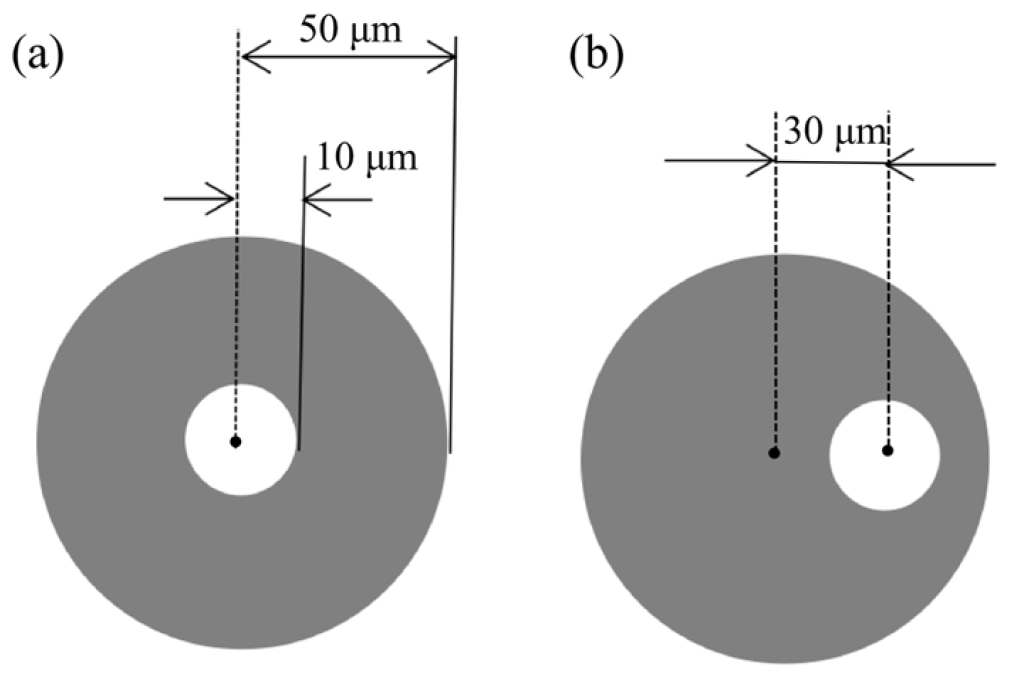
12]. Finally, hollow microneedles were produced using a hole photomask with an outer diameter of 100 μm and an inner diameter of 20 μm, employing different alignment strategies.
Currently, transdermal drug delivery primarily relies on four principal methods: gels, patches, iontophoresis, and microneedle technology. Microneedle technology, in particular, has emerged as a recent advancement for the delivery of certain compounds and is anticipated to be applicable to a broader range of agents in the near future. Solid microneedles, for instance, are used in acupuncture or integrated into DNA array chips. They facilitate drug delivery via coated surfaces and enable the detection of various physiological indicators by piercing the epidermis [
13,
14,
15]. However, the delivered dose from solid microneedles is difficult to control precisely, as it depends on the number of cells in contact with the coated needle surface. In contrast, hollow microneedles, which can be connected to a reservoir via a through-hole, allow for precise control of drug dosage in delivery systems and are also suitable for blood sampling. Furthermore, they show potential in the development of implantable devices such as blood pressure sensors, microscopic bodily fluid analyzers, and surgical microscopy tools [
16,
17,
18].
For the manufacturing of high-aspect-ratio microstructures, deep X-ray lithography (DXRL) has long been considered the gold standard. The pioneering work of Moon and Lee systematically detailed the principles and remarkable capabilities of DXRL, demonstrating its potential in fabricating structures with exceptionally high aspect ratios [
19]. Nevertheless, its heavy dependence on synchrotron radiation sources has greatly restricted its widespread adoption and operational flexibility. To overcome this constraint, subsequent research has investigated various alternative methods. For instance, Khumpuang et al. developed an enhanced moving-mask lithography technique capable of achieving comparable structures under certain conditions, although the process involved multiple complex steps [
20]. In another approach, Li et al. fabricated hollow polymer microneedle arrays from PMMA using a mask-dragging technique combined with X-ray lithography alignment, thereby underscoring the utility of this method for microneedle array production [
21].
Beyond the inherent challenges in manufacturing, there is a growing and urgent application-driven need for high-performance hollow microstructures. This is especially evident in minimally invasive biomedical fields, such as the transdermal delivery of macromolecular drugs like insulin, where pump-free hollow microneedle patches have arisen as a highly promising platform [
22]. In such systems, the lumen geometry of the microneedle critically influences drug-flow behavior and delivery efficiency, while the overall mechanical strength determines whether the needle can reliably penetrate the stratum corneum and withstand operational stresses—factors that directly affect the device’s safety and reliability. Consequently, the development of a fabrication process that can produce microstructures with complex internal cavities while retaining superior mechanical properties represents not only an advancement in micro-/nanofabrication technology, but also a key enabler for the practical implementation of such advanced medical devices.
In summary, existing technologies still face challenges in achieving flexible manufacturing of complex three-dimensional metal microstructures through a relatively simple process. To overcome these limitations, this paper proposes a method that leverages the influence of photomask shape on the geometry of solid microneedle arrays. Diverging from our previous study [
10], the present work focuses on strengthening hollow microneedles via template-based shape modification and examines the effect of three distinct pore positions on microneedle strength. The core approach involves first fabricating solid microneedle arrays directly using the PCT technique, followed by producing hollow microneedle arrays via a hole mask alignment method, which allows precise definition of the pore position through photomask placement. By applying different pore alignment strategies, the exposure process of the photomask is iteratively optimized. Subsequently, the effectiveness of the shape modification method in enhancing microneedle strength and sharpness is evaluated. Finally, simulation combined with puncture experiments is conducted to verify that the fabricated hollow microneedle arrays satisfy the required strength criteria.
3. Results
3.1. Preparation Process of Hollow Microneedles
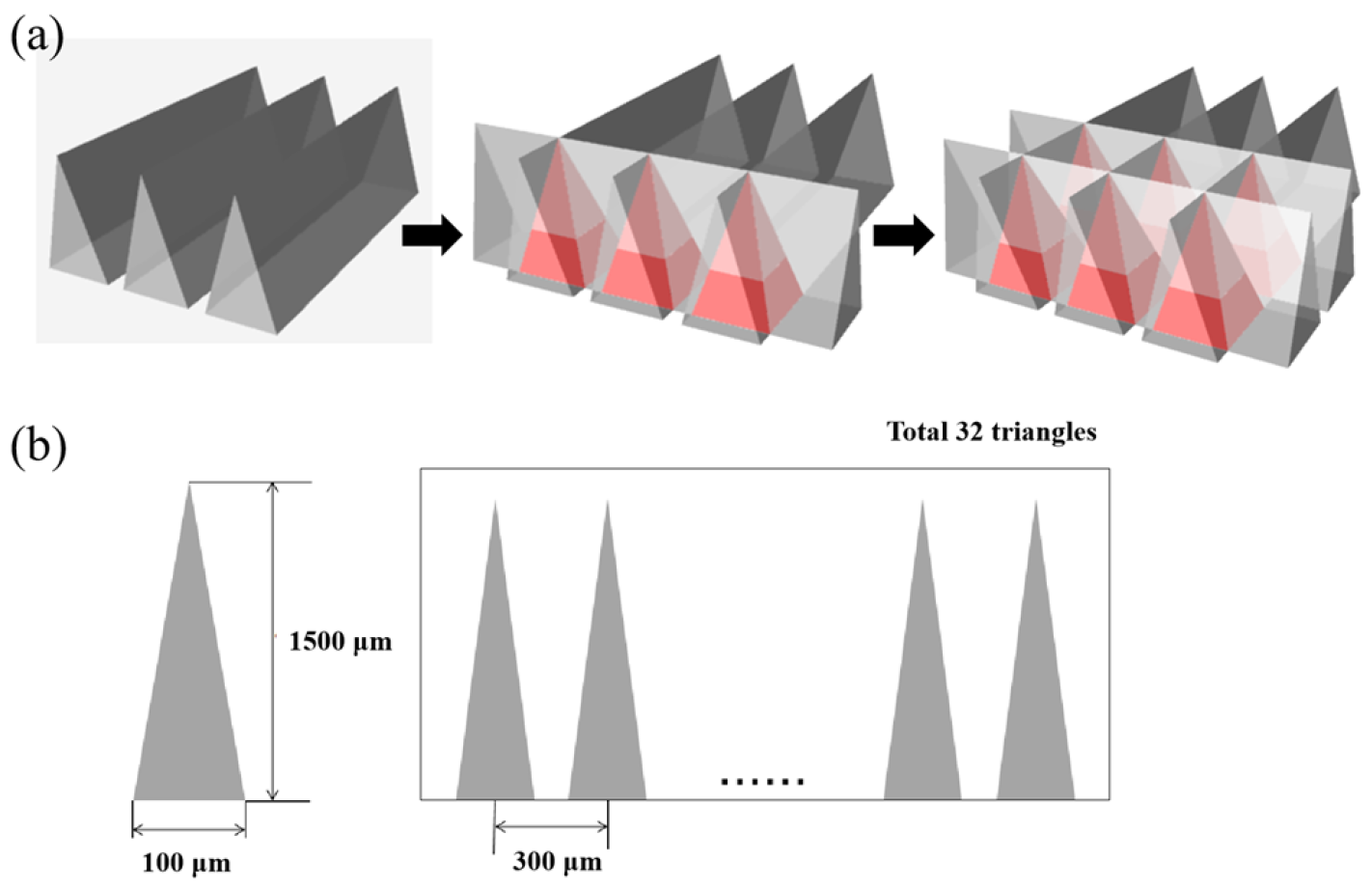
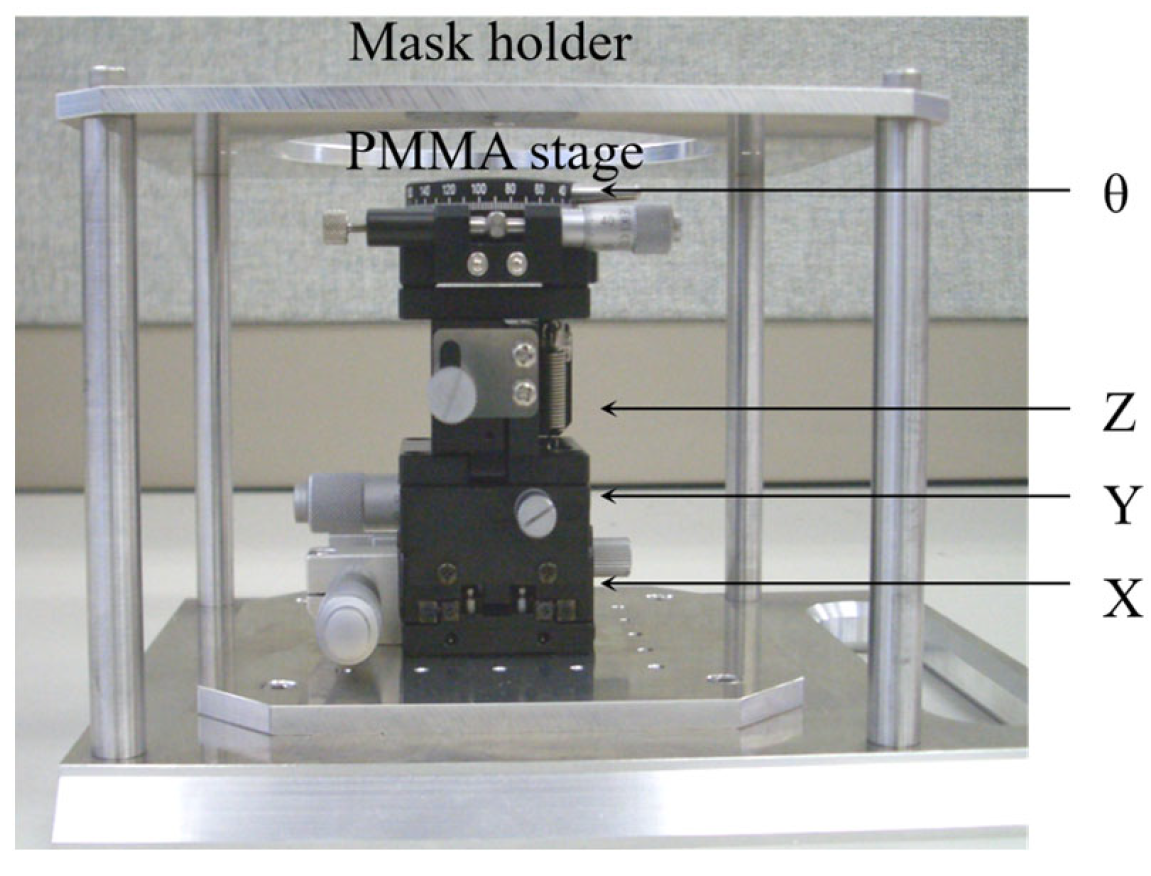
The conventional DXRL method enables the fabrication of microstructures with high aspect ratios, offering advantages over other microfabrication techniques. However, it remains challenging to arbitrarily control wall structures into curved or sloped profiles. To improve controllability over wall shape, we therefore introduced the PCT method. By combining DXRL with PCT, microneedles can be formed with shapes closely matching the intended design, despite minor deviations caused by the development characteristics of PMMA and the GG developer (composed of 60 vol% 2-(2-butoxyethoxy)ethanol, 20 vol% tetra-hydro-1,4-oxazine, 5 vol% 2-aminoethanol-1, and 15 vol% purified water). This study focused on optimizing the hole photomask alignment by first fabricating solid microneedle tips using PCT, followed by creating hollow microneedles via aligned exposure. During alignment, an inexpensive aluminum fixture equipped with a manual X-Y-Z stage—primarily used for PMMA positioning—served as an adjustable PMMA holder (see
Appendix A for details).
The total deposited dose (D, in ampere-hours) for microneedle structure exposure was determined using three parameters: the mask pattern height (H, in meters), the X-ray dose rate (d, in A·h/m), and the scan length of the resist stage (S, in meters). The relationship is given by Equation (1):
In this study, the microneedle mask pattern had a height of 1500 μm and a scan length of 9000 μm. To achieve a target process depth of approximately 300 μm, a dose of 0.06 A·h was required per unit depth. Consequently, the total deposited dose for each exposure was calculated to be 4.2 A·h. Because the PCT exposure for the microneedle was performed twice—at stage angles of 0° and 90°—the total dose for the double exposure amounted to 8.4 A·h, corresponding to an exposure time of approximately 5 h using synchrotron radiation (SR) from the AURORA (Ritsumeikan University, Japan) storage ring.
After exposure, the PMMA was developed in a GG developer for 3 h, followed by immersion in a stop solution for 10 min, and finally rinsed with purified water for 10 min. Throughout these steps, all chemicals were stirred at 300 rpm and maintained at 37 °C. The development temperature was set to 37 °C because the PMMA structure will subsequently serve as a master for nickel electroplating. The optimal temperature for a nickel-sulfamate bath is 37 °C, at a pH between 4 and 5 and under low current density. Temperatures significantly above or below this range induce higher internal stress in the PMMA master.
For the through-hole drilling process, an exposure dose of 0.1 A·h was applied. The exposed PMMA was then developed for 15 h, transferred to a stop solution for 10 min, and rinsed with deionized water for 5 min to complete the fabrication sequence.
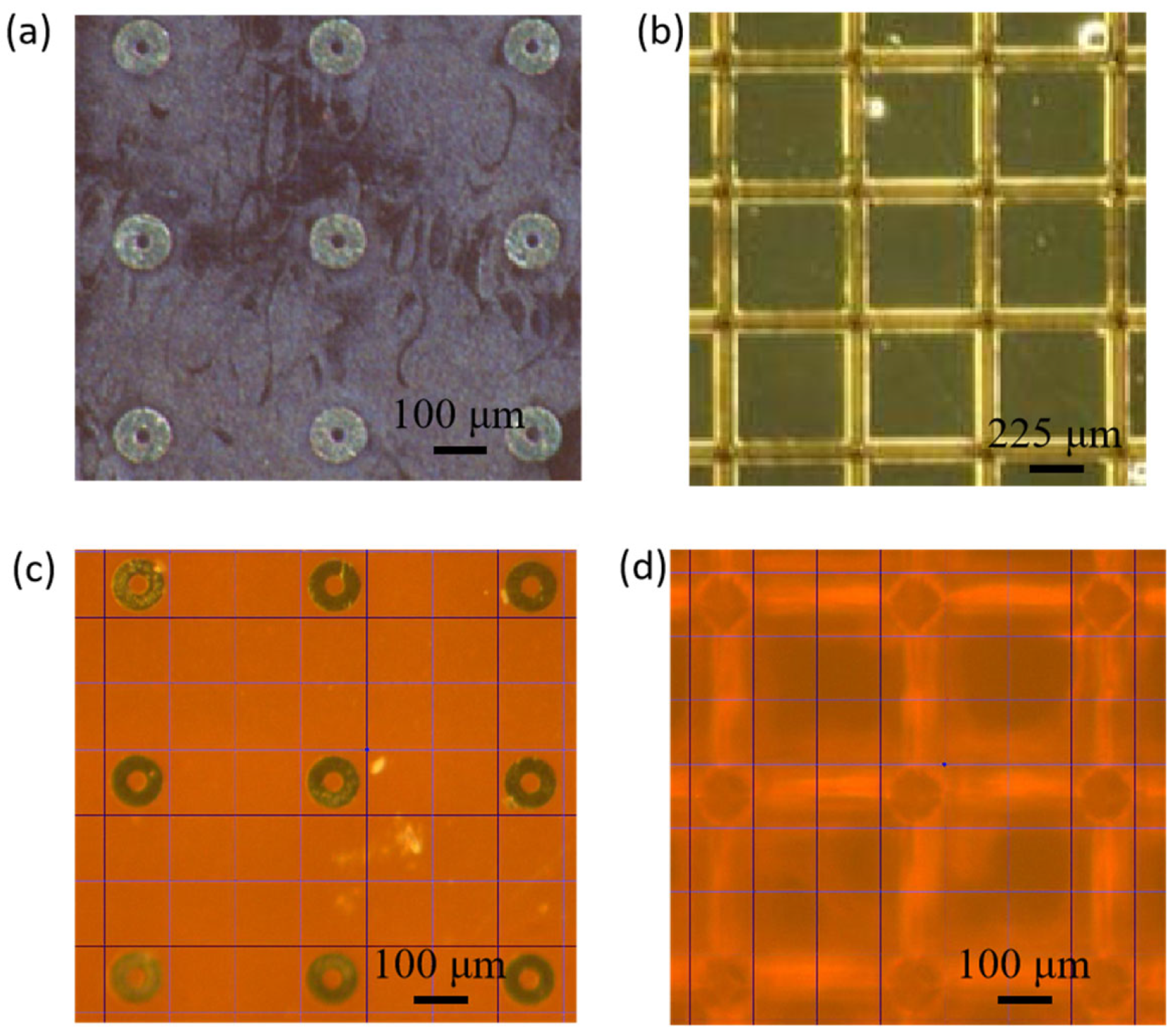
A digital microscope (KEYENCE VH-8000, Osaka, Japan) was used to examine the fabricated structures. The reticle mode (frame function) was selected from the microscope software to assist in alignment. Before aligning the calibrated hole photomasks to the prefabricated tip microneedle arrays (made via PCT), the photomasks were first aligned to the microscope’s reticle frame by adjusting the stage. The relative alignment of the hole photomask, tip microneedle, and microscope reticle frame is illustrated in
Figure 4. Due to slight stage movement after manual locking, the alignment stage exhibited a positional uncertainty of approximately ±3 μm.
3.2. Experimental Results of Tip Microneedles
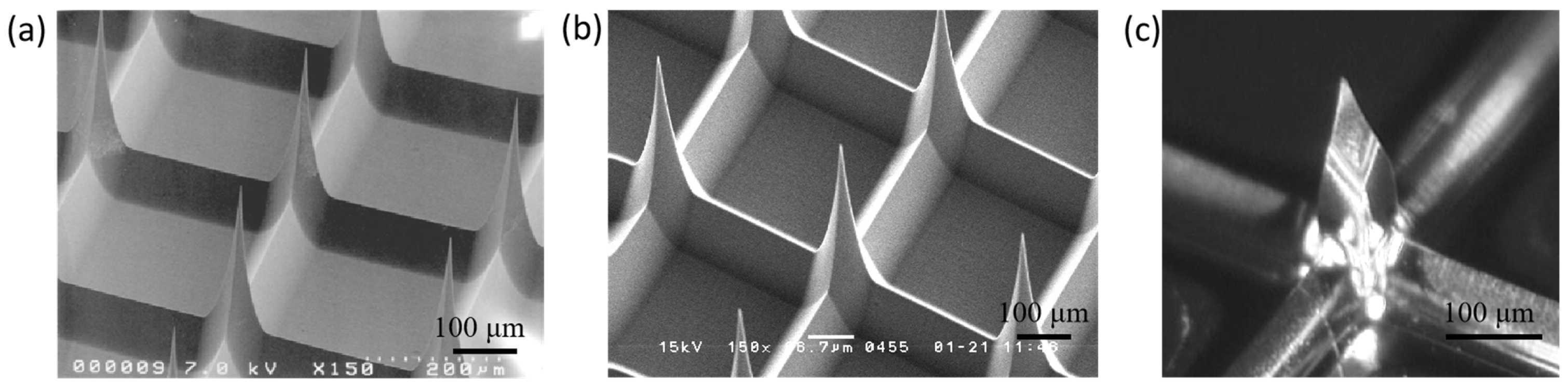
Figure 5a and
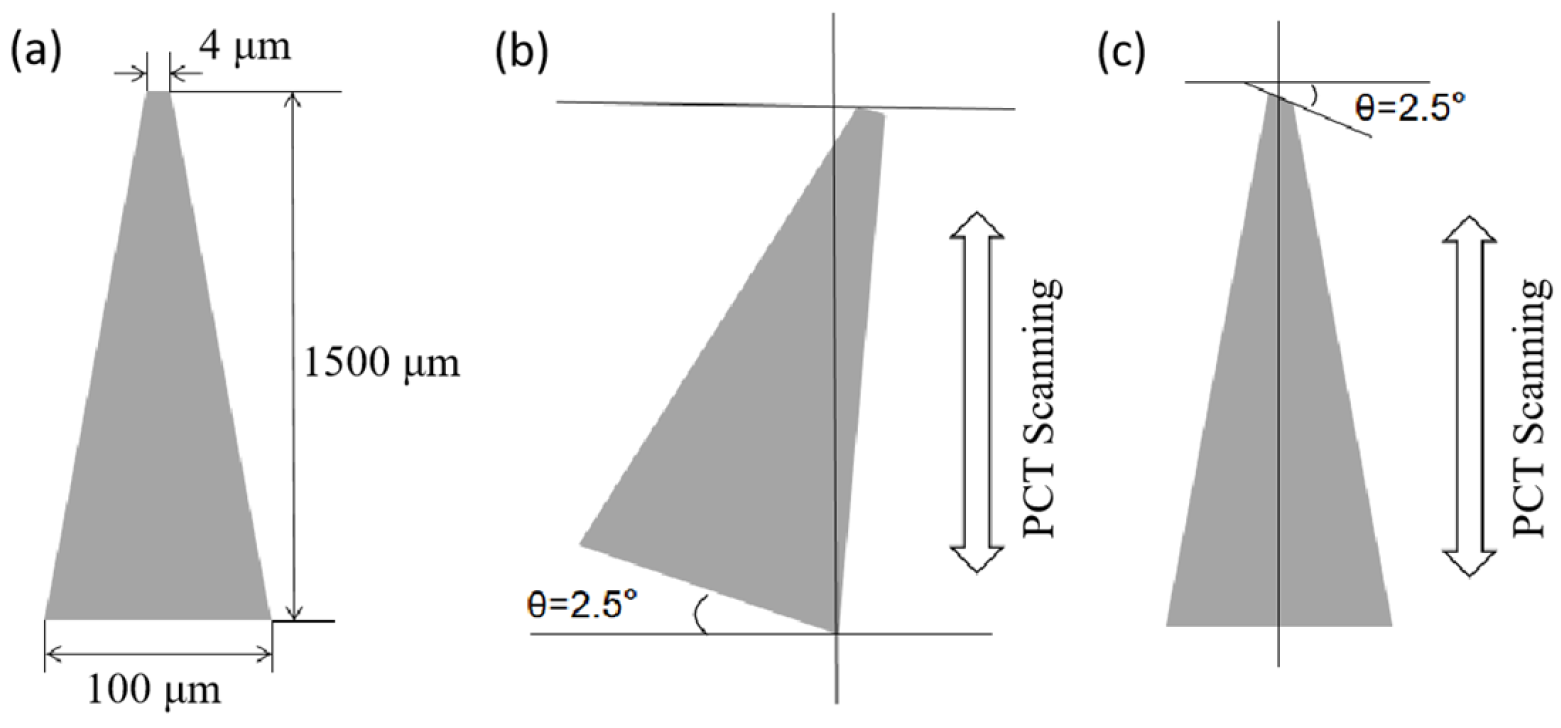
Figure 5b show scanning electron microscopy (SEM) images of tapered microneedle arrays fabricated using a triangular photomask and a trapezoidal photomask (with an additional inclination angle of 2.5°), respectively.
Figure 5c presents a magnified view of the microneedle tip fabricated with a pentagonal photomask, obtained using digital microscopy. The microneedles exhibit sharper tips as a result of the improved mask design.
3.3. Experimental Results of Hollow Microneedles
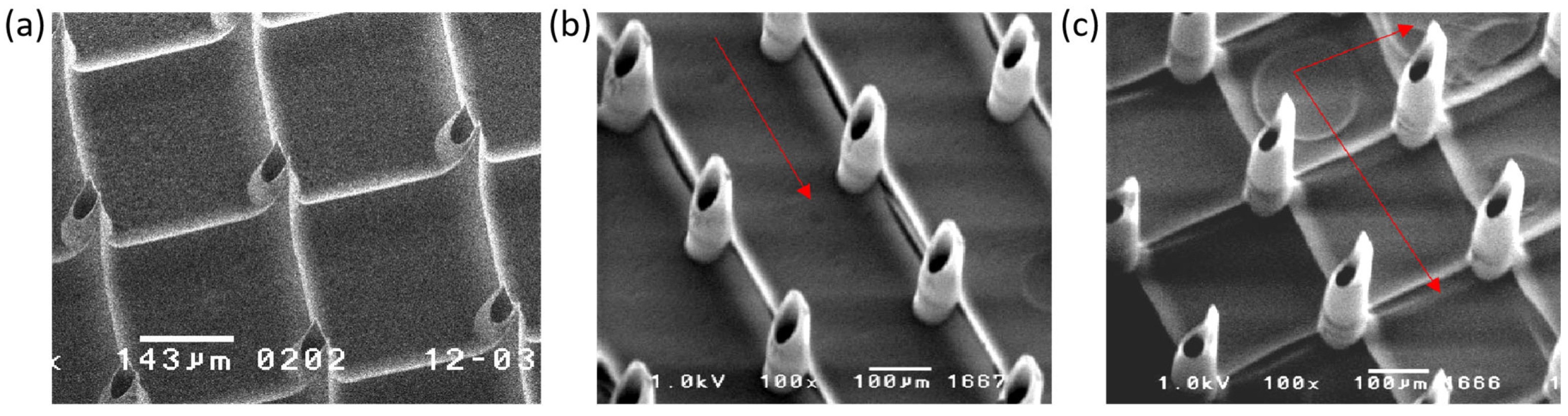
As summarized in
Table 1, Protocol 1 produced microneedles with channels located at the tip center (
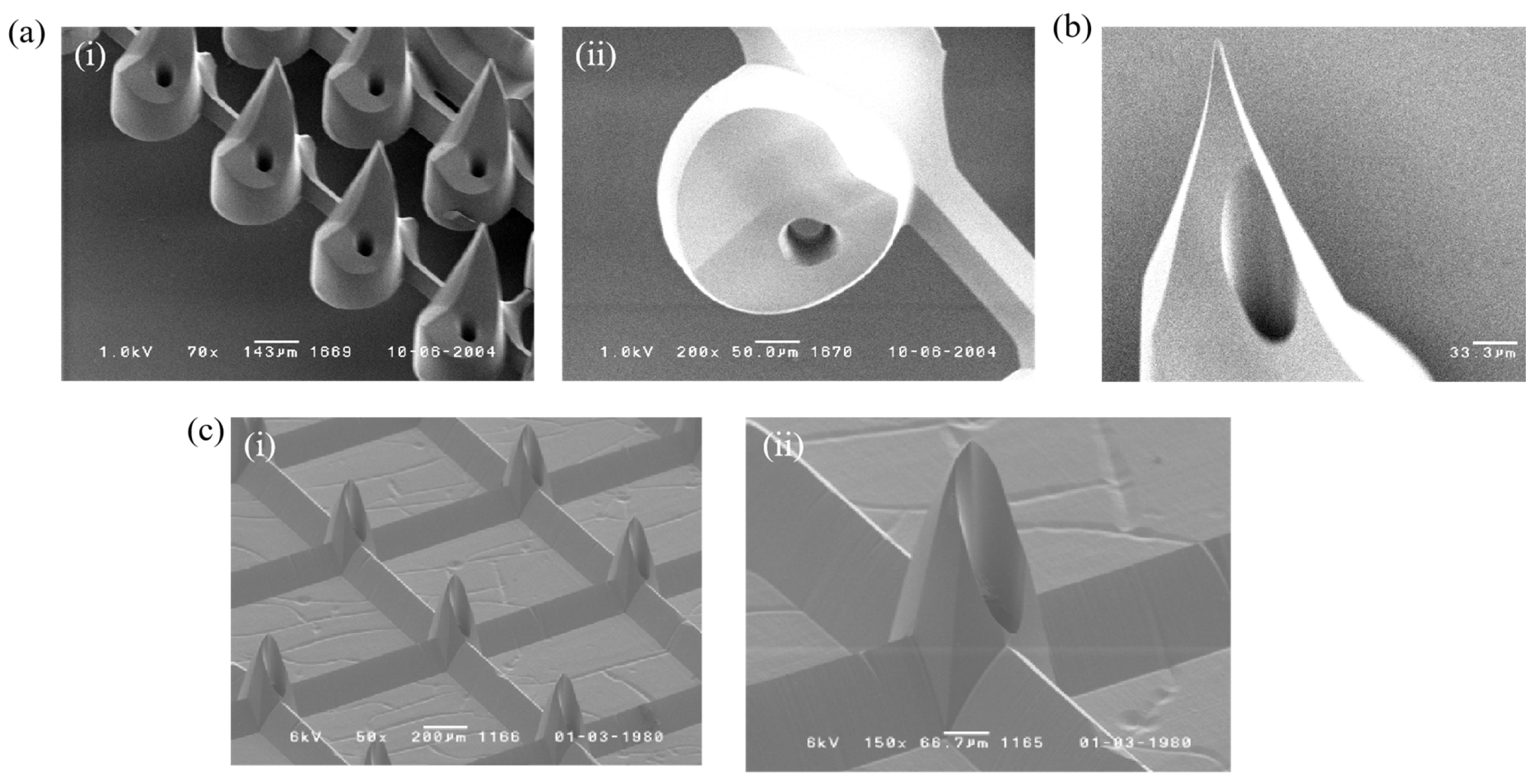
Figure 6a), a configuration that was found to be less effective for blood sampling. Improved Protocols 2 and 3, employing single and double PCT scans, respectively, fabricated hollow microneedles whose channels were offset from the tip center, as illustrated in
Figure 6b,c. Although both variants exhibited similar overall geometry, the double-scan protocol yielded sharper tips owing to enhanced structural integrity. The relatively incomplete polymerization associated with the single-scan approach, while more time- and cost-efficient, indicates that further optimization through geometric adjustment of the photomask pattern is still required.
The hollow microneedles shown in
Figure 7 measure approximately 300 μm in height, with a base diameter of 100 μm and a channel diameter of 20 μm. Further optimization of channel positioning will require systematic investigation. To improve mechanical robustness, the photomask geometry was modified from a triangular to a pentagonal design. This change yielded microneedles with an increased height of 350 μm. For refined channel placement, two photomask designs were implemented using three alignment protocols. As outlined in
Table 2, alignment modes 1–3 correspond to the SEM images presented in
Figure 7a–c, respectively.
3.4. Simulation and Strength Testing of Hollow Microneedles
All simulations were performed in ANSYS 10.0 for static structural analysis to optimize the channel mask design. The objective was to compare the stress and deformation responses of individual microneedles fabricated under different alignment protocols (Protocols 1, 2, and 3) under identical loading conditions. The model material was defined as a continuous, homogeneous, isotropic, linear elastic solid with a Young’s modulus of 3.2 GPa, a Poisson’s ratio of 0.37, and a yield strength of approximately 70 MPa. The bottom face of the microneedle was fully fixed, constraining all degrees of freedom. A concentrated axial force of 10 N was applied to the central node on the tip face to simulate a representative axial load encountered during skin penetration. A static linear analysis was carried out using an automatically generated mesh composed of higher-order tetrahedral elements.
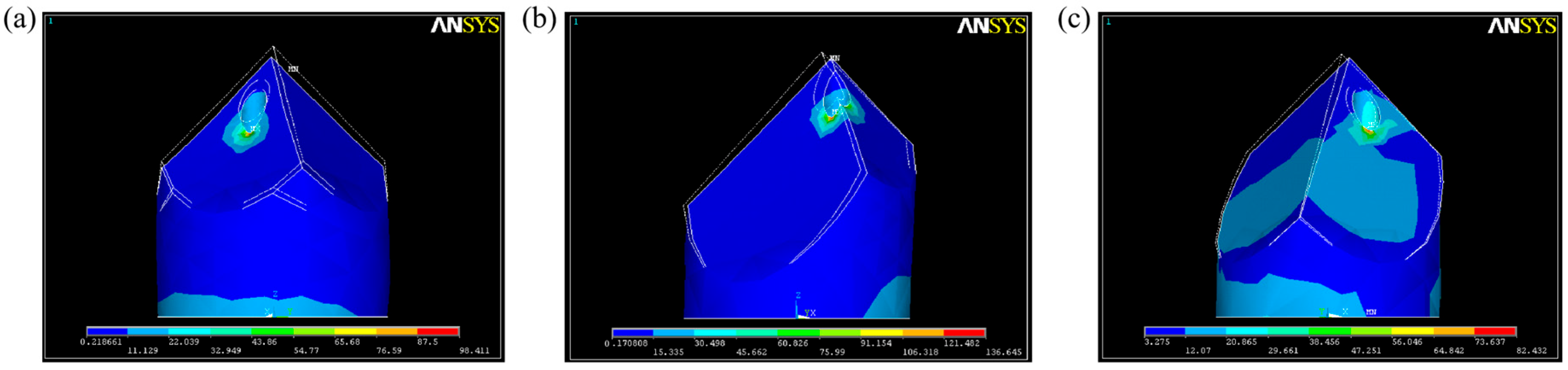
The model was employed to assess the maximum stress and displacement of the microneedles during simulated penetration.
Figure 8 presents the maximum stress sustained by the microneedle models under a constant load. Under a load of 10 N, the maximum stress in the optimized model from Alignment Protocol 3 reached 133.65 MPa. Since this value exceeds the material’s yield strength (~70 MPa), the linear elastic stress results are primarily used for qualitative comparison of relative mechanical performance among the designs. In comparison, the maximum stresses for Protocols 1 and 2 were 98.41 MPa and 82.43 MPa, respectively. The corresponding displacements after load application were 1.5 μm (Protocol 1), 6 μm (Protocol 2), and 3 μm (Protocol 3). These results indicate that microneedles fabricated using Alignment Protocol 3 withstand the highest stress while exhibiting the smallest displacement, confirming their superior mechanical robustness.
As shown in
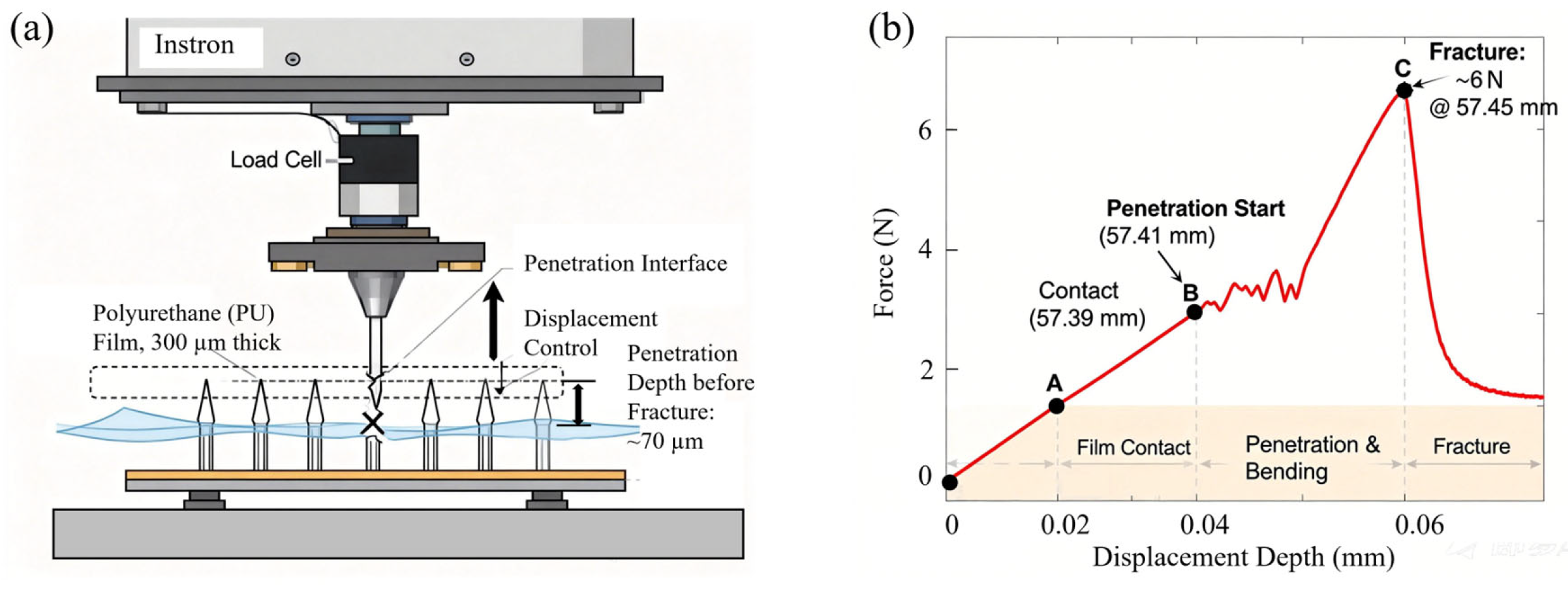
Figure 9a, strength testing was performed using a force-indentation instrument (Instron 2530, Osaka, Japan) on a polyurethane film simulating skin material. A set of 15 hollow microneedle arrays fabricated using Alignment Protocol 3 (see
Table 2) was mounted on the indenter, which was then oriented upward to contact a polyurethane film with a thickness of 300 µm. The pressure sensor was activated at the film surface, and pressure was applied slowly to allow the needles to penetrate the film. The indenter moved downward at a constant quasi-static rate of 0.1 mm/min to ensure quasi-static loading and avoid dynamic effects. The load was measured by a 5 N load cell built into the machine with an accuracy of ±0.1% FS, and the displacement was recorded by the crosshead displacement sensor. The data acquisition frequency was set at 10 Hz. A sudden drop in the load was defined as the fracture of the microneedle structure.
Figure 9b shows the pressure load measurement results. The origin point is redefined as the instant the probe tip contacts the surface of the thin film. The graph indicates that the measurement started at 57.39 mm, where the load sensor contacted the surface of the polyurethane film. Microneedle penetration began at 57.41 mm. The needles fractured at 57.45 mm, corresponding to a total load of 6 N. The measured displacement was approximately 70 µm. Before fracture, the load borne by each individual needle was 0.4 N/needle.
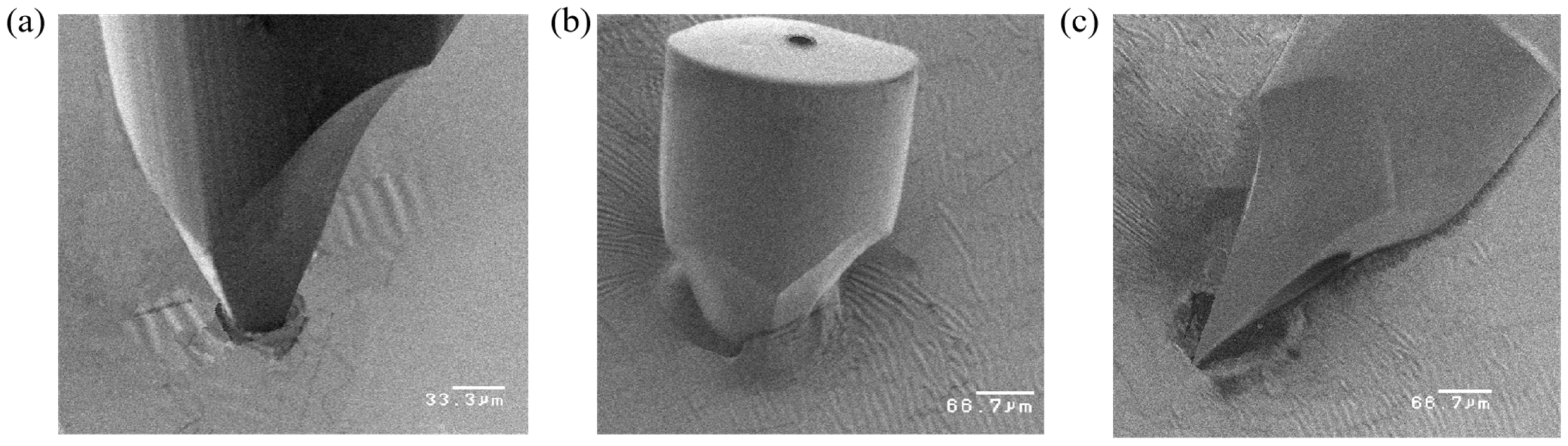
The mechanical strength of the microneedles was validated by inserting them into a polyimide film, with images captured during the penetration process, as shown in
Figure 10. The micrographs demonstrate that the strength of the microneedles was effectively improved, as the tips remained fully intact after penetration.
4. Conclusions
In this study, tapered microneedles were fabricated using deep X-ray lithography (DXRL) within the LIGA process. By applying aperture-aligned exposure with different channel photomasks and alignment strategies, hollow microneedle arrays with distinct structural features were produced. The mechanical robustness of the needles was confirmed through successful insertion into polyimide films. To address the insufficient strength observed in microneedles produced with triangular photomasks, a pentagonal photomask was adopted, which also helped mitigate issues associated with the more cost-effective single-scan PCT process. Using two channel photomask designs and three alignment protocols, microneedles were eventually fabricated that resist clogging and promote higher flow rates. ANSYS simulations, supported by a low-cost alignment procedure, demonstrated that Alignment Protocol 3—featuring a horizontal offset of 30 μm and a vertical displacement of 50 μm from the tip center—achieved the highest stress resistance and mechanical strength. When connected to fluid reservoirs, the resulting hollow microneedles allow precise dosage control in blood extraction and drug delivery, and show promising potential for biomedical applications such as microcatheters and micromotors.