Article

Ti3AlC2 MAX Phase Modified Screen-Printed Electrode for the Fabrication of Hydrazine Sensor

1
School of Materials Science and Engineering, Yeungnam University, Gyeongsan 38541, Republic of Korea
2
Department of Materials Science and Engineering, WW4-LKO, University of Erlangen-Nuremberg, Martensstrasse 7, 91058 Erlangen, Germany
3
Department of Chemistry, College of Science, King Saud University, Riyadh 11451, Saudi Arabia
*
Author to whom correspondence should be addressed.
Micromachines 2024, 15(5), 633; https://doi.org/10.3390/mi15050633
Submission received: 28 March 2024 / Revised: 4 May 2024 / Accepted: 7 May 2024 / Published: 9 May 2024

Abstract

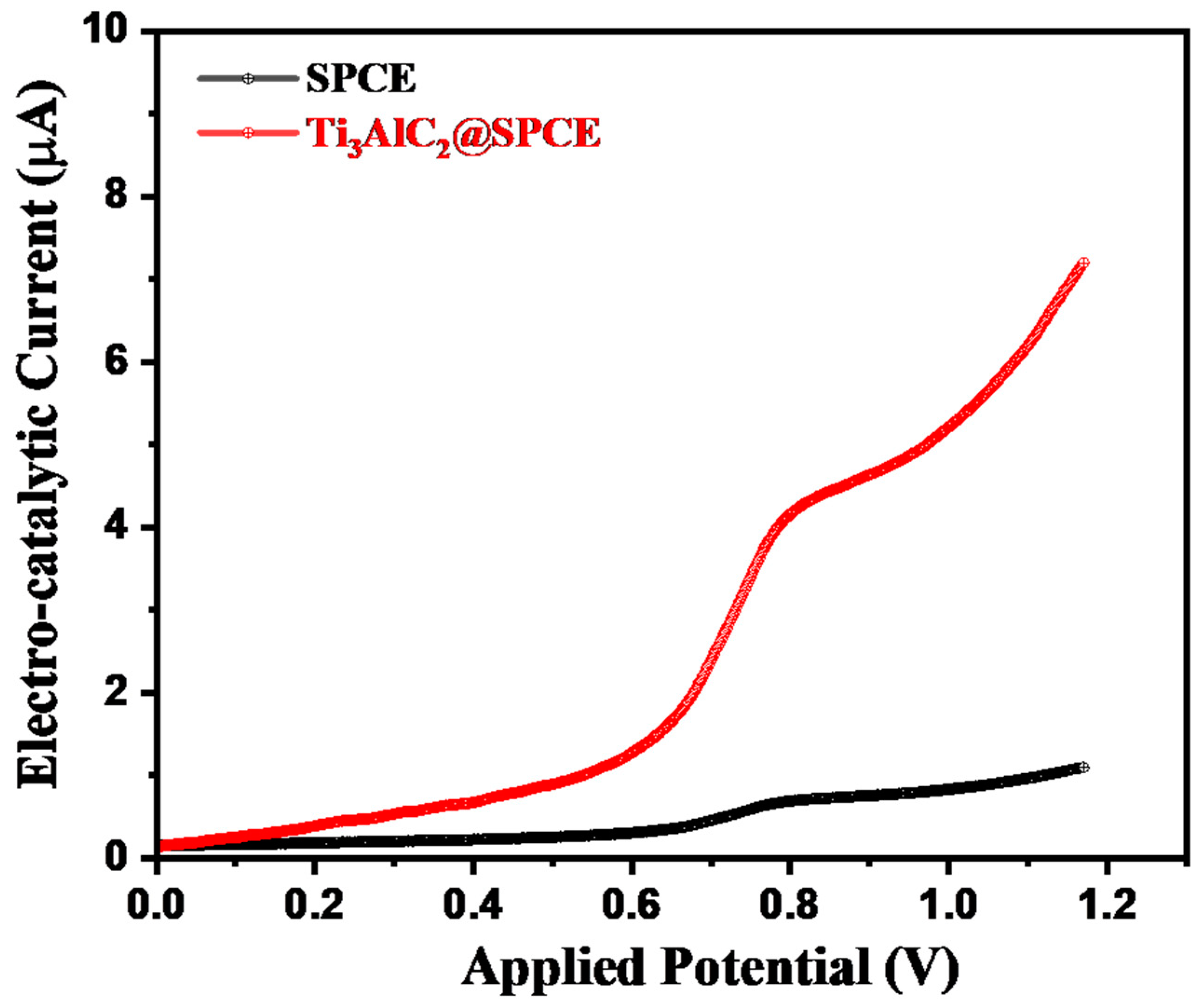
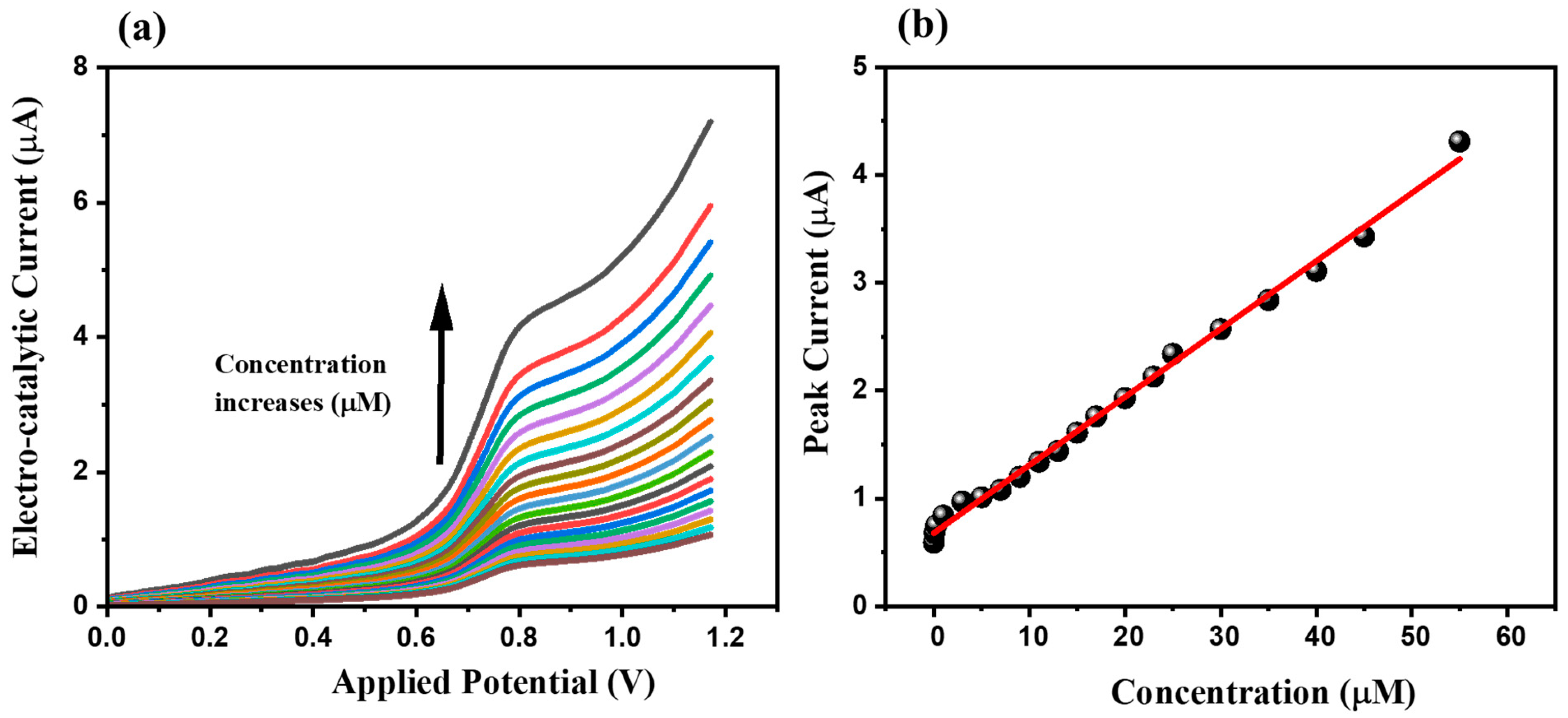
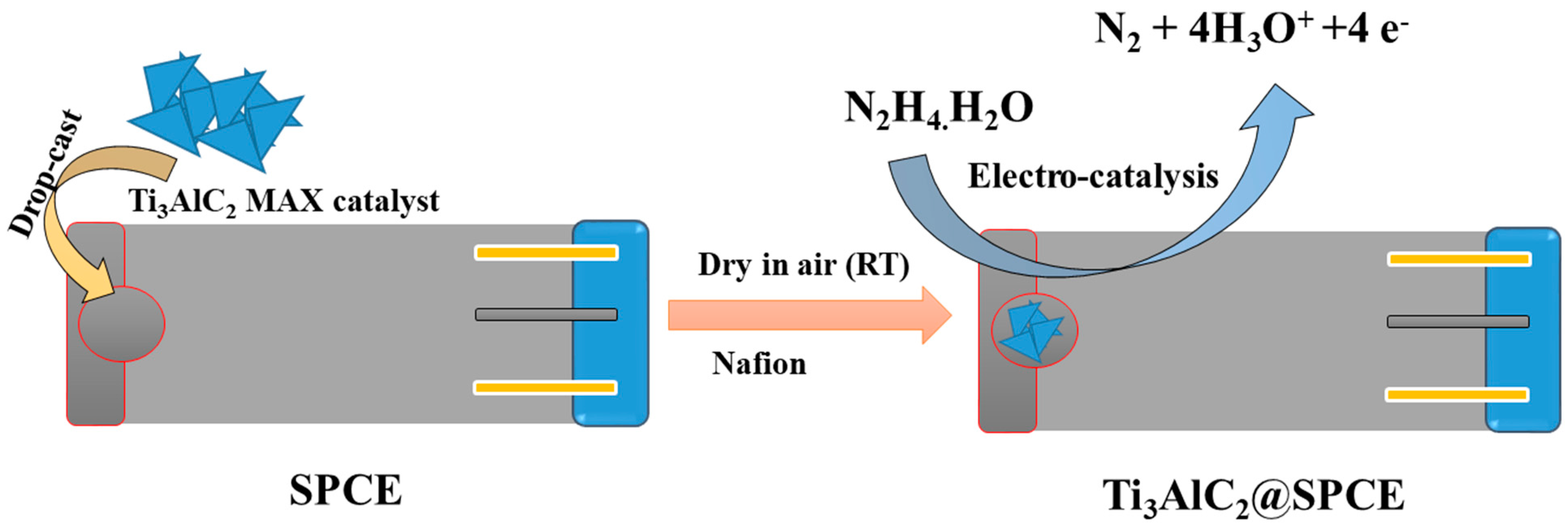
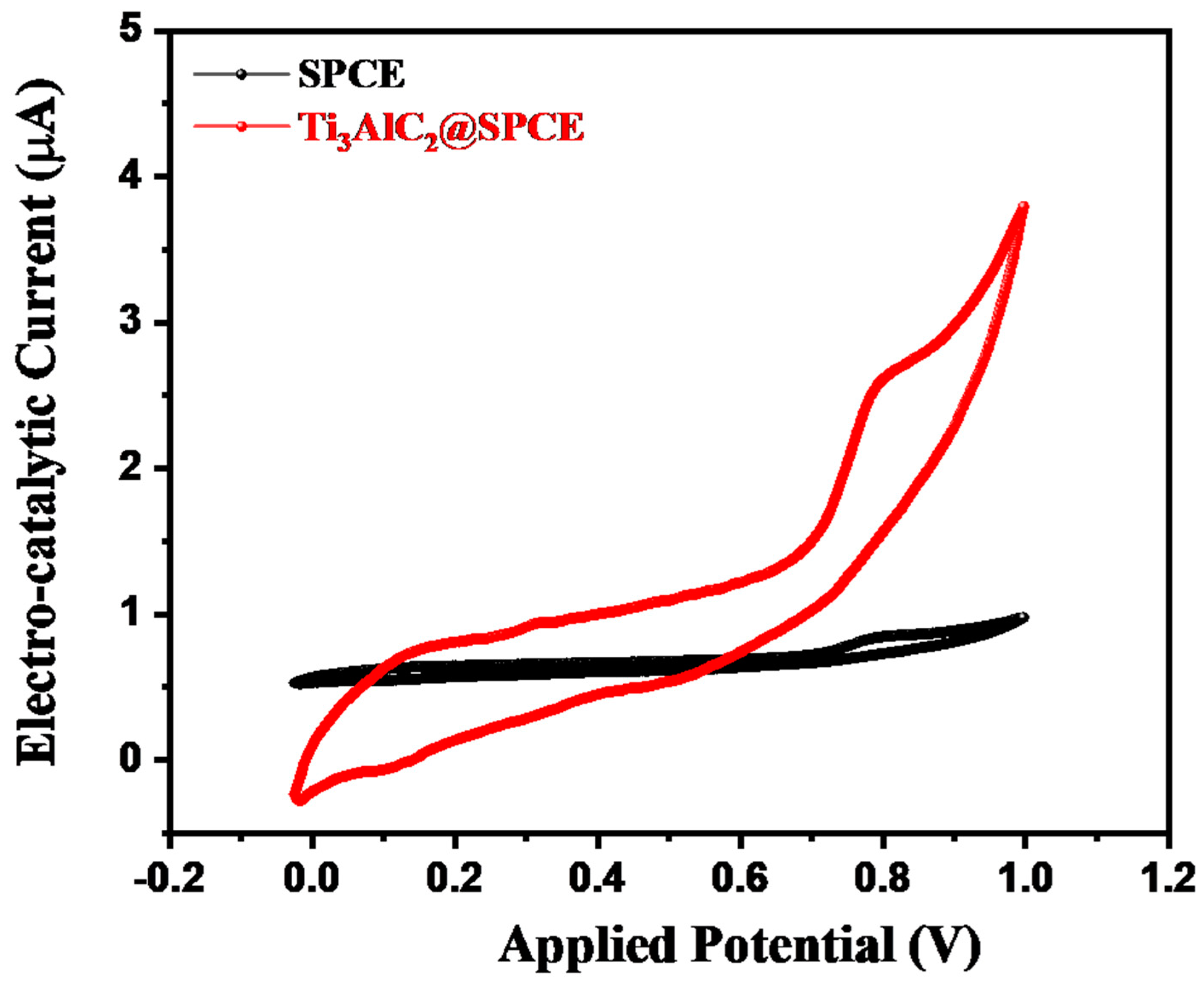
Hydrazine is considered a powerful reducing agent and catalyst, showing diverse applications in agricultural industries, toxic degradation research, and wastewater management. Additionally, hydrazine can trigger some specific reactions when combined with suitable oxidants. Due to its highly polar nature, hydrazine can easily dissolve in alcohol, water, and various other polar solvents. Therefore, it can be extensively utilized in different areas of application and industries such as rocketry and various chemical applications. Despite its beneficial properties, hydrazine is unstable, posing significant risk due to its highly toxic nature. It is extremely hazardous to both human health and the environment. It can cause various illnesses and symptoms such as dizziness, temporary blindness, damage to the central nervous system, and even death when inhaled in sufficient quantities. Therefore, it is highly important to monitor the level of hydrazine to prevent its toxic and hazardous effects on human beings and the environment. In the present study, we discuss the simple fabrication of a disposable cost-effective and eco-friendly hydrazine sensor. We used a screen-printed carbon electrode, i.e., SPCE, as a base for the construction of a hydrazine sensor. The Ti3AlC2 MAX has been used as a suitable and efficient electrode material for the fabrication of disposable hydrazine sensors. We modified the active surface of the SPCE using a drop-casting approach. The resulting Ti3AlC2 MAX modified SPCE (Ti3AlC2@SPCE) has been utilized as an efficient and low-cost hydrazine sensor. Cyclic voltammetry, i.e., CV, and linear sweep voltammetry, viz., LSV, was employed as a sensing technique in this study. The optimization of pH and electrode material loading was conducted. The Ti3AlC2@SPCE exhibited excellent sensing performance toward hydrazine oxidation. A reasonable detection limit (0.01 µM) was achieved for hydrazine sensing. The fabricated sensor also demonstrated a reasonable linear range of 1–50 µM. This work provides the design and fabrication of simple disposable Ti3AlC2@SPCE as a suitable electrode for the determination of hydrazine using LSV technology.
Keywords: Ti3AlC2; MAX phase; Ti3AlC2@SPCE; electrochemical hydrazine sensor Ti3AlC2; MAX phase; Ti3AlC2@SPCE; electrochemical hydrazine sensor