In Vivo Model of Short-Term Efficacy and Favorable Safety of Botulinum Toxin Type E Compared with Type A

 , , ,
, , , 
Abstract
1. Introduction
2. Results
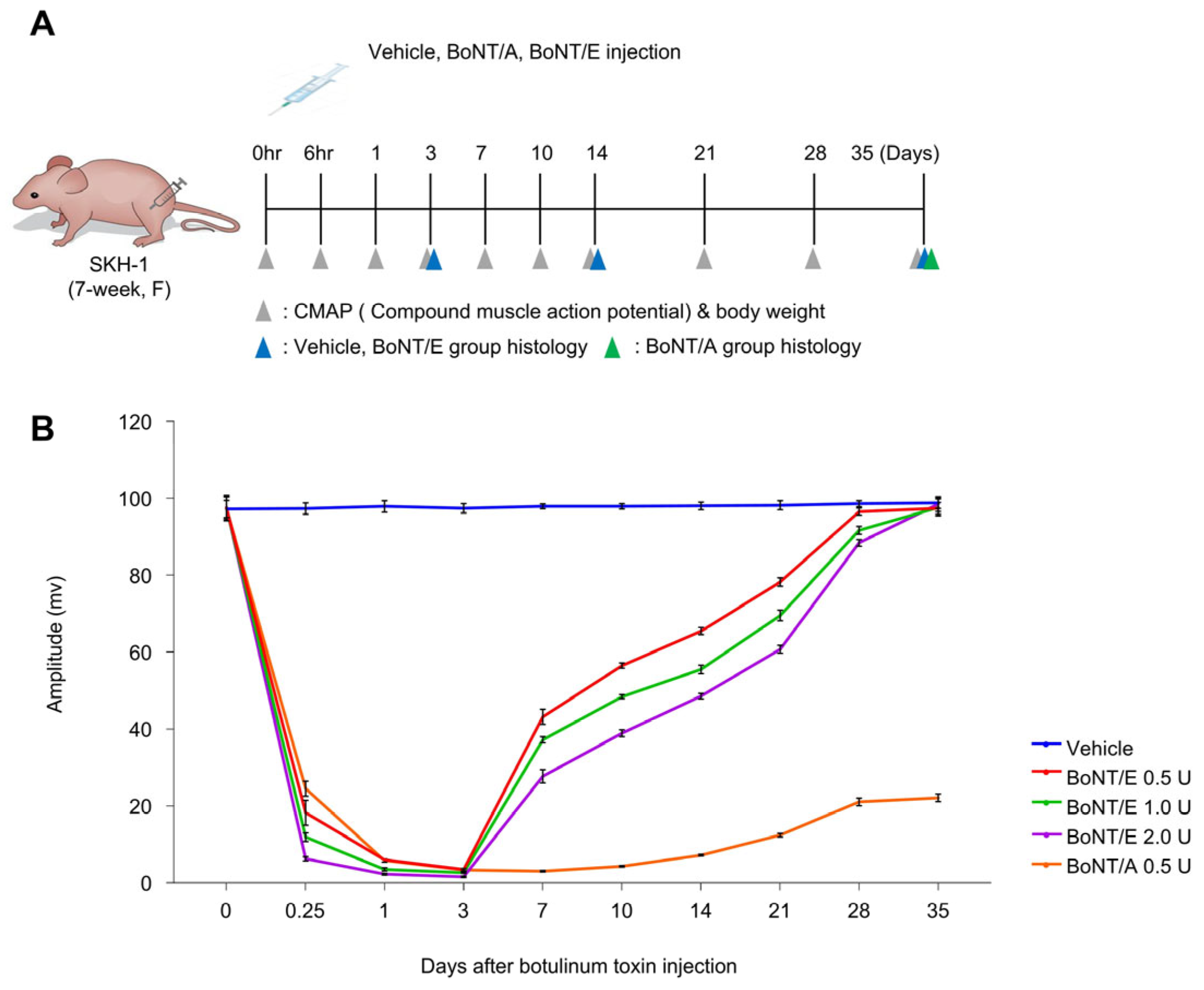
2.1. Muscle-Blocking Effect of BoNT/E Compared to BoNT/A
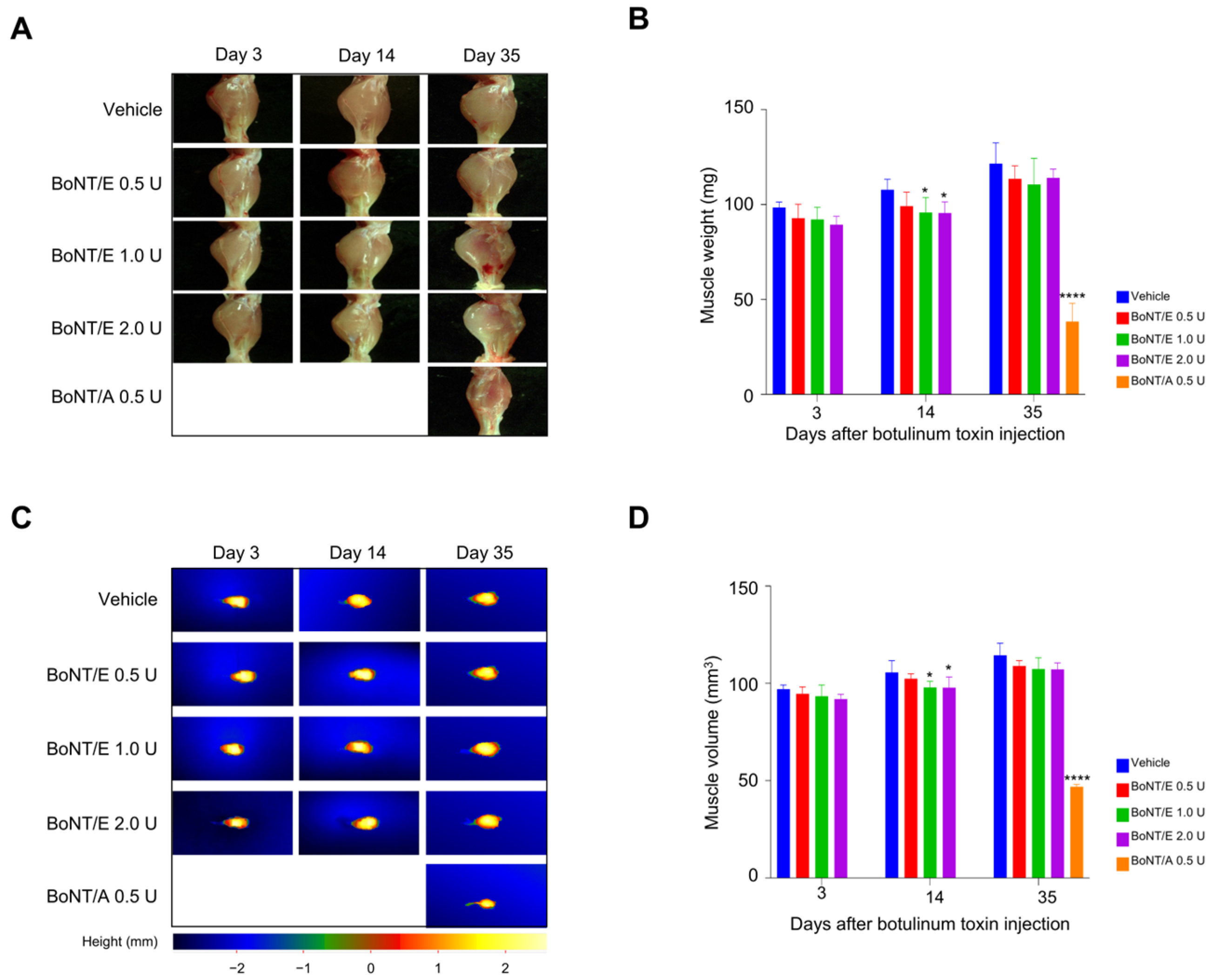
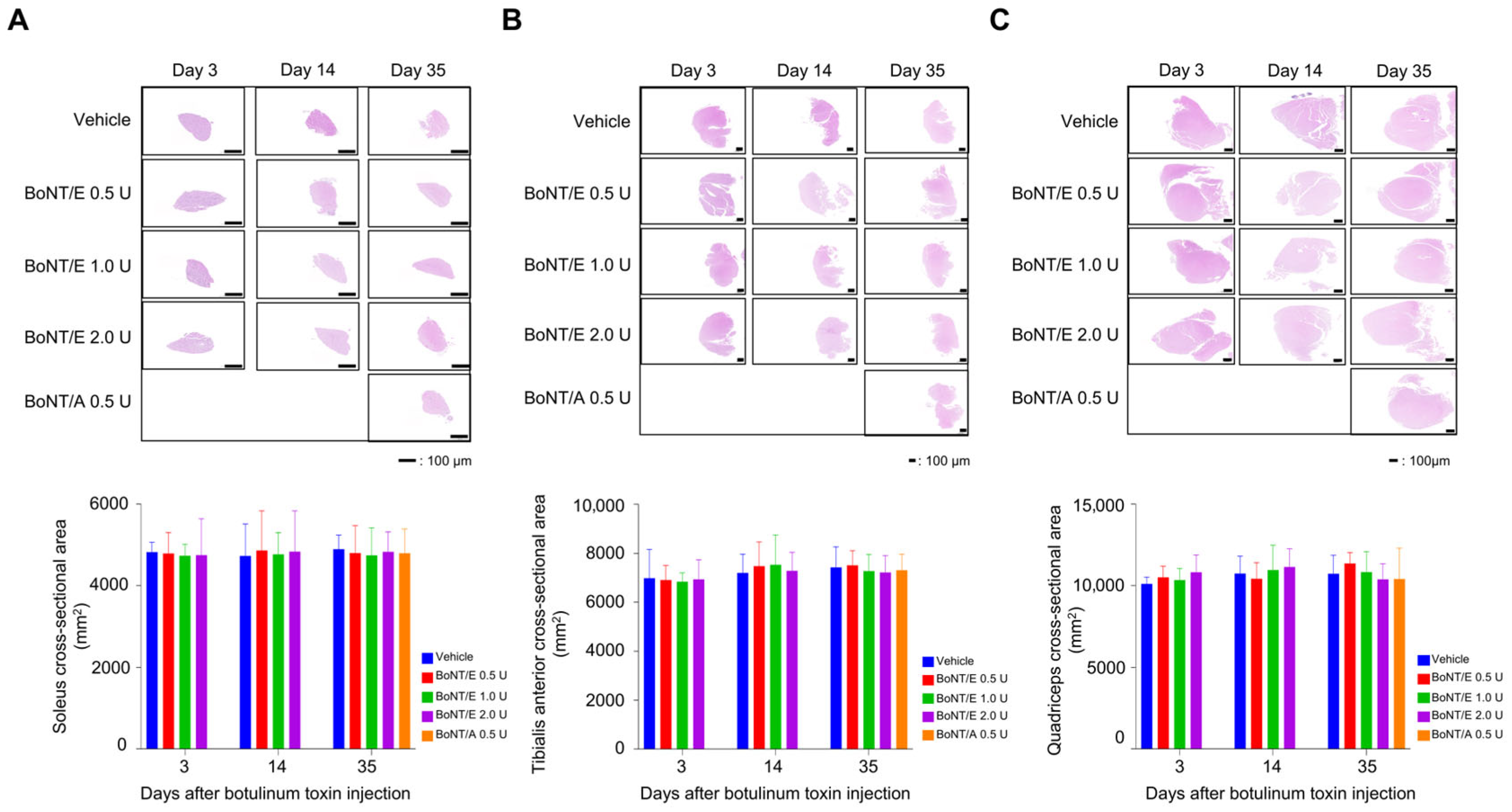
2.2. Muscle Atrophy Effect of BoNT/E Compared to BoNT/A
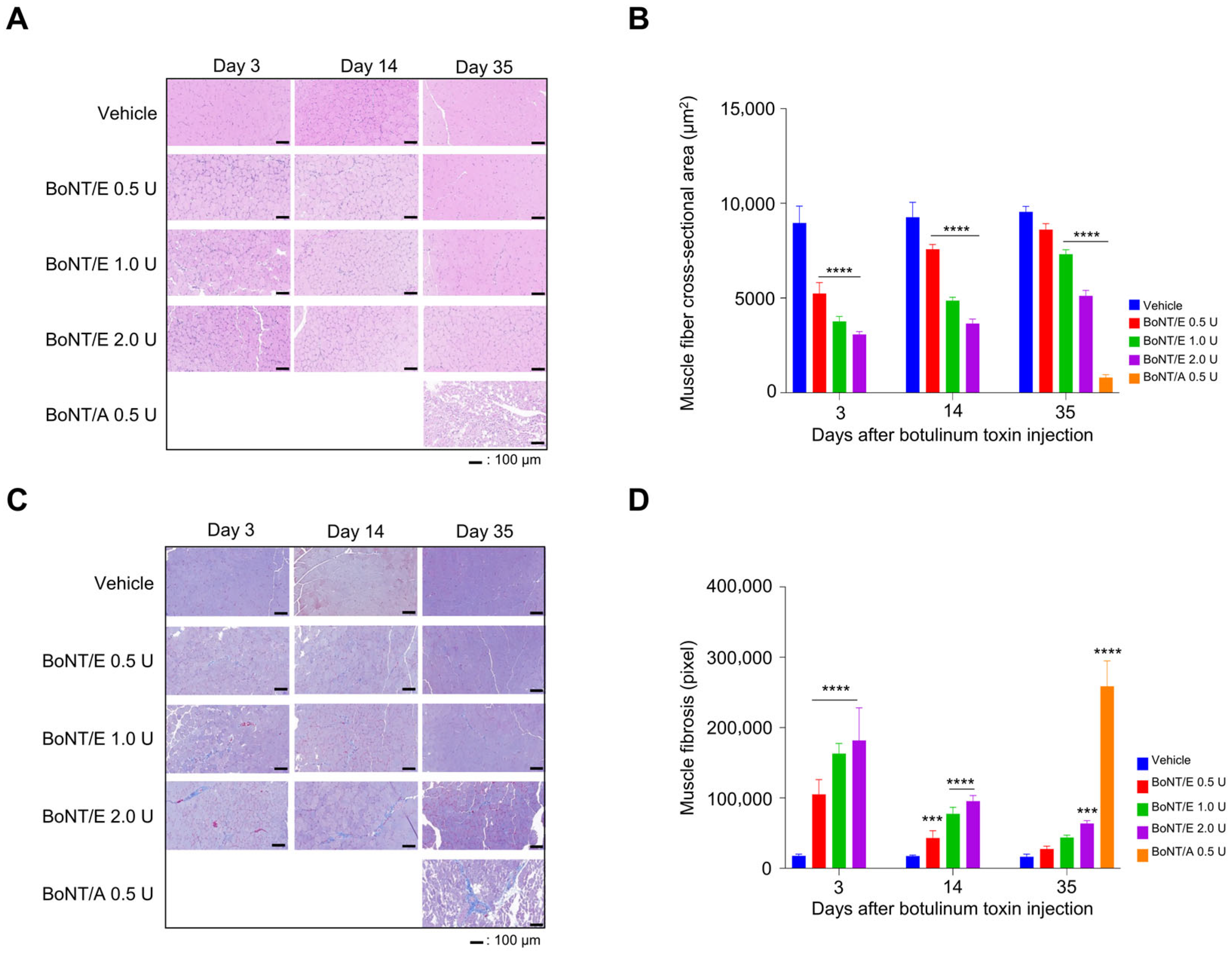
2.3. Muscle Fiber Changes in BoNT/E Compared to BoNT/A
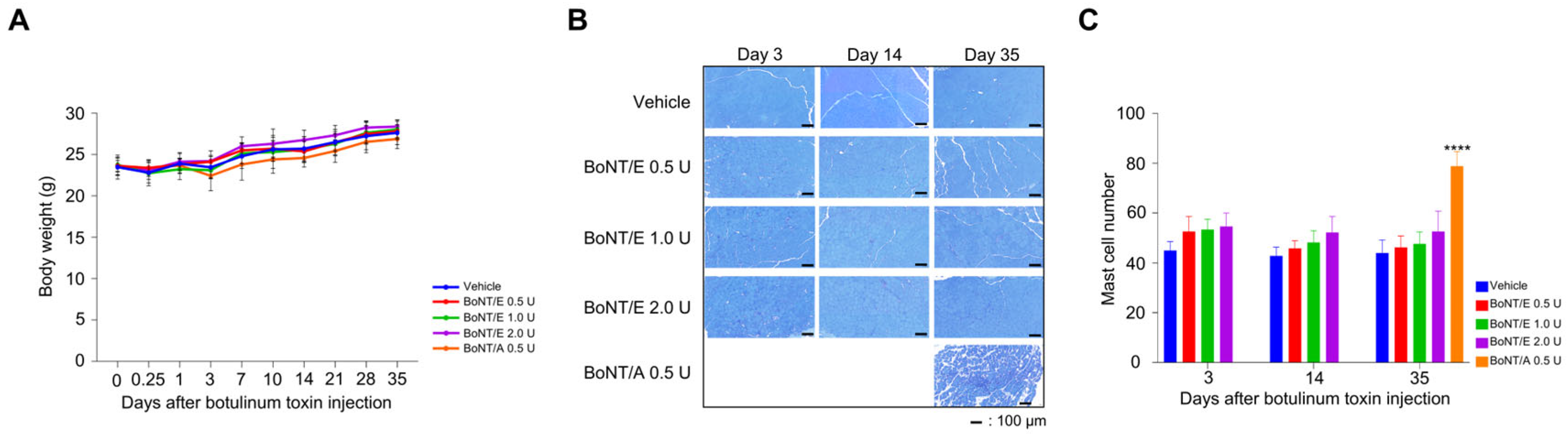
2.4. Safety of BoNT/E Compared to BoNT/A
2.5. Diffusion of BoNT/E Compared to BoNT/A
3. Discussion
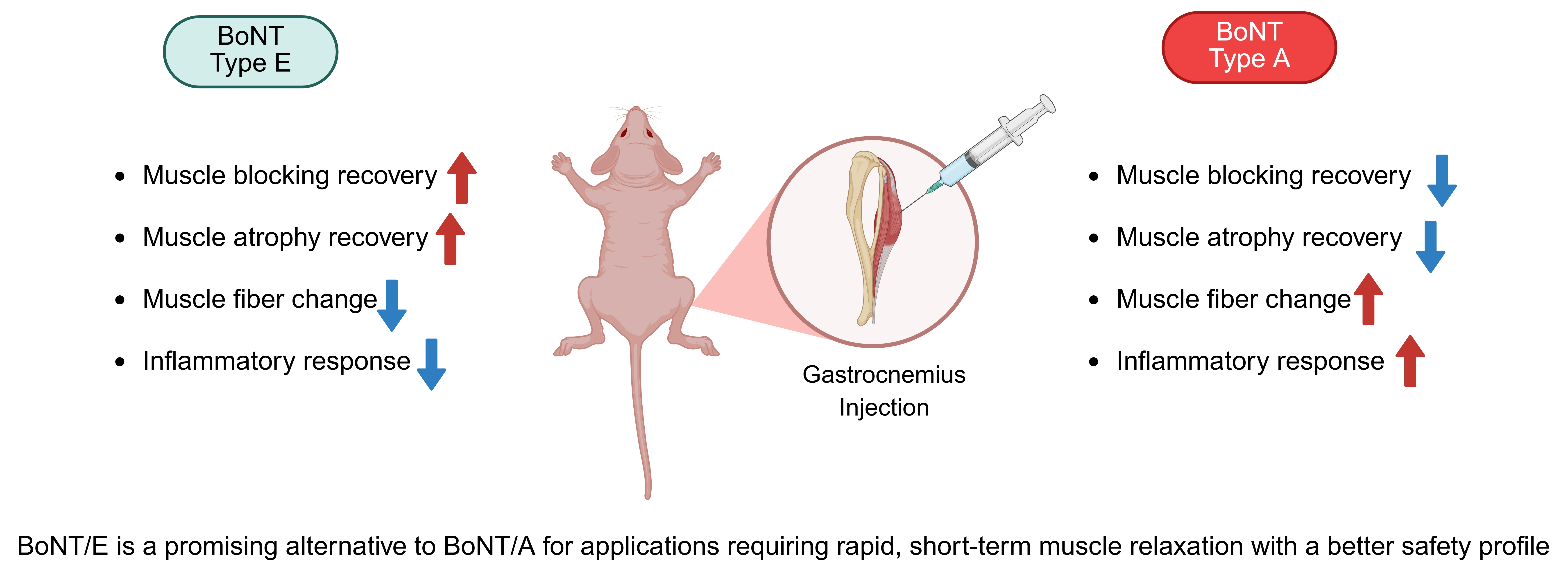
4. Conclusions
5. Materials and Methods
5.1. Materials
5.2. Mice
5.3. Body Weight
5.4. Compound Muscle Action Potentials (CMAPs)
5.5. Assessment of Muscle Weight and Volume Change
5.6. Assessment of Muscle Fiber Cross-Sectional Area Change
5.7. Muscle Fibrosis Assessment
5.8. Confirmation of Inflammatory Response
5.9. Diffusion Assessment
5.10. Statistical Significance
Author Contributions
Funding
Institutional Review Board Statement
Informed Consent Statement
Data Availability Statement
Acknowledgments
Conflicts of Interest
Abbreviations
| BoNT | Botulinum toxin |
| BoNT/A | Botulinum toxin type A |
| BoNT/E | Botulinum toxin type E |
| CMAPs | Compound Muscle Action Potentials |
| EMG | Electromyography |
| SNARE | Soluble N-ethylmaleimide-sensitive factor attachment protein receptor |
| VAMP | Vesicle-associated membrane protein |
| SNAP-25 | Synaptosome-associated protein of 25 kDa |
| NTNH | Nontoxic nonhemagglutinin protein |
| HA | Hemagglutinin |
| H&E | Hematoxylin and eosin |
| MT | Masson’s trichrome |
| TB | Toluidine blue |
| SD | Standard deviation |
| ANOVA | Analysis of variance |
| QF | Quadriceps femoris |
| TA | Tibialis anterior |
| SO | Soleus |
References
- Lalli, G.; Bohnert, S.; Deinhardt, K.; Verastegui, C.; Schiavo, G. The journey of tetanus and botulinum neurotoxins in neurons. Trends Microbiol. 2003, 11, 431–437. [Google Scholar] [CrossRef] [PubMed]
- Lebeda, F.J.; Adler, M.; Erickson, K.; Chushak, Y. Onset dynamics of type A botulinum neurotoxin-induced paralysis. J. Pharmacokinet. Pharmacodyn. 2008, 35, 251–267. [Google Scholar] [CrossRef]
- Franciosa, G.; Ferreira, J.L.; Hatheway, C.L. Detection of type A, B, and E botulism neurotoxin genes in Clostridium botulinum and other Clostridium species by PCR: Evidence of unexpressed type B toxin genes in type A toxigenic organisms. J. Clin. Microbiol. 1994, 32, 1911–1917. [Google Scholar] [CrossRef] [PubMed]
- Hasegawa, K.; Watanabe, T.; Suzuki, T.; Yamano, A.; Oikawa, T.; Sato, Y.; Kouguchi, H.; Yoneyama, T.; Niwa, K.; Ikeda, T.; et al. A novel subunit structure of Clostridium botulinum serotype D toxin complex with three extended arms. J. Biol. Chem. 2007, 282, 24777–24783. [Google Scholar] [CrossRef] [PubMed]
- Sugii, S.; Sakaguchi, G. Botulogenic properties of vegetables with special reference to the molecular size of the toxin in them. J. Food Saf. 1977, 1, 53–65. [Google Scholar] [CrossRef]
- Davies, J.R.; Liu, S.M.; Acharya, K.R. Variations in the Botulinum Neurotoxin Binding Domain and the Potential for Novel Therapeutics. Toxins 2018, 10, 421. [Google Scholar] [CrossRef]
- Nigam, P.K.; Nigam, A. Botulinum toxin. Indian. J. Dermatol. 2010, 55, 8–14. [Google Scholar] [CrossRef]
- Balaban, B.; Tok, F.; Tan, A.K.; Matthews, D.J. Botulinum toxin a treatment in children with cerebral palsy: Its effects on walking and energy expenditure. Am. J. Phys. Med. Rehabil. 2012, 91, 53–64. [Google Scholar] [CrossRef]
- Graham, H.K.; Aoki, K.R.; Autti-Ramo, I.; Boyd, R.N.; Delgado, M.R.; Gaebler-Spira, D.J.; Gormley, M.E.; Guyer, B.M.; Heinen, F.; Holton, A.F.; et al. Recommendations for the use of botulinum toxin type A in the management of cerebral palsy. Gait Posture 2000, 11, 67–79. [Google Scholar] [CrossRef]
- Camargo, C.H.; Cattai, L.; Teive, H.A. Pain Relief in Cervical Dystonia with Botulinum Toxin Treatment. Toxins 2015, 7, 2321–2335. [Google Scholar] [CrossRef]
- Dressler, D.; Adib Saberi, F.; Rosales, R.L. Botulinum toxin therapy of dystonia. J. Neural Transm. 2021, 128, 531–537. [Google Scholar] [CrossRef]
- Hsieh, P.F.; Chiu, H.C.; Chen, K.C.; Chang, C.H.; Chou, E.C. Botulinum toxin A for the Treatment of Overactive Bladder. Toxins 2016, 8, 59. [Google Scholar] [CrossRef]
- MacDonald, R.; Fink, H.A.; Huckabay, C.; Monga, M.; Wilt, T.J. Botulinum toxin for treatment of urinary incontinence due to detrusor overactivity: A systematic review of effectiveness and adverse effects. Spinal Cord. 2007, 45, 535–541. [Google Scholar] [CrossRef] [PubMed]
- Schaefer, S.M.; Gottschalk, C.H.; Jabbari, B. Treatment of Chronic Migraine with Focus on Botulinum Neurotoxins. Toxins 2015, 7, 2615–2628. [Google Scholar] [CrossRef]
- Magid, M.; Reichenberg, J.S.; Poth, P.E.; Robertson, H.T.; LaViolette, A.K.; Kruger, T.H.; Wollmer, M.A. Treatment of major depressive disorder using botulinum toxin A: A 24-week randomized, double-blind, placebo-controlled study. J. Clin. Psychiatry 2014, 75, 837–844. [Google Scholar] [CrossRef] [PubMed]
- Kruger, T.H.; Wollmer, M.A. Depression--An emerging indication for botulinum toxin treatment. Toxicon 2015, 107, 154–157. [Google Scholar] [CrossRef]
- Skopljak-Salkica, A.; Gabric, I.; Jagic, M.; Bejdic, N.; Biscevic, A.; Ahmedbegovic-Pjano, M. Clinical Study on the Use of Botulinum Toxin for Blepharospasm and Hemifacial Spasm. Med. Arch. 2024, 78, 326–328. [Google Scholar] [CrossRef]
- Bellows, S.; Jankovic, J. Immunogenicity Associated with Botulinum Toxin Treatment. Toxins 2019, 11, 491. [Google Scholar] [CrossRef]
- Na, J.; Lee, E.; Kim, Y.-J.; Choi, M.J.; Kim, S.-Y.; Nam, J.S.; Yun, B.J.; Kim, B.J. Long-term efficacy and safety of a new botulinum toxin type A preparation in mouse gastrocnemius muscle. Toxicon 2020, 187, 163–170. [Google Scholar] [CrossRef]
- Dadgar, S.; Wang, Z.; Johnston, H.; Kesari, A.; Nagaraju, K.; Chen, Y.-W.; Hill, D.A.; Partridge, T.A.; Giri, M.; Freishtat, R.J. Asynchronous remodeling is a driver of failed regeneration in Duchenne muscular dystrophy. J. Cell Biol. 2014, 207, 139–158. [Google Scholar] [CrossRef] [PubMed]
- Lewitt, P.A.; Trosch, R.M. Idiosyncratic adverse reactions to intramuscular botulinum toxin type A injection. Mov. Disord. 1997, 12, 1064–1067. [Google Scholar] [CrossRef]
- Coté, T.R.; Mohan, A.K.; Polder, J.A.; Walton, M.K.; Braun, M.M. Botulinum toxin type A injections: Adverse events reported to the US Food and Drug Administration in therapeutic and cosmetic cases. J. Am. Acad. Dermatol. 2005, 53, 407–415. [Google Scholar] [CrossRef]
- Pons, L.; Vilain, C.; Volteau, M.; Picaut, P. Safety and pharmacodynamics of a novel recombinant botulinum toxin E (rBoNT-E): Results of a phase 1 study in healthy male subjects compared with abobotulinumtoxinA (Dysport(R)). J. Neurol. Sci. 2019, 407, 116516. [Google Scholar] [CrossRef]
- Yoelin, S.G.; Dhawan, S.S.; Vitarella, D.; Ahmad, W.; Hasan, F.; Abushakra, S. Safety and Efficacy of EB-001, a Novel Type E Botulinum Toxin, in Subjects with Glabellar Frown Lines: Results of a Phase 2, Randomized, Placebo-Controlled, Ascending-Dose Study. Plast. Reconstr. Surg. 2018, 142, 847e–855e. [Google Scholar] [CrossRef] [PubMed]
- Zhang, K.; Yamamoto, Y.; Suzuki, T.; Yokota, K.; Ma, S.B.; Fatmawati, N.N.D.; Oguma, K. Type E Toxins Bind to Caco-2 Cells by a Different Mechanism from That of Type A Toxins. Acta Medica Okayama 2012, 66, 253–261. [Google Scholar]
- Adler, M.; Keller, J.E.; Sheridan, R.E.; Deshpande, S.S. Persistence of botulinum neurotoxin A demonstrated by sequential administration of serotypes A and E in rat EDL muscle. Toxicon 2001, 39, 233–243. [Google Scholar] [CrossRef]
- Eleopra, R.; Tugnoli, V.; Rossetto, O.; De Grandis, D.; Montecucco, C. Different time courses of recovery after poisoning with botulinum neurotoxin serotypes A and E in humans. Neurosci. Lett. 1998, 256, 135–138. [Google Scholar] [CrossRef] [PubMed]
- Alam, M.; Vitarella, D.; Ahmad, W.; Abushakra, S.; Mao, C.; Brin, M.F. Botulinum toxin type E associated with reduced itch and pain during wound healing and acute scar formation following excision and linear repair on the forehead: A randomized controlled trial. J. Am. Acad. Dermatol. 2023, 89, 1317–1319. [Google Scholar] [CrossRef]
- Satriyasa, B.K. Botulinum toxin (Botox) A for reducing the appearance of facial wrinkles: A literature review of clinical use and pharmacological aspect. Clin. Cosmet. Investig. Dermatol. 2019, 12, 223–228. [Google Scholar] [CrossRef]
- Carruthers, A.; Carruthers, J. Clinical indications and injection technique for the cosmetic use of botulinum A exotoxin. Dermatol. Surg. 1998, 24, 1189–1194. [Google Scholar] [CrossRef] [PubMed]
- Witmanowski, H.; Blochowiak, K. The whole truth about botulinum toxin—A review. Postep. Dermatol. Alergol. 2020, 37, 853–861. [Google Scholar] [CrossRef]
- Field, M.; Splevins, A.; Picaut, P.; Van der Schans, M.; Langenberg, J.; Noort, D.; Foster, K. AbobotulinumtoxinA (Dysport®), OnabotulinumtoxinA (Botox®), and IncobotulinumtoxinA (Xeomin®) neurotoxin content and potential implications for duration of response in patients. Toxins 2018, 10, 535. [Google Scholar] [CrossRef] [PubMed]
- Frevert, J. Content of botulinum neurotoxin in botox®/vistabel®, dysport®/azzalure®, and xeomin®/bocouture®. Drugs R&D 2010, 10, 67–73. [Google Scholar] [CrossRef] [PubMed]
- Nicholson, G.S.; Canty, D.; Southern, A.; Whelan, K.; Brideau-Andersen, A.D.; Broide, R.S. Preclinical evaluation of botulinum toxin type E (TrenibotulinumtoxinE) using the mouse Digit Abduction Score (DAS) assay. Toxins 2025, 17, 230. [Google Scholar] [CrossRef] [PubMed]


Disclaimer/Publisher’s Note: The statements, opinions and data contained in all publications are solely those of the individual author(s) and contributor(s) and not of MDPI and/or the editor(s). MDPI and/or the editor(s) disclaim responsibility for any injury to people or property resulting from any ideas, methods, instructions or products referred to in the content. |
© 2026 by the authors. Licensee MDPI, Basel, Switzerland. This article is an open access article distributed under the terms and conditions of the Creative Commons Attribution (CC BY) license.
Share and Cite
Nam, J.-S.; Yoon, D.; Kim, Y.; Kim, S.-Y.; Kim, J.-Y.; Cha, Y.; Seok, J.; Kim, B.J. In Vivo Model of Short-Term Efficacy and Favorable Safety of Botulinum Toxin Type E Compared with Type A. Toxins 2026, 18, 231. https://doi.org/10.3390/toxins18050231
Nam J-S, Yoon D, Kim Y, Kim S-Y, Kim J-Y, Cha Y, Seok J, Kim BJ. In Vivo Model of Short-Term Efficacy and Favorable Safety of Botulinum Toxin Type E Compared with Type A. Toxins. 2026; 18(5):231. https://doi.org/10.3390/toxins18050231
Chicago/Turabian StyleNam, Jeong-Sun, Daewon Yoon, Yujin Kim, Su-Young Kim, Jae-Young Kim, Yoonkyoung Cha, Joon Seok, and Beom Joon Kim. 2026. "In Vivo Model of Short-Term Efficacy and Favorable Safety of Botulinum Toxin Type E Compared with Type A" Toxins 18, no. 5: 231. https://doi.org/10.3390/toxins18050231
APA StyleNam, J.-S., Yoon, D., Kim, Y., Kim, S.-Y., Kim, J.-Y., Cha, Y., Seok, J., & Kim, B. J. (2026). In Vivo Model of Short-Term Efficacy and Favorable Safety of Botulinum Toxin Type E Compared with Type A. Toxins, 18(5), 231. https://doi.org/10.3390/toxins18050231