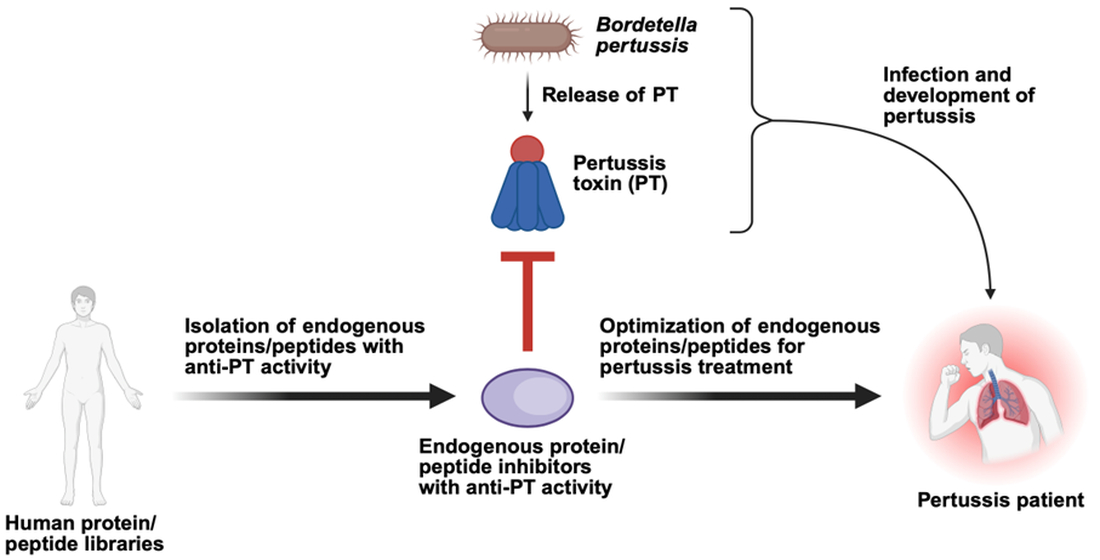
The Battle Against Pertussis: Discovery of Endogenous Human Proteins and Peptides as Toxin-Inhibitors


Abstract
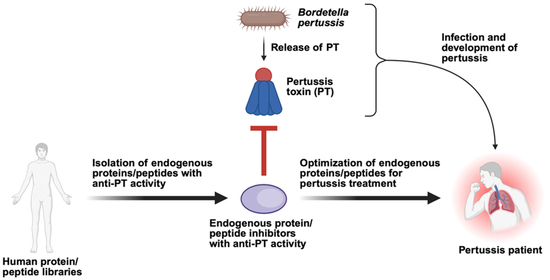
1. Introduction
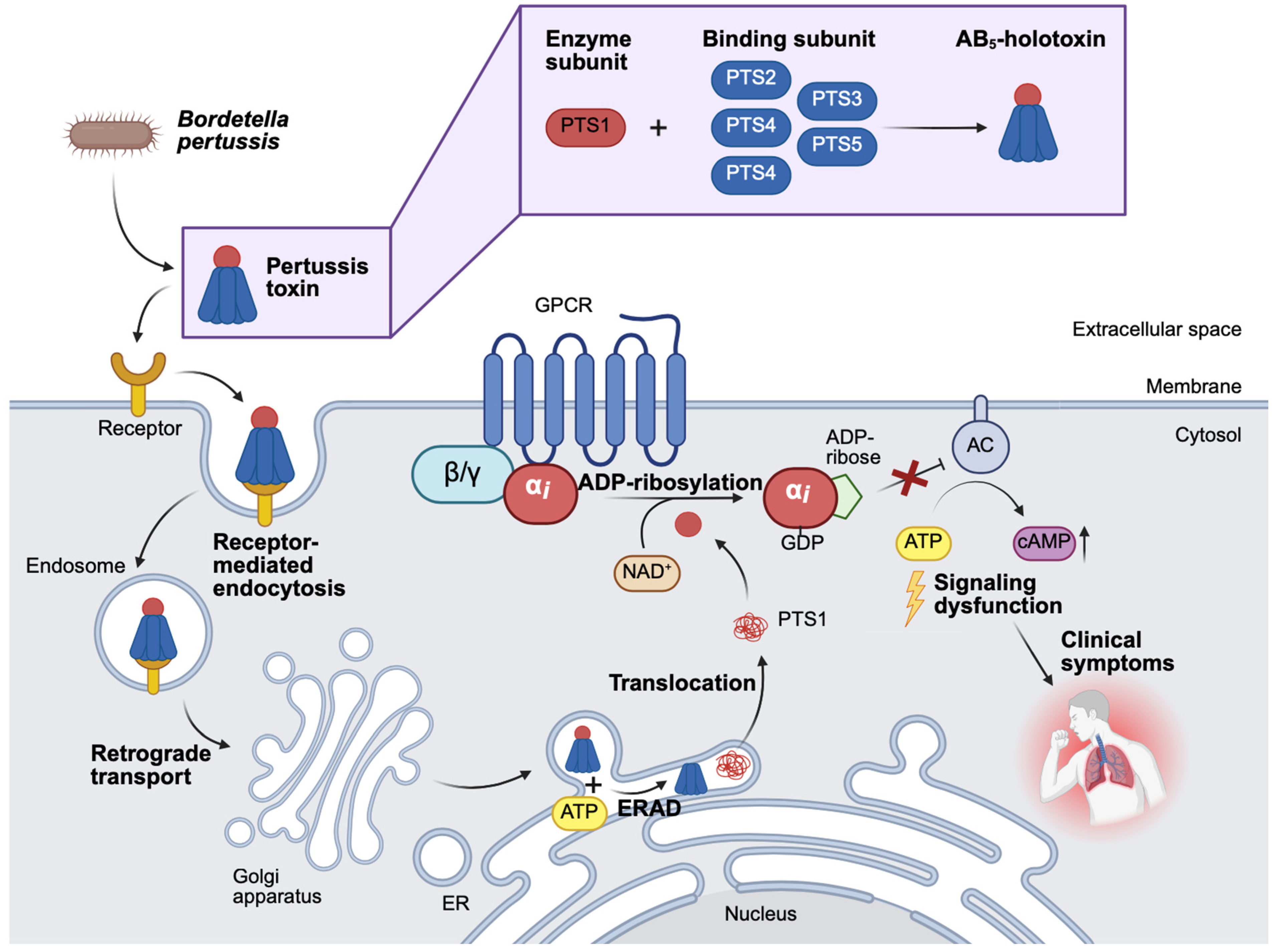
2. The Uptake and Mode of Action of Pertussis Toxin Produced by Bordetella pertussis

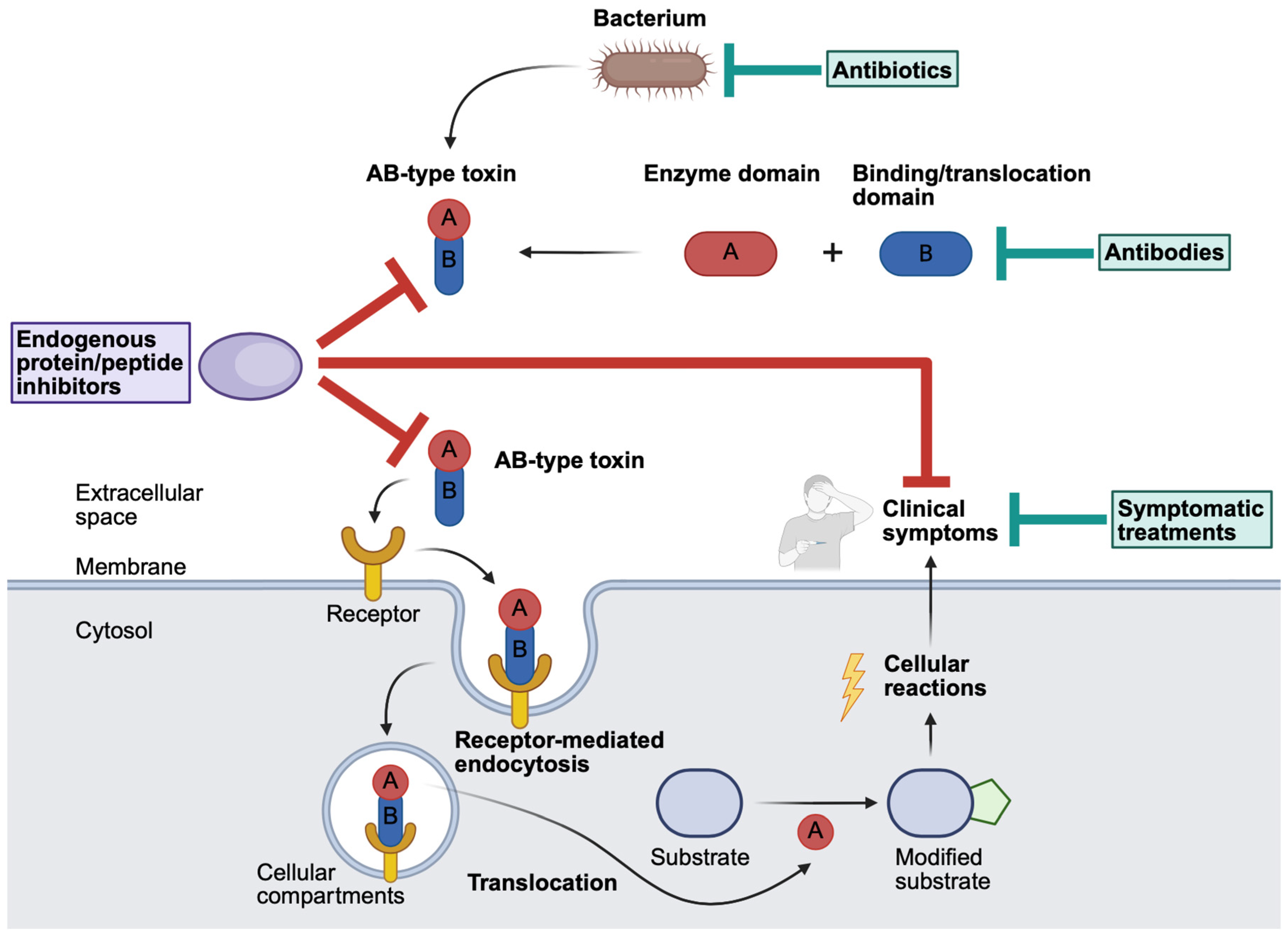
3. The Relevance of Exploiting Human Endogenous Proteins and Peptides as Part of the Innate Immunity as Novel Inhibitors Against Pertussis Toxin
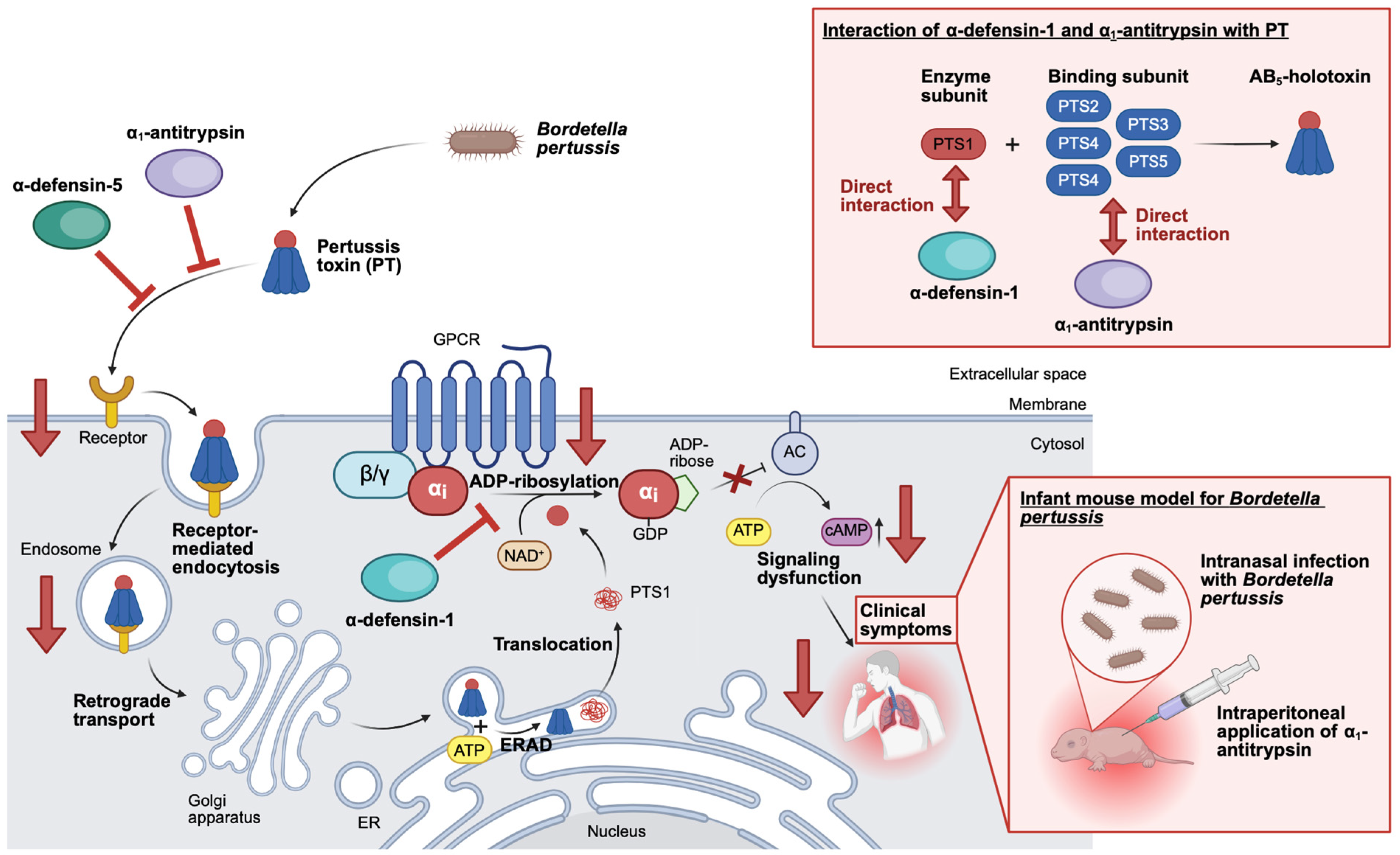
4. Examples of Human Endogenous Proteins/Peptides and Their Derivatives with Anti-PT Activity

| Human α- and β-Defensins (def) | ||||
|---|---|---|---|---|
| Inhibitor | Physiological Function | Rationale Behind Experimental Testing | Mechanism of Inhibition | References |
| α-def-1, α-def-2, α-def-3, α-def-4, α-def-5 | Antimicrobial peptides of the innate immune system are produced by different cell types and organs, depending on the defensin [45,46] | Hypothesis-driven—inhibition of multiple bacterial AB-type protein toxins was previously reported | Inhibition of enzyme activity and inhibition of toxin binding to cells Toxin inhibition, mechanism not tested yet Toxin inhibition, mechanism not tested yet Toxin inhibition, mechanism not tested yet Inhibition of enzyme activity and inhibition of toxin binding to cells | [43,44] |
| α-def-6, β-def-1, β-def-2 | No inhibition No inhibition No inhibition | [43,44] | ||
| Human α1-antitrypsin (α1AT) | ||||
| Inhibitor | Physiological function | Rationale behind experimental testing | Mechanism of inhibition | References |
| α1AT | Serin protease inhibitor of the SERPIN-family, activity regulation of serin proteases, e.g., neutrophil elastase within the lungs [47] | Screening | Inhibition of binding | [31] |
| Antithrombin, antithrombin with fondaparinux | Protease inhibitor of the SERPIN-family, Antithrombin, cleaves thrombin, and fondaparinux acts as an activator of the physiological function of antithrombin, a natural anticoagulant [47,48,49] | Hypothesis-driven—Belongs to the same group of protease inhibitors as α1AT | No inhibition | [31] |
| α1AT-HF, α1AT-HF P8, 42, 64, (α1AT-derived peptides) | No physiological function is attributed | Hypothesis-driven screening | Inhibition of intoxication, due to inhibition of binding (α1AT-HF) or a mechanism not yet tested | [50] |
| VIRIP, and other α1AT-derived peptides | VIRIP was previously identified as an inhibitor of HIV [51] | No inhibition | [50] | |
4.1. Group of Defensins as Inhibitors for Pertussis Toxin
4.2. α1AT and Derived Peptides as Inhibitors for Pertussis Toxin
5. Conclusions
Author Contributions
Funding
Institutional Review Board Statement
Informed Consent Statement
Data Availability Statement
Conflicts of Interest
Abbreviations
| α1AT | α1-antitrypsin |
| Gαi | α-subunit of inhibitory G-proteins |
| ART | ADP-ribosyltransferase |
| ADP | Adenosine diphosphate |
| AMP | Adenosine monophosphate |
| ATP | Adenosine triphosphate |
| AC | Adenylate cyclase |
| AMPs | Antimicrobial peptides |
| B. anthracis | Bacillus anthracis |
| B. pertussis | Bordetella pertussis |
| CHO-K1 cells | Chinese hamster ovary cells strain K1 |
| C. difficile | Clostridioides difficile |
| CDT | Clostridioides difficile toxin |
| cAMP | Cyclic AMP |
| def | Defensin |
| DT | Diphtheria toxin |
| ER | Endoplasmic reticulum |
| ERAD | ER-associated degradation |
| ECDC | European Center for Disease Prevention and Control |
| EPAC | Exchange proteins directly activated by cAMP |
| GDP | Guanosine diphosphate |
| GPCRs | G-protein-coupled receptors |
| HBDs | Human β-defensins |
| HDs | Human (enteric) Defensins |
| HNPs | Human Neutrophil Peptides |
| iGIST | Interference in Gαi-mediated Signal Transduction |
| LT | Lethal toxin |
| PT | Pertussis toxin |
| PTS1 | Pertussis toxin enzyme subunit |
| PTS2–5 | Pertussis toxin binding subunits S2, S3, S4, and S5 |
| PKA | Protein kinase A |
| TcdA | Toxin A |
| TcdB | Toxin B |
References
- European Centre for Disease Prevention and Control Epidemiological Update: Diphtheria Cases in Europe. Available online: https://www.ecdc.europa.eu/en/news-events/epidemiological-update-diphtheria-cases-europe (accessed on 9 January 2025).
- European Centre for Disease Prevention and Control. Increase of Pertussis Cases in the EU/EEA: 8 May 2024; European Centre for Disease Prevention and Control: Solna, Sweden, 2024. [Google Scholar]
- Ala’Aldeen, D.A.A.; Wooldridge, K.G. 13—Bacterial Pathogenicity. In Medical Microbiology, 8th ed.; Greenwood, D., Barer, M., Slack, R., Irving, W., Eds.; Churchill Livingstone: Edinburgh, UK, 2012; pp. 156–167. ISBN 978-0-7020-4089-4. [Google Scholar]
- Xiao, Y.; Yan, Z.; Ren, F.; Tan, Y. Bacterial Exotoxins in Medicine: Potential Value and Perspectives. Int. J. Med. Sci. 2025, 22, 2010–2019. [Google Scholar] [CrossRef] [Scilit]
- Aktories, K.; Barbieri, J.T. Bacterial Cytotoxins: Targeting Eukaryotic Switches. Nat. Rev. Microbiol. 2005, 3, 397–410. [Google Scholar] [CrossRef] [Scilit] [PubMed]
- Ma, L.; Caulfield, A.; Dewan, K.K.; Harvill, E.T. Pertactin-Deficient Bordetella Pertussis, Vaccine-Driven Evolution, and Reemergence of Pertussis. Emerg. Infect. Dis. 2021, 27, 1561–1566. [Google Scholar] [CrossRef] [Scilit] [PubMed]
- Mattoo, S.; Cherry, J.D. Molecular Pathogenesis, Epidemiology, and Clinical Manifestations of Respiratory Infections Due to Bordetella Pertussis and Other Bordetella Subspecies. Clin. Microbiol. Rev. 2005, 18, 326–382. [Google Scholar] [CrossRef] [Scilit]
- Ernst, K. Novel Strategies to Inhibit Pertussis Toxin. Toxins 2022, 14, 187. [Google Scholar] [CrossRef] [Scilit] [PubMed]
- Crichton, H.; Nkado, N.; Morrow, B.; Salie, S.; Procter, C. Critical Pertussis Infection in the Paediatric Intensive Care Unit: A Case Series in an Outbreak. S. Afr. J. Crit. Care 2025, 41, e2049. [Google Scholar] [CrossRef] [Scilit]
- Surridge, J.; Segedin, E.R.; Grant, C.C. Pertussis Requiring Intensive Care. Arch. Dis. Child. 2007, 92, 970–975. [Google Scholar] [CrossRef] [Scilit]
- Lietz, S.; Barth, H. Novel Endogenous Protein-Based Strategies to Inhibit Clinically Relevant Bacterial AB-Type Toxins Including Pertussis Toxin. Arch. Toxicol. 2026; online ahead of print. [CrossRef] [Scilit]
- Scanlon, K.; Skerry, C.; Carbonetti, N. Association of Pertussis Toxin with Severe Pertussis Disease. Toxins 2019, 11, 373. [Google Scholar] [CrossRef] [Scilit]
- Scanlon, K.; Skerry, C.; Carbonetti, N. Role of Major Toxin Virulence Factors in Pertussis Infection and Disease Pathogenesis. Adv. Exp. Med. Biol. 2019, 1183, 35–51. [Google Scholar] [CrossRef] [Scilit]
- Stein, P.E.; Boodhoo, A.; Armstrong, G.D.; Cockle, S.A.; Klein, M.H.; Read, R.J. The Crystal Structure of Pertussis Toxin. Structure 1994, 2, 45–57. [Google Scholar] [CrossRef] [Scilit]
- Tamura, M.; Nogimori, K.; Murai, S.; Yajima, M.; Ito, K.; Katada, T.; Ui, M.; Ishii, S. Subunit Structure of Islet-Activating Protein, Pertussis Toxin, in Conformity with the A-B Model. Biochemistry 1982, 21, 5516–5522. [Google Scholar] [CrossRef] [Scilit] [PubMed]
- Weiss, A.A.; Johnson, F.D.; Burns, D.L. Molecular Characterization of an Operon Required for Pertussis Toxin Secretion. Proc. Natl. Acad. Sci. USA 1993, 90, 2970–2974. [Google Scholar] [CrossRef] [Scilit] [PubMed]
- Armstrong, G.D.; Howard, L.A.; Peppler, M.S. Use of Glycosyltransferases to Restore Pertussis Toxin Receptor Activity to Asialoagalactofetuin. J. Biol. Chem. 1988, 263, 8677–8684. [Google Scholar] [CrossRef] [Scilit]
- Witvliet, M.H.; Burns, D.L.; Brennan, M.J.; Poolman, J.T.; Manclark, C.R. Binding of Pertussis Toxin to Eucaryotic Cells and Glycoproteins. Infect. Immun. 1989, 57, 3324–3330. [Google Scholar] [CrossRef] [Scilit]
- el Bayâ, A.; Linnemann, R.; von Olleschik-Elbheim, L.; Robenek, H.; Schmidt, M.A. Endocytosis and Retrograde Transport of Pertussis Toxin to the Golgi Complex as a Prerequisite for Cellular Intoxication. Eur. J. Cell Biol. 1997, 73, 40–48. [Google Scholar]
- Plaut, R.D.; Carbonetti, N.H. Retrograde Transport of Pertussis Toxin in the Mammalian Cell. Cell. Microbiol. 2008, 10, 1130–1139. [Google Scholar] [CrossRef] [Scilit]
- Banerjee, T.; Cilenti, L.; Taylor, M.; Showman, A.; Tatulian, S.A.; Teter, K. Thermal Unfolding of the Pertussis Toxin S1 Subunit Facilitates Toxin Translocation to the Cytosol by the Mechanism of Endoplasmic Reticulum-Associated Degradation. Infect. Immun. 2016, 84, 3388–3398. [Google Scholar] [CrossRef] [Scilit] [PubMed]
- Pande, A.H.; Moe, D.; Jamnadas, M.; Tatulian, S.A.; Teter, K. The Pertussis Toxin S1 Subunit Is a Thermally Unstable Protein Susceptible to Degradation by the 20S Proteasome. Biochemistry 2006, 45, 13734–13740. [Google Scholar] [CrossRef] [Scilit]
- Ernst, K.; Eberhardt, N.; Mittler, A.-K.; Sonnabend, M.; Anastasia, A.; Freisinger, S.; Schiene-Fischer, C.; Malešević, M.; Barth, H. Pharmacological Cyclophilin Inhibitors Prevent Intoxication of Mammalian Cells with Bordetella Pertussis Toxin. Toxins 2018, 10, 181. [Google Scholar] [CrossRef] [Scilit]
- Ernst, K.; Mittler, A.-K.; Winkelmann, V.; Kling, C.; Eberhardt, N.; Anastasia, A.; Sonnabend, M.; Lochbaum, R.; Wirsching, J.; Sakari, M.; et al. Pharmacological Targeting of Host Chaperones Protects from Pertussis Toxin in Vitro and in Vivo. Sci. Rep. 2021, 11, 5429. [Google Scholar] [CrossRef] [Scilit]
- Kellner, A.; Taylor, M.; Banerjee, T.; Britt, C.B.T.; Teter, K. A Binding Motif for Hsp90 in the A Chains of ADP-Ribosylating Toxins That Move from the Endoplasmic Reticulum to the Cytosol. Cell. Microbiol. 2019, 21, e13074. [Google Scholar] [CrossRef] [Scilit]
- Kellner, A.; Cherubin, P.; Harper, J.K.; Teter, K. Proline Isomerization as a Key Determinant for Hsp90-Toxin Interactions. Front. Cell. Infect. Microbiol. 2021, 11, 771653. [Google Scholar] [CrossRef] [Scilit]
- Bokoch, G.M.; Katada, T.; Northup, J.K.; Hewlett, E.L.; Gilman, A.G. Identification of the Predominant Substrate for ADP-Ribosylation by Islet Activating Protein. J. Biol. Chem. 1983, 258, 2072–2075. [Google Scholar] [CrossRef] [Scilit]
- Katada, T.; Ui, M. Direct Modification of the Membrane Adenylate Cyclase System by Islet-Activating Protein Due to ADP-Ribosylation of a Membrane Protein. Proc. Natl. Acad. Sci. USA 1982, 79, 3129–3133. [Google Scholar] [CrossRef] [Scilit]
- Tang, Q.; Chan, H.Y.; Huang, Y.; Wong, Y.H. Mechanisms of Pertussis Toxin Action: ADP-Ribosylation and Its Role in Pertussis Pathogenesis. Toxins 2026, 18, 148. [Google Scholar] [CrossRef] [Scilit]
- Hoonakker, M.E. In Vivo Models and In Vitro Assays for the Assessment of Pertussis Toxin Activity. Toxins 2021, 13, 565. [Google Scholar] [CrossRef] [Scilit] [PubMed]
- Lietz, S.; Sommer, A.; Sokolowski, L.-M.; Kling, C.; Rodríguez Alfonso, A.A.; Preising, N.; Alpízar-Pedraza, D.; King, J.; Streit, L.; Schröppel, B.; et al. Alpha-1 Antitrypsin Inhibits Pertussis Toxin. J. Biol. Chem. 2024, 300, 107950. [Google Scholar] [CrossRef] [Scilit] [PubMed]
- Nowakowska-Gołacka, J.; Sominka, H.; Sowa-Rogozińska, N.; Słomińska-Wojewódzka, M. Toxins Utilize the Endoplasmic Reticulum-Associated Protein Degradation Pathway in Their Intoxication Process. Int. J. Mol. Sci. 2019, 20, 1307. [Google Scholar] [CrossRef] [Scilit] [PubMed]
- Teter, K. Intracellular Trafficking and Translocation of Pertussis Toxin. Toxins 2019, 11, 437. [Google Scholar] [CrossRef] [Scilit]
- Ivaska, L.; Barkoff, A.-M.; Mertsola, J.; He, Q. Macrolide Resistance in Bordetella Pertussis: Current Situation and Future Challenges. Antibiotics 2022, 11, 1570. [Google Scholar] [CrossRef] [Scilit]
- Guillot, S.; Descours, G.; Gillet, Y.; Etienne, J.; Floret, D.; Guiso, N. Macrolide-Resistant Bordetella Pertussis Infection in Newborn Girl, France. Emerg. Infect. Dis. 2012, 18, 966–968. [Google Scholar] [CrossRef] [Scilit]
- Ma, K.; Sun, W.; Pan, G.; Xu, Y.; Shi, Y.; Chen, Y. Antimicrobial Resistance in Bordetella Pertussis: A Systematic Review and Meta-Analysis. Epidemiol. Infect. 2026, 154, e25. [Google Scholar] [CrossRef] [Scilit]
- Klein, N.P.; Bartlett, J.; Rowhani-Rahbar, A.; Fireman, B.; Baxter, R. Waning Protection after Fifth Dose of Acellular Pertussis Vaccine in Children. N. Engl. J. Med. 2012, 367, 1012–1019. [Google Scholar] [CrossRef] [Scilit]
- Mooi, F.R.; Van Der Maas, N.A.T.; Melker, H.E.D. Pertussis Resurgence: Waning Immunity and Pathogen Adaptation—Two Sides of the Same Coin. Epidemiol. Infect. 2014, 142, 685–694. [Google Scholar] [CrossRef] [Scilit]
- Tartof, S.Y.; Lewis, M.; Kenyon, C.; White, K.; Osborn, A.; Liko, J.; Zell, E.; Martin, S.; Messonnier, N.E.; Clark, T.A.; et al. Waning Immunity to Pertussis Following 5 Doses of DTaP. Pediatrics 2013, 131, e1047–e1052. [Google Scholar] [CrossRef] [Scilit] [PubMed]
- van Boven, M.; de Melker, H.E.; Schellekens, J.F.P.; Kretzschmar, M. Waning Immunity and Sub-Clinical Infection in an Epidemic Model: Implications for Pertussis in The Netherlands. Math. Biosci. 2000, 164, 161–182. [Google Scholar] [CrossRef] [Scilit]
- Bosso, M.; Ständker, L.; Kirchhoff, F.; Münch, J. Exploiting the Human Peptidome for Novel Antimicrobial and Anticancer Agents. Bioorg. Med. Chem. 2018, 26, 2719–2726. [Google Scholar] [CrossRef] [Scilit]
- Xiao, W.; Jiang, W.; Chen, Z.; Huang, Y.; Mao, J.; Zheng, W.; Hu, Y.; Shi, J. Advance in Peptide-Based Drug Development: Delivery Platforms, Therapeutics and Vaccines. Sig. Transduct. Target. Ther. 2025, 10, 74. [Google Scholar] [CrossRef] [Scilit] [PubMed]
- Kling, C.; Pulliainen, A.T.; Barth, H.; Ernst, K. Human Peptides α-Defensin-1 and -5 Inhibit Pertussis Toxin. Toxins 2021, 13, 480. [Google Scholar] [CrossRef] [Scilit] [PubMed]
- Kling, C.; Sommer, A.; Almeida-Hernandez, Y.; Rodríguez, A.; Perez-Erviti, J.A.; Bhadane, R.; Ständker, L.; Wiese, S.; Barth, H.; Pupo-Meriño, M.; et al. Inhibition of Pertussis Toxin by Human α-Defensins-1 and -5: Differential Mechanisms of Action. Int. J. Mol. Sci. 2023, 24, 10557. [Google Scholar] [CrossRef] [Scilit]
- Jarczak, J.; Kościuczuk, E.M.; Lisowski, P.; Strzałkowska, N.; Jóźwik, A.; Horbańczuk, J.; Krzyżewski, J.; Zwierzchowski, L.; Bagnicka, E. Defensins: Natural Component of Human Innate Immunity. Hum. Immunol. 2013, 74, 1069–1079. [Google Scholar] [CrossRef] [Scilit]
- Nagib, M.; Sayed, A.M.; Korany, A.H.; Abdelkader, K.; Shari, F.H.; Mackay, W.G.; Rateb, M.E. Human Defensins: Structure, Function, and Potential as Therapeutic Antimicrobial Agents with Highlights Against SARS CoV-2. Probiotics Antimicrob. Proteins 2025, 17, 1563–1583. [Google Scholar] [CrossRef] [Scilit]
- O’Brien, M.E.; Murray, G.; Gogoi, D.; Yusuf, A.; McCarthy, C.; Wormald, M.R.; Casey, M.; Gabillard-Lefort, C.; McElvaney, N.G.; Reeves, E.P. A Review of Alpha-1 Antitrypsin Binding Partners for Immune Regulation and Potential Therapeutic Application. Int. J. Mol. Sci. 2022, 23, 2441. [Google Scholar] [CrossRef] [Scilit]
- Schlömmer, C.; Brandtner, A.; Bachler, M. Antithrombin and Its Role in Host Defense and Inflammation. Int. J. Mol. Sci. 2021, 22, 4283. [Google Scholar] [CrossRef] [Scilit]
- Zhang, Y.; Zhang, M.; Tan, L.; Pan, N.; Zhang, L. The Clinical Use of Fondaparinux: A Synthetic Heparin Pentasaccharide. Prog. Mol. Biol. Transl. Sci. 2019, 163, 41–53. [Google Scholar] [CrossRef] [Scilit]
- Lietz, S.; Sokolowski, L.-M.; Beyschlag, A.; Rosenau, H.; Siewert, A.; Alfonso, A.A.R.; Preising, N.; Ständker, L.; Wiese, S.; Köhler, J.; et al. An Endogenous Human Peptide Derived from A1-Antitrypsin as a Novel Pharmacological Inhibitor of Bordetella Pertussis Toxin. Naunyn-Schmiedeberg’s Arch. Pharmacol. 2025, 399, 5987–6002. [Google Scholar] [CrossRef] [Scilit] [PubMed]
- Münch, J.; Ständker, L.; Adermann, K.; Schulz, A.; Schindler, M.; Chinnadurai, R.; Pöhlmann, S.; Chaipan, C.; Biet, T.; Peters, T.; et al. Discovery and Optimization of a Natural HIV-1 Entry Inhibitor Targeting the Gp41 Fusion Peptide. Cell 2007, 129, 263–275. [Google Scholar] [CrossRef] [Scilit] [PubMed]
- Barthold, L.; Heber, S.; Schmidt, C.Q.; Gradl, M.; Weidinger, G.; Barth, H.; Fischer, S. Human α-Defensin-6 Neutralizes Clostridioides Difficile Toxins TcdA and TcdB by Direct Binding. Int. J. Mol. Sci. 2022, 23, 4509. [Google Scholar] [CrossRef] [Scilit]
- Fischer, S.; Popoff, M.R.; Barth, H. Human Alpha-Defensin-1 Protects Cells from Intoxication with Clostridium Perfringens Iota Toxin. Pathog. Dis. 2018, 76, fty022. [Google Scholar] [CrossRef] [Scilit] [PubMed]
- Fischer, S.; Ückert, A.-K.; Landenberger, M.; Papatheodorou, P.; Hoffmann-Richter, C.; Mittler, A.-K.; Ziener, U.; Hägele, M.; Schwan, C.; Müller, M.; et al. Human Peptide α-Defensin-1 Interferes with Clostridioides Difficile Toxins TcdA, TcdB, and CDT. FASEB J. 2020, 34, 6244–6261. [Google Scholar] [CrossRef] [Scilit]
- Giesemann, T.; Guttenberg, G.; Aktories, K. Human α-Defensins Inhibit Clostridium Difficile Toxin B. Gastroenterology 2008, 134, 2049–2058. [Google Scholar] [CrossRef] [Scilit]
- Kim, C.; Gajendran, N.; Mittrücker, H.-W.; Weiwad, M.; Song, Y.-H.; Hurwitz, R.; Wilmanns, M.; Fischer, G.; Kaufmann, S.H.E. Human α-Defensins Neutralize Anthrax Lethal Toxin and Protect against Its Fatal Consequences. Proc. Natl. Acad. Sci. USA 2005, 102, 4830–4835. [Google Scholar] [CrossRef] [Scilit]
- Kim, C.; Slavinskaya, Z.; Merrill, A.R.; Kaufmann, S.H.E. Human α-Defensins Neutralize Toxins of the Mono-ADP-Ribosyltransferase Family. Biochem. J. 2006, 399, 225–229. [Google Scholar] [CrossRef] [Scilit]
- Korbmacher, M.; Fischer, S.; Landenberger, M.; Papatheodorou, P.; Aktories, K.; Barth, H. Human α-Defensin-5 Efficiently Neutralizes Clostridioides Difficile Toxins TcdA, TcdB, and CDT. Front. Pharmacol. 2020, 11, 1204. [Google Scholar] [CrossRef] [Scilit] [PubMed]
- Kim, C.; Kaufmann, S.H.E. Defensin: A Multifunctional Molecule Lives up to Its Versatile Name. Trends Microbiol. 2006, 14, 428–431. [Google Scholar] [CrossRef] [Scilit] [PubMed]
- Ganz, T. Defensins: Antimicrobial Peptides of Innate Immunity. Nat. Rev. Immunol. 2003, 3, 710–720. [Google Scholar] [CrossRef] [Scilit] [PubMed]
- Chan, E.D.; King, P.T.; Bai, X.; Schoffstall, A.M.; Sandhaus, R.A.; Buckle, A.M. The Inhibition of Serine Proteases by Serpins Is Augmented by Negatively Charged Heparin: A Concise Review of Some Clinically Relevant Interactions. Int. J. Mol. Sci. 2024, 25, 1804. [Google Scholar] [CrossRef] [Scilit]
- Rogers, J.; Kalsheker, N.; Wallis, S.; Speer, A.; Coutelle, C.H.; Woods, D.; Humphries, S.E. The Isolation of a Clone for Human α 1-Antitrypsin and the Detection of α 1-Antitrypsin in mRNA from Liver and Leukocytes. Biochem. Biophys. Res. Commun. 1983, 116, 375–382. [Google Scholar] [CrossRef] [Scilit]
- Strnad, P.; McElvaney, N.G.; Lomas, D.A. Alpha1-Antitrypsin Deficiency. N. Engl. J. Med. 2020, 382, 1443–1455. [Google Scholar] [CrossRef] [Scilit]
- Beatty, K.; Bieth, J.; Travis, J. Kinetics of Association of Serine Proteinases with Native and Oxidized Alpha-1-Proteinase Inhibitor and Alpha-1-Antichymotrypsin. J. Biol. Chem. 1980, 255, 3931–3934. [Google Scholar] [CrossRef] [Scilit]
- Duranton, J.; Bieth, J.G. Inhibition of Proteinase 3 by A1-Antitrypsin In Vitro Predicts Very Fast Inhibition In Vivo. Am. J. Respir. Cell Mol. Biol. 2003, 29, 57–61. [Google Scholar] [CrossRef] [Scilit]
- Wettstein, L.; Weil, T.; Conzelmann, C.; Müller, J.A.; Groß, R.; Hirschenberger, M.; Seidel, A.; Klute, S.; Zech, F.; Prelli Bozzo, C.; et al. Alpha-1 Antitrypsin Inhibits TMPRSS2 Protease Activity and SARS-CoV-2 Infection. Nat. Commun. 2021, 12, 1726. [Google Scholar] [CrossRef] [Scilit]
- Kelly-Robinson, G.A.; Reihill, J.A.; Lundy, F.T.; McGarvey, L.P.; Lockhart, J.C.; Litherland, G.J.; Thornbury, K.D.; Martin, S.L. The Serpin Superfamily and Their Role in the Regulation and Dysfunction of Serine Protease Activity in COPD and Other Chronic Lung Diseases. Int. J. Mol. Sci. 2021, 22, 6351. [Google Scholar] [CrossRef] [Scilit]
- Farady, C.J.; Craik, C.S. Mechanisms of Macromolecular Protease Inhibitors. Chembiochem 2010, 11, 2341–2346. [Google Scholar] [CrossRef] [Scilit] [PubMed]
- Travis, J.; Salvesen, G.S. Human Plasma Proteinase Inhibitors. Annu. Rev. Biochem. 1983, 52, 655–709. [Google Scholar] [CrossRef] [Scilit] [PubMed]
- Janciauskiene, S.; Welte, T. Well-Known and Less Well-Known Functions of Alpha-1 Antitrypsin. Its Role in Chronic Obstructive Pulmonary Disease and Other Disease Developments. Ann. Am. Thorac. Soc. 2016, 13, S280–S288. [Google Scholar] [CrossRef] [Scilit] [PubMed]
- Stoller, J.K.; Hupertz, V.; Aboussouan, L.S. Alpha-1 Antitrypsin Deficiency. In GeneReviews®; Adam, M.P., Feldman, J., Mirzaa, G.M., Pagon, R.A., Wallace, S.E., Amemiya, A., Eds.; University of Washington: Seattle, WA, USA, 1993. [Google Scholar]
- Gadek, J.E.; Klein, H.G.; Holland, P.V.; Crystal, R.G. Replacement Therapy of Alpha 1-Antitrypsin Deficiency. Reversal of Protease-Antiprotease Imbalance within the Alveolar Structures of PiZ Subjects. J. Clin. Investig. 1981, 68, 1158–1165. [Google Scholar] [CrossRef] [Scilit]
- Lietz, S.; Sokolowski, L.-M.; Barth, H.; Ernst, K. Alpha-1 Antitrypsin Inhibits Clostridium Botulinum C2 Toxin, Corynebacterium Diphtheriae Diphtheria Toxin and B. Anthracis Fusion Toxin. Sci. Rep. 2024, 14, 21257. [Google Scholar] [CrossRef] [Scilit]
- Lietz, S.; Sokolowski, L.-M.; Lindner, K.; Rodríguez, A.A.; Ständker, L.; Vogel, V.; Spellerberg, B.; Stenger, S.; Alpízar-Pedraza, D.; Ernst, K.; et al. The Antimicrobial Peptide Angie 5 Inhibits TcdA and TcdB from Clostridioides Difficile. Cell. Mol. Life Sci. 2025, 82, 265. [Google Scholar] [CrossRef] [Scilit]


Disclaimer/Publisher’s Note: The statements, opinions and data contained in all publications are solely those of the individual author(s) and contributor(s) and not of MDPI and/or the editor(s). MDPI and/or the editor(s) disclaim responsibility for any injury to people or property resulting from any ideas, methods, instructions or products referred to in the content. |
© 2026 by the authors. Licensee MDPI, Basel, Switzerland. This article is an open access article distributed under the terms and conditions of the Creative Commons Attribution (CC BY) license.
Share and Cite
Lietz, S.; Barth, H. The Battle Against Pertussis: Discovery of Endogenous Human Proteins and Peptides as Toxin-Inhibitors. Toxins 2026, 18, 208. https://doi.org/10.3390/toxins18050208
Lietz S, Barth H. The Battle Against Pertussis: Discovery of Endogenous Human Proteins and Peptides as Toxin-Inhibitors. Toxins. 2026; 18(5):208. https://doi.org/10.3390/toxins18050208
Chicago/Turabian StyleLietz, Stefanie, and Holger Barth. 2026. "The Battle Against Pertussis: Discovery of Endogenous Human Proteins and Peptides as Toxin-Inhibitors" Toxins 18, no. 5: 208. https://doi.org/10.3390/toxins18050208
APA StyleLietz, S., & Barth, H. (2026). The Battle Against Pertussis: Discovery of Endogenous Human Proteins and Peptides as Toxin-Inhibitors. Toxins, 18(5), 208. https://doi.org/10.3390/toxins18050208