Gut Epithelium of the Highly Toxic Ribbon Worm Cephalothrix cf. simula (Palaeonemertea, Nemertea) Contains Tetrodotoxin-Positive Bacterial Endosymbionts


Abstract
1. Introduction
2. Results
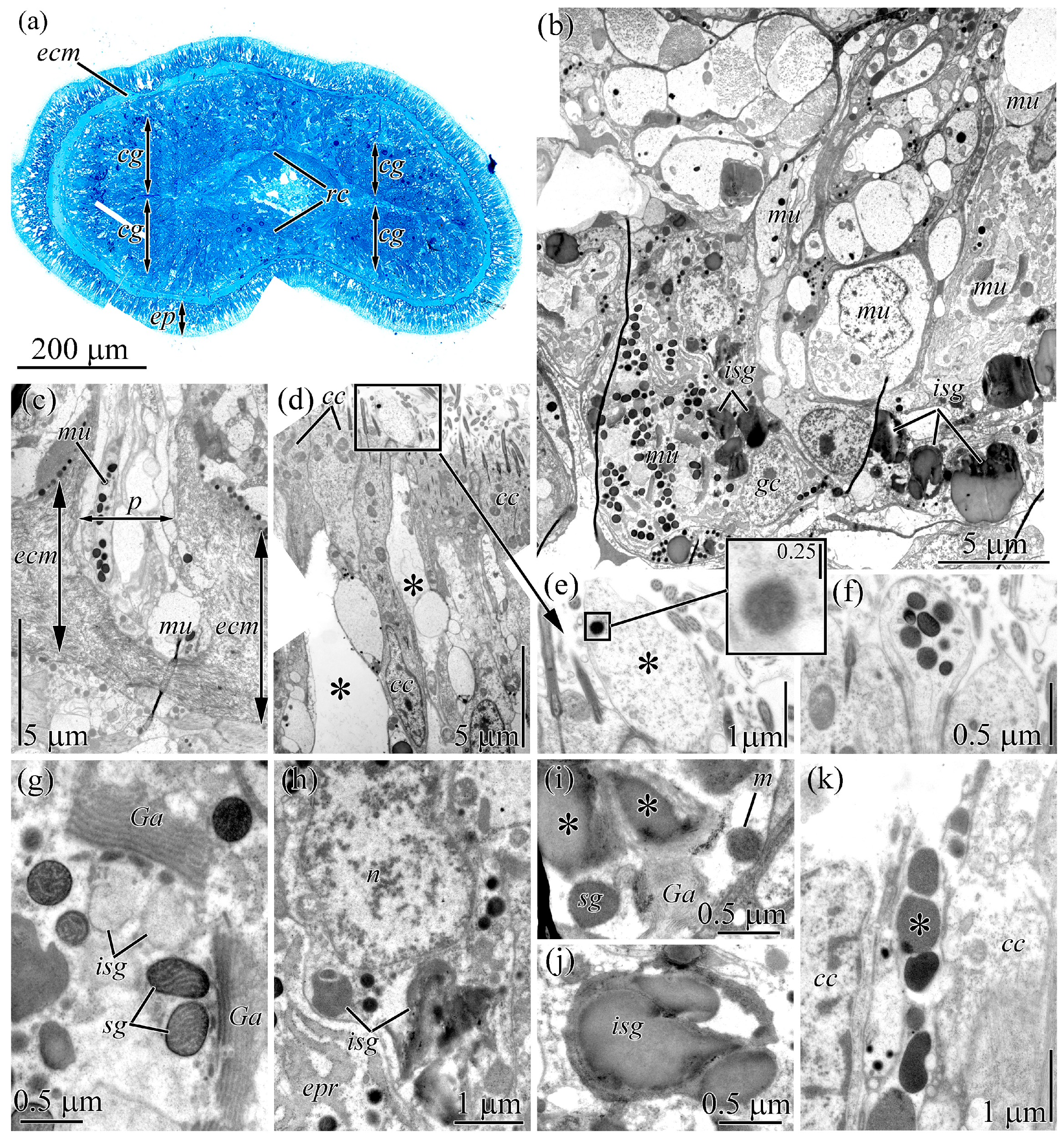
2.1. Cephalic Gland
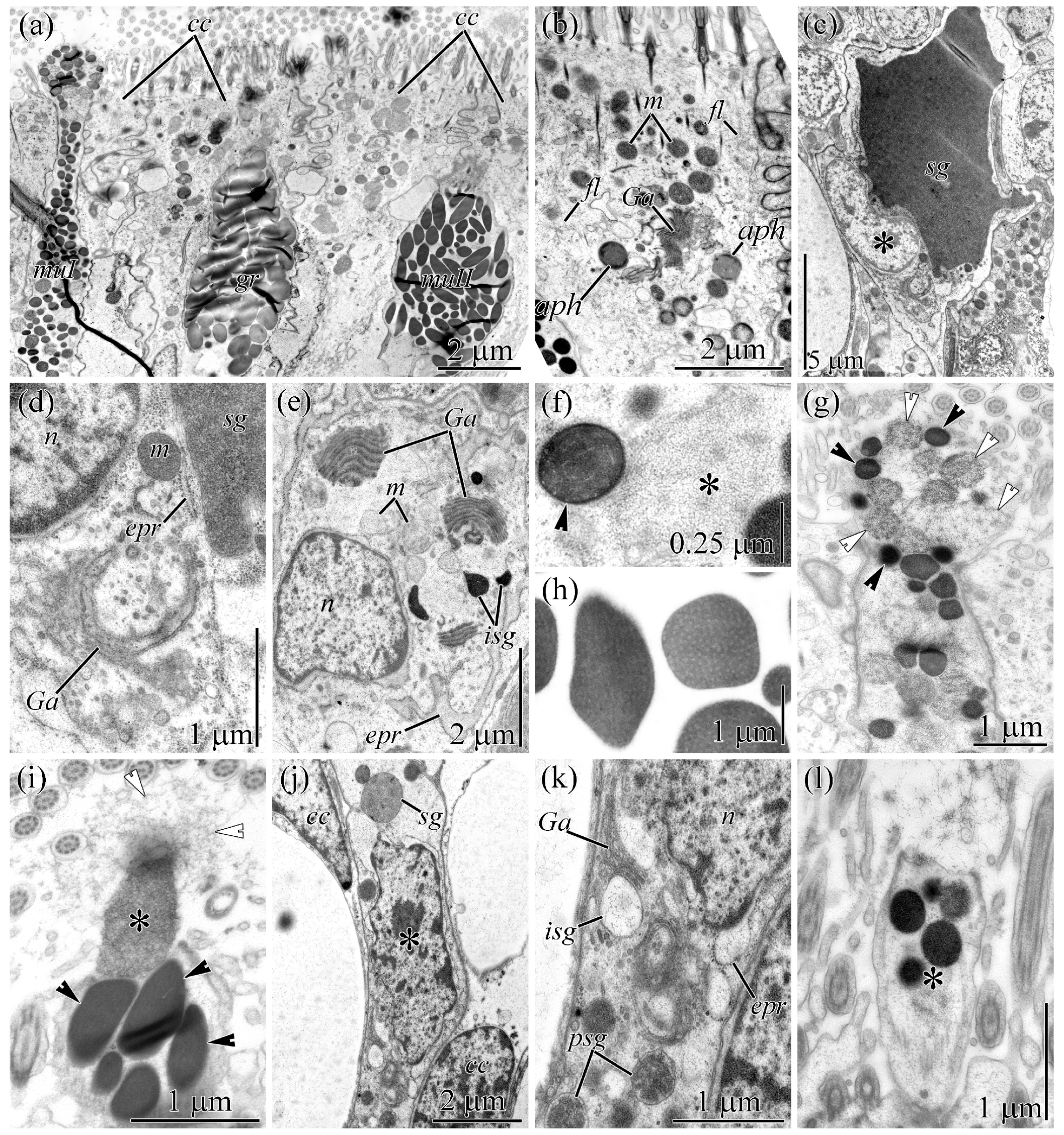
2.2. Integument
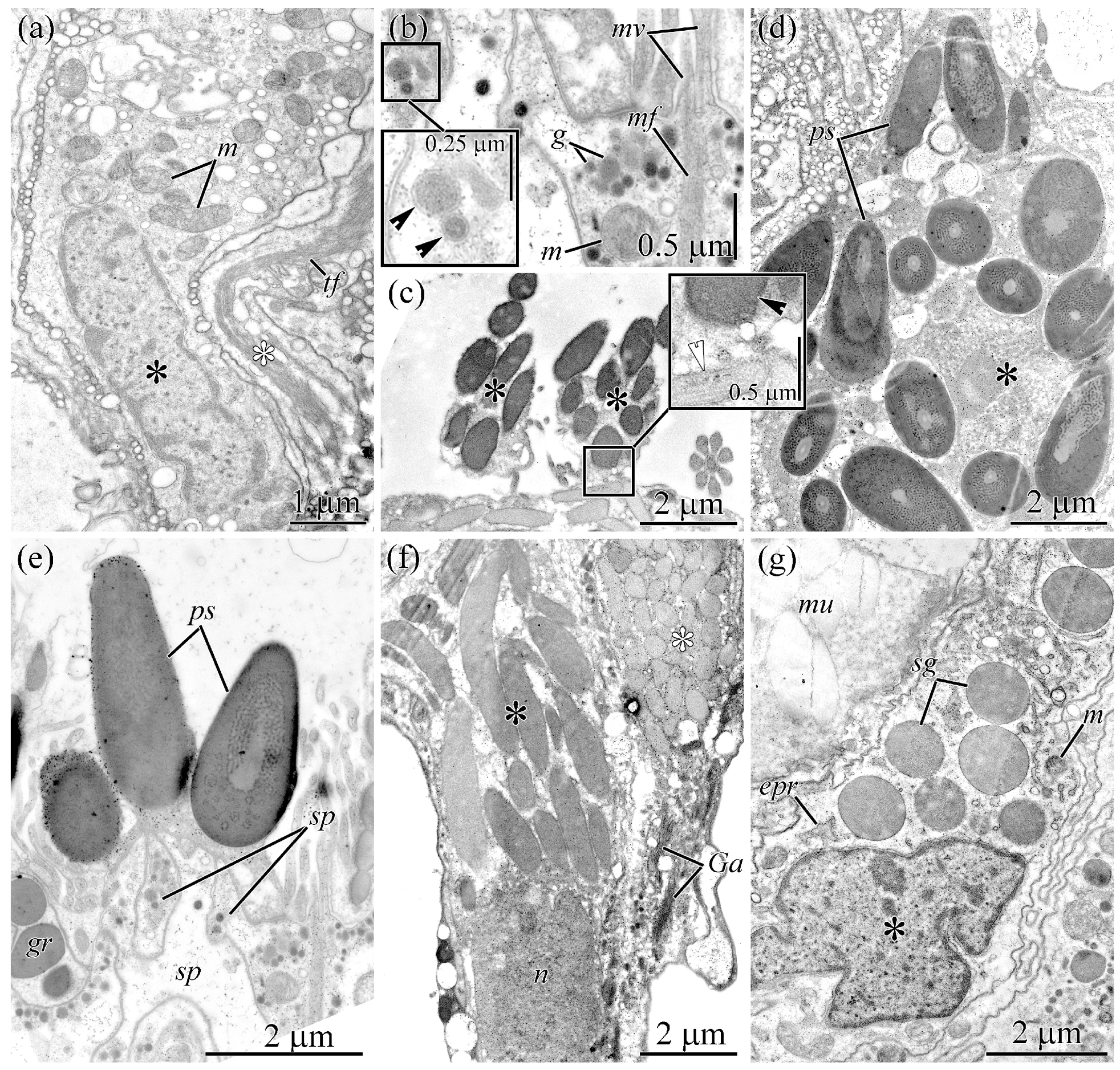
2.3. Proboscis
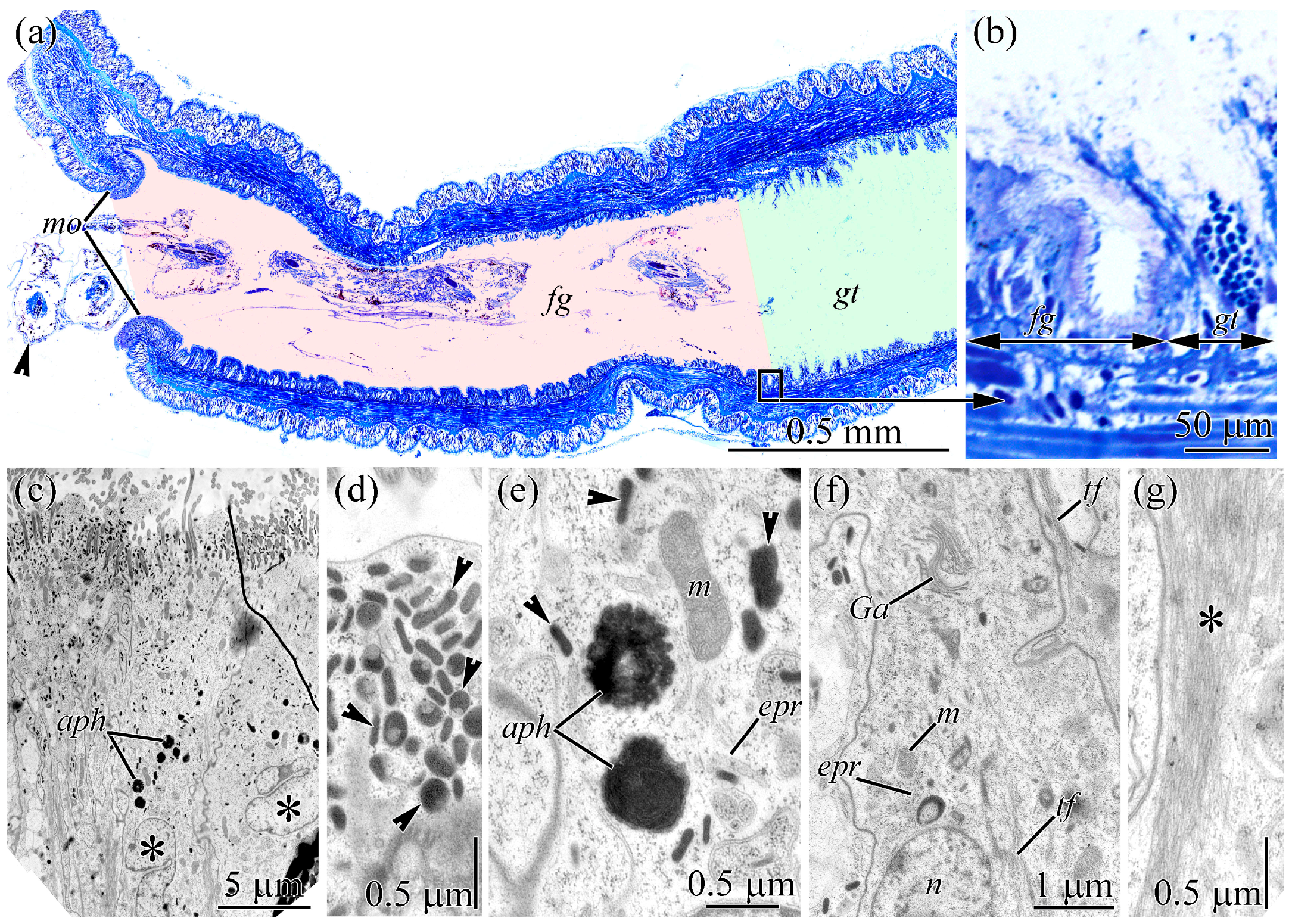
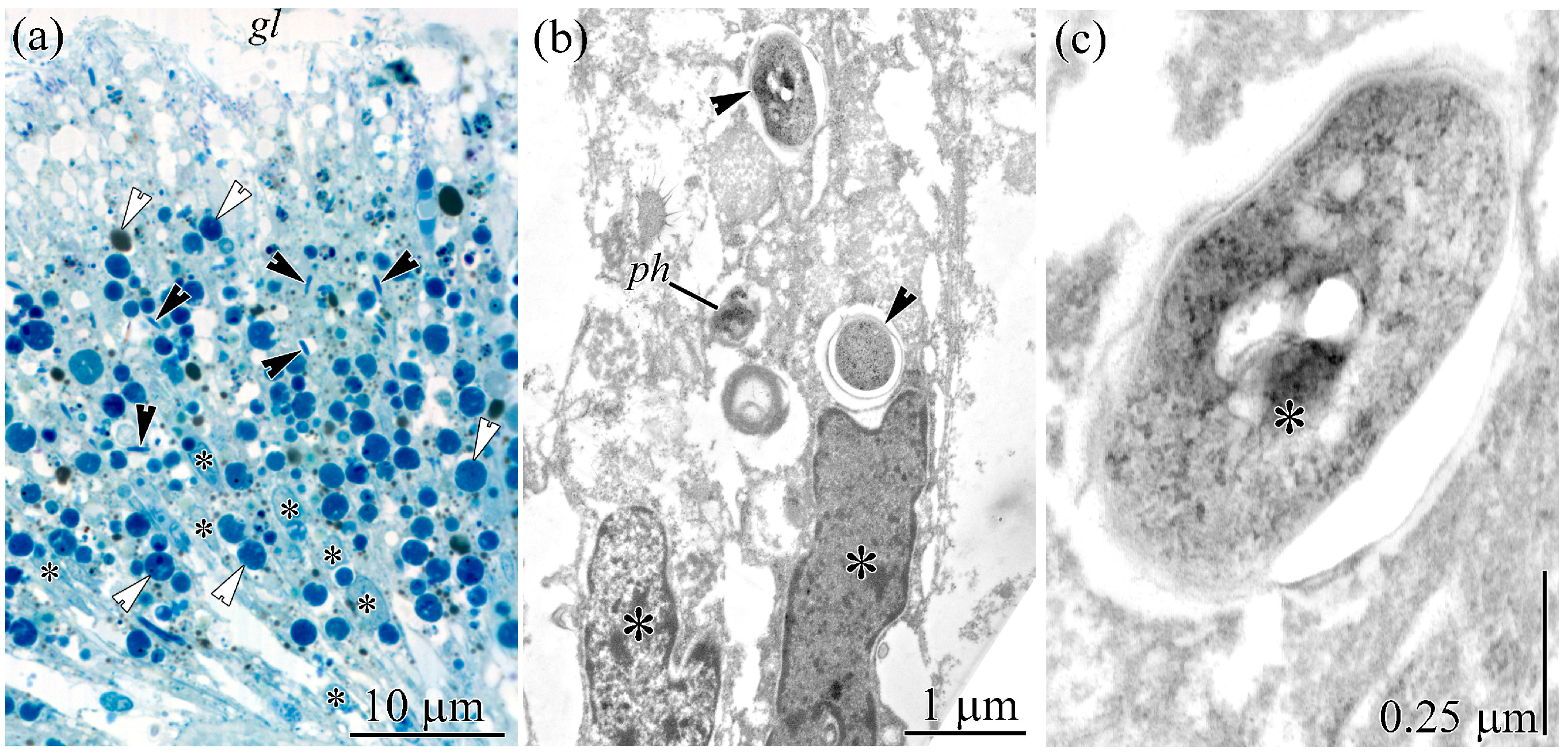
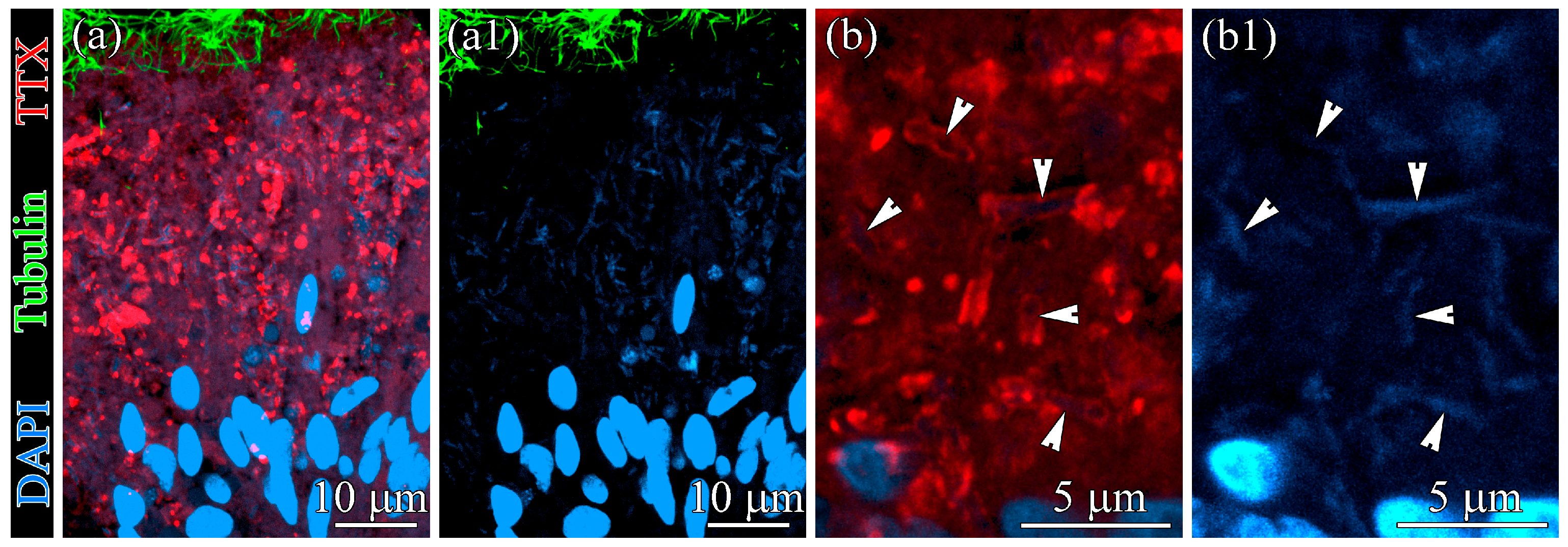
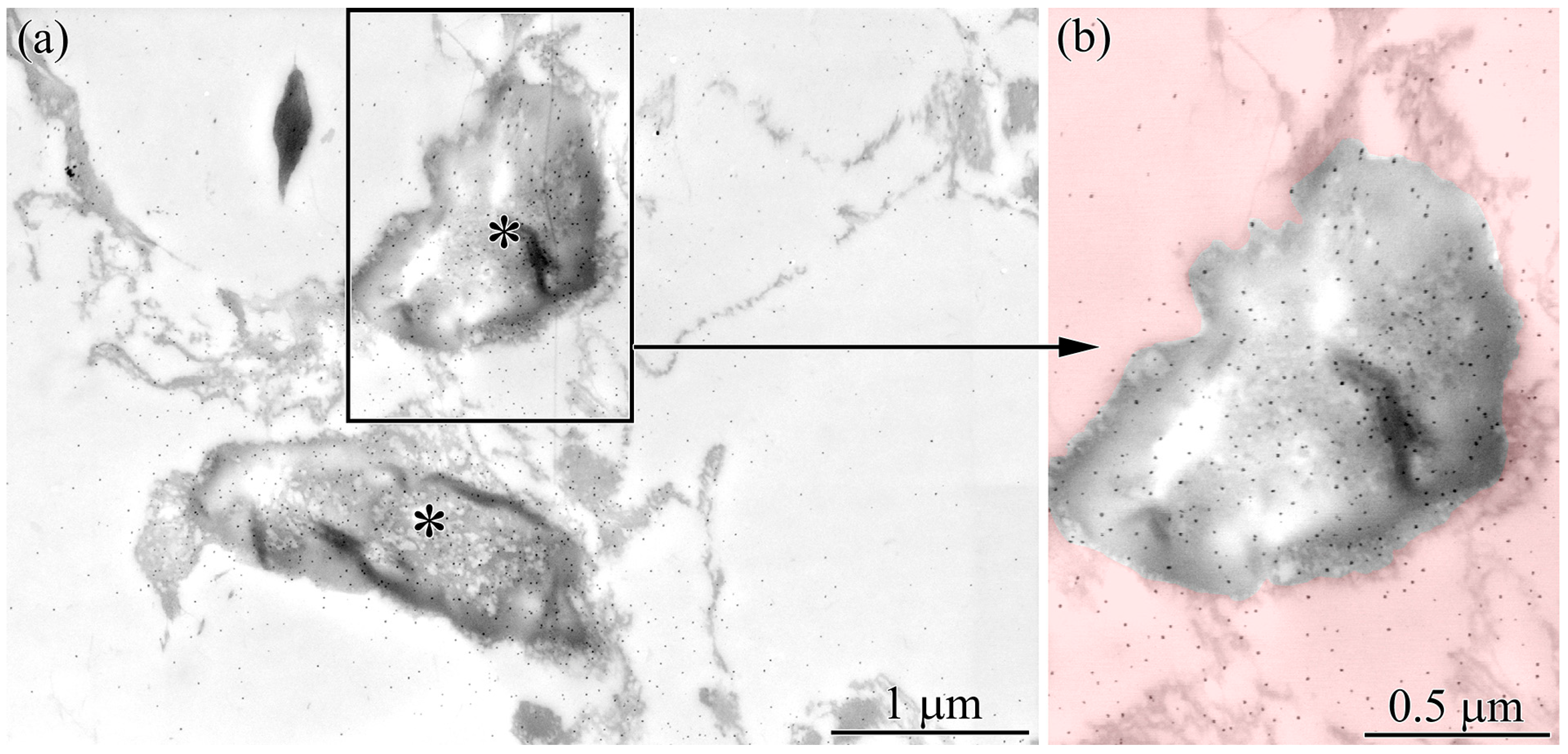
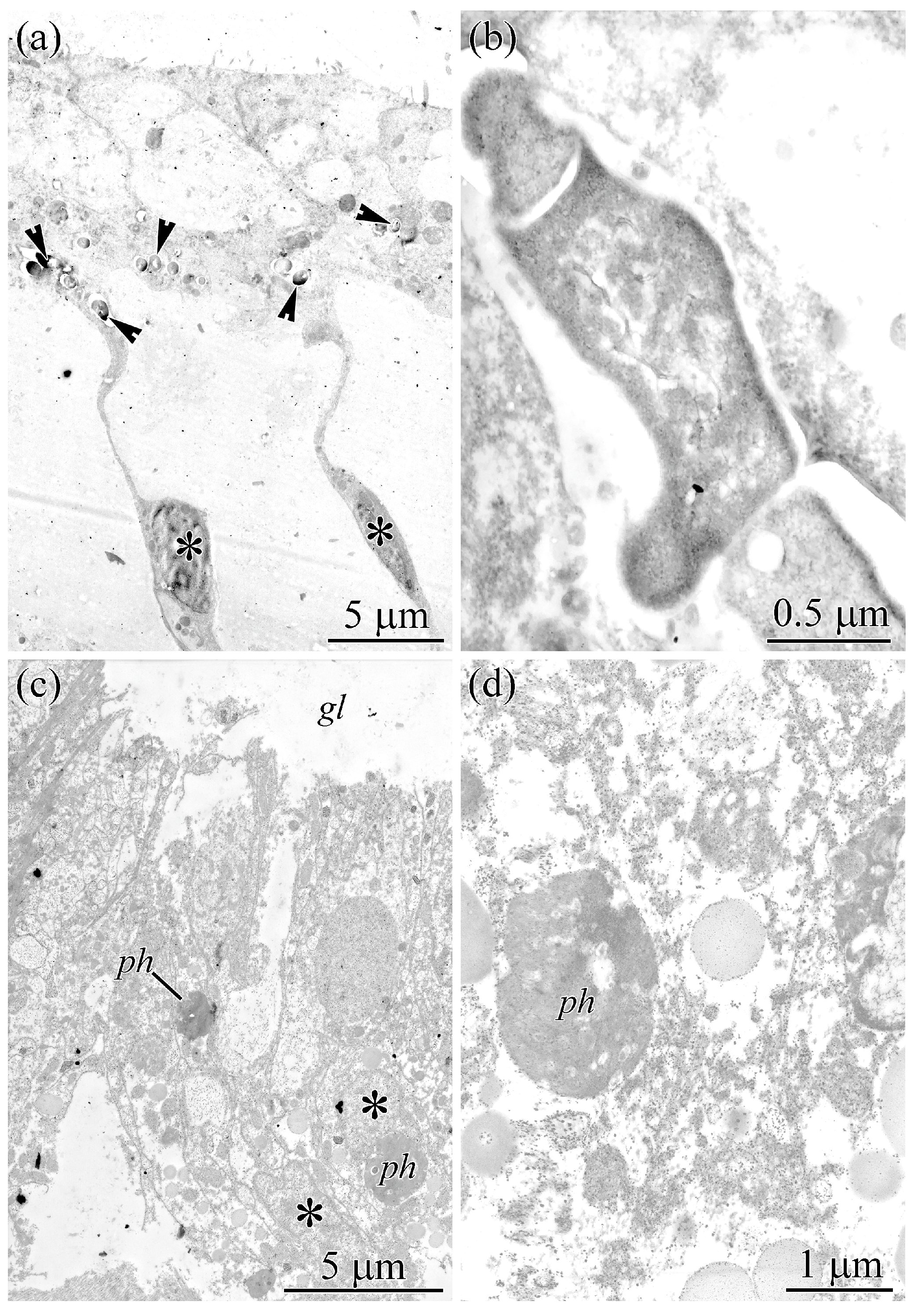
2.4. Gut
3. Discussion
4. Conclusions
- In this study, we report the presence of TTX-positive intracellular symbiotic bacteria within the tissues of TTX-bearing animals. Because all members of the closely related Cephalothrix simula species complex contain high concentrations of TTX, it is reasonable to hypothesize that symbiotic TTX-positive microorganisms are widespread throughout this group. This hypothesis will be tested in future studies using ultrastructural analyses of the gut in C. simula and other highly toxic nemerteans.
- Given that TTX is considered a promising anesthetic and analgesic agent for the treatment of various types of pain, future research should focus on isolating, genetically identifying, and cultivating the endosymbiotic bacteria detected in this study under controlled conditions. Subsequent analyses should assess TTX production in culture and aim to identify the genes responsible for toxin biosynthesis, which remain unknown. Such studies would clarify whether these endosymbionts directly produce TTX and could facilitate the development of recombinant TTX production technologies for biomedical applications.
- Based on our findings, we hypothesize that C. cf. simula forms symbiotic associations with specific bacterial strains and may stimulate TTX production in these partners. In this context, nemerteans may represent a key link in the transfer of TTX to higher trophic levels, including predators such as pufferfish. Intracellular TTX synthesis by symbiotic microflora may also occur in other TTX-bearing animals (e.g., flatworms and newts), highlighting the need to search for comparable symbionts across diverse taxa.
5. Materials and Methods
5.1. Collection of Nemerteans
5.2. Ultrastructural Analysis
5.3. Confocal Laser Scanning Microscopy
5.4. Immunoelectron Microscopy
Supplementary Materials
Author Contributions
Funding
Institutional Review Board Statement
Informed Consent Statement
Data Availability Statement
Acknowledgments
Conflicts of Interest
Abbreviations
| TTX | Tetrodotoxin |
| CLSM | Confocal laser scanning microscopy |
| GA | Golgi apparatus |
| ER | Endoplasmic reticulum |
| ECM | Extracellular matrix |
| TEM | Transmission electron microscopy |
| PVDF | Hydrophobic polyvinylidene fluoride |
| HPLC-MS/MS | High-performance liquid chromatography with tandem mass-spectrometry |
References
- Matsumura, K. Production of Tetrodotoxin in Puffer Fish Embryos. Environ. Toxicol. Pharmacol. 1998, 6, 217–219. [Google Scholar] [CrossRef]
- Gao, W.; Kanahara, Y.; Tatsuno, R.; Soyano, K.; Nishihara, G.N.; Urata, C.; Takatani, T.; Arakawa, O. Maturation-Associated Changes in Internal Distribution and Intra-Ovarian Microdistribution of Tetrodotoxin in the Pufferfish Takifugu pardalis. Fish. Sci. 2018, 84, 723–732. [Google Scholar] [CrossRef]
- Sato, S.; Kawaura, R.; Togashi, K.; Mizusawa, N.; Yasumoto, K.; Takada, K.; Amano, M.; Watabe, S. De Novo Accumulation of Tetrodotoxin and Its Analogs in Pufferfish and Newt and Dosage-Driven Accumulation of Toxins in Newt: Tissue Distribution and Anatomical Localization. J. Mar. Sci. Eng. 2021, 9, 1004. [Google Scholar] [CrossRef]
- Tsuruda, K.; Arakawa, O.; Kawatsu, K.; Hamano, Y.; Takatani, T.; Noguchi, T. Secretory glands of tetrodotoxin in the skin of the Japanese newt Cynops pyrrhogaster. Toxicon 2002, 40, 131–136. [Google Scholar] [CrossRef] [PubMed]
- Mebs, D.; Arakawa, O.; Yotsu-Yamashita, M. Tissue distribution of tetrodotoxin in the red-spotted newt Notophthalmus viridescens. Toxicon 2010, 55, 1353–1357. [Google Scholar] [CrossRef]
- Mailho-Fontana, P.L.; Jared, C.; Antoniazzi, M.M.; Sciani, J.M.; Pimenta, D.C.; Stokes, A.N.; Grant, T.; Brodie, E.D., III; Brodie, E.D., Jr. Variations in tetrodotoxin levels in populations of Taricha granulosa are expressed in the morphology of their cutaneous glands. Sci. Rep. 2019, 9, 18490. [Google Scholar] [CrossRef]
- Salvitti, L.; Wood, S.A.; Taylor, D.I.; McNabb, P.; Cary, S.C. First Identification of Tetrodotoxin (TTX) in the Flatworm Stylochoplana sp.; a Source of TTX for the Sea Slug Pleurobranchaea maculata. Toxicon 2015, 95, 23–29. [Google Scholar] [CrossRef]
- Okabe, T.; Saito, R.; Yamamoto, K.; Watanabe, R.; Kaneko, Y.; Yanaoka, M.; Furukoshi, S.; Yasukawa, S.; Ito, M.; Oyama, H.; et al. The Role of Toxic Planocerid Flatworm Larvae on Tetrodotoxin Accumulation in Marine Bivalves. Aquat. Toxicol. 2021, 237, 105908. [Google Scholar] [CrossRef]
- Oyama, H.; Ito, M.; Suo, R.; Goto-Inoue, N.; Morisasa, M.; Mori, T.; Sugita, H.; Mori, T.; Nakahigashi, R.; Adachi, M.; et al. Changes in Tissue Distribution of Tetrodotoxin and Its Analogues in Association with Maturation in the Toxic Flatworm, Planocera multitentaculata. Mar. Biotechnol. 2022, 24, 1158–1167. [Google Scholar] [CrossRef]
- Suo, R.; Tanaka, M.; Oyama, H.; Kojima, Y.; Yui, K.; Sakakibara, R.; Nakahigashi, R.; Adachi, M.; Nishikawa, T.; Sugita, H.; et al. Tetrodotoxins in the Flatworm Planocera multitentaculata. Toxicon 2022, 216, 169–173. [Google Scholar] [CrossRef]
- Williams, B.L.; Stark, M.R.; Caldwell, R.L. Microdistribution of tetrodotoxin in two species of blue-ringed octopuses (Hapalochlaena lunulata and Hapalochlaena fasciata) detected by fluorescent immunolabeling. Toxicon 2012, 60, 1307–1313. [Google Scholar] [CrossRef]
- Asakawa, M.; Matsumoto, T.; Umezaki, K.; Kaneko, K.; Yu, X.; Gomez-Delan, G.; Tomano, S.; Noguchi, T.; Ohtsuka, S. Toxicity and toxin composition of the greater blue-ringed octopus Hapalochlaena lunulata from ishigaki island, Okinawa prefecture, Japan. Toxins 2019, 11, 245. [Google Scholar] [CrossRef] [PubMed]
- Ali, A.E.; Arakawa, O.; Noguchi, T.; Miyazawa, K.; Shida, Y.; Hashimoto, K. Tetrodotoxin and related substances in a ribbon worm Cephalothrix linearis (Nemertean). Toxicon 1990, 28, 1083–1093. [Google Scholar] [CrossRef] [PubMed]
- Asakawa, M.; Toyoshima, T.; Shida, Y.; Noguchi, T.; Miyazawa, K. Paralytic toxins in a ribbon worm Cephalothrix species (Nemertean) adherent to cultured oysters in Hiroshima Bay, Hiroshima Prefecture, Japan. Toxicon 2000, 38, 763–773. [Google Scholar] [CrossRef] [PubMed]
- Asakawa, M.; Toyoshima, T.; Ito, K.; Bessho, K.; Yamaguchi, C.; Tsunetsugu, S.; Shida, Y.; Kajihara, H.; Mawatari, S.F.; Noguchi, T.; et al. Paralytic toxicity in the ribbon worm Cephalothrix species (Nemertea) in Hiroshima Bay, Hiroshima Prefecture, Japan and the isolation of tetrodotoxin as a main component of its toxins. Toxicon 2003, 41, 747–753. [Google Scholar] [CrossRef]
- Asakawa, M.; Ito, K.; Kajihara, H. Highly toxic ribbon worm Cephalothrix simula containing tetrodotoxin in Hiroshima Bay, Hiroshima Prefecture, Japan. Toxins 2013, 5, 376–395. [Google Scholar] [CrossRef]
- Zhang, X.; Qiao, K.; Cui, R.; Xu, M.; Cai, S.; Huang, Q.; Liu, Z. Tetrodotoxin: The state-of-the-art progress in characterization, detection, biosynthesis, and transport enrichment. Mar. Drugs 2024, 22, 531. [Google Scholar] [CrossRef]
- González-Cano, R.; Ruiz-Cantero, M.C.; Santos-Caballero, M.; Gómez-Navas, C.; Tejada, M.Á.; Nieto, F.R. Tetrodotoxin, a potential drug for neuropathic and cancer pain relief? Toxins 2021, 13, 483. [Google Scholar] [CrossRef]
- Chau, R.; Kalaitzis, J.A.; Neilan, B.A. On the origins and biosynthesis of tetrodotoxin. Aquat. Toxicol. 2011, 104, 61–72. [Google Scholar] [CrossRef]
- Lago, J.; Rodríguez, L.P.; Blanco, L.; Vieites, J.M.; Cabado, A.G. Tetrodotoxin, an extremely potent marine neurotoxin: Distribution, toxicity, origin and therapeutical uses. Mar. Drugs 2015, 13, 6384–6406. [Google Scholar] [CrossRef]
- Wang, J.; Fan, Y. Isolation and characterization of a Bacillus species capable of producing tetrodotoxin from the puffer fish Fugu obscurus. World J. Microbiol. Biotechnol. 2010, 26, 1755–1760. [Google Scholar] [CrossRef]
- Tu, N.; Tu, Q.; Tung, H.; Hieu, D.; Romero-Jovel, S. Detection of tetrodotoxin-producing Providencia rettgeri T892 in Lagocephalus pufferfish. World J. Microbiol. Biotechnol. 2014, 30, 1829–1835. [Google Scholar] [CrossRef] [PubMed]
- Nguyen, T.H.; Nguyen, H.N.; Nghe, D.V.; Nguyen, K.H. Biological activities of tetrodotoxin-producing Enterococcus faecium AD1 isolated from puffer fishes. BioMed. Res. Int. 2015, 2015, 973235. [Google Scholar] [CrossRef] [PubMed]
- Yuan, Y.; Guan, F.; Yu, C.; Chen, Z.; Zhang, J. Isolation and toxigenic characteristics of a tetrodotoxin producing bacteria. Turk. J. Fish. Aquat. Sci. 2021, 22, TRJFAS19531. [Google Scholar] [CrossRef]
- Zhang, H.; Hou, J.; Zhu, Y.; Wu, B.; Ren, J.; Sun, Z.; Liu, X. Comparative analysis of intestinal microbiota between tetrodotoxin-containing and tetrodotoxin-free Takifugu rubripes. Mar. Drugs 2025, 24, 140. [Google Scholar] [CrossRef]
- Maran, B.A.V.; Iwamoto, E.; Okuda, J.; Matsuda, S.; Taniyama, S.; Shida, Y.; Asakawa, M.; Ohtsuka, S.; Nakai, T.; Boxshall, G.A. Isolation and characterization of bacteria from the copepod Pseudocaligus fugu ectoparasitic on the panther puffer Takifugu pardalis with the emphasis on TTX. Toxicon 2007, 50, 779–790. [Google Scholar] [CrossRef]
- Wang, X.J.; Yu, R.C.; Luo, X.; Zhou, M.J.; Lin, X.T. Toxin-screening and identification of bacteria isolated from highly toxic marine gastropod Nassarius semiplicatus. Toxicon 2008, 52, 55–61. [Google Scholar] [CrossRef]
- Wei, F.; Ma, T.; Gong, X.; Zhang, N.; Bao, B. Identification of tetrodotoxin-producing bacteria from goby Yongeichthys criniger. Toxicon 2015, 104, 46–51. [Google Scholar] [CrossRef]
- Lehman, E.M.; Brodie, E.D., Jr.; Brodie, E.D., III. No evidence for an endosymbiotic bacterial origin of tetrodotoxin in the newt Taricha granulosa. Toxicon 2004, 44, 243–249. [Google Scholar] [CrossRef]
- Vaelli, P.M.; Theis, K.R.; Williams, J.E.; O’Connell, L.A.; Foster, J.A.; Eisthen, H.L. The skin microbiome facilitates adaptive tetrodotoxin production in poisonous newts. eLife 2020, e53898. [Google Scholar] [CrossRef]
- Carroll, S.; McEvoy, E.G.; Gibson, R. The production of tetrodotoxin-like substances by nemertean worms in conjunction with bacteria. J. Exp. Mar. Biol. Ecol. 2003, 288, 51–63. [Google Scholar] [CrossRef]
- Magarlamov, T.Y.; Beleneva, I.A.; Chernyshev, A.V.; Kuhlevsky, A.D. Tetrodotoxin-producing Bacillus sp. from the ribbon worm (Nemertea) Cephalothrix simula (Iwata, 1952). Toxicon 2014, 85, 46–51. [Google Scholar] [CrossRef] [PubMed]
- Noguchi, T.; Jeon, J.K.; Arakawa, O.; Sugita, H.; Deguchi, Y.; Shida, Y.; Hashimoto, K. Occurrence of tetrodotoxin and anhydrotetrodotoxin in Vibrio sp. isolated from the intestines of a xanthid crab, Atergatis floridus. J. Biochem. 1986, 99, 311–314. [Google Scholar] [CrossRef] [PubMed]
- Hwang, D.F.; Arakawa, O.; Saito, T.; Noguchi, T.; Simidu, U.; Tsukamoto, K.; Shida, Y.; Hashimoto, K. Tetrodotoxin-producing bacteria from the blue-ringed octopus Octopus maculosus. Mar. Biol. 1989, 100, 327–332. [Google Scholar] [CrossRef]
- Mahmud, Y.; Arakawa, O.; Ichinose, A.; Tanu, M.B.; Takatani, T.; Tsuruda, K.; Kawatsu, K.; Hamano, Y.; Noguchi, T. Intracellular visualization of tetrodotoxin (TTX) in the skin of a puffer Tetraodon nigroviridis by immunoenzymatic tecnique. Toxicon 2003, 41, 605–611. [Google Scholar] [CrossRef]
- Magarlamov, T.Y.; Shokur, O.A.; Chernyshev, A.V. Distribution of tetrodotoxin in the ribbon worm Lineus alborostratus (Takakura, 1898) (Nemertea): Immunoelectron and immunofluorescence studies. Toxicon 2016, 112, 29–34. [Google Scholar] [CrossRef]
- Malykin, G.V.; Chernyshev, A.V.; Magarlamov, T.Y. Intrabody tetrodotoxin distribution and possible hypothesis for its migration in ribbon worms Cephalothrix cf. simula (Palaeonemertea, Nemertea). Mar. Drugs 2021, 19, 494. [Google Scholar] [CrossRef]
- Malykin, G.V.; Velansky, P.V.; Magarlamov, T.Y. Tetrodotoxin and its analogues (TTXs) in the food-capture and defense organs of the palaeonemertean Cephalothrix cf. simula. Toxins 2024, 16, 43. [Google Scholar] [CrossRef]
- Tanu, M.B.; Mahmud, Y.; Arakawa, O.; Takatani, T.; Kajihara, H.; Kawatsu, K.; Hamano, Y.; Asakawa, M.; Miyazawa, K.; Noguchi, T. Immunoenzymatic visualization of tetrodotoxin (TTX) in Cephalothrix species (Nemertea: Anopla: Palaeonemertea: Cephalotrichidae) and Planocera reticulata (Platyhelminthes: Turbellaria: Polycladida: Planoceridae). Toxicon 2004, 44, 515–520. [Google Scholar] [CrossRef]
- Malykin, G.V.; Velansky, P.V.; Melnikova, D.I.; Magarlamov, T.Y. Tetrodotoxins in larval development of ribbon worm Cephalothrix cf. simula (Palaeonemertea, Nemertea). Mar. Biotechnol. 2023, 25, 918–934. [Google Scholar] [CrossRef]
- Jerlström-Hultqvist, J.; Gallot-Lavallée, L.; Salas-Leiva, D.E.; Curtis, B.A.; Záhonová, K.; Čepička, I.; Stairs, C.W.; Pipaliya, S.; Dacks, J.B.; Archibald, J.M.; et al. A unique symbiosome in an anaerobic single-celled eukaryote. Nat. Commun. 2024, 15, 9726. [Google Scholar] [CrossRef] [PubMed]
- Moya, A.; Peretó, J.; Gil, R.; Latorre, A. Learning how to live together: Genomic insights into prokaryote-animal symbioses. Nat. Rev. Genet. 2008, 9, 218–229. [Google Scholar] [CrossRef] [PubMed]
- Fronk, D.C.; Sachs, J.L. Symbiotic organs: The nexus of host-microbe evolution. Trends Ecol. Evol. 2022, 37, 599–610. [Google Scholar] [CrossRef] [PubMed]
- Lund, M.B.; Kjeldsen, K.U.; Schramm, A. The earthworm-Verminephrobacter symbiosis: An emerging experimental system to study extracellular symbiosis. Front. Microbiol. 2014, 5, 128. [Google Scholar] [CrossRef]
- Mosher, H.S.; Fuhrman, F.A. Occurrence and origin of tetrodotoxin. In Seafood Toxins; Ragelis, E.P., Ed.; American Chemical Society: Washington, DC, USA, 1984; pp. 333–344. [Google Scholar]
- Li, Z.; Tian, J.; Lai, Y.; Lee, C.H.; Cai, Z.; Yu, C.F. Puffer fish gut microbiota studies revealed unique bacterial co-occurrence patterns and new insights on tetrodotoxin producers. Mar. Drugs 2020, 18, 278. [Google Scholar] [CrossRef]
- Noguchi, T.; Arakawa, O.; Takatani, T. TTX accumulation in pufferfish. Comp. Biochem. Physiol. Part D Genom. Proteom. 2006, 1, 145–152. [Google Scholar] [CrossRef]
- Yasumoto, T.; Tooru, M. Fluorometric determination of tetrodotoxin by high performance liquid chromatography. Agric. Biol. Chem. 1985, 49, 3077–3080. [Google Scholar] [CrossRef]
- Itoi, S.; Suzuki, M.; Asahina, K.; Sawayama, E.; Nishikubo, J.; Oyama, H.; Takei, M.; Shiibashi, N.; Takatani, T.; Arakawa, O.; et al. Role of Maternal Tetrodotoxin in Survival of Larval Pufferfish. Toxicon 2018, 148, 95–100. [Google Scholar] [CrossRef]
- Itoi, S.; Sato, T.; Takei, M.; Yamada, R.; Ogata, R.; Oyama, H.; Teranishi, S.; Kishiki, A.; Wada, T.; Noguchi, K.; et al. The planocerid flatworm is a main supplier of toxin to tetrodotoxin-bearing fish juveniles. Chemosphere 2020, 249, 126217. [Google Scholar] [CrossRef]
- Kajihara, H.; Sun, S.C.; Chernyshev, A.V.; Chen, H.X.; Ito, K.; Asakawa, M.; Maslakova, S.A.; Norenburg, J.L.; Strand, M.; Sundberg, P.; et al. Taxonomic identity of a tetrodotoxin-accumulating ribbon-worm Cephalothrix simula (Nemertea: Palaeonemertea): A Species Artificially Introduced from the Pacific to Europe. Zool. Sci. 2013, 30, 985–997. [Google Scholar] [CrossRef]
- Shimizu, Y.; Kobayashi, M. Apparent lack of tetrodotoxin biosynthesis in captured Taricha torosa and Taricha granulosa. Chem. Pharm. Bull. 1983, 31, 3625–3631. [Google Scholar] [CrossRef]
- Hanifin, C.T.; Brodie, E.D., III; Brodie, E.D., Jr. Tetrodotoxin levels of the rough-skin newt, Taricha granulosa, inscreas in long-term captivity. Toxicon 2002, 40, 1149–1153. [Google Scholar] [CrossRef] [PubMed]
- Yotsu-Yamashita, M.; Gilhen, J.; Russell, R.W.; Krysko, K.L.; Melaun, C.; Kurz, A.; Kauferstein, S.; Kordis, D.; Mebs, D. Variability of tetrodotoxin and of its analogues in the red-spotted newt, Notophthalmus viridescens (Amphibia: Urodela: Salamandridae). Toxicon 2012, 59, 257–264. [Google Scholar] [CrossRef] [PubMed]
- Shirai, K.; Ito, M.; Yamamoto, T.; Morimura, M.; Watanabe, I.; Kashitani, M.; Takizawa, S.; Kaneko, Y.; Nagahama, K.; Hayashi, A.; et al. Trophic role of the tetrodotoxin-bearing flatworm Plancera multitentaculata in the marine food web. Mar. Biotechnol. 2026, 28, 9. [Google Scholar] [CrossRef]
- Melnikova, D.I.; Chernyshev, A.V.; Magarlamov, T.Y. DNA metabarcoding to assess the diet of a highly toxic ribbon worm Cephalothrix cf. simula (Nemertea: Palaeonemertea). Invertebr. Biol. 2025, 144, 1–10. [Google Scholar] [CrossRef]
- Malykin, G.V.; Puzanov, M.S.; Velansky, P.V.; Kuznetsov, V.G.; Magarlamov, T.Y. Tetrodotoxin in diet items of highly toxic ribbon worm Cephalothrix cf. simula (Palaeonemertea, Nemertea). Toxicon 2026, 273, 109012. [Google Scholar] [CrossRef]
- Malykin, G.V.; Velansky, P.V.; Magarlamov, T.Y. Females of tetrodotoxin-containing ribbon worms of Cephalothrix simula species complex (Palaeonemertea, Nemertea) keep high toxicity and produce toxic eggs during long-term captivity. Mar. Biotechnol. 2025, 27, 147. [Google Scholar] [CrossRef]
- Iwata, F. The fauna of Akkeshi Bay. XX. Nemertini in Hokkaido. J. Fac. Sci. Hokkaido Univ. Ser. VI Zool. 1954, 12, 1–39. [Google Scholar]
- Chernyshev, A.V.; Polyakova, N.E. An integrative description of a new Cephalothrix species (Nemertea: Palaeonemertea) from the South China Sea. Zootaxa 2021, 4908, 584–594. [Google Scholar] [CrossRef]


Disclaimer/Publisher’s Note: The statements, opinions and data contained in all publications are solely those of the individual author(s) and contributor(s) and not of MDPI and/or the editor(s). MDPI and/or the editor(s) disclaim responsibility for any injury to people or property resulting from any ideas, methods, instructions or products referred to in the content. |
© 2026 by the authors. Licensee MDPI, Basel, Switzerland. This article is an open access article distributed under the terms and conditions of the Creative Commons Attribution (CC BY) license.
Share and Cite
Magarlamov, T.Y.; Malykin, G.V. Gut Epithelium of the Highly Toxic Ribbon Worm Cephalothrix cf. simula (Palaeonemertea, Nemertea) Contains Tetrodotoxin-Positive Bacterial Endosymbionts. Toxins 2026, 18, 152. https://doi.org/10.3390/toxins18030152
Magarlamov TY, Malykin GV. Gut Epithelium of the Highly Toxic Ribbon Worm Cephalothrix cf. simula (Palaeonemertea, Nemertea) Contains Tetrodotoxin-Positive Bacterial Endosymbionts. Toxins. 2026; 18(3):152. https://doi.org/10.3390/toxins18030152
Chicago/Turabian StyleMagarlamov, Timur Yu., and Grigorii V. Malykin. 2026. "Gut Epithelium of the Highly Toxic Ribbon Worm Cephalothrix cf. simula (Palaeonemertea, Nemertea) Contains Tetrodotoxin-Positive Bacterial Endosymbionts" Toxins 18, no. 3: 152. https://doi.org/10.3390/toxins18030152
APA StyleMagarlamov, T. Y., & Malykin, G. V. (2026). Gut Epithelium of the Highly Toxic Ribbon Worm Cephalothrix cf. simula (Palaeonemertea, Nemertea) Contains Tetrodotoxin-Positive Bacterial Endosymbionts. Toxins, 18(3), 152. https://doi.org/10.3390/toxins18030152