Strategies for Removal of Protein-Bound Uremic Toxins in Hemodialysis

 , , , , , and
Abstract
1. Introduction

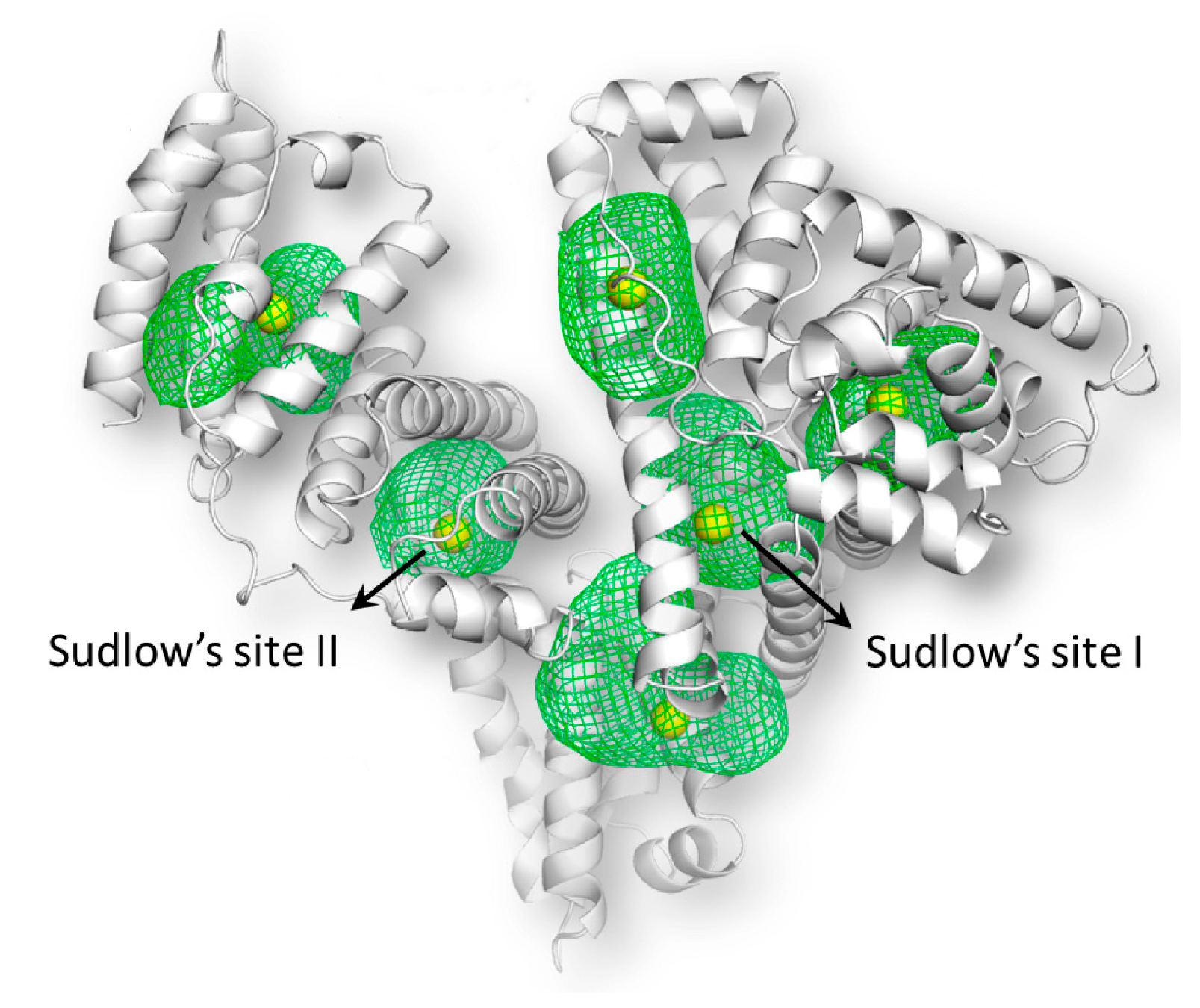
| PBUT | Albumin Binding Site | Concentrations in Healthy Adults (mg/L) [28] | Concentration in ESKD (mg/L) [28] | Free Fraction | Dissociation Constant (M) | References |
|---|---|---|---|---|---|---|
| Indoxyl sulfate | Sudlow I/II | 0.5 ± 4.0 | 37.1 ± 26.5 | 7.0–9.4% | Site I: 1.10 × 10⁻³ Site II: 3.10 × 10⁻⁵ | [4,5] |
| p-Cresyl sulfate | Sudlow I/II | 1.9 ± 2.3 | 23.0 ± 16.9 | 8.0–9.0% | Site I: Unknown Site II: 3.07 × 10⁻⁴ | [4,5] |
| Indole-3-acetic acid | Sudlow I/II | 17.5 ± 17.5 | 1004 ± 702 | 14.0–16.3% | Site I: 3.27 × 10⁻³ Site II: 6.72 × 10⁻⁵ | [3,5] |
| Hippuric acid | Conflicting literature reports | 3.0 ± 2.0 | 109.4 ± 64.7 | 50–60% | Site I: Unknown Site II: 7.8 × 10⁻⁴ | [4,5,29] |
| 3-Carboxy-4-methyl-5-propyl-2-furanpropionic acid | Sudlow I | 4.6 ± 1.8 | 26.0 ± 10.2 | <1% | Site I: 7.6 × 10⁻⁸ | [30] |
| Kynurenic Acid | Sudlow I | (5.5 ± 1.3) × 10−3 | (151 ± 76) × 10−3 | 29% | Site I: 9.7 × 10⁻³ | [31,32] |
| p-Cresyl glucuronide | Unknown | 0.03 ± 0.02 [33] | 0.93 ± 0.60 [33] | 79% | Unknown | [34] |
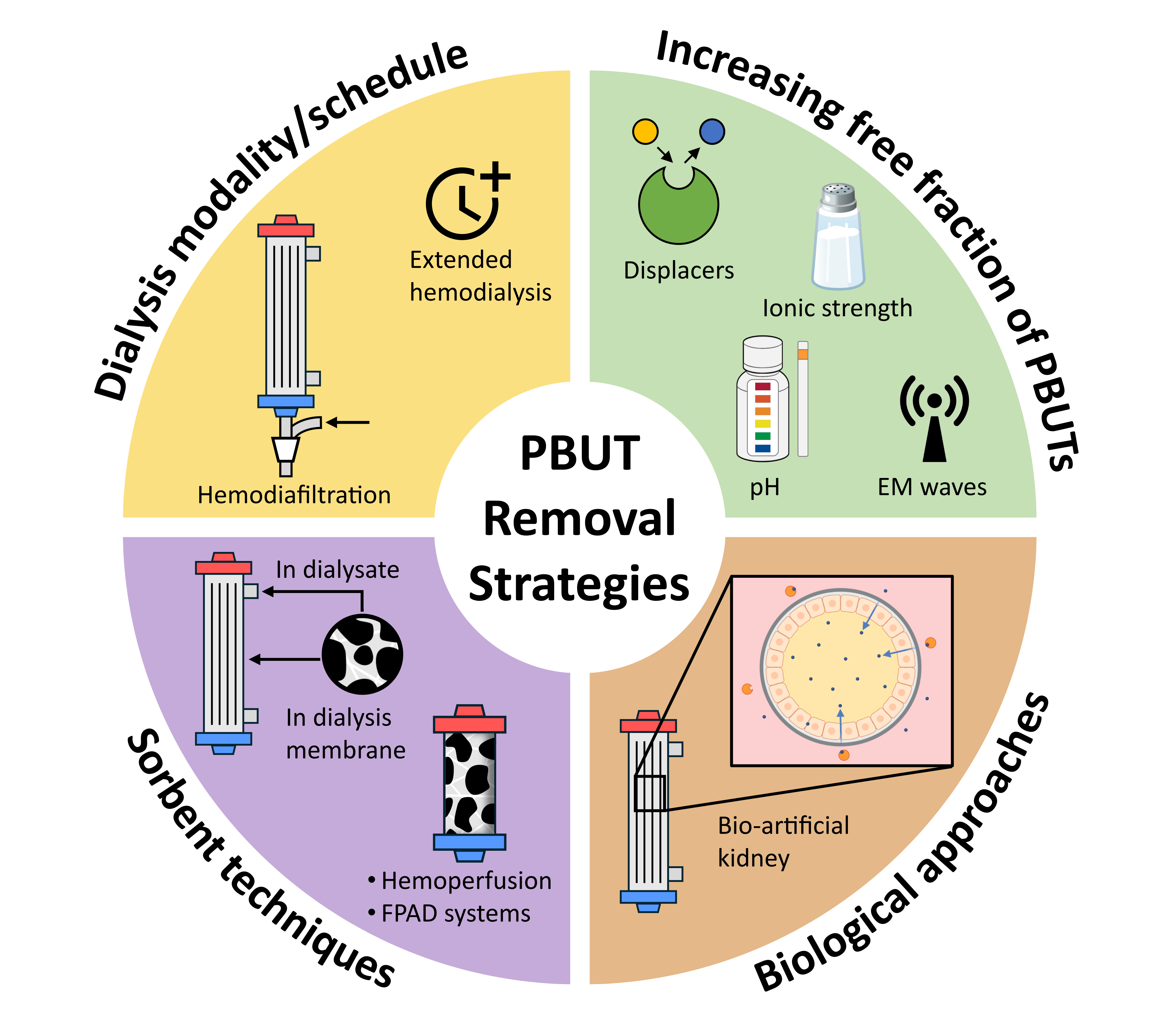
2. Dialysis Modality or Schedule
3. Increasing the Free Fraction of PBUTs in Plasma
3.1. Use of Chemical Displacers
| Displacer | Primary Albumin Binding Site | Elimination Pathway | References |
|---|---|---|---|
| Ibuprofen | Site II | Metabolized in the liver into inactive metabolites, which are excreted in urine | [65] |
| Furosemide | Site I | Minimal hepatic metabolism; primarily excreted unchanged in urine | [52] |
| Tryptophan | Site II | Metabolized in the liver; most metabolites, including several PBUTs, are excreted in urine | [66] |
| Salvianolic acids | Site II | Metabolized in the liver; most metabolites are excreted in urine | [67] |
| Free fatty acids | Site II | β-oxidation in mitochondria, primarily in the liver | [68] |
3.2. Increased Plasma Ionic Strength (IPIS)
3.3. Changing the pH
3.4. Electromagnetic Field/Electrical Current
4. Sorbent Techniques
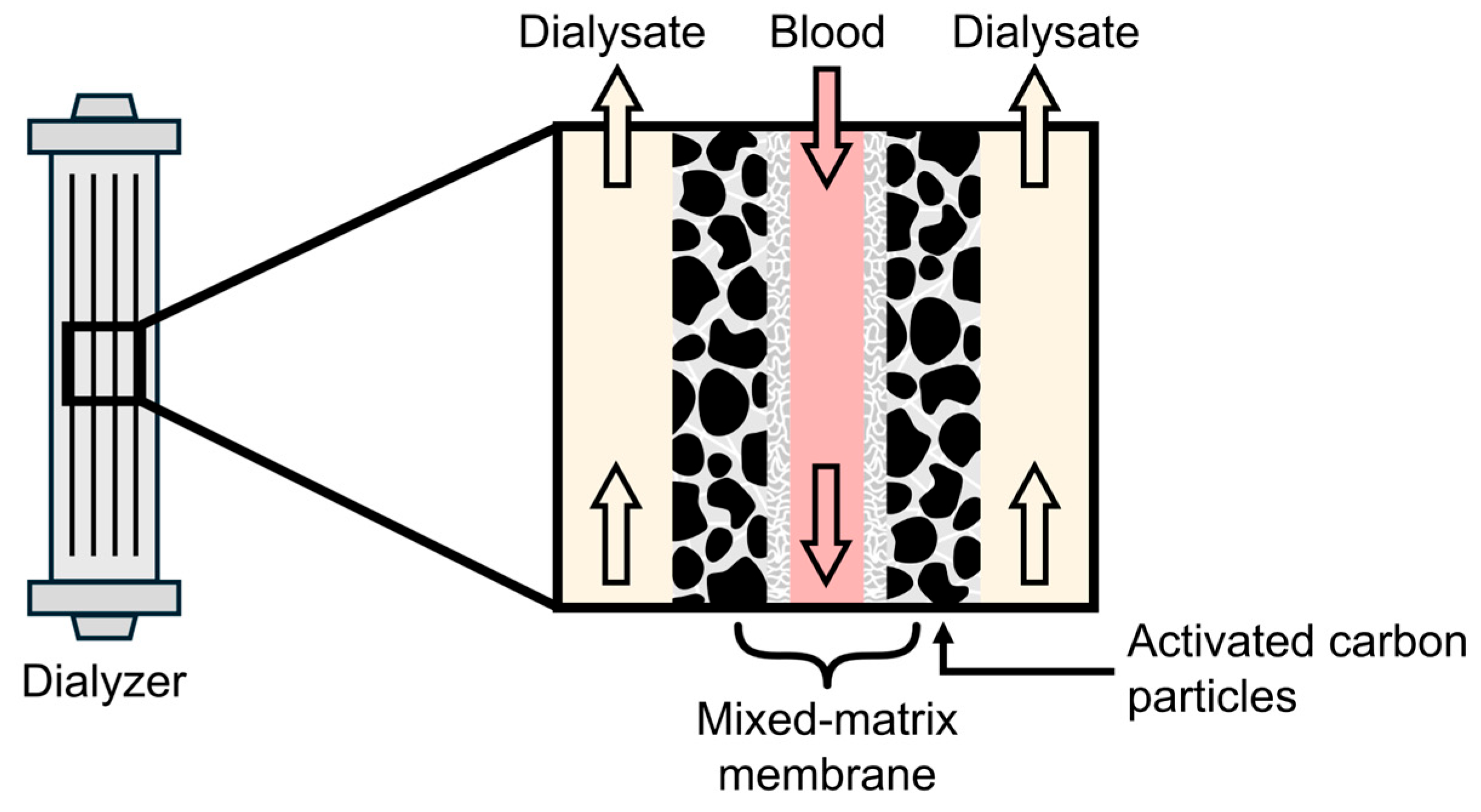
4.1. Sorbent-Containing Dialysis Membranes
4.2. Sorbents in the Dialysate
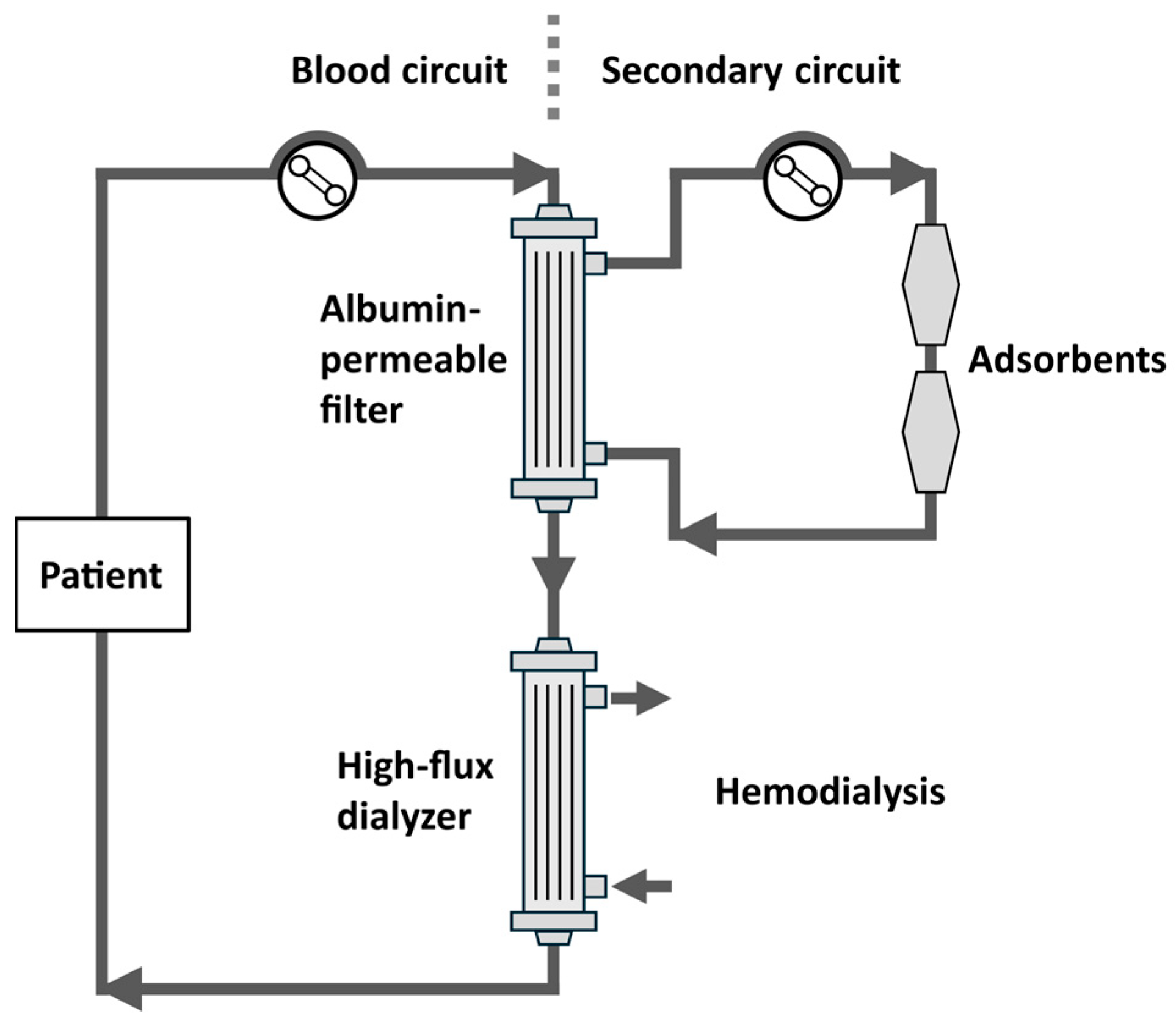
4.3. FPAD and Hemofiltrate-Reinfusion Systems
4.4. Hemoperfusion
5. Bioartificial Kidney
6. Discussion and Future Outlook
| Strategy | Mode of Action | TRL | Tested In Vivo | Clinical Evidence | Expected Increase in PBUT Clearance | Biocompatibility Concerns | Advantages | Limitations |
|---|---|---|---|---|---|---|---|---|
| Hemodiafiltration (HDF) | Diffusive and convective transport of PBUTs | 9 | Yes | Yes | +/− | None | Already used in clinical practice | More resource-intensive than standard HD, effect on PBUT removal uncertain |
| Chemical Displacers | Displacement of PBUTs from albumin | 4–5 | Yes | Yes | ++ | Moderate | Easily integrated into conventional HD | Risk of systemic toxicity, may affect other protein-bound drugs, sustained infusion needed |
| Increased Plasma Ionic Strength (IPIS) | Modification of PBUT–protein binding | 3–5 | Yes | Yes | + | Moderate | May synergistically improve clearance with other strategies | Complex device, sustained infusion and removal of excess ions needed, risk of ion (sodium) loading |
| Changing pH | Modification of PBUT–protein binding | 2–3 | No | No | +/− | High | Non-pharmacological approach | No effect in (patho-)physiological window, requires precise monitoring |
| Electromagnetic Waves (EM) | Modification of PBUT–protein binding | 1–3 | No | No | + | Moderate | Non-invasive, easily reversible | Strong EM emissions may interfere with other devices |
| Sorbents in Dialysis Membrane | Adsorption in membrane | 4 | No | No | + | Low | Easily integrated into conventional HD | Complex manufacturing |
| Sorbents in Dialysate | Direct adsorption from dialysate | 4 | No | No | + | Low | Easily integrated in conventional HD, no direct blood contact | Sustained infusion or sorbent regeneration needed |
| Fractionated Plasma Adsorption (FPAD) | Direct adsorption from fractioned plasma | 4–6 | Yes | Yes | ++ | Moderate | No direct blood cell contact | Complex device, costly |
| Hemoperfusion Cartridges | Direct adsorption from blood by porous beads | 8–9 | Yes | Yes | +/− | Low | Already available | Uncertain efficacy |
| Bioartificial Kidney (BAK) | Active tubular secretion by PTECs | 3–5 | Yes (not for PBUT removal) | Yes (not for PBUT removal) | +++ | Moderate | Mimics native kidney function with potentially additional benefits | Device scale-up and manufacturing scalability hurdles, cost-effectiveness uncertain, regulatory challenges |
Supplementary Materials
Author Contributions
Funding
Institutional Review Board Statement
Informed Consent Statement
Data Availability Statement
Conflicts of Interest
Abbreviations
| AC | Activated carbon |
| BAK | Bioartificial kidney |
| BCRP | Breast cancer resistance protein |
| BSA | Bovine serum albumin |
| ciPTEC | Conditionally immortalized PTEC |
| CMPF | 3-carboxy-4-methyl-5-propyl-2-furanpropionic acid |
| CRRT | Continuous renal replacement therapy |
| DHA | Docosahexaenoic acid |
| EM | Electromagnetic |
| ESKD | End-stage kidney disease |
| FFA | Free fatty acid |
| FPAD | Fractionated plasma separation, adsorption, and dialysis |
| HA | Hippuric acid |
| HD | Hemodialysis |
| HDF | Hemodiafiltration |
| HFR | Hemofiltration–reinfusion |
| HSA | Human serum albumin |
| IAA | Indole-3-acetic acid |
| IPIS | Increased plasma ionic strength |
| IS | Indoxyl sulfate |
| KA | Kynurenic acid |
| LDH | Lactate dehydrogenase |
| MMM | Mixed-matrix membrane |
| MRP | Multidrug resistance protein |
| NRF | Norfloxacin |
| OAT | Organic anion transporter |
| PBUT | Protein-bound uremic toxin |
| p-CG | P-cresyl glucuronide |
| p-CS | P-cresyl sulfate |
| pdHDF | Postdilution HDF |
| PTEC | Proximal tubular epithelial cell |
| PVP | Polyvinylpyrrolidone |
| RED | Rapid equilibrium dialysis |
| RKF | Residual kidney function |
| RR | Reduction ratio |
| TRL | Technology readiness level |
| TSR | Total solute removal |
References
- Vanholder, R.; Pletinck, A.; Schepers, E.; Glorieux, G. Biochemical and Clinical Impact of Organic Uremic Retention Solutes: A Comprehensive Update. Toxins 2018, 10, 33. [Google Scholar] [CrossRef] [PubMed]
- Vanholder, R.; Glorieux, G.; Argiles, A.; Burtey, S.; Cohen, G.; Duranton, F.; Koppe, L.; Massy, Z.A.; Ortiz, A.; Masereeuw, R.; et al. Metabolomics to Identify Unclassified Uremic Toxins: A Comprehensive Literature Review. Kidney Med. 2025, 7, 100955. [Google Scholar] [CrossRef] [PubMed]
- Florens, N.; Yi, D.; Juillard, L.; Soulage, C.O. Using Binding Competitors of Albumin to Promote the Removal of Protein-Bound Uremic Toxins in Hemodialysis: Hope or Pipe Dream? Biochimie 2018, 144, 1–8. [Google Scholar] [CrossRef] [PubMed]
- Deltombe, O.; de Loor, H.; Glorieux, G.; Dhondt, A.; Van Biesen, W.; Meijers, B.; Eloot, S. Exploring Binding Characteristics and the Related Competition of Different Protein-Bound Uremic Toxins. Biochimie 2017, 139, 20–26. [Google Scholar] [CrossRef]
- Duranton, F.; Cohen, G.; De Smet, R.; Rodriguez, M.; Jankowski, J.; Vanholder, R.; Argiles, A. Normal and Pathologic Concentrations of Uremic Toxins. J. Am. Soc. Nephrol. 2012, 23, 1258–1270. [Google Scholar] [CrossRef]
- Gryp, T.; Vanholder, R.; Vaneechoutte, M.; Glorieux, G. P-Cresyl Sulfate. Toxins 2017, 9, 52. [Google Scholar] [CrossRef]
- Leong, S.; Sirich, T. Indoxyl Sulfate—Review of Toxicity and Therapeutic Strategies. Toxins 2016, 8, 358. [Google Scholar] [CrossRef]
- Faria, M.; de Pinho, M.N. Challenges of Reducing Protein-Bound Uremic Toxin Levels in Chronic Kidney Disease and End Stage Renal Disease. Transl. Res. 2021, 229, 115–134. [Google Scholar] [CrossRef]
- Sakai, T.; Otagiri, M.; Takadate, A. Characterization of Binding Site of Uremic Toxins on Human Serum Albumin. Biol. Pharm. Bull. 1995, 18, 1755–1761. [Google Scholar] [CrossRef]
- Fliszár-Nyúl, E.; Lemli, B.; Kunsági-Máté, S.; Dellafiora, L.; Dall’Asta, C.; Cruciani, G.; Pethő, G.; Poór, M. Interaction of Mycotoxin Alternariol with Serum Albumin. Int. J. Mol. Sci. 2019, 20, 2352. [Google Scholar] [CrossRef]
- Nigam, S.K.; Wu, W.; Bush, K.T.; Hoenig, M.P.; Blantz, R.C.; Bhatnagar, V. Handling of Drugs, Metabolites, and Uremic Toxins by Kidney Proximal Tubule Drug Transporters. Clin. J. Am. Soc. Nephrol. 2015, 10, 2039–2049. [Google Scholar] [CrossRef]
- Watanabe, H.; Miyamoto, Y.; Otagiri, M.; Maruyama, T. Update on the Pharmacokinetics and Redox Properties of Protein-Bound Uremic Toxins. J. Pharm. Sci. 2011, 100, 3682–3695. [Google Scholar] [CrossRef] [PubMed]
- da Cunha, R.S.; Azevedo, C.A.B.; Falconi, C.A.; Ruiz, F.F.; Liabeuf, S.; Carneiro-Ramos, M.S.; Stinghen, A.E.M. The Interplay between Uremic Toxins and Albumin, Membrane Transporters and Drug Interaction. Toxins 2022, 14, 177. [Google Scholar] [CrossRef] [PubMed]
- Mutsaers, H.A.M.; van den Heuvel, L.P.; Ringens, L.H.J.; Dankers, A.C.A.; Russel, F.G.M.; Wetzels, J.F.M.; Hoenderop, J.G.; Masereeuw, R. Uremic Toxins Inhibit Transport by Breast Cancer Resistance Protein and Multidrug Resistance Protein 4 at Clinically Relevant Concentrations. PLoS ONE 2011, 6, e18438. [Google Scholar] [CrossRef] [PubMed]
- van Gelder, M.K.; Middel, I.R.; Vernooij, R.W.M.; Bots, M.L.; Verhaar, M.C.; Masereeuw, R.; Grooteman, M.P.; Nubé, M.J.; van den Dorpel, M.A.; Blankestijn, P.J.; et al. Protein-Bound Uremic Toxins in Hemodialysis Patients Relate to Residual Kidney Function, Are Not Influenced by Convective Transport, and Do Not Relate to Outcome. Toxins 2020, 12, 234. [Google Scholar] [CrossRef]
- Snauwaert, E.; Holvoet, E.; Van Biesen, W.; Raes, A.; Glorieux, G.; Vande Walle, J.; Roels, S.; Vanholder, R.; Askiti, V.; Azukaitis, K.; et al. Uremic Toxin Concentrations Are Related to Residual Kidney Function in the Pediatric Hemodialysis Population. Toxins 2019, 11, 235. [Google Scholar] [CrossRef]
- Zimmerman, L.; Jörnvall, H.; Bergström, J. Phenylacetylglutamine and Hippuric Acid in Uremic and Healthy Subjects. Nephron 1990, 55, 265–271. [Google Scholar] [CrossRef]
- Spustová, V.; Gajdos, M.; Opatrný, K.; Stefíková, K.; Dzúrik, R. Serum Hippurate and Its Excretion in Conservatively Treated and Dialysed Patients with Chronic Renal Failure. Physiol. Res. 1991, 40, 599–606. [Google Scholar]
- Marquez, I.O.; Tambra, S.; Luo, F.Y.; Li, Y.; Plummer, N.S.; Hostetter, T.H.; Meyer, T.W. Contribution of Residual Function to Removal of Protein-Bound Solutes in Hemodialysis. Clin. J. Am. Soc. Nephrol. 2011, 6, 290–296. [Google Scholar] [CrossRef]
- Ito, S.; Yoshida, M. Protein-Bound Uremic Toxins: New Culprits of Cardiovascular Events in Chronic Kidney Disease Patients. Toxins 2014, 6, 665–678. [Google Scholar] [CrossRef]
- Savira, F.; Magaye, R.; Hua, Y.; Liew, D.; Kaye, D.; Marwick, T.; Wang, B.H. Molecular Mechanisms of Protein-Bound Uremic Toxin-Mediated Cardiac, Renal and Vascular Effects: Underpinning Intracellular Targets for Cardiorenal Syndrome Therapy. Toxicol. Lett. 2019, 308, 34–49. [Google Scholar] [CrossRef]
- Devine, E.; Krieter, D.; Rüth, M.; Jankovski, J.; Lemke, H.-D. Binding Affinity and Capacity for the Uremic Toxin Indoxyl Sulfate. Toxins 2014, 6, 416–429. [Google Scholar] [CrossRef] [PubMed]
- Glorieux, G.; Vanholder, R.; Van Biesen, W.; Pletinck, A.; Schepers, E.; Neirynck, N.; Speeckaert, M.; De Bacquer, D.; Verbeke, F. Free p-Cresyl Sulfate Shows the Highest Association with Cardiovascular Outcome in Chronic Kidney Disease. Nephrol. Dial. Transplant. 2021, 36, 998–1005. [Google Scholar] [CrossRef] [PubMed]
- De Smet, R.; Van Kaer, J.; Van Vlem, B.; De Cubber, A.; Brunet, P.; Lameire, N.; Vanholder, R. Toxicity of Free P-Cresol: A Prospective and Cross-Sectional Analysis. Clin. Chem. 2003, 49, 470–478. [Google Scholar] [CrossRef] [PubMed]
- Vanholder, R.; Schepers, E.; Pletinck, A.; Nagler, E.V.; Glorieux, G. The Uremic Toxicity of Indoxyl Sulfate and P-Cresyl Sulfate. J. Am. Soc. Nephrol. 2014, 25, 1897–1907. [Google Scholar] [CrossRef]
- Lin, C.J.; Wu, V.; Wu, P.C.; Wu, C.J. Meta-Analysis of the Associations of p-Cresyl Sulfate (PCS) and Indoxyl Sulfate (IS) with Cardiovascular Events and All-Cause Mortality in Patients with Chronic Renal Failure. PLoS ONE 2015, 10, e0132589. [Google Scholar] [CrossRef]
- Chen, Y.; Zelnick, L.R.; Wang, K.; Hoofnagle, A.N.; Becker, J.O.; Hsu, C.Y.; Feldman, H.I.; Mehta, R.C.; Lash, J.P.; Waikar, S.S.; et al. Kidney Clearance of Secretory Solutes Is Associated with Progression of CKD: The CRIC Study. J. Am. Soc. Nephrol. 2020, 31, 817–827. [Google Scholar] [CrossRef]
- List of Uremic Solutes—Uremic Solutes Database. Available online: https://database.uremic-toxins.org/soluteList.php (accessed on 1 July 2022).
- Tao, X.; Thijssen, S.; Kotanko, P.; Ho, C.-H.; Henrie, M.; Stroup, E.; Handelman, G. Improved Dialytic Removal of Protein-Bound Uraemic Toxins with Use of Albumin Binding Competitors: An in Vitro Human Whole Blood Study. Sci. Rep. 2016, 6, 23389. [Google Scholar] [CrossRef]
- Shi, Y.; Tian, H.; Wang, Y.; Shen, Y.; Zhu, Q.; Ding, F. Effect of Ionic Strength, PH and Chemical Displacers on the Percentage Protein Binding of Protein-Bound Uremic Toxins. Blood Purif. 2019, 47, 351–360. [Google Scholar] [CrossRef]
- Hornok, V.; Juhász, Á.; Paragi, G.; Kovács, A.N.; Csapó, E. Thermodynamic and Kinetic Insights into the Interaction of Kynurenic Acid with Human Serum Albumin: Spectroscopic and Calorimetric Approaches. J. Mol. Liq. 2020, 313, 112869. [Google Scholar] [CrossRef]
- Fabresse, N.; Uteem, I.; Lamy, E.; Massy, Z.; Larabi, I.A.; Alvarez, J.-C. Quantification of Free and Protein Bound Uremic Toxins in Human Serum by LC-MS/MS: Comparison of Rapid Equilibrium Dialysis and Ultrafiltration. Clin. Chim. Acta 2020, 507, 228–235. [Google Scholar] [CrossRef]
- De Loor, H.; Bammens, B.; Evenepoel, P.; De Preter, V.; Verbeke, K. Gas Chromatographic–Mass Spectrometric Analysis for Measurement of p-Cresol and Its Conjugated Metabolites in Uremic and Normal Serum. Clin. Chem. 2005, 51, 1535–1538. [Google Scholar] [CrossRef] [PubMed]
- Yi, D.; Monteiro, E.B.; Chambert, S.; Soula, H.A.; Daleprane, J.B.; Soulage, C.O. Determination of the Binding Properties of P-Cresyl Glucuronide to Human Serum Albumin. Biochimie 2018, 150, 1–7. [Google Scholar] [CrossRef] [PubMed]
- Bammens, B.; Evenepoel, P.; Verbeke, K.; Vanrenterghem, Y. Removal of the Protein-Bound Solute p-Cresol by Convective Transport: A Randomized Crossover Study. Am. J. Kidney Dis. 2004, 44, 278–285. [Google Scholar] [CrossRef] [PubMed]
- Krieter, D.H.; Hackl, A.; Rodriguez, A.; Chenine, L.; Moragues, H.L.; Lemke, H.-D.; Wanner, C.; Canaud, B. Protein-Bound Uraemic Toxin Removal in Haemodialysis and Post-Dilution Haemodiafiltration. Nephrol. Dial. Transplant. 2010, 25, 212–218. [Google Scholar] [CrossRef]
- Cornelis, T.; Eloot, S.; Vanholder, R.; Glorieux, G.; van der Sande, F.M.; Scheijen, J.L.; Leunissen, K.M.; Kooman, J.P.; Schalkwijk, C.G. Protein-Bound Uraemic Toxins, Dicarbonyl Stress and Advanced Glycation End Products in Conventional and Extended Haemodialysis and Haemodiafiltration. Nephrol. Dial. Transplant. 2015, 30, 1395–1402. [Google Scholar] [CrossRef]
- Krieter, D.H.; Devine, E.; Körner, T.; Rüth, M.; Wanner, C.; Raine, M.; Jankowski, J.; Lemke, H.-D. Haemodiafiltration at Increased Plasma Ionic Strength for Improved Protein-bound Toxin Removal. Acta Physiol. 2017, 219, 510–520. [Google Scholar] [CrossRef]
- Eiamcharoenying, J.; Takkavatakarn, K.; Chariyavilaskul, P.; Susantitaphong, P.; Eiam-Ong, S.; Tiranathanagul, K. Comparative Effectiveness between Expanded Hemodialysis (Hemodialysis Using a Medium Cut-Off Dialyzer) and Mixed-Dilution Online Hemodiafiltration Using a High-Flux Dialyzer in Removing Middle-Molecule Uremic Toxins. Blood Purif. 2022, 51, 923–931. [Google Scholar] [CrossRef]
- Tiranathanagul, K.; Khemnark, N.; Takkavatakarn, K.; Limjariyakul, M.; Mahatanan, N.; Chariyavilaskul, P.; Wittayalertpanya, S.; Susantitaphong, P.; Eiam-Ong, S. Comparative Efficacy between Hemodialysis Using Super High-flux Dialyzer with Hemoperfusion and High-volume Postdilution Online Hemodiafiltration in Removing Protein Bound and Middle Molecule Uremic Toxins: A Cross-over Randomized Controlled Trial. Artif. Organs 2022, 46, 775–785. [Google Scholar] [CrossRef]
- Krieter, D.H.; Kerwagen, S.; Rüth, M.; Lemke, H.-D.; Wanner, C. Differences in Dialysis Efficacy Have Limited Effects on Protein-Bound Uremic Toxins Plasma Levels over Time. Toxins 2019, 11, 47. [Google Scholar] [CrossRef]
- Thammathiwat, T.; Tiranathanagul, K.; Limjariyakul, M.; Chariyavilaskul, P.; Takkavatakarn, K.; Susantitaphong, P.; Meesangnin, S.; Wittayalertpanya, S.; Praditpornsilpa, K.; Eiam-Ong, S. Super High-flux Hemodialysis Provides Comparable Effectiveness with High-volume Postdilution Online Hemodiafiltration in Removing Protein-bound and Middle-molecule Uremic Toxins: A Prospective Cross-over Randomized Controlled Trial. Ther. Apher. Dial. 2021, 25, 73–81. [Google Scholar] [CrossRef] [PubMed]
- Panichi, V.; Rocchetti, M.T.; Scatena, A.; Rosati, A.; Migliori, M.; Pizzarelli, F.; Gesualdo, L. Long Term Variation of Serum Levels of Uremic Toxins in Patients Treated by Post-Dilution High Volume on-Line Hemodiafiltration in Comparison to Standard Low-Flux Bicarbonate Dialysis: Results from the REDERT Study. J. Nephrol. 2017, 30, 583–591. [Google Scholar] [CrossRef] [PubMed]
- Snauwaert, E.; Van Biesen, W.; Raes, A.; Glorieux, G.; Vande Walle, J.; Roels, S.; Vanholder, R.; Askiti, V.; Azukaitis, K.; Bayazit, A.; et al. Haemodiafiltration Does Not Lower Protein-Bound Uraemic Toxin Levels Compared with Haemodialysis in a Paediatric Population. Nephrol. Dial. Transplant. 2020, 35, 648–656. [Google Scholar] [CrossRef] [PubMed]
- Kim, Y.G.; Lee, S.H.; Jung, S.W.; Jung, G.T.; Lim, H.J.; Kim, K.P.; Jo, Y.-I.; Jin, K.; Moon, J.Y. The Medium Cut-Off Membrane Does Not Lower Protein-Bound Uremic Toxins. Toxins 2022, 14, 779. [Google Scholar] [CrossRef]
- Meert, N.; Waterloos, M.; Van Landschoot, M.; Dhondt, A.; Ledebo, I.; Glorieux, G.; Goeman, J.; Van der Eycken, J.; Vanholder, R. Prospective Evaluation of the Change of Predialysis Protein-Bound Uremic Solute Concentration With Postdilution Online Hemodiafiltration. Artif. Organs 2010, 34, 580–585. [Google Scholar] [CrossRef]
- Kalim, S.; Wald, R.; Yan, A.T.; Goldstein, M.B.; Kiaii, M.; Xu, D.; Berg, A.H.; Clish, C.; Thadhani, R.; Rhee, E.P.; et al. Extended Duration Nocturnal Hemodialysis and Changes in Plasma Metabolite Profiles. Clin. J. Am. Soc. Nephrol. 2018, 13, 436–444. [Google Scholar] [CrossRef]
- Okada, K.; Tashiro, M.; Michiwaki, H.; Yamaguchi, S.; Inoue, T.; Kuragano, T.; Minakuchi, J. Improved Survival with High Albumin Leakage in Patients with Protein-Energy Wasting and Inflammation on Hemodialysis and Online Hemodiafiltration. Sci. Rep. 2025, 15, 28090. [Google Scholar] [CrossRef]
- Ghuman, J.; Zunszain, P.A.; Petitpas, I.; Bhattacharya, A.A.; Otagiri, M.; Curry, S. Structural Basis of the Drug-Binding Specificity of Human Serum Albumin. J. Mol. Biol. 2005, 353, 38–52. [Google Scholar] [CrossRef]
- Smith, J.; Pfaendtner, J. Elucidating the Molecular Interactions between Uremic Toxins and the Sudlow II Binding Site of Human Serum Albumin. J. Phys. Chem. B 2020, 124, 3922–3930. [Google Scholar] [CrossRef]
- Fanali, G.; di Masi, A.; Trezza, V.; Marino, M.; Fasano, M.; Ascenzi, P. Human Serum Albumin: From Bench to Bedside. Mol. Aspects Med. 2012, 33, 209–290. [Google Scholar] [CrossRef]
- Pichette, V.; du Souich, P. Role of the Kidneys in the Metabolism of Furosemide. J. Am. Soc. Nephrol. 1996, 7, 345–349. [Google Scholar] [CrossRef] [PubMed]
- Houten, S.M.; Wanders, R.J.A. A General Introduction to the Biochemistry of Mitochondrial Fatty Acid β-Oxidation. J. Inherit. Metab. Dis. 2010, 33, 469. [Google Scholar] [CrossRef] [PubMed]
- Waters, N.J.; Jones, R.; Williams, G.; Sohal, B. Validation of a Rapid Equilibrium Dialysis Approach for the Measurement of Plasma Protein Binding. J. Pharm. Sci. 2008, 97, 4586–4595. [Google Scholar] [CrossRef] [PubMed]
- Shen, Y.; Wang, Y.; Shi, Y.; Bi, X.; Xu, J.; Zhu, Q.; Ding, F. Improving the Clearance of Protein-Bound Uremic Toxins Using Cationic Liposomes as an Adsorbent in Dialysate. Colloids Surf. B Biointerfaces 2020, 186, 110725. [Google Scholar] [CrossRef]
- Raillon, L.-A.; Florens, N.; Payelle, F.; Martin, M.; Soulère, L.; Yi, D.; Simon-Onfroy, Z.; Chambert, S.; Legras, M.; Chardon, L.; et al. Medium Chain Fatty Acids Are Potent Binding Competitors to Improve Protein-Bound Uremic Toxin Clearance during Hemodialysis. Kidney Int. 2025, 108, 411–426. [Google Scholar] [CrossRef]
- Rybak, L.P. Furosemide Ototoxicity: Clinical and Experimental Aspects. Laryngoscope 1985, 95, 1–14. [Google Scholar] [CrossRef]
- Tao, X.; Thijssen, S.; Levin, N.; Kotanko, P.; Handelman, G. Enhanced Indoxyl Sulfate Dialyzer Clearance with the Use of Binding Competitors. Blood Purif. 2015, 39, 323–330. [Google Scholar] [CrossRef]
- Shi, Y.; Tian, H.; Wang, Y.; Shen, Y.; Zhu, Q.; Ding, F. Improved Dialysis Removal of Protein-Bound Uraemic Toxins with a Combined Displacement and Adsorption Technique. Blood Purif. 2022, 51, 548–558. [Google Scholar] [CrossRef]
- Li, J.; Wang, Y.; Xu, X.; Cao, W.; Shen, Z.; Wang, N.; Leng, J.; Zou, N.; Shang, E.; Zhu, Z.; et al. Improved Dialysis Removal of Protein-Bound Uremic Toxins by Salvianolic Acids. Phytomedicine 2019, 57, 166–173. [Google Scholar] [CrossRef]
- Shi, Y.; Zhang, Y.; Tian, H.; Wang, Y.; Shen, Y.; Zhu, Q.; Ding, F. Improved Dialytic Removal of Protein-Bound Uremic Toxins by Intravenous Lipid Emulsion in Chronic Kidney Disease Rats. Nephrol. Dial. Transplant. 2019, 34, 1842–1852. [Google Scholar] [CrossRef]
- Madero, M.; Cano, K.B.; Campos, I.; Tao, X.; Maheshwari, V.; Brown, J.; Cornejo, B.; Handelman, G.; Thijssen, S.; Kotanko, P. Removal of Protein-Bound Uremic Toxins during Hemodialysis Using a Binding Competitor. Clin. J. Am. Soc. Nephrol. 2019, 14, 394–402. [Google Scholar] [CrossRef]
- Study Details|NCT06595680|Development of an Innovative Hemodialysis Method to Improve Dialytic Clearance of Protein-Bound Uremic Toxins|ClinicalTrials.Gov. Available online: https://clinicaltrials.gov/study/NCT06595680 (accessed on 14 November 2025).
- Development of an Innovative Hemodialysis Method to Improve Dialytic Clearance of Protein-Bound Uremic Toxins. Available online: https://ctv.veeva.com/study/development-of-an-innovative-hemodialysis-method-to-improve-dialytic-clearance-of-protein-bound-urem (accessed on 14 November 2025).
- Mazaleuskaya, L.L.; Theken, K.N.; Gong, L.; Thorn, C.F.; Fitzgerald, G.A.; Altman, R.B.; Klein, T.E. PharmGKB Summary: Ibuprofen Pathways. Pharmacogenet Genom. 2015, 25, 96. [Google Scholar] [CrossRef]
- O’Mahony, S.M.; Clarke, G.; Borre, Y.E.; Dinan, T.G.; Cryan, J.F. Serotonin, Tryptophan Metabolism and the Brain-Gut-Microbiome Axis. Behav. Brain Res. 2015, 277, 32–48. [Google Scholar] [CrossRef]
- Lu, J.L.; Zeng, X.S.; Zhou, X.; Yang, J.L.; Ren, L.L.; Long, X.Y.; Wang, F.Q.; Olaleye, O.E.; Tian, N.N.; Zhu, Y.X.; et al. Molecular Basis Underlying Hepatobiliary and Renal Excretion of Phenolic Acids of Salvia miltiorrhiza Roots (Danshen). Front. Pharmacol. 2022, 13, 911982. [Google Scholar] [CrossRef] [PubMed]
- Zaidi, N.; Ajmal, M.R.; Rabbani, G.; Ahmad, E.; Khan, R.H. A Comprehensive Insight into Binding of Hippuric Acid to Human Serum Albumin: A Study to Uncover Its Impaired Elimination through Hemodialysis. PLoS ONE 2013, 8, e71422. [Google Scholar] [CrossRef] [PubMed]
- Böhringer, F.; Jankowski, V.; Gajjala, P.R.; Zidek, W.; Jankowski, J. Release of Uremic Retention Solutes from Protein Binding by Hypertonic Predilution Hemodiafiltration. ASAIO J. 2015, 61, 55–60. [Google Scholar] [CrossRef] [PubMed]
- Fogh-Andersen, N.; Bjerrum, P.J.; Siggaard-Andersen, O. Ionic Binding, Net Charge, and Donnan Effect of Human Serum Albumin as a Function of PH. Clin. Chem. 1993, 39, 48–52. [Google Scholar] [CrossRef]
- Yamamoto, S.; Sasahara, K.; Domon, M.; Yamaguchi, K.; Ito, T.; Goto, S.; Goto, Y.; Narita, I. PH-Dependent Protein Binding Properties of Uremic Toxins In Vitro. Toxins 2021, 13, 116. [Google Scholar] [CrossRef]
- Jones, R.; Pinnock, C.; Lin, T. Fundamentals of Anaesthesia, 3rd ed.; Cambridge University Press: Cambridge, UK, 2009. [Google Scholar]
- Yen, S.-C.; Liu, Z.-W.; Juang, R.-S.; Sahoo, S.; Huang, C.-H.; Chen, P.; Hsiao, Y.-S.; Fang, J.-T. Carbon Nanotube/Conducting Polymer Hybrid Nanofibers as Novel Organic Bioelectronic Interfaces for Efficient Removal of Protein-Bound Uremic Toxins. ACS Appl. Mater. Interfaces 2019, 11, 43843–43856. [Google Scholar] [CrossRef]
- Klos-Witkowska, A.; Martsenyuk, V.; Karpinski, M.; Obeidat, I. Influence of Radiation at Different RF Frequencies on Bovine Serum Albumin Stability in the Aspect of Biosensor. In Proceedings of the 2019 Advances in Science and Engineering Technology International Conferences (ASET); IEEE: New York, NY, USA, 2019; pp. 1–5. [Google Scholar]
- Liu, B.-S.; Wang, J.; Xue, C.-L.; Yang, C.; Lü, Y.-K. Effects of Synthetic Food Colorants on the Interaction between Norfloxacin and Bovine Serum Albumin by Fluorescence Spectroscopy. Monatshefte Für Chem.-Chem. Mon. 2012, 143, 401–408. [Google Scholar] [CrossRef]
- Azimi, O.; Emami, Z.; Salari, H.; Chamani, J. Probing the Interaction of Human Serum Albumin with Norfloxacin in the Presence of High-Frequency Electromagnetic Fields: Fluorescence Spectroscopy and Circular Dichroism Investigations. Molecules 2011, 16, 9792–9818. [Google Scholar] [CrossRef]
- Jankowski, J.; Zidek, W.; Brettschneider, F.; Jankowski, V. Method of Dialysis for Removing Protein-Bound Toxins from the Blood of Patients Using High-Frequency Electromagnetic Fields. U.S. Patent No. 11,383,010, 12 July 2022. [Google Scholar]
- Snisarenko, D.; Pavlenko, D.; Stamatialis, D.; Aimar, P.; Causserand, C.; Bacchin, P. Insight into the Transport Mechanism of Solute Removed in Dialysis by a Membrane with Double Functionality. Chem. Eng. Res. Des. 2017, 126, 97–108. [Google Scholar] [CrossRef]
- Kim, D.; Stamatialis, D. High Flux Mixed Matrix Membrane with Low Albumin Leakage for Blood Plasma Detoxification. J. Memb. Sci. 2020, 609, 118187. [Google Scholar] [CrossRef]
- Geremia, I.; Bansal, R.; Stamatialis, D. In Vitro Assessment of Mixed Matrix Hemodialysis Membrane for Achieving Endotoxin-Free Dialysate Combined with High Removal of Uremic Toxins from Human Plasma. Acta Biomater. 2019, 90, 100–111. [Google Scholar] [CrossRef] [PubMed]
- Pavlenko, D.; van Geffen, E.; van Steenbergen, M.J.; Glorieux, G.; Vanholder, R.; Gerritsen, K.G.F.; Stamatialis, D. New Low-Flux Mixed Matrix Membranes That Offer Superior Removal of Protein-Bound Toxins from Human Plasma. Sci. Rep. 2016, 6, 34429. [Google Scholar] [CrossRef] [PubMed]
- Geremia, I.; Pavlenko, D.; Maksymow, K.; Rüth, M.; Lemke, H.D.; Stamatialis, D. Ex Vivo Evaluation of the Blood Compatibility of Mixed Matrix Haemodialysis Membranes. Acta Biomater. 2020, 111, 118–128. [Google Scholar] [CrossRef]
- ter Beek, O.E.M.; van Gelder, M.K.; Lokhorst, C.; Hazenbrink, D.H.M.; Lentferink, B.H.; Gerritsen, K.G.F.; Stamatialis, D. In Vitro Study of Dual Layer Mixed Matrix Hollow Fiber Membranes for Outside-in Filtration of Human Blood Plasma. Acta Biomater. 2021, 123, 244–253. [Google Scholar] [CrossRef]
- Meyer, T.W.; Peattie, J.W.T.; Miller, J.D.; Dinh, D.C.; Recht, N.S.; Walther, J.L.; Hostetter, T.H. Increasing the Clearance of Protein-Bound Solutes by Addition of a Sorbent to the Dialysate. J. Am. Soc. Nephrol. 2007, 18, 868–874. [Google Scholar] [CrossRef]
- Li, J.; Han, L.; Xie, J.; Liu, S.; Jia, L. Multi-Sites Polycyclodextrin Adsorbents for Removal of Protein-Bound Uremic Toxins Combining with Hemodialysis. Carbohydr. Polym. 2020, 247, 116665. [Google Scholar] [CrossRef]
- Li, J.; Han, L.; Liu, S.; He, S.; Cao, Y.; Xie, J.; Jia, L. Removal of Indoxyl Sulfate by Water-Soluble Poly-Cyclodextrins in Dialysis. Colloids Surf. B Biointerfaces 2018, 164, 406–413. [Google Scholar] [CrossRef]
- Shi, Y.; Wang, Y.; Ma, S.; Liu, T.; Tian, H.; Zhu, Q.; Wang, W.; Li, Y.; Ding, F. Increasing the Removal of Protein-bound Uremic Toxins by Liposome-supported Hemodialysis. Artif. Organs 2019, 43, 490–503. [Google Scholar] [CrossRef]
- Meijers, B.K.; Weber, V.; Bammens, B.; Dehaen, W.; Verbeke, K.; Falkenhagen, D.; Evenepoel, P. Removal of the Uremic Retention Solute P-Cresol Using Fractionated Plasma Separation and Adsorption. Artif. Organs 2008, 32, 214–219. [Google Scholar] [CrossRef] [PubMed]
- Brettschneider, F.; Tölle, M.; von der Giet, M.; Passlick-Deetjen, J.; Steppan, S.; Peter, M.; Jankowski, V.; Krause, A.; Kühne, S.; Zidek, W.; et al. Removal of Protein-Bound, Hydrophobic Uremic Toxins by a Combined Fractionated Plasma Separation and Adsorption Technique. Artif. Organs 2013, 37, 409–416. [Google Scholar] [CrossRef] [PubMed]
- Riccio, E.; Cataldi, M.; Minco, M.; Argentino, G.; Russo, R.; Brancaccio, S.; Memoli, A.; Grumetto, L.; Postiglione, L.; Guida, B.; et al. Evidence That P-Cresol and IL-6 Are Adsorbed by the HFR Cartridge: Towards a New Strategy to Decrease Systemic Inflammation in Dialyzed Patients? PLoS ONE 2014, 9, e95811. [Google Scholar] [CrossRef] [PubMed]
- Ronco, C.; Bellomo, R. Hemoperfusion: Technical Aspects and State of the Art. Crit. Care 2022, 26, 135. [Google Scholar] [CrossRef]
- Weston, M.J.; Langley, P.G.; Rubin, M.H.; Hanid, M.A.; Mellon, P.; Williams, R. Platelet Function in Fulminant Hepatic Failure and Effect of Charcoal Haemoperfusion. Gut 1977, 18, 897–902. [Google Scholar] [CrossRef]
- Yang, X.; Xin, S.; Zhang, Y.; Li, T. Early Hemoperfusion for Emergency Treatment of Carbamazepine Poisoning. Am. J. Emerg. Med. 2018, 36, 926–930. [Google Scholar] [CrossRef]
- Kittanamongkolchai, W.; El-Zoghby, Z.M.; Eileen Hay, J.; Wiesner, R.H.; Kamath, P.S.; LaRusso, N.F.; Watt, K.D.; Cramer, C.H.; Leung, N. Charcoal Hemoperfusion in the Treatment of Medically Refractory Pruritus in Cholestatic Liver Disease. Hepatol. Int. 2017, 11, 384–389. [Google Scholar] [CrossRef]
- Park, S.; Islam, M.I.; Jeong, J.H.; Cho, N.J.; Song, H.Y.; Lee, E.Y.; Gil, H.W. Hemoperfusion Leads to Impairment in Hemostasis and Coagulation Process in Patients with Acute Pesticide Intoxication. Sci. Rep. 2019, 9, 13325. [Google Scholar] [CrossRef]
- Sternkopf, M.; Thoröe-Boveleth, S.; Beck, T.; Oleschko, K.; Erlenkötter, A.; Tschulena, U.; Steppan, S.; Speer, T.; Goettsch, C.; Jankowski, V.; et al. A Bifunctional Adsorber Particle for the Removal of Hydrophobic Uremic Toxins from Whole Blood of Renal Failure Patients. Toxins 2019, 11, 389. [Google Scholar] [CrossRef]
- AccessGUDID. DEVICE: Adsorba Hemoperfusion Cartridge (07332414015473). Available online: https://accessgudid.nlm.nih.gov/devices/07332414015473 (accessed on 20 January 2025).
- Disposables, Consumables, Accessories and Additional Equipment|Fresenius Medical Care. Available online: https://www.freseniusmedicalcare.com/en/product-information/disposables-consumables-accessories-and-additional-equipment (accessed on 20 January 2025).
- Schildboeck, C.; Harm, S.; Hartmann, J. In Vitro Removal of Protein-Bound Retention Solutes by Extracorporeal Blood Purification Procedures. Blood Purif. 2024, 53, 231–242. [Google Scholar] [CrossRef]
- Liu, Y.; Peng, X.; Hu, Z.; Yu, M.; Fu, J.; Huang, Y. Fabrication of a Novel Nitrogen-Containing Porous Carbon Adsorbent for Protein-Bound Uremic Toxins Removal. Mater. Sci. Eng. C 2021, 121, 111879. [Google Scholar] [CrossRef]
- Wernert, V.; Schäf, O.; Faure, V.; Brunet, P.; Dou, L.; Berland, Y.; Boulet, P.; Kuchta, B.; Denoyel, R. Adsorption of the Uremic Toxin P-Cresol onto Hemodialysis Membranes and Microporous Adsorbent Zeolite Silicalite. J. Biotechnol. 2006, 123, 164–173. [Google Scholar] [CrossRef]
- Yamamoto, S.; Sato, M.; Sato, Y.; Wakamatsu, T.; Takahashi, Y.; Iguchi, A.; Omori, K.; Suzuki, Y.; Ei, I.; Kaneko, Y.; et al. Adsorption of Protein-Bound Uremic Toxins Through Direct Hemoperfusion With Hexadecyl-Immobilized Cellulose Beads in Patients Undergoing Hemodialysis. Artif. Organs 2018, 42, 88–93. [Google Scholar] [CrossRef] [PubMed]
- Kutsuki, H. Β2-Microglobulin-Selective Direct Hemoperfusion Column for the Treatment of Dialysis-Related Amyloidosis. Biochim. Et Biophys. Acta (BBA)-Proteins Proteom. 2005, 1753, 141–145. [Google Scholar] [CrossRef] [PubMed]
- Dhande, O.S.; Teichert, A.; Broumand, V.; Kakita, H.; Kitamura, A.; Fukunishi, M.; Argyropoulos, C.P.; Czirr, E.; Nelson, P.J. Effects of Extracorporeal Blood Flow Rates on Patient Tolerance for LIXELLE® Treatment during Outpatient Hemodialysis. Blood Purif. 2024, 53, 306–315. [Google Scholar] [CrossRef] [PubMed]
- Chevtchik, N.V.; Fedecostante, M.; Jansen, J.; Mihajlovic, M.; Wilmer, M.; Rüth, M.; Masereeuw, R.; Stamatialis, D. Upscaling of a Living Membrane for Bioartificial Kidney Device. Eur. J. Pharmacol. 2016, 790, 28–35. [Google Scholar] [CrossRef] [PubMed]
- Chevtchik, N.V.; Mihajlovic, M.; Fedecostante, M.; Bolhuis-Versteeg, L.; Sastre Toraño, J.; Masereeuw, R.; Stamatialis, D. A Bioartificial Kidney Device with Polarized Secretion of Immune Modulators. J. Tissue Eng. Regen. Med. 2018, 12, 1670–1678. [Google Scholar] [CrossRef]
- van Gelder, M.K.; Mihaila, S.M.; Jansen, J.; Wester, M.; Verhaar, M.C.; Joles, J.A.; Stamatialis, D.; Masereeuw, R.; Gerritsen, K.G.F. From Portable Dialysis to a Bioengineered Kidney. Expert Rev. Med. Devices 2018, 15, 323–336. [Google Scholar] [CrossRef]
- Humes, H.D.; Mackay, S.M.; Funke, A.J.; Buffington, D.A. Tissue Engineering of a Bioartificial Renal Tubule Assist Device: In Vitro Transport and Metabolic Characteristics. Kidney Int. 1999, 55, 2502–2514. [Google Scholar] [CrossRef]
- Humes, H.D.; Weitzel, W.F.; Bartlett, R.H.; Swaniker, F.C.; Paganini, E.P.; Luderer, J.R.; Sobota, J. Initial Clinical Results of the Bioartificial Kidney Containing Human Cells in ICU Patients with Acute Renal Failure. Kidney Int. 2004, 66, 1578–1588. [Google Scholar] [CrossRef]
- Tumlin, J.; Wali, R.; Williams, W.; Murray, P.; Tolwani, A.J.; Vinnikova, A.K.; Szerlip, H.M.; Ye, J.; Paganini, E.P.; Dworkin, L.; et al. Efficacy and Safety of Renal Tubule Cell Therapy for Acute Renal Failure. J. Am. Soc. Nephrol. 2008, 19, 1034–1040. [Google Scholar] [CrossRef] [PubMed]
- Jansen, J.; Fedecostante, M.; Wilmer, M.J.; Peters, J.G.; Kreuser, U.M.; van den Broek, P.H.; Mensink, R.A.; Boltje, T.J.; Stamatialis, D.; Wetzels, J.F.; et al. Bioengineered Kidney Tubules Efficiently Excrete Uremic Toxins. Sci. Rep. 2016, 6, 26715. [Google Scholar] [CrossRef] [PubMed]
- Martinez, A.W.; Recht, N.S.; Hostetter, T.H.; Meyer, T.W. Removal of P-Cresol Sulfate by Hemodialysis. J. Am. Soc. Nephrol. 2005, 16, 3430–3436. [Google Scholar] [CrossRef] [PubMed]
- Luo, F.J.G.; Patel, K.P.; Marquez, I.O.; Plummer, N.S.; Hostetter, T.H.; Meyer, T.W. Effect of Increasing Dialyzer Mass Transfer Area Coefficient and Dialysate Flow on Clearance of Protein-Bound Solutes: A Pilot Crossover Trial. Am. J. Kidney Dis. 2009, 53, 1042–1049. [Google Scholar] [CrossRef]
- van der Made, T.K.; Fedecostante, M.; Scotcher, D.; Rostami-Hodjegan, A.; Sastre Toraño, J.; Middel, I.; Koster, A.S.; Gerritsen, K.G.; Jankowski, V.; Jankowski, J.; et al. Quantitative Translation of Microfluidic Transporter in Vitro Data to in Vivo Reveals Impaired Albumin-Facilitated Indoxyl Sulfate Secretion in Chronic Kidney Disease. Mol. Pharm. 2019, 16, 4551–4562. [Google Scholar] [CrossRef]
- Mihajlovic, M.; Wever, K.E.; van der Made, T.K.; de Vries, R.B.M.; Hilbrands, L.B.; Masereeuw, R. Are Cell-Based Therapies for Kidney Disease Safe? A Systematic Review of Preclinical Evidence. Pharmacol. Ther. 2019, 197, 191–211. [Google Scholar] [CrossRef]
- Mihajlovic, M.; Hariri, S.; Westphal, K.C.G.; Janssen, M.J.; Oost, M.J.; Bongiovanni, L.; Van Den Heuvel, L.P.; De Bruin, A.; Hilbrands, L.B.; Masereeuw, R. Safety Evaluation of Conditionally Immortalized Cells for Renal Replacement Therapy. Oncotarget 2019, 10, 5332–5348. [Google Scholar] [CrossRef]
- Faria, J.; Ahmed, S.; Stamatialis, D.; Verhaar, M.C.; Masereeuw, R.; Gerritsen, K.G.F.; Mihăilă, S.M. Bioengineered Kidney Tubules Efficiently Clear Uremic Toxins in Experimental Dialysis Conditions. Int. J. Mol. Sci. 2023, 24, 12435. [Google Scholar] [CrossRef]
- King, J.; Swapnasrita, S.; Truckenmüller, R.; Giselbrecht, S.; Masereeuw, R.; Carlier, A. Modeling Indoxyl Sulfate Transport in a Bioartificial Kidney: Two-Step Binding Kinetics or Lumped Parameters Model for Uremic Toxin Clearance? Comput. Biol. Med. 2021, 138, 104912. [Google Scholar] [CrossRef]
- King, J.; Mihaila, S.M.; Ahmed, S.; Truckenmüller, R.; Giselbrecht, S.; Masereeuw, R.; Carlier, A. The Influence of OAT1 Density and Functionality on Indoxyl Sulfate Transport in the Human Proximal Tubule: An Integrated Computational and In Vitro Study. Toxins 2021, 13, 674. [Google Scholar] [CrossRef]
- Kim, E.J.; Chen, C.; Gologorsky, R.; Santandreu, A.; Torres, A.; Wright, N.; Goodin, M.S.; Moyer, J.; Chui, B.W.; Blaha, C.; et al. Feasibility of an Implantable Bioreactor for Renal Cell Therapy Using Silicon Nanopore Membranes. Nat. Commun. 2023, 14, 4890. [Google Scholar] [CrossRef] [PubMed]
- Kidnew Consortium. Available online: https://www.kidnew.eu/ (accessed on 20 January 2025).
- Deltombe, O.; Van Biesen, W.; Glorieux, G.; Massy, Z.; Dhondt, A.; Eloot, S. Exploring Protein Binding of Uremic Toxins in Patients with Different Stages of Chronic Kidney Disease and during Hemodialysis. Toxins 2015, 7, 3933–3946. [Google Scholar] [CrossRef] [PubMed]
- Maheshwari, V.; Thijssen, S.; Tao, X.; Fuertinger, D.H.; Kappel, F.; Kotanko, P. In Silico Comparison of Protein-Bound Uremic Toxin Removal by Hemodialysis, Hemodiafiltration, Membrane Adsorption, and Binding Competition. Sci. Rep. 2019, 9, 909. [Google Scholar] [CrossRef] [PubMed]
- Mirtallo, J.M.; Dasta, J.F.; Kleinschmidt, K.C.; Varon, J. State of the Art Review: Intravenous Fat Emulsions: Current Applications, Safety Profile, and Clinical Implications. Ann. Pharmacother. 2010, 44, 688–700. [Google Scholar] [CrossRef]
- Sadu Singh, B.K.; Narayanan, S.S.; Khor, B.H.; Sahathevan, S.; Abdul Gafor, A.H.; Fiaccadori, E.; Sundram, K.; Karupaiah, T. Composition and Functionality of Lipid Emulsions in Parenteral Nutrition: Examining Evidence in Clinical Applications. Front. Pharmacol. 2020, 11, 506. [Google Scholar] [CrossRef]
- Katzung, B.G. Basic & Clinical Pharmacology; Weitz, M., Boyle, P., Eds.; McGraw-Hill Education: New York, NY, USA, 2017. [Google Scholar]
- Prandota, J.; Witkowska, M. Pharmacokinetics and Metabolism of Furosemide in Man. Eur. J. Drug Metab. Pharmacokinet. 1976, 1, 177–181. [Google Scholar] [CrossRef]
- Beermann, B.; Dalén, E.; Lindström, B. Elimination of Furosemide in Healthy Subjects and in Those with Renal Failure. Clin. Pharmacol. Ther. 1977, 22, 70–78. [Google Scholar] [CrossRef]
- Ding, D.; Liu, H.; Qi, W.; Jiang, H.; Li, Y.; Wu, X.; Sun, H.; Gross, K.; Salvi, R. Ototoxic Effects and Mechanisms of Loop Diuretics. J. Otol. 2016, 11, 145–156. [Google Scholar] [CrossRef]
- Karpe, F.; Dickmann, J.R.; Frayn, K.N. Fatty Acids, Obesity, and Insulin Resistance: Time for a Reevaluation. Diabetes 2011, 60, 2441–2449. [Google Scholar] [CrossRef]
- Raillon, L.-A.; Florens, N.; Guebre-Egziabher, F.; Soulage, C. #2765 Medium Chain Fatty Acids Are Potent Binding Competitors to Improve Protein-Bound Uremic Toxin Clearance in Hemodialysis. Nephrol. Dial. Transplant. 2024, 39, gfae069–0158–2765. [Google Scholar] [CrossRef]
- Reine, P.A.; Kongsgaard, U.E.; Andersen, A.; Thøgersen, A.K.; Olsen, H. Infusions of Albumin Increase Free Fraction of Naproxen in Healthy Volunteers: A Randomized Crossover Study. Acta Anaesthesiol. Scand. 2010, 54, 430–434. [Google Scholar] [CrossRef] [PubMed]
- Lo, R.H.; Kalantar-Zadeh, K.; You, A.S.; Ayus, J.C.; Streja, E.; Park, C.; Sohn, P.; Nakata, T.; Narasaki, Y.; Brunelli, S.M.; et al. Dysnatremia and Risk of Bloodstream Infection in Dialysis Patients. Clin. Kidney J. 2022, 15, 2322. [Google Scholar] [CrossRef] [PubMed]
- Lu, W.; Jiang, G. Shanghai HP-HD Consensus Group Hemoperfusion in Maintenance Hemodialysis Patients. Blood Purif. 2022, 51, 803–811. [Google Scholar] [CrossRef] [PubMed]
- Ikizler, T.A.; Cano, N.J.; Franch, H.; Fouque, D.; Himmelfarb, J.; Kalantar-Zadeh, K.; Kuhlmann, M.K.; Stenvinkel, P.; Terwee, P.; Teta, D.; et al. Prevention and Treatment of Protein Energy Wasting in Chronic Kidney Disease Patients: A Consensus Statement by the International Society of Renal Nutrition and Metabolism. Kidney Int. 2013, 84, 1096–1107. [Google Scholar] [CrossRef]
- Camacho, O.; Rosales, M.C.; Shafi, T.; Fullman, J.; Plummer, N.S.; Meyer, T.W.; Sirich, T.L. Effect of a Sustained Difference in Hemodialytic Clearance on the Plasma Levels of P-Cresol Sulfate and Indoxyl Sulfate. Nephrol. Dial. Transplant. 2016, 31, 1335–1341. [Google Scholar] [CrossRef]
- Wieringa, F.P.; Sheldon, M. The Kidney Health Initiative Innovation Roadmap for Renal Replacement Therapies: Building the Yellow Brick Road, While Updating the Map. Artif. Organs 2020, 44, 111–122. [Google Scholar] [CrossRef]
- Xu, Y.; Bi, W.D.; Shi, Y.X.; Liang, X.R.; Wang, H.Y.; Lai, X.L.; Bian, X.L.; Guo, Z.Y. Derivation and Elimination of Uremic Toxins from Kidney-Gut Axis. Front. Physiol. 2023, 14, 1123182. [Google Scholar] [CrossRef]


Disclaimer/Publisher’s Note: The statements, opinions and data contained in all publications are solely those of the individual author(s) and contributor(s) and not of MDPI and/or the editor(s). MDPI and/or the editor(s) disclaim responsibility for any injury to people or property resulting from any ideas, methods, instructions or products referred to in the content. |
© 2026 by the authors. Licensee MDPI, Basel, Switzerland. This article is an open access article distributed under the terms and conditions of the Creative Commons Attribution (CC BY) license.
Share and Cite
de Vries, J.C.; Brás, J.G.; de Vries, G.M.; Vollenbroek, J.C.; Wieringa, F.P.; Jankowski, J.; Verhaar, M.C.; Stamatialis, D.; Masereeuw, R.; Gerritsen, K.G.F. Strategies for Removal of Protein-Bound Uremic Toxins in Hemodialysis. Toxins 2026, 18, 57. https://doi.org/10.3390/toxins18010057
de Vries JC, Brás JG, de Vries GM, Vollenbroek JC, Wieringa FP, Jankowski J, Verhaar MC, Stamatialis D, Masereeuw R, Gerritsen KGF. Strategies for Removal of Protein-Bound Uremic Toxins in Hemodialysis. Toxins. 2026; 18(1):57. https://doi.org/10.3390/toxins18010057
Chicago/Turabian Stylede Vries, Joost C., João G. Brás, Geert M. de Vries, Jeroen C. Vollenbroek, Fokko P. Wieringa, Joachim Jankowski, Marianne C. Verhaar, Dimitrios Stamatialis, Rosalinde Masereeuw, and Karin G. F. Gerritsen. 2026. "Strategies for Removal of Protein-Bound Uremic Toxins in Hemodialysis" Toxins 18, no. 1: 57. https://doi.org/10.3390/toxins18010057
APA Stylede Vries, J. C., Brás, J. G., de Vries, G. M., Vollenbroek, J. C., Wieringa, F. P., Jankowski, J., Verhaar, M. C., Stamatialis, D., Masereeuw, R., & Gerritsen, K. G. F. (2026). Strategies for Removal of Protein-Bound Uremic Toxins in Hemodialysis. Toxins, 18(1), 57. https://doi.org/10.3390/toxins18010057