A Cell-Based Potency Assay for Determining the Relative Potency of Botulinum Neurotoxin A Preparations Using Manual and Semi-Automated Procedures


Abstract
1. Introduction
2. Results
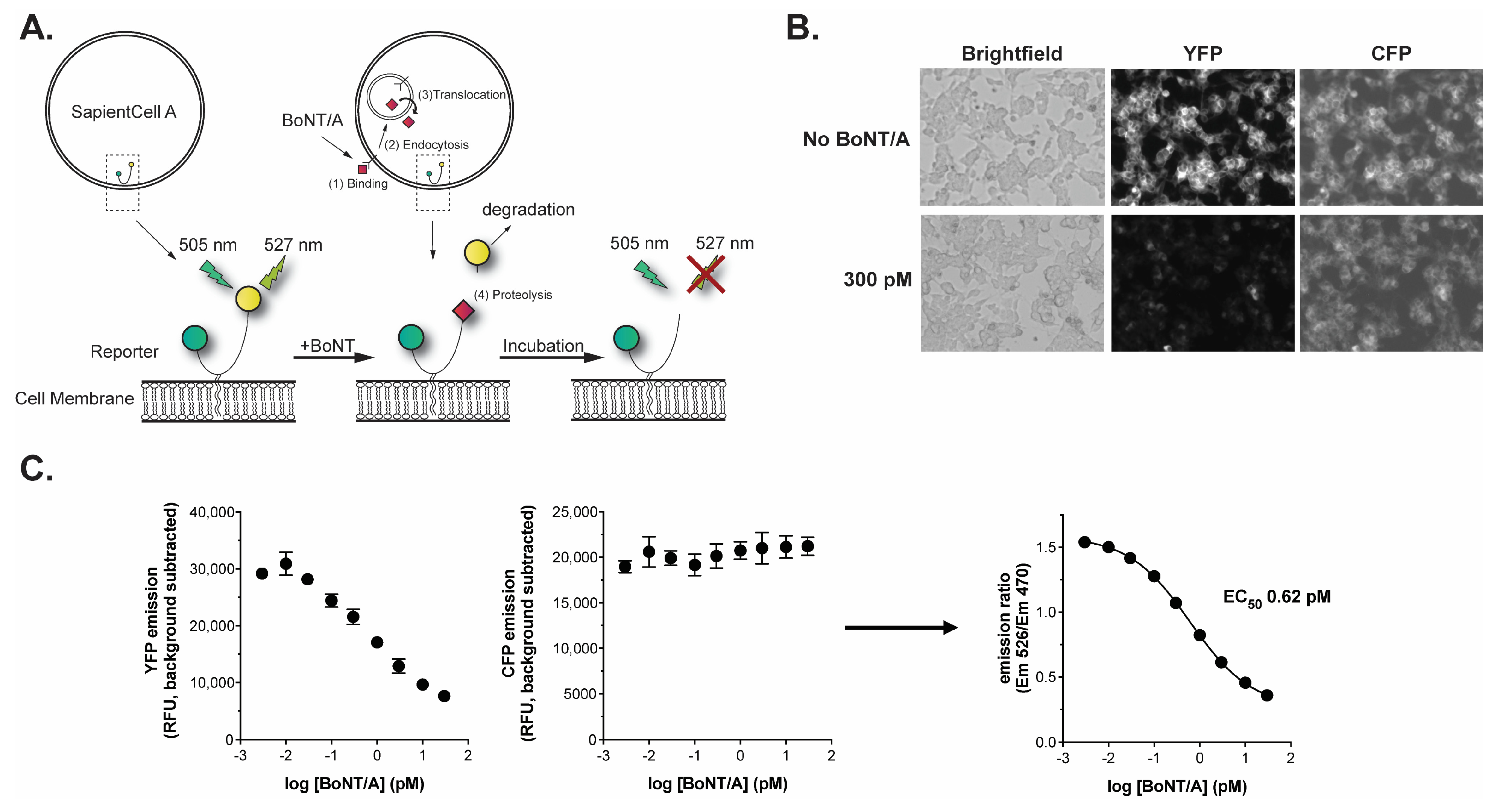
2.1. Description and Operation of the BoSapient CBPA
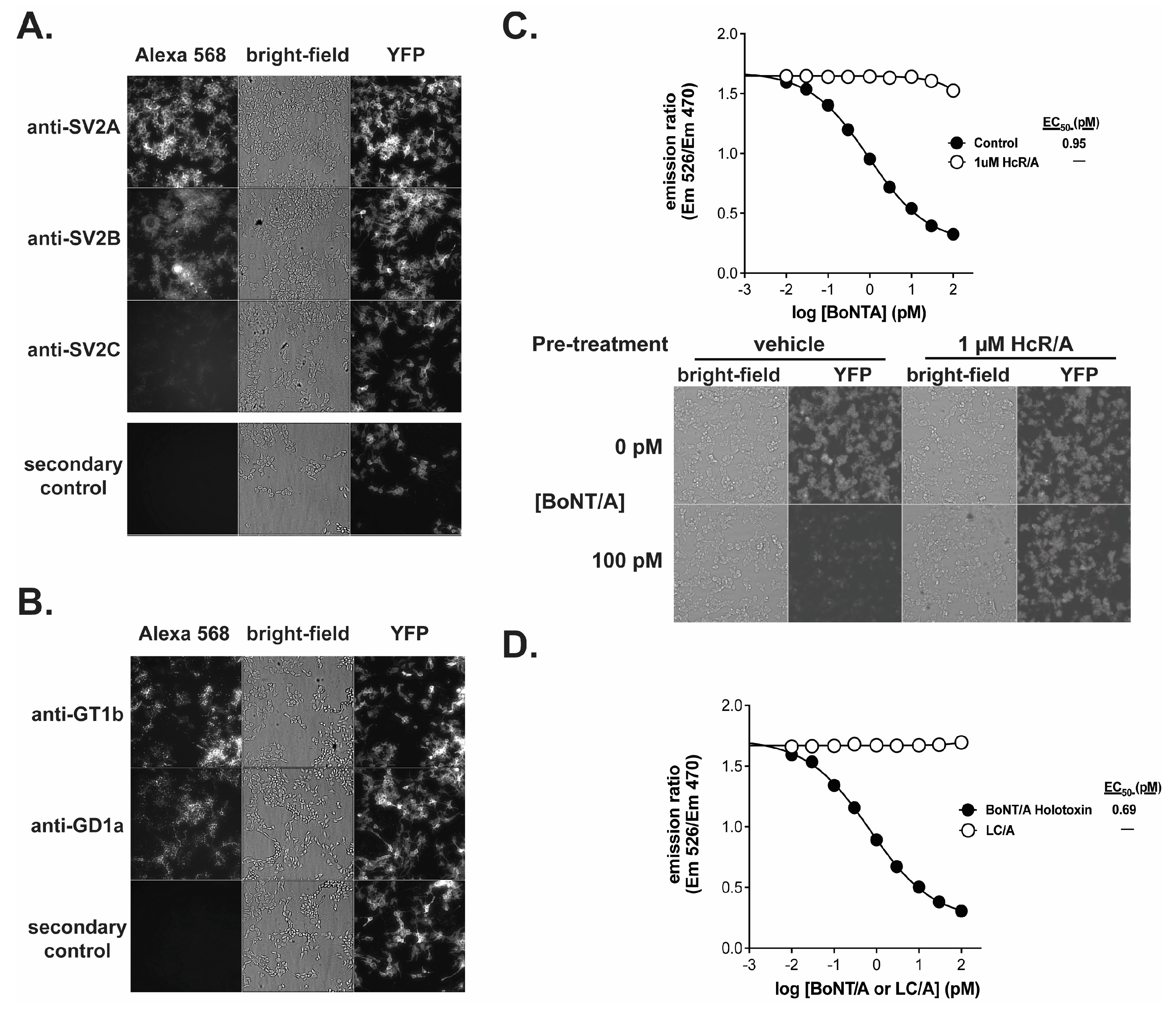
2.2. BoNT/A Receptor Characterization and Receptor Dependency of the BoSapient Cell Line and CBPA
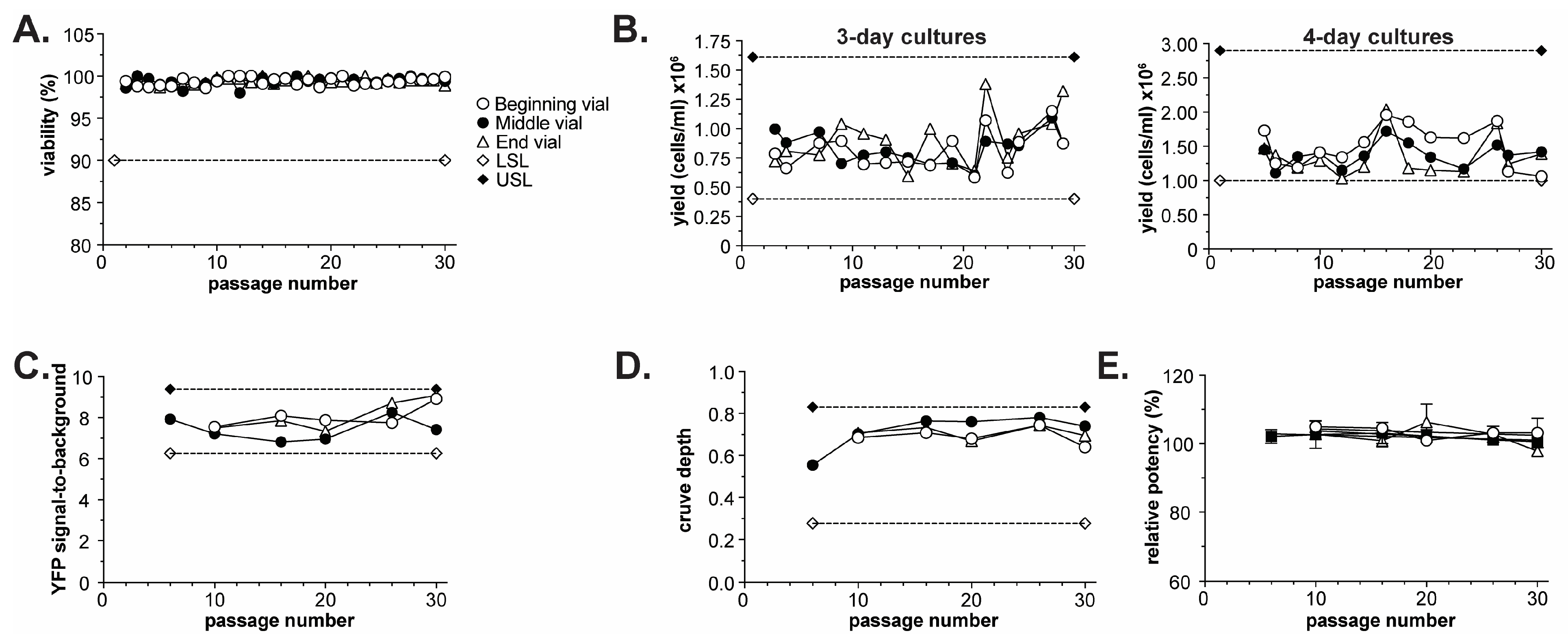
2.3. Cell Line Storage and Passage Stability
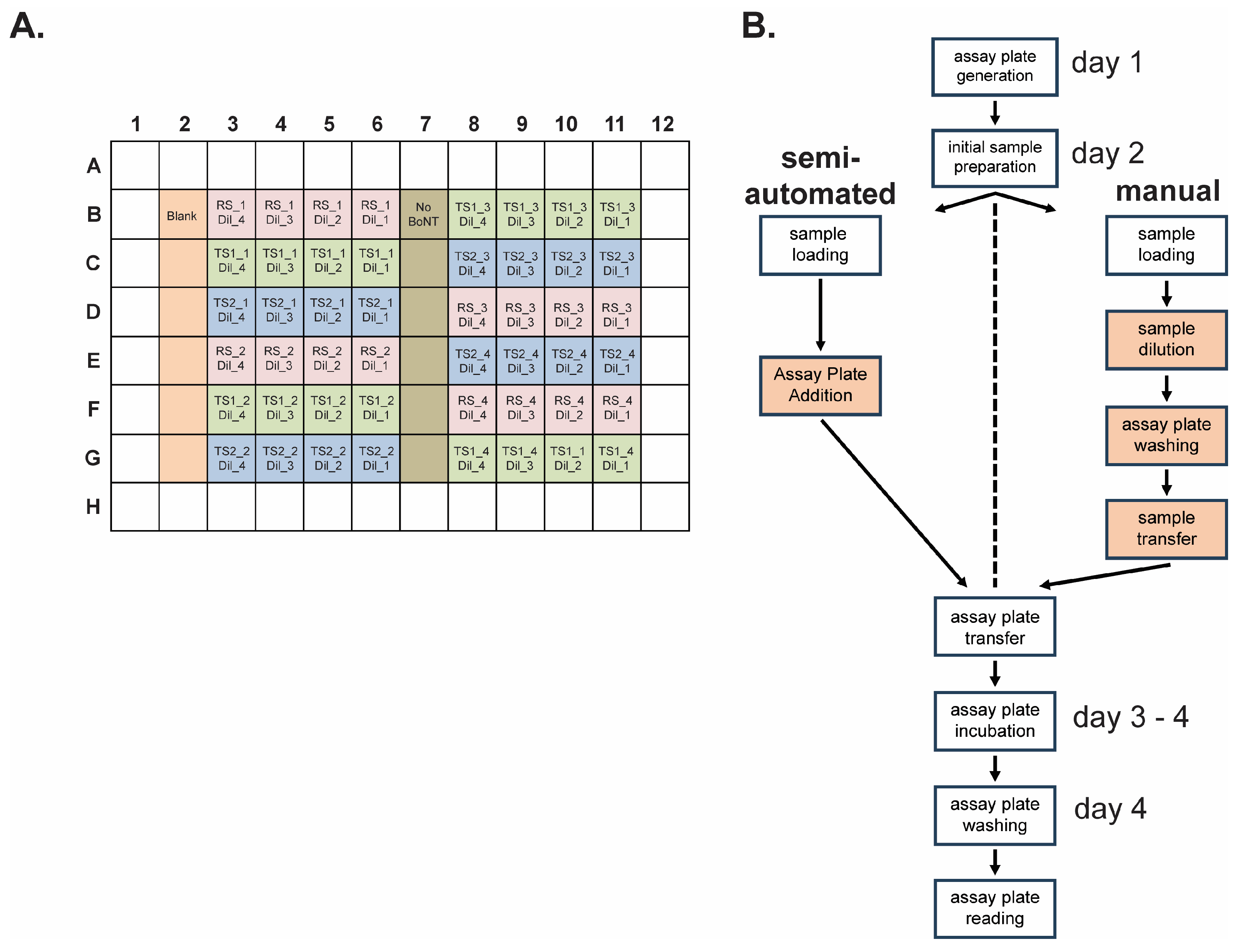
2.4. Manual and Semi-Automated Methods for Relative Potency Testing of BoNT/A Samples
2.5. Manual and Semi-Automated Performance of the BoSapient CBPA
2.6. Testing of Commercially Available Drug Products
3. Discussion
4. Materials and Methods
4.1. Materials and Reagents
4.2. BoNT/A Sample Preparation
4.3. Cell Growth and CBPA Procedures
4.4. Semi-Automated BoSapient CBPA Execution
4.5. Method Qualifications
4.6. Data Analysis
4.7. Immunofluorescence Procedures
Supplementary Materials
Author Contributions
Funding
Institutional Review Board Statement
Informed Consent Statement
Data Availability Statement
Acknowledgments
Conflicts of Interest
Abbreviations
| 4PL | 4-parameters logistic |
| BoNT | botulinum neurotoxin |
| BoNT/A | botulinum neurotoxin serotype A |
| CBPA | cell-based potency assay |
| CFP | cyan fluorescent protein |
| FRET | Förster resonance energy transfer |
| HcR/A | heavy-chain receptor binding domain of BoNT/A |
| LC/A | light chain of BoNT/A |
| LSL/LL | lower suitability limit |
| MBPA | mouse-based potency assay |
| OOS | out of specification |
| PLA | parallel line analysis |
| PBS | phosphate-buffered saline |
| PPM | parts per million |
| RP | relative potency |
| SNAP-25 | synaptosomal-associated protein, 25kDa |
| SV2 | synaptic vesicle glycoprotein 2 |
| USL/UL | upper suitability limit |
| YFP | yellow fluorescent protein |
References
- Sobel, J. Botulism. Clin. Infect. Dis. 2005, 41, 1167–1173. [Google Scholar] [CrossRef] [PubMed]
- Schiavo, G.; Rossetto, O.; Benfenati, F.; Poulain, B.; Montecucco, C. Tetanus and botulinum neurotoxins are zinc proteases specific for components of the neuroexocytosis apparatus. Ann. N. Y. Acad. Sci. 1994, 710, 65–75. [Google Scholar] [CrossRef] [PubMed]
- Binz, T.; Rummel, A. Cell entry strategy of clostridial neurotoxins. J. Neurochem. 2009, 109, 1584–1595. [Google Scholar] [CrossRef] [PubMed]
- Salvarani, F.M.; Vieira, E.V. Clostridial Infections in Cattle: A Comprehensive Review with Emphasis on Current Data Gaps in Brazil. Animals 2024, 14, 2919. [Google Scholar] [CrossRef] [PubMed] [PubMed Central]
- Cherington, M. Botulism: Update and review. Semin. Neurol. 2004, 24, 155–163. [Google Scholar] [CrossRef] [PubMed]
- Uzal, F.A.; Henderson, E.; Asin, J. Botulism in fish: A review. J. Vet. Diagn. Investig. 2024, 36, 312–318. [Google Scholar] [CrossRef] [PubMed] [PubMed Central]
- Gutierrez-Arnal, J.; Marin, C. The Latent Threat in Wild Birds: Clostridium botulinum. Vet. Sci. 2024, 11, 36. [Google Scholar] [CrossRef] [PubMed] [PubMed Central]
- Winner, B.M.; Bodt, S.M.L.; McNutt, P.M. Special Delivery: Potential Mechanisms of Botulinum Neurotoxin Uptake and Trafficking within Motor Nerve Terminals. Int. J. Mol. Sci. 2020, 21, 8715. [Google Scholar] [CrossRef] [PubMed] [PubMed Central]
- Dong, M.; Richards, D.A.; Goodnough, M.C.; Tepp, W.H.; Johnson, E.A.; Chapman, E.R. Synaptotagmins I and II mediate entry of botulinum neurotoxin B into cells. J. Cell Biol. 2003, 162, 1293–1303. [Google Scholar] [CrossRef] [PubMed] [PubMed Central]
- Dong, M.; Yeh, F.; Tepp, W.H.; Dean, C.; Johnson, E.A.; Janz, R.; Chapman, E.R. SV2 is the protein receptor for botulinum neurotoxin A. Science 2006, 312, 592–596. [Google Scholar] [CrossRef] [PubMed]
- Brunger, A.T.; Rummel, A. Receptor and substrate interactions of clostridial neurotoxins. Toxicon 2009, 54, 550–560. [Google Scholar] [CrossRef] [PubMed] [PubMed Central]
- Turton, K.; Chaddock, J.A.; Acharya, K.R. Botulinum and tetanus neurotoxins: Structure, function and therapeutic utility. Trends Biochem. Sci. 2002, 27, 552–558. [Google Scholar] [CrossRef] [PubMed]
- Benecke, R.; Dressler, D. Botulinum toxin treatment of axial and cervical dystonia. Disabil. Rehabil. 2007, 29, 1769–1777. [Google Scholar] [CrossRef] [PubMed]
- Sinha, D.; Karri, K.; Arunkalaivanan, A.S. Applications of Botulinum toxin in urogynaecology. Eur. J. Obstet. Gynecol. Reprod. Biol. 2007, 133, 4–11. [Google Scholar] [CrossRef] [PubMed]
- Mahajan, S.T.; Brubaker, L. Botulinum toxin: From life-threatening disease to novel medical therapy. Am. J. Obstet. Gynecol. 2007, 196, 7–15. [Google Scholar] [CrossRef] [PubMed]
- Dmochowski, R.; Sand, P.K. Botulinum toxin A in the overactive bladder: Current status and future directions. BJU Int. 2007, 99, 247–262. [Google Scholar] [CrossRef] [PubMed]
- Cheng, C.M.; Chen, J.S.; Patel, R.P. Unlabeled uses of botulinum toxins: A review, part 2. Am. J. Health Syst. Pharm. 2006, 63, 225–232. [Google Scholar] [CrossRef]
- Pirazzini, M.; Montecucco, C.; Rossetto, O. Toxicology and pharmacology of botulinum and tetanus neurotoxins: An update. Arch. Toxicol. 2022, 96, 1521–1539. [Google Scholar] [CrossRef] [PubMed] [PubMed Central]
- Steward, L.; Brin, M.F.; Brideau-Andersen, A. Novel Native and Engineered Botulinum Neurotoxins. Handb. Exp. Pharmacol. 2021, 263, 63–89. [Google Scholar] [CrossRef] [PubMed]
- Fonfria, E.; Elliott, M.; Beard, M.; Chaddock, J.A.; Krupp, J. Engineering Botulinum Toxins to Improve and Expand Targeting and SNARE Cleavage Activity. Toxins 2018, 10, 278. [Google Scholar] [CrossRef] [PubMed] [PubMed Central]
- Humeau, Y.; Doussau, F.; Grant, N.J.; Poulain, B. How botulinum and tetanus neurotoxins block neurotransmitter release. Biochimie 2000, 82, 427–446. [Google Scholar] [CrossRef] [PubMed]
- Breidenbach, M.A.; Brunger, A.T. New insights into clostridial neurotoxin-SNARE interactions. Trends Mol. Med. 2005, 11, 377–381. [Google Scholar] [CrossRef] [PubMed]
- Kautter, D.A.; Solomon, H.M. Collaborative study of a method for the detection of Clostridium botulinum and its toxins in foods. J. Assoc. Anal. Chem. 1976, 60, 541–545. [Google Scholar] [CrossRef]
- AOAC Official Method. AOAC official method 977.26 (Sec 17.7.01) Clostridium botulinum and its toxins in foods. In Official Methods of Analysis; AOAC Official Method: Gaithersburg, MD, USA, 2001. [Google Scholar]
- Schantz, E.J.; Kautter, D.A. Microbiological methods: Standardized assay for Clostridium botulinum toxins. J. AOAC 1978, 61, 96–99. [Google Scholar] [CrossRef]
- Notermans, S.; Nagel, J. Assays for botulinum and tetanus toxins. In Botulinum Neurotoxin and Tetanus Toxin; Simpson, L.L., Ed.; Academic Press: New York, NY, USA, 1989; pp. 319–331. [Google Scholar]
- Ferreira, J.L. Comparison of amplified ELISA and mouse bioassay procedures for determination of botulinal toxins A, B, E, and F. J. AOAC Int. 2001, 84, 85–88. [Google Scholar] [CrossRef] [PubMed]
- Sesardic, D.; Leung, T.; Gaines Das, R. Role for standards in assays of botulinum toxins: International collaborative study of three preparations of botulinum type A toxin. Biologicals 2003, 31, 265–276. [Google Scholar] [CrossRef] [PubMed]
- McLellan, K.; Das, R.E.; Ekong, T.A.; Sesardic, D. Therapeutic botulinum type A toxin: Factors affecting potency. Toxicon 1996, 34, 975–985. [Google Scholar] [CrossRef] [PubMed]
- Dong, M.; Tepp, W.H.; Johnson, E.A.; Chapman, E.R. Using fluorescent sensors to detect botulinum neurotoxin activity in vitro and in living cells. Proc. Natl. Acad. Sci. USA 2004, 101, 14701–14706. [Google Scholar] [CrossRef] [PubMed]
- Fonfria, E.; Marks, E.; Foulkes, L.M.; Schofield, R.; Higazi, D.; Coward, S.; Kippen, A. Replacement of the Mouse LD50 Assay for Determination of the Potency of AbobotulinumtoxinA with a Cell-Based Method in Both Powder and Liquid Formulations. Toxins 2023, 15, 314. [Google Scholar] [CrossRef] [PubMed] [PubMed Central]
- Fernandez-Salas, E.; Wang, J.; Molina, Y.; Nelson, J.B.; Jacky, B.P.; Aoki, K.R. Botulinum neurotoxin serotype A specific cell-based potency assay to replace the mouse bioassay. PLoS ONE 2012, 7, e49516. [Google Scholar] [CrossRef] [PubMed] [PubMed Central]
- Pellett, S.; Du, Z.W.; Pier, C.L.; Tepp, W.H.; Zhang, S.C.; Johnson, E.A. Sensitive and quantitative detection of botulinum neurotoxin in neurons derived from mouse embryonic stem cells. Biochem. Biophys. Res. Commun. 2011, 404, 388–392. [Google Scholar] [CrossRef] [PubMed]
- Pellett, S.; Tepp, W.H.; Toth, S.I.; Johnson, E.A. Comparison of the primary rat spinal cord cell (RSC) assay and the mouse bioassay for botulinum neurotoxin type A potency determination. J. Pharmacol. Toxicol. Methods 2010, 61, 304–310. [Google Scholar] [CrossRef] [PubMed]
- Caliskan, C.; Simsek, D.; Leese, C.; Doran, C.; Seward, E.; Peden, A.A.; Davletov, B. A sensitive cell-based assay for testing potency of botulinum neurotoxin type A. ALTEX 2024, 41, 605–616. [Google Scholar] [CrossRef] [PubMed]
- Diamant, E.; Torgeman, A.; Epstein, E.; Mechaly, A.; David, A.B.; Levin, L.; Schwartz, A.; Dor, E.; Girshengorn, M.; Barnea, A.; et al. A cell-based alternative to the mouse potency assay for pharmaceutical type E botulinum antitoxins. ALTEX 2022, 39, 113–122. [Google Scholar] [CrossRef] [PubMed]
- McNutt, P.; Celver, J.; Hamilton, T.; Mesngon, M. Embryonic stem cell-derived neurons are a novel, highly sensitive tissue culture platform for botulinum research. Biochem. Biophys. Res. Commun. 2011, 405, 85–90. [Google Scholar] [CrossRef] [PubMed]
- Keller, J.E.; Cai, F.; Neale, E.A. Uptake of botulinum neurotoxin into cultured neurons. Biochemistry 2004, 43, 526–532. [Google Scholar] [CrossRef] [PubMed]
- Pathe-Neuschafer-Rube, A.; Neuschafer-Rube, F.; Genz, L.; Puschel, G.P. Botulinum neurotoxin dose-dependently inhibits release of neurosecretory vesicle-targeted luciferase from neuronal cells. ALTEX 2015, 32, 297–306. [Google Scholar] [CrossRef] [PubMed]
- Pathe-Neuschafer-Rube, A.; Neuschafer-Rube, F.; Haas, G.; Langoth-Fehringer, N.; Puschel, G.P. Cell-Based Reporter Release Assay to Determine the Potency of Proteolytic Bacterial Neurotoxins. Toxins 2018, 10, 360. [Google Scholar] [CrossRef] [PubMed] [PubMed Central]
- Samizadeh, S.; De Boulle, K. Botulinum neurotoxin formulations: Overcoming the confusion. Clin. Cosmet. Investig. Dermatol. 2018, 11, 273–287. [Google Scholar] [CrossRef] [PubMed] [PubMed Central]
- Rummel, A. Two Feet on the Membrane: Uptake of Clostridial Neurotoxins. Curr. Top. Microbiol. Immunol. 2017, 406, 1–37. [Google Scholar] [CrossRef] [PubMed]
- Yowler, B.C.; Schengrund, C.L. Glycosphingolipids-sweets for botulinum neurotoxin. Glycoconj. J. 2004, 21, 287–293. [Google Scholar] [CrossRef] [PubMed]
- Rummel, A.; Hafner, K.; Mahrhold, S.; Darashchonak, N.; Holt, M.; Jahn, R.; Beermann, S.; Karnath, T.; Bigalke, H.; Binz, T. Botulinum neurotoxins C, E and F bind gangliosides via a conserved binding site prior to stimulation-dependent uptake with botulinum neurotoxin F utilising the three isoforms of SV2 as second receptor. J. Neurochem. 2009, 110, 1942–1954. [Google Scholar] [CrossRef] [PubMed]
- Kitamura, M.; Iwamori, M.; Nagai, Y. Interaction between Clostridium botulinum neurotoxin and gangliosides. Biochim. Biophys. Acta 1980, 628, 328–335. [Google Scholar] [CrossRef] [PubMed]
- Marxen, P.; Erdmann, G.; Bigalke, H. The translocation of botulinum A neurotoxin by chromaffin cells is promoted in low ionic strength solution and is insensitive to trypsin. Toxicon 1991, 29, 181–189. [Google Scholar] [CrossRef] [PubMed]
- Yowler, B.C.; Kensinger, R.D.; Schengrund, C.L. Botulinum neurotoxin A activity is dependent upon the presence of specific gangliosides in neuroblastoma cells expressing synaptotagmin I. J. Biol. Chem. 2002, 277, 32815–32819. [Google Scholar] [CrossRef] [PubMed]
- Baldwin, M.R.; Tepp, W.H.; Pier, C.L.; Bradshaw, M.; Ho, M.; Wilson, B.A.; Fritz, R.B.; Johnson, E.A.; Barbieri, J.T. Characterization of the antibody response to the receptor binding domain of botulinum neurotoxin serotypes A and E. Infect. Immun. 2005, 73, 6998–7005. [Google Scholar] [CrossRef] [PubMed][Green Version]
- USP. Design and Development of Biological Assays. 1032; USP-NF: Rockville, MD, USA, 2015. [Google Scholar]
- Little, T.A. Essentials in Bioassay Development. BioPharm Int. 2019, 32, 42–45. [Google Scholar]
- Little, T.A. Best Practices for Analytical Method Validation: Study Design, Analysis, and Acceptance Criteria. In BioPharm International Biopharmaceutical Analysis eBook; BioPharm International: Cranbury, NJ, USA, 2021; pp. 10–14. [Google Scholar]
- USP. Biological Assay Validation. 1033; USP-NF: Rockville, MD, USA, 2015. [Google Scholar]
- ICH. Validation of Analytical Procedures:Text and Methodology. Q2(R1). In ICH Harmonised Tripartite Guideline; ICH: Geneva, Switzerland, 2005. [Google Scholar]
- Brin, M.F. Basic and clinical aspects of BOTOX. Toxicon 2009, 54, 676–682. [Google Scholar] [CrossRef] [PubMed]
- Dressler, D.; Benecke, R. Pharmacology of therapeutic botulinum toxin preparations. Disabil. Rehabil. 2007, 29, 1761–1768. [Google Scholar] [CrossRef] [PubMed]
- Rasetti-Escargueil, C.; Popoff, M.R. Recent Developments in Botulinum Neurotoxins Detection. Microorganisms 2022, 10, 1001. [Google Scholar] [CrossRef] [PubMed] [PubMed Central]
- Ambrin, G.; Cai, S.; Singh, B.R. Critical analysis in the advancement of cell-based assays for botulinum neurotoxin. Crit. Rev. Microbiol. 2023, 49, 1–17. [Google Scholar] [CrossRef] [PubMed]
- Nam, Y.; Park, H.D. Revolutionizing Laboratory Practices: Pioneering Trends in Total Laboratory Automation. Ann. Lab. Med. 2025, 45, 472–483. [Google Scholar] [CrossRef] [PubMed]



| Relative Potency (%) | |||||
|---|---|---|---|---|---|
| Passage Number | Vial Position | TS1 | TS2 | Mean | SD |
| 6 | middle | 103.5 | 100.7 | 102.1 | 2.0 |
| 10 | beginning | 103.8 | 106.1 | ||
| middle | 105.5 | 99.8 | 103.5 | 2.3 | |
| end | 101.9 | 103.6 | |||
| 16 | beginning | 104.3 | 104.7 | ||
| middle | 105.3 | 100.9 | 102.8 | 2.3 | |
| end | 99.6 | 102.1 | |||
| 20 | beginning | 100.9 | 100.9 | ||
| middle | 100.9 | 103.5 | 103.1 | 3.5 | |
| end | 102.5 | 110.0 | |||
| 26 | beginning | 103.1 | 103.2 | ||
| middle | 101.8 | 100.3 | 102.3 | 1.5 | |
| end | 101.1 | 104.4 | |||
| 30 | beginning | 100.1 | 106.2 | ||
| middle | 100.3 | 100.9 | 100.5 | 3.1 | |
| end | 97.1 | 98.5 | |||
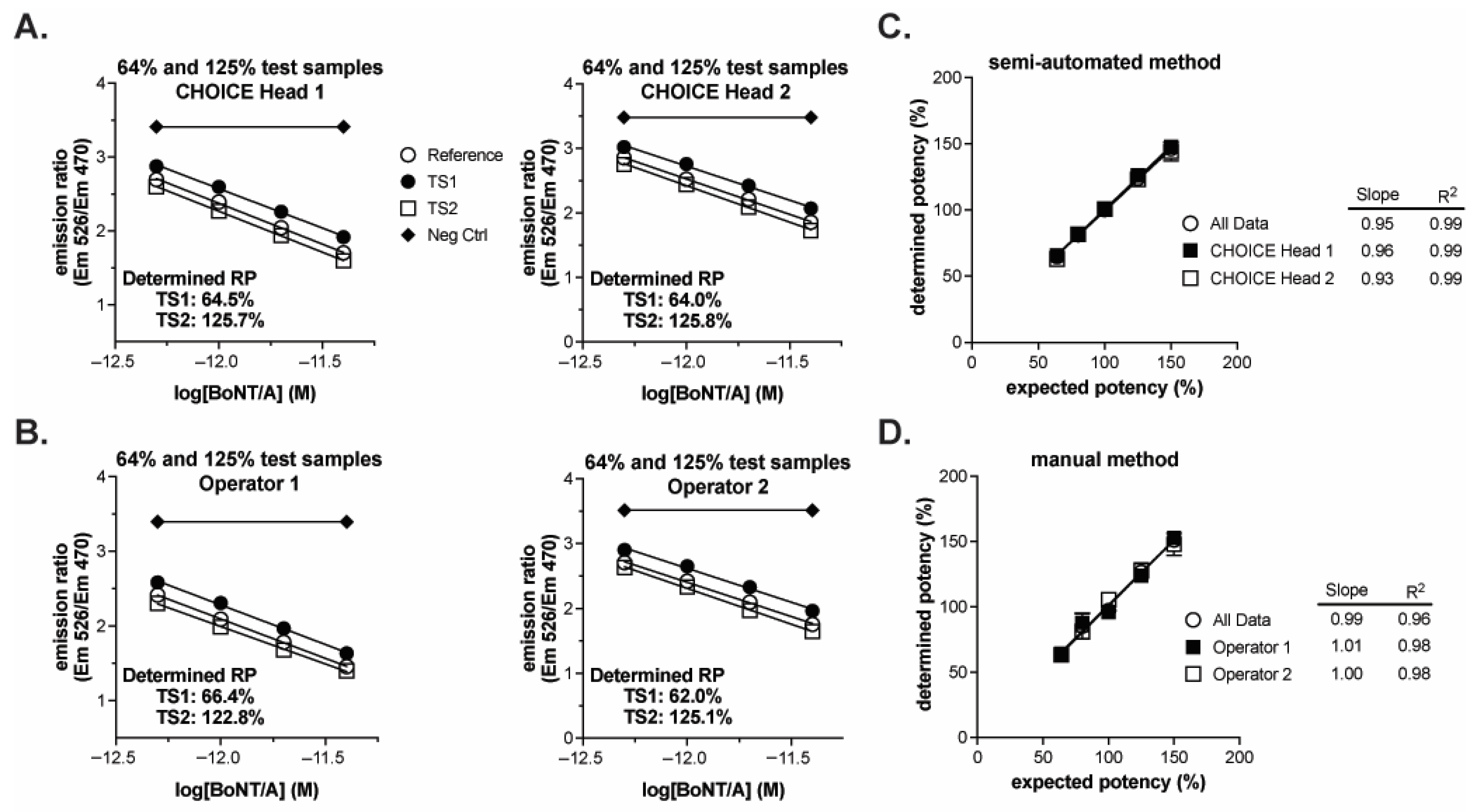
| Manual Method | All Data | Operator 1 | Operator 2 | ||||||
|---|---|---|---|---|---|---|---|---|---|
| Theoretical Diution (% of Nominal) | Mean Determined Relative Potency (%) | SD | CV (%) | Mean Determined Relative Potency (%) | SD | CV (%) | Mean Determined Relative Potency (%) | SD | CV (%) |
| 64 | 63.8 | 1.6 | 2.5 | 64.1 | 1.7 | 2.6 | 63.2 | 1.7 | 2.7 |
| 80 | 83.2 | 5.3 | 6.3 | 87.8 | 6.8 | 7.7 | 81.0 | 3.2 | 3.9 |
| 100 | 99.2 | 4.9 | 4.9 | 96.1 | 1.1 | 1.1 | 105.4 | 0.5 | 0.5 |
| 125 | 126.4 | 5.0 | 4.0 | 123.8 | 1.4 | 1.1 | 127.7 | 5.9 | 4.6 |
| 150 | 151.1 | 4.9 | 3.3 | 152.8 | 2.5 | 1.6 | 147.9 | 8.4 | 5.7 |
| Semi-Automated Method | All Data | Head 1 | Head 2 | ||||||
| Theoretical Diution (% of Nominal) | Mean Determined Relative Potency (%) | SD | CV (%) | Mean Determined Relative Potency (%) | SD | CV (%) | Mean Determined Relative Potency (%) | SD | CV (%) |
| 64 | 65.0 | 1.9 | 2.9 | 65.9 | 1.4 | 2.2 | 63.1 | 1.3 | 2.0 |
| 80 | 81.5 | 1.9 | 2.4 | 81.3 | 0.7 | 0.9 | 81.6 | 2.4 | 3.0 |
| 100 | 100.5 | 2.3 | 2.3 | 100.5 | 2.5 | 2.5 | 100.7 | 2.7 | 2.7 |
| 125 | 124.2 | 2.2 | 1.8 | 126.3 | 0.8 | 0.6 | 123.2 | 1.9 | 1.6 |
| 150 | 146.6 | 4.9 | 3.3 | 147.7 | 4.3 | 2.9 | 144.4 | 7.1 | 4.9 |
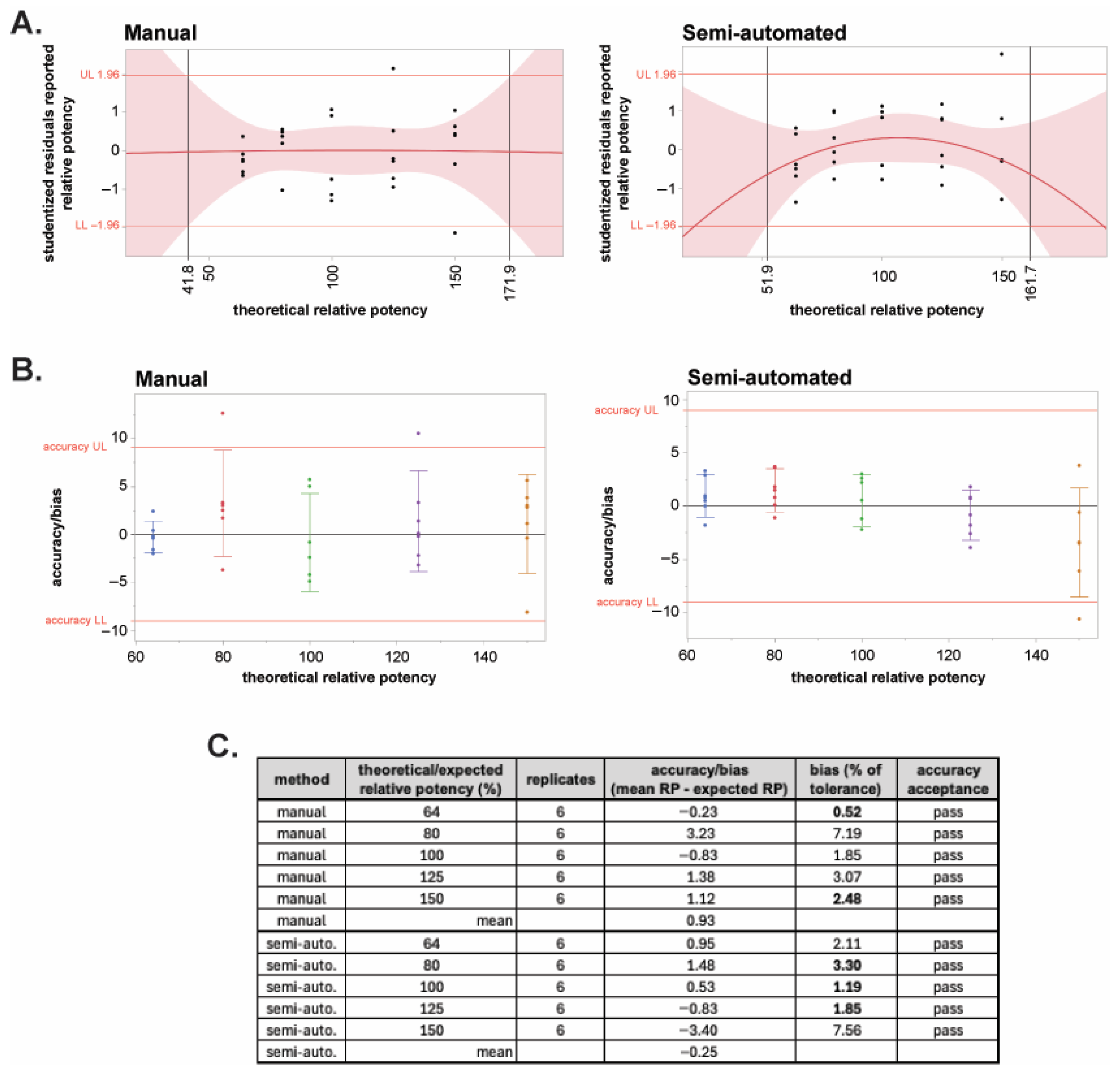
| Method | Theoretical/Expected Relative Potency (%) | Replicates | Between Operator/Head Variation (%) | Repeatability (%) | Repeatability (% of Tolerance) | Repeatability Acceptance | Intermediate Precision (%) | Intermediate Precision (% of Tolerance) | Intermediate Precision Acceptance |
|---|---|---|---|---|---|---|---|---|---|
| manual | 64 | 6 | 0.40 | 1.38 | 15.8 | pass | 1.44 | 16.4 | pass |
| manual | 80 | 6 | 3.23 | 3.56 | 40.8 | pass | 4.81 | 55.0 | pass |
| manual | 100 | 6 | 4.37 | 0.78 | 9.0 | pass | 4.44 | 50.8 | pass |
| manual | 125 | 6 | 1.83 | 4.18 | 47.8 | pass | 4.56 | 52.2 | pass |
| manual | 150 | 6 | 2.31 | 3.85 | 44.1 | pass | 4.49 | 51.4 | pass |
| manual | mean | 2.75 | 3.95 | ||||||
| semi-auto. | 64 | 6 | 1.31 | 1.14 | 13.0 | pass | 1.73 | 19.8 | pass |
| semi-auto. | 80 | 6 | 0.13 | 1.75 | 20.1 | pass | 1.76 | 20.1 | pass |
| semi-auto. | 100 | 6 | 0.12 | 2.10 | 24.1 | pass | 2.11 | 24.1 | pass |
| semi-auto. | 125 | 6 | 1.47 | 1.44 | 16.4 | pass | 2.06 | 23.6 | pass |
| semi-auto. | 150 | 6 | 1.56 | 4.17 | 47.7 | pass | 4.45 | 50.9 | pass |
| semi-auto. | mean | 2.12 | 2.42 |
Disclaimer/Publisher’s Note: The statements, opinions and data contained in all publications are solely those of the individual author(s) and contributor(s) and not of MDPI and/or the editor(s). MDPI and/or the editor(s) disclaim responsibility for any injury to people or property resulting from any ideas, methods, instructions or products referred to in the content. |
© 2026 by the authors. Licensee MDPI, Basel, Switzerland. This article is an open access article distributed under the terms and conditions of the Creative Commons Attribution (CC BY) license.
Share and Cite
Dunning, F.M.; Hendrickson, S.; Wolfe, S.; Harding, D.; Geurs, T.; Piazza, T.M.; Little, T.A.; Tucker, W.C. A Cell-Based Potency Assay for Determining the Relative Potency of Botulinum Neurotoxin A Preparations Using Manual and Semi-Automated Procedures. Toxins 2026, 18, 45. https://doi.org/10.3390/toxins18010045
Dunning FM, Hendrickson S, Wolfe S, Harding D, Geurs T, Piazza TM, Little TA, Tucker WC. A Cell-Based Potency Assay for Determining the Relative Potency of Botulinum Neurotoxin A Preparations Using Manual and Semi-Automated Procedures. Toxins. 2026; 18(1):45. https://doi.org/10.3390/toxins18010045
Chicago/Turabian StyleDunning, F. Mark, Sara Hendrickson, Serena Wolfe, Dan Harding, Theresa Geurs, Timothy M. Piazza, Thomas A. Little, and Ward C. Tucker. 2026. "A Cell-Based Potency Assay for Determining the Relative Potency of Botulinum Neurotoxin A Preparations Using Manual and Semi-Automated Procedures" Toxins 18, no. 1: 45. https://doi.org/10.3390/toxins18010045
APA StyleDunning, F. M., Hendrickson, S., Wolfe, S., Harding, D., Geurs, T., Piazza, T. M., Little, T. A., & Tucker, W. C. (2026). A Cell-Based Potency Assay for Determining the Relative Potency of Botulinum Neurotoxin A Preparations Using Manual and Semi-Automated Procedures. Toxins, 18(1), 45. https://doi.org/10.3390/toxins18010045