Review

Arginine and Citrulline and the Immune Response in Sepsis

by
Karolina A.P. Wijnands
1,*,†,
Tessy M.R. Castermans
2,†,
Merel P.J. Hommen
2,†,
Dennis M. Meesters
1 and
Martijn Poeze
1
1
Department of Surgery, NUTRIM School for Nutrition, Toxicology and Metabolism, Maastricht University Medical Center, Maastricht 6200 MD, The Netherlands
2
Department of Surgery, Maastricht University Medical Center, Maastricht 6200MD, The Netherlands
*
Author to whom correspondence should be addressed.
These authors contributed equally to this work.
Nutrients 2015, 7(3), 1426-1463; https://doi.org/10.3390/nu7031426
Submission received: 18 October 2014 / Revised: 15 January 2015 / Accepted: 26 January 2015 / Published: 18 February 2015

Abstract

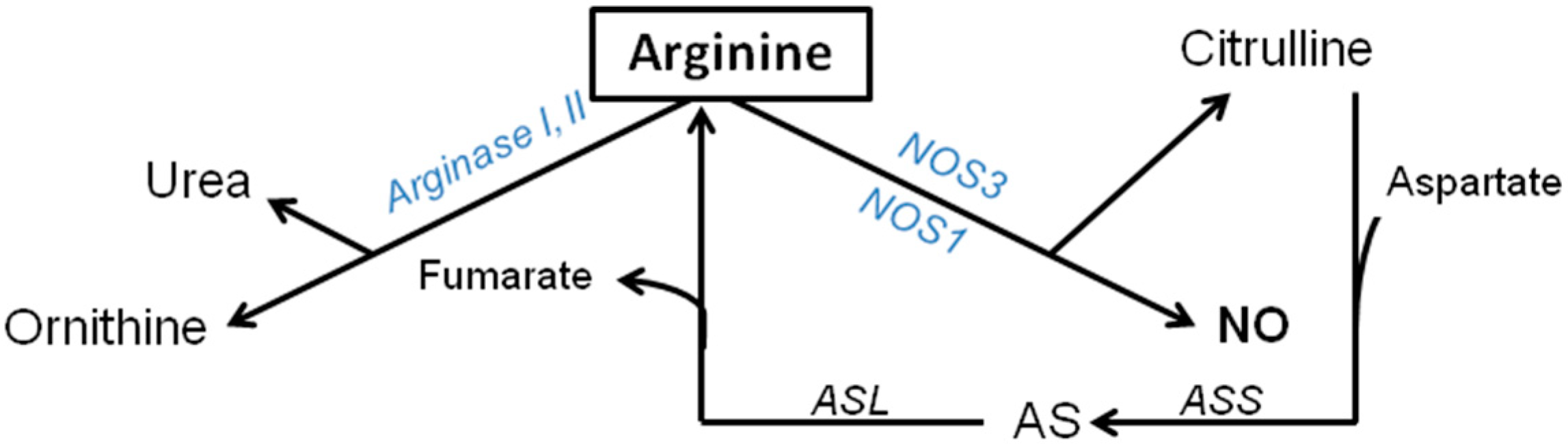
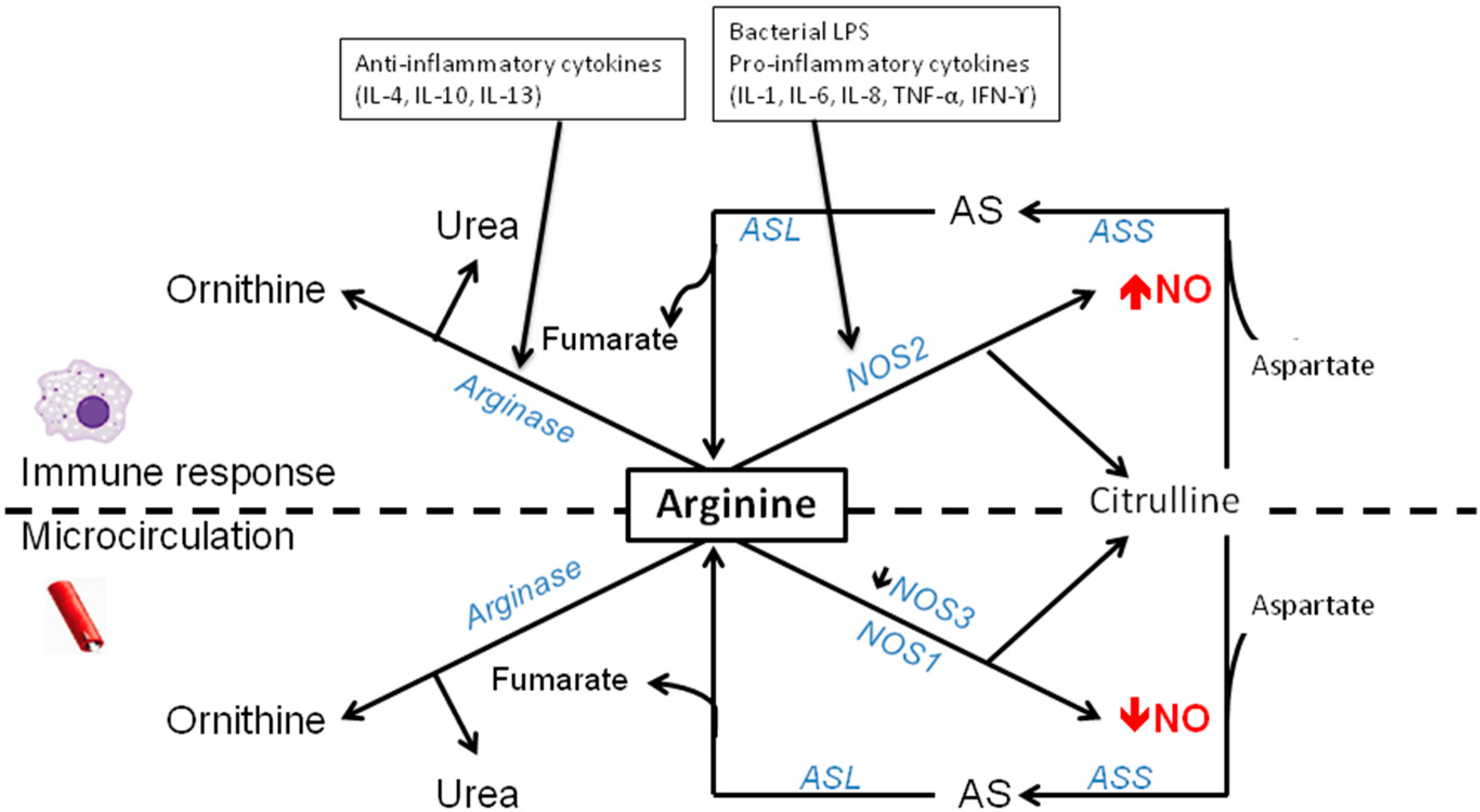
Arginine, a semi-essential amino acid is an important initiator of the immune response. Arginine serves as a precursor in several metabolic pathways in different organs. In the immune response, arginine metabolism and availability is determined by the nitric oxide synthases and the arginase enzymes, which convert arginine into nitric oxide (NO) and ornithine, respectively. Limitations in arginine availability during inflammatory conditions regulate macrophages and T-lymfocyte activation. Furthermore, over the past years more evidence has been gathered which showed that arginine and citrulline deficiencies may underlie the detrimental outcome of inflammatory conditions, such as sepsis and endotoxemia. Not only does the immune response contribute to the arginine deficiency, also the impaired arginine de novo synthesis in the kidney has a key role in the eventual observed arginine deficiency. The complex interplay between the immune response and the arginine-NO metabolism is further underscored by recent data of our group. In this review we give an overview of physiological arginine and citrulline metabolism and we address the experimental and clinical studies in which the arginine-citrulline NO pathway plays an essential role in the immune response, as initiator and therapeutic target.
Keywords: arginine; citrulline; nitric oxide; sepsis; immunity arginine; citrulline; nitric oxide; sepsis; immunity