Medium-Chain Triglycerides: Scientific and Regulatory Perspectives from Germany and Japan with a US Context—A Concise Review
 , , , and
Abstract
1. Introduction
2. Biochemical Metabolism of Medium-Chain Fatty Acids
2.1. Physicochemical Characteristics and Transport
2.2. Mitochondrial β-Oxidation of MCFAs
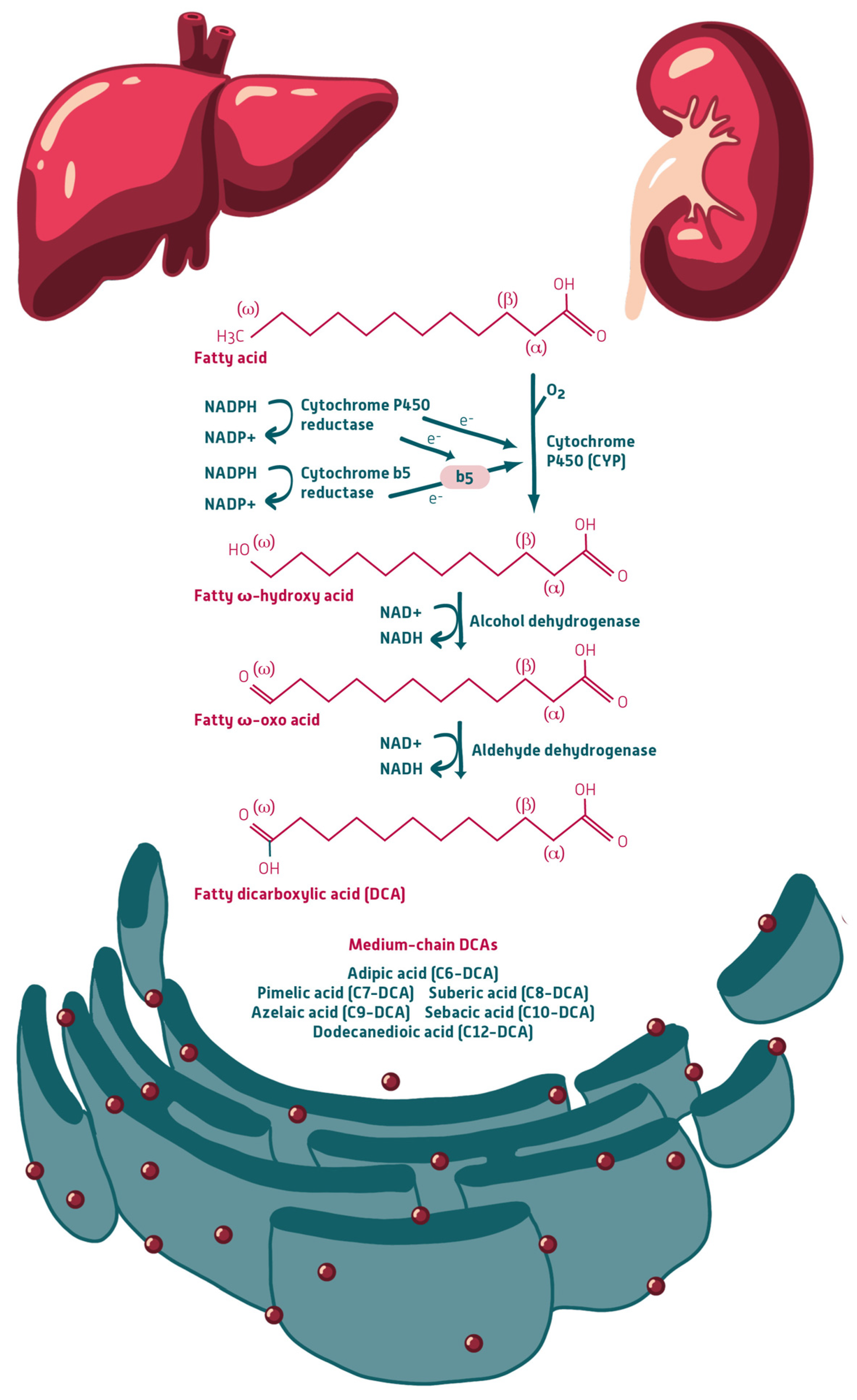
2.3. ω-Oxidation of MCFAs
3. Industrial Synthesis and Production of MCTs
4. Application of Medium-Chain Fatty Acids (MCTs)
4.1. Insights from Germany
4.1.1. Gastrointestinal and Liver Disorders
4.1.2. Ketogenic Diet (KD)
4.1.3. Long-Chain Fatty Acid Oxidation Disorders (LC-FAODs)
4.1.4. Further Applications
4.2. Insights from Japan
4.3. Insights in the United States
4.4. Practical Considerations for Using MCTs
4.4.1. Clinical Practice in Germany
4.4.2. Practice in Japan
4.4.3. Clinical Practice in the United States
5. Regulatory Frameworks and Innovation Policies
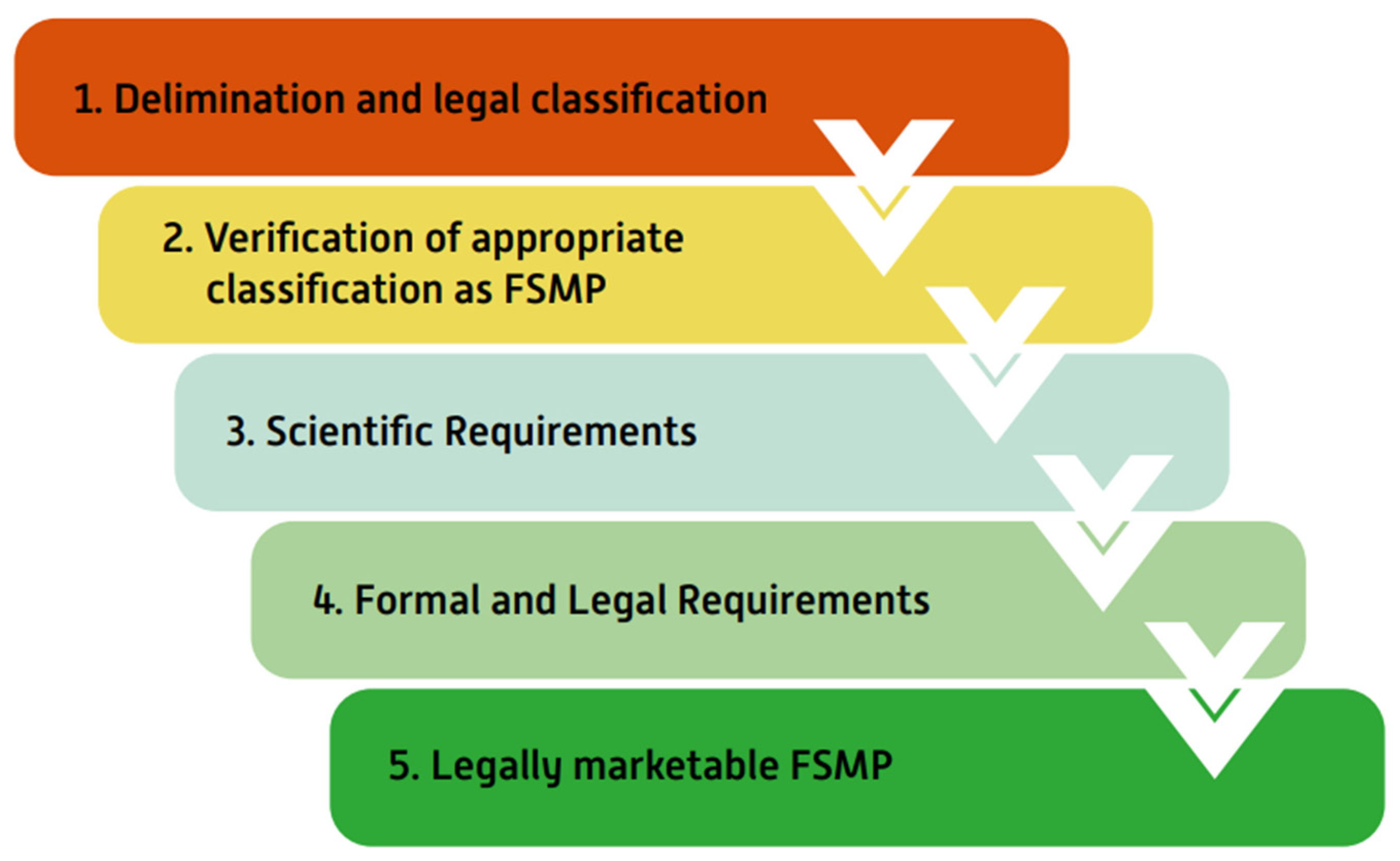
5.1. The Case of MCTs in Germany
5.2. The Case of MCTs in Japan
- (i)
- Foods with Nutrient Function Claims can be used to supplement or complement daily requirement of nutrients which tend to be insufficient in everyday diet. Given that the food product contains certain amounts of nutrient whose function has already been substantiated by scientific evidence, it can bear a nutrient function claim prescribed by the standards without submitting a notification to the government. The nutrients whose function has already been substantiated by scientific evidence are limited to omega-3 fatty acids, 6 minerals, and 13 vitamins; MCFAs are not included [107].
- (ii)
- FOSHU are scientifically recognized as helpful for maintaining and promoting health and are permitted to bear claims such as “Slows cholesterol absorption.” The government evaluates the claimed effects and safety, and the Secretary-General of the Consumer Affairs Agency gives approval for the labeling of each food product that satisfies the requirements. The system was established in 1991. Since then, 1034 items have been approved and 6 products contain MCFAs. An example of approved labeling for an edible cooking oil states the following: “This oil contains MCFAs and restrains the accumulation of body fat. This oil is recommended for people beginning to be concerned about body fat and obesity; it should be used in place of the usual edible oil.” [108]. As supporting evidence, studies comparing the effects on body fat accumulation between a diet containing 14 g of medium- and long-chain triacylglycerols (MLCTs) and a diet using regular cooking oil showed that, in subjects with an average BMI of 24.6 ± 0.4 kg/m2, body fat mass, waist circumference, hip circumference, subcutaneous fat area, and visceral fat area were significantly reduced after 4 to 12 weeks of consumption compared to the control oil group [109].
- (iii)
- Foods with Function Claims can be labeled with function claims based on scientific evidence, under the food business operator’s own responsibility. Functional claims based on scientific evidence indicate that the functional substances contribute to specific health purposes (excluding those related to disease risk reduction) by maintaining or enhancing health. Information on the evidence supporting the safety and effectiveness of the product are submitted to the Secretary-General of the Consumer Affairs Agency before the product is marketed. However, unlike FOSHU, the product is not individually pre-approved by the Secretary-General of the Consumer Affairs Agency [110]. The system was established in 2015, and since then, 10,297 items have been notified. There are 93 items using MCFAs as the functional substances, and the functional claims are listed in Table 2. All notifications used systematic literature reviews as their scientific basis [111]. The studies included in the systematic literature reviews are listed in Table 3.
5.3. Critical Appraisal of Evidence Supporting Japanese Functional Claims
5.4. The Case of MCTs in the United States
5.5. Regulatory Comparison of MCTs in Germany and Japan
6. Challenges, Limitations, Future Directions, and Recommendations
7. Conclusions
Author Contributions
Funding
Institutional Review Board Statement
Informed Consent Statement
Data Availability Statement
Acknowledgments
Conflicts of Interest
References
- Schönfeld, P.; Wojtczak, L. Short- and medium-chain fatty acids in energy metabolism: The cellular perspective. J. Lipid Res. 2016, 57, 943–954. [Google Scholar] [CrossRef] [Scilit]
- Rinaldo, P.; Welch, R.D.; Previs, S.F.; Schmidt-Sommerfeld, E.; Gargus, J.J.; O’Shea, J.J.; Zinn, A.B. Ethylmalonic/adipic aciduria: Effects of oral medium-chain triglycerides, carnitine, and glycine on urinary excretion of organic acids, acylcarnitines, and acylglycines. Pediatr. Res. 1991, 30, 216–221. [Google Scholar] [CrossRef] [Scilit]
- Tserng, K.Y.; Griffin, R.L.; Kerr, D.S. Distinction of dicarboxylic aciduria due to medium-chain triglyceride feeding from that due to abnormal fatty acid oxidation and fasting in children. Metabolism 1996, 45, 162–167. [Google Scholar] [CrossRef] [Scilit]
- Sailer, D.; Berg, G. Medium-chain triglycerides. Clinical physiology and application. Z. Ernahrungswiss. 1974, 13, 6–17. [Google Scholar] [CrossRef] [Scilit]
- Heidt, C.; Newport, M.; Kämmerer, U. Mittelkettige Triglyceride und deren Einsatz in der Ernährungsmedizin. Aktuelle Ernährungsmedizin 2025, 50, 292–308. [Google Scholar] [CrossRef] [Scilit]
- Augustin, K.; Khabbush, A.; Williams, S.; Eaton, S.; Orford, M.; Cross, J.H.; Heales, S.J.R.; Walker, M.C.; Williams, R.S.B. Mechanisms of action for the medium-chain triglyceride ketogenic diet in neurological and metabolic disorders. Lancet Neurol. 2018, 17, 84–93. [Google Scholar] [CrossRef] [Scilit] [PubMed]
- Jeukendrup, A.E.; Thielen, J.J.; Wagenmakers, A.J.; Brouns, F.; Saris, W.H. Effect of medium-chain triacylglycerol and carbohydrate ingestion during exercise on substrate utilization and subsequent cycling performance. Am. J. Clin. Nutr. 1998, 67, 397–404. [Google Scholar] [CrossRef] [Scilit] [PubMed]
- Greenberger, N.J.; Skillman, T.G. Medium-chain triglycerides. N. Engl. J. Med. 1969, 280, 1045–1058. [Google Scholar] [CrossRef] [Scilit]
- Edem, D.O. Palm oil: Biochemical, physiological, nutritional, hematological, and toxicological aspects: A review. Plant Foods Hum. Nutr. 2002, 57, 319–341. [Google Scholar] [CrossRef] [Scilit]
- Babayan, V.K. Medium-chain triglycerides--their composition, preparation, and application. J. Am. Oil Chem. Soc. 1968, 45, 23–25. [Google Scholar] [CrossRef] [Scilit]
- Watanabe, S.; Tsujino, S. Applications of Medium-Chain Triglycerides in Foods. Front. Nutr. 2022, 9, 802805. [Google Scholar] [CrossRef] [Scilit]
- Duranova, H.; Kuzelova, L.; Fialkova, V.; Simora, V.; Kovacikova, E.; Joanidis, P.; Borotova, P.; Straka, D.; Hoskin, R.T.; Moncada, M. Coconut-sourced MCT oil: Its potential health benefits beyond traditional coconut oil. Phytochem. Rev. 2025, 24, 659–700. [Google Scholar] [CrossRef] [Scilit]
- Liao, T.H.; Hamosh, P.; Hamosh, M. Fat digestion by lingual lipase: Mechanism of lipolysis in the stomach and upper small intestine. Pediatr. Res. 1984, 18, 402–409. [Google Scholar] [CrossRef] [Scilit] [PubMed]
- DeNigris, S.J.; Hamosh, M.; Kasbekar, D.K.; Fink, C.S.; Lee, T.C.; Hamosh, P. Secretion of human gastric lipase from dispersed gastric glands. Biochim. Biophys. Acta 1985, 836, 67–72. [Google Scholar] [CrossRef] [Scilit] [PubMed]
- Tantibhedhyangkul, P.; Hashim, S.A. Medium-chain triglyceride feeding in premature infants: Effects on fat and nitrogen absorption. Pediatrics 1975, 55, 359–370. [Google Scholar] [CrossRef] [Scilit]
- Roy, C.C.; Ste-Marie, M.; Chartrand, L.; Weber, A.; Bard, H.; Doray, B. Correction of the malabsorption of the preterm infant with a medium-chain triglyceride formula. J. Pediatr. 1975, 86, 446–450. [Google Scholar] [CrossRef] [Scilit] [PubMed]
- Cohen, M.I.; Gartner, L.M. The use of medium-chain triglycerides in the management of biliary atresia. J. Pediatr. 1971, 79, 379–384. [Google Scholar] [CrossRef] [Scilit]
- Hopman, W.P.; Jansen, J.B.; Rosenbusch, G.; Lamers, C.B. Effect of equimolar amounts of long-chain triglycerides and medium-chain triglycerides on plasma cholecystokinin and gallbladder contraction. Am. J. Clin. Nutr. 1984, 39, 356–359. [Google Scholar] [CrossRef] [Scilit]
- Houten, S.M.; Wanders, R.J. A general introduction to the biochemistry of mitochondrial fatty acid β-oxidation. J. Inherit. Metab. Dis. 2010, 33, 469–477. [Google Scholar] [CrossRef] [Scilit]
- Pereyra, A.S.; McLaughlin, K.L.; Buddo, K.A.; Ellis, J.M. Medium-chain fatty acid oxidation is independent of l-carnitine in liver and kidney but not in heart and skeletal muscle. Am. J. Physiol. Gastrointest. Liver Physiol. 2023, 325, G287–G294. [Google Scholar] [CrossRef] [Scilit]
- Sidossis, L.S.; Stuart, C.A.; Shulman, G.I.; Lopaschuk, G.D.; Wolfe, R.R. Glucose plus insulin regulate fat oxidation by controlling the rate of fatty acid entry into the mitochondria. J. Clin. Investig. 1996, 98, 2244–2250. [Google Scholar] [CrossRef] [Scilit]
- McGarry, J.D.; Meier, J.M.; Foster, D.W. The effects of starvation and refeeding on carbohydrate and lipid metabolism in vivo and in the perfused rat liver. The relationship between fatty acid oxidation and esterification in the regulation of ketogenesis. J. Biol. Chem. 1973, 248, 270–278. [Google Scholar] [CrossRef] [Scilit]
- Foster, D.W. Malonyl-CoA: The regulator of fatty acid synthesis and oxidation. J. Clin. Investig. 2012, 122, 1958–1959. [Google Scholar] [CrossRef] [Scilit]
- Papamandjaris, A.A.; MacDougall, D.E.; Jones, P.J. Medium chain fatty acid metabolism and energy expenditure: Obesity treatment implications. Life Sci. 1998, 62, 1203–1215. [Google Scholar] [CrossRef] [Scilit] [PubMed]
- Kanta, J.M.; Lundsgaard, A.M.; Havelund, J.F.; Armour, S.L.; Bæk, O.; Nguyen, D.N.; Richter, E.A.; Knudsen, J.G.; Kleinert, M.; Færgeman, N.J.; et al. Metabolic effects of medium-chain triacylglycerol consumption are preserved in obesity. Am. J. Physiol. Endocrinol. Metab. 2025, 328, E1–E20. [Google Scholar] [CrossRef] [Scilit] [PubMed]
- Lin, T.Y.; Liu, H.W.; Hung, T.M. The Ketogenic Effect of Medium-Chain Triacylglycerides. Front. Nutr. 2021, 8, 747284. [Google Scholar] [CrossRef] [Scilit] [PubMed]
- Ranea-Robles, P.; Houten, S.M. The biochemistry and physiology of long-chain dicarboxylic acid metabolism. Biochem. J. 2023, 480, 607–627. [Google Scholar] [CrossRef] [Scilit]
- Semba, R.D.; Trehan, I.; Li, X.; Moaddel, R.; Ordiz, M.I.; Maleta, K.M.; Kraemer, K.; Shardell, M.; Ferrucci, L.; Manary, M. Environmental Enteric Dysfunction is Associated with Carnitine Deficiency and Altered Fatty Acid Oxidation. EBioMedicine 2017, 17, 57–66. [Google Scholar] [CrossRef] [Scilit]
- Villarreal-Pérez, J.Z.; Villarreal-Martínez, J.Z.; Lavalle-González, F.J.; Torres-Sepúlveda Mdel, R.; Ruiz-Herrera, C.; Cerda-Flores, R.M.; Castillo-García, E.R.; Rodríguez-Sánchez, I.P.; Martínez de Villarreal, L.E. Plasma and urine metabolic profiles are reflective of altered beta-oxidation in non-diabetic obese subjects and patients with type 2 diabetes mellitus. Diabetol. Metab. Syndr. 2014, 6, 129. [Google Scholar] [CrossRef] [Scilit]
- Gregersen, N.; Ingerslev, J. The excretion of C6-C10-dicarboxylic acids in the urine of newborn infants during starvation. Evidence for omega-oxidation of fatty acids in the newborn. Acta Paediatr. Scand. 1979, 68, 677–681. [Google Scholar] [CrossRef] [Scilit]
- Lee, R.B.; Duncan, L.L.; Roth, K.S. Dietary medium-chain triglycerides: A source of urinary dicarboxylic acids and diagnostic confusion. Clin. Pediatr. 2001, 40, 225–227. [Google Scholar] [CrossRef] [Scilit] [PubMed]
- Wada, F.; Usami, M. Studies on fatty acid omega-oxidation. Antiketogenic effect and gluconeogenicity of dicarboxylic acids. Biochim. Biophys. Acta 1977, 487, 361–368. [Google Scholar]
- Jadhav, H.B.; Annapure, U.S. Triglycerides of medium-chain fatty acids: A concise review. J. Food Sci. Technol. 2023, 60, 2143–2152. [Google Scholar] [CrossRef] [Scilit]
- Ho Ahn, J.; Hwan Jung, K.; Seok Lim, E.; Min Kim, S.; Ok Han, S.; Um, Y. Recent advances in microbial production of medium chain fatty acid from renewable carbon resources: A comprehensive review. Bioresour. Technol. 2023, 381, 129147. [Google Scholar] [CrossRef] [Scilit]
- Nimbkar, S.; Leena, M.M.; Moses, J.A.; Anandharamakrishnan, C. Medium chain triglycerides (MCT): State-of-the-art on chemistry, synthesis, health benefits and applications in food industry. Compr. Rev. Food Sci. Food Saf. 2022, 21, 843–867. [Google Scholar] [CrossRef] [Scilit]
- Boulos, Z.; Duceppe, J.-S.; Penney, C. Method for the Preparation of Triglycerides of Medium-Chain Length Fatty Acids. U.S. Patent 9,447,016 B2, 20 September 2016. [Google Scholar]
- Tojo, T.; Sugihara, S. Method of Producing Medium Chain Fatty Acid Using Beta-Ketoacyl-ACP Synthase. U.S. Patent 2017/0107545 A1, 20 April 2017. [Google Scholar]
- Langone, M.A.; Sant’Anna, G.L., Jr. Enzymatic synthesis of medium-chain triglycerides in a solvent-free system. Appl. Biochem. Biotechnol. 1999, 79, 759–770. [Google Scholar] [CrossRef] [Scilit]
- Salvador, S.D.; Apostol, G.C. Preparation and Composition of Medium Chain Triglycerides Containing Substantial Amount of Lauric Acid. U.S. Patent 10,327,452 B2, 25 June 2019. [Google Scholar]
- Galante, J.H.; Clauss, S.L.; Bernhardt, R.J.; Schultz, A.K. Process for Enzymatic Production of Triglycerides. U.S. Patent 7,759,096 B2, 20 July 2010. [Google Scholar]
- Schoerken, U.; Meyer, C.; Horlacher, P.; Both, S. Process for the Enzymatic Synthesis of Triglycerides. U.S. Patent 2007/0148746 A1, 28 June 2007. [Google Scholar]
- Dragan, V. Process for Enzymatic Production of Triglycerides. U.S. Patent 11,008,595 B2, 18 May 2021. [Google Scholar]
- Rongione, J.C.; Heydinger-Galante, J. Elimination of Organohalo and Oxirane Species in Carboxylic Acid Ester Streams. U.S. Patent 9,051,260 B2, 9 June 2015. [Google Scholar]
- Ozaki, T.; Takimura, Y. Method for Producing Lipid. U.S. Patent 2015/0111264 A1, 23 April 2015. [Google Scholar]
- Lochmann, D.; Reyer, S.; Stehr, M. Process for Producing High-Grade Fatty Acide Polyol Esters, Particularly Fatty Acid Glycerol Esters. U.S. Patent 2024/0240107 A1, 18 July 2024. [Google Scholar]
- Lochmann, D.; Reyer, S.; Stehr, M. Process for Producing High-Grade Tricaprylin. U.S. Patent 2024/0254073 A1, 1 August 2024. [Google Scholar]
- Grothues, D.; Engelhardt, H.; Genzel-Boroviczeny, O.; Gnädig, M.; Harm, M.; Hörning, A.; Muensterer, O.; Pfister, E.-D.; Rodeck, B.; Sokollik, C. S2k Leitlinie Cholestase im Neugeborenenalter, AWMF-Register Nr. 068/015. AWMF-Register 2020. [Google Scholar]
- Beyer, G.; Hoffmeister, A.; Michl, P.; Gress, T.M.; Huber, W.; Algül, H.; Neesse, A.; Meining, A.; Seufferlein, T.W.; Rosendahl, J. S3-leitlinie pankreatitis–leitlinie der deutschen gesellschaft für gastroenterologie, verdauungs-und stoffwechselkrankheiten (DGVS)–september 2021–AWMF registernummer 021-003. Z. Gastroenterol. 2022, 60, 419–521. [Google Scholar] [CrossRef] [Scilit] [PubMed]
- Hammermann, J.; Claßen, M.; Schmidt, S.; Bend, J.; Ballmann, M.; Baumann, I.; Bremer, W.; Ellemunter, H.; Felbor, U.; Hahn, G. S3-Leitlinie: Mukoviszidose bei Kindern in den Ersten Beiden Lebensjahren, Diagnostik und Therapie. AWMF Online. 2020. Available online: https://register.awmf.org/de/leitlinien/detail/026-024 (accessed on 23 December 2025).
- Lamprecht, G.; Pape, U.-F.; Witte, M.; Pascher, A.; DGEM Steering Committee. S3-Leitlinie der Deutschen Gesellschaft für Ernährungsmedizin e. V. in Zusammenarbeit mit der AKE, der GESKES und der DGVS. Aktuelle Ernährungsmedizin 2014, 39, e57–e71. [Google Scholar] [CrossRef] [Scilit]
- Lymphologen, G.D. S2k Leitlinie-Diagnostik und Therapie der Lymphödeme. AWMF Reg.-Nr. 058–001. 2017.
- Cahill, G.F., Jr. Fuel metabolism in starvation. Annu. Rev. Nutr. 2006, 26, 1–22. [Google Scholar] [CrossRef] [Scilit]
- Kossoff, E.H.; Zupec-Kania, B.A.; Auvin, S.; Ballaban-Gil, K.R.; Christina Bergqvist, A.G.; Blackford, R.; Buchhalter, J.R.; Caraballo, R.H.; Cross, J.H.; Dahlin, M.G.; et al. Optimal clinical management of children receiving dietary therapies for epilepsy: Updated recommendations of the International Ketogenic Diet Study Group. Epilepsia Open 2018, 3, 175–192. [Google Scholar] [CrossRef] [Scilit]
- Huttenlocher, P.R.; Wilbourn, A.J.; Signore, J.M. Medium-chain triglycerides as a therapy for intractable childhood epilepsy. Neurology 1971, 21, 1097–1103. [Google Scholar] [CrossRef] [Scilit]
- Huttenlocher, P.R. Ketonemia and seizures: Metabolic and anticonvulsant effects of two ketogenic diets in childhood epilepsy. Pediatr. Res. 1976, 10, 536–540. [Google Scholar] [CrossRef] [Scilit] [PubMed]
- Liu, Y.M.; Wang, H.S. Medium-chain triglyceride ketogenic diet, an effective treatment for drug-resistant epilepsy and a comparison with other ketogenic diets. Biomed. J. 2013, 36, 9–15. [Google Scholar] [CrossRef] [Scilit] [PubMed]
- Neal, E.G.; Chaffe, H.; Schwartz, R.H.; Lawson, M.S.; Edwards, N.; Fitzsimmons, G.; Whitney, A.; Cross, J.H. A randomized trial of classical and medium-chain triglyceride ketogenic diets in the treatment of childhood epilepsy. Epilepsia 2009, 50, 1109–1117. [Google Scholar] [CrossRef] [Scilit]
- Boison, D. New insights into the mechanisms of the ketogenic diet. Curr. Opin. Neurol. 2017, 30, 187–192. [Google Scholar] [CrossRef] [Scilit] [PubMed]
- Schoeler, N.E.; Cross, J.H.; Sander, J.W.; Sisodiya, S.M. Can we predict a favourable response to Ketogenic Diet Therapies for drug-resistant epilepsy? Epilepsy Res. 2013, 106, 1–16. [Google Scholar] [CrossRef] [Scilit]
- Hughes, S.D.; Kanabus, M.; Anderson, G.; Hargreaves, I.P.; Rutherford, T.; O’Donnell, M.; Cross, J.H.; Rahman, S.; Eaton, S.; Heales, S.J. The ketogenic diet component decanoic acid increases mitochondrial citrate synthase and complex I activity in neuronal cells. J. Neurochem. 2014, 129, 426–433. [Google Scholar] [CrossRef] [Scilit]
- Wlaź, P.; Socała, K.; Nieoczym, D.; Żarnowski, T.; Żarnowska, I.; Czuczwar, S.J.; Gasior, M. Acute anticonvulsant effects of capric acid in seizure tests in mice. Prog. Neuropsychopharmacol. Biol. Psychiatry 2015, 57, 110–116. [Google Scholar] [CrossRef] [Scilit]
- Chang, P.; Augustin, K.; Boddum, K.; Williams, S.; Sun, M.; Terschak, J.A.; Hardege, J.D.; Chen, P.E.; Walker, M.C.; Williams, R.S. Seizure control by decanoic acid through direct AMPA receptor inhibition. Brain 2016, 139, 431–443. [Google Scholar] [CrossRef] [Scilit]
- Khabbush, A.; Orford, M.; Tsai, Y.C.; Rutherford, T.; O’Donnell, M.; Eaton, S.; Heales, S.J.R. Neuronal decanoic acid oxidation is markedly lower than that of octanoic acid: A mechanistic insight into the medium-chain triglyceride ketogenic diet. Epilepsia 2017, 58, 1423–1429. [Google Scholar] [CrossRef] [Scilit] [PubMed]
- Wright, S.K.; Wilson, M.A.; Walsh, R.; Lo, W.B.; Mundil, N.; Agrawal, S.; Philip, S.; Seri, S.; Greenhill, S.D.; Woodhall, G.L. Abolishing spontaneous epileptiform activity in human brain tissue through AMPA receptor inhibition. Ann. Clin. Transl. Neurol. 2020, 7, 883–890. [Google Scholar] [CrossRef] [Scilit]
- Yelshanskaya, M.V.; Singh, A.K.; Narangoda, C.; Williams, R.S.B.; Kurnikova, M.G.; Sobolevsky, A.I. Structural basis of AMPA receptor inhibition by trans-4-butylcyclohexane carboxylic acid. Br. J. Pharmacol. 2022, 179, 3628–3644. [Google Scholar] [CrossRef] [Scilit] [PubMed]
- Vockley, J. Long-chain fatty acid oxidation disorders and current management strategies. Am. J. Manag. Care 2020, 26, S147–S154. [Google Scholar] [CrossRef] [Scilit]
- Spiekerkoetter, U.; Lindner, M.; Santer, R.; Grotzke, M.; Baumgartner, M.R.; Boehles, H.; Das, A.; Haase, C.; Hennermann, J.B.; Karall, D.; et al. Treatment recommendations in long-chain fatty acid oxidation defects: Consensus from a workshop. J. Inherit. Metab. Dis. 2009, 32, 498–505. [Google Scholar] [CrossRef] [Scilit]
- Van Calcar, S.C.; Sowa, M.; Rohr, F.; Beazer, J.; Setlock, T.; Weihe, T.U.; Pendyal, S.; Wallace, L.S.; Hansen, J.G.; Stembridge, A.; et al. Nutrition management guideline for very-long chain acyl-CoA dehydrogenase deficiency (VLCAD): An evidence- and consensus-based approach. Mol. Genet. Metab. 2020, 131, 23–37. [Google Scholar] [CrossRef] [Scilit]
- Behrend, A.M.; Harding, C.O.; Shoemaker, J.D.; Matern, D.; Sahn, D.J.; Elliot, D.L.; Gillingham, M.B. Substrate oxidation and cardiac performance during exercise in disorders of long chain fatty acid oxidation. Mol. Genet. Metab. 2012, 105, 110–115. [Google Scholar] [CrossRef] [Scilit]
- Gillingham, M.B.; Scott, B.; Elliott, D.; Harding, C.O. Metabolic control during exercise with and without medium-chain triglycerides (MCT) in children with long-chain 3-hydroxy acyl-CoA dehydrogenase (LCHAD) or trifunctional protein (TFP) deficiency. Mol. Genet. Metab. 2006, 89, 58–63. [Google Scholar] [CrossRef] [Scilit]
- Peña-Quintana, L.; Correcher-Medina, P. Nutritional Management of Patients with Fatty Acid Oxidation Disorders. Nutrients 2024, 16, 2707. [Google Scholar] [CrossRef] [Scilit]
- Leitlinie, E. Fettzufuhr und Prävention Ausgewählter Ernährungsmitbedingter Krankheiten. 2015. Available online: https://www.dge.de/fileadmin/dok/presse/meldungen/2011-2018/Gesamt-DGE-Leitlinie-Fett-2015.pdf (accessed on 23 December 2025).
- Schek, A.; Braun, H.; Carlsohn, A.; Großhauser, M.; König, D.; Lampen, A.; Mosler, S.; Nieß, A.; Oberritter, H.; Schäbethal, K. Fette in der Sporternährung-Position der Arbeitsgruppe Sporternährung der Deutschen Gesellschaft für Ernährung e. V. (DGE). 2019. Available online: https://www.dge.de/fileadmin/dok/gesunde-ernaehrung/gezielte-ernaehrung/sportler-innen/EU09_2019_M538-M545.pdf (accessed on 23 December 2025).
- Jeukendrup, A.E.; Aldred, S. Fat supplementation, health, and endurance performance. Nutrition 2004, 20, 678–688. [Google Scholar] [CrossRef] [Scilit] [PubMed]
- Clegg, M.E. Medium-chain triglycerides are advantageous in promoting weight loss although not beneficial to exercise performance. Int. J. Food Sci. Nutr. 2010, 61, 653–679. [Google Scholar] [CrossRef] [Scilit] [PubMed]
- Xue, Q.L.; Bandeen-Roche, K.; Varadhan, R.; Zhou, J.; Fried, L.P. Initial manifestations of frailty criteria and the development of frailty phenotype in the Women’s Health and Aging Study II. J. Gerontol. A Biol. Sci. Med. Sci. 2008, 63, 984–990. [Google Scholar] [CrossRef] [Scilit]
- Higashiguchi, T.; Arai, H.; Claytor, L.H.; Kuzuya, M.; Kotani, J.; Lee, S.D.; Michel, J.P.; Nogami, T.; Peng, N. Taking action against malnutrition in Asian healthcare settings: An initiative of a Northeast Asia Study Group. Asia Pac. J. Clin. Nutr. 2017, 26, 202–211. [Google Scholar] [CrossRef] [Scilit]
- Nosaka, N.; Adachi, K.; Kawashima, Y.; Suzuki, H.; Hayashi, S.; Aoyama, T.; Nakamura, T. Effect of ingestion of medium-chain fatty acids on serum albumin in the elderly with protein-energy malnutrition (PEM). J. Jpn. Soc. Clin. Nutr. 2010, 32, 52–61. [Google Scholar]
- Sekine, S.; Terada, S.; Aoyama, T. Medium-chain triacylglycerol suppresses the decrease of plasma albumin level through the insulin-Akt-mTOR pathway in the livers of malnourished rats. J. Nutr. Sci. Vitaminol. 2013, 59, 123–128. [Google Scholar] [CrossRef] [Scilit]
- Nonaka, H.; Ohue-Kitano, R.; Masujima, Y.; Igarashi, M.; Kimura, I. Dietary Medium-Chain Triglyceride Decanoate Affects Glucose Homeostasis Through GPR84-Mediated GLP-1 Secretion in Mice. Front. Nutr. 2022, 9, 848450. [Google Scholar] [CrossRef] [Scilit]
- Evans, D.C.; Corkins, M.R.; Malone, A.; Miller, S.; Mogensen, K.M.; Guenter, P.; Jensen, G.L. The Use of Visceral Proteins as Nutrition Markers: An ASPEN Position Paper. Nutr. Clin. Pract. 2021, 36, 22–28. [Google Scholar] [CrossRef] [Scilit]
- Cederholm, T.; Jensen, G.L.; Correia, M.; Gonzalez, M.C.; Fukushima, R.; Higashiguchi, T.; Baptista, G.; Barazzoni, R.; Blaauw, R.; Coats, A.; et al. GLIM criteria for the diagnosis of malnutrition—A consensus report from the global clinical nutrition community. Clin. Nutr. 2019, 38, 1–9. [Google Scholar] [CrossRef] [Scilit]
- Jensen, G.L.; Cederholm, T.; Correia, M.; Gonzalez, M.C.; Fukushima, R.; Higashiguchi, T.; de Baptista, G.A.; Barazzoni, R.; Blaauw, R.; Coats, A.J.S.; et al. GLIM Criteria for the Diagnosis of Malnutrition: A Consensus Report From the Global Clinical Nutrition Community. JPEN J. Parenter. Enter. Nutr. 2019, 43, 32–40. [Google Scholar] [CrossRef] [Scilit] [PubMed]
- Ezaki, O.; Abe, S. Medium-chain triglycerides (8:0 and 10:0) increase muscle mass and function in frail older adults: A combined data analysis of clinical trials. Front. Nutr. 2023, 10, 1284497. [Google Scholar] [CrossRef] [Scilit] [PubMed]
- Kojima, K.; Ishikawa, H.; Watanabe, S.; Nosaka, N.; Mutoh, T. A Randomized, Double-Blind, Controlled Trial Assessing If Medium-Chain Triglycerides in Combination with Moderate-Intensity Exercise Increase Muscle Strength in Healthy Middle-Aged and Older Adults. Nutrients 2023, 15, 3275. [Google Scholar] [CrossRef] [Scilit]
- Yoshimura, Y.; Nagano, F.; Matsumoto, A.; Shimazu, S.; Shiraishi, A.; Kido, Y.; Bise, T.; Hamada, T.; Yoneda, K. Synergistic Effects of Medium-Chain Triglyceride Supplementation and Resistance Training on Physical Function and Muscle Health in Post-Stroke Patients. Nutrients 2025, 17, 1599. [Google Scholar] [CrossRef] [Scilit] [PubMed]
- Décombaz, J.; Arnaud, M.J.; Milon, H.; Moesch, H.; Philippossian, G.; Thélin, A.L.; Howald, H. Energy metabolism of medium-chain triglycerides versus carbohydrates during exercise. Eur. J. Appl. Physiol. Occup. Physiol. 1983, 52, 9–14. [Google Scholar] [CrossRef] [Scilit] [PubMed]
- Massicotte, D.; Péronnet, F.; Brisson, G.R.; Hillaire-Marcel, C. Oxidation of exogenous medium-chain free fatty acids during prolonged exercise: Comparison with glucose. J. Appl. Physiol. 1992, 73, 1334–1339. [Google Scholar] [CrossRef] [Scilit]
- Nosaka, N.; Suzuki, Y.; Nagatoishi, A.; Kasai, M.; Wu, J.; Taguchi, M. Effect of ingestion of medium-chain triacylglycerols on moderate- and high-intensity exercise in recreational athletes. J. Nutr. Sci. Vitaminol. 2009, 55, 120–125. [Google Scholar] [CrossRef] [Scilit]
- Nosaka, N.; Suzuki, Y.; Suemitsu, H.; Kasai, M.; Kato, K.; Taguchi, M. Medium-chain Triglycerides with Maltodextrin Increase Fat Oxidation during Moderate-intensity Exercise and Extend the Duration of Subsequent High-intensity Exercise. J. Oleo Sci. 2018, 67, 1455–1462. [Google Scholar] [CrossRef] [Scilit] [PubMed]
- Nosaka, N.; Tsujino, S.; Honda, K.; Suemitsu, H.; Kato, K. Enhancement of Fat Oxidation during Submaximal Exercise in Sedentary Persons: Variations by Medium-Chain Fatty Acid Composition and Age Group. Lipids 2020, 55, 173–183. [Google Scholar] [CrossRef] [Scilit]
- Tsujino, S.; Nosaka, N.; Sadamitsu, S.; Kato, K. Effect of Continuous Ingestion of 2 g of Medium-Chain Triglycerides on Substrate Metabolism during Low-Intensity Physical Activity. Nutrients 2022, 14, 536. [Google Scholar] [CrossRef] [Scilit]
- Fukazawa, A.; Koike, A.; Karasawa, T.; Tsutsui, M.; Kondo, S.; Terada, S. Effects of a Ketogenic Diet Containing Medium-Chain Triglycerides and Endurance Training on Metabolic Enzyme Adaptations in Rat Skeletal Muscle. Nutrients 2020, 12, 1269. [Google Scholar] [CrossRef] [Scilit]
- University of Pennsylvania Press. Medium Chain Triglycerides; University of Pennsylvania Press: Philadelphia, PA, USA, 1968. [Google Scholar]
- Eckart, J.; Adolph, M.; van der Mühlen, U.; Naab, V. Fat emulsions containing medium chain triglycerides in parenteral nutrition of intensive care patients. JPEN J. Parenter. Enter. Nutr. 1980, 4, 360–366. [Google Scholar] [CrossRef] [Scilit]
- Crowe, P.J.; Dennison, A.R.; Royle, G.T. A new intravenous emulsion containing medium-chain triglyceride: Studies of its metabolic effects in the perioperative period compared with a conventional long-chain triglyceride emulsion. JPEN J. Parenter. Enter. Nutr. 1985, 9, 720–724. [Google Scholar] [CrossRef] [Scilit] [PubMed]
- Tantibhedhyangkul, P.; Hashim, S.A. Clinical and physiologic aspects of medium-chain triglycerides: Allviation of steatorrhea in premature infants. Bull. N. Y. Acad. Med. 1971, 47, 17–33. [Google Scholar]
- Jensen, C.; Buist, N.R.; Wilson, T. Absorption of individual fatty acids from long chain or medium chain triglycerides in very small infants. Am. J. Clin. Nutr. 1986, 43, 745–751. [Google Scholar] [CrossRef] [Scilit] [PubMed]
- Hamosh, M.; Bitman, J.; Wood, L.; Hamosh, P.; Mehta, N.R. Lipids in milk and the first steps in their digestion. Pediatrics 1985, 75, 146–150. [Google Scholar] [CrossRef] [Scilit]
- Jensen, R.G. Lipids in human milk. Lipids 1999, 34, 1243–1271. [Google Scholar] [CrossRef] [Scilit]
- Fortier, M.; Castellano, C.A.; Croteau, E.; Langlois, F.; Bocti, C.; St-Pierre, V.; Vandenberghe, C.; Bernier, M.; Roy, M.; Descoteaux, M.; et al. A ketogenic drink improves brain energy and some measures of cognition in mild cognitive impairment. Alzheimers Dement. 2019, 15, 625–634. [Google Scholar] [CrossRef] [Scilit] [PubMed]
- Taylor, M.K.; Sullivan, D.K.; Mahnken, J.D.; Burns, J.M.; Swerdlow, R.H. Feasibility and efficacy data from a ketogenic diet intervention in Alzheimer’s disease. Alzheimers Dement. 2018, 4, 28–36. [Google Scholar] [CrossRef] [Scilit]
- Berg, G.; Ohnhaus, E.; Leis, D. Zur Behandlung von Resorptionsstörungen mit mittelkettigen Triglyceriden (MCT) als Bestandteil einer Formuladiät. Med. Ernähr. 1968, 9, 225. [Google Scholar]
- EFSA Panel on Dietetic Products; Nutrition and Allergies (NDA). Scientific and technical guidance on foods for special medical purposes in the context of Article 3 of Regulation (EU) No 609/2013. EFSA J. 2021, 19, e06544. [Google Scholar] [CrossRef] [Scilit]
- Bundesamt für Verbraucherschutz und Lebensmittelsicherheit. Positionspapier des BVL und des BfArM. Available online: https://www.bfarm.de/SharedDocs/Downloads/DE/Arzneimittel/Zulassung/ZulRelThemen/abgrenzung/Positionspapier-BVL-BfArM-2016.pdf?__blob=publicationFile (accessed on 23 December 2025).
- Consumer Affairs Agency. What Is the Labeling System for Nutrition and Health Claims? Available online: https://www.caa.go.jp/policies/policy/food_labeling/health_and_nutrition_labelling (accessed on 22 December 2025).
- Consumer Affairs Agency. About Foods with Nutrient Function Claims. Available online: https://www.caa.go.jp/policies/policy/food_labeling/foods_with_nutrient_function_claims (accessed on 22 December 2025).
- Consumer Affairs Agency. About Foods for Specified Health Uses. Available online: https://www.caa.go.jp/policies/policy/food_labeling/foods_for_specified_health_uses (accessed on 22 December 2025).
- Kasai, M.; Nosaka, N.; Maki, H.; Negishi, S.; Aoyama, T.; Nakamura, M.; Suzuki, Y.; Tsuji, H.; Uto, H.; Okazaki, M.; et al. Effect of dietary medium- and long-chain triacylglycerols (MLCT) on accumulation of body fat in healthy humans. Asia Pac. J. Clin. Nutr. 2003, 12, 151–160. [Google Scholar]
- Consumer Affairs Agency. What Are “Foods with Function Claims”. Available online: https://www.caa.go.jp/policies/policy/food_labeling/information/pamphlets/pdf/151224_1.pdf (accessed on 2 February 2026).
- Consumer Affairs Agency. Search for Notified Information on Foods with Functionally Claimed Properties. Available online: https://www.caa.go.jp/policies/policy/food_labeling/foods_with_function_claims/search (accessed on 22 December 2025).
- Nosaka, N.; Maki, H.; Suzuki, Y.; Haruna, H.; Ohara, A.; Kasai, M.; Tsuji, H.; Aoyama, T.; Okazaki, M.; Igarashi, O.; et al. Effects of margarine containing medium-chain triacylglycerols on body fat reduction in humans. J. Atheroscler. Thromb. 2003, 10, 290–298. [Google Scholar] [CrossRef] [Scilit]
- Matsuo, T.; Matsuo, M.; Kasai, M.; Takeuchi, H. Effects of a liquid diet supplement containing structured medium- and long-chain triacylglycerols on bodyfat accumulation in healthy young subjects. Asia Pac. J. Clin. Nutr. 2001, 10, 46–50. [Google Scholar] [CrossRef] [Scilit]
- Tsuji, H.; Kasai, M.; Takeuchi, H.; Nakamura, M.; Okazaki, M.; Kondo, K. Dietary medium-chain triacylglycerols suppress accumulation of body fat in a double-blind, controlled trial in healthy men and women. J. Nutr. 2001, 131, 2853–2859. [Google Scholar] [CrossRef] [Scilit] [PubMed]
- Tsujino, S.; Nosaka, N.; Ando, N.; Sadamitsu, S.; Kato, K. Continuous ingestion of medium- and long-chain triglycerides enhances fat oxidation during physical activity in subjects with a body mass index from 25 to less than 30: A randomized, placebo-controlled, double-blind crossover study. Jpn. Pharmacol. Ther. 2023, 51, 1175–1185. [Google Scholar]
- Nosaka, N.; Tsujino, S.; Sadamitsu, S.; Ando, N.; Kato, K. Ingestion of triglycerides containing medium- and long-chain fatty acids can increase metabolism of ingested long-chain triglycerides in overweight persons. Front. Nutr. 2023, 10, 1260506. [Google Scholar] [CrossRef] [Scilit] [PubMed]
- Nosaka, N.; Tsujino, S.; Kato, K. Short-Term Ingestion of Medium-Chain Triglycerides Could Enhance Postprandial Consumption of Ingested Fat in Individuals with a Body Mass Index from 25 to Less than 30: A Randomized, Placebo-Controlled, Double-Blind Crossover Study. Nutrients 2022, 14, 1119. [Google Scholar] [CrossRef] [Scilit] [PubMed]
- Ishikawa, H.; Kojima, K.; Watanabe, S.; Nosaka, N.; Mutoh, T. Effect of medium-chain triglycerides supplements and walking on health-related quality of life in sedentary, healthy middle-aged, and older adults with low BMIs: A randomized, double-blind, placebo-controlled, parallel-group trial. Front. Nutr. 2023, 10, 1296896. [Google Scholar] [CrossRef] [Scilit]
- United States Government. Food Additives Amendment of 1958. Available online: https://www.congress.gov/bill/85th-congress/house-bill/13254/text (accessed on 10 March 2026).
- U.S. Food and Drug Administration. Substances Generally Recognized as Safe. Fed. Regist. 1958, 23, 9509–9511. [Google Scholar]
- U.S. Food and Drug Administration. Substances Generally Recognized as Safe (GRAS); Proposed Rule. Fed. Regist. 1997, 62, 18938–18964. [Google Scholar]
- Food and Drug Administration. GRAS Notice No. GRN 449: Medium-Chain Triglycerides. Available online: https://hfpappexternal.fda.gov/scripts/fdcc/index.cfm?set=grasnotices&id=449 (accessed on 10 March 2026).
- Food and Drug Administration. GRAS Notice No. GRN 1049: Medium-Chain Triglycerides for Use in Infant Formula. Available online: https://www.fda.gov/media/162293/download (accessed on 10 March 2026).
- United States, C. Dietary Supplement Health and Education Act of 1994. Available online: https://ods.od.nih.gov/About/DSHEA_Wording.aspx (accessed on 10 March 2026).
- Food and Drug Administration. Current Good Manufacturing Practice in Manufacturing, Packaging, Labeling, or Holding Operations for Dietary Supplements. Available online: https://www.ecfr.gov/current/title-21/chapter-I/subchapter-B/part-111 (accessed on 10 March 2026).
- Food and Drug Administration. Food Labeling Regulations. Available online: https://www.ecfr.gov/current/title-21/chapter-I/subchapter-B/part-101?toc=1 (accessed on 10 March 2026).
- U.S. Congress. Definition of Medical Foods, 21 U.S.C. § 360ee(b)(3).
- Food and Drug Administration. Guidance for Industry: Frequently Asked Questions About Medical Foods. 2016. Available online: https://www.fda.gov/regulatory-information/search-fda-guidance-documents/guidance-industry-frequently-asked-questions-about-medical-foods-third-edition (accessed on 10 March 2026).
- European Commission. Commission Regulation (EU) 2018/290 of 26 February 2018 amending Regulation (EC) No 1881/2006 as regards maximum levels of glycidyl fatty acid esters in vegetable oils and fats, infant formula, follow-on formula and foods for special medical purposes intended for infants and young children. Off. J. Eur. Union 2018, L55, 27–30. [Google Scholar]
- European Food Safety Authority. Risks for Human Health Related to the Presence of 3- and 2-Monochloropropanediol (MCPD), and Their Fatty Acid Esters, and Glycidyl Fatty Acid Esters in Food; European Food Safety Authority: Parma, Italy, 2016; p. 4426. [Google Scholar]
- European Commission. Commission Regulation (EU) 2023/915 on maximum levels for certain contaminants in food and repealing Regulation (EC) No 1881/2006. Off. J. Eur. Union 2023, L119, 103. [Google Scholar]
- European Commission. Commission Regulation (EU) 2020/1322 amending Regulation (EC) No 1881/2006 as regards maximum levels of 3-MCPD, 3-MCPD fatty acid esters and glycidyl fatty acid esters in certain foods. Off. J. Eur. Union 2020, L310, 2–8. [Google Scholar]
- Schienkiewitz, A.; Kuhnert, R.; Blume, M.; Mensink, G.B.M. Overweight and obesity among adults in Germany—Results from GEDA 2019/2020-EHIS. J. Health Monit. 2022, 7, 21–28. [Google Scholar] [CrossRef] [Scilit] [PubMed]



| Affected Organ or System [German Guideline Reference] | Functional Impairment | Disorder | Rationale for the Use of MCTs |
|---|---|---|---|
| Liver and gallbladder [47] | Fat malabsorption due to
| Cholestatic liver diseases | MCTs do not require emulsification by bile. Their partial water solubility allows direct diffusion into enterocytes and absorption into the portal circulation. |
| Pancreas [48,49] | Fat malabsorption due to
| Exocrine pancreatic insufficiency | MCTs are absorbed without requiring pancreatic lipase. |
| Small intestine [50] | Fat malabsorption due to intestinal resection. | Short bowel syndrome with significant fat malabsorption | MCTs are partially water-soluble, facilitating rapid intestinal absorption. |
| Lymphatic system [51] | Defective lymphatic transport. |
| MCTs are transported directly via the portal venous system, bypassing lymphatic circulation. |
| Target | Effect |
|---|---|
| Adults with higher BMI | Reduce waist circumference |
| Decrease body fat (visceral fat, subcutaneous fat) | |
| Increase fat burning during daily activities | |
| Enhance metabolism of ingested lipids | |
| Middle-aged and older adults | Maintain leg muscle strength that declines with age when used in combination with exercise |
| Reduce transient physical and mental fatigue experienced in daily life when used in combination with exercise | |
| Adults | Increase fat burning during exercise |
| Functional Claims | Study Design | Subjects | Number of Participants | Test Diet | Control Diet | Exercise Intervention | Duration | Results of Outcomes Related to Functional Claims | Reference |
|---|---|---|---|---|---|---|---|---|---|
| Reduce waist circumference and decrease body fat (visceral and subcutaneous fat) | RCT | Healthy Japanese men and women aged 19 to 58 years | 73 | Margarine containing 5 g MCT | Margarine containing 5 g blend oils of canola and soybean | - | 12 weeks | Waist circumference, body fat percentage, total body fat, subcutaneous fat area, visceral fat area: Significant decrease | [112] |
| RCT | Healthy Japanese men and women aged 21 to 59 years | 93 | Bread containing 14 g MLCT (1.7 g MCFA) | Bread containing 14 g blend oils of canola and soybean | - | 12 weeks | Waist circumference, body fat percentage, total body fat, subcutaneous fat area, visceral fat area: Significant decrease | [109] | |
| RCT | Healthy Japanese men 18 to 20 years | 13 | Liquid supplement containing 10 g MLCT (10% MCFA) | Liquid supplement containing 10 g soybean oil | - | 12 weeks | Body fat percentage: Significant decrease | [113] | |
| RCT | Healthy Japanese men and women aged 20 to 58 years | 78 | Bread containing MCT | Bread containing blend oils of canola and soybean | - | 12 weeks | Waist circumference, subcutaneous fat areas: Significant decrease (Subgroup analysis for BMI ≥ 23) Visceral fat area: Significant decrease (Subgroup analysis for BMI < 23) Body fat: no significant change | [114] | |
| Increase fat burning during daily activities | RCT | Healthy Japanese men and women aged 36 to 64 years with a high BMI (BMI 25–30) | 30 | 2 g MCT | 2 g LCT | Cycle ergometer exercise with a 20-watt load at 50 revolutions per minute for 30 min | 2 weeks | Fat oxidation rate: Significant increase Respiratory exchange ratio: Significant decrease | [92] |
| RCT | Healthy Japanese men and women aged 35 to 64 years with a high BMI (BMI 25–30) | 30 | 14 g MLCT (1.6 g MCFA) | 14 g rapeseed oil | Cycle ergometer exercise with a 20-watt load at 50 revolutions per minute for 30 min | 4 weeks | Fat oxidation rate: Significant increase Respiratory exchange ratio: Trend toward significant decrease | [115] | |
| Enhance metabolism of ingested lipids | RCT | Healthy Japanese men and women aged 50.5 ± 8.0 years with a high BMI (BMI 25–30) (mean ± SD) | 30 | 14 g MLCT (1.6 g MCFA) | 14 g rapeseed oil | - | 4 weeks | Metabolic rate of ingested LCTs: Significant increase | [116] |
| RCT | Healthy Japanese men and women aged 35 to 64 years with a high BMI (BMI 25–30) | 30 | 2 g MCT | 2 g rapeseed oil | - | 2 weeks | Metabolic rate of ingested LCTs: Significant increase | [117] | |
| Maintain leg muscle strength that declines with age when used in combination with exercise | RCT | Healthy Japanese men and women aged 60 to 75 years | 120 | ① 6 g MCT (formulation rich in decanoic acid) ② 2 g MCT (formulation rich in octanoic acid), 4g rapeseed oil ③ 6 g MCT (formulation rich in octanoic acid) | 6 g rapeseed oil | Walking exercise was incorporated twice a week for 40 ± 10 min per session | 12 weeks | Right knee extensor strength: Significant improvements in groups ①, ②, and ③ Left knee extensor strength: Significant improvements in groups ①, ②, and ③ Grip strength: No significant differences | [85] |
| Reduce transient physical and mental fatigue experienced in daily life when used in combination with exercise | RCT | Healthy Japanese men and women aged 60 to 74 years | 120 | ① 6 g MCT (formulation rich in decanoic acid) ② 2 g MCT (formulation rich in octanoic acid), 4 g rapeseed oil ③ 6 g MCT (formulation rich in octanoic acid) | 6 g rapeseed oil | Walking exercise was incorporated twice a week for 40 ± 10 min per session | 12 weeks | Physical fatigue (SF-36 Vitality score): Significant improvements in groups ①, ②, and ③ Mental fatigue (SF-36 Mental Health score): Significant improvements in groups ① and ② Mental fatigue (SF-36 Mental Component Summary score): Significant improvements in groups ①, ②, and ③ | [118] |
| Increase fat burning during exercise | RCT | Healthy Japanese men and women aged 35 to 64 years with a high BMI (BMI 25–30) | 30 | 2 g MCT | 2 g LCT | Cycle ergometer exercise at a workload of 20 W | 2 weeks | Fat oxidation rate: Significant increase Maximal fat oxidation rate: Trend toward increase Respiratory exchange ratio: Significant decrease | [115] |
| RCT | Healthy Japanese men and women aged 40 to 60 years with an average BMI of 22.8 ± 1.6 (mean ± SD) | 30 | Beverage containing 6 g of MCT rich in decanoic acid (DAR) Beverage containing 6 g of MCT rich in octanoic acid (OAR) | Beverage containing no fat. | Cycle ergometer exercise starting with 3 min at 20 W (Fixed load), followed by incremental workload increases of 13 W/min for males and 10 W/min for females | 2 weeks | Fat oxidation amount: Significantly increased with OAR during fixed load Maximal fat oxidation rate: Significantly increased with OAR during fixed load Respiratory exchange ratio: Significantly decreased with OAR during fixed load | [91] | |
| RCT | Healthy Japanese women aged 20 to 24 years with an average BMI of 22.7 ± 2.1 (mean ± SD) | 8 | Jelly drink containing 6 g of MCT | An isoenergetic placebo jelly drink containing carbohydrates without fat | Cycle ergometer exercise with a 5 min warm-up at 40 W, then cycling at 50–60 rpm and 50% peak VO2 for 40 min, followed by workload increase to 70% peak VO2 until exhaustion | 2 weeks | Fat oxidation amount: Significantly increased at 50% peak VO2 Fat oxidation rate: Significantly increased at 70% peak VO2 Respiratory exchange ratio: Significantly decreased at 50% peak VO2 | [90] | |
| RCT | Healthy Japanese men and women aged 21 to 28 years with an average BMI of 22.2 ± 2.3 (mean ± SD) | 8 | Baked meal containing 6 g of MCT | Baked meal containing 6 g of LCT | Cycle ergometer exercise with a 5 min warm-up at 40 W, then cycling at 50–60 rpm and 50% peak VO2 for 40 min, followed by workload increase to 80% peak VO2 until exhaustion | 2 weeks | Fat oxidation rate: Trend toward increased values Respiratory exchange ratio: No significant difference | [89] | |
| RCT | Japanese men and women aged 35–64 years, with a high BMI (BMI 25–30) | 30 | 14 g MLCT (1.6 g MCFA) | 14 g rapeseed oil | Cycle ergometer exercise with a 20-watt load at 50 revolutions per minute for 30 min. | 4 weeks | Fat oxidation rate: Significantly increased Respiratory exchange ratio: Trend toward decreased values | [115] |
| Category | Germany | Japan |
|---|---|---|
| Regulatory framework | EU Regulation No 609/2013 and Delegated Regulation 2016/128; complemented by Regulation on Food for Specific Groups (Lebensmittel für bestimmte Verbrauchergruppen-Verordnung, LMBVV). | Foods in General vs. Foods with Health Claims which is subdivided into Foods with Nutrient Function Claims, FOSHU, Foods with Function Claims. |
| Regulatory classification | FSMPs: nutritionally incomplete foods with a nutrient-adapted formulation specific for disease or medical condition; not suitable as the sole source of nutrition. | FOSHU or Foods with Function Claims, also marketed as Foods in General. |
| Target group/population | Patients with diagnosed medical conditions (e.g., short bowel syndrome, pancreatic insufficiency, neurological or metabolic disorders) and to be used under medical supervision. | Healthy individuals or at-risk populations of lifestyle-related diseases. |
| Approval process | Manufacturers submit notifications of FSMPs to the BVL in accordance with Section 3 of the Regulation on Food for Specific Groups (LMBVV). After formal verification, notifications are forwarded to the relevant state authorities, which conduct market surveillance and sample-based inspections. | FOSHU: national review for safety and efficacy, with approval from the Consumer Affairs Agency; Foods with Function Claims: manufacturer submits scientific evidence before marketing. |
| Evidence | EFSA guidance (Article 3 of Regulation (EU) No 609/2013) specifies that manufacturers must, upon request, provide a structured dossier covering product characterization, intended use, target patients, disease context, dietary management role, and conditions for medical supervision. | FOSHU: national efficacy review; Foods with Function Claims: scientific evidence (e.g., systematic literature reviews) submitted by manufacturer. |
| Regulatory support | EFSA-guided dossier requirements and the BVL/BfArM position paper provide a structured framework and decision tree to support consistent classification of products as FSMPs, offering orientation for manufacturers and state authorities and promoting uniform nationwide regulatory practice. | The Consumer Affairs Agency provides guidance and review procedures for FOSHU and Foods with Function Claims, establishing a systematic, evidence-based framework that supports consistent product classification, offers orientation for manufacturers, and promotes reliable nationwide regulatory practice for functional foods. |
Disclaimer/Publisher’s Note: The statements, opinions and data contained in all publications are solely those of the individual author(s) and contributor(s) and not of MDPI and/or the editor(s). MDPI and/or the editor(s) disclaim responsibility for any injury to people or property resulting from any ideas, methods, instructions or products referred to in the content. |
© 2026 by the authors. Licensee MDPI, Basel, Switzerland. This article is an open access article distributed under the terms and conditions of the Creative Commons Attribution (CC BY) license.
Share and Cite
Heidt, C.; Oertling, H.; Abramowicz, M.; Otsubo, Y.; Tokunaga, S.; Tsujino, S. Medium-Chain Triglycerides: Scientific and Regulatory Perspectives from Germany and Japan with a US Context—A Concise Review. Nutrients 2026, 18, 1027. https://doi.org/10.3390/nu18071027
Heidt C, Oertling H, Abramowicz M, Otsubo Y, Tokunaga S, Tsujino S. Medium-Chain Triglycerides: Scientific and Regulatory Perspectives from Germany and Japan with a US Context—A Concise Review. Nutrients. 2026; 18(7):1027. https://doi.org/10.3390/nu18071027
Chicago/Turabian StyleHeidt, Christina, Heiko Oertling, Marie Abramowicz, Yuki Otsubo, Soyoka Tokunaga, and Shogo Tsujino. 2026. "Medium-Chain Triglycerides: Scientific and Regulatory Perspectives from Germany and Japan with a US Context—A Concise Review" Nutrients 18, no. 7: 1027. https://doi.org/10.3390/nu18071027
APA StyleHeidt, C., Oertling, H., Abramowicz, M., Otsubo, Y., Tokunaga, S., & Tsujino, S. (2026). Medium-Chain Triglycerides: Scientific and Regulatory Perspectives from Germany and Japan with a US Context—A Concise Review. Nutrients, 18(7), 1027. https://doi.org/10.3390/nu18071027