Mechanistic Pathways Underlying Breastfeeding Challenges Following Cesarean Delivery: A Systematic Review

 , , , and
Abstract
1. Introduction
2. Materials and Methods
2.1. Systematic Literature Review
2.2. Search Strategy and Eligibility Criteria
2.3. Study Selection and Data Extraction
2.4. Quality Assessment
2.5. Data Synthesis
3. Results
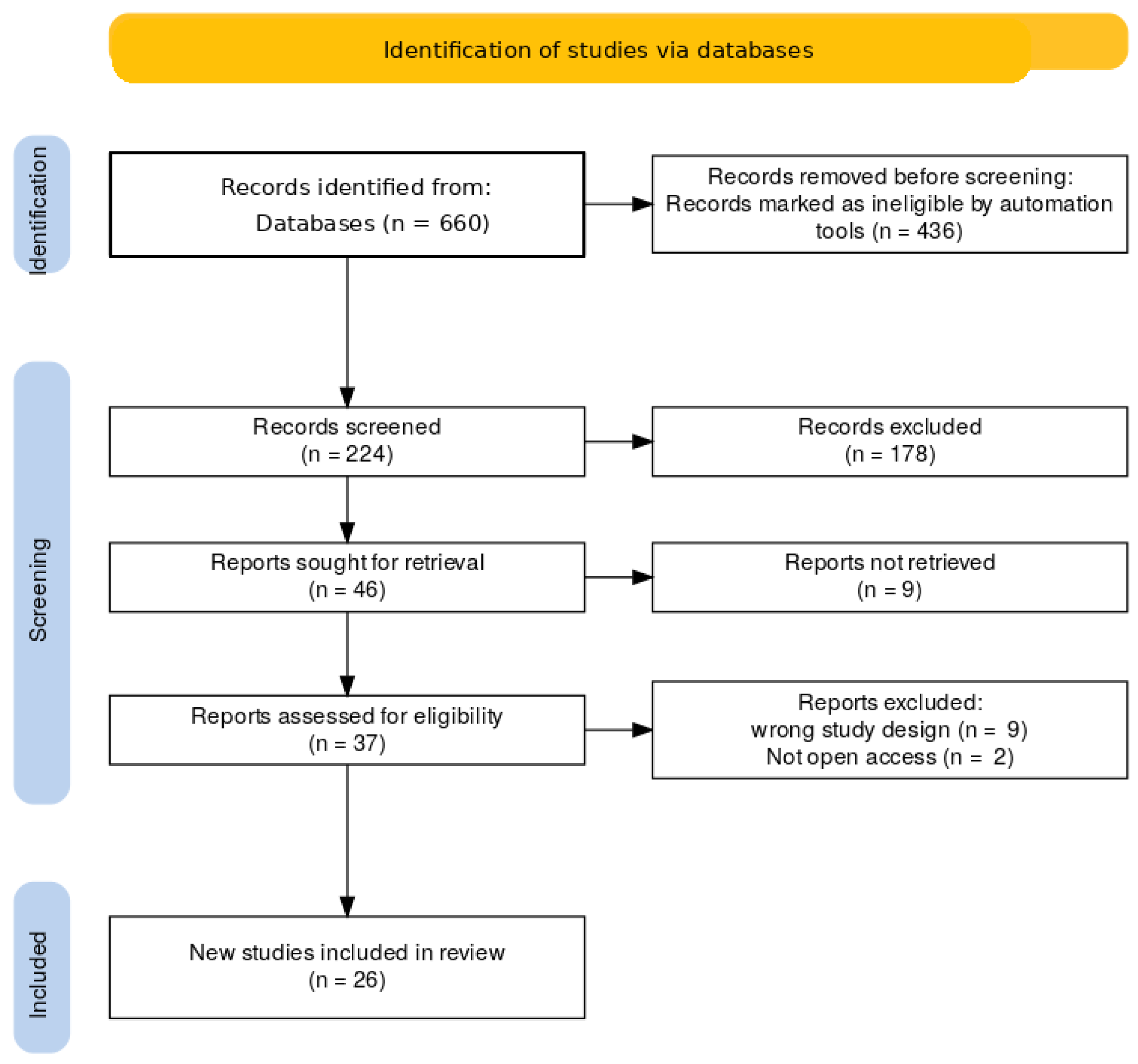
3.1. Study Selection
3.2. Characteristics of Included Studies
3.3. Study-Reported Breastfeeding Challenges
3.3.1. Physiological and Lactation-Related Factors
3.3.2. Clinical and Functional Factors
3.3.3. Psychological and Behavioral Factors
3.3.4. Health-System and Care-Delivery Factors
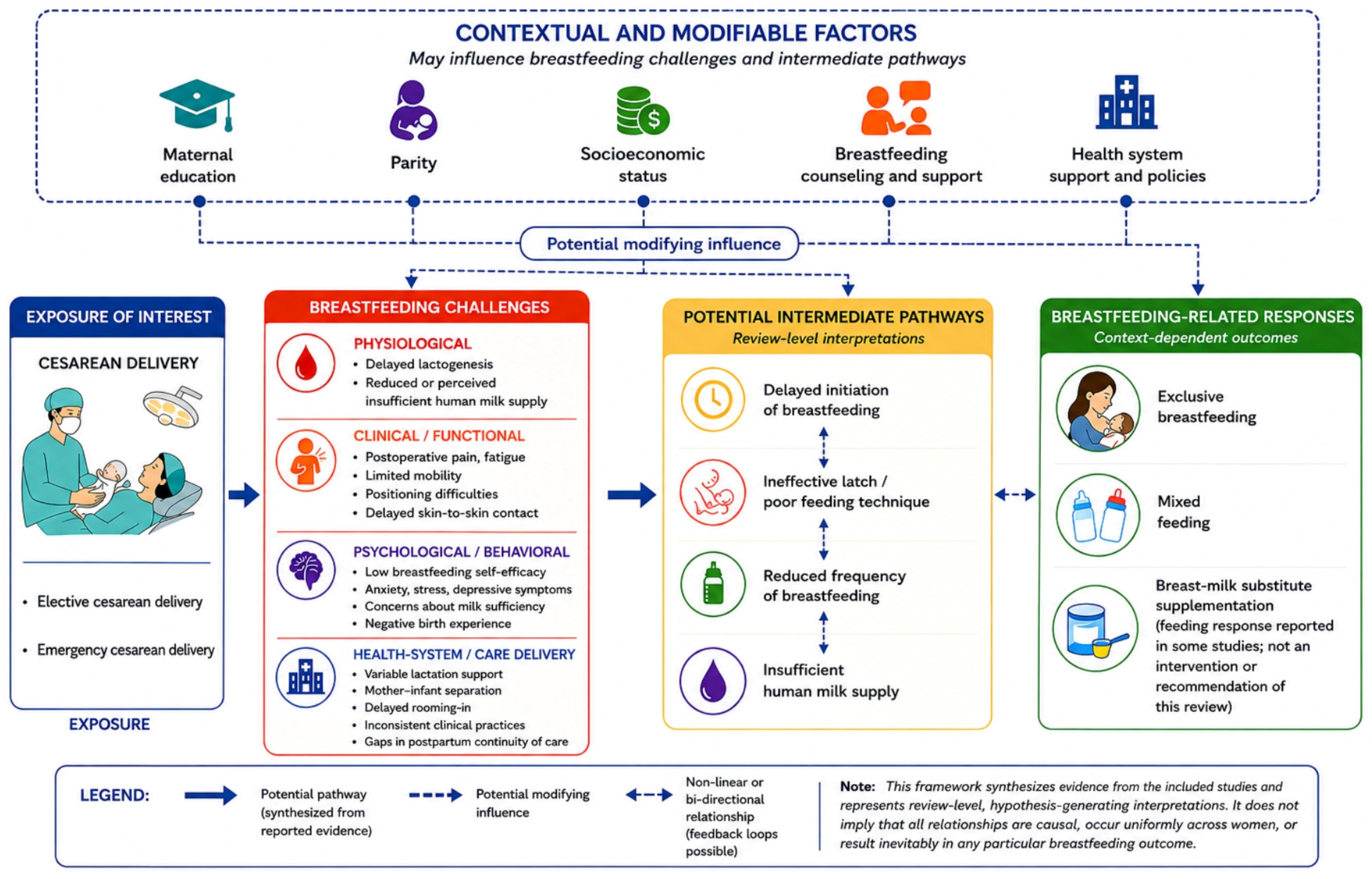
3.4. Cross-Study Synthesis of Potential Pathways
3.5. Quality Assessment
4. Discussion
5. Conclusions
Supplementary Materials
Author Contributions
Funding
Data Availability Statement
Conflicts of Interest
Abbreviations
| aOR | Adjusted Odds Ratio |
| BBAT | Bristol Breastfeeding Assessment Tool |
| BF | Breastfeeding |
| BFHI | Baby-Friendly Hospital Initiative |
| BSE | Breastfeeding Self-Efficacy |
| CASP | Critical Appraisal Skills Programme |
| CI | Confidence Interval |
| CS | Cesarean Section |
| DOLII | Delayed Onset of Lactogenesis II |
| EBF | Exclusive Breastfeeding |
| EPDS | Edinburgh Postnatal Depression Scale |
| HR | Hazard Ratio |
| LATCH | Latch, Audible swallowing, Type of nipple, Comfort, Hold |
| NICU | Neonatal Intensive Care Unit |
| NOS | Newcastle–Ottawa Scale |
| OR | Odds Ratio |
| PRISMA | Preferred Reporting Items for Systematic Reviews and Meta-Analyses |
| PROSPERO | International Prospective Register of Systematic Reviews |
| ROB 2 | Risk of Bias 2 Tool |
| RR | Relative Risk |
| SSC | Skin-to-Skin Contact |
| TPB | Theory of Planned Behavior |
References
- Purkiewicz, A.; Regin, K.J.; Mumtaz, W.; Pietrzak-Fiećko, R. Breastfeeding: The Multifaceted Impact on Child Development and Maternal Well-Being. Nutrients 2025, 17, 1326. [Google Scholar] [CrossRef] [Scilit] [PubMed]
- World Health Organization. The Optimal Duration of Exclusive Breastfeeding: Report of an Expert; World Health Organization: Geneva, Switzerland, 2001. [Google Scholar]
- Pérez-Escamilla, R.; Buccini, G.S.; Segura-Pérez, S.; Piwoz, E. Perspective: Should Exclusive Breastfeeding Still Be Recommended for 6 Months? Adv. Nutr. 2019, 10, 931–943. [Google Scholar] [CrossRef] [Scilit] [PubMed]
- United National Children’s Funds; World Health Organization. Global Breastfeeding Scorecard 2023; UNICEF: New York, NY, USA, 2023. [Google Scholar]
- Rubagumya, D.; Abeid, M.; Aghan, E.; Noorani, M. Barriers to Early Initiation of Breastfeeding: A Hospital-Based Qualitative Study. East Afr. Health Res. J. 2025, 9, 78–85. [Google Scholar] [CrossRef] [Scilit] [PubMed]
- Angolile, C.M.; Max, B.L.; Mushemba, J.; Mashauri, H.L. Global increased cesarean section rates and public health implications: A call to action. Health Sci. Rep. 2023, 6, e1274. [Google Scholar] [CrossRef] [Scilit] [PubMed]
- Show, K.L.; Jampathong, N.; Aung, P.L.; Win, K.M.; Ngamjarus, C.; Pattanittum, P.; Maung, T.M.; Tin, K.N.; Myat, S.M.; Bohren, M.A.; et al. Does caesarean section have an impact on exclusive breastfeeding? Evidence from four Southeast Asian countries. BMC Pregnancy Childbirth 2024, 24, 822. [Google Scholar] [CrossRef] [Scilit] [PubMed]
- Maj, M.; Robaczyńska, J.; Owe-Larsson, M.; Rytel, H.; Kociszewska-Najman, B.; Malejczyk, J.; Janiuk, I.R. Caesarean Delivery Influences Breast Milk Composition—A Narrative Review. Nutrients 2026, 18, 207. [Google Scholar] [CrossRef] [Scilit] [PubMed]
- Herawati, I.; Ermanto, B.; Andika, A.; Widiyanti, L.; Tika, O.G. Cesarean Delivery and Early Breastfeeding Outcomes: A Cross-Sectional Study of EIBF and Early Postpartum Difficulties. J. Appl. Nurs. Health 2026, 8, 788–797. [Google Scholar] [CrossRef] [Scilit]
- Peng, Y.; Zhuang, K.; Huang, Y. Incidence and factors influencing delayed onset of lactation: A systematic review and meta-analysis. Int. Breastfeed. J. 2024, 19, 59. [Google Scholar] [CrossRef] [Scilit] [PubMed]
- Hooda, R.; Malik, N.; Pathak, P.; More, H.; Singh, V. Impact of Postoperative Pain on Early Initiation of Breastfeeding and Ambulation After Cesarean Section: A Randomized Trial. Breastfeed. Med. 2023, 18, 132–137. [Google Scholar] [CrossRef] [Scilit] [PubMed]
- Pérez-Jiménez, J.M.; De-Diego-cordero, R.; Borrallo-Riego, Á.; Luque-Oliveros, M.; De-Pedro-jimenez, D.; Coheña-Jimenez, M.; Sierra, P.B.; Guerra-Martín, M.D. Beyond Pain Management: Skin-to-Skin Contact as a Humanization Strategy in Cesarean Delivery: A Randomized Controlled Trial. Healthcare 2025, 13, 1866. [Google Scholar] [CrossRef] [Scilit] [PubMed]
- Hobbs, A.J.; Mannion, C.A.; McDonald, S.W.; Brockway, M.; Tough, S.C. The impact of caesarean section on breastfeeding initiation, duration and difficulties in the first four months postpartum. BMC Pregnancy Childbirth 2016, 16, 90. [Google Scholar] [CrossRef] [Scilit] [PubMed]
- Lestari, P.M.; Ramadanti, A.; Latifah, M.E.; Sutrisno, M.A.F.; Andrina, H.; Stevanny, B. Factors Affecting Breastfeeding Practice among Mothers with Hospitalized Neonates. Indones. J. Obstet. Gynecol. Sci. 2025, 8, 82–90. [Google Scholar] [CrossRef] [Scilit]
- Hussain, N.H.A.C.; Chih, H.; Hamid, S.B.A. Breastfeeding Practices (Initiation, Exclusivity, Duration) during the First Six Months of an Infant’s Life among Caesarean Mothers in Selangor. Malays. J. Med. Health Sci. 2022, 18, 72–79. [Google Scholar] [CrossRef] [Scilit]
- Li, L.; Wan, W.; Zhu, C. Breastfeeding after a cesarean section: A literature review. Midwifery 2021, 103, 103117. [Google Scholar] [CrossRef] [Scilit] [PubMed]
- Ulfa, Y.; Maruyama, N.; Igarashi, Y.; Horiuchi, S. Women’s experiences of breastfeeding after a cesarean section: A meta-synthesis. Jpn. J. Nurs. Sci. 2023, 20, e12534. [Google Scholar] [CrossRef] [Scilit] [PubMed]
- Miao, Y.; Zhao, S.; Liu, W.; Jiang, H.; Li, Y.; Wang, A.; Zhang, Y. Prevalence and risk factors of delayed onset lactogenesis II in China: A systematic review and meta-analysis. J. Matern.-Fetal Neonatal Med. 2023, 36, 2214833. [Google Scholar] [CrossRef] [Scilit] [PubMed]
- Porożyńska, M.; Szablewska, A.W. Factors Related to Pregnancy and Childbirth and Their Relationship with Exclusive Breastfeeding—A Cross-Sectional Study. Nutrients 2026, 18, 447. [Google Scholar] [CrossRef] [Scilit] [PubMed]
- Chen, Y.; Xu, R.; Wu, Q. Determinants of postpartum lactation insufficiency in caesarean section in Chinese mothers: A cross-sectional study. Afr. J. Reprod. Health 2026, 30, 64–73. [Google Scholar] [CrossRef] [Scilit] [PubMed]
- Chen, Y.; Zhao, Y.; Wang, W.; Wang, F.; Jiang, H.; Wang, L. Factors associated with exclusive breastfeeding during postpartum in Lanzhou city, China: A cross-sectional study. Front. Public Health 2023, 11, 1089764. [Google Scholar] [CrossRef] [Scilit] [PubMed]
- Zimmerman, D.R.; Kaplan, M.; Shoob, H.; Freisthler, M.; Toledano, M.; Stein-Zamir, C. Breastfeeding challenges and support in a high initiation population. Isr. J. Health Policy Res. 2022, 11, 31. [Google Scholar] [CrossRef] [Scilit] [PubMed]
- Cirpanli, C.; Hicyilmaz, B.D. Postcesarean Difficulties and their Association with Breastfeeding Success in Postpartum Women. Niger. J. Clin. Pract. 2022, 25, 69–77. [Google Scholar] [CrossRef] [Scilit] [PubMed]
- Titaley, C.R.; Wijayanti, R.U.; Mu’asyaroh, A.; Ariawan, I. The multiple factors of suboptimal early feeding practices among infants aged 0–5 months in Indonesia. Front. Nutr. 2023, 10, 1080727. [Google Scholar] [CrossRef] [Scilit] [PubMed]
- Özer Aslan, İ.; Aslan, M.T.; Can, N.; Sevinç Ergül, Ö.; Çallıoğlu, N. Impact of Delivery Method on Initiation and Continuation of Breastfeeding: A Prospective Cohort Study. Children 2025, 12, 966. [Google Scholar] [CrossRef] [Scilit] [PubMed]
- Latorre, G.; Martinelli, D.; Capozza, M.; Grosso, F.M.; Laforgia, N.; Baldassarre, M.E. The effect of on-site and on-call nurse on exclusive breastfeeding in two different hospital settings: A prospective observational cohort study. Ital. J. Pediatr. 2024, 50, 180. [Google Scholar] [CrossRef] [Scilit] [PubMed]
- Singh, J.; Scime, N.V.; Chaput, K.H. Association of Caesarean delivery and breastfeeding difficulties during the delivery hospitalization: A community-based cohort of women and full-term infants in Alberta, Canada. Can. J. Public Health 2023, 114, 104–112. [Google Scholar] [CrossRef] [Scilit] [PubMed]
- Takács, L.; Smolík, F.; Lacinová, L.; Daňsová, P.; Feng, T.; Mudrák, J.; Zábrodská, K.; Monk, C. Emergency cesarean section is a risk factor for depressive symptoms when breastfeeding is limited. J. Psychosom. Res. 2022, 153, 110691. [Google Scholar] [CrossRef] [Scilit] [PubMed]
- Martin, M.; Keith, M.; Olmedo, S.; Edwards, D.; Barrientes, A.; Pan, A.; Valeggia, C. Cesarean section and breastfeeding outcomes in an Indigenous Qom community with high breastfeeding support. Evol. Med. Public Health 2022, 10, 36–46. [Google Scholar] [CrossRef] [Scilit] [PubMed]
- Sokou, R.; Parastatidou, S.; Ioakeimidis, G.; Tavoulari, E.F.; Makrogianni, A.; Isaakidou, E.; Iacovidou, N.; Konstantinidi, A. Breastfeeding in Neonates Admitted to an NICU: 18-Month Follow-Up. Nutrients 2022, 14, 3841. [Google Scholar] [CrossRef] [Scilit] [PubMed]
- Mena-Tudela, D.; Soriano-Vidal, F.J.; Vila-Candel, R.; Quesada, J.A.; Martínez-Porcar, C.; Martin-Moreno, J.M. Is Early Initiation of Maternal Lactation a Significant Determinant for Continuing Exclusive Breastfeeding up to 6 Months? Int. J. Environ. Res. Public Health 2023, 20, 3184. [Google Scholar] [CrossRef] [Scilit] [PubMed]
- Saddki, N.; Mohamad, N.; Johar, N.; Alina Tengku Ismail, T.; Sulaiman, Z. Determinants of non-exclusive breastfeeding practice during the first 6 months after an elective caesarean birth: A prospective cohort study. Int. Breastfeed. J. 2022, 17, 36. [Google Scholar] [CrossRef] [Scilit] [PubMed]
- Lian, W.; Ding, J.; Xiong, T.; Liuding, J.; Nie, L.T. Determinants of delayed onset of lactogenesis II among women who delivered via Cesarean section at a tertiary hospital in China: A prospective cohort study. Int. Breastfeed. J. 2022, 17, 81. [Google Scholar] [CrossRef] [Scilit] [PubMed]
- Johar, N.; Mohamad, N.; Saddki, N.; Ismail, T.A.T.; Sulaiman, Z. Factors Associated with Early Breastfeeding Initiation among Women Who Underwent Cesarean Delivery at Tertiary Hospitals in Kelantan, Malaysia. Korean J. Fam. Med. 2021, 42, 140–149. [Google Scholar] [CrossRef] [Scilit] [PubMed]
- Jarrett, O.; Gim, D.; Puusepp-Benazzouz, H.; Liu, A.; Bhurawala, H. Factors contributing to neonatal readmissions to a level 4 hospital within 28 days after birth. J. Paediatr. Child Health 2022, 58, 1251–1255. [Google Scholar] [CrossRef] [Scilit] [PubMed]
- Rahman, M.; Khan, N.; Rahman, A.; Alam, M.; Khan, A. Long-term effects of caesarean delivery on health and behavioural outcomes of the mother and child in Bangladesh. J. Health Popul. Nutr. 2022, 41, 45. [Google Scholar] [CrossRef] [Scilit] [PubMed]
- Farasati, M.; Nourizadeh, R.; Sattarzadeh-Jahdi, N.; Esmaeilpour, K.; Mehrabi, E.; Reisy, L. The Effect of Home Counseling on Breastfeeding Self-efficacy and Breastfeeding Performance Following Cesarean Section. Int. J. Women’s Health Reprod. Sci. 2024, 12, 105–111. [Google Scholar] [CrossRef] [Scilit]
- Karaahmet, A.Y.; Bilgiç, F.Ş. Breastfeeding success in the first 6 months of online breastfeeding counseling after cesarean delivery and its effect on anthropometric measurements of the baby: A randomized controlled study. Rev. Assoc. Med. Bras. 2022, 68, 1434–1440. [Google Scholar] [CrossRef] [Scilit] [PubMed]
- Wen, J.; Yu, G.; Kong, Y.; Wei, H.; Zhao, S.; Liu, F. Effects of a theory of planned behavior-based intervention on breastfeeding behaviors after cesarean section: A randomized controlled trial. Int. J. Nurs. Sci. 2021, 8, 152–160. [Google Scholar] [CrossRef] [Scilit] [PubMed]
- Wang, Y.; Fang, X.; Liu, C.; Ma, X.; Song, Y.; Yan, M. Impact of intraoperative infusion and postoperative PCIA of dexmedetomidine on early breastfeeding after elective cesarean section: A randomized double-blind controlled trial. Drug Des. Dev. Ther. 2020, 14, 1083–1093. [Google Scholar] [CrossRef] [Scilit] [PubMed]
- Perrella, S.L.; Abelha, S.G.; Vlaskovsky, P.; McEachran, J.L.; Prosser, S.A.; Geddes, D.T. Australian Women’s Experiences of Establishing Breastfeeding after Caesarean Birth. Int. J. Environ. Res. Public Health 2024, 21, 296. [Google Scholar] [CrossRef] [Scilit] [PubMed]
- Wen, J.; Yu, G.; Kong, Y.; Liu, F.; Wei, H. An exploration of the breastfeeding behaviors of women after cesarean section: A qualitative study. Int. J. Nurs. Sci. 2020, 7, 419–426. [Google Scholar] [CrossRef] [Scilit] [PubMed]
- Hernández-Cordero, S.; Lozada-Tequeanes, A.L.; Fernández-Gaxiola, A.C.; Shamah-Levy, T.; Sachse, M.; Veliz, P.; Cosío-Barroso, I. Barriers and facilitators to breastfeeding during the immediate and one month postpartum periods, among Mexican women: A mixed methods approach. Int. Breastfeed. J. 2020, 15, 87. [Google Scholar] [CrossRef] [Scilit] [PubMed]
- Igarashi, Y.; Horiuchi, S.; Mwilike, B. Effectiveness of an Early Skin-to-Skin Contact Program for Pregnant Women with Cesarean Section: A Quasi-Experimental Trial. Int. J. Environ. Res. Public Health 2023, 20, 5772. [Google Scholar] [CrossRef] [Scilit] [PubMed]
- Gomez-Casado, G.; Saldaña-Garcia, N.; Gonzalez-Mesa, E.; Ortega-Gomez, A. Etiology of Delayed Lactogenesis in Obesity. Biomedicines 2025, 13, 1848. [Google Scholar] [CrossRef] [Scilit] [PubMed]
- Li, S.; Wupuer, T.; Hou, R. Factors Influencing Delayed Onset of Lactogenesis: A Scoping Review. Int. J. Gen. Med. 2024, 17, 2311–2326. [Google Scholar] [CrossRef] [Scilit] [PubMed]
- Kenkel, W. Birth signalling hormones and the developmental consequences of caesarean delivery. J. Neuroendocr. 2023, 33, e12912. [Google Scholar] [CrossRef] [Scilit] [PubMed]
- Hussein, H.K.; Turkey, B.N.; Shamkhi Alshlah, H.A. Factors Contributing to Cesarean Sections Among Mothers and Their Short-Term Effects on Postpartum Outcomes: A Case-Control Study. J. Obstet. Gynecol. Cancer Res. 2025, 10, 763–769. [Google Scholar] [CrossRef] [Scilit]
- Kusuma, N.I.; Khuzaiyah, S.; Kristiyanti, R.; Prafitri, L.D.; Suparni, S.; Chabibah, N. Breastfeeding by Mothers with Cesarean Section Delivery. In Contemporary Challenges in Postnatal Care; Connell, T., Ed.; IntechOpen: London, UK, 2023. [Google Scholar] [CrossRef] [Scilit]
- Nurjanah, S.; Pratiwi, E.N.; Hapsari, E.; Ekachayningtyas, M. Perceived Insufficient Milk Supply (PIMS) and the Risk of Non-Exclusive Breastfeeding Practices: A Systematic Review and Meta-Analysis. J. Kesehat. Kusuma Husada 2026, 17, 53–69. [Google Scholar] [CrossRef] [Scilit]
- Brownell, E.; Howard, C.R.; Lawrence, R.A.; Dozier, A.M. Does Delayed Onset Lactogenesis II Predict the Cessation of Any or Exclusive Breastfeeding? J. Pediatr. 2012, 161, 608–614. [Google Scholar] [CrossRef] [Scilit] [PubMed]
- Huang, Y.; Liu, Y.; Yu, X.Y.; Zeng, T.Y. The rates and factors of perceived insufficient milk supply: A systematic review. Matern. Child Nutr. 2022, 18, e13255. [Google Scholar] [CrossRef] [Scilit] [PubMed]
- Oliva-Pérez, J.; Oliver-Roig, A. Relationship of delayed lactogenesis II to maternal perception of insufficient milk: A longitudinal study. Enferm. Clín. 2022, 32, 413–422. [Google Scholar] [CrossRef] [PubMed]
- Karlström, A.; Engström-Olofsson, R.; Norbergh, K.-G.; Jong, M.; Hildingsson, I. Postoperative Pain After Cesarean Birth Affects Breastfeeding and Infant Care. J. Obstet. Gynecol. Neonatal Nurs. 2007, 36, 430–440. [Google Scholar] [CrossRef] [Scilit] [PubMed]
- Rusman, D.N.; Rayani, T.; Wijayanti, A. Exploring the Connection Between Breastfeeding Practices and Milk Production Levels in New Mothers. Proceeding Int. Conf. Inov. Sci. Technol. Educ. Child Health 2024, 5, 282–288. [Google Scholar] [CrossRef] [Scilit]
- Mislu, E.; Kumsa, H.; Arage, M.W.; Shitie, A.; Adimasu, A. Effective breastfeeding techniques and associated factors among lactating women: A community-based study, north east Ethiopia. Front. Public Health 2024, 12, 1337822. [Google Scholar] [CrossRef] [Scilit] [PubMed]
- Yuliwati, N.; Kamalia, L.; Monica, V.; Tsuwwaebatul, B.; Mandasari, A.; Mei, D.P.; Mardiana, A.; Septini, D.P.; Nazilah, H.; Romadhona, S.B. Factors Related to Breastfeeding Success in Post-Partum Mothers: A Quantitative Approach in the Context of Applied Health Sciences. J. Penelit. Pendidik. IPA 2025, 11, 1154–1159. [Google Scholar] [CrossRef] [Scilit]
- Juan, J.; Zhang, X.; Wang, X.; Liu, J.; Cao, Y.; Tan, L.; Gao, Y.; Qiu, Y.; Yang, H. Association between Skin-to-Skin Contact Duration after Caesarean Section and Breastfeeding Outcomes. Children 2022, 9, 1742. [Google Scholar] [CrossRef] [Scilit] [PubMed]
- Stevens, J.; Schmied, V.; Burns, E.; Dahlen, H. Immediate or early skin-to-skin contact after a Caesarean section: A review of the literature. Matern. Child Nutr. 2014, 10, 456–473. [Google Scholar] [CrossRef] [Scilit] [PubMed]
- Wang, X.; He, J.; Cui, X.; Zheng, Y.; Li, Y.; Shi, Y.; Liu, R. Knowledge, attitude, and practice toward delayed onset of lactogenesis among postpartum women experiencing mother-infant separation: A multi-center cross-sectional study. Int. Breastfeed. J. 2026, 21, 4. [Google Scholar] [CrossRef] [Scilit] [PubMed]
- Basrowi, R.W.; Sulistomo, A.W.; Adi, N.P.; Widyahening, I.S.; Vandenplas, Y. Breastfeeding knowledge, attitude, and practice among white-collar and blue-collar workers in Indonesia. J. Korean Med. Sci. 2019, 34, e284. [Google Scholar] [CrossRef] [Scilit] [PubMed]
- Huang, R.; Han, H.; Ding, L.; Zhou, Y.; Hou, Y.; Yao, X.; Cai, C.; Li, X.; Song, J.; Zhang, S.; et al. Using the theory of planned behavior model to predict factors influencing breastfeeding behavior among preterm mothers at week 6 postpartum: The mediating effect of breastfeeding intention. Front. Psychol. 2023, 14, 1228769. [Google Scholar] [CrossRef] [Scilit] [PubMed]
- Parker, M.G.; Hwang, S.S.; Forbes, E.S.; Colvin, B.N.; Brown, K.R.; Colson, E.R. Use of the theory of planned behavior framework to understand breastfeeding decision-making among mothers of preterm infants. Breastfeed. Med. 2020, 15, 608–615. [Google Scholar] [CrossRef] [Scilit] [PubMed]
- Gayatri, M. Relationship between cesarean section and early initiation of breastfeeding in Indonesia. Public Health Prev. Med. Arch. 2023, 10, 100–107. [Google Scholar] [CrossRef] [Scilit]
- Neifert, M.; Bunik, M. Overcoming Clinical Barriers to Exclusive Breastfeeding. Pediatr. Clin. N. Am. 2013, 60, 115–145. [Google Scholar] [CrossRef] [Scilit] [PubMed]
- Basrowi, R.W.; Sastroasmoro, S.; Sulistomo, A.W.; Bardosono, S.; Hendarto, A.; Soemarko, D.S.; Sungkar, A.; Khoe, L.C.; Vandenplas, Y. Developing a workplace lactation promotion model in Indonesia using Delphi technique. Arch. Public Health 2018, 76, 70. [Google Scholar] [CrossRef] [Scilit] [PubMed]
- Hulman, A.; Pakai, A.; Csákvári, T.; Keczeli, V.; Varga, K. The Impact of Mode of Delivery and Postpartum Conditions on Breastfeeding: A Cross-Sectional Study. Healthcare 2024, 12, 248. [Google Scholar] [CrossRef] [Scilit] [PubMed]
- Huang, C.; Hu, L.; Wang, Y.; Luo, B. Effectiveness of early essential newborn care on breastfeeding and maternal outcomes: A nonrandomized controlled study. BMC Pregnancy Childbirth 2022, 22, 707. [Google Scholar] [CrossRef] [Scilit] [PubMed]
- Alhaddad, H.; Alghamdi, S. Skin-to-skin contact and breastfeeding: A scoping review. Int. J. Adv. Appl. Sci. 2022, 9, 103–109. [Google Scholar] [CrossRef] [Scilit]
- Basrowi, R.W.; Darus, F.; Partiwi, I.G.A.N.; Sutanto, L.B.; Sulistomo, A.; Soemarko, D.S.; Wasito, E.; Sundjaya, T.; Pratiwi, D. The Strategic Effort to Ensure Successful Breastfeeding Practice in the Workplace: An Indonesian Expert Opinion. Open Public Health J. 2024, 17, e18749445291278. [Google Scholar] [CrossRef] [Scilit]
- United National Children’s Funds. Breastfeeding: A Mother’s Gift, for Every Child—UNICEF DATA; UNICEF: New York, NY, USA, 2018. [Google Scholar]
- Habte, M.B.; Abdulahi, M.; Plusquin, M.; Cosemans, C. Effectiveness of Baby-Friendly Hospital Initiative on Early Initiation and Exclusive Breastfeeding Practice: Systematic Review and Meta-Analysis. Nutrients 2025, 17, 2283. [Google Scholar] [CrossRef] [Scilit] [PubMed]
- Gao, D.; Song, Y.; Fan, R.; Lou, D. Breastfeeding of Very Preterm Infants in the Neonatal Intensive Care Unit: A Retrospective Cohort Study. Dimens. Crit. Care Nurs. 2026, 45, 116–121. [Google Scholar] [CrossRef] [Scilit] [PubMed]
- Jin, X.; Lai, C.T.; Perrella, S.L.; Gridneva, Z.; McEachran, J.L.; Hassan, G.M.; Taylor, N.L.; Geddes, D.T. Defining Low Milk Supply: A Data-Driven Diagnostic Framework and Risk Factor Analysis for Breastfeeding Women. Nutrients 2025, 17, 3524. [Google Scholar] [CrossRef] [Scilit] [PubMed]
- Jin, X.; Perrella, S.L.; Lai, C.T.; Taylor, N.L.; Geddes, D.T. Causes of Low Milk Supply: The Roles of Estrogens, Progesterone, and Related External Factors. Adv. Nutr. 2024, 15, 100129. [Google Scholar] [CrossRef] [Scilit] [PubMed]
- Page, M.J.; McKenzie, J.E.; Bossuyt, P.M.; Boutron, I.; Hoffmann, T.C.; Mulrow, C.D.; Shamseer, L.; Tetzlaff, J.M.; Akl, E.A.; Brennan, S.E.; et al. The PRISMA 2020 statement: An updated guideline for reporting systematic reviews. BMJ 2021, 372, n71. [Google Scholar] [CrossRef] [Scilit]



| No | Author (Year) | Title | Country | Study Design | Sample Size | Population | Type of Cesarean |
|---|---|---|---|---|---|---|---|
| 1 | Porożyńska & Szablewska (2026) [19] | Factors Related to Pregnancy and Childbirth and Their Relationship with Exclusive Breastfeeding—A Cross Sectional Study | Poland | Cross-sectional | 557 | Mothers with infants aged 6–12 months | CS vs. Vaginal |
| 2 | Chen et al. (2026) [20] | Determinants of postpartum lactation insufficiency in caesarean section in Chinese mothers: A cross-sectional study | China | Cross-sectional | 265 | CS mothers | Mixed CS |
| 3 | Özer Aslan et al. (2025) [25] | Impact of Delivery Method on Initiation and Continuation of Breastfeeding: A Prospective Cohort Study | Turkey | Prospective cohort | 338 | Mothers and infants | Planned & Emergency CS |
| 4 | Farasati et al. (2024) [37] | The Effect of Home Counseling on Breastfeeding Self-efficacy and Breastfeeding Performance Following Cesarean Section | Iran | RCT | 60 (Intervention n = 30; Control n = 30) | Primiparous CS mothers | Mixed (elective and emergency CS, balanced allocation) |
| 5 | Latorre et al. (2024) [26] | The effect of on-site and on-call nurse on exclusive breastfeeding in two different hospital settings: a prospective observational cohort study | Italy | Prospective cohort | 564 | Mother–infant dyads | Mixed CS |
| 6 | Perrella et al. (2024) [41] | Australian Women’s Experiences of Establishing Breastfeeding after Caesarean Birth | Australia | Mixed-methods | 961 | Post-CS women | Elective CS & Non-elective CS |
| 7 | Chen et al. (2023) [21] | Factors associated with exclusive breastfeeding during postpartum in Lanzhou city, China: a cross-sectional study | China | Cross-sectional | 3738 | Postpartum women | Mixed CS (Cesarean vs. vaginal delivery comparison; elective/emergency not specified) |
| 8 | Singh et al. (2023) [27] | Association of Caesarean delivery and breastfeeding difficulties during the delivery hospitalization: a community-based cohort of women and full-term infants in Alberta, Canada | Canada | Prospective cohort | 418 | Mothers and infant’s dyads | Planned/unplanned CS |
| 9 | Titaley et al. (2023) [24] | The multiple factors of suboptimal early feeding practices among infants aged 0–5 months in Indonesia | Indonesia | Cross-sectional | 3198 | Infants aged 0–5 months | CS vs. Vaginal |
| 10 | Igarashi et al. (2023) [44] | Effectiveness of an Early Skin-to-Skin Contact Program for Pregnant Women with Cesarean Section: A Quasi-Experimental Trial | Tanzania | Quasi-experimental | 172 (86 intervention, 86 control) | CS mothers | Mixed CS (planned and emergency) |
| 11 | Takács et al. (2022) [28] | Emergency cesarean section is a risk factor for depressive symptoms when breastfeeding is limited | Czech Republic | Prospective cohort | 404 (6 weeks), 234 (9 months postpartum) | Postpartum women | Planned CS vs. Emergency CS |
| 12 | Jarrett et al. (2022) [35] | Factors contributing to neonatal readmissions to a level 4 hospital within 28 days after birth | Australia | Case–control, retrospective cross-sectional study | 129 readmitted neonates and 122 controls | Neonates & mothers | Mixed (emergency and elective CS included but not primary exposure) |
| 13 | Martin et al. (2022) [29] | Cesarean section and breastfeeding outcomes in an Indigenous Qom community with high breastfeeding support | Argentina | Prospective longitudinal cohort with mixed- methods | 89 | Indigenous mothers-infants | Mixed (scheduled and unscheduled CS) |
| 14 | Zimmerman et al. (2022) [22] | Breastfeeding challenges and support in a high initiation population | Israel | Cross-sectional | 868 | Postpartum mothers with infants ≤ 3 months | CS vs. Vaginal |
| 15 | Sokou et al. (2022) [30] | Breastfeeding in Neonates Admitted to an NICU: 18-Month Follow-Up | Greece | Cohort | 279 | Mothers and neonates (NICU) | CS vs. Vaginal |
| 16 | Mena-Tudela et al. (2022) [31] | Is Early Initiation of Maternal Lactation a Significant Determinant for Continuing Exclusive Breastfeeding up to 6 Months? | Spain | Retrospective Cohort | 342 | Mothers and newborns | CS vs. Vaginal |
| 17 | Karaahmet & Bilgiç (2022) [38] | Breastfeeding success in the first 6 months of online breastfeeding counseling after cesarean delivery and its effect on anthropometric measurements of the baby: a randomized controlled study | Turkey | RCT | 151 | Primiparous CS mothers | Elective CS |
| 18 | Rahman et al. (2022) [36] | Long-term effects of caesarean delivery on health and behavioural outcomes of the mother and child in Bangladesh | Bangladesh | Case–control | 600 | Mothers and children’s dyads | Mixed CS |
| 19 | Saddki et al. (2022) [32] | Determinants of non-exclusive breastfeeding practice during the first 6 months after an elective caesarean birth: a prospective cohort study | Malaysia | Prospective cohort | 171 | Elective CS mothers | Elective CS |
| 20 | Lian et al. (2022) [33] | Determinants of delayed onset of lactogenesis II among women who delivered via Cesarean section at a tertiary hospital in China: a prospective cohort study | China | Prospective cohort | 468 | CS women | Mixed CS (elective and emergency) |
| 21 | Johar et al. (2021) [34] | Factors Associated with Early Breastfeeding Initiation among Women Who Underwent Cesarean Delivery at Tertiary Hospitals in Kelantan, Malaysia | Malaysia | Prospective cohort | 171 | Mothers with elective CS | Elective CS |
| 22 | Wen et al. (2021) [39] | Effects of a theory of planned behavior-based intervention on breastfeeding behaviors after cesarean section: A randomized controlled trial | China | RCT | 132 (66 intervention, 66 control) | Elective CS mothers | Elective CS |
| 23 | Cirpanli & Hicyilmaz (2020) [23] | Postcesarean Difficulties and their Association with Breastfeeding Success in Postpartum Women | Turkey | Cross-sectional | 220 | CS mothers | CS only |
| 24 | Wen et al. (2020) [42] | An exploration of the breastfeeding behaviors of women after cesarean section: A qualitative study | China | Qualitative | 19 | CS mothers | Mixed CS (planned + emergency) |
| 25 | Wang et al. (2020) [40] | Impact of Intraoperative Infusion and Postoperative PCIA of Dexmedetomidine on Early Breastfeeding After Elective Cesarean Section: A Randomized Double-Blind Controlled Trial | China | RCT | 160 | Elective CS mothers | Elective CS |
| 26 | Hernández-Cordero et al. (2020) [43] | Barriers and facilitators to breastfeeding during the immediate and one-month postpartum periods, among Mexican women: a mixed methods approach | Mexico | Mixed-methods | 543 | Postpartum mothers | CS vs. Vaginal |
| No | Author (Year) | Physiological | Clinical | Psychological | Health System | Study-Reported Breastfeeding-Related Findings |
|---|---|---|---|---|---|---|
| 1 | Porożyńska & Szablewska (2026) [19] | Delayed lactogenesis, postpartum complications | Early lactation problems (latch, milk supply), mode of delivery | Birth satisfaction (not significant) | Early practices (skin-to-skin, timing) were not significant | Early lactation problems were associated with lower EBF. |
| 2 | Chen et al. (2026) [20] | Delayed lactogenesis, low milk volume, hormonal disruption | Postpartum pain, gestational diabetes, high BMI | Postpartum depression | Lack of early breastfeeding support (skin-to-skin) | Lactation insufficiency prevalence 48.3% with multiple independent risk factors. |
| 3 | Özer Aslan et al. (2025) [25] | Impaired infant reflexes, lack of oxytocin stimulation, delayed lactation | Planned & emergency CS, anesthesia, post-operative pain | Maternal fatigue, early bonding is disturbed | SSC practice is not optimal without BFHI intervention | Cesarean delivery was associated with delayed breastfeeding initiation; the study reported that the difference diminished over time. |
| 4 | Farasati et al. (2024) [37] | Insufficient milk supply | Infant refusal to latch, feeding difficulty | Low breastfeeding self- efficacy (BSE), stress | Lack of post-discharge support (before intervention) | The intervention group had fewer breastfeeding problems than the comparison group. |
| 5 | Latorre et al. (2024) [26] | Perceived low milk supply | Nipple fissures, latch difficulties | Low maternal confidence, knowledge gap | Inadequate breastfeeding support (on-call vs. on-site nurse) | Lack of continuous support leads to early breastfeeding difficulties and discontinuation. |
| 6 | Perrella et al. (2024) [41] | Pain, reduced mobility, fatigue | Difficulty positioning, inability to pick up baby, delayed initiation | Stress, anxiety, negative birth experience | Limited staff support, rushed care, conflicting advice, restricted partner access | Breastfeeding challenges were reported in relation to care-related and birth-experience factors. |
| 7 | Chen et al. (2023) [21] | Delayed milk secretion due to hormonal/stress response | Post-cesarean pain, slow recovery, physical limitation | Anxiety, negative attitude, Insufficient milk supply | Limited targeted postpartum support, education gaps | Insufficient milk supply was reported by 57% of participants; the study examined its relationship with EBF cessation. |
| 8 | Singh et al. (2023) [27] | Delayed lactogenesis II, low milk supply | Post-surgical recovery, pain, delayed skin-to-skin | Low breastfeeding self- efficacy, perception of insufficient milk | Limited early support (rooming-in, lactation support variability) | Cesarean delivery was associated with low milk supply (aOR 1.62) and infant feeding-related difficulties (aOR 1.33). |
| 9 | Titaley et al. (2023) [24] | Disrupted lactogenesis (post-CS hormonal pathway) | CS delivery, delayed initiation, prelacteal feeding | Not explicitly dominant | Health facility variation, marketing formula, lack of BF support | Suboptimal feeding was reported in 78.6% of participants, with factors described across multiple levels. |
| 10 | Igarashi et al. (2023) [44] | Delayed initiation, mother–infant separation, lack of SSC | CS (planned & emergency), postoperative recovery | Low bonding & delivery satisfaction | Hospital system separates mother and baby after CS, lack of SSC implementation | The study reported higher delivery satisfaction and shorter hospitalization among participants receiving SSC. |
| 11 | Takács et al. (2022) [28] | Not explicitly assessed/reported | Emergency CS-related complications | Increased stress, vulnerability to depression | Not explicitly assessed/reported | Emergency CS is associated with lower likelihood of exclusive breastfeeding. |
| 12 | Jarrett et al. (2022) [35] | Low milk supply, dehydration-related issues | Poor latch, feeding inefficiency, weight loss | Maternal inexperience (primiparous | Early discharge, limited follow-up support | Feeding difficulties are the leading cause (72.9%) of neonatal readmission. |
| 13 | Martin et al. (2022) [29] | Delayed lactogenesis, low milk onset | Pain, mobility limitation, latch problems | Anxiety, lack of experience (primiparous mothers) | Strong kin/community support, postpartum assistance | Early breastfeeding problems occur but are resolved with strong social support. |
| 14 | Zimmerman et al. (2022) [22] | Insufficient milk supply (18.5%) | Mechanical problems (latch, nipple pain) (55.2%) | Maternal concern, low confidence, first-time motherhood | Inadequate access to breastfeeding support (hospital & community) | BF difficulties were commonly reported and were associated with earlier breastfeeding cessation. |
| 15 | Sokou et al. (2022) [30] | Prematurity, immature suck– swallow coordination | NICU admission, tube feeding, delayed initiation | Maternal stress, anxiety, reduced confidence | Mother–infant separation, NICU environment, limited access | NICU admission and prematurity were associated with shorter breastfeeding duration and lower exclusivity. |
| 16 | Mena-Tudela et al. (2022) [31] | Post-surgical recovery, delayed lactogenesis post-surgical recovery, delayed lactogenesis | Cesarean section, analgesia, delayed SSC, low LATCH score | Fatigue, anxiety, negative birth experience | Delayed skin-to-skin contact (SSC), hospital practice | Low LATCH score (<9) was associated with earlier cessation of exclusive breastfeeding in the study. |
| 17 | Karaahmet & Bilgiç (2022) [38] | Post-cesarean pain, nipple problems | Incorrect positioning, poor latch | Low self-efficacy, perception of insufficient milk | Lack of support without counseling | The counseling intervention was associated with reduced breastfeeding challenges and improved breastfeeding initiation. |
| 18 | Rahman et al. (2022) [36] | Post-surgical pain, headache, hip pain | Physical limitations, reduced functional ability | Not explicitly assessed | Limited postpartum care access (LMIC context) | Cesarean delivery was associated with breastfeeding problems (OR 3.19). |
| 19 | Saddki et al. (2022) [32] | Insufficient milk supply | Breast pain, difficulty positioning | Low BF self-efficacy | Lack of structured lactation support & education | Perceived milk insufficiency was frequently reported among participants who did not exclusively breastfeed. |
| 20 | Lian et al. (2022) [33] | Delayed lactogenesis, low albumin (nutritional status), hormonal dysregulation | Postoperative pain, delayed initiation, low breastfeeding frequency | Postpartum depression (EPDS ≥ 10) | Use of breast-milk substitutes, low early breastfeeding stimulation | DOLLI was associated with nutritional factors, breastfeeding frequency, and postpartum depression. |
| 21 | Johar et al. (2021) [34] | Pain, fatigue, nausea, breast pain, perceived low milk | Post-surgical recovery, limited mobility, infant sleepiness, poor latch | Low confidence, worry, perception of insufficient milk | Skin-to-skin contact (SSC), BFHI practices, staff support | Early initiation was associated with SSC, infant alertness, and feeding technique. |
| 22 | Wen et al. (2021) [39] | Postoperative pain, delayed lactogenesis, infant sucking disorders | CS section, medication use, delayed initiation | Low self-confidence, low breastfeeding intention | Lack of ongoing education & family support | The TPB-based intervention was associated with higher EBF and fewer reported lactation problems. |
| 23 | Cirpanli & Hicyilmaz (2020) [23] | Insufficient milk supply, no milk production | Latching difficulty, positioning problems, nipple issues, engorgement | Lack of experience, low confidence | Limited nurse support, delayed SSC, workload constraints | Breastfeeding problems were reported as important barriers to breastfeeding success, particularly difficulties with latching, nipple problems, and positioning. |
| 24 | Wen et al. (2020) [42] | Incision pain, back pain, lactation delay | Poor positioning, nipple damage, limited mobility | Low confidence, depressive mood, ambivalence | Conflicting advice, lack of structured education, cultural pressure | Breastfeeding behavior was described in relation to biological, psychological, and sociocultural factors. |
| 25 | Wang et al. (2020) [40] | Reduced prolactin & oxytocin due to stress | Postoperative pain, delayed lactation | Anxiety, depression, reduced breastfeeding motivation | Limited perioperative breastfeeding optimization | Postoperative pain and negative mood were associated with delayed breastfeeding initiation and lactation difficulties. |
| 26 | Hernández-Cordero et al. (2020) [43] | Insufficient milk supply, sore nipples | CS recovery, delayed initiation, use of breast-milk substitutes | Belief milk is insufficient, low confidence, cultural beliefs | Belief milk is insufficient, low confidence, cultural beliefs | The study reported hospital practices and breast-milk substitute marketing as contextual factors related to breastfeeding. |
| No. | Author (Year) | Study-Reported Findings | Evidence Type | Potential Pathway Identified Through Cross-Study Synthesis | Interpretive Role |
|---|---|---|---|---|---|
| 1 | Porożyńska & Szablewska (2026) [19] | Delayed lactation and breastfeeding difficulties were reported following cesarean delivery; early lactation success was associated with breastfeeding status. | Observational | Cesarean delivery → early lactation difficulties → breastfeeding establishment | Supports a potential association between early lactation difficulties and subsequent breastfeeding establishment; the complete pathway was not directly tested. |
| 2 | Chen et al. (2026) [20] | Delayed lactogenesis, pain, and endocrine-related factors were reported in association with breastfeeding difficulties. | Observational | Perioperative factors → delayed lactogenesis → breastfeeding difficulties | Suggests a potential physiological pathway; endocrine mechanisms should be interpreted cautiously when not directly measured. |
| 3 | Özer Aslan et al. (2025) [25] | Delayed breastfeeding initiation and impaired neonatal feeding responses were reported following cesarean delivery. | Observational | Delayed initiation/infant feeding difficulties → breastfeeding establishment difficulties | Provides evidence for selected components of the proposed pathway rather than the complete causal sequence. |
| 4 | Farasati et al. (2024) [37] | The evaluated intervention was associated with changes in breastfeeding self-efficacy and breastfeeding difficulties. | RCT | Support intervention → improved self-efficacy → breastfeeding establishment | Provides intervention evidence suggesting that psychological factors may be modifiable. |
| 5 | Latorre et al. (2024) [26] | Breastfeeding difficulties and early breastfeeding indicators were reported among women following cesarean delivery. | Observational | Cesarean delivery → breastfeeding difficulties → breastfeeding-related responses | Supports an association but does not establish mediation. |
| 6 | Perrella et al. (2024) [41] | Pain and delayed breastfeeding initiation were associated with breastfeeding difficulties; use of breast-milk substitutes was reported in some participants. | Mixed-methods | Postoperative difficulties → delayed breastfeeding establishment → feeding response | Provides evidence for selected components of a potential clinical pathway; the temporal relationship among postoperative difficulties and subsequent feeding responses was not fully established. |
| 7 | Chen et al. (2023) [21] | Pain, delayed recovery, and anxiety were associated with breastfeeding difficulties. | Observational | Postoperative recovery + psychological factors → breastfeeding difficulties | Suggests interacting clinical and psychological factors rather than an independently established mediation pathway. |
| 8 | Singh et al. (2023) [27] | Delayed lactogenesis, pain, and reduced milk supply were reported following cesarean delivery. | Observational | Perioperative factors → delayed lactogenesis/insufficient milk supply → breastfeeding difficulties | Supports a potential physiological pathway; temporal ordering was not consistently established. |
| 9 | Titaley et al. (2023) [24] | Delayed breastfeeding initiation and hormonal-related factors were associated with prelacteal feeding or reduced breastfeeding establishment. | Observational | Delayed initiation → breastfeeding establishment difficulties | Provides evidence for individual components of a potential pathway; the complete sequence was not directly tested. |
| 10 | Igarashi et al. (2023) [44] | Mother–infant separation, delayed initiation, and limited skin-to-skin contact were associated with breastfeeding-related measures. | Quasi-experimental | Mother–infant separation/delayed contact → breastfeeding establishment difficulties | Suggests a potential health-system and care-delivery pathway. |
| 11 | Takács et al. (2022) [28] | Emergency cesarean delivery was associated with breastfeeding-related psychological symptoms. | Observational | Cesarean-related experience → psychological factors → breastfeeding-related responses | Supports a potential psychological pathway; mediation was not established. |
| 12 | Jarrett et al. (2022) [35] | Mode of delivery and breastfeeding-related difficulties were examined in relation to maternal experiences. | Observational | Delivery-related experience → breastfeeding difficulties | Provides contextual evidence for the proposed pathway rather than direct causal evidence. |
| 13 | Martin et al. (2022) [29] | Early postpartum breastfeeding problems, including pain and delayed lactation, were reported; social support was also described. | Observational | Postpartum difficulties + social support → breastfeeding establishment | Suggests that clinical and contextual factors may interact during breastfeeding establishment. |
| 14 | Zimmerman et al. (2022) [22] | Insufficient human milk supply and maternal concerns were reported in relation to breastfeeding continuation. | Observational | Perceived/insufficient milk supply → breastfeeding-related responses | Supports a potential lactation-related pathway; physiological and perceptual components may not be separable. |
| 15 | Sokou et al. (2022) [30] | Prematurity, NICU admission, mother–infant separation, and delayed breastfeeding initiation were associated with breastfeeding difficulties. | Observational | Prematurity/NICU-related factors → separation or delayed initiation → breastfeeding difficulties | Highlights potential confounding by clinical context; the findings should not be interpreted as evidence of an independent effect of cesarean delivery. |
| 16 | Mena-Tudela et al. (2022) [31] | Delayed exclusive breastfeeding initiation, reduced skin-to-skin contact, and latch difficulties were reported. | Observational | Delayed initiation/reduced skin-to-skin contact → latch difficulties → breastfeeding establishment | Supports selected components of the proposed clinical pathway. |
| 17 | Karaahmet & Bilgiç (2022) [38] | Online breastfeeding counseling improved breastfeeding self-efficacy and breastfeeding-related measures among women following cesarean delivery. | RCT | Breastfeeding counseling → improved self-efficacy → breastfeeding establishment | Provides intervention evidence supporting the potential modifiability of psychological and support-related factors. |
| 18 | Rahman et al. (2022) [36] | Pain, physical limitations, and breastfeeding problems were associated with breastfeeding-related measures. | Observational | Postoperative functional difficulties → breastfeeding difficulties | Suggests a clinical/functional pathway; individual effects were difficult to separate. |
| 19 | Saddki et al. (2022) [32] | Pain, delayed initiation, insufficient milk supply, and perceived insufficiency were associated with non-exclusive breastfeeding. | Observational | Pain/delayed initiation/milk insufficiency → breastfeeding-related response | Supports individual pathway components but not a complete causal chain. |
| 20 | Lian et al. (2022) [33] | Delayed onset of lactogenesis, low breastfeeding frequency, and maternal stress were reported in association with breastfeeding difficulties. | Observational | Delayed lactogenesis + maternal stress → breastfeeding establishment difficulties | Suggests interaction between physiological and psychological factors. |
| 21 | Johar et al. (2021) [34] | Poor latch, delayed initiation, and limited breastfeeding support were associated with breastfeeding-related measures. | Observational | Clinical difficulties + support limitations → breastfeeding establishment | Supports the potential interaction of clinical and health-system factors. |
| 22 | Wen et al. (2021) [39] | Low self-control/perceived control and breastfeeding support were associated with breastfeeding-related measures. | RCT | Psychological factors + support → breastfeeding establishment | Suggests that behavioral and support-related factors may be modifiable. |
| 23 | Cirpanli & Hicyilmaz (2020) [23] | Breastfeeding problems, including latch and milk-supply difficulties, were reported following cesarean delivery. | Observational | Breastfeeding problems → breastfeeding establishment difficulties | Provides evidence for lactation-related components of the proposed pathway. |
| 24 | Wen et al. (2020) [42] | Low confidence, poor skills, and breastfeeding problems were associated with breastfeeding-related responses. | Qualitative | Self-efficacy + breastfeeding skills → breastfeeding establishment | Provides contextual evidence for psychological and functional interactions. |
| 25 | Wang et al. (2020) [40] | Pain, stress, and delayed lactation were reported in relation to breastfeeding initiation. | RCT | Postoperative recovery + psychological factors → breastfeeding establishment | Suggests potentially modifiable clinical and psychological components, although the individual contributions of these factors were not established. |
| 26 | Hernández-Cordero et al. (2020) [43] | Delayed initiation, separation, hospital practices, and formula exposure were reported in relation to breastfeeding establishment. | Mixed-methods | Hospital practices/delayed initiation → breastfeeding establishment | Supports a potential health-system pathway; individual effects were not independently established. |
| No | Author (Year) | Study Design | Selection (0–4) | Comparability (0–2) | Outcomes (0–3) | Total Score (0–9) | Risk Category |
|---|---|---|---|---|---|---|---|
| 1 | Porożyńska & Szablewska (2026) [19] | Cross-sectional | 4 | 2 | 3 | 9 | Low Risk of Bias |
| 2 | Chen et al. (2026) [20] | Cross-sectional | 3 | 2 | 3 | 8 | Low Risk of Bias |
| 3 | Özer Aslan et al. (2025) [25] | Prospective cohort | 4 | 1 | 3 | 8 | Low Risk of Bias |
| 4 | Latorre et al. (2024) [26] | Prospective cohort | 4 | 2 | 3 | 9 | Low Risk of Bias |
| 5 | Chen et al. (2023) [21] | Cross-sectional | 3 | 2 | 2 | 7 | Moderate Risk of Bias |
| 6 | Singh et al. (2023) [27] | Prospective cohort | 4 | 2 | 3 | 9 | Low Risk of Bias |
| 7 | Titaley et al. (2023) [24] | Cross-sectional | 4 | 2 | 2 | 8 | Low Risk of Bias |
| 8 | Takács et al. (2022) [28] | Prospective cohort | 4 | 2 | 3 | 9 | Low Risk of Bias |
| 9 | Jarrett et al. (2022) [35] | Case–control, retrospective cross-sectional study | 4 | 1 | 3 | 8 | Low Risk of Bias |
| 10 | Martin et al. (2022) [29] | Prospective longitudinal cohort with mixed-methods | 4 | 2 | 3 | 9 | Low Risk of Bias |
| 11 | Zimmerman et al. (2022) [22] | Cross-sectional | 3 | 2 | 3 | 8 | Low Risk of Bias |
| 12 | Sokou et al. (2022) [30] | Cohort | 4 | 2 | 3 | 9 | Low Risk of Bias |
| 13 | Mena-Tudela et al. (2022) [31] | Retrospective cohort | 4 | 2 | 3 | 9 | Low Risk of Bias |
| 14 | Rahman et al. (2022) [36] | Case–control | 3 | 2 | 2 | 7 | Moderate Risk of Bias |
| 15 | Saddki et al. (2022) [32] | Prospective cohort | 4 | 2 | 3 | 9 | Low Risk of Bias |
| 16 | Lian et al. (2022) [33] | Prospective cohort | 3 | 2 | 3 | 8 | Low Risk of Bias |
| 17 | Johar et al. (2021) [34] | Prospective cohort | 3 | 2 | 3 | 8 | Low Risk of Bias |
| 18 | Cirpanli & Hicyilmaz (2020) [23] | Cross-sectional | 3 | 2 | 3 | 8 | Low Risk of Bias |
| No | Author (Year) | Study Design | Randomization | Deviations from Intervention | Missing Outcome Data | Selective Reporting | Overall Risk |
|---|---|---|---|---|---|---|---|
| 1 | Farasati et al. (2024) [37] | RCT | Low | Low | Low | Low | Low risk |
| 2 | Karaahmet & Bilgiç (2022) [38] | RCT | Low | Low | Low | Low | Low risk |
| 3 | Wen et al. (2021) [39] | RCT | Low | Low | Low | Low | Low risk |
| 4 | Wang et al. (2020) [40] | RCT | Low | Low | Some concerns | Low | Low risk |
| No | Author (Year) | Study Design | Clear Aim | Appropriate Methodology | Research Design | Recruitment Strategy | Data Collection | Reflexivity | Ethical Issues | Data Analysis | Findings | Value of Research | Overall Judgment |
|---|---|---|---|---|---|---|---|---|---|---|---|---|---|
| 1 | Wen et al. (2020) [42] | Qualitative | Yes | Yes | Yes | Yes | Yes | Partial | Yes | Yes | Strong | High | High Quality (Moderate–High confidence) |
| No. | Author (Year) | Study Design | Clear Research Question | Data Adequate to Answer Question | Appropriate Mixed-Methods Design | Integration of Qualitative and Quantitative Components | Interpretation of Integrated Results | Divergences/ Inconsistencies Addressed | Quality Criteria Met for Respective Components | Overall Appraisal |
|---|---|---|---|---|---|---|---|---|---|---|
| 1 | Perrella et al. (2024) [41] | Mixed-methods | Yes | Yes | Yes | Yes | Yes | Yes | Yes | High quality |
| 2 | Hernández-Cordero et al. (2020) [43] | Mixed-methods | Yes | Yes | Yes | Yes | Yes | Yes | Yes | High quality |
| No. | Author (Year) | Study Design | Q1 | Q2 | Q3 | Q4 | Q5 | Q6 | Q7 | Q8 | Q9 | Overall Appraisal |
|---|---|---|---|---|---|---|---|---|---|---|---|---|
| 1 | Igarashi et al. (2023) [44] | Quasi-experimental | Yes | Yes | Unclear | Yes | Yes | Yes | Yes | Yes | Yes | Moderate quality |
Disclaimer/Publisher’s Note: The statements, opinions and data contained in all publications are solely those of the individual author(s) and contributor(s) and not of MDPI and/or the editor(s). MDPI and/or the editor(s) disclaim responsibility for any injury to people or property resulting from any ideas, methods, instructions or products referred to in the content. |
© 2026 by the authors. Licensee MDPI, Basel, Switzerland. This article is an open access article distributed under the terms and conditions of the Creative Commons Attribution (CC BY) license.
Share and Cite
Basrowi, R.W.; Darus, F.; Partiwi, I.G.A.N.; Shalihat, H.K.; Kusuma, R.A.; Pratiwi, D. Mechanistic Pathways Underlying Breastfeeding Challenges Following Cesarean Delivery: A Systematic Review. Nutrients 2026, 18, 2911. https://doi.org/10.3390/nu18172911
Basrowi RW, Darus F, Partiwi IGAN, Shalihat HK, Kusuma RA, Pratiwi D. Mechanistic Pathways Underlying Breastfeeding Challenges Following Cesarean Delivery: A Systematic Review. Nutrients. 2026; 18(17):2911. https://doi.org/10.3390/nu18172911
Chicago/Turabian StyleBasrowi, Ray Wagiu, Febriansyah Darus, I Gusti Ayu Nyoman Partiwi, Hilna Khairunisa Shalihat, Refani Alycia Kusuma, and Dessy Pratiwi. 2026. "Mechanistic Pathways Underlying Breastfeeding Challenges Following Cesarean Delivery: A Systematic Review" Nutrients 18, no. 17: 2911. https://doi.org/10.3390/nu18172911
APA StyleBasrowi, R. W., Darus, F., Partiwi, I. G. A. N., Shalihat, H. K., Kusuma, R. A., & Pratiwi, D. (2026). Mechanistic Pathways Underlying Breastfeeding Challenges Following Cesarean Delivery: A Systematic Review. Nutrients, 18(17), 2911. https://doi.org/10.3390/nu18172911