1. Introduction
Across biological systems, from unicellular organisms to mammals, metabolic functions display robust 24 h oscillations that reflect the activity of the circadian timing system [
1,
2]. This endogenous clock has evolved to anticipate predictable environmental cycles, optimizing physiological processes such as sleep–wake behavior, hormone secretion, and nutrient metabolism. However, modern lifestyles characterized by prolonged light exposure, shift work, irregular sleep, and continuous food availability promote circadian misalignment, or “chronodisruption”, a condition associated with impaired metabolic homeostasis and increased cardiometabolic risk [
3,
4].
Among the environmental cues that synchronize circadian rhythms, feeding–fasting cycles play a pivotal role, particularly for peripheral clocks in metabolic tissues. This recognition has stimulated growing interest in dietary approaches that manipulate the timing of eating rather than its caloric content or macronutrient composition. Collectively termed time-qualified dietary interventions, these include time-restricted eating (TRE), various intermittent fasting (IF) regimens, and periodic fasting-mimicking diets (FMDs) [
5,
6,
7]. Advances in chrononutrition have shown that human metabolic processes respond dynamically to nutrient timing, reinforcing the hypothesis that synchronizing food intake with circadian rhythms may confer health benefits beyond caloric restriction alone [
8,
9,
10]. Yet, despite compelling mechanistic evidence and striking benefits observed in animal models, including protection against obesity, cardiometabolic dysfunction, and hepatosteatosis [
11,
12,
13], human findings remain mixed. Some clinical studies report improvements in insulin sensitivity, glycemic control, and blood pressure independent of weight loss, particularly with early TRE [
14,
15], whereas others show minimal or no differences compared with standard calorie-restricted diets when energy intake is controlled [
16,
17,
18]. These discrepancies have intensified debate surrounding whether timing exerts a meaningful metabolic effect in humans or primarily serves as a behavioral tool to reduce caloric intake.
This review critically evaluates the evidence on time-qualified dietary strategies through the lens of circadian biology. After summarizing the organization of the circadian timing system and its influence on metabolic pathways, we examine clinical findings across major time-targeted dietary models, with particular attention to controversies regarding the relative contributions of caloric restriction, timing, circadian alignment, and diet quality. Finally, we outline key gaps, methodological challenges, and future directions for precision chrononutrition and translational research.
2. Circadian Timing System and Molecular Clockworks in Metabolic Regulation
Living organisms rely on a complex circadian system to anticipate and adapt to daily environmental cycles [
19,
20]. In mammals, this system coordinates behavioral and metabolic rhythms through a hierarchical organization that integrates central and peripheral timekeeping mechanisms. Understanding how these clocks interact with feeding–fasting cycles is essential to contextualize the rationale behind time-qualified dietary interventions.
2.1. The Circadian Timing System
Light is the dominant environmental cue (zeitgeber) for the central circadian pacemaker located in the suprachiasmatic nuclei (SCN) of the hypothalamus. Intrinsically photosensitive retinal ganglion cells containing melanopsin transmit photic information to the SCN through the retinohypothalamic tract, initiating entrainment via glutamatergic signaling [
21,
22]. In turn, the SCN orchestrates daily rhythms in physiology and behavior by regulating neural and hormonal outputs, including melatonin and glucocorticoids, and by modulating autonomic tone [
23,
24].
Although the SCN is predominantly synchronized by light, peripheral clocks in tissues such as liver, adipose tissue, muscle, and gut exhibit strong responsiveness to feeding–fasting cycles. Nutrient availability, insulin secretion, and metabolic cues can shift the phase of peripheral oscillators independently of the SCN [
25,
26]. When feeding occurs at biologically inappropriate times, such as during the usual rest phase, peripheral organs may desynchronize from the centrally entrained SCN, leading to metabolic disturbances collectively referred to as circadian misalignment [
27]. This misalignment is increasingly recognized as a contributor to impaired glucose tolerance, insulin resistance, and cardiometabolic risk. Beyond this classical framework, the timing of nutrient intake can further modulate metabolic pathways, influencing insulin-mediated glucose uptake, lipid oxidation, and thermogenic responses. Considering these adaptive mechanisms is crucial to understand how feeding schedules interact with environmental cues and affect circadian–metabolic coupling.
2.2. The Circadian Molecular Clockwork
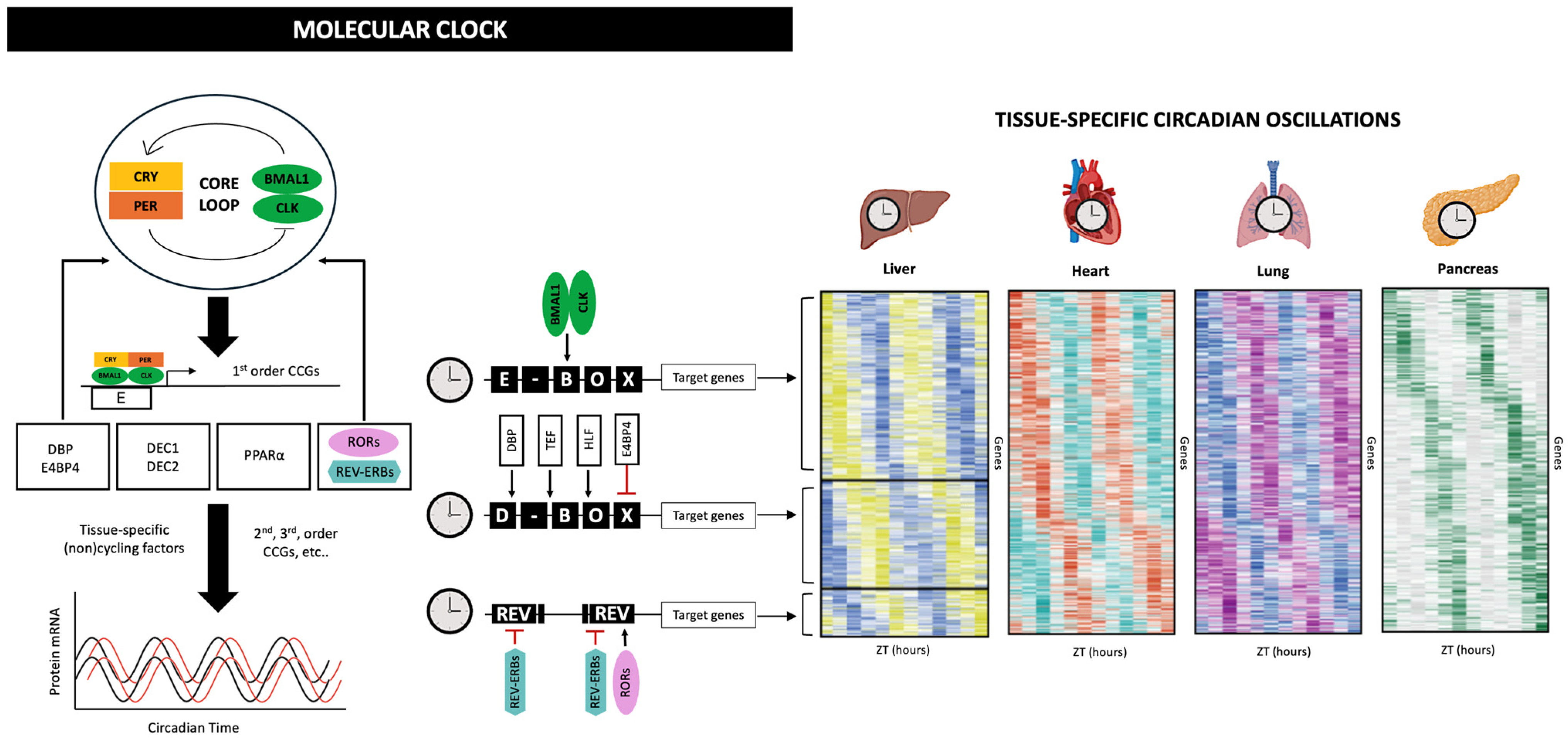
At the cellular level, circadian rhythms arise from an autoregulatory transcription-translation feedback loop (TTFL) [
28]. The core positive limb consists of the transcription factors CLOCK and BMAL1, which heterodimerize and activate target genes containing E-box regulatory elements, including the negative regulators Period (Per1–3) and Cryptochrome (Cry1–2). PER and CRY proteins accumulate, dimerize, translocate into the nucleus, and inhibit CLOCK-BMAL1 activity, generating ~24 h oscillations in gene expression [
29].
Auxiliary loops add robustness and precision. CLOCK-BMAL1 also induces the nuclear receptors REV-ERBα/β and RORα/γ, which rhythmically repress or activate Bmal1 transcription, thereby stabilizing the cycle [
30,
31,
32]. Post-translational modifications of clock proteins, including phosphorylation, sumoylation, and ubiquitination, further shape circadian periodicity, allowing dynamic responses to metabolic signals such as the AKT-GSK3β pathway [
33,
34]. This molecular system drives the rhythmic expression of thousands of clock-controlled genes across peripheral tissues, many of which regulate metabolic processes including glucose homeostasis, lipid metabolism, mitochondrial function, and hormonal signaling (
Figure 1) [
35,
36,
37]. As a result, metabolic efficiency and endocrine responsiveness vary substantially across the day.
2.3. Circadian Control of Metabolic Pathways
Feeding–fasting cycles are among the strongest zeitgebers for peripheral metabolic clocks. Even in the absence of a functional SCN, timed feeding can entrain hepatic rhythms and synchronize transcriptional profiles of metabolic genes through nutrient-sensitive pathways such as CREB, SREBP, ATF6, and FoxO1 [
38,
39]. Conversely, inappropriate feeding timing, particularly during the evening or night, reduces the amplitude of metabolic oscillations and impairs glucose tolerance, lipid handling, and insulin sensitivity.
In humans, circadian variation in metabolic functions is well documented. Insulin sensitivity peaks in the morning and declines sharply by evening; identical meals lead to significantly higher postprandial glucose and reduced β-cell responsiveness at night [
40,
41]. This diurnal pattern provides a mechanistic framework for the hypothesis that early day eating may align better with endogenous metabolic rhythms, whereas late eating contributes to cardiometabolic impairment.
Comprehensive mechanistic analyses of circadian–metabolic interactions have been extensively reviewed elsewhere [
42,
43,
44]. For the purposes of this review, the essential point is that the circadian system imposes temporal variation in metabolic efficiency. This biological architecture provides the conceptual basis for understanding why the timing of food intake can influence metabolic outcomes. While not all time-qualified dietary strategies are explicitly designed to achieve circadian alignment, their metabolic effects inevitably intersect with circadian regulation, which helps contextualize their potential benefits and limitations.
3. Time-Qualified Dietary Interventions
Time-qualified dietary interventions encompass a broad spectrum of nutritional strategies that manipulate the timing, duration, or periodicity of energy intake. Although their structures differ, they share the premise that when food is consumed, it may modulate metabolic outcomes alongside what and how much is eaten. They include practices ranging from religious fasting to daily TRE, to IF protocols that incorporate full or partial fasting days, as well as hybrid and emerging models.
Table 1 summarizes their defining characteristics.
Despite their heterogeneity, these dietary patterns pursue related objectives: extending fasting duration to promote metabolic switching, ketogenesis, and improved substrate utilization, enhancing circadian alignment by consolidating food intake into periods of high metabolic efficiency, and simplifying dietary structure by limiting eating opportunities and thereby reducing caloric intake without explicit calorie counting. In the following sections, we focus on the most clinically relevant and well-studied models within this spectrum, emphasizing those supported by controlled human trials and emerging evidence in metabolic and circadian physiology.
4. Time-Restricted Eating (TRE)
TRE, also referred to as time-restricted feeding (TRF) in animal studies, is characterized by the confinement of daily caloric intake to a consistent eating window, generally ranging from 4 to 12 h, without explicit prescription of caloric reduction or dietary composition [
45,
46]. A typical protocol involves fasting for 16 h and consuming all meals within an 8 h period, although wider windows such as 14:10 or narrower ones such as 18:6 and 20:4 have also been explored [
47]. Unlike traditional diets centered on energy restriction or macronutrient manipulation, TRE primarily targets the timing of food intake, aiming to realign eating behavior with circadian metabolic rhythms. In principle, this alignment favors the consolidation of food intake during the biologically active phase, generally daytime in humans, when insulin sensitivity, β-cell responsiveness, and metabolic efficiency peak [
48]. In this context, early TRE (eTRE), which restricts intake to morning or early afternoon hours, has been postulated to offer physiological advantages over late TRE (lTRE), where food intake is shifted toward the evening.
4.1. Weight and Metabolic Effects
In animal models, restricting food intake to the active phase exerts remarkably robust effects on metabolic outcomes, protecting against diet-induced obesity, hepatic steatosis, and metabolic syndrome even in the absence of caloric restriction [
49,
50,
51]. These findings have driven enthusiasm for the translational potential of TRE; however, human data have been considerably more heterogeneous.
Across randomized controlled trials and recent meta-analyses, TRE in adults with overweight or obesity produces modest but consistent reductions in body weight, fat mass, waist circumference, fasting insulin, and blood pressure, while effects on fasting glucose and HbA1c are smaller and often nonsignificant [
52,
53,
54,
55,
56]. Importantly, these benefits appear to occur predominantly in ad libitum conditions, where TRE reliably induces a spontaneous reduction in daily caloric intake, typically in the range of 300 to 500 kcal per day [
52]. This behavioral effect is now recognized as the principal driver of weight loss in most TRE studies.
The central question raised by these findings is whether TRE confers metabolic advantages independent of caloric restriction. Evidence from controlled feeding trials suggests that such timing-specific effects are limited. In isocaloric studies, where caloric intake is matched between TRE and control groups, differences in weight loss and cardiometabolic outcomes largely disappear [
17]. Meta-analyses have confirmed that when compared with structured calorie-restricted diets, TRE does not produce substantially greater reductions in body weight, blood pressure, glucose, or lipid levels [
18,
56].
Nevertheless, some studies, particularly those employing eTRE under controlled laboratory conditions, report improvements in insulin sensitivity, β-cell responsiveness, and 24 h glucose dynamics independent of weight loss [
14,
15,
57]. These results suggest that timing may exert modest but physiologically meaningful effects under specific circumstances. Yet, such improvements have not consistently translated into clinically relevant advantages in free-living individuals, particularly when diet quality and caloric intake are optimized. The inconsistency across trials remains a major point of controversy and highlights the need for mechanistic and long-term human studies capable of disentangling the relative contributions of timing, energy balance, and diet quality.
4.2. Early vs. Late Eating Windows
Several intervention studies have demonstrated that concentrating caloric intake earlier in the day, when metabolic efficiency is higher, can improve fasting insulin, glycemic excursions, and blood pressure more effectively than eating later [
15,
58]. These effects are supported by mechanistic evidence showing that evening meals occur at a time of reduced insulin sensitivity, diminished β-cell responsiveness, and elevated melatonin levels, all of which impair glucose tolerance [
59,
60,
61]. Meta-analyses further indicate that eTRE may provide greater improvements in HOMA-IR and fasting glucose than lTRE, even when total caloric intake is not different between groups [
62,
63].
However, recent high-quality trials challenge the magnitude and generalizability of these timing effects. A large randomized controlled trial comparing early, late, and self-selected eight-hour eating windows, all combined with Mediterranean diet (MD) counseling, detected no differences in visceral adipose tissue reduction between TRE schedules or between TRE and usual care [
64]. Likewise, in a highly controlled crossover study in women with overweight or obesity, both eTRE (08:00–16:00) and lTRE (13:00–21:00) produced no improvements in insulin sensitivity, glycemia, lipid profile, oxidative stress, or inflammatory markers under isocaloric conditions, despite excellent adherence [
65]. In parallel, a recent 10 h TRE intervention in individuals at high risk for type 2 diabetes yielded no clinically meaningful weight loss or glycemic improvement, and benefits were not sustained over time [
66].
Taken together, these findings suggest that while meal timing may modulate metabolic physiology under controlled laboratory conditions, its effects in free-living populations are substantially attenuated when caloric intake is matched, dietary quality is high, or timing interventions must compete with social and behavioral constraints. The translational relevance of early–late distinctions remains an open question, and it is likely that interindividual factors such as chronotype, habitual eating patterns, and socioeconomic context play a larger role than initially appreciated.
4.3. Adherence and Side Effects
The long-term feasibility of TRE is a recurrent concern. Short-term trials frequently report high adherence rates, yet observational and behavioral studies indicate that sustained compliance may decline when fasting periods interfere with work schedules, social commitments, or habitual eating patterns [
67,
68]. eTRE, despite potential metabolic advantages, is often perceived as socially restrictive, whereas lTRE may be more compatible with daily routines but less aligned with circadian physiology. Chronotype appears to influence adherence, with morning types finding eTRE more tolerable and evening types struggling with early food cutoffs, thus underscoring the importance of personalized approaches [
9].
From a safety perspective, TRE is generally well tolerated. Reported adverse effects, when present, are usually mild and transient, including hunger, lightheadedness, and irritability during the initial adaptation period. However, specific populations such as individuals with diabetes using hypoglycemic medications or pregnant women require medical supervision before initiating TRE due to the risk of hypoglycemia or insufficient energy intake [
46]. Additional debate has emerged following an observational study associating self-reported <8 h eating windows with higher long-term cardiovascular mortality [
55], though this finding is difficult to interpret due to reliance on a single 24 h dietary recall, potential reverse causality, and confounding by health status. These limitations caution against drawing causal inferences and emphasize the scarcity of long-term outcome data for TRE interventions.
Overall, TRE represents a promising but not universally effective strategy. It offers a simplified dietary structure and modest cardiometabolic benefits, particularly in settings of habitual overconsumption. Yet its long-term sustainability, magnitude of calorie-independent effects, and applicability across diverse populations remain areas of active investigation.
5. Intermittent Fasting Regimens (IF)
IF encompasses a broad family of dietary approaches in which periods of substantial caloric restriction or complete fasting alternate with days or periods of unrestricted eating. Unlike TRE, which reorganizes caloric intake within a single day, IF protocols extend the fasting window to 24 h or longer, thereby imposing more pronounced fluctuations in energy availability. The two most extensively studied models are alternate-day fasting (ADF) and the 5:2 diet, although variations such as periodic 24 h fasts and modified fasting approaches also exist [
69,
70]. These regimens are hypothesized to induce “metabolic switching”, a shift from glucose to lipid and ketone utilization, while simultaneously generating a caloric deficit that fosters weight loss. Their growing popularity has been matched by increased scientific interest, particularly regarding whether IF provides advantages beyond those predicted by energy restriction alone.
5.1. Efficacy for Weight Loss
Across randomized controlled trials, IF consistently induces modest but clinically relevant weight loss in individuals with overweight or obesity. Notably, its effectiveness is generally comparable to that of continuous caloric restriction (CER). Numerous recent meta-analyses, including large network analyses, have concluded that IF, CER, and TRE achieve similar reductions in body weight, with ADF occasionally demonstrating slightly greater weight loss yet only marginally so in absolute terms [
56,
71]. For example, in one network meta-analysis including 99 randomized trials, ADF produced approximately 1.3 kg more weight loss than CER, whereas both the 5:2 diet and TRE were statistically indistinguishable from CER in direct comparisons [
56].
Longer-term trials, extending beyond six months, reinforce this conclusion: IF generally results in weight reductions of 2–6%, similar to those observed with CER and with no consistent evidence of superiority for any specific IF protocol [
72]. In addition, weight loss tends to plateau after 8–12 weeks, suggesting that extending fasting durations or intensifying fasting days does not necessarily yield greater metabolic benefits [
18]. Importantly, the slightly larger weight loss occasionally seen with ADF likely reflects the substantial caloric deficit created on fasting days rather than any inherent metabolic advantage of fasting itself. When energy intake is matched between IF and CER, differences in weight or fat mass loss largely disappear. ADF and the 5:2 diet therefore appear to function primarily as alternative behavioral structures that facilitate energy restriction, rather than as physiologically superior strategies.
5.2. Metabolic Health Effects
IF has been proposed to improve a broad array of metabolic markers, including insulin sensitivity, glucose homeostasis, lipid profiles, and blood pressure. However, human evidence suggests that these improvements are generally modest and largely proportional to weight loss, with little support for unique metabolic effects independent of energy restriction. Recent meta-analyses consistently show that while ADF may modestly reduce triglycerides, non-HDL cholesterol, and waist circumference, the effects of other IF formats such as the 5:2 diet or periodic 24 h fasting on glycemia or lipid profiles are small and often not statistically significant [
56,
71].
Similarly, umbrella reviews conclude that IF yields mild reductions in fasting insulin, HOMA-IR, and diastolic blood pressure, but has limited effects on fasting glucose, LDL cholesterol, or HDL cholesterol, and overall evidence quality is moderate to low [
73]. Mechanistic explanations proposed for fasting-induced benefits, such as enhanced autophagy, mitochondrial remodeling, or neurotrophic signaling, are strongly supported in animal models but remain insufficiently demonstrated in humans [
69,
74]. Recent meta-analyses have therefore reiterated that the observed cardiometabolic improvements are best explained by energy deficit rather than fasting-specific metabolic pathways [
18]. Thus, although IF clearly provides a viable alternative strategy for weight and metabolic risk reduction, current evidence does not indicate that it offers advantages over traditional calorie restriction when energy intake is controlled.
5.3. Challenges, Tolerability, and Suitability
As with TRE, adherence is one of the principal limitations of IF. Fasting days are often accompanied by hunger, irritability, headaches, fatigue, and reduced concentration, all of which contribute to higher dropout rates, particularly in ADF, where fasting periods extend to 24 h or longer [
67,
68]. The 5:2 diet generally shows better adherence and does not necessarily lead to compensatory overeating on non-fasting days [
46,
72], yet it still requires substantial behavioral adjustment, and its long-term sustainability remains uncertain. Moreover, the overall quality of evidence supporting IF is constrained by short intervention durations, small sample sizes, and considerable methodological heterogeneity across studies [
73,
75].
In addition, IF is not appropriate for all individuals. It is contraindicated during pregnancy, childhood and adolescence, in those with active eating disorders, and in certain chronic illnesses. Patients with diabetes who use glucose-lowering medications should attempt IF only under clinical supervision due to the risk of hypoglycemia. Some clinical guidelines such as the Canadian Adult Obesity Clinical Practice Guidelines now include IF as one option for weight management, acknowledging its comparable efficacy to CER while also noting its higher risk of attrition and lack of metabolic superiority [
76].
Overall, the evidence base supporting IF remains weaker than that for more established dietary patterns such as the MD, which consistently demonstrates superior outcomes in long-term cardiometabolic trials [
75]. For some individuals, IF may offer a psychologically appealing structure that simplifies decision-making around food, whereas others find the stringency of fasting days unsustainable. As with TRE, personal preference, lifestyle compatibility, and long-term adherence potential are likely to determine its practical utility.
6. Fasting-Mimicking Diet (FMD)
FMD is a periodic, low-calorie, low-protein, high-unsaturated fat dietary protocol designed to reproduce key metabolic features of prolonged fasting while still providing essential micronutrients and a modest energy supply. According to foundational protocols, the regimen provides approximately 4600 kJ (1100 kcal) on day 1 (11% protein, 46% fat, 43% carbohydrate) and ~3000 kJ (717 kcal) on days 2–5 (9% protein, 44% fat, 47% carbohydrate) [
5,
77]. The diet typically consists of vegetable soups, nuts, olives, teas, and specific formulated bars, intentionally designed to be low in protein and sugars but relatively higher in unsaturated fats. By markedly reducing total energy intake and limiting specific amino acids over several consecutive days, the FMD aims to induce a physiological fasting state characterized by ketogenesis and reduced insulin/IGF-1 signaling while still providing minimal energy to maintain basic physiological functions.
6.1. Evidence from Human Studies
Early human trials suggest that FMD may improve several metabolic risk factors, although the evidence base remains limited and heterogeneous. In a pivotal randomized clinical trial involving 100 generally healthy participants, three monthly cycles of FMD reduced body weight by an average of 2.6 kg, primarily through reductions in total and trunk fat, without significantly affecting lean body mass [
5]. The intervention also lowered systolic blood pressure and IGF-1 levels. Post hoc analyses indicated that these benefits were most pronounced in individuals with elevated baseline IGF-1, glucose, or
C-reactive protein, suggesting that FMD may exert targeted benefits in metabolically at-risk individuals rather than providing uniform advantages across healthy populations [
5].
Additional evidence supports the potential of FMD to preserve lean mass relative to continuous dietary approaches. In a study comparing four cycles of FMD with four months of a continuous MD, both interventions reduced weight and cardiometabolic risk markers; however, meaningful differences emerged in body composition [
78]. The MD group exhibited a significant loss of fat-free mass during follow-up, whereas the FMD group preserved lean mass. Notably, FMD cycles also produced sustained reductions in HbA1c and insulin that persisted for three months after the intervention, an effect not observed in the MD group, suggesting a possible “metabolic memory” associated with the periodic fasting pattern [
78].
Similar findings were reported in women with obesity in a trial comparing FMD with CER [
77]. Although weight loss was comparable between groups, the CER group experienced significant reductions in basal metabolic rate (BMR) and muscle mass. In contrast, the FMD group preserved both BMR and muscle mass and exhibited a greater improvement in insulin resistance. Hormonal responses also diverged: CER increased serum levels of appetite-stimulating hormones such as ghrelin and neuropeptide-Y, whereas FMD did not—suggesting that FMD may offer better long-term appetite regulation [
77].
Clinical applications of FMD have expanded into oncology, supported by preclinical evidence that fasting can enhance healthy-cell resistance to chemotherapy-induced toxicity while increasing cancer-cell vulnerability through differential stress responses. Early stage trials in patients with HER2-negative breast cancer receiving neoadjuvant chemotherapy showed that administering FMD for three days before and on the day of treatment significantly reduced chemotherapy-related toxicity, including high-grade vomiting and neutropenia [
79]. Patients in the FMD group also demonstrated improved pathological and radiological tumor responses, along with reductions in IGF-1 and inflammatory markers such as hs-CRP [
79]. Nevertheless, these results remain preliminary, and larger controlled trials are required before FMD can be integrated into routine oncology practice [
80].
6.2. Controversies and Practical Issues
Despite growing interest, several controversies surround the use of FMD. Although animal and cellular studies demonstrate effects on longevity, autophagy, tissue regeneration, and metabolic health, robust data in humans remain limited [
68,
74]. Most clinical trials include fewer than 100 participants, are short in duration, and rely on surrogate outcomes rather than hard clinical endpoints. Recent work highlights that the growing popularity of FMD contrasts sharply with the relatively small number and modest quality of human studies, particularly in populations with complex diseases such as cancer [
68,
80]. In addition, it is unclear whether observed benefits are specific to the FMD formulation (low protein, relatively higher fat, targeted micronutrient composition) or reflect more general effects of periodic caloric restriction. While some evidence suggests that FMD may better preserve metabolic rate and lean mass than continuous restriction [
77,
78], direct comparisons with other IF regimens are still lacking.
Another practical concern is adherence and accessibility. Adherence to fasting protocols can be difficult for patients with chronic conditions. In a study evaluating safety and feasibility in people with multiple sclerosis, adherence to calorie-restriction protocols was generally poor, even with clinical support [
81]. While FMD-type interventions are safe, the drop-out rates in clinical trials suggest that long-term compliance requires significant willpower or behavioral support [
78,
81]. For instance, in the comparison with the MD, the FMD group had a higher dropout rate (15.9% vs. 5.0%), frequently attributed to adverse events such as weakness or dissatisfaction with the provided food items [
78]. High attrition has also been documented by Wei and colleagues [
5].
There is also the important consideration of cost and commercialization. The FMD protocol is often delivered through a proprietary meal kit (L-Nutra), which can be expensive and may limit accessibility. This raises questions about long-term sustainability: will individuals consistently undertake a 5-day FMD cycle every month for years? Moreover, although the FMD appears to preserve lean mass more effectively than continuous dieting in head-to-head trials [
77,
78], the absolute protein intake during the 5-day cycle is very low, necessitating careful re-feeding strategies to ensure adequate muscle protein synthesis between cycles.
From a safety standpoint, FMD is not appropriate for everyone. It is generally contraindicated in individuals who are underweight or have unstable medical conditions. During the FMD phase, close clinical monitoring is advised for those using glucose-lowering or antihypertensive medications, as dose adjustments may be required to prevent hypoglycemia or hypotension. Notably, supervised FMD interventions in trials involving patients with type 2 diabetes have been conducted without major safety issues, but always under medical oversight [
82]. Some concerns have also been raised regarding vascular responses: certain markers of endothelial function, such as the Reactive Hyperemia Index (RHI), have shown paradoxical decreases following FMD cycles [
78]. Although the authors proposed that this pattern might reflect a “vascular rejuvenation” phenomenon similar to that observed in younger individuals rather than true dysfunction, this interpretation remains debated. These findings highlight the need for additional mechanistic research to determine whether periodic severe restriction has short-term effects on vascular reactivity, particularly in individuals with pre-existing cardiovascular disease.
In summary, the FMD represents a compelling intersection between nutrition and fasting biology. However, its role in clinical practice will ultimately depend on its comparative effectiveness relative to simpler dietary strategies, its long-term feasibility, and evidence from larger, rigorously designed trials.
7. Controversies, Gaps, and Future Perspectives
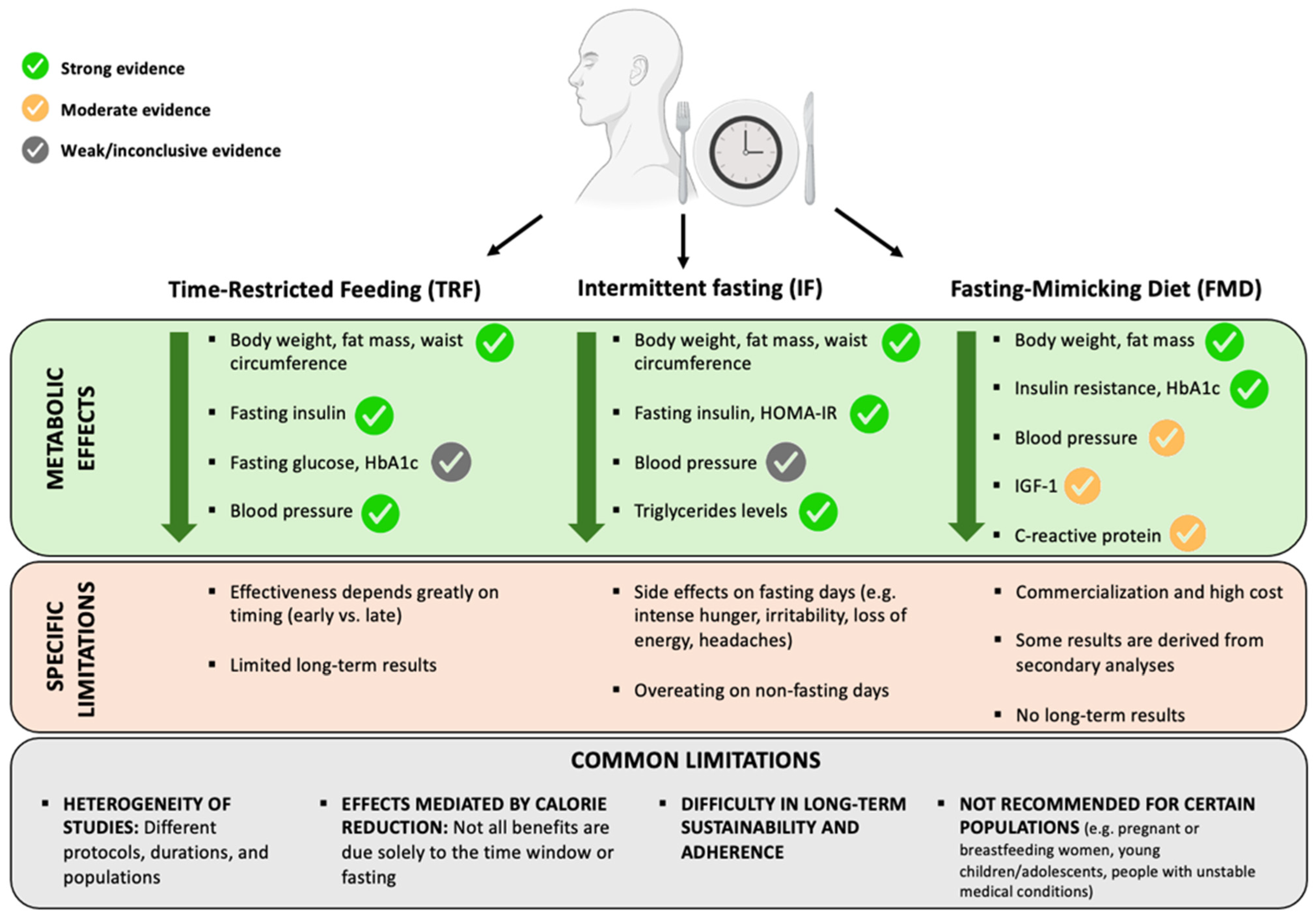
The rapid expansion of chrononutrition research has generated considerable enthusiasm for time-qualified dietary interventions as potential tools for improving metabolic health. However, the evidence accumulated over the past decade, particularly from controlled human studies, reveals important inconsistencies and unresolved questions. Although TRE, IF, and FMD have each demonstrated some degree of clinical potential, substantial uncertainty persists regarding the magnitude, mechanisms, and durability of their effects (
Figure 2).
7.1. Timing Versus Energy Restriction
A central question is whether the metabolic benefits attributed to TRE stem from meal timing itself or from the reduction in energy intake that often accompanies it. Meta-analyses consistently show that, under free-living conditions, the modest but significant weight loss observed with ad libitum TRE is primarily driven by a spontaneous reduction in daily caloric intake rather than by meal timing per se [
18,
52,
56]. When individuals eat freely within a restricted window (e.g., 8 h), they typically consume fewer calories than those with unrestricted eating schedules, even without explicit instructions to reduce intake. In this sense, TRE appears to function largely as a behavioral constraint on energy intake rather than as a metabolic intervention that enhances fat oxidation independently of caloric balance.
However, this spontaneous energy deficit is not necessarily effortless or physiologically neutral. Emerging evidence challenges the assumption that prolonged fasting naturally suppresses appetite. A recent systematic review and meta-analysis of randomized controlled trials found that TRE increases subjective hunger relative to isocaloric control diets [
83]. These findings suggest that extended fasting intervals may activate compensatory orexigenic pathways, potentially involving ghrelin or other appetite-related hormones that could hinder long-term adherence or promote compensatory overeating once the eating window opens.
7.2. Evidence from Isocaloric Human Studies
Isocaloric studies provide the most direct evidence of whether meal timing independently influences metabolic outcomes. Across this body of work, data consistently show that when energy intake is matched, TRE does not confer additional weight-loss or metabolic benefits. The strongest evidence comes from the landmark 12-month randomized trial by Liu et al. [
17], in which 139 adults with obesity were assigned to either CR alone or CR combined with an 8 h eating window (08:00–16:00). The study found no significant differences in weight loss (−8.0 kg vs. −6.3 kg), body fat, or metabolic risk factors between groups, demonstrating that time restriction offers no added benefit beyond daily caloric reduction [
17].
Recent systematic reviews reinforce this conclusion. An analysis of energy-matched randomized controlled trials reported that adding TRE to a CR regimen did not produce greater weight loss or cardiometabolic improvements in most studies [
52]. Similarly, a meta-analysis of eight randomized controlled trials involving 579 participants found that although TRE combined with CR reduced weight relative to a non-CR control, it yielded no significant improvements in blood pressure, glucose profile, or lipid profile compared with CR alone [
18]. Mechanistic data have also challenged the hypothesis that TRE enhances nutrient absorption efficiency. A randomized crossover trial using bomb calorimetry to quantify stool energy loss found that eTRE did not alter intestinal energy or macronutrient absorption relative to a 12 h eating schedule, confirming that weight-loss effects are not attributable to malabsorption [
84].
Findings in specific populations are consistent with this pattern. In endurance-trained athletes, a 4-week isocaloric crossover trial showed that a 16:8 TRE protocol did not affect resting energy expenditure (REE) or biomarkers of cardiometabolic disease risk compared with a typical diet, indicating that TRE does not “boost metabolism” as often claimed, but rather limits opportunities to eat [
85]. More concerningly, some evidence points to potential drawbacks: a 12-week feeding trial reported that although combining TRE with a healthy low-carbohydrate diet reduced body mass index, the TRE component was specifically associated with a greater loss of soft lean mass (muscle) compared with the non-TRE group [
86].
7.3. Calorie-Independent Metabolic Effects: Signal or Noise?
While isocaloric conditions almost eliminate the additive effect of TRE on weight loss, debate persists regarding whether meal timing confers independent metabolic benefits. Early work, including the widely cited proof-of-concept trial by Sutton et al., reported that eTRE improved insulin sensitivity, blood pressure, and oxidative stress in men with prediabetes even in the absence of weight loss, suggesting that circadian alignment (i.e., eating earlier in the day) may elicit metabolic advantages independent of reductions in adiposity [
14]. However, these effects appear inconsistent and highly dependent on participant characteristics. A systematic review of eTRE interventions found that although eTRE can improve glycemic outcomes, such benefits are observed predominantly in healthy, normal-weight individuals, whereas results in overweight or prediabetic populations are more variable and often contingent on accompanying weight loss [
58]. Thus, while meal timing may exert specific circadian-mediated effects on glycemic control, current evidence indicates that for most clinically relevant outcomes, including weight loss and cardiovascular risk reduction, calorie restriction remains the primary determinant.
Recent workshop reports from major health institutions, including the National Heart, Lung, and Blood Institute (NHLBI) and the National Institutes of Health (NIH), have also emphasized these uncertainties. They conclude that, despite growing public enthusiasm for chrononutrition, “rigorous evidence” isolating the metabolic effects of meal timing from caloric restriction in humans remains insufficient, representing a key research gap that currently limits the development of evidence-based precision nutrition guidelines [
87,
88].
7.4. The High-Fat Paradox in TRF
Much of the foundational preclinical evidence showing the powerful protective effects of TRF was generated in rodents fed a high-fat diet (HFD) to induce obesity. In those models, TRF robustly prevented the adverse consequences of the HFD. However, translating these findings to humans has proven elusive. Recent comprehensive reviews have highlighted a lack of human trials specifically testing whether TRE can mitigate the damage of a Western-style high-fat diet [
87,
88]. Unlike in mice, where timing seems to override diet quality, human data suggest that the metabolic harms of a poor diet cannot be simply “timed away”. For instance, a randomized controlled trial in healthy non-obese adults found that while isocaloric TRE reduced body weight, it failed to provide additional benefits on glucose homeostasis or lipid profiles compared to a control diet, suggesting that without an improvement in diet quality or substantial weight loss, timing alone is insufficient to drive metabolic health [
89].
7.5. Interactions Between Meal Timing and Diet Quality
Emerging evidence suggests that the greatest benefits are likely achieved when time-related strategies are combined with high-quality dietary patterns. Research combining TRE with specific macronutrient compositions indicates that the eating window must be nutritionally optimized to support satiety and metabolic flexibility [
90,
91]. Pairing an early eating window with a nutrient-dense, plant-rich diet may create a synergistic effect, but future clinical guidelines must emphasize that meal timing strategies are intended to complement, not replace, recommendations for healthy food choices. For example, a recent trial showed that combining a Healthy Low-Carbohydrate Diet (HLCD) with TRE resulted in significant changes to the gut microbiome, specifically decreasing fecal branched-chain amino acids and enriching probiotic species. This specific metabolic signature was not observed with TRE alone, suggesting that diet quality is a prerequisite for maximizing the microbiome-mediated benefits of fasting [
86].
7.6. Lean Mass Loss: A Persistent Concern
In the clinical management of obesity, a primary concern with any weight-loss diet is the quality of weight loss. This has emerged as a significant safety signal in recent TRE trials. A feasibility study in adults with overweight found that while TRE induced weight loss, a concerning 65% of that weight loss was appendicular lean mass, a proportion significantly higher than what is typically observed with standard caloric restriction [
92]. Similarly, a rigorous trial comparing 4 h vs. 6 h TRE windows found that while both regimens reduced body weight and insulin resistance, they also led to significant reductions in lean mass, raising questions about the long-term safety of such restrictive windows for musculoskeletal health [
93].
Even in active populations, where exercise typically protects muscle tissue, TRE may have detrimental anabolic effects. A randomized trial in resistance-trained males demonstrated that while an 8 h TRE window reduced fat mass, it significantly lowered testosterone and IGF-1 levels compared to a normal diet, potentially creating a catabolic environment that could hinder long-term muscle maintenance and performance [
94]. These findings are supported by other data in middle-aged adults, where TRE was effective for weight loss but required careful monitoring to prevent sarcopenia [
95,
96].
Therefore, the uncritical recommendation of TRE for weight loss may carry hidden risks. To mitigate the loss of metabolically active tissue, clinical protocols must integrate resistance exercise and ensure adequate protein distribution, factors often neglected in simple “eat within this window” advice.
7.7. Diet Quality, Eating Behaviors, and Real-World Implementation
A recurring critique of TRE and IF studies is that many do not tightly regulate diet composition. It remains plausible that a low-quality diet consumed within a short eating window may offer fewer, or even detrimental effects compared with a balanced diet distributed across the day. For example, if individuals use TRE as an opportunity to binge on energy-dense, nutrient-poor foods during the feeding window, the net impact on metabolic health may be unfavorable. Thus, the interaction between what is eaten and when it is eaten represents a critical and still underexplored research domain.
Recent work highlights the importance of integrating chrononutrition with established healthy dietary patterns, such as Mediterranean or plant-rich diets, to maximize metabolic improvements [
8,
97,
98]. Early evidence supports this combined approach: adherence to a MD aligned with early TRE or periodic fasting appears to amplify benefits, including improved lipid profiles and anti-inflammatory effects, beyond those achieved by either strategy alone [
99,
100]. Moving forward, clinical guidelines will likely emphasize that meal-timing strategies should complement, not replace, nutritious food choices and overall dietary quality.
7.8. The Impact of Individual Chronotype
Chronotype, defined as an individual’s natural preference for sleep, activity, and feeding timing, reflects the functioning of internal circadian clocks and shapes hormonal rhythms, appetite, and metabolic responses [
9,
101]. Despite its relevance, it is still rarely considered in dietary guidelines. This omission may be particularly problematic for evening chronotypes, who typically exhibit later activity and eating patterns and are more prone to weight gain, metabolic dysregulation, and other adverse health outcomes [
97,
102,
103]. Evening types also tend to report poorer lifestyle habits and dietary behaviors [
104,
105].
These differences suggest that a “one-size-fits-all” approach to meal timing may not be optimal. Chronotype may influence an individual’s ability to adhere to specific TRE schedules and could even predict weight-loss or body-composition outcomes [
106,
107]. Morning types, who naturally prefer earlier meals, may find eTRE more compatible, whereas evening types might tolerate later eating windows better. Emerging evidence highlights that chronotype significantly influences eating behaviors and metabolic risk. Specifically, evening types have been associated with a higher BMI and a greater prevalence of maladaptive eating behaviors, such as Binge Eating Disorder, compared to morning types. Furthermore, maintaining diet quality appears more challenging for E-types, as they demonstrate lower adherence to healthy dietary patterns like the Mediterranean Diet. Therefore, aligning meal timing interventions with an individual’s chronotype is crucial not only for adherence but also to counteract the specific behavioral and metabolic vulnerabilities associated with eveningness [
108,
109]. Standard dietary advice emphasizing earlier energy intake may therefore conflict with the biological and behavioral tendencies of evening chronotypes, reducing adherence and effectiveness [
110,
111].
In this context, emerging evidence supports the potential of chronotype-aligned dietary strategies. In a randomized controlled trial, a hypocaloric diet matched to the participants’ chronotype produced larger reductions in body weight and fat mass than a non-adapted isocaloric diet [
112]. Another clinical trial is currently testing whether a chronotype-adapted diet improves weight loss, cardiometabolic risk markers, and gut microbiome profiles more effectively than a conventional calorie-distributed diet [
113]. The gut microbiome itself displays circadian oscillations, and disruptions in microbial rhythmicity are linked to impaired glucose control, altered lipid metabolism, and low-grade inflammation [
114]. Aligning meal timing with circadian biology may therefore help preserve microbiome rhythmicity and support healthier host–microbe interactions.
Although current evidence remains preliminary, it increasingly suggests that tailoring time-related dietary interventions to individual biological and behavioral traits could confer additional benefits. Reflecting this, a recent scientific statement from the American Heart Association explicitly recommends that “individual chronotype should be considered in guiding the timing of interventions or treatment” [
9]. Personalizing eating windows to an individual’s chronotype, lifestyle, work schedule, and behavioral preferences may enhance long-term adherence and improve the effectiveness of meal-timing strategies [
111]. Genetic variation, including differences in clock genes and metabolic pathways, may further contribute to inter-individual variability in response [
8]. These insights point toward the emerging field of precision chrononutrition, in which meal timing is aligned with the internal biological clock and potentially optimized through complementary strategies such as light management or melatonin modulation [
9,
101].
7.9. Long-Term Sustainability and Safety
Most TRE and IF trials have lasted between 2 and 6 months, with only a few extending to 12 months. Consequently, data on multi-year adherence and long-term health effects remain limited [
71,
72,
115]. It is unclear whether individuals can maintain weight loss or glycemic improvements over 2–3 years of intermittent fasting, or whether outcomes will plateau or regress, as commonly observed with other dietary interventions. Questions also remain regarding the potential long-term adverse effects of chronic IF. Concerns have been raised about possible hormonal alterations [
116], such as whether prolonged fasting might chronically elevate cortisol levels or affect reproductive hormone regulation. Although short-term studies in men have generally not shown substantial reductions in testosterone, and 8-week protocols in women have not reported severe menstrual disturbances, longer follow-up is needed to determine sustained effects [
117]. Moreover, recent observational mortality data, while not establishing causality, underscore the importance of ongoing monitoring of cardiovascular health among individuals practicing fasting regimens [
118]. Long-term sustainability also depends on the interplay between diet and overall lifestyle rhythms. Disruptions in daily routines and sleep quality—as observed during the COVID-19 lockdown—have been directly linked to weight gain and BMI increase, underscoring that dietary timing interventions must be integrated with sleep hygiene and lifestyle management to be effective long-term [
119].
An additional aspect that requires consideration when evaluating long-term safety is the nutritional adequacy of time-qualified dietary protocols. TRE and IF may inadvertently reduce overall dietary quality or micronutrient intake, particularly when eating windows are short or mealtime frequency is low [
52,
93]. Restricting opportunities for food intake can lead to insufficient consumption of protein, fiber, essential fatty acids, and key micronutrients such as calcium, vitamin D, iron, folate, and B vitamins, especially in individuals with higher nutritional requirements. Moreover, inadequate protein distribution across meals during prolonged fasting windows may blunt muscle protein synthesis, thereby contributing to gradual losses in lean mass over time [
5,
77]. To date, few studies have systematically evaluated micronutrient status, diet quality indices, or protein adequacy during long-term adherence to TRE or IF, representing a major gap in the literature [
90,
91].
Long-term sustainability and safety must also be evaluated across diverse populations (
Table 2). Particular caution is needed for older adults and patients in catabolic states (e.g., cancer, chronic inflammatory diseases). Prolonged fasting windows or protocols with very low energy availability may not provide sufficient per-meal protein to stimulate muscle protein synthesis, potentially exacerbating sarcopenia [
92,
93]. Among athletes, the key questions concern performance outcomes and preservation of lean mass. For patients with chronic conditions such as fatty liver disease or polycystic ovary syndrome (PCOS), it remains to be tested whether meal timing can meaningfully improve disease management. Encouragingly, IF is increasingly being studied within these varied contexts, but rigorous, population-specific research will be essential to ensure long-term safety and to guide clinical recommendations.
7.10. Mechanistic Uncertainties and Research Priorities
Despite significant advances in circadian biology, key mechanistic questions underlying time-based dietary interventions remain unresolved. Animal models clearly show that fasting triggers autophagy, ketone production, and shifts in gene expression that enhance cellular stress resistance [
74]. However, determining whether similar processes occur in humans, and at what magnitude, remains a major research priority. Direct assessment of autophagy markers, stem cell activation, or other cellular renewal pathways could help validate several widely discussed claims regarding intermittent fasting and tissue regeneration.
Notably, recent mechanistic work in mice demonstrated that a high-fiber diet can mimic several molecular signatures typically associated with CR without reducing total caloric intake, suggesting that dietary composition may interact with fasting-related metabolic pathways in ways not previously recognized [
120]. This highlights the need to consider both nutrient quality and meal timing in mechanistic frameworks. Growing interest also centers on how time-related diets influence the gut microbiome, which exhibits robust diurnal oscillations and plays a critical role in host metabolism [
114,
121]. Early studies suggest that TRE may help restore daily fluctuations in microbial populations and that prolonged fasting intervals may increase microbial diversity, changes that could confer downstream metabolic advantages [
121,
122,
123]. Yet, this evidence remains preliminary. Further work is needed to elucidate how microbial rhythmicity interacts with hormonal signals such as ghrelin and leptin under different eating schedules, and whether these interactions meaningfully influence metabolic outcomes.
Collectively, these gaps underscore the need for mechanistic studies that integrate direct physiological and metabolic measurement rather than relying solely on anthropometric or biochemical endpoints. Future research should incorporate objective assessments of energy expenditure and metabolic responses, including resting energy expenditure, diet-induced thermogenesis, substrate oxidation via indirect calorimetry, and continuous physical activity monitoring. Because circadian misalignment can alter substrate utilization, sleep architecture, and thermogenic responses, studies should also integrate polysomnography or validated sleep trackers to evaluate sleep duration, fragmentation, and chronotype-specific timing. Additionally, neuroendocrine pathways regulating appetite and circadian feeding behavior should be systematically examined to clarify the central mechanisms mediating responses to timed eating.
7.11. Combination with Other Lifestyle Interventions
Another future direction involves integrating meal-timing strategies with other lifestyle interventions such as exercise and sleep optimization. The timing of exercise relative to meals—for example, fasted morning exercise versus fed evening exercise—may produce distinct metabolic adaptations. Preliminary studies suggest that exercising during the fasting period may enhance fat oxidation, but the most effective protocols and their long-term implications remain to be determined [
124]. Likewise, ensuring sufficient and regular sleep in conjunction with timed eating may strengthen circadian alignment, potentially amplifying metabolic benefits [
125]. More comprehensive lifestyle programs that incorporate light-exposure management, sleep hygiene, structured physical activity, and meal timing could provide a holistic approach to mitigating circadian disruption and reducing metabolic-syndrome risk.
8. Conclusions
Time-related diets are at a stage comparable to the early development of macro-nutrient-focused diets (e.g., low-fat, low-carbohydrate) decades ago: promising, but still working toward defining their optimal role. Their appeal stems from their conceptual simplicity, potential to improve metabolic health without explicit calorie counting, and alignment with fundamental principles of circadian physiology. Yet, despite substantial interest and an expanding body of research, the evidence supporting their efficacy and specificity in humans remains mixed and often contradictory.
Across controlled trials, modest improvements in weight, adiposity, fasting insulin, and blood pressure are consistently observed with TRE and several IF regimens. However, these benefits occur primarily in conditions of ad libitum intake and are strongly mediated by spontaneous reductions in daily energy consumption. When caloric intake is equalized, either through controlled feeding or structured dietary counseling, the advantages of meal timing largely disappear, highlighting the central role of energy balance in determining metabolic outcomes. Practically, these interventions can serve as tools to facilitate adherence to healthy eating patterns, reduce caloric intake, and structure meals, rather than as inherently superior metabolic therapies.
The FMD represents a conceptually distinct approach, seeking to reproduce the physiology of prolonged fasting through periodic, structured hypocaloric cycles. Preliminary studies suggest promising effects on IGF-1 reduction, inflammatory markers, and metabolic risk factors, yet data remain limited by small sample sizes and short durations. Key practical considerations include preserving lean mass, accommodating individual chronotypes, and ensuring adherence in real-life settings.
Several unresolved issues continue to shape the field. The extent to which circadian alignment exerts calorie-independent metabolic effects is uncertain. Lean mass preservation remains a concern in several fasting protocols. Adherence varies widely and is influenced by individual chronotype, social patterns, and lifestyle constraints. An additional limitation relates to the heterogeneity of the participants’ baseline dietary prescriptions driven by comorbidities such as diabetes, hypertension, or kidney disease. These therapeutic diets often impose specific macronutrient distributions, sodium restrictions, or medication adjustments, potentially confounding the isolated effects of eating-window manipulations. Moreover, most studies last fewer than 12–16 weeks, leaving the long-term sustainability, safety, and clinical relevance of these interventions largely unknown. Mechanistic pathways frequently invoked to explain fasting benefits such as autophagy, mitochondrial remodeling, and metabolic switching are well supported in preclinical models but remain poorly demonstrated in humans under realistic dietary conditions.
Despite these limitations, chrononutrition holds significant potential. Future applications should focus on personalized strategies integrating circadian phenotype, sleep–wake cycles, diet quality, and metabolic profile. Long-term, rigorously controlled trials are needed to clarify which populations may derive the greatest benefit, under what conditions, and through which mechanisms.
In summary, while time-qualified dietary interventions offer a promising and physiologically compelling framework, current evidence supports their use primarily as tools to facilitate energy reduction and behavioral structure rather than as inherently superior metabolic therapies. Their clinical value will depend on clarifying mechanisms, addressing adherence challenges, and targeting interventions to individuals most likely to benefit from circadian-aligned eating strategies.
Author Contributions
Conceptualization, R.D.A., G.M. and M.D.; methodology, S.L., R.D.A. and M.D.; software, S.L.; validation, S.L., S.G. and R.D.A.; formal analysis, S.L.; investigation, S.L. and S.G.; resources, R.D.A., G.M. and M.D.; data curation, S.L. and S.G.; writing—original draft preparation, S.L., S.G., R.D.A., G.M. and M.D.; writing—review and editing, R.D.A., B.C., G.M., S.B. and M.D.; visualization, S.L.; supervision, R.D.A., B.C., S.B. and M.D.; project administration, G.M. and M.D.; funding acquisition, G.M. and M.D. All authors have read and agreed to the published version of the manuscript.
Funding
This research was funded by the Italian Ministry of Health, grant number PNRR-TR1-2023-12377419 to G.M.
Institutional Review Board Statement
Not applicable.
Informed Consent Statement
Not applicable.
Data Availability Statement
No new data were created or analyzed in this study. Data sharing is not applicable to this article.
Acknowledgments
During the preparation of this manuscript, the authors used ChatGPT-5 to assist in editing the text and improving its readability. The authors have reviewed and edited the output and take full responsibility for the content of this publication.
Conflicts of Interest
The authors declare no conflicts of interest.
Abbreviations
The following abbreviations are used in this manuscript:
| ADF | Alternate-Day Fasting |
| BMR | Basal Metabolic Rate |
| BMI | Body Mass Index |
| CER | Continuous Energy Restriction |
| CR | Caloric Restriction |
| CRP | C-Reactive Protein |
| eTRE | Early Time-Restricted Eating |
| FMD | Fasting-Mimicking Diet |
| HbA1c | Glycated Hemoglobin |
| HFD | High-Fat Diet |
| HDL | High-Density Lipoprotein |
| HLCD | Healthy Low-Carbohydrate Diet |
| HOMA-IR | Homeostatic Model Assessment of Insulin Resistance |
| hs-CRP | High-Sensitivity C-Reactive Protein |
| IF | Intermittent Fasting |
| IGF-1 | Insulin-Like Growth Factor 1 |
| LDL | Low-Density Lipoprotein |
| lTRE | Late Time-Restricted Eating |
| MD | Mediterranean Diet |
| mADF | Modified Alternate-Day Fasting |
| NHLBI | National Heart, Lung, and Blood Institute |
| NIH | National Institutes of Health |
| OMAD | One Meal a Day |
| PCOS | Polycystic Ovary Syndrome |
| REE | Resting Energy Expenditure |
| RHI | Reactive Hyperemia Index |
| SCN | Suprachiasmatic Nuclei |
| TRE | Time-Restricted Eating |
| TRF | Time-Restricted Feeding |
| TTFL | Transcription–Translation Feedback Loop |
References
- Reppert, S.M.; Weaver, D.R. Coordination of circadian timing in mammals. Nature 2002, 418, 935–941. [Google Scholar] [CrossRef]
- Roenneberg, T.; Merrow, M. The Circadian Clock and Human Health. Curr. Biol. 2016, 26, R432–R443. [Google Scholar] [CrossRef] [PubMed]
- Erren, T.C.; Reiter, R.J. Defining chronodisruption. J. Pineal. Res. 2009, 46, 245–247. [Google Scholar] [CrossRef] [PubMed]
- Reytor-González, C.; Simancas-Racines, D.; Román-Galeano, N.M.; Annunziata, G.; Galasso, M.; Zambrano-Villacres, R.; Verde, L.; Muscogiuri, G.; Frias-Toral, E.; Barrea, L. Chrononutrition and Energy Balance: How Meal Timing and Circadian Rhythms Shape Weight Regulation and Metabolic Health. Nutrients 2025, 17, 2135. [Google Scholar] [CrossRef]
- Wei, M.; Brandhorst, S.; Shelehchi, M.; Mirzaei, H.; Cheng, C.W.; Budniak, J.; Groshen, S.; Mack, W.J.; Guen, E.; Di Biase, S.; et al. Fasting-mimicking diet and markers/risk factors for aging, diabetes, cancer, and cardiovascular disease. Sci. Transl. Med. 2017, 9, eaai8700. [Google Scholar] [CrossRef] [PubMed]
- Varady, K.A.; Cienfuegos, S.; Ezpeleta, M.; Gabel, K. Clinical application of intermittent fasting for weight loss: Progress and future directions. Nat. Rev. Endocrinol. 2022, 18, 309–321. [Google Scholar] [CrossRef]
- Dai, Z.; Wan, K.; Miyashita, M.; Ho, R.S.-T.; Zheng, C.; Poon, E.T.-C.; Wong, S.H.-S. The Effect of Time-Restricted Eating Combined with Exercise on Body Composition and Metabolic Health: A Systematic Review and Meta-Analysis. Adv. Nutr. Int. Rev. J. 2024, 15, 100262. [Google Scholar] [CrossRef]
- Franzago, M.; Alessandrelli, E.; Notarangelo, S.; Stuppia, L.; Vitacolonna, E. Chrono-nutrition: Circadian rhythm and personalized nutrition. Int. J. Mol. Sci. 2023, 24, 2571. [Google Scholar] [CrossRef]
- Knutson, K.L.; Dixon, D.D.; Grandner, M.A.; Jackson, C.L.; Kline, C.E.; Maher, L.; Makarem, N.; Martino, T.A.; St-Onge, M.-P.; Johnson, D.A. Role of Circadian Health in Cardiometabolic Health and Disease Risk: A Scientific Statement From the American Heart Association. Circulation 2025, 152, 21. [Google Scholar] [CrossRef]
- Fuad, S.A.; Ginting, R.P.; Lee, M.W. Chrononutrition: Potential, challenges, and application in managing obesity. Int. J. Mol. Sci. 2025, 26, 5116. [Google Scholar] [CrossRef]
- Wang, R.-H.; Zhao, T.; Cui, K.; Hu, G.; Chen, Q.; Chen, W.; Wang, X.-W.; Soto-Gutierrez, A.; Zhao, K.; Deng, C.-X. Negative reciprocal regulation between Sirt1 and Per2 modulates the circadian clock and aging. Sci. Rep. 2016, 6, 28633. [Google Scholar] [CrossRef] [PubMed]
- Azemi, A.K.; Mokhtar, S.S.; Zin, A.A.M.; Leung, S.W.S.; Rasool, A.H.G. The effects of time-restricted feeding on early vascular, liver, and renal structural changes, oxidative stress, and inflammation in obese rats. Sci. Rep. 2025, 15, 36115. [Google Scholar] [CrossRef] [PubMed]
- Gong, Y.; Zhang, H.; Feng, J.; Ying, L.; Ji, M.; Wei, S.; Ma, Q. Time-restricted feeding improves metabolic syndrome by activating thermogenesis in brown adipose tissue and reducing inflammatory markers. Front. Immunol. 2025, 16, 1501850. [Google Scholar] [CrossRef]
- Sutton, E.F.; Beyl, R.; Early, K.S.; Cefalu, W.T.; Ravussin, E.; Peterson, C.M. Early Time-Restricted Feeding Improves Insulin Sensitivity, Blood Pressure, and Oxidative Stress Even without Weight Loss in Men with Prediabetes. Cell Metab. 2018, 27, 1212–1221.e3. [Google Scholar] [CrossRef]
- Jamshed, H.; Beyl, R.A.; Della Manna, D.L.; Yang, E.S.; Ravussin, E.; Peterson, C.M. Early Time-Restricted Feeding Improves 24-Hour Glucose Levels and Affects Markers of the Circadian Clock, Aging, and Autophagy in Humans. Nutrients 2019, 11, 1234. [Google Scholar] [CrossRef]
- Gabel, K.; Hoddy, K.K.; Haggerty, N.; Song, J.; Kroeger, C.M.; Trepanowski, J.F.; Panda, S.; Varady, K.A. Effects of 8-hour time restricted feeding on body weight and metabolic disease risk factors in obese adults: A pilot study. Nutr. Healthy Aging 2018, 4, 345–353. [Google Scholar] [CrossRef]
- Liu, D.; Huang, Y.; Huang, C.; Yang, S.; Wei, X.; Zhang, P.; Guo, D.; Lin, J.; Xu, B.; Li, C.; et al. Calorie restriction with or without time-restricted eating in weight loss. N. Engl. J. Med. 2022, 386, 1495–1504. [Google Scholar] [CrossRef]
- Sun, J.C.; Tan, Z.T.; He, C.J.; Hu, H.L.; Zhai, C.L.; Qian, G. Time-restricted eating with calorie restriction on weight loss and cardiometabolic risk: A systematic review and meta-analysis. Eur. J. Clin. Nutr. 2023, 77, 1014–1025. [Google Scholar] [CrossRef]
- Jabbur, M.L.; Dani, C.; Spoelstra, K.; Dodd, A.N.; Johnson, C.H. Evaluating the Adaptive Fitness of Circadian Clocks and their Evolution. J. Biol. Rhythms 2024, 39, 115–134. [Google Scholar] [CrossRef]
- Regmi, P.; Young, M.; Minigo, G.; Milic, N.; Gyawali, P. Photoperiod and metabolic health: Evidence, mechanism, and implications. Metabolism 2024, 152, 155770. [Google Scholar] [CrossRef] [PubMed]
- Moore, R.Y. Entrainment pathways and the functional organization of the circadian system. Prog. Brain Res. 1996, 111, 103–119. [Google Scholar]
- Morin, L.P. Neuroanatomy of the extended circadian rhythm system. Exp. Neurol. 2013, 243, 4–20. [Google Scholar] [CrossRef]
- Ayyar, V.S.; Sukumaran, S. Circadian rhythms: Influence on physiology, pharmacology, and therapeutic interventions. J. Pharmacokinet. Pharmacodyn. 2021, 48, 321–338. [Google Scholar] [CrossRef]
- Cipolla-Neto, J.; Amaral, F.G.D. Melatonin as a Hormone: New Physiological and Clinical Insights. Endocr. Rev. 2018, 39, 990–1028. [Google Scholar] [CrossRef]
- Vlassakev, I.; Savva, C.; Renzi, G.; Ilamathi, H.S.; Mamand, D.R.; Smith, J.G.; Greco, C.M.; Litwin, C.; Zhang, Q.; Velez, L.; et al. The liver clock modulates circadian rhythms in white adipose tissue. Mol. Metab. 2025, 101, 102249. [Google Scholar] [CrossRef] [PubMed]
- Van Drunen, R.; Eckel-Mahan, K. Circadian Rhythms of the Hypothalamus: From Function to Physiology. Clocks Sleep 2021, 3, 189–226. [Google Scholar] [CrossRef] [PubMed]
- Paoli, A.; Tinsley, G.; Bianco, A.; Moro, T. The Influence of Meal Frequency and Timing on Health in Humans: The Role of Fasting. Nutrients 2019, 11, 719. [Google Scholar] [CrossRef] [PubMed]
- Bautista, J.; Ojeda-Mosquera, S.; Ordóñez-Lozada, D.; López-Cortés, A. Peripheral clocks and systemic zeitgeber interactions: From molecular mechanisms to circadian precision medicine. Front. Endocrinol. 2025, 16, 1606242. [Google Scholar] [CrossRef]
- Takahashi, J.S. Transcriptional architecture of the mammalian circadian clock. Nat. Rev. Genet. 2017, 18, 164–179. [Google Scholar] [CrossRef]
- Cho, H.; Zhao, X.; Hatori, M.; Yu, R.T.; Barish, G.D.; Lam, M.T.; Chong, L.-W.; DiTacchio, L.; Atkins, A.R.; Glass, C.K.; et al. Regulation of circadian behaviour and metabolism by REV-ERB-α and REV-ERB-β. Nature 2012, 485, 123–127. [Google Scholar] [CrossRef]
- Kim, Y.H.; Lazar, M.A. Transcriptional Control of Circadian Rhythms and Metabolism: A Matter of Time and Space. Endocr. Rev. 2020, 41, 707–732. [Google Scholar] [CrossRef]
- Adlanmerini, M.; Lazar, M.A. The REV-ERB Nuclear Receptors: Timekeepers for the Core Clock Period and Metabolism. Endocrinology 2023, 164, bqad069. [Google Scholar] [CrossRef] [PubMed]
- Mehra, A.; Baker, C.L.; Loros, J.J.; Dunlap, J.C. Post-translational modifications in circadian rhythms. Trends Biochem. Sci. 2009, 34, 483–490. [Google Scholar] [CrossRef]
- Green, C.B. Circadian Posttranscriptional Regulatory Mechanisms in Mammals. Cold Spring Harb. Perspect. Biol. 2018, 10, a030692. [Google Scholar] [CrossRef] [PubMed]
- Ripperger, J.A.; Schibler, U. Rhythmic CLOCK-BMAL1 binding to multiple E-box motifs drives circadian Dbp transcription and chromatin transitions. Nat. Genet. 2006, 38, 369–374. [Google Scholar] [CrossRef] [PubMed]
- Hughes, M.E.; DiTacchio, L.; Hayes, K.R.; Vollmers, C.; Pulivarthy, S.; Baggs, J.E.; Panda, S.; Hogenesch, J.B. Harmonics of circadian gene transcription in mammals. PLoS Genet. 2009, 5, e1000442. [Google Scholar] [CrossRef]
- Bozek, K.; Relógio, A.; Kielbasa, S.M.; Heine, M.; Dame, C.; Kramer, A.; Herzel, H. Regulation of clock-controlled genes in mammals. PLoS ONE 2009, 4, e4882. [Google Scholar] [CrossRef]
- Johnston, J.D. Physiological responses to food intake throughout the day. Nutr. Res. Rev. 2014, 27, 107–118. [Google Scholar] [CrossRef]
- BaHammam, A.S.; Pirzada, A. Timing Matters: The Interplay between Early Mealtime, Circadian Rhythms, Gene Expression, Circadian Hormones, and Metabolism—A Narrative Review. Clocks Sleep 2023, 5, 507–535. [Google Scholar] [CrossRef]
- Froy, O. The relationship between nutrition and circadian rhythms in mammals. Front. Neuroendocrinol. 2007, 28, 61–71. [Google Scholar] [CrossRef]
- Peng, F.; Li, X.; Xiao, F.; Zhao, R.; Sun, Z. Circadian clock, diurnal glucose metabolic rhythm, and dawn phenomenon. Trends Neurosci. 2022, 45, 471–482. [Google Scholar] [CrossRef]
- Thurley, K.; Herbst, C.; Wesener, F.; Koller, B.; Wallach, T.; Maier, B.; Kramer, A.; Westermark, P.O. Principles for circadian orchestration of metabolic pathways. Proc. Natl. Acad. Sci. USA 2017, 114, 1572–1577. [Google Scholar] [CrossRef]
- Sinturel, F.; Petrenko, V.; Dibner, C. Circadian Clocks Make Metabolism Run. J. Mol. Biol. 2020, 432, 3680–3699. [Google Scholar] [CrossRef] [PubMed]
- Petrenko, V.; Sinturel, F.; Riezman, H.; Dibner, C. Lipid metabolism around the body clocks. Prog. Lipid Res. 2023, 91, 101235. [Google Scholar] [CrossRef] [PubMed]
- Li, M.D. Clock-modulated checkpoints in time-restricted eating. Trends Mol. Med. 2022, 28, 25–35. [Google Scholar] [CrossRef]
- Ezpeleta, M.; Cienfuegos, S.; Lin, S.; Pavlou, V.; Gabel, K.; Tussing-Humphreys, L.; Varady, K.A. Time-restricted eating: Watching the clock to treat obesity. Cell Metab. 2024, 36, 301–314. [Google Scholar] [CrossRef] [PubMed]
- Panda, S. Circadian physiology of metabolism. Science 2016, 354, 1008–1015. [Google Scholar] [CrossRef]
- Manoogian, E.N.C.; Chow, L.S.; Taub, P.R.; Laferrère, B.; Panda, S. Time-restricted Eating for the Prevention and Management of Metabolic Diseases. Endocr. Rev. 2022, 43, 405–436. [Google Scholar] [CrossRef]
- Hatori, M.; Vollmers, C.; Zarrinpar, A.; DiTacchio, L.; Bushong, E.A.; Gill, S.; Leblanc, M.; Chaix, A.; Joens, M.; Fitzpatrick, J.A.; et al. Time-Restricted Feeding without Reducing Caloric Intake Prevents Metabolic Diseases in Mice Fed a High-Fat Diet. Cell Metab. 2012, 15, 848–860. [Google Scholar] [CrossRef]
- Chaix, A.; Zarrinpar, A.; Miu, P.; Panda, S. Time-restricted feeding is a preventative and therapeutic intervention against diverse nutritional challenges. Cell Metab. 2014, 20, 991–1005. [Google Scholar] [CrossRef]
- Regmi, P.; Heilbronn, L.K. Time-restricted eating: Benefits, mechanisms, and challenges in translation. iScience 2020, 23, 101161. [Google Scholar] [CrossRef]
- Chang, Y.; Du, T.; Zhuang, X.; Ma, G. Time-restricted eating improves health because of energy deficit and circadian rhythm: A systematic review and meta-analysis. iScience 2024, 27, 109000. [Google Scholar] [CrossRef]
- Siles-Guerrero, V.; Romero-Márquez, J.M.; García-Pérez, R.N.; Novo-Rodríguez, C.; Guardia-Baena, J.M.; Hayón-Ponce, M.; Tenorio-Jiménez, C.; López-De-La-Torre-Casares, M.; Muñoz-Garach, A. Is Fasting Superior to Continuous Caloric Restriction for Weight Loss and Metabolic Outcomes in Obese Adults? A Systematic Review and Meta-Analysis of Randomized Clinical Trials. Nutrients 2024, 16, 3533. [Google Scholar] [CrossRef] [PubMed]
- Xie, Y.; Zhou, K.; Shang, Z.; Bao, D.; Zhou, J. The Effects of Time-Restricted Eating on Fat Loss in Adults with Overweight and Obese Depend upon the Eating Window and Intervention Strategies: A Systematic Review and Meta-Analysis. Nutrients 2024, 16, 3390. [Google Scholar] [CrossRef]
- Chen, S.; Zhang, X.; Kortas, J.; Liu, H. Effects of time-restricted eating on body composition and metabolic parameters in overweight and obese women: A systematic review and meta-analysis. Front. Nutr. 2025, 12, 1664412. [Google Scholar] [CrossRef]
- Semnani-Azad, Z.; Khan, T.A.; Chiavaroli, L.; Chen, V.; Bhatt, H.A.; Chen, A.; Chiang, N.; Oguntala, J.; Kabisch, S.; Lau, D.C.; et al. Intermittent fasting strategies and their effects on body weight and other cardiometabolic risk factors: Systematic review and network meta-analysis of randomised clinical trials. BMJ 2025, 389, e082007. [Google Scholar] [CrossRef]
- Hutchison, A.T.; Regmi, P.; Manoogian, E.N.; Fleischer, J.G.; Wittert, G.A.; Panda, S.; Heilbronn, L.K. Time-restricted feeding improves glucose tolerance in men at risk for type 2 diabetes: A randomized crossover trial. Obesity 2019, 27, 724–732. [Google Scholar] [CrossRef]
- Bitsanis, D.; Giannakou, K.; Hadjimbei, E.; Chrysostomou, S. The Effect of Early Time-Restricted Feeding on Glycemic Profile in Adults: A Systematic Review of Interventional Studies. Rev. Diabet. Stud. 2022, 18, 10–19. [Google Scholar] [CrossRef]
- Garaulet, M.; Lopez-Minguez, J.; Dashti, H.S.; Vetter, C.; Hernández-Martínez, A.M.; Pérez-Ayala, M.; Baraza, J.C.; Wang, W.; Florez, J.C.; Scheer, F.A.; et al. Interplay of Dinner Timing and MTNR1B Type 2 Diabetes Risk Variant on Glucose Tolerance and Insulin Secretion: A Randomized Crossover Trial. Diabetes Care 2022, 45, 512–519. [Google Scholar] [CrossRef] [PubMed]
- Vujović, N.; Piron, M.J.; Qian, J.; Chellappa, S.L.; Nedeltcheva, A.; Barr, D.; Heng, S.W.; Kerlin, K.; Srivastav, S.; Wang, W.; et al. Late isocaloric eating increases hunger, decreases energy expenditure, and modifies metabolic pathways in adults with overweight and obesity. Cell Metab. 2022, 34, 1486–1498.e7. [Google Scholar] [CrossRef] [PubMed]
- Morris, C.J.; Purvis, T.E.; Mistretta, J.; Scheer, F.A. Effects of the Internal Circadian System and Circadian Misalignment on Glucose Tolerance in Chronic Shift Workers. J. Clin. Endocrinol. Metab. 2016, 101, 1066–1074. [Google Scholar] [CrossRef]
- Rovira-Llopis, S.; Luna-Marco, C.; Perea-Galera, L.; Bañuls, C.; Morillas, C.; Victor, V.M. Circadian alignment of food intake and glycaemic control by time-restricted eating: A systematic review and meta-analysis. Rev. Endocr. Metab. Disord. 2024, 25, 325–337. [Google Scholar] [CrossRef]
- Liu, J.; Yi, P.; Liu, F. The Effect of Early Time-Restricted Eating vs. Later Time-Restricted Eating on Weight Loss and Metabolic Health. J. Clin. Endocrinol. Metab. 2023, 108, 1824–1834. [Google Scholar] [CrossRef]
- Dote-Montero, M.; Clavero-Jimeno, A.; Merchán-Ramírez, E.; Oses, M.; Echarte, J.; Camacho-Cardenosa, A.; Concepción, M.; Amaro-Gahete, F.J.; Alcántara, J.M.A.; López-Vázquez, A.; et al. Effects of early, late and self-selected time-restricted eating on visceral adipose tissue and cardiometabolic health in participants with overweight or obesity: A randomized controlled trial. Nat. Med. 2025, 31, 524–533. [Google Scholar] [CrossRef] [PubMed]
- Peters, B.; Schwarz, J.; Schuppelius, B.; Ottawa, A.; Koppold, D.A.; Weber, D.; Steckhan, N.; Mai, K.; Grune, T.; Pfeiffer, A.F.H.; et al. Intended isocaloric time-restricted eating shifts circadian clocks but does not improve cardiometabolic health in women with overweight. Sci. Transl. Med. 2025, 17, eadv6787. [Google Scholar] [CrossRef]
- Quist, J.S.; Pedersen, H.E.; Jensen, M.M.; Clemmensen, K.K.B.; Bjerre, N.; Ekblond, T.S.; Uldal, S.; Størling, J.; Albrechtsen, N.J.W.; Holst, J.J.; et al. Effects of 3 months of 10-h per-day time-restricted eating and 3 months of follow-up on bodyweight and cardiometabolic health in Danish individuals at high risk of type 2 diabetes: The RESET single-centre, parallel, superiority, open-label, randomised controlled trial. Lancet Healthy Longev. 2024, 5, e314–e325. [Google Scholar] [CrossRef]
- O’Neal, M.A.; Gutierrez, N.R.; Laing, K.L.; Manoogian, E.N.C.; Panda, S. Barriers to adherence in time-restricted eating clinical trials: An early preliminary review. Front. Nutr. 2023, 9, 1075744. [Google Scholar] [CrossRef] [PubMed]
- Lin, Y.; Ezzati, A.; McLaren, C.; Zeidan, R.S.; Anton, S.D. Adherence and retention in early or late time-restricted eating: A narrative review of randomized controlled trials. Nutr. Rev. 2025, 83, e2082–e2092. [Google Scholar] [CrossRef] [PubMed]
- de Cabo, R.; Mattson, M.P. Effects of intermittent fasting on health, aging, and disease. N. Engl. J. Med. 2019, 381, 2541–2551. [Google Scholar] [CrossRef]
- Dinu, M.; Martini, D.; Sofi, F.; Serafini, M.; Porrini, M.; Angelino, D. Comparison of modern-millennial diets. In Handbook of Obesity, 5th ed.; Taylor & Francis Ltd.: Abingdon, UK, 2023; Volume 2. [Google Scholar] [CrossRef]
- Kibret, K.T.; Peeters, A.; Tegegne, T.K.; Mesfin, Y.M.; Nichols, M. Intermittent fasting for the prevention of cardiovascular disease risks: Systematic review and network meta-analysis. Curr. Nutr. Rep. 2025, 14, 93. [Google Scholar] [CrossRef]
- Khalafi, M.; Maleki, A.H.; Ehsanifar, M.; Symonds, M.E.; Rosenkranz, S.K. Longer-term effects of intermittent fasting on body composition and cardiometabolic health in adults with overweight and obesity: A systematic review and meta-analysis. Obes. Rev. 2025, 26, e13855. [Google Scholar] [CrossRef]
- Huang, J.; Li, Y.; Chen, M.; Cai, Z.; Cai, Z.; Jiang, Z. Comparing caloric restriction regimens for effective weight management in adults: A systematic review and network meta-analysis. Int. J. Behav. Nutr. Phys. Act. 2024, 21, 108. [Google Scholar] [CrossRef]
- Acosta-Rodríguez, V.A.; Rijo-Ferreira, F.; Green, C.B.; Takahashi, J.S. Importance of circadian timing for aging and longevity. Nat. Commun. 2021, 12, 2862. [Google Scholar] [CrossRef] [PubMed]
- Chen, Y.E.; Tsai, H.L.; Tu, Y.K.; Chen, L.W. Effects of different types of intermittent fasting on metabolic outcomes: An umbrella review and network meta-analysis. BMC Med. 2024, 22, 529. [Google Scholar] [CrossRef]
- Brown, J.; Clarke, C.; Johnson Stoklossa, C.; Sievenpiper, J. Canadian Adult Obesity Clinical Practice Guidelines: Medical Nutrition Therapy in Obesity Management. Available online: https://obesitycanada.ca/guidelines/nutrition (accessed on 2 November 2025).
- Sadeghian, M.; Hosseini, S.A.; Zare Javid, A.; Ahmadi Angali, K.; Mashkournia, A. Effect of Fasting-Mimicking Diet or Continuous Energy Restriction on Weight Loss, Body Composition, and Appetite-Regulating Hormones Among Metabolically Healthy Women with Obesity: A Randomized Controlled, Parallel Trial. Obes. Surg. 2021, 31, 2030–2039. [Google Scholar] [CrossRef]
- Mishra, A.; Fanti, M.; Ge, X.; Vaughn, D.; Brandhorst, S.; Wei, M.; Hong, K.M.; Pellegrini, M.; Pijl, H.; Houston, M.C.; et al. Fasting mimicking diet cycles versus a Mediterranean diet and cardiometabolic risk in overweight and obese hypertensive subjects: A randomized clinical trial. npj Metab. Health Dis. 2023, 1, 1. [Google Scholar] [CrossRef]
- Bahrami, A.; Haghighi, S.; Moghani, M.M.; Khodakarim, N.; Hejazi, E. Fasting mimicking diet during neo-adjuvant chemotherapy in breast cancer patients: A randomized controlled trial study. Front. Nutr. 2024, 11, 1483707. [Google Scholar] [CrossRef] [PubMed]
- Da Prat, V.; Pravettoni, G.; Casirati, A.; Marzorati, C.; Pedrazzoli, P.; Caccialanza, R. Anticancer restrictive diets and the risk of psychological distress: Review and perspectives. Cancer Med. 2024, 13, e7329. [Google Scholar] [CrossRef] [PubMed]
- Roman, S.N.; Fitzgerald, K.C.; Beier, M.; Mowry, E.M. Safety and feasibility of various fasting-mimicking diets among people with multiple sclerosis. Mult. Scler. Relat. Disord. 2020, 42, 102149. [Google Scholar] [CrossRef]
- van den Burg, E.L.; Schoonakker, M.P.; van Peet, P.G.; van den Akker-van Marle, M.E.; van Dijk, K.W.; Longo, V.D.; Lamb, H.J.; Numans, M.E.; Pijl, H. Fasting in diabetes treatment (FIT) trial: Study protocol for a randomised, controlled, assessor-blinded intervention trial on the effects of intermittent use of a fasting-mimicking diet in patients with type 2 diabetes. BMC Endocr. Disord. 2020, 20, 94. [Google Scholar]
- Silva, A.D.; Guimarães, K.C.; Oliveira, R.A.; Rosa, D.A.; Crispim, C.A. Time-restricted eating increases hunger in adults with overweight and obesity: A systematic review and meta-analysis of randomized controlled studies. Nutr. Res. 2025, 138, 76–88. [Google Scholar] [CrossRef]
- Dawson, M.A.; Cheung, S.N.; La Frano, M.R.; Nagpal, R.; Berryman, C.E. Early time-restricted eating improves markers of cardiometabolic health but has no impact on intestinal nutrient absorption in healthy adults. Cell Rep. Med. 2024, 5, 101363. [Google Scholar] [CrossRef]
- Richardson, C.E.; Tovar, A.P.; Davis, B.A.; Van Loan, M.D.; Keim, N.L.; Casazza, G.A. An Intervention of Four Weeks of Time-Restricted Eating (16/8) in Male Long-Distance Runners Does Not Affect Cardiometabolic Risk Factors. Nutrients 2023, 15, 985. [Google Scholar] [CrossRef]
- Li, L.; Li, R.; Tian, Q.; Luo, Y.; Li, R.; Lin, X.; Ou, Y.; Guo, T.; Chen, X.; Pan, A.; et al. Effects of healthy low-carbohydrate diet and time-restricted eating on weight and gut microbiome in adults with overweight or obesity: Feeding RCT. Cell Rep. Med. 2024, 5, 101801. [Google Scholar] [CrossRef] [PubMed]
- Dashti, H.S.; Jansen, E.C.; Zuraikat, F.M.; Dixit, S.; Brown, M.; Laposky, A.; Broussard, L.J.; Butler, P.M.; Creasy, A.S.; Crispim, A.C.; et al. Advancing Chrononutrition for Cardiometabolic Health: A 2023 National Heart, Lung, and Blood Institute Workshop Report. J. Am. Heart Assoc. 2025, 14, e039373. [Google Scholar] [CrossRef]
- Lee, B.Y.; Ordovás, J.M.; Parks, E.J.; Anderson, C.A.M.; Barabási, A.-L.; Clinton, S.K.; de la Haye, K.; Duffy, V.B.; Franks, P.W.; Ginexi, E.M.; et al. Research gaps and opportunities in precision nutrition: An NIH workshop report. Am. J. Clin. Nutr. 2022, 116, 1877–1900. [Google Scholar] [CrossRef]
- Xie, Z.; Sun, Y.; Ye, Y.; Hu, D.; Zhang, H.; He, Z.; Zhao, H.; Yang, H.; Mao, Y. Randomized controlled trial for time-restricted eating in healthy volunteers without obesity. Nat. Commun. 2022, 13, 1003. [Google Scholar] [CrossRef]
- Haganes, K.L.; Devlin, B.L.; Orr, R.K.; Moholdt, T. Impact of Time-Restricted Eating and High-Intensity Exercise on Nutrient Intake in Women with Overweight/Obesity: Secondary Analysis of a Randomized Controlled Trial. Nutrients 2025, 17, 218. [Google Scholar] [CrossRef]
- Haganes, K.L.; Silva, C.P.; Eyjólfsdóttir, S.K.; Steen, S.; Grindberg, M.; Lydersen, S.; Hawley, J.A.; Moholdt, T. Time-restricted eating and exercise training improve HbA1c and body composition in women with overweight/obesity: A randomized controlled trial. Cell Metab. 2022, 34, 1457–1471.e4. [Google Scholar] [CrossRef] [PubMed]
- Chow, L.S.; Manoogian, E.N.C.; Alvear, A.; Fleischer, J.G.; Thor, H.; Dietsche, K.; Wang, Q.; Hodges, J.S.; Esch, N.; Malaeb, S.; et al. Time-restricted eating effects on body composition and metabolic measures in humans who are overweight: A feasibility study. Obesity 2020, 28, 860–869. [Google Scholar] [CrossRef] [PubMed]
- Cienfuegos, S.; Gabel, K.; Kalam, F.; Ezpeleta, M.; Wiseman, E.; Pavlou, V.; Lin, S.; Oliveira, M.L.; Varady, K.A. Effects of 4-and 6-h time-restricted feeding on weight and cardiometabolic health: A randomized controlled trial in adults with obesity. Cell Metab. 2020, 32, 366–378. [Google Scholar] [CrossRef] [PubMed]
- Moro, T.; Tinsley, G.; Bianco, A.; Marcolin, G.; Pacelli, Q.F.; Battaglia, G.; Palma, A.; Gentil, P.; Neri, M.; Paoli, A. Effects of eight weeks of time-restricted feeding (16/8) on basal metabolism, maximal strength, body composition, inflammation, and cardiovascular risk factors in resistance-trained males. J. Transl. Med. 2016, 14, 290. [Google Scholar] [CrossRef]
- Lin, Y.J.; Wang, Y.T.; Chan, L.C.; Chu, N.F. Effect of time-restricted feeding on body composition and cardio-metabolic risk in middle-aged women in Taiwan. Nutrition 2022, 93, 111504. [Google Scholar] [CrossRef]
- Steger, F.L.; Jamshed, H.; Bryan, D.R.; Richman, J.S.; Warriner, A.H.; Hanick, C.J.; Martin, C.K.; Salvy, S.; Peterson, C.M. Early time-restricted eating affects weight, metabolic health, mood, and sleep in adherent completers: A secondary analysis. Obesity 2023, 31, 96–107. [Google Scholar] [CrossRef] [PubMed]
- Raji, O.E.; Kyeremah, E.B.; Sears, D.D.; St-Onge, M.P.; Makarem, N. Chrononutrition and cardiometabolic health: An overview of epidemiological evidence and key future research directions. Nutrients 2024, 16, 2332. [Google Scholar] [CrossRef] [PubMed]
- Mentzelou, M.; Papadopoulou, S.K.; Psara, E.; Voulgaridou, G.; Pavlidou, E.; Androutsos, O.; Giaginis, C. Chrononutrition in the prevention and management of metabolic disorders: A literature review. Nutrients 2024, 16, 722. [Google Scholar] [CrossRef]
- Couto, S.; Cenit, M.C.; Montero, J.; Iguacel, I. The impact of intermittent fasting and Mediterranean diet on older adults’ physical health and quality of life: A randomized clinical trial. Nutr. Metab. Cardiovasc. Dis. 2025, 35, 104132. [Google Scholar] [CrossRef]
- Tsitsou, S.; Bali, T.; Adamantou, M.; Saridaki, A.; Poulia, K.A.; Karagiannakis, D.S.; Papakonstantinou, E.; Cholongitas, E. Effects of a 12-week Mediterranean-type time-restricted feeding protocol in patients with metabolic dysfunction-associated steatotic liver disease: A randomised controlled trial—The ‘CHRONO-NAFLD Project’. Aliment. Pharmacol. Ther. 2025, 61, 1290–1309. [Google Scholar] [CrossRef]
- Almoosawi, S.; Vingeliene, S.; Gachon, F.; Voortman, T.; Palla, L.; Johnston, J.D.; Van Dam, R.M.; Darimont, C.; Karagounis, L.G. Chronotype: Implications for Epidemiologic Studies on Chrono-Nutrition and Cardiometabolic Health. Adv. Nutr. 2019, 10, 30–42. [Google Scholar] [CrossRef]
- Lotti, S.; Pagliai, G.; Asensi, M.T.; Giangrandi, I.; Colombini, B.; Sofi, F.; Dinu, M. Morning chronotype is associated with higher adherence to the Mediterranean diet in a sample of Italian adults. Nutr. Metab. Cardiovasc. Dis. 2022, 32, 2086–2092. [Google Scholar] [CrossRef]
- Dinu, M.; Lotti, S.; Napoletano, A.; Corrao, A.; Pagliai, G.; Tristan Asensi, M.; Gianfredi, V.; Nucci, D.; Colombini, B.; Sofi, F. Association between psychological disorders, Mediterranean diet, and chronotype in a group of Italian adults. Int. J. Environ. Res. Public Health 2022, 20, 335. [Google Scholar] [CrossRef]
- Rosi, A.; Lotti, S.; Vitale, M.; Pagliai, G.; Madarena, M.P.; Bonaccio, M.; Esposito, S.; Ferraris, C.; Guglielmetti, M.; Angelino, D.; et al. Association between chronotype, sleep pattern, and eating behaviours in a group of Italian adults. Int. J. Food Sci. Nutr. 2022, 73, 981–988. [Google Scholar] [CrossRef]
- Lotti, S.; Pagliai, G.; Colombini, B.; Sofi, F.; Dinu, M. Chronotype differences in energy intake, cardiometabolic risk parameters, cancer, and depression: A systematic review with meta-analysis of observational studies. Adv. Nutr. 2022, 13, 269–281. [Google Scholar] [CrossRef]
- Verde, L.; Barrea, L.; Docimo, A.; Savastano, S.; Colao, A.; Muscogiuri, G. Chronotype as a predictor of weight loss and body composition improvements in women with overweight or obesity undergoing a very low-calorie ketogenic diet (VLCKD). Clin. Nutr. 2023, 42, 1106–1114. [Google Scholar] [CrossRef]
- Longo, V.D.; Panda, S. Fasting, Circadian Rhythms, and Time-Restricted Feeding in Healthy Lifespan. Cell Metab. 2016, 23, 1048–1059. [Google Scholar] [CrossRef] [PubMed]
- De Amicis, R.; Galasso, L.; Cavallaro, R.; Mambrini, S.P.; Castelli, L.; Montaruli, A.; Roveda, E.; Esposito, F.; Leone, A.; Foppiani, A.; et al. Sex Differences in the Relationship between Chronotype and Eating Behaviour: A Focus on Binge Eating and Food Addiction. Nutrients 2023, 15, 4580. [Google Scholar] [CrossRef]
- De Amicis, R.; Galasso, L.; Leone, A.; Vignati, L.; De Carlo, G.; Foppiani, A.; Montaruli, A.; Roveda, E.; Cè, E.; Esposito, F.; et al. Is Abdominal Fat Distribution Associated with Chronotype in Adults Independently of Lifestyle Factors? Nutrients 2020, 12, 592. [Google Scholar] [CrossRef] [PubMed]
- Young, I.E.; Poobalan, A.; Steinbeck, K.; O’Connor, H.T.; Parker, H.M. Distribution of energy intake across the day and weight loss: A systematic review and meta-analysis. Obes. Rev. 2023, 24, e13537. [Google Scholar] [CrossRef] [PubMed]
- Pelczyńska, M.; Moszak, M.; Wojciechowska, J.; Płócienniczak, A.; Potocki, J.; Blok, J.; Balcerzak, J.; Zblewski, M.; Bogdański, P. The role of the chronotype in developing an excessive body weight and its complications: A narrative review. Nutrients 2024, 17, 80. [Google Scholar] [CrossRef]
- Galindo Muñoz, J.S.; Gómez Gallego, M.; Díaz Soler, I.; Barberá Ortega, M.C.; Martínez Cáceres, C.M.; Hernández Morante, J.J. Effect of a chronotype-adjusted diet on weight loss effectiveness: A randomized clinical trial. Clin. Nutr. 2020, 39, 1041–1048. [Google Scholar] [CrossRef]
- Dinu, M.; Lotti, S.; Pagliai, G.; Napoletano, A.; Asensi, M.T.; Giangrandi, I.; Marcucci, R.; Amedei, A.; Colombini, B.; Sofi, F. Effects of a chronotype-adapted diet on weight loss, cardiometabolic health, and gut microbiota: Study protocol for a randomized controlled trial. Trials 2024, 25, 152. [Google Scholar] [CrossRef]
- Lotti, S.; Dinu, M.; Colombini, B.; Amedei, A.; Sofi, F. Circadian rhythms, gut microbiota, and diet: Possible implications for health. Nutr. Metab. Cardiovasc. Dis. 2023, 33, 1490–1500. [Google Scholar] [CrossRef]
- Jefcoate, P.W.; Robertson, M.D.; Ogden, J.; Johnston, J.D. Exploring rates of adherence and barriers to time-restricted eating. Nutrients 2023, 15, 2336. [Google Scholar] [CrossRef]
- Kim, B.H.; Joo, Y.; Kim, M.S.; Choe, H.K.; Tong, Q.; Kwon, O. Effects of intermittent fasting on the circulating levels and circadian rhythms of hormones. Endocrinol. Metab. 2021, 36, 745–756. [Google Scholar] [CrossRef]
- Shkorfu, W.; Fadel, A.; Hamsho, M.; Ranneh, Y.; Shahbaz, H.M. Intermittent fasting and hormonal regulation: Pathways to improved metabolic health. Food Sci. Nutr. 2025, 13, e70586. [Google Scholar] [CrossRef]
- Chen, M.; Xu, L.; Van Horn, L.; Manson, J.E.; Tucker, K.L.; Du, X.; Feng, N.; Rong, S.; Zhong, V.W. Association of eating duration less than 8 h with all-cause, cardiovascular, and cancer mortality. Diabetes Metab. Syndr. 2025, 19, 103278. [Google Scholar] [CrossRef] [PubMed]
- De Amicis, R.; Foppiani, A.; Galasso, L.; Montaruli, A.; Roveda, E.; Esposito, F.; Battezzati, A.; Bertoli, S.; Leone, A. Weight Loss Management and Lifestyle Changes during COVID-19 Lockdown: A Matched Italian Cohort Study. Nutrients 2022, 14, 2897. [Google Scholar] [CrossRef] [PubMed]
- Hu, F.; Yu, L.; Tu, X.; Huang, R.; Yan, X.; Wang, L.; Wei, Y.; Wei, X.; Wu, Z. A high-fiber diet mimics aging-related signatures of caloric restriction in mammals. Nat. Commun. 2025, 16, 5917. [Google Scholar] [CrossRef]
- Bajaj, P.; Sharma, M. Chrononutrition and gut health: Exploring the relationship between meal timing and the gut microbiome. Curr. Nutr. Rep. 2025, 14, 79. [Google Scholar] [CrossRef] [PubMed]
- Paukkonen, I.; Törrönen, E.N.; Lok, J.; Schwab, U.; El-Nezami, H. The impact of intermittent fasting on gut microbiota: A systematic review of human studies. Front. Nutr. 2024, 11, 1342787. [Google Scholar] [CrossRef]
- Habe, B.; Črešnovar, T.; Hladnik, M.; Pražnikar, J.; Kenig, S.; Bandelj, D.; Mohorko, N.; Petelin, A.; Jenko Pražnikar, Z. Effects of time-restricted eating (early and late) combined with energy restriction vs. energy restriction alone on the gut microbiome in adults with obesity. Nutrients 2025, 17, 2284. [Google Scholar] [CrossRef] [PubMed]
- Kazeminasab, F.; Rafiee, P.; Miraghajani, M.; Santos, H.O.; Symonds, M.E.; Rosenkranz, S.K. The effects of acute bouts of exercise in fasted vs. fed states on glucose and lipid metabolism in healthy adults: A systematic review and meta-analysis of randomized clinical trials. Clin. Nutr. ESPEN 2025, 66, 320–331. [Google Scholar] [CrossRef] [PubMed]
- Biller, A.M.; Balakrishnan, P.; Spitschan, M. Behavioural determinants of physiologically-relevant light exposure. Commun. Psychol. 2024, 2, 114. [Google Scholar] [CrossRef] [PubMed]
| Disclaimer/Publisher’s Note: The statements, opinions and data contained in all publications are solely those of the individual author(s) and contributor(s) and not of MDPI and/or the editor(s). MDPI and/or the editor(s) disclaim responsibility for any injury to people or property resulting from any ideas, methods, instructions or products referred to in the content. |
© 2025 by the authors. Licensee MDPI, Basel, Switzerland. This article is an open access article distributed under the terms and conditions of the Creative Commons Attribution (CC BY) license (https://creativecommons.org/licenses/by/4.0/).



 ,
,