


Highlights
What are the main findings?
- As a pioneer species, Scirpus mariqueter expanded seaward at a rate of 0.26 km2 yr−1 and was gradually replaced by Spartina alterniflora, which expanded at a rate of 0.52 km2 yr−1.
- S. mariqueter was consistently driven primarily by environmental factors, whereas S. alterniflora was driven primarily by environmental factors during relatively stable periods and by human activities during the disturbance period.
What are the implications of the main findings?
- Identifying nonlinear, staged, and species-specific succession patterns contributes to understanding long-term vegetation succession in accretional salt marshes in Hangzhou Bay.
- Quantifying stage-specific drivers provides new perspectives for conserving S. mariqueter and managing invasive S. alterniflora in Hangzhou Bay.
Abstract
In naturally accretional salt marshes, pioneer species typically expand seaward and colonize tidal flats. However, this process can be influenced by disturbances such as human activities and species invasions. Understanding the spatiotemporal patterns and driving mechanisms of vegetation succession in salt marshes is critical for wetland conservation, restoration, and management. Using southern Hangzhou Bay as a case study, we developed a remote sensing algorithm to distinguish the dominant species Scirpus mariqueter (S. mariqueter) and Spartina alterniflora (S. alterniflora). Based on long-term time-series remote sensing data (1990–2023) and twelve parameters representing environmental variables, human activity, and interspecific competition, we analyzed the seaward expansion of the dominant salt marsh species and quantified the effects of various drivers on vegetation. The results showed that as a pioneer species, S. mariqueter expanded at a rate of 0.26 km2 yr−1 and was gradually replaced by S. alterniflora, which expanded at a rate of 0.52 km2 yr−1. Over the 34-year period, both species exhibited phased expansion–decline–recovery dynamics. During the relatively stable periods (1990–2003 and 2015–2023), temperature, sea level anomaly, and sea surface salinity were the key drivers of vegetation succession. During the disturbance period (2004–2014), S. mariqueter remained primarily influenced by environmental factors, whereas S. alterniflora was primarily influenced by human activities. This study provides the first satellite-based analysis of salt marsh species dynamics in southern Hangzhou Bay over a 34-year period, revealing nonlinear, staged, and species-specific succession patterns and providing new perspectives for invasive species management and the conservation of dynamic coastal wetlands.
1. Introduction
Salt marshes, located at the land–sea interface, provide multiple critical ecosystem services [1], and are considered among the most vulnerable and economically important ecosystems globally [2]. As dynamic systems, salt marshes are driven by multiple factors that influence their structure and function, resulting in complex spatiotemporal ecosystem dynamics. Under natural conditions, dominant vegetation promotes organic matter accumulation and traps inorganic sediment, forming accretional mudflats [3,4]. This process regulates habitat elevation, maintains dynamic equilibrium with sea level changes, and thereby sustains long-term ecosystem stability [5]. However, climate change is altering community composition, species distribution, physiology, and the presence of invasive species, while human activities are modifying vegetation patterns, leading to significant changes in salt marsh ecosystems [6,7]. In addition, the invasive species Spartina alterniflora (S. alterniflora) has rapidly expanded across multiple coastal regions, affecting local salt marsh vegetation patterns and ecological processes [8,9]. It is essential to understand wetland change trends, vegetation dynamics, and the effects of key driving factors to help formulate effective coastal wetland conservation and management policies.
In recent years, remote sensing technologies have been widely applied for monitoring and analyzing salt marsh vegetation. Long time-series satellite imagery provides temporally continuous and spatially explicit vegetation information, significantly improving the timeliness and accuracy of vegetation classification [10]. With the advancement of remote sensing technologies, multi-source remote sensing image data (e.g., Landsat, Sentinel) combined with machine learning methods for classification (such as random forests and neural networks) enable the high-precision mapping of wetland land use/cover [11,12]. Compared with traditional single-date image-based analyses, approaches integrating time-series vegetation indices [13] or extraction methods tailored to specific surface features (e.g., for tidal flats [14]) can more effectively reflect the temporal dynamics of surface features and improve classification accuracy and stability. Recent studies have shown that temporal differences in vegetation indices (e.g., NDVI and EVI) are critical for distinguishing coexisting salt marsh species such as Scirpus mariqueter (S. mariqueter) and S. alterniflora. For example, S. alterniflora shows higher peak index values and a lagged phenological cycle compared with S. mariqueter, which greens up earlier in spring and senesces faster in fall and winter [15,16]. The emergence of remote sensing cloud-based platforms such as Google Earth Engine (GEE) reduces data processing barriers [17], enabling large-scale, high-temporal-frequency monitoring [18,19]. The integration of time-series remote sensing, vegetation features, and cloud computing provides a powerful technological framework for monitoring and managing wetland ecosystems.
The spatial distribution of salt marsh vegetation is influenced by environmental factors, human activities, and biotic interactions such as interspecific competition [20,21]. Climate plays a crucial role in the formation and development of wetlands [22], with factors such as temperature and precipitation affecting plant physiological processes, water availability, and vegetation growth [23,24,25]. Salt marshes, situated at the interface of land and sea, are strongly influenced by seawater conditions, including sea-level fluctuations, hydrodynamics, and other related factors [26,27,28]. Human activities, such as the expansion of arable land and urban land, have directly caused wetland conversion [20], reducing salt marsh areas and disrupting ecological functions. Infrastructure development (e.g., dykes, roads) modifies hydrological and soil conditions, directly affecting plant growth. Degraded salt marshes are particularly vulnerable to invasion by non-native species [29]. Invasive species such as S. alterniflora often dominate coastal marshes due to their strong competitive advantages [30]. This competition frequently alters the species composition and distribution of salt marsh vegetation, leading to changes in the overall ecosystem structure and function. Together, these factors influence salt marsh vegetation dynamics. Understanding the combined mechanisms of these factors provides insights into the potential effects on ecosystem stability and resilience.
The accretional salt marshes along the southern coast of Hangzhou Bay, eastern China, receive large amounts of sediment annually [31,32], and constitute an ideal site for studying salt marsh wetland dynamics. Over recent decades, this region has undergone marked changes, including coastal land use/cover alterations, the expansion of aquaculture activities, and the invasion of the non-native species S. alterniflora [33]. These changes have altered the spatial distribution of salt marshes and the composition of vegetation communities. Although natural sediment accumulation promotes an increase in the total wetland area, these wetlands have also partially declined due to land reclamation (i.e., the conversion of natural salt marshes into agricultural land, aquaculture ponds, or other forms of usable land) and urban construction [33,34]. This has directly altered the vegetation patterns of salt marshes, which is an important driver of ecological degradation and ecosystem services [35]. Population growth and increasing demand for infrastructure have further intensified land-use pressures and wetland modification [34]. In these salt marshes, the distribution of S. alterniflora and the native species S. mariqueter exhibits distinct elevation-dependent patterns [36,37]: S. alterniflora dominates at higher elevations, whereas S. mariqueter is more abundant in the low-elevation pioneer zone. Under high salinity and strong current conditions, S. mariqueter expands toward the mudflats and traps sediments, which facilitates the establishment of S. alterniflora [36]. These spatial patterns and vegetation changes not only reflect interspecific competition but also illustrate the influence of human activities on salt marsh structure and succession. However, most studies are based on short-term observations or single-date remote sensing images (e.g., one image every five years), limiting their ability to capture long-term species dynamics and spatial expansion trends. Furthermore, many studies focus on qualitative descriptions or single-factor analyses, lacking long-term quantitative assessments that integrate multiple interacting drivers. Systematic, long-term, quantitative studies that simultaneously integrate environmental factors, human activities, and interspecific competition remain limited.
This study used the southern coast of Hangzhou Bay as a case study, focusing on the rapidly changing coastal salt marsh ecosystem to investigate the spatial patterns and driving mechanisms of dominant species in accretional salt marshes. Using GEE, we integrated continuous remote sensing imagery from 1990–2023 with multiple remote sensing indices and machine learning classification methods to construct a high-resolution, long-term dataset of salt marsh vegetation. Partial least squares structural equation modeling (PLS–SEM) was employed to quantify the effects of environmental variables, human activities, and interspecific competition on salt marsh vegetation patterns. The results provide a systematic understanding of community succession under multiple drivers, and demonstrate the capability of satellite remote sensing and multi-source observational data in monitoring vegetation changes in salt marsh wetlands, providing scientific guidance for the conservation and sustainable management of salt marsh ecosystems.
2. Materials
2.1. Study Area
Hangzhou Bay, located in the northeastern Zhejiang Province of China, is a funnel-shaped estuary. Its entrance opens into the East China Sea, with an average water depth of approximately 10 m [38]. Influenced by irregular semi-diurnal tides, the mean tidal range is about 5.5 m [39]. The study area is located on the southern Hangzhou Bay, spanning 30°12′–30°30′N and 121°0′–121°30′E (Figure 1). This region receives abundant sediment from the Yangtze and Qiantang Rivers, contributing to the formation of broad, gently sloping tidal flats along the southern coast of Hangzhou Bay [32]. These geomorphic conditions provide a physical foundation for the establishment and seaward expansion of salt marsh vegetation. The vegetation here is dominated by the native pioneer species S. mariqueter and the invasive species S. alterniflora, as well as scattered plants such as Phragmites australis (P. australis). S. alterniflora was introduced to China in 1979 to stabilize tidal mudflats [40]. Its strong reproductive capacity and environmental adaptability have enabled rapid expansion, gradually replacing native species and reshaping the original ecological patterns. Moreover, human activities have significantly influenced the spatial patterns and ecological functions of salt marshes.
Figure 1.
Location of the study area: (a,b) overview; (c) S. alterniflora; (d) S. mariqueter; (e) bare tidal flats; (f) tidal flats after vegetation removal.
2.2. Data Sources and Parameters
2.2.1. Remote Sensing Data
This study utilized the GEE cloud computing platform (https://earthengine.google.com) to access Landsat surface reflectance datasets from 1990 to 2023 for land use/cover classification. Specifically, Landsat 5 Thematic Mapper (TM) data were used for 1990–2011, and Landsat 8 Operational Land Imager (OLI) data were used for 2013–2023. As Landsat 5 data for 2012 were not available in GEE and Landsat 8 became operational in 2013, Landsat 7 Enhanced Thematic Mapper Plus (ETM+) data were used for 2012.
The study also utilized Sentinel-2 data (2017–2022) through the GEE platform to generate higher-resolution normalized difference vegetation index (NDVI) and enhanced vegetation index (EVI) values for S. mariqueter and S. alterniflora, focusing on the phenological differences between the two species. These data were used to analyze the seasonal dynamics of vegetation indices and were not used for long-term land use/cover classification spanning 1990–2023.
2.2.2. Driving Factors Dataset
This study investigated the effects of environmental factors, human activities, and interspecific competition on salt marsh vegetation (Table 1). These variables were selected due to their well-established roles in regulating coastal ecosystems. The first type represents environmental factors, which influence the growth and distribution of vegetation [41]. In this study, temperature- and precipitation-related variables, including mean temperature (TEMP), minimum temperature (TMN), maximum temperature (TMX), mean precipitation (PREC) [42,43,44,45,46,47,48,49], clear-sky surface shortwave downward irradiance (CSSDI), and relative humidity at 2 m (RH) were selected to represent climate conditions. These environmental variables regulate plant physiological processes, such as photosynthesis, respiration, and transpiration, as well as water availability and overall development, thereby affecting seasonal phenology, growth, and productivity. Extreme climate conditions, such as extreme temperatures, can cause plant stress and strongly affect growth, particularly during the pollination stage [50]. Other marine variables included sea surface salinity at a depth of 0 m (SSS), sea surface temperature at a depth of 0 m (SST), significant wave height (VHM), and sea level anomaly (SLA). These variables affect plant tolerance, sediment dynamics, tidal frequency and duration, and habitat suitability. For example, wave forces can cause erosion or sediment displacement and damage plant roots [51]. All environmental datasets are derived from modeled or reanalysis products. For each year, we calculated the spatial mean for each variable. The second type represents human activities, such as aquaculture and levee construction, which have direct and indirect effects on wetland ecosystems. In the study area, S. mariqueter and S. alterniflora habitats were largely reclaimed for aquaculture. Therefore, the area of aquaculture ponds (AQ) was used as the main human activity variable in this study. The third type represents interspecific competition, which affects vegetation dynamics. The distribution area of competing species was used to represent interspecific competition (INCOM); for S. mariqueter, the area of S. alterniflora was used, and vice versa.
Table 1.
Definitions and data sources of the variables used in this study.
The temporal coverage of the datasets differed slightly. Most variables spanned 1990–2023, except for SSS and SST, which covered 1992–2023, and SLA, which covered 1993–2023. Because SLA data were absent from 1990 to 1992, PLS–SEM analysis of the driving factors was conducted for 1993–2023.
3. Methods
3.1. Overall Framework
Using the GEE platform, this study conducted land use/cover classification in the southern Hangzhou Bay based on Landsat imagery, employing the Extreme Gradient Boosting (XGBoost) method and a tidal-flat extraction method (maximum spectral index composite–Otsu algorithm, MSIC-OA). First, Sentinel-2 imagery was used to obtain the spectral and seasonal characteristics of the dominant salt marsh species, supporting the selection of optimal image acquisition windows and subsequent land use/cover classification. Landsat satellite images were preprocessed on the GEE platform. Training samples were selected through visual interpretation, supplemented with auxiliary materials such as field survey photographs and relevant literature. These samples were randomly divided into training (65%) and validation (35%) subsets and used to train an XGBoost classification model. The model was then applied to the preprocessed Landsat images (including 56 feature dimensions, see Section 3.4.3) to perform an initial classification. To address potential incomplete classification of tidal flats due to tidal fluctuations, the MSIC-OA method was used to generate annual tidal flat maps. The XGBoost classification results were integrated with the MSIC-OA tidal flat maps to produce annual land use/cover maps (a total of 34 images). The accuracy was assessed using overall accuracy and the Kappa coefficient based on confusion matrices. Finally, the spatiotemporal dynamics of vegetation were analyzed, and PLS–SEM was employed to quantify the effects of environmental factors, human activities, and interspecific competition on salt marsh vegetation (Figure 2).
Figure 2.
Overview of the study workflow.
3.2. Spectral and Seasonal Characteristics
To distinguish S. mariqueter from S. alterniflora, the spectral and seasonal characteristics of the two vegetation types derived from vegetation indices were analyzed prior to land use/cover classification using time-series vegetation indices. To depict annual vegetation growth dynamics, Sentinel-2 imagery from 2017 to 2022 was used to calculate NDVI and EVI. For each species, five representative sampling points were selected per year, and NDVI and EVI values of pixels associated with these points and with less than 30% cloud cover were extracted. The extracted vegetation index time series were then aggregated for analysis. Gaussian curves were applied to fit these time series, as they can effectively capture the temporal processes of vegetation growth and decline and have been widely used in vegetation index time-series analysis in remote sensing studies [21,52]. The formula employed in this study is as follows:
where represents the amplitude, the center position, the width, and the offset. Based on the fitted curves, overall differences in annual NDVI and EVI dynamics were identified between the two species.
The NDVI and EVI time series of both S. mariqueter and S. alterniflora exhibited a clear unimodal seasonal pattern within a year, reflecting typical annual growth dynamics of coastal marsh vegetation (Figure 3). Across the annual cycle, NDVI and EVI values of S. mariqueter were consistently lower than those of S. alterniflora, particularly during the peak growing period. S. mariqueter showed relatively low vegetation index values, with peak NDVI and EVI values remaining around 0.2, whereas S. alterniflora exhibited substantially higher values, commonly above 0.5 (Figure 3a,d for fitted curves; Figure 3b,e for maximum values). During the non-growing season, both indices declined markedly, falling below 0.2, but S. mariqueter maintained lower values than S. alterniflora (Figure 3c,f for minimum values). These annual NDVI and EVI time series were used to inform the selection of optimal image acquisition windows and provided important support for subsequent land use/cover classification.
Figure 3.
Time series of NDVI (a) and EVI (d) for S. mariqueter (SM) and S. alterniflora (SA), with corresponding maximum and minimum values shown as bar charts: NDVI (b,c) and EVI (e,f). Different lowercase letters (a, b) above bars in subfigures (b,c) and (e,f) indicate significant differences between SM and SA.
3.3. Structural Equation Modeling
Salt marsh vegetation patterns are influenced by environmental conditions, human activities, and interspecific interactions, which often involve complex pathways and potential indirect effects. Traditional univariate or multivariate regression methods are often insufficient to fully reveal the mechanisms underlying such combined influences. To disentangle the direct and indirect effects of various driving factors on salt marsh vegetation, this study employed PLS–SEM to quantitatively analyze variable relationships. PLS–SEM does not assume that data follow a normal distribution and is quite robust to skewness [53], while effectively handling complex relationships among multiple variables [54]. It has been widely applied in wetland research [55,56].
In this study, salt marsh vegetation areas (S. mariqueter and S. alterniflora) were derived from annual Landsat image composites. At this temporal scale, annual mean environmental variables were used to represent the background climate and hydrodynamic conditions affecting vegetation growth. These ten environmental variables, together with the human activity variable (aquaculture pond area) and interspecific competition, were incorporated into the PLS–SEM as explanatory variables, with the annual area of the target species (S. mariqueter or S. alterniflora) as the response variable. Since the independent variables may exhibit high correlation, which could reduce the stability of the model, multicollinearity was assessed using the variance inflation factor (VIF). This process was carried out in R Studio (R 4.4.2) using the “car” package, which calculates VIF values to evaluate multicollinearity among variables. Only those variables with VIF values below 5 were retained for modeling [54]. PLS–SEM modeling was conducted using the “plspm” package in R Studio, which is used for the analysis of complex relationships between multiple variables in structural equation models. Model reliability was evaluated using the goodness-of-fit (GOF). Based on the PLS–SEM results, we calculated the total effects of different driving factors on S. mariqueter and S. alterniflora, defined as the sum of direct and indirect effects, following the method described in [57].
3.4. Construction of Classification Model
3.4.1. Remote Sensing Data Preprocessing
Based on prior spectral and seasonal analyses, this study prioritized the use of Landsat low-tide images acquired during the key vegetation period (May–December). When images from this period were insufficient, available images from other months were supplemented. All images were masked for clouds, cloud shadows, and other interfering pixels using the pixel quality assessment bands.
Two types of spectral information were used for the land use/cover classification: spectral bands and spectral indices (Table 2). Bands B, G, R, NIR, SWIR1, and SWIR2 denote the blue, green, and red bands, the near-infrared band, and shortwave infrared bands 1 and 2, respectively. The selected spectral indices included the normalized difference vegetation index (NDVI), the enhanced vegetation index (EVI), the land surface water index (LSWI), the normalized difference tillage index (NDTI), the normalized differential senescent vegetation index (NDSVI), the modified normalized difference water index (MNDWI), and the normalized difference built-up index (NDBI).
Table 2.
Formulas of the spectral indices used in the study.
3.4.2. Construction of the Model Training Dataset
Considering the long temporal span, it is challenging to obtain field-sampled data that both match the temporal sequence of the imagery and maintain a reasonable spatial distribution. Therefore, the training dataset was constructed through visual interpretation of remote sensing imagery, supplemented with auxiliary information such as field survey photographs and relevant literature [33,36]. Based on the natural and spectral characteristics of the study area, land use/cover was divided into six categories: S. mariqueter (SM), S. alterniflora (SA), impervious surfaces and bare land (IS), tidal flats (TF), water (WA), and other vegetation (OT). The latter encompasses all vegetation species in the study area except S. mariqueter and S. alterniflora.
Approximately 150 sample points per class were collected annually through visual interpretation, resulting in a training dataset spanning multiple years. As S. alterniflora had not widely expanded prior to 1995, fewer samples of this class were available in early years. In total, 28,992 samples were generated from 1990 to 2023. Sixty-five percent of the samples were randomly selected for training and thirty-five percent for validation to train a unified classification model.
3.4.3. Feature Construction for Classification
Multi-temporal spectral metrics and texture metrics were used as classification features for salt marsh land use/cover mapping (Table 3). For the visible and near-infrared bands (B, G, R, and NIR), the annual median was calculated. For the shortwave infrared bands and spectral indices, multiple annual statistics, including the median, minimum, maximum, mean, and standard deviation, were derived. Texture metrics were computed from the Gray–Level Co-occurrence Matrix (GLCM) of NDVI for each image, and the annual median of these texture metrics was used. In total, 56 feature dimensions were constructed for land use/cover classification for each year.
Table 3.
Features used for land use/cover classification.
3.4.4. Classification Model Construction
The XGBoost algorithm was used to construct a land use/cover classification model in this study. XGBoost is an efficient gradient boosting tree algorithm [65,66]. The XGBoost classifier was trained using the training subset of the sample dataset described in Section 3.4.2. It was then applied to the preprocessed Landsat images for the period 1990–2023, producing one land use/cover map per year. The classification output had a spatial resolution of 30 m, and the categories were consistent with the training stage. Considering that tidal flats may be incompletely classified due to tidal fluctuations, this study adopted the MSIC-OA method proposed by [14], which integrates the maximum spectral index composite and the Otsu algorithm, to generate annual tidal flat maps. Each MSIC-OA result was then integrated with the XGBoost classification results to produce a complete series of land use/cover maps from 1990 to 2023.
3.4.5. Classification Accuracy Assessment
To evaluate the accuracy of the classification results, independent accuracy assessments were conducted at five-year intervals using confusion matrices. Validation sample points were randomly generated for each category using the “create accuracy assessment points” tool in ArcGIS 10.7. Approximately 55–65 assessment points were generated per category. Using historical high spatial resolution images from the 91 Satellite Map Assistant software (version 19.4.0, https://www.91weitu.com/) and field survey photographs, all validation sample points were verified through visual interpretation. Subsequently, confusion matrices were constructed. The overall accuracy and Kappa coefficient were calculated for each period based on the corresponding confusion matrix.
3.5. Vegetation Proportions and Boundary Dynamics
To quantify the spatial patterns and temporal dynamics of vegetation types in the study area, 30 m wide continuous spatial transects (matching the spatial resolution of Landsat imagery) were established along two orthogonal directions: (1) along the north–south gradient (north–south direction, where the seaward direction starts from the southernmost transect of the study area for calculation); and (2) perpendicular to the north–south gradient (west–east direction, with the calculation starting from the westernmost transect of the study area). For each transect in different years, the proportion of each vegetation type (S. mariqueter, S. alterniflora, and other vegetation types) was separately calculated. These transects facilitate the study of vegetation distribution across different directions and years.
In addition, the vegetation boundary of each dominant species (S. mariqueter and S. alterniflora) was defined as the seaward-most position of its distribution, similar to the method used for calculating vegetation coverage along the north–south gradient direction.
4. Results
4.1. Spatiotemporal Dynamics of Salt Marshes
This study utilized the GEE cloud platform to extract land use/land cover change information of the southern Hangzhou Bay from multi-temporal Landsat satellite remote sensing images. The classification accuracy was evaluated using a confusion matrix (Figure 4). The average overall accuracy for all years was 92.11%, with a minimum of 91.28% in 2000 and a maximum of 93.97% in 2010 (standard deviation 0.90%). The average Kappa coefficient was 0.90, ranging from 0.89 in 1990 to 0.93 in 2010 (standard deviation 0.01).
Figure 4.
Overall Accuracy (OA) and Kappa Coefficient, with OA on the left Y-axis and Kappa on the right Y-axis.
Figure 5 shows the land use/cover classification of the southern part of Hangzhou Bay from 1990 to 2023, obtained by integrating the XGBoost classification results with annual tidal flat maps generated using the MSIC-OA method. The area changes of S. mariqueter, S. alterniflora, and other vegetation in the study area showed distinct stage-wise patterns (Figure 6a). Based on the changes in vegetation area and the evolution of spatial patterns, the study period was divided into three stages: 1990–2003 (Stage I), 2004–2014 (Stage II), and 2015–2023 (Stage III). During 2004–2014, S. alterniflora experienced large-scale losses due to intense human activities, with much of the land converted to built-up land or farmland, representing the disturbance period. In contrast, the disturbances were relatively minor during 1990–2003 and 2015–2023 (Figure 5), which are referred to as the relatively stable periods.
Figure 5.
Long-term land use/cover classification in the southern Hangzhou Bay from 1990 to 2023.
Figure 6.
Dynamics of salt marsh vegetation: (a) areas of salt marsh vegetation; (b) dynamic changes in land use/cover types from 1990 to 2023; (c) Sankey diagram of S. mariqueter (SM); (d) Sankey diagram of S. alterniflora (SA). For (c,d), representative years were selected according to area dynamics of each species, and transitions between identical land cover types were excluded to better illustrate the changes.
Throughout the study period (1990–2023), the area of S. mariqueter and S. alterniflora increased from 1.79 km2 to 27.59 km2. Over the entire study period, S. mariqueter and S. alterniflora expanded seaward at average annual rates of 0.26 km2 yr−1 and 0.52 km2 yr−1, respectively. Across stages, the area increment of S. mariqueter was highest during Stage II (1.26 km2 yr−1), followed by Stage I (0.36 km2 yr−1) and Stage III (−1.32 km2 yr−1). In contrast, S. alterniflora exhibited the largest area increase in Stage I (2.44 km2 yr−1), followed by Stage III (1.04 km2 yr−1) and Stage II (−2.03 km2 yr−1).
From 1990 to 2023, the transfer of land use/cover types in Hangzhou Bay mainly entailed the conversion of water or tidal flats and other vegetations (Figure 6b). Sankey diagrams were drawn for S. mariqueter and S. alterniflora based on area changes (Figure 6c,d). During the relatively stable periods, S. mariqueter gradually expanded, reaching 16.99 km2 in 1999. Subsequently, its area declined due to land conversions and competition with S. alterniflora (Figure 6c). In 2012, S. mariqueter expanded again to 32.42 km2, but the continuous invasion of S. alterniflora caused its area to shrink to 9.88 km2 by 2023. S. alterniflora also showed rapid expansion in the early period, occupying large areas of tidal flats (Figure 6d) and reaching 33.42 km2 by 2002. During the subsequent disturbance period, its area was gradually replaced by water bodies (e.g., aquaculture ponds), impervious surfaces, and other vegetation types. After 2014, tidal flats were again occupied by S. alterniflora, with a peak area in 2022. However, due to management interventions, its area declined sharply to 17.70 km2 in 2023. Other vegetation exhibited relatively continuous growth, reaching a total area of 129.12 km2 in 2023. Figure 7 shows the annual tidal flat area for three time intervals. During 1993–1998, the tidal flat area ranged from 98.74 to 152.38 km2. In 2007–2012, the area was greater than in the other two intervals, ranging from 113.23 to 190.39 km2, with four out of six years exceeding 170 km2. During 2018–2023, the tidal flat area decreased, ranging from 77.47 to 105.19 km2, with most years having areas below 100 km2.
Figure 7.
Tidal flat area changes over three time intervals: 1993–1998, 2007–2012, and 2018–2023.
4.2. Seaward Expansion and Successional Dynamics of Salt Marsh Vegetation
The spatial transect analysis revealed vegetation distribution along the north–south gradient and along the perpendicular (west–east) gradient (Figure 8). During 1990–2003 (Stage I, the relatively stable period), S. mariqueter was mainly distributed between 10 and 15 km seaward of the southernmost boundary of the study area. During this stage, S. alterniflora expanded from scattered patches, occupying the 10–15 km range by the later stage (Figure 8a). During 2004–2014 (Stage II, the disturbance period), S. alterniflora declined substantially, showing clear fluctuations. In contrast, the proportion of S. mariqueter gradually increased and continued to move seaward, extending its distribution to approximately 15–20 km range. From 2015 to 2023 (Stage III, the relatively stable period), both S. mariqueter and S. alterniflora maintained a relatively high proportion within the 15–20 km range. The proportion of S. alterniflora was higher than S. mariqueter in the later stage. Other vegetation types were mainly distributed on the landward side behind the S. mariqueter and S. alterniflora zones, and have expanded since 2007.
Figure 8.
Vegetation cover from 1990 to 2023: (a) north–south gradient (0 km corresponds to the southernmost transect); (b) west–east gradient (perpendicular to the north–south gradient; distance increases from west to east).
Figure 8b shows changes in vegetation cover perpendicular to the north–south gradient. Before 2010, S. alterniflora was widely distributed, covering almost the entire study area. Between 2010 and 2015, it was mainly concentrated in the central part, and gradually shifted westward after 2015. In contrast, the distribution of S. mariqueter remained relatively stable, with most of its coverage located in the western part of the study area. As the tidal flats continued to accrete and S. mariqueter expanded seaward, subsequent salt marsh areas were gradually occupied by S. alterniflora and other vegetation types, particularly after 2000. Other vegetation expanded rapidly after 2005, eventually becoming broadly distributed across the study area.
Over the entire study period, S. mariqueter and S. alterniflora migrated seaward at average annual rates of 0.26 km yr−1 and 0.28 km yr−1, respectively (Figure 9a). During 1993–1998, S. mariqueter migrated seaward at 0.11 km yr−1, while S. alterniflora migrated at 0.24 km yr−1 (Figure 9b). Between 2007 and 2012, the seaward migration rates of the two species were similar (Figure 9c), with S. mariqueter reaching its maximum migration rate of 0.55 km yr−1. During 2018–2023, both species exhibited their slowest seaward migration, with S. mariqueter and S. alterniflora migrating at 0.07 and 0.03 km yr−1, respectively (Figure 9d).
Figure 9.
Spatiotemporal positions of salt marsh vegetation boundaries (a), and boundary trends across three different time intervals (b–d), with the same legend applying to subfigures (b–d). Dashed lines represent linear fits to the boundary positions of the vegetation.
4.3. Analysis of Drivers of Vegetation Succession Based on PLS–SEM
Based on the analysis of the vegetation spatiotemporal dynamics, this study constructed a PLS–SEM integrating twelve environmental variables, the human activity variable, and the interspecific competition variable. Before building the model, correlations between the areas of S. mariqueter and S. alterniflora and both the environmental variables and the human activity variable were analyzed (Figure 10). Based on the results of the Shapiro–Wilk normality test, Spearman correlation analysis was applied. At a confidence level of p = 0.05, the area of S. mariqueter was significantly correlated with temperature, SSS, and SLA, whereas S. alterniflora showed significant correlations with temperature, CSSDI, SST, and SLA.
Figure 10.
Correlation analysis of variables, with colored lines indicating p < 0.05 and gray lines indicating p > 0.05; parameter names are provided in Table 1.
PLS–SEM was constructed to quantitatively assess the relative effects of environmental factors, human activities, and interspecific competition on salt marsh vegetation (S. mariqueter and S. alterniflora). Based on the changing trend of S. alterniflora area, the study period was divided into two periods: the relatively stable periods (1990–2003 and 2015–2023) and the disturbance period (2004–2014). Analyses were then conducted on the changes in S. mariqueter (Figure 11a,b) and S. alterniflora (Figure 11c,d) during corresponding periods.
Figure 11.
Results of the PLS–SEM: (a,b) S. mariqueter, (c,d) S. alterniflora; (a,c) relatively stable periods, (b,d) disturbance period (see Table 1 for parameter definitions). Ellipses denote latent variables, and rectangles denote observed variables. Solid arrows represent significant relationships (p < 0.05), and dashed arrows represent non-significant relationships. Numbers on the blue/red arrows indicate path coefficients (β; blue = positive, red = negative). Numbers on the arrows from observed variables (rectangles) to the ‘Environment’ latent variable (ellipse) represent the weights. R2 indicates the proportion of variance in each endogenous latent variable explained by its independent latent variables. Significance levels: † p < 0.1, * p < 0.05, ** p < 0.01, *** p < 0.001.
The PLS–SEM results are presented in Figure 11. The modeling results (Figure 11a,b) show that for S. mariqueter, the proportion of variance explained (R2) by the driving factors was 0.46 during the relatively stable periods and 0.74 during the disturbance period. The dominant drivers influencing S. mariqueter remained consistent across periods. During the relatively stable periods, its growth was positively influenced by environmental factors (path coefficients β = 0.71) but negatively affected by interspecific competition (β = −0.41). In the disturbance period, environmental factors continued to promote its growth (β = 0.88), while interspecific competition inhibited it (β = −0.70). The explanatory power (R2) of the driving factors for S. alterniflora during the relatively stable periods and the disturbance period was 0.64 and 0.78 (Figure 11c,d), respectively. For S. alterniflora, during the relatively stable periods, its growth was positively influenced by environmental factors (β = 0.92), whereas interspecific competition had a negative effect (β = −0.45). During the disturbance period, its growth was positively influenced by environmental factors (β = 0.61), negatively affected by interspecific competition (β = −0.64) and human activities (β = −0.68).
The total effect is the sum of direct and indirect effects. For example, the total effect of environmental factors on S. mariqueter includes both direct effects, where environmental factors affect S. mariqueter directly, and indirect effects, where environmental factors influence S. alterniflora, which in turn influences S. mariqueter. The indirect effects are represented by the product of the path coefficients in the model. Table 4 shows that, for S. mariqueter, during both the relatively stable and disturbance periods, environmental factors (0.49 and 0.78) and human activities (0.21 and 0.35) had positive total effects, while interspecific competition (−0.41 and −0.70) had negative total effects. In both periods, environmental factors had the highest relative contribution (44.14% and 42.62%). For S. alterniflora, environmental factors had positive total effects during both the relatively stable (0.74) and disturbance periods (0.19), while human activities (−0.34 and −0.71) and interspecific competition (−0.45 and −0.64) had negative total effects. During the relatively stable periods, environmental factors had the largest relative contribution (48.37%), while in the disturbance period, human activities contributed the most (46.10%).
Table 4.
Total effects of different drivers on S. mariqueter (SM) and S. alterniflora (SA) and their relative contributions to the total effects during the relatively stable periods and the disturbance period.
5. Discussion
5.1. Competition Between S. mariqueter and S. alterniflora
Both S. mariqueter and S. alterniflora exhibited a unimodal seasonal pattern in NDVI and EVI, with peaks observed in summer (Figure 3a,d), consistent with seasonal dynamics commonly reported for salt marsh vegetation [15,16]. The significantly higher peak EVI of S. alterniflora (Figure 3e) further demonstrates its superior photosynthetic efficiency. These significant differences in vegetation indices (Figure 3b,c for NDVI; Figure 3e,f for EVI) reflect differences in growth strategies between the two species and enhance their separability in remote sensing–based vegetation classification [67].
Higher NDVI and EVI values indicate that S. alterniflora possesses greater photosynthetic capacity and biomass accumulation potential [68,69]. This advantage enables it to outcompete S. mariqueter for light resources by shading and suppressing the growth of the shorter native species. Previous studies have also shown that the rapid expansion of S. alterniflora can suppress native species diversity [30]. During the relatively stable periods (1990–2003 and 2015–2023), S. alterniflora gradually replaced S. mariqueter as the dominant community (Figure 8a). This shift in dominance is consistent with the higher vegetation indices of S. alterniflora, further supporting the previous findings that its competitive advantage contributes to its dominance over other species [36].
The invasiveness of S. alterniflora is reflected not only in its resource competition but also in its ability to modify salt marsh habitats. Compared with S. mariqueter [70], it produces higher biomass, contributing to greater litter accumulation. Moreover, its dense root–shoot system traps suspended sediments, enhances sedimentation [71], and regulates surface elevation [4], thereby altering tidal submergence duration and frequency, as well as surface-porewater exchange. Field observations have shown impeded surface water and porewater interaction in S. alterniflora zones [39], indicating modified local hydrological conditions. These habitat changes may facilitate the persistence and further spread of S. alterniflora by creating more suitable growth conditions. In summary, differences in NDVI and EVI indicate the strong competitive capacity of S. alterniflora, which gains dominance through superior photosynthetic efficiency and biomass accumulation, modifies habitat conditions, outcompetes native species, and gradually replaces S. mariqueter as the dominant species during relatively stable periods. These patterns highlight the ecological effects of its invasion, providing relevant references for the management and restoration of native salt marsh species.
5.2. Dynamics of Vegetation Boundaries
The southern Hangzhou Bay is an area of accretional salt marshes, where suspended sediments delivered from the Yangtze River estuary are continuously deposited under the combined action of tides and currents, forming broad and gently sloping tidal flats [32,72]. This sedimentary environment provides a physical basis for the colonization and expansion of salt marsh vegetation [4,5]. Over the study period, the southern coast of Hangzhou Bay underwent tidal flat accretion, vegetation colonization and growth, land reclamation, and vegetation recovery, with the spatial extent of the coastal landscape gradually advancing seaward. Spatially, the vegetation exhibited a zonal distribution along the north–south gradient, with tidal flats, S. mariqueter belts, and S. alterniflora belts occurring sequentially (Figure 5). Both S. mariqueter (blue curve) and S. alterniflora (red curve) were present throughout the study period and exhibited clear successional trends (Figure 8). S. mariqueter typically occupies areas closer to seawater than S. alterniflora (Figure 8a and Figure 9a), highlighting its role as a pioneer species in the colonization of bare tidal flats, where it forms the initial vegetative cover that supports the growth of subsequent species. A similar vegetation distribution pattern has been reported in previous studies of the region [36]. This distribution reflects their response to environmental factors, as well as the ecological niche differentiation between species. Specifically, S. mariqueter is better suited to low-elevation areas with higher inundation frequencies, while S. alterniflora dominates higher-elevation areas [73]. The two species coexist and compete spatially at their distribution boundary.
The seaward migration dynamics of S. mariqueter and S. alterniflora exhibited distinct stage-specific patterns (Figure 9), with different factors influencing their expansion at each stage. During the relatively stable period (1990–2003), the large-scale conversion of tidal flats into S. mariqueter and S. alterniflora communities (Figure 6c,d) was accompanied by a gradual northward (seaward) expansion of both species (Figure 8a). This synchronized expansion suggests that, in the early successional stage, both species shared resources and gradually colonized the open areas of the bare tidal flats. However, S. alterniflora advanced seaward faster than S. mariqueter (Figure 9b), reflecting its competitive advantage under stable sedimentary conditions. This difference aligns with the relatively stable sedimentary environment and the competitive and expansion capabilities of S. alterniflora (e.g., high NDVI and EVI) [36,68,69]. During this period, the expansion of S. mariqueter was likely limited by S. alterniflora in the mid-to-high marsh zones.
Between 2007 and 2012, the seaward migration rates of the two species were similar (Figure 9c), corresponding to the disturbance period in the study (2004–2014). The large-scale land reclamation following the establishment of the Hangzhou Bay New District in 2001 [34], removed large areas of S. alterniflora and caused seaward advancement of the coastline (Figure 5). The area of S. alterniflora has significantly decreased during this stage (Figure 6). These disturbances may have temporarily reduced the competitive pressure from S. alterniflora, creating favorable conditions for the growth of S. mariqueter, which reached its maximum seaward migration rate and highest annual area increase during 2004–2014. These observations suggest that human activities, acting as an external forcing factor, can reset local spatial patterns and vegetation succession [74].
During 2018–2023, S. alterniflora reached farther seaward than S. mariqueter (Figure 9d), indicating that S. alterniflora extended closer to the ocean than S. mariqueter. However, targeted ecological management measures limited its expansion [75]. This shows that appropriate management can effectively alter invasive species dominance and promote the persistence of native pioneer species, underscoring the importance of conservation. The migration distance of S. mariqueter toward the sea was very limited at this time interval. Meanwhile, we observed that the tidal flat area during 2018–2023 was the smallest among the three time intervals (Figure 7). Research indicates that the vertical accretion and lateral expansion of tidal flats strongly promote the survival of pioneer species [76]. We speculate that the slow rate of vegetation migration is likely related to the reduction in suitable tidal flat areas. A decrease in bare tidal flats may limit their colonization and expansion.
The evolution of salt marsh vegetation in Hangzhou Bay is influenced by multiple mechanisms. The sedimentary environment provides the physical basis for the establishment and expansion of pioneer salt marsh propagules, while interspecific competition and differences in expansion ability among species determine the seaward migration rates. In addition, human activities may constrain expansion. Together, these factors produce non-uniform and stage-dependent patterns of vegetation expansion. Understanding these mechanisms can provide guidance for conservation planning by identifying priority areas for native species protection, utilizing periods of favorable expansion, and implementing targeted measures to manage invasive species and maintain marsh ecosystem integrity.
5.3. Drivers of Vegetation Succession and Wetland Conservation and Restoration
Land use/cover and area changes revealed the spatiotemporal dynamics of salt marsh vegetation. In this analysis, annual mean environmental variables captured background climate and hydrodynamic conditions, providing a consistent temporal framework for interpreting changes in species distribution. The partial least squares structural equation modeling further elucidated the key drivers of these patterns, providing a comprehensive perspective for understanding wetland vegetation dynamics at multiple scales. During relatively stable periods, environmental variables had the most substantial direct effect (Figure 11a,c). For S. mariqueter, the dominant environmental factors were TMN (minimum temperature) and SSS (sea surface salinity). Seed dormancy release and subsequent spring germination of S. mariqueter are sensitive to winter and early-spring thermal conditions [77]. Low winter temperatures can inhibit seed germination [78], delay seedling establishment, and thereby constrain early recruitment in salt marsh environments. Salinity exerts a non-linear effect on plant growth, with moderate levels promoting growth while excessive salinity inhibits it [79]. Compared to S. mariqueter, S. alterniflora was more responsive to SLA (sea level anomaly) and TEMP (mean temperature). The positive effect of SLA on S. alterniflora could be attributed to both physiological and geomorphological mechanisms. Rising water levels increase flushing in the high and mid salt marsh zones, improving oxidized conditions and enhancing organic matter supply [80]. Additionally, increased flooding frequency provides opportunities for sediment deposition and creates space and substrate for salt marsh expansion [4]. Temperature also regulates the growth potential of S. alterniflora, with higher temperatures associated with greater growth potential [81]. Beyond these direct effects, environmental factors also indirectly influence one species by influencing the growth of the other species. Furthermore, both species faced significant interspecific competition, suggesting that during relatively stable periods in the salt marsh, the expansion of one species inevitably reduces habitat availability for the other. Overall, during the relatively stable periods, environmental factors and interspecific competition were the main drivers of salt marsh vegetation patterns.
During the disturbance period (2004–2014), the areas of S. mariqueter and S. alterniflora both declined (Figure 6a). VHM (significant wave height) and CSSDI (clear-sky surface shortwave downward irradiance) were common environmental drivers affecting both species (Figure 11b). Waves influence the hydrodynamic conditions of bottom sediment in salt marshes [28], with wave height affecting sediment suspension [82]. Solar irradiance affects plant photosynthesis, water use, and growth [83]. Increased light availability enhances photosynthetic carbon assimilation in S. mariqueter and S. alterniflora within their respective saturation ranges, thereby improving their potential productivity [84,85]. Human activities significantly inhibited the expansion of S. alterniflora and alleviated its interspecific competition pressure on S. mariqueter, thereby indirectly having a positive total effect on S. mariqueter. In contrast, for S. alterniflora, human activities had the most substantial direct effect (Figure 11d) and the largest relative contribution (Table 4). Large-scale reclamation of areas previously covered by S. alterniflora, through the construction of seawalls, aquaculture ponds, and related developments [86,87,88], resulted in a reduction of its distribution and slowed its seaward expansion. Intensive human activities during this period not only disrupted the natural succession of salt marsh vegetation but also reshaped the spatial structure of wetland ecosystems.
Overall, the expansion and succession of the salt marsh vegetation belt in Hangzhou Bay resulted from the combined effects of the environment, interspecific competition, and human activities. The environmental conditions such as climate and sedimentation provide the foundation for the establishment and sustainable growth of salt marsh vegetation. Interspecific competition determines species distribution patterns, and human activities alter the speed and direction of vegetation expansion. These combined factors drove the dynamic succession of salt marsh ecosystems in the region, highlighting the importance of multi-factor integrated management to maintain native species, control invasive expansion, and promote ecosystem resilience.
For coastal wetland conservation and restoration, maintaining sufficient sediment supply and adapting to sea-level rise are crucial for long-term stability of salt marshes. Restoration projects should be coordinated with regional hydrological and sedimentary processes. In addition, differentiated management strategies can be adopted for different species. S. alterniflora exhibits higher environmental tolerance and competitive ability, and can easily expand into a monoculture community in the absence of control. In areas where native species such as S. mariqueter are the protection targets, selective removal of S. alterniflora combined with monitoring sediment elevation and hydrology conditions can create a suitable “window” for planting and restoring native species, thereby improving restoration success. Finally, reducing excessive human activities will help maintain the natural succession of salt marsh ecosystems. These findings provide references for conservation planning and restoration in dynamic, accretional coastal wetlands.
6. Conclusions
This study analyzed the long-term dynamics and driving mechanisms of coastal wetland vegetation patterns along the southern Hangzhou Bay from 1990 to 2023, utilizing the GEE platform, the XGBoost classification algorithm, and PLS–SEM. Vegetation dynamics in the study area exhibited distinct nonlinearity and stage-dependent characteristics. Based on changes in vegetation area, the study period was divided into three stages: Stage I (1990–2003), Stage II (2004–2014), and Stage III (2015–2023). During Stages I and III, vegetation was in a relatively stable state of natural growth, whereas Stage II was characterized by intensive human activities, including large-scale reclamation and vegetation removal.
S. mariqueter, a pioneer species at the seaward edge, expanded seaward at an average rate of 0.26 km2 yr−1 and migrated seaward at a rate of 0.26 km yr−1. S. alterniflora expanded at a rate of 0.52 km2 yr−1 and migrated at a rate of 0.28 km yr−1. S. mariqueter initially expanded more slowly than S. alterniflora but experienced its largest area increase (1.26 km2 yr−1) during the disturbance period, surpassing S. alterniflora before declining in the later stage. In contrast, S. alterniflora, despite its rapid early expansion and subsequent sharp decline due to human activities, showed recovery and continued growth in the later stages. Stage-specific PLS–SEM results show that S. mariqueter was consistently primarily affected by environmental factors, while S. alterniflora was mainly influenced by environmental factors during the relatively stable periods and by human activities during the disturbance period. These results indicate that the spatiotemporal succession of salt marsh vegetation is governed by the combined effects of environmental factors, interspecific competition, and human activities. The higher NDVI and EVI values of S. alterniflora underpin its competitive advantage and seaward expansion, whereas S. mariqueter remains dominant in newly accreted tidal flats. Intensive human activities can temporarily reset vegetation patterns, creating opportunities for species replacement or targeted restoration. These stage-specific shifts in major drivers improve our understanding of vegetation succession in salt marshes under strong human pressures.
For salt marsh management, maintaining sediment supply and hydrological processes is critical for sustaining pioneer species and facilitating the recovery of native vegetation. Targeted management of S. alterniflora, integrated with the restoration of S. mariqueter, can help increase biodiversity in salt marshes. Coastal development and large-scale engineering projects should take into account their potential effects on natural succession. Ensuring the persistence of native pioneer species in newly accreted marshes is essential for maintaining ecosystem functions, while the effective long-term control of S. alterniflora depends on continuous monitoring and management plans designed to match local conditions. Overall, these findings provide additional perspectives for conservation and restoration strategies in dynamic coastal wetlands.
Author Contributions
Conceptualization, X.W., Y.B. and X.H.; methodology, Y.B.; software, X.W., B.Z. and X.D.; validation, X.W.; investigation, X.W., B.Z. and X.D.; resources, F.G.; data curation, F.G.; writing—original draft preparation, X.W.; writing—review and editing, X.W., Y.B., X.H., T.L. and X.J.; visualization, X.W.; supervision, Y.B., X.H.; funding acquisition, Y.B. All authors have read and agreed to the published version of the manuscript.
Funding
This study was supported by the National Key Research and Development Program of China (Grant No. 2023YFC3108103) and the Zhejiang Provincial Natural Science Foundation of China (Grant No. LDT23D06024D06).
Data Availability Statement
Data will be made available on request.
Acknowledgments
We thank the United States Geological Survey for providing Landsat data, the European Union/ESA/Copernicus for providing Sentinel-2 data, the National Tibetan Plateau/Third Pole Environment Data Center for providing temperature and precipitation data, the NASA Prediction of Worldwide Energy Resources (POWER) for providing clear-sky surface shortwave downward irradiance and relative humidity data, the Hybrid Coordinate Ocean Model for providing sea surface salinity and temperature data, the Copernicus Marine Service for providing significant wave height data, and the Archiving, Validation and Interpretation of Satellite Oceanographic data for providing sea level anomaly data. We thank the Google Earth Engine platform for processing Landsat and Sentinel-2 imagery, as well as sea surface salinity and temperature data. We also gratefully acknowledge the anonymous reviewers for their valuable suggestions.
Conflicts of Interest
The authors declare no conflict of interest.
References
- Millennium Ecosystem Assessment. Ecosystems and Human Well-Being: Synthesis; Island Press: Washington, DC, USA, 2005. [Google Scholar]
- Kirwan, M.L.; Megonigal, J.P. Tidal wetland stability in the face of human impacts and sea-level rise. Nature 2013, 504, 53–60. [Google Scholar] [CrossRef] [Scilit]
- Kirby, R. Practical implications of tidal flat shape. Cont. Shelf Res. 2000, 20, 1061–1077. [Google Scholar] [CrossRef] [Scilit]
- Morris, J.T.; Sundareshwar, P.V.; Nietch, C.T.; Kjerfve, B.; Cahoon, D.R. Responses of Coastal Wetlands to Rising Sea Level. Ecology 2002, 83, 2869–2877. [Google Scholar] [CrossRef]
- Fagherazzi, S.; Mariotti, G.; Leonardi, N.; Canestrelli, A.; Nardin, W.; Kearney, W.S. Salt Marsh Dynamics in a Period of Accelerated Sea Level Rise. J. Geophys. Res. Earth Surf. 2020, 125, e2019JF005200. [Google Scholar] [CrossRef] [Scilit]
- Moomaw, W.R.; Chmura, G.L.; Davies, G.T.; Finlayson, C.M.; Middleton, B.A.; Natali, S.M.; Perry, J.E.; Roulet, N.; Sutton-Grier, A.E. Wetlands in a Changing Climate: Science, Policy and Management. Wetlands 2018, 38, 183–205. [Google Scholar] [CrossRef] [Scilit]
- Li, S.; Ge, Z.; Tan, L.; Xie, L.; Li, Y. Multiple competitive superiority made a great successful invasion of Spartina alterniflora in Eastern China: Hints for management. J. Environ. Manag. 2025, 389, 126287. [Google Scholar] [CrossRef] [Scilit]
- Meng, W.; Feagin, R.A.; Innocenti, R.A.; Hu, B.; He, M.; Li, H. Invasion and ecological effects of exotic smooth cordgrass Spartina alterniflora in China. Ecol. Eng. 2020, 143, 105670. [Google Scholar] [CrossRef] [Scilit]
- Wails, C.N.; Baker, K.; Blackburn, R.; Del Vallé, A.; Heise, J.; Herakovich, H.; Holthuijzen, W.A.; Nissenbaum, M.P.; Rankin, L.; Savage, K.; et al. Assessing changes to ecosystem structure and function following invasion by Spartina alterniflora and Phragmites australis: A meta-analysis. Biol. Invasions 2021, 23, 2695–2709. [Google Scholar] [CrossRef] [Scilit]
- Li, X.; Li, Y.; Yan, B.; Gao, Y.; Su, S.; Zhou, H.; Kang, L.; Liu, H.; Li, Y. Oilseed Flax Yield Prediction in Arid Gansu, China Using a CNN–Informer Model and Multi-Source Spatio-Temporal Data. Remote Sens. 2026, 18, 181. [Google Scholar] [CrossRef] [Scilit]
- Luo, K.; Samat, A.; Van de voorde, T.; Jiang, W.; Li, W.; Abuduwaili, J. An automatic classification method with weak supervision for large-scale wetland mapping in transboundary (Irtysh River) basin using Sentinel 1/2 imageries. J. Environ. Manag. 2025, 380, 124969. [Google Scholar] [CrossRef] [Scilit] [PubMed]
- Pouliot, D.; Latifovic, R.; Pasher, J.; Duffe, J. Assessment of Convolution Neural Networks for Wetland Mapping with Landsat in the Central Canadian Boreal Forest Region. Remote Sens. 2019, 11, 772. [Google Scholar] [CrossRef] [Scilit]
- You, N.; Dong, J.; Huang, J.; Du, G.; Zhang, G.; He, Y.; Yang, T.; Di, Y.; Xiao, X. The 10-m crop type maps in Northeast China during 2017–2019. Sci. Data 2021, 8, 41. [Google Scholar] [CrossRef] [Scilit]
- Jia, M.; Wang, Z.; Mao, D.; Ren, C.; Wang, C.; Wang, Y. Rapid, robust, and automated mapping of tidal flats in China using time series Sentinel-2 images and Google Earth Engine. Remote Sens. Environ. 2021, 255, 112285. [Google Scholar] [CrossRef] [Scilit]
- Zhang, X.; Xiao, X.; Wang, X.; Xu, X.; Chen, B.; Wang, J.; Ma, J.; Zhao, B.; Li, B. Quantifying expansion and removal of Spartina alterniflora on Chongming island, China, using time series Landsat images during 1995–2018. Remote Sens. Environ. 2020, 247, 111916. [Google Scholar] [CrossRef] [Scilit] [PubMed]
- Sun, C.; Li, J.; Cao, L.; Liu, Y.; Jin, S.; Zhao, B. Evaluation of Vegetation Index-Based Curve Fitting Models for Accurate Classification of Salt Marsh Vegetation Using Sentinel-2 Time-Series. Sensors 2020, 20, 5551. [Google Scholar] [CrossRef] [Scilit]
- Gorelick, N.; Hancher, M.; Dixon, M.; Ilyushchenko, S.; Thau, D.; Moore, R. Google Earth Engine: Planetary-scale geospatial analysis for everyone. Remote Sens. Environ. 2017, 202, 18–27. [Google Scholar] [CrossRef] [Scilit]
- Huo, X.; Niu, Z.; Liu, L.; Jing, Y. Integration of ecological knowledge with Google Earth Engine for diverse wetland sampling in global mapping. Int. J. Appl. Earth Obs. Geoinf. 2024, 134, 104249. [Google Scholar] [CrossRef] [Scilit]
- Amani, M.; Kakooei, M.; Warren, R.; Mahdavi, S.; Murnaghan, K.; Ghorbanian, A.; Naboureh, A. The present situation and shifts observed in wetlands within the St. Lawrence Seaway region of Canada, utilizing imagery from the Landsat archive and the cloud-based platform Google Earth Engine. Big Earth Data 2025, 9, 47–71. [Google Scholar] [CrossRef] [Scilit]
- van Asselen, S.; Verburg, P.H.; Vermaat, J.E.; Janse, J.H. Drivers of wetland conversion: A global meta-analysis. PLoS ONE 2013, 8, e81292. [Google Scholar] [CrossRef] [Scilit]
- Sun, J.; Liu, Z.; Zhao, B.; Luo, W.; Yu, Z.; Yuan, L. Multiple Sources Forcing Driving Changes in Spatial Patterns of Coastal Wetland Vegetation. Ocean-Land-Atmos. Res. 2024, 3, 0048. [Google Scholar] [CrossRef] [Scilit]
- Wang, C.; Ma, L.; Zhang, Y.; Chen, N.; Wang, W. Spatiotemporal dynamics of wetlands and their driving factors based on PLS-SEM: A case study in Wuhan. Sci. Total Environ. 2022, 806, 151310. [Google Scholar] [CrossRef] [Scilit]
- Moore, C.E.; Meacham-Hensold, K.; Lemonnier, P.; Slattery, R.A.; Benjamin, C.; Bernacchi, C.J.; Lawson, T.; Cavanagh, A.P. The effect of increasing temperature on crop photosynthesis: From enzymes to ecosystems. J. Exp. Bot. 2021, 72, 2822–2844. [Google Scholar] [CrossRef] [Scilit] [PubMed]
- Love, N.L.R.; Mazer, S.J. Region-specific phenological sensitivities and rates of climate warming generate divergent temporal shifts in flowering date across a species’ range. Am. J. Bot. 2021, 108, 1873–1888. [Google Scholar] [CrossRef] [Scilit]
- Fang, J.; Piao, S.; Zhou, L.; He, J.; Wei, F.; Myneni, R.B.; Tucker, C.J.; Tan, K. Precipitation patterns alter growth of temperate vegetation. Geophys. Res. Lett. 2005, 32, L21411. [Google Scholar] [CrossRef] [Scilit]
- Kim, D.; Bartholdy, J.; Jung, S.; Cairns, D.M. Salt Marshes as Potential Indicators of Global Climate Change. Geogr. Compass 2011, 5, 219–236. [Google Scholar] [CrossRef] [Scilit]
- Pickering, M.D.; Wells, N.C.; Horsburgh, K.J.; Green, J.A.M. The impact of future sea-level rise on the European Shelf tides. Cont. Shelf Res. 2012, 35, 1–15. [Google Scholar] [CrossRef] [Scilit]
- Callaghan, D.P.; Bouma, T.J.; Klaassen, P.; van der Wal, D.; Stive, M.J.F.; Herman, P.M.J. Hydrodynamic forcing on salt-marsh development: Distinguishing the relative importance of waves and tidal flows. Estuar. Coast. Shelf Sci. 2010, 89, 73–88. [Google Scholar] [CrossRef] [Scilit]
- Bertness, M.D.; Coverdale, T.C. An invasive species facilitates the recovery of salt marsh ecosystems on Cape Cod. Ecology 2013, 94, 1937–1943. [Google Scholar] [CrossRef] [Scilit]
- Zheng, X.; Javed, Z.; Liu, B.; Zhong, S.; Cheng, Z.; Rehman, A.; Du, D.; Li, J. Impact of Spartina alterniflora Invasion in Coastal Wetlands of China: Boon or Bane? Biology 2023, 12, 1057. [Google Scholar] [CrossRef] [Scilit]
- Yang, G.; Shao, C.; Zuo, Y.; Sun, W.; Huang, K.; Wang, L.; Chen, B.; Meng, X.; Ge, Y. MFI: A mudflat index based on hyperspectral satellite images for mapping coastal mudflats. Int. J. Appl. Earth Obs. Geoinf. 2024, 133, 104140. [Google Scholar] [CrossRef] [Scilit]
- Xie, D.; Wang, Z.; Gao, S.; De Vriend, H.J. Modeling the tidal channel morphodynamics in a macro-tidal embayment, Hangzhou Bay, China. Cont. Shelf Res. 2009, 29, 1757–1767. [Google Scholar] [CrossRef] [Scilit]
- Liang, J.; Chen, C.; Song, Y.; Sun, W.; Yang, G. Long-term mapping of land use and cover changes using Landsat images on the Google Earth Engine Cloud Platform in bay area—A case study of Hangzhou Bay, China. Sustain. Horiz. 2023, 7, 100061. [Google Scholar] [CrossRef] [Scilit]
- Li, N.; Li, L.; Lu, D.; Zhang, Y.; Wu, M. Detection of coastal wetland change in China: A case study in Hangzhou Bay. Wetl. Ecol. Manag. 2019, 27, 103–124. [Google Scholar] [CrossRef] [Scilit]
- Li, N.; Li, L.; Zhang, Y.; Lu, D.; Wu, M. Changes of ecosystem services value of Hangzhou Bay Coastal Wetland. J. Zhejiang A&F Univ. 2019, 36, 118–129. (In Chinese) [Google Scholar] [CrossRef]
- Huang, S.; Chen, Y.; Li, Y. Spatial dynamic patterns of saltmarsh vegetation in southern Hangzhou Bay: Exotic and native species. Water Sci. Eng. 2020, 13, 34–44. [Google Scholar] [CrossRef] [Scilit]
- Cai, T.; Huang, S.; Wu, J.; Zhang, Z.; Xue, C.; Chen, Y. Saltmarsh Carbon Stock Changes under Combined Effects of Vegetation Succession and Reclamation. Ecosyst. Health Sustain. 2023, 9, 0114. [Google Scholar] [CrossRef] [Scilit]
- Liang, H.; Chen, C.; Wang, K.; Ye, G. Long-Term Spatiotemporal Changes in Ecosystem Services Caused by Coastal Wetland Type Transformation in China’s Hangzhou Bay. J. Mar. Sci. Eng. 2022, 10, 1781. [Google Scholar] [CrossRef] [Scilit]
- Liang, W.; Chen, X.; Chen, Z.; Zhu, P.; Huang, Z.; Li, J.; Wang, Y.; Li, L.; He, D. Unraveling the impact of Spartina alterniflora invasion on greenhouse gas production and emissions in coastal saltmarshes: New insights from dissolved organic matter characteristics and surface-porewater interactions. Water Res. 2024, 262, 122120. [Google Scholar] [CrossRef] [Scilit] [PubMed]
- Stokstad, E. China battles alien weed at unprecedented scale. Science 2023, 379, 972. [Google Scholar] [CrossRef] [Scilit]
- Parmesan, C.; Yohe, G. A globally coherent fingerprint of climate change impacts across natural systems. Nature 2003, 421, 37–42. [Google Scholar] [CrossRef] [Scilit] [PubMed]
- Peng, S. 1-km Monthly Mean Temperature Dataset for China (1901–2024). National Tibetan Plateau/Third Pole Environment Data Center, 2019. Available online: https://data.tpdc.ac.cn/en/data/71ab4677-b66c-4fd1-a004-b2a541c4d5bf (accessed on 20 January 2026).
- Peng, S. 1-km Monthly Minimum Temperature Dataset for China (1901–2024). National Tibetan Plateau/Third Pole Environment Data Center, 2020. Available online: https://data.tpdc.ac.cn/en/data/5b644091-5fbf-4cd8-9324-6a543c9c369f (accessed on 20 January 2026).
- Peng, S. 1-km Monthly Maximum Temperature Dataset for China (1901–2024). National Tibetan Plateau/Third Pole Environment Data Center, 2020. Available online: https://data.tpdc.ac.cn/en/data/35ffff9f-8e1b-4296-801f-d8231e4f8dc3 (accessed on 20 January 2026).
- Peng, S. 1-km Monthly Precipitation Dataset for China (1901–2024). National Tibetan Plateau/Third Pole Environment Data Center, 2020. Available online: https://data.tpdc.ac.cn/en/data/faae7605-a0f2-4d18-b28f-5cee413766a2 (accessed on 20 January 2026).
- Ding, Y.; Peng, S. Spatiotemporal Trends and Attribution of Drought across China from 1901–2100. Sustainability 2020, 12, 477. [Google Scholar] [CrossRef] [Scilit]
- Peng, S.; Ding, Y.; Liu, W.; Li, Z. 1 km monthly temperature and precipitation dataset for China from 1901 to 2017. Earth Syst. Sci. Data 2019, 11, 1931–1946. [Google Scholar] [CrossRef] [Scilit]
- Peng, S.; Ding, Y.; Wen, Z.; Chen, Y.; Cao, Y.; Ren, J. Spatiotemporal change and trend analysis of potential evapotranspiration over the Loess Plateau of China during 2011–2100. Agric. For. Meteorol. 2017, 233, 183–194. [Google Scholar] [CrossRef] [Scilit]
- Peng, S.; Gang, C.; Cao, Y.; Chen, Y. Assessment of climate change trends over the Loess Plateau in China from 1901 to 2100. Int. J. Climatol. 2018, 38, 2250–2264. [Google Scholar] [CrossRef] [Scilit]
- Hatfield, J.L.; Prueger, J.H. Temperature extremes: Effect on plant growth and development. Weather Clim. Extrem. 2015, 10, 4–10. [Google Scholar] [CrossRef] [Scilit]
- Smith, K.E.L.; Terrano, J.F.; Jenkins, R.L.; Pitchford, J.L.; Passeri, D.L.; Smith, C.G. Shifts in marsh erosion, migration, and wave exposure over nearly two centuries of sea-level rise in the Gulf of Mexico. Estuar. Coast. Shelf Sci. 2025, 313, 109106. [Google Scholar] [CrossRef] [Scilit]
- Potgieter, A.B.; Lawson, K.; Huete, A.R. Determining crop acreage estimates for specific winter crops using shape attributes from sequential MODIS imagery. Int. J. Appl. Earth Obs. Geoinf. 2013, 23, 254–263. [Google Scholar] [CrossRef] [Scilit]
- Ma, K.Q.; Zhang, W. Assessing univariate and multivariate normality in PLS-SEM. Data Anal. Perspect. J. 2023, 4, 1–7. [Google Scholar]
- Hair, J.; Alamer, A. Partial Least Squares Structural Equation Modeling (PLS-SEM) in second language and education research: Guidelines using an applied example. Res. Methods Appl. Linguist. 2022, 1, 100027. [Google Scholar] [CrossRef] [Scilit]
- Xiao, J.; Song, F.; Su, F.; Song, S.; Wei, C. Exploring the interaction mechanism of natural conditions and human activities on wetland ecosystem services value. J. Clean. Prod. 2023, 426, 139161. [Google Scholar] [CrossRef] [Scilit]
- Shi, J.; Zhang, P.; Liu, Y.; Tian, L.; Cao, Y.; Guo, Y.; Li, J.; Wang, Y.; Huang, J.; Jin, R.; et al. Study on spatiotemporal changes of wetlands based on PLS-SEM and PLUS model: The case of the Sanjiang Plain. Ecol. Indic. 2024, 169, 112812. [Google Scholar] [CrossRef] [Scilit]
- Hair, J.F., Jr.; Hult, G.T.M.; Ringle, C.M.; Sarstedt, M. A Primer on Partial Least Squares Structural Equation Modeling (PLS-SEM), 2nd ed.; SAGE Publications: Los Angeles, CA, USA, 2017. [Google Scholar]
- Epiphanio, J.N.; Huete, A.R. Dependence of NDVI and SAVI on sun/sensor geometry and its effect on fAPAR relationships in Alfalfa. Remote Sens. Environ. 1995, 51, 351–360. [Google Scholar] [CrossRef] [Scilit]
- Huete, A.; Didan, K.; Miura, T.; Rodriguez, E.P.; Gao, X.; Ferreira, L.G. Overview of the radiometric and biophysical performance of the MODIS vegetation indices. Remote Sens. Environ. 2002, 83, 195–213. [Google Scholar] [CrossRef] [Scilit]
- Xiao, X.; Boles, S.; Liu, J.; Zhuang, D.; Frolking, S.; Li, C.; Salas, W.; Moore, B. Mapping paddy rice agriculture in southern China using multi-temporal MODIS images. Remote Sens. Environ. 2005, 95, 480–492. [Google Scholar] [CrossRef] [Scilit]
- Van Deventer, A.P.; Ward, A.D.; Gowda, P.H.; Lyon, J.G. Using thematic mapper data to identify contrasting soil plains and tillage practices. Photogramm. Eng. Remote Sens. 1997, 63, 87–93. [Google Scholar]
- Zhong, L.; Gong, P.; Biging, G.S. Efficient corn and soybean mapping with temporal extendability: A multi-year experiment using Landsat imagery. Remote Sens. Environ. 2014, 140, 1–13. [Google Scholar] [CrossRef] [Scilit]
- Xu, H. Modification of normalised difference water index (NDWI) to enhance open water features in remotely sensed imagery. Int. J. Remote Sens. 2006, 27, 3025–3033. [Google Scholar] [CrossRef] [Scilit]
- Zha, Y.; Gao, J.; Ni, S. Use of normalized difference built-up index in automatically mapping urban areas from TM imagery. Int. J. Remote Sens. 2003, 24, 583–594. [Google Scholar] [CrossRef] [Scilit]
- Shwartz-Ziv, R.; Armon, A. Tabular data: Deep learning is not all you need. Inf. Fusion 2022, 81, 84–90. [Google Scholar] [CrossRef] [Scilit]
- Liu, H.; Lin, N.; Zhang, H.; Liu, Y.; Bai, C.; Sun, D.; Feng, J. Driving Force Analysis of Natural Wetland in Northeast Plain Based on SSA-XGBoost Model. Sensors 2023, 23, 7513. [Google Scholar] [CrossRef] [Scilit]
- Wu, N.; Shi, R.; Zhuo, W.; Zhang, C.; Zhou, B.; Xia, Z.; Tao, Z.; Gao, W.; Tian, B. A Classification of Tidal Flat Wetland Vegetation Combining Phenological Features with Google Earth Engine. Remote Sens. 2021, 13, 443. [Google Scholar] [CrossRef] [Scilit]
- Xue, J.; Su, B. Significant Remote Sensing Vegetation Indices: A Review of Developments and Applications. J. Sens. 2017, 2017, 1353691. [Google Scholar] [CrossRef] [Scilit]
- Wang, J.; Liu, Z.; Yu, H.; Li, F. Mapping Spartina alterniflora Biomass Using LiDAR and Hyperspectral Data. Remote Sens. 2017, 9, 589. [Google Scholar] [CrossRef] [Scilit]
- Shao, X.; Wu, M.; Gu, B.; Chen, Y.; Liang, X. Nutrient retention in plant biomass and sediments from the salt marsh in Hangzhou Bay estuary, China. Environ. Sci. Pollut. Res. Int. 2013, 20, 6382–6391. [Google Scholar] [CrossRef] [Scilit]
- Li, H.; Yang, S. Trapping Effect of Tidal Marsh Vegetation on Suspended Sediment, Yangtze Delta. J. Coast. Res. 2009, 254, 915–924. [Google Scholar] [CrossRef] [Scilit]
- Li, L.; Ren, Y.; Wang, X.; Xia, Y. Sediment dynamics on a tidal flat in macro-tidal Hangzhou Bay during Typhoon Mitag. Cont. Shelf Res. 2022, 237, 104684. [Google Scholar] [CrossRef] [Scilit]
- Zheng, Z.; Zhou, Y.; Tian, B.; Ding, X. The spatial relationship between salt marsh vegetation patterns, soil elevation and tidal channels using remote sensing at Chongming Dongtan Nature Reserve, China. Acta Oceanol. Sin. 2016, 35, 26–34. [Google Scholar] [CrossRef] [Scilit]
- Wang, W.; Liu, H.; Li, Y.; Su, J. Development and management of land reclamation in China. Ocean Coast. Manag. 2014, 102, 415–425. [Google Scholar] [CrossRef] [Scilit]
- Dai, Y.; Wu, C.; Chen, X.; Zhang, M.; Xu, P. Control of Spartina alterniflora in High Tidal Zones of Coastal Wetlands—A Case Study of the Northern Tidal Flat of Hangzhou Bay. Wetl. Sci. Manag. 2025, 21, 74–79. (In Chinese) [Google Scholar] [CrossRef]
- Jiang, C.; Li, X.; Xue, L.; Yan, Z.; Liang, X.; Chen, X. Pioneer salt marsh species Scirpus mariqueter disperses quicker in summer with seed contribution from current and last year. Estuar. Coast. Shelf Sci. 2022, 264, 107682. [Google Scholar] [CrossRef] [Scilit]
- Tian, F.; Yuan, L.; Zhang, L.; Li, Y.; Ban, L.; Chen, P. Study on seed production, characteristics of dormancy, and germination of Scirpus mariqueter in the Yangtze River Estuary. J. East China Norm. Univ. (Nat. Sci.) 2025, 2025, 68–76. (In Chinese) [Google Scholar] [CrossRef]
- van Regteren, M.; Meesters, E.H.; Baptist, M.J.; de Groot, A.V.; Bouma, T.J.; Elschot, K. Multiple Environmental Variables Affect Germination and Mortality of an Annual Salt Marsh Pioneer: Salicornia procumbens. Estuaries Coasts 2020, 43, 1489–1501. [Google Scholar] [CrossRef] [Scilit]
- Parida, A.K.; Das, A.B. Salt tolerance and salinity effects on plants: A review. Ecotoxicol. Environ. Saf. 2005, 60, 324–349. [Google Scholar] [CrossRef] [Scilit]
- Krask, J.L.; Buck, T.L.; Dunn, R.P.; Smith, E.M. Increasing tidal inundation corresponds to rising porewater nutrient concentrations in a southeastern U.S. salt marsh. PLoS ONE 2022, 17, e0278215. [Google Scholar] [CrossRef] [Scilit]
- Zhu, X.; Meng, L.; Zhang, Y.; Weng, Q.; Morris, J. Tidal and Meteorological Influences on the Growth of Invasive Spartina alterniflora: Evidence from UAV Remote Sensing. Remote Sens. 2019, 11, 1208. [Google Scholar] [CrossRef] [Scilit]
- Georgiou, I.Y.; FitzGerald, D.M.; Hanegan, K.C. Storm and tidal interactions control sediment exchange in mixed-energy coastal systems. PNAS Nexus 2024, 3, pgae042. [Google Scholar] [CrossRef] [Scilit] [PubMed]
- Morales, A.; Kaiser, E. Photosynthetic Acclimation to Fluctuating Irradiance in Plants. Front Plant Sci 2020, 11, 268. [Google Scholar] [CrossRef] [Scilit] [PubMed]
- Kathilankal, J.C.; Mozdzer, T.J.; Fuentes, J.D.; McGlathery, K.J.; D’Odorico, P.; Zieman, J.C. Physiological responses of Spartina alterniflora to varying environmental conditions in Virginia marshes. Hydrobiologia 2011, 669, 167–181. [Google Scholar] [CrossRef] [Scilit]
- Wu, T.; Yu, M.; Wu, M.; Xiao, J. Seasonal variation in photosynthesis in relation to differing environmental factors of dominant plant species in three successional communities in Hangzhou Bay Wetlands, East China. Russ. J. Ecol. 2011, 42, 471–479. [Google Scholar] [CrossRef] [Scilit]
- Feng, L.; Chen, X. Coastal processes and tidal flat reclamation in Cixi City, China. Géomorphologie Relief Process. Environ. 2013, 19, 181–190. [Google Scholar] [CrossRef] [Scilit]
- Zhang, D.; Hu, Y.; Liu, M.; Chang, Y.; Yan, X.; Bu, R.; Zhao, D.; Li, Z. Introduction and Spread of an Exotic Plant, Spartina alterniflora, Along Coastal Marshes of China. Wetlands 2017, 37, 1181–1193. [Google Scholar] [CrossRef] [Scilit]
- Li, N.; Li, L.; Zhang, Y.; Wu, M. Monitoring of the invasion of Spartina alterniflora from 1985 to 2015 in Zhejiang Province, China. BMC Ecol. 2020, 20, 7. [Google Scholar] [CrossRef] [Scilit] [PubMed]
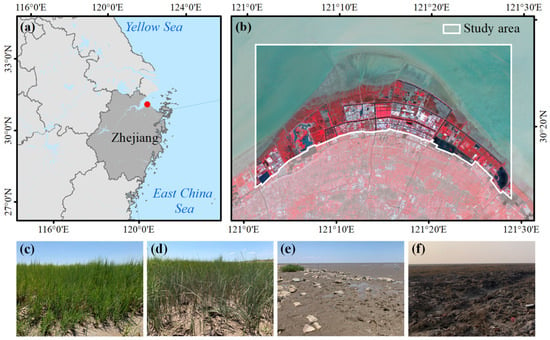
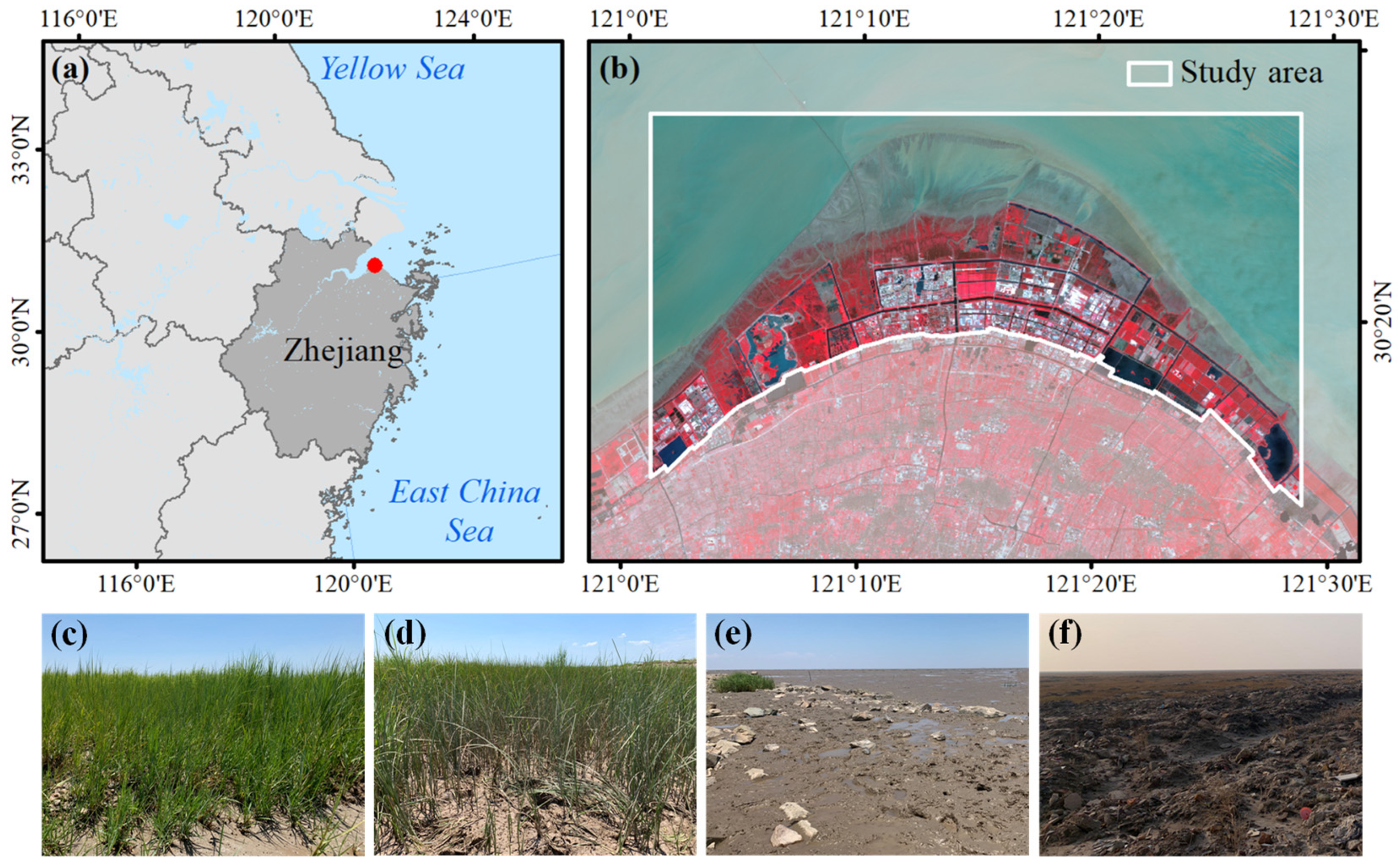
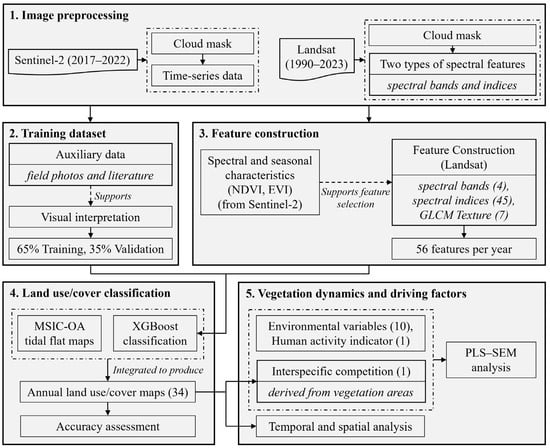
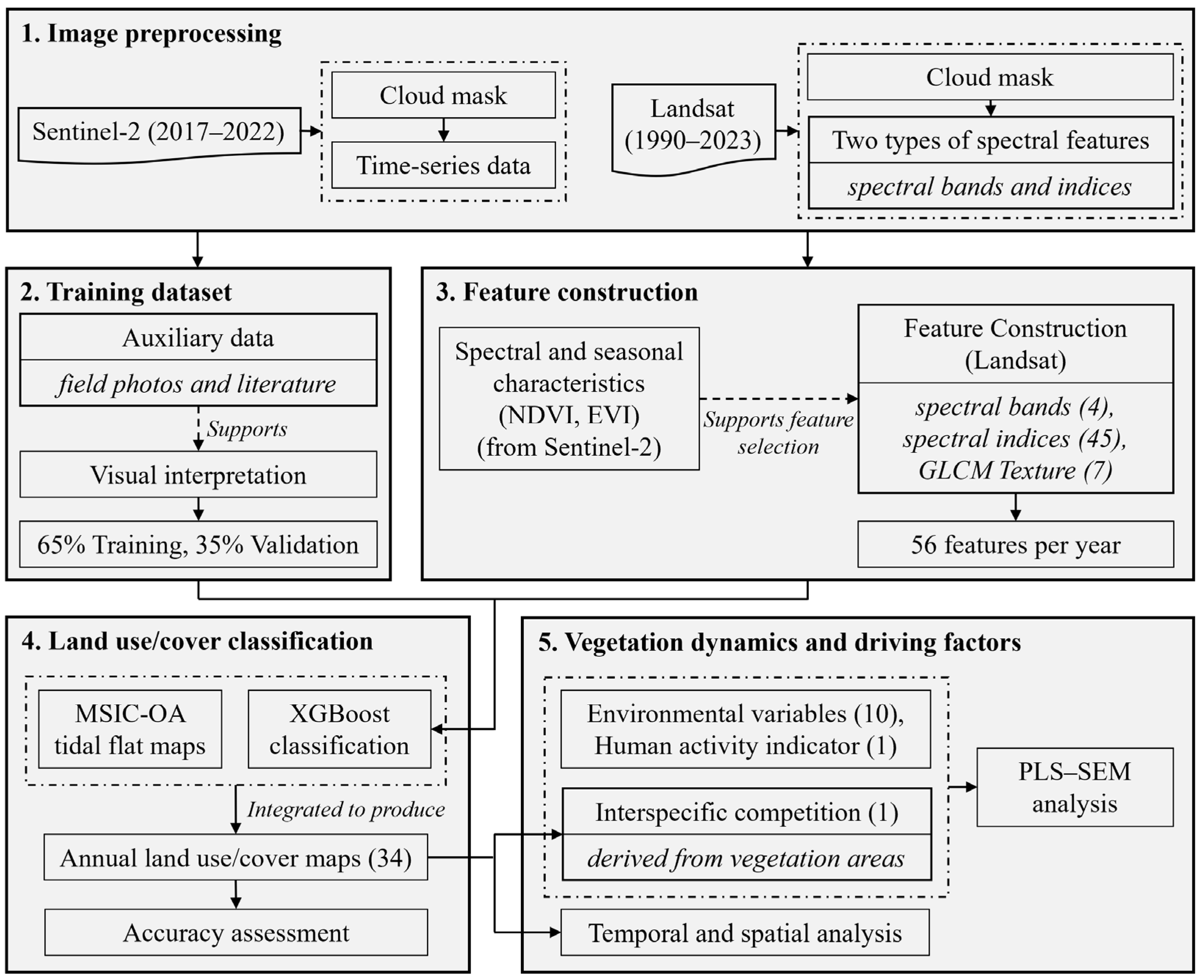
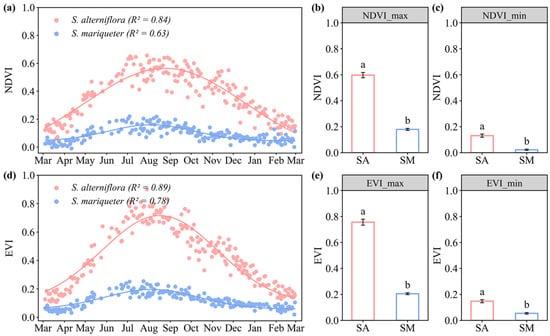
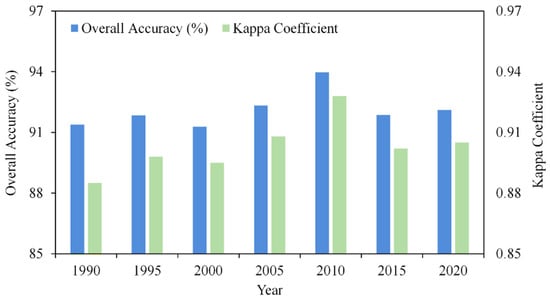
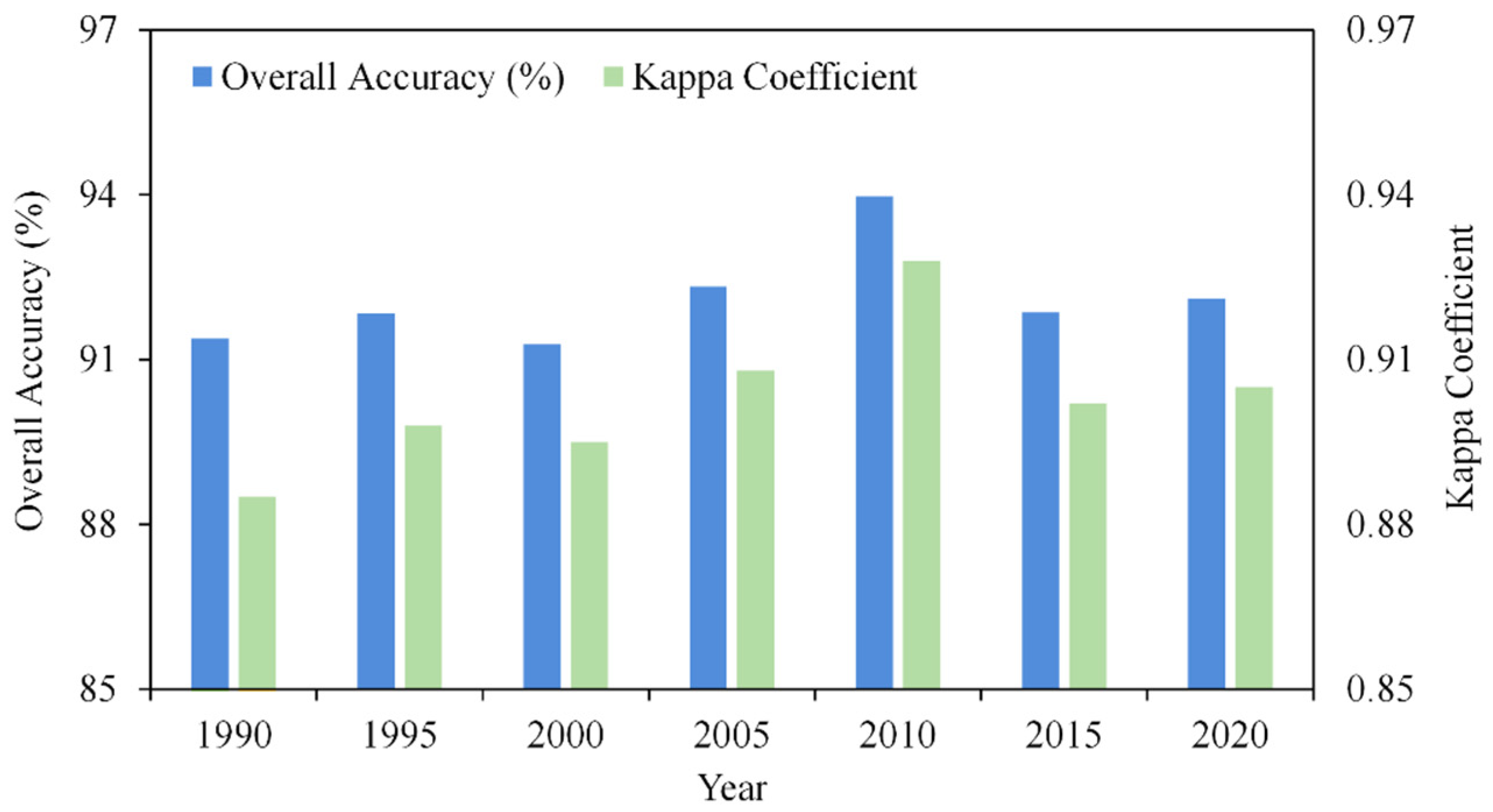
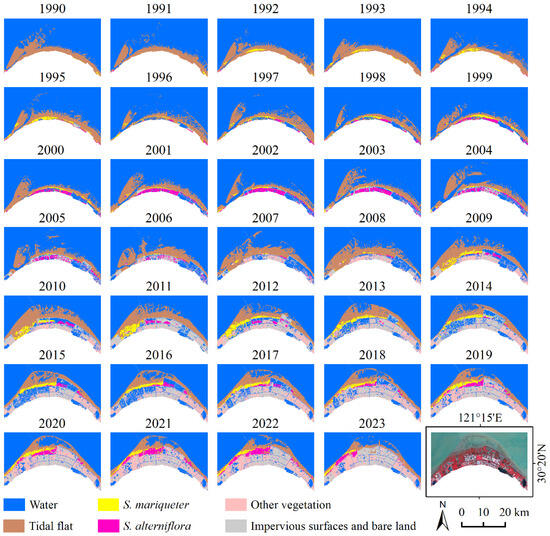
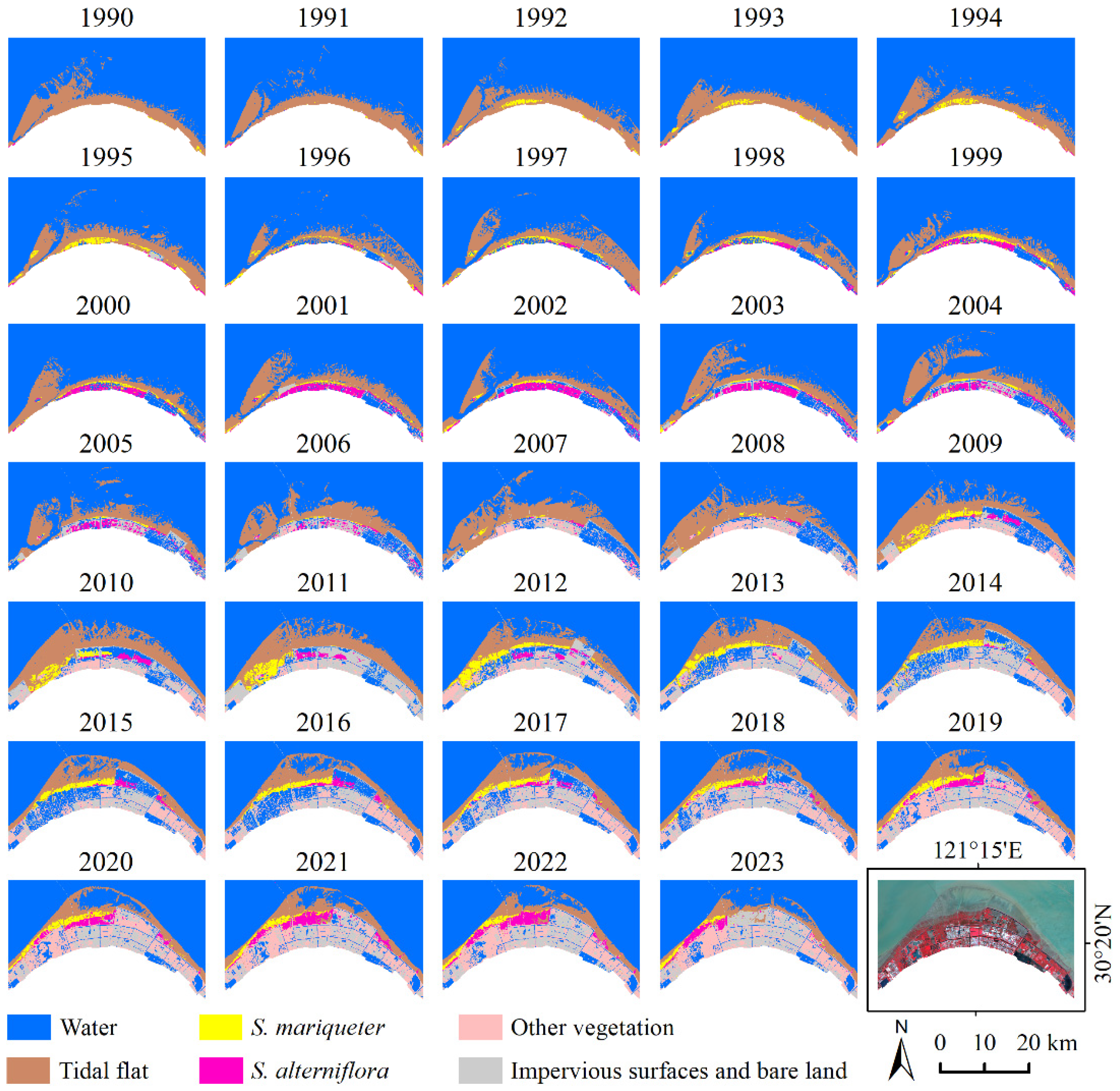
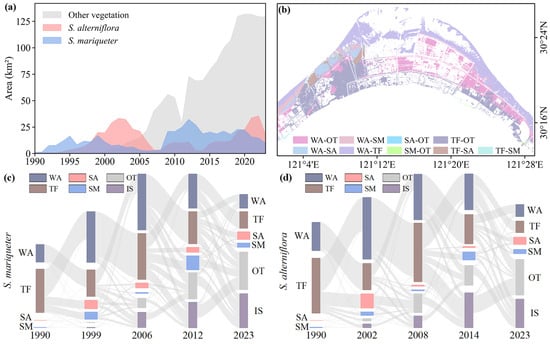
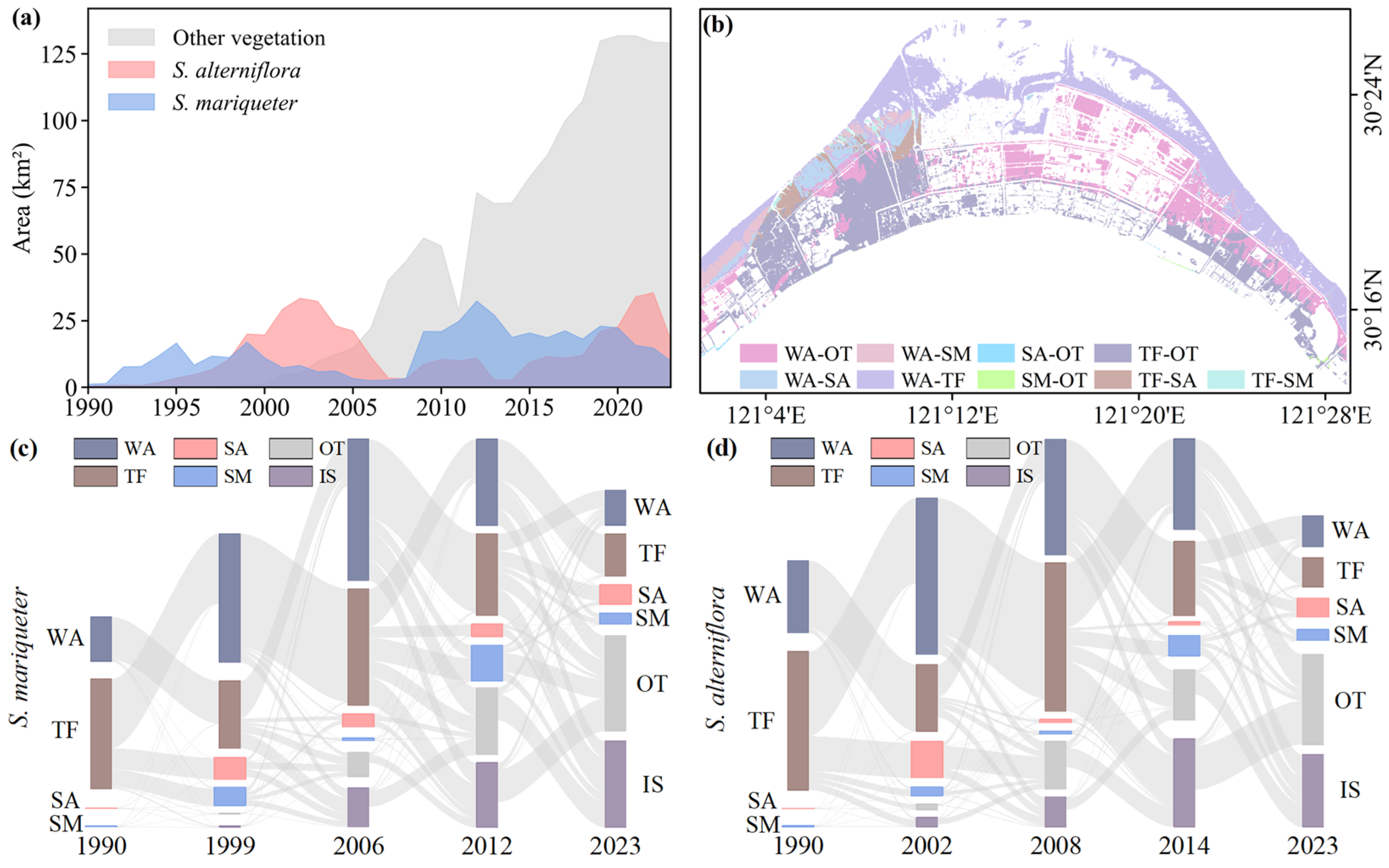
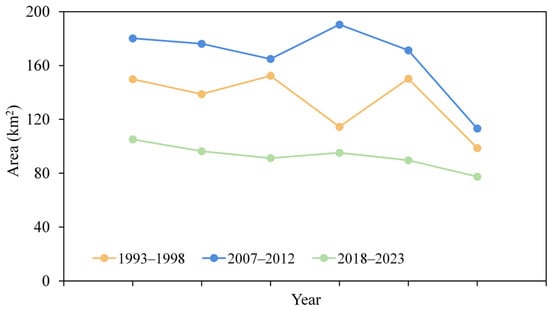
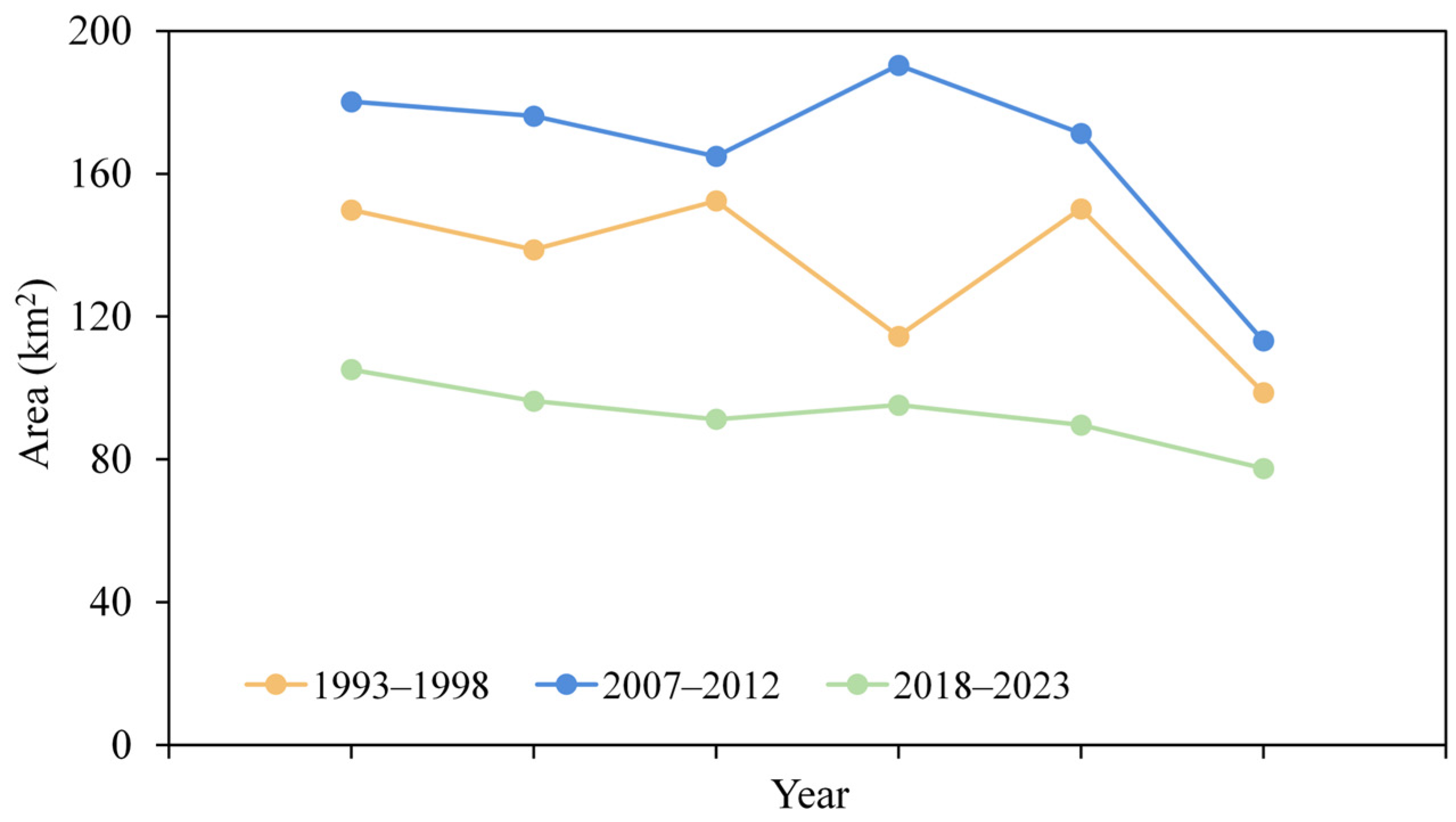
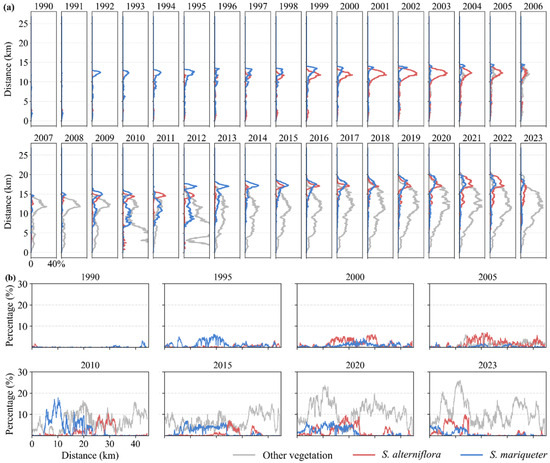
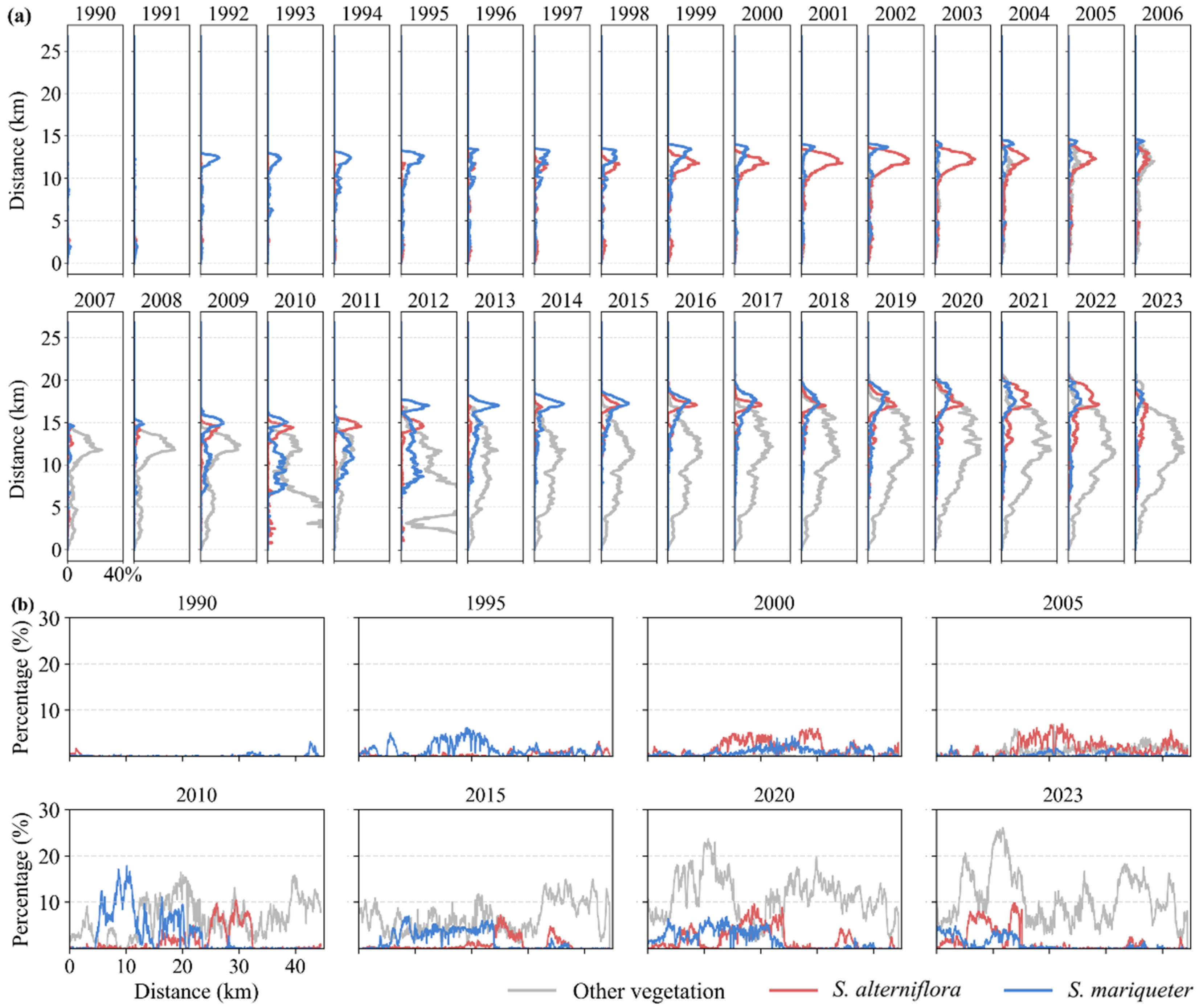
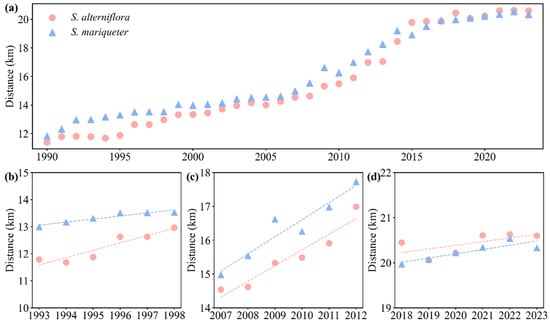
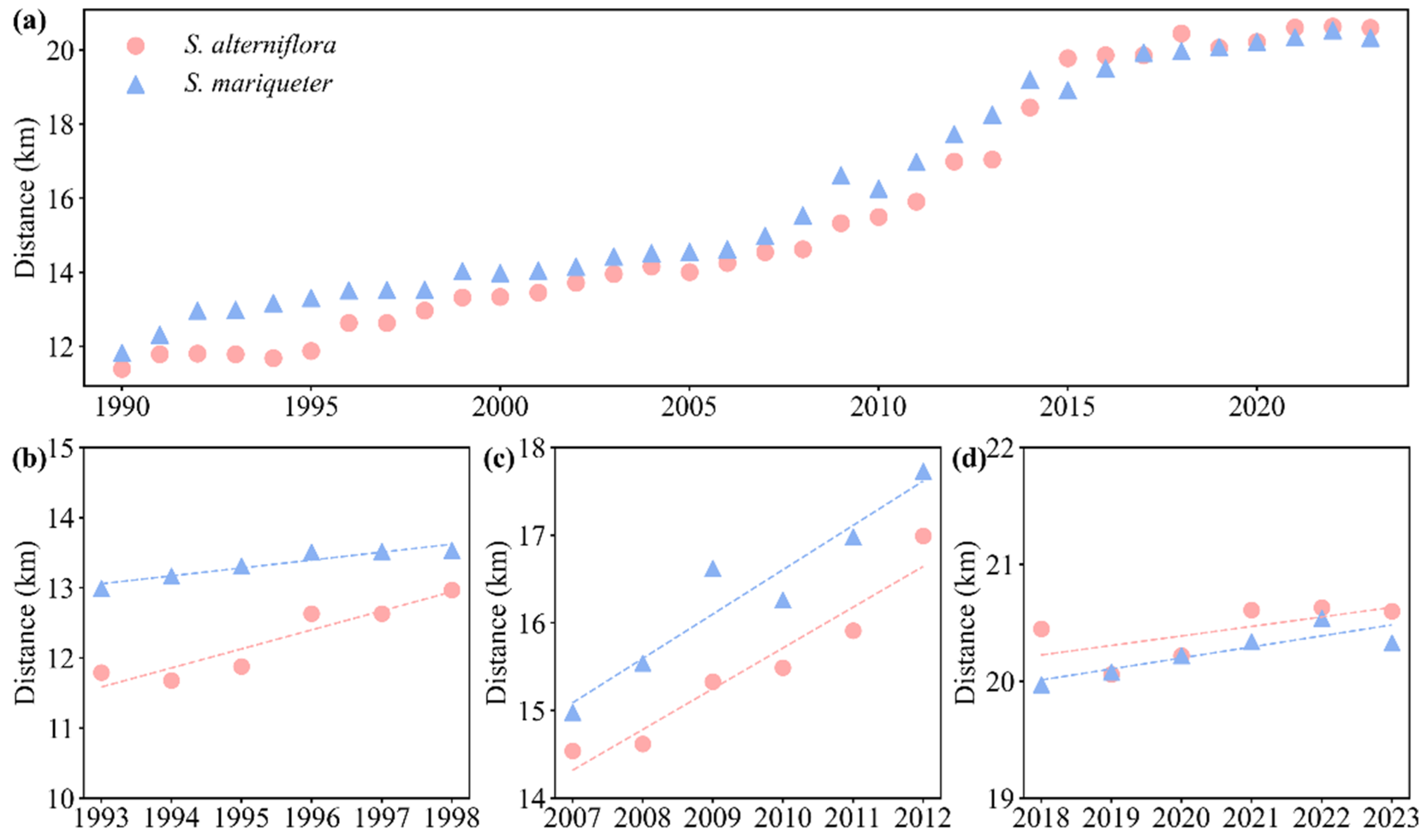
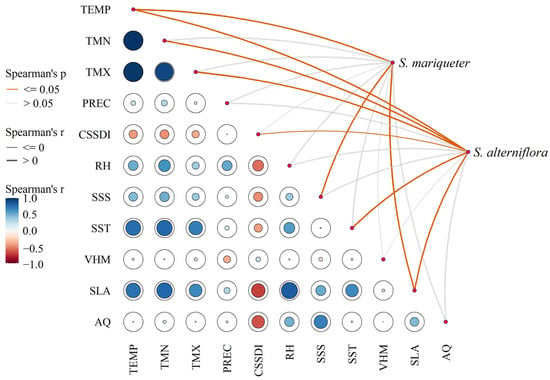
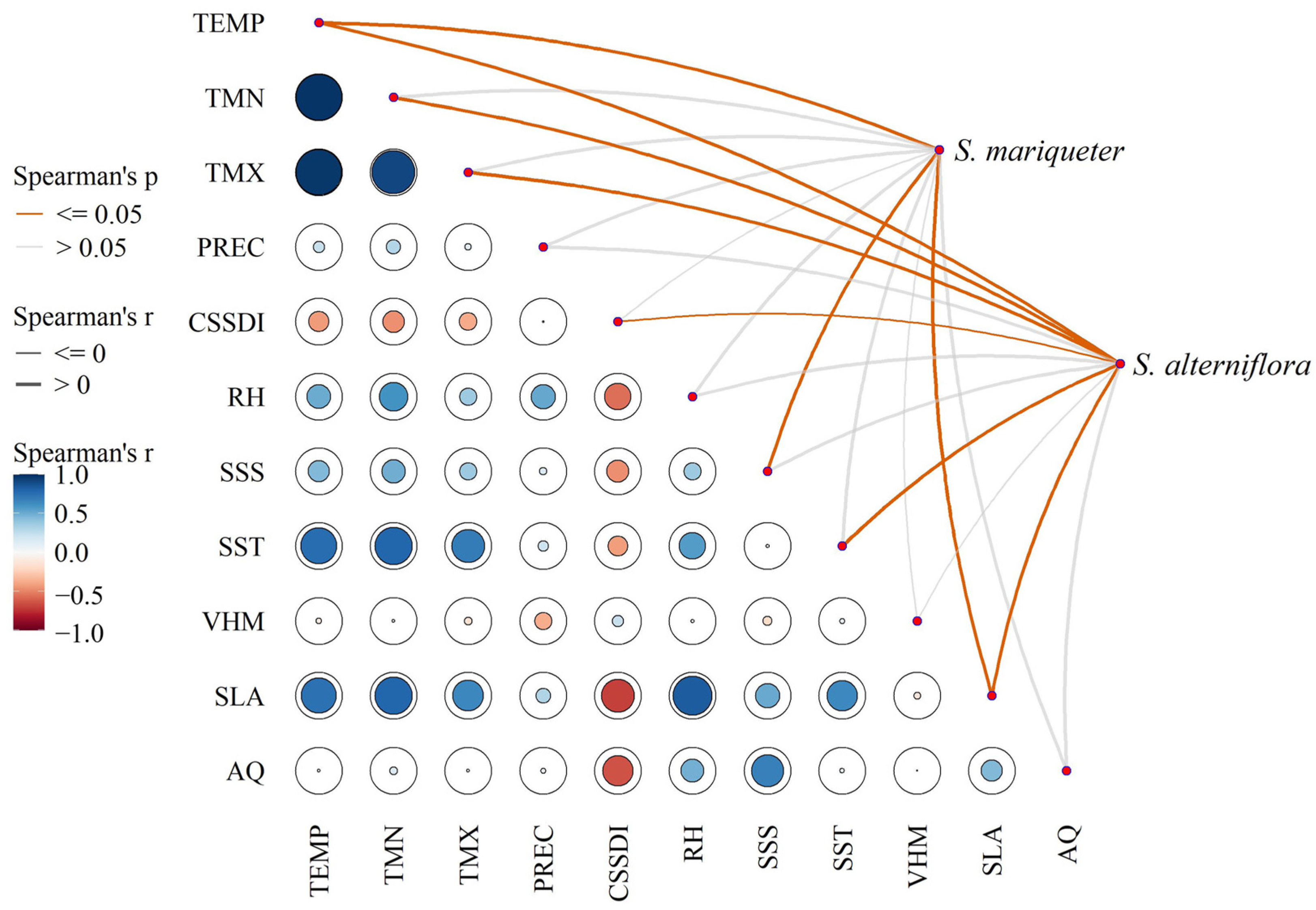
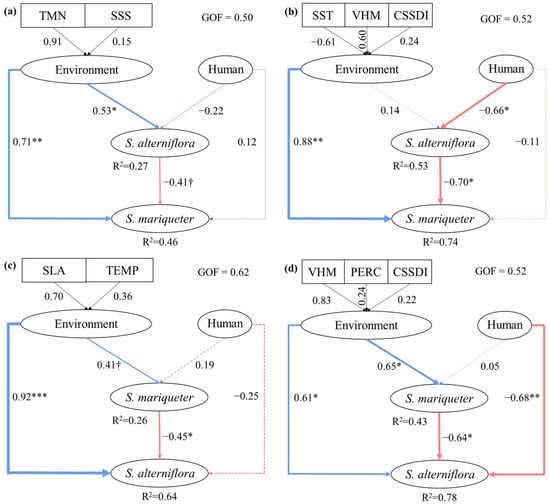
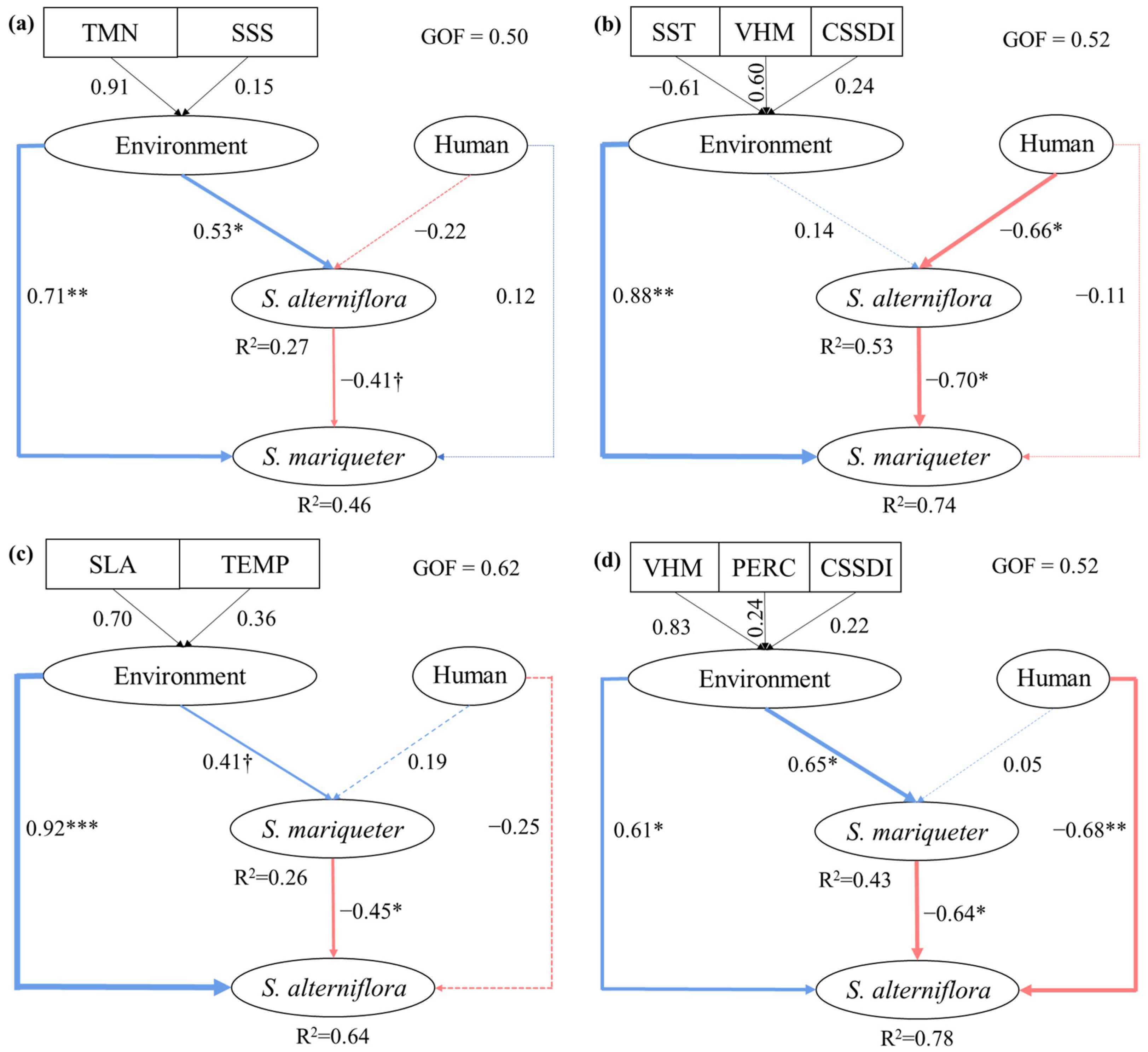

Disclaimer/Publisher’s Note: The statements, opinions and data contained in all publications are solely those of the individual author(s) and contributor(s) and not of MDPI and/or the editor(s). MDPI and/or the editor(s) disclaim responsibility for any injury to people or property resulting from any ideas, methods, instructions or products referred to in the content. |
© 2026 by the authors. Licensee MDPI, Basel, Switzerland. This article is an open access article distributed under the terms and conditions of the Creative Commons Attribution (CC BY) license.