1. Introduction
Against the backdrop of global change, fossil-fuel consumption, land use, and land cover change have driven sustained increases in atmospheric CO
2, intensifying warming and increasing the risks of drought and extreme events [
1,
2]. Consequently, ecosystem carbon sequestration and oxygen release (CSOR) has become a key regulating ecosystem service for climate change mitigation and environmental quality maintenance [
3,
4,
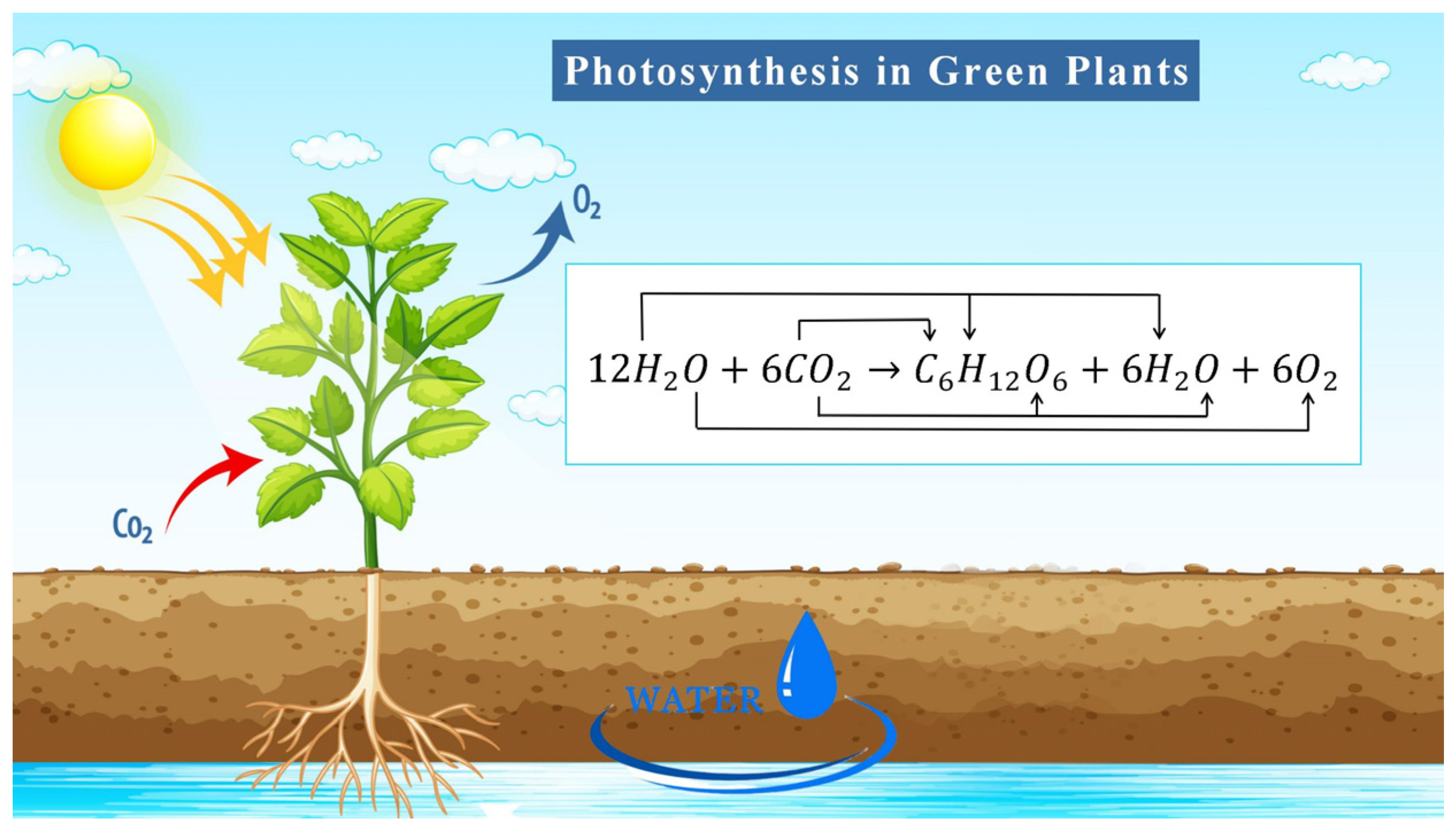
5]. This service refers to the assimilation of atmospheric CO
2 through photosynthesis and its storage in biomass and soil carbon pools, forming a carbon sink, while simultaneously releasing O
2 and supporting climate regulation and atmospheric environmental quality [
6,
7]. Spatially explicit, temporally consistent, and cross-region comparable assessments of carbon sequestration and oxygen release support carbon peak and carbon neutrality strategies and the implementation of nature-based solutions. They also enable the identification of ecosystem degradation, the optimization of restoration investments, and the evaluation of governance performance.
Previous studies have established a relatively mature biophysical basis in both concept and accounting. Grounded in photosynthesis and the carbon cycle, this framework uses productivity and net exchange metrics such as gross primary productivity, net primary productivity, and net ecosystem productivity to characterize carbon sequestration processes [
6]. It also incorporates changes in aboveground and belowground biomass carbon density and soil organic carbon stocks [
8]. Carbon fixation and oxygen release are quantitatively linked through the stoichiometry of photosynthesis [
9]. Methodologically, plot measurements and allometric equations [
10], remote sensing retrievals based on vegetation indices and canopy structure [
9,
11], and ecosystem models based on light use efficiency have been combined to support mapping and accounting from regional to global scales [
12,
13]. These efforts provide a robust basis for quantifying carbon sequestration and oxygen release and locating carbon stocks, and they support comparisons across ecosystem types such as forests, grasslands, wetlands, and croplands [
14].
However, when the objective shifts from quantifying contributions to identifying risks and management priorities, a total amount perspective has at least three limitations. First, totals cannot separate scale effects from per-area efficiency. Ecosystems with similar aggregate values may differ substantially in functional condition, and area-driven signals can be misinterpreted as functional advantages, masking latent degradation. For example, large-area grasslands in Bayannur, Inner Mongolia, China, may show high total service supply despite having suboptimal conditions and low per-area capacity. Similarly, Minnesota, USA, may experience gradual functional decline associated with persistent water pollution and forest fragmentation that is not evident in totals. Second, total indicators are relatively insensitive to long-term structural change, limiting the detection of degradation and recovery signals and the identification of thresholds where quantitative change becomes qualitative change. Third, scale-related bias can encourage management actions that prioritize expanding area while overlooking service quality and the stability and vulnerability of underlying structures, thereby weakening the targeting of restoration efforts.
At the same time, the integration of remote sensing, geographic information systems, and ecosystem models has accelerated assessments of carbon sequestration and oxygen release services [
15]. Study domains have expanded from individual ecosystems to watersheds, urban agglomerations, and ecological function zones [
9,
16,
17]. Analytical approaches have shifted from single-year snapshots to long time series evaluations of trends, abrupt changes, variability, and responses to extreme events [
6]. Driver analyses increasingly incorporate climate variables including temperature, precipitation, radiation, and drought indices; topographic variables including elevation, slope, and aspect; vegetation attributes including cover, leaf area index, phenology, and functional types; and human pressures including land-use change, ecological engineering and restoration, grazing, and pollution stress [
5,
18]. Methods such as regression modeling, panel modeling, structural equation modeling, machine learning, and geographical detector modeling have been used to identify dominant factors and interactions [
19,
20,
21]. These advances improve the ability to locate change and explore potential drivers, and they support scenario analysis and policy assessment. Nevertheless, two gaps remain. First, service structure is often under-specified and inconsistently defined. Resilience-relevant information such as trends, variability, and the frequency of degradation is rarely represented in a systematic and operational manner, limiting the detection of slow-onset degradation and early warning. Second, cross-regional comparison remains constrained by inconsistent indicators, parameterization, and spatial scales. Unified assessments that link totals, intensity, and change within a single framework are still limited, reducing interpretability and weakening the translation of mechanism-based results into management priorities, especially when totals appear stable while per-area efficiency declines and variability increases.
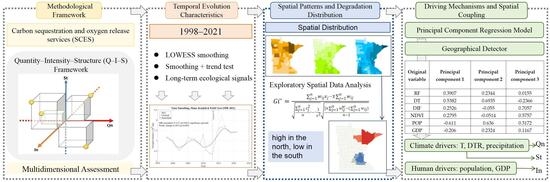
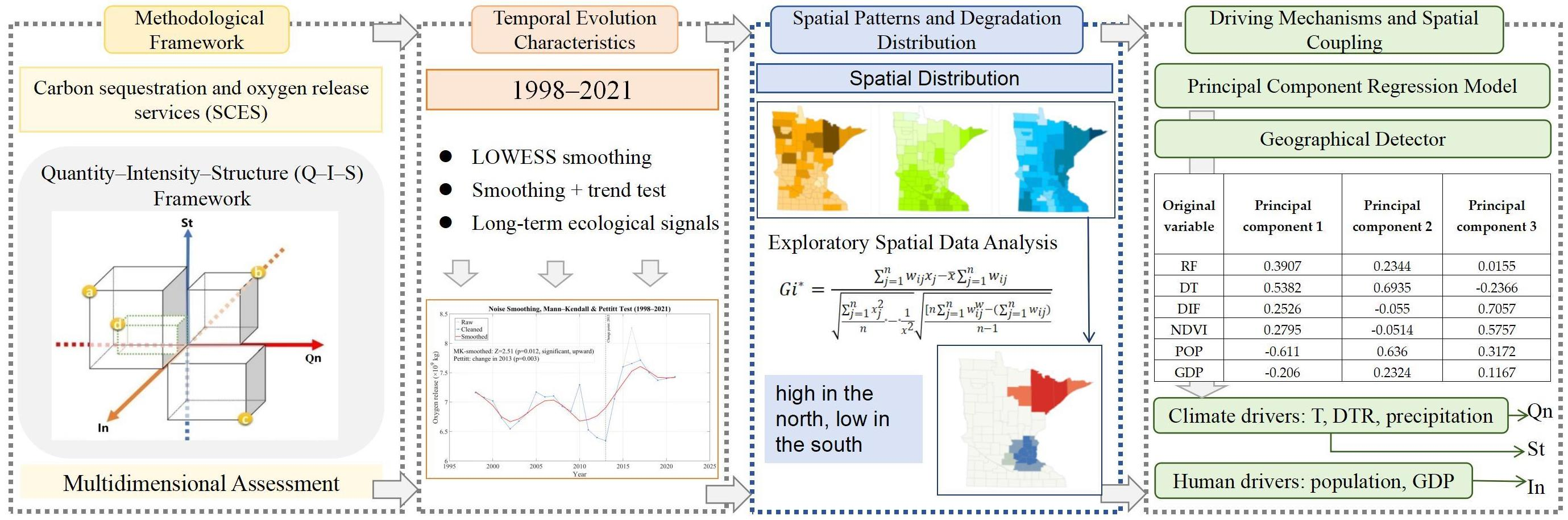
To address these gaps, this study focuses on carbon sequestration and oxygen release services and proposes an integrated biophysical assessment pathway based on total amount, intensity, and structure, covering framework design, indicator construction, and mechanism attribution. The aim is to resolve the following three practical problems: totals can mask efficiency differences and structural degradation, cross-unit comparability is often limited, and management priorities can be biased by scale. Total amount quantifies service supply at the scale of each assessment unit. Intensity represents per-unit-area service provision to distinguish scale from efficiency and reduce area-driven bias. Structure is characterized using temporal trends, interannual variability, and degradation frequency to reflect service dynamics, stability, and risk. Using statistical methods and standard deviation-based normalization, we develop an ecosystem service equivalence indicator to transform biophysical variables with different units into a unified, comparable metric. This indicator captures both the direction and magnitude of deviation from the overall distribution across units, providing a consistent basis for integrated three-dimensional evaluation. We then characterize the spatial patterns and temporal trajectories of total amount, intensity, and structure; identify anomalous areas in each dimension; and delineate areas with strong ecological management performance and areas requiring prioritized restoration. Finally, principal component regression and the geographical detector are used to quantify the effects of climate, topography, vegetation, and human activities on total amount, intensity, and structure, thereby clarifying the coupled relationships between drivers and carbon sequestration and oxygen release services and providing evidence to support differentiated and actionable ecological management and policy design.
4. Discussion
4.1. Long-Term Trends in Carbon Sequestration and Oxygen Release
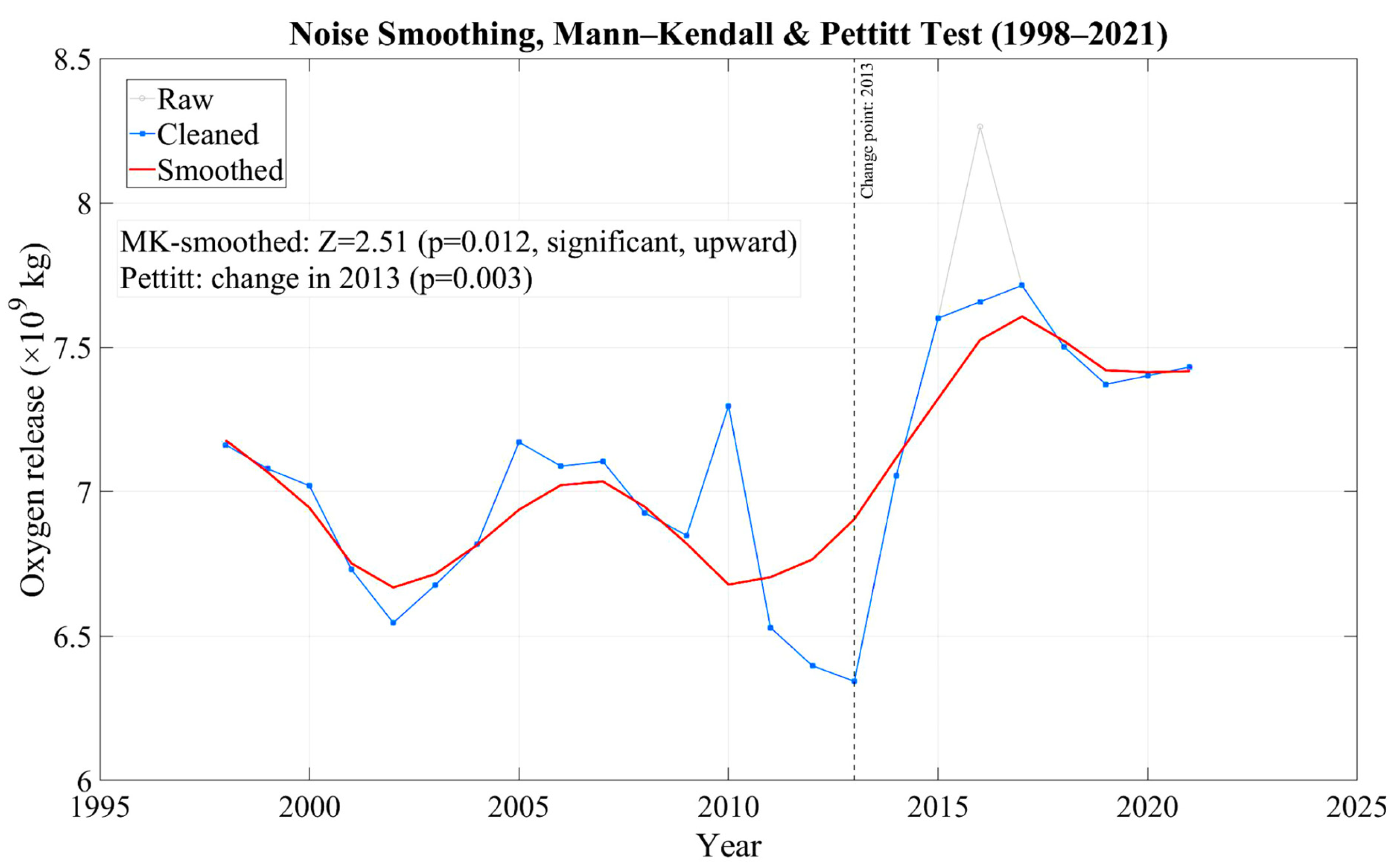
The Mann–Kendall test applied to the unsmoothed series suggests an overall increase in Minnesota’s carbon sequestration and oxygen release (CSOR) services from 1998 to 2021. However, the trend is weakly significant. After applying a 5-year weighted LOWESS smoother to reduce high-frequency noise and outliers, the upward trend becomes statistically stronger. This indicates that analyses based solely on raw remote sensing time series may underestimate long-term change, whereas a combined “smoothing + trend” strategy can more robustly extract underlying ecological signals.
The Pettitt test identifies a significant change point in 2013, consistent with a transition from a fluctuating phase to a recovery phase. This shift likely reflects lagging responses to policy and environmental changes. Since the late 20th century, the U.S. Farm Bill and Minnesota’s conservation and climate policies have promoted conservation tillage, wetland and grassland restoration, riparian buffers, and tighter controls on forest and wetland conversion. Many of these measures were implemented mainly between 2000 and 2010, and their cumulative effects on vegetation productivity and CSOR would be expected to emerge after a time lag, yielding a detectable regime shift around 2013 [
46].
Concurrently, forest, grassland, and wetland areas in Minnesota generally stabilized or expanded after 2000 [
47], while the growth of urban land and high-intensity agriculture slowed [
48]. Broader adoption of conservation agriculture likely strengthened vegetation carbon uptake. Together with warming and, in some years, improved hydrothermal conditions, net primary productivity may have undergone a post-disturbance recovery and enhancement process, amplifying the phase shift in CSOR around 2013.
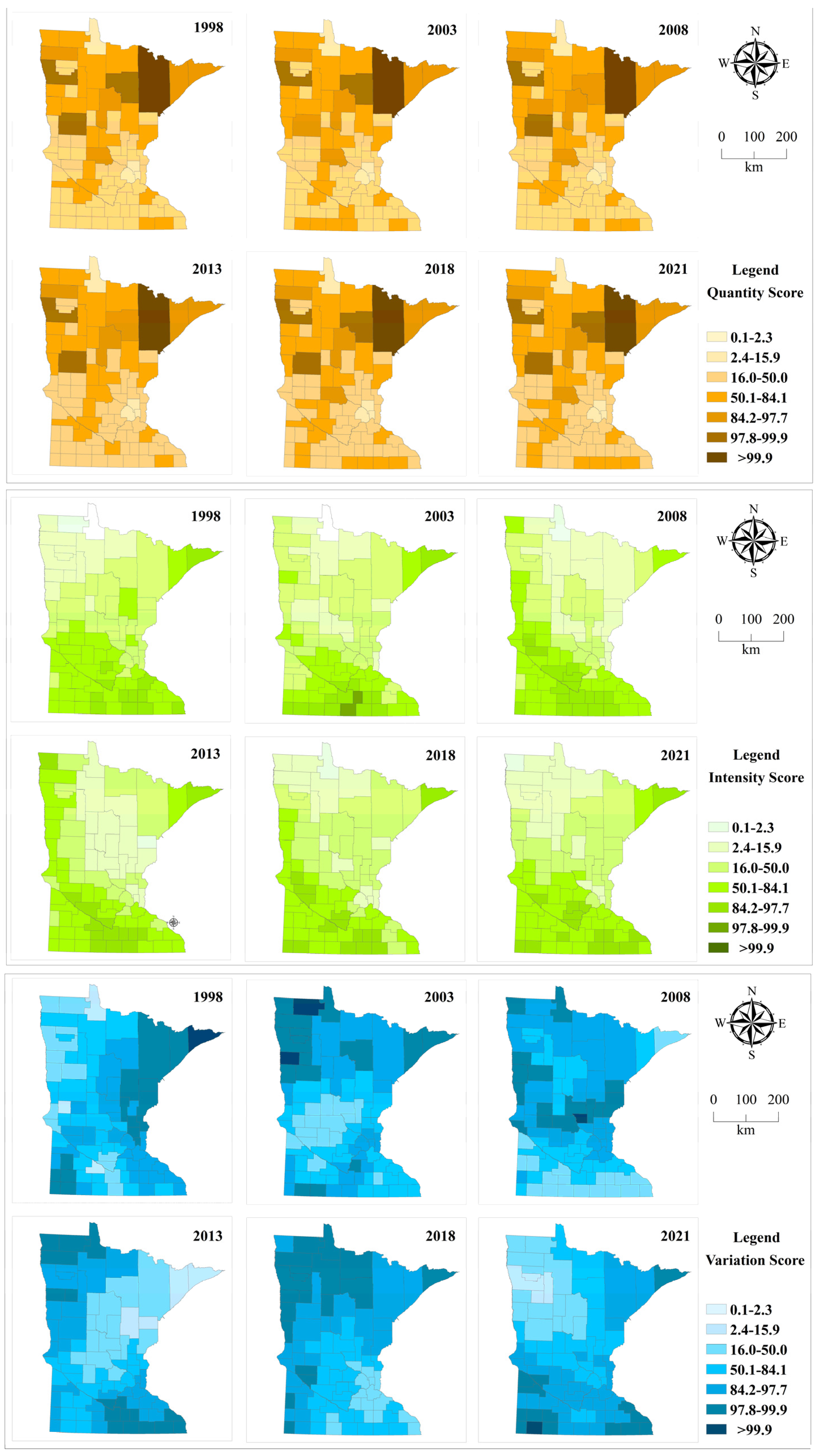
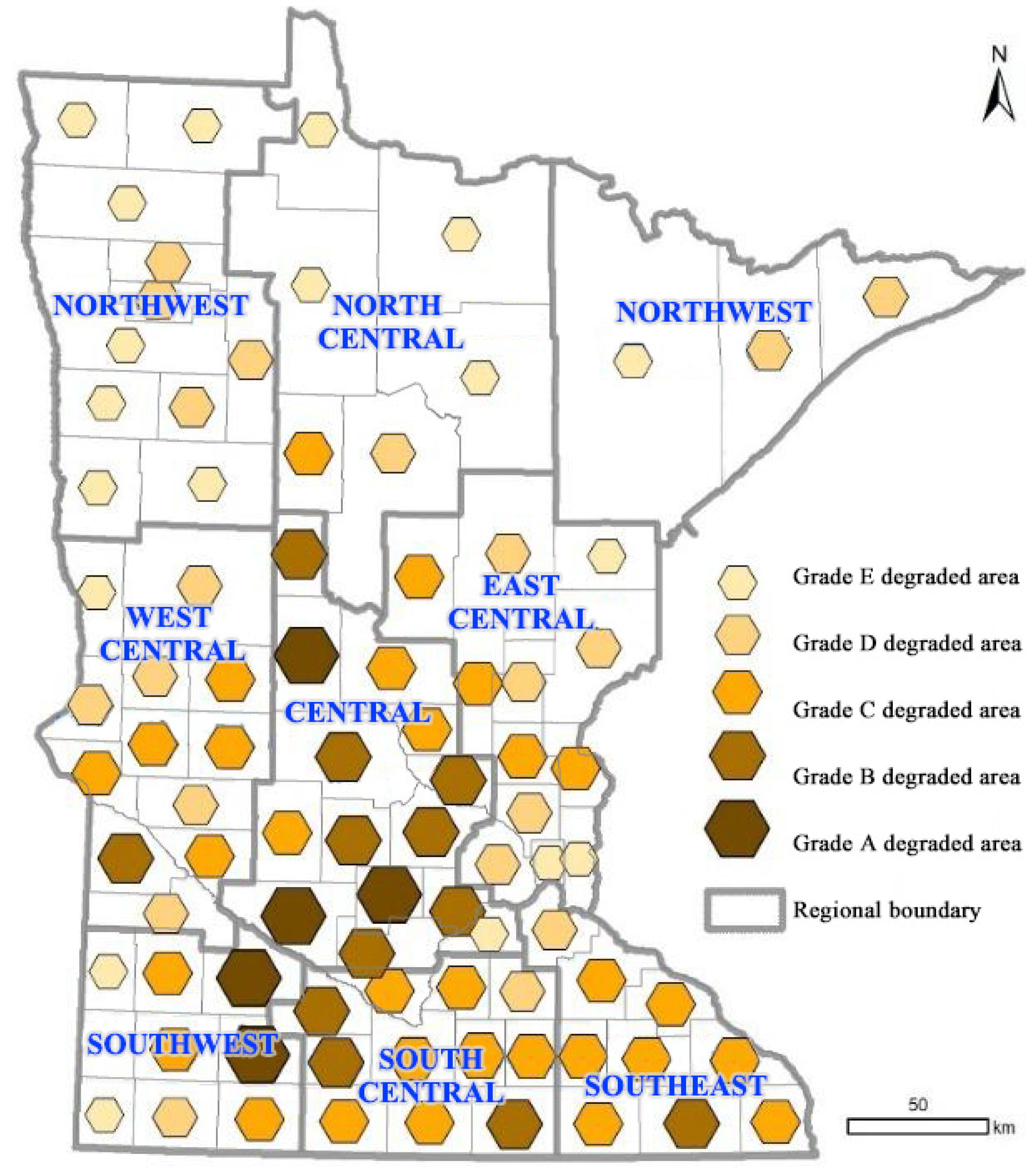
Despite the statewide increase in total CSOR, persistent degradation remains evident at local scales. The total-equivalent index exhibits a stable north–south gradient, with broad improvement in northern high-value areas and continued lagging performance in the central and southern low-value regions. Degradation mapping further indicates that persistently degraded counties are strongly clustered in central and southwestern Minnesota, forming a distinct degradation core (
Figure 6;
Table 4). These patterns suggest that statewide gains are partly driven by contributions from northern high-supply areas, while portions of central and southern Minnesota continue to experience declines in service condition and ecosystem functioning.
4.2. Advantages of the Quantity–Intensity–Structure Multidimensional Framework
The Quantity–Intensity–Structure (Q–I–S) framework distinguishes three complementary attributes of ecosystem services, scale, per-area performance, and temporal evolution and characterizes them jointly. Quantity captures the total annual CSOR provided within a spatial unit, Intensity describes CSOR per unit area, and Structure reflects the direction and magnitude of change through interannual variation in intensity. This configuration enables simultaneous answers to “how much?,” “where?,” and “is it improving or degrading?” By partitioning the three-dimensional space into eight states based on the sign combinations of Q, I, and S, the framework moves beyond simple high–low comparison toward process-oriented diagnosis. For example, units with high Quantity and high Intensity but negative Structure represent “high-value but degrading” areas with latent risk, whereas units with low Quantity and low Intensity but positive Structure indicate “low baseline but recovering” areas with restoration potential. Leveraging the spatiotemporal continuity of remote sensing data, the framework supports fine differentiation of ecological states and trajectories and provides operational evidence for targeted management. Importantly, Q–I–S is indicator-agnostic: any ecosystem service represented as a remote sensing time series, such as food production, water regulation, or soil retention, can be assessed within the same structure, supporting transferability across services.
4.3. Ecological Mechanisms of the North-High, South-Low Spatial Pattern
Northern Minnesota, including the northeast and northwest regions, exhibits high CSOR (carbon sequestration and oxygen release) in association with substantial forest cover, particularly coniferous and mixed forests. These forest ecosystems not only support greater aboveground biomass, thereby enhancing photosynthetic capacity, but also promote soil organic carbon storage, contributing to the formation of persistent carbon pools. In addition, the region’s abundant wetlands and water bodies provide favorable moisture regimes for tree growth, and studies have demonstrated that wetlands play a crucial role in carbon sequestration [
49]. Wetland vegetation absorbs atmospheric CO
2 through photosynthesis and converts it into organic matter, and adjacent terrestrial vegetation also contributes to carbon storage [
50]. In the southwest and central south, agricultural intensity is higher, with intensive cropping systems such as soybean and maize cultivation leading to degradation of soil structure and soil quality and a reduction in the ecosystem’s carbon fixation potential. At the same time, urbanization and land development exacerbate the loss of natural vegetation and thus attenuate CSOR, particularly within the Minneapolis–Saint Paul metropolitan area [
51].
Surrounding management practices likewise influence the spatial patterns. In northern Minnesota, effective forest management measures help sustain higher levels of ecosystem health. Data from the Minnesota Department of Natural Resources indicate that forests enrolled in the Sustainable Forests Incentive Act (SFIA) cover more than 540,000 acres, reflecting substantial participation in sustainable forest management that supports carbon storage and biodiversity. Moreover, Minnesota has implemented multiple measures to control and eradicate invasive species, including the Minnesota Invasive Species Act, which further supports ecosystem health. In contrast, portions of southern Minnesota exhibit agricultural practices that are comparatively less sustainable. These practices are characterized by extensive tillage and reliance on monoculture cropping of maize and soybeans, resulting in notable soil degradation. USDA data indicate soil erosion rates in southern Minnesota on the order of approximately 5 tons per hectare per year. Additionally, the rapid urbanization of the Minneapolis–Saint Paul area has led to substantial loss of green space; although urban greening initiatives exist, protection measures have not kept pace with urban expansion. City planning data show that over the past decade, urban green space in this region declined by roughly 15%. Collectively, unsustainable cropping practices and deficiencies in urban planning significantly undermine the region’s CSOR.
4.4. A Joint Attribution Using Principal Component Regression and Geographical Detectors
This study combined principal component regression and geographical detectors to attribute the spatial variability of CSOR to natural and anthropogenic drivers. Beyond statistical attribution, the identified drivers can be interpreted as mechanistic constraints operating through three pathways: climatic regulation of photosynthesis and respiration, vegetation condition as an integrated signal of site productivity and disturbance, and the effects of land-use intensity and landscape fragmentation.
Precipitation affects CSOR primarily by regulating soil moisture and stomatal conductance, thereby controlling gross primary production and, ultimately, NPP-derived CSOR. Temperature influences enzymatic activity and phenology, yet its net effect can differ across space depending on whether warming relieves thermal limitation or increases evaporative demand and drought stress. Diurnal temperature range serves as an indicator of atmospheric dryness and cloudiness. A larger diurnal temperature range is commonly associated with clearer skies and stronger radiative forcing, but also with lower humidity and higher vapor pressure deficit, which can suppress photosynthesis by promoting stomatal closure. These mechanisms support the observed importance of hydrothermal conditions in explaining CSOR spatial heterogeneity.
NDVI represents canopy greenness and provides a close proxy for leaf area and photosynthetic capacity. Higher NDVI generally indicates greater light interception and carbon assimilation, leading to higher CSOR intensity. NDVI also integrates lagging effects of management, disturbance history, and site conditions, including crop rotation and residue retention, harvest and drought impacts, and soil fertility. This helps explain why vegetation condition remains a strong explanatory factor after accounting for climate variability.
Population and GDP act as proxies for land-use conversion pressure, impervious-surface expansion, and the intensity of human disturbance. These pressures can reduce CSOR through habitat loss, fragmentation, and microclimate alteration, and by limiting rooting volume and infiltration in developed areas. In agricultural landscapes, economic activity may be associated with management intensification, such as drainage, fertilization, and irrigation. Such intensification can raise productivity in some locations while reducing ecosystem stability and resilience, with direct implications for Structure.
Geographical detector results show that two-factor interactions typically explain spatial heterogeneity more effectively than individual factors, indicating that CSOR patterns are shaped by coupled constraints rather than a single dominant driver. The interaction between population and temperature aligns with the combined influence of urban heat effects and land surface modification, which can amplify thermal stress and shift phenology, producing spatially concentrated impacts on CSOR. The interaction between NDVI and diurnal temperature range indicates joint control by canopy status and atmospheric moisture demand. Even in areas with high greenness, a large diurnal temperature range can limit realized photosynthesis, whereas favorable conditions allow high-NDVI landscapes to translate potential productivity into actual CSOR.
From a functional perspective, climate and NDVI primarily regulate Intensity by shaping photosynthetic efficiency and canopy capacity. Land-use proxies more strongly influence Quantity by altering the spatial extent of vegetated surfaces. Structure is particularly sensitive to the temporal stability of these constraints, and negative Structure is more likely where climatic stress and human disturbance co-occur, reflecting persistent degradation or reduced resilience.
4.5. Remote Sensing-Based Degradation Identification and Spatial Management Implications
Using the Structure indicator to represent interannual change, this study developed a frequency-based degradation grading approach and, together with hot spot analysis, identified persistent degradation cores and surrounding areas with episodic degradation. The key step is to translate multi-temporal remote sensing indicators into a binary sequence of “degradation events,” and then classify each spatial unit into Grades A–E based on the frequency of degradations. This design reduces sensitivity to anomalies in any single year and emphasizes persistence, improving the detection of long-term ecological risk areas.
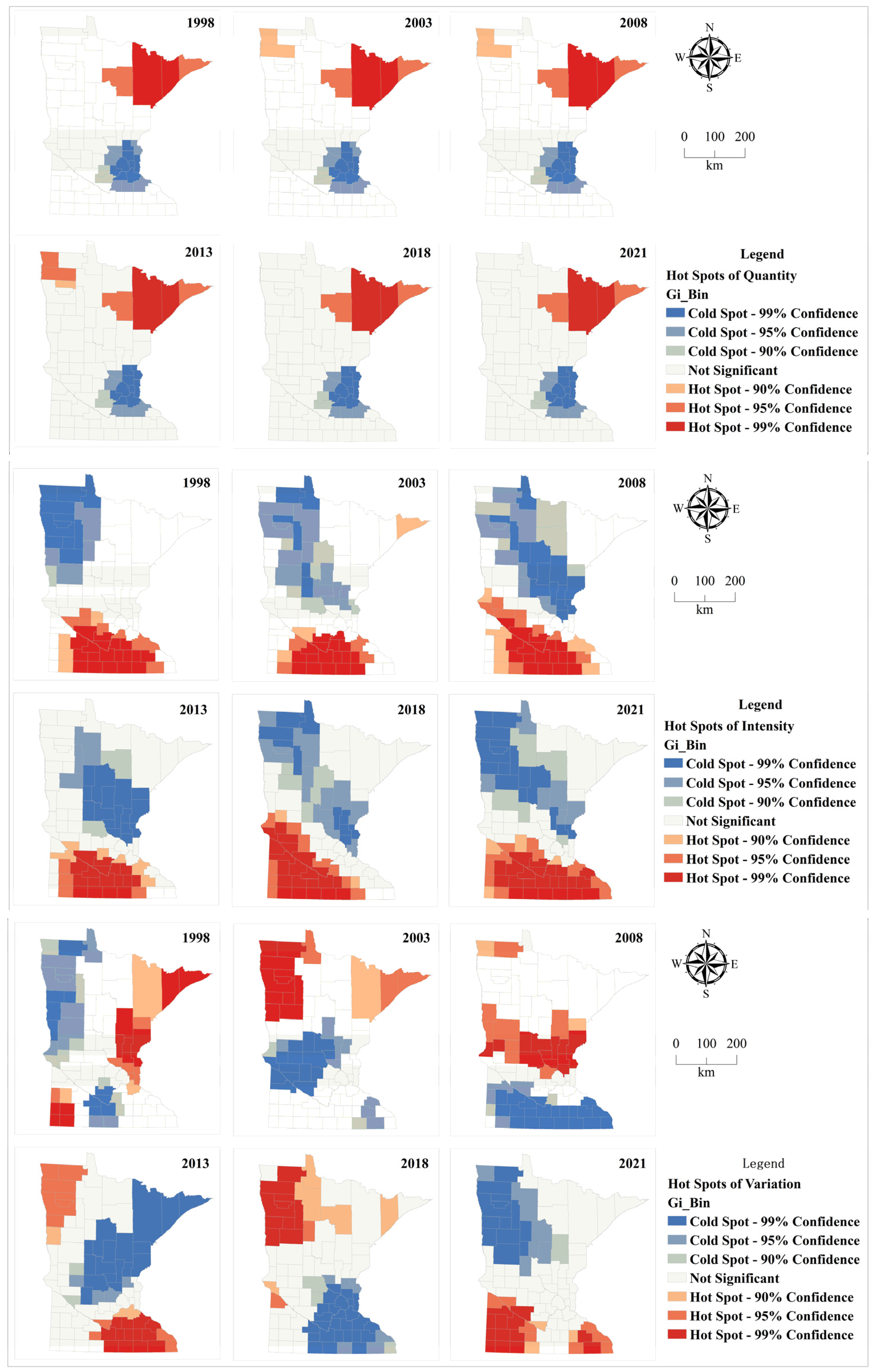
Overlaying degradation grades with Q–I–S states and hot/cold spots reveals a core degradation belt in central Minnesota surrounded predominantly by areas with lower degradation frequency. As the state’s major metropolitan region, the Twin Cities area concentrates population and economic activity and includes impervious surfaces, dense transportation networks, and frequent land development and renewal. These pressures intensify vegetation fragmentation and impose sustained disturbances on local ecosystems, limiting stable recovery and contributing to high-frequency, high-severity degradation clusters.
This integrated evidence base supports spatially differentiated management. Areas within the Twin Cities region showing persistent degradation and simultaneously high Quantity or Intensity should be prioritized for risk control and ecological restoration. In contrast, peripheral areas with low current service levels but positive Structure values are suitable for designation as zones with recovery potential in medium- and long-term restoration planning. Methodologically, the combination of time series analysis, frequency-based grading, and spatial clustering provides an operational workflow for large-scale monitoring and early warning of ecosystem service degradation using standard satellite products.
In the degraded zoning and governance framework for central and southwestern Minnesota, Grade A core zones require a targeted reversal of long-standing degradation to enhance CSOR stability and ecological resilience in order to restore the natural ecological pattern. Management should prioritize large-scale ecological restoration and reforestation, employing locally native species to establish a mixed conifer–broadleaf forest, and implement a planned regime of thinning and renewal with rotation limits and designated monitoring plots. Concurrently, control of invasive species should be strengthened, and a regional eradication and monitoring network should be established. Grade B areas should focus on halting further degradation and promoting localized restoration to consolidate existing ecological functions; within ecological restoration zones, buffers and restoration of native understory vegetation should be advanced to increase soil cover and moisture retention. For Grade C zones of moderate degradation, the objective is to maintain and stabilize existing ecological functions and prevent further deterioration. Recommendations include the promotion of ecologically friendly agriculture by implementing reduced-tillage practices, the use of cover crops, and crop rotation to reduce erosion and enhance soil organic matter. Grade D areas should pursue sustained improvement through localized, low-intensity interventions, while Grade E regions should maintain a low-degradation trajectory and prevent escalation to more severe states in order to sustain regional ecological resilience. Across the board, practices should maintain existing nature reserves and green spaces with regular monitoring of core indicators. The governance hierarchy should follow an A > B > C > D > E priority, with resources preferentially allocated to Grades A and B; Grade C should receive continual monitoring and gradual restoration to prevent escalation to higher degradation levels. Resource allocation should center on natural ecological restoration complemented by agricultural modernization, green infrastructure, and community engagement. Additionally, cross-regional collaboration should be established in the central and southwestern areas to promote replicable restoration paradigms, improving governance efficiency and scalability.
Building on this evidence, an operational pathway should link degradation Grades A–E with Q–I–S states to define tiered interventions and measurable targets. In the persistent degradation core, near-term risk control should be prioritized by restricting new land conversion, expanding permeable surfaces, and implementing corridor-based greening along riparian zones and major transportation axes. Management performance should be evaluated annually using grade transitions and changes in Structure. In surrounding areas with episodic degradation, adaptive management should focus on buffering drought and heat stress through targeted canopy enhancement and soil and water conservation, with interventions triggered when consecutive degradation events exceed a predefined threshold. In zones with recovery potential and positive Structure, medium- to long-term restoration should prioritize connectivity and habitat quality, supported by a satellite-based monitoring–evaluation–adjustment loop that dynamically reallocates resources to spatial units that fail to improve within a specified period.
4.6. Uncertainties, Limitations, and Future Research
This study contains several uncertainties related to the data, methods, and county-level results. First, CSOR is inferred from satellite-derived NPP using a stoichiometric conversion. This reflects an NPP-driven signal and does not explicitly account for ecosystem respiration, lateral carbon transport, or disturbance pulses. Thus, CSOR here should be interpreted as a potential service indicator rather than a full net carbon–oxygen exchange. Second, uncertainties in the NPP product and preprocessing may propagate to county aggregation and the classification/grading, particularly in counties with heterogeneous land cover. Third, the five-year equal-interval sampling provides consistent temporal coverage but may miss short-term extremes, which could affect the interpretation of interannual variability. Fourth, pest and disease outbreak data are highly incomplete, so this factor was not considered in the current analysis; it should be incorporated in future work when more comprehensive and reliable outbreak records become available. Future work will validate and refine CSOR using flux observations and model outputs, incorporate additional remote sensing constraints, and test the robustness of county grading under alternative temporal sampling and uncertainty analyses.
Future work should place greater emphasis on field validation and calibration, the integration of high-resolution and multi-source remote sensing data, and the development of process-driven inversion methods. It should also implement rigorous uncertainty quantification, including Monte Carlo methods and Bayesian frameworks, as well as event-driven time series analysis and rapid response mechanisms to enhance the diagnostic capacity and predictive robustness of ecological processes. These improvements should be applied to the validation, refinement, and extension of CSOR. Additional remote sensing constraints and multi-source data should be incorporated, and the robustness of county-level classifications under varying temporal sampling schemes and uncertainty analyses should be evaluated.
5. Conclusions
CSOR services in Minnesota strengthened overall from 1998 to 2021, with a statistically significant turning point in 2013. Mann–Kendall and Pettitt analyses jointly indicate a transition from an early period dominated by fluctuations with slight weakening to a later period of sustained recovery and enhancement, with 2013 as the key change point. The higher significance after temporal smoothing underscores the need for a “smoothing + trend testing” workflow when extracting long-term signals from noisy remote sensing time series.
The Q–I–S framework effectively separates service scale, per-area performance, and temporal evolution, enabling identification of both latent risk areas and zones with recovery potential. In particular, the framework highlights (1) “high-value but declining” units, characterized by high Quantity and Intensity with negative Structure, as priorities for risk prevention and restoration, and (2) “low baseline but improving” units with low Quantity and Intensity but positive Structure as strategic targets for medium- and long-term enhancement. Because the framework is not tied to a specific indicator set, it is readily transferable to other ecosystem services represented by long-term remote sensing series.
CSOR exhibits pronounced north–south differentiation and stable spatial clustering across Minnesota. Quantity remains higher in the north and lower in the south, broadly aligning with forest belts versus cropland- and urban-dominated landscapes, and forming persistent hot and cold spots. Intensity shows large-scale clustering with stable hot spots in the south/southwest and a persistent cold spot belt from the northwest to east-central areas. Structure indicates improving trajectories primarily in the north and more persistent weakening in parts of the south, together implying a stable spatial gradient coupled with localized heterogeneity.
Persistent degradation is limited in extent but highly concentrated. Frequency-based grading identifies five Grade A and twelve Grade B counties concentrated in central and southwestern Minnesota, forming a narrow high-risk belt. Approximately 80% of counties show no persistent degradation. This concentration suggests that management resources should prioritize the central belt despite generally stable conditions statewide.
Climatic factors dominate variation in Quantity and Structure, whereas human activity factors more strongly shape Intensity, and CSOR patterns are governed by multi-factor interactions. PCR identifies daytime temperature and diurnal temperature range as the most influential drivers of service scale and trajectory, while population and GDP are the leading drivers of per-area intensity.
Geographical detector results show that interaction effects consistently exceed single-factor explanatory power; combinations such as population, temperature and NDVI, and diurnal temperature range exhibit strong nonlinear enhancement, confirming that CSOR spatial patterns arise from synergistic coupling among multiple natural and anthropogenic drivers rather than being controlled by any single factor.