


Study on the Lagged Response Mechanism of Vegetation Productivity Under Atypical Anthropogenic Disturbances Based on XGBoost-SHAP

Highlights
- NPP increased across the BTH region during lockdown, especially in urban cores.
- Vegetation responses shifted toward more immediate climate sensitivity with weakened lag effects.
- Short-term anthropogenic cessation amplified vegetation responsiveness to concurrent environments.
- Insights into spatial–temporal lag mechanisms aid urban ecological regulation under abrupt disturbances.
Abstract
1. Introduction
2. Materials and Methods
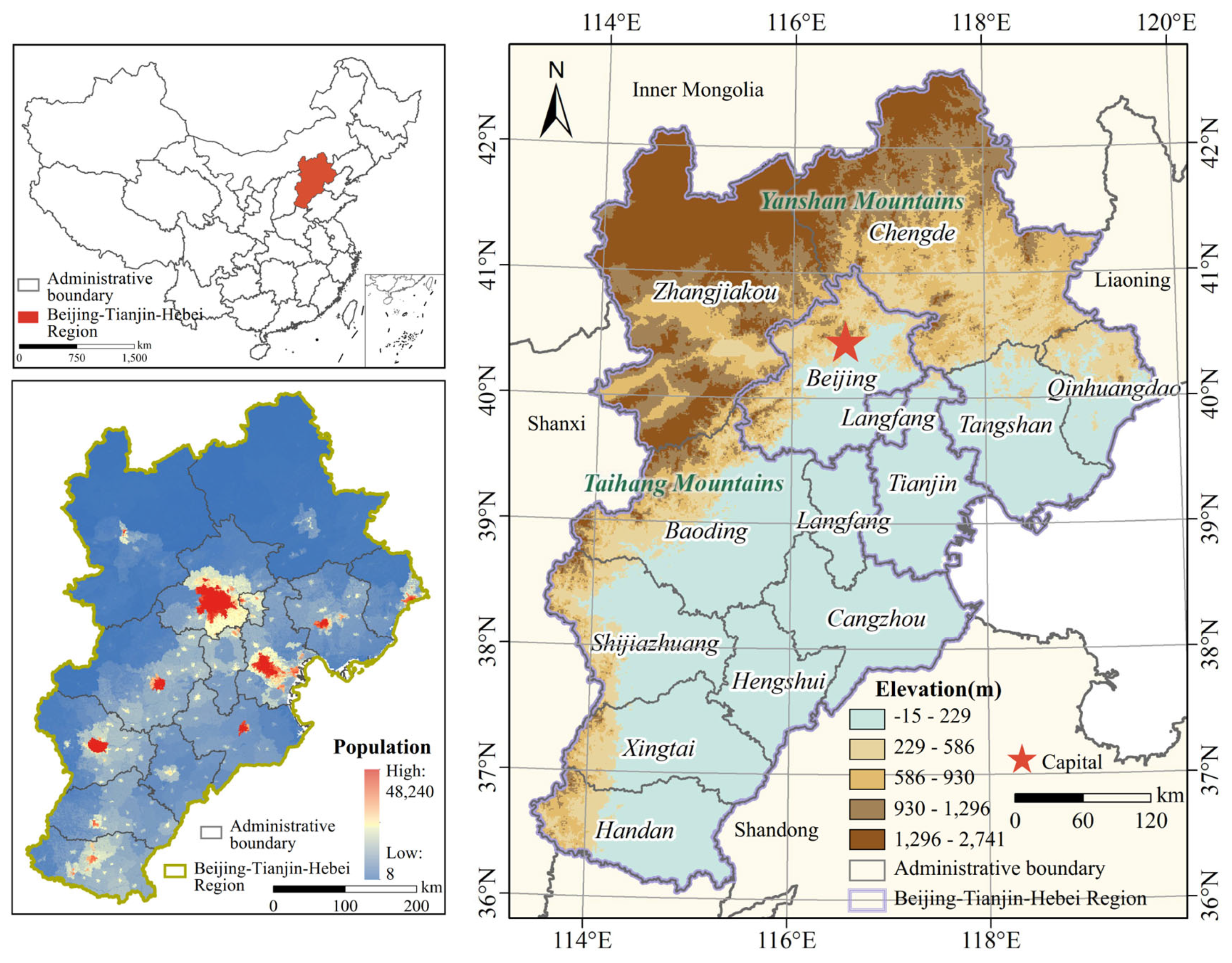
2.1. Study Area
2.2. Data Used
2.2.1. Net Primary Productivity Data
2.2.2. Environmental Factor Data
2.2.3. Land Use and Land Cover Data (LULC)
2.3. Methods
2.3.1. Difference Analysis
2.3.2. Construction of Lag Windows
2.3.3. Extreme Gradient-Boosting Model
2.3.4. Ablation Study
2.3.5. Interpretation: Shapley Additive Explanation
2.3.6. Spatial Autocorrelation Analysis
3. Results
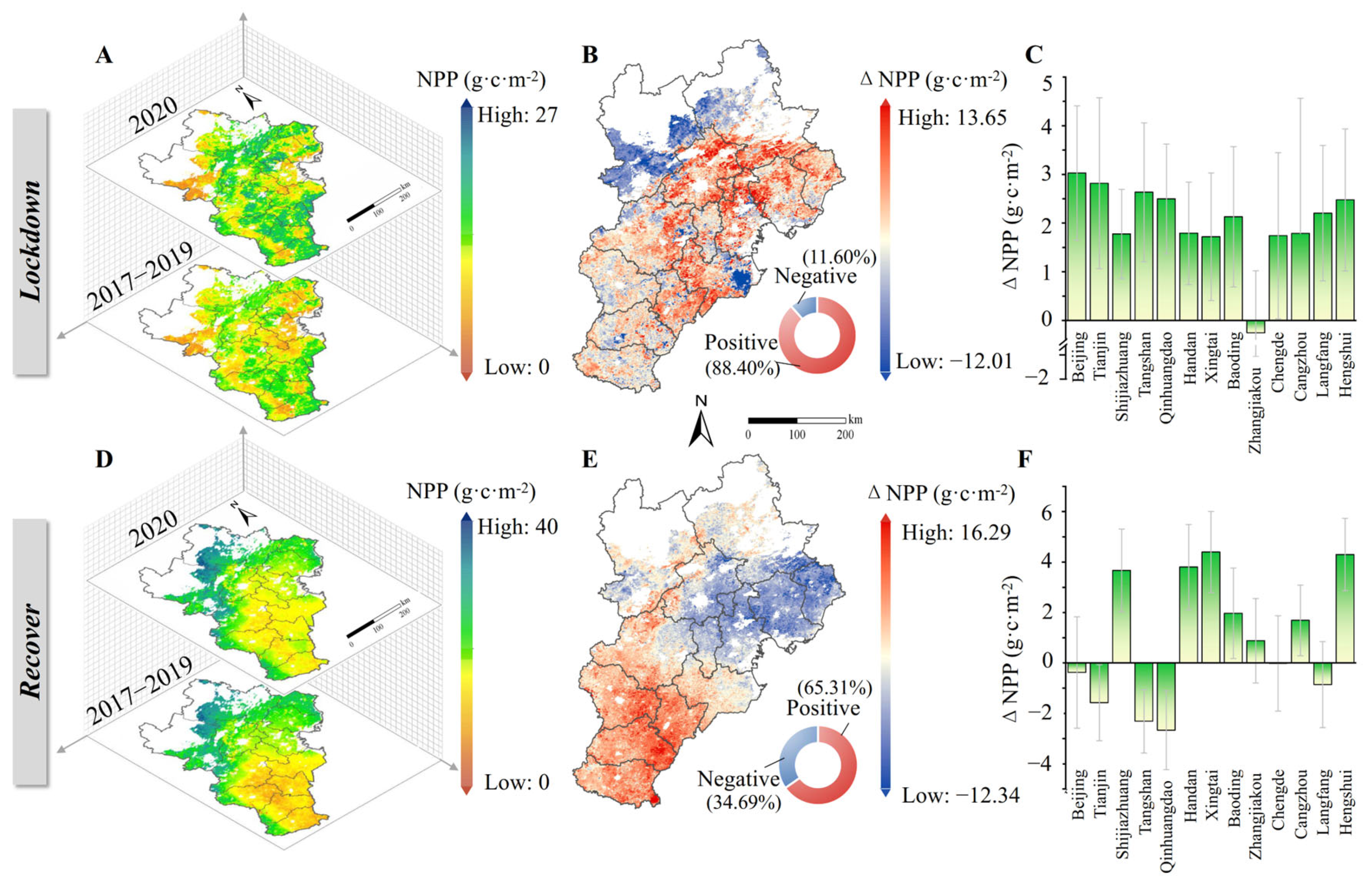
3.1. Spatiotemporal Variation Characteristics of NPP
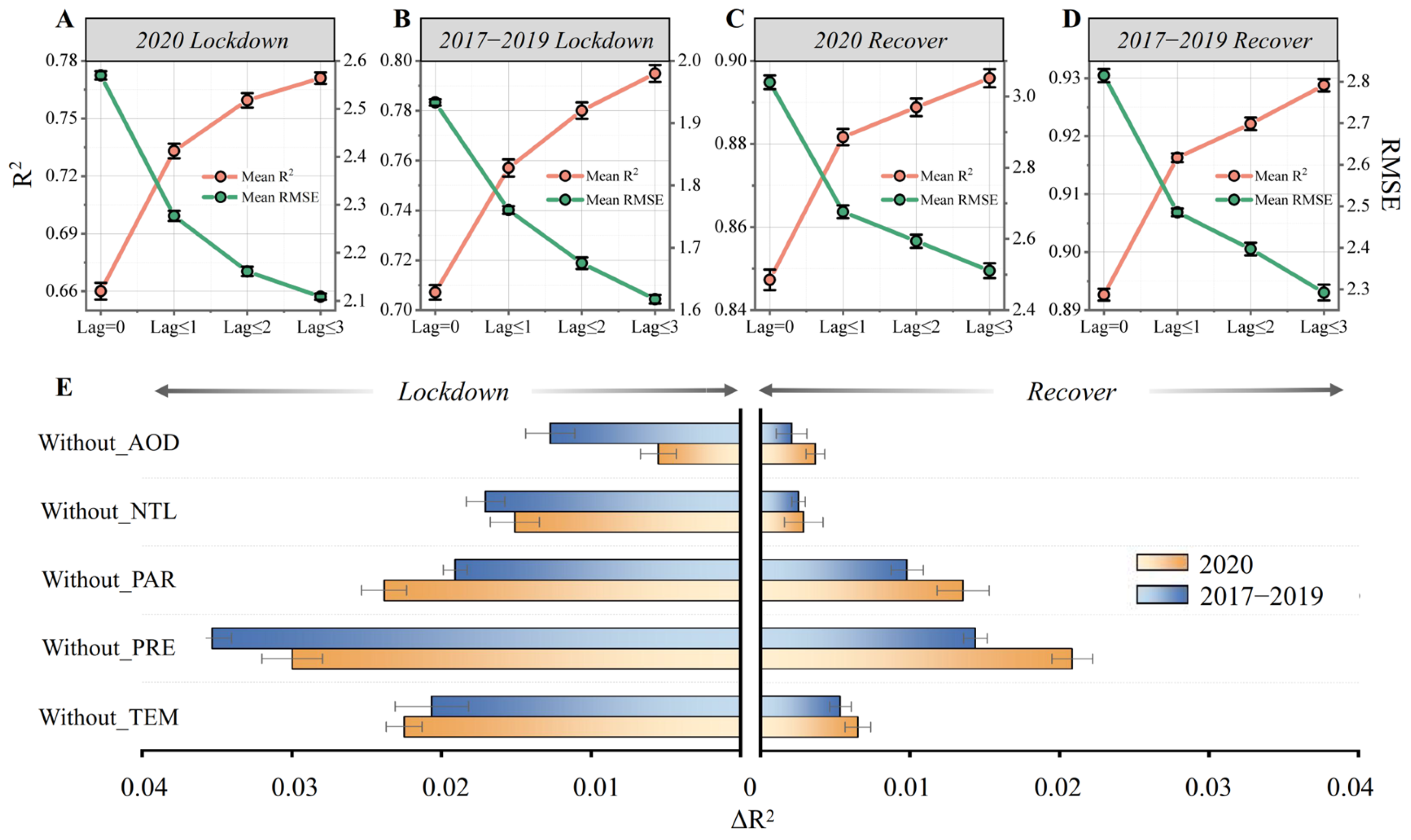
3.2. Performance Enhancement Through Incorporating Lagged Environmental Variables
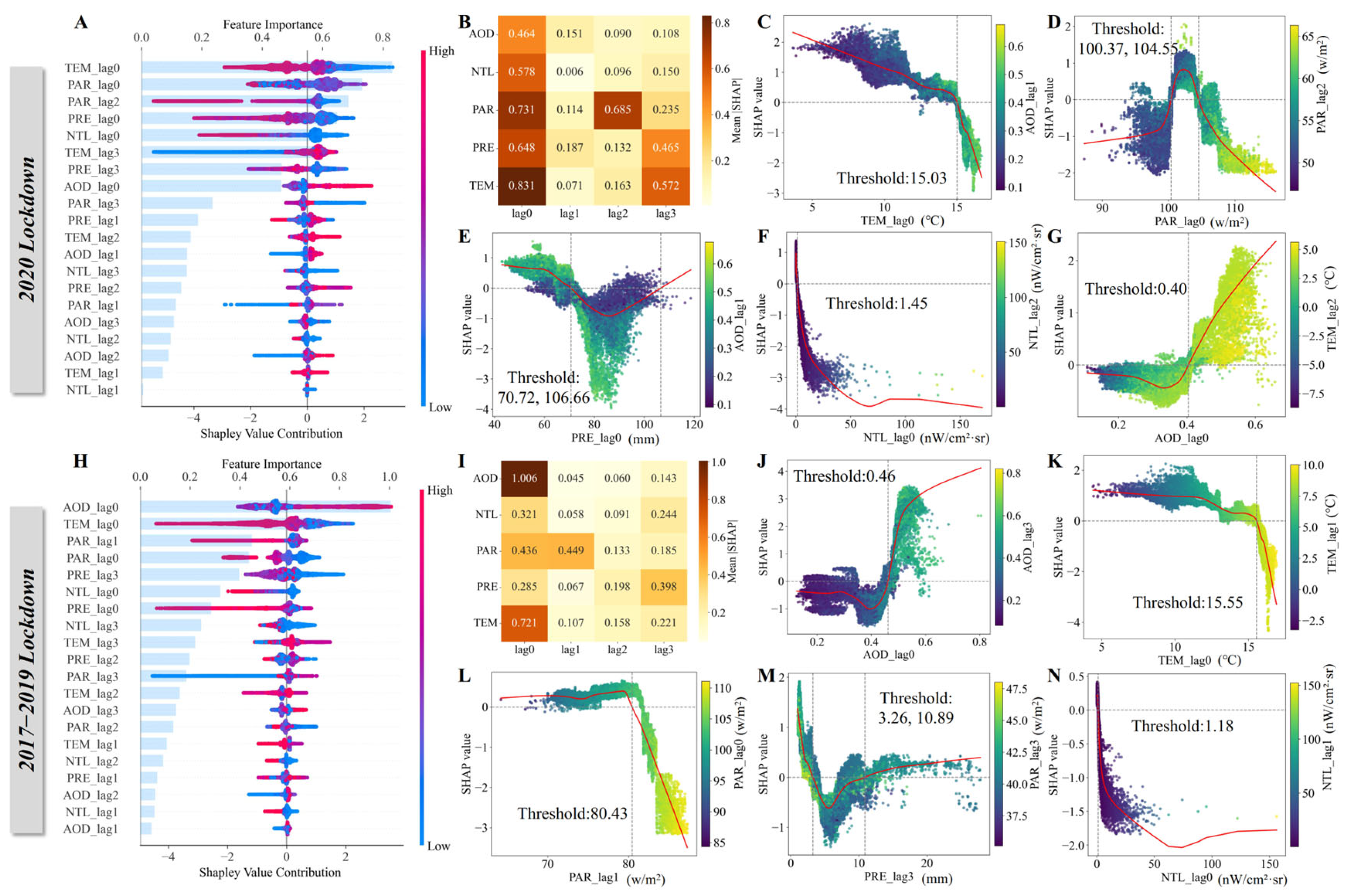
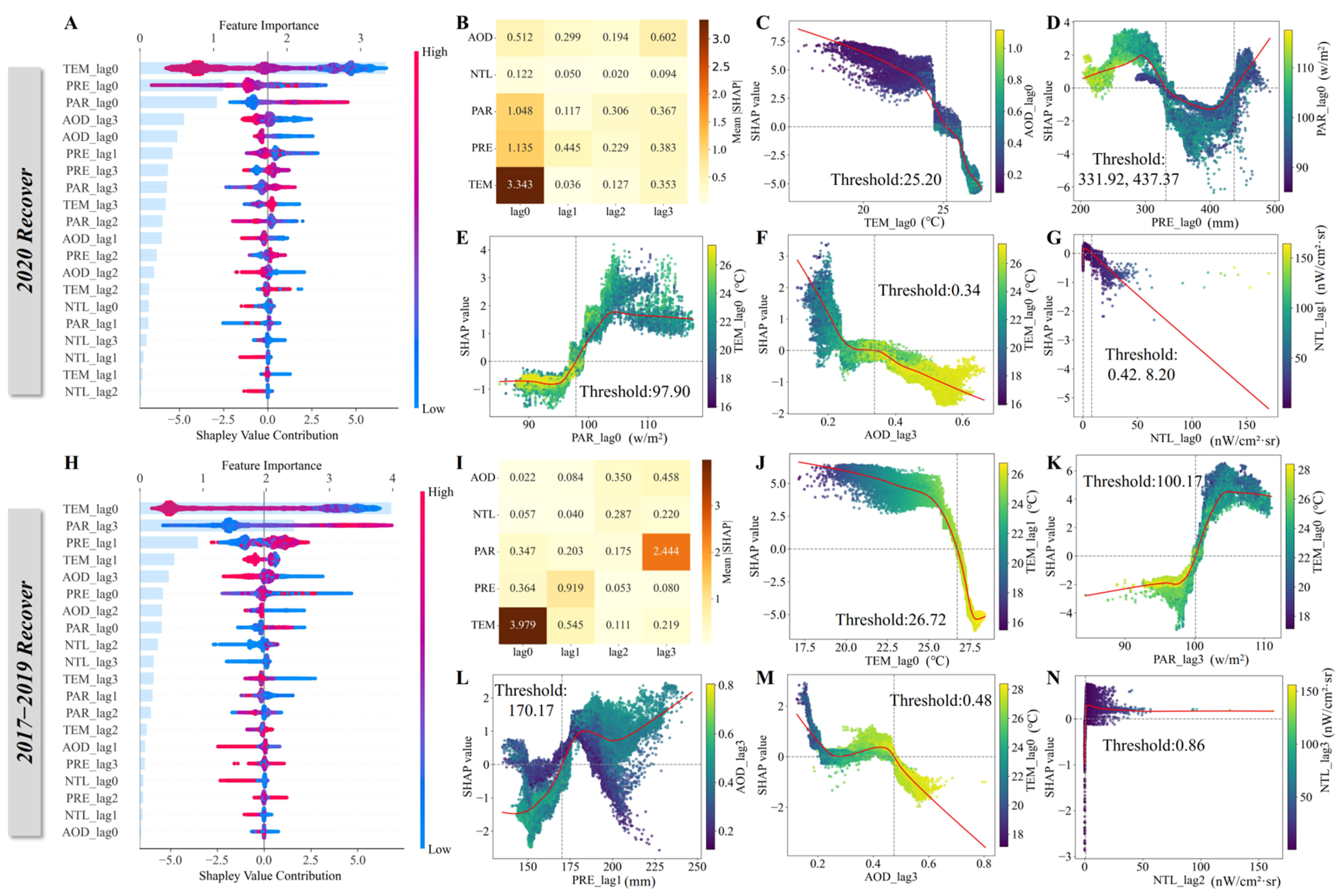
3.3. Interpreting Lagged and Threshold Responses of NPP Using SHAP Analysis
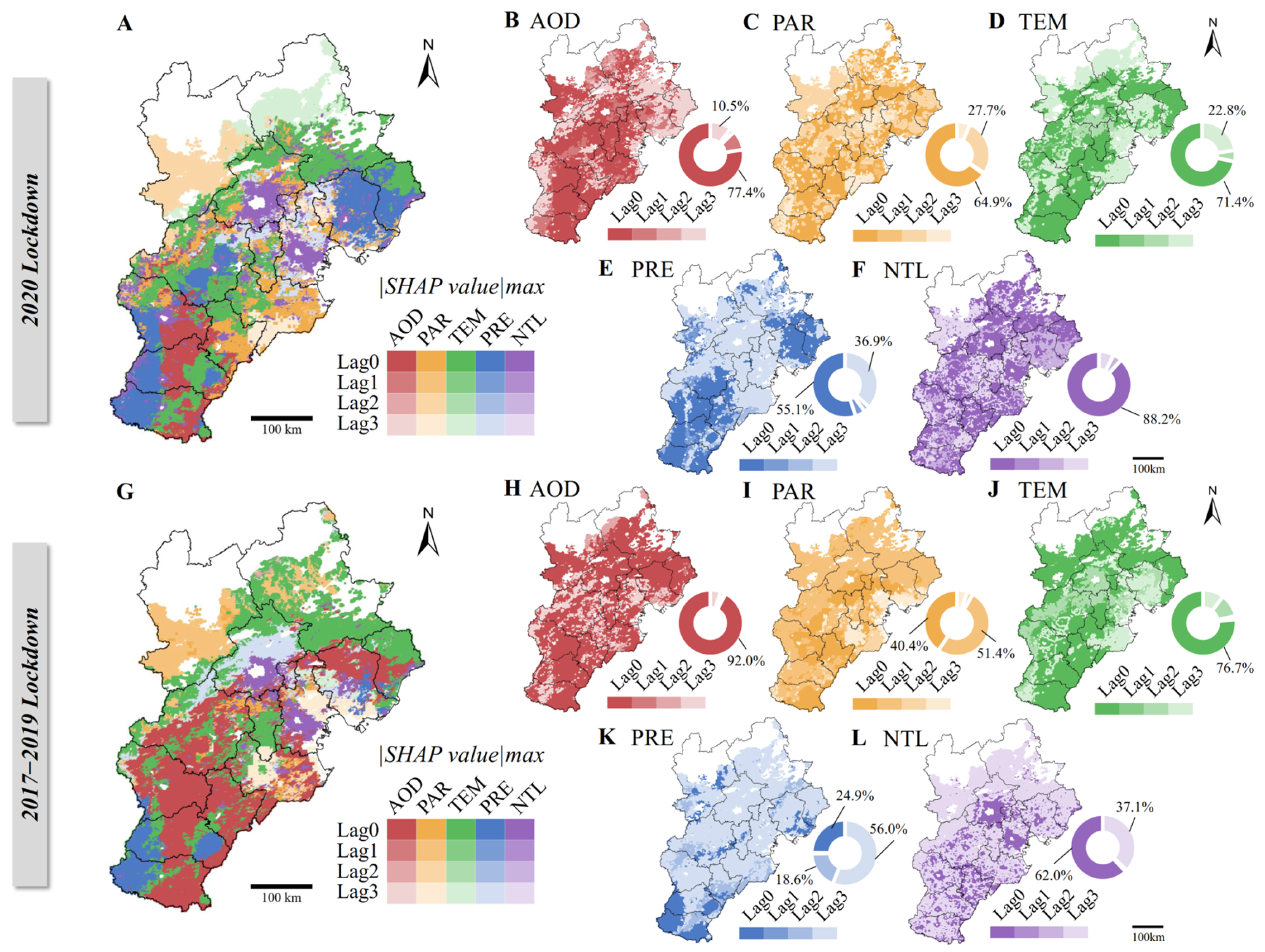
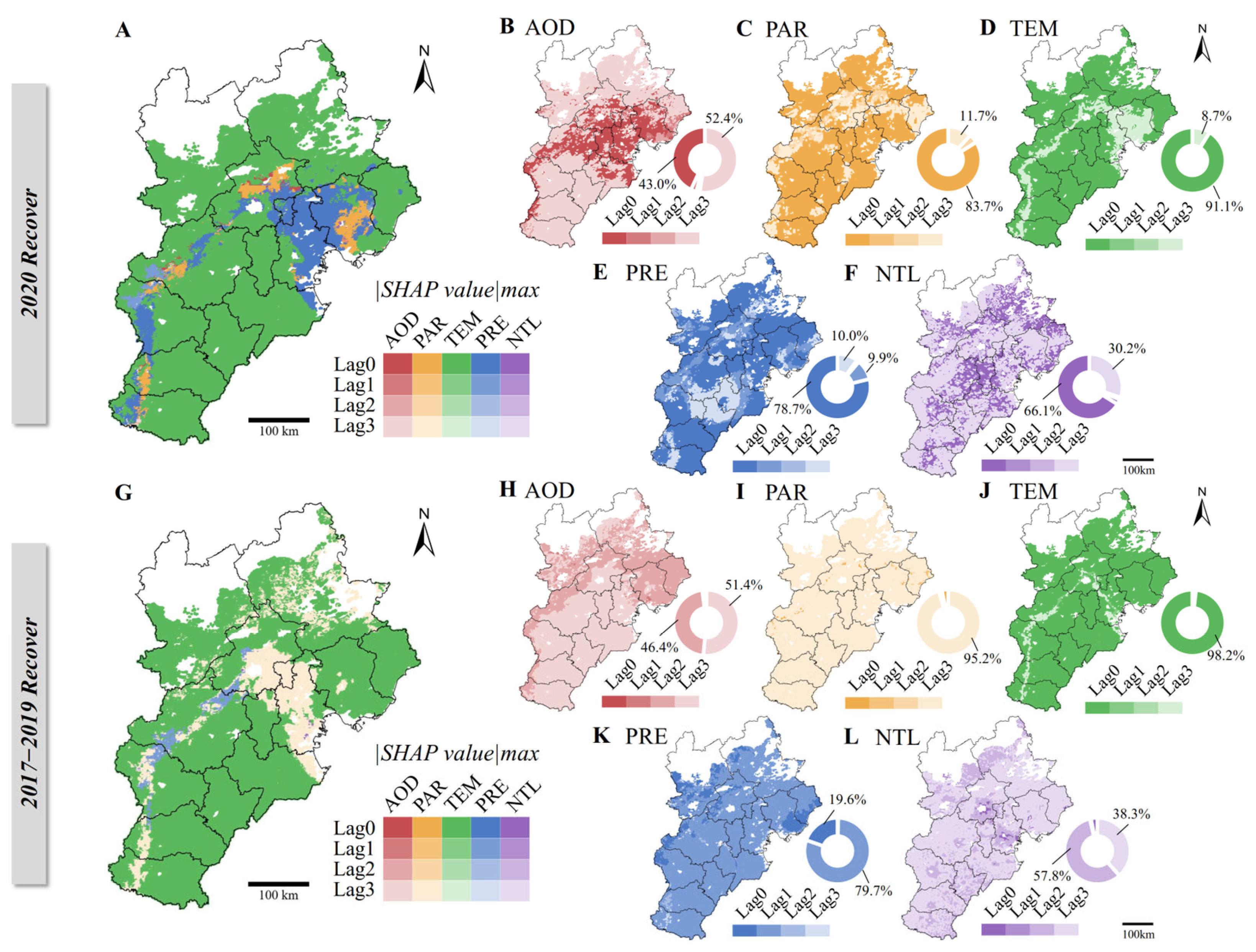
3.4. Spatial Heterogeneity of NPP Response Time
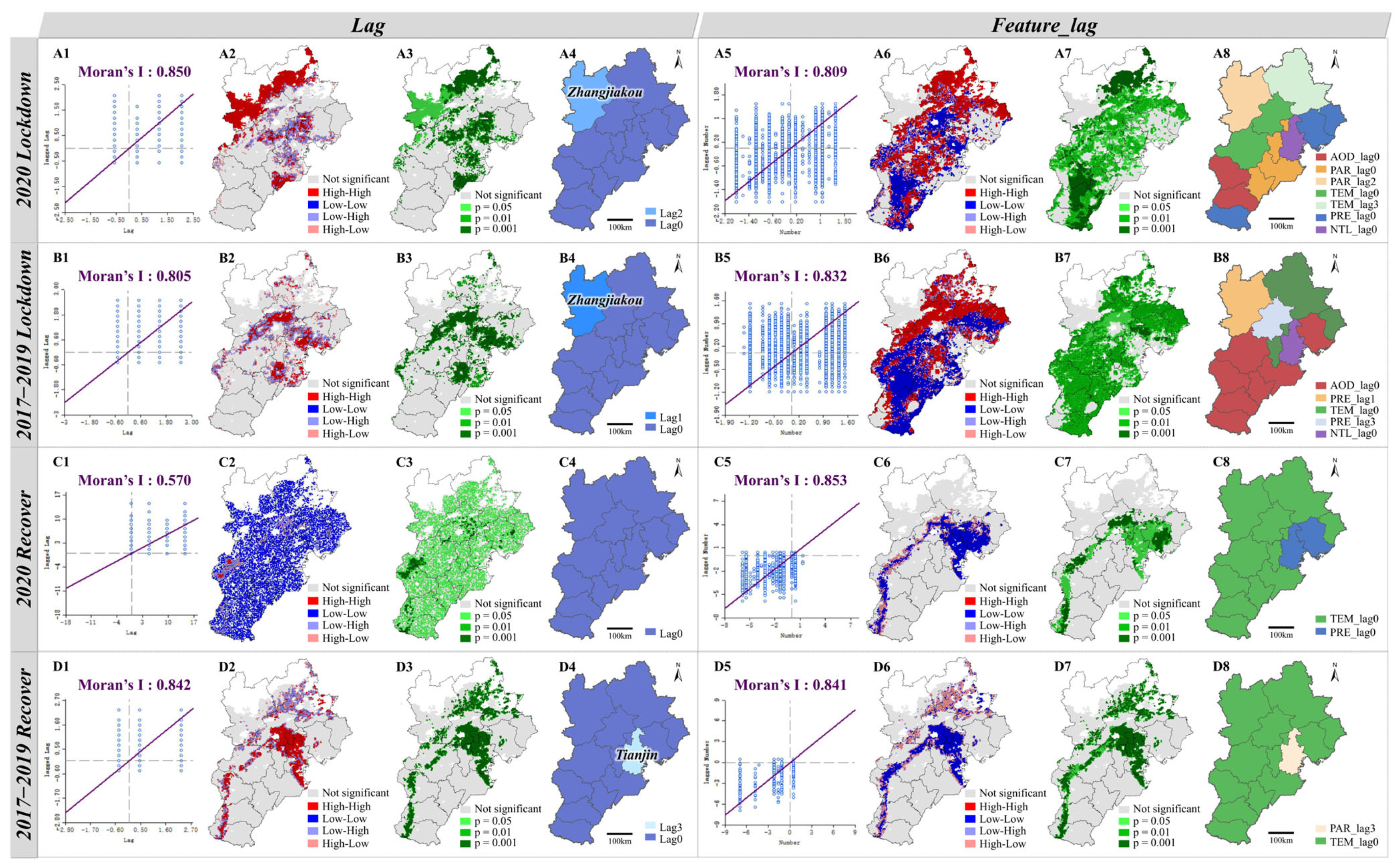
3.5. Spatial Clustering of Response Characteristics
4. Discussion
4.1. Lagged Vegetation Responses Under Changes in Human Activities
4.2. SHAP Analysis and Interactions Among Environmental Factors
4.3. Limitations
5. Conclusions
- (1)
- Phased spatiotemporal responses: During the strict lockdown period in 2020, net primary productivity showed a significant increase, with 88.4% of pixels exhibiting positive changes. Anomalies were primarily concentrated in urban core areas such as Beijing and Tianjin. In contrast, the recovery phase exhibited weaker overall growth and greater spatial heterogeneity.
- (2)
- Lag patterns reshaped by anthropogenic disturbances: The lockdown amplified the immediate effects of climatic factors (TEM, PRE, PAR) while markedly weakening their lagged contributions compared to the baseline, with instantaneous effects increasing by 7.05%. Anthropogenic factors (NTL) and aerosols (AOD) primarily exerted instantaneous influences.
- (3)
- Nonlinear thresholds and interaction mechanisms: SHAP analysis revealed critical physiological thresholds for climatic drivers (e.g., temperature turning points) and identified synergistic interactions, such as the combined stress of high temperatures and high aerosol loading, which exacerbated NPP inhibition.
- (4)
- Distinct spatial divergence in response timing: Vegetation exhibited an “urban-immediate, mountainous-delayed” pattern. Urban and agricultural vegetation responded rapidly to improved air quality and enhanced radiation, whereas mountain ecosystems retained prolonged lagged effects driven by ecological memory.
Supplementary Materials
Author Contributions
Funding
Data Availability Statement
Conflicts of Interest
References
- Tian, H.; Liu, Y.; Li, Y.; Wu, C.-H.; Chen, B.; Kraemer, M.U.; Li, B.; Cai, J.; Xu, B.; Yang, Q. An investigation of transmission control measures during the first 50 days of the COVID-19 epidemic in China. Science 2020, 368, 638–642. [Google Scholar] [CrossRef] [PubMed]
- Hammer, M.S.; Van Donkelaar, A.; Martin, R.V.; McDuffie, E.E.; Lyapustin, A.; Sayer, A.M.; Hsu, N.C.; Levy, R.C.; Garay, M.J.; Kalashnikova, O.V. Effects of COVID-19 lockdowns on fine particulate matter concentrations. Sci. Adv. 2021, 7, eabg7670. [Google Scholar] [CrossRef] [PubMed]
- Filonchyk, M.; Hurynovich, V.; Yan, H.; Gusev, A.; Shpilevskaya, N. Impact assessment of COVID-19 on variations of SO2, NO2, CO and AOD over east China. Aerosol Air Qual. Res. 2020, 20, 1530–1540. [Google Scholar] [CrossRef]
- Liang, Y.; Gui, K.; Che, H.; Li, L.; Zheng, Y.; Zhang, X.; Zhang, X.; Zhang, P.; Zhang, X. Changes in aerosol loading before, during and after the COVID-19 pandemic outbreak in China: Effects of anthropogenic and natural aerosol. Sci. Total Environ. 2023, 857, 159435. [Google Scholar] [CrossRef]
- Su, F.; Fu, D.; Yan, F.; Xiao, H.; Pan, T.; Xiao, Y.; Kang, L.; Zhou, C.; Meadows, M.; Lyne, V. Rapid greening response of China’s 2020 spring vegetation to COVID-19 restrictions: Implications for climate change. Sci. Adv. 2021, 7, eabe8044. [Google Scholar] [CrossRef]
- Deng, M.; Lai, G.; Li, Q.; Li, W.; Pan, Y.; Li, K. Impact analysis of COVID-19 pandemic control measures on nighttime light and air quality in cities. Remote Sens. Appl. Soc. Environ. 2022, 27, 100806. [Google Scholar] [CrossRef]
- Li, Y.; Huang, S.; Fang, P.; Liang, Y.; Wang, J. Human Activity’s Impact on Urban Vegetation in China During the COVID-19 Lockdown: An Atypical Anthropogenic Disturbance. iScience 2025, 28, 112195. [Google Scholar] [CrossRef]
- Breshears, D.D.; Cobb, N.S.; Rich, P.M.; Price, K.P.; Allen, C.D.; Balice, R.G.; Romme, W.H.; Kastens, J.H.; Floyd, M.L.; Belnap, J. Regional vegetation die-off in response to global-change-type drought. Proc. Natl. Acad. Sci. USA 2005, 102, 15144–15148. [Google Scholar] [CrossRef]
- Wang, Y.; Peng, D.; Yu, L.; Zhang, Y.; Yin, J.; Zhou, L.; Zheng, S.; Wang, F.; Li, C. Monitoring crop growth during the period of the rapid spread of COVID-19 in China by remote sensing. IEEE J. Sel. Top. Appl. Earth Obs. Remote Sens. 2020, 13, 6195–6205. [Google Scholar] [CrossRef]
- Li, Y.; Huang, S.; Fang, P.; Liang, Y.; Wang, J.; Xiong, N. Vegetation net primary productivity in urban areas of China responded positively to the COVID-19 lockdown in spring 2020. Sci. Total Environ. 2024, 916, 169998. [Google Scholar] [CrossRef]
- Cheng, M.; Wang, Z.; Wang, S.; Liu, X.; Jiao, W.; Zhang, Y. Determining the impacts of climate change and human activities on vegetation change on the Chinese Loess Plateau considering human-induced vegetation type change and time-lag effects of climate on vegetation growth. Int. J. Digit. Earth 2024, 17, 2336075. [Google Scholar] [CrossRef]
- Wu, D.; Zhao, X.; Liang, S.; Zhou, T.; Huang, K.; Tang, B.; Zhao, W. Time-lag effects of global vegetation responses to climate change. Glob. Change Biol. 2015, 21, 3520–3531. [Google Scholar] [CrossRef]
- Li, N.; Wang, D. Quantifying time-lag and time-accumulation effects of climate change and human activities on vegetation dynamics in the Yarlung Zangbo River Basin of the Tibetan Plateau. Remote Sens. 2025, 17, 160. [Google Scholar] [CrossRef]
- Rhind, S.M. Anthropogenic pollutants: A threat to ecosystem sustainability? Philos. Trans. R. Soc. B Biol. Sci. 2009, 364, 3391–3401. [Google Scholar] [CrossRef] [PubMed]
- Ranjan, A.K.; Dash, J.; Xiao, J.; Gorai, A.K. Vegetation activity enhanced in India during the COVID-19 lockdowns: Evidence from satellite data. Geocarto Int. 2022, 37, 12618–12637. [Google Scholar] [CrossRef]
- Kashyap, R.; Kuttippurath, J.; Patel, V.K. Improved air quality leads to enhanced vegetation growth during the COVID-19 lockdown in India. Appl. Geogr. 2023, 151, 102869. [Google Scholar] [CrossRef]
- Qu, S.; Wang, L.; Lin, A.; Zhu, H.; Yuan, M. What drives the vegetation restoration in Yangtze River basin, China: Climate change or anthropogenic factors? Ecol. Indic. 2018, 90, 438–450. [Google Scholar] [CrossRef]
- Gu, Z.; Duan, X.; Shi, Y.; Li, Y.; Pan, X. Spatiotemporal variation in vegetation coverage and its response to climatic factors in the Red River Basin, China. Ecol. Indic. 2018, 93, 54–64. [Google Scholar] [CrossRef]
- Li, Q.; Gao, X.; Li, J.; Yan, A.; Chang, S.; Song, X.; Lo, K. Nonlinear time effects of vegetation response to climate change: Evidence from Qilian Mountain National Park in China. Sci. Total Environ. 2024, 933, 173149. [Google Scholar] [CrossRef]
- Yin, M.; Yin, Y.; Zong, X.; Deng, H. Global vegetation vulnerability to drought is underestimated due to the lagged effect. Agric. For. Meteorol. 2025, 364, 110451. [Google Scholar] [CrossRef]
- Chen, Y.; Zhao, Q.; Liu, Y.; Zeng, H. Exploring the impact of natural and human activities on vegetation changes: An integrated analysis framework based on trend analysis and machine learning. J. Environ. Manag. 2025, 374, 124092. [Google Scholar] [CrossRef] [PubMed]
- Li, X.; Chen, J.; Chen, Z.; Lan, Y.; Ling, M.; Huang, Q.; Li, H.; Han, X.; Yi, S. Explainable machine learning-based fractional vegetation cover inversion and performance optimization—A case study of an alpine grassland on the Qinghai-Tibet Plateau. Ecol. Inform. 2024, 82, 102768. [Google Scholar] [CrossRef]
- Bao, N.; Peng, K.; Yan, X.; Lu, Y.; Liu, M.; Li, C.; Zhao, B. Towards interpreting machine learning models for understanding the relationship between vegetation growth and climate factors: A case study of the Anhui Province, China. Ecol. Indic. 2024, 167, 112636. [Google Scholar] [CrossRef]
- Lundberg, S.M.; Erion, G.G.; Lee, S.-I. Consistent individualized feature attribution for tree ensembles. arXiv 2018, arXiv:1802.03888. [Google Scholar]
- Zhang, Z.; Wang, W.; Cheng, M.; Liu, S.; Xu, J.; He, Y.; Meng, F. The contribution of residential coal combustion to PM2.5 pollution over China's Beijing-Tianjin-Hebei region in winter. Atmos. Environ. 2017, 159, 147–161. [Google Scholar] [CrossRef]
- Ghahremanloo, M.; Lops, Y.; Choi, Y.; Mousavinezhad, S. Impact of the COVID-19 outbreak on air pollution levels in East Asia. Sci. Total Environ. 2021, 754, 142226. [Google Scholar] [CrossRef]
- Churkina, G.; Running, S.W.; Schloss, A.L. Comparing global models of terrestrial net primary productivity (NPP): The importance of water availability. Glob. Change Biol. 1999, 5, 46–55. [Google Scholar] [CrossRef]
- Yao, Q.; Zhang, J.; Song, H.; Yu, R.; Xiong, N.; Wang, J.; Cui, L. Estimation of vegetation carbon sinks and their response to land use intensity in the example of the Beijing–Tianjin–Hebei region. Forests 2024, 15, 2158. [Google Scholar] [CrossRef]
- Wells, C.R.; Sah, P.; Moghadas, S.M.; Pandey, A.; Shoukat, A.; Wang, Y.; Wang, Z.; Meyers, L.A.; Singer, B.H.; Galvani, A.P. Impact of international travel and border control measures on the global spread of the novel 2019 coronavirus outbreak. Proc. Natl. Acad. Sci. USA 2020, 117, 7504–7509. [Google Scholar] [CrossRef]
- Zhang, J.; Wang, J.; Chen, Y.; Huang, S.; Liang, B. Spatiotemporal variation and prediction of NPP in Beijing-Tianjin-Hebei region by coupling PLUS and CASA models. Ecol. Inform. 2024, 81, 102620. [Google Scholar] [CrossRef]
- Jiang, M.; He, Y.; Song, C.; Pan, Y.; Qiu, T.; Tian, S. Disaggregating climatic and anthropogenic influences on vegetation changes in Beijing-Tianjin-Hebei region of China. Sci. Total Environ. 2021, 786, 147574. [Google Scholar] [CrossRef]
- Wang, Y. Population-land urbanization and comprehensive development evaluation of the Beijing-Tianjin-Hebei urban agglomeration. Environ. Sci. Pollut. Res. 2022, 29, 59862–59871. [Google Scholar] [CrossRef]
- Zhou, J.; Li, Y. Research on spatial distribution characteristics of high haze pollution industries such as thermal power industry in the Beijing-Tianjin-Hebei Region. Energies 2022, 15, 6610. [Google Scholar] [CrossRef]
- Guo, W.; Teng, Y.; Yan, Y.; Zhao, C.; Zhang, W.; Ji, X. Simulation of land use and carbon storage evolution in multi-scenario: A case study in Beijing-Tianjin-Hebei urban agglomeration, China. Sustainability 2022, 14, 13436. [Google Scholar] [CrossRef]
- Matsushita, B.; Tamura, M. Integrating remotely sensed data with an ecosystem model to estimate net primary productivity in East Asia. Remote Sens. Environ. 2002, 81, 58–66. [Google Scholar] [CrossRef]
- Zhu, H.; Lin, A.; Wang, L.; Xia, Y.; Zou, L. Evaluation of MODIS gross primary production across multiple Biomes in China using eddy covariance flux data. Remote Sens. 2016, 8, 395. [Google Scholar] [CrossRef]
- Wang, Y.; Xu, X.; Huang, L.; Yang, G.; Fan, L.; Wei, P.; Chen, G. An improved CASA model for estimating winter wheat yield from remote sensing images. Remote Sens. 2019, 11, 1088. [Google Scholar] [CrossRef]
- Du, L.; Gong, F.; Zeng, Y.; Ma, L.; Qiao, C.; Wu, H. Carbon use efficiency of terrestrial ecosystems in desert/grassland biome transition zone: A case in Ningxia province, northwest China. Ecol. Indic. 2021, 120, 106971. [Google Scholar] [CrossRef]
- Yang, T.; Dong, J.; Huang, L.; Li, Y.; Yan, H.; Zhai, J.; Wang, J.; Jin, Z.; Zhang, G. A large forage gap in forage availability in traditional pastoral regions in China. Fundam. Res. 2023, 3, 188–200. [Google Scholar] [CrossRef]
- Running, S.W.; Zhao, M. Daily GPP and annual NPP (MOD17A2/A3) products NASA Earth Observing System MODIS land algorithm. MOD17 User’s Guide 2015, 2015, 1–28. [Google Scholar]
- Chuai, X.; Huang, X.; Wang, W.; Bao, G. NDVI, temperature and precipitation changes and their relationships with different vegetation types during 1998–2007 in Inner Mongolia, China. Int. J. Climatol. 2013, 33, 1696–1706. [Google Scholar] [CrossRef]
- Peng, S.; Gang, C.; Cao, Y.; Chen, Y. Assessment of climate change trends over the Loess Plateau in China from 1901 to 2100. Int. J. Climatol. 2017, 38, 2250–2264. [Google Scholar] [CrossRef]
- Liang, S.; Wang, D. Moderate Resolution Imaging Spectroradiometer (MODIS) Downward Shortwave Radiation (MCD18A1) and Photosynthetically Active Radiation (MCD18A2) Algorithm Theoretical Basis Document; NASA: Washington, DC, USA, 2017. [Google Scholar]
- Li, X.; Lin, G.; Jiang, D.; Fu, J.; Wang, Y. Spatiotemporal evolution characteristics and the climatic response of carbon sources and sinks in the Chinese grassland ecosystem from 2010 to 2020. Sustainability 2022, 14, 8461. [Google Scholar] [CrossRef]
- Lyapustin, A.; Wang, Y.; Korkin, S.; Huang, D. MODIS Collection 6 MAIAC algorithm. Atmos. Meas. Tech. 2018, 11, 5741–5765. [Google Scholar] [CrossRef]
- Zhang, Z.; Wu, W.; Fan, M.; Wei, J.; Tan, Y.; Wang, Q. Evaluation of MAIAC aerosol retrievals over China. Atmos. Environ. 2019, 202, 8–16. [Google Scholar] [CrossRef]
- Chen, Z.-Y.; Zhang, T.-H.; Zhang, R.; Zhu, Z.-M.; Yang, J.; Chen, P.-Y.; Ou, C.-Q.; Guo, Y. Extreme gradient boosting model to estimate PM2. 5 concentrations with missing-filled satellite data in China. Atmos. Environ. 2019, 202, 180–189. [Google Scholar] [CrossRef]
- Zheng, Y.; Zhang, Q.; Liu, Y.; Geng, G.; He, K. Estimating ground-level PM2. 5 concentrations over three megalopolises in China using satellite-derived aerosol optical depth measurements. Atmos. Environ. 2016, 124, 232–242. [Google Scholar] [CrossRef]
- Zhang, F.; Yang, W.; Shao, D. Temperature-driven nonlinear thresholds and time-lags in vegetation response to extreme climate events via machine learning: Evidence from China's Poyang Lake. Ecohydrol. Hydrobiol. 2025, 25, 100685. [Google Scholar] [CrossRef]
- Piao, S.; Fang, J.; Zhou, L.; Ciais, P.; Zhu, B. Variations in satellite-derived phenology in China’s temperate vegetation. Glob. Change Biol. 2006, 12, 672–685. [Google Scholar] [CrossRef]
- Bentéjac, C.; Csörgő, A.; Martínez-Muñoz, G. A comparative analysis of gradient boosting algorithms. Artif. Intell. Rev. 2021, 54, 1937–1967. [Google Scholar] [CrossRef]
- Xie, J.; Yin, G.; Xie, Q.; Wu, C.; Yuan, W.; Zeng, Y.; Verger, A.; Descals, A.; Filella, I.; Peñuelas, J. Shifts in Climatic limitations on Global vegetation productivity unveiled by Shapley Additive Explanation: Reduced Temperature but increased water limitations. J. Geophys. Res. Biogeosciences 2024, 129, e2024JG008354. [Google Scholar] [CrossRef]
- Pham, T.D.; Yokoya, N.; Xia, J.; Ha, N.T.; Le, N.N.; Nguyen, T.T.T.; Dao, T.H.; Vu, T.T.P.; Pham, T.D.; Takeuchi, W. Comparison of machine learning methods for estimating mangrove above-ground biomass using multiple source remote sensing data in the red river delta biosphere reserve, Vietnam. Remote Sens. 2020, 12, 1334. [Google Scholar] [CrossRef]
- Yates, L.A.; Aandahl, Z.; Richards, S.A.; Brook, B.W. Cross validation for model selection: A review with examples from ecology. Ecol. Monogr. 2023, 93, e1557. [Google Scholar] [CrossRef]
- Sheikholeslami, S. Ablation Programming for Machine Learning. 2019. Available online: https://www.diva-portal.org/smash/get/diva2:1349978/FULLTEXT01.pdf (accessed on 25 October 2025).
- Fu, B.; Fan, M.; Yi, J.; Du, Y.; Tian, H.; Yang, T.; Cheng, S.; Du, M. Umami-transformer: A deep learning framework for high-precision prediction and experimental validation of umami peptides. Food Chem. 2025, 493, 145905. [Google Scholar] [CrossRef]
- Wang, H.; Liang, Q.; Hancock, J.T.; Khoshgoftaar, T.M. Feature selection strategies: A comparative analysis of SHAP-value and importance-based methods. J. Big Data 2024, 11, 44. [Google Scholar] [CrossRef]
- Wang, D.; Thunéll, S.; Lindberg, U.; Jiang, L.; Trygg, J.; Tysklind, M. Towards better process management in wastewater treatment plants: Process analytics based on SHAP values for tree-based machine learning methods. J. Environ. Manag. 2022, 301, 113941. [Google Scholar] [CrossRef]
- Janssen, A.; Hoogendoorn, M.; Cnossen, M.H.; Mathôt, R.A.; Group, O.C.S.; Consortium, S.; Cnossen, M.; Reitsma, S.; Leebeek, F.; Mathôt, R.; et al. Application of SHAP values for inferring the optimal functional form of covariates in pharmacokinetic modeling. CPT Pharmacomet. Syst. Pharmacol. 2022, 11, 1100–1110. [Google Scholar] [CrossRef]
- Wrigley, N. Spatial processes: Models and applications. Geogr. J. 1982, 148, 383–385. [Google Scholar] [CrossRef]
- Anselin, L. Local indicators of spatial association—LISA. Geogr. Anal. 1995, 27, 93–115. [Google Scholar] [CrossRef]
- Gao, J.; Jiao, K.; Wu, S.; Ma, D.; Zhao, D.; Yin, Y.; Dai, E. Past and future effects of climate change on spatially heterogeneous vegetation activity in China. Earth's Future 2017, 5, 679–692. [Google Scholar] [CrossRef]
- Zhou, M.; Huang, Y.; Li, G. Changes in the concentration of air pollutants before and after the COVID-19 blockade period and their correlation with vegetation coverage. Environ. Sci. Pollut. Res. 2021, 28, 23405–23419. [Google Scholar] [CrossRef] [PubMed]
- Sieghardt, M.; Mursch-Radlgruber, E.; Paoletti, E.; Couenberg, E.; Dimitrakopoulus, A.; Rego, F.; Hatzistathis, A.; Randrup, T.B. The abiotic urban environment: Impact of urban growing conditions on urban vegetation. In Urban Forests and Trees: A Reference Book; Springer: Berlin/Heidelberg, Germany, 2005; pp. 281–323. [Google Scholar]
- Oksanen, E.; Kontunen-Soppela, S. Plants have different strategies to defend against air pollutants. Curr. Opin. Environ. Sci. Health 2021, 19, 100222. [Google Scholar] [CrossRef]
- Schulze, E.-D.; Chapin, F.S. Plant specialization to environments of different resource availability. In Potentials and Limitations of Ecosystem Analysis; Schulze, E.-D., Zwölfer, H., Eds.; Springer: Berlin/Heidelberg, Germany, 1987; pp. 120–148. [Google Scholar]
- Karnieli, A.; Ohana-Levi, N.; Silver, M.; Paz-Kagan, T.; Panov, N.; Varghese, D.; Chrysoulakis, N.; Provenzale, A. Spatial and seasonal patterns in vegetation growth-limiting factors over Europe. Remote Sens. 2019, 11, 2406. [Google Scholar] [CrossRef]
- Demmig-Adams, B.; Cohu, C.M.; Muller, O.; Adams, W.W., III. Modulation of photosynthetic energy conversion efficiency in nature: From seconds to seasons. Photosynth. Res. 2012, 113, 75–88. [Google Scholar] [CrossRef]
- Arola, A.; Eck, T.F.; Huttunen, J.; Lehtinen, K.E.J.; Lindfors, A.V.; Myhre, G.; Smirnov, A.; Tripathi, S.N.; Yu, H. Influence of observed diurnal cycles of aerosol optical depth on aerosol direct radiative effect. Atmos. Chem. Phys. 2013, 13, 7895–7901. [Google Scholar] [CrossRef]
- Prusty, B.A.K.; Mishra, P.C.; Azeez, P.A. Dust accumulation and leaf pigment content in vegetation near the national highway at Sambalpur, Orissa, India. Ecotoxicol. Environ. Saf. 2005, 60, 228–235. [Google Scholar] [CrossRef]
- Wu, X.; Liu, H.; Li, X.; Ciais, P.; Babst, F.; Guo, W.; Zhang, C.; Magliulo, V.; Pavelka, M.; Liu, S.; et al. Differentiating drought legacy effects on vegetation growth over the temperate Northern Hemisphere. Glob. Change Biol. 2018, 24, 504–516. [Google Scholar] [CrossRef]
- Li, Y.; Zhang, Q. Human-environment interactions in China: Evidence of land-use change in Beijing-Tianjin-Hebei Metropolitan Region. Hum. Ecol. Rev. 2013, 20, 26–35. [Google Scholar]
- Li, F.; Wang, R.; Paulussen, J.; Liu, X. Comprehensive concept planning of urban greening based on ecological principles: A case study in Beijing, China. Landsc. Urban Plan. 2005, 72, 325–336. [Google Scholar] [CrossRef]
- Johnstone, J.F.; Allen, C.D.; Franklin, J.F.; Frelich, L.E.; Harvey, B.J.; Higuera, P.E.; Mack, M.C.; Meentemeyer, R.K.; Metz, M.R.; Perry, G.L. Changing disturbance regimes, ecological memory, and forest resilience. Front. Ecol. Environ. 2016, 14, 369–378. [Google Scholar] [CrossRef]
- Leemans, R. Effects of Global Change on Agricultural Land Use: Scaling Up from Physiological Processes to Ecosystem Dynamics; Academic Press: San Diego, CA, USA, 1997. [Google Scholar]
- Shi, Y.; Jin, N.; Ma, X.; Wu, B.; He, Q.; Yue, C.; Yu, Q. Attribution of climate and human activities to vegetation change in China using machine learning techniques. Agric. For. Meteorol. 2020, 294, 108146. [Google Scholar] [CrossRef]
- Ji, S.; Wang, X.; Lyu, T.; Liu, X.; Wang, Y.; Heinen, E.; Sun, Z. Understanding cycling distance according to the prediction of the XGBoost and the interpretation of SHAP: A non-linear and interaction effect analysis. J. Transp. Geogr. 2022, 103, 103414. [Google Scholar] [CrossRef]
- Sharkey, T.D.; Zhang, R. High temperature effects on electron and proton circuits of photosynthesis. J. Integr. Plant Biol. 2010, 52, 712–722. [Google Scholar] [CrossRef] [PubMed]
- Agathokleous, E.; Frei, M.; Knopf, O.M.; Muller, O.; Xu, Y.; Nguyen, T.H.; Gaiser, T.; Liu, X.; Liu, B.; Saitanis, C.J. Adapting crop production to climate change and air pollution at different scales. Nat. Food 2023, 4, 854–865. [Google Scholar] [CrossRef] [PubMed]
- Powles, S.B. Photoinhibition of photosynthesis induced by visible light. Annu. Rev. Plant Physiol. 1984, 35, 15–44. [Google Scholar] [CrossRef]
- Ashraf, M.A. Waterlogging stress in plants: A review. Afr. J. Agric. Res. 2012, 7, 1976–1981. [Google Scholar] [CrossRef]
- Kumar, S.; Siingh, D.; Singh, R.; Singh, A. The influence of meteorological parameters and atmospheric pollutants on lightning, rainfall, and normalized difference vegetation index in the Indo-Gangetic Plain. Int. J. Remote Sens. 2016, 37, 53–77. [Google Scholar] [CrossRef]
- Baille, A.; Colomer, R.G.; Gonzalez-Real, M. Analysis of intercepted radiation and dry matter accumulation in rose flower shoots. Agric. For. Meteorol. 2006, 137, 68–80. [Google Scholar] [CrossRef]
- Ceamanos, X.; Carrer, D.; Roujean, J.L. Improved retrieval of direct and diffuse downwelling surface shortwave flux in cloudless atmosphere using dynamic estimates of aerosol content and type: Application to the LSA-SAF project. Atmos. Chem. Phys. 2014, 14, 8209–8232. [Google Scholar] [CrossRef]
- Mercado, L.M.; Bellouin, N.; Sitch, S.; Boucher, O.; Huntingford, C.; Wild, M.; Cox, P.M. Impact of changes in diffuse radiation on the global land carbon sink. Nature 2009, 458, 1014–1017. [Google Scholar] [CrossRef]
- Huang, M.; Piao, S.; Ciais, P.; Penuelas, J.; Wang, X.; Keenan, T.F.; Peng, S.; Berry, J.A.; Wang, K.; Mao, J.; et al. Air temperature optima of vegetation productivity across global biomes. Nat. Ecol. Evol. 2019, 3, 772–779. [Google Scholar] [CrossRef]
- Wang, Y.; Xie, Y.; Dong, W.; Ming, Y.; Wang, J.; Shen, L. Adverse effects of increasing drought on air quality via natural processes. Atmos. Chem. Phys. 2017, 17, 12827–12843. [Google Scholar] [CrossRef]



| Dataset | Source | Link |
|---|---|---|
| 500 m PSNnet | GEE: MOD17A2H | https://lpdaac.usgs.gov/products/mod17a2hv061/ (accessed on 25 October 2025) |
| 1000 m TEM | Qinghai-Tibet Plateau/Third Pole Environment Data Center | http://data.tpdc.ac.cn/ (accessed on 25 October 2025) |
| 1000 m PRE | Qinghai-Tibet Plateau/Third Pole Environment Data Center | http://data.tpdc.ac.cn/ (accessed on 25 October 2025) |
| 5000 m PAR | GEE: MCD18A2 | https://lpdaac.usgs.gov/products/mcd18a2v061/ (accessed on 25 October 2025) |
| 0.004° NTL | Environmental Sciences Chinese Academy of Sciences | http://data.tpdc.ac.cn/ (accessed on 25 October 2025) |
| 1000 m AOD | GEE: MCD19A2 | https://lpdaac.usgs.gov/products/mcd19a2v061/ (accessed on 25 October 2025) |
| 500 LULC | GEE: MCD12Q1 | https://lpdaac.usgs.gov/products/mcd12q1v061/ (accessed on 25 October 2025) |
Disclaimer/Publisher’s Note: The statements, opinions and data contained in all publications are solely those of the individual author(s) and contributor(s) and not of MDPI and/or the editor(s). MDPI and/or the editor(s) disclaim responsibility for any injury to people or property resulting from any ideas, methods, instructions or products referred to in the content. |
© 2026 by the authors. Licensee MDPI, Basel, Switzerland. This article is an open access article distributed under the terms and conditions of the Creative Commons Attribution (CC BY) license.
Share and Cite
Sun, J.; Wang, L.; Huang, S.; Li, Y.; Wang, J. Study on the Lagged Response Mechanism of Vegetation Productivity Under Atypical Anthropogenic Disturbances Based on XGBoost-SHAP. Remote Sens. 2026, 18, 300. https://doi.org/10.3390/rs18020300
Sun J, Wang L, Huang S, Li Y, Wang J. Study on the Lagged Response Mechanism of Vegetation Productivity Under Atypical Anthropogenic Disturbances Based on XGBoost-SHAP. Remote Sensing. 2026; 18(2):300. https://doi.org/10.3390/rs18020300
Chicago/Turabian StyleSun, Jingdong, Longhuan Wang, Shaodong Huang, Yujie Li, and Jia Wang. 2026. "Study on the Lagged Response Mechanism of Vegetation Productivity Under Atypical Anthropogenic Disturbances Based on XGBoost-SHAP" Remote Sensing 18, no. 2: 300. https://doi.org/10.3390/rs18020300
APA StyleSun, J., Wang, L., Huang, S., Li, Y., & Wang, J. (2026). Study on the Lagged Response Mechanism of Vegetation Productivity Under Atypical Anthropogenic Disturbances Based on XGBoost-SHAP. Remote Sensing, 18(2), 300. https://doi.org/10.3390/rs18020300