Next Article in Journal
A Systematic Review on Remote Sensing of Dryland Ecological Integrity: Improvement in the Spatiotemporal Monitoring of Vegetation Is Required
Previous Article in Journal
Attention-Gated U-Net for Robust Cross-Domain Plastic Waste Segmentation Using a UAV-Based Hyperspectral SWIR Sensor
Previous Article in Special Issue
Automated 3D Building Model Reconstruction from Satellite Images Using Two-Stage Polygon Decomposition and Adaptive Roof Fitting
error_outline You can access the new MDPI.com website here. Explore and share your feedback with us.
 
 
Article

Chlorophyll Retrieval in Sun Glint Region Based on VIIRS Rayleigh-Corrected Reflectance

1
College of Electronic and Information Engineering, Guangdong Ocean University, Zhanjiang 524088, China
2
Guangdong Provincial Marine Remote Sensing and Information Technology Engineering Technology Center, Zhanjiang 524088, China
3
States Key Laboratory of Satellite Ocean Environment Dynamics, Second Institute of Oceanography, Ministry of Natural Resource, Hangzhou 310012, China
4
Ocean College, Zhejiang University, Zhoushan 316021, China
5
College of Chemistry and Environmental Science, Guangdong Ocean University, Zhanjiang 524088, China
*
Author to whom correspondence should be addressed.
Remote Sens. 2026, 18(1), 183; https://doi.org/10.3390/rs18010183
Submission received: 6 November 2025 / Revised: 30 December 2025 / Accepted: 1 January 2026 / Published: 5 January 2026

Highlights

What are the main findings?
  • A new R rc -based method was developed for determining sun glint correction coefficients of VIIRS data in the South China Sea.
  • The mean sun glint correction coefficients are as follows: α 443 = 0.75 , α 486 = 0.83 , α 551 = 0.89 , α 671 = 0.95 , α 745 = 0.94 .
What are the implications of the main findings?
  • The proposed method significantly improves the accuracy and coverage of chlorophyll-a retrieval in sun glint-affected regions.
  • It provides a generalizable and practical framework for regionalized sun glint correction, offering a methodological reference for other sensors and oceanic regions.

Abstract

Sun glint is commonly observed as interference in the imaging process of ocean color satellite sensors, making the extraction of water color information in sun glint-affected areas challenging and often leading to significant data gaps. The remote sensing baseline indices, calculated based on Rayleigh-corrected reflectance ( R rc ), are recognized as effective in reflecting water color variability in sun glint-affected regions. However, the accurate extraction of the R rc baseline indices requires sun glint correction. The determination of sun glint correction coefficients for different bands lacks a clear methodology, and the currently available correction coefficients are not applicable to different sea regions. Therefore, this study focuses on the South China Sea, where VIIRS imagery is significantly affected by sun glint. Based on paired datasets comprising sun glint-affected and -unaffected images acquired over the same region on adjacent dates, sun glint correction coefficients for each spectral band were derived by maximizing the cosine similarity of histograms constructed from three baseline indices: SS486 (Spectral Shape index at 486 nm), CI551 (Color Index at 551 nm), and SS671 (Spectral Shape index at 671 nm). To further evaluate the effectiveness of the proposed correction, chlorophyll-a concentrations were retrieved using a Random Forest regression model trained with baseline indices derived from sun glint-free R rc data and subsequently applied to baseline indices after sun glint correction. Comparative analyses of both baseline index extraction and chlorophyll-a retrieval demonstrate that the proposed optimal-value and mean-value correction approaches effectively mitigate sun glint effects. The mean sun glint correction coefficients α (443), α (486), α (551), α (671) and α (745) were determined to be 0.75, 0.83, 0.89, 0.95 and 0.94, respectively. These coefficients can be applied as sun glint correction coefficients for the VIIRS R rc data in the South China Sea region. Furthermore, the proposed method for determining sun glint correction coefficients offers a transferable framework that can be extended to other sea areas.

1. Introduction

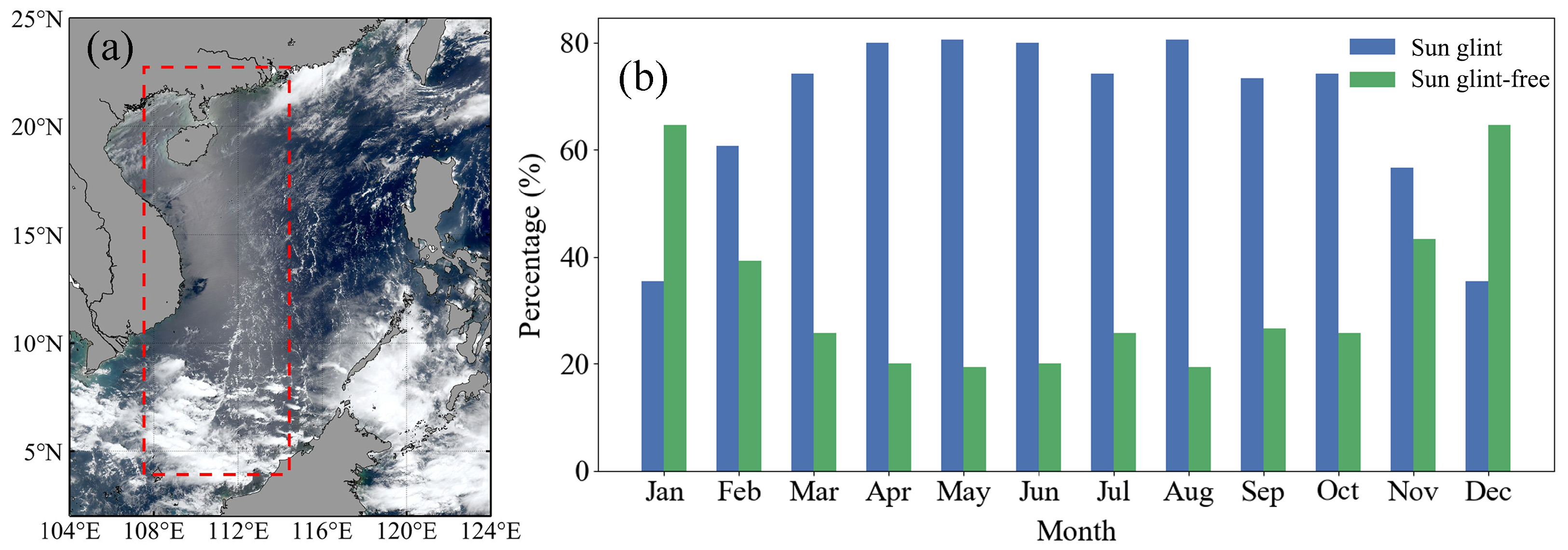
In ocean color remote sensing, the sea surface can act as a mirror that directly reflects a substantial amount of solar radiation into the satellite sensor. This phenomenon is primarily caused by the relative observation geometry between the sun and the sensor, as well as surface conditions such as wind and waves. Such reflection leads to abnormally bright features on the ocean surface in satellite imagery, where the spectral reflectance significantly exceeds the normal levels of oceanic water bodies, thereby severely interfering with the accurate retrieval of water color information [1]. In imagery acquired by wide-swath ocean color sensors, such as the MODIS (Moderate Resolution Imaging Spectroradiometer) and VIIRS (Visible Infrared Imaging Radiometer Suite), a distinctly bright white band is typically observed over the sea surface. This feature corresponds to the sun glint region (Figure 1a). Since the water-leaving radiance that carries information about the ocean surface is inherently weak and the energy of sun glint is exceptionally strong, often exceeding the water-leaving radiance by more than an order of magnitude, the presence of sun glint can severely obscure the water signal received by satellite sensors. As a result, it becomes extremely difficult to extract water color information from remote sensing data, leading to significant degradation in the quality of ocean color products such as chlorophyll concentration. In many cases, conventional retrieval algorithms fail completely, resulting in data gaps in sun glint-contaminated regions [2,3,4]. Frequent and widespread sun glint is one of the key factors contributing to the reduced effective coverage of ocean color products [5]. Since polar-orbiting ocean color satellites typically pass over the equator around local noon, the South China Sea, located in low latitudes, is affected by sun glint throughout the year. As a result, almost every scene of ocean color remote sensing data in this region suffers from partial data loss. Therefore, an effective sun glint correction method is urgently needed to improve the data coverage and usability of ocean color remote sensing in the South China Sea.
A number of sun glint correction methods have been proposed by both domestic and international researchers to reduce or eliminate the influence of sun glint in large-scale ocean remote sensing. These algorithms primarily apply the Cox-Munk sea surface roughness model [6] to perform sun glint correction for remote sensing reflectance ( R rs ) data. For ocean color satellite data with moderate spatial resolution (approximately 1 km), Wang and Bailey [7] used wind speed data with the Cox-Munk model to estimate the sea surface roughness probability distribution, and then calculated sun glint reflectance based on solar and satellite viewing geometries. This method has been used in standard satellite data processing and has effectively reduced the impact of sun glint on ocean color products. However, the Cox-Munk model relies on an idealized sea surface wind field, making it difficult to accurately represent the complex dynamics of sea surface elevation, wave spectra, surface slopes, and the relationships among solar and sensor zenith and azimuth angles. As a result, using the Cox-Munk model for sun glint correction can often introduce substantial errors [8], which significantly limits the effectiveness of R rs based correction.
Hu et al. [9] proposed a novel approach for removing sun glint effects in ocean color remote sensing by using Rayleigh-corrected reflectance ( R rc ) instead of the conventional remote sensing reflectance ( R rs ) for water color information retrieval. The benefit of this approach is that it can greatly increase data coverage and is less prone to atmospheric correction failures, as it does not require complicated aerosol removal procedures [10,11]. Hu et al. found that, with the exception of thick cloud cover, the baseline index, CI (Color Index), calculated using R rc from the MODIS sensor, can be used to continuously extract water color information under most environmental conditions [9]. Based on this, Chen et al. [10] used a random forest algorithm to reconstruct the chlorophyll concentration (Chl) in the waters of the East China Sea and Yellow Sea using MODIS R rc data, the CI index, and other R rc ratio parameters. This effectively improves the data coverage of water color products under complex nearshore atmospheric conditions. All of the aforementioned studies emphasized that sun glint correction of R rc data is essential under glint-affected conditions. However, existing correction coefficients and techniques for R rc data are mostly limited to specific satellite sensors and regions (e.g., the Gulf of Mexico in the United States). Applying MODIS/Aqua-derived correction coefficients directly to VIIRS imagery in the South China Sea has proven ineffective, resulting in significant residual sun glint errors and introducing uncertainties in the subsequent retrieval of chlorophyll concentration.
This paper therefore addresses the current lack of effective methods for determining sun-glint correction coefficients based on Rayleigh-corrected reflectance for different oceanic regions. The South China Sea sea area, where water color remote sensing images are affected by sun glint throughout the year, is chosen as the research area. The R rc data of the VIIRS sensor is used as an example to (1) establish the method of obtaining the R rc sun glint correction coefficients of various bands in the South China Sea sea area, and (2) validate the reasonableness of the distribution of various baseline indices data after correction; and (3) evaluate the effectiveness of the proposed correction approach by applying it to chlorophyll-a retrieval based on R rc -derived baseline indices. The outcomes of this work aim to provide a methodological reference for sun glint correction in other oceanic regions and for sensors beyond VIIRS.

2. Study Area and Data

2.1. Overview of the Study Area

As shown in Figure 1a, the study area is located in the South China Sea, extending from 2° to 25°N and from 104° to 124°E. Owing to its low-latitude geographic location, ocean color remote sensing observations in the South China Sea are highly susceptible to sun glint contamination, which interferes with the retrieval of continuous and large-scale water color information. Based on information from VIIRS satellite remote sensing data, Figure 1b depicts the frequency of sun glint in the South China Sea in 2023. The data show that sun glint occurs throughout the year, with a frequency that gradually increases from January, reaching relatively high levels in April and May, remaining high from June to August, and then gradually decreasing from September onward. Seasonal variations in wind speed and wind wave conditions, as well as seasonal variations in the solar altitude angle, are intimately linked to this fluctuation. With the exception of January and December, the general proportion of sun glint incidence is higher than the percentage of no sun glint occurrence. Sun glint has a significant impact on the extraction of sea surface reflection characteristics, which leaves a significant amount of data lacking for water color observation elements. Thus, to increase the coverage of water color data in the South China Sea, the sun glint correction of the R rc of remote sensing satellites is crucial.

2.2. R rc Data Acquisition and Preprocessing

VIIRS is an advanced visible and infrared scanning radiometer mounted on the Suomi National Polar-orbiting Partnership (SNPP) satellite [12], featuring 22 wavebands, including nine visible to near-infrared channels spanning 0.4–0.9 μ m. With a scanning angle range of ±56.28° and a swath width of 3000 km, VIIRS data are inevitably subject to sun glint contamination due to variations in observation azimuth and the large swath width. In this study, the VIIRS Level-1A and standard Level-2 product datasets for the South China Sea from 2021 to 2024 were obtained from the Ocean Color website (https://oceancolor.gsfc.nasa.gov) and subsequently preprocessed. ( R rs ) data. Since the standard Level-1A and Level-2 products only provide chlorophyll concentration and remote sensing reflectance but do not include Rayleigh-corrected reflectance ( R rc ), the SeaDAS 7.5 software was employed to process the Level-1A data and generate R rc datasets. To enhance the R rc data coverage, several thresholds were adjusted during processing: the cloud threshold was increased from 0.027 to 0.04, the sun glint threshold from 0.005 to 0.01, the ice threshold from 0.1 to 1, and the tauamax threshold from 0.3 to 2.0 [7,10]. The output R rc data included bands at 410, 443, 486, 551, 671, 745, and 862 nm, along with the l2_flags (32-bit integers, each bit representing a specific data quality or feature flag used to precisely characterize the state and quality of each pixel). The principle of R rc extraction involves correcting the atmospheric path radiance received at the top of the atmosphere by eliminating the effects of ozone absorption and molecular (Rayleigh) scattering. The Rayleigh correction formula is expressed as:
R r c ( λ ) = π L t ( λ ) F 0 ( λ ) cos ( θ 0 ) R r ( λ )
R rc represents the Rayleigh-corrected reflectance, while λ indicates the VIIRS wavelength. The total irradiance received by the satellite is denoted as L t , F 0 represents the extraterrestrial solar irradiance, θ 0 indicates the solar zenith angle, and R r refers to the reflectance attributed to Rayleigh scattering [11,13]. The accurate calculation of R r and the straightforward acquisition of R rc , which does not require a complex aerosol removal step, enhance the convenience of data acquisition and utilization.

2.3. Baseline Index Calculation Methodology

As outlined in the introduction, the primary objective of R rc correction in this study is to improve the accuracy of R rc -based baseline indices, such as the CI index, in regions affected by sun glint. Accordingly, several representative R rc baseline indices were selected for analysis, including SS486 (Spectral Shape index at 486 nm) [14], CI551 (Color Index at 551 nm) [9], and SS671 (Spectral Shape index at 671 nm) [14]. The baseline index is fundamentally defined by establishing a reference baseline connecting two selected bands, and then evaluating the height or depression of the intermediate band’s reflectance relative to this baseline. Table 1 summarizes the calculation formulas and band settings for the aforementioned baseline indices. These baseline indices have been widely applied in various studies of ocean color analysis, demonstrating strong applicability and representativeness.

2.4. Sun Glint Correction Effect Evaluation Method

Due to the inability to obtain both sun glint and sun glint-free remote sensing images simultaneously, this study validates the sun glint correction outcomes by comparing the sun glint corrected results with the products derived from sun glint-free images of the same region taken on a nearby date. The method of comparison verification involves analyzing the consistency between the spatial distribution and histogram distribution of sun glint corrected and sun glint-free products (e.g., single-band R rc , baseline indices, etc.) within the same region and timeframe.
Cosine similarity is employed in this study to quantitatively assess the consistency between the two histogram distributions [15]. The following is the primary calculating procedure: Determine the histogram frequency distribution of the sun glint-corrected data to be analyzed in order to (1) construct the target histogram; (2) compute the reference histogram of the same type of data in the same region close to the date of the sun glint-free area; (3) normalize the target and reference histograms to the same probability space; and (4) use the cosine similarity formula (Equation (2)) to quantify the degree of match between the two histograms. A metric for directional similarity between two vectors in a multidimensional space is called cosine similarity. The two vectors are said to be very similar in direction when the cosine similarity value is near 1; while it is at 0, it means that they are not. In datasets that have non-negative components, such as normalized histograms, the cosine similarity value is often limited to the interval [0, 1]. Equation (2) illustrates how to compute the cosine similarity:
cos ( θ ) = A · B A   B
where A and B stand for the normalized frequency distribution vectors of the data histograms in the sun glint-free zone on the approaching date and the histograms of the data to be matched following sun glint correction, respectively. The sun glint correction factors for each band will be determined using the cosine similarity metrics.

3. Sun Glint Correction Method

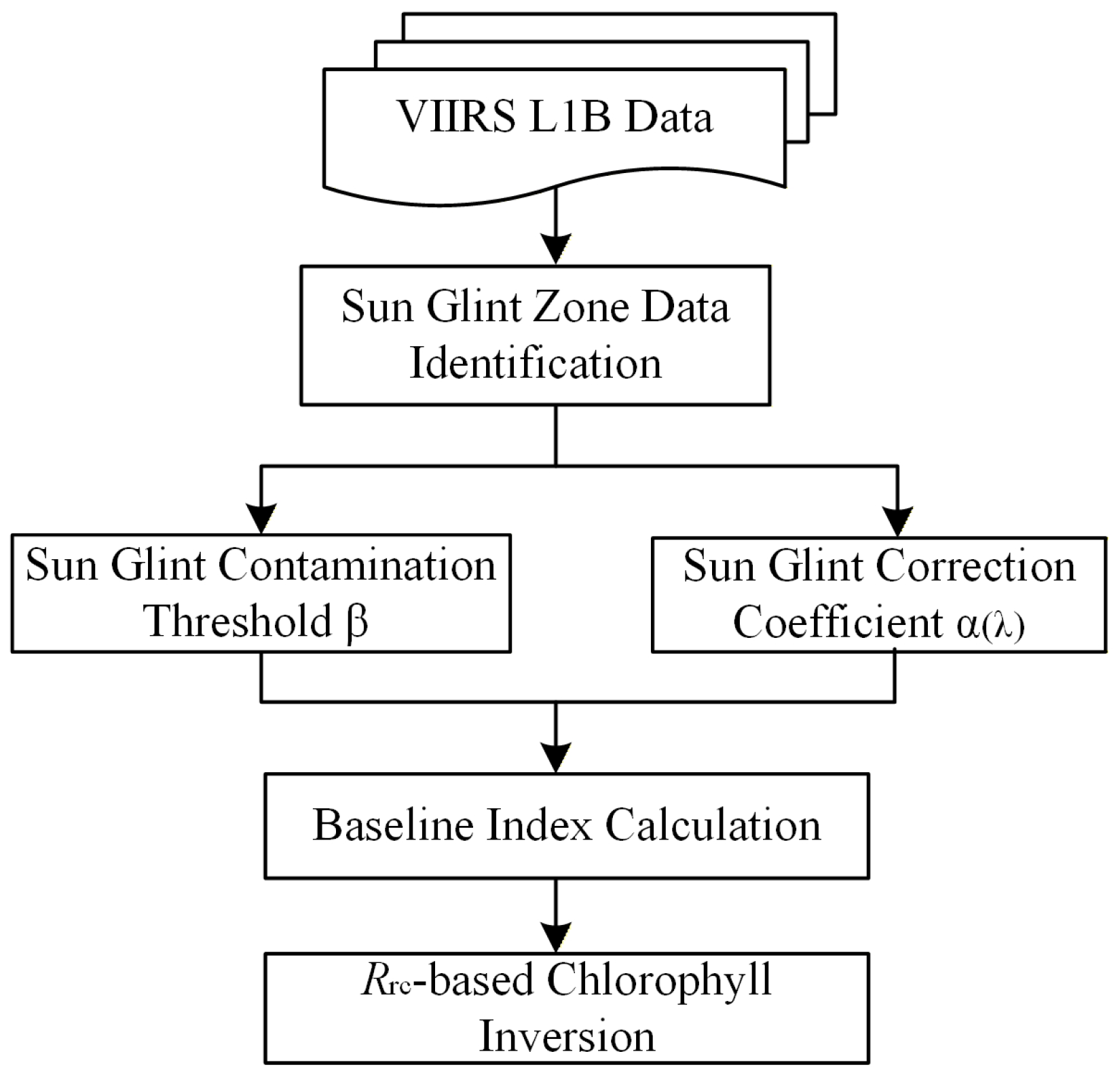
In this paper, a complete R rc -based sun glint correction method is proposed for the VIIRS satellite Level-1B data in the South China Sea to improve the effect of sun glint on the inversion of water color elements. The basic ideas are, (1) to firstly estimate the sun glint contribution in the near-infrared band (e.g., the 862 nm band of VIIRS) by the sun glint contamination threshold β (i.e., the background value of the reflectance of the glint-unaffected image elements); (2) to use the R rc sun glint correction coefficients α ( λ ) of each band to estimate the sun glint contribution R g ( λ ) in each band from the reflectance of the near-infrared band; and (3) finally, to carry out the sun glint correction for each band. The formulas [9,16] for sun glint correction based on this method in this study are as follows:
R rc ( λ ) = R rc ( λ ) R g ( λ )
R g ( λ ) = α ( λ ) × [ R rc ( 862 ) β ]
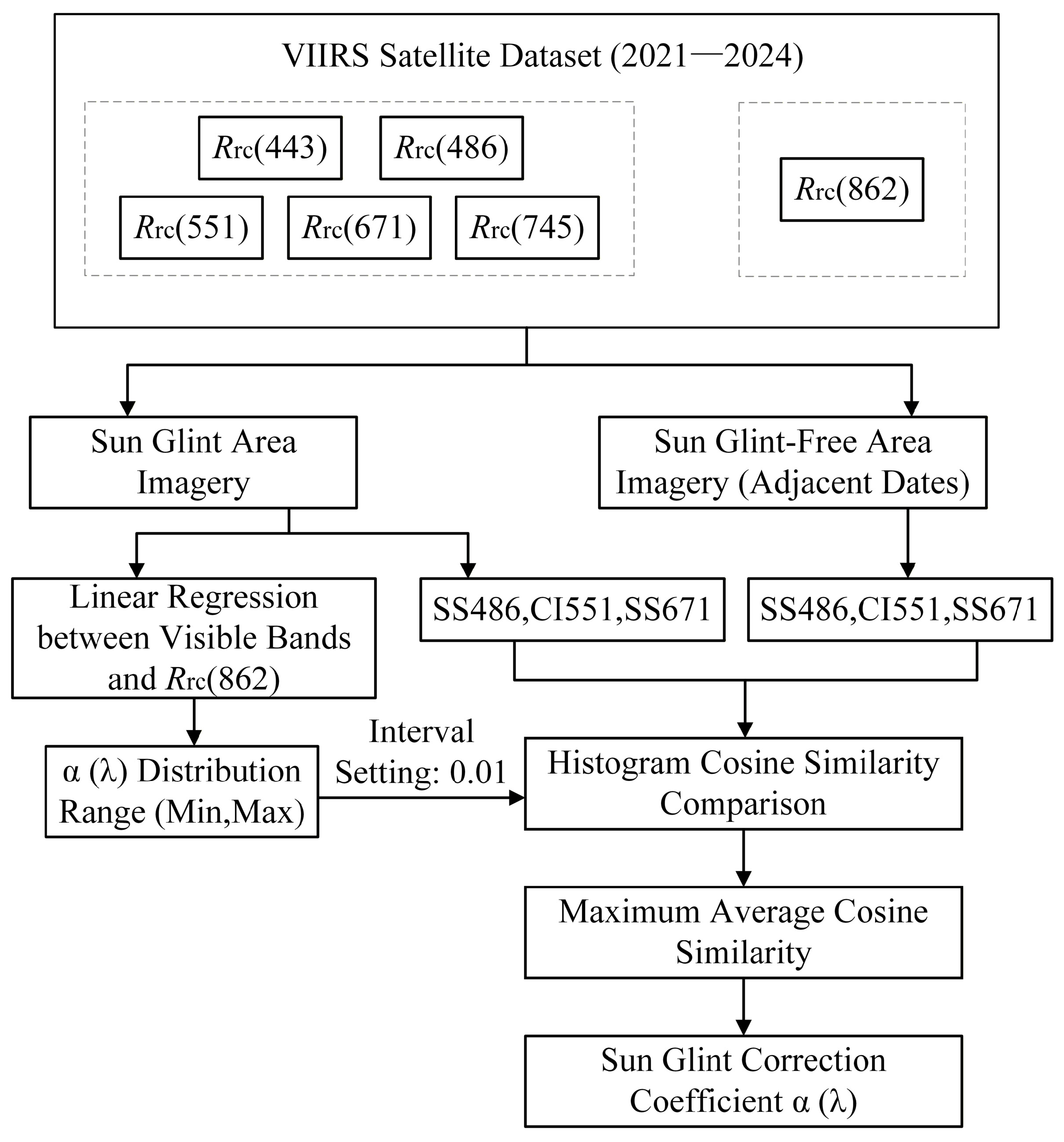
R rc ( λ ) is the Rayleigh-corrected reflectivity before to sun glint correction, R rc ( λ ) is the Rayleigh-corrected reflectivity following sun glint correction, and R g ( λ ) is the signal of the sun glint contamination portion in the Rayleigh-corrected reflectivity. Determining the sun glint contamination threshold β and the sun glint correction coefficient α ( λ ) for each band, thus, forms the basis of the sun glint correction technique. The technical flowchart of sun glint correction for VIIRS data is shown in Figure 2.

3.1. Determination of Sun Glint Contamination Thresholds

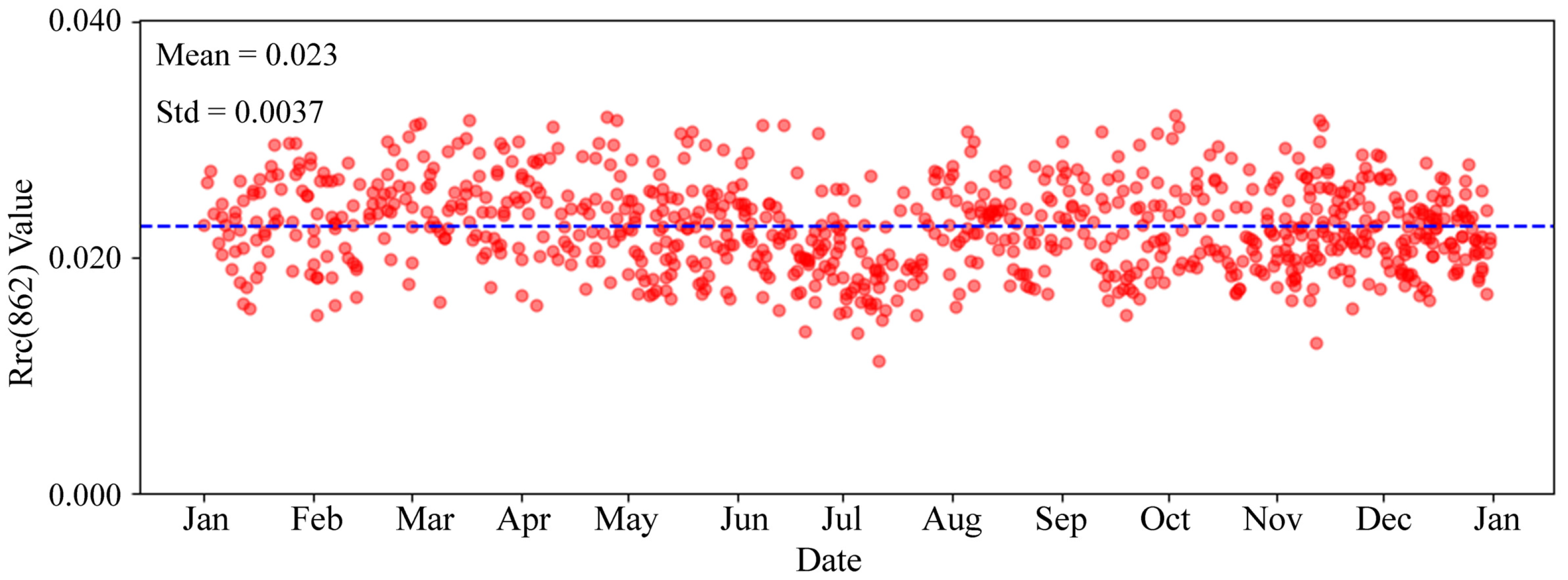
It is widely recognized that optically clean ocean waters exhibit strong absorption in the near-infrared (NIR) spectral region, such that the water-leaving radiance in this band can be reasonably assumed to approach zero. Under this assumption, the observed top-of-atmosphere radiance in the NIR band can be considered to result primarily from atmospheric scattering and sun glint effects [17]. By statistically analyzing the radiometric characteristics of the near-infrared band in sun glint-free regions, a reference radiometric background under glint-free conditions can be determined. Accordingly, the mean value of VIIRS R rc ( 862 ) in sun glint-free areas is adopted as the threshold β for identifying sun glint contamination. In this study, a statistical analysis was conducted on R rc (862) values within sun glint-free regions, based on 613 VIIRS granules over the South China Sea collected throughout 2023. As shown in Figure 3, the monthly distribution of mean R rc (862) in sun glint-free regions remained highly stable, with no significant seasonal variation observed. The annual mean value of R rc (862) was calculated to be 0.023, with a standard deviation of only 0.0037. Therefore, a threshold value of β = 0.023 is adopted to identify sun glint contamination in VIIRS R rc (862) data over the South China Sea [18].

3.2. Determination of Sun Glint Correction Coefficients for Each Band

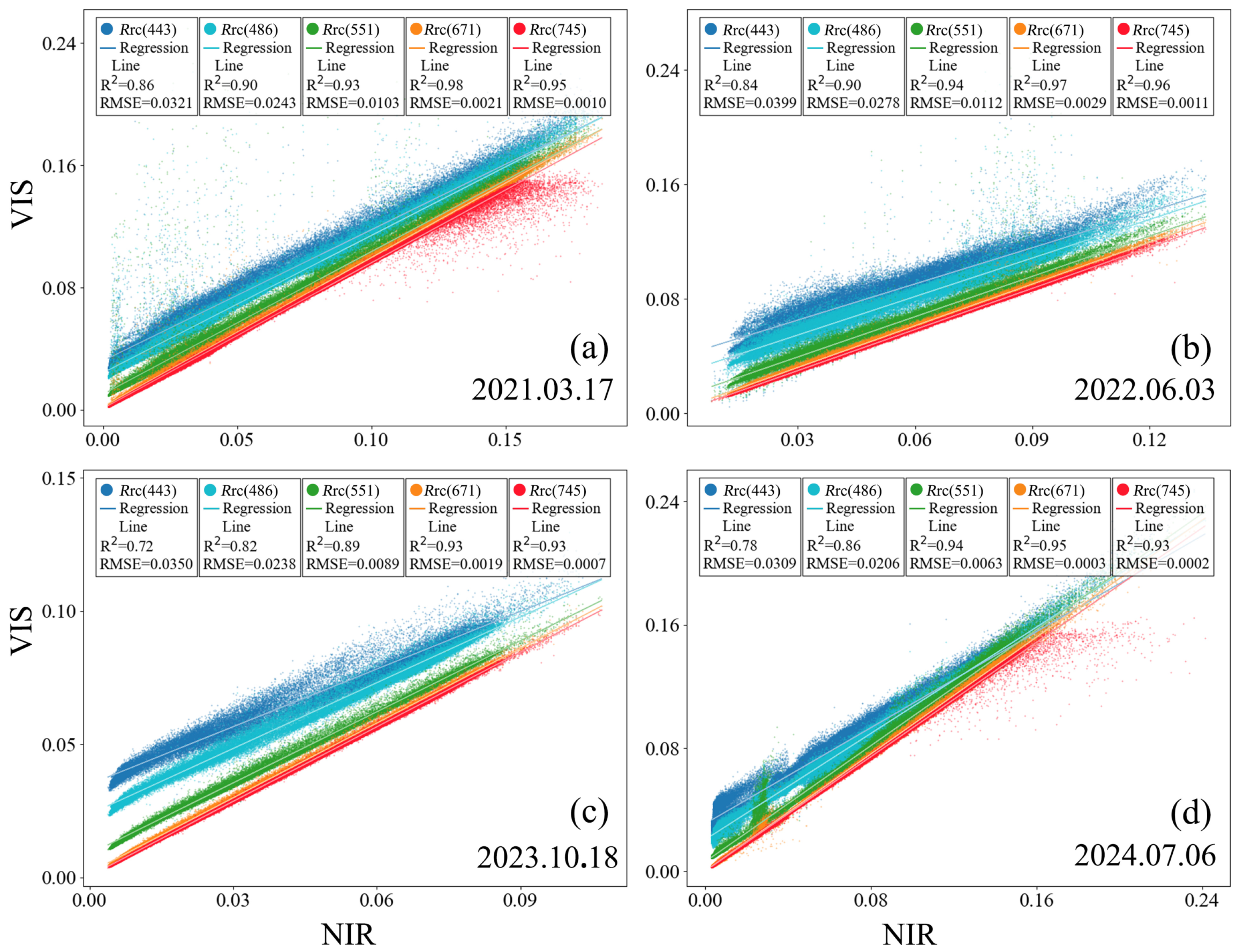
Theoretically, the refractive index of water exhibits minimal variation between the visible and near-infrared spectral bands. Under identical sea surface roughness conditions, the relationship between R g in the visible and NIR bands is expected to remain consistent across different scenes. However, due to variations in solar illumination, water optical properties, and atmospheric conditions, the spectral relationship between R rc in the visible and NIR bands may vary from scene to scene (see Figure 4). Consequently, the parameter a ( λ ) , which is used to estimate R g in the visible bands based on NIR reflectance, may vary both spectrally and temporally. Determining appropriate values of a ( λ ) for the South China Sea is therefore a central objective of this study. To achieve this, a collection of VIIRS images affected by sun glint, acquired between 2021 and 2024, was selected for analysis. First, for each scene, the optimal a ( λ ) was determined by maximizing the cosine similarity between histograms of baseline indices. Second, the mean values of a ( λ ) for each spectral band were calculated based on the distribution of a ( λ ) across all selected scenes. The detailed methodology is described below.

3.2.1. Determination of Optimal Sun Glint Correction Coefficients Based on Histogram Similarity Maximization

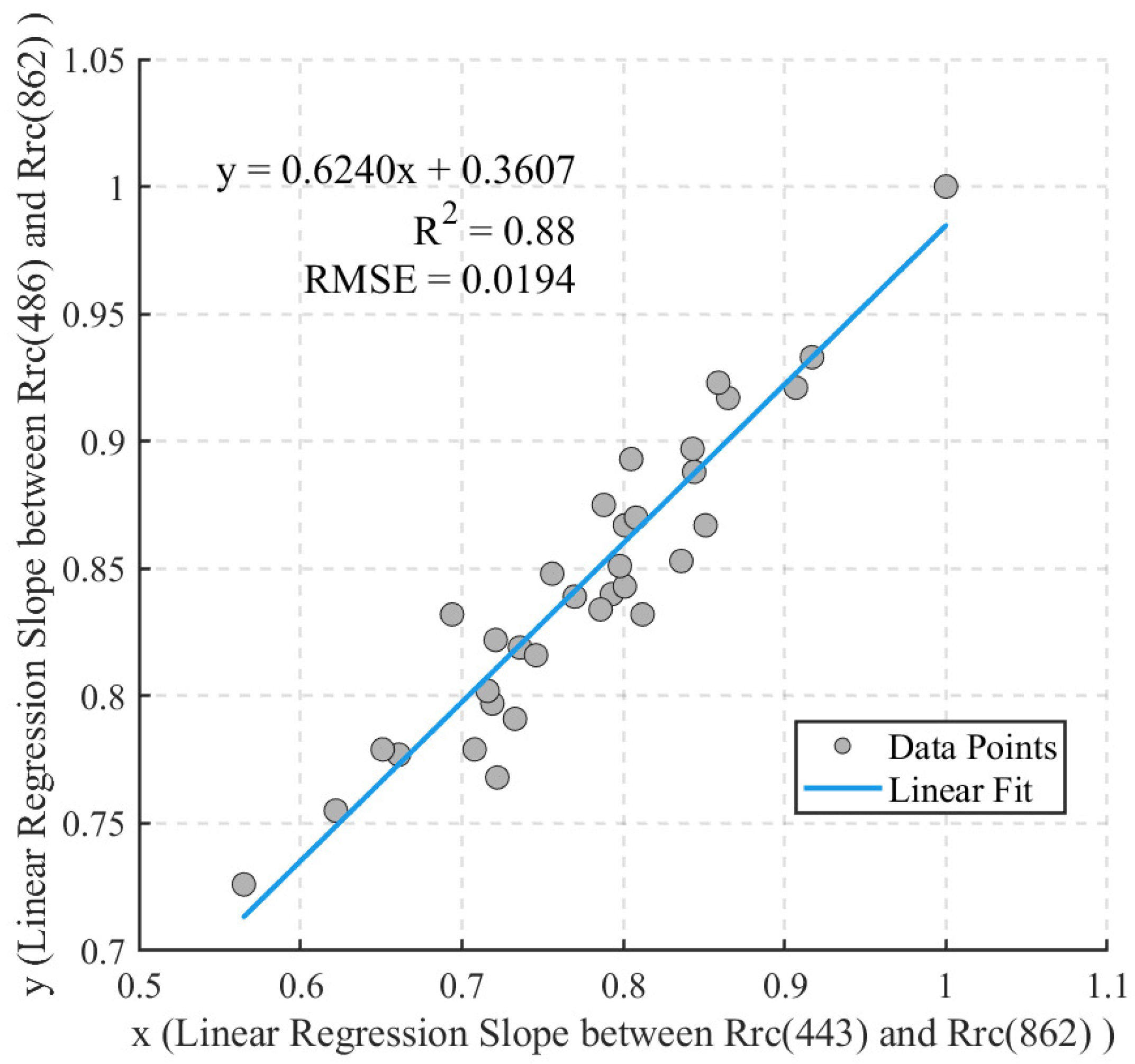
First, VIIRS images affected by sun glint were paired with sun glint-free images acquired over the same region on adjacent dates to form matched datasets. A reasonable range of correction parameters for the sun glint correction coefficient a ( λ ) was defined for the visible spectral bands (443 nm, 486 nm, 551 nm, 671 nm and 745 nm), using a refined interval of 0.01 for each band. As shown in Table 2, the values of α (443), α (486), α (551) and α (671) exhibit relatively broad distributions across glint-contaminated scenes. In contrast, the fitting slope α (745) between the uncorrected R rc (745) and R rc (862) shows a much narrower and more concentrated distribution range (0.910–1.000), suggesting a stable spectral relationship between R rc (745) and R rc (862). Therefore, the mean value of the slope, 0.94, is adopted as the fixed α (745). From Figure 5, it can be observed that the linear regression R2 of the fitting slopes between R rc (443) and R rc (862), as well as between R rc (486) and R rc (862), reaches 0.88, indicating a strong correlation between the slopes. Therefore, α (443) is calculated based on the following relationship: α (443) = [ α (486) − 0.3607]/0.6240 (Figure 5). This approach prioritizes determining the optimal coefficients for α (486), α (551), and α (671). By adjusting the provisional correction coefficients and selecting a set of a ( λ ) parameters such that the mean cosine similarity of the histograms of three baseline indices (from the glint-affected image and its glint-free counterpart) is maximized, the parameters are determined as the optimal correction coefficients α (486), α (551), and α (671) for the current image. The flowchart for optimal sun glint correction coefficient determination for VIIRS is shown in Figure 6.

3.2.2. Determination of Sun Glint Correction Coefficients Based on Multi-Scene Mean Statistical Analysis

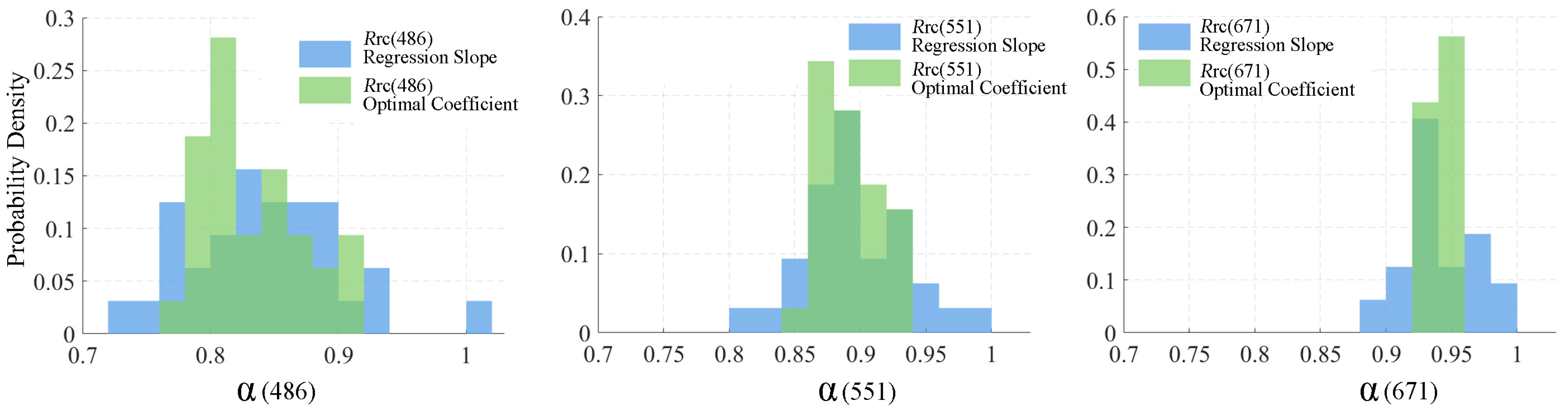
After computing the optimal a ( λ ) parameters for each sun glint-contaminated image, the fitting slopes derived from the visible and near-infrared bands in VIIRS data from 2021 to 2024 exhibited a wide range of variability. In contrast, the optimal sun glint correction coefficients across different bands showed markedly reduced variation and were concentrated within a much narrower range (Figure 7). To enhance both the practicality and robustness of the correction approach, the mean of the optimal a ( λ ) values across all scenes was calculated for each spectral band. The resulting unified mean correction coefficients for α (443), α (486), α (551), α (671), and α (745) were determined to be 0.75, 0.83, 0.89, 0.95, and 0.94, respectively. The effectiveness of these mean a ( λ ) values in sun glint correction will be evaluated in the following sections.

4. Results and Discussion

4.1. Comparison of Single-Band R rc Before and After Correction

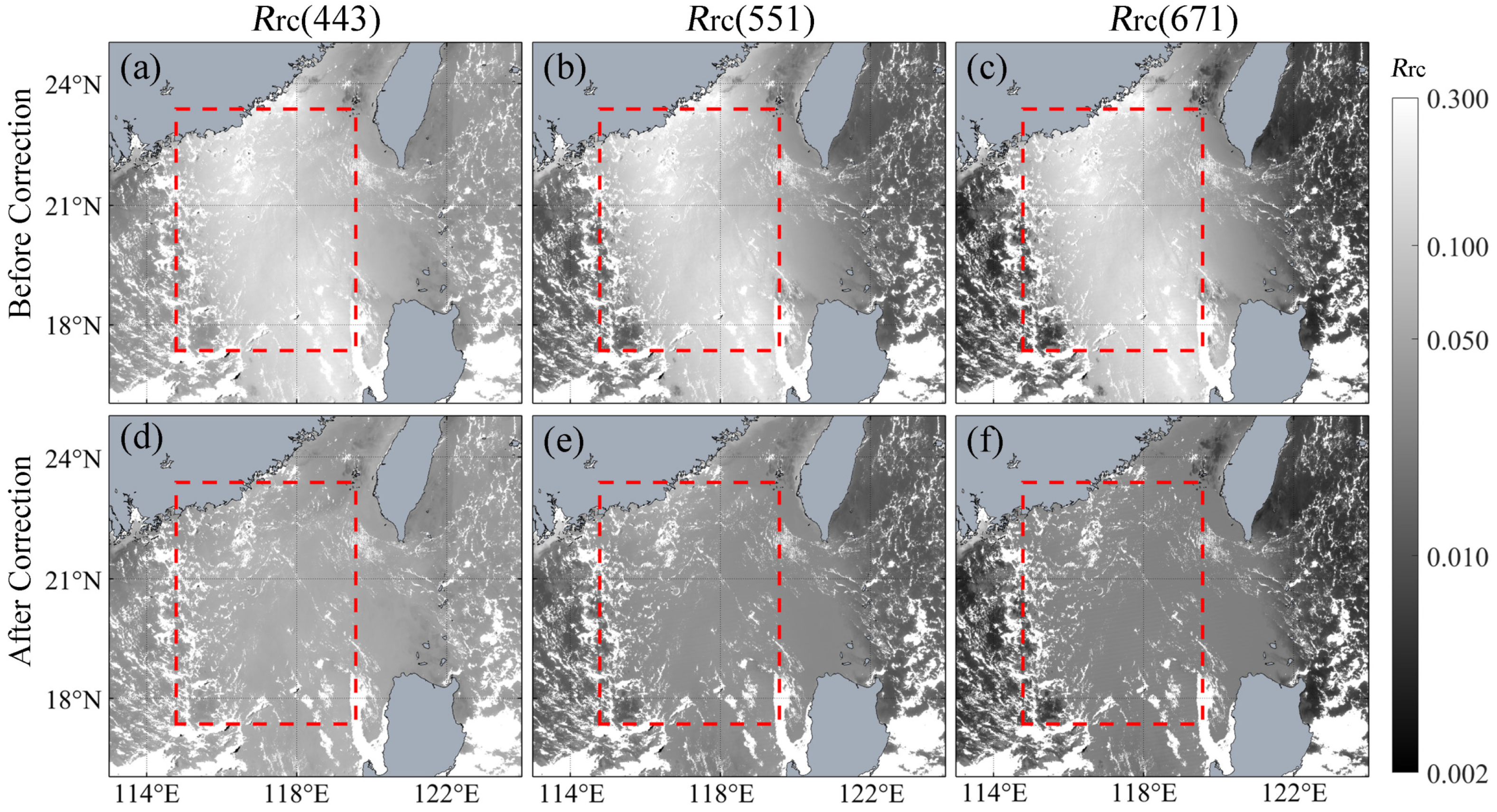
Figure 8 illustrates a comparison of R rc values prior to (Figure 8a–c) and following (Figure 8d–f) sun glint correction. From the before correction images, it can be observed that the study area is strongly influenced by sun glint contamination, particularly in water regions near the specular reflection direction of the sun, where the reflectance values are significantly elevated (appearing as high-brightness white areas).In contrast, the single-band R rc images after sun glint correction show a marked reduction in sun glint-induced contamination. Specifically, in regions heavily affected by sun glint, the reflectance values are notably reduced, and the brightness distribution within the study area becomes more uniform. This indicates that the correction method is effective in partially mitigating the impact of sun glint contamination. However, when compared to background regions outside the study area that are unaffected by sun glint, the corrected reflectance values still exhibit marginally elevated values. This suggests that the sun glint correction method has inherent limitations in completely removing sun glint effects from single bands. Nevertheless, the ultimate goal of this study is to enhance the extraction of baseline indices from R rc in glint regions, thereby enabling a more accurate representation of water body characteristics.

4.2. Comparison of R rc Baseline Indices Before and After Correction

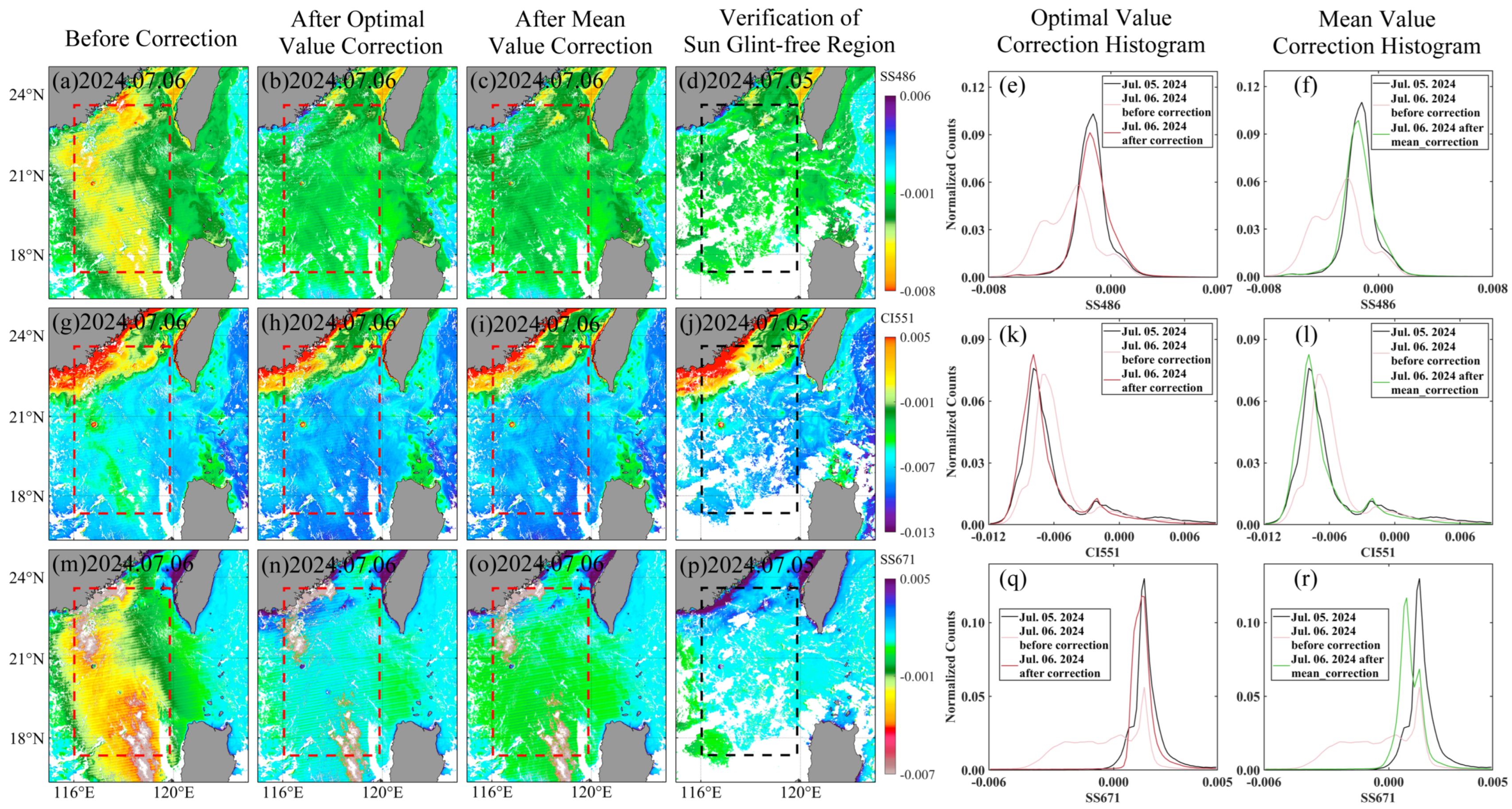
Although the single-band R rc sun glint correction effect is generally moderate, the corrected R rc baseline index shows significantly improved outcomes. This paper selects representative VIIRS satellite images from 2021 to 2024, spanning various years and months, affected by sun glint, to compare the correction effects. As shown in Figure 9, the SS486, CI551, and SS671 baseline indices prior to correction are presented (Figure 9a,g,m). Two sun glint correction methods are subsequently applied: one is based on the optimal value method, where SS486, CI551, and SS671 are corrected using the maximum cosine similarity of the histograms of the baseline indices between the glint and sun glint-free regions on nearby dates (Figure 9b,h,n), and the other is the mean correction method (using the mean correction coefficients for each band from 2021 to 2024) (Figure 9c,i,o). Results from sun glint-free areas on the same date, proximal in time, are used as validation (Figure 9d,j,p). As observed in Figure 9, before correction, the SS486 and SS671 values (Figure 9a,m) in the sun glint region are significantly low, and CI551 (Figure 9g) is slightly high. After mean correction, SS486 (Figure 9b) exhibits notable enhancement, and the optimal value correction for SS486 (Figure 9c) also shows marked improvements, aligning more closely with the ocean vortex and water mass characteristics from the sun glint-free data on 5 July 2024. The histogram of SS486 (Figure 9e,f) further confirms this, indicating a non-standard distribution before correction, with a large fluctuation range and a clear peak shift. After sun glint correction, the histogram’s low-value data shifts toward the high-value area, and the distribution curve closely resembles a Gaussian distribution, with the fluctuations significantly reduced. The histogram for the CI551 data (Figure 9k,l) shows that before correction, the values of CI551 are marginally elevated, but after correction, the values shift toward the lower range, with both the optimal and mean corrections showing consistent results. The SS671 data distribution histogram (Figure 9q,r) shows that before correction, SS671 values are notably lower, accompanied by substantial fluctuations in the range and peak values, but after correction using the optimal method, the distribution aligns with the sun glint-free peak, while the mean correction method slightly underestimates the peak. This is primarily because the optimal value method seeks the best overall result for all indices, and hence, some baseline indices might exhibit slight deviations. Overall, both the mean and optimal value correction methods demonstrate marked improvements relative to the uncorrected data.
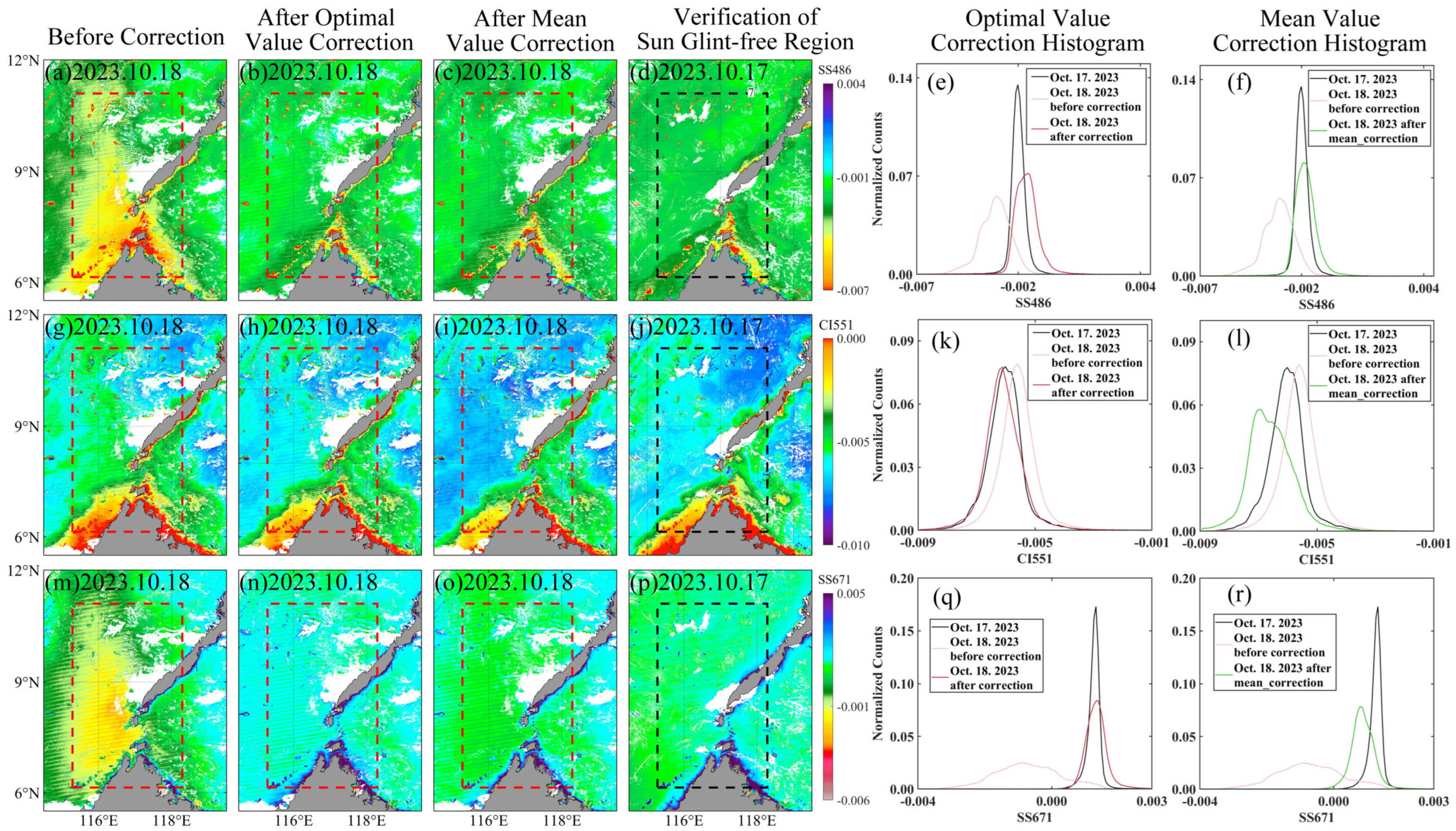
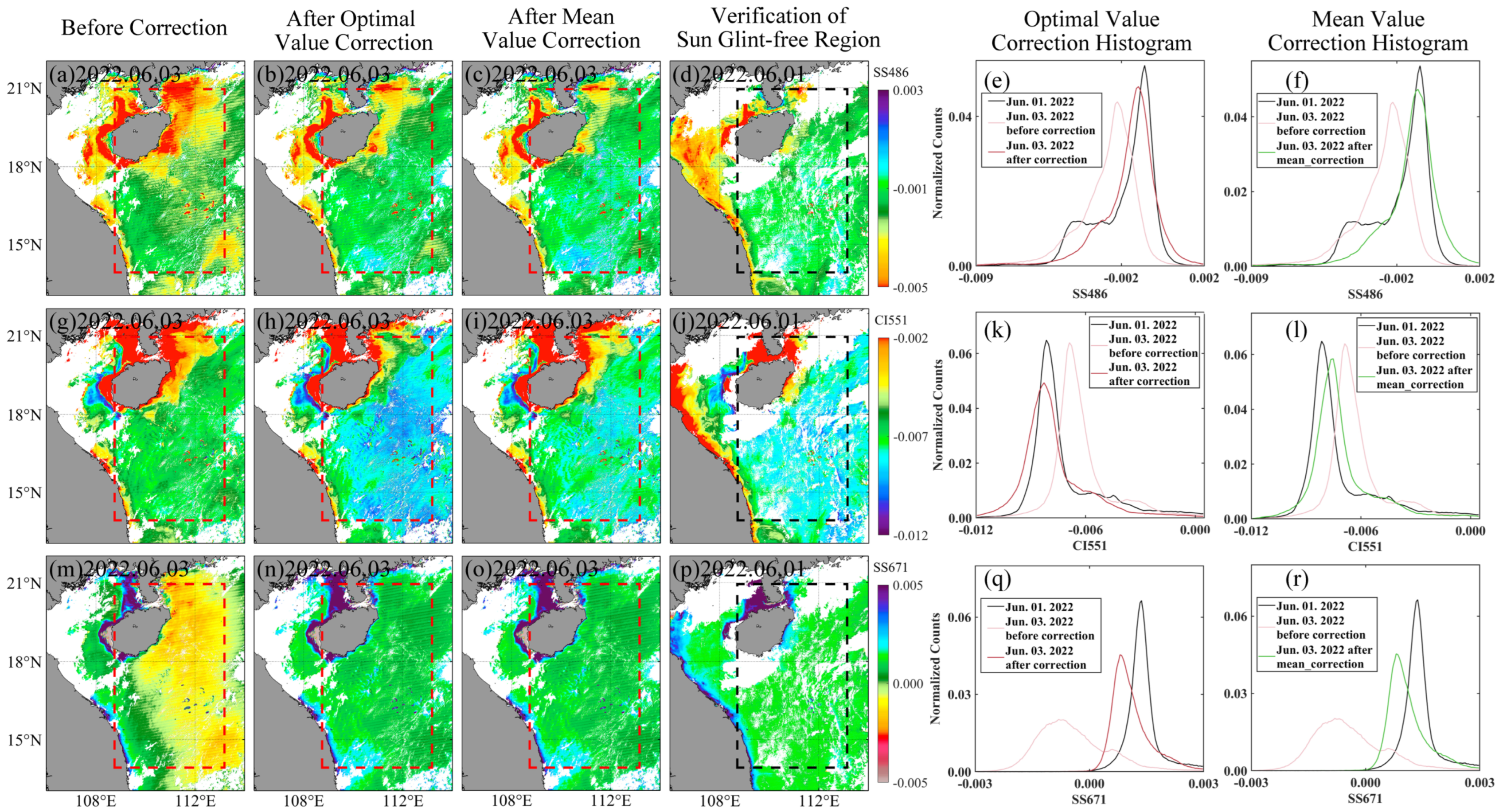
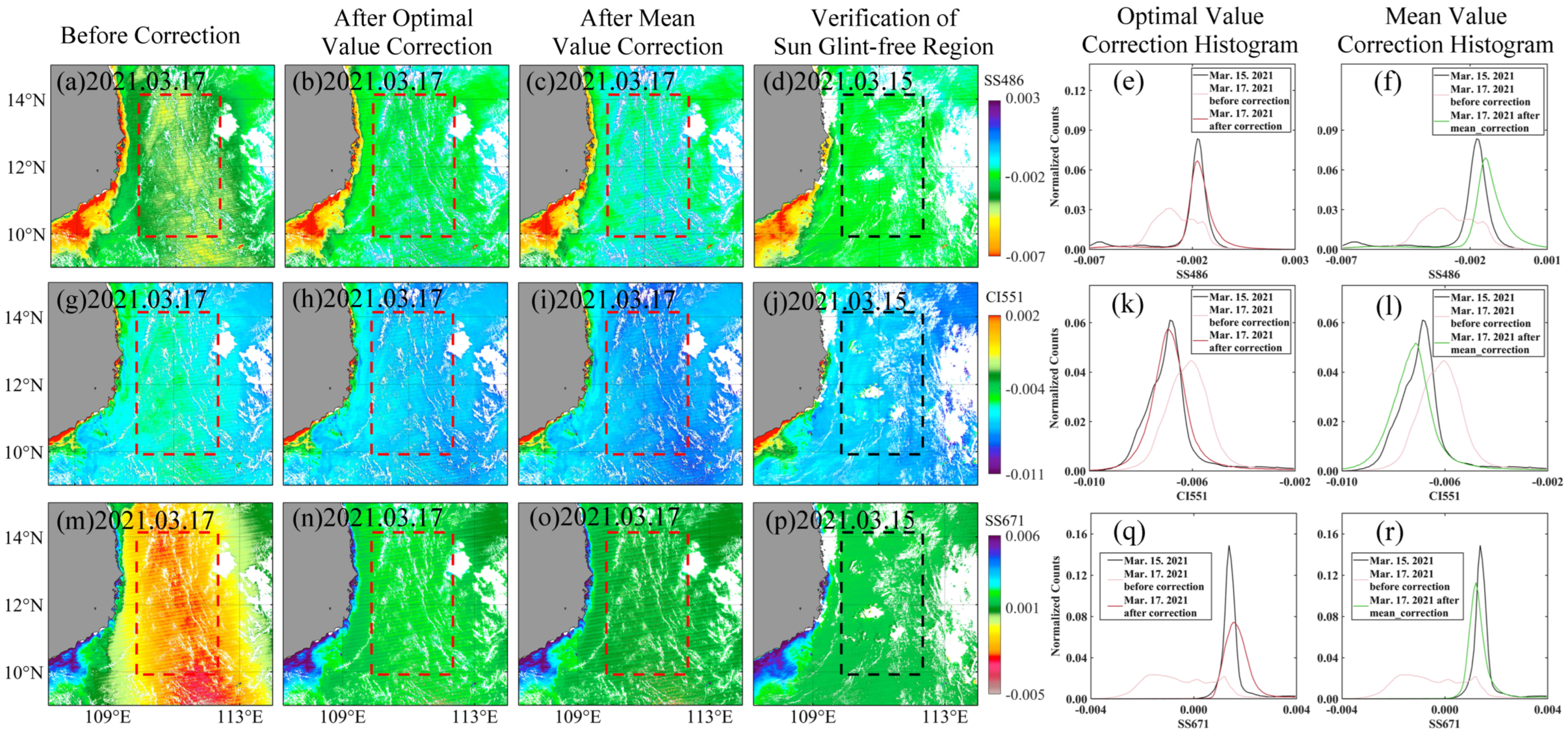
The sun glint correction results for 18 October 2023, near the Nansha Islands in the South China Sea, further highlight the effectiveness of the correction, as shown in Figure 10. Before the correction (Figure 10a), the SS486 and SS671 indices demonstrate pronounced low-value biases in the sun glint region, especially in the southern part of the data distribution. After correction using the optimal value (Figure 10b,n) and mean correction (Figure 10c,o), the data quality is markedly enhanced. The mean correction of SS486 shows better results than the optimal value correction, while the correction effect for SS671 is slightly worse. Case 3 examines sun glint correction results for 3 June 2022, which occurred in the northeastern part of the South China Sea. The data distribution histograms (Figure 11e,f,k,l) show that both the optimal value method and the mean method effectively mitigate the sun glint bias in SS486 and CI551, aligning the data distribution more closely to that of the sun glint-free region. However, for the SS671 index, although both the optimal value and mean methods shift the data distribution curve from the low-value region to the high-value region, the histogram peak remains lower than that of the sun glint-free region. Case 4 analyzes sun glint correction results for 17 March 2021, which occurred in the southwestern part of the South China Sea (Figure 12). The optimal value correction for SS486 and CI551 demonstrates superior performance compared to the mean correction. The SS671 distribution before correction shows a multi-peak pattern, while after correction, the distribution tends toward a single peak. Moreover, the mean correction yields improved results relative to the optimal value correction for SS671.
Overall, both the optimal-value method and the mean-value correction method demonstrate good applicability and practicality across different seasons and in low-latitude regions. In general, the optimal-value method yields more accurate correction results compared to the mean-value method. However, the implementation of the optimal-value method requires the availability of sun glint-free reference images from nearby dates, which imposes stricter constraints on its application. In contrast, the mean-value method is more convenient to apply and less dependent on auxiliary data. Moreover, the baseline indices corrected for sun glint can be further utilized for chlorophyll-a concentration retrieval. To verify whether the corrected baseline indices can effectively support chlorophyll product generation under sun glint conditions, this study conducted chlorophyll-a inversion analyses based on the baseline indices corrected using the mean-value method.

4.3. Chlorophyll Retrieval Based on the Baseline Index

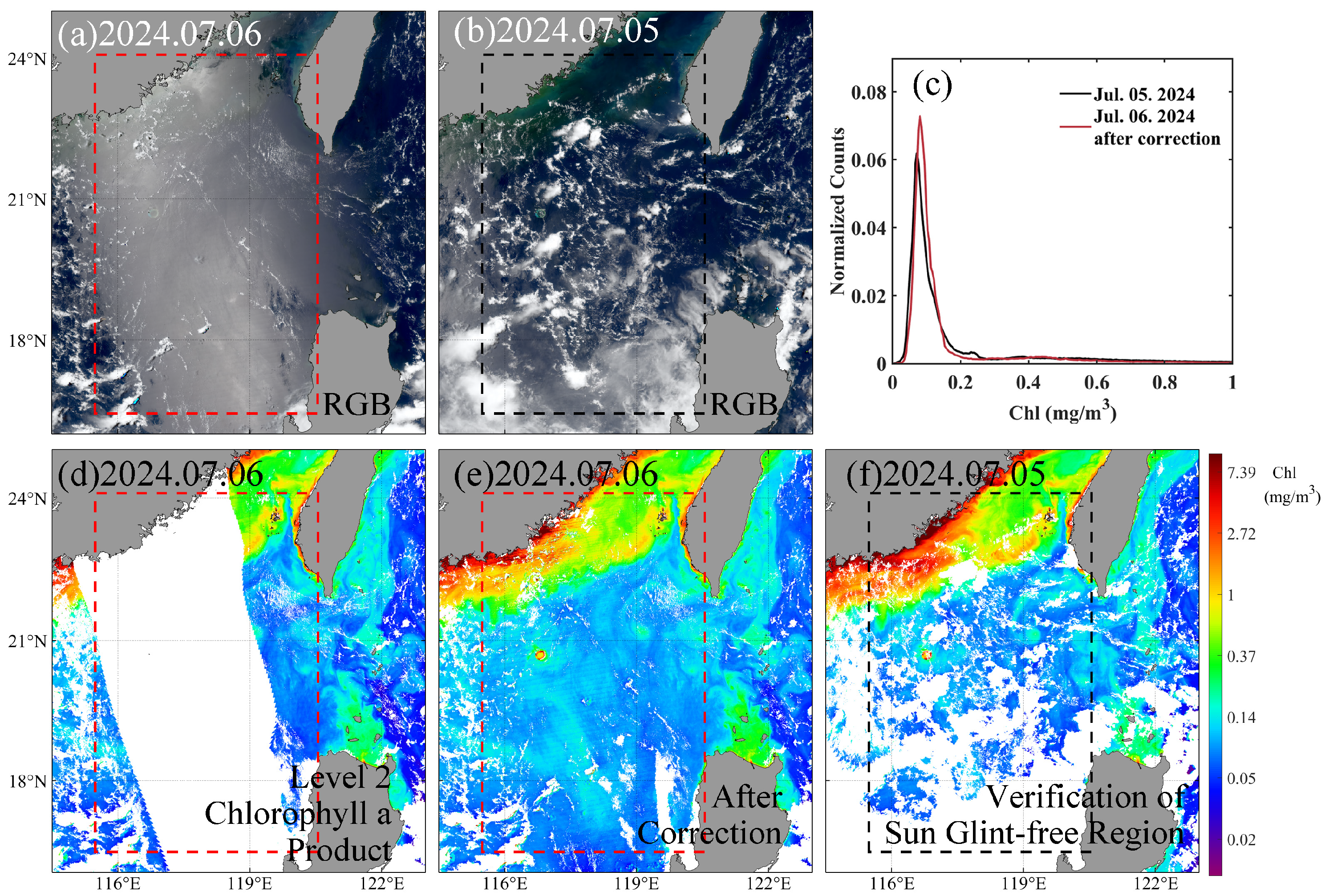
To further validate the effectiveness of the R rc sun glint correction, the baseline indices of R rc after mean correction were utilized for chlorophyll retrieval. The retrieval method draws upon the reconstruction algorithm based on the random forest model proposed by Chen in 2019 [10]. Specifically, a regression relationship was first established between chlorophyll-a concentrations and the baseline indices derived from sun glint-free R rc data, using glint-free regions within the same image where atmospheric correction was successful in the standard Level-2 product. This relationship was then applied to the glint-corrected baseline indices to retrieve chlorophyll-a concentrations in glint-contaminated areas. The main difference between our approach and Chen’s algorithm is that our reconstruction algorithm based on the random forest model only uses the three indices, SS486, CI551, and SS671, as input variables for chlorophyll retrieval. The validation method entails a comparison of the retrieved chlorophyll results with the standard Level-2 products and the chlorophyll distribution under unperturbed conditions for the same region on a nearby date. Notably, the sun glint correction coefficients used in the following images were obtained using the mean correction method. Figure 13a shows the image from 6 July 2024, where serves as a reference for validating the effectiveness of the sun glint correction. Figure 13b shows the image from the adjacent date, 5 July 2024, which is unaffected by sun glints and serves as a reference for validating the effectiveness of the sun glint correction. As shown in Figure 13d, the standard VIIRS Level-2 chlorophyll-a product is severely affected by sun glint, resulting in large areas of missing data. In comparison, the chlorophyll-a concentrations retrieved using the corrected R rc baseline indices (Figure 13e) effectively fill in the data gaps within the glint-contaminated region. The reconstructed spatial patterns, such as water masses and oceanic eddies, closely match those observed in the sun glint-free Level-2 chlorophyll product from 5 July 2024 (Figure 13f). Moreover, the histogram of the corrected chlorophyll-a retrieval for July 6 shows excellent agreement with that of the standard Level-2 product from 5 July (Figure 13c). These results further demonstrate the effectiveness of the proposed sun glint correction method.
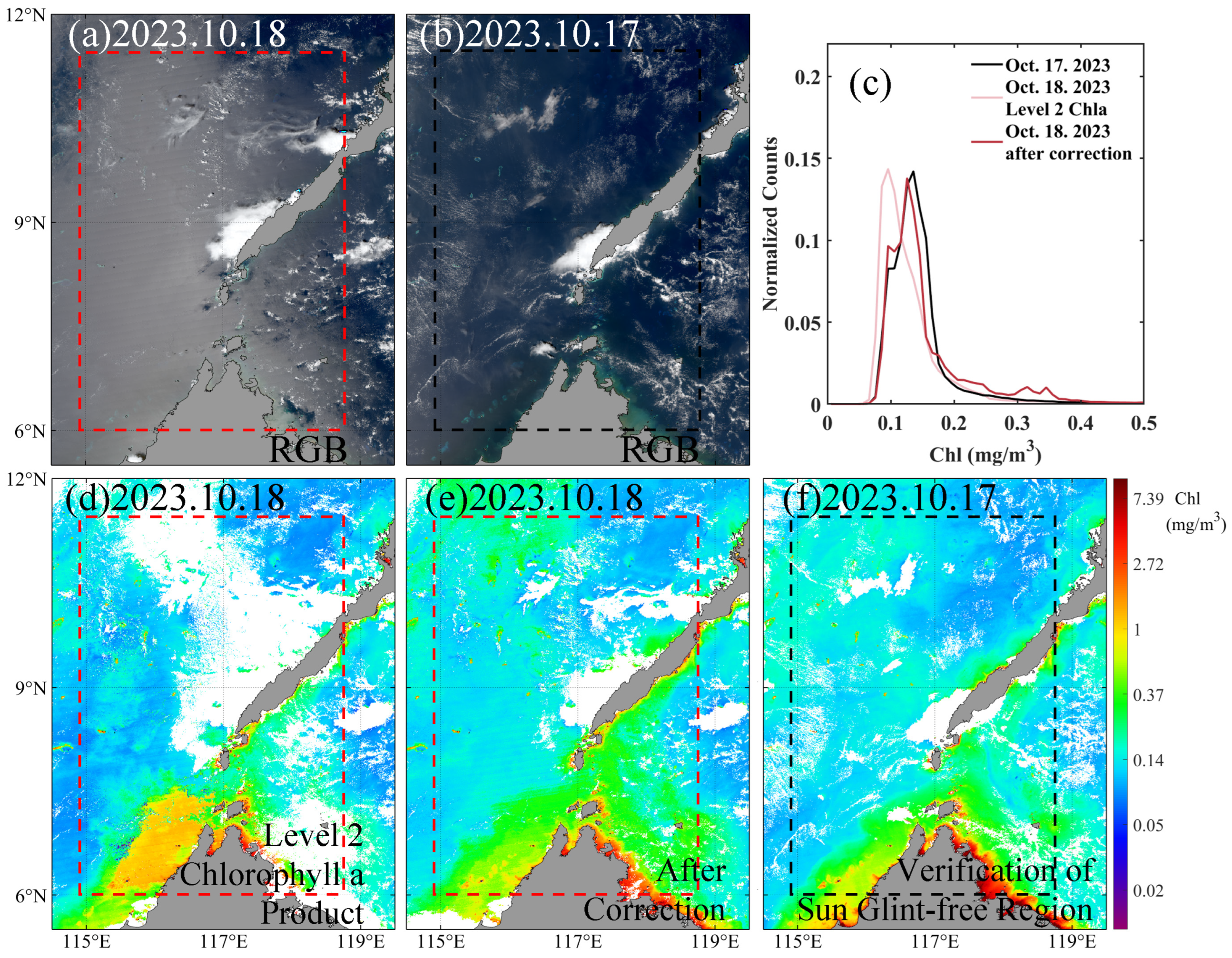
Additional evidence supporting the effectiveness of the sun glint correction approach is provided by the results from another scene acquired in a different season, on 17 October 2023 (Figure 14). The baseline indices derived from R rc after sun glint correction significantly improved the accuracy of chlorophyll-a retrievals in glint-contaminated regions. As shown in Figure 14d, the standard Level-2 chlorophyll-a product exhibits an abnormally high-value area in the waters between the Nansha Islands and Malaysia, which is likely a result of sun glint contamination. In contrast, the chlorophyll-a distribution retrieved from the corrected R rc baseline indices in the same region appears more physically reasonable. Furthermore, the histogram comparison in Figure 14c shows that the corrected result is in much closer agreement with the chlorophyll-a distribution retrieved from the sun glint-free scene on the adjacent date, 18 October 2023. These findings further confirm that the sun glint correction coefficients obtained using the mean-value method are applicable across different seasons in the South China Sea. In addition to their effectiveness, the mean-value-based correction approach is operationally simpler, making it suitable for routine application as a standard correction method.
In the present work, both the optimal and mean values of sun glint correction coefficients for VIIRS imagery over the South China Sea were determined using a histogram-based cosine similarity maximization approach. The mean correction coefficients were subsequently applied to sun glint–contaminated VIIRS Rayleigh-corrected reflectance data. The results indicate that the corrected R rc -derived baseline indices, when combined with chlorophyll-a retrieval based on a random forest model, effectively reduce the interference of sun glint in water color information extraction. In particular, this approach substantially alleviates data gaps in chlorophyll-a concentration caused by sun glint contamination and improves the spatial coverage of ocean color products.
Compared with the traditional Cox-Munk [6] correction methods, the R rc -based sun glint coefficient approach proposed in this study exhibits substantial differences in terms of theoretical principle, data requirements, and application scenarios. The Cox–Munk model and its subsequent extensions [7,16] are fundamentally based on statistical descriptions of sea surface slope distributions and therefore require auxiliary inputs such as synchronous wind speed, wind direction, and instantaneous sun–sensor viewing geometry. These dependencies increase the sensitivity of the correction results to uncertainties in external forcing and sea surface conditions. In contrast, the proposed method operates directly on Rayleigh-corrected reflectance without relying on explicit physical modeling of sea surface roughness. As a result, it is less sensitive to errors introduced by atmospheric correction and uncertainties associated with dynamic ocean surface states [10,11]. By enhancing the availability and reliability of chlorophyll-a products in sun glint–affected regions, this method provides valuable technical support for ocean color applications, including fisheries resource assessment and marine ecological protection in the South China Sea.
While the proposed method is highly effective and computationally efficient for regional applications, its operational scalability is limited by the need to regionalize correction parameters for the same sensor platform. Future work will aim to extend this methodology to diverse oceanic environments globally, thereby improving its accuracy and generalizability, and contributing to more reliable satellite-derived water quality monitoring at a global scale.

5. Conclusions

This paper addresses the interference of sun glint on ocean color remote sensing in the South China Sea using VIIRS data and proposes a validated R rc -based sun glint correction method. The approach is based on three Rayleigh-corrected reflectance ( R rc )-derived baseline indices (SS486, CI551, and SS671). By pairing sun glint–contaminated and sun glint–free images acquired over the same region on adjacent dates, the method determines the optimal and mean sun glint correction coefficients for each spectral band by maximizing the cosine similarity of the baseline index histograms. The corrected R rc baseline indices are then used in conjunction with a Random Forest model to retrieve chlorophyll-a concentrations. The results demonstrate the following:
(1)
Both the optimal-value and mean-value correction approaches exhibit strong robustness and transferability across different seasons and low-latitude marine environments. The optimal-value method generally achieves higher correction accuracy, but its reliance on temporally proximate glint-free reference imagery introduces operational constraints. In contrast, the mean-value method is more efficient and operationally flexible, making it suitable for broader application;
(2)
The baseline indices corrected for sun glint significantly improve the retrieval of key oceanographic features, including mesoscale eddies, circulation structures, and water mass boundaries. Furthermore, integrating the corrected R rc -derived baseline indices with a random forest regression model enables reliable reconstruction of chlorophyll-a concentration fields in glint-contaminated regions. This approach mitigates data degradation due to sun glint, reduces retrieval uncertainty, and enhances the spatial completeness of Level-2 ocean color products. The method demonstrates consistent performance across different subregions and seasons in the South China Sea.

Author Contributions

Conceptualization, D.F. and B.T.; methodology, D.F. and Y.W.; validation, T.L. and Y.W.; investigation, D.F. and Y.Z.; data curation, D.F. and C.L.; writing—original draft preparation, D.F. and Y.W.; writing—review and editing, B.T. and B.L.; visualization, G.Y. and Y.L. All authors have read and agreed to the published version of the manuscript.

Funding

This research was funded in part by the National Key Research and Development Program of China under grant no. 2022YFC3103101, Key Special Project for Introduced Talents Team of Southern Marine Science and Engineering Guangdong Laboratory (GML2021GD0809), Key projects of the Guangdong Education Department (2023ZDZX4009).

Data Availability Statement

VIIRS data were downloaded from https://oceancolor.gsfc.nasa.gov (accessed on 23 February 2024).

Conflicts of Interest

The authors declare no conflicts of interest.

Abbreviations

The following abbreviations are used in this manuscript:
CIColor Index
ChlChlorophyll-a
MODISModerate Resolution Imaging Spectroradiometer
VIIRSVisible Infrared Imaging Radiometer Suite
SNPPSuomi National Polar-orbiting Partnership
NIRNear-Infrared
VISVisible light

References

  1. Mao, Z.; Guo, D.; Pan, D. A Study of Sun Glitter Obtaining and Removing in Air borne Ocean Color Remote Sensing. Remote Sens. Technol. Appl. 1996, 4, 16–21. (In Chinese) [Google Scholar]
  2. Pan, D.; Doerffer, R.; Mao, T.; Li, S. Study on radiative simulated imagery of ocean color satellites. Acta Oceanol. Sin. (Chin. Ed.) 1997, 6, 43–55. (In Chinese) [Google Scholar]
  3. Li, S.; Mao, T.; Pan, D. Study on the influence of solar reflected light on ocean color satellite remote sensing. J. Trop. Oceanogr. 1997, 4, 76–82. (In Chinese) [Google Scholar]
  4. Kay, S.; Hedley, J.D.; Lavender, S. Sun glint correction of high and low spatial resolution images of aquatic scenes: A review of methods for visible and near-infrared wavelengths. Remote Sens. 2009, 1, 697–730. [Google Scholar] [CrossRef]
  5. Chen, J.; He, X.; Liu, Z.; Lin, N.; Xing, Q.; Pan, D. Sun glint correction with an inherent optical properties data processing system. Int. J. Remote Sens. 2021, 42, 617–638. [Google Scholar] [CrossRef]
  6. Cox, C.; Munk, W. Measurement of the roughness of the sea surface from photographs of the sun’s glitter. J. Opt. Soc. Am. 1954, 44, 838–850. [Google Scholar] [CrossRef]
  7. Wang, M.; Bailey, S. Correction of sun glint contamination on the SeaWiFS ocean and atmosphere products. Appl. Opt. 2001, 40, 4790–4798. [Google Scholar] [CrossRef]
  8. Peng, N. Sun Glint Remove and Atmospheric Correction of Remote Sensing Imagery over Coastal Zones. Ph.D. Thesis, Hefei Institutes of Physical Science, Chinese Academy of Sciences, Hefei, China, 2008. (In Chinese). [Google Scholar]
  9. Hu, C. An empirical approach to derive MODIS ocean color patterns under severe sun glint. Geophys. Res. Lett. 2011, 38, L01603. [Google Scholar] [CrossRef]
  10. Chen, S.; Hu, C.; Barnes, B.B.; Xie, Y.; Lin, G.; Qiu, Z. Improving ocean color data coverage through machine learning. Remote Sens. Environ. 2019, 222, 286–302. [Google Scholar] [CrossRef]
  11. Feng, L.; Hu, C.; Han, X.; Chen, X.; Qi, L. Long-Term Distribution Patterns of Chlorophyll-a Concentration in China’s Largest Freshwater Lake: MERIS Full-Resolution Observations with a Practical Approach. Remote Sens. 2015, 7, 275–299. [Google Scholar] [CrossRef]
  12. Justice, J.C.; Román, M.O.; Csiszar, I.; Vermote, E.F.; Wolfe, R.E.; Hook, S.J.; Friedl, M.; Wang, Z.; Schaaf, C.B.; Miura, T.; et al. Land and cryosphere products from Suomi NPP VIIRS: Overview and status. J. Geophys. Res. Atmos. 2013, 118, 9753–9765. [Google Scholar] [CrossRef] [PubMed]
  13. Gordon, H. Atmospheric correction of ocean color imagery in the Earth Observing System era. J. Geophys. Res. 1997, 102, 17081–17106. [Google Scholar] [CrossRef]
  14. Cannizzaro, J.P.; Barnes, B.B.; Hu, C.; Corcoran, A.A.; Hubbard, K.A.; Muhlbach, E.; Sharp, W.C.; Brand, L.E.; Kelble, C.R. Remote detection of cyanobacteria blooms in an optically shallow subtropical lagoonal estuary using MODIS data. Remote Sens. Environ. 2019, 231, 111227. [Google Scholar] [CrossRef]
  15. Chowdhury, G.G. Introduction to Modern Information Retrieval; Facet Publishing: London, UK, 2010. [Google Scholar]
  16. Hedley, J.D.; Harborne, A.R.; Mumby, P.J. Simple and robust removal of sun glint for mapping shallow-water benthos. Int. J. Remote Sens. 2005, 26, 2107–2112. [Google Scholar] [CrossRef]
  17. Hochberg, E.; Andrefouet, S.; Tyler, M. Sea surface correction of high spatial resolution Ikonos images to improve bottom mapping in near-shore environments. IEEE Trans. Geosci. Remote Sens. 2003, 41, 1724–1729. [Google Scholar] [CrossRef]
  18. Wang, Y.; Fu, D.; Tao, B.; Liu, B.; Luan, T. Sun Glint Correction of VIIRS Rayleigh Corrected Reflectance in the South China Sea. J. Guangdong Ocean Univ. 2025, 45, 34–42. [Google Scholar]
Figure 1. (a) True color image of the VIIRS in the study area, where the red box is the sun glint-affected region. (b) Monthly statistics of sun glint occurrence in the study area derived from VIIRS imagery in 2023.
Remotesensing 18 00183 g001
Figure 2. Flowchart of sun glint correction for VIIRS images.
Remotesensing 18 00183 g002
Figure 3. Time series of mean R rc (862) values in sun glint-free areas of VIIRS images acquired over the South China Sea in 2023. The blue dashed line indicates the annual mean of sun glint-free R rc (862) derived from 613 VIIRS scenes.
Remotesensing 18 00183 g003
Figure 4. Spectral relationships between visible and near-infrared bands of VIIRS data.
Remotesensing 18 00183 g004
Figure 5. Linear regression of fitted slopes in the visible and near-infrared bands for VIIRS data.
Remotesensing 18 00183 g005
Figure 6. Flowchart of optimal sun glint correction coefficients for VIIRS.
Remotesensing 18 00183 g006
Figure 7. Data distribution of regression slopes and optimal coefficients in the visible band of VIIRS data.
Remotesensing 18 00183 g007
Figure 8. (ac): Distributions of VIIRS R rc 443, R rc 551, and R rc 671 before sun glint correction on 6 July 2024; (df): Distributions of VIIRS R rc 443, R rc 551, and R rc 671 after sun glint correction on 6 July 2024, where the red box indicates the sun glint area.
Remotesensing 18 00183 g008
Figure 9. (a,g,m): Distributions of SS486, CI551, and SS671 data before sun glint correction on 6 July 2024, where the red box indicates the sun glint area; (b,h,n): Distributions of SS486, CI551, and SS671 data after optimal sun glint correction on 6 July 2024; (c,i,o): Distributions of SS486, CI551, and SS671 data after mean sun glint correction on 6 July 2024; (d,j,p): Distributions of SS486, CI551, and SS671 data in the sun glint-free validation regions on 5 July 2024, where the black box indicates the sun glint-free validation regions; (e,k,q): Histograms of optimal sun glint correction for SS486, CI551, and SS671 on 6 July 2024; (f,l,r): Histograms of mean sun glint correction for SS486, CI551, and SS671 on 6 July 2024.
Remotesensing 18 00183 g009
Figure 10. (a,g,m): Distributions of SS486, CI551, and SS671 data before sun glint correction on 18 October 2023, where the red box indicates the sun glint area; (b,h,n): Distributions of SS486, CI551, and SS671 data after optimal sun glint correction on 18 October 2023; (c,i,o): Distributions of SS486, CI551, and SS671 data after mean sun glint correction on 18 October 2023; (d,j,p): Distributions of SS486, CI551, and SS671 data in the sun glint-free validation regions on 17 October 2023; (e,k,q): Histograms of optimal sun glint correction for SS486, CI551, and SS671 on 18 October 2023; (f,l,r): Histograms of mean sun glint correction for SS486, CI551, and SS671 on 18 October 2023.
Remotesensing 18 00183 g010
Figure 11. (a,g,m): Distributions of SS486, CI551, and SS671 data before sun glint correction on 3 June 2022, where the red box indicates the sun glint area; (b,h,n): Distributions of SS486, CI551, and SS671 data after optimal sun glint correction on 3 June 2022; (c,i,o): Distributions of SS486, CI551, and SS671 data after mean sun glint correction on 3 June 2022; (d,j,p): Distributions of SS486, CI551, and SS671 data in the sun glint-free validation regions on 1 June 2022, where the black box indicates the sun glint-free validation regions; (e,k,q): Histograms of optimal sun glint correction for SS486, CI551, and SS671 on 3 June 2022; (f,l,r): Histograms of mean sun glint correction for SS486, CI551, and SS671 on 3 June 2022.
Remotesensing 18 00183 g011
Figure 12. (a,g,m): Distributions of SS486, CI551, and SS671 data before sun glint correction on 17 March 2021, where the red box indicates the sun glint area; (b,h,n): Distributions of SS486, CI551, and SS671 data after optimal sun glint correction on 17 March 2021; (c,i,o): Distributions of SS486, CI551, and SS671 data after mean sun glint correction on 17 March 2021; (d,j,p): Distributions of SS486, CI551, and SS671 data in the sun glint-free validation regions on 15 March 2021, where the black box indicates the sun glint-free validation regions; (e,k,q): Histograms of optimal sun glint correction for SS486, CI551, and SS671 on 17 March 2021; (f,l,r): Histograms of mean sun glint correction for SS486, CI551, and SS671 on 17 March 2021.
Remotesensing 18 00183 g012
Figure 13. (a) Satellite true-color map of 6 July 2024, where the red box indicates the sun glint area; (b) True-color image of satellite on 5 July 2024, where the black box indicates the sun glint-free validation region; (c) Histogram of Chla concentration distribution; (d) Distribution of Level-2 Chla concentration on 6 July 2024; (e) Distribution of Chla concentration after sun glint correction on 6 July 2024; (f) Distribution of Level-2 Chla concentration on 5 July 2024.
Remotesensing 18 00183 g013
Figure 14. (a) Satellite true-color map of 18 October 2023, where the red box indicates the sun glint area; (b) True-color image of satellite on 17 October 2023, where the black box indicates the sun glint-free validation region; (c) Histogram of Chla concentration distribution; (d) Distribution of Level-2 Chla concentration on 18 October 2023; (e) Distribution of Chla concentration after sun glint correction on 18 October 2023; (f) Distribution of Level-2 Chla concentration on 17 October 2023.
Remotesensing 18 00183 g014
Table 1. List of calculation methods for each baseline index.
Baseline IndexCalculation Method
SS486 R r c ( 443 ) + R r c ( 551 ) R r c ( 443 ) ( 551 443 ) ( 486 443 ) R r c ( 486 )
CI551 R r c ( 551 ) R r c ( 671 ) R r c ( 486 ) ( 671 486 ) ( 551 486 ) R r c ( 486 )
SS671 R r c ( 551 ) + R r c ( 745 ) R r c ( 551 ) ( 745 551 ) ( 671 551 ) R r c ( 671 )
Table 2. Distribution range of sun glint correction coefficients for each band.
α (443) α (486) α (551) α (671) α (745)
regression slopes 0.565~1.0000.726~1.0000.818~1.0000.892~1.0000.910~1.000
optimal coefficients0.65~0.860.76~0.900.85~0.930.91~0.960.94
Disclaimer/Publisher’s Note: The statements, opinions and data contained in all publications are solely those of the individual author(s) and contributor(s) and not of MDPI and/or the editor(s). MDPI and/or the editor(s) disclaim responsibility for any injury to people or property resulting from any ideas, methods, instructions or products referred to in the content.