Fusing Enhanced Flux Measurements and Multi-Source Satellite Observations to Improve GPP Estimation for the Qinghai–Tibet Plateau Based on AutoML Techniques

 , ,
, , 
Highlights
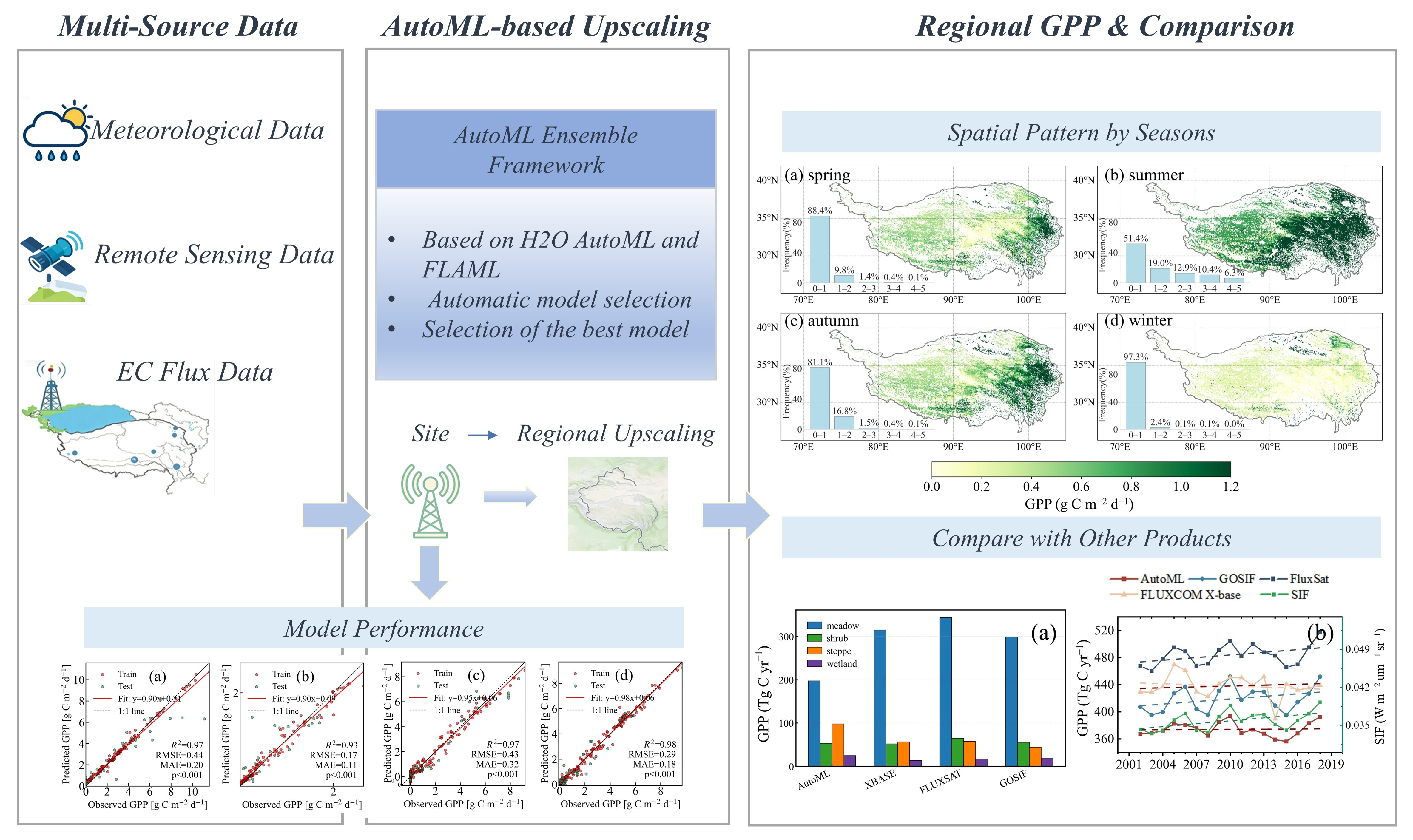
- An optimal AutoML-GPP model for the Qinghai-Tibet Plateau (QTP) was developed using intensified flux tower measurements and multi-source satellite data; it outperformed widely used global GPP products across diverse ecosystems and effectively captured interannual anomalies and vegetation-climate interactions.
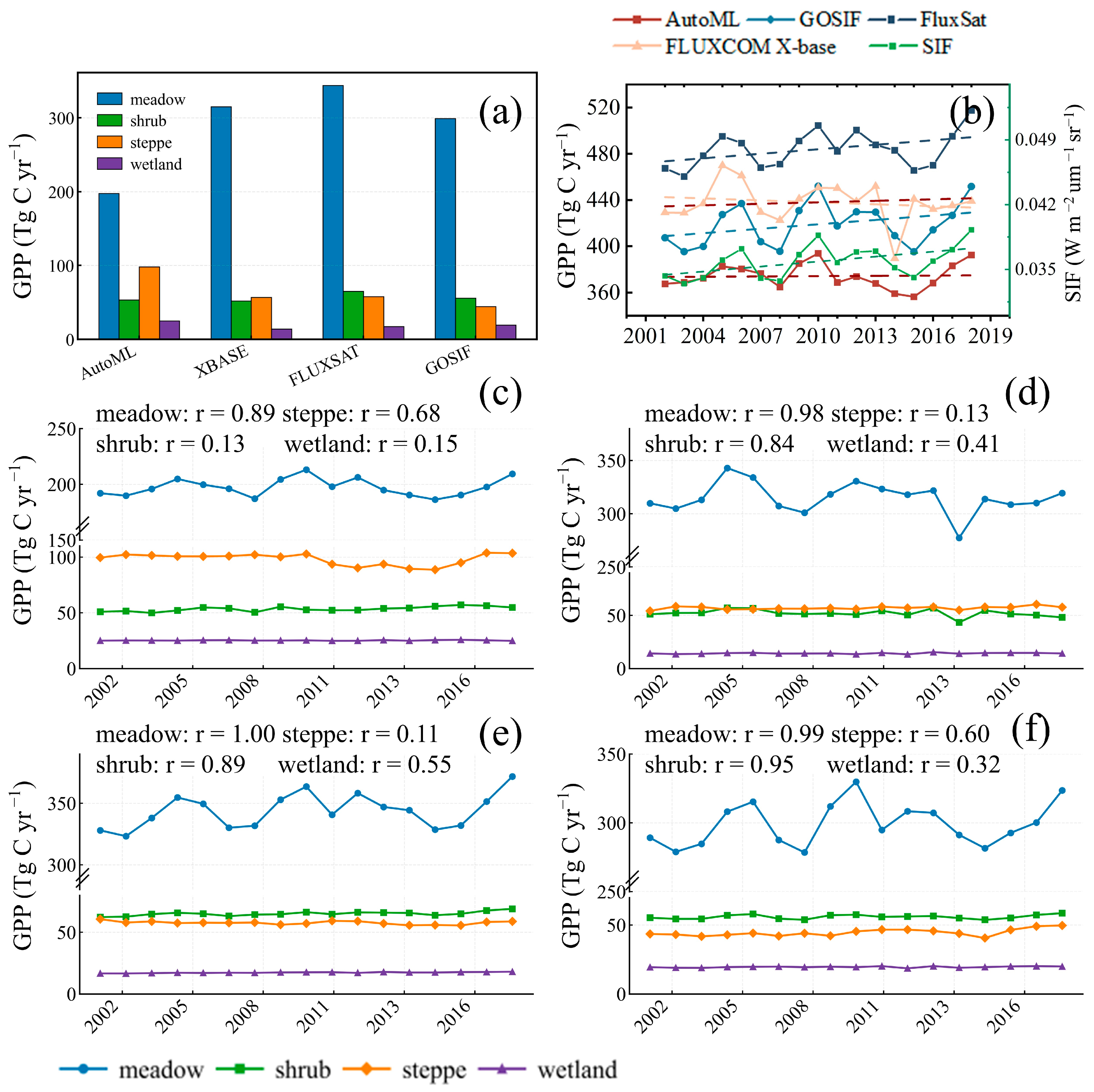
- Regional upscaling estimated the mean annual total GPP of the QTP at 374.20 Tg C yr−1, with a slight increasing trend of 0.08 Tg C yr−1 from 2002 to 2018.
- The AutoML-GPP model provides a more accurate and reliable approach for estimating GPP on the QTP, improving upon existing global products.
- The estimated GPP magnitude, trend, and captured dynamics offer valuable insights for understanding carbon cycling and assessing ecosystem responses to climate change on the QTP.
Abstract
1. Introduction
2. Materials and Methods
2.1. Study Area
2.2. Data Description
2.2.1. Eddy Covariance Data
2.2.2. Geospatial Data
2.2.3. Overview of Benchmark GPP Products
2.3. Methods
2.3.1. AutoML Platforms
2.3.2. Model Development
2.3.3. Feature Importance Analysis Using SHAP
3. Results
3.1. Site-Level Evaluation of AutoML-GPP and Other Data-Driven GPP Products
3.1.1. Performance of the AutoML-GPP Model at the Site Level
3.1.2. Site-Level Comparative Evaluation of Model Performance with Other Data-Driven GPP Products
3.1.3. SHAP-Based Interpretation of Feature Importance Across PFTs
3.2. Spatiotemporal Dynamics of GPP: Evaluation and Interpretation
3.2.1. Spatial Pattern
3.2.2. Seasonal Cycle of GPP
3.2.3. Annual Totals and Interannual Variations in GPP
4. Discussion
4.1. Main Advantages of AutoML-GPP
4.2. Uncertainty in GPP Estimation for the QTP
5. Conclusions
- (1)
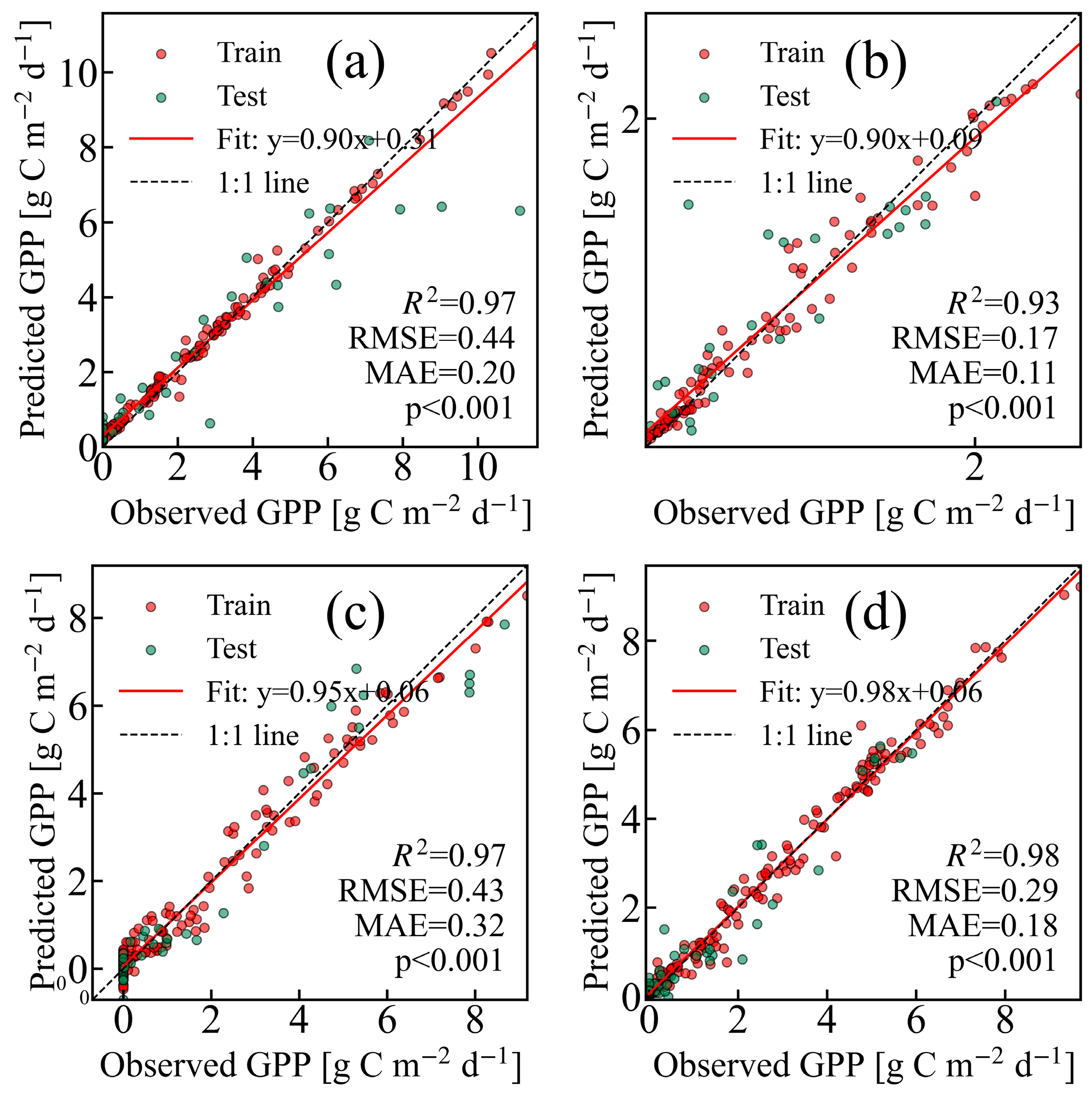
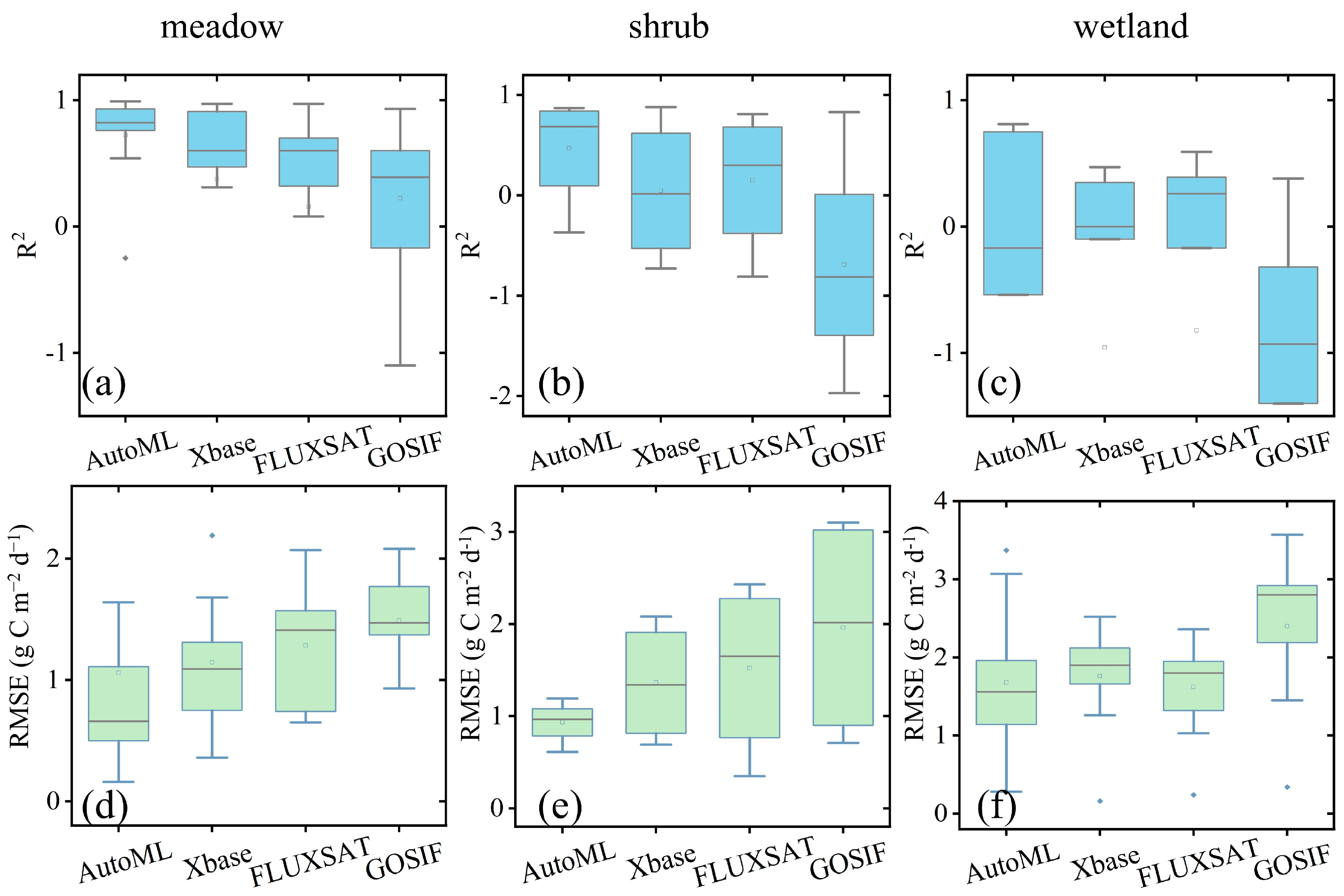
- Validation against in situ flux observations at the site scale indicates that the model performs robustly across alpine meadow, alpine steppe, wetland, and shrub ecosystems, achieving R2 values up to 0.95 and RMSE as low as 0.42 g C m−2 d−1 in the testing set. By validating extracted site-level GPP values from the upscaling GPP datasets against flux observations, AutoML-GPP demonstrates overall superior or equivalent performance over global GPP products (FLUXCOM X-base, GOSIF, and FluxSat).
- (2)
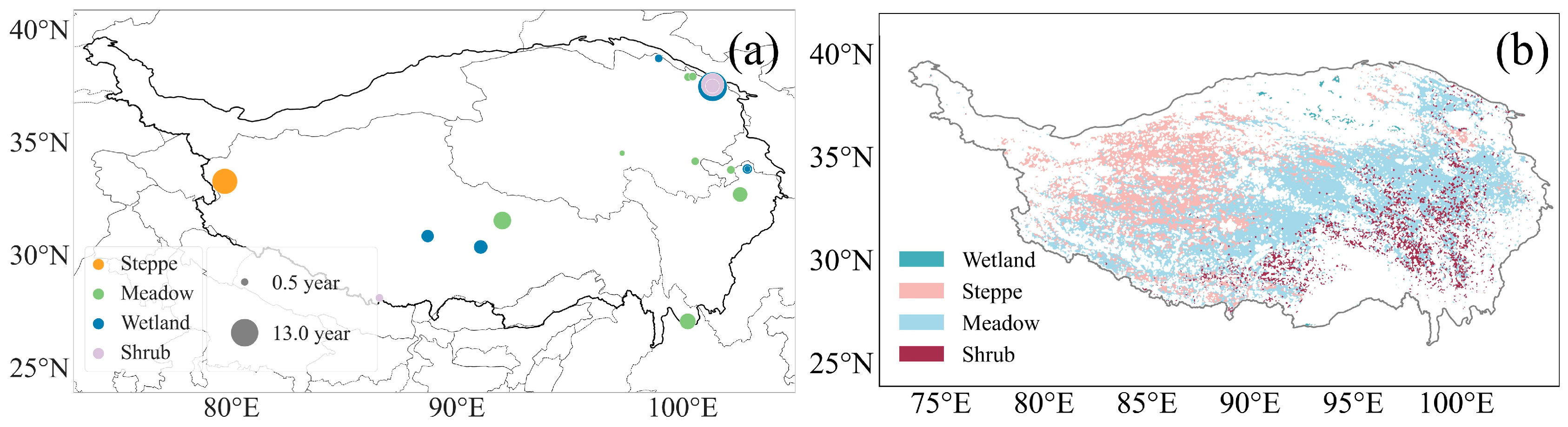
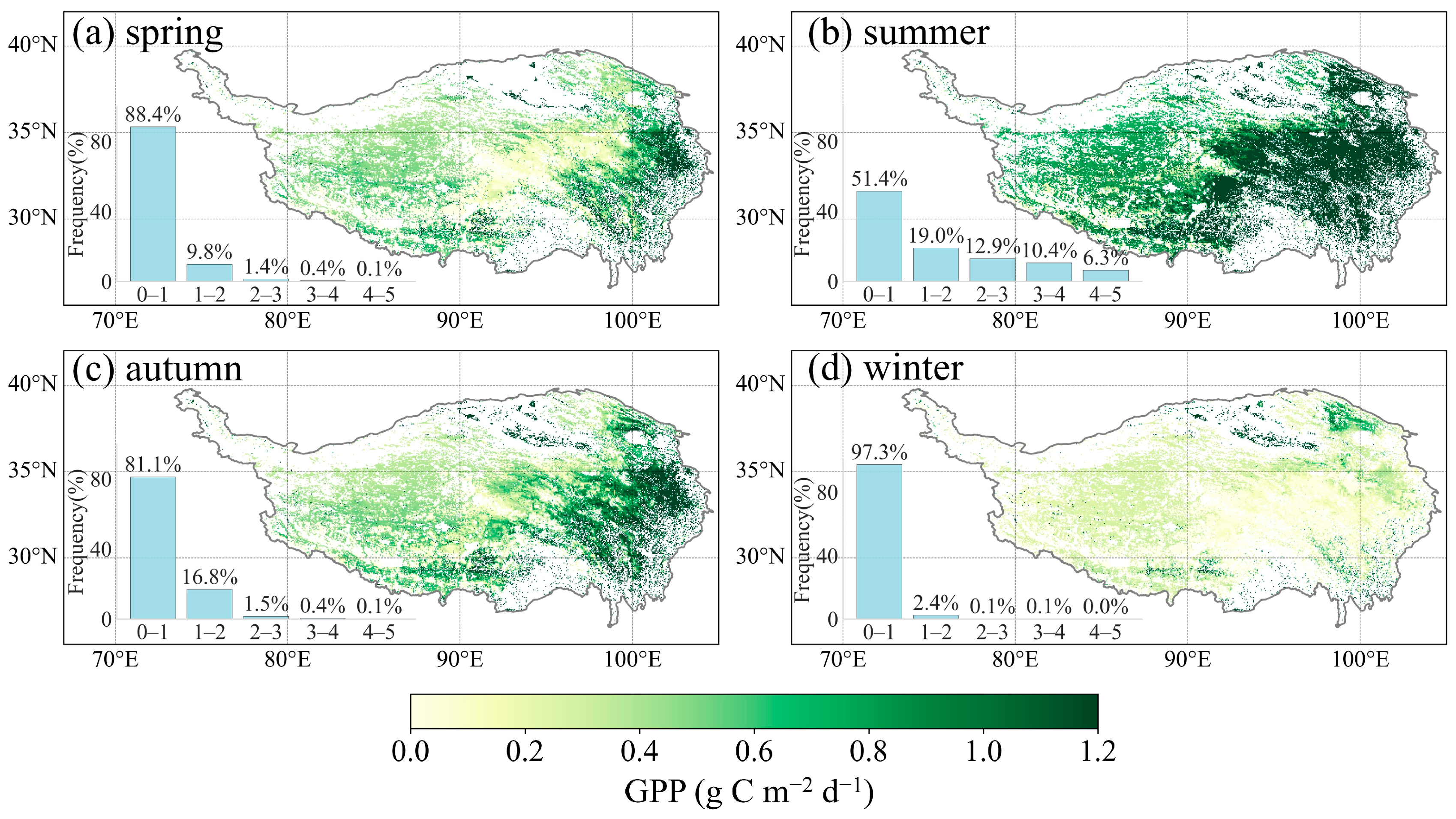
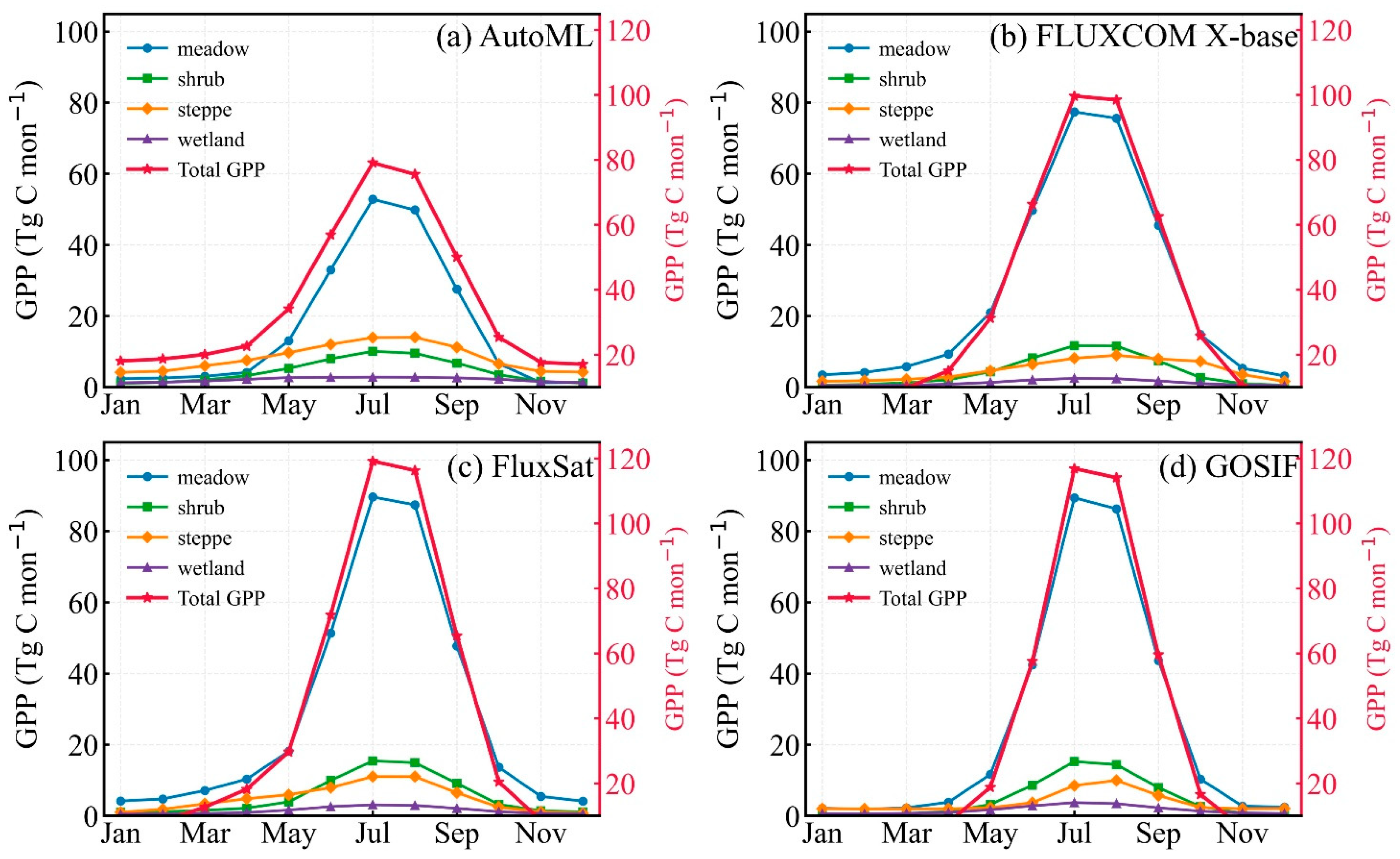
- AutoML-GPP effectively captures the spatiotemporal variability of GPP over the QTP. During 2002–2018, the mean annual GPP was approximately 374.20 Tg C yr−1, exhibiting a slight increasing trend of about 0.08 Tg C yr−1. Spatially, GPP is higher in the eastern QTP, dominated by alpine meadows, and lower in the west, dominated by alpine steppes, reflecting the strong influence of hydrothermal conditions and ecosystem type on regional carbon uptake capacity.
- (3)
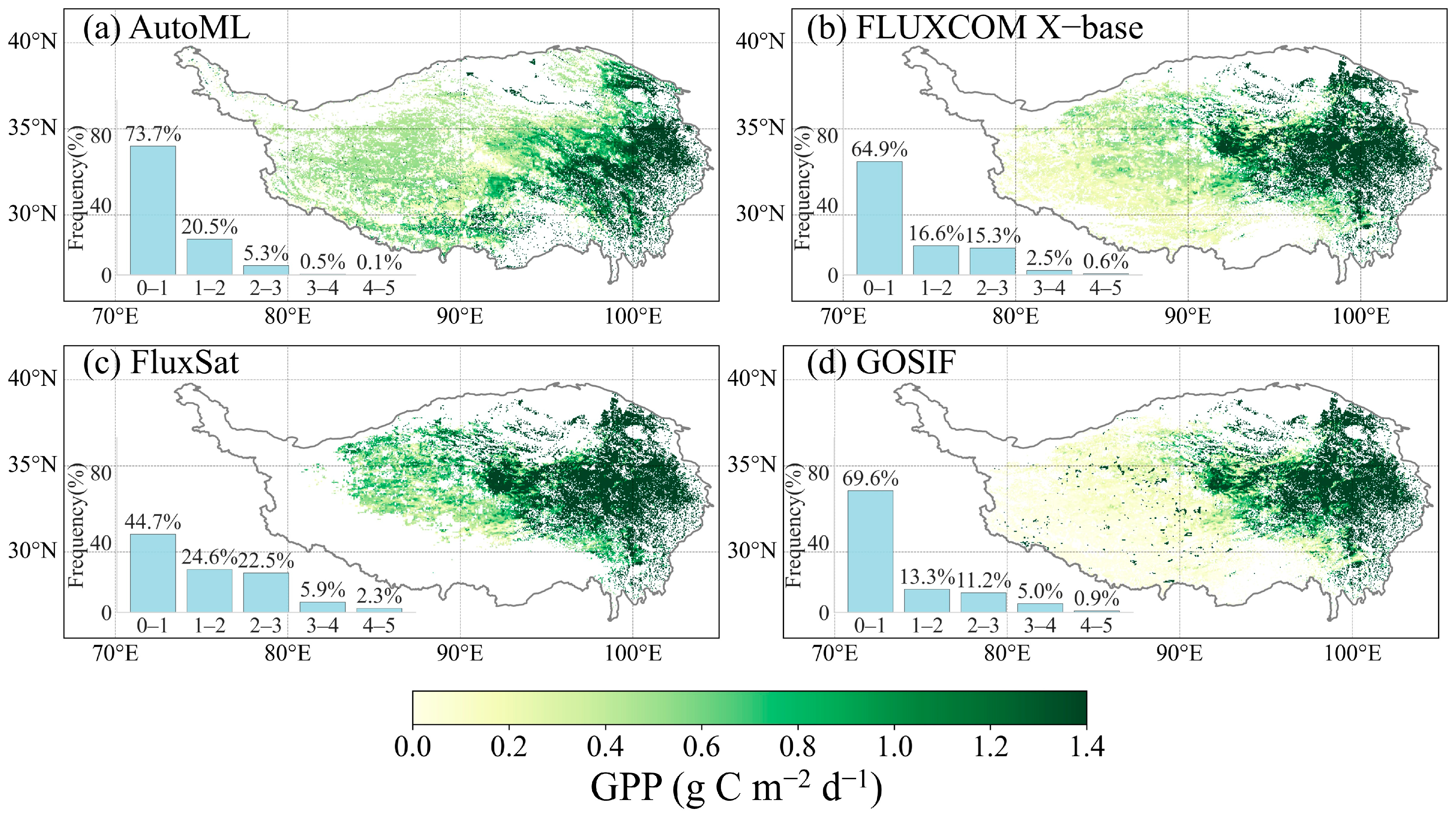
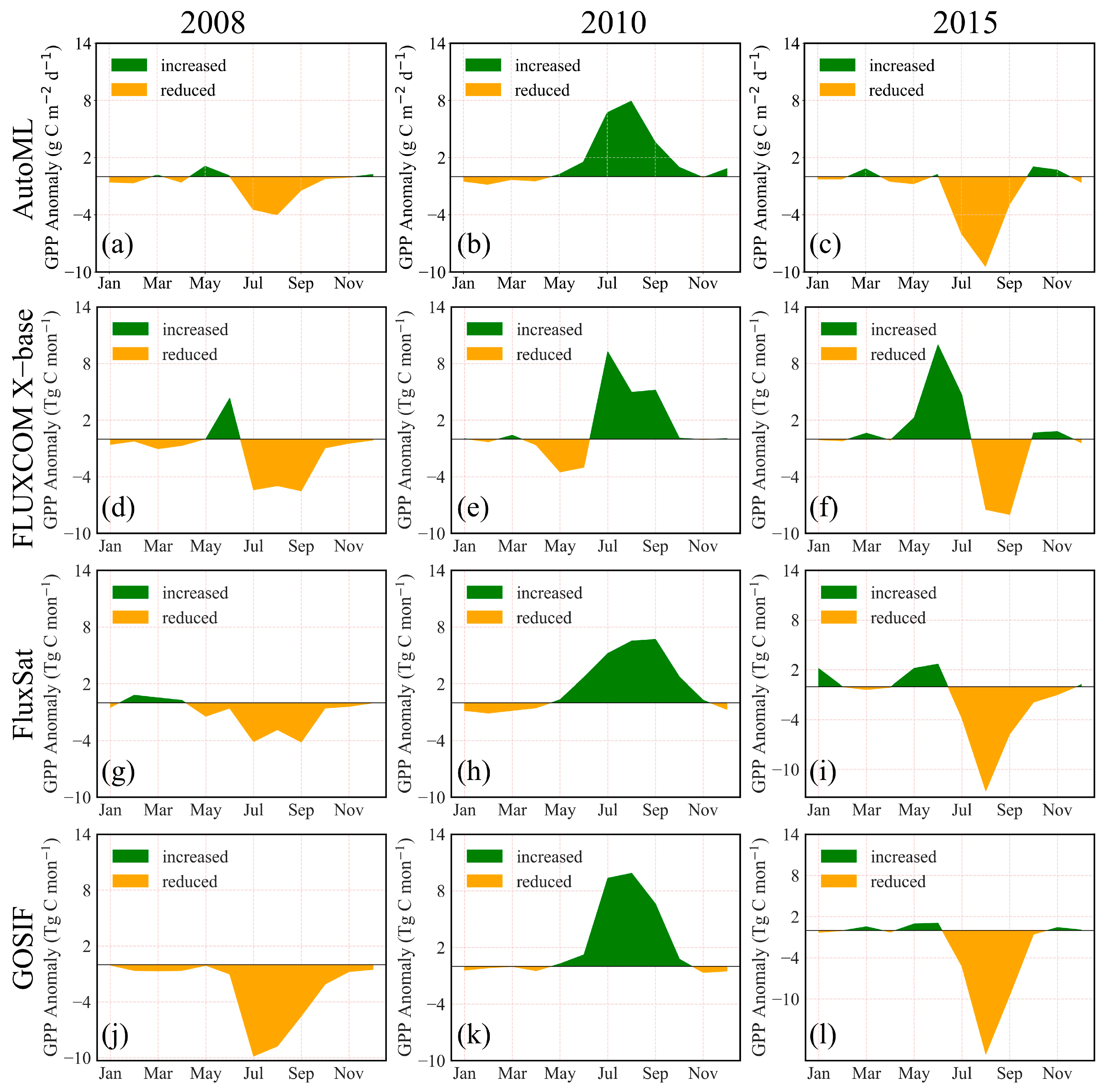
- Notable interannual GPP anomalies due to climate extremes were identified in the years 2008, 2010, and 2015, with spatiotemporal patterns closely coinciding with anomalies in meteorological variables. AutoML-GPP estimates a similar annual mean magnitude of GPP but more reasonable interannual anomalies than the recent released well-known global upscaling flux dataset FLUXCOM X-base.
Supplementary Materials
Author Contributions
Funding
Data Availability Statement
Acknowledgments
Conflicts of Interest
References
- Beer, C.; Reichstein, M.; Tomelleri, E.; Ciais, P.; Jung, M.; Carvalhais, N.; Rödenbeck, C.; Arain, M.A.; Baldocchi, D.; Bonan, G.B.; et al. Terrestrial gross carbon dioxide uptake: Global distribution and covariation with climate. Science 2010, 329, 834–838. [Google Scholar] [CrossRef]
- Cheng, G.; Zhao, L.; Li, R.; Wu, X.; Sheng, Y.; Hu, G.; Zou, D.; Jin, H.; Li, X.; Wu, Q. Characteristic, changes and impacts of permafrost on Qinghai-Tibet Plateau. Chin. Sci. Bull. 2019, 64, 2783–2795. [Google Scholar] [CrossRef]
- Dong, L.; Wang, X. Inconsistent influence of temperature, precipitation, and CO2 variations on the plateau alpine vegetation carbon flux. Npj Clim. Atmos. Sci. 2025, 8, 91. [Google Scholar] [CrossRef]
- Wang, Y.; Xiao, J.; Ma, Y.; Ding, J.; Chen, X.; Ding, Z.; Luo, Y. Persistent and enhanced carbon sequestration capacity of alpine grasslands on Earth’s Third Pole. Sci. Adv. 2023, 9, eade6875. [Google Scholar] [CrossRef]
- Yu, G.-R.; Chen, Z.; Wang, Y.-P. Carbon, water and energy fluxes of terrestrial ecosystems in China. Agric. For. Meteorol. 2024, 346, 109890. [Google Scholar] [CrossRef]
- Stocker, B.D.; Zscheischler, J.; Keenan, T.F.; Prentice, I.C.; Seneviratne, S.I.; Peñuelas, J. Drought impacts on terrestrial primary production underestimated by satellite monitoring. Nat. Geosci. 2019, 12, 264–270. [Google Scholar] [CrossRef]
- Wang, H.; Jia, G.; Epstein, H.E.; Zhao, H.; Zhang, A. Integrating a PhenoCam-derived vegetation index into a light use efficiency model to estimate daily gross primary production in a semi-arid grassland. Agric. For. Meteorol. 2020, 288, 107983. [Google Scholar] [CrossRef]
- Jiang, C.; Ryu, Y. Multi-scale evaluation of global gross primary productivity and evapotranspiration products derived from Breathing Earth System Simulator (BESS). Remote Sens. Environ. 2016, 186, 528–547. [Google Scholar] [CrossRef]
- He, H.; Liu, M.; Xiao, X.; Ren, X.; Zhang, L.; Sun, X.; Yang, Y.; Li, Y.; Zhao, L.; Shi, P.; et al. Large-scale estimation and uncertainty analysis of gross primary production in Tibetan alpine grasslands. J. Geophys. Res. Biogeosci. 2014, 119, 466–486. [Google Scholar] [CrossRef]
- Li, J.; Jia, K.; Zhao, L.; Tao, G.; Zhao, W.; Liu, Y.; Yao, Y.; Zhang, X. An improved gross primary production model considering atmospheric CO2 fertilization: The Qinghai–Tibet Plateau as a case study. Remote Sens. 2024, 16, 1856. [Google Scholar] [CrossRef]
- Ma, M.; Yuan, W.; Dong, J.; Zhang, F.; Cai, W.; Li, H. Large-scale estimates of gross primary production on the Qinghai-Tibet plateau based on remote sensing data. Int. J. Digit. Earth 2018, 11, 1166–1183. [Google Scholar] [CrossRef]
- Lin, S.; Wang, G.; Feng, J.; Dan, L.; Sun, X.; Hu, Z.; Chen, X.; Xiao, X. A carbon flux assessment driven by environmental factors over the Tibetan Plateau and various permafrost regions. J. Geophys. Res. Biogeosci. 2019, 124, 1132–1147. [Google Scholar] [CrossRef]
- Huang, Y.; Nicholson, D.; Huang, B.; Cassar, N. Global estimates of marine gross primary production based on machine learning upscaling of field observations. Glob. Biogeochem. Cycles 2021, 35, e2020GB006718. [Google Scholar] [CrossRef]
- Liu, S.; He, W.; Xu, P.; Zhao, M.; Huang, C.; Nguyen, N.T. Modeling carbonyl sulfide and carbon dioxide fluxes in a northern boreal coniferous forest using memory-based deep learning. Ecol. Model. 2025, 510, 111283. [Google Scholar] [CrossRef]
- Ma, Y.; Guan, X.; Wang, Y.; Li, Y.; Lin, D.; Shen, H. GPP estimation by transfer learning with combined solar-induced chlorophyll fluorescence and eddy covariance data. Int. J. Appl. Earth Obs. Geoinf. 2025, 139, 104503. [Google Scholar] [CrossRef]
- Jung, M.; Schwalm, C.; Migliavacca, M.; Walther, S.; Camps-Valls, G.; Koirala, S.; Anthoni, P.; Besnard, S.; Bodesheim, P.; Carvalhais, N.; et al. Scaling carbon fluxes from eddy covariance sites to globe: Synthesis and evaluation of the FLUXCOM approach. Biogeosciences 2020, 17, 1343–1365. [Google Scholar] [CrossRef]
- Zheng, Z.; Fiore, A.M.; Westervelt, D.M.; Milly, G.P.; Goldsmith, J.; Karambelas, A.; Curci, G.; Randles, C.A.; Paiva, A.R.; Wang, C.; et al. Automated machine learning to evaluate the information content of tropospheric trace gas columns for fine particle estimates over India: A modeling testbed. J. Adv. Model. Earth Syst. 2023, 15, e2022MS003099. [Google Scholar] [CrossRef]
- Nguyen, N.T.; Lü, H.; He, W.; Xu, P.; Zhao, M.; Liu, S.; Zhu, Y.; Lei, X. Automated machine learning integrating multi-source satellite observations to predict gross and net CO2 fluxes of coastal wetlands in China. Environ. Res. Lett. 2025, 20, 084011. [Google Scholar] [CrossRef]
- Joiner, J.; Yoshida, Y.; Zhang, Y.; Duveiller, G.; Jung, M.; Lyapustin, A.; Wang, Y.; Tucker, C.J. Estimation of terrestrial global gross primary production (GPP) with satellite data-driven models and eddy covariance flux data. Remote Sens. 2018, 10, 1346. [Google Scholar] [CrossRef]
- Li, X.; Xiao, J. Mapping photosynthesis solely from solar-induced chlorophyll fluorescence: A global, fine-resolution dataset of gross primary production derived from OCO-2. Remote Sens. 2019, 11, 2563. [Google Scholar] [CrossRef]
- Nelson, J.A.; Walther, S.; Gans, F.; Kraft, B.; Weber, U.; Novick, K.; Buchmann, N.; Migliavacca, M.; Wohlfahrt, G.; Šigut, L.; et al. X-BASE: The first terrestrial carbon and water flux products from an extended data-driven scaling framework, FLUXCOM-X. Biogeosciences 2024, 21, 5079–5115. [Google Scholar] [CrossRef]
- Tan, K.; Ciais, P.; Piao, S.; Wu, X.; Tang, Y.; Vuichard, N.; Liang, S.; Fang, J. Application of the ORCHIDEE global vegetation model to evaluate biomass and soil carbon stocks of Qinghai-Tibetan grasslands. Glob. Biogeochem. Cycles 2010, 24. [Google Scholar] [CrossRef]
- Nieberding, F.; Wille, C.; Fratini, G.; Asmussen, M.O.; Wang, Y.; Ma, Y.; Sachs, T. A long-term (2005–2019) eddy covariance data set of CO2 and H2O fluxes from the Tibetan alpine steppe. Earth Syst. Sci. Data 2020, 12, 2705–2724. [Google Scholar] [CrossRef]
- Reichstein, M.; Falge, E.; Baldocchi, D.; Papale, D.; Aubinet, M.; Berbigier, P.; Bernhofer, C.; Buchmann, N.; Gilmanov, T.; Granier, A.; et al. On the separation of net ecosystem exchange into assimilation and ecosystem respiration: Review and improved algorithm. Glob. Change Biol. 2005, 11, 1424–1439. [Google Scholar] [CrossRef]
- Lundberg, S.M.; Lee, S.-I. A unified approach to interpreting model predictions. In Proceedings of the 31st Conference on Neural Information Processing Systems (NIPS 2017), Long Beach, CA, USA, 4–9 December 2017; Volume 30, pp. 4765–4774. [Google Scholar]
- Zhou, G.; Ren, H.; Liu, T.; Zhou, L.; Ji, Y.; Song, X.; Lv, X. A new regional vegetation mapping method based on terrain-climate-remote sensing and its application on the Qinghai-Xizang Plateau. Sci. China Earth Sci. 2022, 66, 237–246. [Google Scholar] [CrossRef]
- He, J.; Yang, K.; Tang, W.; Lu, H.; Qin, J.; Chen, Y.; Li, X. The first high-resolution meteorological forcing dataset for land process studies over China. Sci. Data 2020, 7, 25. [Google Scholar] [CrossRef]
- Muñoz Sabater, J. ERA5-Land Monthly Averaged Data from 1950 to Present. Copernicus Climate Change Service (C3S) Climate Data Store (CDS) 2019. Available online: https://cds.climate.copernicus.eu (accessed on 20 December 2024).
- Takaku, J.; Tadono, T.; Doutsu, M.; Ohgushi, F.; Kai, H. Updates of ‘AW3D30’ ALOS global digital surface model with other open access datasets. Int. Arch. Photogramm. Remote Sens. Spatial Inf. Sci. 2020, XLIII-B4-2020, 183–189. [Google Scholar] [CrossRef]
- Yuan, W.; Zheng, Y.; Piao, S.; Ciais, P.; Lombardozzi, D.; Wang, Y.; Ryu, Y.; Chen, G. Increased atmospheric vapor pressure deficit reduces global vegetation growth. Sci. Adv. 2019, 5, eaax1396. [Google Scholar] [CrossRef] [PubMed]
- Didan, K. MODIS/Terra Vegetation Indices 16-Day L3 Global 250m SIN Grid V061 [Data Set]; NASA EOSDIS Land Processes Distributed Active Archive Center: Sioux Falls, SD, USA, 2021. [Google Scholar] [CrossRef]
- Li, X.; Xiao, J. A global, 0.05-degree product of solar-induced chlorophyll fluorescence derived from OCO-2, MODIS, and reanalysis data. Remote Sens. 2019, 11, 517. [Google Scholar] [CrossRef]
- Liang, S.; Cheng, J.; Jia, K.; Jiang, B.; Liu, Q.; Xiao, Z.; Yao, Y.; Yuan, W.; Zhang, X.; Zhao, X.; et al. The Global Land Surface Satellite (GLASS) product suite. Bull. Am. Meteorol. Soc. 2021, 102, E323–E337. [Google Scholar] [CrossRef]
- Gaber, M.; Kang, Y.; Schurgers, G.; Keenan, T. Using automated machine learning for the upscaling of gross primary productivity. Biogeosciences 2024, 21, 2447–2472. [Google Scholar] [CrossRef]
- Jin, Z.; Zhuang, Q.; He, J.-S.; Zhu, X.; Song, W. Net exchanges of methane and carbon dioxide on the Qinghai-Tibetan Plateau from 1979 to 2100. Environ. Res. Lett. 2015, 10, 085007. [Google Scholar] [CrossRef]
- Yuan, Y.; Guo, W.; Tang, S.; Zhang, J. Effects of patterns of urban green-blue landscape on carbon sequestration using XGBoost-SHAP model. J. Clean. Prod. 2024, 476, 143640. [Google Scholar] [CrossRef]
- Pastorello, G.; Trotta, C.; Canfora, E.; Chu, H.; Christianson, D.; Cheah, Y.W.; Poindexter, C.; Chen, J.; Elbashandy, A.; Humphrey, M.; et al. The FLUXNET2015 dataset and the ONEFlux processing pipeline for eddy covariance data. Sci. Data 2020, 7, 225. [Google Scholar] [CrossRef] [PubMed]
- Guo, R.; Chen, T.; Chen, X.; Yuan, W.; Liu, S.; He, B.; Li, L.; Wang, S.; Hu, T.; Yan, Q.; et al. Estimating global GPP from the plant functional type perspective using a machine learning approach. J. Geophys. Res. Biogeosci. 2023, 128, e2022JG007100. [Google Scholar] [CrossRef]
- Huang, C.; He, W.; Liu, J.; Nguyen, N.T.; Yang, H.; Lv, Y.; Chen, H.; Zhao, M. Exploring the potential of long short-term memory networks for predicting net CO2 exchange across various ecosystems with multi-source data. J. Geophys. Res. Atmos. 2024, 129, e2023JD040418. [Google Scholar] [CrossRef]
- Baldocchi, D.D. How eddy covariance flux measurements have contributed to our understanding of global change biology. Glob. Change Biol. 2020, 26, 242–260. [Google Scholar] [CrossRef] [PubMed]
- Chang, X.; Xing, Y.; Gong, W.; Yang, C.; Guo, Z.; Wang, D.; Wang, J.; Yang, H.; Xue, G.; Yang, S. Evaluating gross primary productivity over 9 ChinaFlux sites based on random forest regression models, remote sensing, and eddy covariance data. Sci. Total Environ. 2023, 875, 162601. [Google Scholar] [CrossRef]
- Zeng, J.; Zhou, T.; Xu, Y.; Lin, Q.; Tan, E.; Zhang, Y.; Wu, X.; Zhang, J.; Liu, X. The fusion of multiple scale data indicates that the carbon sink function of the Qinghai-Tibet Plateau is substantial. Carbon Balance Manag. 2023, 18, 19. [Google Scholar] [CrossRef]
- Zhang, B.; Li, Q.; Jing, Y.; Niu, Z.; Gong, P.; Zhang, D. Alpine wetland distribution patterns and decreasing trends in the Qinghai-Tibetan Plateau. Sci. Bull. 2025, 70, 3509–3511. [Google Scholar] [CrossRef]
- Li, X.; Ma, H.; Ran, Y.; Wang, X.; Zhu, G.; Liu, F.; He, H.; Zhang, Z.; Huang, C. Terrestrial carbon cycle model-data fusion: Progress and challenges. Sci. China Earth Sci. 2021, 64, 1645–1657. [Google Scholar] [CrossRef]
- Wang, J.; Fang, W.; Xu, P.; Li, H.; Chen, D.; Wang, Z.; You, Y.; Rafaniello, C. Satellite evidence for divergent forest responses within close vicinity to climate fluctuations in a complex terrain. Remote Sens. 2023, 15, 2749. [Google Scholar] [CrossRef]



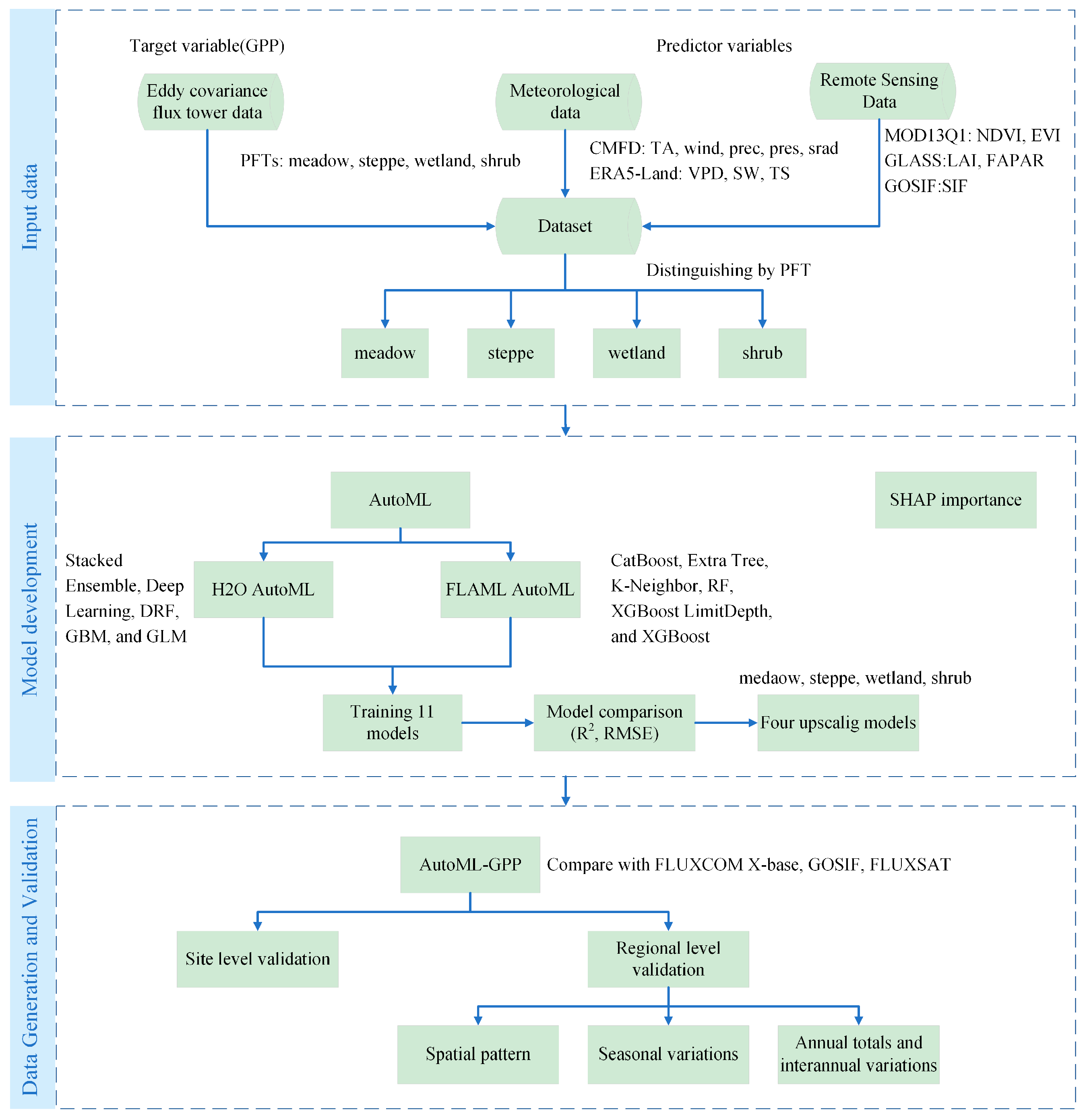
| Variables | Resolution | Period | Source | Reference |
|---|---|---|---|---|
| TA | 0.1° | 1979–2018 | CMFD | [27] |
| wind | 0.1° | 1979–2018 | CMFD | [27] |
| prec | 0.1° | 1979–2018 | CMFD | [27] |
| pres | 0.1° | 1979–2018 | CMFD | [27] |
| srad | 0.1° | 1979–2018 | CMFD | [27] |
| SW * | 0.1° | 2002–2018 | ERA5-Land | [28] |
| Ts * | 0.1° | 2002–2018 | ERA5-Land | [28] |
| VPD | 0.05° | 2002–2018 | Calculated from ERA5-Land | [28,29,30] |
| NDVI | 250 m | 2002–2018 | MOD13Q1 | [31] |
| EVI | 250 m | 2002–2018 | MOD13Q1 | [31] |
| SIF | 0.05° | 2002–2018 | GOSIF | [32] |
| LAI | 0.05° | 2002–2018 | GLASS | [33] |
| FAPAR | 0.05° | 2002–2018 | GLASS | [33] |
Disclaimer/Publisher’s Note: The statements, opinions and data contained in all publications are solely those of the individual author(s) and contributor(s) and not of MDPI and/or the editor(s). MDPI and/or the editor(s) disclaim responsibility for any injury to people or property resulting from any ideas, methods, instructions or products referred to in the content. |
© 2025 by the authors. Licensee MDPI, Basel, Switzerland. This article is an open access article distributed under the terms and conditions of the Creative Commons Attribution (CC BY) license.
Share and Cite
Zhao, M.; Yang, Y.; Weng, G.; He, W.; Yang, H.; Nguyen, N.T.; Wang, J.; Liu, S.; Chen, J.; Lei, X.; et al. Fusing Enhanced Flux Measurements and Multi-Source Satellite Observations to Improve GPP Estimation for the Qinghai–Tibet Plateau Based on AutoML Techniques. Remote Sens. 2026, 18, 130. https://doi.org/10.3390/rs18010130
Zhao M, Yang Y, Weng G, He W, Yang H, Nguyen NT, Wang J, Liu S, Chen J, Lei X, et al. Fusing Enhanced Flux Measurements and Multi-Source Satellite Observations to Improve GPP Estimation for the Qinghai–Tibet Plateau Based on AutoML Techniques. Remote Sensing. 2026; 18(1):130. https://doi.org/10.3390/rs18010130
Chicago/Turabian StyleZhao, Mengyao, Ying Yang, Guoyong Weng, Wei He, Hua Yang, Ngoc Tu Nguyen, Jianqiong Wang, Shuai Liu, Jiayi Chen, Xinhui Lei, and et al. 2026. "Fusing Enhanced Flux Measurements and Multi-Source Satellite Observations to Improve GPP Estimation for the Qinghai–Tibet Plateau Based on AutoML Techniques" Remote Sensing 18, no. 1: 130. https://doi.org/10.3390/rs18010130
APA StyleZhao, M., Yang, Y., Weng, G., He, W., Yang, H., Nguyen, N. T., Wang, J., Liu, S., Chen, J., Lei, X., Ma, T., Huang, Z., & Xu, P. (2026). Fusing Enhanced Flux Measurements and Multi-Source Satellite Observations to Improve GPP Estimation for the Qinghai–Tibet Plateau Based on AutoML Techniques. Remote Sensing, 18(1), 130. https://doi.org/10.3390/rs18010130