Article

Super Resolution Reconstruction of Mars Thermal Infrared Remote Sensing Images Integrating Multi-Source Data

School of Earth Sciences, Zhejiang University, Hangzhou 310027, China
*
Author to whom correspondence should be addressed.
Remote Sens. 2025, 17(13), 2115; https://doi.org/10.3390/rs17132115

Submission received: 11 April 2025 / Revised: 7 June 2025 / Accepted: 18 June 2025 / Published: 20 June 2025
(This article belongs to the Section AI Remote Sensing)

Abstract

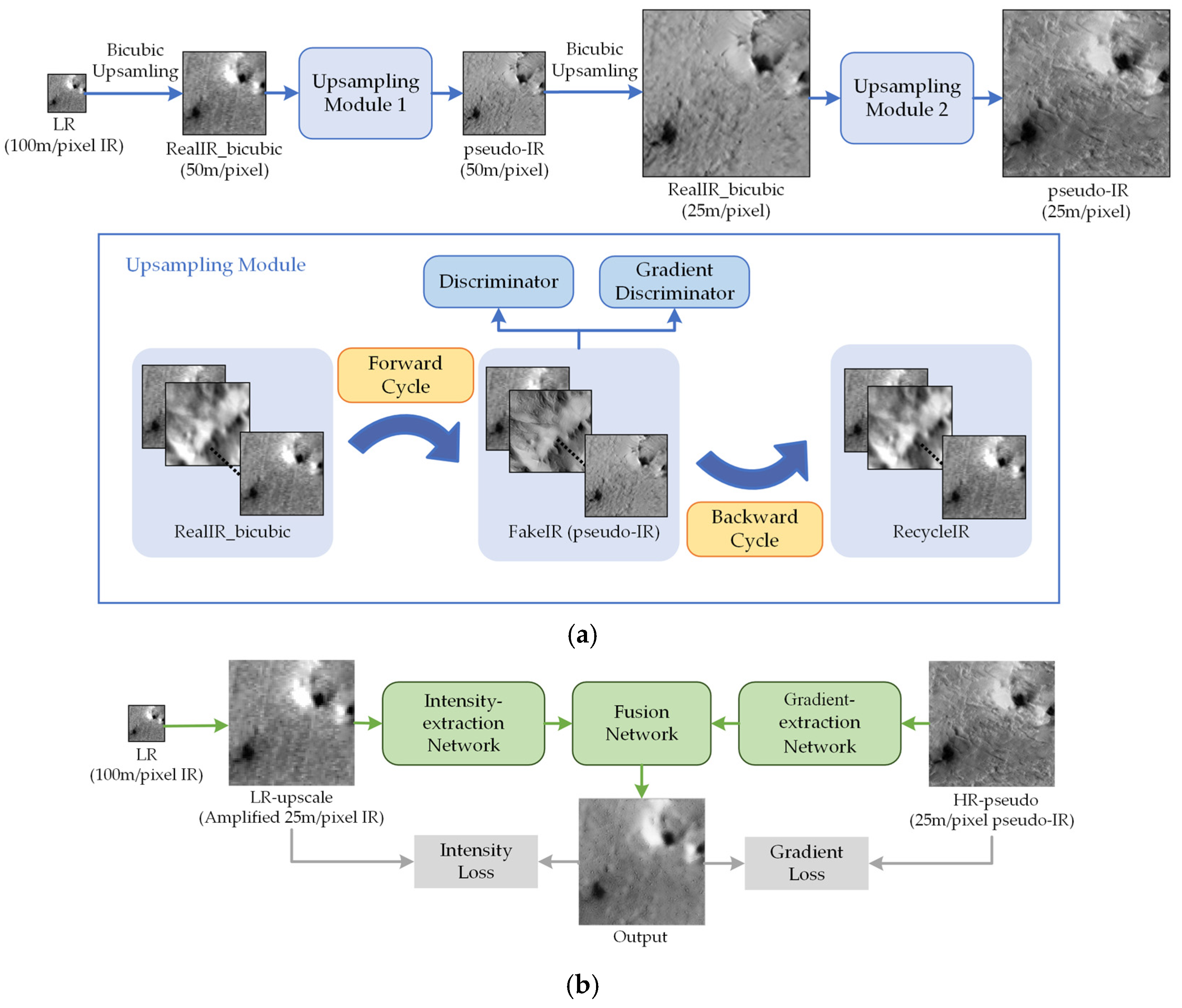
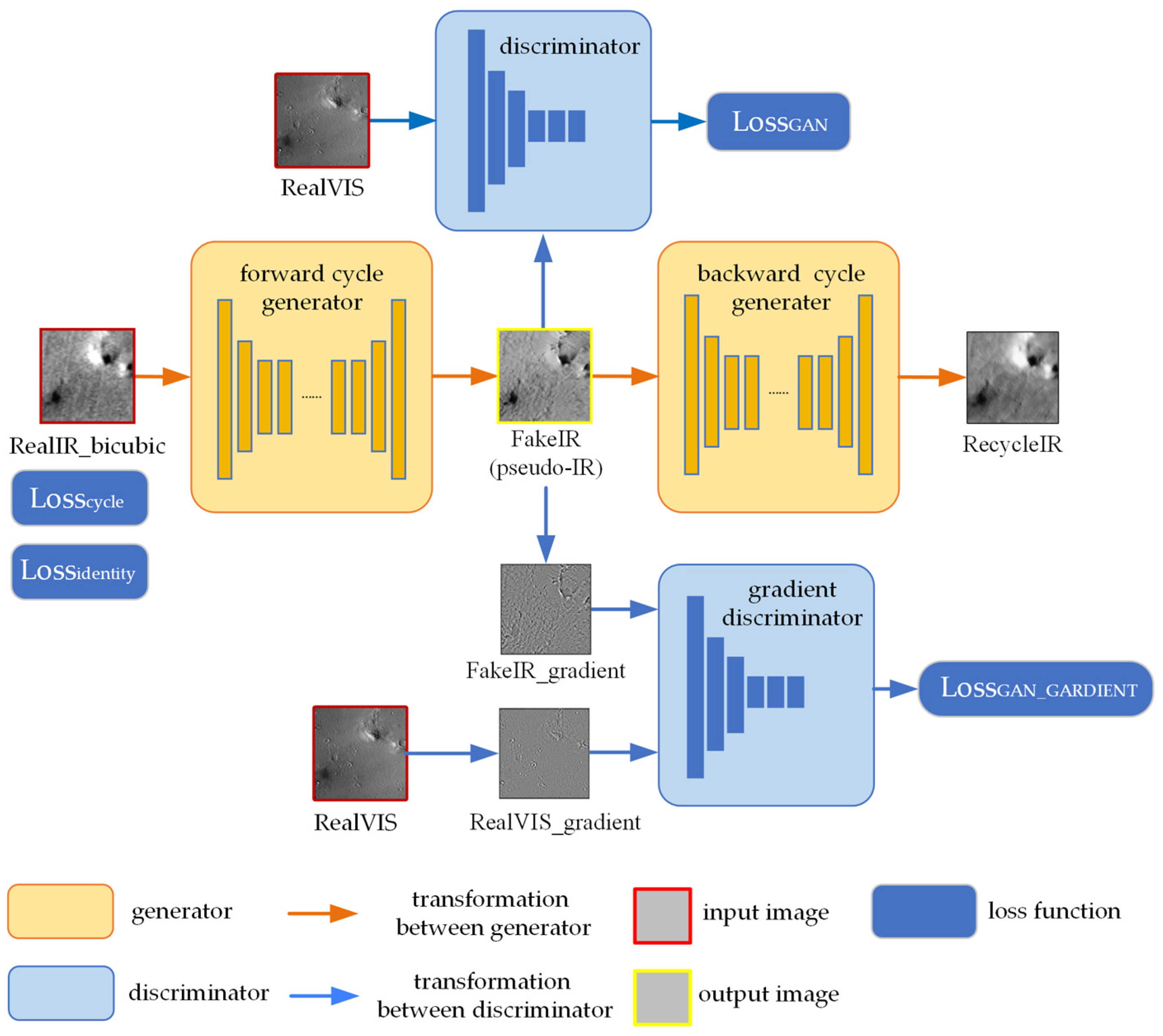
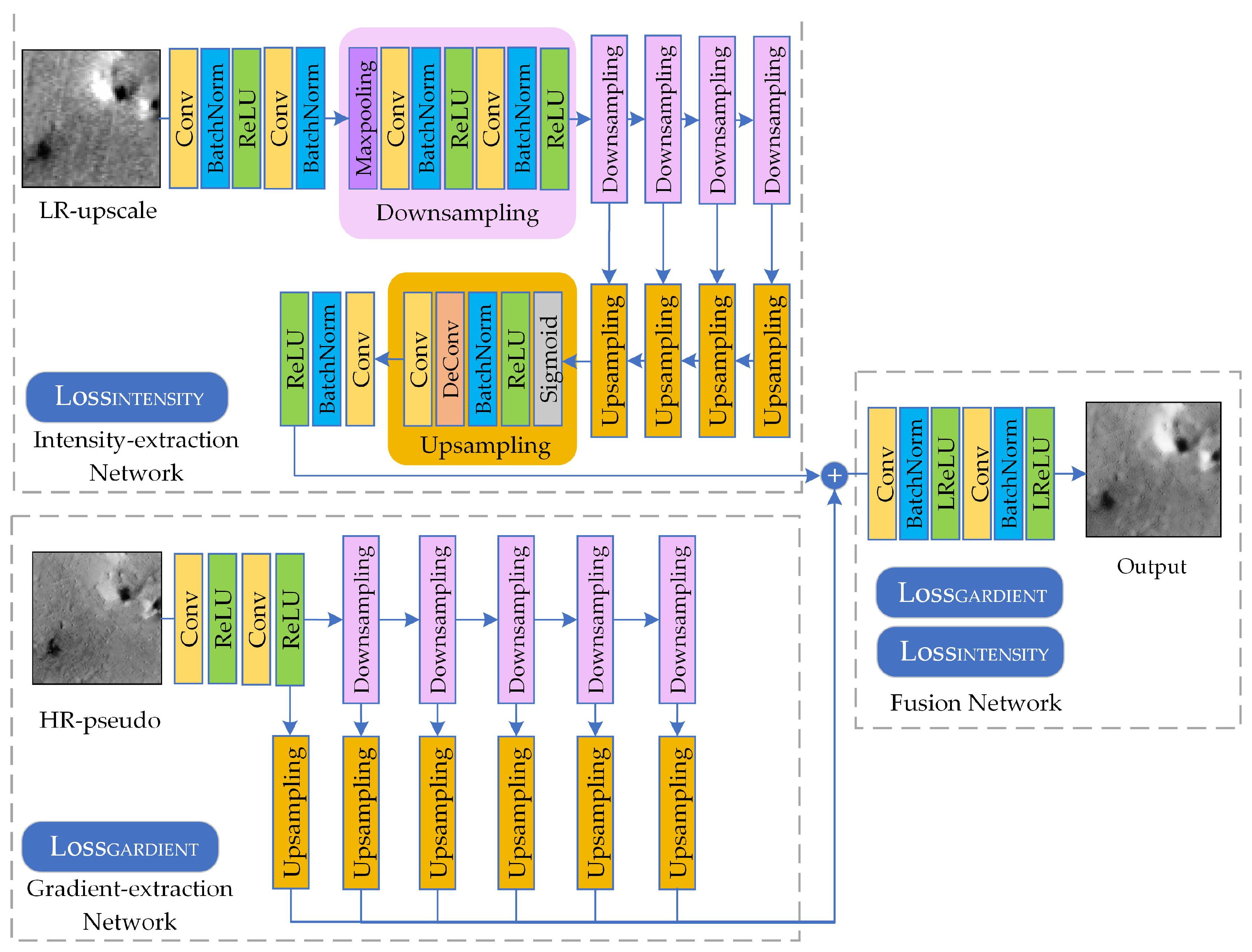
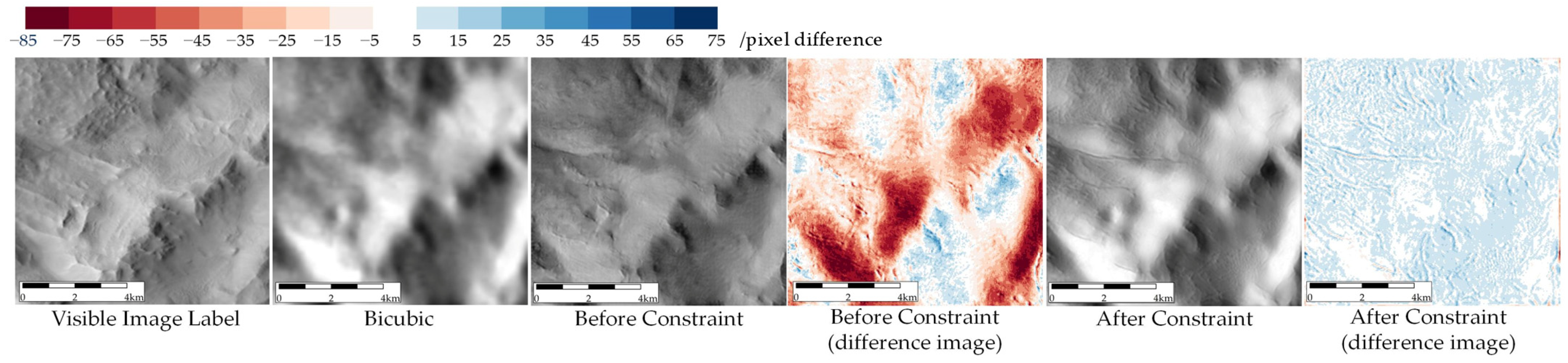
As the planet most similar to Earth in the solar system, Mars holds an important role in exploring significant scientific problems, such as the evolution of the solar system and the origins of life. Research on Mars mainly rely on planetary remote sensing technology, among which thermal infrared remote sensing is of great studying significance. This technology enables the recording of Martian thermal radiation properties. However, the current spatial resolution of Mars thermal infrared remote sensing images remains relatively low, limiting the detection of fine-scale thermal anomalies and the generation of higher-precision surface compositional maps. While updating extraterrestrial exploration satellites can help enhancing the spatial resolution of thermal infrared images, this method entails high cost and long update cycles, making improvement difficult to conduct in the short term. To address this issue, this paper proposes a super-resolution reconstruction method for Mars thermal infrared remote sensing images integrating multi-source data. First, based on the principle of domain adaptation, we introduced a method using highly correlated visible light images as auxiliary to enhance the spatial resolution of thermal infrared images. Then, a multi-sources data integration method is designed to constrain the thermal radiation flux of resulting images, ensuring the radiation distribution remains consistent with the original low-resolution thermal infrared images. Through both subjective and objective evaluations, our method is demonstrated to significantly enhance the spatial resolution of existing Mars thermal infrared images. It optimizes the quality of existing data, increasing the resolution of the original thermal infrared images by four times. In doing so, it not only recovers finer texture details to produce better visual effects than typical super-resolution methods, but also maintains the consistency of thermal radiation flux, with the error after applying the consistency constraint reduced by nearly tenfold, ensuring the applicability of the results for scientific research.
Keywords: super-resolution; deep learning; thermal infrared image; Mars super-resolution; deep learning; thermal infrared image; Mars