Article

Change Analysis in Urban Areas Based on Statistical Features and Temporal Clustering Using TerraSAR-X Time-Series Images


1
Key Laboratory of Technology in Geo-spatial Information Processing and Application System, Institute of Electronics, Chinese Academy of Sciences, Beijing 100190, China
2
Institute of Electronics, Chinese Academy of Sciences, Beijing 100190, China
3
School of Electronic, Electrical and Communication Engineering, University of Chinese Academy of Sciences, Beijing 100049, China
4
State Key Laboratory of High Speed Railway Track Technology, China Academy of Railway Sciences, Beijing 100891, China
*
Author to whom correspondence should be addressed.
Remote Sens. 2019, 11(8), 926; https://doi.org/10.3390/rs11080926
Submission received: 8 March 2019 / Revised: 12 April 2019 / Accepted: 14 April 2019 / Published: 16 April 2019
(This article belongs to the Special Issue Multi-temporal Synthetic Aperture Radar)

Abstract

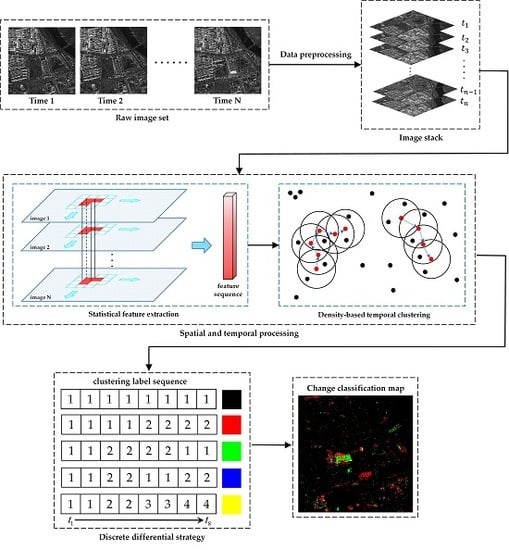
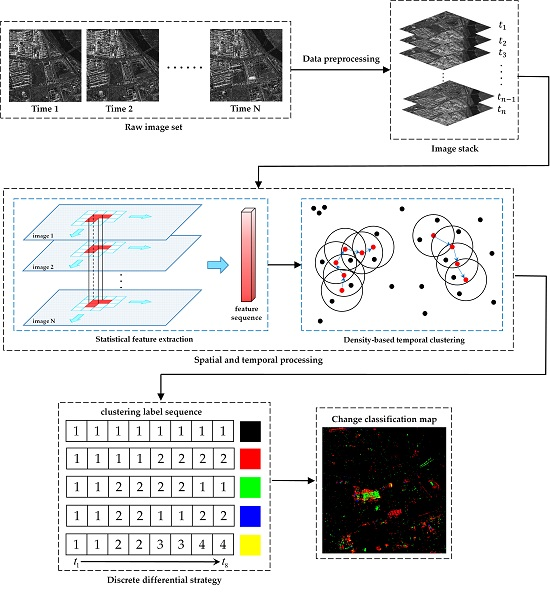
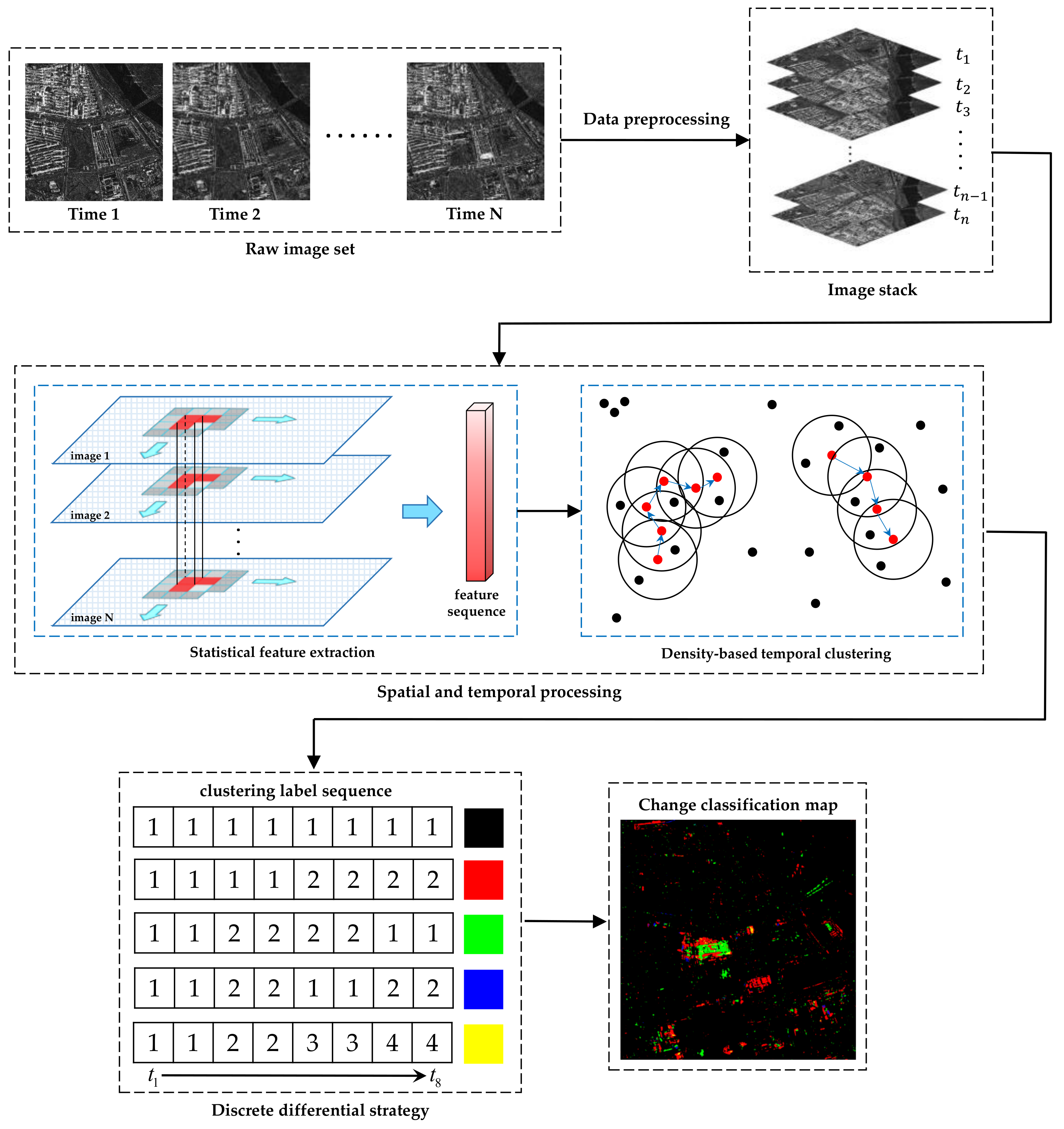
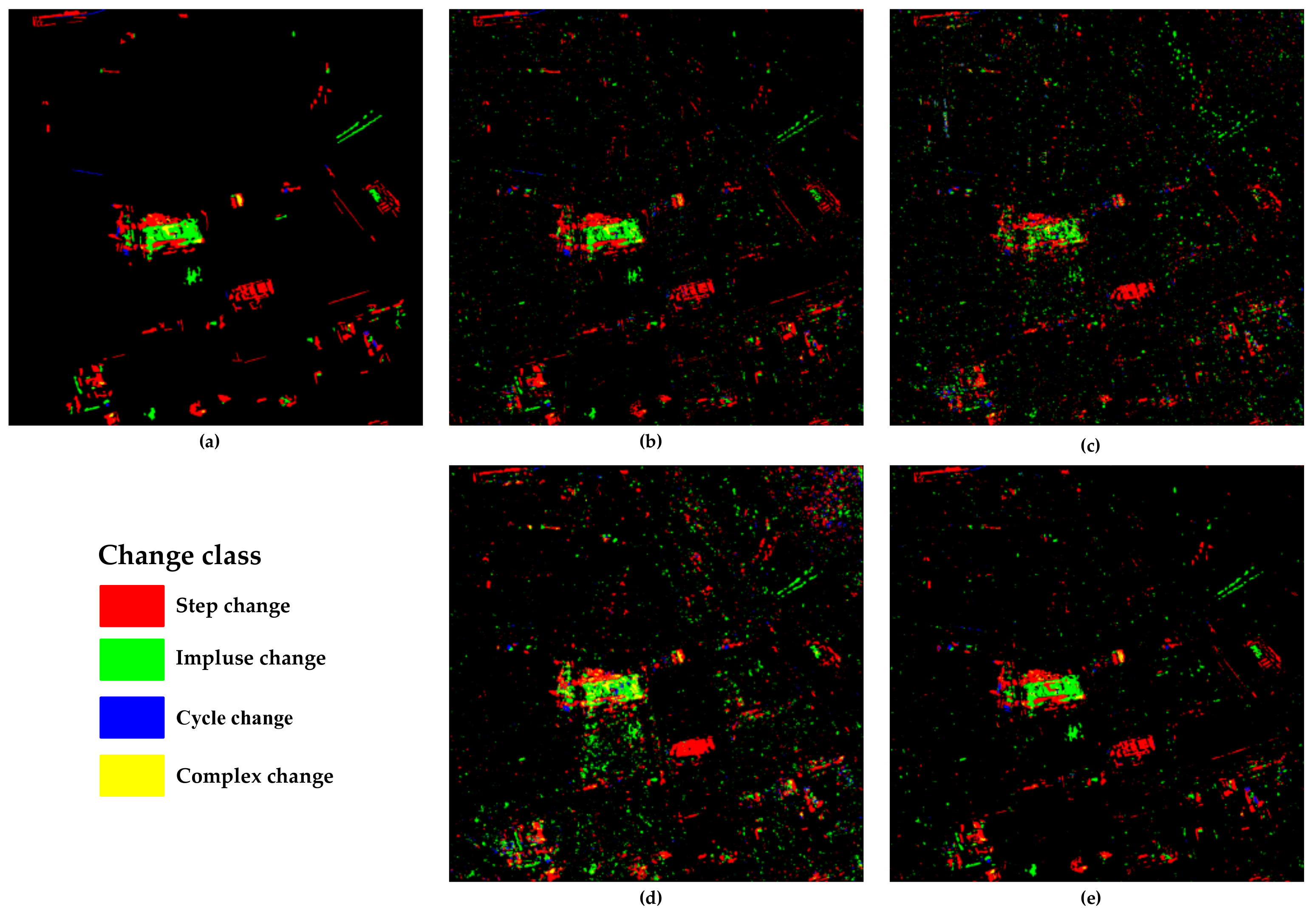
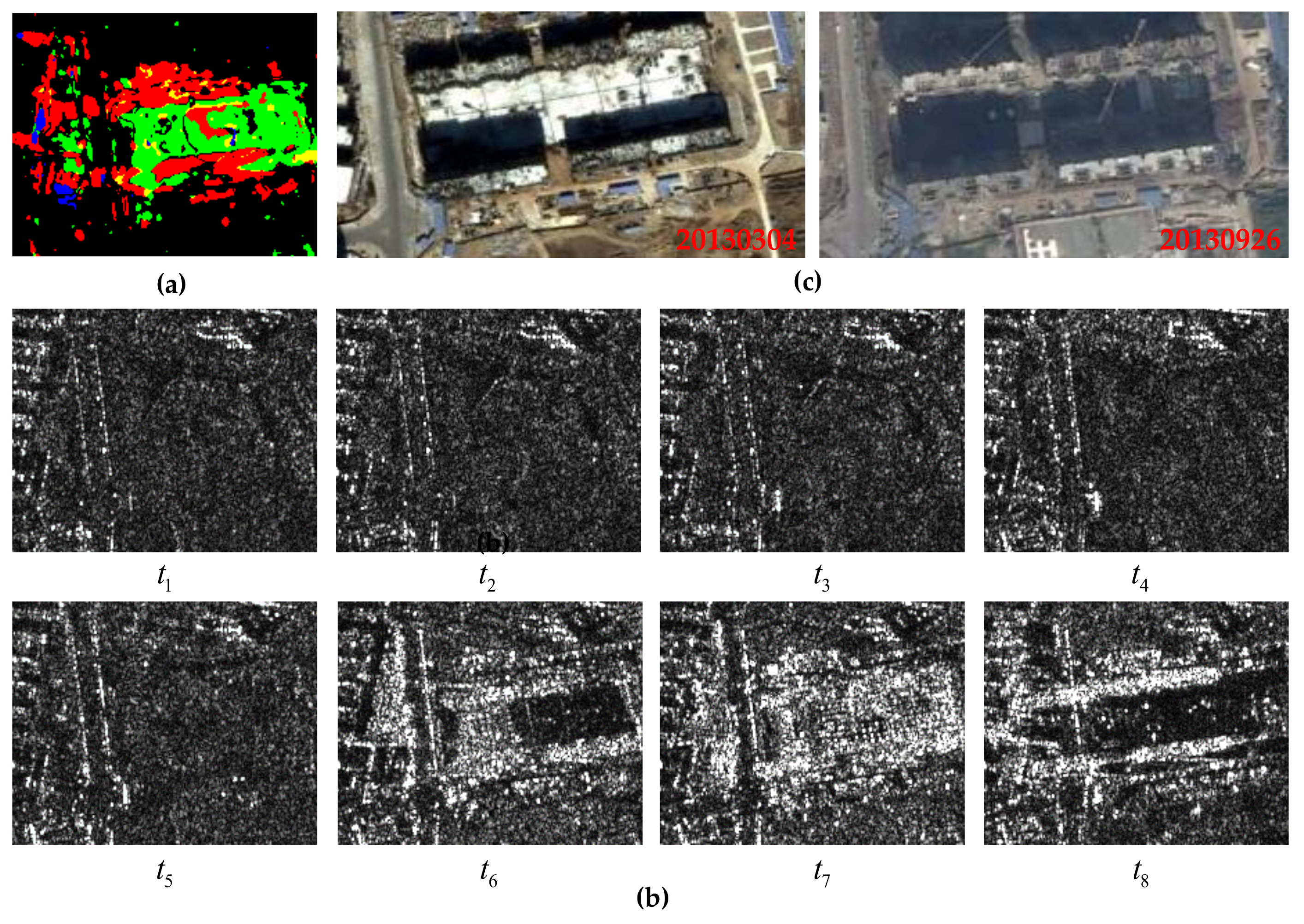
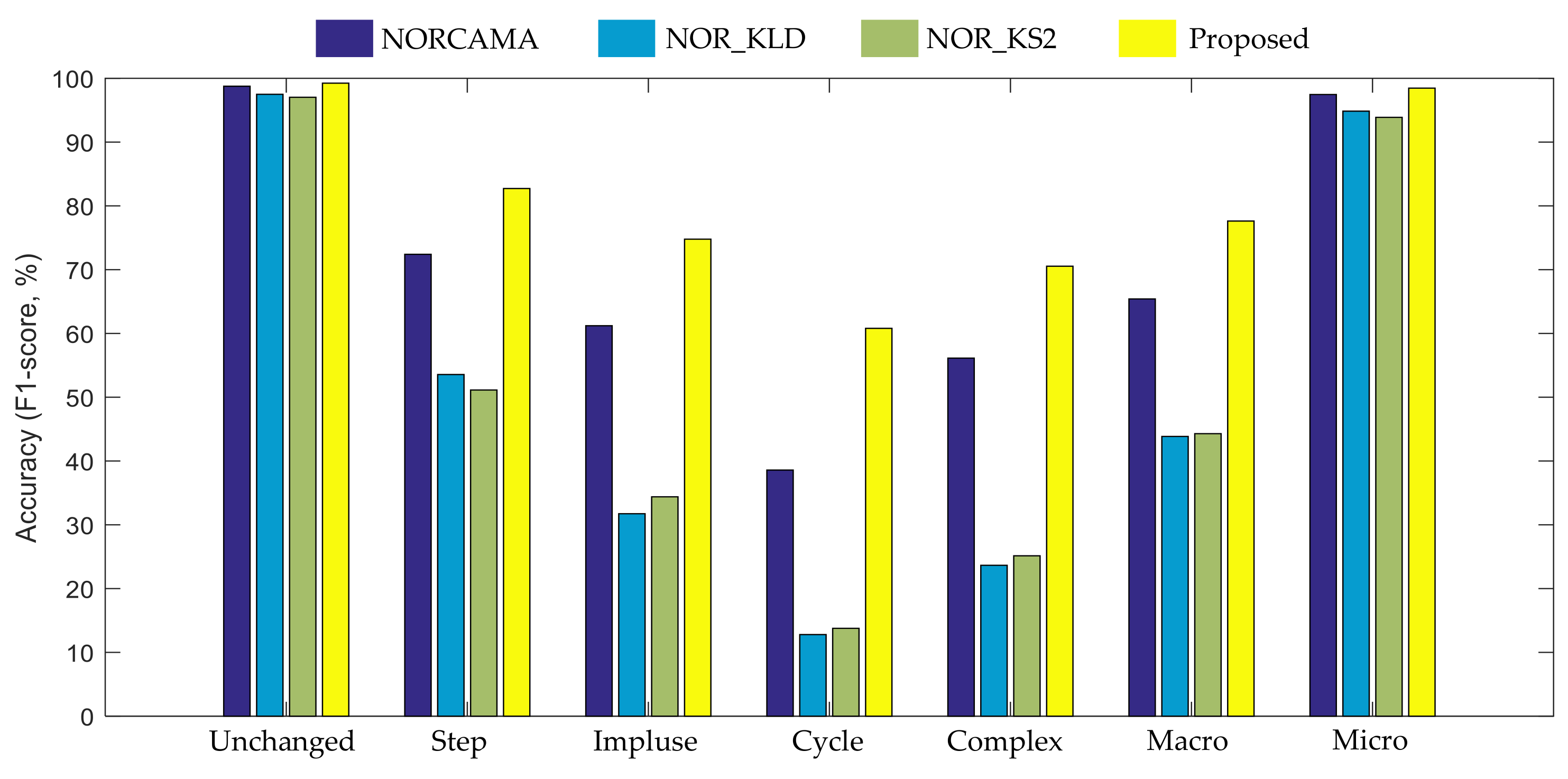
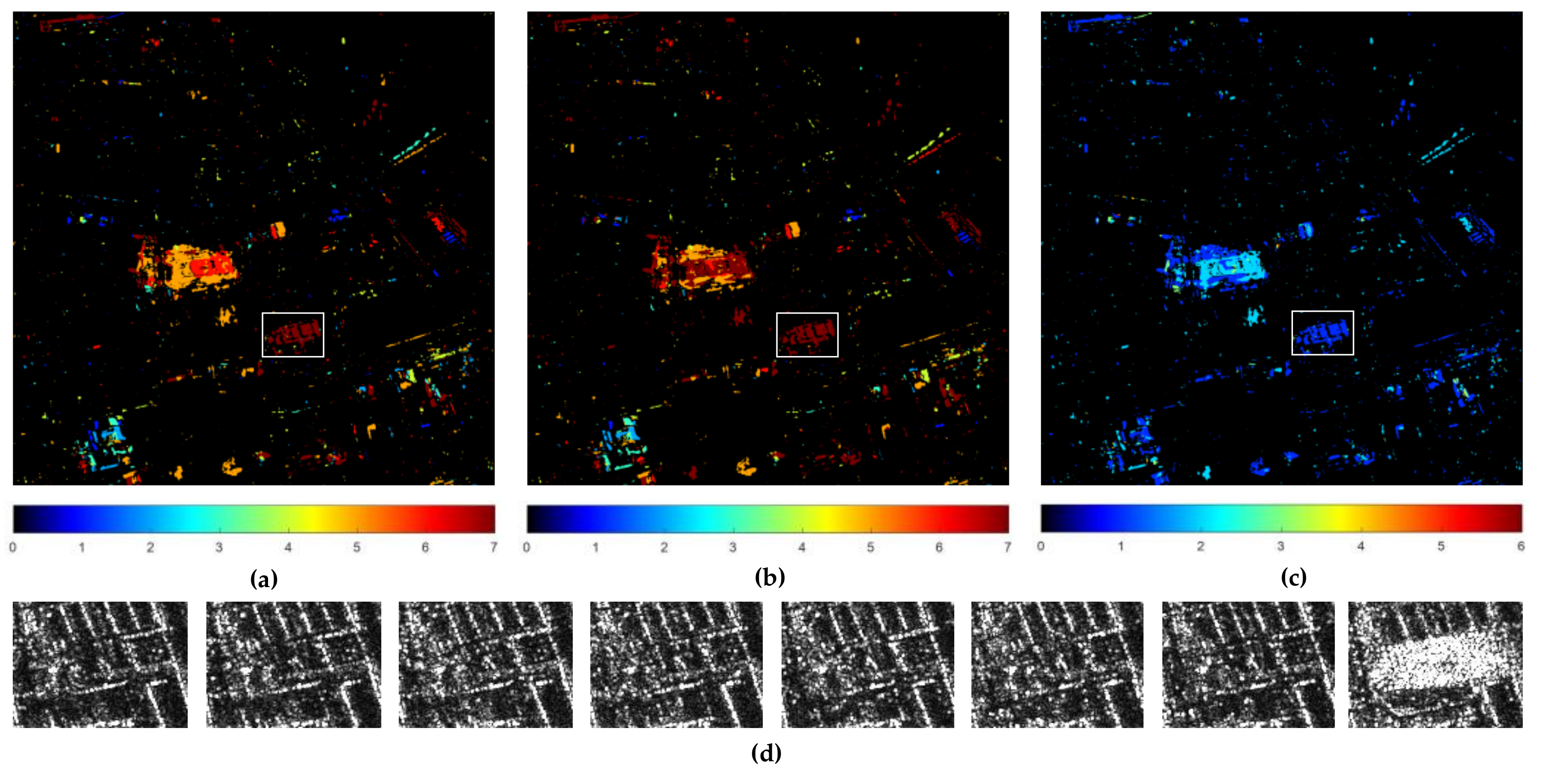
The existing unsupervised multitemporal change detection approaches for synthetic aperture radar (SAR) images based on the pixel level usually suffer from the serious influence of speckle noise, and the classification accuracy of temporal change patterns is liable to be affected by the generation method of similarity matrices and the pre-specified cluster number. To address these issues, a novel time-series change detection method with high efficiency is proposed in this paper. Firstly, spatial feature extraction using local statistical information on patches is conducted to reduce the noise and for subsequent temporal grouping. Secondly, a density-based clustering method is adopted to categorize the pixel series in the temporal dimension, in view of its efficiency and robustness. Change detection and classification results are then obtained by a fast differential strategy in the final step. The experimental results and analysis of synthetic and realistic time-series SAR images acquired by TerraSAR-X in urban areas demonstrate the effectiveness of the proposed method, which outperforms other approaches in terms of both qualitative results and quantitative indices of macro F1-scores and micro F1-scores. Furthermore, we make the case that more temporal change information for buildings can be obtained, which includes when the first and last detected change occurred and the frequency of changes.
Keywords: time-series SAR images; change detection and classification; statistical feature extraction; temporal clustering time-series SAR images; change detection and classification; statistical feature extraction; temporal clustering
Graphical Abstract