Feasibility Study on Parametric Optimization of Daylighting in Building Shading Design


Abstract
:1. Introduction
2. Methodology
2.1. Research Procedures and Methods
- To find optimal fitness with manually input parameters adjusted by 30 persons,
- To find optimal fitness data with Galapagos, a component inside Grasshopper that can optimize shape,
- To find efficiency and improvement of optimization in green building facade design through a comparative analysis of manually adjusting input parameters and genetic algorithms.
2.1.1. Base Simulation Model and Input Data
2.1.2. Simulation Program and Basic Concept
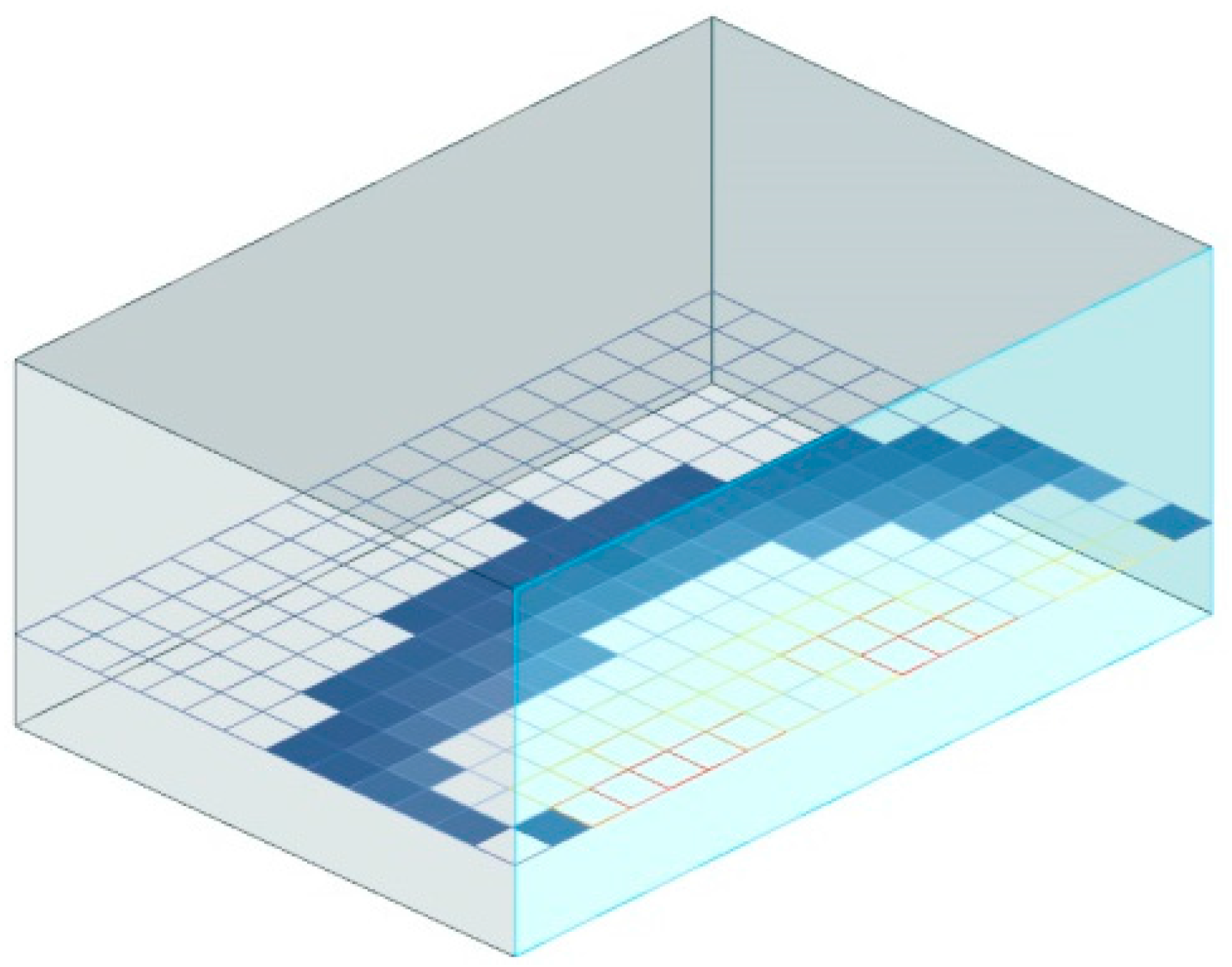
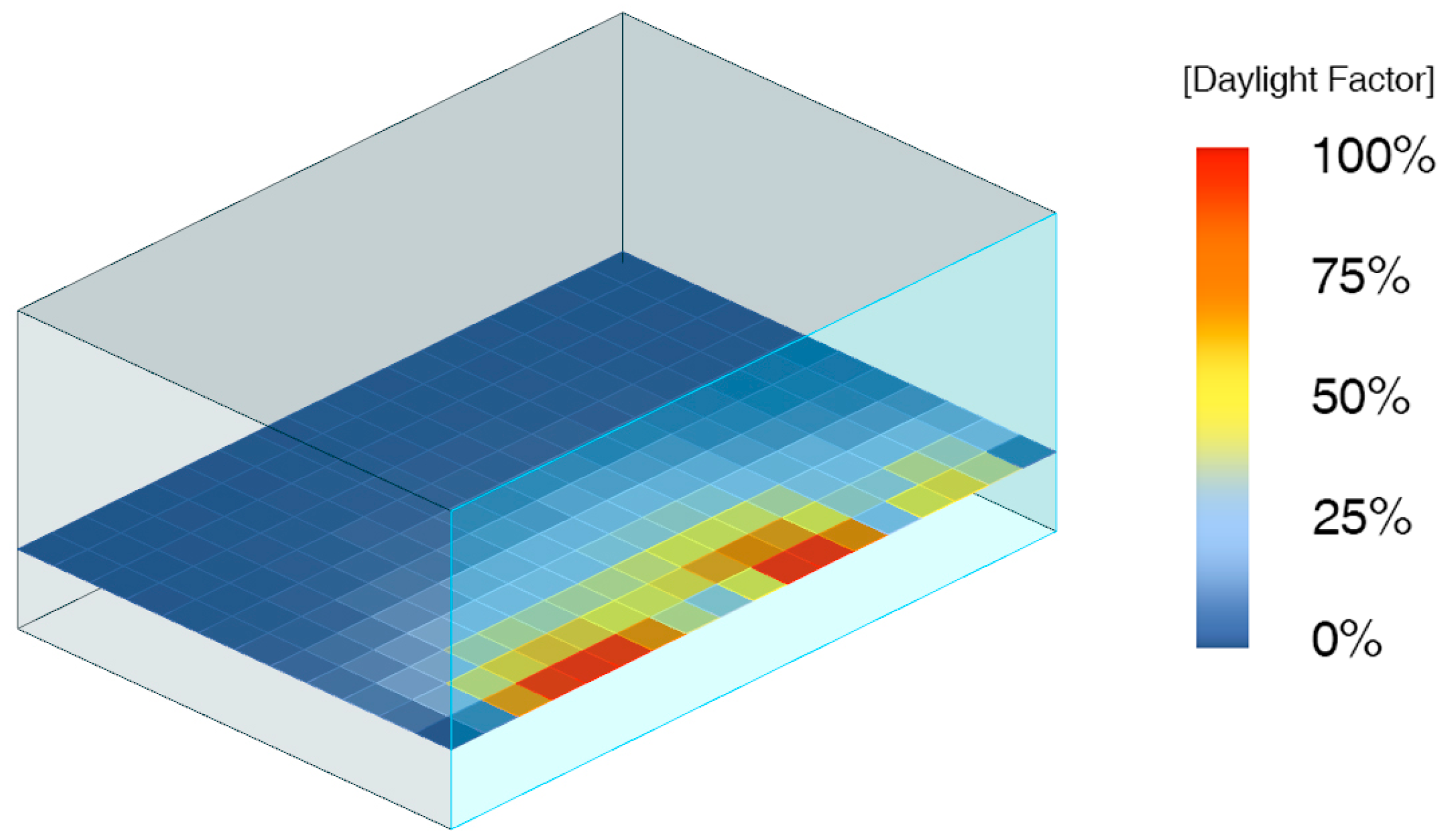
2.1.3. Daylight Factor (DF)
- (1)
- DF under 2 is not adequately lit and artificial lighting will be required,
- (2)
- DF between 2 and 5 is adequately lit but artificial lighting may be in use for part of the time,
- (3)
- DF over 5 is well-lit and artificial lighting is generally not required except at dawn and dusk, although glare and solar gain may cause problems.
2.1.4. Louver/Window Type and Input Parameters
2.2. Methods and Procedures of the Experiment
2.2.1. Manual Approach of Adjusting Input Parameters
- Calculate the output (fitness: the ratio of analysis grid surface area having a DF value of 2% to 5%) as operation result.
- Adjust the input parameters appropriately and choose the form of louvers which create a high fitness.
- Repeat at least 10 times for each window/louver type and adjust the input parameters in order to get to the highest possible optimal value.
2.2.2. Genetic Algorithm Optimization Methods Using Galapagos
3. Result
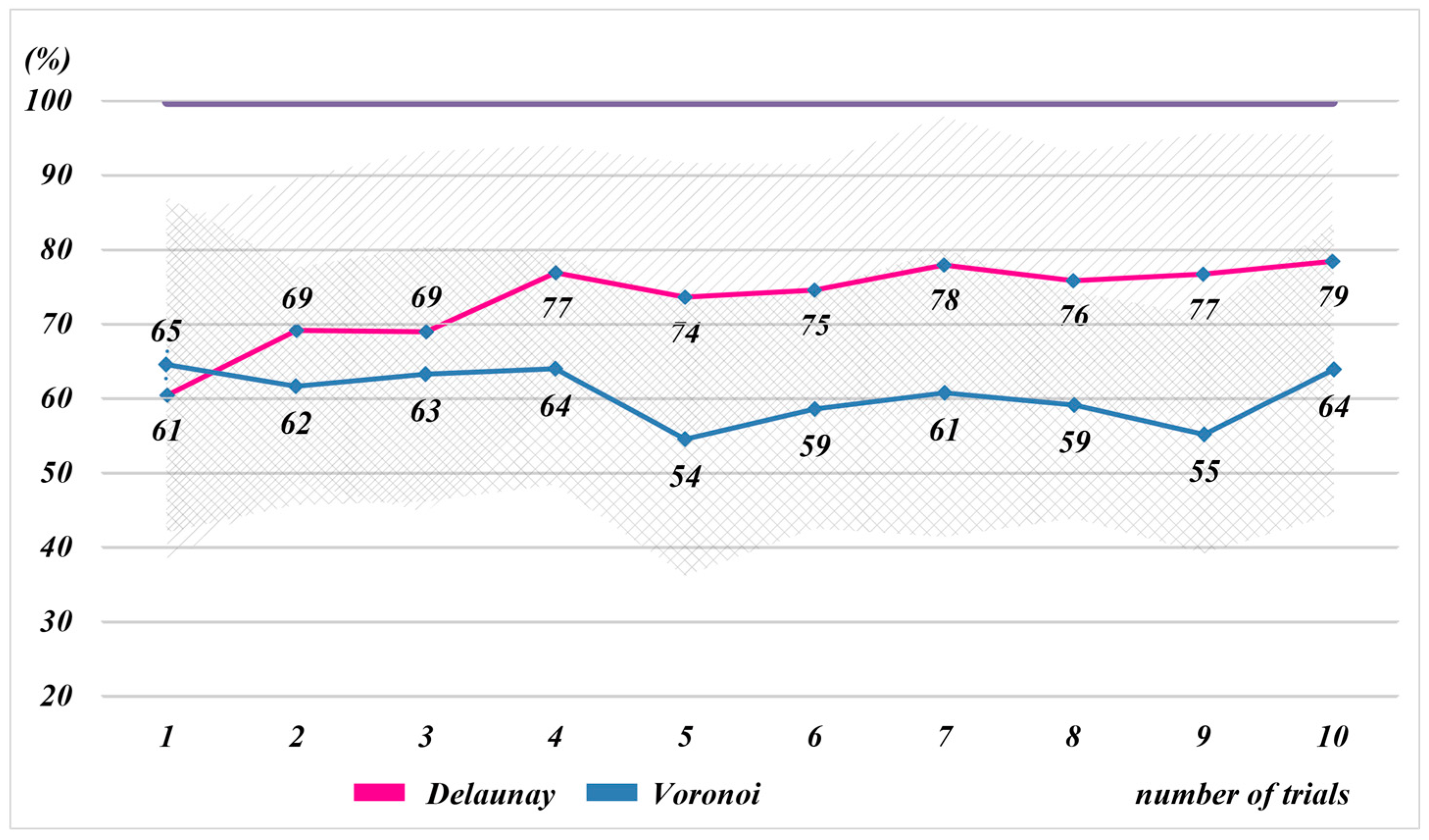
3.1. Manual Approach of Adjusting Input Parameters
3.2. Genetic Algorithm Optimization Methods Using Galapagos
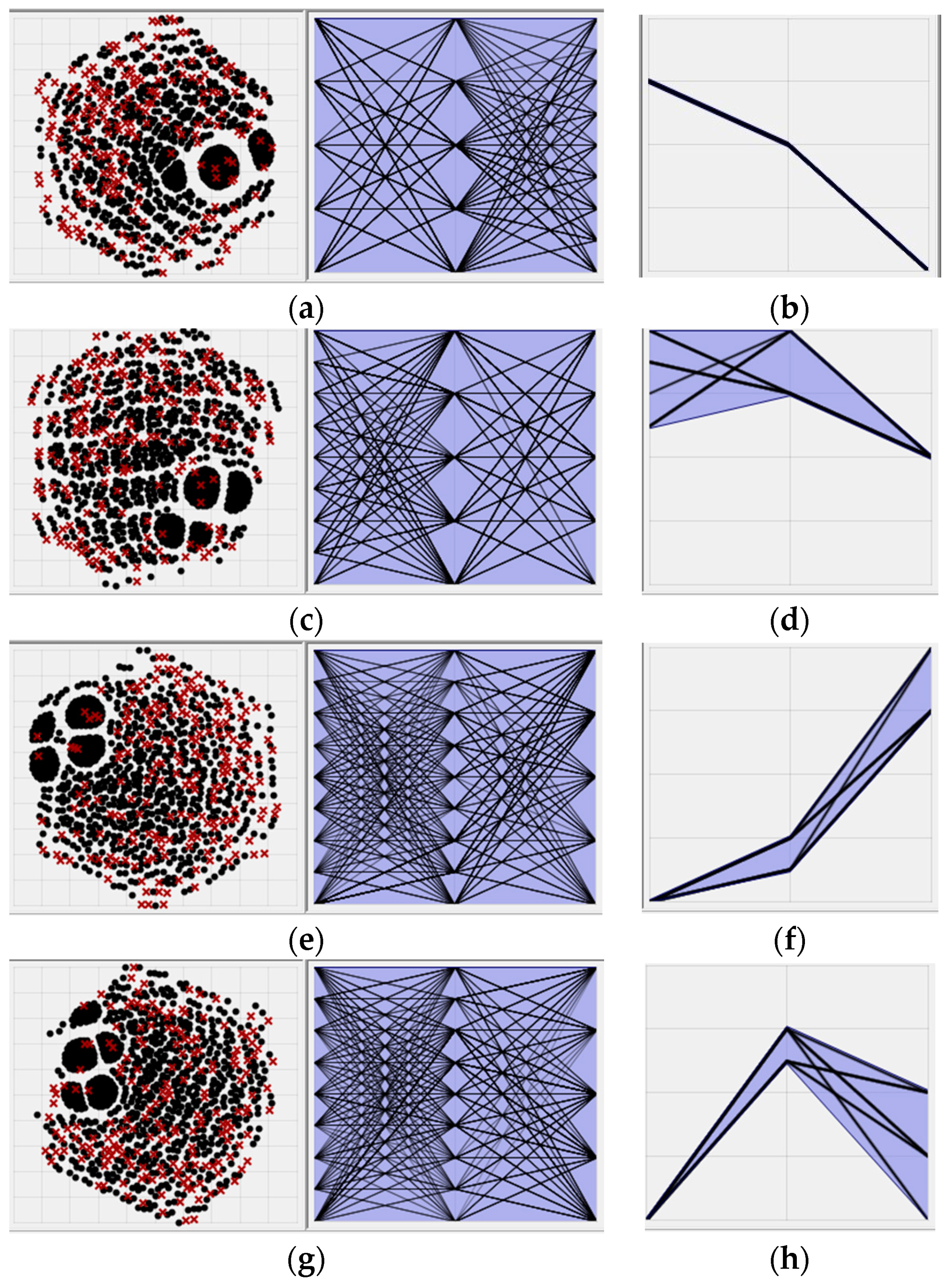
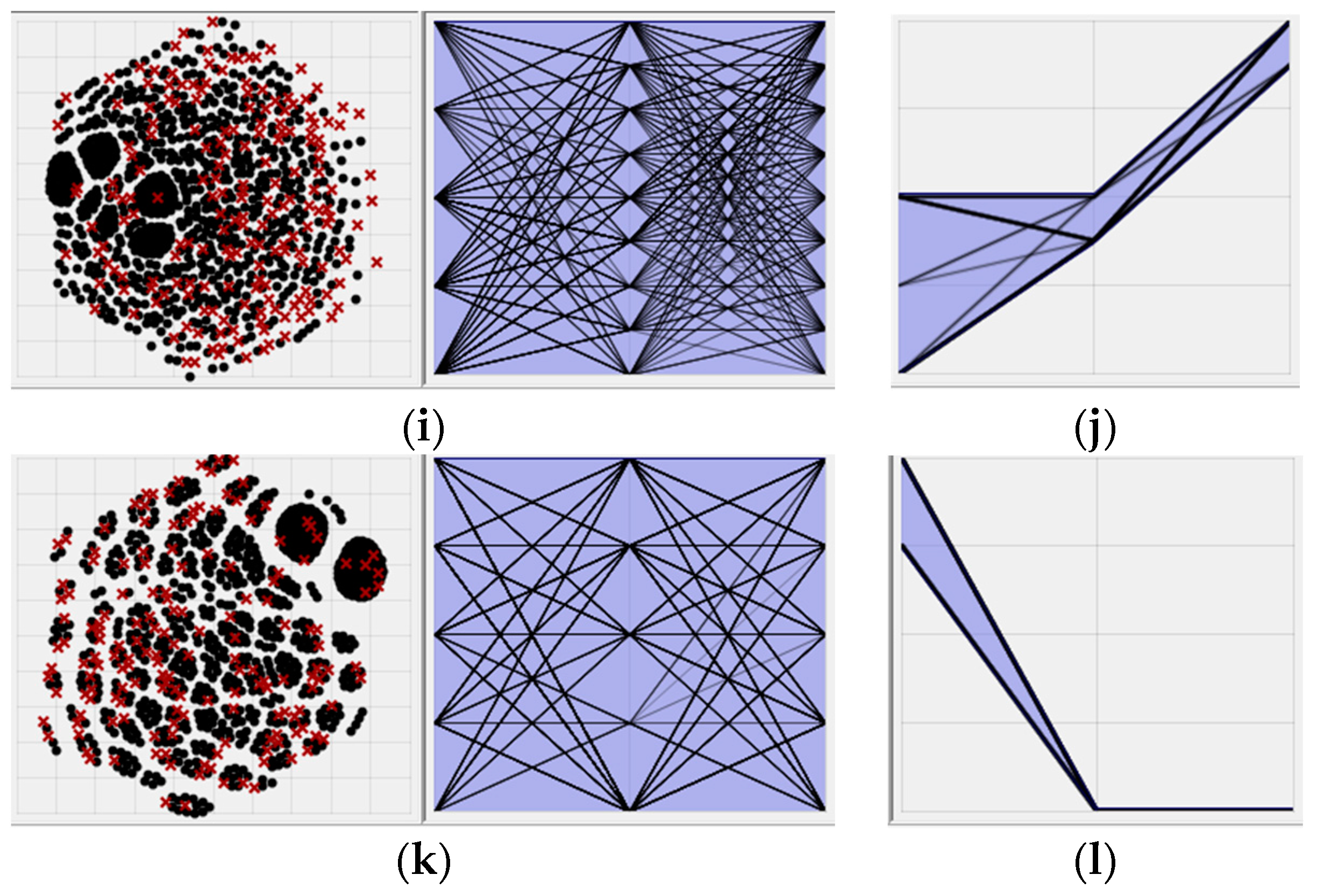
According to Figure 8, the horizontal axis is each parameter, i.e., count, angle, depth. The vertical axis is the number of cases (5 × 5 × 5) for each parameter. The upper 10% results for each type confirm the aggregation parts. It is apparent that the upper 10% fitness parameter combination gives only one kind in the case of the horizontal louver (Type 1) (Figure 8a). On the contrary, the different vertical louver types have diverse upper 10% fitness parameters. The random vertical louver (Figure 8h) provides six kinds of parameter combinations. In summary, the Galapagos results show that the random vertical louver has more design alternatives than the horizontal louver when it is set to find the upper 10% fitness values.
4. Conclusions
- Parametric design technology to create optimal indoor lighting conditions by adjusting shading shapes can help to improve daylighting quality in early design stages.
- Conventional methods which depend on designers’ experience and knowledge can sufficiently be applied with computer simulation techniques in several design types, notably horizontal and vertical louver types, which represent linear relationships in daylight simulation.
- Computer-assisted daylight simulation can help and assist the conventional approach, which can be maximized when dealing with large amounts of data and non-liner algorithms such as in the case of random, Delaunay, and Voronoi.
Acknowledgments
Author Contributions
Conflicts of Interest
Appendix A
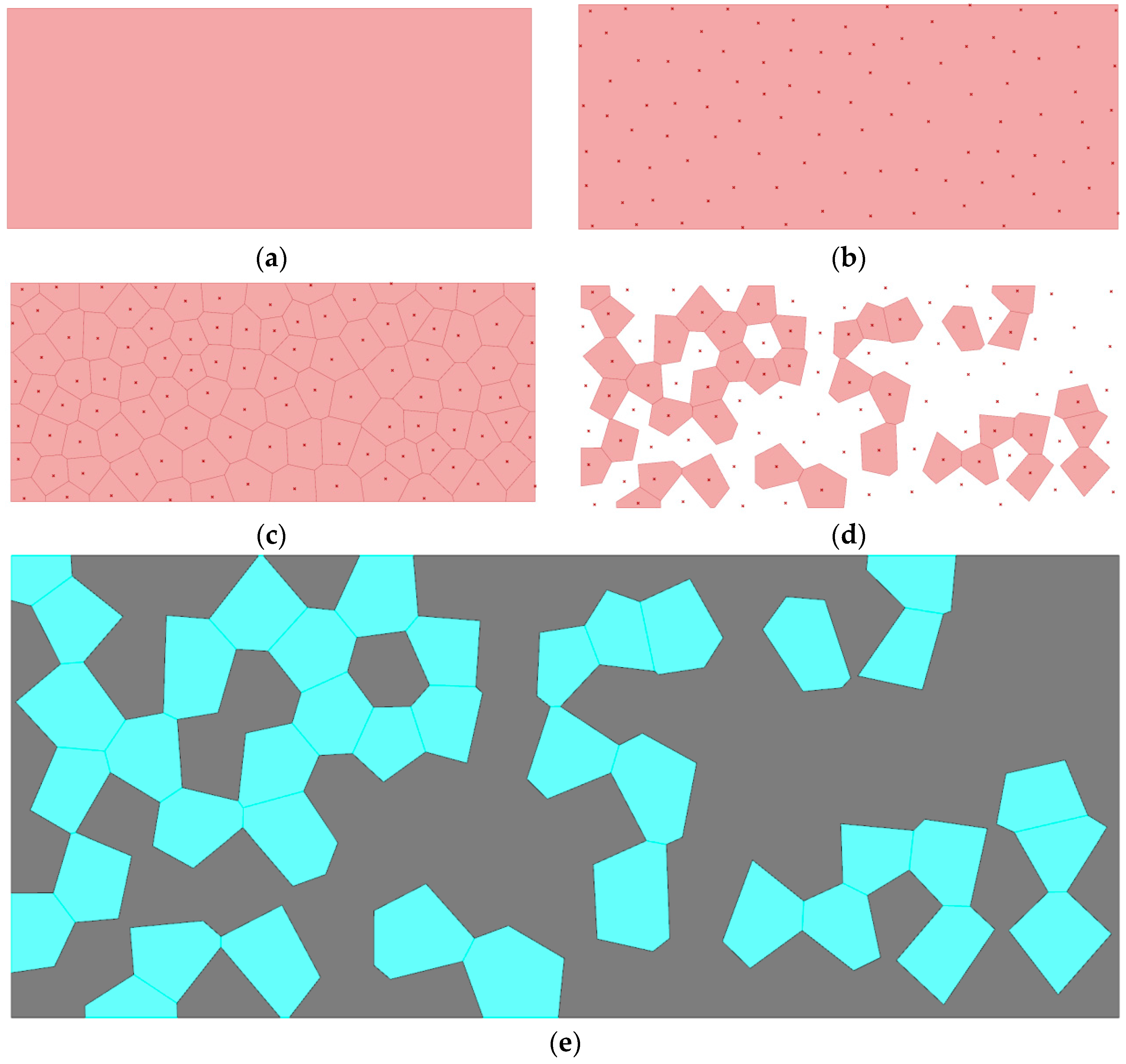
References
- Lo, K. A critical review of China’s rapidly developing renewable energy and energy efficiency policies. Renew. Sustain. Energy Rev. 2014, 29, 508–516. [Google Scholar] [CrossRef]
- Deal, B.; Schunk, D. Spatial dynamic modeling and urban land use transformation: A simulation approach to assessing the costs of urban sprawl. Ecol. Econ. 2004, 51, 79–95. [Google Scholar] [CrossRef]
- Pérez-Lombard, L.; Ortiz, J.; Pout, C. A review on buildings energy consumption information. Energy Build. 2008, 40, 394–398. [Google Scholar] [CrossRef]
- Boubekri, M.; Hull, R.B.; Boyer, L.L. Impact of window size and sunlight penetration on office workers’ mood and satisfaction a novel way of assessing sunlight. Environ. Behav. 1991, 23, 474–493. [Google Scholar] [CrossRef]
- Boubekri, M. Daylighting, Architecture and Health; Routledge: Abingdon, UK, 2008. [Google Scholar]
- Boyce, P.; Hunter, C.; Howlett, O. The Benefits of Daylight through Windows; Rensselaer Polytechnic Institute: Troy, NY, USA, 2003. [Google Scholar]
- Reinhart, C.F.; Mardaljevic, J.; Rogers, Z. Dynamic daylight performance metrics for sustainable building design. Leukos 2006, 3, 7–31. [Google Scholar]
- Munaaim, M.A.C.; Al-Obaidi, K.M.; Ismail, M.R.; Rahman, A.M.A. Empirical evaluation of the effect of heat gain from fiber optic daylighting system on tropical building interiors. Sustainability 2014, 6, 9231–9243. [Google Scholar] [CrossRef]
- Lee, K.S.; Lee, J.; Lee, J.S. Low-energy design methods and its implementation in architectural practice: Strategies for energy-efficient housing of various densities in temperate climates. J. Green Build. 2013, 8, 164–183. [Google Scholar] [CrossRef]
- Augenbroe, G. Integrated building performance evaluation in the early design stages. Build. Environ. 1992, 27, 149–161. [Google Scholar] [CrossRef]
- Cheong, C.H.; Kim, T.; Leigh, S.B. Thermal and daylighting performance of energy-efficient windows in highly glazed residential buildings: Case study in Korea. Sustainability 2014, 6, 7311–7333. [Google Scholar] [CrossRef]
- Piderit Moreno, M.B.; Labarca, C.Y. Methodology for Assessing Daylighting Design Strategies in Classroom with a Climate-Based Method. Sustainability 2015, 7, 880–897. [Google Scholar] [CrossRef]
- Jakubiec, J.A.; Reinhart, C.F. DIVA 2.0: Integrating daylight and thermal simulations using Rhinoceros 3D, Daysim and EnergyPlus. In Proceedings of Building Simulation 2011: 12th Conference of International Building Performance Simulation Association, Sydney, Australia, 14–16 November 2011; Volume 20, pp. 2202–2209.
- Bourgeois, D.; Reinhart, C.; Macdonald, I. Adding advanced behavioural models in whole building energy simulation: A study on the total energy impact of manual and automated lighting control. Energy Build. 2006, 38, 814–823. [Google Scholar] [CrossRef]
- Crawley, D.B.; Lawrie, L.K.; Winkelmann, F.C.; Buhl, W.F.; Huang, Y.J.; Pedersen, C.O.; Glazer, J. EnergyPlus: Creating a new-generation building energy simulation program. Energy Build. 2001, 33, 319–331. [Google Scholar] [CrossRef]
- Lee, J.W.; Jung, H.J.; Park, J.Y.; Lee, J.B.; Yoon, Y. Optimization of building window system in Asian regions by analyzing solar heat gain and daylighting elements. Renew. Energy 2013, 50, 522–531. [Google Scholar] [CrossRef]
- Caldas, L.G.; Norford, L.K. A design optimization tool based on a genetic algorithm. Autom. Constr. 2002, 11, 173–184. [Google Scholar] [CrossRef]
- Iqbal, I.; Al-Homoud, M.S. Parametric analysis of alternative energy conservation measures in an office building in hot and humid climate. Build. Environ. 2007, 42, 2166–2177. [Google Scholar] [CrossRef]
- Attia, S.; Gratia, E.; De Herde, A.; Hensen, J.L. Simulation-based decision support tool for early stages of zero-energy building design. Energy Build. 2012, 49, 2–15. [Google Scholar] [CrossRef]
- Ward, G.; Shakespeare, R. Rendering with Radiance: The Art and Science of Lighting Visualization; Morgan Kaufmann Publishers: Burlington, MA, USA, 1998. [Google Scholar]
- Blackwell, O.M.; Blackwell, H.R. Individual responses to lighting parameters for a population of 235 observers of varying ages. J. Illum. Eng. Soc. 1980, 9, 205–232. [Google Scholar] [CrossRef]
- Ascione, F.; Bianco, N.; de Masi, R.F.; Mauro, G.M.; Vanoli, G.P. Design of the building envelope: A novel multi-objective approach for the optimization of energy performance and thermal comfort. Sustainability 2015, 7, 10809–10836. [Google Scholar] [CrossRef]
- Sadeghzadeh, H.; Aliehyaei, M.; Rosen, M.A. Optimization of a Finned Shell and Tube Heat Exchanger Using a Multi-Objective Optimization Genetic Algorithm. Sustainability 2015, 7, 11679–11695. [Google Scholar] [CrossRef]
- Turkson, R.F.; Yan, F.; Ali, M.K.A.; Liu, B.; Hu, J. Modeling and multi-objective optimization of engine performance and hydrocarbon emissions via the use of a computer aided engineering code and the NSGA-II genetic algorithm. Sustainability 2016, 8, 72. [Google Scholar] [CrossRef]
- IES Daylight Metrics Committee. IES Spatial Daylight Autonomy (sDA) and Annual Sunlight Exposure (ASE), Daylight Metrics Committee. Approved Method IES LM-83-12; Illuminating Engineering Society of North America: New York, NY, USA, 2012. [Google Scholar]
- Website of Solemma. Available online: http://www.solemma.net/DIVA-for-Rhino/DIVA-for-Rhino.html (accessed on 14 October 2016).
- Ismail, E.D.; Ibrahim, N.; Hajar, N.H. Daylight Factor on Natural Lighting Analysis Simulation of an Adaptive Reuse Building: Penaga Hotel, Penang. Adv. Sci. Lett. 2016, 22, 1120–1124. [Google Scholar] [CrossRef]
- Galatioto, A.; Beccali, M. Aspects and issues of daylighting assessment: A review study. Renew. Sustain. Energy Rev. 2016, 66, 852–860. [Google Scholar] [CrossRef]
- Building Research Establishment. BREEAM—The BRE Environmental Assessment Method. Available online: http://www.breeam.org (accessed on 12 October 2016).
- Kudryashova, A. Certification Schemes for Sustainable Buildings: Assessment of BREEAM, LEED and LBC from a Strategic Sustainable Development Perspective. Ph.D. Thesis, Blekinge Institute of Technology, Blekinge, Sweden, 2015. [Google Scholar]
- Lim, Y.W. Building Information Modeling for Indoor Environmental Performance Analysis. Am. J. Environ. Sci. 2015, 11, 55–61. [Google Scholar] [CrossRef]
- CASBEE for Building (New Construction). 2014 Edition. Available online: http://www.ibec.or.jp/CASBEE/english/ (accessed on 12 October 2016).
- Day Lighting Rules of Thumb. Available online: http://www.gsd.harvard.edu/research/gsdsquare/Publications/DiffuseDaylightingDesignSequenceTutorial.pdf (accessed on 12 December 2015).
- CIBSE Lighting Guide. 10: Daylighting and Window Design; The Chartered Institution of Building Services Engineers: London, UK, 1999. [Google Scholar]
- British Standards Institution. Available online: http://www.cibse.org/pdfs/GPG245.pdf (accessed on 5 January 2016).
- LEED for New Construction & Major Renovations. Available online: http://www.usgbc.org/Docs/Archive/General/Docs1095.pdf (accessed on 8 February 2016).
- Yi, Y.K.; Kim, H. Agent-based geometry optimization with Genetic Algorithm (GA) for tall apartment’s solar right. Sol. Energy 2015, 113, 236–250. [Google Scholar] [CrossRef]
- Rutten, D. Galapagos: On the logic and limitations of generic solvers. Arch. Des. 2013, 83, 132–135. [Google Scholar] [CrossRef]
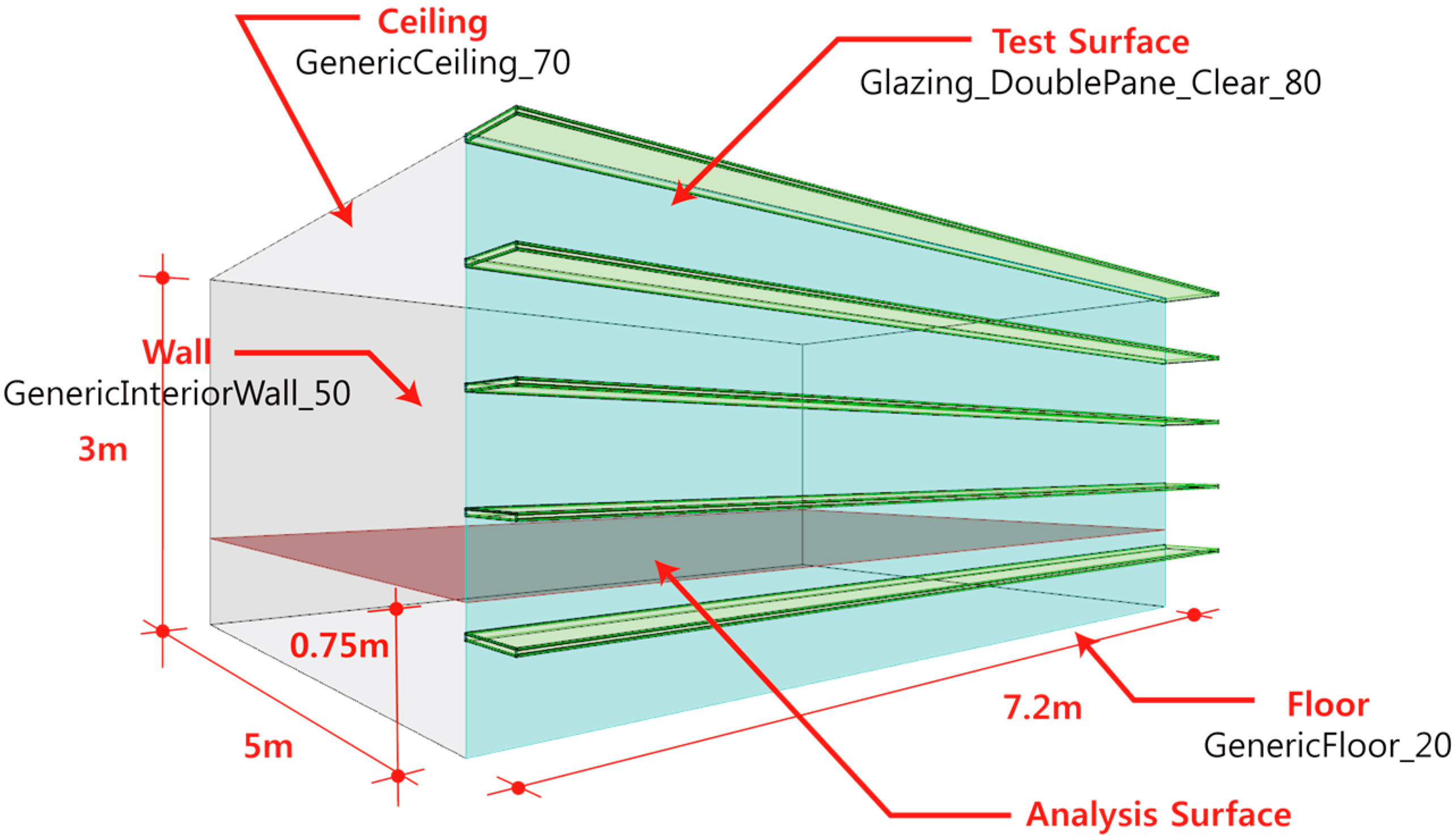



| Input Materials | Material Name in DIVA | Material Properties | |
|---|---|---|---|
| 1 | Wall | GenericInteriorWall_50 | This is a purely diffuse reflector with a standard wall reflectivity of 60% |
| 2 | Ceiling | GenericCeiling_70 | Material for typical ceilings as suggested by IES-LM-83 [25] |
| 3 | Window | Glazing_DoublePane_Clear_80 | Visual transmittance: 80% Visual transmissivity: 87% |
| 4 | Floor | GenericFloor_20 | This is a purely diffuse reflector with a standard floor reflectivity of 20% |
| Input Parameters | Unit | Range (min.) | Range (max.) | Step Size | Variables | |
|---|---|---|---|---|---|---|
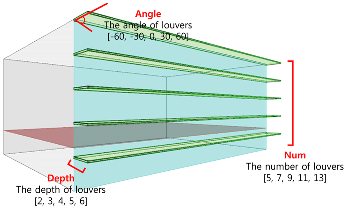
| 1 | Angle (degree) | Horizontal/vertical angle adjustment of the louver | −60 | 60 | 30 | 5 |
| 2 | Num. (integer) | The number of louvers | 5 | 13 | 2 | 5 |
| 3 | Depth (10 cm) | Louver depth | 2 | 6 | 1 | 5 |
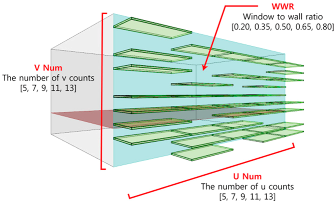
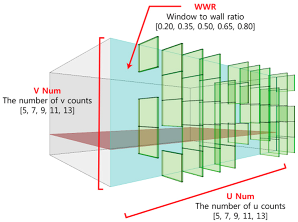
| 4 | U Num. (integer) | Number of window panel divisions in the U direction | 5 | 13 | 2 | 5 |
| 5 | V Num. (integer) | Number of window panel divisions in the V direction | 5 | 13 | 2 | 5 |
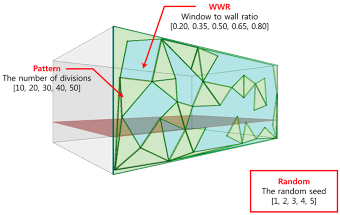
| 6 | Remove (-) | Ratio of remove from the entire window panel | 0.2 (20%) | 0.8 (80%) | 0.15 (15%) | 5 |
| 7 | Pattern (step) | Number of seed point patterns | 10 | 50 | 10 | 5 |
| 8 | Random (-) | Random variable for seed points | 1 | 5 | 1 | 5 |
| 1 | 2 | 3 | 4 | 5 | 6 | ||
|---|---|---|---|---|---|---|---|
| Input Parameters | Horizontal Louver | Vertical Louver | Random Horizontal Louver | Random Vertical Louver | Delaunay Pattern Screen | Voronoi Pattern Screen | |
| 1 | Angle | √ | √ | - | - | - | - |
| 2 | Num. | √ | √ | - | - | - | - |
| 3 | Depth | √ | √ | - | - | - | - |
| 4 | U Num. | - | - | √ | √ | - | - |
| 5 | V Num. | - | - | √ | √ | - | - |
| 6 | Remove | - | - | √ | √ | √ | √ |
| 7 | Pattern | - | - | - | - | √ | √ |
| 8 | Random | - | - | - | - | √ | √ |
| No. total variations | 125 | 125 | 125 | 125 | 125 | 125 | |
| (a) Horizontal louver Parameters: Angle, Num., Depth | (b) Vertical louver Parameters: Angle, Num., Depth |
 |  |
| (c) Random horizontal louver Parameters: U Num., V Num., WWR | (d) Random vertical louver Parameters: U Num., V Num., WWR |
 |  |
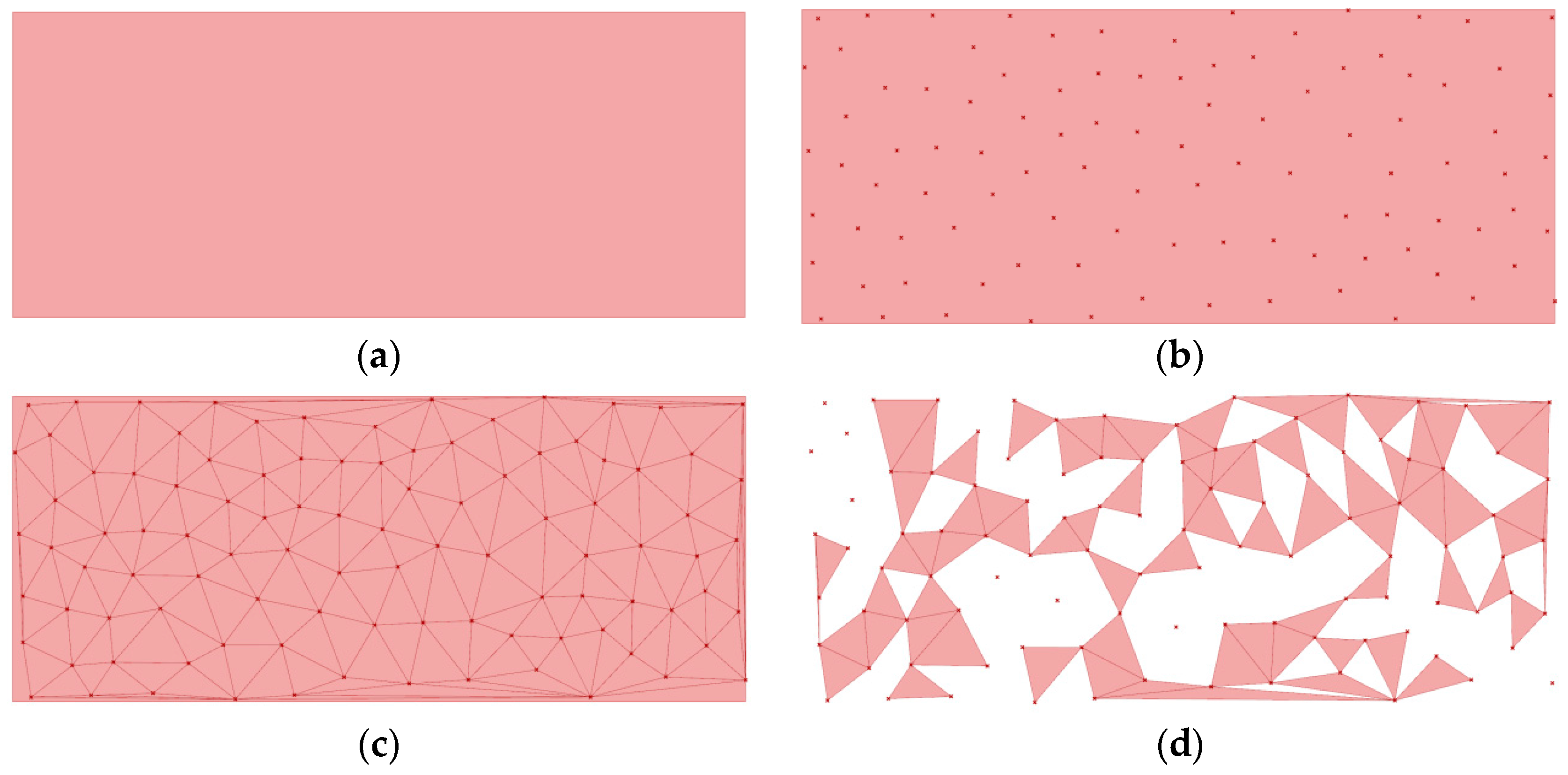
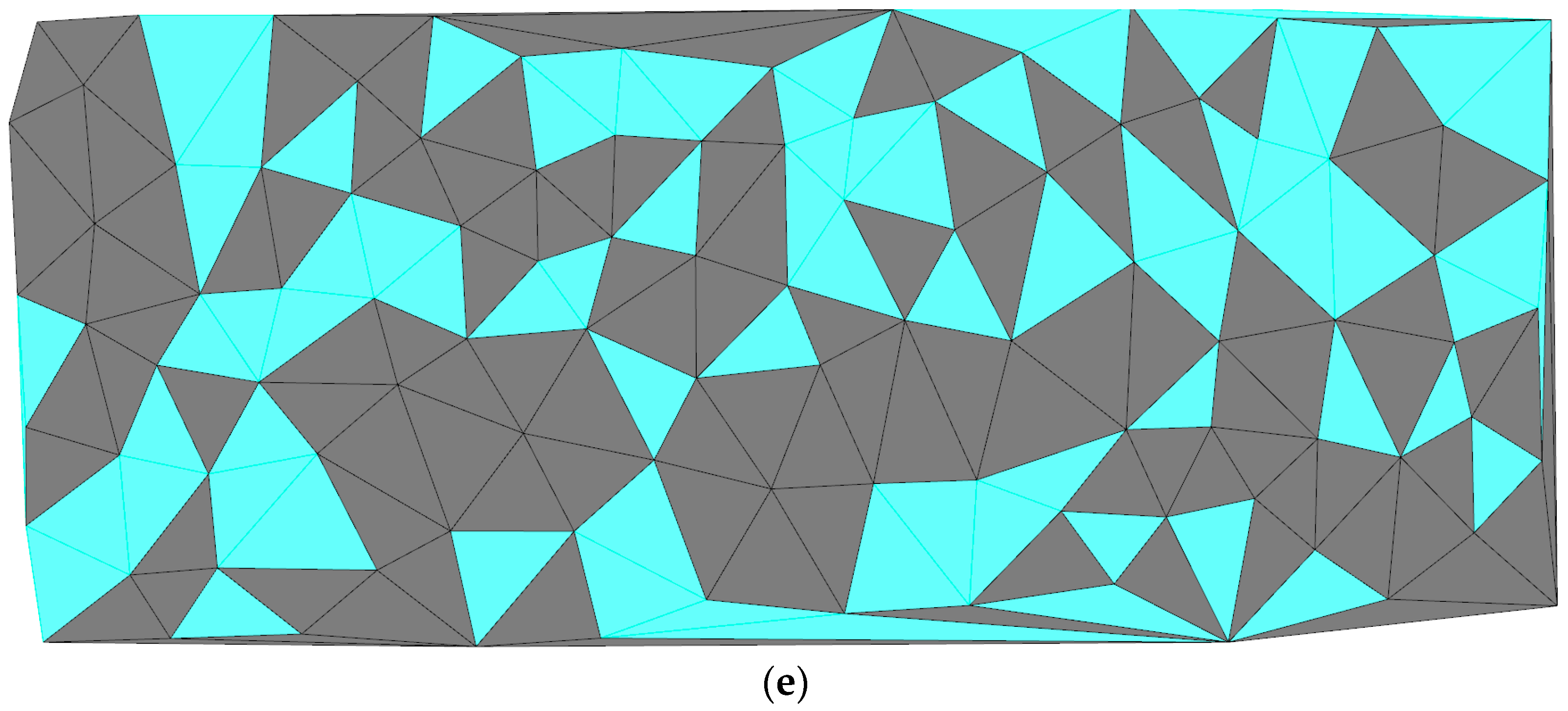
| (e) Delaunay pattern screen (Figure A1) * Parameters: WWR, Pattern, Random | (f) Voronoi pattern screen (Figure A2) * Parameters: WWR, Pattern, Random |
 |  |
| Method | Manual Approach (Adjusted Data) | Galapagos (Original Data) | ||||
|---|---|---|---|---|---|---|
| Fitness Value (%) | Max. of Avg. | Min. of Avg. | Aver. SD | Max. | Min. | |
| Louver/WindowType | Parameter Value | |||||
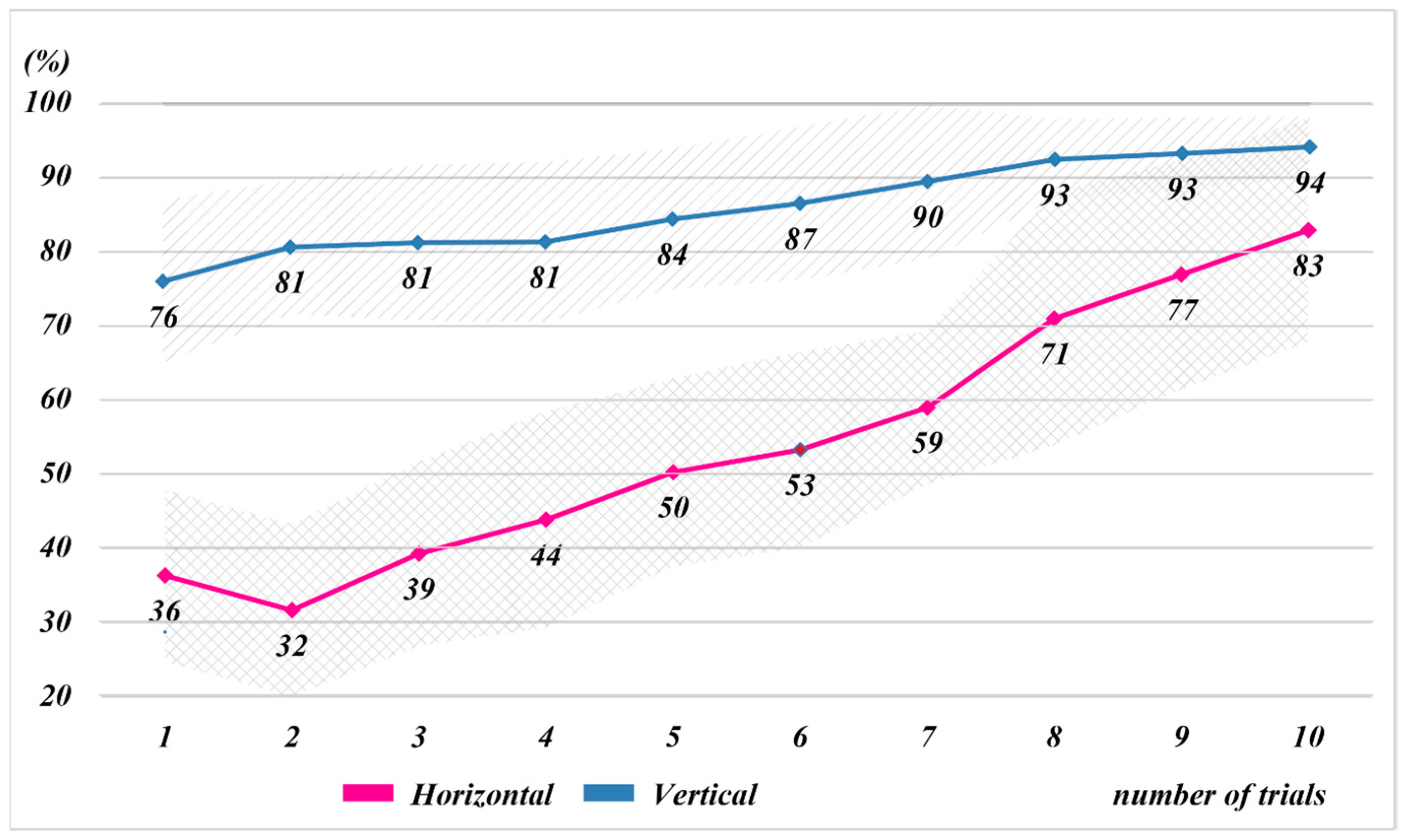
| Horizontal (Type 1) | 83 | 32 | 27 | 86 | 0 | |
| 0/5/5 | ||||||
| Vertical (Type 2) | 94 | 76 | 9 | 46 | 26 | |
| 0/11/6, 0/13/0 | ||||||
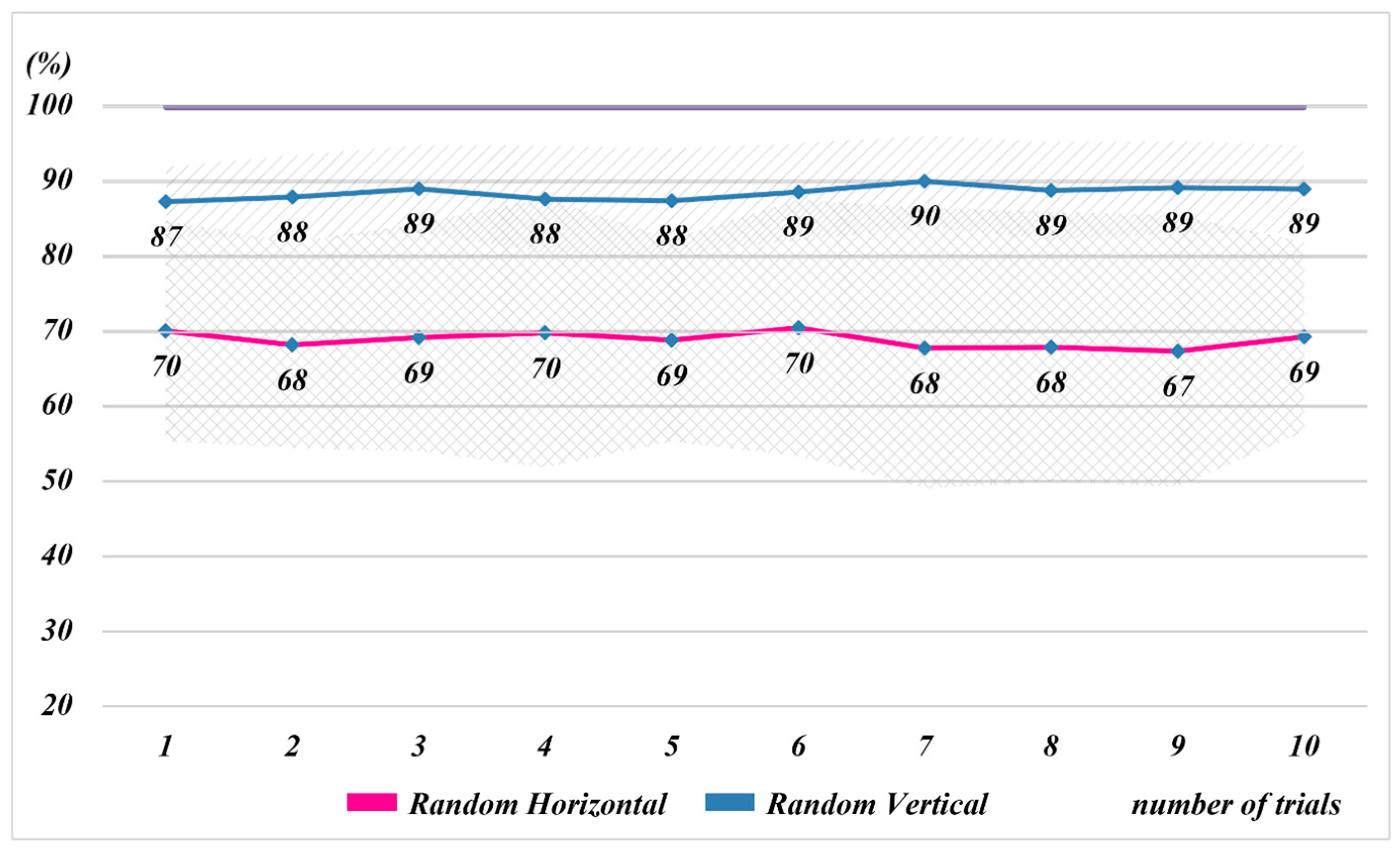
| Random horizontal (Type 3) | 70 | 67 | 16 | 75 | 20 | |
| 5/11/0.35 | ||||||
| Random vertical (Type 4) | 90 | 87 | 6 | 47 | 36 | |
| 11/5/0.2 | ||||||
| Delaunay (Type 5) | 79 | 61 | 19 | 47 | 6 | |
| 0.65/30/2 | ||||||
| Voronoi (Type 6) | 65 | 55 | 18 | 44 | 0 | |
| 0.2/10/4, 0.2/10/5 | ||||||
| Type | Coefficients | Constant | (S.E.) | p-Value |
|---|---|---|---|---|
| Horizontal R-squared: 0.585 | 5.71 ** | 23.04 | (0.28) | 0.001 |
| Vertical R-squared: 0.301 | 1.96 ** | 73.71 | (0.17) | 0.001 |
| Random horizontal R-squared: 0.001 | −0.14 | 69.60 | (0.32) | 0.65 |
| Random vertical R-squared: 0.008 | 0.19 | 87.57 | (0.12) | 0.12 |
| Delaunay R-squared: 0.049 | 1.53 ** | 64.93 | (0.39) | 0.001 |
| Voronoi R-squared: 0.006 | −0.47 | 63.10 | (0.36) | 0.19 |
© 2016 by the authors; licensee MDPI, Basel, Switzerland. This article is an open access article distributed under the terms and conditions of the Creative Commons Attribution (CC-BY) license (http://creativecommons.org/licenses/by/4.0/).
Share and Cite
Lee, K.S.; Han, K.J.; Lee, J.W. Feasibility Study on Parametric Optimization of Daylighting in Building Shading Design. Sustainability 2016, 8, 1220. https://doi.org/10.3390/su8121220
Lee KS, Han KJ, Lee JW. Feasibility Study on Parametric Optimization of Daylighting in Building Shading Design. Sustainability. 2016; 8(12):1220. https://doi.org/10.3390/su8121220
Chicago/Turabian StyleLee, Kyung Sun, Ki Jun Han, and Jae Wook Lee. 2016. "Feasibility Study on Parametric Optimization of Daylighting in Building Shading Design" Sustainability 8, no. 12: 1220. https://doi.org/10.3390/su8121220
APA StyleLee, K. S., Han, K. J., & Lee, J. W. (2016). Feasibility Study on Parametric Optimization of Daylighting in Building Shading Design. Sustainability, 8(12), 1220. https://doi.org/10.3390/su8121220