1. Introduction
Since 1985, the Conservation Reserve Program (CRP) has served as an important policy mechanism for advancing sustainable land management by incentivizing the conservation of environmentally sensitive farmland, with annual spending expected to average
$2.4 billion under the 2023–2032 Farm Bill [
1]. The program’s success and cost-effectiveness depend heavily on voluntary participation by private landowners [
2], as over 61% of U.S. land is privately owned [
3]. Common motivations for participation include protecting natural resources, reducing soil erosion, improving water quality, providing wildlife habitat, and reflecting land stewardship or legacy values, especially among landowners with a strong conservation ethic [
4,
5,
6]. In this context, CRP is both an agricultural support mechanism and a key tool for advancing sustainable land management and generating environmental benefits on privately managed lands [
7].
The CRP compensates farmers and livestock producers for converting their marginal lands to native vegetation for maintaining pasturelands. Enrollment restricts activities like farming and building, but landowners can resume these activities after the contract ends (typically after 10–15 years) [
8]. Farmlands can be retired for two reasons: conservation and reduced supply of their regular crops [
6]. The midwestern regions have been the focus of many previous studies on CRP practices due to row-crop production and higher soil erosion on farmland compared to other US regions [
6]. The US government adjusts the CRP participation caps in response to changes in market conditions, aiming not only for environmental benefits but also to manage crop supply [
9]. This means that, for example, increased participation in CRP can lead to lower corn and soybean market availability and higher prices, while a decrease can have the opposite effect. [
9,
10]. However, even among the Midwestern states and counties, which might appear more homogeneous than other US regions, there are substantial differences in their participation in the CRP, underscoring the need to demystify these inconsistencies [
11].
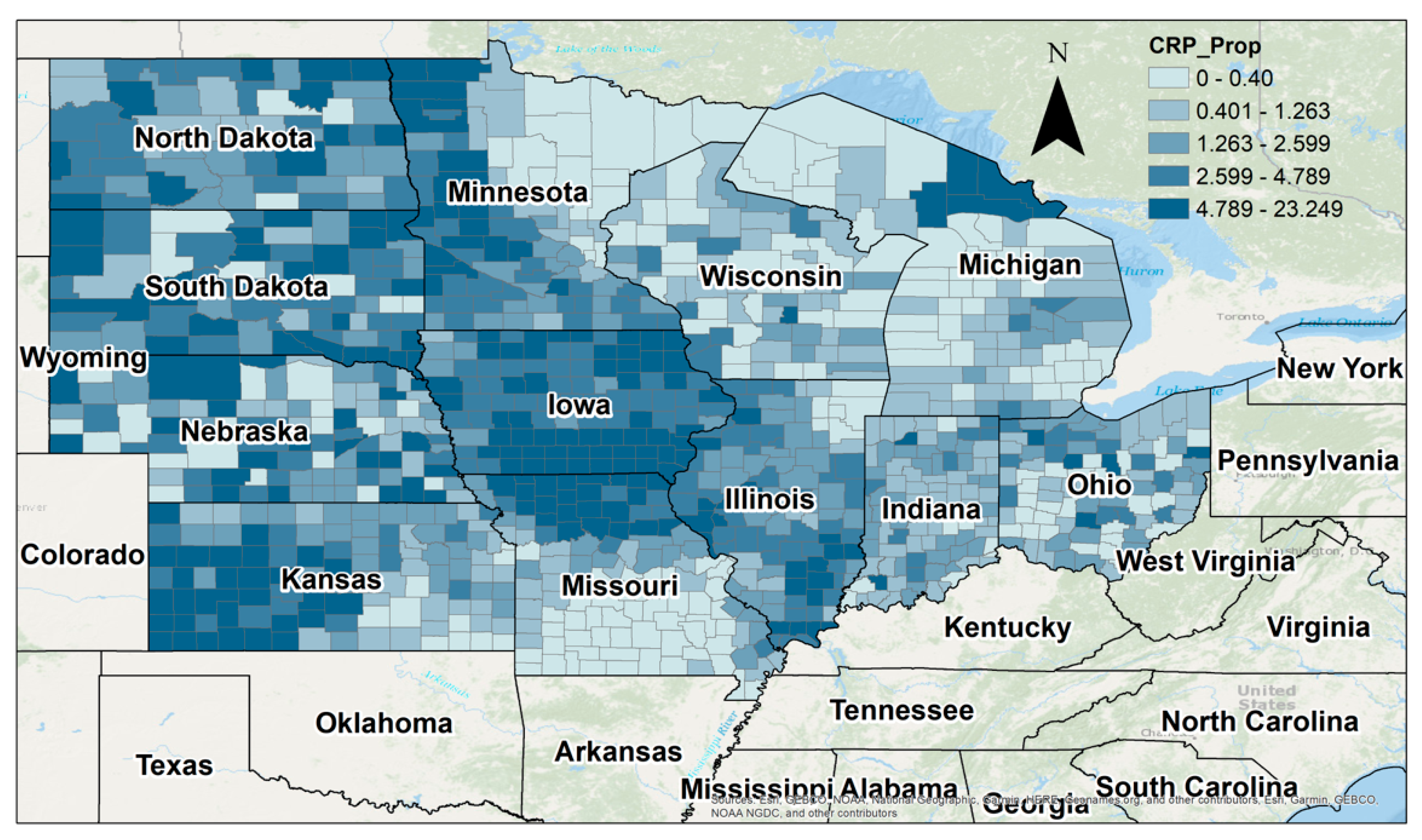
Figure 1 illustrates the variability in CRP participation rates across the Midwest region.
In recent years, CRP participation has declined [
12], which may have stemmed from several factors, including lower competitiveness of dedicated CRP farmland rental rates compared to strong market conditions in the region [
13] and relatively high farm subsidy payments and risk management programs [
8,
9]. In summary, while CRP implementation policies and payments to farms play an important role in attracting more farmers to this environmentally friendly activity, factors such as land-use policies and local market conditions, including development pressure and rental demands, can work against CRP adoption [
9]. In fiscal year 2023, CRP enrolled 22.9 million acres nationwide [
11]; however, the plan’s effectiveness varied spatially due to unmodeled clustering in high row-crop counties, resulting in suboptimal targeting of erodible lands as commodity prices rose. [
14].
The effects of policies and supplies on CRP participation have been thoroughly studied, with many studies employing non-spatial or aspatial econometric frameworks [
15,
16,
17], implicitly assuming uniform responses across regions. More importantly, the recent decline in CRP enrollments, along with concerns about equity in program access and the program’s spatial targeting and effectiveness [
18], necessitate a systematic spatial evaluation of CRP adoption. Several studies have addressed the spatial aspect of CRP participation, but have primarily focused on mapping the locations of enrolled lands using satellite imagery and remote sensing techniques [
16,
19,
20,
21], rather than on determining spatial relationships and the existence of low- or high-performing clusters of neighboring counties that may have affected participation rates in those counties. To the best of our knowledge, this is the first study to examine CRP participation in the Midwest U.S. using such a detailed exploratory spatial analysis. This perspective is especially important from a sustainability standpoint, because the program’s environmental effectiveness depends both on how much land is enrolled and where participation occurs.
To address the research gap, this study seeks to answer the following questions:
Is CRP participation spatially clustered across Midwestern U.S. counties, or is it randomly distributed? How about the spatial dependence of the contributing factors to CRP participation, such as CRP rental rates, soil erosion in cultivated farmlands, and farmland income per acre?
Which counties exhibit statistically significant clusters of high and low CRP participation, and where are these clusters located? Are there any local deviations from the regional patterns in CRP participation and in each contributing factor?
How do CRP rental rates, soil erosion, and agricultural profitability indicators spatially relate to CRP participation? Do these relationships demonstrate spatial clusterings?
Using county-level data on CRP participation, farmland characteristics, economic incentives, and soil erosion, this study applies an exploratory spatial data analysis (ESDA) [
22] to identify clustering patterns, spatial associations, and regional disparities in CRP enrollment across the Midwestern counties. The results of this study would be helpful to federal agencies and policymakers in understanding the region’s dynamics regarding CRP adoption, potential interference, and associations with other factors affecting enrollments, so they can determine more effective, equitable, and sustainability-oriented policies and actions to address the issues. Through this analysis, the study contributes to a better understanding of how conservation policy can be spatially targeted to improve environmental effectiveness, promote economic equity, and support broader sustainability outcomes.
2. Materials and Methods
2.1. Study Area
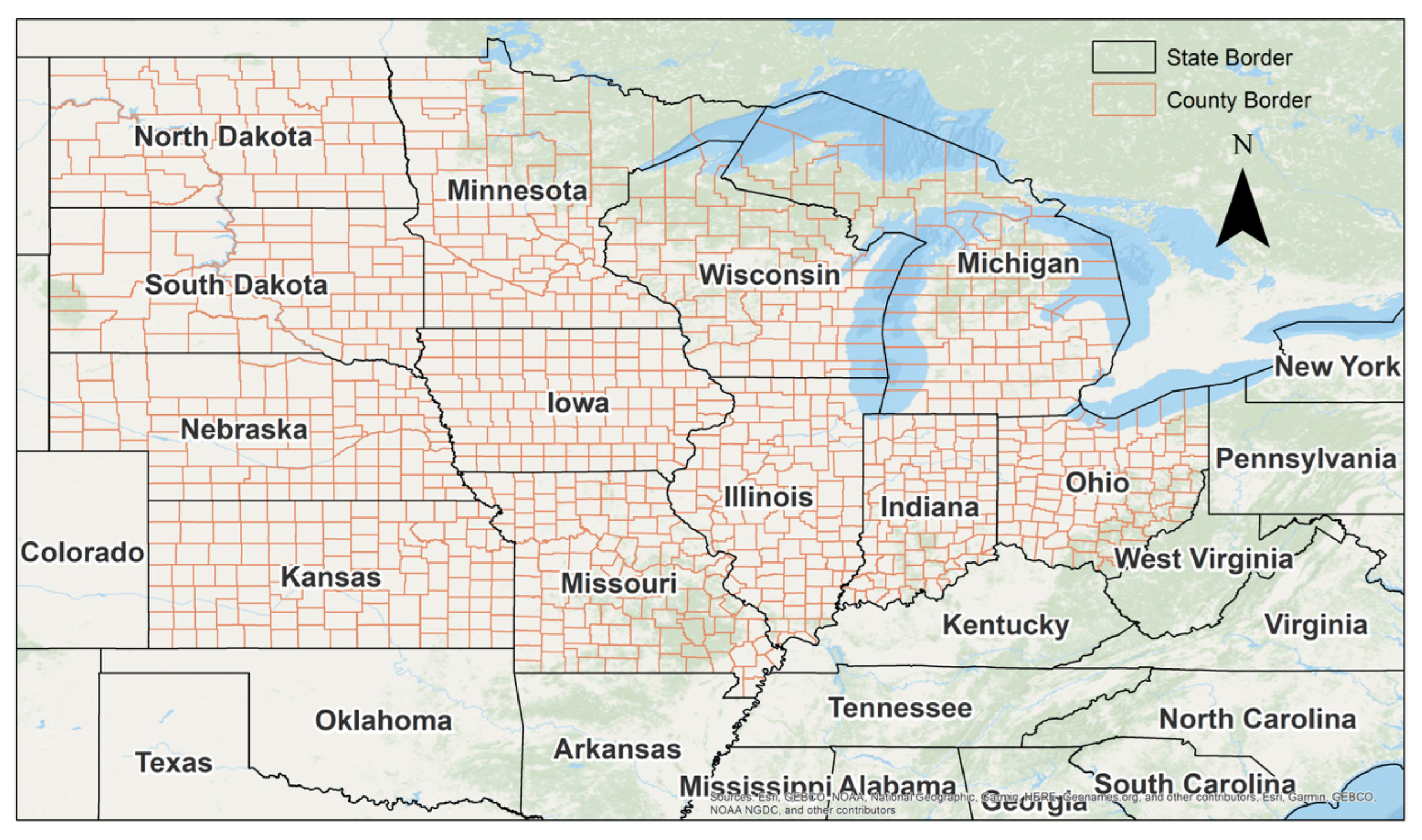
The study area consists of counties in the U.S. Midwest. The counties are located in the U.S. states, including Illinois, Indiana, Iowa, Kansas, Michigan, Minnesota, Missouri, Nebraska, North Dakota, Ohio, South Dakota, and Wisconsin. Known for row-crop farming, extensive farmland, and environmental challenges such as soil erosion, the region is well-suited for studying the spatial patterns of CRP participation and the associated land-use, environmental, and economic characteristics. The analysis was conducted at the county level because counties represent the highest level at which CRP participation data are publicly available in the United States. More precise data, such as the specific locations of farms engaged in CRP activities, is restricted from being shared by the federal government due to confidentiality concerns [
23].
Figure 2 illustrates the study area, clearly outlined with state and county boundaries.
2.2. Data Sources and Variables
This section describes the data used in the ESDA and the rationale for selecting the variables included in the study. Prior research on conservation program participation consistently identifies financial incentives, environmental characteristics of land, and agricultural opportunity costs as the primary determinants influencing landowners’ decisions to enroll land in conservation programs [
24,
25,
26]. Accordingly, this study focuses on variables that represent these key mechanisms within the context of CRP.
Specifically, CRP rental rates represent the primary financial incentive offered to landowners for enrolling eligible land in the program, while soil erosion reflects the environmental targeting criteria used in CRP eligibility and prioritization. Farm income is included as an indicator of the opportunity cost of agricultural land, as higher returns from agricultural production may reduce incentives for landowners to enroll land in conservation programs. Together, these variables capture the fundamental trade-off between conservation incentives and agricultural production returns that shapes CRP participation decisions at the regional level.
Because this study focuses on spatial patterns at the county scale across the Midwest, additional factors such as land ownership structure, farm size distribution, and policy outreach intensity were not included due to the limited availability of consistent county-level data across the study region. The selected variables, therefore, represent the most consistently available and theoretically relevant indicators for examining spatial associations between economic conditions, environmental characteristics, and CRP participation.
All variables were harmonized based on the counties included in the study region. Data on CRP participation acreage were obtained from the US Department of Agriculture (USDA) Farm Service Agency (FSA) web portal [
27]. To enable meaningful comparisons across counties with different land bases, CRP participation was normalized by dividing CRP acreage by each county’s total farmland acreage. County-level farmland acreage data were collected from the National Agricultural Statistics Service (NASS) [
28]. The resulting ratio represents the proportion of farmland enrolled in the CRP and serves as the primary indicator of CRP adoption intensity.
To capture economic incentives and broader agricultural performance conditions, CRP rental rates and farm income were included as additional variables reflecting financial incentives and agricultural profitability [
6]. CRP rental rate data were obtained from the FSA web portal [
27]. Farm income was used as an indicator of agricultural productivity and opportunity cost, consistent with rent-theoretic approaches in CRP-related land-use modeling [
26,
29]. Unlike total farm income per county, farm income was converted to income per acre by dividing county-level farm income by cropland acreage, allowing for meaningful spatial comparisons across counties with different agricultural footprints.
The environmental sensitivity of agricultural lands was represented by soil erosion rates on cultivated land. Soil erosion data were obtained from the Land Use and Cover Inventory Database (LUCID), accessible through the NASS web portal [
30]. This variable reflects the average tons of eroded soil per acre of cultivated farmland across counties in the study region [
10].
To capture the recent spatial dynamics of CRP participation while reducing the influence of short-term fluctuations, key variables, such as CRP participation rates and rental rates, were averaged over a five-year period. This smoothing approach allows for more stable spatial comparisons across counties while still reflecting the most recent enrollment cycle.
A summary of the variables used in the analysis, including their descriptions, data sources, and time periods, is presented in
Table 1.
2.3. Methodology
This study applies ESDA to examine the research questions. This includes investigating spatial structure, clustering patterns, spatial associations in CRP participation and related agricultural, economic, and environmental variables across the study region. ESDA consists of a set of models intended to describe and visualize geographical distributions, detect spatial outliers, and identify atypical localizations [
22,
31,
32]. The results help identify patterns of spatial association and indicate forms of spatial heterogeneity without imposing a predefined functional form or causal structure [
31,
32,
33]. The ESDA framework is suitable for this study because CRP participation and agricultural outcomes are spatial, and the ESDA framework can identify localized patterns and provide links between spatial patterns and policy-relevant questions, supporting descriptive and diagnostic insights.
The ESDA workflow implemented in this study follows the sequence outlined below:
Determining a spatial weight matrix to specify spatial relationships;
Assessment of global spatial autocorrelation (Global Moran’s I);
Identification of local clustering using Local Indicators of Spatial Association (LISA);
Exploration of spatial co-location patterns using bivariate Local Indicators of Spatial Association (BiLISA).
The spatial analyses are conducted in Geoda 1.22.0.21 [
22], in which statistical significance is assessed using 999 random permutations, with results reported at the 5% significance level to balance computational efficiency and statistical robustness.
2.3.1. Spatial Weights Matrix Specification
To incorporate the spatial dependence among observations in our dataset that come from counties in the study area, we modeled the relationships using a spatial weights matrix. In county-level spatial analyses of agricultural and environmental systems, contiguity-based weight matrices are commonly used because neighboring counties often share similar environmental conditions and policy contexts [
34,
35]. In this study, we use a first-order Queen contiguity-based spatial weights matrix (
), so that counties sharing either a border or a vertex are considered neighbors [
36,
37]. The spatial weights matrix is provided in Equation (1):
where
. This row standardization ensures compatibility across counties with different numbers of neighbors [
31,
38]. The
obtained through this step will be used as the fundamental spatial interaction factor for all the subsequent spatial analyses in the framework. Although model specification is generally more consequential than the precise choice of spatial weights [
39], sensitivity analysis of the LISA was repeated using alternative spatial weight matrices, including rook contiguity and k-nearest neighbors (KNN), to ensure robustness of the results. The corresponding results of the analyses are discussed in
Section 3.4.
2.3.2. Global Spatial Autocorrelation (Global Moran’s I)
Following the
construction, Global Moran’s I evaluates the presence of overall spatial dependence and measures spatial autocorrelation. Global Moran’s I assesses whether values of a variable observed in nearby locations are more similar (or dissimilar) than would be expected under spatial randomness [
31,
36].
In Equation (2), Moran’s I is defined for a variable x as follows:
where
n is the number of spatial units,
represents the observed value of region
i,
represents the observed value of region
j, and
is the mean of
x.
is the spatial weight matrix, and
is the sum of all spatial weights, acts as a normalizing factor in Moran’s I (Equation (3)).
When the value of
I is greater than zero, it indicates a positive spatial correlation. This implies that regions with a high (low) level of, for example, CRP participation rate tend to cluster significantly in space, and vice versa. A positive and significant Moran’s I value indicates a general pattern of clustering in space of similar values, while negative values indicate spatial dispersion. Values close to zero suggest spatial randomness [
31]. Monte Carlo permutation testing is used for inference in ESDA, randomly permuting observed values to generate a reference distribution under the null hypothesis of spatial randomness [
22,
31].
2.3.3. Local Indicators of Spatial Association (LISA)
To identify localized patterns, this study employs Local Indicators of Spatial Association (LISA). According to Anselin [
31], the local Moran I statistic for county
i can be defined as Equation (4):
where
represents standardized value at location
i and
is the spatial lag of neighboring values.
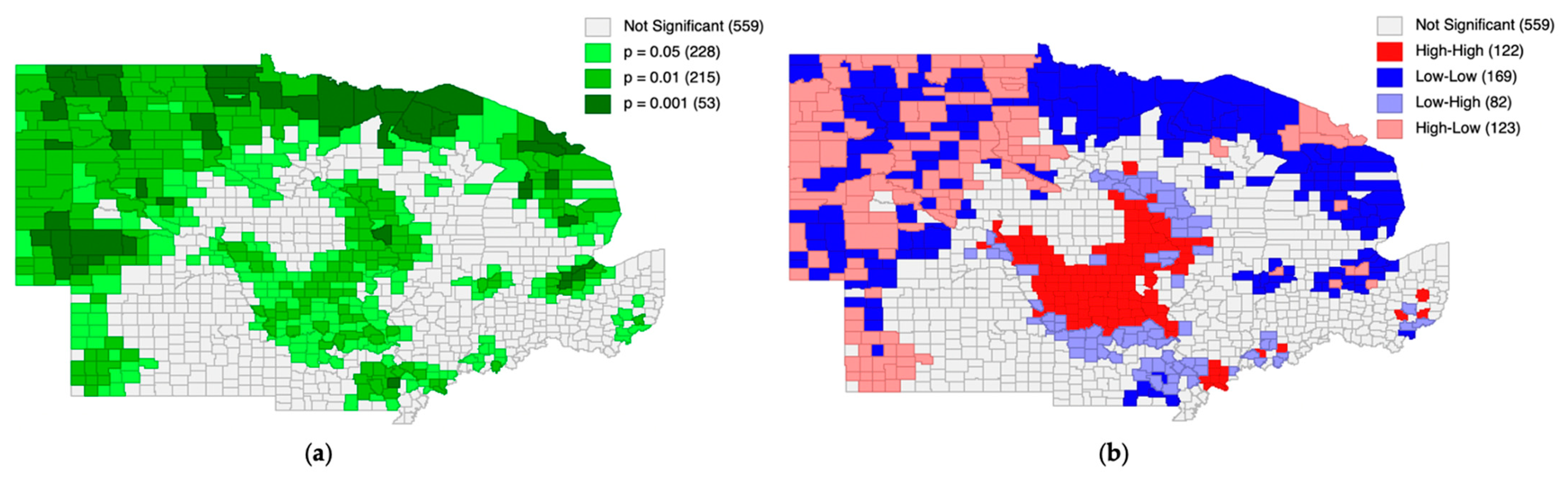
In this research, we run univariate LISA analyses for CRP participation rates, CRP rental rates, soil erosion rates, and income per acre in cultivated farmlands. Through creating significance maps and clustering maps, LISA reveals statistically significant local clusters. These results directly address research questions addressing spatial heterogeneity of CRP participation, and the other contributing variables. LISA statistics identify four spatial regimes:
High–High (HH) clusters: show counties with high values of given variable surrounded with other high-value counties. This shows a spatial concentration in the clusters, suggesting strong regional consistency regarding the variable examined.
Low–Low (LL) clusters: present counties with low values of the given variable surrounded with other low-value counties. This depicts persistently low values in cluster/s for a given value, potentially indicating barriers/challenges for providing good conditions for the given variable.
High–Low (HL) outliers: occur when counties with high values in a given variable are surrounded with low-value counties. These are considered as spatial outliers, representing localized exceptions that deviate from the broader regional patterns.
Low–High (LH) outliers: represent counties with low value in a given variable embedded in regions of high-value counties. This can signal under achievements of the variable-related potentials compared to neighboring counties’, triggering targeted policy interventions.
2.3.4. Bivariate Spatial Association
Following the identification of local spatial clustering patterns using univariate LISA analyses, bivariate local spatial association (BiLISA) analyses are employed to examine if county-level CRP participation is spatially associated with economic and environmental characteristics (represented by their corresponding variables) in neighboring counties. Unlike univariate LISA, which assesses spatial dependence within a single variable, BiLISA evaluates the extent to which values of one variable at a given location are correlated with values of a different variable in surrounding locations [
40]. Bivariate Moran’s I can be expressed as Equation (5):
where
represents the standardized value of variable
x at county
i,
represents the standardized value of variable
y in neighboring counties (
j), and
represents elements of the spatial weight matrix.
3. Results
This section presents the findings of analyses conducted by applying the methods described in the methodology section.
3.1. Global Spatial Autocorrelation
In this section, we present the results from applying Global Moran’s I to assess whether the values of the four variables cluster spatially or are randomly distributed.
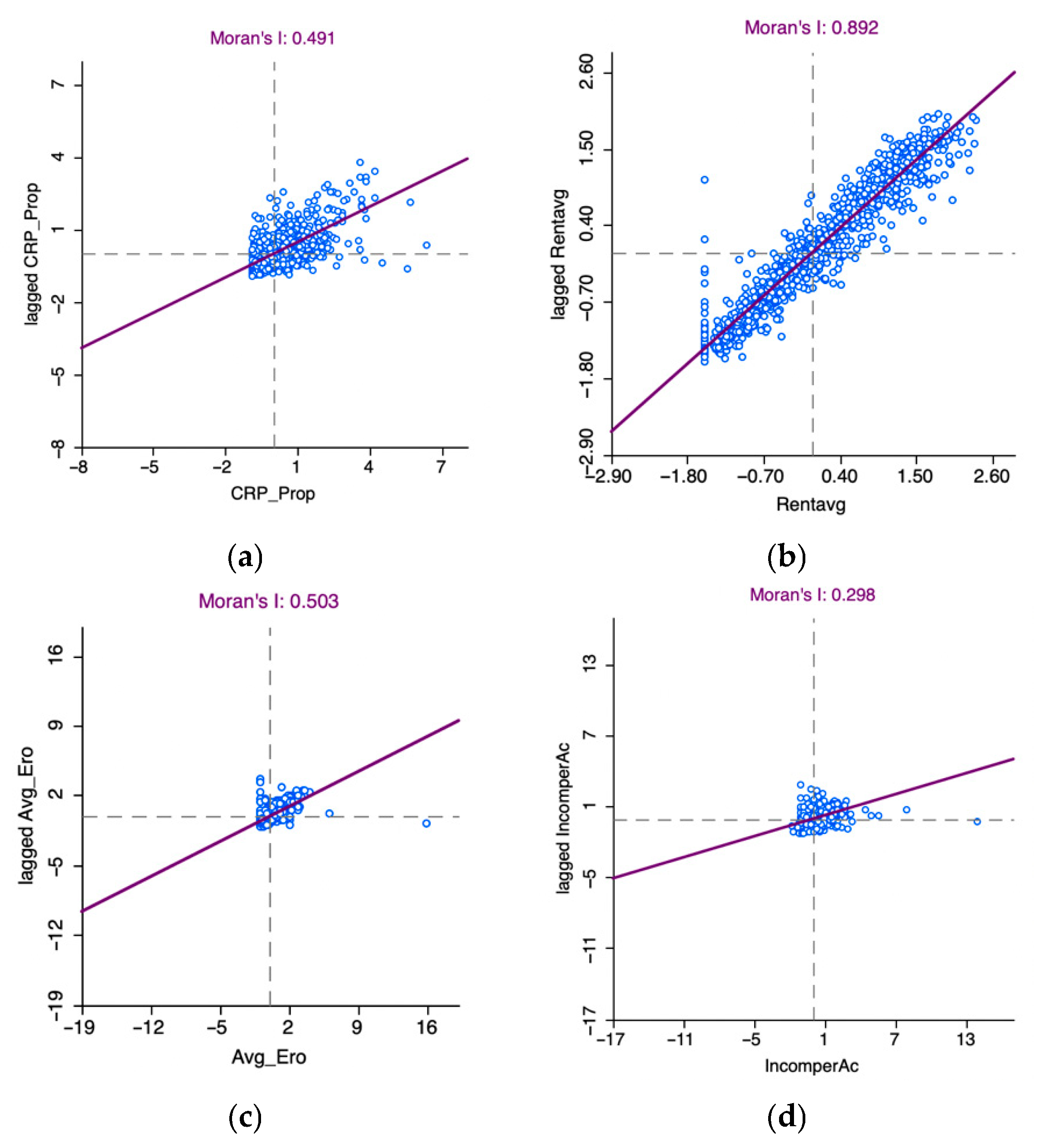
Figure 3 presents the Global Moran’s I scatter plots for four county-level variables across the Midwestern United States: (a) CRP participation, (b) CRP rental rates, (c) soil erosion, and (d) farm income. All analyses were conducted using a first-order queen contiguity spatial weights matrix. The queen contiguity spatial weight was created using a variable that refers to the counties’ FIPS codes.
Based on
Figure 3a, the Global Moran’s I statistic for county-level CRP participation rate is 0.491, indicating a moderate and positive spatial autocorrelation, suggesting counties with relatively high (low) CRP participation tend to be surrounded by counties with similarly high (low) CRP participation. This value for the CRP rental rates variable (
Figure 3b) yields 0.892, indicating very strong positive spatial autocorrelation, meaning CRP rental payments are highly spatially structured, with counties offering high rental rates neighboring other high-CRP-rent counties, and vice versa.
The Global Moran’s I statistic for soil erosion on cultivated land resulted in 0.503, as shown in
Figure 3c, which indicates moderate-to-strong positive spatial autocorrelation. This implies that counties with higher erosion rates tend to cluster spatially, likely due to shared biophysical conditions, such as soil characteristics and climate. However,
Figure 3d shows a lower Global Moran’s I value for the farm income variable, indicating lower spatial autocorrelation than for other variables, but it remains positive and suggests some degree of clustering.
3.2. Local Spatial Autocorrelation Analysis (LISA)
At this stage, LISA is used to identify county-level spatial heterogeneity for each variable. The LISA significance map indicates, for an examined variable, where spatial clustering or outlier behavior is unlikely to occur randomly (statistically significant). Additionally, the LISA cluster map shows and interprets the local spatial patterns of persistent high and low values of a variable, while also detecting outliers, showing localized deviations from regional trends.
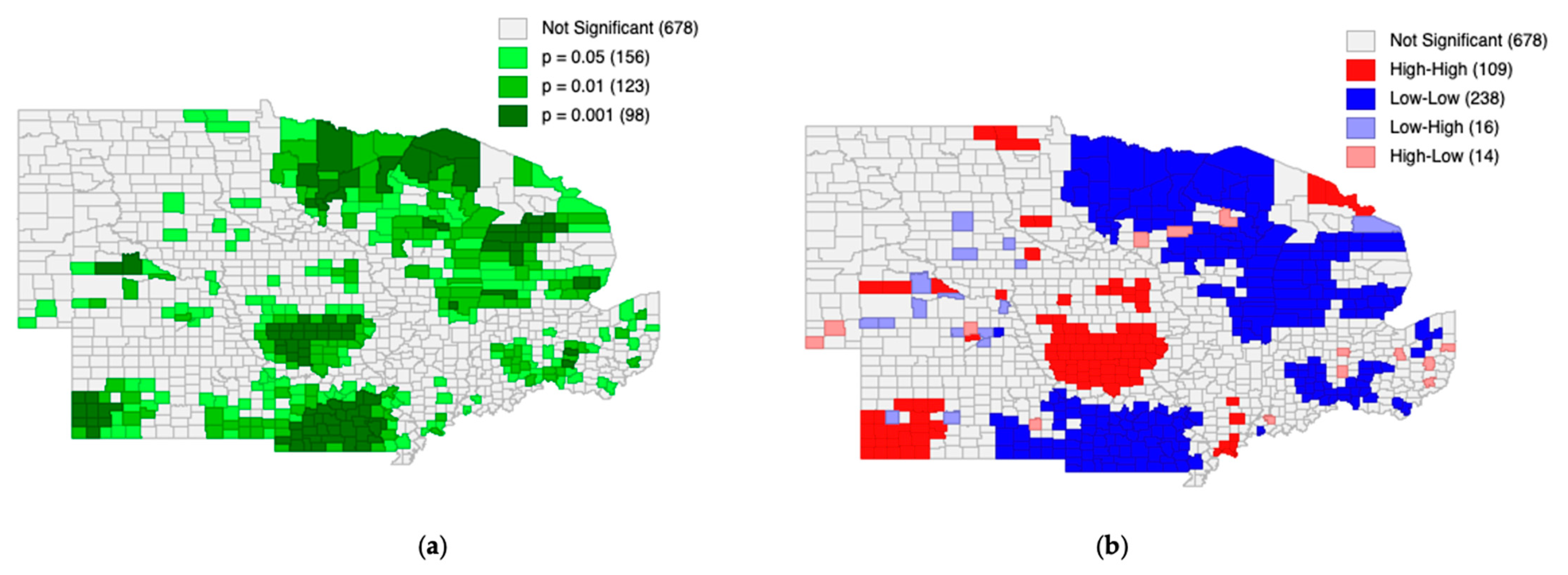
3.2.1. LISA for CRP Participation
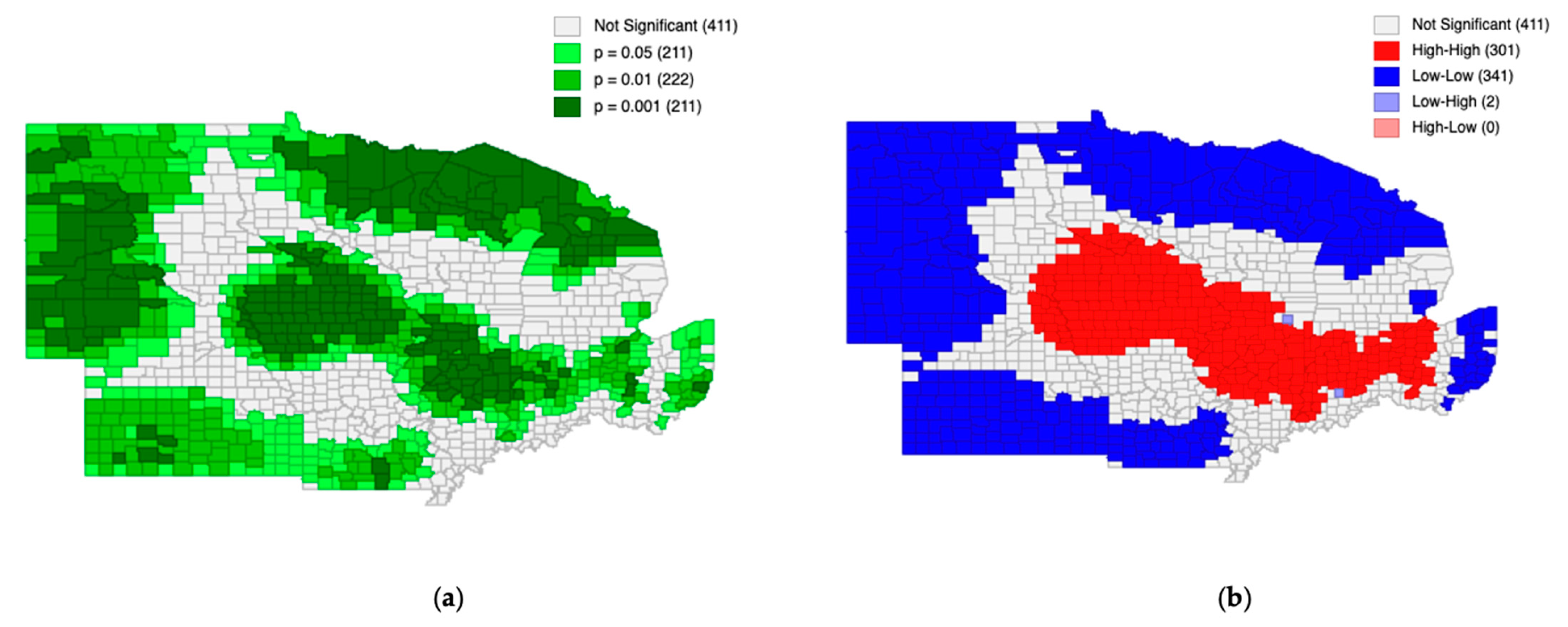
LISA was calculated for the CRP participation variable using the local Moran’s I statistic based on a first-order queen contiguity spatial weights matrix, using 999 random permutations, with results reported at the 5% significance level. The two resulting maps from the analysis are shown in
Figure 4.
The LISA significance map in
Figure 4a reveals that CRP participation has statistically significant local spatial autocorrelation across multiple subregions, while many counties show no statistically significant local association, reflecting spatial heterogeneity in program participation. In
Figure 4b, the LISA cluster map identifies distinct spatial regimes of CRP participation, with HH clusters representing counties with high CRP rates surrounded by similarly high-participation neighbors, representing contiguous high CRP enrollments. LL clusters, presented in the map, indicate areas where low CRP participation persists across neighboring counties, suggesting spatially entrenched non-participation or alternative land-use priorities.
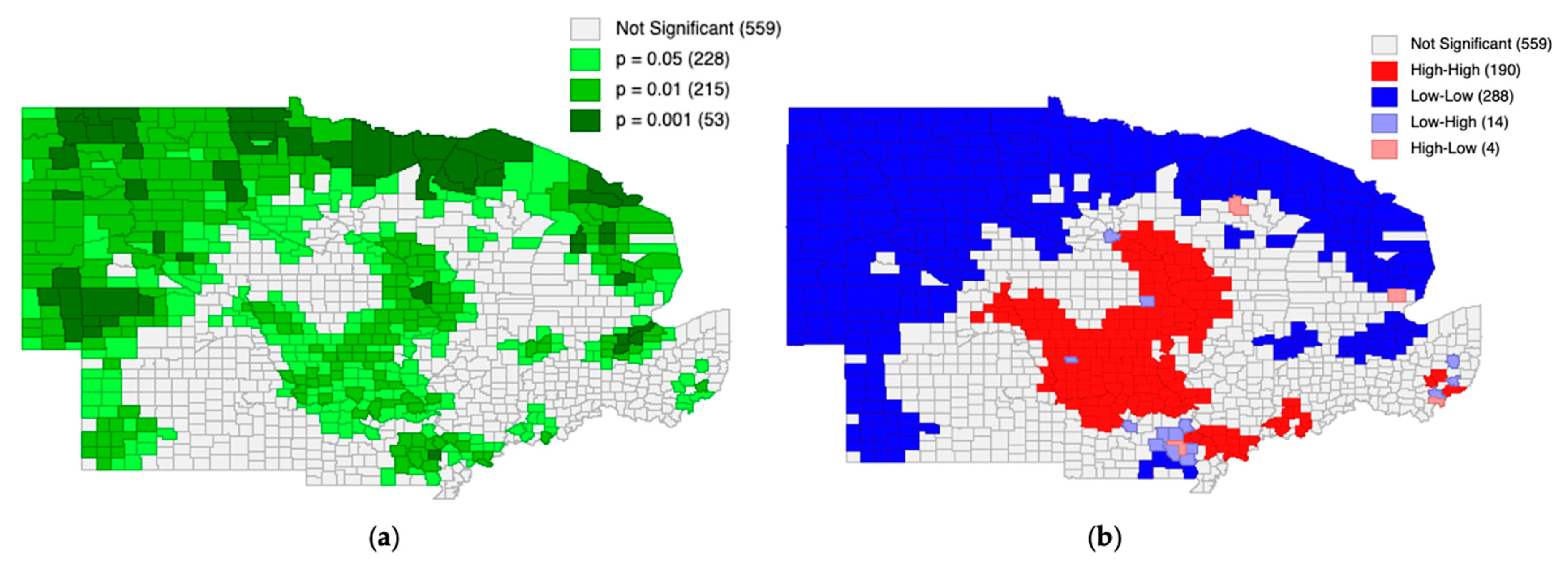
3.2.2. LISA for CRP Rental Rate
Already indicating strong positive spatial autocorrelation across the Midwest, CRP rental rates were also examined using LISA to identify the specific locations of clusters and the spatial regimes in which such clustering occurred. LISA significance and cluster maps are presented in
Figure 5 to show statistically significant local patterns in CRP rental payments.
Figure 5a shows statistically significant clustering across large, contiguous areas. Additionally, a higher proportion of counties is significant compared to the CRP participation result, indicating stronger spatial structuring of rental payments than CRP enrollment patterns in the Midwest. Regarding the cluster map, illustrated in
Figure 5b, the HH and LL clusters form broad, contiguous, significant clusters, indicating that rental rate determination reflects strong regional patterns. Spatial outliers were comparatively rare, indicating limited localized deviation from the dominant regional rental-rate pattern.
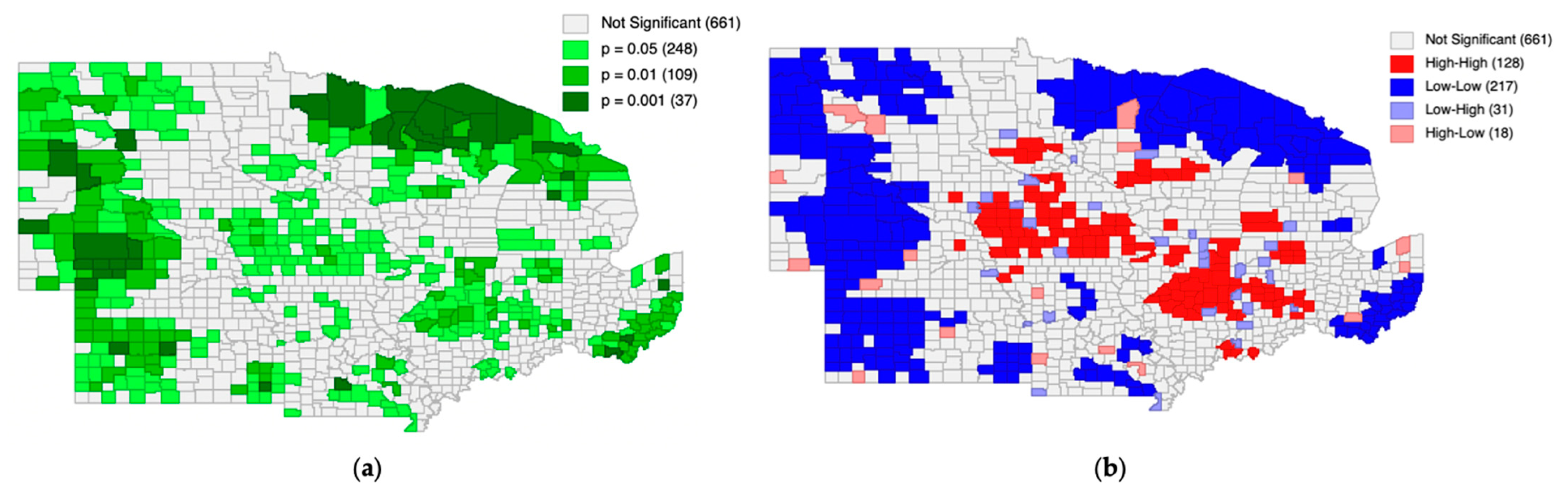
3.2.3. LISA for Soil Erosion
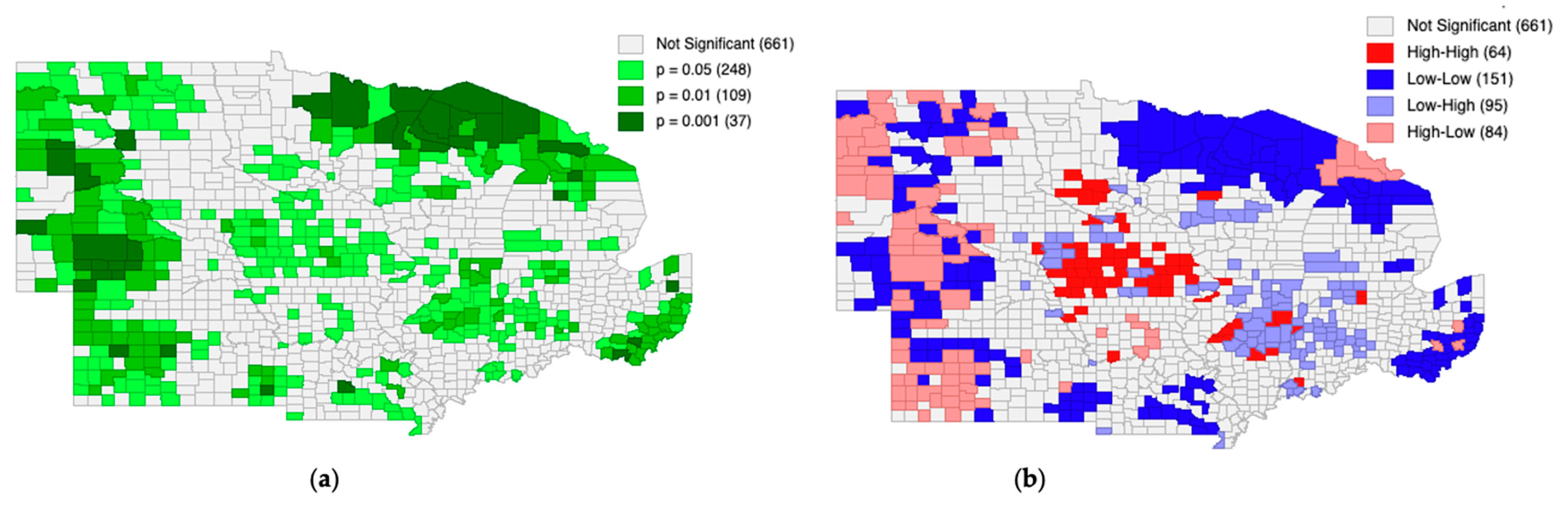
This subsection examines the local spatial autocorrelation of soil erosion on cultivated farmlands to assess whether erosion risks exhibit spatial clustering across Midwestern counties. The results are shown in the maps in
Figure 6.
The LISA significance map in
Figure 6a demonstrates that numerous counties exhibit statistically significant local spatial autocorrelation in soil erosion, indicating that soil erosion distributions are spatially structured rather than randomly distributed. The LISA cluster map in
Figure 6b reveals significant regional clustering, with HH and LL clusters and comparatively few spatial outliers.
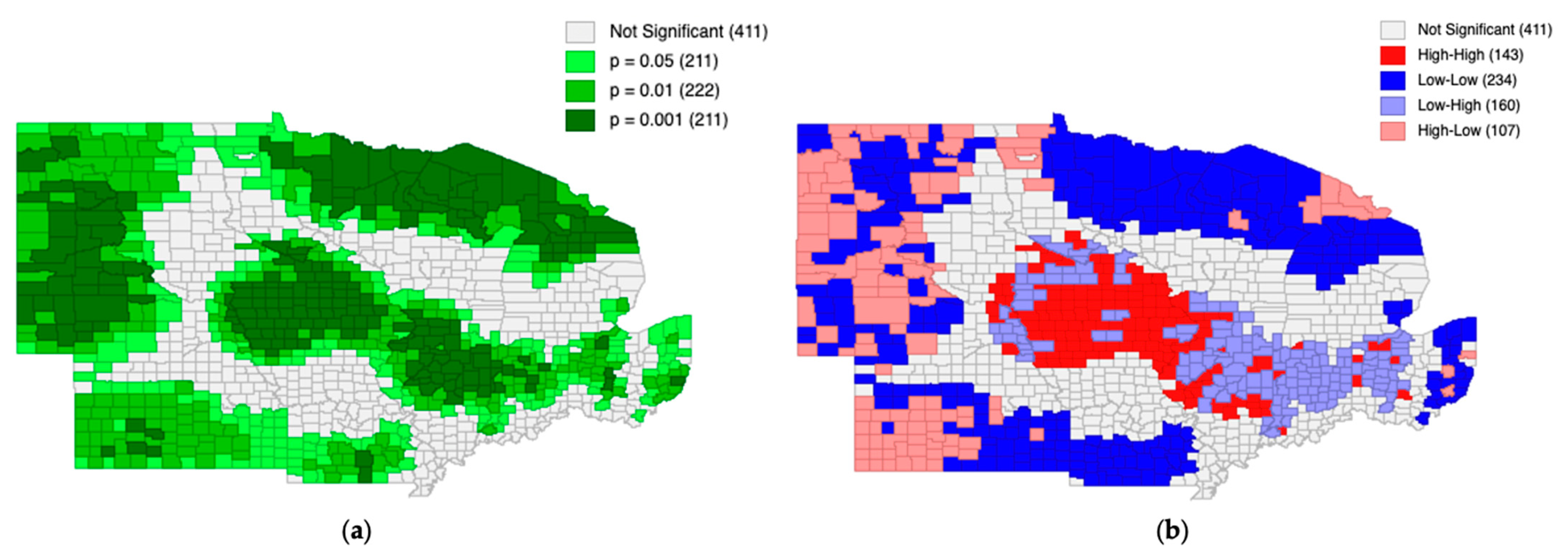
3.2.4. LISA for Farm Income
This subsection analyzes the local spatial structure of farm income using LISA. The results of the analysis, including the significance map and cluster map, are provided in
Figure 7.
The LISA significance map in
Figure 7a indicates that 394 out of 1055 counties show statistically significant local spatial autocorrelation in income per acre. The cluster map in
Figure 7b shows contiguous HH and LL clusters, along with a limited number of outliers (HL and LH), indicating that localized variations from regional income patterns are relatively uncommon.
3.2.5. Summary of LISA Cluster Distributions
While the LISA cluster maps provide a visual representation of spatial clustering patterns, a quantitative summary helps clarify the distribution of counties across cluster categories.
Table 2 summarizes the number and percentage of counties classified as HH, LL, LH, HL, and not significant for each variable.
The results show notable differences in the strength of spatial clustering across variables. CRP rental rates exhibit the strongest clustering, with more than 60% of counties falling into the HH or LL clusters. Soil erosion also shows substantial spatial clustering, while CRP participation demonstrates a larger proportion of non-significant counties, indicating weaker spatial concentration across the region.
To highlight the locations exhibiting the strongest spatial clustering patterns,
Table 3 lists the ten counties with the lowest permutation
p-values in the LISA analysis for CRP participation. These counties represent the areas where local spatial autocorrelation is most pronounced, in this case, all belong to strong HH clusters of elevated CRP participation.
3.3. BiLISA Between CRP Participation and Economic & Environmental Factors
In the following subsections, after detecting local spatial patterns for each variable using LISA, we employ BiLISA to examine whether spatial patterns in CRP participation are associated with neighboring economic and environmental conditions, thereby providing insights into spatial co-location patterns between CRP participation and key drivers.
3.3.1. BiLISA Between CRP Participation and CRP Rental Rate
This subsection provides results from BiLISA regarding the identification of local spatial patterns between CRP participation and CRP rental rates. The significance map and cluster maps are provided in
Figure 8.
According to the results shown in
Figure 8a, large, spatially contiguous areas of significant counties are formed, indicating that a statistically significant CRP participation–CRP rental rate relationship operates systematically across the study region. This indicates that CRP participation patterns are spatially linked to rental rates in neighboring counties.
The results in
Figure 8b show several extensive and statistically significant spatial clusters across the region. More specifically, HH clusters are concentrated in the central Midwest, indicating that counties with high CRP participation are surrounded by neighbors with relatively high rental rates. LL clusters are also observed in other parts of the Midwest, indicating areas where low CRP participation coincides with relatively low rental rates in neighboring counties. Furthermore, localized LH and HL outlier clusters are present, suggesting spatial mismatches between participation levels and surrounding rental incentives.
3.3.2. BiLISA Between CRP Participation and Soil Erosion
In this section, BiLISA maps are used to identify localized spatial patterns between CRP participation and soil erosion on cultivated lands across Midwestern counties. The results from the significance map and cluster map are provided in
Figure 9.
According to the results in
Figure 9a, a considerable number of counties (47%) indicate statistically significant local spatial associations between CRP participation and soil erosion. More specifically,
Figure 9b illustrates HH clusters, predominantly situated in the central Midwest. Conversely, LL clusters are also observed with comparatively low erosion and limited participation. Both cluster types exhibit a partial alignment between CRP enrollment and erosion-related environmental pressure. However, spatial outliers also exist in the region, indicating spatial heterogeneity across local areas (also shown in
Figure 9b, with LH and HL labels in the legend).
3.3.3. BiLISA Between CRP Participation and Farm Income
In this subsection, BiLISA is employed to examine the local spatial association between CRP participation and farm income on neighboring farmlands (
Figure 10).
The BiLISA significance map in
Figure 10a indicates that clusters of counties exhibit spatial dependence between CRP enrollment and surrounding farmland income. The corresponding cluster map in
Figure 10b reveals alignment between high/low participation and high/low local farm income, whereas the existence of LH and HL clusters highlights spatial mismatches.
3.3.4. Summary of BiLISA Spatial Associations
To quantify the spatial relationships observed in the BiLISA cluster maps, the number and percentage of counties belonging to each cluster category were calculated for each variable pair.
Table 4 reports the distribution of counties across HH, LL, LH, and HL clusters, along with the proportion of counties that were not statistically significant.
The BiLISA results highlight spatial variation in the relationship between CRP participation and its potential drivers. The association between CRP participation and soil erosion shows the highest proportion of HH clusters, suggesting partial alignment between conservation enrollment and environmental risk in certain regions. In contrast, the CRP participation–income relationship shows a higher share of non-significant counties, indicating weaker spatial association.
3.4. Robustness Checks
To evaluate the stability of the spatial patterns identified in the analysis, additional robustness checks were conducted. Because several variables in this study use multi-year averages, we assess whether the spatial patterns are sensitive to temporal aggregation. We repeated the spatial analyses using 2022 single-year observations instead of the five-year average (2020–2024) in the baseline specification. The resulting spatial clustering patterns are largely consistent with the baseline results, indicating that the spatial relationships identified in this study are robust to alternative temporal specifications.
Additionally, because spatial econometric results can depend on how the spatial weight matrix is specified, we tested whether our findings are sensitive to alternative definitions of neighborhood structure. In addition to the baseline queen contiguity matrix, we repeated the LISA and BiLISA analyses using rook contiguity and k-nearest-neighbor weight matrices. The resulting cluster patterns were very similar to the baseline, indicating that the spatial relationships identified in this study are robust to these alternative specifications.
4. Discussion
The results of the exploratory spatial data analysis reveal several important insights regarding the spatial dynamics of CRP participation across Midwestern counties.
The Global Moran’s I result indicate that CRP participation, CRP rental rates, soil erosion, and farm income all exhibit statistically significant positive spatial autocorrelation. This finding confirms that the distribution of these variables across the Midwest is not random but rather reflects regional spatial processes that influence conservation participation, environmental conditions, and agricultural systems. In particular, the strong spatial clustering observed for CRP rental rates suggests that program incentives are structured in geographically consistent patterns, likely reflecting regional agricultural markets, land productivity, and historical policy design [
13,
41,
42].
The LISA results further reveal substantial regional heterogeneity in CRP participation across counties. Distinct HH and LL clusters indicate that participation tends to follow regional patterns rather than being determined solely by individual county-level decisions. Counties with high CRP enrollment are frequently surrounded by neighboring counties with similarly high participation levels, while regions of persistently low participation also occur in contiguous clusters. These spatial regimes suggest that regional agricultural structures, environmental conditions, and policy contexts collectively shape participation behavior, consistent with prior studies showing that CRP enrollment reflects a combination of financial, land-use, and institutional factors rather than a single uniform decision rule [
2,
15,
42]. For example, spatial clusters in farm income of cultivated farmland can be driven by dominant regional production systems and product mixes, variations in land quality and agronomic potential, and differences in market access and supporting infrastructure [
43,
44]. These regional inequalities strengthen the significance of evaluating conservation participation through a sustainability lens, predominantly in regions that may appear to be agriculturally alike but vary in environmental outcomes.
At the same time, the presence of spatial outliers (HL and LH clusters) indicates that some counties deviate from broader regional patterns. These localized mismatches may reflect differences in opportunity costs of land use, variations in land suitability, or institutional factors affecting participation decisions [
2,
13,
45,
46]. The existence of such deviations suggests that county-level conditions and policy design may interact in complex ways that cannot be fully captured by national policy parameters alone, particularly when sustainability outcomes depend on local environmental and economic contexts. This is important as CRP’s environmental benefits depend on participation levels and whether enrollment occurs where conservation needs are greatest.
The BiLISA analyses also provide further insight into how CRP participation is spatially related to key economic and environmental drivers. The results show that CRP participation is spatially associated with both rental incentives and environmental conditions in neighboring counties, although these relationships vary considerably across the region. For example, the spatial association between CRP participation and rental rates reveals clusters where high participation coincides with high rental incentives, suggesting that financial incentives may effectively encourage enrollment in certain regions, consistent with prior work emphasizing the role of payment design and rental incentives in conservation participation decisions [
25,
26,
41]. However, the existence of spatial mismatches, such as counties with relatively high participation despite low rental rates, or counties with strong rental incentives but low participation, indicates that rental payments alone cannot fully explain spatial enrollment patterns, a conclusion that is consistent with evidence that crop-market conditions, risk-management programs, and landowner-specific motivations also influence CRP participation [
2,
41,
47,
48].
Similarly, the relationship between CRP participation and soil erosion indicates a partial alignment between environmental needs and program participation, which is consistent with the CRP’s long-standing emphasis on targeting environmentally sensitive lands, while also reflecting the practical limits of voluntary enrollment mechanisms [
2,
25,
42]. Several regions exhibit high–high clusters where counties with elevated erosion risk coincide with high CRP participation, suggesting that conservation enrollment helps address environmental vulnerabilities in these areas. However, other regions exhibit weaker alignment, indicating that environmentally sensitive lands do not always receive a proportionally higher share of participation. From a sustainability perspective, this spatial inconsistency suggests that the program’s environmental effectiveness differs across the region.
By contrast, the spatial relationship between CRP participation and farm income reveals a more heterogeneous pattern. While some regions exhibit alignment between participation and agricultural profitability, many counties show weak or insignificant spatial association. This suggests that agricultural profitability influences CRP enrollment decisions in some regions but is not a universal determinant across the Midwest, which aligns with prior research showing that opportunity costs matter for land retirement decisions but interact with other behavioral, environmental, and programmatic factors [
4,
13,
26].
5. Conclusions
5.1. Summary of Key Findings
This study used ESDA to examine county-level CRP participation patterns in the Midwestern US. Global Moran’s I analyses revealed that CRP participation, rental incentives, soil erosion, and farm income are not randomly distributed across the Midwest, although with varying spatial significance. Local spatial analyses (BiLISA) identified distinct HH and LL clusters for each variable, showing pronounced regional heterogeneity in CRP adoption and its contributing factors. The results also indicate that CRP participation is spatially associated with neighboring rental incentives and environmental and economic conditions. Although the plan proved effective in certain Midwestern regions, spatial mismatches also emerged, suggesting that factors beyond the three variables considered here may also influence participation.
Overall, these findings highlight the importance of considering spatial context when evaluating the effectiveness of conservation policies and their sustainability outcomes. The results demonstrate that CRP participation is influenced not only by local conditions but also by regional spatial dynamics and spillover effects among neighboring counties. Consequently, conservation programs designed with uniform federal parameters may not fully capture the spatial variability of environmental conditions and economic incentives that shape landowner participation decisions. Due to this, the program’s capability to generate environmental benefits, safeguard natural resources, and support sustainable land stewardship may vary considerably across the region.
5.2. Policy Implications
The findings from this study have several important implications for the design and targeting of the CRP policy. First, from the difference between the highly significant spatial clustering of CRP rental rates relative to more moderate clustering in CRP participation, it can be inferred that while rental rates are highly regionally patterned, CRP participation rates do not always respond proportionally, implying that uniform incentive mechanisms may not be equally effective throughout various regions and counties in the Midwest. Second, despite the partial alignment of CRP participation with soil erosion risk, as demonstrated by HH clusters, there are spatial outliers where high CRP participation occurs despite relatively low erosion risk, and vice versa. This can motivate the design of more spatially targeted conservation policies that better prioritize such environmentally sensitive areas. Overall, these results stress the need to adopt a spatially differentiated policy design approach in CRP planning. It is expected that accounting for spatial spillovers and regional clustering could improve both the plan’s environmental effectiveness and economic equity.
5.3. Limitations and Future Research
This study is subject to several limitations. First, due to confidentiality restrictions on farm-level CRP enrollment, the spatial analyses in this study were all conducted using county-level data for each variable, which may have masked important variations at the sub-county or farm level. Therefore, applying the framework to other areas with finer-scale data available, such as parcel- or farm-level, could uncover microscale clusters, helping better understand spatial patterns. Future studies could incorporate such detailed information from sources such as the FSA administrative records, the National Resources Inventory (NRI) [
49], or parcel-level land-use datasets derived from remote sensing [
20]. Second, ESDA is inherently descriptive and is therefore mainly used to detect or verify spatial patterns in a given region; it does not examine the presence of causal relationships. Although ESDA’s descriptive nature aligns with the purpose of this study, it also means that causal relationships cannot be established directly, necessitating causal analyses (e.g., spatial econometric models) in future studies. Additionally, another comprehensive ESDA that considers a broader set of contributing variables, assuming the availability of the corresponding data, could enhance understanding of local CRP enrollments and their sustainability drivers. Moreover, expanding the application of this framework to all US regions could help assess the generalizability of this study’s findings and compare spatial patterns across the US regions.