Study on the Effect of Catalyst Loading on the DOC + SCR Coupled System of a Light-Duty Diesel Engine

Abstract
1. Introduction
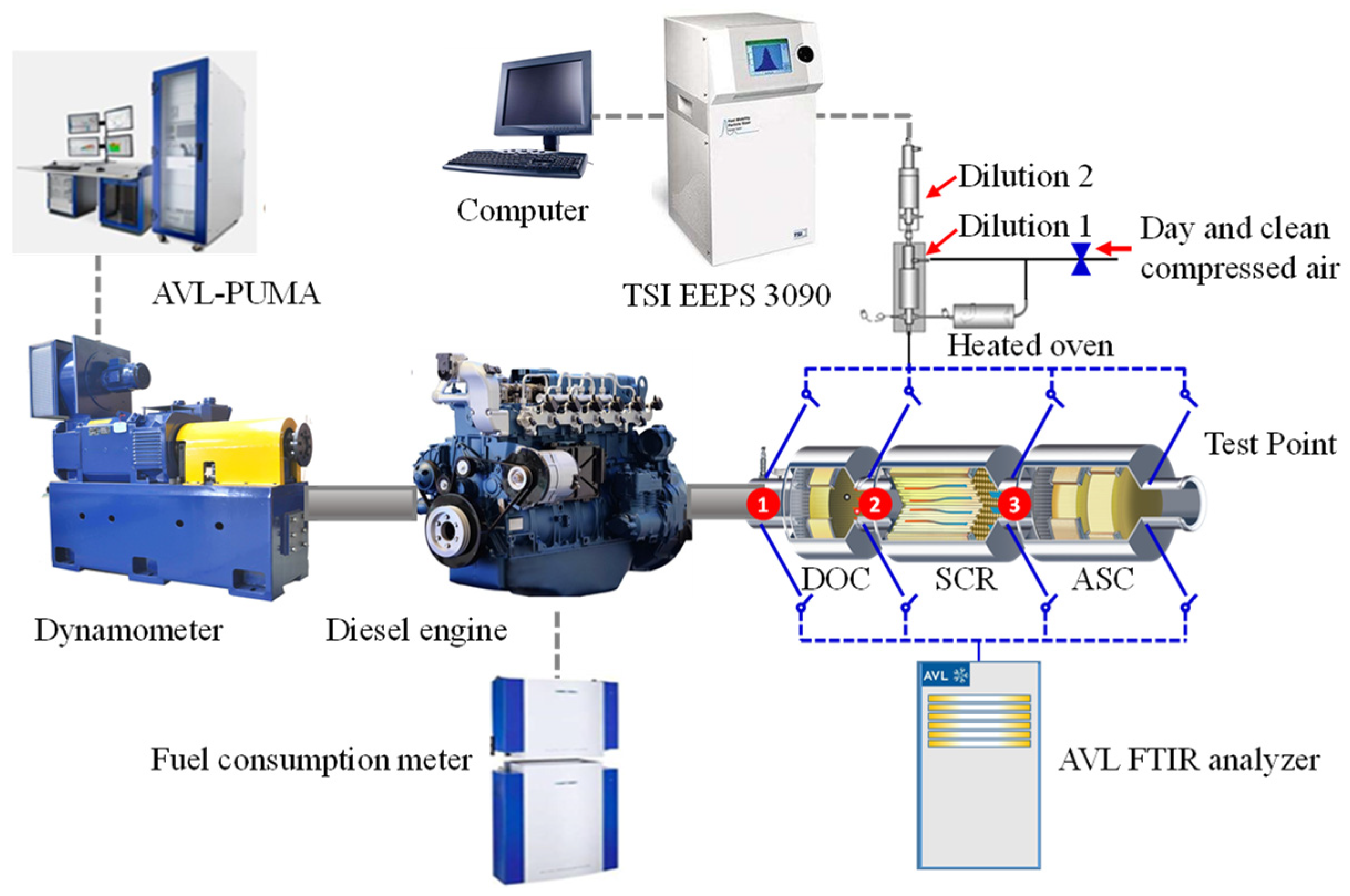
2. Test System and Methods
2.1. Test System
2.2. Engine Specifications
2.3. Test Exhaust Aftertreatment System
2.4. Test Conditions
- (1)
- External characteristic condition: The test engine operates at full load across a speed range from 1000 r/min to 3200 r/min. Test speeds are selected at 200 r/min intervals, resulting in 12 external characteristic test points.
- (2)
- Load Characteristic Test Conditions: Based on the engine’s external characteristic test data, the maximum torque speed is 2000 r/min and the rated speed is 3200 r/min. Load levels corresponding to 10%, 25%, 50%, 75%, and 100% of full load at each respective speed were selected as load characteristic test points.
3. Results and Discussion
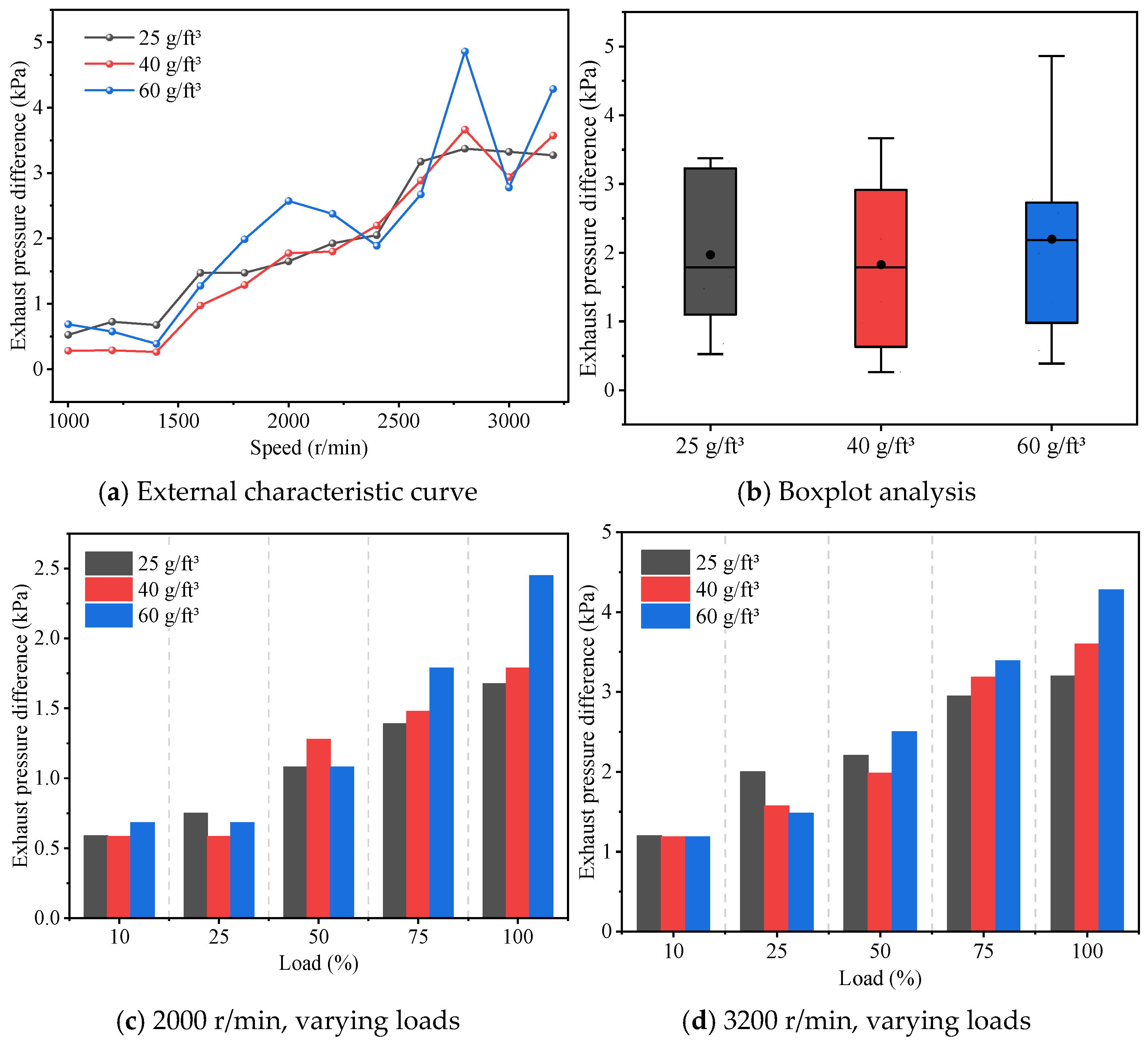
3.1. Exhaust Backpressure and Exhaust
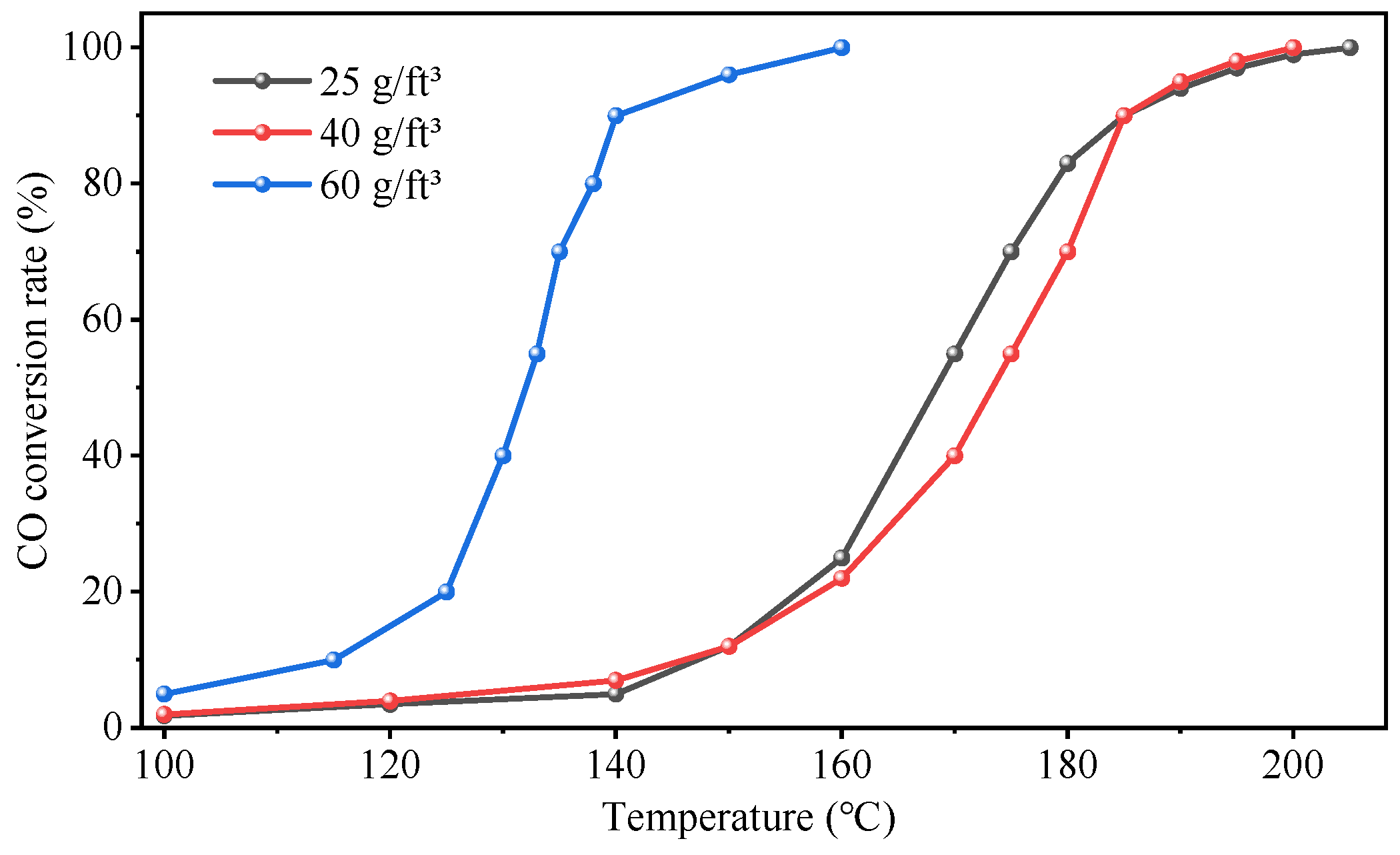
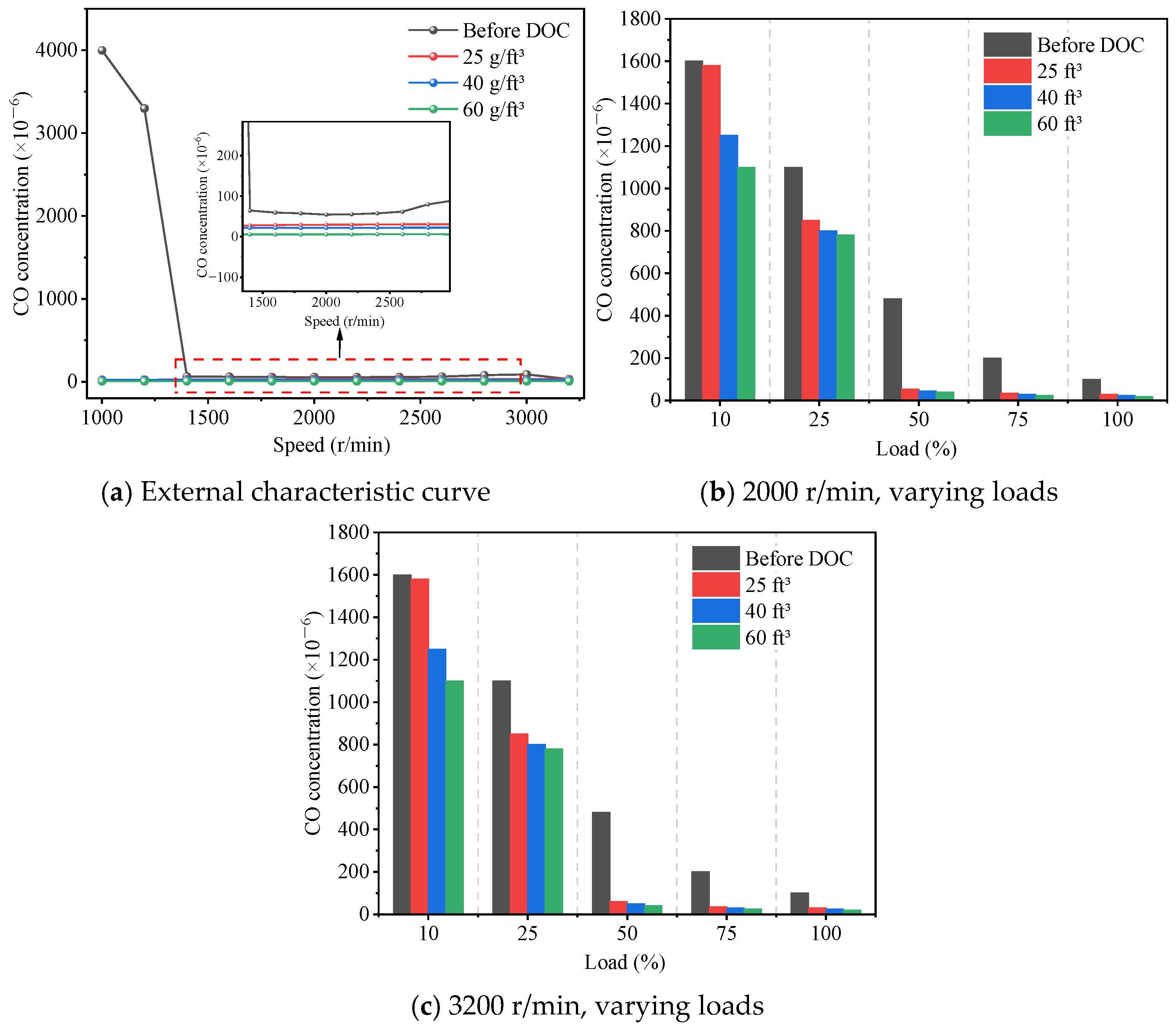
3.2. Gaseous Emission Characteristics
4. Conclusions
- (1)
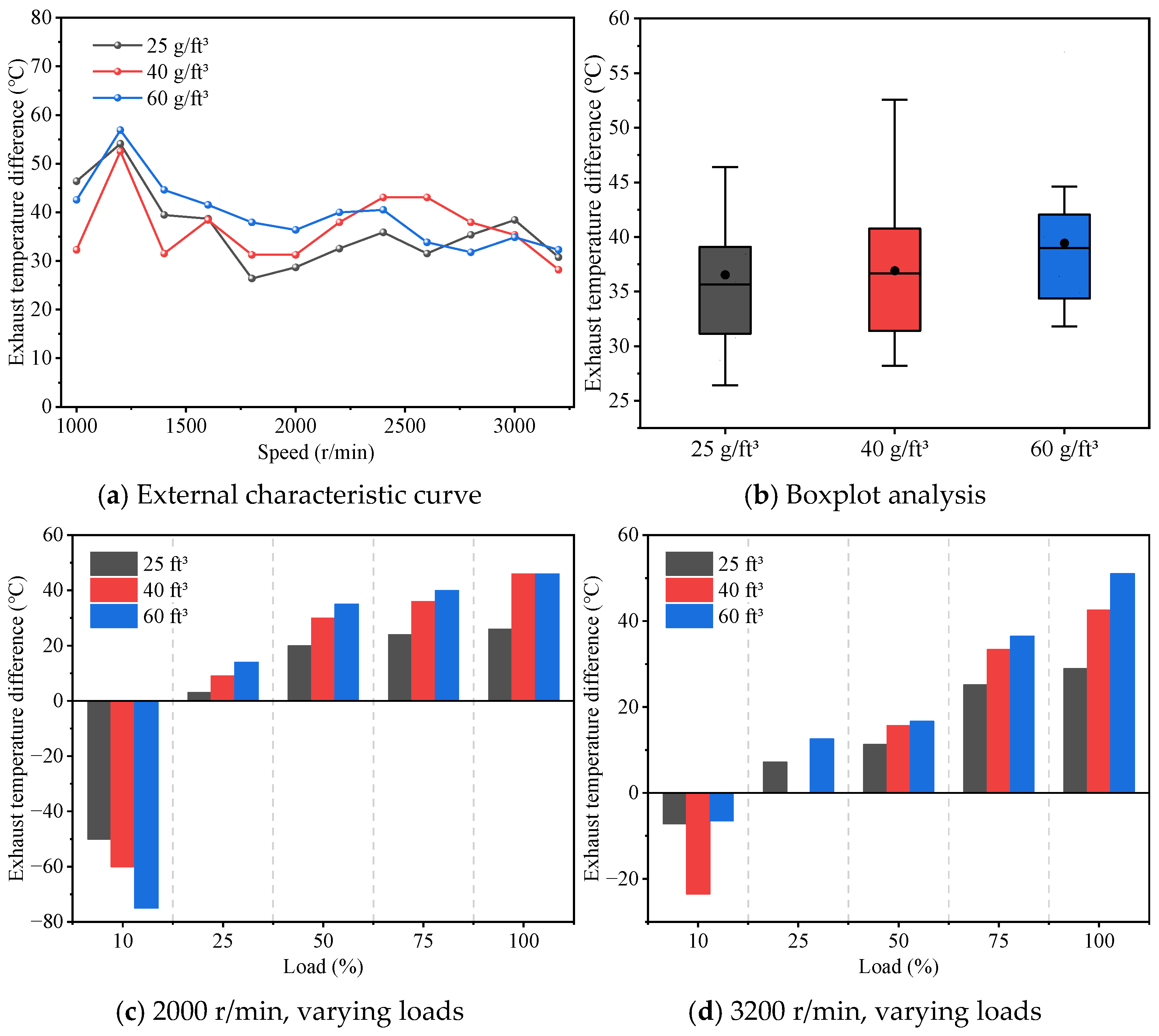
- Under the same substrate geometry and coating structure, increasing the DOC loading generally leads to higher exhaust backpressure under most operating conditions, indicating that higher catalyst loading increases system flow resistance. Under load characteristic conditions, the maximum pressure differences in the DOC + SCR system with catalyst loadings of 25, 40, and 60 g/ft3 reached 3.3, 3.6, and 4.3 kPa, respectively, at 100% load. In contrast, no obvious monotonic relationship was observed between the DOC temperature rise and catalyst loading, suggesting that the DOC temperature difference is mainly governed by engine operating conditions and exhaust thermal state.
- (2)
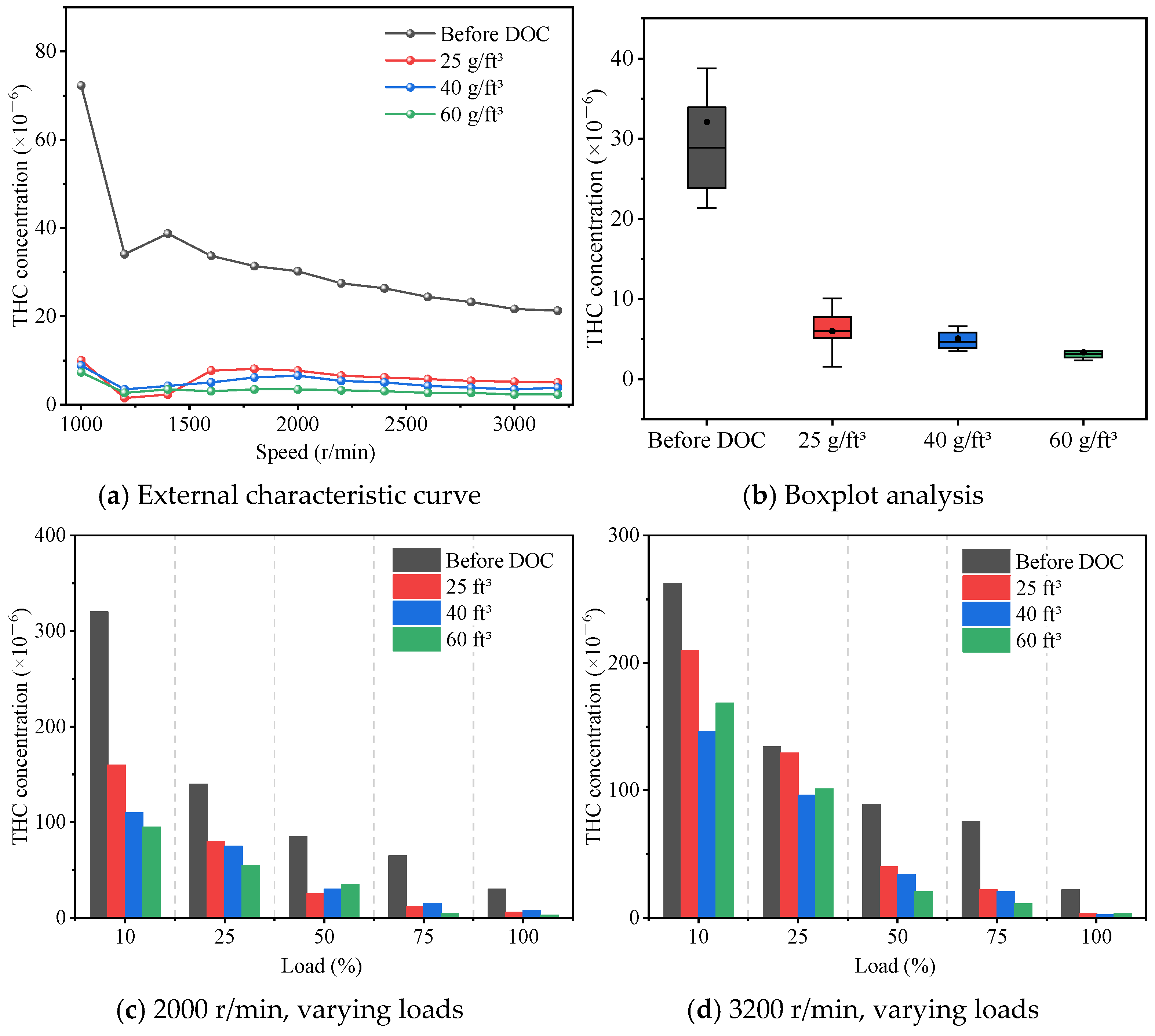
- Higher DOC loading enhances the oxidation activity toward CO and THC. The 60 g/ft3 DOC showed the highest CO and THC conversion capability over the tested conditions, while the influence of catalyst loading was more significant at medium-to-low loads and became less pronounced at high loads.
- (3)
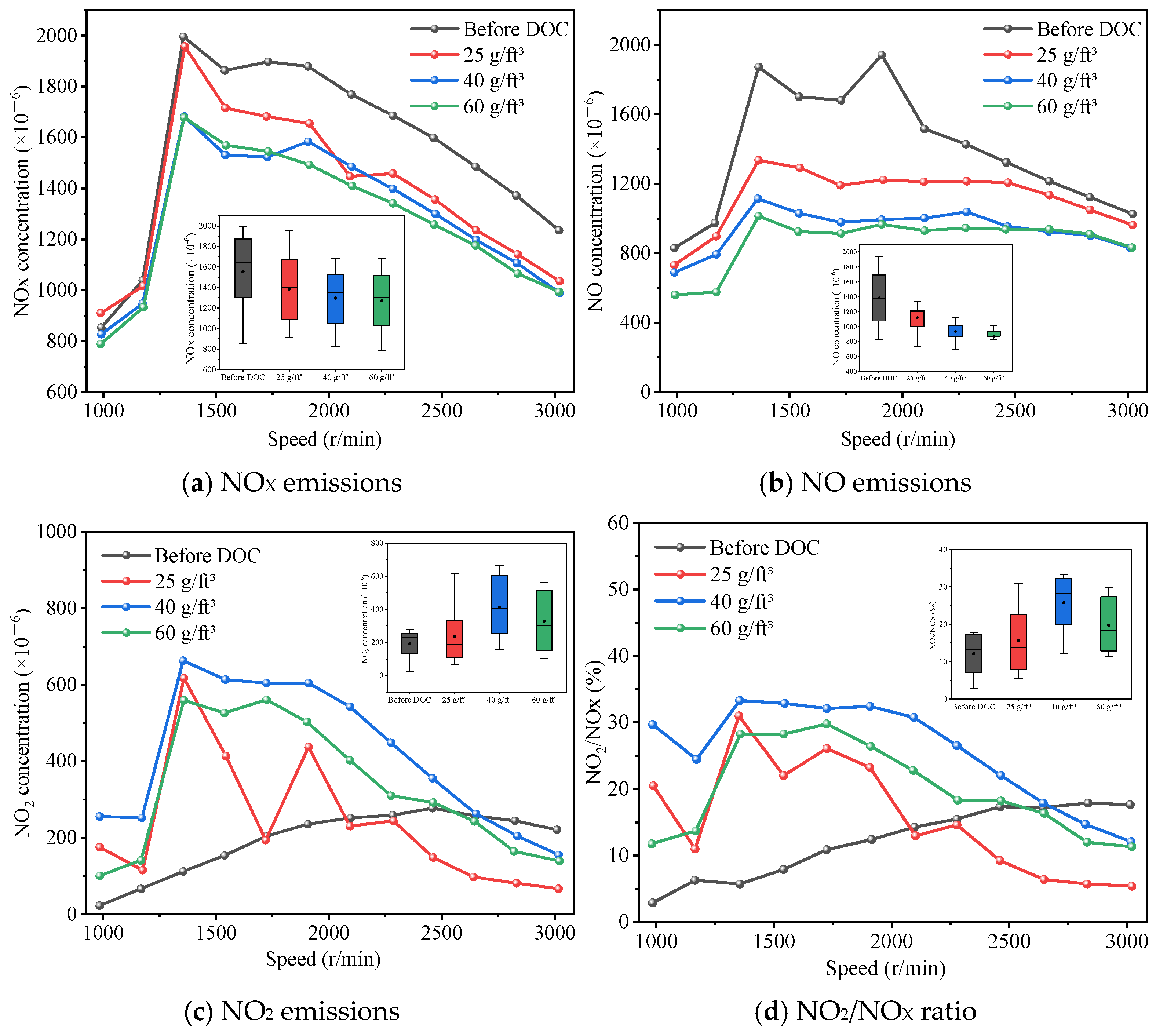
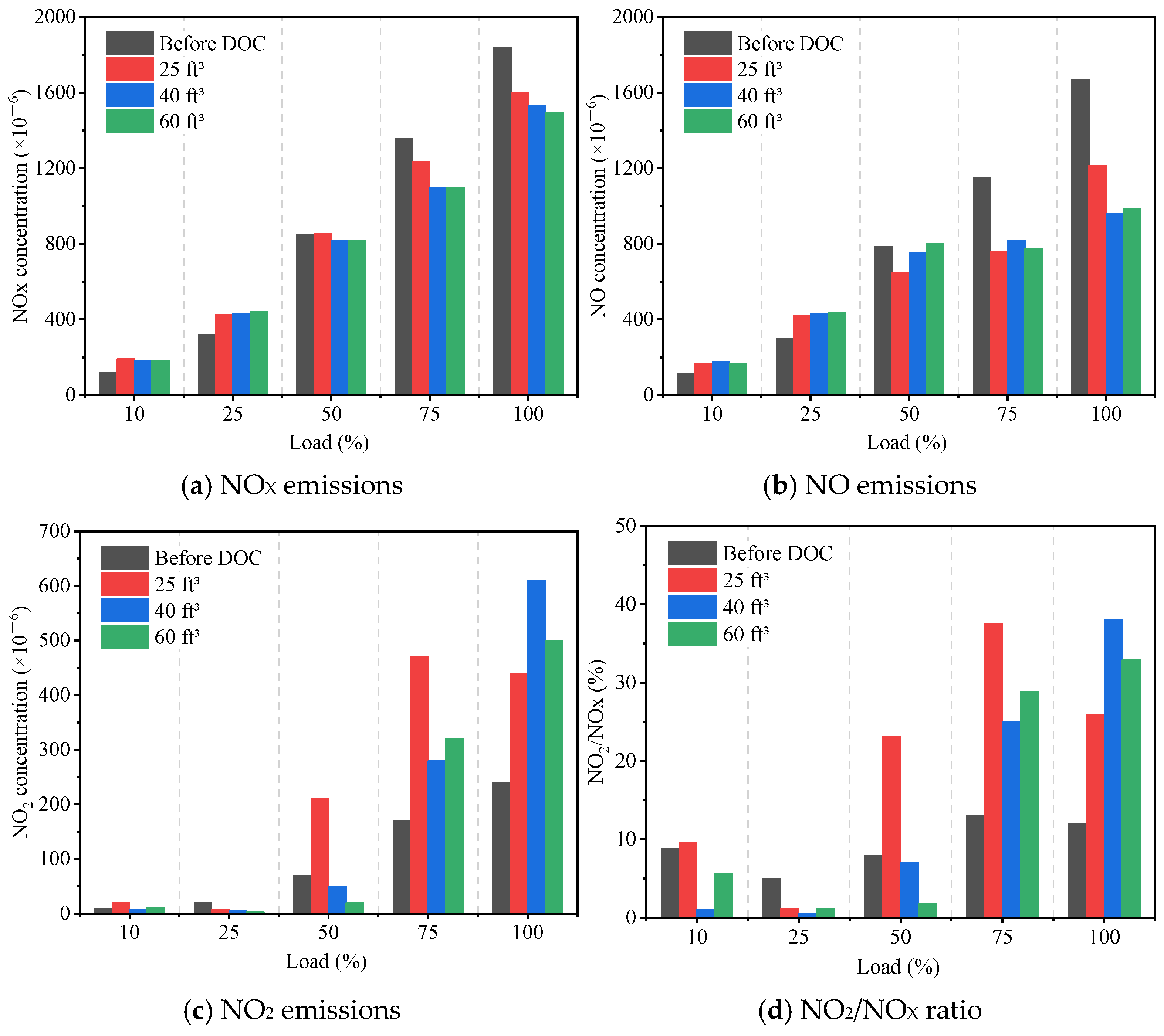
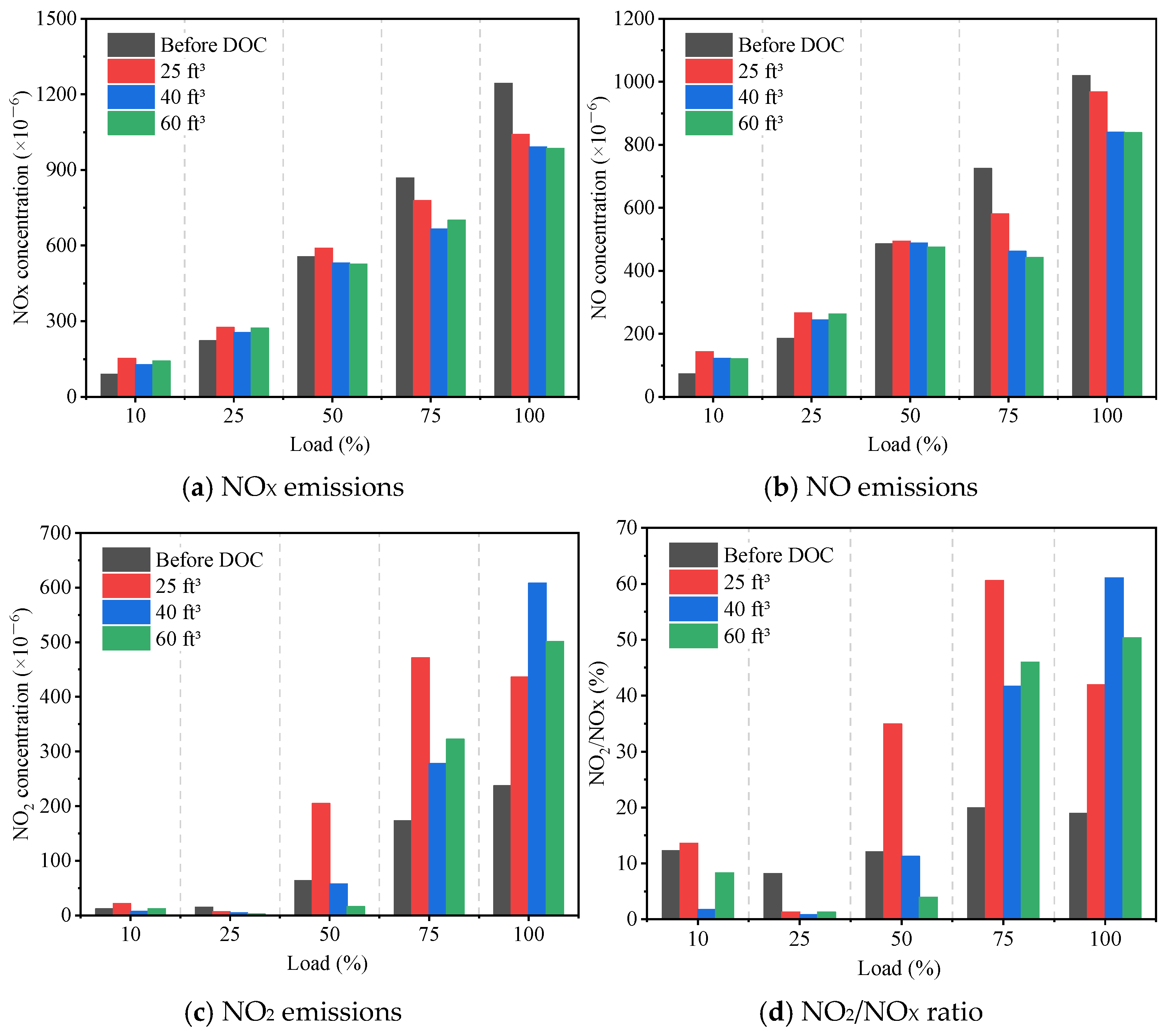
- Higher DOC loading enhances NO oxidation capacity. Under external characteristic conditions, elevated engine exhaust temperatures maximize NO2 formation after the DOC. At 2000 r/min, the amount of NO2 produced after the DOC increased by 86.0%, 157.6%, and 111.8% for precious metal loadings of 25, 40, and 60 g/ft3, respectively. At the rated speed of 3200 r/min, the amount of NO2 produced after the DOC increased by 46.6%, 56.4%, and 88.0% for precious metal loadings of 25, 40, and 60 g/ft3, respectively.
- (4)
- From a practical application perspective, the selection of DOC loading should consider not only oxidation performance and exhaust flow resistance, but also the potential catalyst cost and the possible influence on engine fuel consumption. Although 60 g/ft3 provides the strongest oxidation activity for CO and THC, it also results in the highest backpressure penalty and requires a higher catalyst coating amount. Considering emission improvement and system penalty together, the 40 g/ft3 DOC exhibits the best overall balance under the tested operating conditions and can be regarded as a more practically favorable catalyst loading in this study. In applications where oxidation activity is prioritized over cost and flow resistance, a higher loading, such as 60 g/ft3, may still be preferred.
Author Contributions
Funding
Institutional Review Board Statement
Informed Consent Statement
Data Availability Statement
Conflicts of Interest
References
- Lyu, L.; Wang, J.; Yin, H.; Ji, Z.; Tan, J.; Hao, L.; Ge, Y. Accelerated aging for after-treatment devices of diesel engine: Method, emission characteristics, and equivalence. Appl. Energy 2024, 355, 122234. [Google Scholar] [CrossRef]
- Liu, Y.; Liu, J.; Ji, Q.; Wang, X.; Ao, C. Experimental study on performance and emission characteristics of non-road methanol/diesel dual-fuel engine with after-treatment system at full loads. J. Environ. Manag. 2025, 376, 124486. [Google Scholar] [CrossRef]
- Zhang, Y.; Zheng, S.; Lou, D.; Tan, P.; Hu, Z.; Fang, L. Particles, compositions and particle mass spectrometry emission characteristics with biodiesel and diesel exhaust after-treatment system. Energy 2025, 315, 134488. [Google Scholar] [CrossRef]
- Shi, Y.; Hou, D.; Luo, Y.; Kaiqi, Z.; Yang, Y.; Ding, Z.; Cai, Y.; Li, X.; Wang, J.; Wang, J. Degradation of particulate matter utilizing non-thermal plasma: Evolution laws of morphological micro-nanostructure and elemental occurrence state. J. Environ. Chem. Eng. 2024, 12, 114772. [Google Scholar] [CrossRef]
- Wang, X.; Huang, J.; Lei, X.; Yue, X.; Zhang, L.; Li, S.; Yu, H.; Ding, S. Advanced NOx Emission Modeling for Diesel Trucks: Incorporating Exhaust Temperature and Load Dynamics. Atmos. Pollut. Res. 2025, 17, 102703. [Google Scholar] [CrossRef]
- Ma, B.; Wang, W.; Guo, S.; Zhan, Q.; Yao, C. A comparative study on combustion and emissions between diesel and diesel methanol dual fuel modes under different loads. Fuel 2026, 407, 137572. [Google Scholar] [CrossRef]
- Shi, Y.; Wang, X.; Liang, R.; Huang, X.; Wang, P.; Li, Z.; Yu, L.; Zhang, Y.; Hou, D.; Cai, Y.; et al. Temperature window of NTP-assisted DPF regeneration and evolution mechanism of PM physicochemical properties. Appl. Therm. Eng. 2026, 293, 130507. [Google Scholar] [CrossRef]
- Okeleye, S.A.; Thiruvengadam, A.; Besch, M.C.; Pradhan, S.; Carder, D. Performance characterization of a selective catalytic reduction on filter aftertreatment system in a heavy-duty diesel engine tested on a laboratory dynamometer. J. Energy Inst. 2023, 110, 101330. [Google Scholar] [CrossRef]
- Zheng, T.; Yang, B.; Li, Y.; Ma, Y. Luenberger-sliding mode observer based backstepping control for the scr system in a diesel engine. Energies 2019, 12, 4270. [Google Scholar] [CrossRef]
- Wei, Z.; Guan, B.; Zhuang, Z.; Chen, J.; Zhu, L.; Ma, Z.; Hu, X.; Zhu, C.; Zhao, S.; Shu, K.; et al. Review on solid selective catalytic reduction (SSCR) technology: Excellent optimization of selective catalytic reduction technology. Catal. Sci. Technol. 2025, 15, 647–668. [Google Scholar] [CrossRef]
- Peng, Q.; Ye, J.; Kang, Z. Optimization of diesel oxidation catalyst for enhanced emission reduction in engines. Energy 2024, 290, 130152. [Google Scholar] [CrossRef]
- Zhong, C.; Gong, J.; Wang, S.; Tan, J.; Liu, J.; Zhu, Y.; Jia, G. NO2 catalytic formation, consumption, and efflux in various types of diesel particulate filter. Environ. Sci. Pollut. Res. 2021, 28, 20034–20044. [Google Scholar] [CrossRef]
- Lou, D.; Zhao, Y.; Zhang, Y.; Sun, Y. Modeling and Analysis on Emission Characteristics of Light-Duty Diesel Engine After-Treatment System Based on Neural Network; SAE Technical Paper; SAE International: Warrendale, PA, USA, 2021. [Google Scholar]
- Shi, Y.; Cheng, D.; Liu, Y.; Huang, X.; Wang, P.; Li, Z.; Jiang, J. Non-thermal plasma synergistic regeneration for Pt catalyst performance reconstruction. Chin. Chem. Lett. 2025, 112246. [Google Scholar] [CrossRef]
- Flörchinger, P.; Ortiz, M.G.; Ingram-Ogunwumi, R. Comparative Analysis of Different Heavy Duty Diesel Oxidation Catalysts Configurations; SAE Technical Paper 2004-01-1419; SAE: Amsterdam, The Netherlands, 2004. [Google Scholar]
- Khosravi, M.; Abedi, A.; Hayes, R.; Epling, W.; Votsmeier, M. Kinetic modelling of Pt and Pt: Pd diesel oxidation catalysts. Appl. Catal. B Environ. 2014, 154, 16–26. [Google Scholar] [CrossRef]
- Zhang, J.; Lou, D.; Sun, Y.; Tan, P.; Hu, Z.; Huang, C. Effects of DOC and CDPF Catalyst Composition on Emission Characteristics of Light-Duty Diesel Engine with DOC + CDPF + SCR System; SAE Technical Paper; SAE International: Warrendale, PA, USA, 2018. [Google Scholar]
- Ge, M.Y. Numerical Simulation of Precious Metal Catalysts for Diesel Oxidation Catalyst (DOC) in Diesel Engines. Master’s Thesis, Dalian University of Technology, Dalian, China, 2021. [Google Scholar]
- Xiang, P.; Liu, J.; Zhao, W.; Ji, Q.; Ao, C.; Wang, X.; Sun, P.; Wang, X.; Li, Z. Experimental investigation on gas emission characteristics of ammonia/diesel dual-fuel engine equipped with DOC + SCR aftertreatment. Fuel 2024, 359, 130496. [Google Scholar] [CrossRef]
- Lyu, L.; Sun, W.; Feng, P.; Wang, H.; Hao, L.; Tan, J.; Wang, X.; Song, C.; Li, H.; Li, Z.; et al. NH3 and N2O emission durability of the heavy-duty diesel engine with DOC, DPF, SCR, and ASC through the accelerated aging method. Fuel 2023, 339, 126950. [Google Scholar] [CrossRef]
- Jung, Y.; Pyo, Y.; Jang, J.; Woo, Y.; Ko, A.; Kim, G.; Shin, Y.; Cho, C. Nitrous oxide in diesel aftertreatment systems including DOC, DPF and urea-SCR. Fuel 2022, 310, 122453. [Google Scholar] [CrossRef]
- Hu, J.; Liao, J.; Hu, Y.; Lei, J.; Zhang, M.; Zhong, J.; Yan, F.; Cai, Z. Experimental investigation on emission characteristics of non-road diesel engine equipped with integrated DOC + CDPF + SCR aftertreatment. Fuel 2021, 305, 121586. [Google Scholar] [CrossRef]
- Sun, Y.; Qian, Y.; Gong, Z.; Sun, Z. Catalytic effect of DOC + SCR aftertreatment system based on ship exhaust conditions. Trans. CSICE 2025, 43, 72–78. [Google Scholar]
- Sun, Y.; Qian, Y.; Gong, Z.; Meng, S.; Wei, X.; Ma, B. The impact of energy flow on catalytic behavior in advanced DOC + SCR emission control systems. J. Ind. Eng. Chem. 2025, 143, 663–678. [Google Scholar] [CrossRef]
- Yim, S.D.; Kim, S.J.; Baik, J.H.; Nam, I.S.; Mok, Y.S.; Lee, J.H.; Cho, B.K.; Oh, S.H. Decomposition of urea into NH3 for the SCR process. Ind. Eng. Chem. Res. 2004, 43, 4856–4863. [Google Scholar] [CrossRef]
- Koebel, M.; Elsener, M.; Kleemann, M. Urea-SCR: A promising technique to reduce NOx emissions from automotive diesel engines. Catal. Today 2000, 59, 335–345. [Google Scholar] [CrossRef]
- Gieshoff, J.; Schäfer-Sindlinger, A.; Spurk, P.C.; Tillaart, J.A.A.v.D.; Garr, G. Improved SCR Systems for Heavy Duty Applications; SAE Technical Paper; SAE International: Warrendale, PA, USA, 2000. [Google Scholar]
- Brodrick, C.J.; Farsh-Chi, M.; Dwyer, H.A.; Sperling, D.; Gouse, S.W.; Doelling, W.; Hoelzer, J.; Jackson, M. Urea-SCR System Demonstration and Evaluation for Heavy-Duty Diesel Trucks; SAE International: Warrendale, PA, USA, 2001. [Google Scholar]
- Kutkut, A.; Gao, Z.; Toops, T.; Li, H. An experimental and numerical investigation of HD diesel engine DOC efficiency in oxidizing NO to NO2. Fuel 2026, 409, 137784. [Google Scholar] [CrossRef]
- Huang, F.; Kong, W. Experimental investigation of operating characteristics and thermal balance of a miniature free-piston linear engine. Appl. Therm. Eng. 2020, 178, 115608. [Google Scholar] [CrossRef]
- Gao, F.; Zhu, W.; Wen, J.; Liu, H.; Xiong, T.; Yi, H.; Zhao, S.; Tang, X. Novel SCR catalyst derived from Mn@ Yeast materials: Insight to covalent MnCN roles and NH3 activation on coordination sites. Appl. Surf. Sci. 2024, 655, 159625. [Google Scholar] [CrossRef]





| Intake System | Forced Induction with Intercooler |
|---|---|
| Engine configuration | Dual overhead camshaft |
| Bore × stroke (mm) | 80 × 92 |
| Compression ratio | 18.1 |
| Displacement (L) | 1.91 |
| Maximum power output (kW) | 75 |
| Maximum torque speed (r/min) | 2000 |
| Maximum torque (N·m) | 250 |
| Rated speed (r/min) | 3200 |
| Project | NO. 1 | NO. 2 | NO. 3 |
|---|---|---|---|
| Pore density (cpsi) | 300 | 300 | 300 |
| Carrier diameter (mm) | 144 | 144 | 144 |
| Carrier length (mm) | 118 | 118 | 118 |
| Aspect ratio | 0.82 | 0.82 | 0.82 |
| Volume (L) | 1.92 | 1.92 | 1.92 |
| Wall thickness (mil) | 5 | 5 | 5 |
| Carrier material | Cordierite | Cordierite | Cordierite |
| Coating material | γ-Al2O3 | γ-Al2O3 | γ-Al2O3 |
| Micro pore diameter (μm) | 1–10 | 1–10 | 1–10 |
| Median value of micropores (μm) | 1–4 | 1–4 | 1–4 |
| Specific surface area (m2·g−1) | 120–180 | 120–180 | 120–180 |
| Precious metal loading capacity (g·ft−3) | 25 | 40 | 60 |
| Precious metal components | Pt/Pd/Rh | Pt/Pd/Rh | Pt/Pd/Rh |
| Proportion of precious metals | 5:1:0 | 5:1:0 | 5:1:0 |
| Project | System Parameters |
|---|---|
| Pore density (cpsi) | 300 |
| Carrier diameter (mm) | 144 |
| Carrier length (mm) | 150 |
| Aspect ratio | 1.04 |
| Volume (L) | 2.44 |
| Wall thickness (mil) | 5 |
| Coating material | TiO2-based coating |
| Micro pore diameter (μm) | 5–20 |
| Median value of micropores (μm) | 8–12 |
| Carrier material | Honeycomb ceramics |
| Catalyst type | V2O5-WO3/TiO2 |
| V2O5 content (wt%) | 1.2 |
| WO3 content (wt%) | 6 |
| Catalyst loading (g/L) | 140 |
| SCR active temperature window (°C) | 200–500 |
| Speed (r/min) | Loading (%) |
|---|---|
| 1000 | 100 |
| 1200 | 100 |
| 1400 | 100 |
| 1600 | 100 |
| 1800 | 100 |
| 2000 | 100 |
| 2200 | 100 |
| 2400 | 100 |
| 2600 | 100 |
| 2800 | 100 |
| 3000 | 100 |
| 3200 | 100 |
| 2000 | 10 |
| 2000 | 25 |
| 2000 | 50 |
| 2000 | 75 |
| 2000 | 100 |
| 3200 | 10 |
| 3200 | 25 |
| 3200 | 50 |
| 3200 | 75 |
| 3200 | 100 |
Disclaimer/Publisher’s Note: The statements, opinions and data contained in all publications are solely those of the individual author(s) and contributor(s) and not of MDPI and/or the editor(s). MDPI and/or the editor(s) disclaim responsibility for any injury to people or property resulting from any ideas, methods, instructions or products referred to in the content. |
© 2026 by the authors. Licensee MDPI, Basel, Switzerland. This article is an open access article distributed under the terms and conditions of the Creative Commons Attribution (CC BY) license.
Share and Cite
Li, S.; Su, Y.; Shen, T.; Li, K.; Zhang, Y. Study on the Effect of Catalyst Loading on the DOC + SCR Coupled System of a Light-Duty Diesel Engine. Sustainability 2026, 18, 3438. https://doi.org/10.3390/su18073438
Li S, Su Y, Shen T, Li K, Zhang Y. Study on the Effect of Catalyst Loading on the DOC + SCR Coupled System of a Light-Duty Diesel Engine. Sustainability. 2026; 18(7):3438. https://doi.org/10.3390/su18073438
Chicago/Turabian StyleLi, Shengjun, Yi Su, Teng Shen, Ke Li, and Yunhua Zhang. 2026. "Study on the Effect of Catalyst Loading on the DOC + SCR Coupled System of a Light-Duty Diesel Engine" Sustainability 18, no. 7: 3438. https://doi.org/10.3390/su18073438
APA StyleLi, S., Su, Y., Shen, T., Li, K., & Zhang, Y. (2026). Study on the Effect of Catalyst Loading on the DOC + SCR Coupled System of a Light-Duty Diesel Engine. Sustainability, 18(7), 3438. https://doi.org/10.3390/su18073438