


Abstract
The role of Corporate Social Responsibility (CSR) in advancing economic, social, and environmental well-being has been increasingly acknowledged in the broader context of the United Nations Sustainable Development Goals. For instance, CSR in Saudi Arabia is increasingly framed as a mechanism to support Vision 2030—a national strategy aimed at transforming Saudi Arabia to a sustainable economy. However, evidence on how financial institutions disclose and prioritize CSR at the country level remains fragmented. This study examines the extent and patterns of CSR disclosure across the Saudi banking sector by analyzing publicly available documents, e.g., annual reports and ESG/CSR reports (n = 36) from 10 banks (4 Islamic and 6 commercial). Findings indicate that CSR disclosures were primarily clustered into four macro themes—society, economic contribution, internal stakeholders, and environment—with a strong thematic emphasis on philanthropic activities, financial donations, disability support, and financing for Small and Medium Enterprises (SMEs). Environmental initiatives were disclosed less frequently and were generally narrower in scope, focusing on resource efficiency, recycling, and selective green financing. In addition, a comparative analysis between Commercial and Islamic banks revealed that the latter focused on values-based CSR, while commercial ones emphasized governance-oriented CSR.
1. Introduction
Corporate social responsibility (CSR) is a concept with a long, varied history, marked by both positive and negative events that have shaped nations’ economic, environmental, and societal priorities [1]. It can be posited that CSR has evolved globally, progressing from a peripheral philanthropic activity to a strategic imperative integrated into core corporate operations [2,3] and the public policies of governments worldwide [4]. This shift reflects a growing recognition of broader responsibilities of companies beyond profit generation, including environmental stewardship, ethical labour practices, community development, and good governance, amongst others [5,6]. CSR is increasingly viewed as a vehicle for advancing economic, social, and environmental well-being in the broader context of the United Nations Sustainable Development Goals [SDGs] [7].
CSR has increasingly become mainstream in emerging economies [8], including companies in the Middle East and North African [MENA] region [9] in recent decades. The uptake of CSR in the region has either been shaped by, or has shaped, corporate values, policies and practices, leading to the growth of the business-sustainable development nexus due to institutional considerations and the growing pressure from numerous stakeholders [10,11]. CSR has increasingly become mainstream in emerging economies, including the Middle East and North African (MENA) region, where institutional pressures and stakeholder expectations have shaped corporate values, policies, and practices [8,9,10,11]. For example, large corporations in the region are prioritizing CSR activities to enhance their brand image, attract new customers, and strengthen customer loyalty [12], to attract international investment [13], and to adopt management concepts that have global appeal [14]. This paper focuses on CSR reporting in the Saudi Arabian Banking Sector.
While heavily polluting industries often receive greater CSR scrutiny due to their direct environmental impacts [15], the banking sector represents a strategically important yet underexplored context for CSR disclosure research. Although banks generate limited direct environmental externalities, they exert substantial indirect influence through lending, investment decisions, and financing structures that shape broader economic and sustainability outcomes [10,16]. It is in this context that CSR has gained growing strategic importance within banks worldwide [17]. In Saudi Arabia, Vision 2030 positions banks as key actors in economic diversification, SME financing, and sustainable development [18,19,20]. Transparency in CSR disclosures is therefore of national importance and becomes particularly relevant. Examining CSR reporting in the Saudi banking sector provides important insights into how financial institutions communicate their alignment with national development priorities.
While research on Corporate Social Responsibility (CSR) in Saudi Arabia and the MENA region has expanded considerably, most existing studies focus on CSR practices, organisational motivations, or performance outcomes. Few studies have systematically examined how CSR disclosures align with national strategic priorities [21,22,23]. This gap is particularly evident in the Saudi banking sector, where CSR reporting has received limited analysis in relation to Saudi Vision 2030—the nation’s transformative development agenda emphasizing sustainable growth, economic diversification, and increased private sector involvement [18]. This study fills that gap by examining CSR disclosures across major Saudi banks and evaluating their alignment with Vision 2030’s national transformation objectives. Saudi Arabia has unique cultural, religious, and value systems that significantly shape its social functioning and economic development. It stands out from Western countries, specifically because of the significant influence of Islam and its predominance in daily life. For instance, religious convictions have shaped CSR practices in Saudi Arabia, particularly in enhancing the social elements of sustainable development [24]. Saudi businesses often strive to advance socioeconomic well-being in local communities by drawing on both sectoral and individual donations. However, these are typically one-off projects that are often unviable over extended periods [25]. Recent government initiatives, such as Vision 2030, have placed greater emphasis on the private sector’s capacity building not only to take advantage of economic opportunities but also to become responsible actors [18,26,27]. Against this backdrop, the central research question that this paper asks is “What Vision 2030-related insights can be generated from the current state of CSR reporting of the Saudi Arabian banking sector?”
This paper is organized into five parts, with the next section providing a brief literature review of the CSR, followed by a section on data collection and analysis. The following sections present key findings and discuss the implications for Vision 2030 before concluding.
2. Literature Review
This section provides an overview of CSR, reviews the nexus between CSR and Vision 2030, and introduces the Saudi banking sector.
2.1. An Overview of CSR and the Pyramid
Scholars from the classical school of thought, such as Theodore Levitt, have argued that businesses should pursue material gain as long as they operate in good faith. In the article “The Dangers of Social Responsibility,” it was reasoned that the primary goal of any business should be long-term profit maximization [28]. He further asserted that if businesses could make profits for their owners, there would be spillover effects on society. Thus, businesses did not need to assume social responsibilities. In this vein, other economists have supported the view that businesses’ primary social responsibility is to make profits for their owners. For instance, Milton Friedman, in his seminal essay titled “The Social Responsibility of Business to Increase Its Profits,” argued that the primary responsibility of business is to enhance shareholder value [29]. However, this view was challenged, as scholars such as Freeman and Carroll argue that businesses have a moral obligation to the societies in which they operate to maintain legitimacy [29,30]. For instance, proponents of legitimacy theory argue that ethical businesses should be compelled to conform to societal norms and values [31]. Despite CSR’s limitations in directly resolving societal challenges [32], most businesses adopt CSR to fulfil a moral obligation to society [33]. In this context, Carroll’s CSR Pyramid forms the foundation of this analysis and is revisited next [30].
The pyramid encompasses the four types of organisational responsibilities. At the base of the pyramid lies a crucial type: economic responsibilities. Firms are supposed to be productive agents of society and thus have economic responsibilities [34]. Next are ethical responsibilities, which require adherence to societal values, norms, rules, and regulations. Given these ethical responsibilities to society, they should go beyond the established legal framework to ensure that they do not abuse society’s trust in and dependence on them [34]. At the top of the pyramid are philanthropic responsibilities, which signify a desire rather than a requirement, meaning firms are expected to give back to the community if they choose to [34]. The CSR pyramid has been increasingly adopted to inform decision-making about the firm’s responsibilities to society [35,36].
Although the CSR pyramid provides theoretical foundations, the way CSR is practised varies across the banking sector worldwide. Therefore, understanding how CSR frameworks are interpreted, implemented and reported in the country context is significant, especially in Saudi Arabia, where Islamic principles and the sociopolitical structure overlap with the national agenda, such as Vision 2030. Hence, the way CSR is reported can provide insights into the basis for understanding and practising responsibility.
2.2. CSR-Vision 2030 Nexus in Saudi Arabia
Although CSR in this region has historically been rooted in traditional Islamic charitable giving (i.e., zakat and sadaqah) and often manifests as pure philanthropy, the MENA countries are increasingly embracing a more strategic approach to CSR [21,37]. Countries in the region, such as the United Arab Emirates (UAE) and Saudi Arabia, are at the forefront of this shift, integrating CSR initiatives with public policies and sustainable development goals [22,23].
As noted above, Saudi Arabia has recognised CSR as a vehicle to achieve the Vision 2030’s strategic priorities [19]. Rather than being perceived merely as voluntary or philanthropic activities, CSR is now framed as a crucial mechanism for aligning private-sector activities with the Kingdom’s aspiration for a sustainable economy, in line with the 2030 Agenda and the 17 SDGs. Vision 2030 provides a comprehensive national framework that broadly aligns with the four dimensions of the CSR pyramid. Carroll’s CSR pyramid provides a useful conceptual lens for interpreting how corporate responsibilities align with Saudi Arabia’s national development priorities under Vision 2030. The economic dimension corresponds to economic diversification, SME development, and private-sector growth, while the legal and ethical dimensions align with governance reforms, transparency, and responsible business conduct. The philanthropic dimension reflects Vision 2030’s emphasis on social development and community welfare.
Economically, Vision 2030 positions the private sector—particularly banks—as a central driver of growth through diversification, SMEs financing and digital innovation [18]. Legally, it reinforces governance, transparency and regulatory compliance through SAMA and CMA directives, including professional and ethical standards outlined in part 8 of the Corporate Governance Regulations [38]. Institutional dynamics and governance frameworks also play a significant role in shaping CSR adoption in emerging economies, including the Saudi banking sector [16,39]. Ethically, Vision 2030 promotes integrity, responsible lending, and environmental stewardship, encouraging banks to go beyond compliance in supporting societal well-being [40]. Philanthropically, Vision 2030 emphasises community empowerment and the growth of the non-profit sector, motivating banks to support educational, environmental and social initiatives [19,41]. Collectively, these four pillars demonstrate the potential of large and influential firms to embed and align CSR within a national agenda that integrates economic, social, and environmental priorities.
2.3. Banking Sector of Saudi Arabia
The Saudi banking sector initially comprised 12 licensed banks; however, following recent consolidation—most notably the merger between SABB and Alawwal Bank to form Saudi Awwal Bank (SAB) in 2019, and the earlier merger of the National Commercial Bank with Samba Financial Group to form the Saudi National Bank (SNB) in 2021—the sector now consists of 10 major banks (Table 1). Collectively, these banks represent the core of the Saudi banking sector and are among the most visible institutions engaging in CSR, often communicated through publicly available CSR disclosures, annual reports, and related reporting documents [42,43]. The Saudi Arabian banking sector is governed by the policies created by the Saudi Central Bank [43,44].
Banks in Saudi Arabia are increasingly expected to align their operations with national priorities by integrating CSR initiatives that support Vision 2030 [19,45]. This call for alignment enhances their role beyond financial intermediation, positioning them as key contributors to inclusive development, financial inclusion and green growth [42,43,44,46]. Table 1 presents a comparative overview of key financial and operational indicators for 10 major banks operating in Saudi Arabia as of 31 December 2022. The attributes include the number of branches, the number of employees, the amount of zakat paid, net profit, and CSR spending [43]. In Saudi Arabia, both Islamic and commercial banks operate under SAMA regulatory oversight, yet they differ in their philosophical approaches to CSR. Islamic banks, such as Al Rajhi and Alinma Bank, operate in accordance with Shariah principles, which prohibit the charging of interest (riba). These banks incorporate CSR as a religious and moral obligation, deeply rooted in Islamic values such as zakat, sadaqah, and waqf, and emphasise social justice, poverty alleviation, and community development [47,48].
Conversely, commercial banks such as Saudi National Bank and Banque Saudi Fransi often align their CSR with international standards, including the GRI, ISO standards, and the United Nations’ Sustainable Development Goals [SDGs], as part of their corporate governance and strategy. Their CSR efforts are typically aimed at enhancing brand reputation, stakeholder engagement and more recently, alignment with Vision 2030 [43]. While both models contribute meaningfully to national development, Islamic banks tend to integrate CSR as a faith-driven responsibility. In contrast, performance and compliance drives commercial bank’s CSR.
Understanding the role of the banking sector in realising Vision 2030 is an important aspect of this study. Vision 2030’s CSR orientation is centred on economic diversification away from carbon-intensive oil dependence, increased private-sector participation, and reduced reliance on oil and oil-related products [18].
Table 1.
Key characteristics of major national banks in Saudi Arabia.
3. Methodology
This study employed a qualitative document analysis approach to address the research question mentioned above. The two specific objectives are as follows:
- (i)
- To assess the alignment of banks’ CSR disclosures with Saudi Vision 2030.
- (ii)
- To provide practical and policy insights for the sector and the government.
Document analysis is a recognised method for systematically classifying and interpreting textual data using structured coding protocols [50]. This approach is particularly appropriate for analysing CSR disclosure reports [51,52]. The study focuses on the ten licensed banks operating in Saudi Arabia during the study period. Following sector consolidation, these institutions represent the core of the Saudi banking sector and account for most financial intermediation activities in the Kingdom [42,43,44]. Consequently, the analysis does not rely on a discretionary or convenience sample; instead, it includes the full population of nationally operating banks. Given the qualitative document-analysis approach adopted in this study, the objective is to identify patterns and themes in CSR disclosures across the analysed banks rather than to establish causal relationships or produce statistically generalizable conclusions about the entire banking sector.
Data collection and analysis involved the following: (a) collection of a total of 36 documents, including annual disclosure reports (2021 and 2022), ESG reports, financial reports and other publicly available CSR-related materials, and (b) review of official websites of all 10 banks. The number and type of CSR-related documents varied across banks, with some institutions publishing standalone ESG or sustainability reports, while others disclosed CSR activities within annual or governance reports [45,53]. Documents were included if they contained explicit CSR-related disclosures within the 2021–2022 reporting period, or the closest available disclosure when standalone CSR reports were not issued. Reports that did not contain CSR-related information or were incomplete were excluded from the dataset.
The documents were analysed using NVivo (Version 12, QSR International Pty Ltd., Melbourne, Australia), a qualitative analysis software package, which facilitated systematic coding and organisation of CSR content. A two-stage coding protocol was applied. First, macro-level coding classified CSR disclosures into four overarching thematic categories derived from Carroll’s CSR framework: society, economy, internal stakeholders, and environment. The coding procedure followed a hybrid deductive–inductive approach: the macro-level categories were informed deductively by Carroll’s CSR framework, while the identification of specific CSR initiatives emerged inductively through iterative examination of the disclosure content. Second, micro-level coding captured specific CSR initiatives within these categories, such as financial literacy programs, SME financing initiatives, community sponsorships, employee development activities, environmental conservation programs, and energy efficiency initiatives. These coding categories were informed by prior CSR disclosure studies conducted in developing-country contexts [54,55] and by literature examining CSR practices in Saudi Arabia [45,53,56].
Coding was conducted by the primary researcher using a structured coding protocol developed prior to the analysis. To improve consistency and reliability, coded segments were reviewed iteratively, and ambiguous cases were revisited to ensure alignment with the established coding framework. Where CSR activities could fall into more than one category, classification was determined by the initiative’s primary objective as described in the disclosure text. In addition, NVivo software provided a transparent coding structure that enabled systematic tracking of coded segments and classification decisions, creating an audit trail that supported consistency and reliability throughout the analytical process. Given the qualitative nature of the study and its single-coder design, inter-coder reliability was not applicable. Instead, internal consistency was ensured through iterative recoding, systematic comparison of coded segments, and maintenance of a detailed audit trail within NVivo.
To ensure transparency in document selection, CSR-related documents were included if they contained explicit CSR disclosures within the 2021–2022 reporting period or represented the closest available disclosure where standalone CSR reports were not issued. The qualitative ratings (Strong, Moderate, Weak) reflect the relative depth, frequency, and scope of CSR disclosures identified in the analysed documents within each dimension of Carroll’s CSR framework. Disclosures were classified as Strong when initiatives were extensive and consistently reported, with clear evidence of implementation; Moderate when initiatives were present but less comprehensive or inconsistently reported, with clear evidence of implementation; and Weak when disclosures were limited or fragmented.
To enhance qualitative rigour, the study addressed the criteria of credibility, transferability, dependability, and confirmability. Credibility was supported through systematic coding and iterative review of CSR disclosures. Transferability was strengthened by analysing the full population of banks rather than a sample. Dependability and confirmability were ensured through a structured coding protocol in NVivo, complemented by transparent coding structures and a detailed audit trail maintained throughout the analysis.
4. Results
4.1. Ease of Access to CSR Disclosure
Accessing complete CSR-related information from the banking sector was not always straightforward. For example, in several cases, disclosures were incomplete, difficult to locate or not updated. To address these limitations, direct follow-ups with banks were conducted via email and, in some cases, via the X (Twitter) platform to acquire missing CSR information. As Table 2 indicates, only approximately one-third (30%) of banks facilitated easy public access to CSR disclosures, whereas the majority (40%) made accessing such documents difficult.
Table 2.
Examples of CSR programs and ease of access in national banks.
An examination of disclosure volume across the 10 banks revealed substantial variation in the number and type of CSR-related documents available to the public. Banks B3, B5, and B6 exhibited the highest disclosure volume, each publishing five distinct CSR or ESG-related documents, including policy statements, governance charters, community reports, and ESG or sustainability reports. A partial positive correlation was identified between disclosure volume and ease of access. Banks with higher disclosure volume (approximately one-third, 30%) generally provided easier public access to documents, whereas banks with lower disclosure volume (40%) exhibited significantly lower accessibility. Notably, one exception (BANK 3) demonstrates that high disclosure volume does not necessarily translate into user-friendly access.
4.2. CSR Initiatives
The qualitative document analysis yielded a comprehensive set of CSR themes across the 36 examined documents. Using NVivo, all CSR-related disclosures were systematically coded into four macro themes—Society, Economic Contribution, Internal Stakeholders and Environment—each supported by multiple micro themes and individual initiatives. Table 3 presents the complete codebook, including the number of files referencing each theme and the total number of references identified.
Table 3.
Codebook of all document themes.
The analysis identified four main CSR themes. CSR and Society were the most prominent, with 65 references, reflecting strong emphasis on charitable activities, support for vulnerable groups, youth initiatives, education and various forms of corporate volunteering. For example, BANK 8 reported “donating SAR32 million in 2022 to the National Campaign for Charitable Work” [57] (p. 117).
CSR and Economic Contribution emerged as the second-most-frequently cited theme, with 34 references. This theme centred on supporting SMEs, Saudization initiatives, training-to-employment programmes, and investments in green projects—collectively highlighting banks’ strategic roles in national economic diversification. For example, BANK 2 reported that “the Bank provided SAR117,082.10 million in loans to SMEs, and ranked #1 in number of entities financed by all participants (Banks and Non-Banks) and in volume of loans granted to SMEs through KAFLAH. Thus, Riyad Bank holds the highest portfolio of, and the largest loan book for, SMEs’ [58] (p. 26).
CSR and Internal Stakeholders generated 30 references, covering employee-focused initiatives—such as training, female employment, and engagement programs—as well as customer-related issues, including cybersecurity and service access. For example, BANK 5 reported that “the Bank achieved nearly 40% female ratio in its Executive Management team (ManCom), the first bank in Saudi Arabia to reach this milestone. It developed and promoted top female talent into senior management roles, achieving a female ratio of over 13% in several areas of the business. It promoted the active participation of women in the workplace, with ambitious targets met across businesses and functions” [59] (p. 56).
CSR and environmental initiatives were identified across all banks; however, they yielded relatively fewer disclosures (22 references) than social and economic CSR activities. These disclosures primarily focused on initiatives such as energy conservation, waste reduction, recycling, tree planting, and green building, suggesting that environmental CSR currently receives less emphasis within the sector. For example, BANK 5 reported that “In the environmental sector in particular, the Bank is keen to finance sustainable projects and support environmental initiatives, especially the Saudi Green Initiative, which aims to raise vegetation cover, reduce carbon emissions, combat pollution and land degradation, and preserve marine life, through cooperation with the competent authorities” [59] (p. 17).
Despite the presence of such initiatives, the relatively low frequency of environmental disclosures indicates that environmental CSR remains less prominent than social and economic CSR activities within the banking sector. This pattern may reflect banks’ positioning as financial service institutions with comparatively lower direct environmental impacts than manufacturing or extractive industries, thereby reducing the perceived necessity for extensive environmental reporting. In addition, CSR activities in the Saudi context have traditionally prioritised philanthropic and community-oriented initiatives, reflecting both cultural and institutional influences [21,45]. Although Vision 2030 places increasing emphasis on sustainability and environmental responsibility, the current reporting patterns may represent a transitional phase in which banks are gradually integrating environmental considerations into their strategies and disclosures. As national sustainability initiatives such as the Saudi Green Initiative continue to expand, environmental CSR disclosure in the banking sector is likely to become more structured and prominent in future reporting cycles.
These findings indicate that Saudi banks prioritise philanthropic responsibilities in their CSR activities, with a pronounced focus on socioeconomic dimensions, including financial donations, support for individuals with disabilities, and SME empowerment. This strategic emphasis aligns closely with both cultural values and Vision 2030 objectives. These initiatives signal a deliberate institutional shift from ad hoc, charity-based CSR, toward strategic, economically aligned programmes centred on SME development and employment creation. Conversely, environmental considerations remain conspicuously absent, with scant initiatives and negligible visibility in disclosure—a notable gap given Vision 2030’s sustainability aspirations.
Overall, “CSR and Society” dominated the disclosure landscape with 65 references, substantially outpacing “Economic Contribution” (34), “Internal Stakeholders” (30), and “Environment” (22). Universal participation across Society and Environment themes contrasted with slightly narrower coverage in Economic Contribution and Internal Stakeholder themes (nine banks each), suggesting prioritisation rather than comprehensive engagement across all CSR dimensions.
4.3. Islamic Versus Commercial Banks’ CSR Initiatives
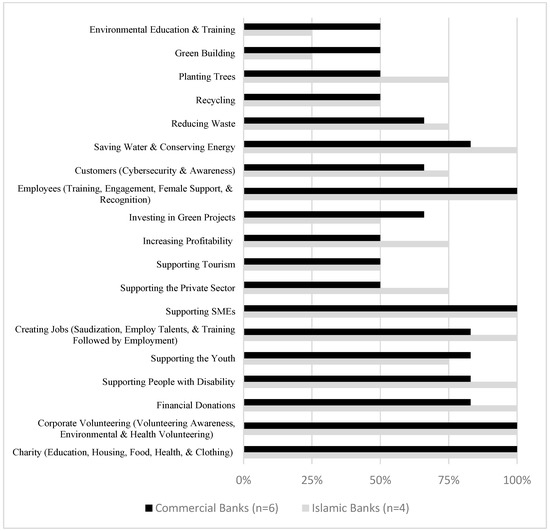
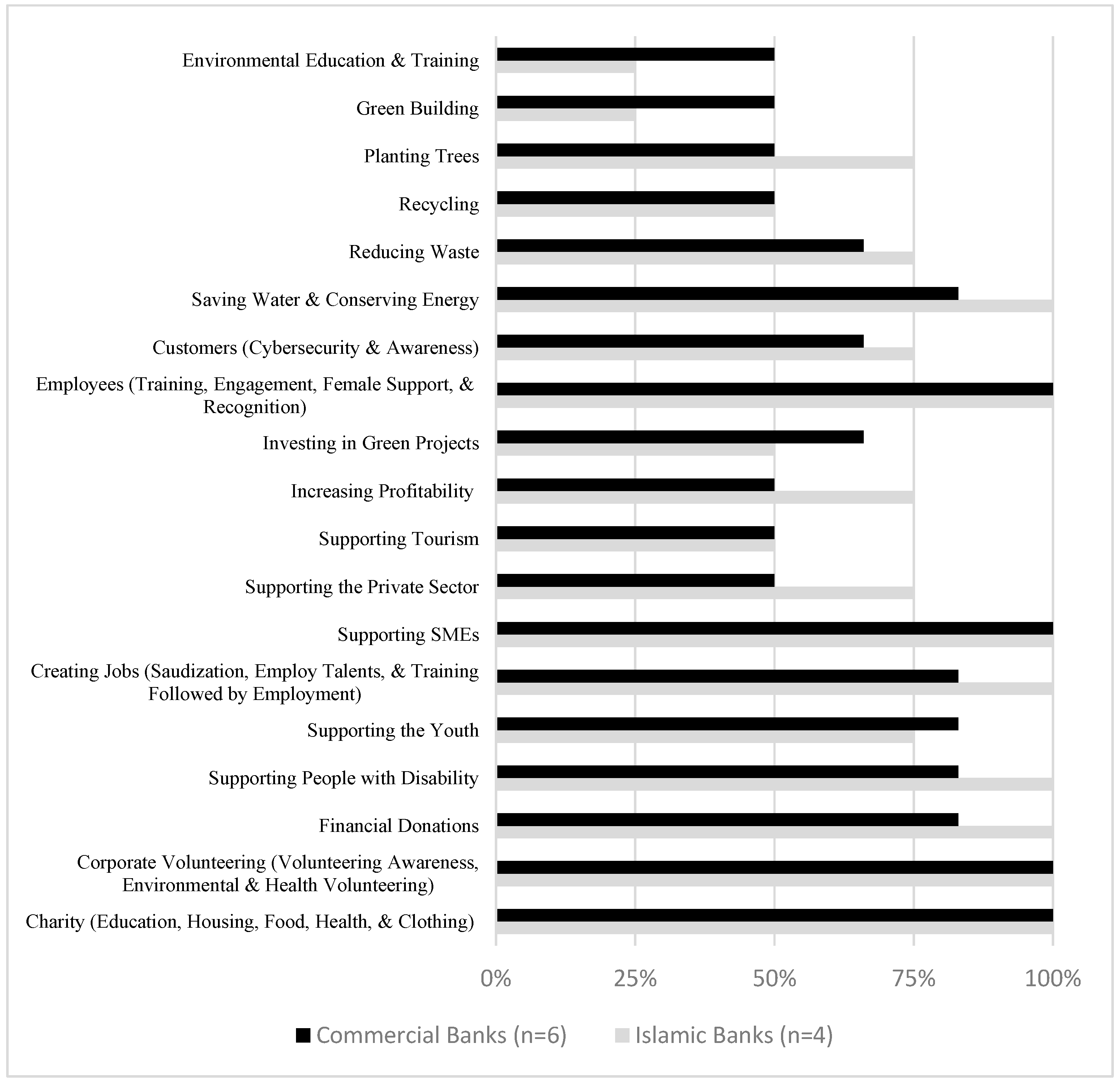
A comparative analysis of CSR initiatives identified in the document analysis between Islamic and Commercial banks was conducted. The comparison highlights the extent to which each group of banks engages in key CSR domains, including charity, corporate volunteering, financial contributions, economic empowerment, stakeholder engagement and environmental sustainability. By examining how frequently these initiatives appear across the 10 banks—categorised into four Islamic and six commercial institutions—Figure 1 below provides a succinct overview of patterns, strengths, and gaps in CSR implementation, illustrating the differing priorities embedded in Islamic and commercial banking models.
Figure 1.
Comparison of CSR initiatives between Islamic and Commercial banks.
The analysis revealed that both Islamic and commercial banks actively supported SMEs, aligning with Vision 2030’s Thriving Economy priority. For example, Al Rajhi Bank (an Islamic bank) reported that it “encouraged and invited SMEs that bank with Al Rajhi Bank to register as suppliers” and that it “provided SAR15.8 billion in financing for SMEs” [57] (pp. 117, 122), showing substantial financial support for entrepreneurial activity and local supply-chain participation. Furthermore, Riyad Bank, a commercial bank, reported that it “provided SAR117,082.10 million in loans to SMEs, and ranked #1 in number of entities financed… and in volume of loans granted to SMEs through KAFLAH,” noting that it “holds the highest portfolio of, and the largest loan book for, SMEs” [58] (pp. 26, 35). Collectively, these disclosures reveal that SME financing and entrepreneurial enablement have emerged as cornerstone CSR priorities across both Islamic and commercial banks, strategically aligned with—and directly advancing—Vision 2030’s economic diversification agenda.
Islamic banks demonstrated broad and deeply embedded CSR engagement reflecting both religious obligations and national development priorities. For example, BANK 2 combined large-scale philanthropy with structured community programs, donating SAR32 million in 2022, financing SAR15.8 billion for SMEs, and contributing more than 50,000 volunteer hours through over 10,000 employees. Similarly, Islamic banks demonstrated a strong commitment to youth empowerment through programs such as Albilad Future and to enhanced financial inclusion through ATMs and branch facilities accessible to customers with disabilities. Environmental stewardship was evident, though still incipient, as evidenced by the Saudi Green Initiative’s focus on renewable energy, energy conservation, and tree planting. These patterns reflect the institutional logic of Islamic banking, where CSR is anchored in Shariah-based values (Zakat, Sadaqah, social justice) that emphasise community upliftment and moral responsibility.
Commercial banks reported extensive CSR activities, but with a stronger emphasis on strategic contributions to the economy and governance-driven initiatives. They played a central role in SMEs financing and job creation: for instance, BANK 2 held the most extensive SMEs loan portfolio in the Kingdom, providing over SAR117 billion in loans and leading KAFLAH-backed SMEs financing, while BANK 5’s Taqadam accelerator awarded SAR375,000 to each of ten winning start-ups to stimulate innovation and employment. Commercial banks also led significant national partnerships, including BANK2’s SAR2.95 billion contribution to the Red Sea Development’s green-financing facility and BANK 1’s identification of SAR48 billion in eligible green and social assets. Furthermore, investment in governance, employee development and gender diversity was a priority. For example, BANK 5 is achieving nearly 40% female representation at the executive level, alongside customer-focused initiatives such as digital mortgage applications and cybersecurity. These patterns demonstrate that the regulatory environment strongly shapes commercial banks’ CSR strategies, ESG reporting expectations and Vision 2030’s economic transformation agenda. Despite these strengths, both Islamic and commercial banks exhibit limited measurable environmental disclosure, revealing a critical gap in sustainability integration. Whilst several banks reported operational initiatives—energy conservation, recycling, carbon reduction—strategic reporting on green financing and certified green infrastructure remained notably absent, undermining claims of a comprehensive commitment to sustainability. Notably, only one Islamic bank disclosed large-scale participation in renewable energy and green financing, with Al Rajhi Bank stating that it had “over SAR 3.75 billion of financing for renewable energy projects” and that it “follows strict recycling guidelines across its entire branch and subsidiary network.” [57] (p. 117). In contrast, commercial banks such as Riyadh Bank reported broader involvement in green and renewable projects, noting “28 projects with an aggregate cost of SAR 52 billion, of which SAR 7.4 billion was financed by Riyadh Bank.” [58] (pp. 26, 28). These patterns reveal a notable disconnect: environmental CSR remains a comparatively low priority relative to social and economic dimensions, despite Vision 2030’s strategic emphasis on environmental sustainability through the Saudi Green Initiative and circular economy development. This gap suggests that institutional CSR priorities diverge from national sustainability policy, raising questions about alignment between stated commitments and resource allocation.
Table 4 presents a consolidated assessment of CSR performance across the ten Saudi banks examined in this study, structured according to Carroll’s four-dimensional framework [30]. The table compares different banking models that prioritise and operationalise CSR within the Saudi context. The assigned ratings are interpretive and reflect both the documented scope and scale of CSR initiatives and the frequency with which specific activities appeared in the banks’ disclosure materials, providing a quantitative indication of emphasis across CSR themes.
Table 4.
Commercial versus Islamic Banks’ CSR performance.
The qualitative ratings (Strong, Moderate, Weak) were derived from the relative depth, frequency, and scope of CSR disclosures identified within each dimension of Carroll’s CSR framework across the analysed documents. Observed differences between Islamic and commercial banks reflect both structural characteristics and disclosure practices. It is evident that Islamic banks tend to emphasise philanthropic and community-oriented CSR activities, influenced by Shariah-based principles as mentioned earlier, whereas commercial banks more frequently highlight economic, governance, and compliance-related CSR initiatives aligned with corporate strategy and regulatory expectations.
Islamic banks exhibited strong performance across most CSR dimensions, with strength in philanthropic and economic responsibilities. Their CSR engagement is profoundly shaped by Shariah principles, which emphasise social justice, ethical conduct and community welfare. This orientation is reflected in their high level of participation in charitable giving, disability support, youth development and volunteer programs, as well as substantial investments in SMEs financing and job creation. BANK 8 stands out as the strongest performer, recording Strong ratings across all four dimensions of Carroll’s framework, supported by extensive disclosures, measurable impacts and broad social engagement. Although ethical performance varied slightly among the Islamic banks—with moderate ratings in some cases—the group demonstrated a cohesive CSR approach grounded in philanthropic values and strategically aligned with Vision 2030’s priorities for economic empowerment and social development.
Commercial banks exhibited governance-driven CSR practices, particularly in their economic and legal responsibilities. For example, BANKS 1, 2, and 5 distinguished themselves with Strong ratings across both economic and legal dimensions, demonstrating sustained leadership in SME financing, employment creation, green investment disclosure, and regulatory compliance with SAMA and CMA governance frameworks. Their philanthropic and ethical performance revealed considerable variation—some institutions offering extensive community programmes whilst others provided minimal disclosures—reflecting differences in institutional maturity and CSR strategic integration. Overall, commercial banks prioritised economic diversification, ESG-CSR alignment, and structured reporting (key Vision 2030 priorities), yet demonstrated less consistency in value-driven CSR than Islamic counterparts, instead favouring scale-based SME financial intermediation through large lending portfolios, digital platforms, and entrepreneurial pipeline development.
For example, Riyad Bank reported that it “provided SAR117,082.10 million in loans to SMEs, and ranked #1… in volume of loans granted to SMEs through KAFLAH,” noting that it “holds the highest portfolio of, and the largest loan book for, SMEs.” [58] (p. 26). Similarly, Arab National Bank stated that “the strategic importance of SMEs to the wider economy is why the Bank has set out its ambition to become a leading provider of financial services to this market segment… supporting the delivery of one of the main pillars of Vision 2030.” [60] (p. 65).
In contrast, Islamic banks engaged with SMEs through supplier-based participation, entrepreneurship enablement, and financial inclusion, leveraging Islamic financial mechanisms and ecosystem-building approaches. For instance, Al Rajhi Bank reported that it “encouraged and invited SMEs… to register as suppliers” and “provided SAR15.8 billion in financing for SMEs,” thereby linking procurement, financing and market access [57] (pp. 117, 122). At the same time, Saudi National Bank disclosed that “ten projects advanced to the third stage, where participants were enabled to build their fintech startups with financial support of SAR50,000 each,” [61] (p. 80), demonstrating an ecosystem focus on capability development, innovation and youth entrepreneurship. Complementing this, Bank Al-Jazira reported that it had “increased the funding of MSMEs… encouraging Kingdom citizens’ interest in entrepreneurship and increasing MSMEs contribution to the GDP,” which corresponds directly with Vision 2030 targets [62] (pp. 14, 26).
These distinctions reflect fundamentally different approaches to SME support. However, both pathways contribute meaningfully to Vision 2030’s Thriving Economy pillar. More significantly, supporting SMEs has evolved into a core CSR priority across the Saudi banking sector, positioning banks as material contributors to national development objectives rather than as philanthropic extensions of corporate image.
4.4. ISO Certification
The summary in Table 1 reveals a notably limited adoption of ISO 26000 within the Saudi banking sector [49]. Only one bank in the sample (10%), Riyad Bank, reported alignment with the ISO 26000 guidance standard on social responsibility, while none of the Islamic banks demonstrated adoption. Given that ISO 26000 is a non-certifiable and voluntary framework designed to guide organizations in embedding social responsibility within governance structures, its limited uptake may reflect the broader debate in CSR literature regarding the relative influence of voluntary versus mandatory standards. Organizations often prioritize frameworks that provide formal certification, external verification, or regulatory recognition, which tend to offer stronger reputational and legitimacy benefits [23,41,63]. Similar patterns have been observed in several emerging economies, where firms frequently emphasize certifiable management standards or regulatory compliance mechanisms rather than voluntary guidance frameworks when reporting CSR activities. In this context, the gradual adoption of ISO 26000 aligns strategically with Saudi Vision 2030’s governance ambitions, which prioritise transparency, accountability, and enhanced corporate disclosure to reinforce investor confidence and market credibility [19,38,64].
5. Discussion
This study employed qualitative analysis of publicly available CSR disclosures from Saudi banks to examine the extent to which CSR initiatives align with the pillars of Vision 2030 and to generate practical and policy-oriented insights. The findings reported above indicate that the Saudi Banking sector has prioritized philanthropic initiatives—such as charitable donations, support for individuals with disabilities and community welfare programs—as the dominant form of CSR disclosure. The development of structured programmes, digital platforms, and SME-focused financial products demonstrates banks’ deliberate institutional shift from charity-based approaches towards strategic economic participation in national development [65]. Both Islamic and commercial banks’ CSR activities were aligned with the Thriving Economy pillar of Vision 2030. However, Islamic banks framed their CSR reporting in values-based terms that reflect ethical and religious principles, whereas commercial banks predominantly articulated CSR through a governance-oriented lens. Commercial banks support the SME sector primarily through high-volume lending and scale-based financial infrastructure, while Islamic banks support it through inclusion-oriented, supplier-oriented, and innovation-oriented mechanisms. However, environmental initiatives were collectively the least reported theme. While some banks reported efforts in green finance, recycling and tree planting, these activities were comparatively limited and often lacked measurable outcomes. This trend is consistent with findings from other studies, which argue that environmental CSR in the country is typically symbolic and reactive, driven more by compliance than by strategic integration [11,40,66]. The limited visibility of environmental initiatives in disclosure documents highlights a gap in how CSR activities are prioritized and reported in Saudi Arabia. Taken together, these findings indicate that the Saudi banking sector is in a transitional phase of CSR development. It should be noted that these findings reflect patterns in CSR disclosures reported in publicly available documents rather than independently verified CSR practices. It is evident that all banks, both Islamic and non-Islamic, should strive to behave in an environmentally responsible manner [67] in light of the Vision 2030 expectations. Consequently, the interpretations presented here should be understood within the methodological scope of qualitative document analysis. Two specific implications of the analysis are discussed in the broader context of research objectives outlined earlier.
5.1. Implications for the Banking Sector
Analysis of specific micro-themes and their numerical frequencies revealed clear priorities in how Saudi banks operationalize and report CSR. The fact that, apart from difficulty in accessing the CSR reports, the CSR reporting was found to be fragmented. Hence, there is a need for the Banks to shift from a pure philanthropic focus to a more balanced approach across all three elements of sustainable development. Despite CSR being at the center stage in informing the Bank’s priorities, concerns remain about the fragmented nature of the reporting and the desire to disclose reports. However, the annual and sustainability reports, social media announcements, and media coverage of CSR activities have relied on GRI and ISO certifications, demonstrating that the sector is seeking to increase transparency and accountability. Banks’ adoption of ISO 26000 guidance, though not definitive, offers a mechanism to quantify progress towards Vision 2030 commitments. It is in this context that the Saudi banking sector is encouraged to adopt an innovative and contemporary CSR reporting approach, such as the Principles of Responsible Banking, which provides a structured framework to “increase operational resilience, ensure institutional future-proofing, and realise commercial growth” [68] (para. 3). There is potential for future studies to explore the modality of a national reporting framework for CSR reporting within the banks
5.2. Implications for the Government
The findings of this study suggest that Saudi banks have treated philanthropy as the foundation of CSR practice. Rooted in the Islamic principles of zakat and sadaqah, philanthropic CSR has served as the primary vehicle for maintaining social legitimacy and fulfilling moral obligations [24,69,70]. However, the ethical and environmental dimensions remain underreported in relation to Vision 2030’s environmental priorities. This imbalance underscores the need for stronger institutional frameworks and governance oversight to embed ethical and environmental considerations into banking operations if CSR within the Saudi Banking Sector is to contribute to Vision 2030. This paper argues that mandatory CSR reporting frameworks are essential mechanisms for advancing transparency and accountability whilst simultaneously enabling rigorous measurement, monitoring, and evaluation of banking sector impacts against Vision 2030 objectives and beyond. Drawing on Kantabutra’s framework [71]—which demonstrates that articulated sustainability visions, grounded in moderation, resilience, and knowledge-sharing practices, catalyse organisational performance and institutional resilience—this paper proposes that Saudi policymakers develop and mandate sector-specific sustainability frameworks explicitly aligned with Vision 2030’s strategic pillars. Importantly, future research should examine comparative experiences from India and Indonesia [72], investigating how emerging economies navigate the policy and implementation challenges of legislating mandatory CSR reporting whilst sustaining institutional compliance.
5.3. Limitations
As with any scholarly research, this study has several limitations. First, the study relies on qualitative document analysis of publicly available CSR disclosures, which reflect how banks communicate their CSR activities rather than independently verified CSR performance. Whilst corporate CSR reports provide valuable institutional insight, they may reflect strategic communication priorities and impression management considerations, potentially understating the complexity, limitations, or unintended consequences of CSR practices. This inherent tension between disclosure and substantive impact necessitates careful critical reading of reported claims. Consequently, the findings should be interpreted as reflecting patterns in CSR reporting rather than definitive measures of CSR performance.
Second, this study employed a qualitative methodology based on document analysis, which is inherently descriptive in scope. Future research should address this limitation by conducting mixed-methods investigations of CSR within the Saudi banking sector, incorporating semi-structured interviews with CSR officers and employee surveys to capture institutional perspectives and lived experiences of CSR integration.
6. Conclusions
CSR in Saudi Arabia is undergoing a fundamental change. Vision 2030 has repositioned CSR as a strategic pillar of sustainable economic transformation at the national echelon. The findings reported in this paper point to the need to strengthen governance mechanisms to ensure that CSR gradually transforms from traditional philanthropy towards a strategic, performance-driven model that fully supports the long-term objectives of Vision 2030 and aligns with global reporting expectations. In the context of economic diversification, the Saudi banking sector has the potential to be a key driver of the transition beyond a fossil-fuel-dependent economy. This paper argues that institutionalizing mandatory CSR reporting frameworks represents a critical policy lever for Saudi Arabia—enabling both the adoption of contemporary reporting standards and, more fundamentally, the rigorous measurement, monitoring, and evaluation of banking-sector impacts to advance Vision 2030 objectives and sustainable development.
Author Contributions
Conceptualization, A.M.A. and S.P.D.; Methodology, A.M.A. and S.P.D.; Software, A.M.A.; Validation, S.P.D.; Formal analysis, A.M.A.; Investigation, A.M.A.; Resources, A.M.A.; Data curation, A.M.A.; Writing—original draft, A.M.A.; Writing—review & editing, S.P.D.; Visualization, A.M.A.; Supervision, S.P.D.; Project administration, A.M.A. and S.P.D.; Funding acquisition, A.M.A. All authors have read and agreed to the published version of the manuscript.
Funding
This research received no external funding.
Institutional Review Board Statement
Not applicable.
Informed Consent Statement
Not applicable.
Data Availability Statement
The original contributions presented in this study are included in the article. Further inquiries can be directed to the corresponding author.
Conflicts of Interest
The authors declare no conflict of interest.
References
- Carroll, A.B. The three-dimensional corporate social performance model revisited and refreshed. J. Sustain. Bus. 2025, 10, 5. [Google Scholar] [CrossRef] [Scilit]
- Aguinis, H.; Glavas, A. What we know and don’t know about corporate social responsibility: A review and research agenda. J. Manag. 2012, 38, 932–968. [Google Scholar] [CrossRef] [Scilit]
- Ioannou, I.; Serafeim, G. The Consequences of Mandatory Corporate Sustainability Reporting; Harvard Business School Research Working Paper; Harvard Business School: Boston, MA, USA, 2017. [Google Scholar]
- Ascoli, K.; Benzaken, T. Public Policy and the Promotion of Corporate Social Responsibility; BSR: San Francisco, CA, USA, 2009; Available online: https://www.bsr.org/reports/Public_Policy_Promotion_of_CSR.pdf (accessed on 17 December 2025).
- Carroll, A.B. Corporate social responsibility: Perspectives on the CSR construct’s development and future. Bus. Soc. 2021, 60, 1258–1275. [Google Scholar] [CrossRef] [Scilit]
- Khan, M.; Serafeim, G.; Yoon, A. Corporate sustainability: First evidence on materiality. Account. Rev. 2022, 97, 205–231. [Google Scholar]
- Fallah Shayan, N.; Mohabbati-Kalejahi, N.; Alavi, S.; Zahed, M.A. Sustainable development goals (SDGs) as a framework for corporate social responsibility (CSR). Sustainability 2022, 14, 1222. [Google Scholar] [CrossRef] [Scilit]
- Boubakri, N.; El Ghoul, S.; Guedhami, O.; Wang, H.H. Corporate social responsibility in emerging market economies: Determinants, consequences, and future research directions. Emerg. Mark. Rev. 2021, 46, 100758. [Google Scholar] [CrossRef] [Scilit]
- Ghassab, E.E. Perceptions of CSR in the MENA region: Findings from qualitative research. Soc. Environ. Account. J. 2024, 44, 172–175. [Google Scholar] [CrossRef] [Scilit]
- García-Sánchez, I.M.; García-Meca, E. CSR engagement and earnings quality in banks: The moderating role of institutional factors. Corp. Soc. Responsib. Environ. Manag. 2017, 24, 145–158. [Google Scholar] [CrossRef] [Scilit]
- Moomen, A.W.; Dewan, A. Probing the perspectives of stakeholder engagement and resistance against large-scale surface mining in developing countries. Corp. Soc. Responsib. Environ. Manag. 2017, 24, 85–95. [Google Scholar] [CrossRef] [Scilit]
- Ahmad, A.E.M.K.; Alsharqi, O.Z.; Al-Borie, H.M.; Ashoor, M.M.; Al-Orige, A.S. Corporate social responsibility and brand image: An empirical investigation of private sector hospitals in Saudi Arabia. Int. Bus. Res. 2016, 9, 91–97. [Google Scholar] [CrossRef] [Scilit]
- Ararat, M. Corporate social responsibility across Middle East and North Africa. SSRN 2006, 1015925. [Google Scholar] [CrossRef] [Scilit]
- Matten, D.; Moon, J. “Implicit” and “explicit” CSR: A conceptual framework for a comparative understanding of corporate social responsibility. Acad. Manag. Rev. 2008, 33, 404–424. [Google Scholar] [CrossRef] [Scilit]
- Wang, W.; Zhao, X.Z.; Chen, F.W.; Wu, C.H.; Tsai, S.; Wang, J. The effect of corporate social responsibility and public attention on innovation performance: Evidence from high-polluting industries. Int. J. Environ. Res. Public Health 2019, 16, 3939. [Google Scholar] [CrossRef] [Scilit] [PubMed]
- Bamahros, H.M.; Alquhaif, A.; Qasem, A.; Wan-Hussin, W.N.; Thomran, M.; Al-Duais, S.D.; Khojally, H.M. Corporate governance mechanisms and ESG reporting: Evidence from the Saudi stock market. Sustainability 2022, 14, 6202. [Google Scholar] [CrossRef] [Scilit]
- Persakis, A.; Ra’fat, T. The influence of corporate social responsibility and social values on bank performance: A global study. Borsa Istanb. Rev. 2024, 24, 674–697. [Google Scholar] [CrossRef] [Scilit]
- Saudi Vision 2030. Home Page. Kingdom of Saudi Arabia. 2016. Available online: http://vision2030.gov.sa/en (accessed on 17 December 2025).
- Alharbi, K.M.S. The Impact of Vision 2030 and Firm Characteristics on Corporate Social Responsibility Disclosure in Saudi Arabia. Doctoral Thesis, Victoria University, Melbourne, Australia, 2021. [Google Scholar]
- International Monetary Fund (IMF). Saudi Arabia: Financial Sector Assessment Program—Financial System Stability Assessment; IMF: Washington, DC, USA, 2024; Available online: https://www.imf.org/en/publications/cr/issues/2024/09/03/saudi-arabia-financial-sector-assessment-program-financial-system-stability-assessment-554533 (accessed on 17 December 2025).
- Jamali, D.; Karam, C. Corporate social responsibility in developing countries as an emerging field of study. Int. J. Manag. Rev. 2018, 20, 32–61. [Google Scholar] [CrossRef] [Scilit]
- Kolk, A.; Van Tulder, R. International business, corporate social responsibility and sustainable development. Int. Bus. Rev. 2010, 19, 119–125. [Google Scholar] [CrossRef] [Scilit]
- Amran, A.; Lee, S.P.; Devi, S.S. The influence of governance structure and strategic corporate social responsibility toward sustainability reporting quality. Bus. Strategy Environ. 2014, 23, 217–235. [Google Scholar] [CrossRef] [Scilit]
- Nalband, N.A.; Al-Amri, M.S. Corporate social responsibility: Perception, practices and performance of listed companies of Kingdom of Saudi Arabia. Compet. Rev. 2013, 23, 284–295. [Google Scholar] [CrossRef] [Scilit]
- Fadaak, T. Poverty in the Kingdom of Saudi Arabia: An exploratory study of poverty and female-headed households in Jeddah City. Soc. Policy Adm. 2010, 44, 689–707. [Google Scholar] [CrossRef] [Scilit]
- Ali, A.J.; Al-Aali, A. Corporate social responsibility in Saudi Arabia. Middle East Policy 2012, 19, 40–53. [Google Scholar] [CrossRef] [Scilit]
- Hertog, S. The new corporatism in Saudi Arabia: Limits of formal politics. In Constitutional Reform and Political Participation in the Gulf; Khalaf, A., Luciani, G., Eds.; Gulf Research Center: Geneva, Switzerland, 2006; pp. 241–275. [Google Scholar]
- Levitt, T. The dangers of social responsibility. Harv. Bus. Rev. 1958, 36, 41–50. [Google Scholar]
- Friedman, M. The social responsibility of business is to increase its profits. In Corporate Ethics and Corporate Governance; Springer: Berlin/Heidelberg, Germany, 2007; pp. 173–178. [Google Scholar]
- Carroll, A.B. The pyramid of corporate social responsibility: Toward the moral management of organizational stakeholders. Bus. Horiz. 1991, 34, 39–48. [Google Scholar] [CrossRef] [Scilit]
- Nurhayati, R.; Taylor, G.; Rusmin, R.; Tower, G.; Chatterjee, B. Factors determining social and environmental reporting by Indian textile and apparel firms: A test of legitimacy theory. Soc. Responsib. J. 2016, 12, 167–189. [Google Scholar] [CrossRef] [Scilit]
- Dhakal, S.P.; Mahmood, M.N.; Brown, K.; Keast, R. Airport social responsibility and regional community relations: Noisy elephant in the sky? Australas. J. Reg. Stud. 2020, 26, 107–131. [Google Scholar]
- Touny, M.A.; Qamar, K.A.; Alayis, M.M.H. Corporate social responsibility practices and their impact on sustainable development in Saudi Arabia. Int. J. Serv. Econ. Manag. 2021, 12, 185–209. [Google Scholar] [CrossRef] [Scilit]
- Carroll, A.B. Carroll’s pyramid of CSR: Taking another look. Int. J. Corp. Soc. Responsib. 2016, 1, 3. [Google Scholar] [CrossRef] [Scilit]
- Lu, J.; Ren, L.; Zhang, C.; Rong, D.; Ahmed, R.R.; Streimikis, J. Modified Carroll’s pyramid of corporate social responsibility to enhance organizational performance of the SME industry. J. Clean. Prod. 2020, 271, 122456. [Google Scholar] [CrossRef] [Scilit]
- El Melki, A.; Ben Salah Saidi, H. Ethical and socially responsible investments in Islamic banking firms. In Green Finance Instruments, FinTech, and Investment Strategies: Sustainable Portfolio Management in the Post-COVID Era; Springer: Cham, Switzerland, 2023; pp. 81–123. [Google Scholar]
- Jamali, D.; Sidani, Y. CSR in the Middle East: Fresh Perspectives; Palgrave Macmillan: London, UK, 2012. [Google Scholar]
- Capital Market Authority (CMA). Corporate Governance Regulations; Capital Market Authority: Riyadh, Saudi Arabia, 2023; Available online: https://www.ecgi.global/sites/default/files/codes/documents/CGRegulations_en.pdf (accessed on 17 December 2025).
- Ioannou, I.; Serafeim, G. What drives corporate social performance? The role of nation-level institutions. J. Int. Bus. Stud. 2012, 43, 834–864. [Google Scholar] [CrossRef] [Scilit]
- Dahlsrud, A. How corporate social responsibility is defined: An analysis of 37 definitions. Corp. Soc. Responsib. Environ. Manag. 2008, 15, 1–13. [Google Scholar] [CrossRef] [Scilit]
- Carroll, A.B.; Shabana, K.M. The business case for corporate social responsibility: A review of concepts, research and practice. Int. J. Manag. Rev. 2010, 12, 85–105. [Google Scholar] [CrossRef] [Scilit]
- Saudi Central Bank (SAMA). Licensed Banks in Saudi Arabia. 2023. Available online: https://www.sama.gov.sa/en-US/License/Pages/SaudiBanks.aspx (accessed on 17 December 2025).
- Saudi Central Bank (SAMA). Annual Report 2022; SAMA: Riyadh, Saudi Arabia, 2023; Available online: https://www.sama.gov.sa/en-US/EconomicReports/Pages/AnnualReport.aspx (accessed on 17 December 2025).
- Saudi Central Bank (SAMA). Financial Stability Report 2022; SAMA: Riyadh, Saudi Arabia, 2022; Available online: https://www.sama.gov.sa/en-US/EconomicReports/Financial%20Stability%20Report/Financial_Stability_Report_2022_EN.pdf (accessed on 17 December 2025).
- Visser, W. Corporate social responsibility in developing countries. In The Oxford Handbook of Corporate Social Responsibility; Crane, A., McWilliams, A., Matten, D., Moon, J., Siegel, D.S., Eds.; Oxford University Press: Oxford, UK, 2008; pp. 473–499. [Google Scholar]
- Saudi Central Bank (SAMA). Quarterly MSME Lending Statistics. 2024. Available online: https://www.sama.gov.sa (accessed on 17 December 2025).
- Dusuki, A.W.; Dar, H.A. Stakeholders’ perceptions of corporate social responsibility of Islamic banks: Evidence from Malaysian economy. Int. J. Islam. Middle East. Financ. Manag. 2007, 1, 249–267. [Google Scholar] [CrossRef]
- Farook, S.Z. On corporate social responsibility of Islamic financial institutions. Islam. Econ. Stud. 2007, 15, 31–46. [Google Scholar]
- Riyad Bank. ESG Report 2022; Riyad Bank: Riyadh, Saudi Arabia, 2022; pp. 4–20. Available online: https://www.riyadbank.com/documents/20121/130653/Riyad%20Bank-ESG22.pdf (accessed on 17 December 2025).
- Bryman, A.; Bell, E. Business Research Methods, 4th ed.; Oxford University Press: Oxford, UK, 2015. [Google Scholar]
- Amidjaya, P.G.; Widagdo, A.K. Sustainability reporting in Indonesian listed banks: Do corporate governance, ownership structure and digital banking matter? J. Appl. Account. Res. 2020, 21, 231–247. [Google Scholar] [CrossRef] [Scilit]
- Gao, Y. CSR in an emerging country: A content analysis of CSR reports of listed companies. Balt. J. Manag. 2011, 6, 263–291. [Google Scholar] [CrossRef] [Scilit]
- Alsahlawi, A.M. Corporate Social Responsibility Disclosure in Saudi Arabia: A Review of Practices and Approaches; King Faisal University Press: Hofuf, Saudi Arabia, 2016. [Google Scholar]
- Zhu, Q.; Zhang, Q. Evaluating practices and drivers of corporate social responsibility: The Chinese context. J. Clean. Prod. 2015, 100, 315–324. [Google Scholar] [CrossRef] [Scilit]
- Jain, A.; Keneley, M.; Thomson, D. Voluntary CSR disclosure works? Evidence from Asia-Pacific banks. Soc. Responsib. J. 2016, 12, 301–322. [Google Scholar] [CrossRef] [Scilit]
- Jamali, D.; Mirshak, R. Corporate social responsibility (CSR): Theory and practice in a developing country context. J. Bus. Ethics 2007, 72, 243–262. [Google Scholar] [CrossRef] [Scilit]
- Al Rajhi Bank. ESG Report: Corporate Governance, Financial Statements & Supplementary; Al Rajhi Bank: Riyadh, Saudi Arabia, 2022; pp. 117–122. Available online: https://www.alrajhibank.com.sa/en/About-alrajhi-bank/Corporate-Social-Responsibility (accessed on 17 December 2025).
- Riyad Bank. Corporate Social Responsibility Report; Riyad Bank: Riyadh, Saudi Arabia, 2021; pp. 26–35. Available online: https://www.riyadbank.com/investor-relations/esg-report (accessed on 17 December 2025).
- Saudi Alawwal Bank. Annual Report; Saudi Alawwal Bank: Riyadh, Saudi Arabia, 2021; pp. 17–56. Available online: https://www.sab.com/content/dam/sabpws/files/reports-documents/en/category-reports/2021/annual-reports/sab-annual-report-2021-english.pdf (accessed on 17 December 2025).
- Arab National Bank (ANB). Group Policy Repository; ANB: Riyadh, Saudi Arabia, 2024; pp. 1–115. Available online: https://anb.com.sa/documents/55607/0/anb+Group+Policy+Repository+2024.pdf/f92a54f3-97cf-6aab-838c-3936cfcf716e?t=1765959813495 (accessed on 17 December 2025).
- Saudi National Bank (SNB). ESG Report 2023; SNB: Riyadh, Saudi Arabia, 2023; pp. 1–102. Available online: https://www.alahli.com/-/media/project/snb/snb-web/about-us/02-1-investor-relations/sustainable-report/snb-esg-report-2023-en.pdf (accessed on 17 December 2025).
- Bank AlJazira. Corporate Social Responsibility Activity Report; Bank AlJazira: Riyadh, Saudi Arabia, 2021; pp. 14–26. Available online: https://www.aljazirabank.com.sa/CDA (accessed on 17 December 2025).
- Milne, M.J.; Gray, R. W(h)ither ecology? The triple bottom line, the Global Reporting Initiative, and corporate sustainability reporting. J. Bus. Ethics 2013, 118, 13–29. [Google Scholar] [CrossRef] [Scilit]
- Ministry of Economy and Planning. Quarterly Economic Report Q3 2024; Ministry of Economy and Planning: Riyadh, Saudi Arabia, 2024; Available online: https://mep.gov.sa/files/en/KnowledgeBase/EconomicReports/Documents/MEP_Quarterly_Report_Q3_2024_EN.pdf (accessed on 17 December 2025).
- Alfakhri, Y.; Nurunnabi, M.; Alfakhri, D.H.; Hossain, S.F.A. Corporate social responsibility in Saudi Arabia: Application of Carroll’s model. J. Xi’an Univ. Archit. Technol. 2020, 12, 1059–1072. [Google Scholar]
- Frynas, J.G. The false developmental promise of corporate social responsibility: Evidence from multinational oil companies. Int. Aff. 2005, 81, 581–598. [Google Scholar] [CrossRef] [Scilit]
- Franzoni, S.; Ait Allali, A. Principles of Islamic finance and corporate social responsibility: What convergence? Sustainability 2018, 10, 637. [Google Scholar] [CrossRef] [Scilit]
- United Nations Environment Programme Finance Initiative (UNEP-FI). Principles for Responsible Banking: Creating Value for Clients, Shareholders and Society; UNEP-FI: Geneva, Switzerland, 2025; Available online: https://www.unepfi.org/banking/bankingprinciples/ (accessed on 17 December 2025).
- Abdelhalim, E.; Eldin, N.H. The impact of corporate social responsibility on firm performance: Evidence from a MENA country. Corp. Soc. Responsib. Environ. Manag. 2019, 26, 791–801. [Google Scholar]
- Arshad, R.; Othman, S.; Othman, R. Islamic corporate social responsibility, corporate reputation and performance. Int. J. Econ. Manag. Eng. 2012, 6, 643–647. [Google Scholar]
- Kantabutra, S. Toward an organizational theory of sustainability vision. Sustainability 2020, 12, 1125. [Google Scholar] [CrossRef] [Scilit]
- Yunari, S.B. Corporate social responsibility settings in Indonesia and India as a comparison. In Proceedings of the International Conference of Science Management Art Research Technology, Jakarta, Indonesia, 14 October 2020; pp. 182–187. [Google Scholar]

Disclaimer/Publisher’s Note: The statements, opinions and data contained in all publications are solely those of the individual author(s) and contributor(s) and not of MDPI and/or the editor(s). MDPI and/or the editor(s) disclaim responsibility for any injury to people or property resulting from any ideas, methods, instructions or products referred to in the content. |
© 2026 by the authors. Licensee MDPI, Basel, Switzerland. This article is an open access article distributed under the terms and conditions of the Creative Commons Attribution (CC BY) license.