1. Introduction
Tourism is widely recognized as one of the major contributors to global income and an important driver of economic growth [
1,
2,
3]. It plays a significant role in economic development, social progress, and employment generation in many countries [
4,
5]. The tourism sector produces substantial direct and indirect economic benefits, including revenues from transportation, accommodation, food services, and related employment, as well as income distribution to local communities, stimulation of infrastructure investment, and linkages with other industries [
6,
7,
8]. These economic activities contribute significantly to national economies and represent a primary source of income in several countries [
9,
10], particularly in developing nations such as Sri Lanka, Nepal, Vietnam, and Thailand, where tourism plays a central economic role [
11,
12]. Thailand, in particular, is one of the world’s leading tourist destinations, and tourism constitutes a key pillar of its economy, contributing substantially to national GDP [
13]. Therefore, the effective communication and presentation of tourism information and destination-related data are critical factors influencing tourists’ travel decision-making.
In the contemporary context, tourism success is no longer measured solely by visitor numbers or economic revenue but also by its ability to support sustainable tourism development [
14,
15,
16]. Sustainable tourism emphasizes achieving a balance between economic growth, social well-being, and environmental protection [
17,
18]. This includes promoting the distribution of tourists across destinations, reducing congestion in environmentally sensitive areas, minimizing negative impacts on natural resources, and supporting responsible destination management [
19,
20,
21]. Achieving these objectives requires advanced information services capable of supporting spatially and behaviorally informed decision-making [
22,
23]. In this regard, spatially enabled decision-support systems have been increasingly recognized as essential tools for sustainable destination governance and visitor management.
Despite the increasing availability of digital tourism data, a major limitation remains the lack of integrated spatial information systems that effectively support tourists’ decision-making processes. Large volumes of tourism data are currently available from government agencies and social media platforms such as Facebook, TikTok, and YouTube [
24,
25,
26]. However, many existing tourism platforms do not adequately integrate spatial data with individual user preferences, which limits their ability to provide personalized and context-aware recommendations.
Previous studies related to tourism application development, including those employing machine learning, data analysis, and artificial intelligence techniques, indicate that many systems focus on developing recommendation mechanisms based on user behavior and preference data [
27,
28,
29,
30,
31]. While these approaches can recommend relevant destinations, they often do not incorporate spatial data such as geographic coordinates of tourist attractions and user locations. Consequently, these systems may lack the spatial context required to provide location-aware and geographically relevant recommendations.
In parallel, geographic information technology has been widely applied to develop tourism information platforms that present destination data using spatial visualization techniques [
27,
32,
33,
34,
35,
36,
37,
38,
39,
40,
41,
42,
43,
44,
45,
46,
47,
48]. These applications enable users to explore tourist destinations and support travel planning. However, several limitations remain. For example, some systems cannot present destinations based on the user’s current location or specified distance. In addition, many platforms provide the same information to all users without considering individual preferences. Furthermore, some applications do not provide route guidance to destinations [
35], and spatial data are often managed in static formats, limiting their ability to provide dynamic or real-time information [
34].
To address these limitations, this study proposes the development of a personalized tourism recommendation application that integrates geographic information technology with data analysis techniques. The proposed system combines spatial data with individual user preferences to generate personalized destination recommendations while providing spatial visualization and route information. This approach enables tourists to make more informed travel decisions and supports efficient travel planning. In addition, the proposed framework has the potential to support sustainable tourism by promoting spatially informed decision-making and encouraging more balanced distribution of tourist activities across destinations.
2. Related Works
Based on a review of the literature and related studies, tourism information system research can be broadly classified into two main categories: tourism recommendation systems and geographic information system-based tourism information systems (GIS-based tourism systems).
The first category focuses on tourism recommendation systems that apply data analysis and artificial intelligence techniques to support tourist decision-making. These systems typically analyze user interests, behavior, or preferences using methods such as fuzzy logic, collaborative filtering, and hybrid recommendation approaches to identify suitable tourist destinations for individual users [
27,
28,
29,
30,
31]. Such systems improve the convenience and efficiency of travel planning and contribute to the advancement of intelligent tourism services. However, many existing recommendation systems still have limitations, particularly in the limited integration of spatial information into the recommendation process. Spatial data such as user location, geographic distance, and spatial context are often not incorporated into the analysis. As a result, these systems may generate recommendations that are conceptually relevant but lack geographic context.
The second category includes tourism information platforms developed using geographic information technology. These systems primarily focus on presenting tourism information through map-based visualization and supporting travel planning using spatial data such as tourist attraction locations, transportation routes, and facility information [
27,
32,
33,
34,
35,
36,
37,
38,
39,
40,
41,
42,
43,
44,
45,
46,
47,
48]. These systems enable users to access spatial information and improve their ability to plan trips efficiently. In addition, GIS-based platforms support tourism resource management at the local and regional levels. Nevertheless, most GIS-based tourism information systems emphasize spatial visualization and data presentation without incorporating analytical techniques to understand user preferences. Consequently, these systems often provide the same information to all users and lack the capability to deliver personalized recommendations.
The review of previous studies indicates that there remains a lack of comprehensive integration between geographic information technology and tourism recommendation techniques. This gap represents a limitation in the development of intelligent tourism information systems, particularly in the context of sustainable tourism, where spatial information and user preference data should be considered simultaneously. Integrating these two components can improve the ability of tourism systems to provide context-aware and personalized recommendations.
To address these limitations, this study proposes the development of a personalized tourism recommendation system that integrates geographic information technology with data analysis techniques. The proposed system combines spatial data with user preference data to generate context-aware tourism recommendations. This approach aims to improve tourist decision-making and enhance travel planning efficiency while also having the potential to support more balanced spatial distribution of tourist activities.
3. Methodology
3.1. System Framework and Architecture
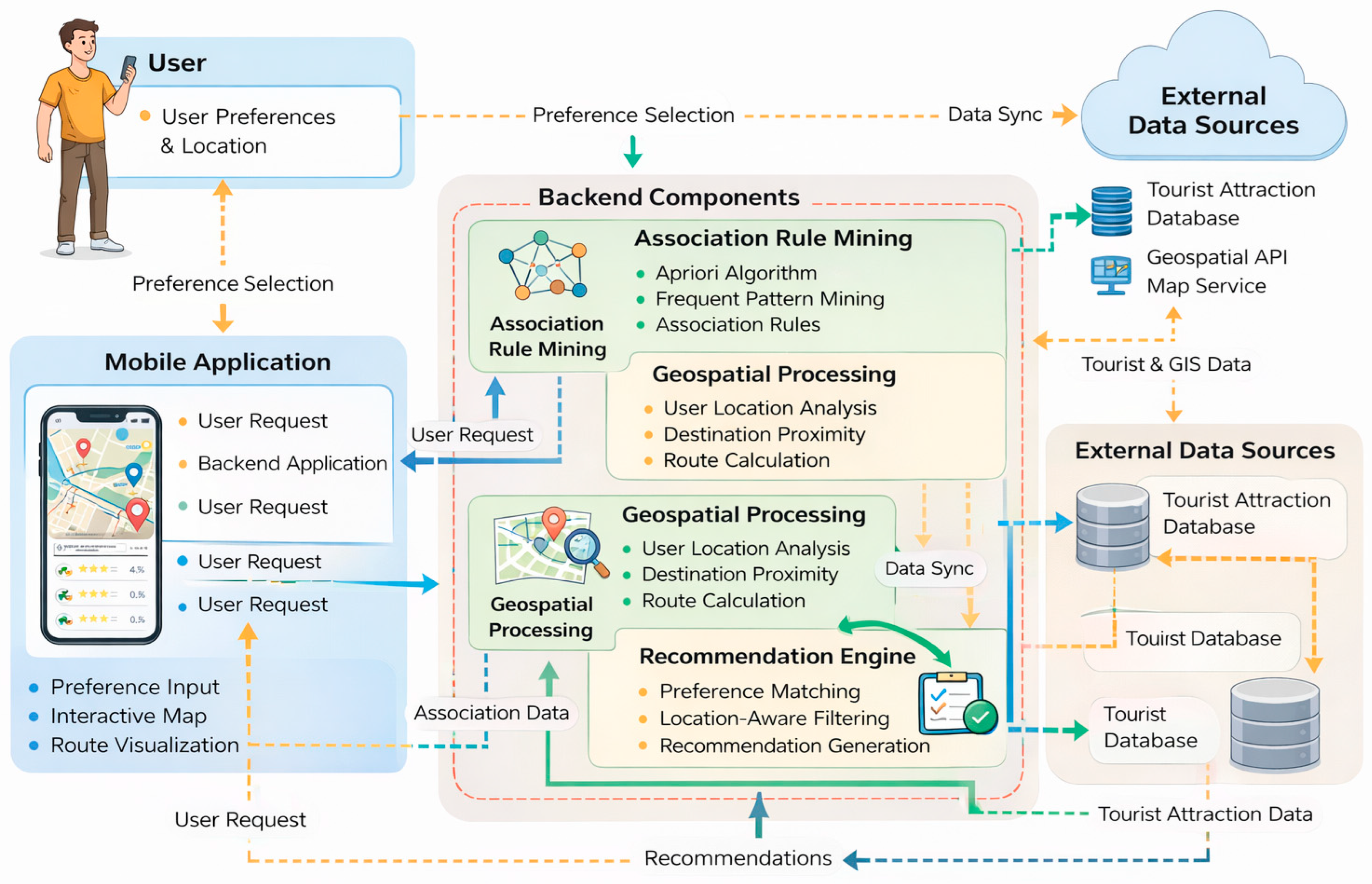
This study proposes the development of a personalized tourist attraction recommendation system that integrates geographic information technology with data analysis techniques to support tourist decision-making and promote sustainable tourism. The overall system framework consists of five main components: (1) Data Sources, (2) Database Management, (3) Geospatial Processing, (4) Preference Analysis using Association Rule Mining, and (5) Application and Visualization, as illustrated in
Figure 1.
3.1.1. Data Sources
The system integrates two distinct categories of data: (1) tourism destination data and (2) user preference data. Although both components include “location” attributes, they serve different analytical purposes within the framework.
In the tourism dataset, “location” refers to geospatial coordinates (latitude and longitude) used for spatial analysis, distance calculation, and route generation. These coordinates enable location-aware recommendation and spatial decision support.
In contrast, within the user preference dataset, “location” refers to preferred destination categories or selected attraction areas identified by users during system interaction. This represents preference-based selection rather than geographic coordinate input. The distinction between spatial location (geometric data) and preference-based destination selection (categorical data) is fundamental to the model design.
Tourism destination data include structured classification variables such as “Type” (e.g., Natural, Cultural, Recreational) and descriptive attributes that provide contextual information about each attraction. The “Type” variable functions as a categorical segmentation mechanism for recommendation generation, whereas “Description” enhances semantic interpretation and contextual understanding within the database.
User-related data are collected during interaction with the application and include user-selected preference categories. The current model focuses on preference-driven inputs rather than demographic profiling. This design choice aims to maintain minimal data collection, preserve user privacy, and ensure compliance with ethical research standards. Behavioral and demographic variables (e.g., age, physical ability, party size) were not incorporated in this prototype system; however, their integration is discussed in the
Section 7.
3.1.2. Geospatial Processing
Geospatial processing is performed using Geographic Information System (GIS) technology to analyze spatial characteristics such as proximity relationships, distance calculation, and route generation between users and tourist destinations. This spatial analysis ensures that recommended destinations are not only aligned with user preferences but also geographically feasible and context-aware.
3.1.3. Preference Analysis Using Association Rule Mining
Association rule mining is applied to identify frequent co-occurrence patterns among selected attraction categories. For example, users who select natural attractions may also frequently select waterfall destinations. These association rules, measured using support, confidence, and lift, enable the system to identify meaningful preference relationships that support personalized recommendation generation.
3.1.4. Application and Visualization
The final recommendation results are delivered through an interactive application interface that integrates personalized recommendation outputs with map-based visualization. The system provides spatial display of destinations, distance estimation, and route navigation. By combining spatial analytics with preference-based recommendation logic, the framework supports informed travel decision-making and provides a conceptual basis for promoting more balanced tourist distribution across multiple destinations.
3.2. Data Collection and Preparation
The dataset used in this study consists of spatial and attribute data related to tourist attractions, as well as user preference data collected through system interaction.
3.2.1. Tourism Destination Data
Spatial data include the geographic coordinates (latitude and longitude) of tourist destinations. These coordinates are essential for map visualization, distance calculation, route generation, and spatial proximity analysis. Attribute data describe the characteristics of each destination and include structured classification variables (e.g., category or type of attraction) and descriptive information that provides contextual understanding of the site. These attributes support both segmentation and semantic interpretation within the recommendation process.
The classification of destinations into categories such as natural attractions, cultural and heritage sites, and recreational locations enables structured grouping for association rule analysis. This categorical segmentation is central to identifying frequent preference patterns among users.
3.2.2. User Preference Data
User preference data are collected through the system interface based on voluntary user selection of preferred destination categories. Rather than collecting demographic or personally identifiable information, the system focuses on explicit preference inputs (e.g., selection of natural, cultural, or recreational destinations). This design prioritizes minimal data collection, privacy preservation, and compliance with ethical research standards.
The current model does not incorporate demographic variables such as age, party size, mobility constraints, or physical ability. These factors were intentionally excluded in this prototype implementation to maintain system simplicity and reduce privacy-related concerns. However, integrating such behavioral and accessibility variables could enhance recommendation precision and is discussed in the
Section 7.
3.2.3. Data Preparation
All collected data are stored and managed within a centralized database management system to ensure efficient retrieval and processing. Prior to analysis, the dataset undergoes validation and preprocessing procedures, including completeness verification, format standardization, coordinate validation, and consistency assessment. These steps ensure data reliability and suitability for subsequent geospatial processing and association rule analysis.
Table 1 presents the classification of tourism resources and their associated visitor experience characteristics. In accordance with tourismology principles, tourism attractions are categorized into two primary groups: natural tourism resources and anthropogenic tourism resources. Natural tourism resources include attractions formed by natural environmental processes such as beaches, waterfalls, and national parks, whereas anthropogenic tourism resources consist of human-created attractions, including cultural heritage sites and recreational or entertainment facilities.
While the current prototype primarily utilizes categorical preference inputs, the inclusion of behavioral and accessibility considerations provides opportunities for enhancing personalization and improving the inclusivity of tourism recommendation systems. This classification framework demonstrates how tourism resource typology can be systematically integrated with spatial recommendation mechanisms.
3.3. Spatial Data Processing
Spatial data processing is performed using Geographic Information System (GIS) technology to analyze spatial relationships between users and tourist attractions. The system retrieves the user’s current geographic location through mobile device location services, which provide latitude and longitude coordinates. These coordinates serve as spatial reference points for proximity analysis and location-based recommendation filtering.
The distance between the user and each tourist attraction is computed using geographic coordinate–based calculations to identify destinations within relevant spatial thresholds. Distance computation is derived from spatial proximity measures based on geographic coordinates, while route generation utilizes map service–based navigation algorithms integrated within the application. This process enables location-based filtering and ranking of attractions according to spatial relevance.
Beyond distance calculation, GIS processing also supports spatial visualization and contextual mapping. Tourist attractions and user locations are dynamically displayed on an interactive map interface, allowing users to understand spatial distribution patterns and relative positioning among destinations.
Furthermore, the system generates route visualization between the user’s location and selected tourist destinations. This routing capability enhances spatial cognition and supports travel planning by integrating navigational guidance within the recommendation environment.
Importantly, the spatial processing component works together with the association rule–based recommendation mechanism to align user preferences with geographically appropriate destinations. By integrating preference-driven rule mining with spatial filtering, the system generates recommendations that are both interest-based and location-aware. This spatially informed recommendation mechanism provides a conceptual basis for supporting more balanced tourist distribution across multiple destinations.
3.4. Association Rule-Based Recommendation
In this study, the tourism recommendation system was developed using association rule mining based on the Apriori algorithm to identify relationships between user preference data and tourist attraction categories. User preference data were organized in the form of transaction data. Let I = {i1, i2, …, in} denote the set of all tourist attraction categories, and let T = {t1, t2, …, tm} represent the set of user transactions, where each transaction corresponds to an individual user and contains a subset of attraction categories reflecting the user’s interests.
The model intentionally employs a category-based preference structure rather than demographic profiling variables. This design focuses on identifying generalized experiential patterns across users while minimizing personal data collection and maintaining ethical compliance. Although integrating behavioral attributes such as age or mobility constraints could enhance personalization depth, this study prioritizes privacy-preserving recommendation logic at the prototype stage.
The transaction data were analyzed using the Apriori algorithm to generate association rules in the form X → Y where X ⊆ I and Y ⊆ I, representing relationships between different attraction categories. These rules indicate that users who show interest in category X are likely to also be interested in category Y.
The strength and significance of the association rules were evaluated using three standard measures: Support, Confidence, and Lift, which are calculated using the following equations.
To ensure meaningful rule generation, predefined threshold values were applied during the rule filtering process. In this study, the minimum support threshold was set to 0.20 and the minimum confidence threshold was set to 0.60, while only rules with Lift values greater than 1 were considered. These thresholds were determined empirically through preliminary testing to balance the number of generated rules and the strength of the relationships identified.
Only association rules that satisfy these criteria were selected for use in the recommendation process. For example, one of the discovered rules is: {Natural attractions}→{Cultural attractions} with Support = 0.32, Confidence = 0.68, and Lift = 1.21. This rule indicates that users who show interest in natural attractions also tend to explore cultural destinations. Such relationships allow the system to recommend culturally related locations when a user selects nature-based attractions.
This filtering process ensures that the selected rules represent meaningful and statistically relevant relationships between tourist attraction categories.
When a user accesses the system, the user’s preference data are compared with the generated association rules to identify relevant patterns and generate personalized recommendations. Subsequently, the geographic coordinates of the recommended tourist attractions are integrated with the user’s current location through geospatial processing. This process enables the system to filter and select destinations based on spatial relevance, such as proximity and location context.
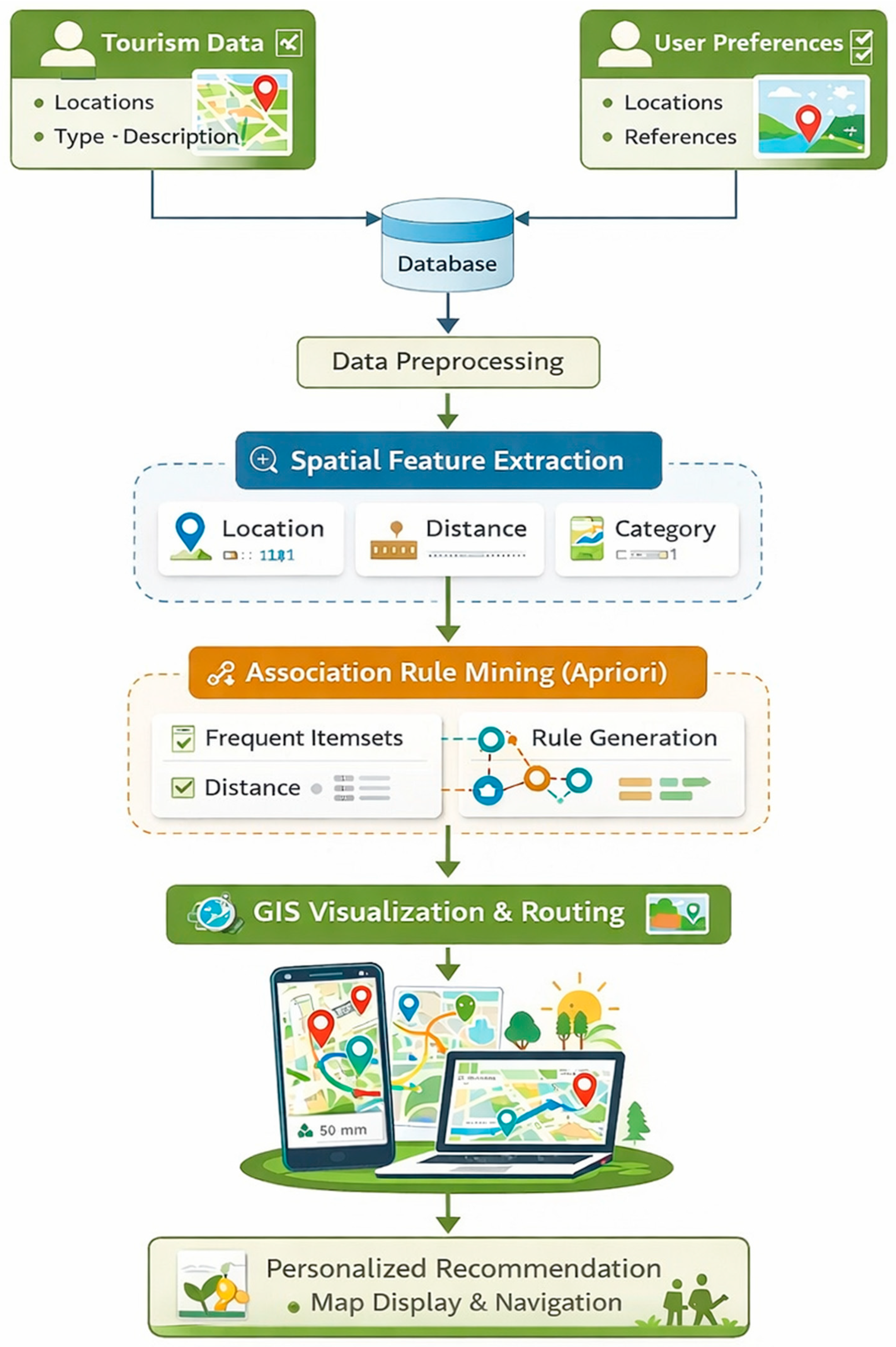
The final recommendation results are presented through an interactive map interface, allowing users to visualize destination locations and supporting travel planning and decision-making. The overall workflow of the proposed tourism recommendation algorithm using association rule mining is illustrated in
Figure 2.
The proposed algorithm was implemented as part of a prototype tourism recommendation system designed to demonstrate the integration of association rule mining with GIS-based spatial filtering. As illustrated in
Figure 2, the recommendation process begins with the collection of user preference data and tourist attraction information, which are organized as transaction datasets. These datasets are then processed using the Apriori algorithm to identify frequent item sets and generate association rules representing relationships among tourist attraction categories.
During the rule generation stage, candidate rules are evaluated using Support, Confidence, and Lift measures. Only rules that satisfy the predefined threshold criteria (minimum support and confidence, and lift greater than 1) are retained for the recommendation process. This filtering step ensures that the generated rules represent meaningful relationships between tourist attraction categories.
Once relevant association rules are identified, the system matches these rules with the current user’s selected preferences to produce candidate recommendations. The recommended tourist attractions are then integrated with geospatial processing, which incorporates the user’s current location to perform spatial filtering based on proximity and location context.
Finally, the selected destinations are displayed through an interactive map interface, enabling users to visualize nearby attractions and travel routes. This integrated workflow demonstrates how association rule mining and geospatial analysis can jointly support personalized and location-aware tourism recommendations and has the potential to contribute to sustainable tourism planning.
3.5. System Development and Visualization
The developed system was implemented as a mobile-based application designed to support tourist interaction and destination recommendation. The application provides an intuitive interface that integrates user preference selection with spatial visualization, enabling users to interact with the recommendation system in a practical travel-planning environment.
Through the application interface, users can select their preferred categories of tourist attractions and explore destination information presented on an interactive map. The system displays the user’s current location together with nearby tourist attractions and generates personalized recommendations based on association rule analysis and spatial context. In addition, the application provides route visualization, allowing users to view travel paths from their current location to selected destinations, thereby supporting navigation and travel planning.
The system also includes a data management interface that enables authorized staff to manage tourist attraction data, including adding, updating, and maintaining destination information. This functionality ensures that the spatial database remains accurate and up-to-date for recommendation generation and geospatial processing.
The mobile-based implementation acts as an operational layer that integrates association rule–based preference analysis with geospatial visualization. By combining user-selected attraction categories with geographic context, the application demonstrates how personalized tourism recommendation mechanisms can be embedded within a spatial decision-support environment. This integration enhances individual travel planning and provides a conceptual basis for supporting a more balanced spatial distribution of tourist visits across multiple destinations.
3.6. Contribution to Sustainable Tourism
The proposed system has the potential to support sustainable tourism by enabling tourists to access personalized and location-relevant destination information. By recommending tourist attractions that align with individual user preferences and spatial context, the system can assist travelers in identifying alternative destinations beyond highly concentrated tourist areas. This functionality may help encourage a more balanced spatial distribution of tourist visits across different locations.
The redistribution mechanism is conceptually supported through the integration of spatial filtering and preference-based category matching. By prioritizing destinations that satisfy both user-selected experiential categories and spatial proximity constraints, the system can recommend alternative attractions that share similar experiential characteristics while being located in less congested areas. This approach provides a mechanism that may reduce the concentration of recommendations on dominant tourist hotspots and instead promote spatial diversification of tourism activities.
Such a recommendation framework may contribute to reducing environmental pressure on highly visited destinations while simultaneously supporting economic opportunities in less-visited locations and local communities. In addition, the integration of spatial data with data analysis techniques enables context-aware recommendations that consider both user preferences and geographic conditions.
It should be noted that the current study demonstrates the conceptual capability of the system to support sustainable tourism rather than directly measuring changes in tourist flow patterns. Future studies could incorporate empirical tourism flow data or user behavior analysis to further evaluate the system’s impact on sustainable tourism management.
3.7. Functional Evaluation
To assess the operational performance of the developed tourism recommendation system, a functional evaluation was conducted based on the defined system requirements. The evaluation focused on verifying whether the system can correctly perform its core functions, including user preference selection, tourist attraction recommendation, spatial visualization, and route display.
The evaluation was performed by testing each system function and comparing the expected outputs with the actual outputs generated by the system. This procedure ensures that the system operates correctly and supports user interaction as intended. In addition, the evaluation verifies the integration between geospatial processing and the association rule–based recommendation mechanism, ensuring that personalized and location-aware recommendations can be successfully generated and displayed through the application interface.
Beyond technical verification, the functional evaluation also confirms the logical integration between preference analysis and spatial processing components. The successful generation of location-aware and category-aligned recommendations demonstrates that the proposed framework effectively operationalizes the integration of association rule mining with GIS-based filtering.
It should be noted that the present evaluation primarily focuses on system functionality and prototype validation, rather than large-scale empirical assessment of user satisfaction or recommendation effectiveness. Future research will extend the evaluation through empirical user studies, such as usability testing and user satisfaction surveys, to better assess the practical effectiveness of the recommendation system.
In addition, comparative evaluation with alternative recommendation approaches, such as collaborative filtering or content-based recommendation techniques, could further provide insight into the relative performance and recommendation quality of the proposed system.
The results of the functional evaluation are presented and discussed in
Section 4.
4. Results
The results of the developed tourism recommendation system, which integrates Geographic Information System (GIS) technology with association rule mining, demonstrate that the system can successfully generate personalized and location-aware tourism recommendations. The implemented system allows users to interact with tourism information through a map-based interface, where recommended destinations are dynamically displayed based on user preferences and spatial context.
Through the application interface, users can explore tourist attractions that correspond to their selected categories while simultaneously considering geographic proximity. The integration of preference-based recommendation with spatial filtering enables the system to present destinations that are both relevant to user interests and geographically feasible. This functionality supports more efficient travel planning by helping users identify suitable attractions within their surrounding area.
The results further demonstrate that the proposed framework effectively operationalizes the integration of association rule mining and GIS-based spatial analysis, enabling the generation of recommendations that align user interests with spatially appropriate destinations. This integrated approach provides users with context-aware tourism information that can assist in informed travel decision-making.
The main interface of the application presents tourist attraction information through an intuitive visual layout, as illustrated in
Figure 3. Destinations are displayed using a card-based format that includes representative images, destination names, and location information. This interface design allows users to easily explore available attractions and identify destinations that match their interests.
In addition to browsing destination information, the system supports interactive exploration through map-based visualization. Recommended attractions are presented together with spatial context, allowing users to understand the geographic distribution of destinations and their relative proximity. This interface facilitates efficient identification of suitable destinations based on both user preferences and spatial relevance.
Furthermore, the application provides functions that allow users to save selected destinations for future reference and travel planning. Such interaction capabilities enhance the usability of the system and support more efficient organization of travel activities.
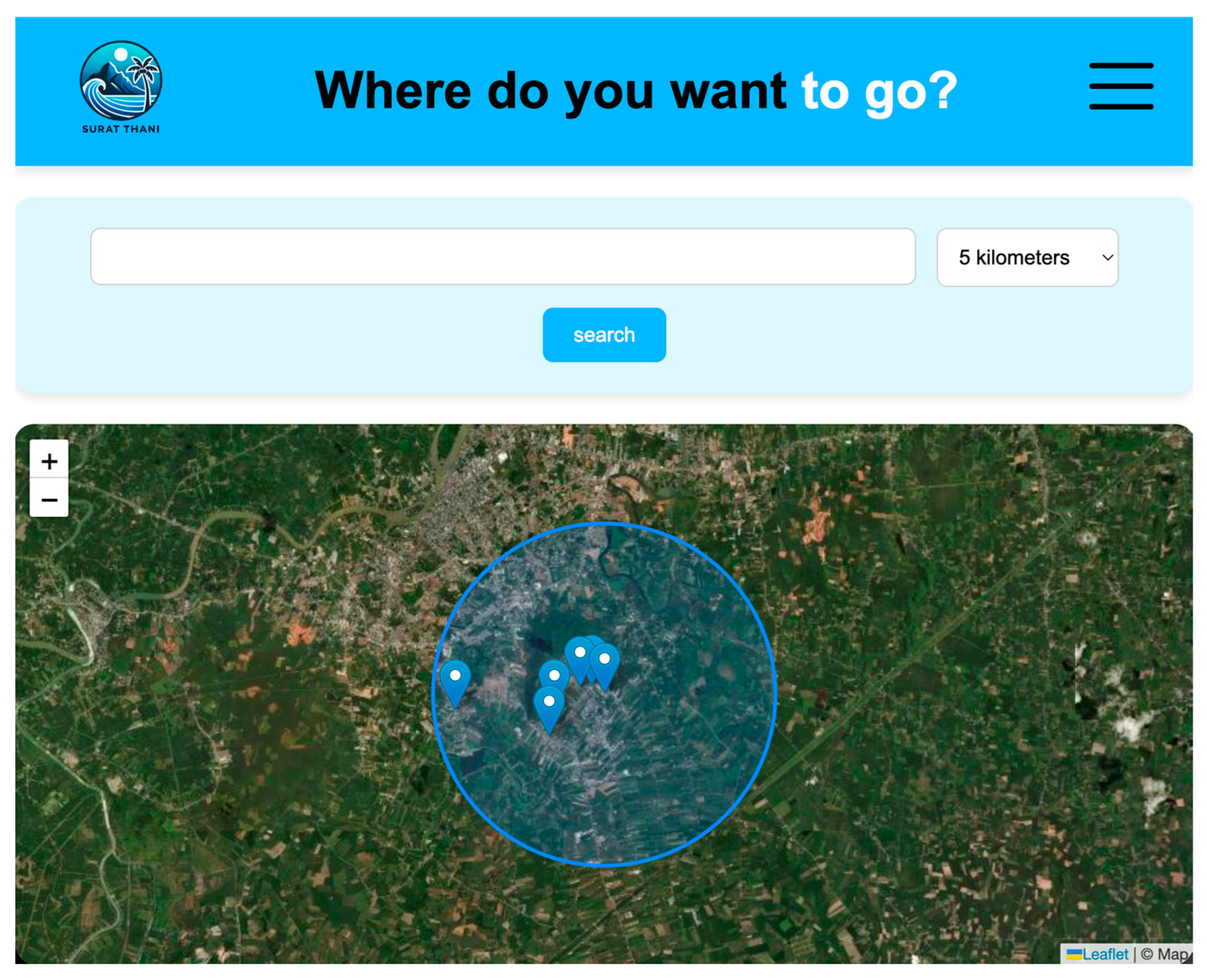
The system also provides a location-based search function that identifies tourist attractions according to the user’s current geographic position. Using geographic coordinates, the system calculates the distance between the user and each tourist destination to determine spatial proximity, as illustrated in
Figure 4.
The results are presented by displaying tourist attractions located within a user-defined search radius (e.g., 20 km), together with the corresponding distance to each destination. This spatial filtering mechanism enables users to efficiently identify nearby attractions that are geographically accessible.
By integrating spatial proximity analysis with the recommendation process, the system ensures that suggested destinations are not only aligned with user preferences but also geographically feasible. This functionality supports more efficient and location-aware travel planning and demonstrates how GIS-based spatial analysis can enhance tourism recommendation systems.
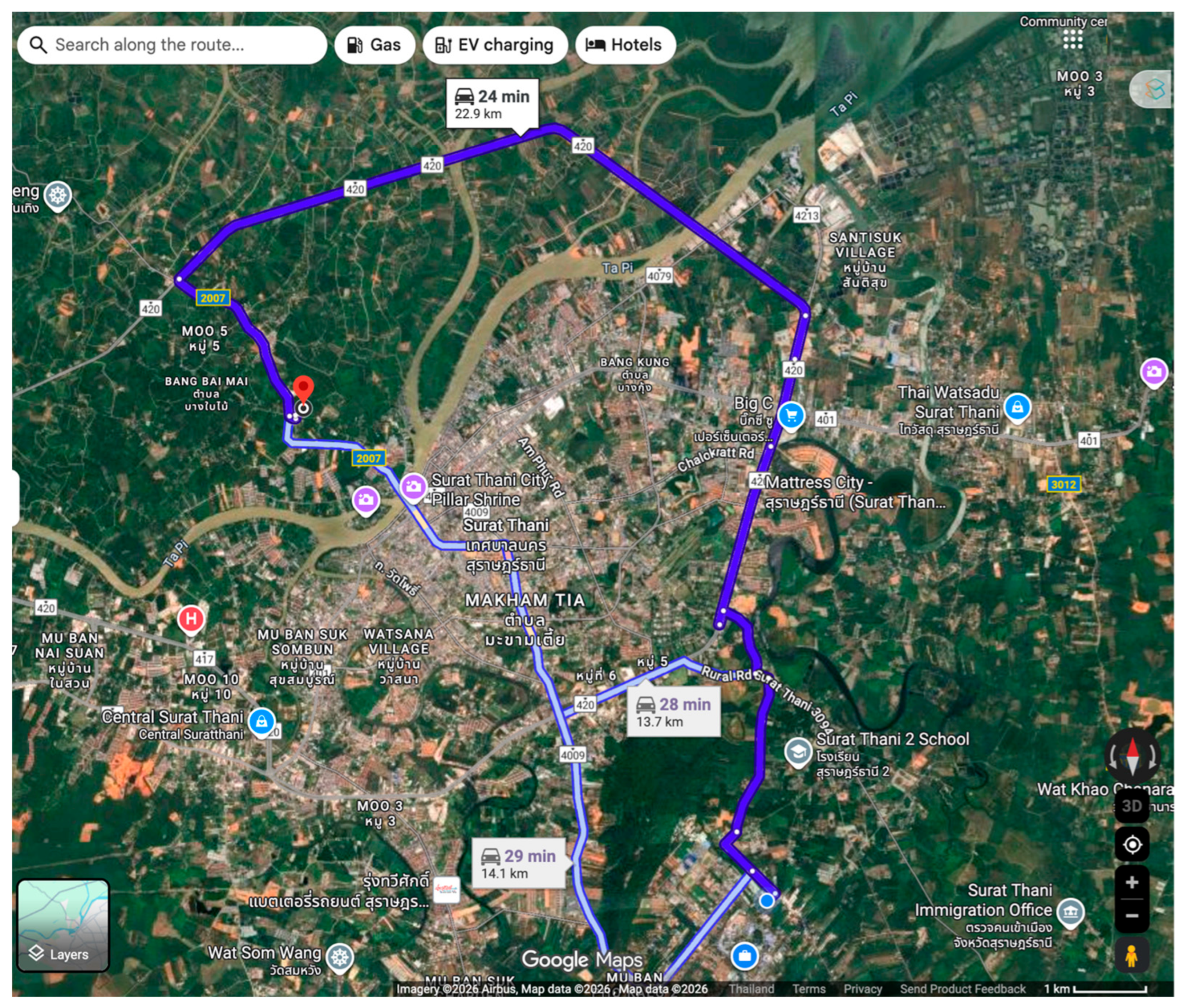
Furthermore, the system provides route visualization functionality by displaying the geographic locations of tourist attractions together with the corresponding travel routes, as illustrated in
Figure 5. Using the geographic coordinates of both the user and the selected destination, the system calculates the travel path and presents it through an interactive map interface. This functionality enhances spatial awareness and allows users to better understand the relative position and accessibility of tourist destinations.
Although
Figure 5 illustrates an example route that integrates multiple experiential categories, the system is capable of generating category-specific routes based on user-selected preferences (e.g., cultural-focused, nature-oriented, or recreational routes). The illustrated route therefore represents one possible configuration rather than a fixed itinerary. By dynamically aligning route generation with user-selected categories and spatial proximity constraints, the system supports flexible and context-aware travel planning.
The primary outcome of the proposed system is the generation of personalized tourism recommendations, as illustrated in
Figure 6. The recommendation process integrates user preference data with association rule mining and geospatial filtering to identify destinations that correspond to individual interests while remaining geographically relevant. In the presented example, the system recommends several tourist attractions within the study area, demonstrating its ability to generate context-aware and preference-aligned recommendations.
The visualization of recommended destinations through an interactive map interface further improves information accessibility and allows users to easily explore spatial relationships among attractions. This integrated presentation supports efficient exploration of potential destinations and illustrates the practical capability of the proposed framework to combine data-driven recommendation with GIS-based spatial analysis.
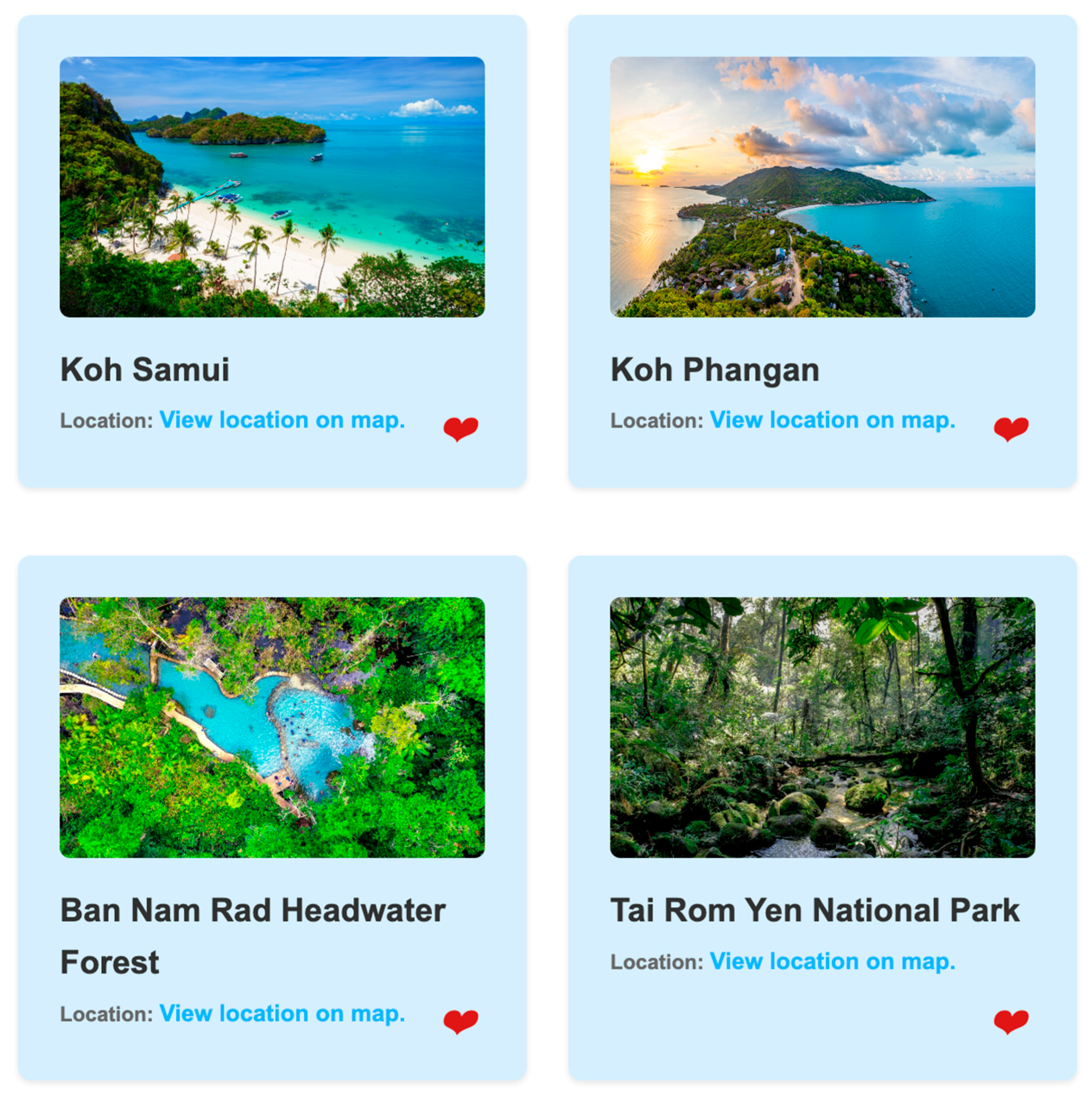
Following the spatial search and route visualization processes, the system generates personalized tourist attraction recommendations by integrating user preference data with spatial information, as illustrated in
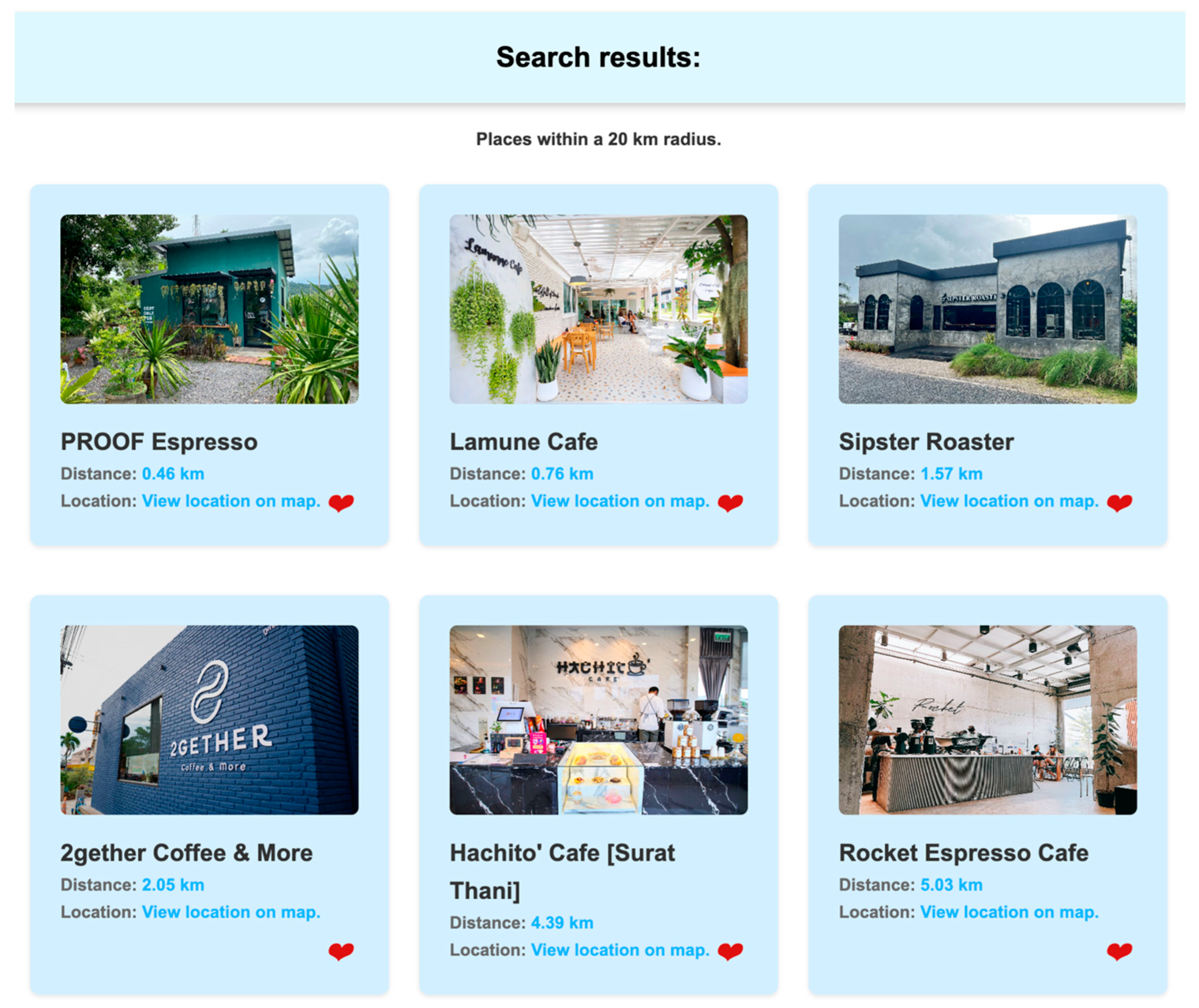
Figure 7. The recommended destinations are presented using a card-based interface, where each entry includes an image, destination name, and location link. This presentation format facilitates user interaction and enables efficient access to relevant tourism information.
The recommendation mechanism combines association rule mining with geospatial processing to identify relationships between tourist attraction categories based on aggregated user preference patterns while ensuring that the recommended destinations remain spatially relevant. By incorporating geographic proximity into the recommendation process, the system can suggest destinations that align with both user interests and their spatial context.
The results demonstrate that the developed system is capable of generating personalized and location-aware recommendations. The integration of preference analysis with geographic location improves the contextual relevance of suggested destinations. In addition, the availability of map-based access and location links enables users to easily visualize spatial relationships among attractions and explore potential travel routes.
These findings indicate that the proposed framework can function as a tourism decision-support tool that integrates data-driven recommendation with GIS-based spatial analysis. The system also has the potential to support more balanced spatial distribution of tourist visits by recommending geographically appropriate destinations rather than concentrating recommendations solely on popular tourist hotspots.
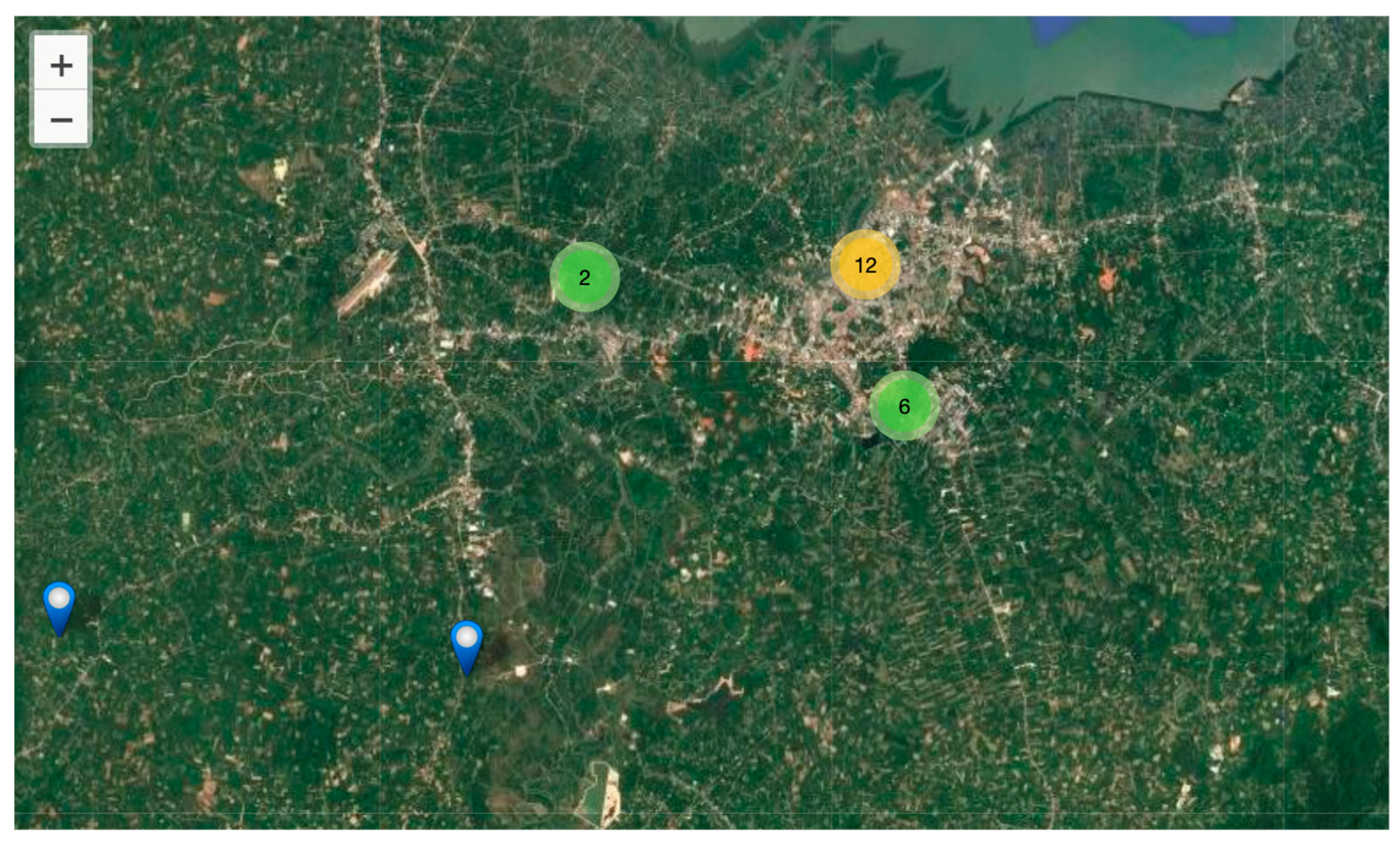
Figure 8 illustrates the spatial distribution of the recommended tourist attractions displayed on the map interface. The recommended locations are represented using map markers, enabling users to observe their geographic positions relative to their current location. This spatial visualization provides a clear representation of the geographic context and allows users to easily explore the spatial relationships among the suggested destinations.
The results show that the recommended tourist attractions are distributed across multiple locations rather than concentrated in a single area. This indicates that the integration of association rule mining with geospatial processing enables the system to generate recommendations that are both aligned with user preferences and geographically relevant.
The spatial distribution of recommended destinations demonstrates the system’s ability to suggest attractions across different areas within the study region. Such distribution may help reduce the concentration of recommendations on highly popular locations and instead encourage exploration of alternative destinations. Consequently, the proposed framework has the potential to support more balanced spatial distribution of tourism activities by promoting geographically diversified recommendations.
To examine the performance of the developed system, functional testing was conducted on its principal components. The evaluation aimed to verify whether the system could correctly execute its intended functions and support the generation of tourism recommendations. The testing procedure included preference selection, recommendation generation, spatial visualization, distance calculation, and route display.
The testing results indicate that the system was able to perform all evaluated functions as designed. Users could successfully select preferred categories of tourist attractions and receive corresponding recommendations generated by the system. In addition, the system displayed tourist destinations through an interactive map interface, calculated distances using geographic coordinates, and presented travel routes between the user’s location and selected destinations.
Table 2 summarizes the results of the functional evaluation. All tested functions operated correctly and produced the expected outputs, demonstrating that the integration of GIS technology with association rule mining enables the system to function effectively as a tourism recommendation and decision-support tool.
Furthermore, the incorporation of spatial information allows the system to provide location-aware recommendations and route visualization, which may assist users in identifying geographically accessible destinations. This capability also has the potential to support more balanced spatial distribution of tourism activities by encouraging exploration of destinations across different locations rather than concentrating visits in a single area.
5. Discussion
The results of the developed tourism recommendation system demonstrate that integrating geographic information technology with Association Rule mining enhances the contextual relevance of tourist recommendations. By combining category-based user preference inputs with spatial proximity analysis, the system generates recommendations that align not only with individual interests but also with geographic feasibility. This dual-layer integration strengthens the practical applicability of recommendation outputs in real-world travel planning contexts.
Compared with previous studies, many tourism recommendation systems primarily focus on behavioral or preference-based modeling without incorporating spatial constraints [
27,
28,
29,
30,
31]. Consequently, such systems may recommend destinations that are conceptually relevant but geographically impractical. Conversely, GIS-based tourism applications often emphasize spatial visualization and route mapping without embedding user preference modeling into the recommendation logic [
27,
32,
33,
34,
35,
36,
37,
38,
39,
40,
41,
42,
43,
44,
45,
46,
47]. The framework proposed in this study bridges this divide by structurally integrating preference-driven categorical modeling with geospatial filtering, thereby delivering recommendations that are both interest-aligned and spatially realistic.
Importantly, the system adopts a category-based experiential segmentation approach rather than demographic profiling. By structuring tourist attractions into experiential categories (e.g., cultural/heritage, natural resources, recreational), the model identifies generalized co-occurrence patterns through association rules while minimizing personal data collection. This design reflects a deliberate balance between personalization capability and privacy preservation. While demographic and behavioral variables (e.g., age, mobility constraints, party size) may further enhance personalization depth, the current approach demonstrates that meaningful recommendation performance can be achieved through structured categorical segmentation combined with spatial intelligence.
From a sustainable tourism perspective, the integration of spatial filtering with preference-based modeling has the potential to support more balanced spatial distribution of tourist flows. By identifying alternative destinations within similar experiential categories but located in less congested areas, the system may help mitigate overtourism and encourage spatial diversification of visitor movement. Such mechanisms align with destination management strategies that aim to promote balanced utilization of tourism resources. Furthermore, proximity-based filtering may contribute to more geographically efficient travel planning, which could indirectly reduce unnecessary travel distances and associated environmental impacts.
Despite these contributions, several limitations remain. The quality of recommendations depends on the completeness and accuracy of the tourism database. Incomplete or outdated data may reduce recommendation effectiveness. Additionally, the current implementation does not incorporate demographic profiling, accessibility indicators, temporal dynamics, or real-time visitor density data. These contextual and behavioral variables may influence travel decision-making and could enhance personalization precision and inclusivity.
Future research may extend the framework by integrating demographic and accessibility-aware modeling, as well as real-time contextual information such as weather conditions and tourist density. Advanced machine learning techniques, including collaborative filtering and deep learning architectures, may further improve predictive performance. Moreover, empirical validation involving real-user evaluation, such as user satisfaction surveys and usability testing, would further strengthen the assessment of the framework’s practical applicability.
6. Conclusions
This study presented the development of a GIS-based personalized tourism recommendation system that integrates Geographic Information System (GIS) technology with association rule mining to support context-aware tourism information services. By structurally combining category-based user preference inputs with spatial proximity analysis, the proposed framework bridges the gap between behavioral recommendation approaches and geospatial decision-support systems.
The results demonstrate that integrating association rule–based category modeling with GIS-based spatial filtering enables the generation of recommendations that are both preference-aligned and geographically relevant. The system provides personalized destination suggestions while simultaneously offering map-based visualization and route guidance, thereby supporting more effective exploration of tourism destinations.
From a sustainable tourism perspective, the framework has the potential to support more spatially balanced tourism activities by recommending destinations across multiple locations rather than concentrating suggestions solely on highly popular attractions. By aligning experiential categories with proximity-based filtering, the system can surface alternative destinations within similar interest domains.
Overall, the proposed framework demonstrates how preference-driven recommendation mechanisms can be integrated with geospatial analysis to support tourism information systems. This integration provides a foundation for developing more adaptive, privacy-conscious, and spatially informed tourism recommendation platforms. Future research may further enhance the framework by incorporating demographic variables, real-time contextual data, and empirical user evaluations.
7. Limitations and Recommendations for Future Research
Although the proposed framework demonstrates the feasibility of integrating association rule mining with GIS-based spatial filtering for personalized tourism recommendation, several limitations should be acknowledged.
First, the current implementation relies primarily on category-based user preference inputs rather than incorporating socio-demographic or behavioral variables. While this design prioritizes privacy preservation and minimal personal data collection, it may limit the depth of personalization achievable in more complex tourism scenarios. Variables such as age group, travel motivation, group composition, and mobility constraints may significantly influence tourism preferences and travel behavior. Future research could integrate socio-demographic attributes and behavioral indicators to enhance recommendation relevance, inclusivity, and contextual sensitivity.
Second, the recommendation performance depends on the completeness and accuracy of the tourism destination database. Incomplete, outdated, or insufficiently categorized data may affect the quality and reliability of generated recommendations. Future work may explore automated data updating mechanisms, integration with open tourism data platforms, or real-time data acquisition strategies.
Third, the current system does not incorporate dynamic contextual factors such as temporal conditions, seasonal variations, weather information, or real-time tourist density levels. These factors can significantly influence travel decisions and destination suitability. Incorporating real-time contextual data and adaptive modeling techniques would enable more responsive and situation-aware recommendations.
Furthermore, the evaluation conducted in this study focused primarily on functional validation of system components rather than comprehensive user-based assessment. Future research should include empirical user studies, such as user satisfaction surveys, usability testing, and behavioral intention analysis, to more rigorously evaluate the effectiveness and real-world applicability of the recommendation system.
Finally, advanced machine learning approaches, including collaborative filtering, hybrid recommender systems, and deep learning architectures, may be integrated to enhance predictive capability while maintaining spatial intelligence. Expanding the framework to incorporate multi-criteria decision analysis and sustainability indicators could further strengthen its applicability as a decision-support tool for sustainable tourism governance.