1. Introduction
In line with the Sustainable Development Goals, engineering materials used in industrial applications must not only exhibit high mechanical performance but also meet criteria such as low environmental impact, long service life, energy-efficient production, and reduced dependence on critical raw materials [
1,
2,
3]. In this context, high-entropy alloys (HEAs), developed in recent years in materials science, have emerged as an attractive alternative for sustainable engineering applications [
4,
5,
6].
High-entropy alloys are a new generation of metallic materials that contain at least five main elements in equal or nearly equal atomic ratios and can form simple crystal structures (FCC, BCC, or combinations thereof) due to the high configurational entropy effect [
7,
8]. These alloys possess superior properties, including high strength, wear and corrosion resistance, thermal stability, and good mechanical integrity. Thanks to these properties, they have potential applications requiring long-life and reliability, such as the defense industry, energy systems, automotive, marine, and industrial equipment. As a result, these materials reduce material consumption and lower life-cycle costs by enabling components to last longer [
9,
10,
11].
In terms of sustainability, one of the most important advantages of high-entropy alloys is their ability to deliver high mechanical and environmental performance while allowing flexibility in element selection [
12,
13]. Alloy systems containing cobalt, rare earth elements, or strategically critical metals are disadvantageous for long-term sustainability due to limited reserves, geopolitical supply risks, and high costs [
14,
15]. In contrast, high-entropy alloys composed of elements such as Al, Cu, Fe, Ti, and Ni, which are abundant in the Earth’s crust, non-toxic, recyclable, and globally accessible, offer a more environmentally and economically sustainable approach. These alloys provide high hardness, good wear and corrosion resistance, and a long service life, reducing the frequency of material replacement, lowering maintenance requirements, and indirectly limiting energy and raw material consumption throughout their life cycle. Therefore, AlCuFeTiNi-based high-entropy alloys are considered strong candidates for sustainable engineering applications, not only for their performance-oriented properties but also for their resource efficiency and long-term usability [
16,
17].
High-Entropy Alloys (HEAs) have been the subject of significant research in recent years due to their unique compositional complexity. These alloys typically consist of five or more primary metallic elements and promote the formation of a single-phase solid solution due to their highly structured entropy. In terms of corrosion resistance, HEAs can generally exhibit superior performance compared to traditional alloys [
18]. In particular, alloys such as AlFeCuTiNi exhibit lower corrosion current density (
Icorr) and superior pitting resistance compared to Al and Cu alloys in 3.5% NaCl solutions. Potentiodynamic polarization testing is frequently used to characterize the corrosion behavior of HEAs, and the Tafel curves obtained from this test are important for evaluating alloy corrosion resistance by measuring the passivation potential (
Epit) and the corrosion current density (
Icorr). However, there are challenges in increasing the corrosion resistance of HEAs. Factors such as element segregation, phase transformations, and intermetallic compound formation can negatively affect the alloy’s overall corrosion resistance. Furthermore, the compositional heterogeneity and microstructural diversity of HEAs can complicate their corrosion behavior. The generally higher costs of HEAs, due to the use of expensive elements (e.g., Co and Cr), limit their widespread use in practical applications compared to more cost-effective alloys. In this context, further work is needed to investigate and optimize the corrosion properties of HEAs in greater depth [
19,
20].
The methods used to produce high-entropy alloys are important factors that determine not only the material’s final performance but also its energy efficiency and environmental impact [
21]. Traditional melting and casting methods have significant disadvantages, including high processing temperatures, excessive energy consumption, vaporization of low-melting-point elements, and deviations in chemical composition. In contrast, the powder metallurgy-based mechanical alloying method enables homogeneous alloy formation at lower processing temperatures, minimizes element losses, and reduces energy consumption through a fully solid-state production approach [
22,
23,
24]. Mechanical alloying promotes the formation of fine-grained, homogeneous microstructures through intense plastic deformation and repeated sintering-fracturing cycles, thereby improving mechanical and chemical properties, including high hardness, wear resistance, and corrosion resistance. These advantages extend the service life of alloys, reduce maintenance and replacement needs, and thus provide lower resource and energy consumption throughout the life cycle. Therefore, mechanical alloying is a practical and environmentally friendly approach for the sustainable production of high-entropy alloys.
The sintering stage has a decisive effect on the consolidation behavior, phase stability, and microstructural evolution of high-entropy alloys (HEAs). In particular, the sintering temperature directly affects porosity reduction, grain-size evolution, and the stability of solid solutions by controlling atomic diffusion rates. While advanced techniques such as plasma current sintering or hot isostatic pressing can provide high density and performance, they impose limitations for sustainable production due to high energy requirements and equipment costs. Therefore, using traditional sintering methods with appropriate temperature and time parameters offers a more accessible production approach that limits environmental impacts by relatively reducing energy consumption [
25,
26].
This paper has argued that a high-entropy alloy based on AlCuFeTiNi was synthesized using the mechanical alloying method, and the effects of different milling times (5, 10, 15, and 20 h) and two different sintering temperatures (550 °C and 650 °C) were systematically investigated for their effects on the phase composition, microstructure, density, mechanical properties, wear, and corrosion behavior of the alloy. The selected alloy system is a suitable candidate for sustainable engineering applications due to the absence of critical elements and the use of relatively low-cost, non-toxic components. Most studies in the literature on AlCuFeTiNi and similar high-entropy alloy systems either focus on advanced sintering techniques or evaluate only a single property (hardness or microstructure). In contrast, this study fills an important gap in the literature by simultaneously optimizing the mechanical alloying time and the traditional sintering temperature and investigating the relationships among density, hardness, wear, and corrosion within a single production pathway. Furthermore, this approach, which aims to achieve target performance with lower energy input, provides a practical framework for the accessible, scalable, and sustainable production of high-entropy alloys.
2. Experimental Procedures
2.1. Preparation of the High-Entropy Alloy AlFeCuTiNi
In this study, commercially pure aluminum (Al, 99.9%), iron (Fe, 99.9%), copper (Cu, 99.9%), titanium (Ti, 99.5%), and nickel (Ni, 99.99%) element powders were used in the production of a high-entropy alloy based on AlFeCuTiNi. The powders were obtained from Nanografi Nano Technology Inc. (Ankara, Türkiye), and their average particle sizes are in the micrometer range. The alloy composition was determined so that each element was present in equal atomic ratios. The mechanical alloying process was carried out in a planetary ball mill (Fritsch Pulverisette 5, Idar-Oberstein, Germany) using a hardened-steel container and 10-mm hardened steel balls. The ball-to-powder weight ratio was selected as 10:1. To prevent powders from adhering to the chamber walls and from excessive cold welding, stearic acid was used as a process control agent at 1.5% by weight. The alloying process was performed at room temperature under an argon atmosphere at 250 rpm. To prevent excessive temperature increases during grinding, the process was applied in 30-min work and 30-min stop cycles. Mechanical alloying times were set at 5, 10, 15, and 20 h to examine the effect of production parameters.
2.2. Compaction and Sintering
The HEA mechanically alloyed powders were pressed for 1 min at 550 MPa using a single-axis cold-pressing method to produce cylindrical pellets with a diameter of 13 mm. The pressed HEA pellets were sintered in a Protherm vacuum furnace (Alser Teknik, Ankara, Turkey) under argon at 550 °C and 650 °C for 2 h. The selected sintering temperatures were chosen to limit excessive grain growth and energy consumption, while ensuring sufficient atomic diffusion, and to observe the effect of sintering temperature.
2.3. Density Measurements
The experimental densities of sintered high-entropy AlFeCuTiNi alloy pellets were determined using the WSA-224 density measurement device (Weightlab, Ankara, Turkey) based on Archimedes’ principle, in accordance with ASTM D792. The alloy’s theoretical density was determined using the mixing rule (Equation (4)), which incorporates the densities of the constituent elements. During the measurement process, the sample was thoroughly immersed in liquid, and any air bubbles that formed due to incomplete penetration of the liquid into the sample’s voids were carefully removed. If bubbles were detected, indicating that the liquid had not fully displaced the air from the sample, the measurement was repeated. This procedure was performed at least 5 times, and the average value was used to ensure reliable, accurate density results.
2.4. Structural and Microstructural Characterization
The phase analysis of the high-entropy alloy samples (AlFeCuTiNi) was conducted using a RIGAKU SmartLab X-ray diffractometer (Rigaku Corporation, Tokyo, Japan). Cu Kα radiation was utilized for the X-ray diffraction (XRD) measurements, and the resulting diffraction patterns were analyzed to identify the phases and crystal structures present in the samples. Additionally, the surface morphology and microstructural characteristics were observed using a TESCAN MAIA3 XMU analytical scanning electron microscope (SEM) (TESCAN Brno s.r.o., Brno, Czech Republic). The MAIA3 XMU system provides high-resolution at low acceleration voltages, enabling reliable microstructural observations without charge buildup or surface damage, even on non-conducting or sensitive materials. During SEM analysis, grain structure, porosity, and microstructural homogeneity were evaluated at different magnification levels. The elemental distribution and chemical composition of the alloys were analyzed using energy-dispersive X-ray spectroscopy (EDX) coupled with the SEM system. EDX analyses and elemental mapping were used to examine the elemental distribution within the alloy and to evaluate potential segregation regions.
2.5. Microhardness and Wear Testing
Vickers microhardness was measured using a Shimadzu HMV-G21 device (Shimadzu Corp., Kyoto, Japan) with a 100 g (0.98 N) load and a 15-s dwell time. Ten measurements were taken from various regions of each sample, and the average value was reported. Wear testing was conducted with the TRIBO-technic-TRIBOtester (TRIBOtechnic, Clichy, France) under a load of 8 N, a total sliding distance of 100 m, and a sliding speed of 12 m/s. The cross-sectional areas of the wear tracks were measured using a Taylor Hobson 2D profilometer (Leicester, UK). The tests were performed at a relative humidity of 30–35% and a temperature range of 20–25 °C. The wear volume (Equation (1)) and wear rate (Equation (2)) were calculated using the measured wear trace data with the following equations [
27,
28].
where
2.6. Electrochemical Testing
Electrochemical comparison tests were conducted at 24 ± 2 °C in a 3.5% NaCl solution using the Gamry Reference 1010E potentiostat (Gamry Instruments, Warminster, PA, USA). The surface of the working electrode was polished with a series of sandpapers ranging from 600 to 4000 grit, followed by final polishing with 1 µm diamond paste. Subsequently, the samples were cleaned ultrasonically to remove any residual contaminants. For all samples, the breakdown current density (
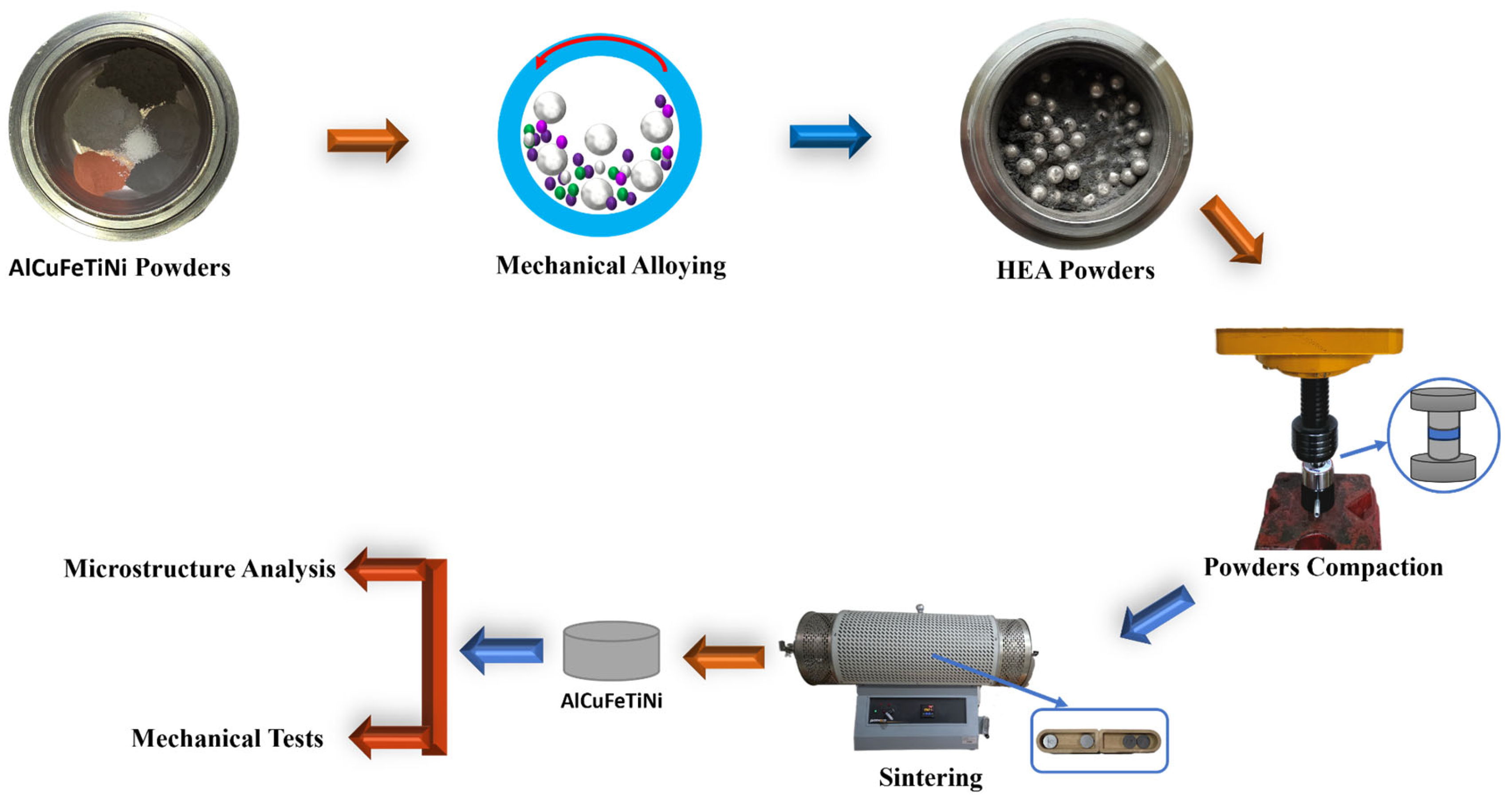
Icorr) was determined by Tafel extrapolation, and the corrosion rate was calculated from it. The sintered sample served as the working electrode, with a saturated calomel electrode (SCE) used as the reference electrode and a graphite rod as the counter electrode. After stabilizing the open-circuit potential (OCP) by immersing the samples for 30 min, electrochemical impedance spectroscopy (EIS) measurements were conducted over the frequency range of 0.1 to 105 Hz with an amplitude of ±10 mV at OCP. After EIS, the potential was swept from −500 to +500 mV relative to the open circuit potential (OCP) at a scan rate of 0.5 mV/s to obtain the potentiodynamic polarization curves. To clarify the experimental process, all steps from sample preparation through testing are shown in
Figure 1, along with a schematic flow diagram. This approach’s methodology is visually supported and reinforced, thereby increasing test reproducibility. The corrosion rate (Equation (3)) was calculated using the following formula [
29,
30,
31,
32]:
where
Figure 1.
Schematic representation of the production and characterization of a high-entropy AlFeCuTiNi alloy.
Figure 1.
Schematic representation of the production and characterization of a high-entropy AlFeCuTiNi alloy.
3. Results and Discussion
In this study, the optimization of sintering temperatures and milling durations has been examined with a focus on sustainability. The results indicate that choosing critical elements with logistic challenges or limited ore availability was avoided, aligning with sustainability goals. This decision reflects careful consideration of material selection, balancing resource availability and environmental impact. The data obtained from this study provides insights that can be tailored for specific applications. For instance, hardness, wear, and corrosion resistance values can be selected based on application needs, allowing the design of materials that meet performance requirements without redundant production processes. By leveraging data-driven designs, the need for overproduction and resource waste is minimized.
In terms of energy efficiency, sintering the alloy at 550 °C rather than 650 °C, or using shorter alloying times, will directly increase it. This contributes to a more sustainable production process by reducing CO2 emissions. Optimized material design provides higher wear and corrosion resistance while maintaining lower energy consumption than at higher sintering temperatures or longer grinding times. Therefore, optimizing production parameters such as sintering temperature not only improves material properties but also supports the goal of reducing the environmental impact of production processes.
Table 1 and
Table 2 provide the theoretical, experimental, and relative densities of the high-entropy AlFeCuTiNi alloys sintered at 550 °C and 650 °C, respectively. Experimental densities were measured according to Archimedes’ principle. At both sintering temperatures, the experimental density increased with mechanical alloying time from 5 to 20 h, and the relative density did as well. At 550 °C, the relative density increased from 82.1% to 87.4%, while at 650 °C, it increased from 83.3% to 88.4%. This increase can be attributed to the powders becoming more homogeneous and to the packaging yield increasing as the mechanical alloying time is extended; it can also be attributed to reduced porosity due to more effective atomic diffusion at 650 °C. This situation demonstrates that porosity and the alloy’s intrinsic effect influence mechanical properties and corrosion resistance. However, the fact that corrosion resistance changes independently of mechanical properties and relative density indicates that the alloy’s intrinsic effect is more pronounced. Specifically, the decrease in corrosion resistance and the increase in corrosion rate observed after 20 h of mechanical alloying are attributed to microstructural defects and increased internal stresses in the alloy. This indicates that corrosion resistance weakens with longer alloying times, due to changes in the alloy’s chemical and structural properties. The theoretical density was calculated using Equation (4) based on the mixing rule; the relative density was determined using Equation (5) [
29].
3.1. XRD Analysis
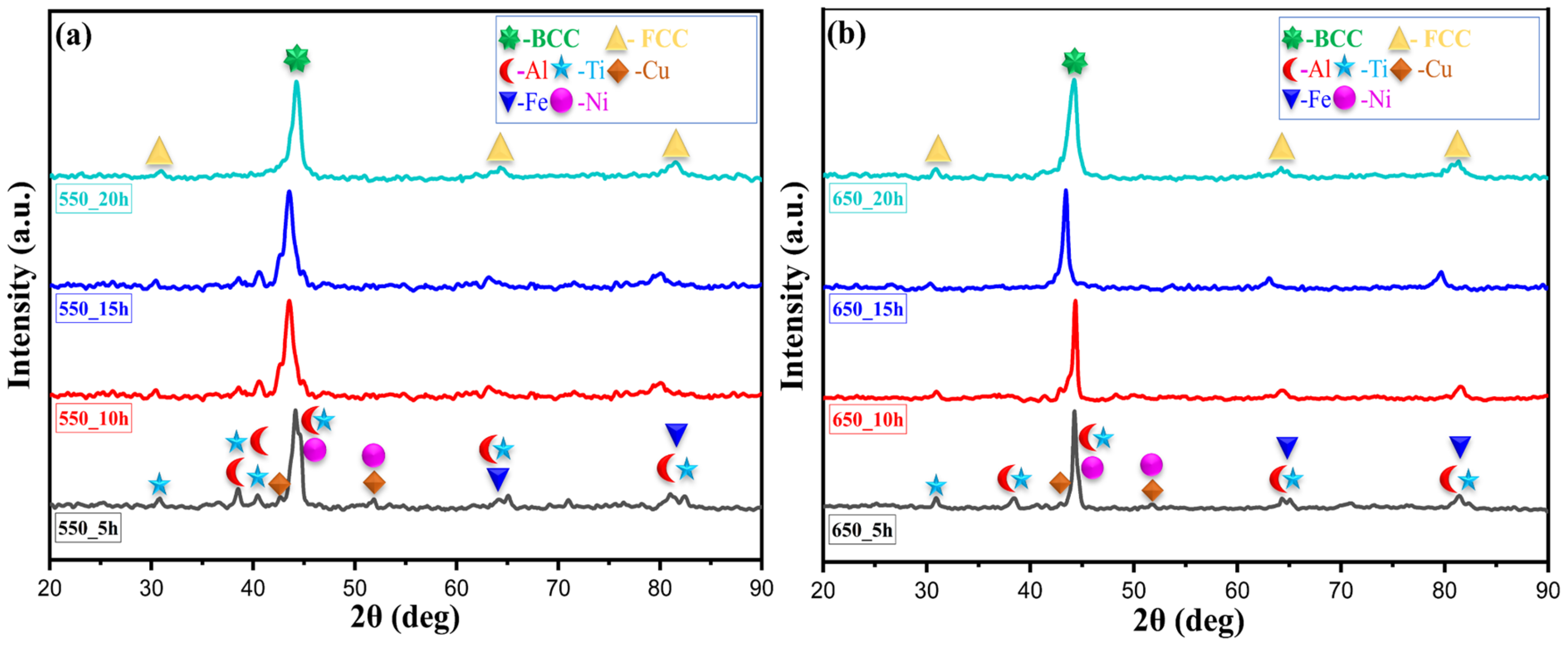
Figure 2 reveals the X-ray diffraction (XRD) patterns obtained for high-entropy AlFeCuTiNi alloy samples under different mechanical alloying times (5, 10, 15, and 20 h) and two different sintering temperatures (550 °C and 650 °C). In samples with a short mechanical alloying time (5 h), no distinct diffraction peaks characteristic of intermetallic or solid-solution phases with BCC or FCC character were observed in the XRD patterns [
33]. This is attributed to the insufficient time applied for atomic diffusion and chemical homogenization in the multicomponent system. Indeed, due to incomplete dissolution of elements during the early stages of mechanical alloying, weak and irregular diffraction signals, along with peaks from residual elemental phases, are observed in the XRD patterns. With the extension of the mechanical alloying time to 10 and 15 h, diffraction peaks associated with BCC and FCC crystal structures begin to become apparent in the XRD patterns. The peaks observed at this stage indicate the initiation of solid solution and/or BCC/FCC-characterized phase formation in the system. The increase in peak intensities and the weakening of signals associated with elemental phases indicate that atomic diffusion and chemical homogeneity increase as mechanical alloying time increases.
After 20 h of mechanical alloying, the diffraction peaks of the BCC and FCC phases become more precise and more distinct in the resulting samples. This indicates that the system has evolved toward a more stable crystal structure and that solid-solution formation in the multi-component alloy is essentially complete. At the same time, changes in peak broadening and intensity with increasing grinding time can be attributed to grain size refinement, increased lattice strain, and defect density caused by mechanical alloying [
34]. Increasing the sintering temperature to 650 °C resulted in sharper, higher-intensity diffraction peaks than those of samples sintered at 550 °C. This can be explained by the acceleration of atomic diffusion and the increase in crystallinity as temperature rises. These results suggest that the formation of BCC- and FCC-type phases in the high-entropy AlFeCuTiNi alloy system is strongly dependent on the mechanical alloying time: these phases do not form at short times but develop significantly with longer times.
3.2. SEM-EDX Analysis
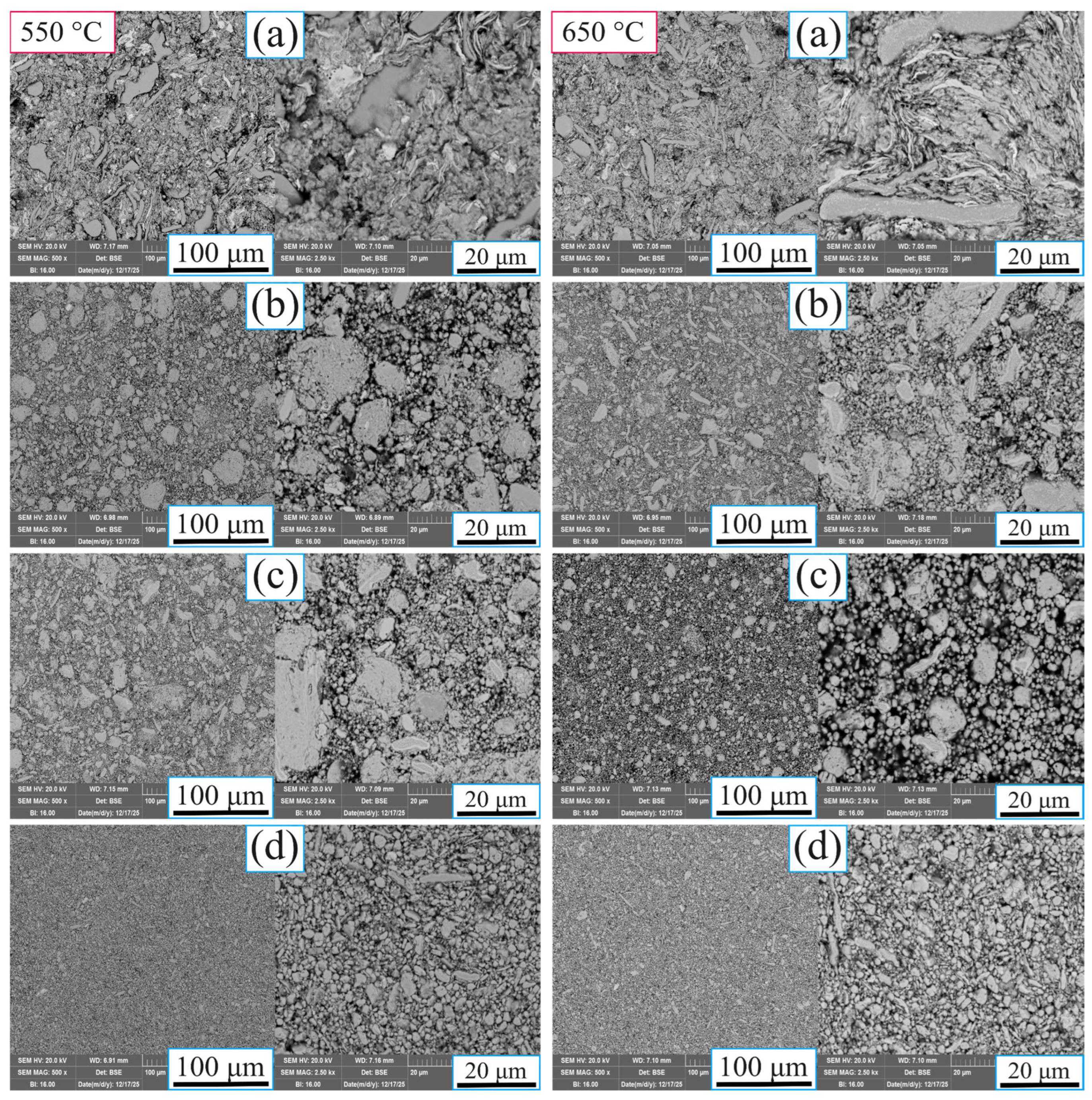
Figure 3 compares SEM images of high-entropy AlFeCuTiNi alloy samples obtained under different mechanical alloying times and sintering temperatures. In samples sintered at 550 °C, the microstructure obtained after 5 h of mechanical alloying shows distinct porosity and irregular, angular particles. This is attributed to the short alloying time, which does not provide sufficient plastic deformation, and to fracture-re-welding mechanisms. With mechanical alloying times of 10 and 15 h, significant reductions in particle size and a more oval, uniform grain morphology are observed. The increased deformation and the activation of repeated fracture-re-welding processes during mechanical alloying can explain this change. In samples alloyed for 20 h, the microstructure becomes more homogeneous, fine-grained, and compact. The decrease in grain size and morphological ovalization exhibits behavior consistent with the peak broadening observed in XRD analyses and the progression of solid-solution formation.
Samples sintered at 650 °C generally exhibit a denser and more homogeneous microstructure compared to those sintered at 550 °C. The acceleration of atomic diffusion at higher sintering temperatures has strengthened interparticle bonding, leading to a significant reduction in porosity. Particularly in samples subjected to 15 and 20 h of mechanical alloying, a more uniform, tightly packed structure was obtained. This microstructural improvement is directly consistent with the observed increase in relative density values and indicates a more effective densification process at 650 °C. As a result, SEM observations reveal that grain size decreases and morphology becomes more oval as the mechanical alloying time increases; raising the sintering temperature to 650 °C results in more effective diffusion and densification. These findings are consistent with density measurements and XRD analyses, confirming that a more stable, homogeneous microstructure is achieved in the high-entropy AlFeCuTiNi alloy.
The crystallite sizes and lattice macrostrain values derived from XRD analysis were determined using the Scherrer equation (Equation (6)) [
35] and peak-broadening analysis. All diffraction peaks were reindexed according to cubic BCC/FCC reflection conditions. The patterns at 2θ values of 30°, 44°, 64°, and 81° correspond systematically to the characteristic cubic planes (110), (111), (200), (211), and (220), confirming the presence of a cubic phase. The calculations revealed that the crystallite sizes for the 5 h, 10 h, 15 h, and 20 h samples were ~30 nm, ~42 nm, ~42 nm, and ~18 nm, respectively. These results demonstrate that the formation of BCC/FCC phases becomes evident, and that the crystallite size remains stable up to 15 h but decreases at 20 h, thereby affecting the structural stability of the phases.
Here, K = 0.9 is the shape factor, λ = 0.15406 nm (Cu Kα radiation), β is the measured FWHM (in radians), and θ is the Bragg angle.
The lattice microstrain (
ε) was calculated using Equation (7) based on the peak broadening. The lattice microstrain calculations yielded values of ~0.186 for 5 h, ~0.172 for 10 h, ~0.165 for 15 h, and ~0.198 for 20 h. These calculations show that the crystallite size increased up to 15 h, but at 20 h, peak broadening and crystallite refinement occurred, which is related to microstructural distortions and internal stresses. As a result, the BCC/FCC phase formation became more pronounced, and the structural stability of the phases was confirmed by increases in crystallite size and microstrain.
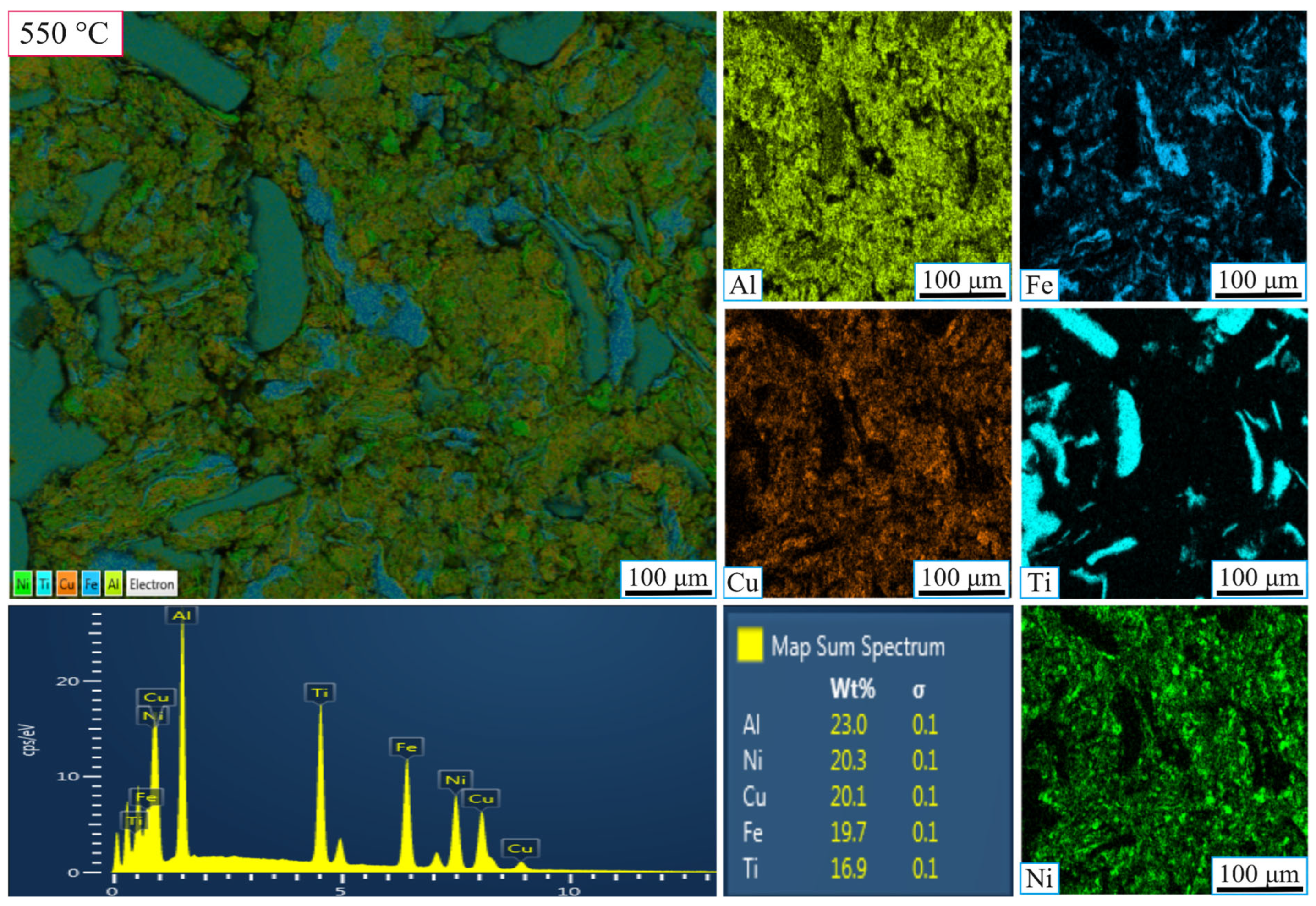
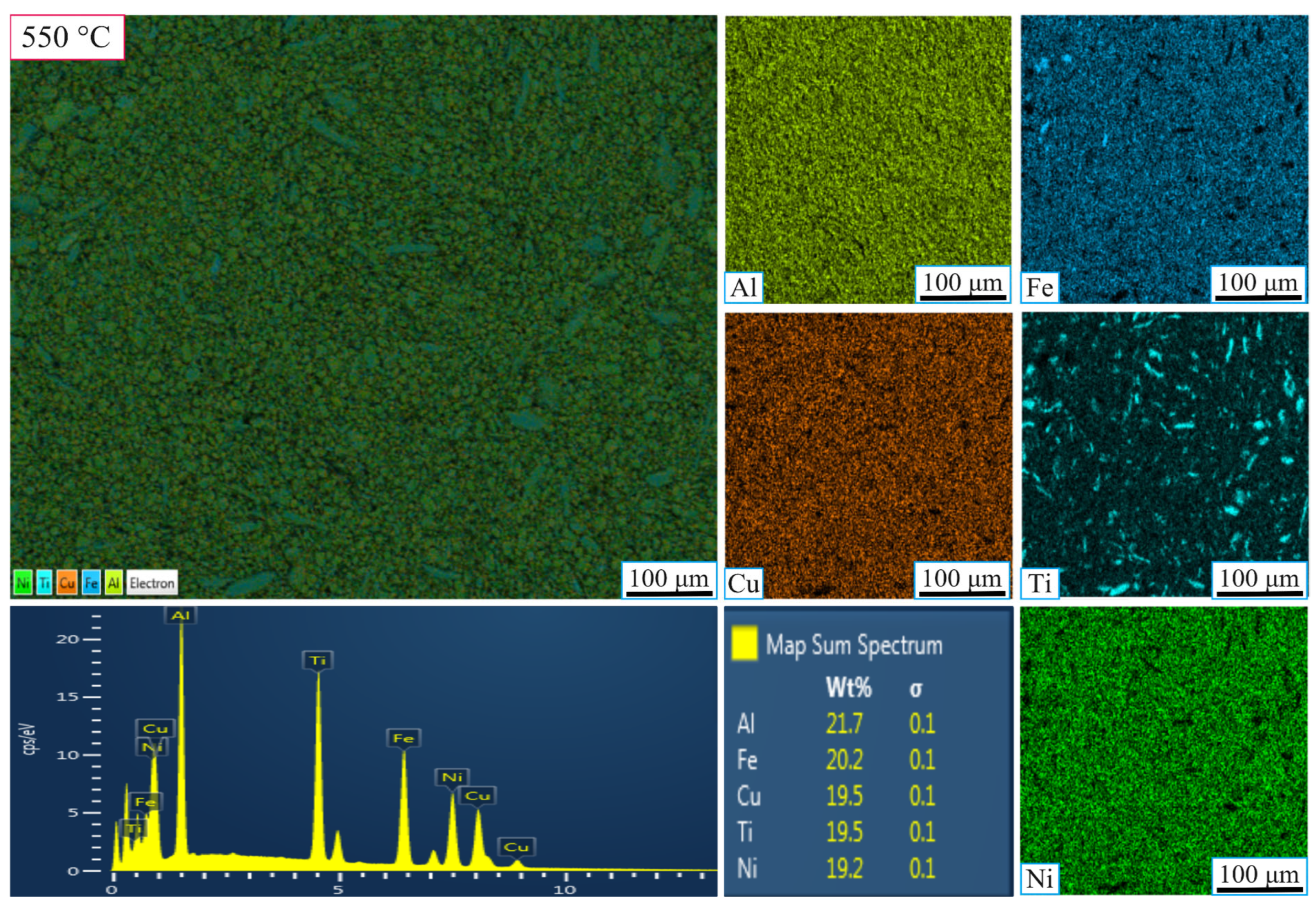
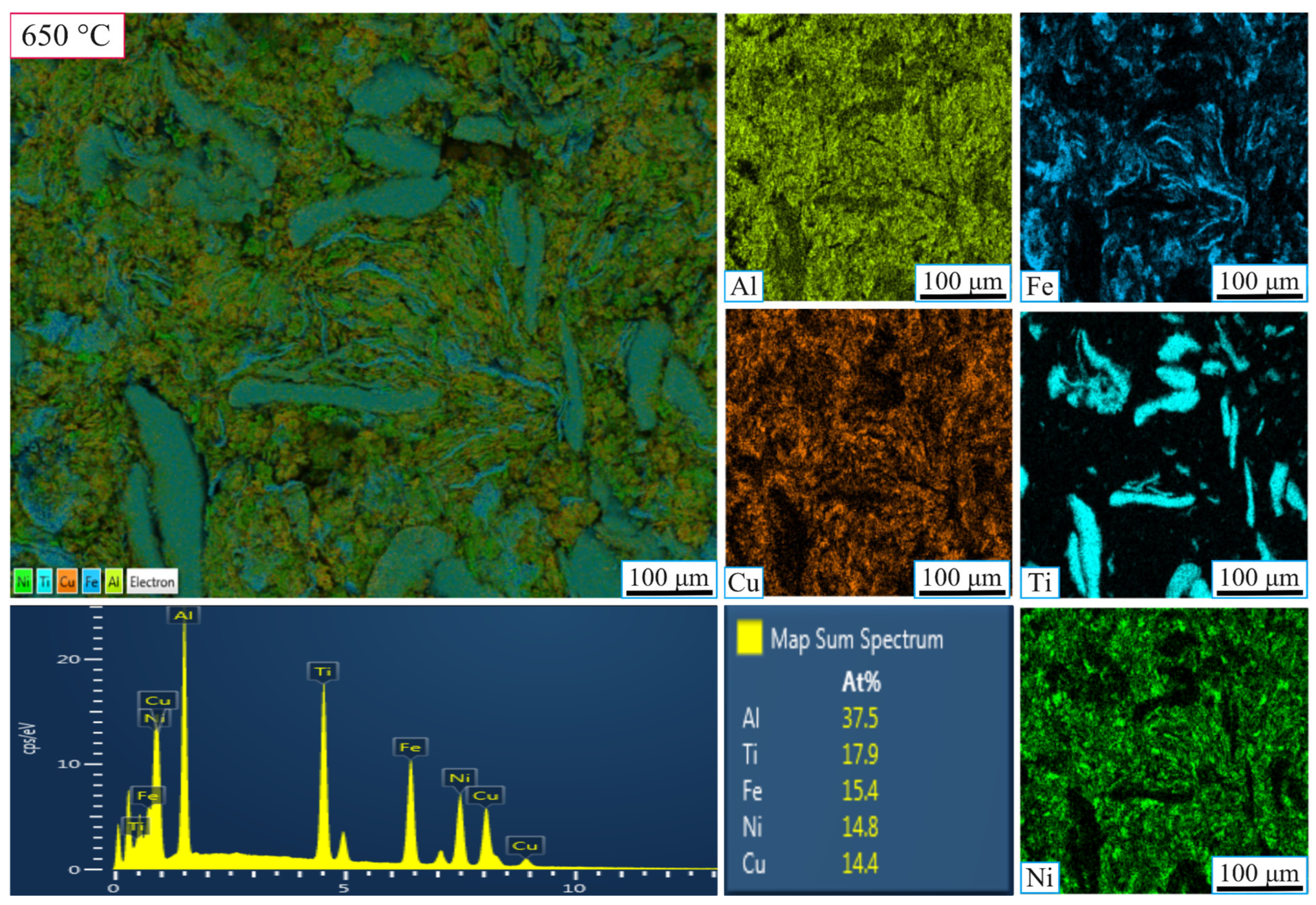
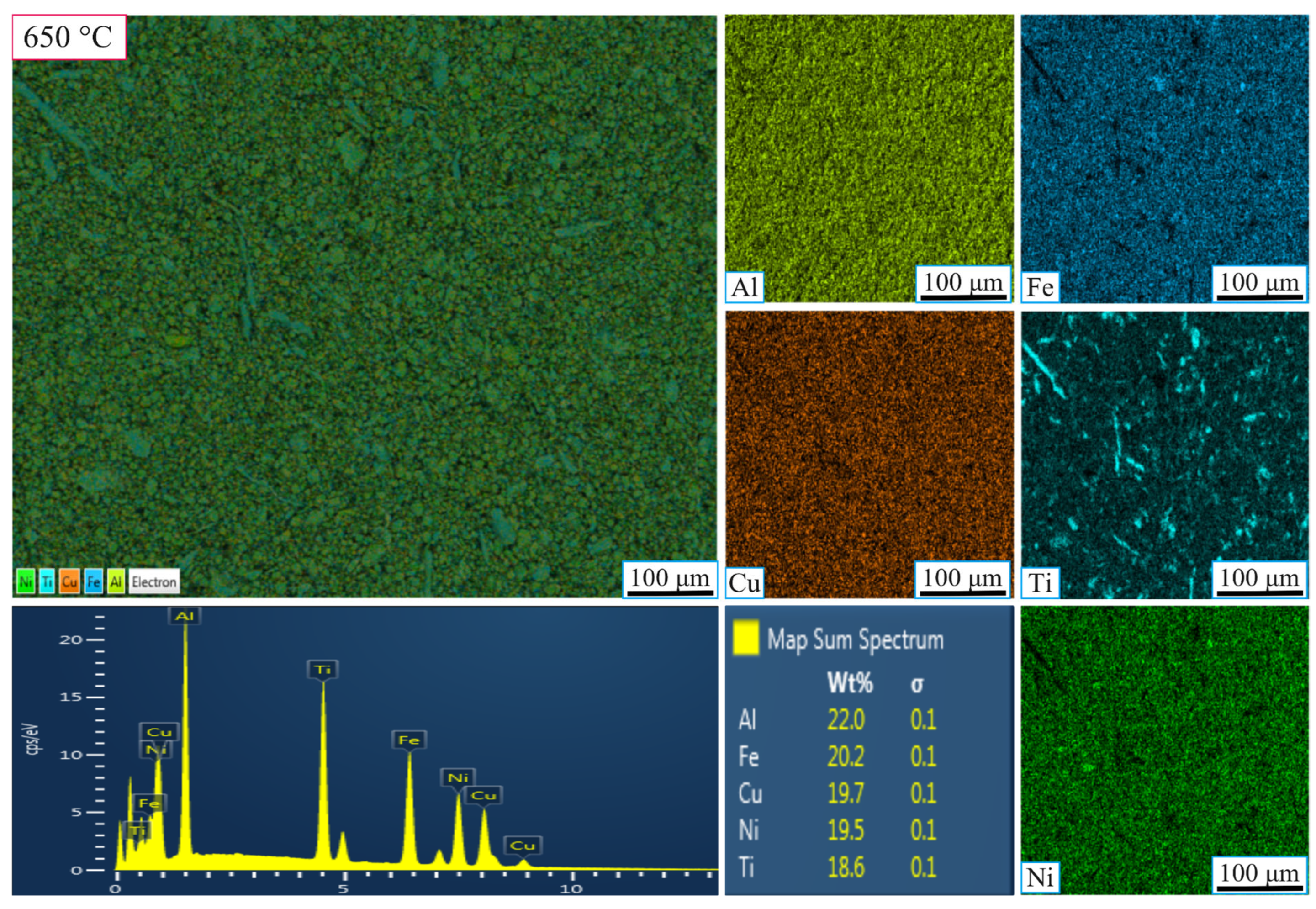
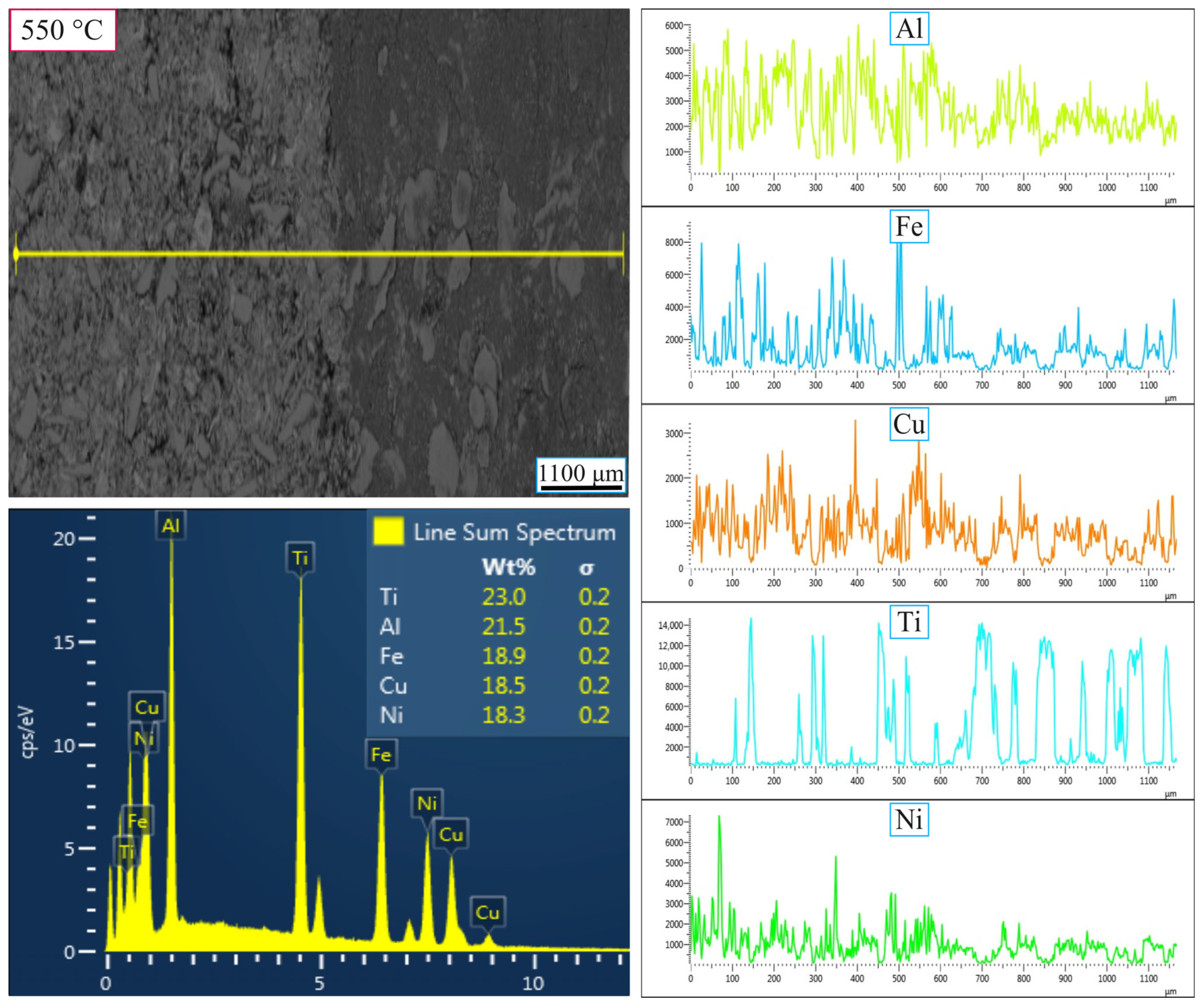
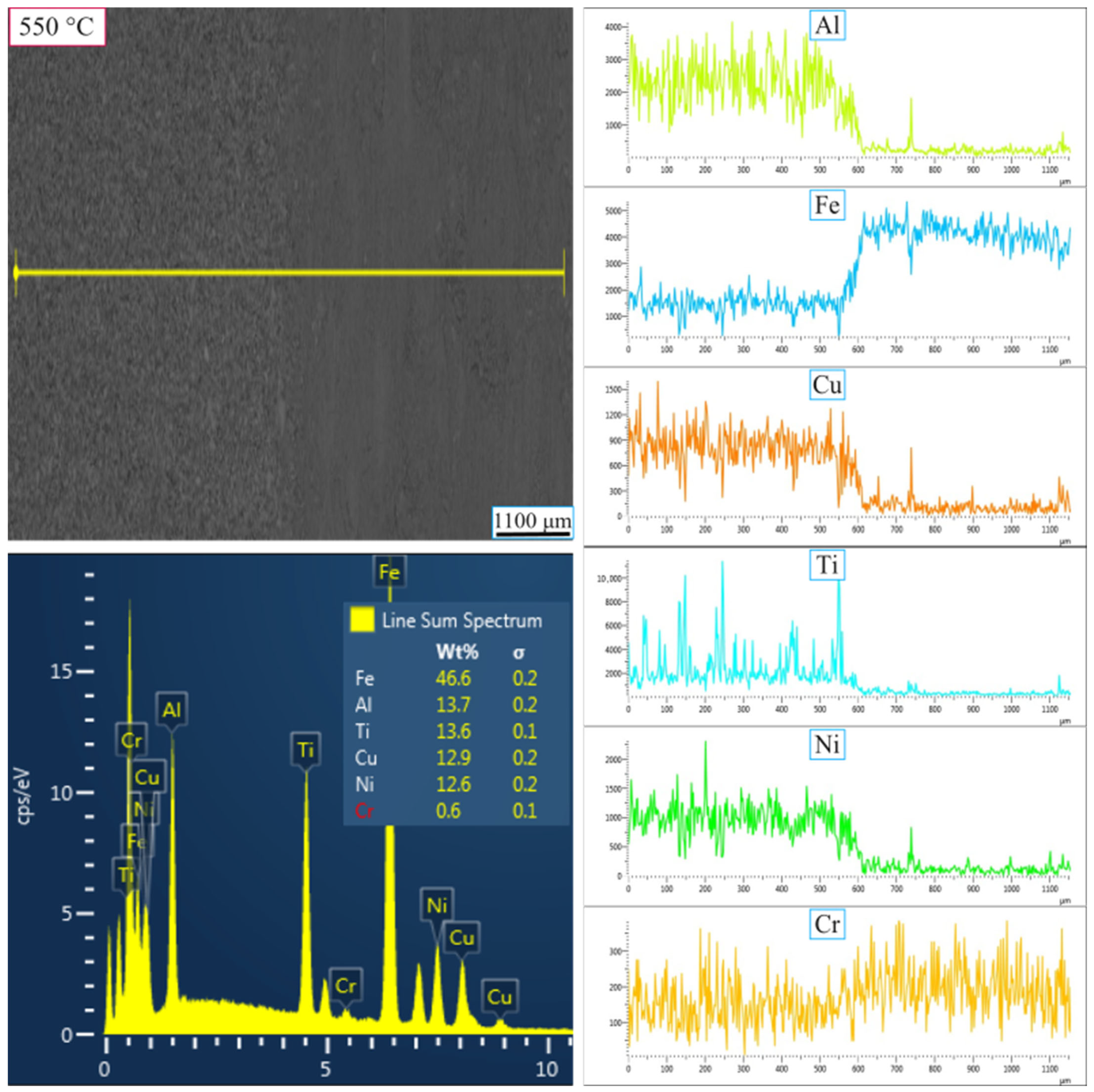
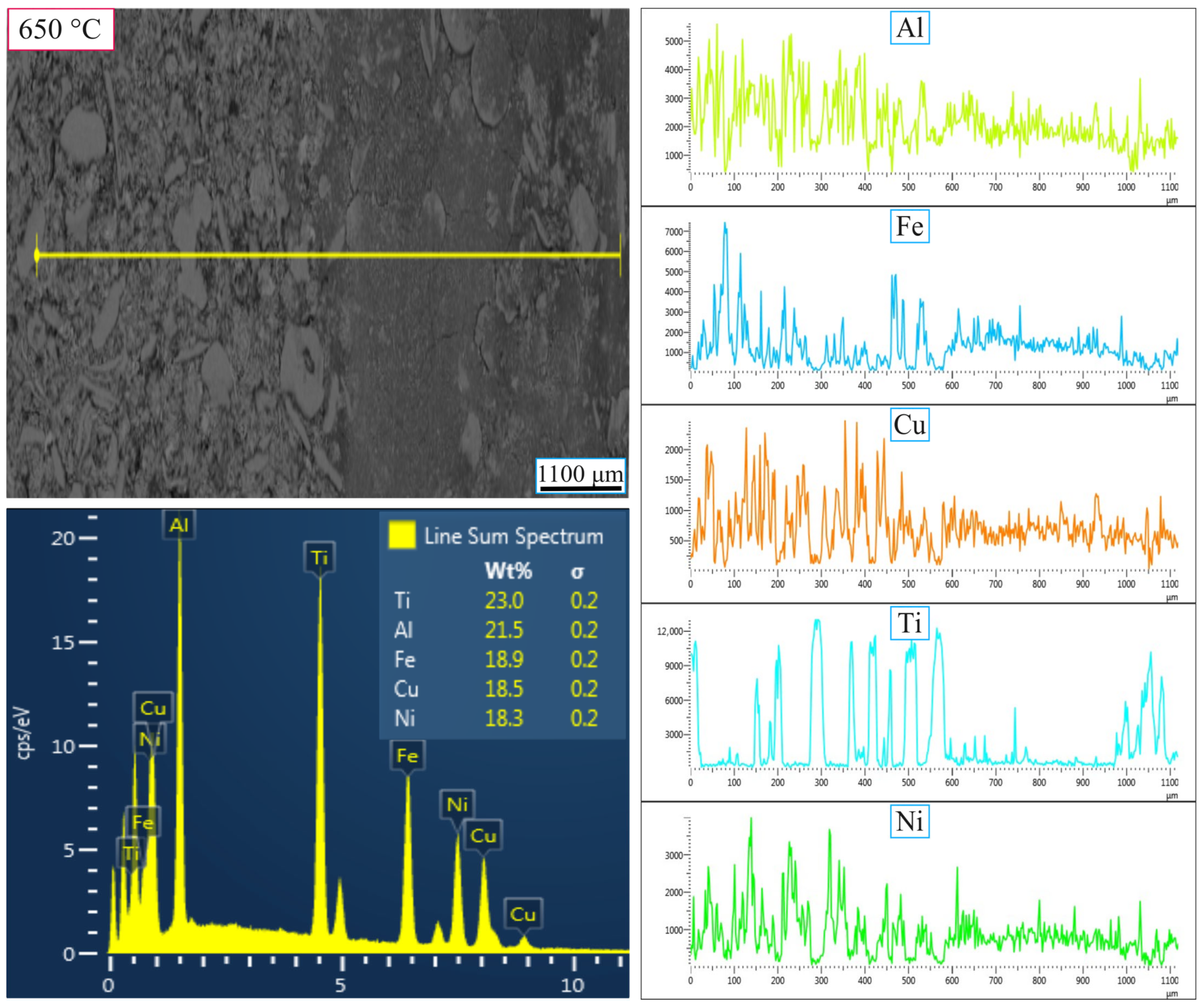
Figure 4,
Figure 5,
Figure 6 and
Figure 7 present SEM-EDX elemental maps of high-entropy AlFeCuTiNi alloy samples at different mechanical alloying times (5 and 20 h) and sintering temperatures (550 and 650 °C). In samples subjected to 5 h of mechanical alloying (
Figure 4 and
Figure 6), although the Al, Fe, Cu, and Ni elements are generally dispersed in the matrix, regions where the Ti element is locally concentrated are noteworthy. This situation arises because titanium has a lower diffusion rate than other alloying elements during short mechanical alloying times, preventing it from fully homogenizing within the system.
By extending the mechanical alloying time to 20 h (
Figure 5 and
Figure 7), all alloying elements exhibit a more homogeneous distribution, and the local enrichment of Ti is largely eliminated. This is particularly evident in the 20-h sample sintered at 650 °C (
Figure 7).
It is noteworthy that the elemental distribution is smoother and more continuous than at 550 °C. The acceleration of atomic diffusion with increasing sintering temperature has strengthened interparticle bonding and significantly improved chemical homogeneity. This microstructural development is consistent with the more pronounced BCC/FCC phase formation observed in XRD analyses and the higher relative density values measured. Consequently, SEM-EDX results indicate a simultaneous increase in mechanical alloying time and sintering temperature.
3.3. Density and Microhardness Measurements
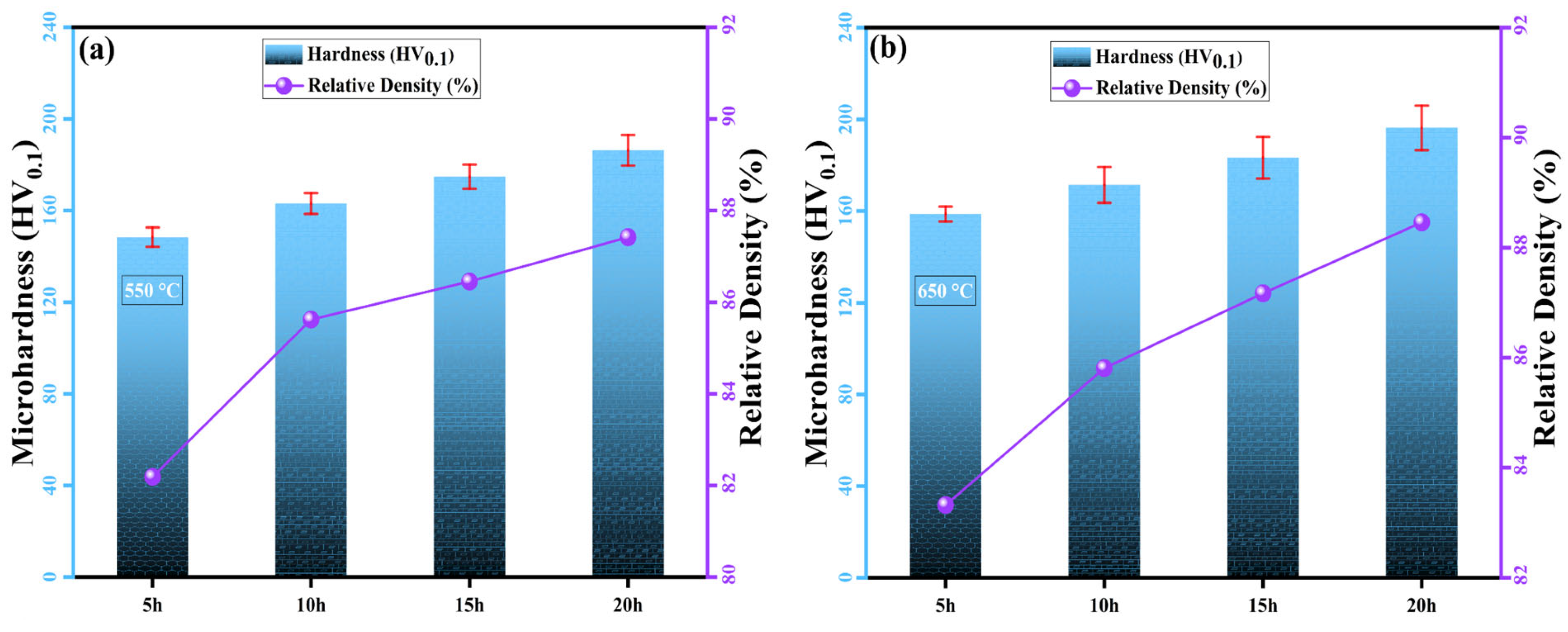
Figure 8 provides the variation in microhardness and relative density for high-entropy AlFeCuTiNi alloy samples as a function of mechanical alloying time and sintering temperature. At both sintering temperatures, microhardness increased consistently as mechanical alloying time increased from 5 to 20 h. At 550 °C, microhardness increased from 148.4 to 186.3 HV, and at 650 °C, it increased from 158.7 to 196.3 HV. This increase in microhardness is associated with reduced grain size, increased microstructural homogeneity, and decreased elemental segregation resulting from the longer mechanical alloying time.
The trend of microhardness increasing is parallel to the increase in relative density. Relative density increased from 82.1 to 87.4% at 550 °C and from 83.3 to 88.4% at 650 °C. Increasing the sintering temperature to 650 °C resulted in higher microhardness and relative density values for all alloying times. This can be explained by the acceleration of atomic diffusion as temperature increases, the decrease in porosity, and the formation of a more stable microstructure. The results are consistent with the more homogeneous elemental distribution observed in SEM-EDX and the more distinct formation of BCC/FCC phases observed in XRD.
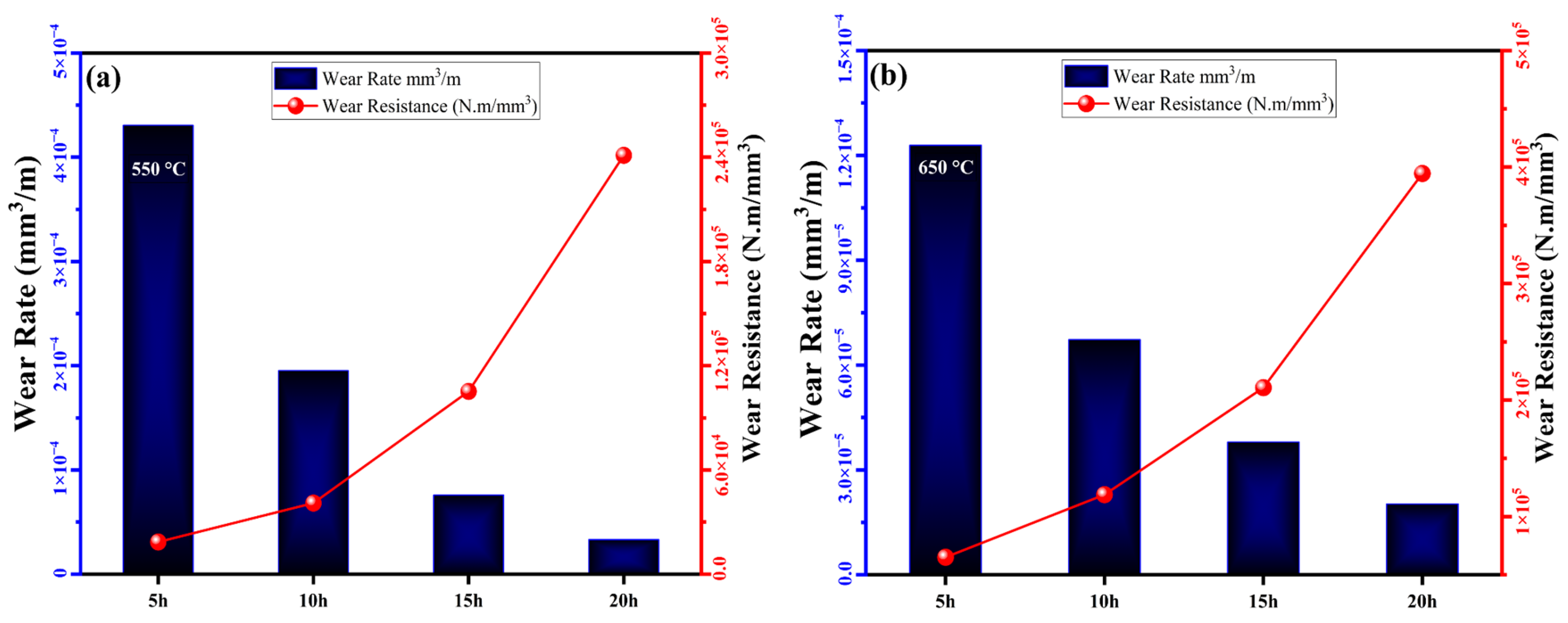
Figure 9 compares the variation in wear rate and wear resistance for high-entropy AlFeCuTiNi alloy samples as a function of mechanical alloying time and sintering temperature. At both sintering temperatures, increasing the mechanical alloying time from 5 h to 20 h significantly reduces the wear rate and increases wear resistance. This trend is associated with increased microstructural homogeneity, reduced grain size, and decreased porosity as the mechanical alloying time increases. In samples sintered at 550 °C, the highest wear rate was observed in the 5-h sample with a short alloying time, while the wear rate in the 20-h alloyed sample decreased to a minimum level. A similar trend was observed in samples sintered at 650 °C, which exhibited lower wear rates and higher wear resistance across all mechanical alloying times. The acceleration of atomic diffusion with increasing sintering temperature, the strengthening of interparticle bonding, and the formation of a denser structure are considered to be the main factors limiting material loss during wear.
The improvement in wear behavior is also directly related to microhardness results. In parallel with the microhardness data presented in
Figure 8, samples with higher hardness values exhibit lower wear rates and greater wear resistance. This situation indicates that grain refinement (Hall-Petch effect), solid-solution hardening, and reduced porosity collectively increase wear resistance. Furthermore, the more homogeneous microstructure and elemental distribution observed in SEM-EDX analyses provided a more stable contact surface by preventing the formation of local weak areas during wear. In conclusion, the wear results obtained in
Figure 9 demonstrate that optimizing the mechanical alloying time and sintering temperature significantly increases the wear resistance of the High-entropy AlFeCuTiNi alloy. Specifically, 20 h of mechanical alloying and 650 °C sintering are considered the most suitable combination for achieving a low wear rate and high wear resistance.
Figure 10 and
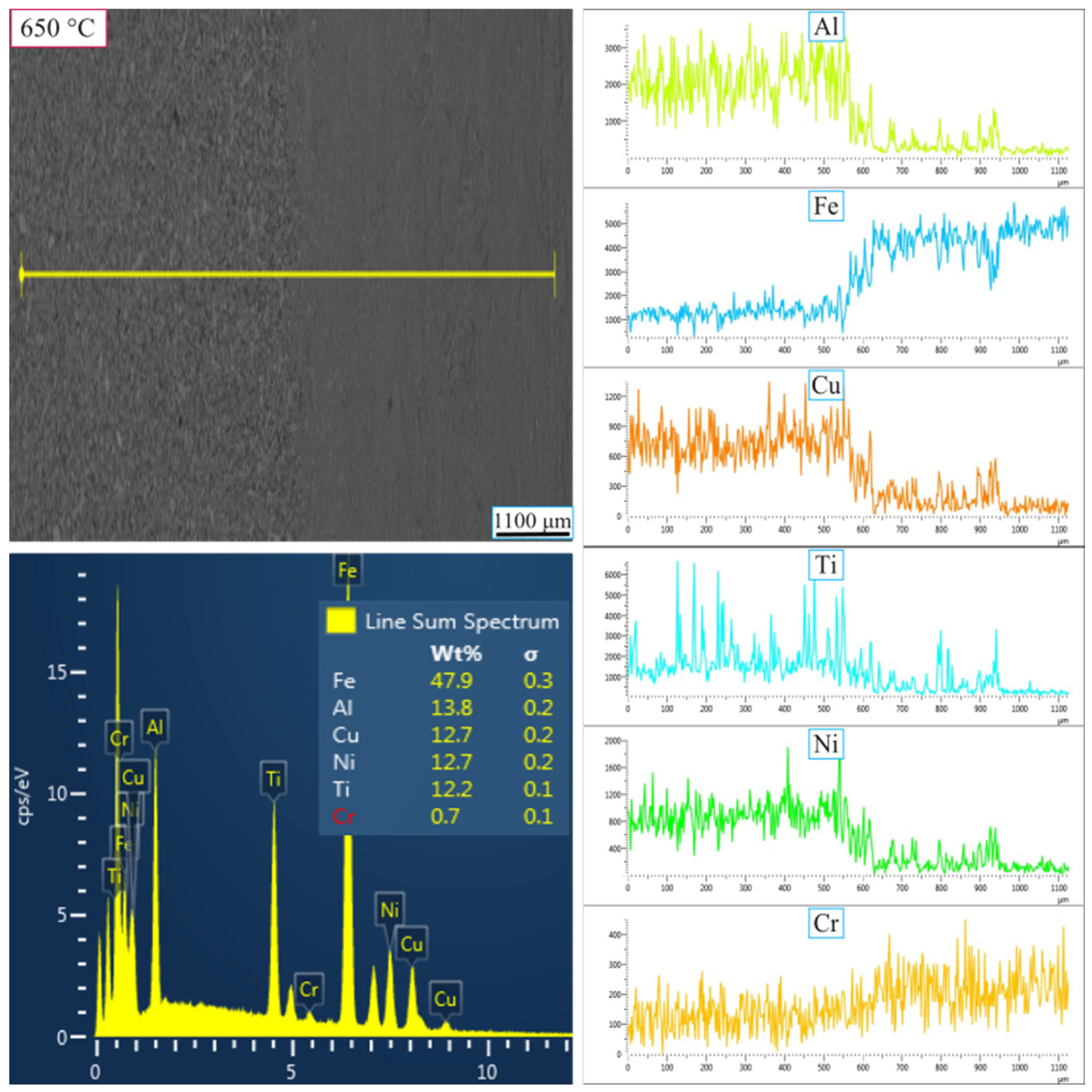
Figure 11 show SEM images and EDS line-scan spectra of the worn surface of the high-entropy AlFeCuTiNi alloy sintered at 550 °C, obtained by SEM-EDX analysis after 5 h and 20 h of mechanical alloying. SEM-EDX line scan analyses of 5-h mechanical alloying samples show the presence of Al, Fe, Cu, Ti, and Ni elements on the surface, and that the mass ratios of these elements are close to each other. This reveals the homogeneity of the alloy’s microstructure and that Ti particles are beginning to become visible on the surface. In particular, the contribution of Ti ensures microstructural homogeneity, while the high hardness of Ti particles on the surface makes them visible [
36]. After 5 h of alloying, the ball sample easily abraded due to its low hardness and wear resistance; this can be attributed to the undetectable presence of Fe and Cr on the surface. In the 20-h mechanical alloying samples, the Fe content increased from 18.9% to 46.6%, and the Cr content increased from 0% to 0.6%. The line scan graph and EDS results clearly show this change. Wear resistance has increased significantly due to reduced grain size, improved bond structure, increased relative density, and high hardness. High wear resistance caused the ball to wear down the surface and transfer Fe and Cr to it. This situation demonstrates the potential of ball additives and microstructural improvements to increase wear resistance. The reason the wear marks on the 20-h alloyed sample are finer and more regular is that the ball is harder and more wear-resistant, making it more difficult for the sample to wear away.
Figure 12 and
Figure 13 present SEM images and EDS line-scan spectra of the worn surface of the high-entropy AlFeCuTiNi alloy sintered at 650 °C and obtained after different mechanical alloying durations. In the 5-h mechanical alloying samples, wear marks are more pronounced on the surface, and elements such as Ti, Al, Fe, Cu, and Ni are homogeneously distributed. However, Fe and Cr were not detected on this surface. Areas where Ti density increased significantly can be associated with microstructural heterogeneity and discontinuities; this indicates that Ti particles contribute to surface abrasion by acting as abrasives due to their hardness [
36,
37]. Over time, observations showed that as the mechanical alloying time increased, the sizes of the Ti particles decreased and new phases formed. In the 20-h mechanically alloyed samples, the elements were more homogeneously distributed, and corrosion resistance increased. In the 20-h samples, the Fe content increased from 18.9% to 47.9%, and the Cr content increased from 0% to 0.7%. This change was clearly demonstrated by EDS line scan graphs and results. Samples sintered at 650 °C resulted in improved diffusion, better bonding, high relative density, and high hardness. These improved microstructural properties led to a significant increase in wear resistance. The high wear resistance caused the ball to wear away the surface, carrying Fe and Cr to the surface. This situation led to microstructural improvement.
In summary, consistent with the XRD and microhardness results, the microstructural improvements in the 20-h samples increased wear resistance by improving microstructural homogeneity. In particular, the stabilization and increased density of the BCC and FCC phases observed in the XRD analyses indicate that the sample became more stable. Microhardness data indicate that the 20-h samples have higher hardness, thereby exhibiting improved surface microstructure during wear.
3.4. Electrochemical Corrosion Test
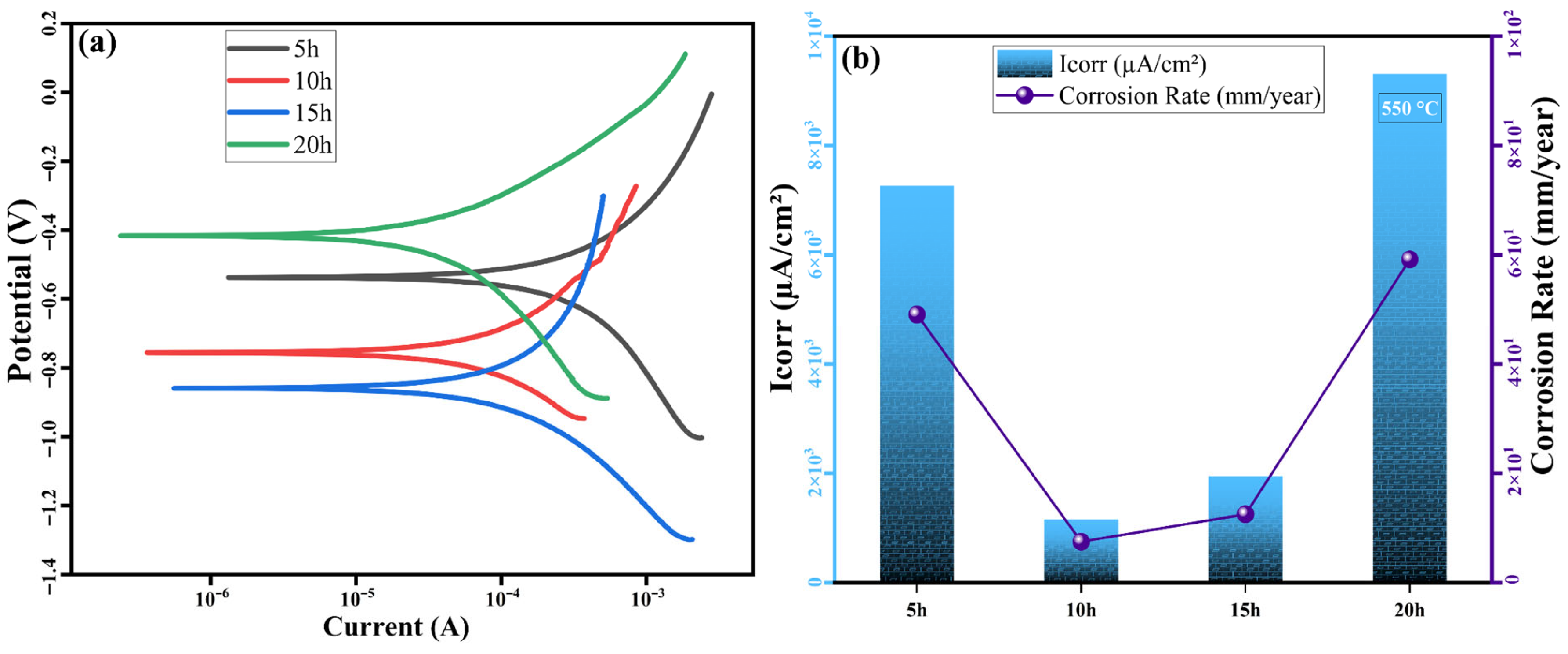
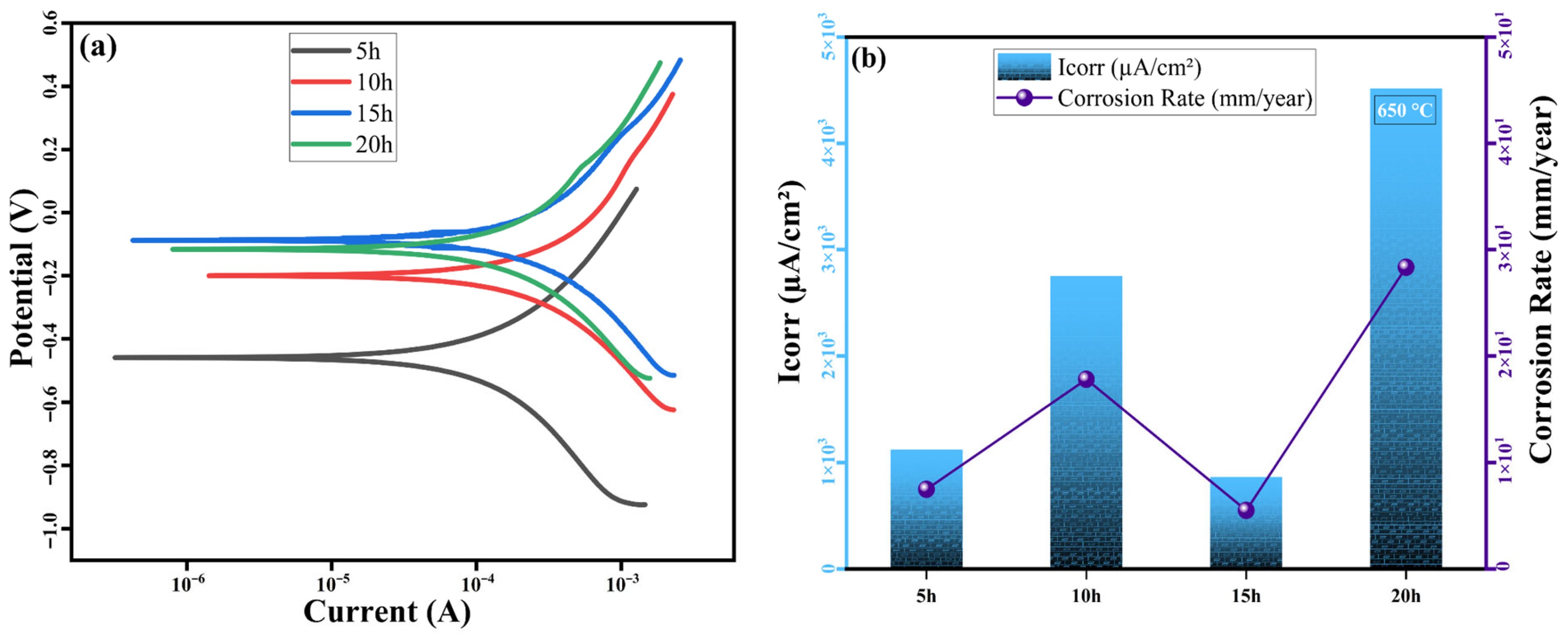
Figure 14 and
Figure 15 and
Table 3 and
Table 4 present the potentiodynamic polarization results for high-entropy AlFeCuTiNi alloy samples at different mechanical alloying times and sintering temperatures. At both sintering temperatures, the corrosion behavior is strongly dependent on the mechanical alloying time. The polarization curves show that significant changes in electrochemical behavior occur as the alloying time increases. This was particularly observed in samples sintered at 550 °C, where the difference between 5 and 15 h of mechanical alloying highlighted a change in the control mechanism in the anodic region. This change directly affects the corrosion rate by influencing the material’s electrochemical behavior. Among the samples sintered at 550 °C, the sample subjected to 10 h of mechanical alloying exhibited the best corrosion resistance, with the lowest corrosion current density (
Icorr = 1152.6 µA/cm
2) and the lowest corrosion rate (7.48 mm/year). In contrast, higher
Icorr and corrosion rate values were obtained for samples with alloying times of 5 and 20 h. The low corrosion resistance observed in the 5-h sample with a short alloying time can be attributed to elemental heterogeneity and locally Ti-rich regions detected by SEM-EDX. The enrichment of Ti in these regions may have contributed to the formation of surface microstructural defects and stresses by increasing microstructural heterogeneity. This situation can lead to deterioration of corrosion behavior. Although the mechanical and wear properties of the 20-h alloyed sample improved, more pronounced plastic deformation and possible residual stresses may have facilitated the formation of local cells during corrosion, thereby increasing the corrosion rate [
38].
Specimens sintered at 650 °C generally exhibited lower corrosion current densities (
Icorr) and better corrosion resistance. In particular, the sample subjected to 15 h of mechanical alloying exhibited the best electrochemical performance, with the lowest
Icorr (863.2 µA/cm
2) and corrosion rate (5.50 mm/year). Increased sintering temperature promoted improved microstructural homogeneity and the formation of more stable oxide film layers by increasing the atomic diffusion rate. This mechanism contributed to increased corrosion resistance. At high sintering temperatures, atoms move faster, accelerating improvements in bond structures. This process increased the stability of oxide films, supporting the formation of a more robust passive layer on the alloy surface. Such oxide layers provide protection, particularly against environmental effects, and significantly increase the alloy’s corrosion resistance [
39]. In addition to the effects of mechanical alloying and sintering temperature, surface treatment techniques such as ultrasonic surface grinding have been shown in previous studies to increase the stability of oxide films and the overall corrosion resistance of high-entropy alloys. These techniques improve mechanical properties by enhancing surface microstructure and increasing oxide-layer stability, which is critical to corrosion resistance. Although not used in this study, similar surface treatment methods have been reported to provide significant improvements in material performance in high-entropy alloys [
40]. However, a 20-h mechanical alloying time causes grain refinement and improves the bond structure, but also increases the corrosion rate. Long alloying times can cause microstructural heterogeneity and phase separations. This leads to accelerated corrosion and the formation of localized corrosion cells on the surface. Furthermore, while stabilizing the BCC and FCC phases improves the microstructure, phase separations and localized stress concentrations may contribute to increased corrosion. When microstructural homogeneity is achieved, mechanical properties improve; however, heterogeneous structures formed due to excessive alloying time may negatively affect corrosion resistance [
41,
42,
43]. In summary, corrosion data reveal a non-linear relationship between mechanical alloying time and corrosion resistance. Alloying times of 10–15 h and a sintering temperature of 650 °C provide the best corrosion performance, while very short or very long alloying times can negatively affect corrosion resistance due to microstructural heterogeneity and excessive deformation. These results provide fundamental data to optimize the balance among the mechanical, tribological, and corrosion properties of the high-entropy AlFeCuTiNi alloy.
In future work, the optimized high-entropy alloys studied here could be integrated with data-driven life prediction models, such as digital twin technologies and machine-learning-based health-monitoring systems, to enhance materials sustainability. These models can assist in predicting the remaining useful life of materials and help ensure longer service life across various industrial applications. While this falls outside the immediate scope of our study, it presents a promising direction for improving the sustainability and reliability of high-performance materials. Such predictive models have been widely discussed in the literature for their potential to improve material life prediction and enhance sustainability [
44,
45].
4. Conclusions
The present study comprehensively investigated the effects of mechanical alloying time and sintering temperature on the microstructure, mechanical properties, corrosion, and wear behavior of the high-entropy AlFeCuTiNi alloy. Mechanical alloying time and sintering temperature significantly affect the alloy’s homogeneity, grain size, oxide film continuity, and phase structure, and optimizing these parameters can improve the alloy’s overall performance.
XRD and SEM-EDX analyses indicate that a 5-h mechanical alloying time may be associated with micro-galvanic interactions and discontinuities in the oxide film, thereby increasing wear and corrosion rates. In contrast, a 20-h mechanical alloying time improved wear and corrosion resistance by increasing microstructural homogeneity and phase stability. As the sintering temperature increased, atomic diffusion accelerated, and passive film stability improved, thereby enhancing wear and corrosion performance. At a sintering temperature of 650 °C, the presence of Fe and Cr on the surface promoted micro-galvanic interactions, thereby increasing wear resistance.
Optimizing mechanical properties and corrosion performance is possible, particularly for samples produced with medium mechanical alloying times (10 h–15 h) and low temperatures. Overall, these results indicate that sustainable material design requires an optimized balance and that it is possible to minimize energy consumption and optimize raw material use while improving material properties.
Together, these results provide important insights for high-performance and sustainable material design. Microstructural control, alloy parameters, and processing conditions are critical for improving wear and corrosion resistance and can be tailored to support future energy-efficient production processes. The findings highlight the potential of high-entropy alloys and powder metallurgy-based production methods for sustainable material design in industrial applications.