1. Introduction
Ecological connectivity is significant for biodiversity conservation and the spread of spillovers. Improving the state of environmental connectivity reduces habitat fragmentation caused by several challenges [
1,
2]. An animal’s ability to move relies on both its species’ physiological and behavioural characteristics and the landscape’s physical composition. “Ecological connectivity” refers to the extent to which a landscape facilitates or impedes the movement of a species between patches. Here, structural connectivity refers to the spatial distribution of habitat patches and affects the movement of species [
3], and the functional connectivity relates to the movement of the specific species in the matrix [
4]. Since landscape transformations also alter ecological connectivity, they ultimately influence species’ ability to move around, sometimes due to land-use changes. Therefore, habitat loss increases distances between patches and diminishes patch size, resulting in limited functional connectivity [
5]. Habitat fragmentation happens when habitat patches are reduced in number and size, making it difficult for species to move among habitat patches and interrupting biotic flow, and it results in risks other than habitat loss [
6,
7,
8,
9]. The disruption of ecological corridors between habitat patches results in increased isolation, changing the landscape into a series of isolated habitat islands. As a result, habitat loss could directly relate to connectivity [
10]. This can influence the possibility of movement, reduce ecological functions, and reduce ecosystem service functionality [
11,
12,
13,
14,
15]. Natural ecosystems are complex and often function across scales that differ from those considered in decision-making processes. However, evidence on how connectivity is performed in reality is fragmented [
16].
A coherent ecological network can be defined as a range of natural or semi-natural habitats that play a key role in nature preservation [
17]; it can ensure the safe movement of species, protect plants, and maintain connections between habitat areas, consequently preventing fragmentation caused by human activities [
18]. According to studies, there are numerous approaches to investigating ecological patterns since they vary across spatial scales. Applying these approaches, although necessary, can increase ecological connectivity in regional planning and improve landscape resilience [
19]. In this context, ecological connectivity is central to resource management and policy objectives. In Europe, the Habitats Directive (1992) and the Birds Directive (1979) formed the basis of the Natura 2000 network, the largest network of protected areas established to protect biodiversity and ensure connectivity between ecosystems across countries [
20,
21,
22,
23,
24,
25].
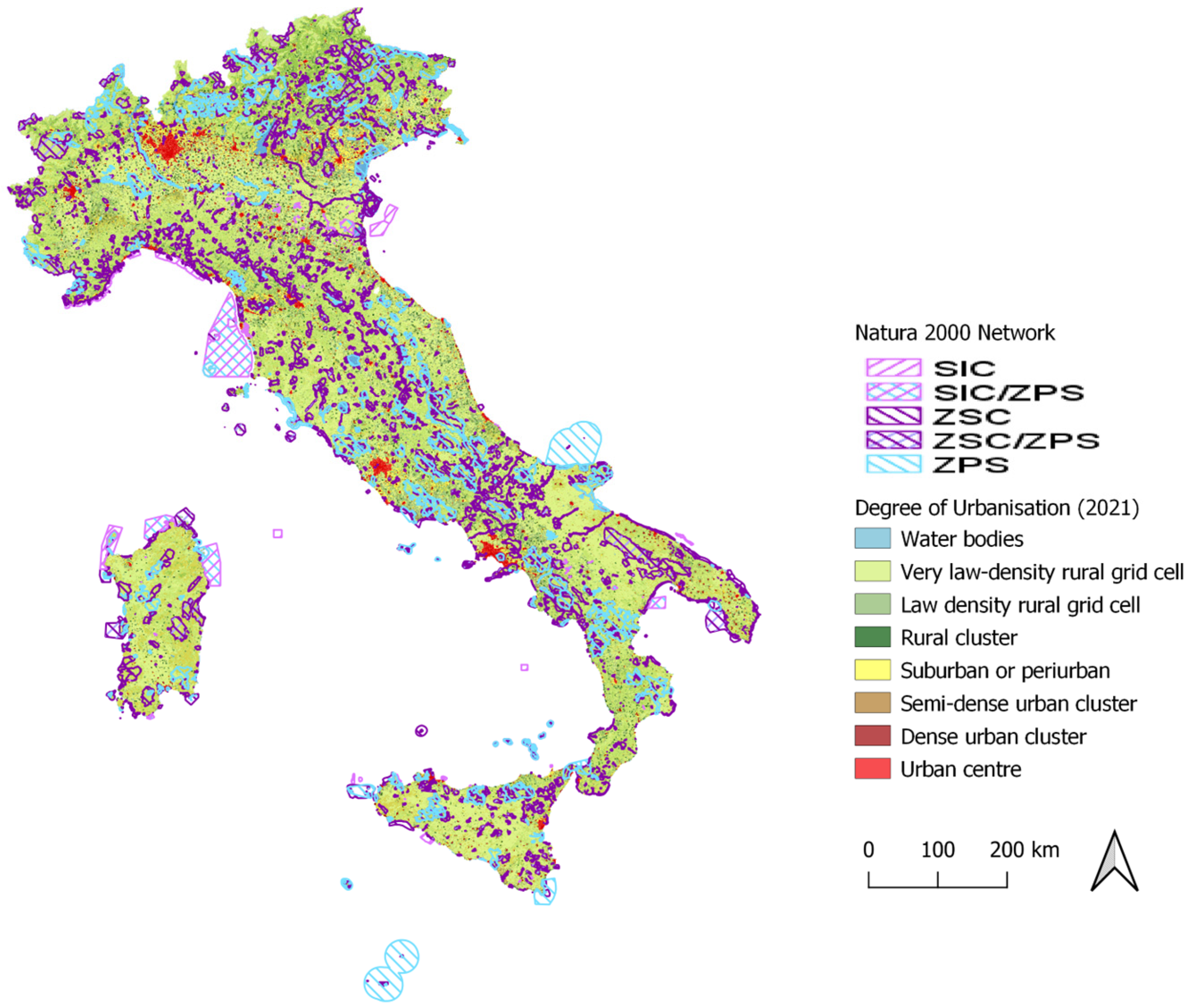
Italy is in the Mediterranean region, which has a high biodiversity and biogeographical value, and it hosts a notable share of protected areas, including national and regional parks, nature reserves, and marine protected areas. Italy’s protected areas also include 2649 sites of the Natura 2000 network with 2385 Sites of Community Importance (SICs), 2325 of which are Special Areas of Conservation (ZSCs), and 842 Special Protection Areas (ZPSs) [
26] (
Figure 1). Regarding this variety, management plans, policy frameworks, and administrative figures vary in Italy [
27]. The role of protected areas in biodiversity conservation is significant, and their effectiveness can be enhanced when they are connected within a wider ecological network. According to studies, only about 7.5% of the world’s terrestrial areas are both protected and connected [
28]. The EU Biodiversity Strategy, introduced in 2011, focused on ecosystem restoration and the creation of green infrastructure; however, not all its goals were achieved. As a result, it started to set goals for restoring damaged areas and enhancing connectivity through them [
13,
29]. However, the functionality of these actions across landscapes remains challenging, requiring integration between science and policy [
30].
Management practices for connectivity measures include creating or restoring ecological corridors that facilitate species movement across a variety of land uses, from dense forests to agricultural areas. Restoration measures can introduce changes through improved management practices, which may require reforestation, reconnecting habitats, or improving the quality of degraded landscapes [
31,
32]. Italy’s National Biodiversity Strategy 2010–2020 (particularly Action 1.3.B on ecological connectivity) [
33] underscored these issues; although the EU Biodiversity Strategy for 2030 was introduced to protect 30% of the EU’s terrestrial area by 2030 [
34], the same challenge of harmonizing regional efforts persists. However, due to fragmented data across regions and unharmonized planning measures, it is a tough task to apply conservation activities within this context. To bridge this gap, best practices and outcomes from concrete projects should be integrated with scientific data. In this context, the key to translating connectivity concepts into practice is the implementation of on-the-ground measures via projects.
In Europe, LIFE projects are one of the major instruments to counteract biodiversity loss. To combat this loss, the EU established this law as a policy framework to support the achievement of restoration goals [
35,
36]. The acronym LIFE originates from the French name “L‘Instrument Financier pour l’Environnement” [
37]. It contributes to the implementation of EU biodiversity policy, specifically to the Birds and Habitats Directives, and supports the management of the Natura 2000 network. It can also be regarded as a tool that ensures collaboration across European countries by bringing responsible organizations together to figure out practical solutions to environmental problems [
24]. In total, the LIFE programme has financed 6075 projects across Europe to date, reported by the LIFE public database, and 1091 projects specifically in Italy, accessed on 2 September 2025. It acts as a key instrument for financing nature and biodiversity projects [
38]. In addition to that, it ensures the actual implementation of projects by supporting innovation, trust, and collaboration on a local scale among people [
39]. LIFE project analysis can be decisive in understanding new methodologies, techniques, and approaches that are leading to more effective practices and policies for natural environment management.
The paper explores and classifies some main distinctive features of LIFE projects in Italy from their start date up to 2025. Official project information is obtained from the European Union website and then processed by the authors. Selection of projects is obtained due to a filter on three main categories, using the keywords “ecological network”, “restoration”, and “Natura 2000”. The selected projects are analyzed based on keyword analysis that reveals main legislative references, themes, temporal development, project budgets, and expected outputs. The analysis also provides examples of some particularly successful projects. It aims at outlining contact points, trajectories, and trends that characterize projects so that reconnection strategies set out in higher-level policies can be better oriented. In doing so, the study can support policy-makers and planners [
40,
41,
42].
2. Materials and Methods
The number of LIFE projects in Italy is 1091. Then, given the large volume, the goal was to develop a methodology that allows the data to be organized without losing any information. Each project has its own objectives and characteristics and develops its own website; however, the main EU database provides access to all project information through an “Advanced Search on LIFE Projects” interface (
https://webgate.ec.europa.eu/life/publicWebsite/search/advanced, accessed on 2 September 2025).
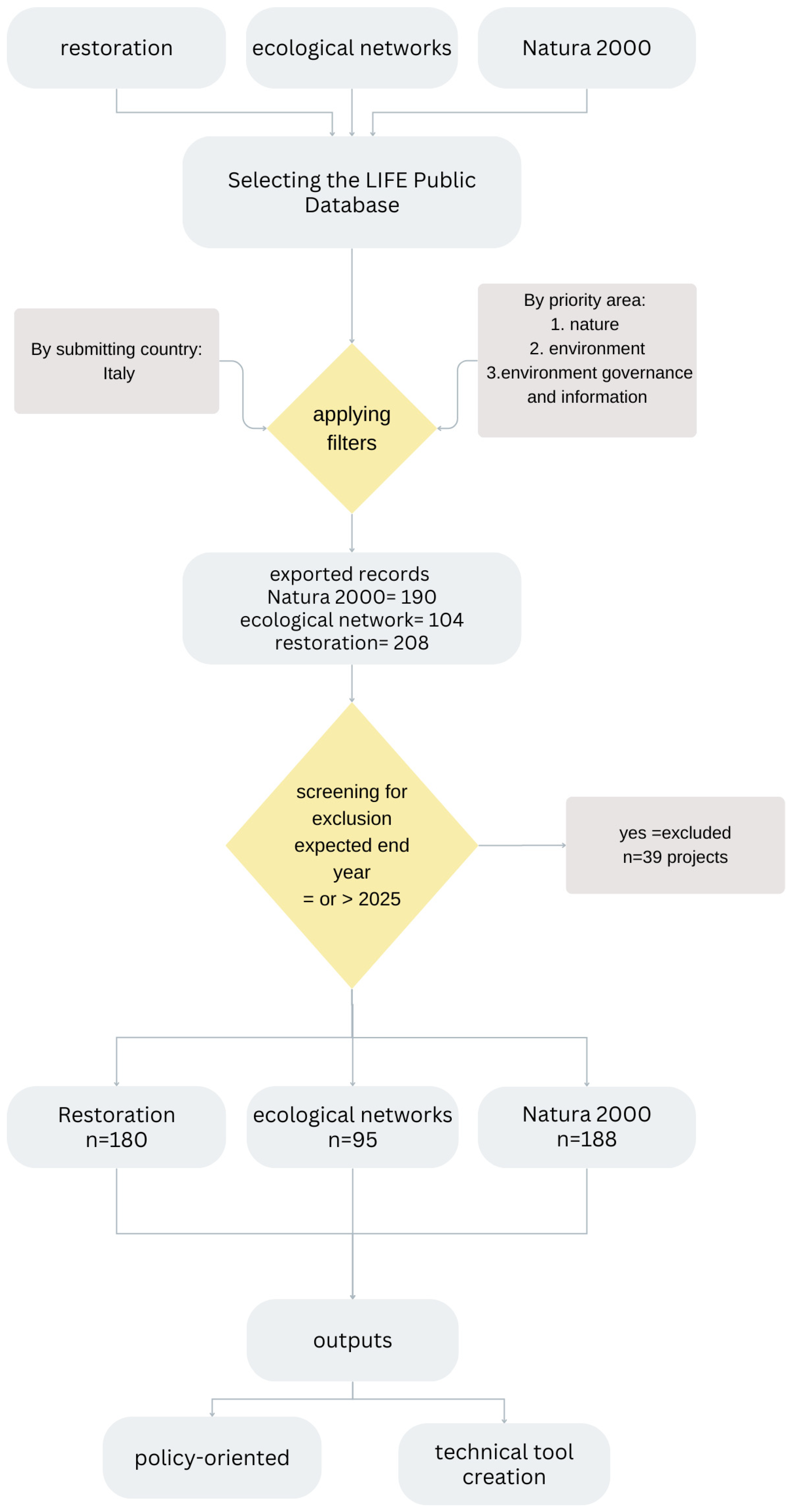
We conducted a mixed-method assessment for this paper. The search process (
Figure 2) was carried out in the LIFE database, the European Commission LIFE Programme public dataset, in the advanced projects search interface, coordinated by Italy from 1991 to 2025. In general, LIFE focuses on biodiversity and nature conservation and restoration by supporting implementation practices on Natura 2000 sites [
24]. To identify the projects most relevant to this study, we used the interface to classify projects by selecting one “keyword variant” at a time for three terms: “ecological network”, “Natura 2000”, and “restoration” (henceforth “categories”).
Firstly, “ecological network” is chosen to include all projects that focus on environmental connectivity and highlight the role that interconnection plays in well-functioning ecosystems. For instance, the term includes the focus on ecological corridors that are primary elements for supporting the ecological network, reducing fragmentation [
43]. As a single category, “ecological network” aims to stress the primary importance of reconnection over all other activities that benefit the environment. Secondly, “Natura 2000” is the keyword that highlights the projects’ focus on protected areas as mapped at the European level. In fact, since 1992, financing conservation measures for Natura 2000 sites has been one of the main goals of the LIFE programme [
37]. Natura 2000 as a category links with the main values and objectives of the programme [
44].
Finally, “restoration” focuses on the activities to restore the condition of degraded environments. Mainly seeks to improve the ecosystem and return to its valuable historic origin, which often coincides with optimal natural functioning [
37]. Given the renewed importance of this issue, as seen in the cited Restoration Law, the category aims to highlight projects that focus on this specific topic, which will become increasingly important in the coming years.
The categories are set as the first parameter in the “Free text” section available in the interface. Among the three search options, namely: “keyword variants”, “fixed keywords”, and “fixed phrases”, we conducted the search using the “keyword variants” option at the time of the search process (2 September 2025).
The analysis sets additional criteria to better target the search. “Priority areas” permit setting up to 28 filters related to types of interventions and possible beneficiaries. This section is set up on “nature”, “environment”, and “environment, governance and information”. The “Submitting Country” filter is set up on “Italy”. There are also other available filters such as “Beneficiary Types”, “Target EU Legislative References”, “Target Habitat Types”, and specific Species and Habitat selections. These filters are not applied to consider the largest number of records for analysis.
The process is repeated one category at a time. For each category, the platform returned a comprehensive list of all the selected projects with exportable metadata as an Excel file. Information provided is Project Title, Reference, Acronym, Priority Area, Lead Partner Country, Project website, Name of the beneficiaries, Expected start and end date, Total Budget, EU Contribution, Themes, Keywords, and Target EU legislative references. For the eligibility of selection, we limited each query to a time of completion by 2025 at the time of the study.
Each dataset was first assessed separately to characterize its main features. Quantitative variables (project duration and budgets: Total Budget, EU Contribution) were grouped into classes, while qualitative variables (Themes, Target EU legislative references, and output keywords) were explored through keyword frequency counts.
To perform the word-counting process, we uploaded the dataset containing only the theme column to the Voyant Tools open-source platform (
https://voyant-tools.org/, accessed on 2 September 2025). This tool is a user-friendly and free approach for analyzing metadata and generating visuals [
45,
46,
47]. Despite the availability of various tools within the platform, such as the Correlation Tool, Cyrrus Tool, Topics Tool, and Scatter Plot Tool, we analyzed our dataset using the Cyrrus Tool, as we aimed to identify the most frequently occurring words in our dataset. After extracting the most frequent words, we processed them manually by counting them within Microsoft Excel using the Excel files. We considered normalization for some specific words, such as management plan and river basin management, and counted them as a single theme called management (a complete list is provided in
Supplementary Materials Tables S3–S5), to collapse word variants into a single word and avoid wording. After this grouping, we counted the selected themes and reported them (a complete list is provided in
Supplementary Materials Table S2).
Since the selected categories are highly likely to intercept a LIFE project, there is a high probability that some projects will be repeated in the other category records.
Therefore, the paper assesses expected project outputs by counting how often specific terms appear in the keyword field. Records are divided into policy-oriented results or technical tool creation.
Such a distinction serves to highlight two of the most relevant directions that the expected results can take concerning awareness and dissemination of results. Policy-oriented results include the keywords: management activities, conservation actions, biodiversity conservation, and protected areas, as a comprehensive theme for policy implementation. On the other hand, technical tool creation includes the keywords awareness raising, on-the-ground restoration measures, and monitoring techniques to support concrete actions.
Since there is a possibility of repetition between category records, counting the project results based on quantitative data may not fully address the research questions. Therefore, we tried to consider a qualitative analysis based on overlapping data among category records. This analysis enables us to delve deeper into the projects that are prominent among all three category records.
The analysis of overlaps was done through a pairwise match comparing the three datasets by their unique code (Reference). The analysis compares the ecological network with restoration, then the ecological network with Natura 2000, and finally Natura 2000 and restoration. Accordingly, the datasets (Excel files) were computed using the Power Query function of Microsoft Excel. Three category datasets were separately imported, and the Reference column was attained as a unique code for consistency. A custom column as a source was added to each dataset to track the records. Then the queries were appended to have a single table with the duplicates maintained for further analysis. For each pairwise matching record, only overlapping projects were considered for assessing the correlations. Also, the analysis permits us to find projects that overlap with all three categories.
This analysis returned the important data among all three categories and extra insightful information regarding the core of the project outcomes in terms of policy and technical tools that quantitative analysis alone might not present. To support our findings, we examined some illustrative examples. The results of this analysis appear to reflect the study’s overall outcomes. The projects LIFE SAFE-CROSSING, LIFE IP GESTIRE 2020, LIFE TIB (TRANS INSUBRIA BIONET), and LIFE Ticino Biosource represent key milestones in terms of outcomes and project deliverables.
3. Results
The first result concerns three clusters of LIFE projects selected within the three categories: ecological networks, Natura 2000, and restoration. For all the selections, the same parameters are considered, including the filters by submitting country (Italy) and by priority area (nature, environment, environment governance, and information). The selection returned 104, 190, 208 projects, respectively. Then, excluding ongoing projects, the query records returned 95 for ecological networks, 188 for Natura 2000, and 180 for restoration. The total records correspond to 463. Excluding the duplicates among datasets, the total number of projects analyzed is 292. The results of this study can be categorized into two main areas of assessment.
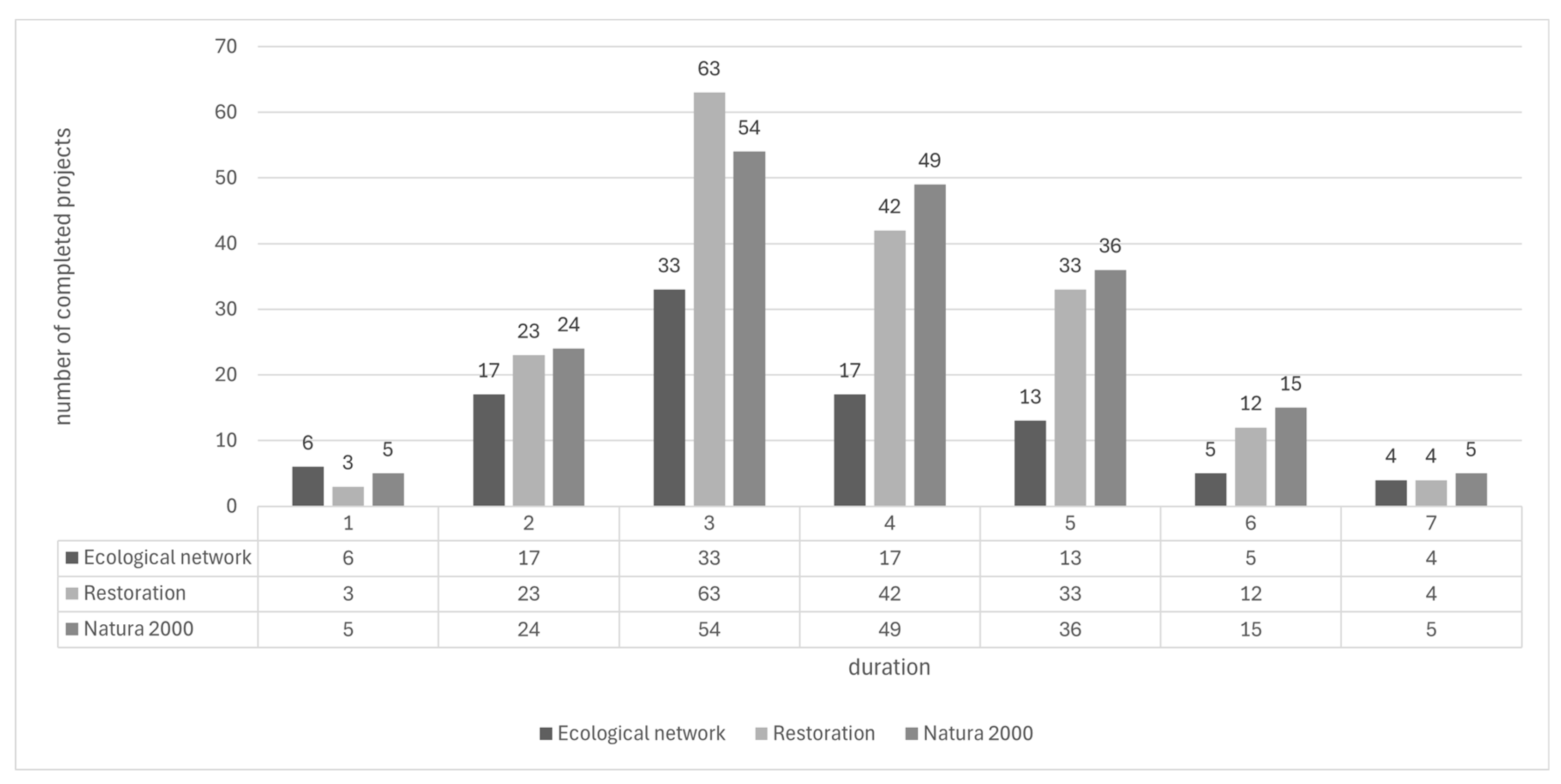
First, the comparison between start date and end date (Expected start and end date) shows the average duration of LIFE projects. The analysis returned that 34.7% of the projects in “ecological network” analysis (33 out of 95), 35% in “restoration” projects (63 out of 180), and 28.7% of projects in “Natura 2000” (54 out of 188) require about three years to be completed. The temporal analysis spans from 1991 to 2025 (
Figure 3). For “ecological network”, more than 30% of projects, which was 33 out of 95, was completed within three years.
For “restoration”, the maximum duration is seven years for four projects, while 63 out of 180 projects were completed within three years. Likewise, the results for “Natura 2000” are almost the same, with a small number of projects taking as long as seven years, while the maximum number of projects were completed in about three years. In summary, based on the data, 34.7% of the projects in “ecological network” analysis, 35% in “restoration” projects, and 28.7% of projects in “Natura 2000” require about three years to be completed. In general, for “ecological network” projects, the most common duration was three years, with 33 projects. For the “restoration” projects, the results show a similar pattern: 54 projects concluded within three years. “Natura 2000” projects also showed the same pattern as the ecological network, with a three-year conclusion.
The databases provide the main area of interest for the projects (Themes). This record contains terms that summarize diverse aspects of the project, such as species of interest (i.e., birds, mammals, plants), area of reference (i.e., forest, marine, coastal), and desired results (i.e., public participation, tourism and accommodation, waste recycling), across other category records. According to each dataset, every single project usually encompasses approximately five themes. In this assessment, each dataset corresponds to an Excel file exported from the LIFE database for one search category—“Natura 2000,” “ecological networks,” and “restoration”—and includes all projects retrieved for that keyword. Each Excel dataset includes approximately 900 distinct “themes” records, so we reviewed each keyword-specific file separately in this section (
Tables S2 and S5).
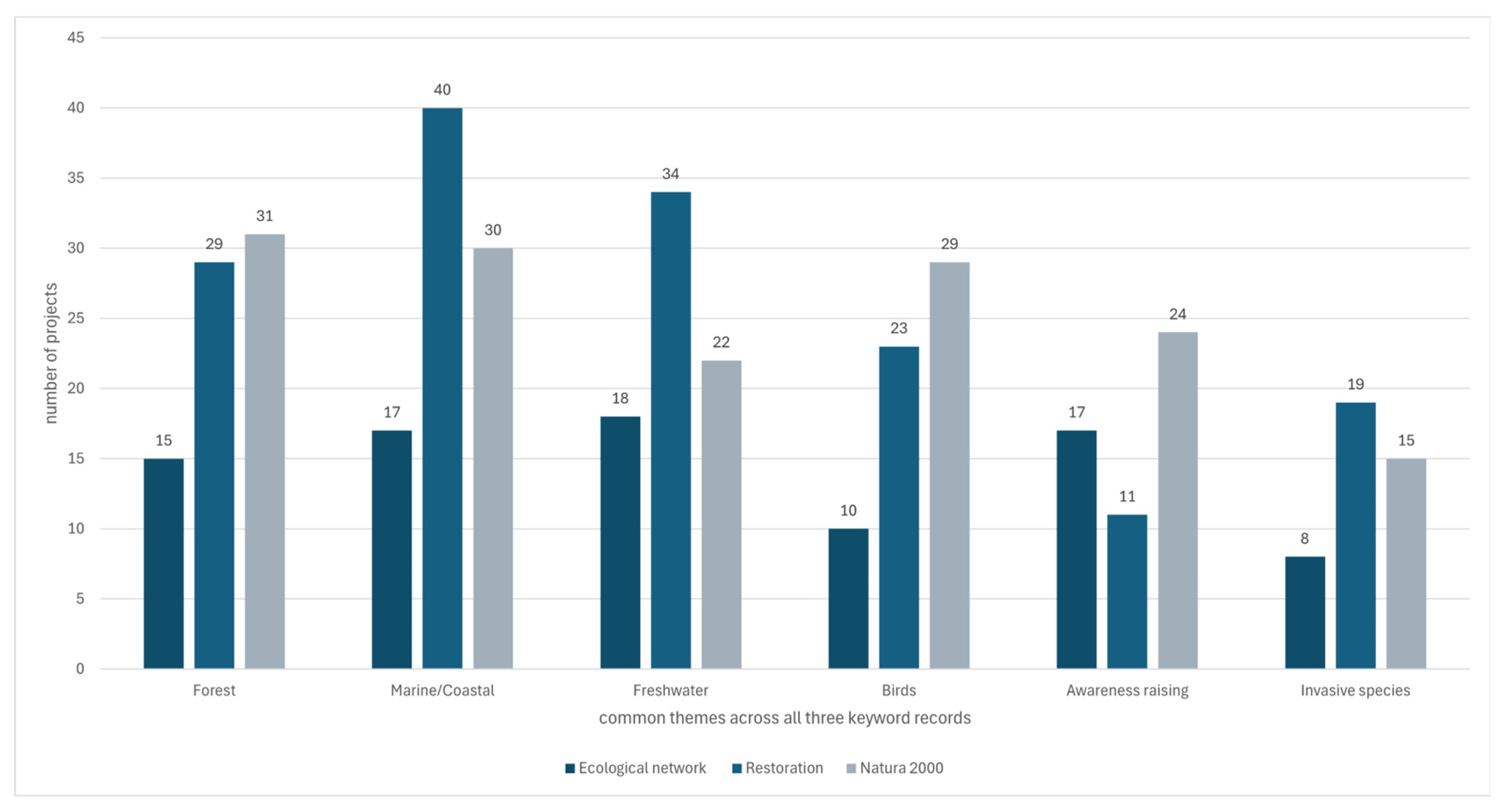
Based on the analysis, the most common repeated themes revolve around terms such as forests appearing 31 times for Natura 2000, coastal areas (40 times) for restoration, and freshwater (18 times) for ecological networks (a complete list is provided in
Table S2).
Figure 4 shows the themes common to all three categories: freshwater, forest, marine/coastal, birds, awareness raising, and invasive species.
Regarding Project budgets, the dataset provides both the funds available for the project (Total Budget) and the part of the funds co-financed by the EU (the EU Contribution). Funds are essential because they indicate financial commitment and, therefore, the actual investment that the European Union is making towards a particular cause. In general, project budgets vary significantly, ranging from very small amounts to millions of euros.
The LIFE14 IPE/IT/000018 project had a timeline of around seven years and focused on implementing the regional Prioritized Action Frameworks (PAFs) for Natura 2000 sites. However, the minimum budget was for the LIFE95 NAT/IT/000753 project in 1995, EUR 200,000, and the duration of this project was two years. This project mainly focused on cleaning up ecologically important areas and their environmental requalification. For the restoration record, there is a substantial variation in the budget amounts. The maximum total budget is approximately five million euros for the LIFE00 NAT/IT/007142 projects which is the Improvement of the habitats of CIS through restoration and/or transformation of existing and under-construction electrical plants in the Po Delta Park, while the minimum budget is three hundred and fifty-three euros for a project of LIFE97 NAT/IT/004134 concerning the restoration of alluvial woods and oak woods along the Ticino River. “Natura 2000” also includes the LIFE14 IPE/IT/000018 project, with a contribution of about EUR 17 million, which is the same as for ecological networks. However, the minimum budget is for the LIFE95 NAT/IT/000703 project in 1995, titled Urgent actions for the conservation of faunal biodiversity in the Mt. Pollino National Park, with about EUR 206,000. It is interesting to note that the project with the highest budget is a kind of integrated project aiming at improving the management of Natura 2000 sites, whereas other LIFE projects during the 1990s had much smaller budgets (
Table 1).
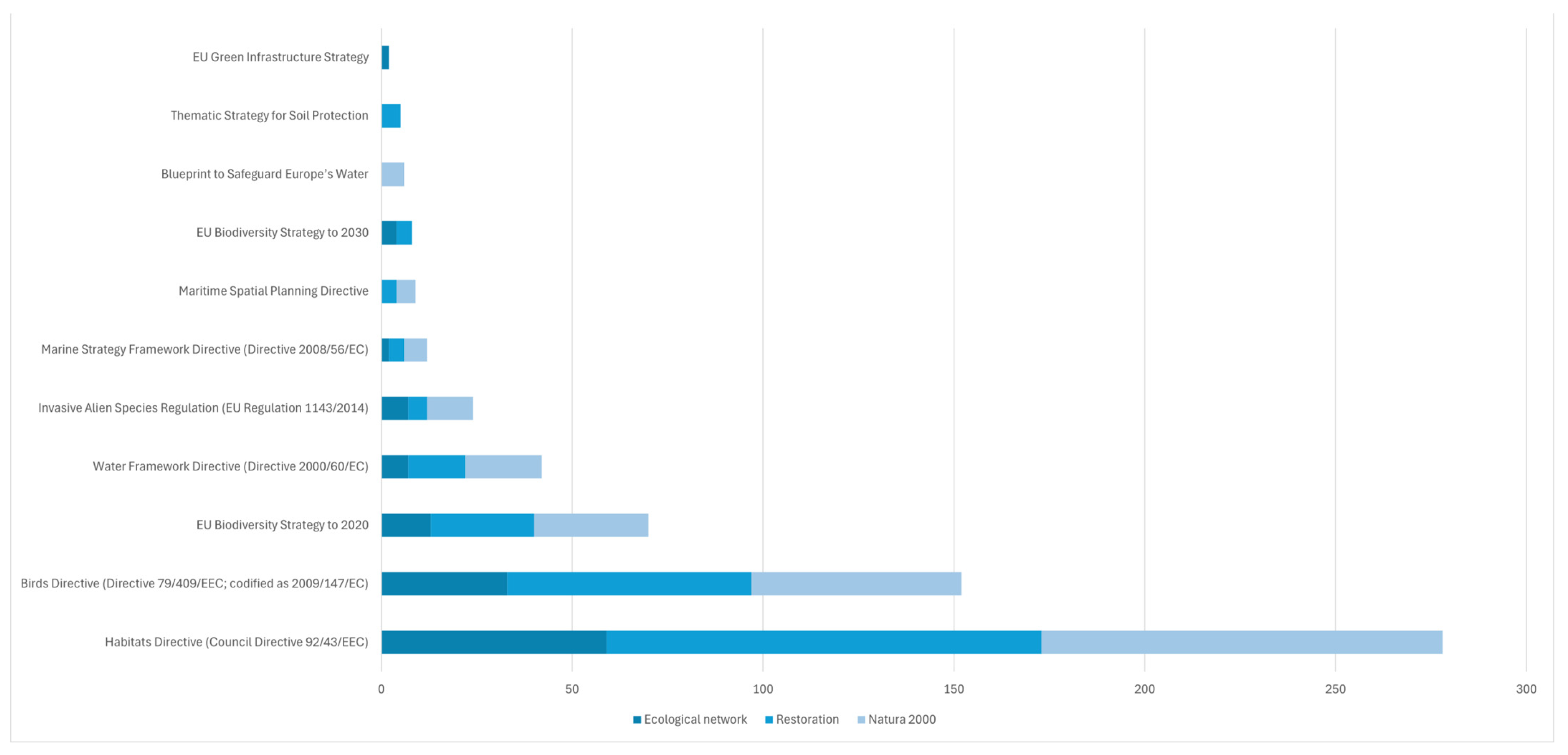
In terms of legislation, all projects are based on European directives, frameworks, or policies. Compliance with these frameworks could have a greater impact on project outcomes, as included in
Figure 5. A large number of projects comply with the Habitats Directive (Directive 92/43—Conservation of natural habitats and of wild fauna and flora) and the Birds Directive (Directive 79/409—Conservation of wild birds), given their specific focus on Natura 2000 sites and the related objectives of habitat and biodiversity conservation. Therefore, LIFE projects have been a primary instrument in pursuing these goals by managing Natura 2000 sites, implementing restoration measures, and controlling invasive species. In addition, other projects also refer to different laws and frameworks (the complete list is provided in
Table S1), namely: Directive 2000/60—Framework for Community action in the field of water policy; COM(2011)899—“Innovation for a sustainable Future—The Eco-innovation Action Plan (Eco-AP)”; Regulation 1143/2014—Prevention and management of the introduction and spread of invasive alien species; Regulation 2080/92—Community aid scheme for forestry measures in agriculture; and COM(2006)231—“Thematic Strategy for Soil Protection”. Alignment with these policy frameworks shows that most projects are consistent with the EU framework’s aims.
3.1. Analysis of Outputs Through Keywords
Keywords are the words needed for the project to be identified and found on dissemination channels. Also, keywords stand for project positioning, moving from its specific details to broader themes and objectives that are recognizable in general terms and to a wide audience. Then, keywords are strictly related to the expected outputs of the projects. A recognition of the most used keywords is assessed for overviewing the expected outputs. As it is done for the main area of interest for the projects (themes), the method for word counting is also computed for the other main keywords related to the projects (keywords). As already shown, the word counting process includes grouping of similar terms from the metadata, with occurrence indicating how many times these terms were mentioned within a single project. The grouping terms are as similar as possible to maintain consistency, and normalization is computed to avoid wording (a complete list is provided in
Supplementary Materials Tables S6–S8).
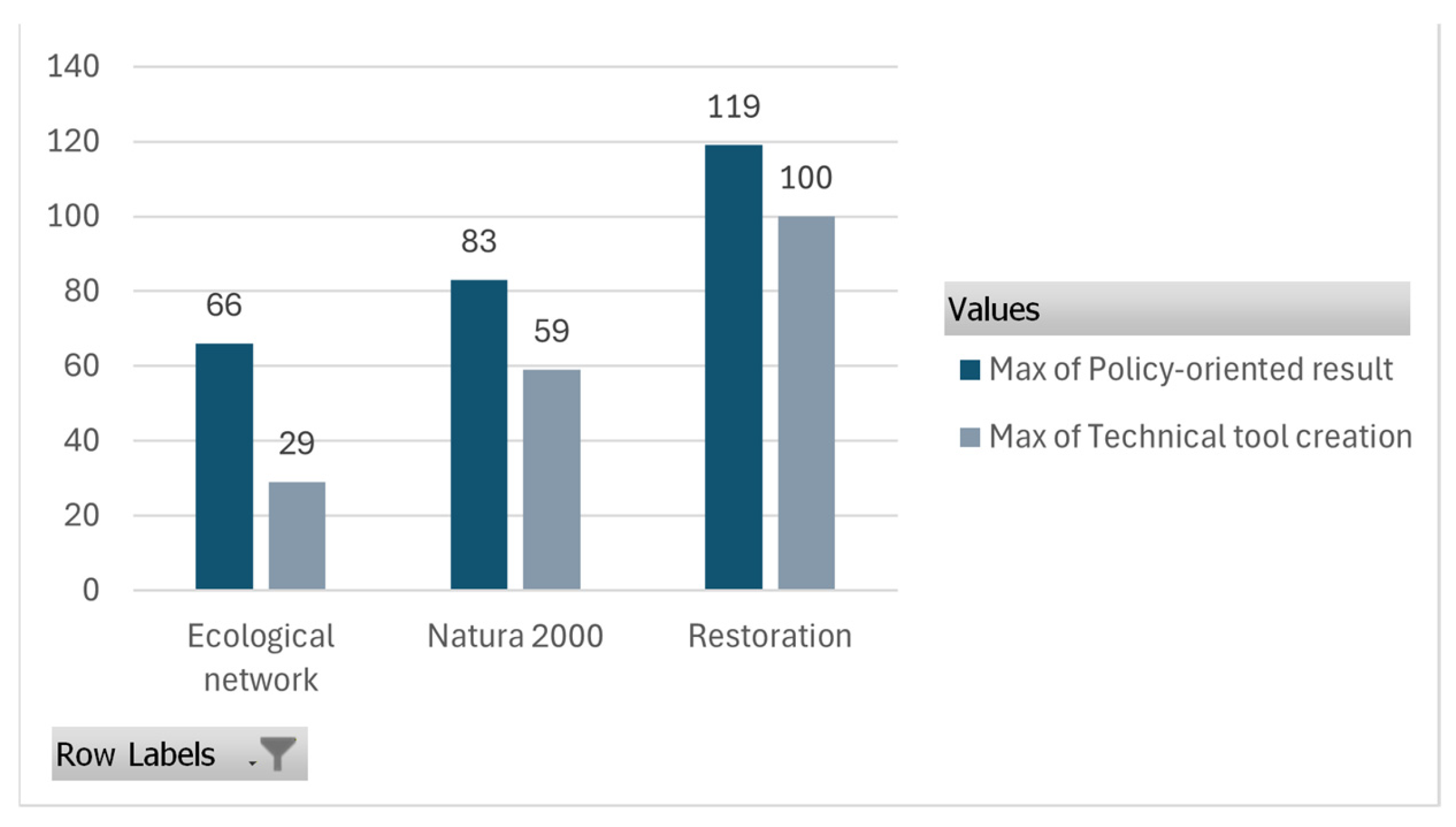
Table 2 represents the most frequent keywords based on the three categories, namely “ecological network”, “restoration”, and “Natura 2000”. The data reveals the prominence of protected areas—including natural areas, nature reserves, and marine protected areas—as well as restoration activities. In the projects under the restoration record, the keyword “Protected area” was repeated 119 times; in the “ecological network” projects 66 times; and in “Natura 2000” projects 79 times. The number of projects regarding “Protected area” among all categories highlights that many LIFE projects work within existing protected areas and aim to expand or create new protected areas to support connectivity. Restoration measures highlight the importance of practical conservation efforts, such as reforestation and habitat restoration (e.g., rivers or wetlands), with 100 occurrences in restoration project records. The “Management” appears as the first most prominent output in “Natura 2000” projects, indicating the important role of LIFE projects in guiding conservation actions. “Awareness raising” also appears across all three keywords, showing a strong connection between knowledge dissemination and expected project success.
Among all the keyword outputs, two main classes are created as they may prove relevant to the results of the survey. The two classes are “policy-oriented outputs” and “technical tools”. Most projects were focused on restoration activities in forests, rivers, and other natural environments, and a large share of these restoration projects were conducted within protected areas. Most of the projects lean towards policy outputs and guidelines, and the remaining projects create tools such as monitoring instruments, GIS techniques, and web-based materials. In terms of policy implications, for example, the project Conservation programme for the geographical area of the Delta Po park (first phase) (LIFE93 NAT/IT/010500), which is about a programme for conservation of the geographical area of the Delta Po park (north Italy), mainly created a management plan during the first phase of the project. In fact, project keywords encompass the main areas of interest (nature reserve, coastal area, wetland), and policy-oriented outputs (sustainable development, management plan). As another example, the project Monitoring and management of the wetlands included in the NATURA 2000 programme (LIFE97 NAT/IT/004171) located in the Valle d’Aosta region highlights the main areas of interest in the inland water (nature reserve, wetlands ecosystem, mountainous area, lake) and focuses on technical tools (water quality improvement, and monitoring system). Among the keywords, policy-oriented outputs are also considered (management plan). The project attempted to develop monitoring and restoration measures within the Natura 2000 sites by activating a monitoring system for water fluxes.
Based on the data, we could show the peak prominence of policy-oriented results as the maximum occurrence across the category records (the table is provided in
Supplementary Materials Table S12).
Figure 6 shows that the policy-oriented results are dominant in terms of the peak prominence indicator. In fact, keywords related to policy-oriented results are cited 66 times out of 95 projects under the category “ecological network”, 83 times out of 188 for “Natura 2000”, and 119 times out of 180 for “restoration”. Policy-oriented outputs, namely protected areas, management, nature conservation, and biodiversity, occupy the first stage of the table across all three keyword records.
In summary, Italian LIFE projects contribute to knowledge dissemination, planning, and the creation of technical tools, resulting in the management of ecological networks. Although many projects aim to deliver policy-oriented outcomes such as management plans, a large number actively engage in developing technical tools as key aspects in supporting connectivity.
3.2. Co-Occurrence Analysis
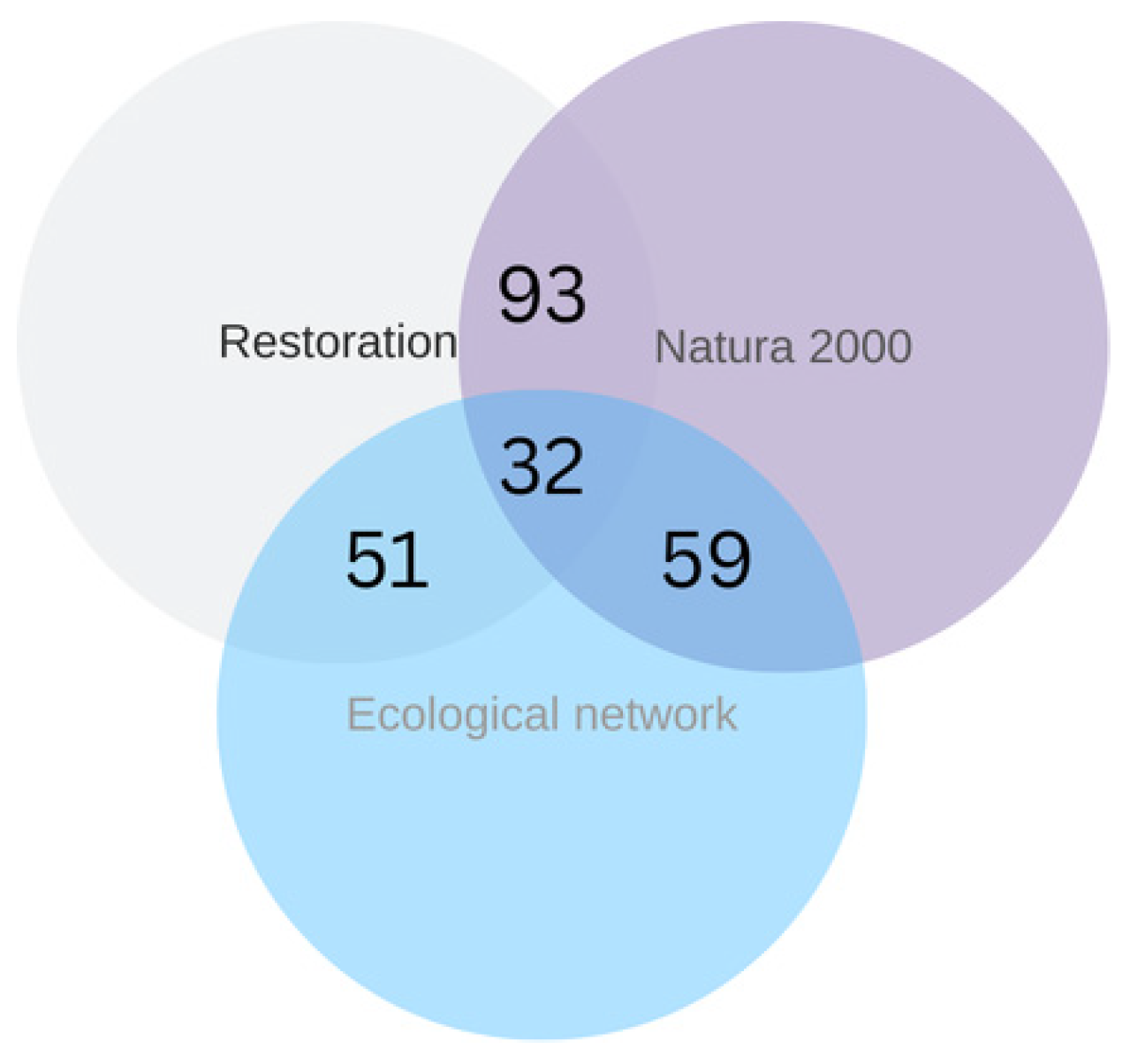
The analysis carried out so far has treated projects falling under each category separately. However, given the close correlation between the themes analyzed, it can be expected that a single project may be retrieved under multiple categories. The three datasets are then compared pairwise to assess the co-occurrence of categories. Overlapping projects inside more than one category are identified as duplicates because they appear in other datasets when matching in pairs. The first comparison (ecological network and restoration) merges 275 projects and shows 51 overlapping projects. Ecological network and Natura 2000 provide a dataset of 283 projects, with 59 overlapping projects. Lastly, Natura 2000 and restoration were a total of 368 and 93 overlapping projects (
Figure 7).
The analysis of the category pairs illustrates that the largest co-occurrence occurs between “Natura 2000 and the restoration” dataset, accounting for 23.60% of the overlapping projects. This is followed by “ecological network and Natura 2000” (21.6%), and finally “ecological network and restoration” (18.5%) (a complete list is provided in
Supplementary Materials Table S13). Overall, these analyses reveal the close correlation between the chosen keywords, which are shared among around 20% of the projects analyzed in pairs. Considering all three categories, there are 32 projects involved in all the datasets.
3.3. Illustrative Case Studies
The analysis provided is largely descriptive of what is expected from projects and their alignment with the EU framework. Also, it permits finding distinguished projects that demonstrably influence regional plans and guidelines, having an impact on policies and planning.
A selection of four LIFE projects is provided (
Table 3), considering the five highest-budget projects, resulting in category pair analysis. Considering that the LIFE programme invests in community funds in the projects, the choice of the highest-budget projects is guided by the implicit relevance that the programme assesses. Moreover, a higher budget may reflect a larger restoration area and, therefore, a greater impact on connectivity. The LifeTicinoBiosource (Enhancing Biodiversity by Restoring Source Areas for Priority and Other Species of Community Interest in Ticino Park, LIFE15 NAT/IT/000989) is coordinated by Parco Lombardo Della Valle Del Ticino (Lombardy region). It is about biodiversity conservation in Ticino Park, focusing on special habitats near a Natura 2000 site under the Habitats and Birds Directives. This project aimed at enhancing the on-ground ecological implementation actions as well as restoration measures. The project started in 2016 and concluded in 2021 with a total of 3877,000 euros. The themes concerning this project are diverse species and habitats (grasslands, freshwater, fish, forests, birds, amphibians, invertebrates), and technical tools (awareness raising, information, species reintroduction), highlighting the importance of different habitats and awareness raising for the study area. The project’s datasheet also shares insightful data regarding the keywords (amphibian, animal corridor, bird species, butterfly, environmental impact of agriculture, forest ecosystem, freshwater ecosystem, migratory species, river, wetland, voluntary work, reintroduction, restoration measure, fish, farming, environmental education). This project appears in all three category datasets. Indeed, it is related to a very ambitious goal: developing one of the biggest projects that Ticino Park has ever developed. This area is pivotal to protecting since it is one of the main large natural areas inside the highly urbanized Po Valley.
The LIFE SAFE-CROSSING (Preventing Animal-Vehicle Collisions-Demonstration of Best Practices targeting priority species in SE Europe LIFE17 NAT/IT/000464) is coordinated by Agristudio S.r.l. an Italian company specialized in consultancy and project management and services. It involved the Umbria, Marche, Abruzzo, and Lazio regions, coordinated with Greece, Romania, and Spain. The project aimed to illustrate best practices to mitigate the impacts of road facilities and infrastructure on large carnivores across Europe. This LIFE Project aimed at the implementation of the Habitat Directive within Natura 2000 sites, as well as the EU road safety legislation. This resulted in a noticeable reduction in the number of traffic accidents for specific animals while crossing. Based on these legislative references and monitoring activities, ecological connectivity was improved. This LIFE project also created several tools that were appreciated by the local communities, such as a geodatabase to inform people about animals crossing the roads, local awareness, networking events, and video games were also created to support these actions. The project highlights the integration between legislative plans and technical actions.
The LIFE IP GESTIRE 2020 (Nature Integrated Management to 2020, LIFE14 IPE/IT/000018) is publicly managed and coordinated by the Lombardy region. This LIFE project aimed at the conservation of habitats and improvement of connectivity within Natura 2000 sites. This project specifically focused on establishing a management plan to ensure the success of conservation practices. This project also backed up the implementation of the regional Prioritized Action Plan (PAFs). Additionally, several outcomes regarding capacity building were delivered. Regional policies and management practices, and an alignment between territories from the policy side, as well as active monitoring of the ecological corridors and capacity building, ensured the implementation of actions. The results of this analysis could support the concept that funding can help enhance environmental action; however, management strategies supporting on-the-ground actions could be regarded as the backbone of successful outcomes.
The LIFE TIB-TRANS INSUBRIA BIONET (Habitat connection and improvement along the Insubria ecological corridor between the Alps and the Ticino valley, LIFE10 NAT/IT/000241) is a project managed by the province of Varese (Lombardy region). The project provides a holistic view of creating ecological corridors supported by policy implementation. This project also complies with the European Strategy for Biodiversity 2020 and the Habitats and Birds Directive. The functionality of ecological corridors was one of the main goals of this project, which has been enhanced through strengthening roads where species used to cross. This achievement was based on an agreement among 43 municipalities, namely the “Network Contract”.
4. Discussion
LIFE projects have served to habitat restoration and biodiversity conservation goals in Italy over the past three decades; however, there is a persistent gap between policy implications and planning tools. Across all three categories (ecological network, restoration, and Natura 2000), on-the-ground and technical outputs are widely reported among categories. Even so, policy-oriented results dominate the peak prominence ranking, emphasizing governance, planning, and guidelines primarily. This highlights that most of the project’s outcomes intend to become part of policy frameworks, as reported in the prominence counting of policy-oriented results. Overall, these contrasts suggest that the LIFE projects contribute slightly more to policy-oriented outputs, even though results concerning technical tool creation are numerically higher. This shifts the focus to the importance of implicit imbalance between implementation practices and planning tools. Even though most of these projects contributed to habitats and biodiversity conservation, many project outcomes did not result in any other long-term results (such as standardized guidelines or the adoption of planning tools). This is related to the nature of projects, which are site-specific and concentrated in time and space to be more effective. On the contrary, project outcomes may become durable when planning instruments and policy frameworks are aligned. In Italy, such alignment is not reached yet, and the effort taken by all the LIFE projects seem useless without national-level legislation that can translate European strategies into national directives. In fact, there is a lack of both national laws and effective implementation tools for ecological connectivity, as well as for legislation on land use. As a result, ecological connectivity is addressed at the discretion of single projects and individual regional administrations.
In addition to this analysis, we explored category co-occurrences to analyze the relationships between outputs. The highly reported occurrence turned out to be between Natura 2000 and restoration (word count = 85), suggesting the necessity of restoration activities integrated in the monitoring techniques and educational activities supported all conservation activities at Natura 2000 sites. This highlights the relevance of restoration measures with connectivity actions through planning tools and policy frameworks. Also, by analyzing the paired categories and their co-occurrences, it is possible to highlight the importance of conservation within the goals of the LIFE project. Even though the presence or lack of keywords is not indicative of the implementation and effectiveness of the projects, this study helped in giving a framework of what the main areas of interest are. Then, concrete examples, such as the project LIFE IP GESTIRE 2020, aimed at achieving conservation objectives by establishing an integrated management. This was feasible through policies and management plans to support coherence and connectivity within and outside the Natura 2000 sites. All conservation activities were supported by monitoring techniques and educational activities. Through Prioritized Action Frameworks (PAFs), it translated plans into concrete policy frameworks and on-ground outcomes. The LIFE TIB (TRANS INSUBRIA BIONET) project demonstrated a series of practices aimed at reducing fragmentation by creating ecological corridors. This project is a good example of policy implementation, the European Strategy for Biodiversity 2020, and the Habitats and Birds Directive. One of the outstanding results of the project was the creation of a network among 43 municipalities. Then, the LIFE SAFE-CROSSING focused mainly on implementing the Habitats Directive. This project reduced the threats to specific species using some legislative reference within the network of Natura 2000 sites. These actions were all integrated with technical tools and supported by policy frameworks. Across the findings of this analysis, the dominant pattern is embedded in delivering both policy and technical outputs, which means that almost all the analyzed projects among duplicated records combine technical tools, such as on-the-ground actions, restoration activities, and monitoring techniques, with policy frameworks to support the longevity of the outcomes. The illustrative examples of this study indicate that integrated projects can be regarded as a turning point since they intersect policy-oriented approaches with technical actions and ensure their effectiveness through dissemination. On the other hand, projects’ resources are concentrated on very limited areas. In this respect, uncoordinated restoration efforts cannot be addressed by the present work, which wanted to explore the state of the art and, eventually, make way for future studies. The connection between all the projects should be advisable, as well as further development in the integration of stakeholder engagement, and the tools and techniques where conservation actions are implemented.
The new Nature Restoration Law requires each country to create a National Restoration Plan in the near future by the end of 2026 [
48,
49]. This can be an opportunity to develop an in-depth understanding of current conditions in each region and to integrate restoration policy frameworks with planning tools. In this case, restoration measures will become more efficient, and they can contribute to ecological connectivity and ecosystem functions in the future. Ecological restoration can recover the ecosystem to improve biodiversity resilience and ecosystem services [
50,
51], which is dependent on the ecological science to decipher ecosystem functions [
52,
53]. Therefore, future projects will likely start aligning with the Nature Restoration Law. The assessment of project themes also highlights the importance of habitat connectivity and biodiversity conservation within project aims. The wide range of most common repeated themes (freshwater, forest, marine/coastal, birds, raising awareness, and invasive species) shows a general interest in habitat assessment and a broad focus on ecological connectivity. This is consistent with studies suggesting that forests and corridors are essential for connectivity [
12,
13]; indicating the importance of connectivity in natural environments to maintain species movement. The Nature Restoration Law faces many implementation challenges [
33]. One of the main challenges relates to the condition of many European ecosystems, which have been altered due to human activities and environmental degradation, resulting in a subtle shift in the state of nature. To ensure the practical purpose of the Nature Restoration Law, it is important to balance policy strategies with measurable action plans [
39]. The appearance of output keywords such as management, ecological coherence, restoration, protected area, and monitoring across all three keywords also represents the importance of connectivity measures, suggesting a specific focus on the connectivity of the networks. In addition, the results of this study imply that, at the landscape level, implementation of actions requires plans, tools, and collaboration to transfer connectivity goals into actions [
43]. Thus, the results support that actions dominated by policy output without transferable tools may not effectively result in the implementation of goals across regions. A study found that Natura 2000 management needs several improvements. Promoting integration between local stakeholders and nature could develop site coherence and support policy integration [
44].
Even though this study does not directly investigate policy-oriented outputs, the analysis discloses that several LIFE projects are aimed at management and planning, and regulatory measures. Public participation processes could effectively support nature’s restoration policies and actions by raising the general awareness of all stakeholders involved. LIFE projects in Italy have been influential in many ways in achieving a coherent network; however, at the national level, this is not yet fully achieved. In 2003, ISPRA (Italian Institute for Environmental Protection and Research) established national guidelines that provided a practical framework for supporting territorial policies on conservation and widespread naturalness. Although these guidelines are in force, ISPRA is currently working to update them. This research focused primarily on reporting the project outcomes rather than ecological outcomes, except for a few examples. Further research should focus on determining to what extent the connectivity outcomes of the project improved the conservation measures, and how these actions meet project need.
5. Conclusions
This study shows that among all LIFE projects funded in Italy, Natura 2000, restoration, and ecological network are predominant categories within which a variety of different focuses and objectives are included. Despite Italy’s significant investment in LIFE projects (292 in this study), they represent specific and limited episodes that share intent but without coordination. Since many restoration activities are highly impactful at the site level, there is a lack of transferable planning tools to connect these isolated “islands” of biodiversity into a coherent network. Compliance with the Nature Restoration Law, Action 1.3.B, and the National Biodiversity Strategy 2030 supports this concept. Many LIFE projects deliver concrete outputs in terms of tools and awareness-raising actions, in addition to policies and guidelines. Emphasizing the effectiveness of ecological networks depends on the integration of all these outputs. The research aims to suggest that future national and international funding programmes should consider “planning integration” as a mandatory outcome. Simply restoring a habitat should not be enough; projects need to clearly indicate how restoration actions are embedded within existing regional planning tools. This integration is significant to ensure long-lasting ecological connectivity across the wider territory. Connectivity policies are expanding; however, their implementation requires several factors, such as long-lasting leadership, actionable plans, and usable tools, rather than relying only on planning documents [
54]. Taken together, the analyzed examples of this study support connectivity and conservation when there is an integration between planning tools and policy frameworks to ensure the implementation of actions. When actions are backed by management plans, supportive legislation, and EU funding, they help ensure a resilient future. Our research offers practical insights to support the implementation of results. First, management plans and policy-oriented outputs should be integrated with national planning instruments. Second, awareness-raising platforms should support implementation actions through public engagement. Lastly, to comply with the Nature Restoration Law, LIFE project outcomes should also be explored in terms of their potential to improve conditions or, conversely, to worsen them.
To conclude, building a coherent ecological network in Italy has been a primary goal for a long time. Regulatory guidelines will require an important paradigm shift: changing from isolated, project-based conservation actions to a systemic planning approach. Policymakers should ensure that the comprehensive knowledge and output generated through these projects do not remain embedded in the project boundaries. Instead, they are required to be translated into formal planning regulations frameworks so they can sustain over time. Due to the diverse characteristics of Italian regions and different management considerations among them, this goal has not yet been fully achieved. In response, the LIFE programme has contributed to many projects aimed at achieving biodiversity conservation goals. Integrated projects could bridge policy and concrete actions and replicate the results through training, since a framework or policy will not actually be influential without transferable tools. The projects explored in this research show that achieving these goals depends closely on guidelines and policy frameworks, as well as effective actions that operate without boundaries.