1. Introduction
The failure rate of water supply and sewage networks has been extensively studied globally [
1,
2]. This issue arises from environmental concerns, efforts to improve the operation and efficient management of these networks, and economic motivations due to the high investment and operational costs associated with such infrastructure [
3]. In 2021, about 80% of urban areas worldwide faced various climate-related hazards, such as extreme heat, heavy rainfall, droughts, and flooding, with the latter two being the most frequently reported [
4]. To address these challenges and mitigate climate risks affecting urban infrastructure, it is projected that trillions of dollars will be required annually by 2050. The investment needs for urban infrastructure between 2015 and 2030 have been estimated at USD 4.5–5.4 trillion per year, with 10–25% of this amount earmarked for additional costs to ensure infrastructure resilience to climate change. In terms of climate adaptation, substantial capital will be necessary, with the World Bank estimating an annual requirement of USD 11–20 billion by 2050 to address urban infrastructure vulnerabilities to climate risks. Water supply and sewage networks form part of critical infrastructure, and their failure-free operation is vital for society. These networks are characterized by long lifespans, meaning that their current condition results from decisions made many years ago [
5].
Machine learning methods are increasingly being employed to analyze the failure rate of water supply and sewage networks [
6]. Winkler et al. [
7] proposed a framework for extracting and processing network data and historical failure records, which can be used to train decision tree-based machine learning methods. This is not the only technology aimed at supporting the failure-free operation of networks. For example, a knowledge-based expert system, the Sewer Cataloging, Retrieval, and Prioritization System, has been developed [
8]. Additionally, the AutoSewerNet, an automatically designed high-performance system based on neural architecture search (NAS), has been created to classify sewer pipe defects [
9]. Betgeri et al. [
10] used an automated process based on K-Nearest Neighbors (K-NN) to classify a comprehensive pipe rating model derived from various pipe, external, and hydraulic characteristics.
Various methodologies for assessing the failure rate of water supply and sewage networks are also under development. Baranov et al. [
11] proposed a reliability index grounded in physics, along with an engineering methodology for its calculation. They suggested that the relative volume of raw sewage potentially discharged into the environment due to network failures could serve as a measure of overall system reliability. They introduced a simple method for quick and accurate calculation of this volume, treating the sewer network as a combination of Y-shaped fragments. Each fragment is replaced by an equivalent fictitious sewer with a failure rate that results in the same output. This approach reduces the complex problem of estimating discharged sewage volume to a manageable sub-problem. The method is rooted in reliability theory. Anbari et al. [
12] introduced a risk assessment model to prioritize sewer pipe inspections using Bayesian Networks (BNs), a probabilistic approach for calculating failure probability, along with a weighted average method for determining the consequences of failure. Salman and Salem [
13] used a weighted scoring method to assess sewer pipeline criticality by identifying key factors, evaluating their relative importance, and summarizing overall pipe performance. Their risk assessment model combined failure consequences with failure probabilities using simple multiplication, risk matrices, and fuzzy inference systems. Aydogdu and Firat [
14] developed a novel approach combining fuzzy clustering and Least Squares Support Vector Machine (LS-SVM) methods to estimate failure rates in water distribution networks and determine the relationships between failure rates and influencing factors. Kabir et al. [
15] applied a Bayesian Belief Network (BBN) model to evaluate the failure risk of metallic water mains based on factors like structural integrity, hydraulic capacity, water quality, and consequence factors.
The literature on water and wastewater network failures encompasses diverse modeling paradigms developed to support risk assessment and decision-making. For clarity and conciseness, the most commonly applied methodological categories and representative techniques are summarized in
Table 1.
Several case studies provide insights into the technical condition and failure rates of networks. For example, Ouattara et al. [
16] analyzed sewage and drainage system failures in Sub-Saharan African cities, while Shi et al. [
17] focused on water supply network failures in Hong Kong. The management of water networks in Colorado was examined by Rogers [
18], while Wood and Lence [
19] provided a study on Canadian networks. Xu et al. [
20] analyzed water supply network failures in Beijing, and Atashi et al. [
21] presented an Iranian case study. In Poland, case studies have been conducted for the cities of Głogów [
22] and Jarosław [
23].
Poland ranks 24th in the European Union in terms of renewable freshwater resources [
24], with a per capita availability of less than 1600 m
3. According to the UN, a country is considered water-scarce if per capita availability falls below 1700 m
3, underscoring the need for effective water conservation and management strategies. From 2015 to 2017, the Supreme Audit Office (NIK) conducted inspections of enterprises supplying water to 440,000 residents in 12 cities [
25]. The results revealed that Polish water supply networks are outdated and prone to failures, with water utility companies failing to ensure network reliability and water safety. The national average water loss in distribution networks stands at 15.2%, and data on network age, material composition, failures, water losses, and technical condition were often unavailable in many municipal offices. During this period, 86.2 million m
3 of water were extracted for public supply, with 80.8 million m
3 delivered to municipal networks, while consumer consumption totaled 65.4 million m
3. This left 10 million m
3 of water lost. Over 2000 failures were recorded in the inspected water supply networks, with failure intensity indices exceeding the national average by up to four times. These failures disrupt water flow continuity and may lead to pipeline shutdowns and service interruptions, with an increased risk of secondary contamination. The primary cause of network failures in Polish cities is the age of the infrastructure, with over 50% of water supply networks being more than 50 years old, and 45% between 25 and 50 years old. Over the past few decades, the material composition of Polish water supply networks has shifted significantly [
26]. There is a growing trend toward using thermoplastic materials (PE and PVC), replacing older materials like steel and gray cast iron, which were dominant in networks up until the early 1990s. Currently, PE and PVC pipes account for over 50% of the networks analyzed, while steel pipes make up 35.5%. Research on water supply network failures in Poland has been ongoing for nearly 40 years [
27,
28,
29]. Recent studies have expanded traditional failure statistics by introducing advanced risk-based and hydraulic modeling approaches for assessing water distribution network reliability [
30,
31]. These methods, combining long-term failure data with risk indicators and simulation of failure scenarios, have been successfully tested on real water supply systems in Poland, providing practical tools for evaluating failure consequences and supporting decision-making in network operation and modernization. The primary causes of pipeline failures include material defects, installation errors, design flaws, and operational issues. External factors, such as nearby construction work or excessive road traffic loads, may also contribute. However, the failure rate has shown a significant downward trend over the past decade, decreasing more than twofold [
32].
In the authors’ opinion, although failures of sewer networks in Poland have been investigated in depth, the number of published studies is lower than that devoted to failures of water supply networks [
33,
34,
35]. A report by the Supreme Audit Office [
36] highlights the slow pace of connecting households to the collective sewer network. Data from audited municipalities indicate that a significant portion of wastewater from household tanks is discharged directly into the environment, posing ecological and sanitary risks. The technical condition of Poland’s existing sewer network remains unsatisfactory [
37], with failures resulting in the exfiltration of wastewater and the infiltration of groundwater into the pipes.
A review of the literature shows that the failure rate of water supply and sewer networks is influenced by multiple factors, which can be classified into three categories:
- (a)
Factors related to the pipeline’s construction quality, including the type and material of the pipe, anti-corrosion protection, pipe diameter, joining methods, pipe age, pressure, flow velocity, and water quality.
- (b)
Environmental factors, including soil type, moisture, external loads, and soil instability, such as mining subsidence.
- (c)
Operational factors, such as maintenance scope, network monitoring, and the speed of failure detection and repair.
Most research focuses on the first group of factors [
38,
39,
40]. However, one factor that has been insufficiently studied is climate change. This study directly addresses this gap by providing an empirical analysis of the relationships between short-term climatic variability and failure occurrence in water and wastewater infrastructure. The objective of the study by Żywiec et al. [
41] was to conduct a bibliometric analysis of the impact of climate change on the failure rates of water supply infrastructure. Previous studies [
42] have shown that climatic factors like temperature and precipitation affect pipes differently based on their age and material. Pipes exhibit higher failure rates under freezing temperatures, while older pipes fail more often in high temperatures, possibly due to increased corrosion. Precipitation generally correlates negatively with failure rates, except in the case of newly installed cast iron pipes. Żywiec et al. [
43] analyzed the impact of air temperature on the frequency of water supply network failures in Central and Eastern Europe. Their study predicted a reduction in the number of failures in the near future (2036–2050) and distant future (2086–2100) due to rising air temperatures.
In the context of climate-related pressures on sewer and drainage infrastructure, Polish studies indicate that increasing rainfall intensity and spatial variability of precipitation significantly affect the reliability and hydraulic performance of sewer systems. Kotowski et al. showed that historically used rainfall models substantially underestimate designed rainfall intensities, which may lead to undersized sewer systems and an increased risk of hydraulic failures under extreme precipitation events [
44]. Consequently, the use of updated probabilistic rainfall models and national precipitation atlases is recommended to ensure safe and climate-resilient dimensioning of drainage and sewer systems [
45]. At the same time, sewer system overloads have important environmental consequences. Stormwater runoff contributes significantly to pollutant loads discharged into receiving waters, particularly during intensive rainfall events [
46]. The occurrence of the first flush phenomenon, which amplifies the initial pollutant discharge, has been shown to depend strongly on land use and catchment imperviousness [
47]. In response to climate change, urbanization, and aging infrastructure, recent studies increasingly emphasize the need for integrated and water-sensitive urban drainage solutions that enhance system resilience and reduce failure risk [
48].
In the context of sewer networks, the effects of climate change on combined sewer overflows (CSOs) were assessed by Bendel et al. [
49] in Southern Germany, based on long-term rainfall-runoff simulations. Regarding the impact of climate on sewer networks, a noteworthy review publication is Hyde-Smith et al. [
50].
This study examines the impact of climate change on both water supply and sewer systems. Based on climate data from the northeastern region of Poland, the study does not focus on a single location but captures broader climate change trends, which were then compared with failure data from the town of Mrągowo. Despite extensive research on material- and age-related failure drivers, the interaction between short-term climate extremes and legacy water and wastewater infrastructure in transitional cold-temperate climates remains insufficiently quantified. By addressing this gap, the present study contributes to sustainable urban development by linking climate variability with infrastructure reliability, supporting long-term planning, efficient resource use, and climate-resilient water and wastewater services.
2. Materials and Methods
The research presented in this study was conducted based on two types of sources.
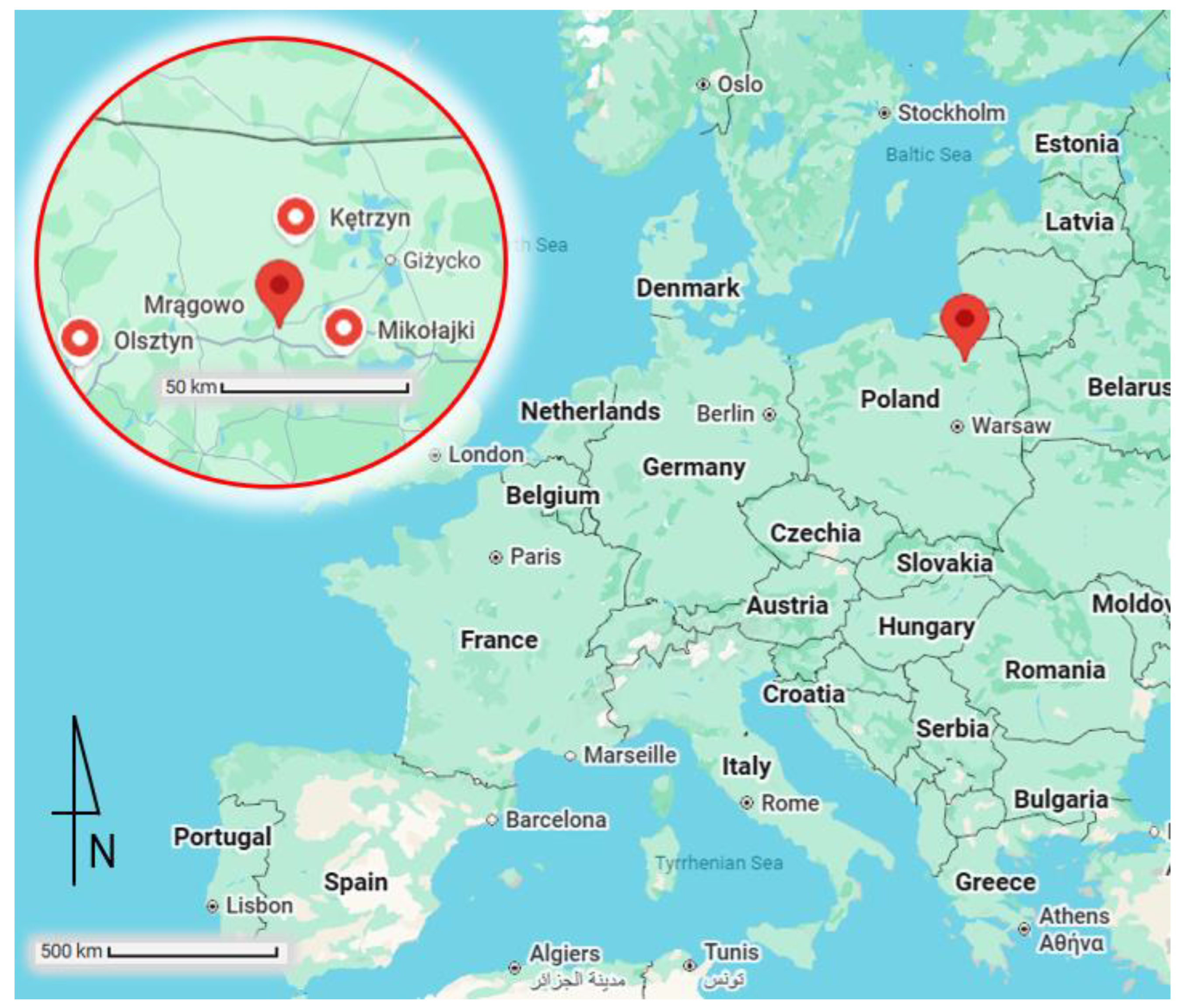
Long-term climate changes were analyzed using meteorological data collected by the National Research Institute—Institute of Meteorology and Water Management. This public dataset includes measurements from 63 synoptic stations, over 900 hydrological, climatic, and precipitation stations, and four aerological stations. For the purposes of this article, synoptic data from three cities in northeastern Poland—Olsztyn, Kętrzyn, and Mikołajki—were analyzed (
Figure 1). The analysis covered a period of 57 years, starting from 1966. Monthly resolution data were used to analyze the following parameters:
- −
Absolute maximum temperature;
- −
Absolute minimum temperature;
- −
Mean monthly temperature;
- −
Minimum ground-level temperature;
- −
Insolation;
- −
Monthly total precipitation;
- −
Maximum daily precipitation;
- −
Maximum snow cover depth;
- −
Number of days with snow cover;
- −
Number of days with rainfall;
- −
Number of days with snowfall.
All analyses were performed using the Python 3.11 programming language. Data processing and statistical analyses were conducted using NumPy 2.3.1 and Pandas 2.3.0, correlation coefficients were calculated using SciPy 1.15.1, and data visualization was carried out with Matplotlib 3.10.1 and Seaborn 0.13.2.
Data on failures in the water supply and sewage networks were obtained from the Water Supply and Sewerage Company in Mrągowo. The analysis covered a four-year period, beginning in 2020. The data, recorded at a daily resolution, provided information on the number of failures occurring within a given day separately for the water supply network, the sewage network, the pumping stations located in the sewage network, and the main pumping station. The data did not indicate the exact time of failure occurrences. In total, slightly more than 2300 failures occurred in the water and wastewater networks during the analyzed period. The Water Supply and Sewerage Company in Mrągowo is a limited liability company owned by the Mrągowo municipality. The water and sewage network operates in the urbanized area of Mrągowo (
Figure 1), which, according to the Statistics Poland (GUS) data from 2024, covers an area of 14.80 km
2 and has a population of 20,533 residents [
51]. The company operates within the city of Mrągowo and the Mrągowo municipality. The water supply network provides potable water to 100% of the city’s residents.
The condition of the water supply network varies. Recently constructed pipelines are in good condition, whereas those made of steel, cast iron, and asbestos-cement are in poor condition. The deteriorated infrastructure results in significant water losses due to failures caused by poor technical condition, undetected leaks or incorrect water consumption measurements.
The total length of the water supply network in Mrągowo is 68.9 km. The network contains 215 shut-off valves (diameter: 80–350 mm), 358 fire hydrants (diameter: 80 mm), and three high-capacity hydrants (diameter: 150 mm). Water pressure in the network is stabilized by an equalization reservoir with a capacity of 300 m3, centrally located at the highest point in the city, and by four pressure-boosting stations.
The length of the network constructed from steel and cast iron pipes is approximately 31 km, accounting for 45% of the total water supply network in Mrągowo. About 54% of the city’s water supply network consists of pipelines made of plastic materials.
The estimated age of the municipal water supply network, based on the materials used, is as follows:
- −
Sections made of polyethylene (PE) pipes were installed after 2010;
- −
Sections made of polyvinyl chloride (PVC) pipes were installed in the 1980s;
- −
Sections made of asbestos-cement pipes were installed in the 1960s;
- −
Sections made of steel and cast iron pipes were installed in the 1920s and 1930s.
The primary water intake “Sołtysko” in operation since 1965, is located within the city of Mrągowo in a basin between Mrongowiusza and Górna Sołtyska Streets, near Lake Sołtysko. Water is drawn from the Quaternary and Tertiary aquifers using six deep wells, the oldest of which is 57 years old, while the newest is 5 years old. The average daily water extraction is 7200 m3 per day.
The objective of this study was to analyze, at a daily temporal resolution, the relationship between maximum, minimum, and mean daily temperature, minimum ground-level temperature, daily precipitation sum, snow cover depth, water equivalent of snow, sunshine duration, and precipitation duration, and the occurrence of failures in the water supply and sewage systems. Correlations were examined using a threshold-based approach for the daily values of the aforementioned meteorological parameters. Here, “threshold-based” refers to correlation coefficients calculated separately within quartile- or decile-defined subsets of meteorological variables.
To identify threshold-dependent responses, daily meteorological variables were stratified into distribution-based classes defined using empirical distributions of daily observations. D1 denotes the lowest threshold class, defined as the lowest decile (10%) of daily values for a given meteorological variable. For temperature-related parameters, D1 represents extreme cold conditions relative to the local climatic distribution.
Seasonality was not explicitly modeled using calendar-based dummy variables (e.g., month or season indicators). Instead, seasonal effects were implicitly accounted for by conducting the analysis at a daily temporal resolution and by stratifying meteorological variables using quartile and decile thresholds. This approach emphasizes the role of actual meteorological conditions—both extreme and non-extreme—rather than calendar-defined seasons. Consequently, weather events with similar characteristics (e.g., extreme frost or heavy precipitation) were treated equivalently regardless of the time of year in which they occurred, allowing the assessment of network failure sensitivity to direct meteorological forcing rather than seasonal occurrence alone.
Assessing the relationship between network failures and external conditions enables the evaluation of the impact of climate change on the occurrence of failures in the water supply and sewage system under different weather conditions.
3. Results
3.1. Climate Change in Northeastern Poland
According to the data from the Typical Meteorological Year, based on measurement records from 1971 to 2000, the average annual temperature is 6.9 °C for Olsztyn and 7.1 °C for both Kętrzyn and Mikołajki. A long-term analysis of temperature distribution indicates significant variations in recorded values and their temporal variability. The fluctuations in maximum temperatures recorded in the same months across different years between 1966 and 2023 amount to approximately 12.9 °C for all three cities. Similarly, the range between extreme minimum temperatures recorded in the same months year after year is approximately 8.4 °C (
Table 2).
Over the 59-year observation period, the highest temperature recorded in Olsztyn was +36.2 °C in 1992. In the same year, Kętrzyn recorded its highest temperature at +36.1 °C. Mikołajki’s highest temperature was recorded in 1994, reaching +34.9 °C. Conversely, the lowest recorded temperature in Olsztyn occurred in January 1987 at −30.2 °C. In that same year, Kętrzyn also recorded its lowest temperature of −30.7 °C. The lowest temperature for Mikołajki within the studied period was −30.4 °C, recorded in February 1970.
According to the IMGW Report (2024) [
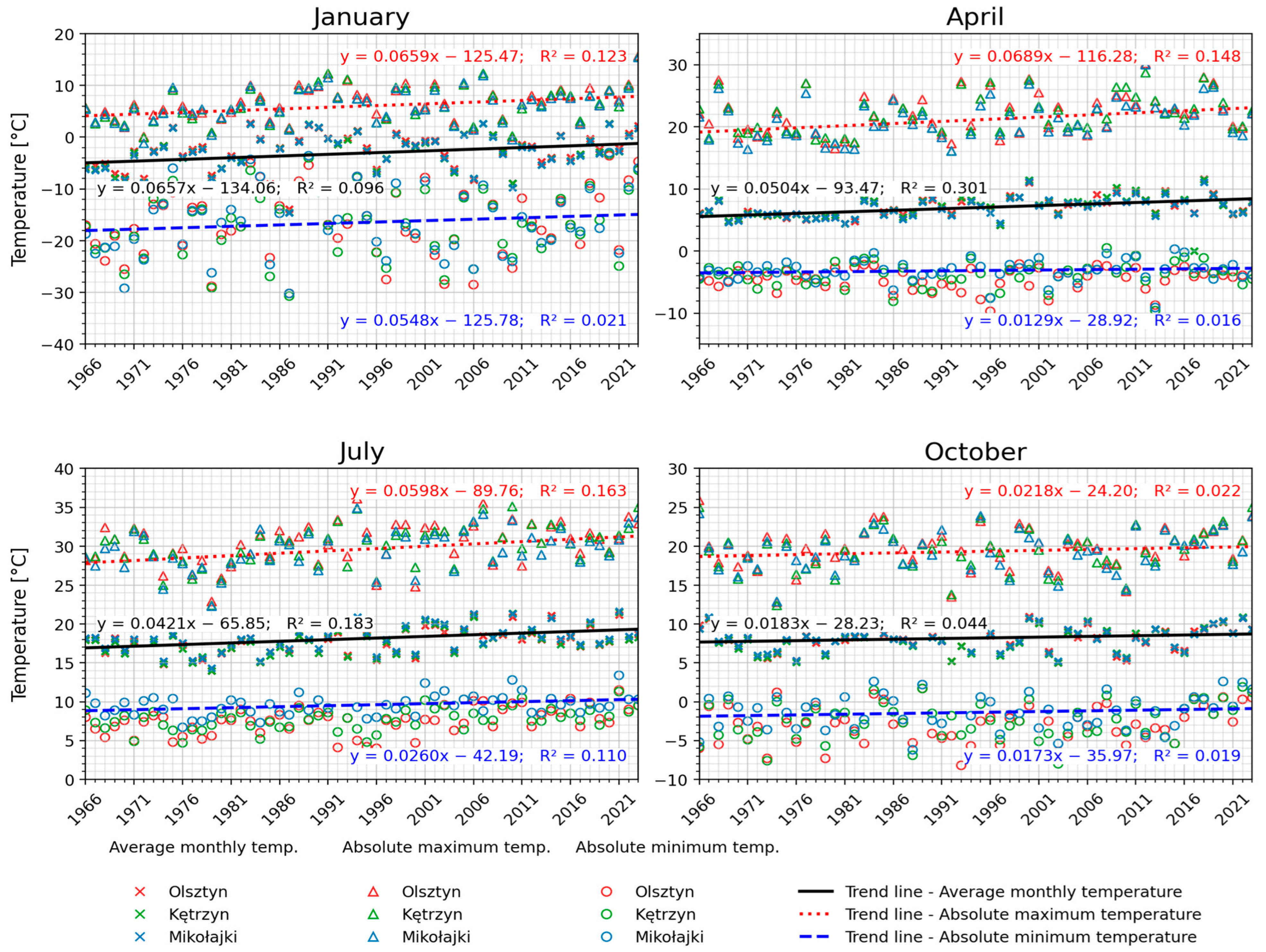
52], the annual mean air temperature increase from 1951 to 2023 is characterized by a statistically significant positive trend at a confidence level of 1−α = 0.95, amounting to 0.3 °C per decade. This corresponds to a temperature rise of 2.2 °C over the period from 1951. Similar trends are observed in northeastern Poland. In all three analyzed cities, temperature increases have been evident between 1966 and 2023 (
Figure 2). A seasonal analysis of temperature changes over the examined period indicates that the most pronounced temperature rise occurred during winter, averaging 0.62 °C per decade. The lowest long-term temperature increase was recorded in autumn, averaging 0.19 °C per decade. In contrast, in spring and summer, a more substantial increase in absolute maximum temperatures (0.64 °C per decade) was observed compared to minimum temperatures (0.19 °C per decade). Seasonal variability in climatic conditions is illustrated using representative months rather than aggregated seasonal averages. January, April, July, and October were selected to reflect typical winter, spring, summer, and autumn conditions in Central Europe, respectively. This approach provides a clear seasonal context while allowing for a more detailed comparison of monthly variability across different periods.
Table 3 summarizes the results of linear trend analyses for monthly mean, absolute maximum, and absolute minimum air temperatures over the 1966–2023 period. For each month, the estimated trend values, associated
p-values, and 95% confidence intervals are reported, allowing for a uniform assessment of trend significance. The results indicate statistically significant warming trends for monthly mean temperatures across all months. In most cases, trends in absolute minimum temperatures are also significant, highlighting pronounced warming during cold conditions. In contrast, trends in absolute maximum temperatures show greater seasonal variability and are not statistically significant for some spring and early summer months. The inclusion of
p-values and confidence intervals ensures a transparent evaluation of trend robustness over the long observation period.
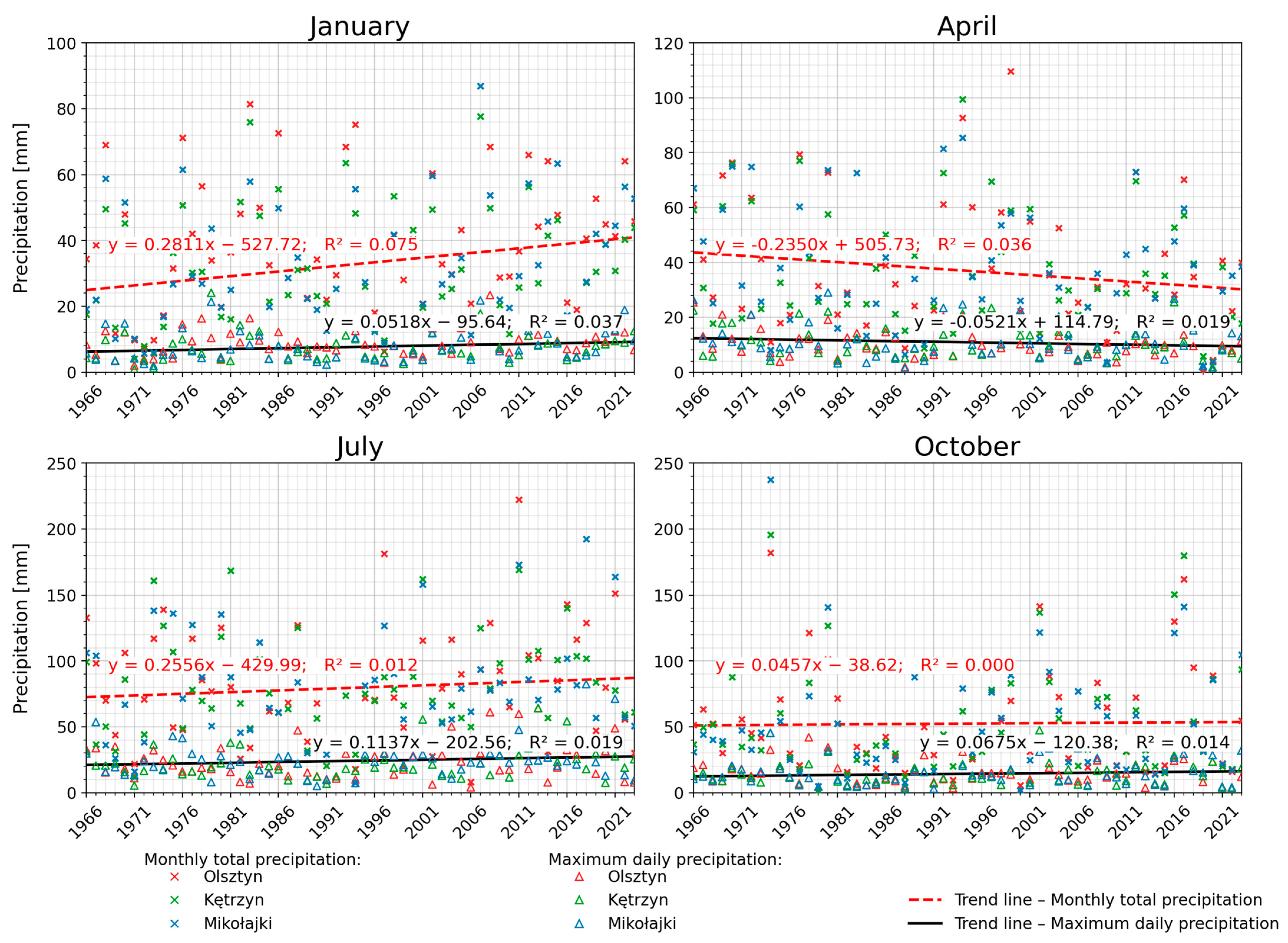
A long-term precipitation analysis indicates that monthly precipitation totals exhibit only minor changes (
Figure 3). During winter, the maximum recorded monthly precipitation total was 89.9 mm in Olsztyn in January 2007. A slight increasing trend in monthly precipitation totals is observed for winter (0.52 mm per decade), summer (1.14 mm per decade), and autumn (0.67 mm per decade). In autumn, the maximum daily precipitation totals also demonstrated a slight upward trend (0.46 mm per decade). However, a downward trend in monthly precipitation totals is evident in spring, amounting to −0.52 mm per decade. This period also exhibits a more pronounced decline in maximum daily precipitation totals, reaching −2.53 mm per decade. In contrast, winter and summer show a clear upward trend in maximum daily precipitation totals, amounting to 2.81 mm per decade in winter and 2.56 mm per decade in summer.
For each month, the estimated trend values, corresponding
p-values, and 95% confidence intervals are reported, enabling a uniform assessment of trend significance indicate that statistically significant. The results indicate that trends in precipitation are limited to selected months, while many monthly trends are not significant, as reflected by wide confidence intervals encompassing zero (
Table 4). This variability highlights the less consistent long-term behavior of precipitation compared to temperature-related variables and underscores the need for cautious interpretation of precipitation trends over extended observation periods.
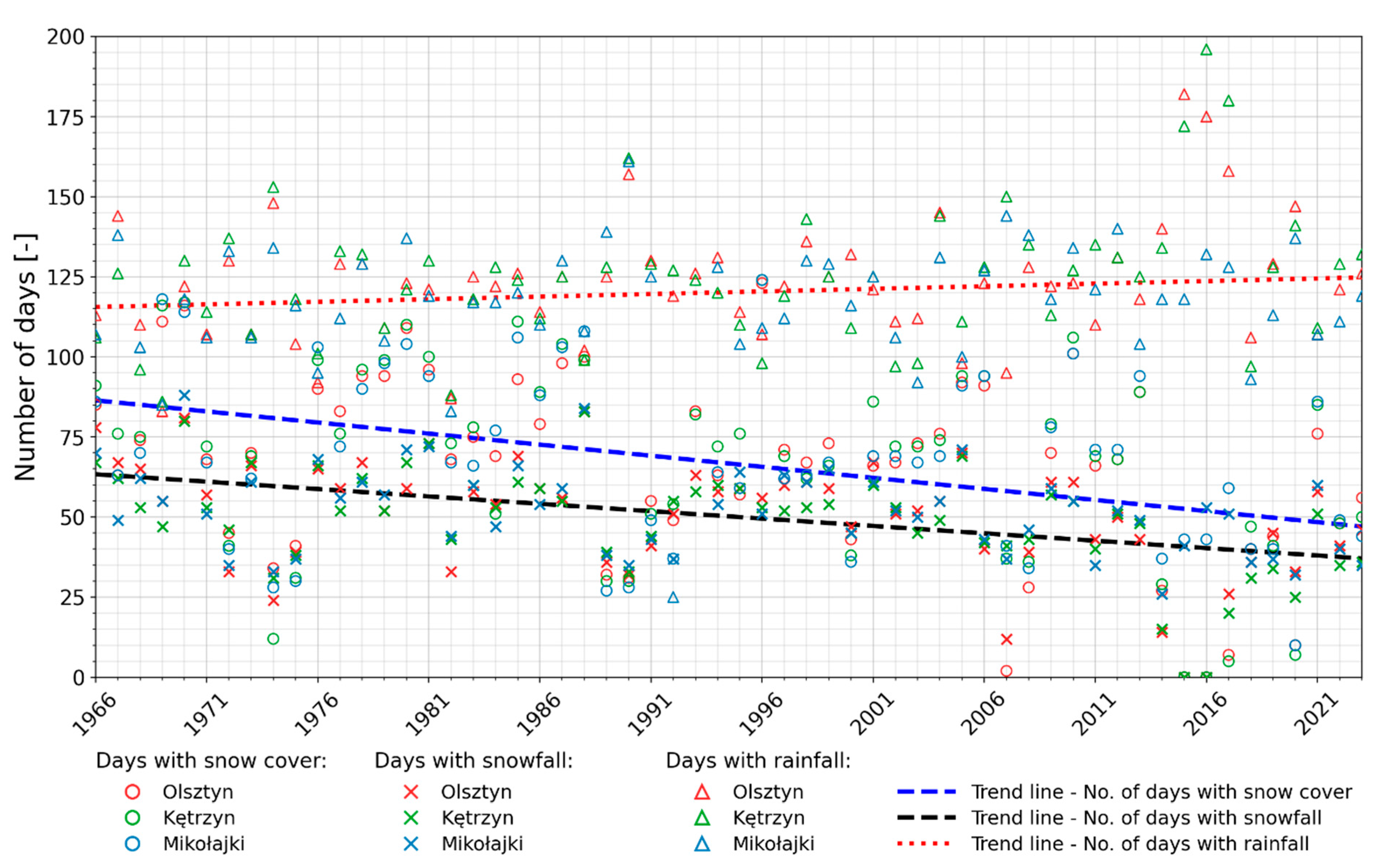
A distinct trend toward decreasing snowfall occurrence is evident (
Figure 4). Approximately sixty years ago, snowfall could statistically be expected for about two months per year, while snow cover persisted for approximately 82 days per year. Currently, snowfall can statistically be expected for about 43 days per year, and snow cover is observed for approximately 53 days per year. Notably, in 2015 and 2016, Olsztyn and Kętrzyn experienced no snowfall at all. Meanwhile, the number of days with rainfall has been gradually increasing. In the 1960s, approximately 113 rainy days per year were recorded, whereas currently, this number has risen to around 121 days per year.
The snow cover depth has also significantly decreased. Over the analyzed period, a reduction of approximately 50% has been observed. Additionally, an increasing trend in ground-level minimum temperature values has been recorded. The most substantial differences are evident during the summer. For example, a linear trend for August indicates that the ground-level minimum temperature increased from approximately 1.6 °C in 1966 to around 5.1 °C in 2023. A similar trend is observed in winter, albeit to a lesser extent. For instance, in February 1966, the expected ground-level minimum temperature was around −21.0 °C, whereas in 2023, it was approximately −17.4 °C.
Long-term changes in the frequency of snow- and rain-related days were assessed using linear trend analysis for the 1966–2023 period (
Table 5). For each month, estimated trend values are accompanied by corresponding
p-values and 95% confidence intervals, allowing for a consistent evaluation of statistical significance across all analyzed variables.
The results indicate a statistically significant decline in the number of days with snow cover and snowfall during most winter months, particularly from December to March. In contrast, the number of days with rainfall exhibits a significant increasing trend in several winter months, reflecting a shift from snow-dominated to rain-dominated precipitation regimes. The reported confidence intervals confirm the robustness of snow-related trends, while highlighting greater variability and uncertainty in rainfall-related changes over the long observation period.
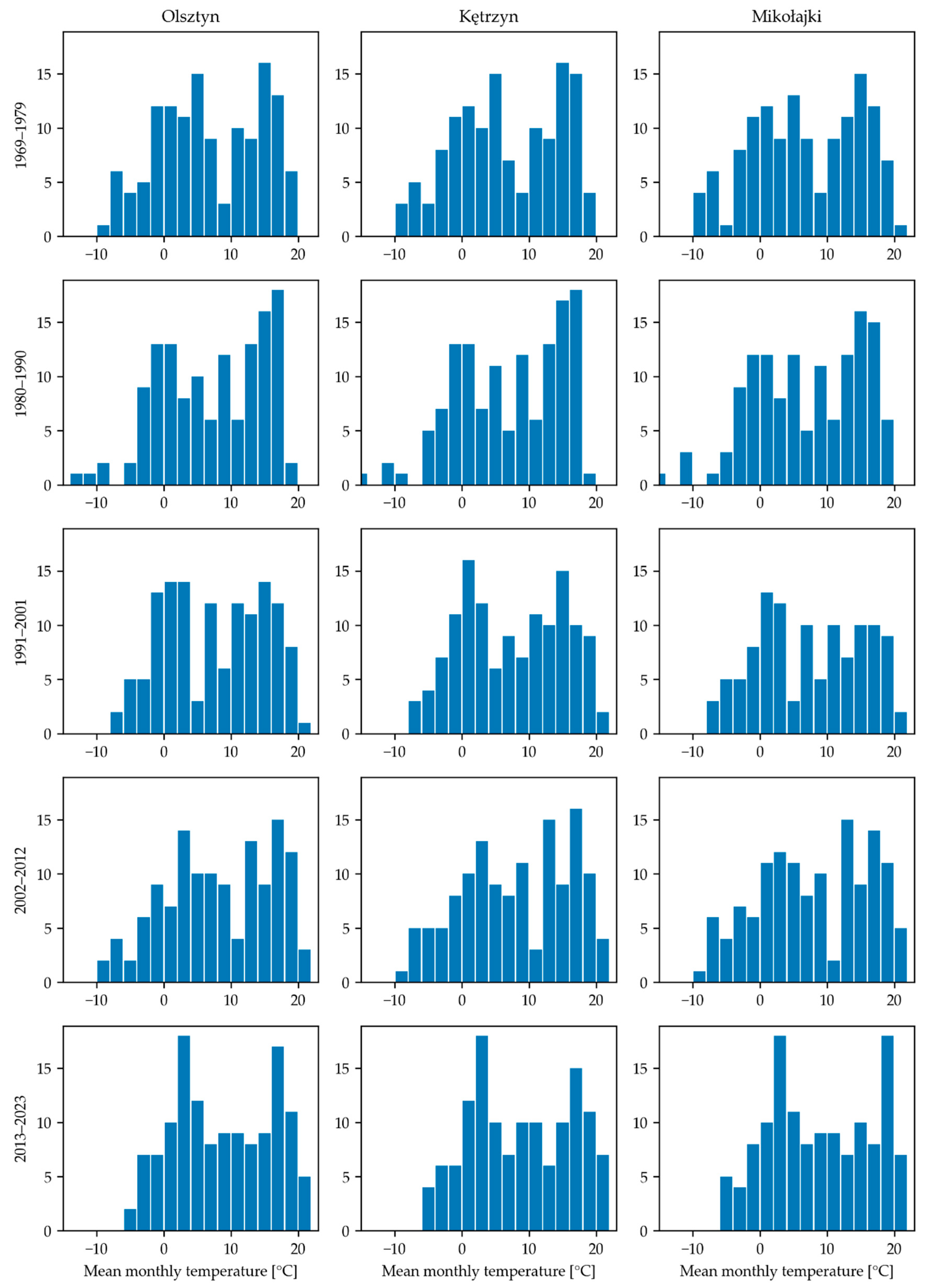
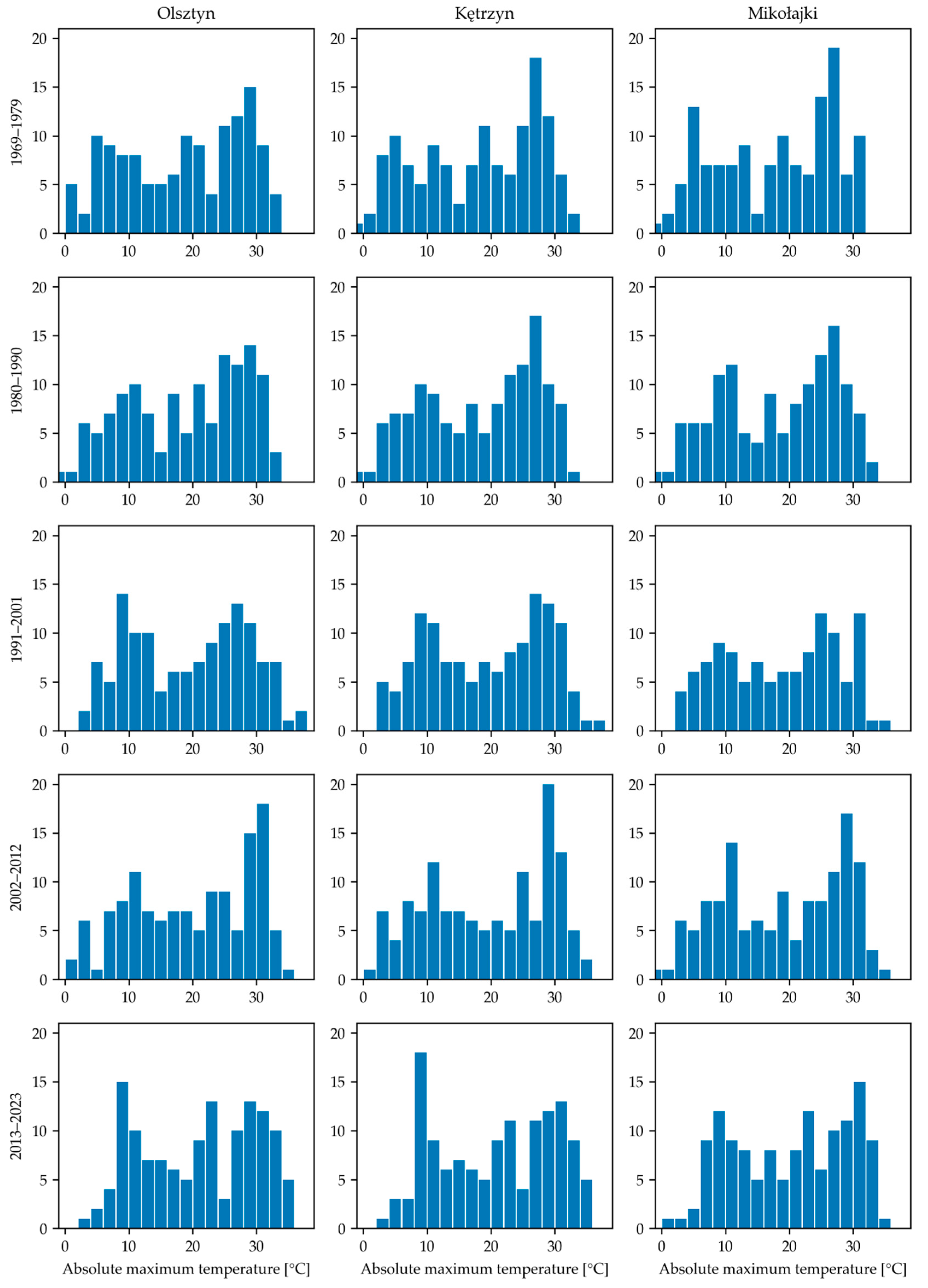
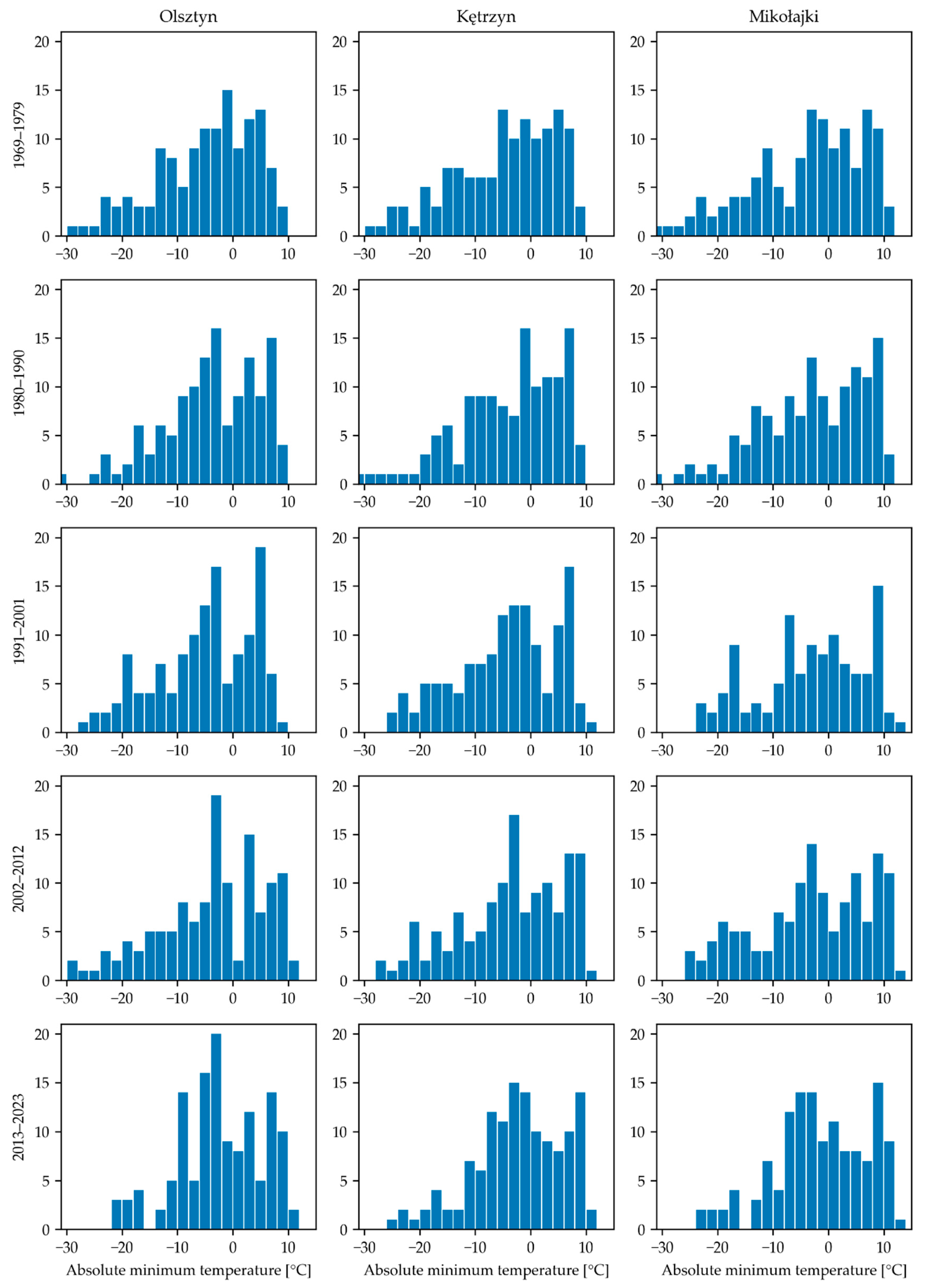
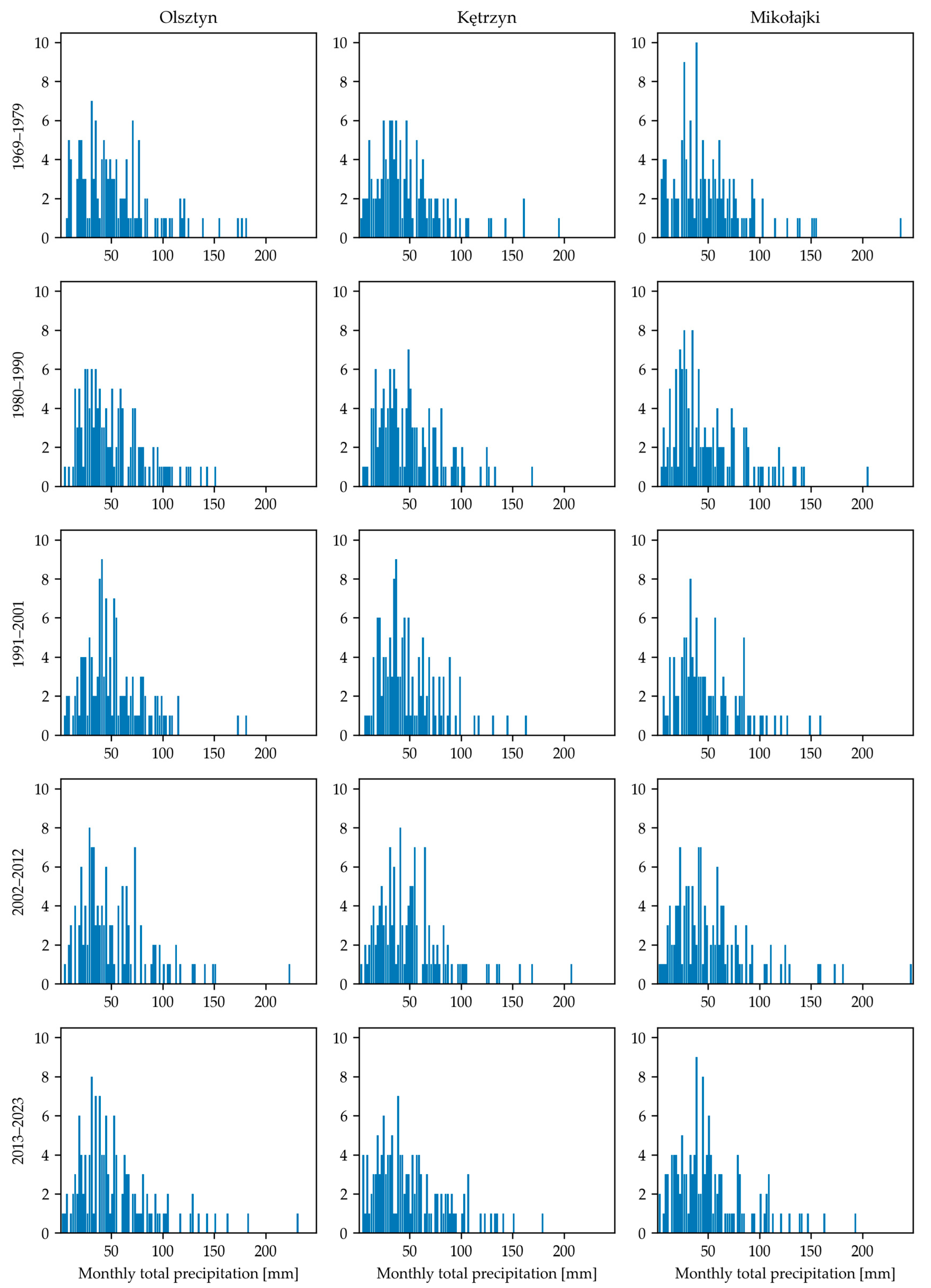
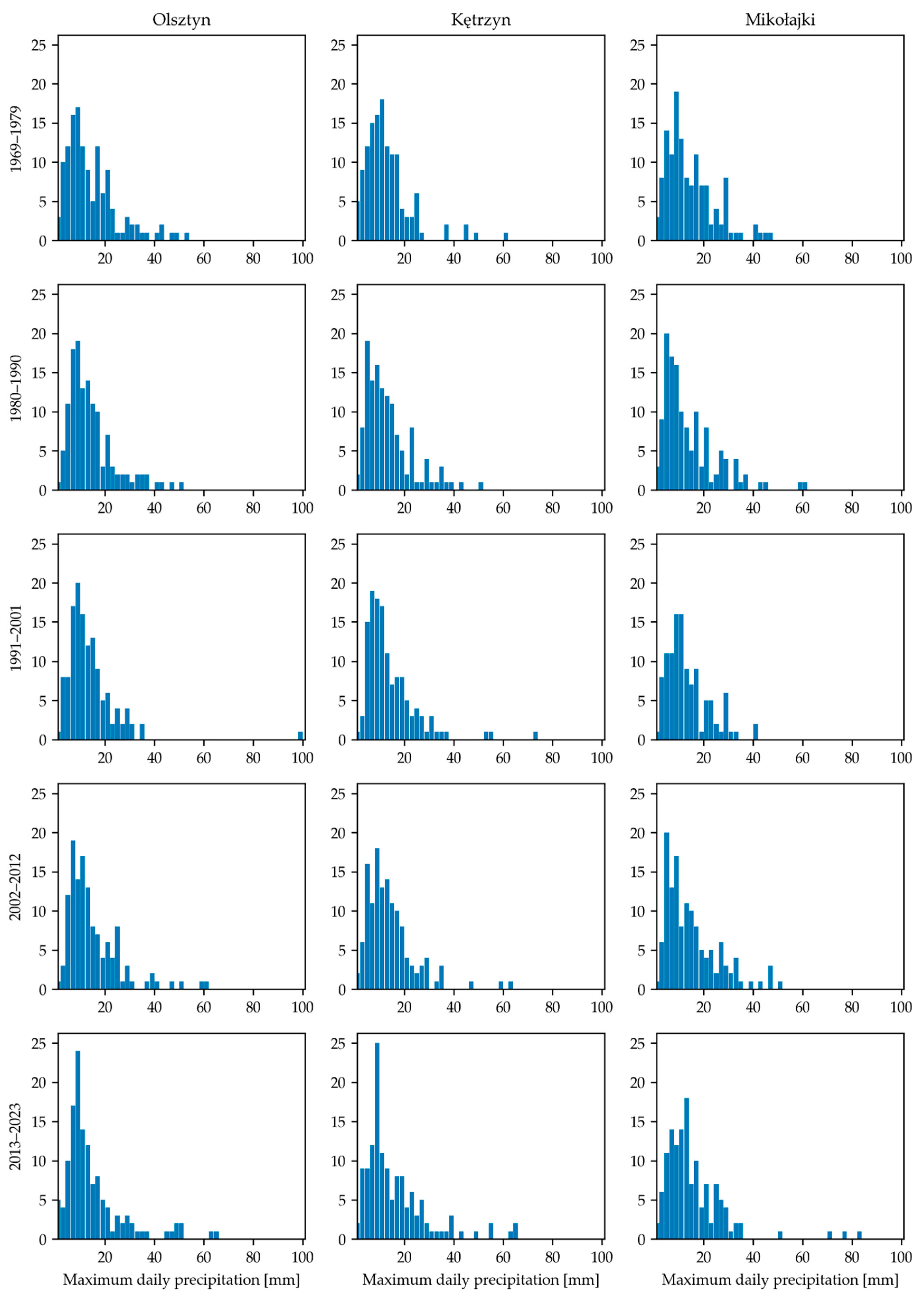
To improve the visualization and comparability of climatic variability, supplementary histogram-based figures have been included in the
Appendix A.
Figure A1,
Figure A2,
Figure A3,
Figure A4 and
Figure A5 present the distributions of selected climatic variables for representative months, stratified into consecutive, equally structured multi-year periods. Specifically, the histograms are shown for the following time intervals: (a) 1969–1979, (b) 1980–1990, (c) 1991–2001, (d) 2002–2012, and (e) 2013–2023. This consistent temporal segmentation allows for a direct comparison of changes in the distribution of climatic conditions across decades and facilitates the assessment of long-term seasonal shifts.
3.2. Network Failures
An analysis was conducted on failure incidents within the water supply and sewage networks in the town of Mrągowo. The data cover the period from 2020 to 2023 and indicate the number of failures occurring within a 24 h period, without specifying the exact time of occurrence. The failure incidents were categorized as follows:
- −
Failures in the sewage network, excluding failures of pumping stations (denoted as SN);
- −
Failures of network pumping stations in the sewage system, excluding the main pumping station (denoted as SP);
- −
Failures of the main pumping station in the sewage network (denoted as SMP);
- −
Failures in the water supply network (denoted as W).
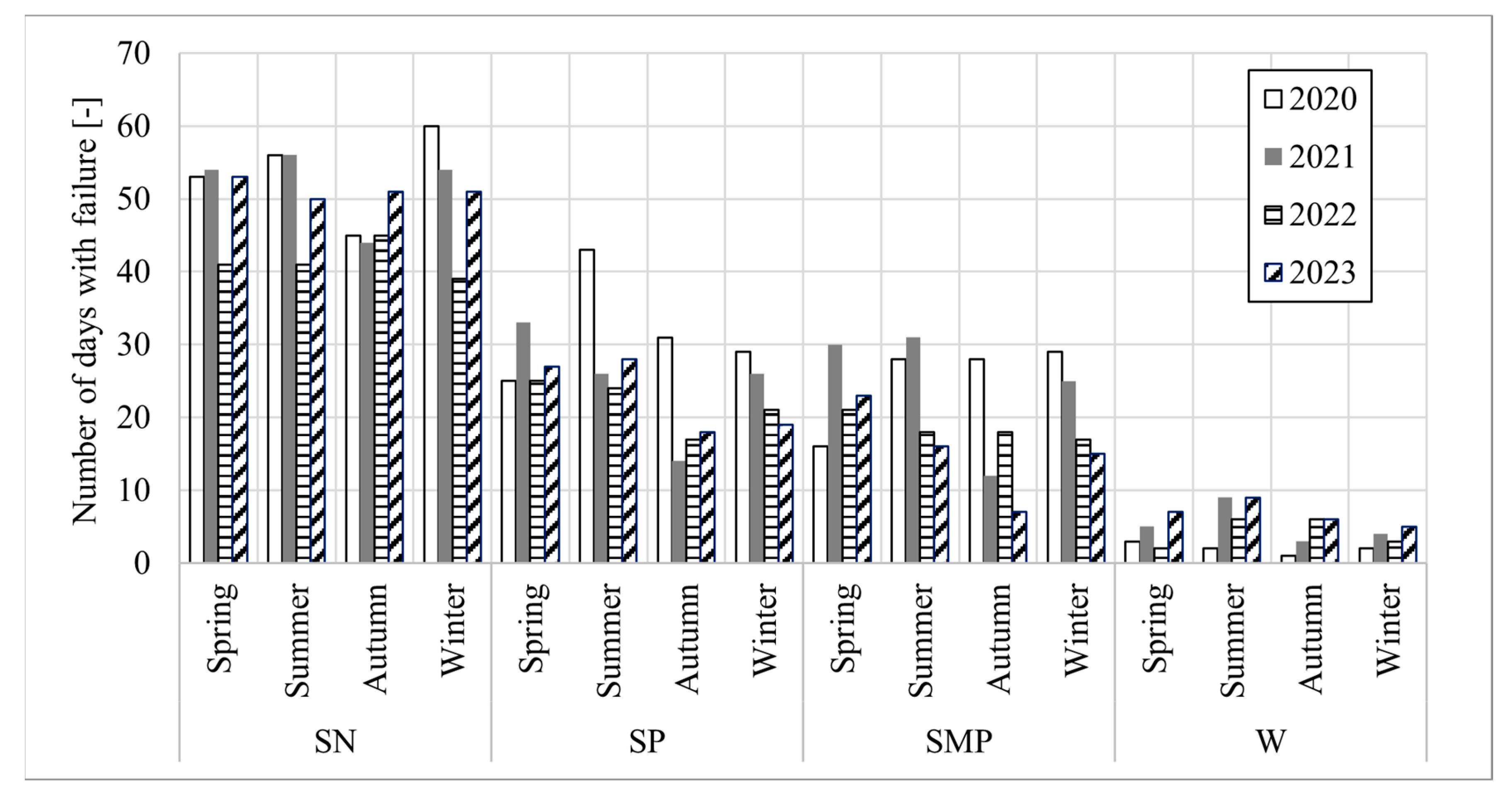
Regardless of the season, failures most frequently occurred in the sewage network and least frequently in the water supply network (
Figure 5). The lowest failure rate in the sewage system was observed in 2022. Notably, failures in the sewage network often occurred multiple times within the same day. This phenomenon was observed in approximately 40% of cases for the sewage network (SN) and in about one-third of cases for pump failures in the sewage system (SP and SMP). An extreme case occurred on 13 January 2023, when eight failures were recorded in the sewage network (SN). Overall, during the analyzed period, there were 1262 failures in the sewage network (SN), 529 failures in the network pumping stations (SP), 422 failures in the main pumping station (SMP), and 99 failures in the water supply network (W).
Although several meteorological variables are seasonally related (e.g., air temperature and snow cover), the strongest threshold-based correlation coefficients with network failures were consistently associated with individual threshold-defined parameters, particularly extreme low temperatures (D1), indicating a dominant role of direct thermal stress rather than combined multivariate effects.
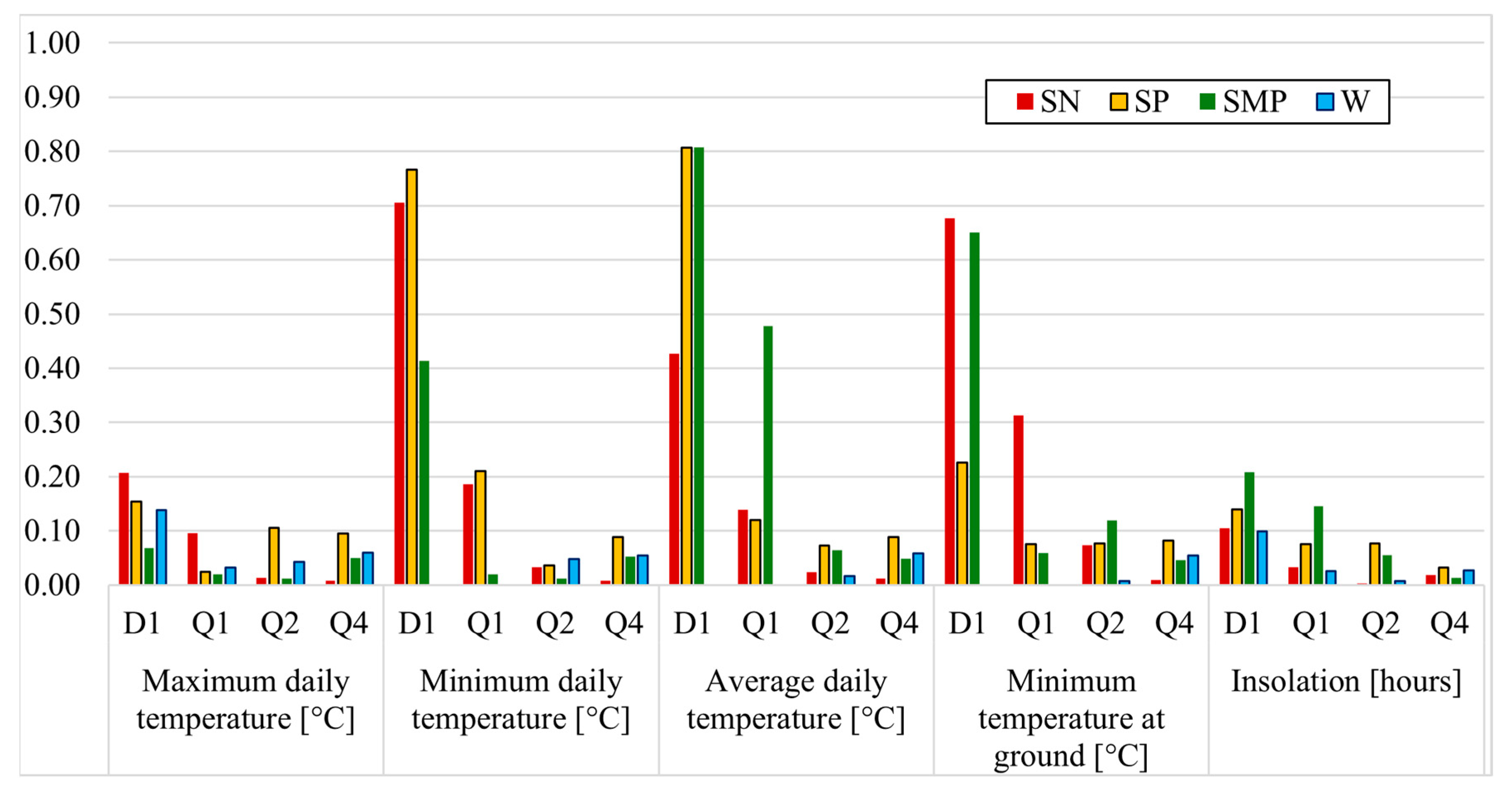
The study examined threshold-based correlation coefficients between temperature and sunlight exposure and network failure rates (
Figure 6). The parameters considered included maximum and minimum daily temperature, average daily temperature, and minimum ground temperature.
No statistically significant relationships were found across the entire range of analyzed weather conditions (Q4—fourth quartile). However, a selection of meteorological data based on intensity was performed. The threshold-based correlation coefficients were examined within the second quartile (Q2), where no statistically significant relationships were observed. Further data selection into the first quartile (Q1), considering the top 25% highest values for maximum daily temperature and sunlight exposure and the bottom 25% lowest values for minimum daily temperature, average daily temperature, and minimum ground temperature, also indicated only weak or very weak correlation coefficients between temperature and failures. Only in the case of extreme low temperatures in the first decile (D1) was a strong correlation coefficients observed between failures in the sewage network. However, this was not observed in the water supply network. The observed contrast between the sewer network and the water supply system can be explained by several structural and operational differences. Sewer pipes are typically installed at shallower depths than water supply pipes, making them more directly exposed to frost penetration and freeze–thaw cycles. In addition, sewer systems usually consist of pipes with larger diameters and operate under gravity-flow conditions, which promotes lower flow velocities and the occurrence of partially filled or stagnant sections. These characteristics increase the susceptibility of sewage infrastructure to freezing, blockage, and structural damage during extreme cold events.
By contrast, water supply networks are generally composed of pipes with smaller diameters, installed deeper below the frost line, and operated under continuous internal pressure. Higher flow velocities, pressurized conditions, and pipe materials designed for potable water systems reduce the likelihood of freezing and mechanical failure. Together, these factors contribute to the markedly lower sensitivity of the water supply network to extreme low temperatures observed in this study.
Furthermore, no statistically significant correlation coefficients could be established between failures in the water supply or sewage network and high external temperatures or sunlight exposure.
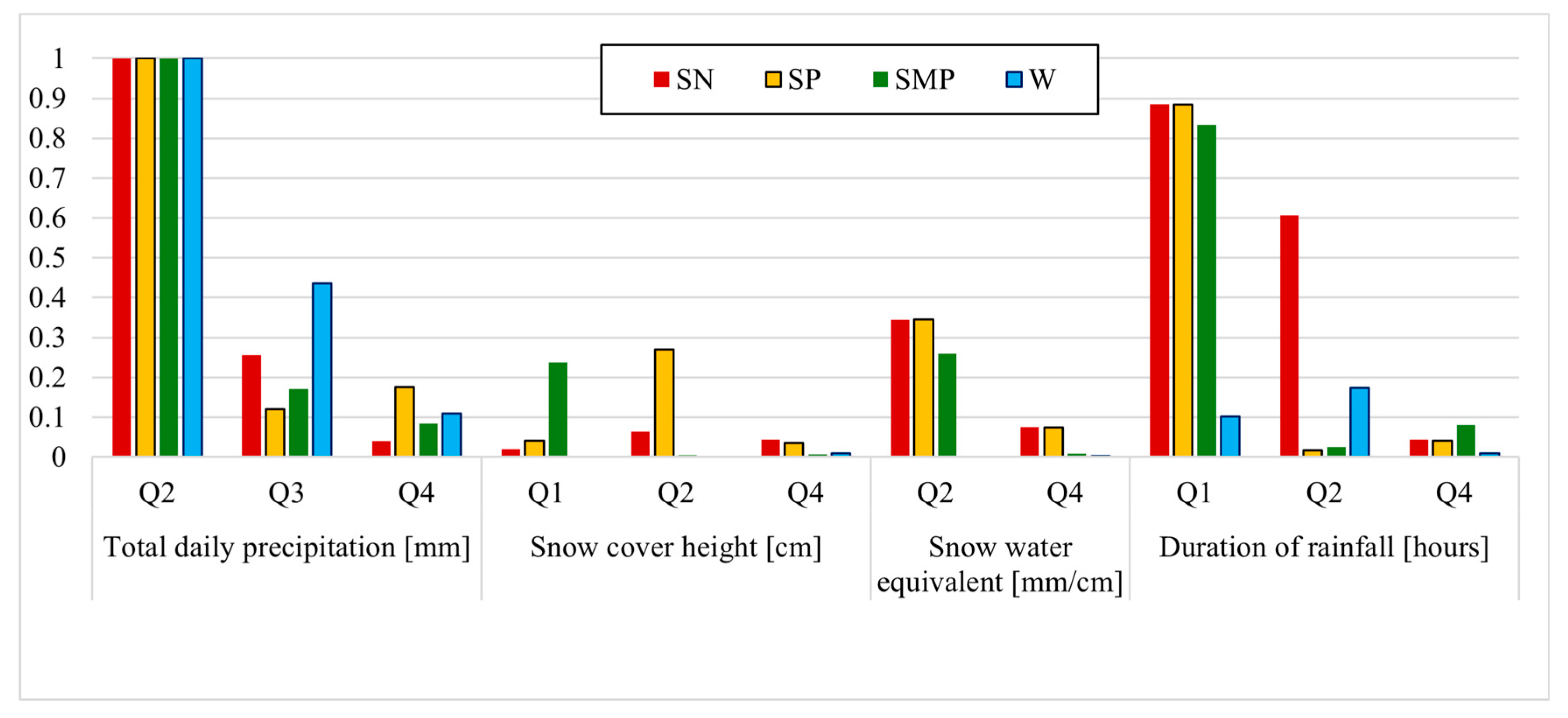
The study also investigated the threshold-based correlation coefficients between rainfall, snow cover, and network failure rates (
Figure 7). The parameters considered included daily precipitation, snow cover depth, water equivalent of snow, and rainfall duration.
It should be noted that in the analysis of rainfall and snow cover, extreme values in the first quartile (Q1) appeared only in isolated cases for daily precipitation and water equivalent of snow. In contrast, in the analysis of temperature and sunlight exposure, the extreme quartile always contained several dozen to even several hundred measurement values. Consequently, these values were excluded from the dataset (
Figure 7), even though failures were associated with them. The highest daily precipitation was recorded on 8 July 2021, measuring 71.3 mm. On this day, failures occurred in both the sewage network (SN) and the water supply network (W). The highest water equivalent of snow, measuring 5.2 mm/cm, was recorded on 22 December 2022. On this day, a failure also occurred in the main pumping station of the sewage system. The correlation value of 1 for daily precipitation in the second quartile (Q2) also requires explanation. However, it should be explicitly noted that this correlation value was calculated based on only two observation days. As a result, the apparent perfect correlation (r = 1) is not statistically robust and should be interpreted with caution, serving primarily as an indication of coincident events rather than a reliable measure of a systematic relationship. During the analyzed four-year period, only two measurement values for daily precipitation fell within the second quartile. However, on these two days, a total of 12 failures were recorded, affecting all analyzed components of the water and sewage network (SN, SP, SMP, and W). The strong correlation between sewage network failures and rainfall duration in the first quartile (Q1) is based on five recorded measurements falling within the top 25% longest rainfall durations. However, the moderate correlation of 0.61 for sewage network failures (SN) during rainfall events classified within the second quartile (Q2) is based on 24 measurement days.
Figure 6 and
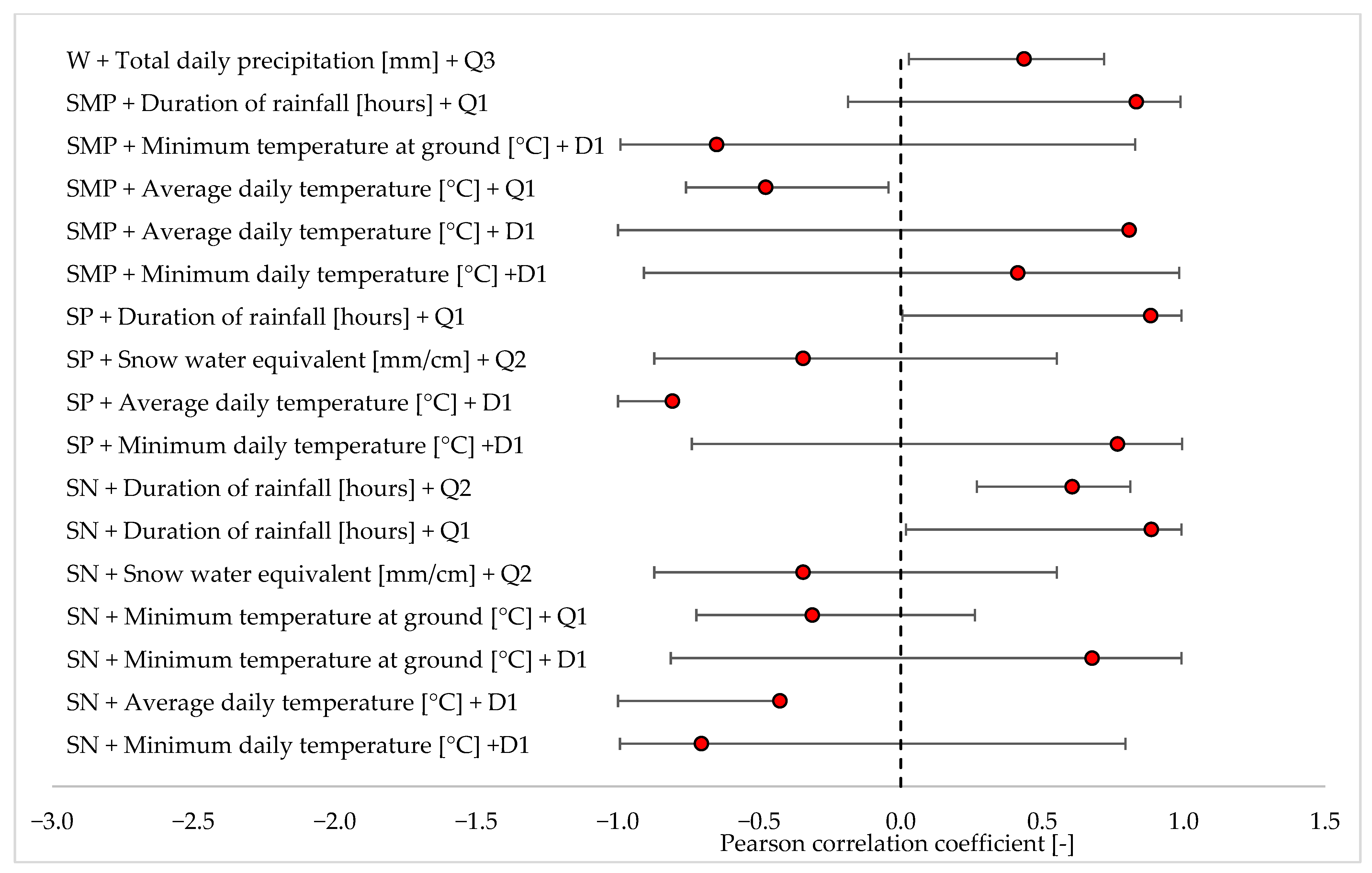
Figure 7 present the magnitude of correlation coefficients to highlight threshold-dependent sensitivity, while the direction of the strongest relationships is explicitly shown in
Figure 8. The analysis further indicates that both positive and negative correlations occur between infrastructure failures and climatic variables, reflecting different physical mechanisms of impact. Negative correlations, predominantly associated with extreme low temperatures, suggest an increase in failure occurrence under cold stress conditions, particularly in the sewer network and pumping infrastructure. In contrast, positive correlations are mainly linked to precipitation-related variables, such as rainfall duration, and point to increased failure rates during prolonged wet conditions, likely due to hydraulic overload and infiltration processes.
Figure 8 highlights only those relationships that exhibit at least moderate linear association, allowing clearer identification of dominant climatic stressors.
The strongest and most consistent negative correlations are observed between failures in the sewage network (SN) and extreme low-temperature indicators, particularly minimum daily air temperature and minimum ground temperature under the lowest decile (D1) conditions. In these cases, the confidence intervals do not include zero, confirming statistically robust associations between cold stress and increased failure occurrence. Similar, though slightly less pronounced, negative correlations are also visible for pumping stations (SP and SMP), indicating their vulnerability to extreme cold conditions.
In contrast, positive correlations are primarily associated with precipitation-related variables, especially rainfall duration within the first and second quartiles (Q1–Q2). Moderate to strong positive correlations are evident for failures in the sewage network and pumping infrastructure, suggesting that prolonged rainfall episodes increase failure likelihood due to hydraulic overload and infiltration processes. For the water supply network (W), only a limited number of precipitation-related correlations exceed the |r| = 0.3 threshold, and their confidence intervals are generally wider, indicating weaker and less stable relationships.
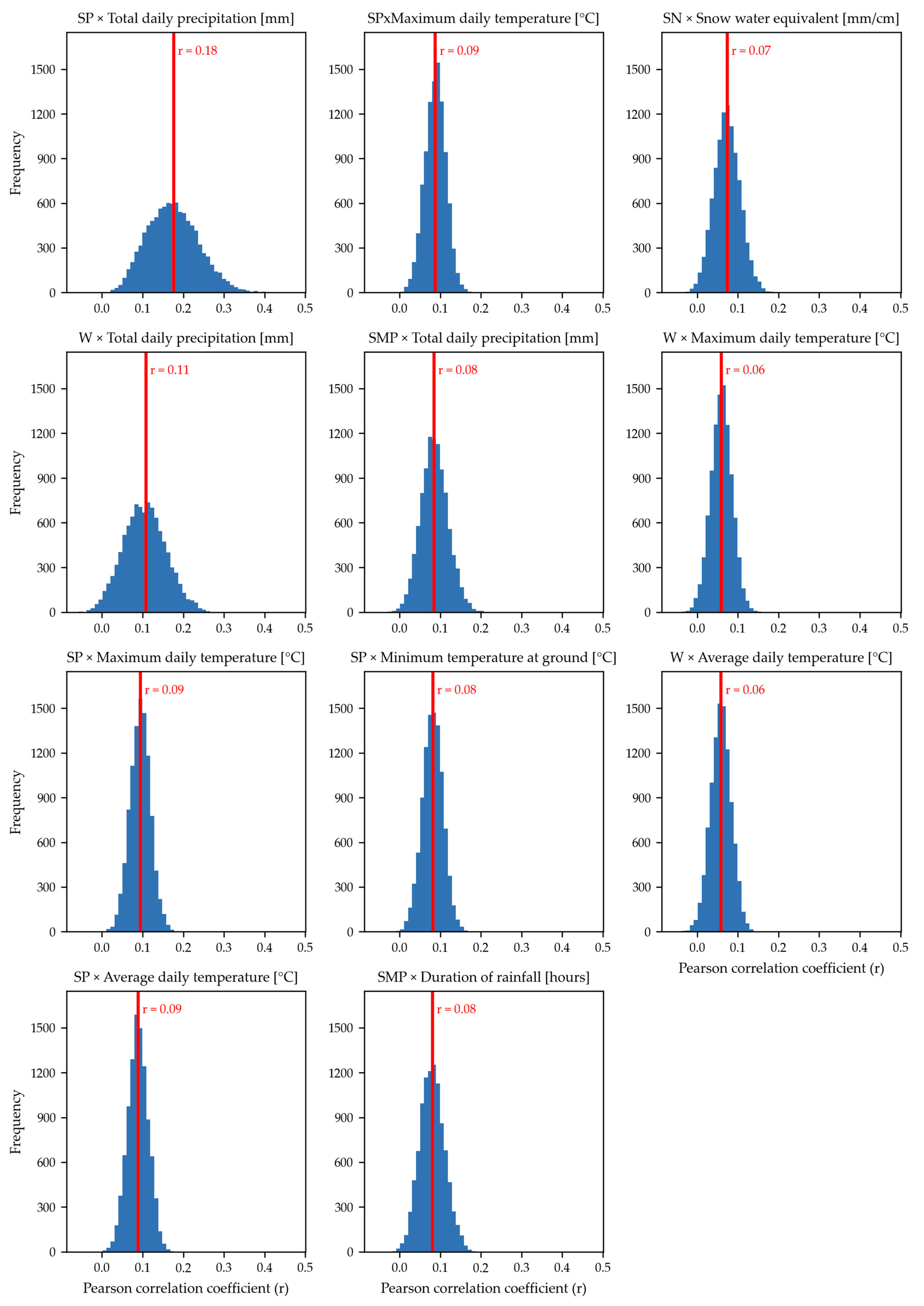
To further assess the robustness of the observed relationships, a bootstrap-based validation was performed for selected Pearson correlation coefficients exceeding |r| = 0.3. This additional analysis allows the uncertainty and stability of the strongest correlations to be evaluated beyond point estimates alone. The resulting bootstrap distributions and confidence ranges for these selected correlations are presented in
Figure A6 in the
Appendix A.
Multicollinearity among climatic variables was assessed using variance inflation factors (VIF), calculated with respect to average daily air temperature as the reference variable. The analysis revealed moderate collinearity between temperature-related and snow-related variables. In particular, minimum daily air temperature (VIF = 16.06) and minimum ground temperature (VIF = 8.17) exhibited the highest VIF values, indicating strong interdependence with average daily temperature under cold-season conditions. Snow-related variables, including snow cover height (VIF = 1.23) and snow water equivalent (VIF = 1.16), also showed elevated VIF values compared to precipitation-related variables, reflecting their physical linkage to thermal conditions.
In contrast, precipitation- and radiation-related parameters demonstrated low collinearity with average daily temperature, with VIF values close to unity for total daily precipitation (VIF = 1.01), duration of rainfall (VIF = 1.00), and insolation (VIF = 1.46).
4. Discussion
The data collected by the National Research Institute—Institute of Meteorology and Water Management represent a long-term resource that enables the analysis of climate changes occurring in Poland and their comparison with global trends. Numerous studies and reports have been generated based on this dataset [
52]. However, this study adopts a simplified, keyword-based approach that contextualizes the northeastern region of Poland within a broader global framework to facilitate localization for readers outside Poland. Since meteorological data are collected at specific locations, three stations were selected in the towns of Olsztyn, Kętrzyn, and Mikołajki. However, the results presented in this study may not necessarily be directly applicable to adjacent macro-regions of northeastern Poland, which is often associated with the administrative area of the Warmian-Masurian Voivodeship. For example, the Gdańsk Coast region near Elbląg, which is partly within this voivodeship, requires separate analysis due to the influence of the Baltic Sea. In this case, data from meteorological stations in Elbląg and Elbląg-Milejewo should be used. Similarly, separate analyses are required for Suwałki, located in the Lithuanian Lakeland macro-region, within the Podlaskie Voivodeship, which is known as Poland’s “cold pole.”
While synoptic data from 1966 to the present are publicly accessible, obtaining data on failures in water supply and sewage networks presents a challenge. The Statistics Poland (GUS) collects such data, but only in an aggregated form, providing annual failure counts for water supply and sewage networks. Theoretically, these data have been collected since 1995, but for the three analyzed towns, information is available from 2015 for total failures in water supply and sewage networks, from 2021 for water supply failures per kilometer of network, and from 2022 for sewage network failures per kilometer (
Table 6). Given the aggregated, annual nature of this data, it was unsuitable for analyzing relationships with the highly dynamic and seasonal weather conditions in Poland. A quantitative comparison of infrastructure vulnerability further highlights the contrast between the sewer network and the water supply system. As shown in
Table 6, the failure rate per kilometer of sewer network is several times higher than that observed for the water supply network, indicating a substantially greater sensitivity of sewer infrastructure to climatic stressors. This disparity is consistent with differences in pipe depth, operational conditions, and exposure to infiltration and freezing processes.
Ultimately, Mrągowo was selected for detailed analysis. This town is centrally located among the synoptic stations of Olsztyn, Kętrzyn, and Mikołajki, and experiences similar climate variability. Moreover, Mrągowo is fully sewered and supplied with water from a centralized system. Unlike many other towns considered, the Water Supply and Sewage Plant in Mrągowo was willing to provide failure data for a longer period than a month, quarter, or year. For statistical analyses in this article, collecting data over the longest possible timeframe was crucial. However, physically gathering the data on failures posed a challenge. As in most northeastern Polish networks, an automated monitoring system was not operational in Mrągowo between 2020 and 2023. The manually collected and archived data included information on the date, location, and nature of failures, but not the exact time of occurrence. Consequently, correlations between network failures and selected meteorological parameters were analyzed with daily accuracy. This ensured temporal consistency between failure data and daily meteorological records but did not allow verification of relationships between short-term heavy rainfall events and network failures. This aspect will be the subject of future planned research, requiring the completion of an ongoing monitoring and measurement system. Furthermore, analyzing the relationship between network failures and heavy rainfall will necessitate data from the recently installed weather station in Mrągowo, as such events have a localized nature and are not captured in the daily meteorological data from Olsztyn, Kętrzyn, or Mikołajki.
From a policy and management perspective, the results support the ongoing implementation of monitoring and early-warning systems in medium-sized cities such as Mrągowo. The progressive deployment of telemetry-based solutions for temperature and flow monitoring in sewer networks aligns with the observed sensitivity of these systems to cold-related stress and hydraulic overload. Further optimization and targeted expansion of such smart monitoring infrastructure may contribute to reducing failure rates, offering a cost-effective complement to large-scale pipe replacement and rehabilitation strategies.
In addition to the daily resolution of the analysis, the interpretation of cold-related failures should also consider the duration of sub-zero temperature periods. Prolonged frost conditions increase the depth of ground freezing, which may affect vulnerable components of water supply and sewage systems located near or above the frost line, such as valves and fittings. Therefore, the strong associations observed between extreme low temperatures and failure occurrence likely reflect not only short-term temperature minima but also the cumulative impact of sustained freezing conditions. Although the present study did not explicitly quantify frost duration, the identified threshold-dependent relationships are consistent with this well-established engineering mechanism of frost-induced ground heave and material stress.
It is also essential to consider factors that may influence the failure rate of the water supply and sewage network in Mrągowo but are not addressed in this study. Mrągowo is a tourist destination, and during the summer season, the number of users increases due to tourism. Mass events, particularly the annual Country Picnic, which attracts tens of thousands of participants, can significantly impact network performance.
Consequently, the primary conclusions of this study are most applicable to towns located in the Masurian Lakeland or other regions with comparable cold-temperate climatic conditions and infrastructure characteristics, while extrapolation to areas with substantially different geographical settings, such as coastal or highland regions, should be approached with caution.
5. Conclusions
This study confirmed the connection between climatic sources and failure rates of water and sewage networks in northeastern Poland. By integrating long-term meteorological data (1966–2023) with failure records from the town of Mrągowo (2020–2023), this research offers valuable insights into the potential impact of climate variability on critical infrastructure. The findings highlight both expected and unexpected trends, shedding light on the complexity of interactions between climate factors and network reliability. A statistically significant correlation was confirmed between extremely low temperatures of the ground and air and increased failure rates in the sewage network. The data confirm that freezing conditions exacerbate infrastructure failures, a finding consistent with existing engineering knowledge. In contrast, the relationships between precipitation-related variables and failure occurrences were generally weak and inconsistent. Although intense rainfall events coincided with increased incidents in both networks, these effects should be regarded as preliminary observations, partly reflecting limitations related to data resolution and aggregation. While intense precipitation events were linked to increased incidents in both networks, the overall effect of precipitation and snow cover depth on failure rates was marginal. This contrasts with previous studies that suggested significant rainfall-driven failures due to soil instability and water infiltration. The interpretation of precipitation-related effects requires caution due to limitations associated with data resolution and spatial representativeness. According to IMGW and WMO classifications, intense rainfall events such as heavy rain, torrential rain, or extreme downpours are defined based on short-term rainfall intensity (mm/h). However, the daily temporal resolution of the meteorological data used in this study does not allow for a direct assessment of such short-duration, high-intensity precipitation events. Moreover, intense rainfall phenomena are typically highly localized, and their impacts on water and wastewater infrastructure are strongly dependent on site-specific conditions. In the absence of a meteorological measurement station in Mrągowo, the present analysis relied on data from nearby synoptic stations, which may not fully capture localized extreme precipitation affecting the urban network. This research benefits from an extensive dataset spanning nearly six decades. Such a long-term perspective allows for a more comprehensive evaluation of climate trends and their infrastructural implications. The analysis also employs a quartile-based segmentation of climate data to discern potential thresholds beyond which failures become more frequent. Moreover, the analysis is carried out taking into account seasonality—four seasons in Central European conditions. This approach facilitates a more granular understanding of climate impacts on infrastructure, providing a valuable framework for future research.
The presented study also identifies areas requiring further investigation. One limitation is the absence of real-time failure monitoring, which constrains the ability to precisely link short-duration weather extremes, such as sudden temperature drops or heavy rainfall events, to infrastructure breakdowns. Future research should incorporate automated monitoring systems that can capture real-time failure occurrences and their immediate climatic triggers. Additionally, while this study focuses on climate factors, other influences such as soil conditions, groundwater levels, and maintenance practices should be systematically analyzed in future work.
Based on the obtained results, three priority actions can be identified for improving the climate resilience of urban water and wastewater infrastructure. First, sewer networks should be prioritized for cold-climate adaptation measures, including targeted retrofitting or insulation of shallow pipes and vulnerable sections exposed to extreme frost. Second, the continued development and optimization of telemetry-based monitoring systems for temperature and flow can support early detection of cold- and precipitation-related stress, reducing the likelihood of cascading failures. Third, failure data combined with local climate indicators should be systematically integrated into asset management and maintenance planning to support risk-informed decision-making.
Although the analysis was conducted for a medium-sized town in the Masurian Lakeland, the observed relationships between short-term climate extremes and infrastructure failures are likely applicable to other cold-temperate regions characterized by aging networks, similar construction practices, and comparable climatic conditions. Nevertheless, caution is required when extrapolating the results to regions with substantially different hydroclimatic regimes or infrastructure characteristics.
The findings of this study have implications for infrastructure management and climate adaptation strategies. As climate change continues to alter temperature and precipitation patterns, municipalities must adopt proactive measures to ensure network resilience. This includes prioritizing the replacement of aging pipelines, enhancing monitoring and predictive maintenance systems, and integrating climate risk assessments into urban planning. Furthermore, policymakers should consider the development of adaptive infrastructure standards that account for region-specific climate vulnerabilities.
In conclusion, this study contributes to the growing body of research on climate-related infrastructure vulnerabilities by providing empirical evidence from a long-term, regionally specific dataset. The findings robustly confirm the role of extreme low temperatures as a key driver of sewer network failures, while precipitation-related effects appear weaker and require further verification in future studies.




 ,
,