1. Introduction
Navigational safety is a critical aspect in the maritime sector, particularly along high-traffic routes that involve complex navigational conditions, such as those typically encountered in strait regions [
1,
2]. Straits are narrow waterways that connect two larger bodies of water and function as major transit corridors for both domestic and international shipping activities [
3]. In Indonesia, straits including the Malacca Strait, Bali Strait, Lombok Strait, Sunda Strait, and Makassar Strait serve as key maritime routes with intense vessel traffic [
4,
5,
6,
7]. Such conditions increase the risk of maritime incidents, especially ship collisions, which can lead to economic losses, environmental damage, and risks to human life [
8,
9]. Beyond immediate safety impacts, these incidents also challenge sustainable maritime transportation by disrupting logistics flows, increasing socio-economic burdens, and potentially causing long-term degradation of marine ecosystems.
Ship collisions are predominantly attributed to human factors, including violations of maritime traffic regulations, navigational errors, and inadequate coordination among vessels [
10]. In addition, environmental factors such as adverse sea conditions further elevate accident risks [
11]. Therefore, efforts to enhance maritime safety should not focus solely on technical measures but must also account for the dynamic and interconnected nature of risk factors [
12]. In densely trafficked regions such as Indonesian straits, safety assessment approaches that integrate environmental conditions, vessel traffic characteristics, navigational behavior, and communication effectiveness are essential to support informed decision making, mitigate collision risks, and promote safer and more sustainable maritime operations [
13].
Several previous studies have developed methods for calculating safety indices by considering various factors. The study by Hasanspahić et al. [
14] focused on assessing the navigation risks of tanker ships in narrow passages to reduce the chances of grounding or collisions. They used a matrix method that classified risk factors based on their probability and impact levels. Meanwhile, Yildiz et al. [
15] examined navigational safety in the Istanbul and Dover Straits, which have complex geographical conditions and high traffic density. By applying GIS and Kernel Density Estimation methods, they mapped 274 maritime accidents from 2004 to 2020 and used the Chi-Square test to evaluate the relationship between ship operational conditions, accident types and severity, and the density of incident locations.
To support a broader assessment of safety, semi-quantitative approaches have also been developed. Siuta et al. [
16] proposed a semi-quantitative methodology for determining a safety index. This approach includes questionnaires, calculation procedures, and graphical tools to evaluate various safety culture factors. It allows for the identification, prioritization, and benchmarking of safety culture elements across different companies and industrial sectors. The method was verified through a case study in an energy company with three locations in Poland and can be easily applied to other industries.
Furthermore, risk assessment has also been explored in the context of complex ship interactions. Shi et al. [
17] applied fuzzy logic theory and the Analytic Hierarchy Process (AHP) to evaluate collision risk in multi-ship encounter situations. The method was validated using data from the Taiwan Strait, and the results showed that it can provide early warnings of multi-ship collision risks in the area. This approach offers an important basis for maritime collision risk monitoring and navigational risk assessment for maritime authorities and land-based centers managing autonomous ships.
Data-driven approaches based on historical records have also gained attention in safety evaluation. Gaggero et al. [
18] proposed a comprehensive methodology for assessing the safety and comfort of various types of vessels operating along specific routes in the Mediterranean Sea. The study highlighted the importance of considering weather conditions and introduced a statistical method to define safety and comfort thresholds using historical AIS data. In addition, the method analyzed traffic patterns and seakeeping performance across different vessel categories, including passenger ships, cargo vessels, and torpedo crafts.
With the advancement of technology, new approaches have also been developed to support the safety of autonomous ships [
19]. Fan et al. [
20] presented a comprehensive method for constructing a risk matrix specifically designed for Maritime Autonomous Surface Ships (MASS). They developed a risk matrix to visualize and manage risks associated with emerging maritime technologies. The study introduced a framework that combines probability and consequence indices using the fuzzy Analytic Hierarchy Process (AHP).
In addition, research in Indonesia has also developed models to predict accidents along national strategic routes. A study by Ratih et al. [
21] applied a Bayesian Network (BN) to assess ship collision risk in the Lombok Strait, which is part of ALKI II, using accident data from 2007 to 2019. The model calculated prior, conditional, and joint probabilities to estimate the likelihood of collisions. The results showed an accuracy of 96.97%, specificity of 90%, and sensitivity of 100%. The probabilities for head-on, overtaking, and crossing collisions were 2.85 × 10
−4, 1.03 × 10
−5, and 6.24 × 10
−5, respectively, with estimated annual frequencies of 0.000026, 0.0000031, and 0.0000015 incidents per year.
Based on the literature review, various approaches have been applied to maritime safety and collision risk assessment, including matrix-based methods, GIS analysis, probabilistic models, and AIS-driven frameworks. However, most existing studies employ a single integrated model, where time-related factors are treated as secondary inputs rather than being explicitly analyzed as a dominant component of risk. In addition, studies that systematically distinguish temporal risk patterns from fully integrated environmental and operational conditions remain limited, particularly in strait areas with complex traffic and oceanographic dynamics. Moreover, explicit integration of collision risk assessment with the broader objective of sustainable maritime transportation remains limited in existing studies.
To address these gaps, this study proposes a dual-model framework consisting of Models I and II. Model I emphasizes time-related and encounter-based factors, allowing temporal variations in navigational risk to be explicitly examined. Model II extends this assessment by integrating ship characteristics, encounter conditions, oceanographic parameters, and operational timing to provide a comprehensive safety index. Furthermore, a comparative multivariate analysis is applied to identify dominant risk contributors across different straits, enabling clearer distinction of location-specific safety characteristics. To enhance interpretability and practical applicability, the resulting safety index is further transformed into a normalized safety index, which normalizes risk values into a bounded scale and allows the explicit classification of navigational risk levels. By combining dual-model assessment and normalized risk representation, the proposed framework supports spatial–temporal risk awareness and targeted mitigation strategies, contributing to safer and more sustainable maritime transportation in complex strait environments.
2. Methodology
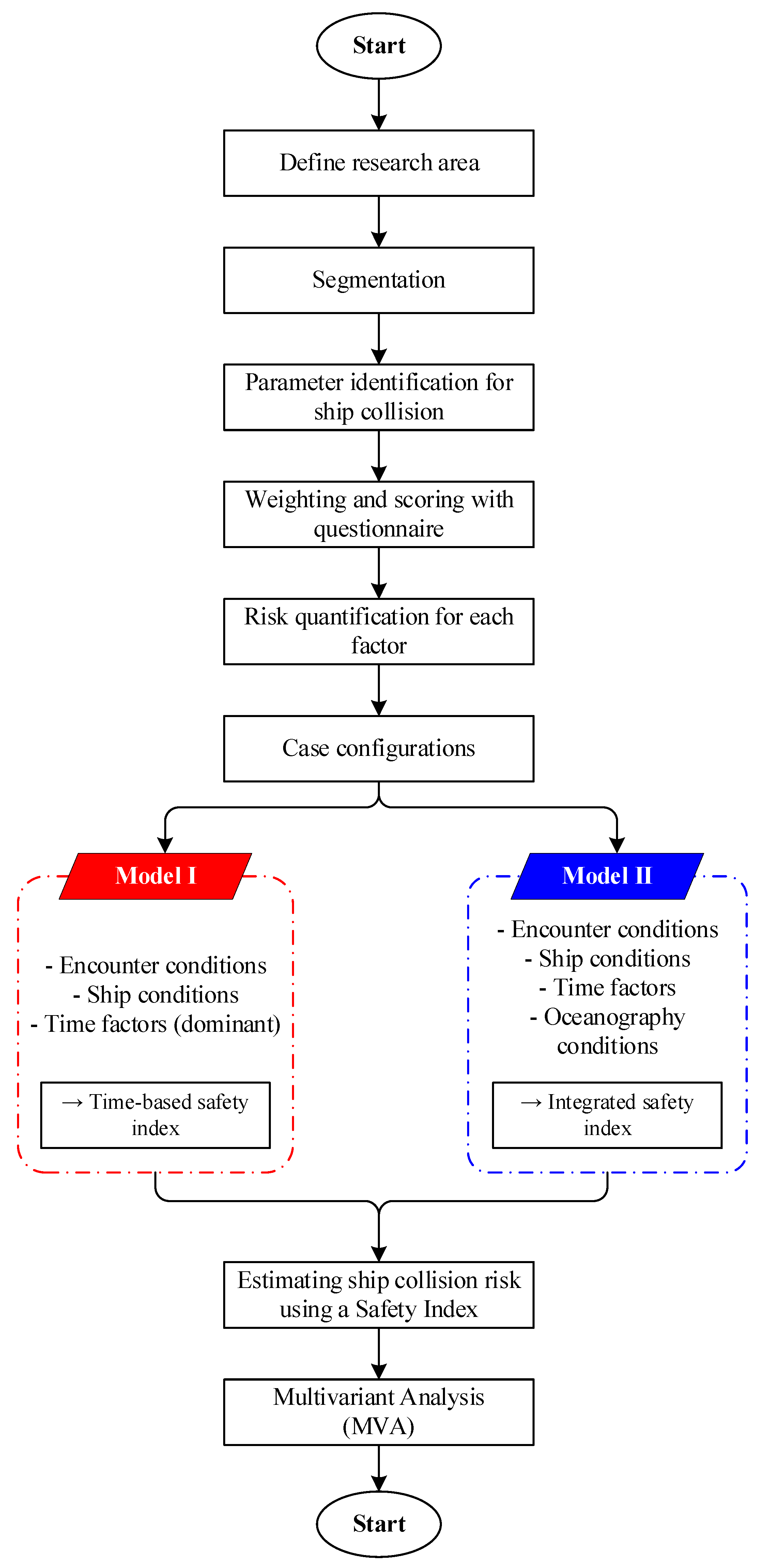
The research method used in this study is summarized in
Figure 1. This study uses a comprehensive approach by combining both quantitative and qualitative data, and includes various risk factors that have not been deeply explored in previous studies. The main goal is to develop a dynamic and adaptive model for assessing the maritime safety index, especially in strait areas with high traffic and complex oceanographic conditions.
The first step is selecting a strategic study area as the research location, based on several criteria, such as high shipping activity, the diversity of vessel types passing through, and challenging oceanographic characteristics, including strong currents and high waves [
22]. To produce structured results and support more focused spatial analysis, the study area is divided into several grid segments of a certain size (for example, a 3 × 4 grid), so that each segment can be analyzed individually in terms of risk and safety factors.
After the study areas are defined, the next step is to identify the parameters and sub-parameters that contribute to the risk of maritime accidents. The parameters considered include ocean conditions (such as waves and currents), ship traffic density, vessel direction and relative speed, weather conditions, and the timing of navigation. To measure the level of significance of each parameter, questionnaires were distributed to experts with experience in navigation, maritime operations, and sea traffic monitoring [
23]. The evaluation was performed using a scale from 1 to 9, representing the level of importance or influence of each parameter on maritime safety. The data from these questionnaires were then used to calculate the risk level of each factor.
The next step is collecting dynamic data from the Automatic Identification System (AIS), which includes information on ship position, sailing direction, speed, and vessel type. AIS data were collected over a one-month period, from 20 June to 20 July 2025, with a time interval of three minutes. This data aims to capture ship traffic patterns over time and provide a realistic overview of sailing conditions in the study areas [
24,
25]. In addition, oceanographic data such as wave height and ocean currents were obtained from the Copernicus Marine Service platform, using the same temporal resolution as the AIS data. The use of oceanographic data is important to understand how sea conditions affect the risk of accidents.
All the data collected, including expert questionnaire results, AIS data, and oceanographic data, are then integrated into the process of calculating the maritime safety index. This index represents the overall level of risk in each segment of the study areas, based on a combination of static parameters (such as quantified expert judgment) and dynamic parameters (such as ocean current conditions, wave height, and ship traffic patterns). The integration of both types of parameters provides a more realistic and dynamic view of the potential risks in each area, making the evaluation results more relevant to actual field conditions.
To account for different levels of risk representation, this study employs two complementary models, namely Models I and II. Model I is designed to emphasize time-related factors, capturing temporal variations in maritime operations such as sailing hours and day of voyage, while maintaining basic ship and encounter conditions. This model represents safety conditions that are primarily influenced by operational timing. Model II extends this framework by integrating all relevant factors, including ship characteristics, encounter conditions, oceanographic conditions, and time-related parameters. The combination of both models enables a progressive safety assessment, where temporal risk patterns are first examined and then evaluated within a fully integrated environmental and operational context.
The results of this calculation process are then visualized in the form of a hazard map, which shows the variation in safety levels across each segment within the study areas. This visualization is essential for identifying accident-prone zones geographically and supporting location-based decision making by maritime authorities, route planners, and policymakers. By using spatial visualization, stakeholders can more easily interpret complex information into a format that is easier to understand and directly applicable in the field.
The final stage of this study is an advanced analysis using the Multivariate Analysis (MVA) approach. The MVA is applied to explore the complex relationships between the variables collected during the research process. This approach allows for the identification of patterns and interdependencies among multiple risk factors, considering both their individual and combined impacts on maritime safety [
26]. Using the MVA allows the dominant influence of specific parameters on the safety index to be statistically identified, as well as the contribution of interactions between factors, such as traffic density and wave conditions, to the risk level in a specific area [
27].
2.1. Questionnaire Overview
The questionnaire was designed based on the parameters and sub-parameters defined in
Table 1. The sub-parameters were used for weighting, while the details were used for scoring, both applying a scale for weighting (Wsc) and scale of scoring (Ssc) from 1 to 9. The weighting at the sub-parameter level represents the relative importance of each factor in the maritime safety assessment, whereas the scoring at the detail level reflects the contribution of more specific elements within each sub-parameter. This structure enables a clear separation between factor importance and factor intensity in the safety index calculation.
After the questionnaire was designed based on the defined parameters, it was distributed to experts and professionals working in the field of maritime safety. The respondents were required to demonstrate relevant professional competence, which was verified through recognized maritime safety certifications, including Basic Safety Training (BST), Advanced Fire Fighting (AFF), Automatic Radar Plotting Aid (ARPA), Radio Detection and Ranging (RADAR), Proficiency in Survival Craft and Rescue Boats (PSCRB), Global Maritime Distress and Safety System (GMDSS), Bridge Resource Management (BRM), and Electronic Chart Display and Information System (ECDIS). The questionnaire was distributed to a total of 100 respondents. After the responses were collected, the respondent information was summarized into a demographic overview, which is presented in
Table 2.
2.2. Safety Index Calculation
The first step in this stage is to quantify the risks based on the questionnaire responses provided by expert respondents. Each evaluated parameter is assigned a different weight, depending on its level of importance or influence on the overall risk category. This weighting process aims to give proportional values to each parameter so that their contributions are more accurately reflected in the risk assessment. The questionnaire employs a nine-level scale, where the lowest score represents a negligible element. The results are then used to quantify the risk associated with each element. The risk weight values are calculated using Equation (1).
where
is the weighting value of the
-th sub-parameter,
is the weighting score assigned by the
-th respondent to the
-th sub-parameter, and
is the total number of respondents. The term
represents the experience factor, which is introduced to account for the level of professional experience of each respondent and to reflect the relative confidence in their judgment.
The experience factor is defined based on the duration of experience in this field, where a longer working period corresponds to a higher value. The scale ranges from 1 to 5: a value of 1 is assigned to experts with 1–2 years of experience, 2 for 3–5 years, 3 for 6–11 years, 4 for 11–20 years, and 5 for more than 20 years of experience.
After determining the sub-parameter weights, the quantified value of each detail parameter is calculated using Equation (2):
where
is the averaged quantified value of the
-th detail element of the
-th questionnaire item, and
is the response score given by the respondent. The same experience factor
is applied to ensure consistency between the weighting of sub-parameters and the scoring of detailed parameters. This approach allows both the importance of each factor and the reliability of expert judgment to be systematically incorporated into the risk assessment.
To simplify the calculation process, each risk component is first calculated separately. Once all the component values are obtained, the next step is to combine these values according to the predefined criteria and model structure. This approach is intended to make the calculation process more systematic and well-organized. The calculation of each component follows the equations below:
In the above equation,
is a column vector of binary indicator variables corresponding to the questionnaire item numbers, which is used to identify the applicable variables, as detailed in
Table 1. Each element of
takes a value of 1 if the variable represents the specified type, range, or category of the ship under evaluation, and 0 otherwise. The relative contribution of each factor to the safety index is determined by the weighting terms
and
obtained from the risk quantification process. The model classification follows the case configurations in
Table 3, with each model calculated using Equations (13) and (14).
2.3. Normalized Safety Index Calculation
In this study, the safety index is further transformed into a bounded probabilistic indicator to facilitate consistent interpretation and risk classification [
28]. The proposed normalized safety index calculation consists of three sequential steps: normalization with respect to the maximum questionnaire-based score adjusted for spatial area, exponential cumulative probability transformation, and risk-level classification.
First, the safety index obtained from Model I (
) and Model II (
) for each spatial grid and time interval is normalized using the maximum score scales defined in the questionnaire framework and the spatial grid area. This normalization ensures that the resulting safety index is expressed on a consistent per-unit-area basis and is therefore comparable across different spatial grids [
29]. The normalization is defined as follows:
where
represents the maximum score scale of the questionnaire-based weighting assigned to the evaluated parameters (see
Table 1),
denotes the maximum score scale associated with the parameter scoring scheme, and
corresponds to the maximum score scale of the experience factor as defined in the questionnaire. The
Area term represents the spatial grid area (km
2) used in the analysis.
This formulation ensures that the normalization is strictly grounded in the predefined questionnaire score scales rather than empirical maximum values obtained from the data. By incorporating the grid area into the normalization, the safety index is expressed as a relative navigational risk intensity per unit area, enabling consistent comparison across spatial grids with different sizes [
30].
To obtain a bounded probabilistic representation of risk, the normalized safety index is transformed using an exponential cumulative probability function [
31], which follows a binary regression–type probabilistic mapping commonly adopted in risk and accident modeling studies [
31,
32,
33] and enables the safety index to be expressed within the range
.
The formulation corresponds to the cumulative probability of observing at least one event with a rate parameter , where is interpreted as a relative intensity of unsafe navigational conditions within a given spatial grid and time interval. The resulting probabilistic representation serves as a risk-based indicator derived from the normalized safety index and does not represent an empirical probability estimated from observed accident frequencies.
Finally, the normalized safety index is classified into discrete risk levels for practical interpretation. Because is defined on a normalized probabilistic scale between 0 and 1, the index range is divided into four equal-width intervals. The central value of 0.5 is considered the median risk level, representing a transition between relatively safe and hazardous navigational conditions. Accordingly, the risk levels are defined as follows:
2.4. Multivariate Analysis (MVA) Method
Multivariate analysis is applied to estimate the relative percentage contribution of each factor to the overall safety index. In this study, the multivariate analysis is implemented as a component-based contribution analysis within an index-based framework, following multiple regression approaches that have also been adopted in previous studies [
31,
34,
35]. Each factor is evaluated using specific equations defined in Equations (3)–(12). This approach enables the individual influence of each parameter to be assessed while preserving the interrelationships among components within the safety index calculation framework.
The average percentage contribution is obtained by dividing the value of each calculated component by the final value of the safety index. Accordingly, the contribution of each factor represents its proportional influence within the composite index, rather than a fitted or estimated coefficient. For example, the contribution of the ship type parameter is calculated using the designated formula and normalized by the final safety index, while other parameters are processed in a similar manner according to their respective equations. The results provide a quantitative representation of the proportionate influence of each factor, allowing the identification of the most dominant and relatively minor contributors to the overall navigational safety level in the study area.
All the parameters and sub-parameters are calculated based on historical and operational ship data obtained from the AIS. The number of datasets used in this study is adjusted according to the availability and total number of AIS data records.
2.5. Limitations
To strengthen the focus on the safety index development, several limitations are introduced in this study, mainly related to commonly adopted analytical practices and the defined research boundaries. The key aspects are summarized below and provide directions for further investigation.
The analysis was conducted using AIS and oceanographic data covering a one-month period. This period was intentionally selected to represent extreme oceanographic conditions in the study area and to provide a conservative basis for safety assessment. The inclusion of additional months would allow for the assessment of navigational safety under different seasonal conditions.
Navigational hazard levels were determined in this study based on a standard normal distribution approach, which is widely used for safety index classification and enables consistent comparison across spatial grids. Other classification approaches may be considered as complementary options in subsequent research.
The proposed safety index incorporates technical vessel parameters, such as ship length, age, speed, and heading, together with environmental conditions. A more detailed integration of human-related factors, including human error and decision-making processes, is left for further investigation.
3. Case Configurations
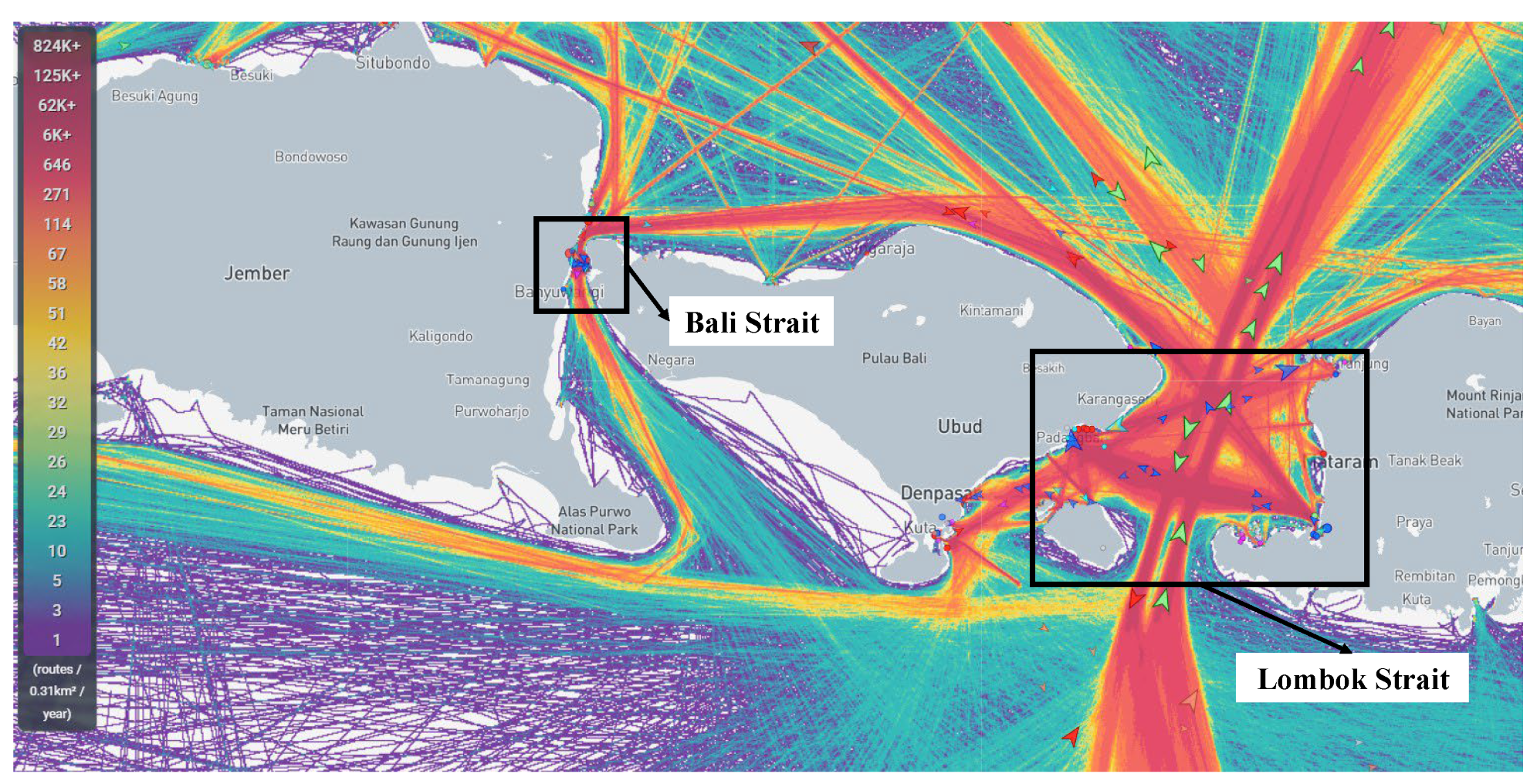
The case study in this research focuses on two strategic maritime areas: the Bali Strait and the Lombok Strait. These straits were selected due to their high shipping traffic and significant navigational complexity. As shown in
Figure 2, these areas are key parts of both domestic and international shipping routes, mainly because of their position connecting the Indian Ocean and the Flores Sea, and their role as part of the Indonesian Archipelagic Sea Lanes (ALKI) [
36]. Based on traffic density data, the Bali and Lombok Straits are among the busiest maritime passages in Indonesia [
37]. These conditions make them ideal locations for analyzing maritime safety risks and for developing a safety index model that is responsive to actual field conditions.
3.1. Bali Strait
In the Bali Strait, the study focuses on two main ports: Ketapang Port in Banyuwangi, East Java, and Gilimanuk Port in Bali, covering the Ketapang–Gilimanuk route and vice versa. These ports play an important role in supporting the local economy, as this route serves as a key connection for transporting goods, including agricultural commodities and other products, between Java and Bali [
38]. With the high volume of passengers and vehicles using this route, the punctuality and operational efficiency of the ferry services are crucial to maintaining smooth transportation across the Bali Strait [
39].
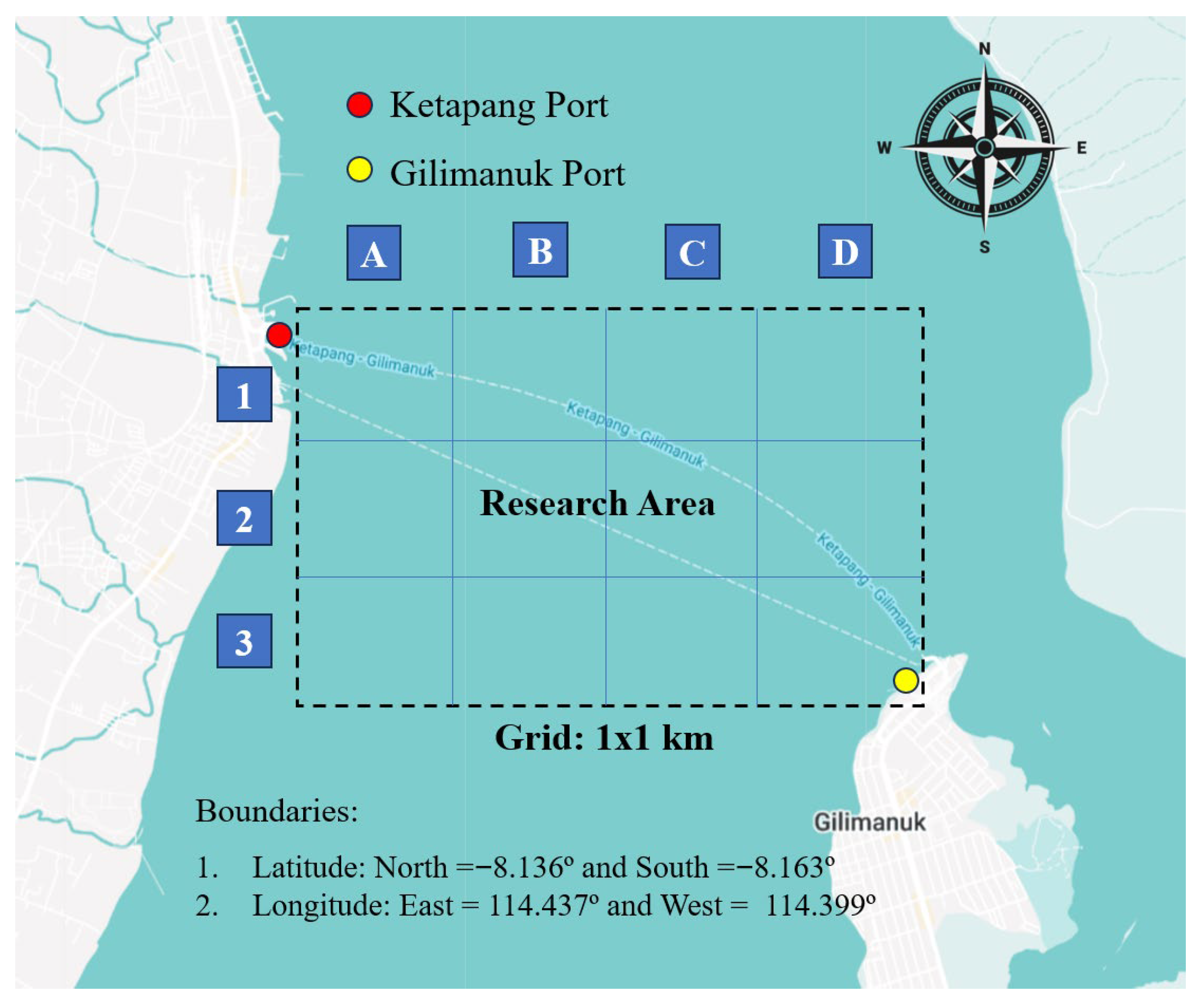
As part of the research scope, the study area is specifically focused on the ferry crossing route between Ketapang Port in East Java and Gilimanuk Port in Bali, as shown in
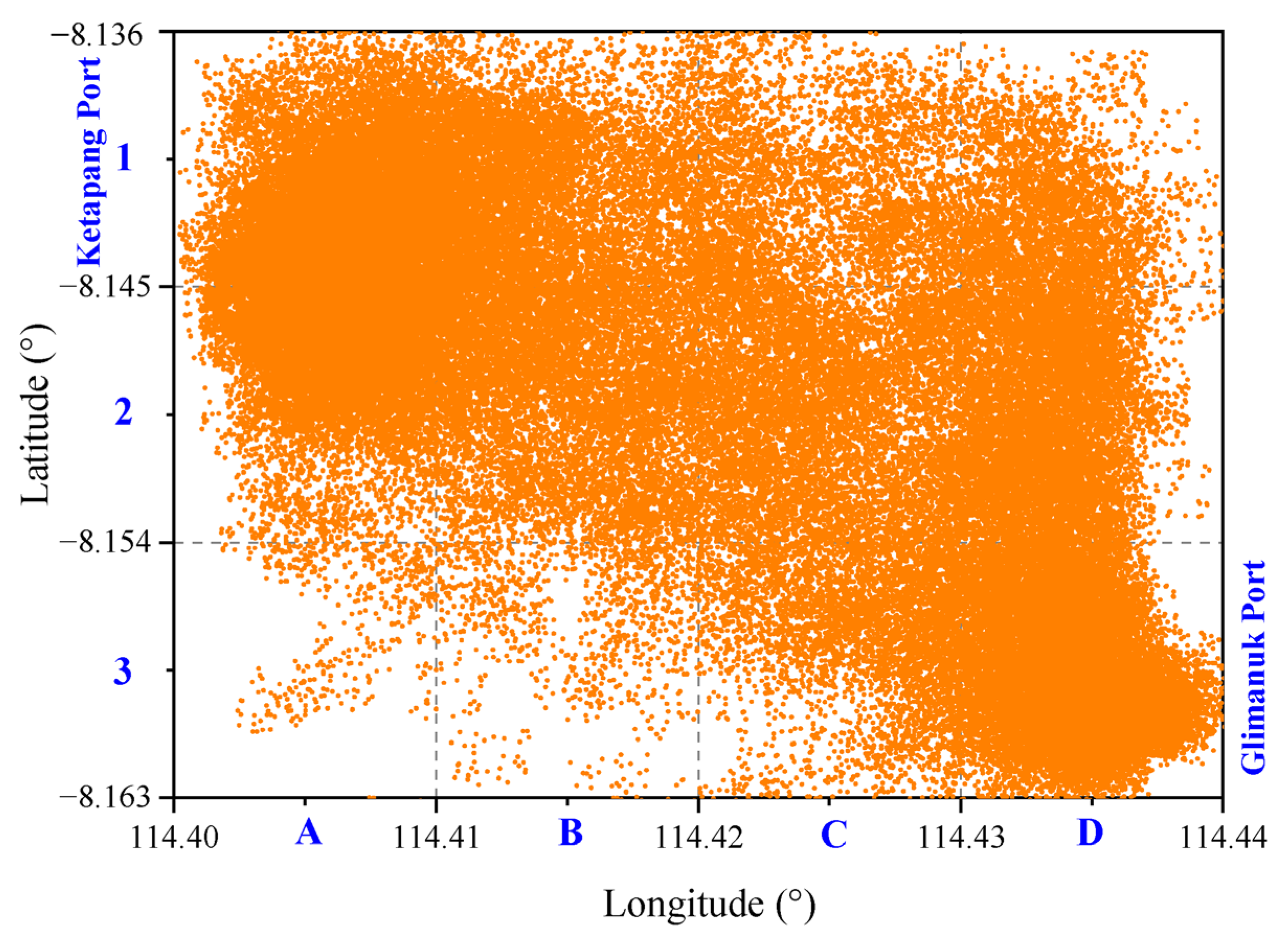
Figure 3. This area is geographically bounded by latitudes from −8.136° to −8.163° in the north and south, and longitudes from 114.399° to 114.437° in the west and east. The main focus of this study is on ferries that regularly operate along this crossing route, but it also considers the presence and interaction of other vessels passing through the same area. In this way, all maritime activities in the region are analyzed to gain a more complete understanding of potential risks and overall maritime safety.
To support more detailed spatial analysis, the study area is divided into 12 grids, each measuring 1 km
2 (4 columns × 3 rows), as shown in
Figure 3. Each grid is labeled using a combination of letters (A–D) for columns and numbers (1–3) for rows. This division allows AIS ship data to be grouped systematically according to the actual sailing route. For example, grids 1A and 3D represent port areas, while grids 1B–1C and 2B–2C reflect the main ferry crossing route. Some grids, such as 3A and 1D, are rarely used due to their proximity to the coastline. Ships with different destinations that pass through columns B and C are also included in the risk evaluation. This division supports more targeted and accurate risk mapping along the crossing route.
3.2. Lombok Strait
In this study, the focus area in the Lombok Strait includes two main ports: Padang Bai Port in Bali and Lembar Port in West Nusa Tenggara (NTB). These ports were selected based on the availability of relevant data related to increased shipping activity in the surrounding waters, as well as their strategic role in supporting connectivity between regions in central and eastern Indonesia [
40,
41].
Padang Bai Port is one of the key maritime transportation hubs connecting Bali Island with Lombok Island. It serves regular ferry routes to Lembar Port in Lombok and Mentigi Port in Nusa Penida. Meanwhile, Lembar Port, located in West Lombok Regency, is the main port in the West Nusa Tenggara (NTB) region, handling both cargo and passenger vessels. This port manages several important ferry routes, including Padang Bai–Lembar, Ketapang–Lembar, and Jangkar–Lembar. Due to the high volume of maritime traffic passing through this port, Lembar plays a vital role in supporting interregional mobility and serves as a key location in the maritime safety assessment in the Lombok Strait.
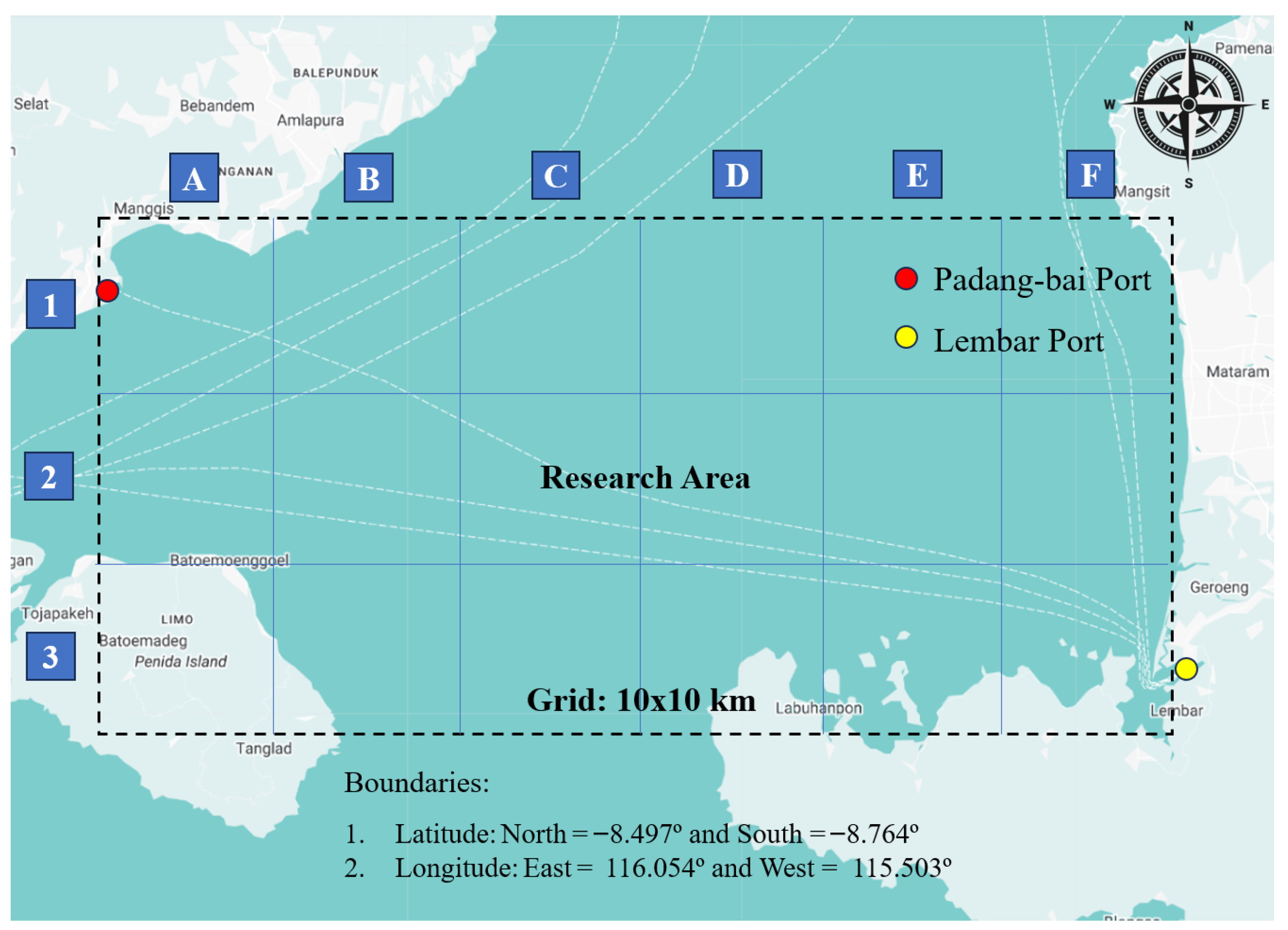
As in the case study in the Bali Strait, the analysis in the Lombok Strait is also carried out within clearly defined geographical boundaries. The study area is bounded by latitude −8.497° in the north and −8.764° in the south, and by longitude 115.503° in the west and 116.054° in the east. Given the wider coverage area in the Lombok Strait, the spatial analysis grid is divided into 10 × 10 km sections, consisting of 6 columns (A–F) and 3 rows (1–3) (see
Figure 4). The size of each grid is approximately ten times larger than that of those used in the Bali Strait case study, adjusted to the larger research scale and the more complex characteristics of the maritime traffic in the area.
The Lombok Strait covers a substantially wider area and accommodates both local ferry traffic and international through traffic. To maintain clarity and interpretability in spatial risk visualization, the study area is divided into grids measuring 10 × 10 km. Applying a finer grid resolution, such as 1 × 1 km, over this broader region would result in an excessively dense and fragmented spatial representation, making the identification of dominant navigational risk patterns more difficult. The selected grid size therefore represents a balance between spatial resolution and meaningful regional-scale interpretation.
Each grid is labeled using a combination of letters and numbers; for example, grid 1A represents the location of Padang Bai Port in Bali, while grid 3F marks the position of Lembar Port in Lombok. In addition to the regular ferry route between these two ports, the Lombok Strait is also a major route for vessels traveling between East Asia and Australia. This cross-regional traffic results in vessel crossings in several central grids, especially in columns B through D. Therefore, the grid segmentation not only enables the grouping of local traffic but also facilitates the analysis of interactions between vessels on different routes, which adds to the complexity of risk in this area.
4. Results
4.1. Risk Quantification
To assess both the weighting and scoring values, the questionnaire responses are analyzed using Equations (1) and (2) as the basis for calculation. The results, presented in
Table 4, outline the individual impact of each factor, with specific weights assigned according to their relative significance. By quantifying these factors, the analysis provides a structured approach to evaluating how different elements contribute to the overall safety level. This method ensures that each factor’s influence is measured objectively, offering a clear understanding of their respective roles in maritime safety.
Examining these weighted contributions provides a more comprehensive insight into navigators’ perceptions. Identifying the most influential factors allows for the better prioritization of safety measures, ensuring that critical aspects receive appropriate attention. This structured evaluation not only enhances safety assessments but also supports decision-making processes aimed at improving onboard safety standards. Ultimately, the findings contribute to the development of more effective risk management strategies in maritime operations.
4.2. Oceanographic Characteristics of the Study Areas
The modeling was carried out over a one-month interval. The data used consisted of time intervals consistent with the original AIS data. Ocean current modeling was performed using the Copernicus Marine Data website (Global Ocean Physics Analysis and Forecast). Meanwhile, wave height modeling was conducted on the same website using reanalysis data from ERA5. ERA5 is the fifth-generation reanalysis produced by ECMWF for global climate and weather over the past eight decades. The data are available from 1940 onward.
4.2.1. Oceanographic Conditions in the Bali Strait
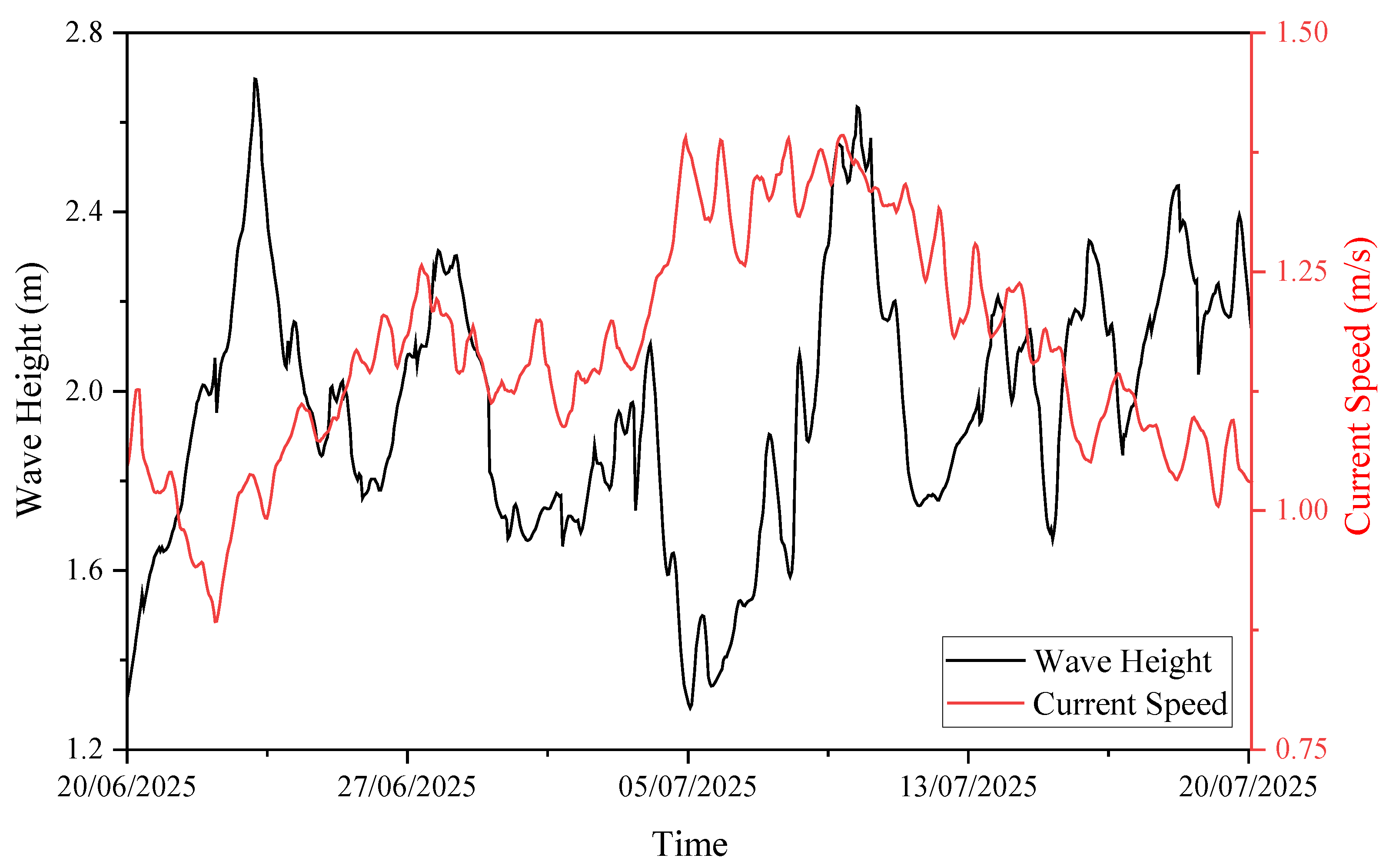
The oceanographic analysis results, covering current speed and wave height in the Bali Strait, are shown in
Figure 5. As illustrated, wave height and current speed fluctuated throughout the measurement period. Wave height reached its peak in the last week of June and the second week of July, with values of about 2.6 m. Current speed continued to increase from the beginning of the observation until it peaked in early July at around 1.3 m/s, before decreasing again to about 1 m/s at the end of the period. A clearer summary of these results is provided in
Table 5, which presents the minimum, average, and maximum values. For wave height, the minimum, average, and maximum were 1.293 m, 1.964 m, and 2.697 m, respectively, while for current speed, the corresponding values were 0.884 m/s, 1.169 m/s, and 1.393 m/s.
4.2.2. Oceanographic Conditions in the Lombok Strait
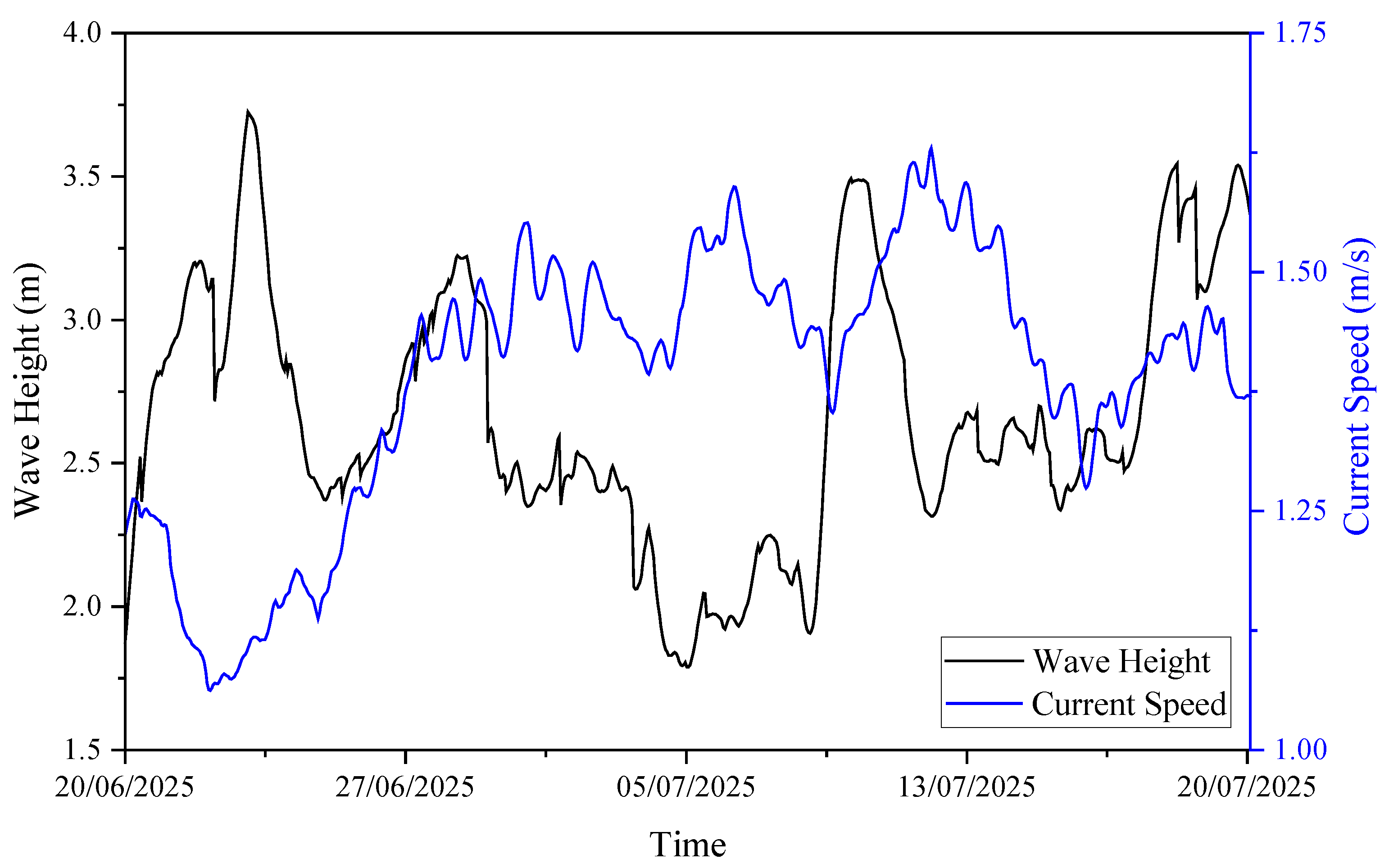
The results of wave height and current speed measurements in the Lombok Strait are presented in
Figure 6. The figure shows that wave height peaked three times—at the beginning of the observation period, in the second week of July, and at the end of the period—with values exceeding 3.5 m. The current speed fluctuated throughout the observation period, also reaching three peaks within the first two weeks of July at around 1.6 m/s. A detailed summary of these phenomena is provided in
Table 6, where the minimum, average, and maximum wave heights are 1.790 m, 2.666 m, and 3.724 m, respectively, while the corresponding values for current speed are 1.062 m/s, 1.390 m/s, and 1.629 m/s. Overall, the oceanographic conditions (wave height and current speed) in the Lombok Strait are higher than in the Bali Strait, as the more open waters in the Lombok Strait generate higher waves, while the presence of ARLINDO also increases current speed in the strait.
4.3. Statistical Evaluation of AIS Data
AIS data were obtained from the Marine Traffic website (
www.marinetraffic.com, accessed on 28 July 2025) using the AIS playback feature through the web-based interface. Historical vessel traffic data were retrieved for a predefined study area over a one-month period, from 20 June 2025 to 20 July 2025. During the playback process, all vessel records appearing within the specified geographic boundary were collected, as described in
Section 3. The AIS data were sampled at three-minute intervals, starting at 00:00, 00:03, 00:06, and so forth.
The extracted AIS dataset consists of both dynamic and static information. Dynamic AIS data include vessel position (latitude and longitude), speed over ground, and course over ground, while static AIS data include vessel identity and characteristics such as MMSI, vessel name, vessel type, and vessel length. Certain vessel attributes, such as vessel age, were obtained through post-processing.
After data retrieval, several filtering and quality-control steps were applied. First, the dataset was filtered based on spatial boundaries, retaining only AIS records located within the predefined study area. Second, only the AIS parameters required for the maritime safety analysis were retained. Quality checks were performed by cross-checking the downloaded data multiple times to ensure completeness and consistency. Duplicate records were removed, and AIS entries with missing or invalid essential information, such as timestamp, position, or vessel identification, were excluded.
4.3.1. AIS Traffic Characteristics in the Bali Strait
During one month of data collection, a total of 156,297 ship records were obtained, with passenger vessels dominating at 90.33%. This highlights the dominance of passenger transport in the area, largely linked to the busy inter-island crossing routes such as Ketapang–Gilimanuk. The analysis further shows that the highest traffic density occurred in grids A1 and D3, as shown in
Figure 7, reflecting the strategic role of ports in these locations as key hubs for trade, logistics, and passenger transport. The high volume of vessel traffic requires efficient management to avoid congestion and reduce accident risks, making optimal navigation strategies, strict monitoring, and the use of maritime traffic surveillance technologies essential to maintain smooth operations and navigational safety in the region.
Table 7 presents the average number of ship data per day in the Bali Strait. The highest daily average was recorded on Wednesday at 6478.52, followed by Friday and Tuesday, with averages of 5935.05 and 5862.28, respectively, indicating increased vessel activity during midweek and toward the end of the working week. In contrast, Monday showed the lowest average value of 4268.78, suggesting relatively lower traffic at the beginning of the week. Overall, the mean daily average reached 5578.58, reflecting generally stable ship traffic throughout the week with moderate variations among different days.
4.3.2. AIS Traffic Characteristics in the Lombok Strait
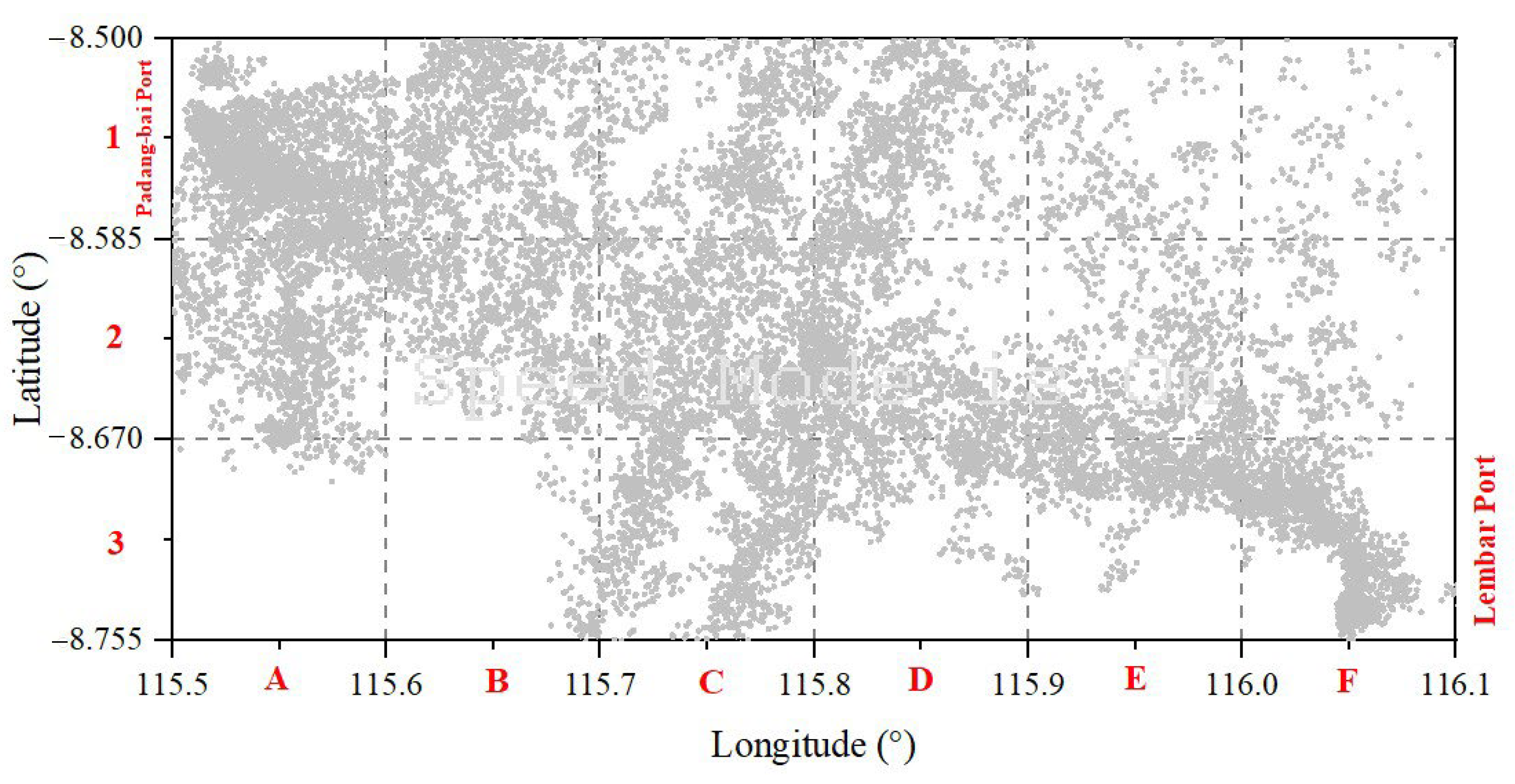
During one month of data collection, 129,427 ships were recorded, showing the variety of vessel types operating along the ALKI II route. As seen in
Figure 8, the distribution of ships follows the routes illustrated in
Figure 2. The composition consists of 64.78% passenger ships, 17.32% cargo ships, 9.32% bulk carriers, and the rest classified as other types. This indicates that shipping activity in this area is more diverse compared to that in regions dominated by a single type of vessel. As shown in
Figure 8, the highest density was found in grid A1 near Padangbai Port and grid F3 near Lembar Port, while other grids show a more even distribution. Although A1 and F3 recorded higher traffic than the surrounding areas, the total number of ships is still lower than in the Bali Strait. Meanwhile, columns C and D represent international shipping lanes.
Table 8 summarizes the AIS statistical data by presenting the average number of ship data per day in the Lombok Strait over one month of observation. The highest daily average was recorded on Thursday, with a value of 5106.27, followed by Tuesday and Saturday at 4793.28 and 4694.55, respectively, indicating relatively higher vessel activity during the middle of the week. In contrast, Sunday showed the lowest average number of ship data at 4248.73, suggesting comparatively reduced traffic at the end of the week. Overall, the mean daily average reached 4642.75, reflecting generally stable shipping activity in the Lombok Strait with moderate variations across different days.
4.4. Safety Index Estimation
4.4.1. Influence of Sailing Days and Operational Hours (Model I)
The calculation of the safety index in this subsection follows Equation (13), with the contributing factors presented in
Table 3. Because Model I in Equation (13) is expressed as a summation function, a higher safety index value indicates greater risk or hazard.
Bali Strait: Model I Results
The analysis of the safety index based on variations in sailing time shows a fluctuating pattern that reflects the dynamics of operational activities around the Ketapang and Gilimanuk ferry routes in the Bali Strait.
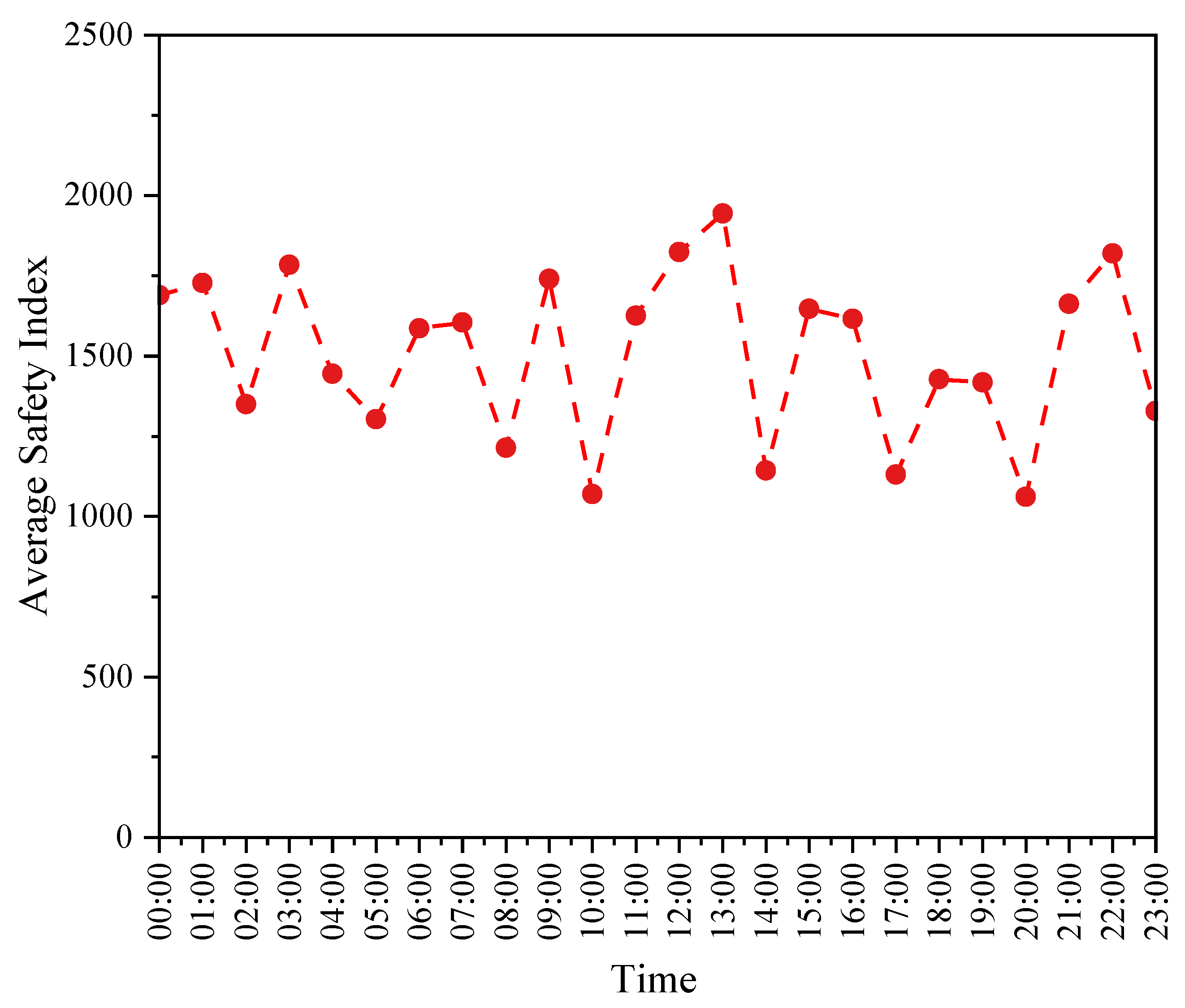
Figure 9 illustrates the temporal variation in the average safety index in the Bali Strait over a 24 h period. The safety index tends to be higher during the late night to early morning hours, with values reaching approximately 1700–1800, indicating elevated navigational risk during nighttime operations. In contrast, lower safety index values are observed during the morning and early evening, with values decreasing to around 1300–1600. Toward midday, the safety index increases again and reaches intermediate to high values of approximately 1500–1900, reflecting increased vessel activity during peak operational hours. Overall, the results show a clear temporal dependency of navigational risk, with higher risk occurring during nighttime and peak traffic periods compared to daytime conditions.
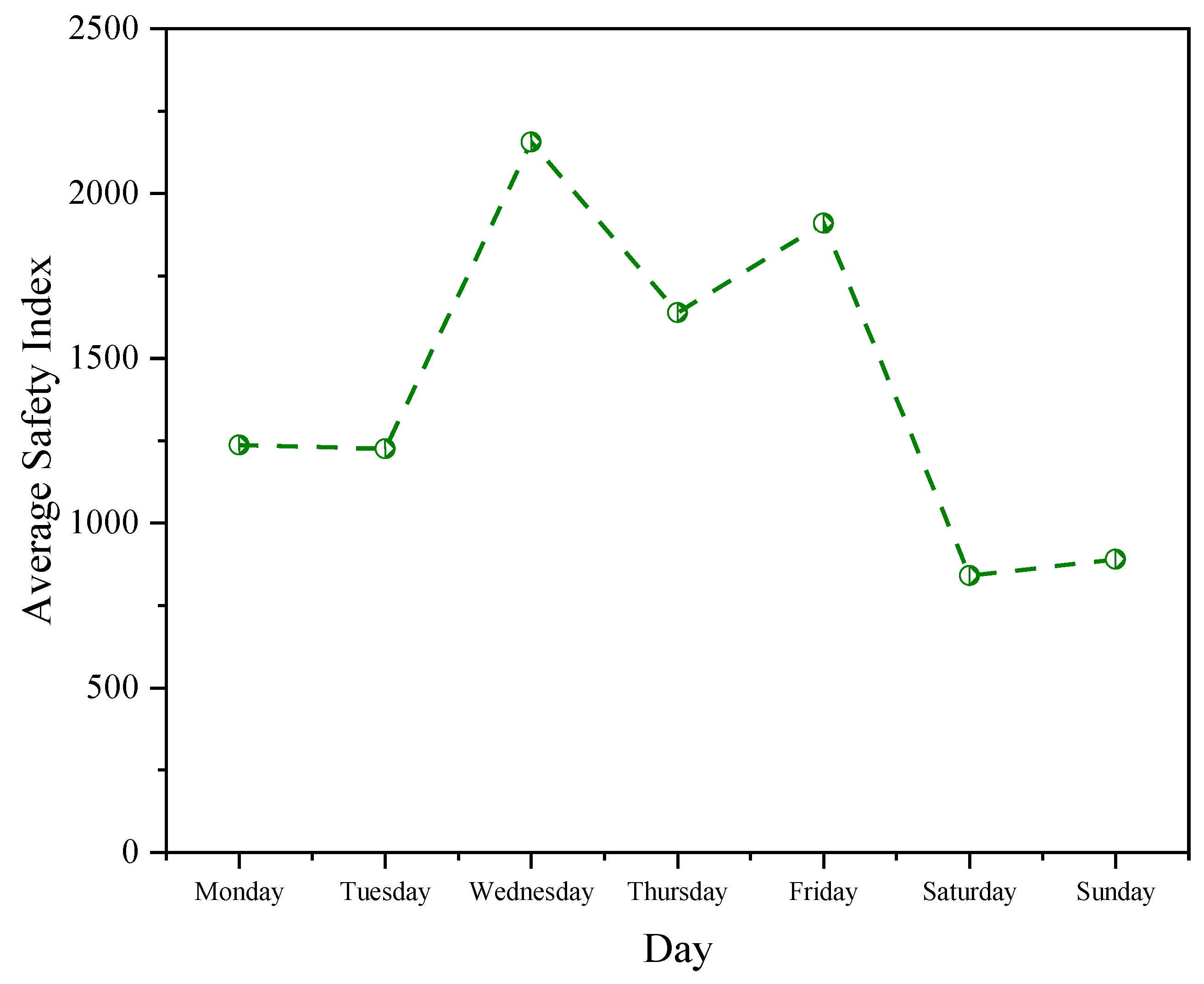
The analysis of the safety index based on variations across the days of the week reveals a clear fluctuation pattern that reflects changes in vessel traffic intensity in the Bali Strait. As shown in
Figure 10, the average safety index varies across different days of the week in the Bali Strait. At the beginning of the week, the safety index remains relatively low on Monday and Tuesday, with values of approximately 1200, indicating moderate navigational risk under relatively stable traffic conditions. A pronounced increase occurs on Wednesday, when the safety index reaches its highest value of around 2156.16, suggesting a substantial rise in navigational risk during midweek, likely driven by intensified vessel activity and increased traffic interactions.
After reaching this peak, the safety index decreases on Thursday to approximately 1637.84, indicating a temporary easing of navigational risk. The index then rises again on Friday to values close to 1910.71, reflecting a secondary increase in vessel movements toward the end of the working week. In contrast, a sharp reduction is observed on Saturday, when the safety index drops to around 839, corresponding to the lowest risk level during the week. On Sunday, the index increases slightly to approximately 890, indicating a gradual transition toward higher activity levels ahead of the following week.
These results indicate that the safety index in the Bali Strait is closely linked to weekly operational rhythms, with pronounced risk concentrations occurring during periods of intensified midweek and pre-weekend activities, while reduced traffic during the weekend contributes to lower overall risk levels.
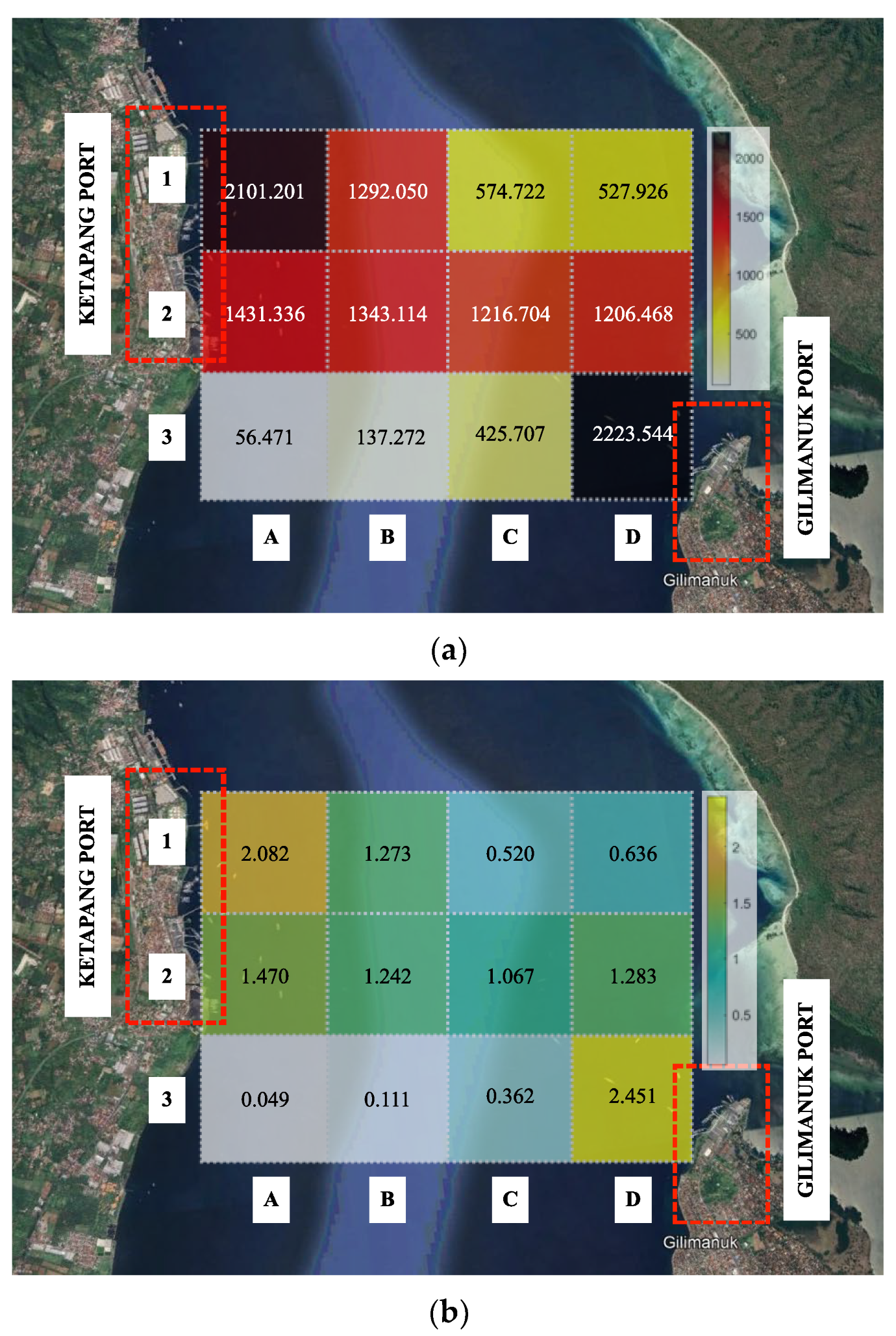
The safety index results are visualized as a color-coded plot, where color variations represent different safety levels. In this study, this representation is referred to as a hazard map.
Figure 11a shows the average safety index for each segment based on Model I. The results indicate that grids 1A and 3D have the highest average values, 2101.201 and 2223.544, respectively. As shown in
Figure 11b, grids 1A and 3D also have the highest average numbers of vessels, 2.082 and 2.451, respectively. According to Model I, which sums various risk parameters, a higher safety index value corresponds to greater risk in the segment. This increase in the safety index aligns with the higher vessel density in these areas.
In addition to the port-adjacent areas, grid 2B, which is located in the central part of the Bali Strait, also shows a relatively high average safety index of about 1343.11. This grid lies along the main crossing route through the strait and is frequently traversed by vessels traveling between the two ports. As a result, the interaction between crossing ferries and transiting vessels increases the navigational complexity in this area.
Near Ketapang Port, grid 2A records a relatively high average safety index of about 1431.34, indicating increased navigational risk related to vessels entering and leaving the port. Similarly, grid 2D, which is located near Gilimanuk Port, shows an average safety index of approximately 1206.47, reflecting continuous vessel traffic in this area. In contrast, grids farther away from both ports, such as grid 3A and grid 3B, show much lower safety index values, at around 56.47 and 137.27, due to the lower vessel density and simpler navigation conditions.
The high safety index values in grids 1A and 3D are mainly related to their positions along the main ferry routes and port approach areas. These locations act as convergence zones where vessels slow down, queue, or change direction, which increases traffic interactions and navigational complexity. Meanwhile, areas located farther from the ports experience more dispersed vessel movements, resulting in lower safety index values.
Lombok Strait: Model I Results
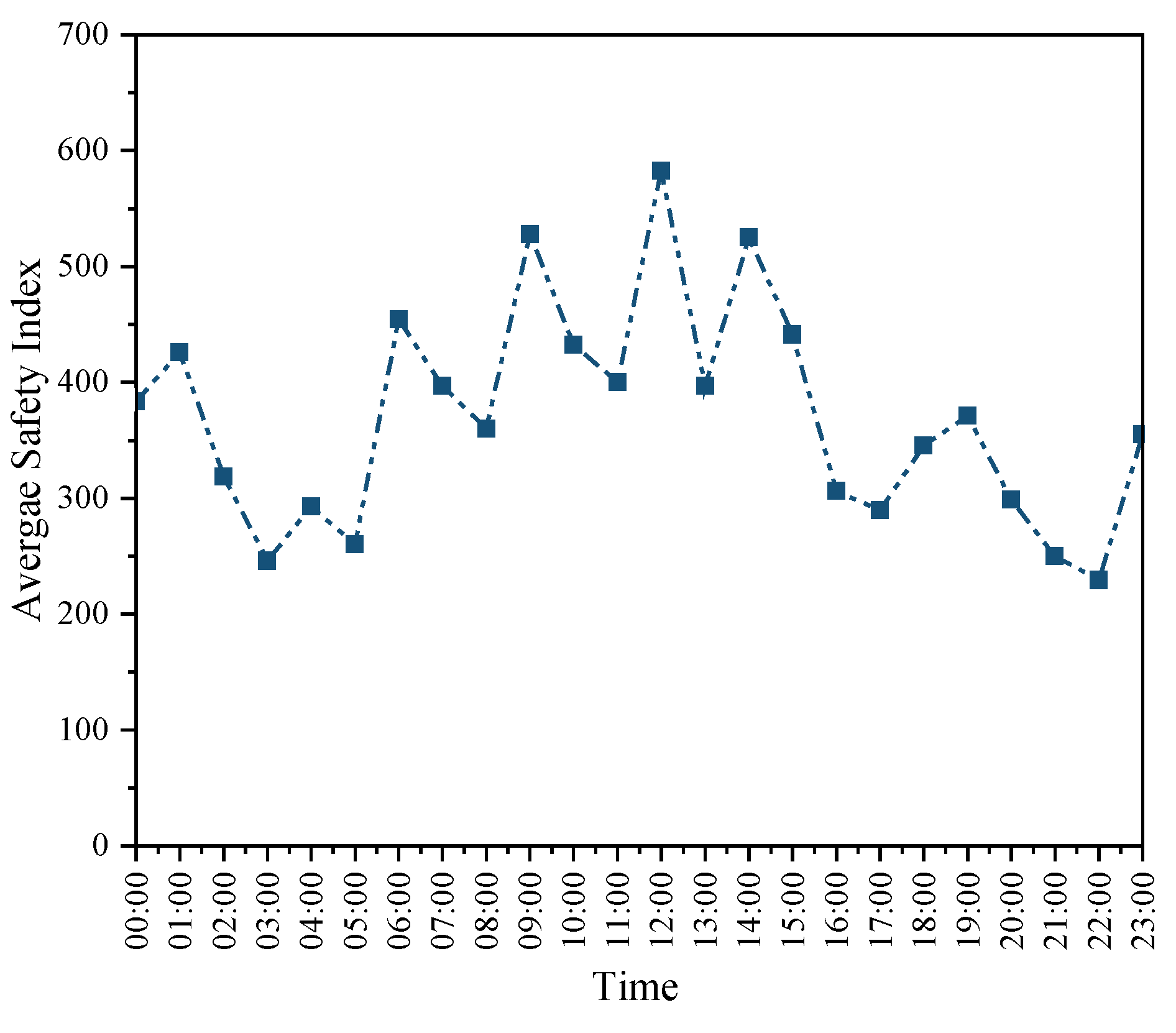
Figure 12 shows the intraday variation in the average safety index in the Lombok Strait. The safety index is relatively moderate during the late night and early morning, with values generally ranging from about 280 to 350, indicating lower navigational risk during these periods. A clear increase is observed toward the morning and midday, when the safety index rises significantly and peaks at approximately 550–580. This peak reflects the increased navigational risk associated with higher vessel traffic intensity, as the Lombok Strait serves as a major international shipping route.
After midday, the safety index gradually decreases, with values falling to around 430–460 during the afternoon and further declining to approximately 230–320 in the evening. Overall, the results indicate that navigational risk in the Lombok Strait tends to be higher during the morning to midday period and lower during the early morning and evening, highlighting the influence of temporal traffic variations on safety conditions.
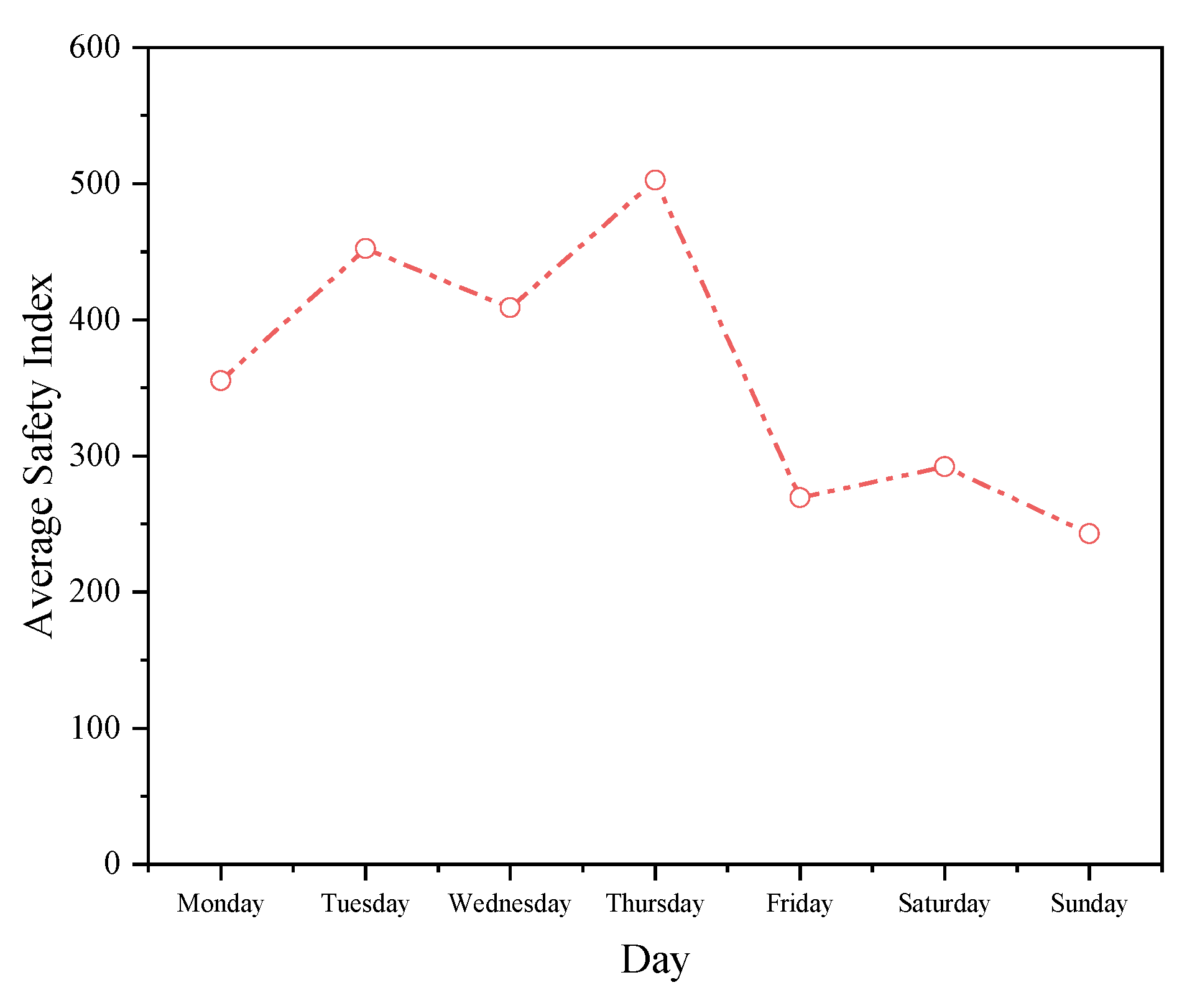
The analysis of the safety index based on day-to-day variations in the Lombok Strait is presented in
Figure 13. The safety index shows a clear weekly fluctuation, indicating that navigational risk changes in response to vessel activity patterns. At the beginning of the week, the safety index is at a moderate level, with a value of around 355 on Monday, and increases noticeably on Tuesday to approximately 452. A slight decrease is observed on Wednesday, when the safety index drops to about 408.
The highest average safety index occurs on Thursday, reaching approximately 502, which indicates increased navigational risk during midweek. This peak is likely related to intensified vessel traffic, as the Lombok Strait functions as an important international shipping corridor under ALKI II. After this peak, the safety index decreases sharply on Friday to around 270, followed by a small increase on Saturday to approximately 290. The lowest value of the week is recorded on Sunday, at about 240, reflecting reduced vessel movements and lower navigational risk during the weekend.
Overall, the average safety index values in the Lombok Strait are lower than those observed in the Bali Strait. This difference can be attributed to the larger grid size used in the Lombok Strait analysis, where each grid represents a wider area, resulting in a more distributed representation of navigational risk.
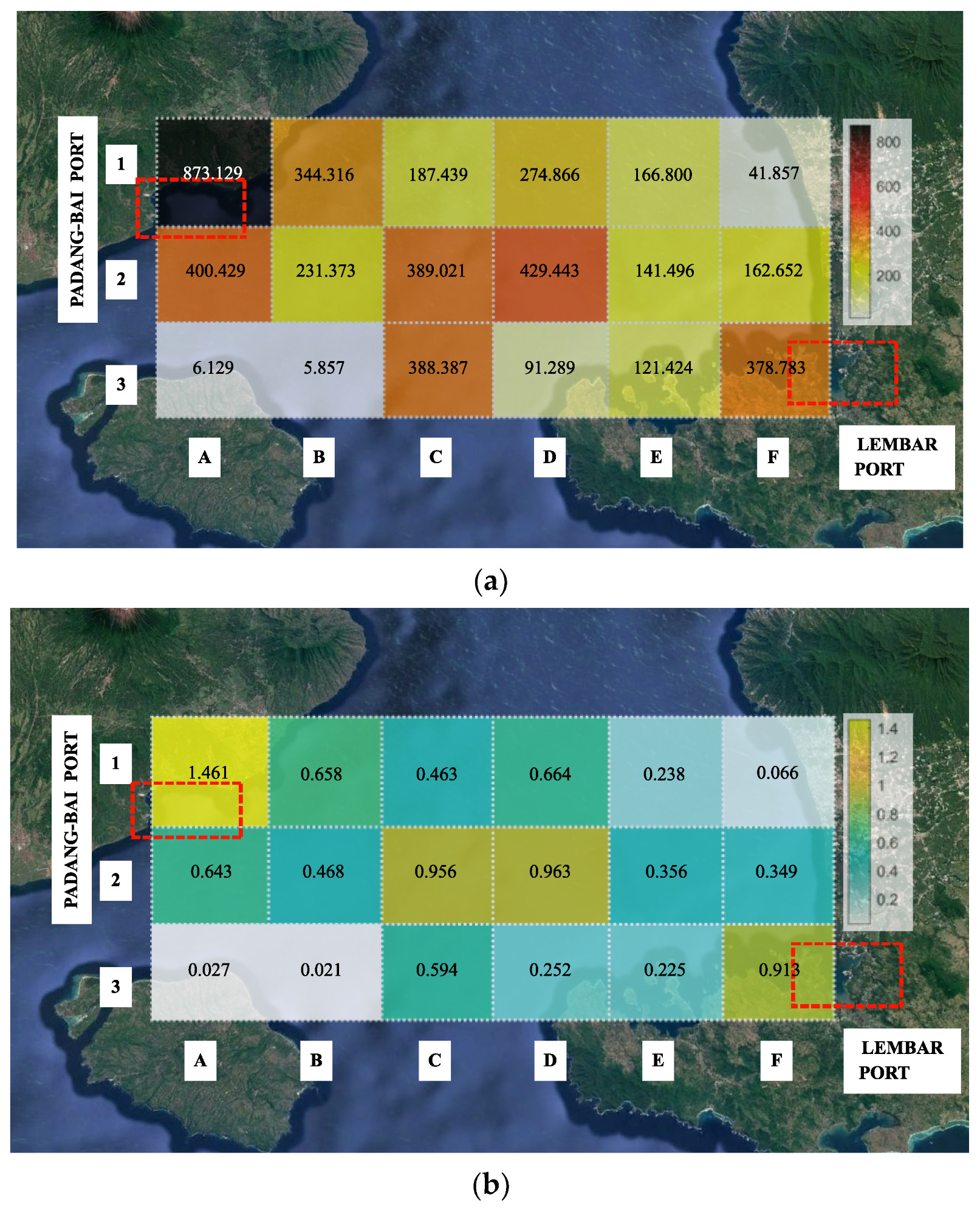
For clarity, this is illustrated in the hazard maps shown in
Figure 14a, which depict the average safety index distribution based on Model I for each segment in the Lombok Strait. From the visualization, grid 1A stands out with the highest average index value of 873.129, far exceeding the other grids. This indicates that the segment has the highest level of hazard risk based on the combined parameters included in Model I, which consist of sailing time, day of navigation, and ship encounter characteristics.
This condition is mainly caused by dense vessel activity in grid 1A, located near Padang-bai Port, which records the highest average number of vessels at 1.461, as shown in
Figure 14b. This result confirms that higher vessel traffic is directly associated with increased navigational risk. Although the average number of vessels in this grid is similar to that in grid 2A in the Bali Strait, the corresponding safety index is considerably lower due to the larger grid size used in the Lombok Strait analysis. Other port-adjacent areas, such as grids 1B and 2A, also exhibit relatively high safety index values of 344.316 and 400.429, respectively, indicating elevated risk near port operations. In addition, the area near Lembar Port shows a high safety index of 378.783 with an average vessel count of 0.913, while grids located in the central part of the strait along the main international crossing routes also record high safety index values.
4.4.2. Safety Index Calculation with All Factors (Model II)
As shown in Equation (14) and
Table 3, the calculation of the safety index in Model II combines all the existing factors. This approach aims to provide a more comprehensive overview of safety levels in the study waters by integrating these factors into a quantitative formulation.
Bali Strait: Model II Results
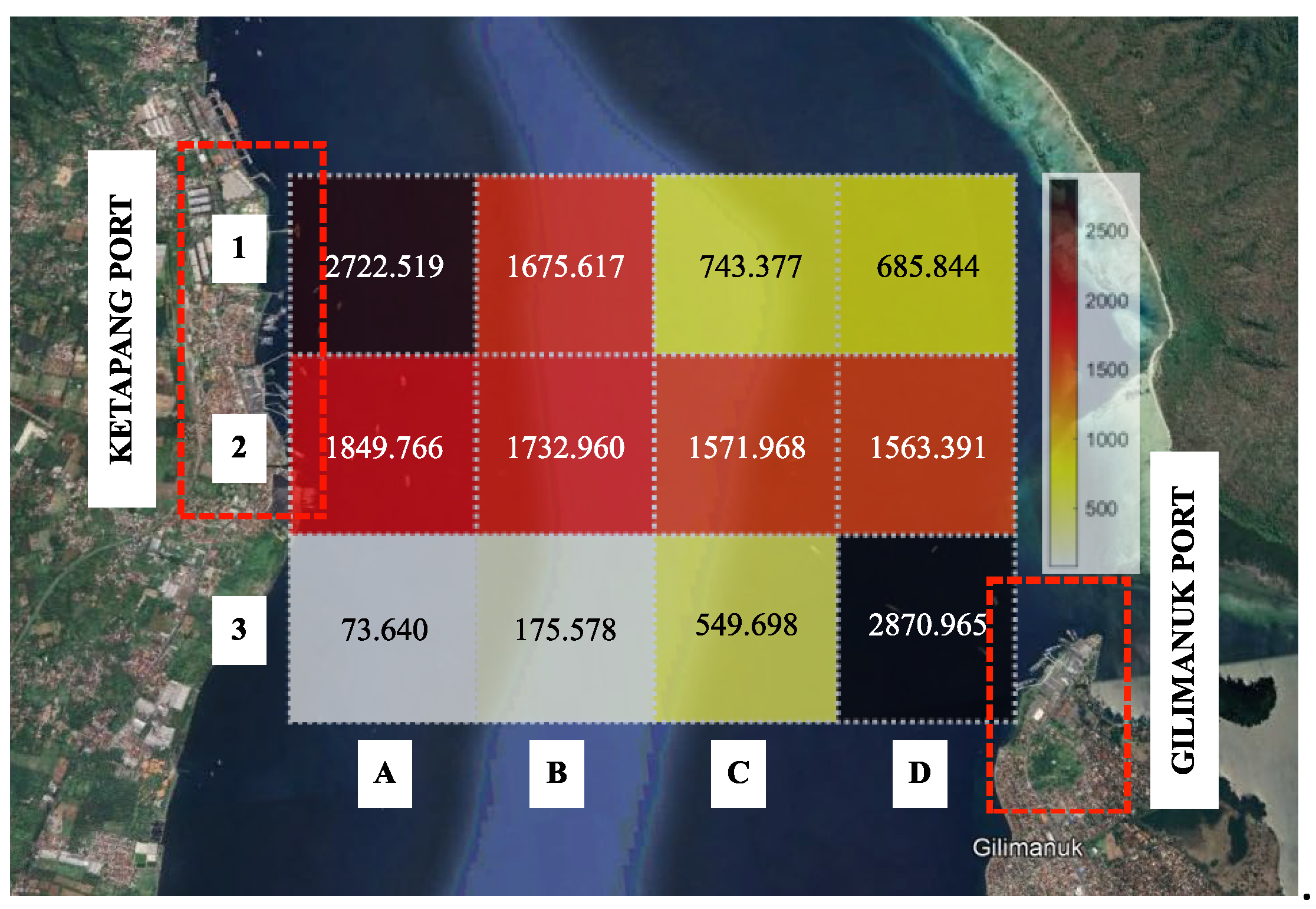
Figure 15 shows the spatial distribution of the average safety index calculated using Model II in the Bali Strait. In general, the overall spatial pattern is consistent with that observed in Model I, where several grids stand out as areas with higher navigational risk. The highest average safety index values are observed in grid 1A and grid 3D, with values of approximately 2722.52 and 2870.97, respectively. These grids are located near the Ketapang Port and Gilimanuk Port areas, where vessel density and maneuvering activities are more intensive. Other grids near the ports, such as grid 2A and grid 2B, also show relatively high safety index values of about 1849.77 and 1732.96, indicating elevated risk in port-adjacent and crossing areas. In contrast, grids farther from the ports, such as grid 3A and grid 3B, record much lower values of approximately 73.64 and 175.58, reflecting reduced vessel activity and simpler navigational conditions.
Compared with Model I, Model II produces generally higher safety index values across the study area. This increase occurs because Model II incorporates a wider range of factors, including vessel movement characteristics and oceanographic conditions, in addition to temporal variations. By integrating these additional variables, Model II is able to better represent the combined effects of traffic density, environmental conditions, and operational complexity, resulting in safety index values that more closely reflect actual navigational risk conditions in the Bali Strait.
Lombok Strait: Model II Results
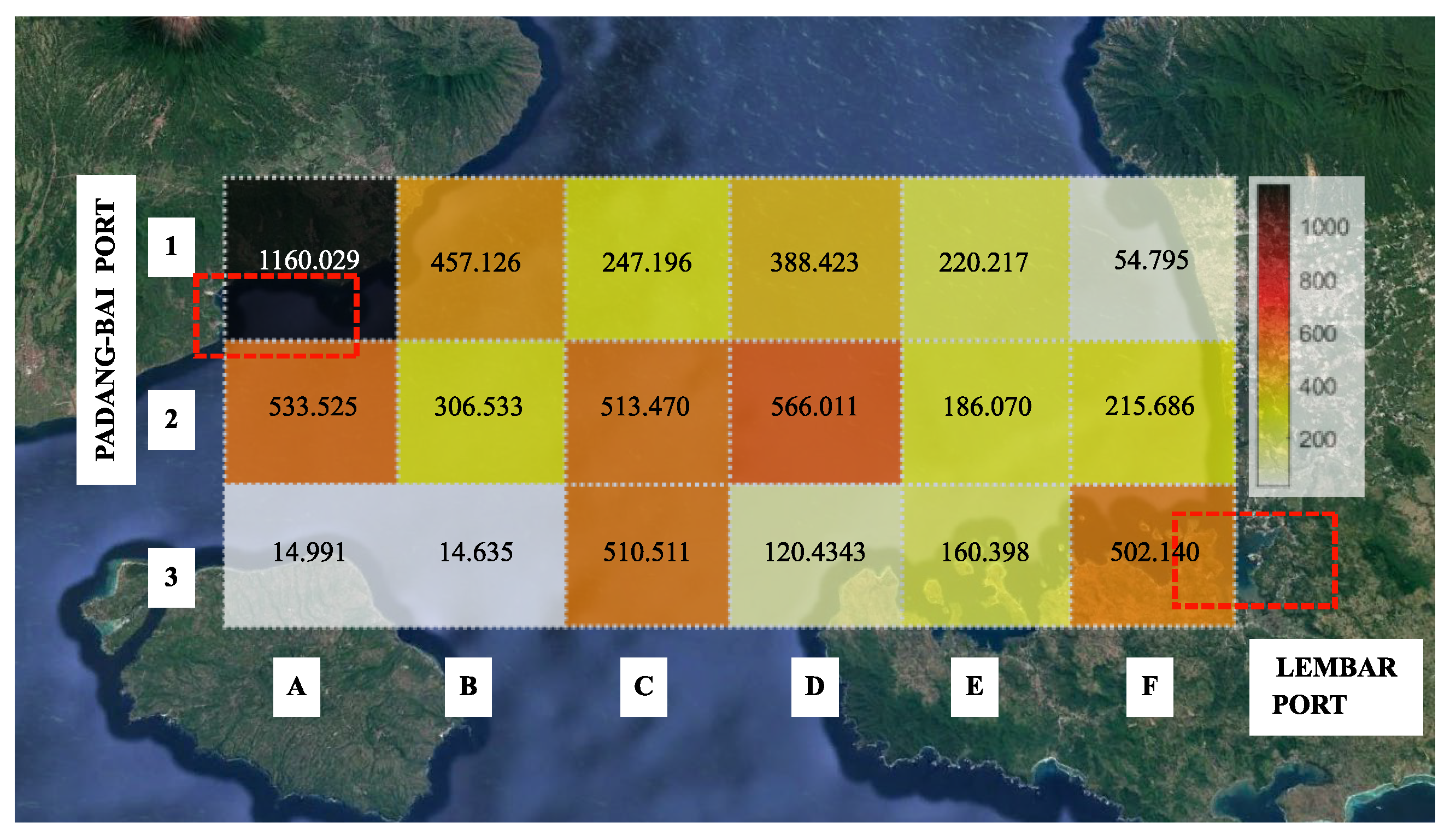
Figure 16 illustrates the spatial distribution of the average navigation safety index in the Lombok Strait calculated using Model II. The highest safety index value is found in grid 1A, with a value of approximately 1160.03, which is located near Padangbai Port and reflects intensive vessel movements and port-related activities in this area. High safety index values are also observed in grid 2D and grid 2C, at around 566.01 and 513.47, respectively, indicating increased navigational risk along the main traffic and crossing routes in the central part of the strait. In addition, grid 3F near Lembar Port records a relatively high safety index of about 502.14, showing the influence of port operations on navigation safety.
Several adjacent grids, such as grid 1B (457.13) and grid 2A (533.53), also exhibit moderate to high safety index values due to frequent vessel movements. In contrast, grids located farther from major routes and port areas, including grid 3A and grid 3B, show very low safety index values of approximately 14.99 and 14.64, reflecting limited vessel activity and simpler navigational conditions.
The higher safety index values obtained from Model II indicate that integrating multiple parameters improves the representation of navigation conditions. By considering both vessel movement characteristics and environmental factors, Model II captures the interaction among risk components more effectively. This result is consistent with the findings in the Bali Strait, where models that include more risk parameters produce higher safety index values, indicating more realistic navigation risk conditions.
4.4.3. Normalized Safety Index
Model I
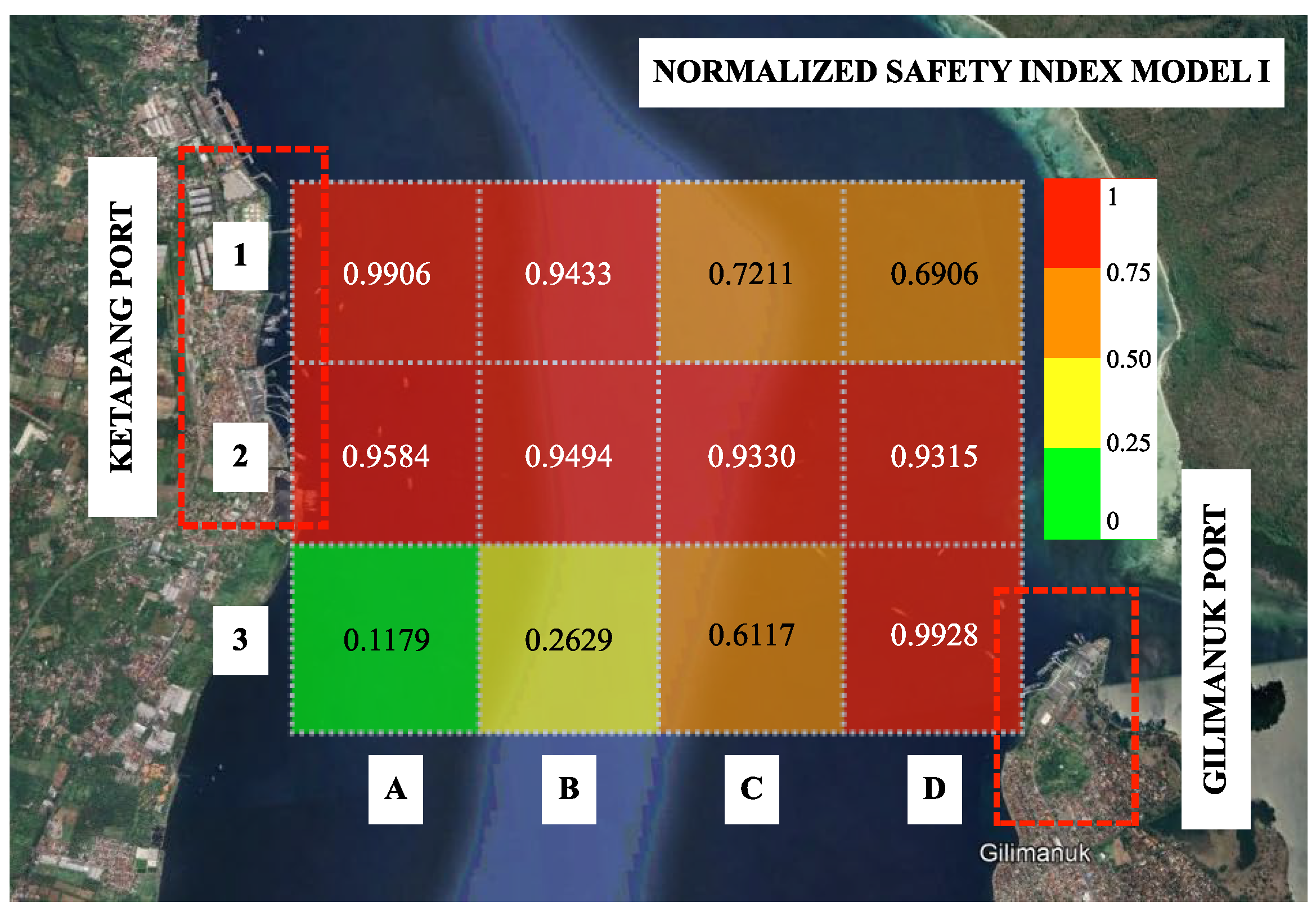
The normalized safety index for the Bali Strait based on Model I is scaled between 0 and 1 to allow a clearer comparison of risk levels across the study area. A large proportion of the grid segments have values above 0.75, indicating that more than half of the area is associated with relatively high navigation risk. These higher-risk segments are mainly concentrated near port areas and along the main ferry crossing routes, where vessel density and interaction frequency are high.
Several grid segments, including 1C, 1D, and 3C, fall into the high–medium risk category and are located along the central navigation corridor connecting Ketapang Port and Gilimanuk Port. Although these areas are not directly adjacent to the ports, frequent vessel encounters still contribute to elevated risk levels. Lower-risk conditions are observed in grid 3B, while the safest conditions are found in grid 3A, which is situated farther from the main shipping lanes and port approach zones.
The spatial pattern reflects the combined effect of dense traffic and limited maneuvering space in the Bali Strait (
Figure 17). The small grid size of 1 km × 1 km, together with the narrow geometry of the strait, leads to a clear concentration of navigational risk near ports and along the main crossing routes.
- 2.
Lombok Strait
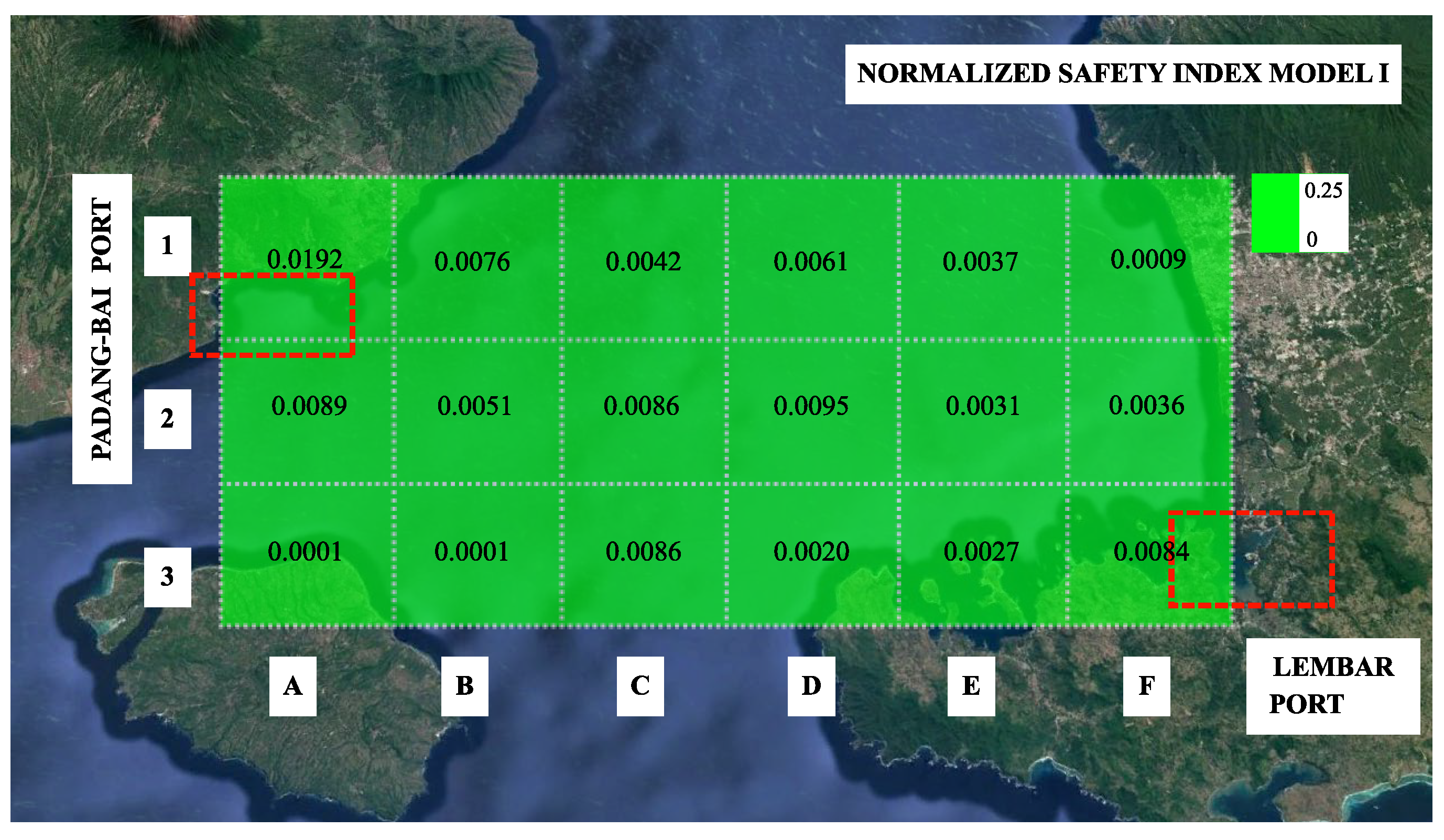
The normalized safety index for the Lombok Strait, calculated using Model I, shows consistently low values across all grid segments. All the normalized values remain below 0.25, which places the entire study area within the safe category and indicates a generally low level of navigational risk when assessed using this model.
This outcome is strongly influenced by the spatial resolution applied in the Lombok Strait analysis. Each grid represents an area of 10 km × 10 km, which is considerably larger than the grid size used in the Bali Strait. As a result, navigation risk is distributed over a wider area, leading to lower normalized index values per grid cell. In addition, the overall safety index values in the Lombok Strait are already lower than those observed in the Bali Strait, which further contributes to the uniformly low normalized values (
Figure 18).
Even grid segments located near Padang Bai Port and Lembar Port exhibit low normalized safety index values. This suggests that vessel interactions in the Lombok Strait are more spatially dispersed, rather than concentrated within narrow corridors. The wider geometry of the strait allows ship movements to spread over a larger area, reducing encounter density within individual grid cells compared to the more confined conditions in the Bali Strait.
Model II
- 1.
Bali Strait
The normalized safety index obtained from Model II shows higher values across the Bali Strait compared to those from Model I. With the integration of all influencing factors, the number of grid segments classified as danger or high risk increases from 7 to 9 out of 12. This change indicates that the inclusion of additional parameters, particularly oceanographic conditions, leads to a higher overall tendency of navigational risk (
Figure 19).
Higher risk levels remain concentrated near Ketapang Port, near Gilimanuk Port, and along the main ferry crossing corridor, where vessel density and encounter frequency are already high. Rather than creating new risk areas, oceanographic conditions appear to intensify existing traffic-related risks in these locations, while grid segments 3A, 3B, and 3C show similar risk levels to those observed in Model I due to lower interaction intensity away from the main navigation routes.
To support the validation of the proposed model, ship collision cases in the Bali Strait were reviewed based on a previous Fault Tree Analysis (FTA) study [
12]. Four collision incidents were identified, all occurring in areas close to port locations, namely near Ketapang Port and Gilimanuk Port (grid 2A and 3D). These incidents include the collisions between KM Shinpo 18 and KM Bosowa VI in 2010, LCT Perkasa Prima 05 and LCT Arjuna in 2015, KMP Munic and KMP Dharma Kosala in 2018, and Gerbang Samudra 2 and Trisila Bhakti II in 2022. The spatial distribution of these collision cases is consistent with the grid segments identified as high-risk in this study, indicating that the proposed safety index reasonably captures areas with elevated navigational risk.
- 2.
Lombok Strait
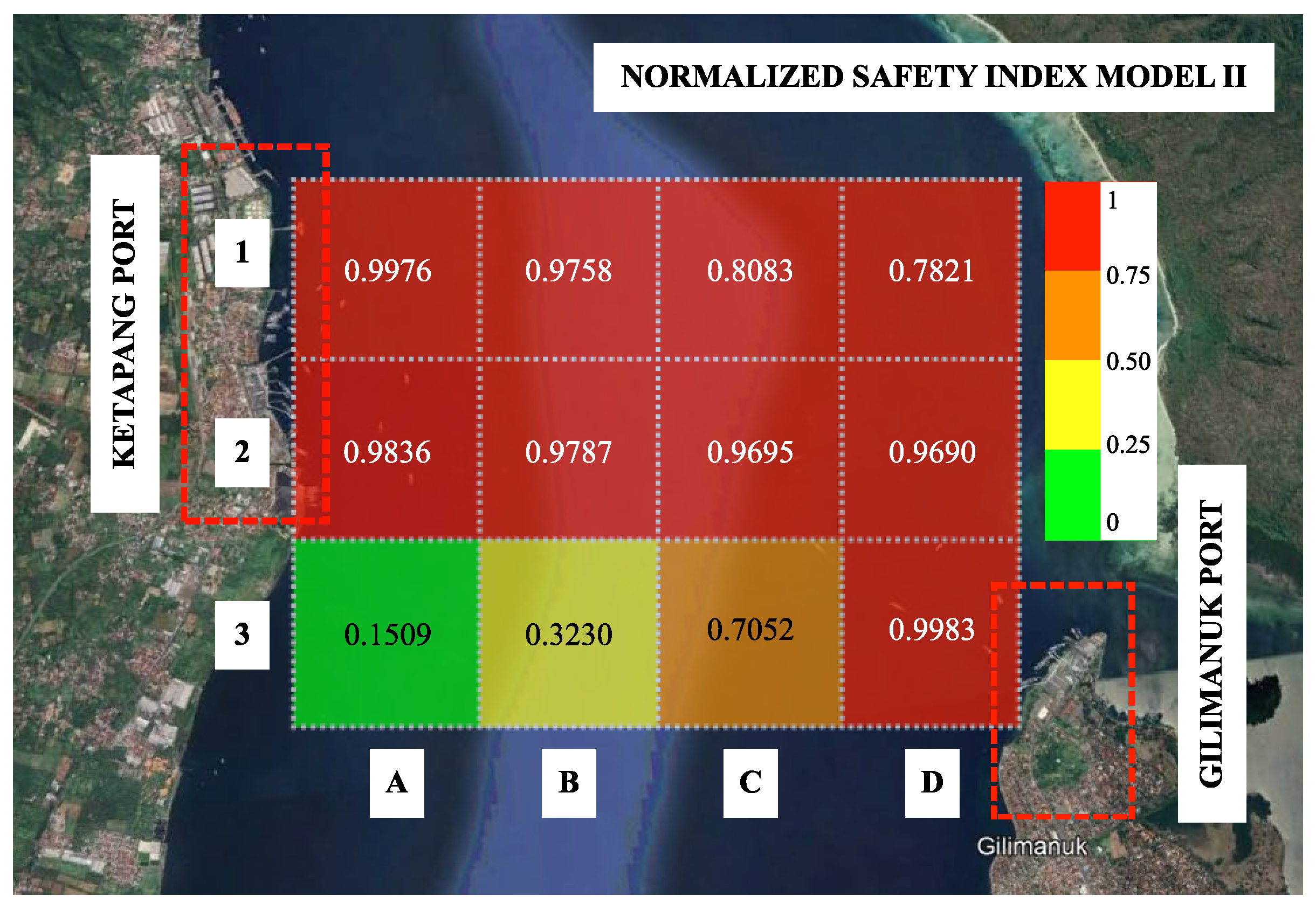
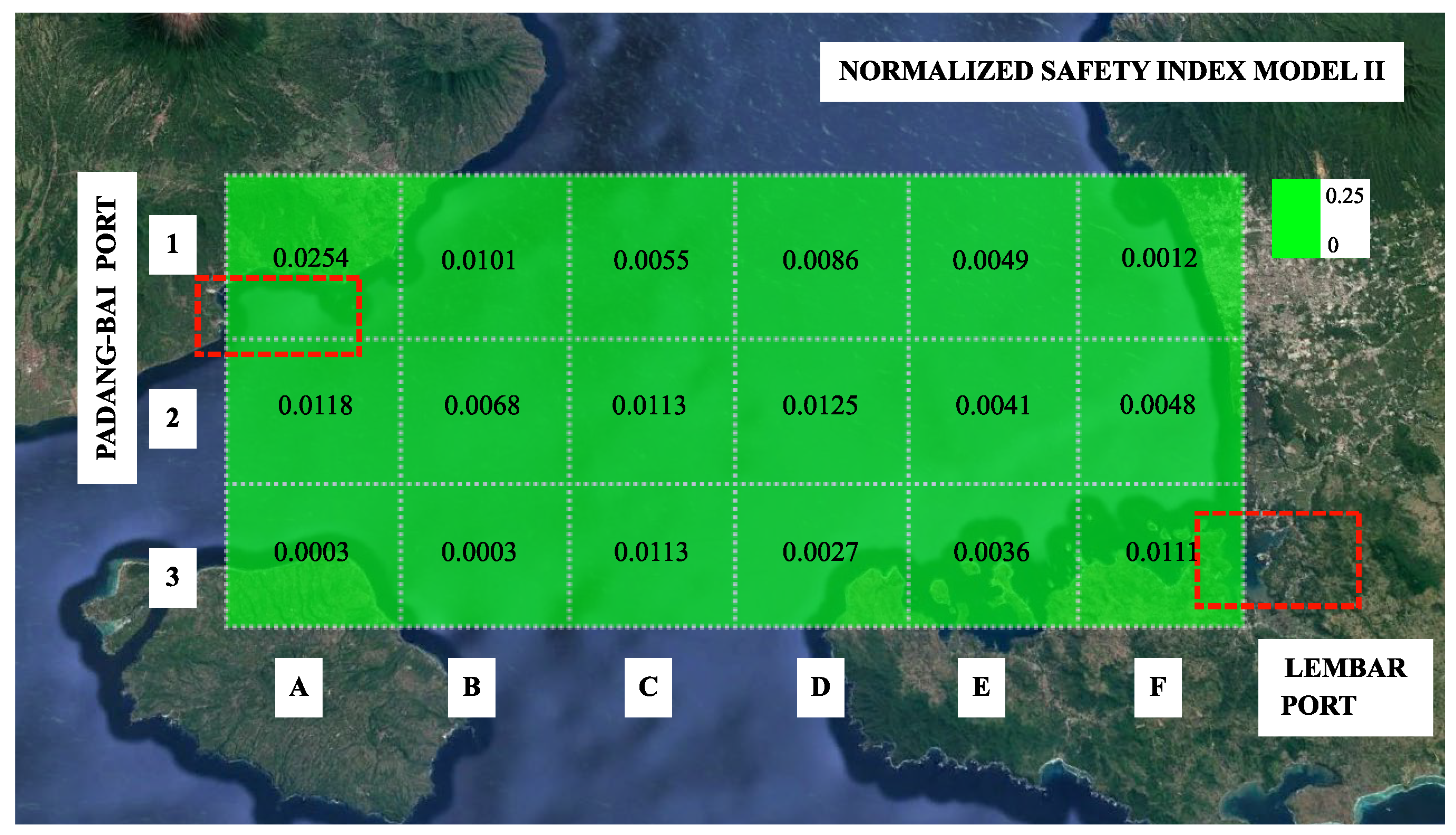
The normalized safety index obtained from Model II in the Lombok Strait shows a small increase in several grid segments when compared to Model I (
Figure 20). Despite this increase, all normalized values remain below 0.25, indicating that the study area continues to fall within the safe category.
Higher values are mainly observed in grid segments located near Padang Bai Port and Lembar Port, where vessel activity and environmental influences are more pronounced. However, these localized increases do not alter the overall risk classification of the strait. This suggests that, even with the inclusion of oceanographic conditions, navigational risk in the Lombok Strait remains low under Model II.
4.5. Multivariate Analysis (MVA) Results
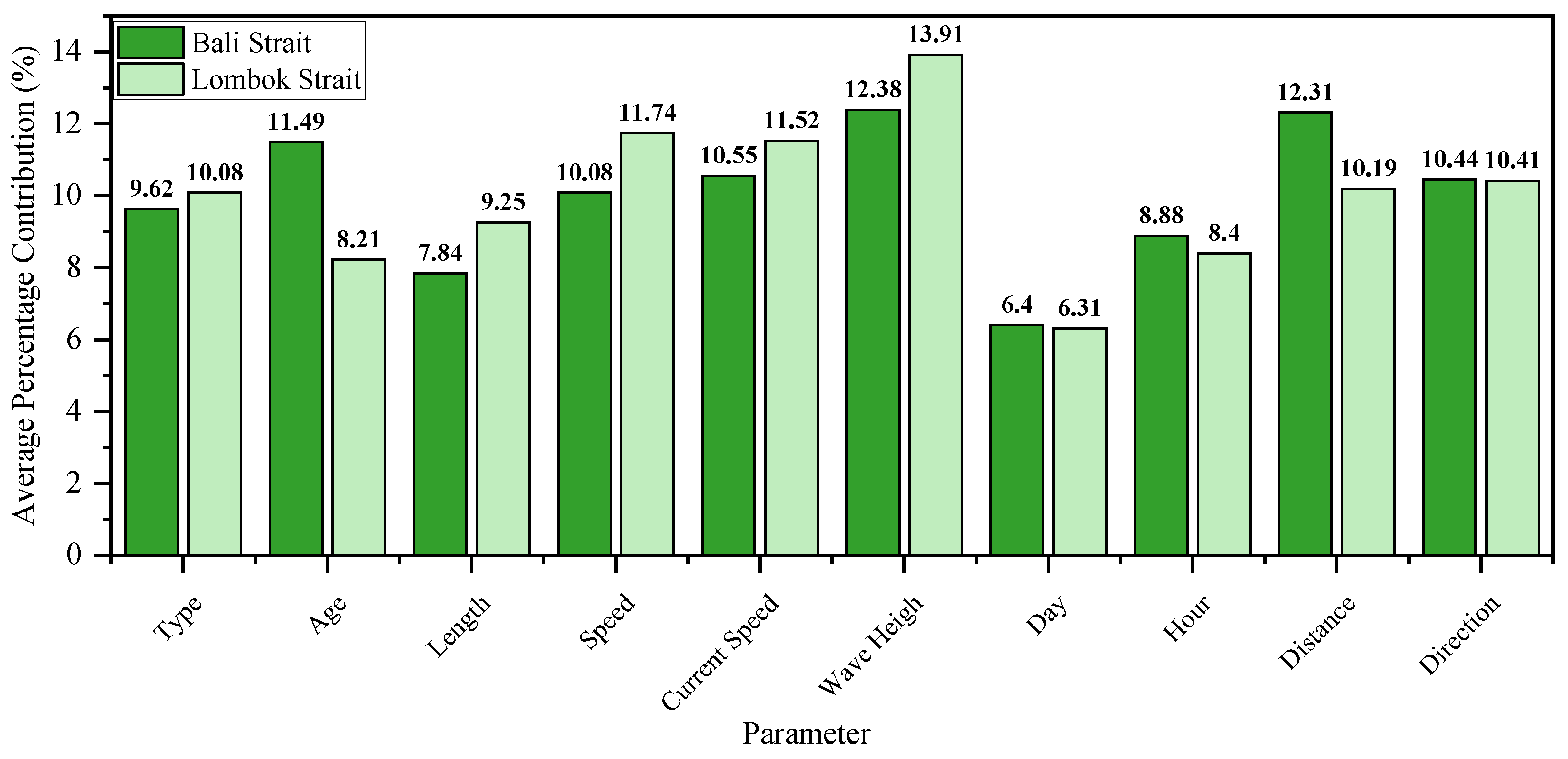
Figure 21 compares the average percentage contribution of each parameter to the safety index in the Bali Strait and the Lombok Strait. Several differences can be observed, showing how traffic characteristics and environmental conditions influence navigation safety in each area. In the Lombok Strait, the contribution of ship type is slightly higher at about 10.08% compared to 9.62% in the Bali Strait, while ship length also plays a larger role in Lombok (9.25%) than in Bali (7.84%). These results reflect the presence of larger and more diverse vessels operating in the Lombok Strait.
Speed-related factors show a clearer contrast between the two regions. The contribution of vessel speed in the Lombok Strait reaches approximately 11.74%, higher than the 10.08% observed in the Bali Strait. Similarly, current speed and wave height contribute more strongly in Lombok, with values of about 11.52% and 13.91%, respectively, compared to 10.55% and 12.38% in the Bali Strait. This indicates that oceanographic conditions have a stronger influence on navigation safety in the Lombok Strait.
In contrast, traffic-related parameters associated with spatial constraints are more dominant in the Bali Strait. Ship age contributes 11.49% in Bali, noticeably higher than the 8.21% in Lombok, suggesting the presence of older vessels in the Bali Strait. Ship distance also shows a higher contribution in Bali at around 12.31%, compared to 10.19% in Lombok, reflecting closer vessel spacing due to the narrower geometry of the strait. Other parameters, such as sailing day, sailing hour, and ship direction, show relatively similar contributions in both regions, indicating comparable temporal and directional movement patterns.
Overall, the Lombok Strait is dominated by factors related to longer vessels, higher speeds, and more extreme sea conditions, while the Bali Strait is characterized by older vessels and closer vessel spacing. These differences reflect distinct operational and environmental characteristics between the two straits and highlight the need for location-specific approaches to navigation safety management. In the Lombok Strait, the dominance of speed, ship length, and oceanographic factors suggests that safety measures should prioritize speed management, enhanced monitoring of large vessels, and improved use of real-time current and wave information for navigators. In contrast, the Bali Strait would benefit more from stricter traffic control, improved management of vessel spacing, and enhanced collision avoidance support, particularly in narrow and congested areas. These findings indicate that a uniform safety strategy may not be effective, and that the MVA-based identification of dominant risk contributors can support more targeted and adaptive maritime safety planning across different navigational environments.
5. Conclusions
In this study, the ship–ship safety index in the Bali Strait and Lombok Strait was analyzed using two models, Models I and II, to evaluate the influence of multiple operational and environmental factors on maritime risk. The AIS data obtained indicate that the traffic density in the Bali Strait is higher than that in the Lombok Strait, where the Bali Strait is dominated by domestic navigation with passenger ships, while the Lombok Strait is more diverse due to its position along both domestic and international shipping routes.
The safety index assessment for the Bali Strait and the Lombok Strait, using both Models I and II, shows that maritime risk is closely related to vessel traffic patterns, sailing time, day of operation, and environmental conditions. In the Bali Strait, higher safety index values are mainly observed during the early morning and midweek periods, particularly near Ketapang and Gilimanuk Ports, where grid segments 2A and 3D consistently exhibit elevated risk levels. In the Lombok Strait, safety index values tend to increase during morning hours and vary throughout the week, with higher values appearing near Padangbai and Lembar Ports and along the ALKI II international shipping route.
Based on the normalized safety index, a clear contrast is found between the two straits. In the Bali Strait, many grid segments are classified as danger or high risk, especially around port areas and along the main ferry crossing corridor. The application of Model II further increases the number of high-risk grids, indicating that the inclusion of oceanographic conditions intensifies existing traffic-related risks in this narrow and congested strait. In contrast, all grid segments in the Lombok Strait remain within the safe category under both Models I and II. Although Model II produces slightly higher normalized safety index values, the wider geometry of the strait, lower vessel concentration per unit area, and area-based normalization prevent the accumulation of high risk within individual grids.
The multivariate analysis also shows that the navigation risk in the two straits is influenced by different dominant factors. In the Lombok Strait, higher contributions are associated with larger vessel size, higher sailing speed, and more dynamic sea conditions, while in the Bali Strait, vessel age and reduced spacing between ships play a more significant role. Other parameters, including ship type, current speed, wave height, sailing days, sailing hours, and ship direction, contribute to varying degrees. These differences reflect the distinct operational and environmental characteristics of each strait and support the need for risk management strategies that are adapted to local conditions.
From a sustainability perspective, the proposed safety index framework contributes to safer and more sustainable maritime transportation by supporting accident prevention, operational efficiency, and environmental protection. By identifying spatial–temporal collision risk patterns, particularly in narrow and heavily trafficked straits, the framework helps reduce the likelihood of ship collisions that may lead to environmental pollution, traffic disruption, and socio-economic losses.
Future studies should focus on extending the proposed safety index framework toward more practical and operational applications. In particular, the current methodology can be further developed into a dedicated application or graphical user interface (GUI) to improve usability and support decision making by Vessel Traffic Service (VTS) operators and ship crews. Such an interface would allow for the continuous visualization of spatial–temporal risk levels and facilitate the timely implementation of risk mitigation measures.