Article

From Conventional to Modernised ERTMS Level 2: Steps Towards Rail Interoperability and Automation in Belgium


Transport Engineering Faculty, Vilnius Gediminas Technical University, Plytinės Str. 25, LT-10105 Vilnius, Lithuania
*
Author to whom correspondence should be addressed.
Sustainability 2026, 18(3), 1535; https://doi.org/10.3390/su18031535
Submission received: 9 December 2025 / Revised: 22 January 2026 / Accepted: 29 January 2026 / Published: 3 February 2026

Abstract

In this scientific article, a quantitative assessment is carried out of the influence of the ERTMS modernisation factor on the practical efficiency of operation and resilience of the Belgian railway lines 50A/51A with the application of methodological triangulation in the MATLAB R2025a Update 1 (25.1.0.2973910) software environment (discrete-event modelling, Petri nets, Markov reliability modelling, and correlation analysis). The modelling reveals that the scenario with an expanded level of automation increases the capacity from 18.3 to 26.0 trains over 2 h (+42.1%) and reduces the average waiting time from 1.53 min (baseline level) to 0.21 min—virtually the theoretical lower bound of zero under favourable conditions. The results of the block-occupancy analysis by means of Petri nets show that a more dynamic distribution of blocks provides higher capacity, and Markov chains reflect the reduction of the impact of control centre unavailability in developing communications and virtualisations. Spearman correlation analysis additionally shows coordinated improvement of the metrics of safety, digital protection, resilience, and performance. Relying on the modelling results, a phased roadmap is proposed, combining technical improvements (development of communication systems, readiness for automation, comparable management of rolling stock movement) with compliance with regulatory requirements and the goals of sustainable development, related to SDGs 9, 11, and 13.

1. Introduction

According to information on the website of the Union of European Railways, ERTMS (European Rail Traffic Management System) was created due to the lack of a common architecture for coordinating traffic and digital data between multiple European railway companies. In 1996, a legal act of the European Commission outlined the idea of an interoperable automated system for regulating high-speed rolling stock, and in 2000 the first technical standards for the new technology were demonstrated [1]. In 2002, the created technical standards were implemented in the interoperability regulations for the continental high-speed rail transport system [2,3]. The ERTMS structure includes such components as ETCS (European Train Control System), ATO (Automatic Train Operation), RBC (Radio Block Centre), and TMS (Traffic Management System). It is advisable to view the role of ERTMS not merely as a signalling upgrade, but as a transition to a new conceptual framework for systematic traffic management. ERTMS provides a unified standard for train control and communications at the network level, which is essential for interoperability and centralised dispatching. At the core of the system is the ETCS standard, which implements continuous automatic protection, whereby onboard equipment calculates and enforces the permitted speed profile, thereby preventing overspeed and passing a signal at danger. Through real-time data exchange between rolling stock and the control centre, Level 2 integrates with modern dispatch systems and enables timely adjustment of the operating timetable. ERTMS functions as a digital intermediary between locomotive crews and control centres and serves as the foundational basis for a unified information-and-control environment in which enhanced methods of traffic optimisation can be deployed across the entire railway system.
One of the obstacles in the development of ERTMS system levels is the use of outdated mobile communications such as GSM-R (Global System for Mobile Communications—Railway), ballasts, track circuits, lack of full automation of train traffic, and restrained variability of intervals between rolling stock. The current stage of development of intelligent transport systems in rail is directly linked to ERTMS and relies on numerous technological innovations. For example, Traffic Management algorithms designed to carry out automated dispatching enable real-time reallocation of train routes and headways, allowing irregular situations on line sections to be resolved quickly. ETCS compatibility with advanced processing methods makes dynamic timetable optimisation possible, thereby improving infrastructure utilisation and reducing delays. Furthermore, the obsolete GSM-R communications technology is being replaced by FRMCS, a 5G-based system that will provide the high throughput capability and data reliability needed for innovations such as real-time video transmission, train condition monitoring, and support for automatic train operation. The migration from GSM-R to FRMCS is a key prerequisite for full-scale sector digitalisation and the implementation of next-generation technologies. Engineering solutions such as ATO complement ERTMS by automating a range of functions. Even at GoA2, ATO can ensure train departures and stops with precise adherence to the timetable, while ETCS simultaneously provides safety supervision (ATP) and prevents overspeed. Over time, combining ETCS with ATO will enable semi-autonomous or fully autonomous train operation on main lines, increasing punctuality, energy efficiency, and line capacity by minimising the human factor. According to the current Technical Specifications for Interoperability for Control-Command and Signalling [4], the list of ETCS requirements formally distinguishes only two application levels: Level 1 and Level 2. Theoretical models that have been referred to as “Level 3” or “Hybrid Level 3”, such as moving or virtual blocks in combination with train integrity monitoring, are treated in this study as enhanced functionality of ETCS Level 2 rather than as separate stages in a regulatory sense. At an early stage of this study, prospective ERTMS development levels (conventionally referred to as Levels 3 and 4) were considered, but the final version focused on the existing Level 2 as the most realistic and well-grounded option for the current situation in Belgium’s railway infrastructure. Level 3 (with moving block) is at the stage of R&D (research and development) and pilot projects—its wide deployment would require full on-board equipment and abandonment of semaphore-based signalling, which is expected only after 2025. The concept of Level 4, which refers to virtual train coupling, is experimental and not yet standardised. Based on the above, concentrating on Level 2 provides a foundation for using a proven technology that is already deployed and for obtaining results that are directly applicable in practice. Another reason for choosing Level 2 is that it delivers significant improvements (continuous speed supervision, interoperability) without large-scale infrastructure overhauls. In practice, this level is regarded as the optimal step toward railway digitalisation, creating a basis for subsequent upgrades while minimising the indicators and variability associated with the immaturity of new solutions.
Therefore, instead of introducing non-standard terminology such as “ERTMS Level ¾”, this article analyses three scenarios for improving ETCS Level 2 on the Belgian main lines 50A/51A, ranging from a traditional fixed-block configuration to an updated moving-block structure with higher degrees of automation and integrated traffic management. To eliminate conceptual ambiguity, it is necessary to clearly distinguish the extended ETCS Level 2 scenario (L2-A) presented in this article from the ETCS Level 3 scenario. All three scenarios considered directly correspond to the standardised ETCS Level 2 system and comply with the principle of fixed blocks, which are coordinated by trackside infrastructure and controlled by the Radio Block Centre. The L2-A scenario does not imply the use of moving blocks, train integrity-based segmentation, or the removal of trackside block logic, which are typically associated with ETCS Level 3 concepts. Instead, L2-A represents an enhanced operational configuration of ETCS Level 2. Its distinguishing features include improved digital integration, reduced workload for operational staff, and increased automation of decision-making processes, while maintaining human supervision. Automation functions, such as train trajectory optimisation and predictive control, are implemented at the traffic management system and automatic train operation support layers, without altering the fundamental safety architecture of ETCS Level 2. The selected approach ensures compliance with regulatory requirements and enables investigation of the upper performance limits that can be achieved within the framework of ETCS Level 2 modernisation.
The modelling carried out for this type of article is a comprehensive project that touches on the architecture of digital traffic-control systems. ERTMS should be viewed as a system of systems, in which on-board train subsystems, devices such as balises and radio block centres, traffic management centres, and wayside infrastructure equipment are integrated into a single environment. The integration between ETCS and traditional signalling implies that system behaviour is determined by the joint operation of many elements in real time. For implementation under experimental conditions, it is crucial to design and verify all system layers in detail—from automatic train protection algorithms to the logic of the dispatch/control centre. Therefore, the study focuses on modelling in MATLAB, which makes it possible to reproduce ERTMS behaviour in a digital environment. The modelling procedure provides developers and researchers with a tool for testing and verification, enabling early detection of potential issues, the testing of many traffic scenarios, and assurance of correct interaction between subsystems. The MATLAB-based modelling approach is vendor-agnostic and supports experimentation with system parameters without risking real infrastructure.
Thus, the current study includes
  • A full-scale quantitative assessment of the impact of ETCS Level 2 modernisation on route capacity, waiting time, and resilience, using the example of actual Belgian railway corridors (50A/51A);
  • The implementation of a modernisation strategy aggregating technical, organisational, and legal steps, with parameterised results in the form of sustainable development indicators.
Table 1 shows that existing studies often focus on isolated aspects of ERTMS modernisation—such as communications technology, automation concepts, or reliability-assurance algorithms—without integrating these elements into a unified evaluation framework. By contrast, the present study provides a triangulation-based scenario assessment that integrates discrete-event simulation, block-occupancy analysis (via Petri nets), reliability modelling with Markov chains, and correlation analysis within a single reproducible workflow. In a comparative reading of prior work, our approach is applied to a real mixed-traffic TEN-T corridor (lines 50A/51A) and draws clear distinctions among operational scenarios (L2-B, L2-M, L2-A), linking quantitative performance results with a phased implementation roadmap aligned with regulatory requirements and sustainable development goals. The symbols ✓, △, and ✗ indicate that the respective aspect is explicitly addressed, partially addressed, or not addressed in a given study, respectively.
The subsequent part of the article is structured as follows:
  • Section 2 provides a theoretical analysis of interoperability and rail automation, including the evolution of ERTMS and its current limitations, core enabling technologies for advanced operation, and the role of GoA4-based automation and traffic management;
  • Section 3 systematises the regulatory framework for ERTMS implementation;
  • Section 4 describes in detail the research methodology and modelling scheme;
  • Section 5 presents the results of the modelling;
  • Section 6 translates these results into practical implications for design processes and subsequent operation;
  • Section 7 discusses the findings in the context of sustainability and the UN Sustainable Development Goals (SDGs).
The originality and novelty of this study consist of:
  • Numerical data obtained from representative cases on lines 50A/51A, comparing the baseline ERTMS (ETCS) L2 configuration with the modernised/enhanced ERTMS (ETCS) L2 system;
  • A triangulated, scenario-based assessment of the process of system-level upgrading of ETCS Level 2 on an operational mixed-traffic railway corridor (lines 50A/51A). Discrete-event modelling forms a set of key efficiency metrics of capacity, delays, and latency; Petri nets provide the basic mechanism of block occupancy; Markov chains illustrate bottlenecks of key control and communication services leading to downtime; Spearman correlation reflects system-level relationships among performance, safety, and digital protection indicators. The relationship under consideration provides both a numerical assessment and a structural-mechanistic explanation and supports an implementation-oriented roadmap.

2. Theoretical Analysis of Interoperability and Rail Automation in Europe

2.1. The Evolution of ERTMS and Current Limitations

Digital modernisation and interoperability of rail transport information systems is one of the defining stages in the continuation of the large-scale development of the ERTMS system. Among the first steps in fulfilling this task is analysis of the development experience, as well as what technologies were used in the creation of European railway software and hardware. Stankov et al. [5] described in detail what the railway information system is. It was determined that the principles of reconnaissance and monitoring formed the basis of the concept of the information systems. This is how the procedures for withdrawal and interaction of data from interstate logistics operations are carried out in real time. The capabilities of the digital structure make it possible to inspect full and empty freight cars in parallel [5].
Dykan et al. analysed the digitalisation of railways in their article. The authors, based on the results of their study, concluded that the implementation of new digital solutions, as well as the overall comprehensive development of this informational infrastructure, will allow railway companies to eliminate barriers that are time-consuming and adversely affect the transportation of goods [14]. At present, the main focus of the development of information systems is on the integration of intelligent logistics structures, reducing the impact of humans on work processes. The development and reorganisation of global transportation involves irreversible and rapid integration of the latest solutions in digital transport structures.
Kirdina et al. [15], in their work, indicated that the transformation of digital systems should be carried out in stages. Namely, the integration of new tools and software should correspond to the needs of companies and the market for the provision of freight transportation, and the effectiveness of improvements must be demonstrated in the field and have a quick response option, with the purpose of promoting development for companies and consumers. In addition, there is a possibility of developing a long-term framework for the digital transition process and continuously improving the methods of using virtual tools by including computerised objects and conditions. As a result of the research, it was indicated that delays in the use and development of information systems is affected by the lack of specific standards for the operation of digital tools in rail transport, the lack of economic sustainability, and the conservatism of service personnel, namely, the reduction of the role of a person in coordinating data and the movement of rolling stock [15].
The key takeaway is that a number of works consider a smooth transition to digital technologies, which is grounded in standards and is a prerequisite for sustainable interoperability and automation on European railways.

2.2. Core Enabling Technologies for Advanced Operation: Communications, Platforms, and Computing

A modernised ERTMS Level 2 should include a principle such as V2X (Vehicle 2 Everything). Wille and Grünhauser examined the operating principle of this tool in their publication. V2X is a model that is similar to WLAN and is already used in the automotive transport sector to coordinate data between a vehicle and an infrastructure element. An example is the use of emergency warnings to car drivers about abnormal situations. In V2X, data are processed through recipients, using the advanced WLAN IEEE 802.11 standard [16], with a range of 5 GHz. In addition, this communication standard has increased scalability and assumes the use of communication with an increased range [6].
In addition to the specified certificate, the updated ERTMS (ETCS) Level 2 configuration may include technology such as Smart Digital Platform from Thales. This tool will allow
  • collection and analysis of information from many databases, namely cameras, sensors, and other sources of sensitive information, modified into practical information for quick decision-making;
  • automation of assigned tasks and efficient distribution of railway network resources, which allows improvement of operational processes and reduces the likelihood of human error;
  • flexibility of technology, which provides for integration into existing information systems [17].
Moving away from GSM-R communication technology is necessary to gain the advantages of the enhanced ETCS Level 2. The innovation that will replace the outdated GSM-R technology was announced by FRMCS (Future Railway Mobile Communication System) [7]. One of the companies that participates in this program is Swedish Ericsson. In its report on FRMCS, the company noted that there is a problem with a smooth transition from GSM-R use. The reasons for this may be the excessive implementation of FRMCS on the dual-frequency communication ranges n100/n101. The first step for the distribution of the new technology is coverage with a full n101 range, which implies a TDD (full carrier) of 10 MHz, with a gap of 30 kHz, to implement more efficient operation at high-speed modes of rolling stock, if we consider SCS (subcarrier spacing) with a frequency of 15 kHz [8].
Liang et al. [18], in their paper, described the use of an edge computing platform for train control systems. In their study, the authors designed a self-healing LQG autonomous train control method. The experiments were carried out by loading a unit equipped with the LQG train coordination algorithm to demonstrate independent computing operational services. In addition, the Kubernetes principle was used to monitor the condition of all operating units to enable the development of applications connected by communication [18].
The key takeaway is that the transition process to FRMCS, the implementation of integrative digital platforms, and the deployment of architectural components of edge and cloud computing are foundational factors that contribute to the development of current railway operations, primarily with respect to the requirements for interoperability and safety.

2.3. Automation and Traffic Management: GoA4 Concepts, TMS Platforms, and Rescheduling Algorithms

Felez and Vanquero-Serrano, in their research, investigated virtual coupling on railways. For the new expanded ERTMS (ETCS) Level 2 architecture, it will be noteworthy to use such technologies as decentralised control and predictive control models. Analysing the first concept of decentralised control, its feature is that each rolling stock has one controller, and control of the virtual coupling in the column is carried out according to the interaction principle, as a leader-slave system. The use of such a technique is possible for two cases. In the first case, each train could individually drive, taking into account the estimated course of the rolling stock that is ahead. The second case of using decentralised control is when the leading train has the functionality of sending a command to other trains, which are followers, to instruct them to move at a set speed at a designated distance. Such episodes are a one-dimensional, virtual dynamic system [9]. The productive control model assumes an optimal concept of predictive control, which controls the system in previously specified constraint parameters. This control method consists of a cost option, a constraint, and a decision variable. The advantage of this model is its simplicity of formulation, since the dynamic parameters and constraints implement the actual physical behaviour.
As previously mentioned, one of the problems of the previous ERTMS (ECTS) levels is the outdated digital connection technologies. To improve the elements under consideration, in addition to V2X and 5G, such technologies as MPLS (Multiprotocol Label Switching) and MPTCP (Multipath TCP) are proposed. Lopez et al. [12], in their article, characterised MPLS. MPLS is an improved forwarding order that links the advantages of packet communication and channel connection. This technology uses a 20-bit mark to designate any packet that is integrated into the network. Each packet that has the same mark is equally delivered over the network infrastructure, demonstrating a channel-based model when compared with packet-forwarding mechanisms. MPLS includes such components as LER (Label Edge Power) and LSR (Label Switch Router). The first element is a switch located at the border, which regulates input and output of the MPLS network and ensures that the label is attached to the incoming packet in the system and excluded from the outgoing packet. The second component is a transit switch already inside MPLS that oversees the change of marks that are used for packet routing. Any of the LSR routers examines the incoming packet, forwards it considering each mark, erases the old mark from the header, and simultaneously adds a new one before delivering the packet to the next section [12].
Lee and Park described MPTCP technology in their research paper. MPTCP technology is a data transfer mechanism that occurs along a single path. This data delivery method was certified in 2013. In the technology configuration, all sub flows, without exception, operate as a single autonomous TCP session. The sub flow provides independent TCP communication management and congestion monitoring, including preserving TCP properties. MPTCP is distributed in blocks. The first block coordinates the connection, creates and tracks sub flows, and synchronises them. The second block manages network paths; specifically, it selects and manages available network interfaces, attaches new data transfer paths, removes inoperative paths, and evaluates the quality of each path. The third block concerns the design of data transfer, that is, distributes packets between available paths using such methods as Lowest RTT First, Redundant Mode, and Load Balancing. The last block is responsible for monitoring stability, in particular ensuring reliable data transmission by implementing specialised network congestion management algorithms such as OLIA (Opportunistic Linked Increases Algorithm), LIA (Linked Increases Algorithm), and wVegas (Weighted Vegas, the Congestion Control Algorithm specifically developed for Multipath TCP) [13].
The functionally extended ERTMS Level 2 should consider GoA4 (Grade of Automation 4) as the main automation level and use a TMS (traffic management system) concept such as OPTIMA. Peleska et al. [10], in their scientific article, described the standardisation and certification of automation levels. For safe and smooth implementation of GoA4, it is important to comply with technical standards such as CENELEC EN50126 [19], EN50128 [20], and EN50129 [21] to pass the certification process [10].
Flamini et al. [11] described the operating principle of GoA4. This level of automation includes intelligent protection and intelligent control of the rolling stock, which includes full autonomy in all elements with increased powers of neural learning and adaptation, as uncoordinated and reinforced learning. The system is connected in most cases, progressively updated, and accompanied by higher stages of fog/cloud intelligence using external AI (Artificial Intelligence) models to process big data. Remote, unattended driving is possible only in situations where the required number of cameras and sensors is implemented on board and safety criteria are met. In GoA4, digital twins can be used to calculate accident risks [11].
Cecchetti et al. [22] explored the concept and components of the OPTIMA project. This technology assumes a middleware workflow, which provides all the necessary blocks for smooth and unified communication and information exchange between TMS services. The fundamental components of OPTIMA are the Integration Layer, the Application Framework, Databases for the degree of safety, and standardisation of Operator Workstations, which are located in the control centre. An important concept is the level of interoperability, which determines the functionally combined and programmable process of information transfer and stable access in the “here and now” mode, provides support for various clients, and guarantees continuous exchange between different services [22]. These capabilities are achieved through a coherent infrastructure, which is based on the architecture of the data exchange system, now with the publish-subscribe principle, with codified topics and interfaces for intra-system and external communication through various subsystems, applications, and clients.
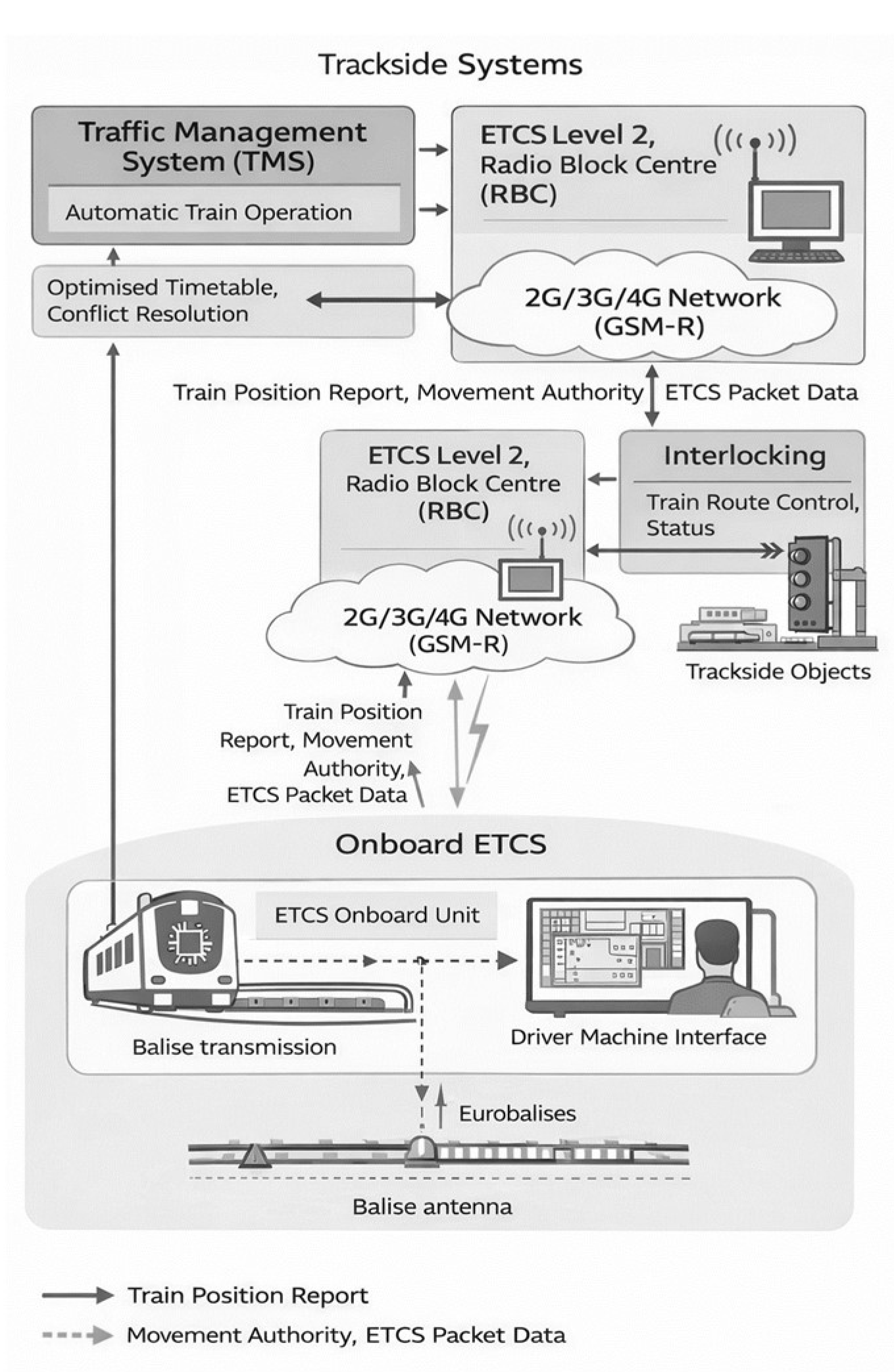
The key takeaway is that the operational availability of GoA4 is inseparable from safety certification systems and depends on mature TMS/middleware ecosystems and the latest timetable rescheduling strategies that are capable of leveraging existing capacities and the potential of automation. Figure 1 demonstrates the High-level architecture of the ERTMS/ETCS Level 2 system, illustrating the interaction between-interactions among the onboard ETCS, Radio Block Center (RBC), GSM-R communication network, interlocking, and traffic management functions (TMS/ATO).

3. Regulatory Framework for ERTMS Implementation

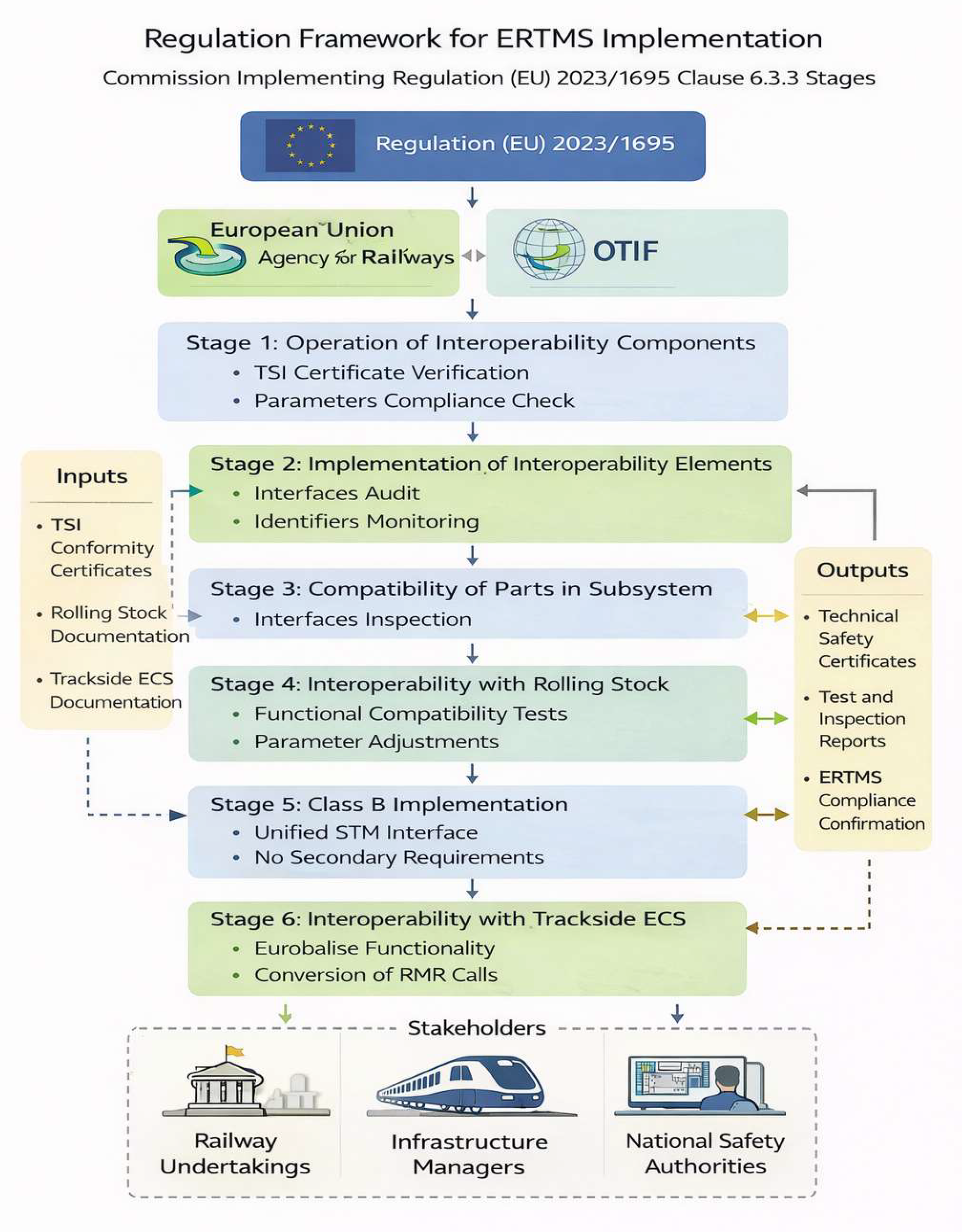
For the gradual introduction of systemically modernised ERTMS (ETCS) Level 2 for Belgian railways, in addition to the technical standards, it is also necessary to consider the legal aspects of the analysis of the relationships between components or groups of interoperability elements. These standards are described in Commission Implementing Regulation (EU) 2023/1695 on the technical classification for interoperability, which applies to the coordination, monitoring, and signalling subsystems of rail transport systems in the EU. Clause 6.3.3. of this legislative act specifies the inspection actions that must be followed for comprehensive assessment of the standards of the on-board control, monitoring, and signalling subsystem of rolling stock. Such aspects are
  • Operation of interoperability components. When performing inspection activities at this stage, it is necessary to consider whether all interoperability components that form the backbone of the subsystem are covered by the EU Declaration of Conformity, with the appropriate certificate. Such a check is performed using a SIM card that meets the requirements of TSI. Also, at this stage of the check, it is necessary to analyse the requirements and limit the use of interoperability elements with the parameters of the subsystem and the surrounding ecosystem. The final sub-stage in this inspection stage is to check the certificate, which is a guarantee of the subsystem’s similarity to the TSI requirements;
  • Implementation of interoperability elements in the subsystem. The second stage of the integration component inspection begins with an audit of the correct installation and operability of the subsystem’s internal interfaces. Next, it is necessary to make sure that the auxiliary options do not affect the key options. The next sub-stage is monitoring the values of identifiers, including the ETCS system identifiers. A positive result will be finding these identifiers in the permissible range. However, if there have been changes in the practical or implementation part of the system identifier, the improvements must comply with the TSI;
  • Compatibility of parts in the subsystem. This stage is characterised by the inspection of interfaces and compatibility among multiple parts of the subsystems;
  • Interoperability with the rolling stock. In this point, it is important to check the correct installation of devices and test the functional compatibility of the on-board control, coordination, and signalling equipment with the rolling stock environment, as well as the compliance of the parameter adjustments and their satisfaction with the permissible range;
  • Class B implementation, based on ETCS on-board elements and class B interface. Class B includes the current state train signalling systems that were used before the creation and implementation of ETCS. Therefore, this inspection step implies checking that the unified STM (Specific Transmission Module) has interfaces that are compatible with TSI, verifying that the class B functionality implemented in the ETCS on-board elements does not create secondary requirements for the trackside coordination and signalling subsystem due to the transient process, and checking that individual class B devices connected to the ETCS on-board elements using interfaces that are not TSI-compliant do not create additional barriers to the trackside coordination and signalling elements;
  • Interoperability with trackside coordination, monitoring, and signalling elements. The inspection stage under consideration is a diagnostic of Eurobalise, namely its telegram-reading functionality, as well as testing the equipment’s capabilities to convert RMR (Railway Mobile Radio) calls to voice and data;
  • RAMS (Reliability, Availability, Maintainability, Safety) principle. The penultimate assessment stage involves analysing the devices for safety requirements, with a target criterion of quantitative stability and compliance with maintenance rules;
  • Integration with elements of coordination, monitoring, and signalling on the railway track and other components of the ERTMS system. The last stage involves testing the interoperability of the elements under conditions that simulate the expected operation. The objectives of such tests are to verify the clarity of the odometry options and that the on-board control, monitoring, and signalling elements are interoperable with the technical criteria of the rolling stock. The importance of these tests also lies in increasing the certainty of the absence of systematic failures of the coordination infrastructure [23]. Figure 2 demonstrates this in a comprehensive manner the staged conformity assessment, interoperability verification, and stakeholder responsibilities.

4. Methodology for Investigating Interoperability and Rail Automation in the Belgian Railway Information System

The sequence of the methodology is based on the following hypotheses:
  • Correlation analysis of ERTMS basic (L2-B) and updated Level 2 in terms of operational values (security, throughput, response time, etc.) will confirm that, the higher the stage of development of digital elements of the information system, the more efficiently the railway line performs its functions;
  • The principle of methodological triangulation makes it possible to qualitatively and thoroughly perform modelling and predict the interoperability of important elements of the ERTMS system, regardless of levels;
  • Scenario modelling using MATLAB software illustrates that the implementation of noteworthy technologies for modernised Level 2 (L2-M) and advanced Level 2 (L2-A) will create a robust and flexible information system workflow and transform the operational capabilities of the railway line.
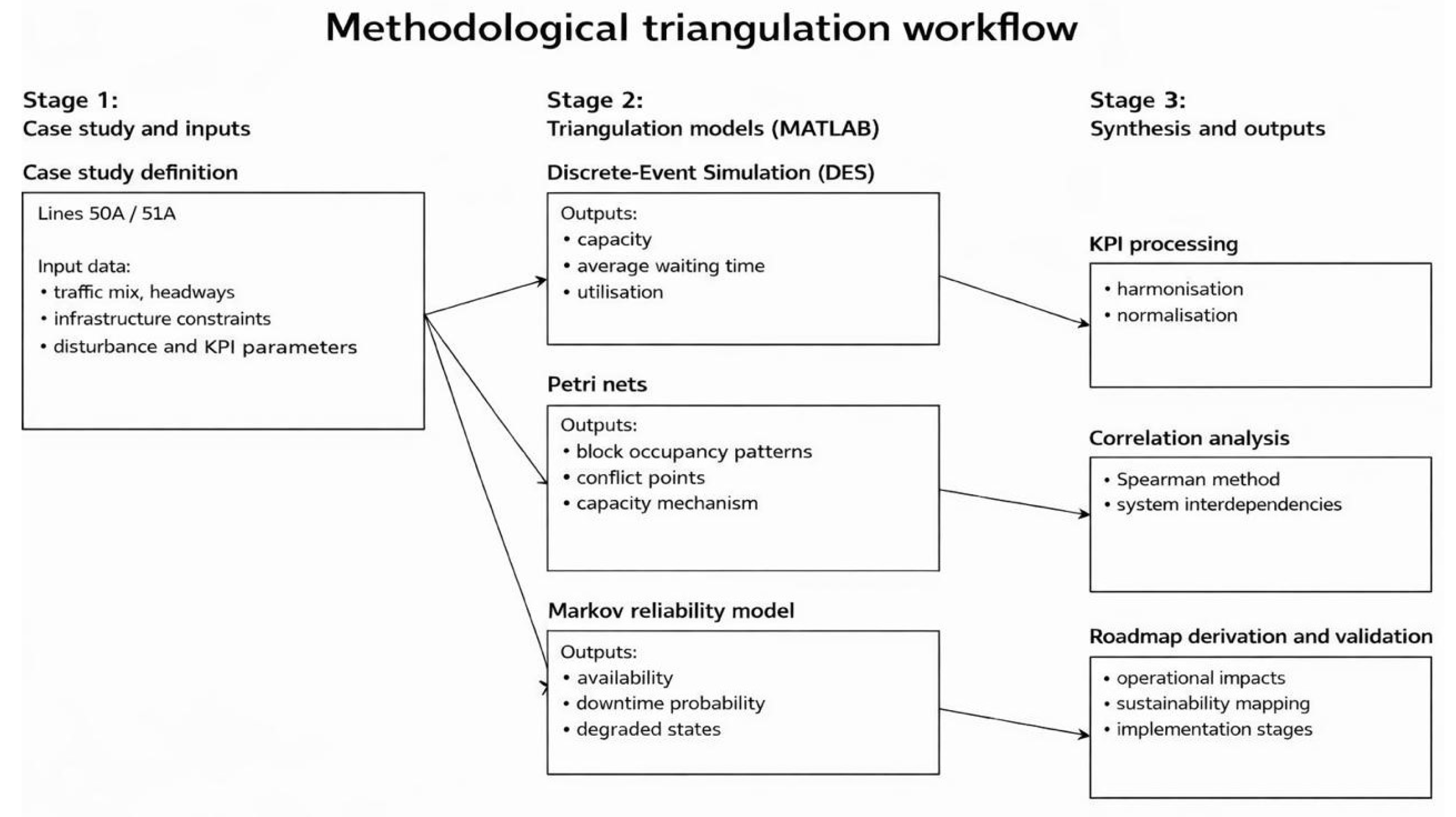
Figure 3 presents the structure of the research process using the triangulation method: (i) definition of the case study and primary assumptions, (ii) triangulation via discrete-event modelling, Petri nets, and Markov chain modelling, and (iii) integration using the consistency of key performance indicators and Spearman correlation analysis to construct a modernisation roadmap.
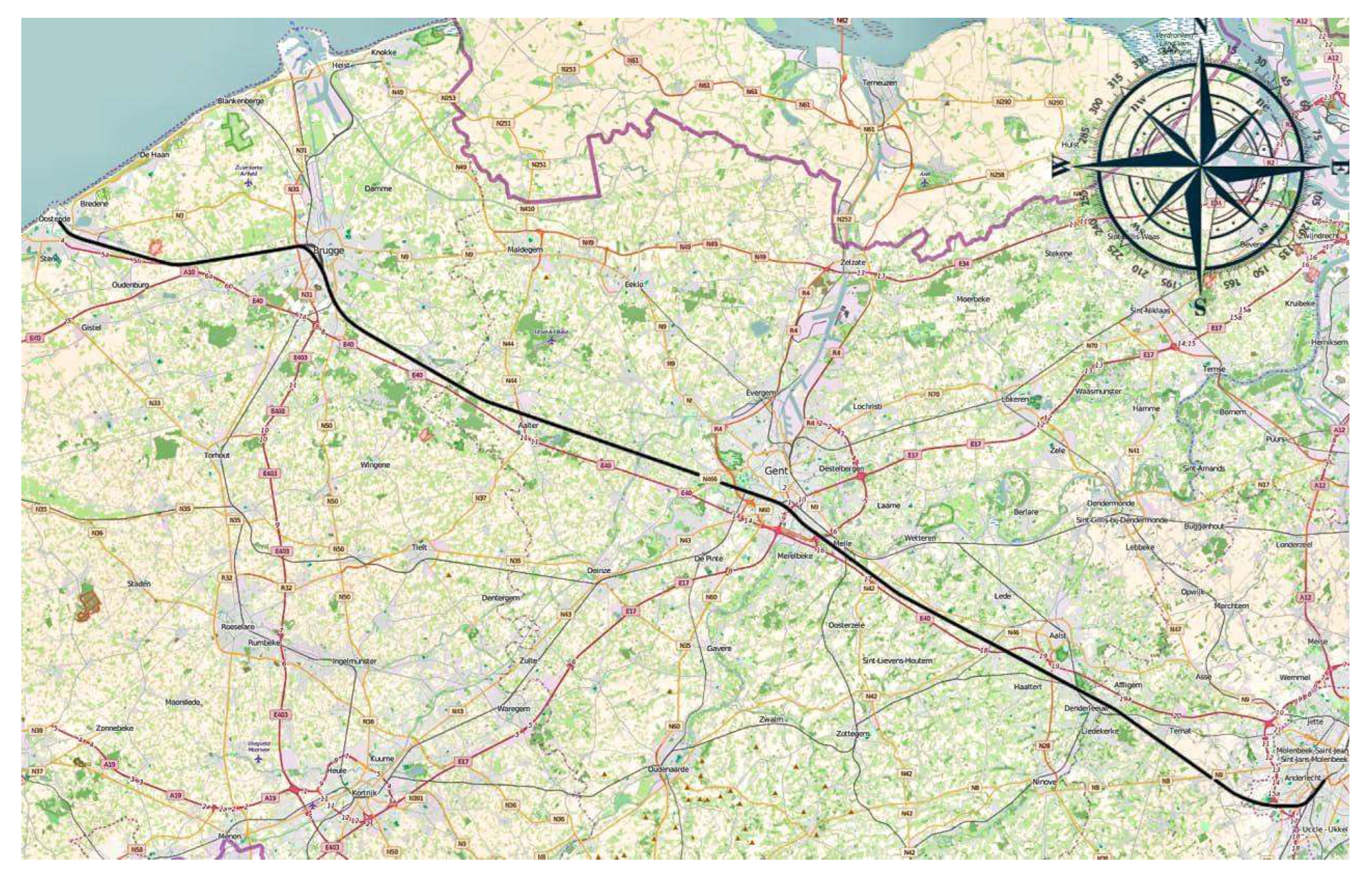
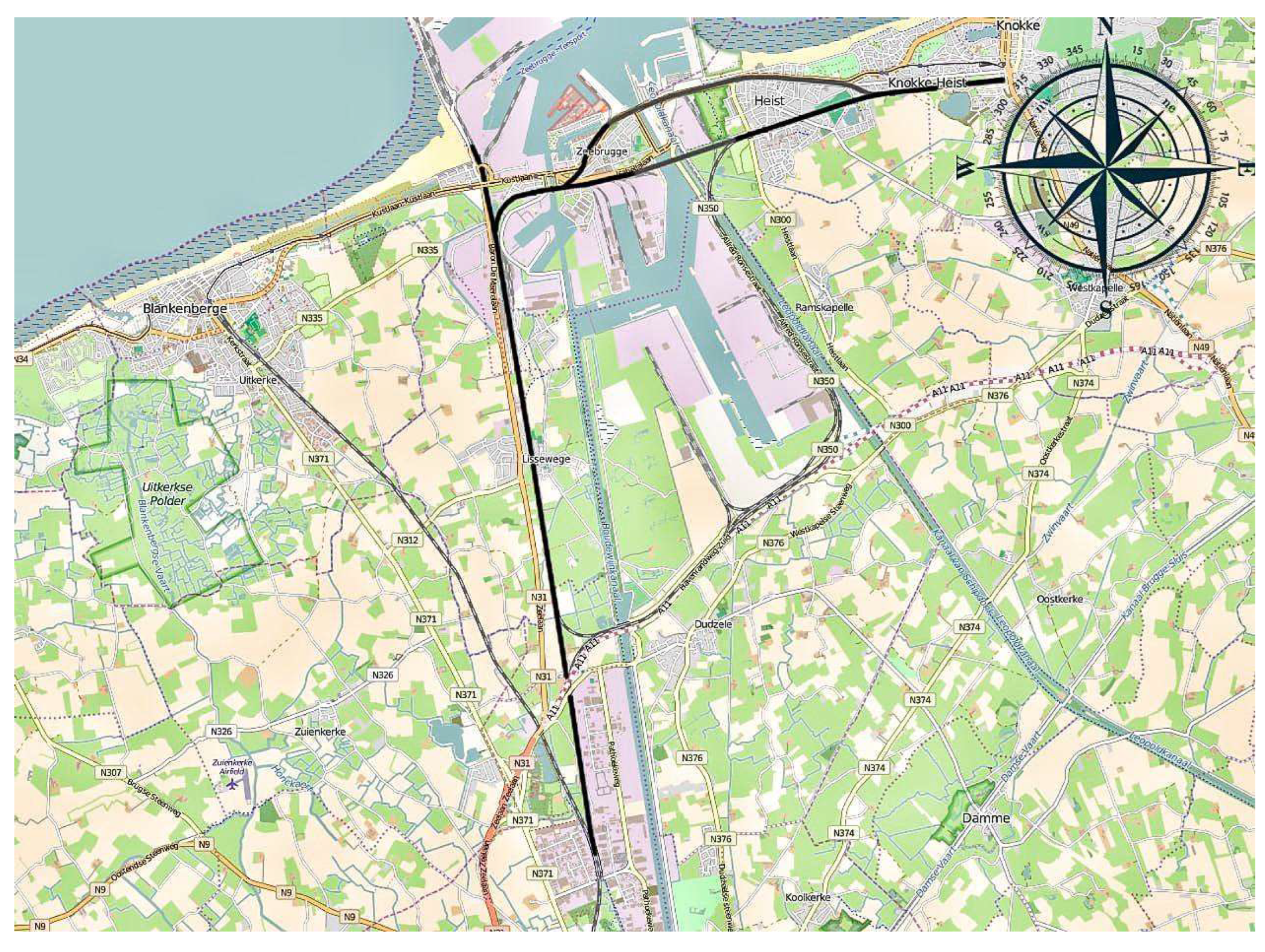
The research in the current article will concern the infrastructure of the Belgian railways, namely railway line 50A (Brussels–Ghent–Bruges–Ostend) on the Figure 4 [24] and, partly, line 51A (Bruges–Zeebrugge (seaport)) on the Figure 5 [25]. Railway lines 50A and 51A were selected as a representative model object for signalling modernisation due to their special significance in Belgium’s railway system, as well as their typical characteristics. Line 50A (Brussels–Ghent–Bruges–Ostend) is one of the busiest in Belgium, with 275 train services operated daily (up to 25 trains per hour during peak periods). The line is a fundamental corridor of intensive passenger traffic between the capital and the North Sea coast, while also carrying freight trains in parallel. Line 51A (Bruges–Zeebrugge) is strategically important for rail access to the port and for transporting import–export cargo and serves as a functional complement to route 50A. Consequently, the combination of these routes is a balanced model example of a mixed-traffic line with high traffic density and a significant logistics role—an exemplary case for assessing the effects of ERTMS implementation. The choice of lines 50A and 51A makes it possible to account for real operating scenarios (high-intensity suburban services, high-speed intercity services, transport connections with a port hub). It is also worth mentioning that modernisation projects are already being carried out on the routes in question, including the expansion of line 50A to four tracks on the Brussels–Denderleeuw section, as well as the planned equipping of Belgium’s entire railway network with ETCS by 2025 in the context of Infrabel’s plan.
The research methodology will consist of the following tasks:
  • First stage: analysis of the functional process of traffic coordination and detection of problems in the real operation of two important Belgian railway lines. Application of personal operating experience and the presence of one of the authors on these lines to generate qualitative results;
  • Second stage: use of the current infrastructure state of lines 50A and 51A to compare existing operations with the predicted changes with the probability of switching on L2-M and L2-A. In this way, it is possible to detect vulnerable elements of the infrastructure and create comprehensive steps for the modernisation of the lines;
  • Third stage: execution of modelling in MATLAB of calibrated parameters modelling and demonstration of the results.
Before starting the simulations in MATLAB, it is necessary to define the following parameters:
  • Empirical parameters of the operational process and infrastructure of railway lines 50A and 51A and rolling stock;
  • Analysis of the impact of the main parameters of the Level 2 (L2-B, L2-M, L2-A) ERTMS information system (communication delay, automation level, safety of rolling stock movement, response time, throughput, interoperability with other elements of the railway infrastructure, flexibility, data protection, use of communication technologies);
  • Testing of ERTMS Level 2 (L2-B, L2-M, L2-A) through the prism of emergency scenarios. In this article, we will use scenarios of TMS error, loss of voltage in the contact network, and unplanned occupation of the line by another rolling stock;
  • Evaluation of the effectiveness of ERTMS Level 2 (basic, modernised, advanced) using quantitative and qualitative parameters (success rate, average delay, throughput, incident rate, safety index, digital security effectiveness, and system resilience ratio).
The first stage, as already indicated, is calibration of the real operational parameters of railway lines 50A and 51A. The length of the first line is 90 km, and there are seven intermediate stations (Brussels–Central, Brussels–South, Anderlecht, Ghent, Aalter, Bruges, Ostend). The length of the section of the second line analysed in this study is 17 km, and there are two intermediate stations (Bruges, Zeebrugge). According to the Belgian railway infrastructure regulator Infrabel [24], both lines use a 3 kV DC overhead contact network, the electrical power intensity that is permitted to be used for a moving train is 2400 W, and the maximum current for a stationary rolling stock is 200 A. The maximum capacity of line 50A is 10 trains per hour, and that of line 51A is 5 trains per hour. The minimum height of the overhead contact network is 4.8 m. Sections 50A and 51A are equipped with ERTMS Level 2. An important indicator of the information system is the number of rolling stock delays. According to data from the Belgian railway operator SNCB (NMBS) [26], 396.2 emergency situations per 1 km of line occurred in the Belgian railway system in 2024. Considering the total number of accidents in the Belgian railway system and the distance of the analysed railway lines, then there are 0.65 and 3.50 accidents per 1 km of lines 50A and 51A. Line 50A in our article is presented as a passenger line, and line 51A as a freight line, and an important measure is the throughput. For 2024, having analysed data on the entire Belgian railway system, the average throughput of passenger trains on line 50A reached 1108, at 178 t/km (considering the average passenger weight of 75 kg and the number of people living along the 50A section). To calculate the throughput of freight trains on line 51A, considering that the port of Zeebrugge is estimated to handle 15% of all Belgian rail freight, line 51A handles 429 million t/km. In our simulation, the trains will have the following parameters:
  • Passenger (two multiple wagons + four regular wagons). Total weight is 321.6 tons;
  • Freight (1 locomotive + 20 container wagons). Total weight is 1960 tons;
  • For detailed modelling, the following number of trains will be used—16 (8 passenger, 8 freight). The reason for using such an amount of rolling stock is to provide a balanced, representative load for testing under extreme conditions within the selected 2-h analysis window for corridor 50A/51A. This combination enables the model to account for heterogeneous headway constraints, stopping patterns, and priority interactions that are typical for mixed-traffic railway lines, while at the same time preserving the interpretability of the scenario set across multiple modelling methods. The chosen scale is appropriate for detecting overload effects in the baseline scenario and for quantitatively assessing the capacity margin in the modernisation scenarios. Scaling to higher levels may be considered in subsequent studies. The original model was configured and validated using a combination of initial alignment, structural consistency checks, and plausibility analysis of the simulated behaviour. The L2-B scenario was defined as the baseline configuration, representing standardised deployment of ETCS Level 2 with bounded response times and a fixed operational regime. Parameter values related to train arrivals, headway criteria, and rolling stock type distributions were adjusted to ensure order-of-magnitude consistency with the publicly available operational characteristics of the Belgian railway system, including mixed-traffic corridors such as lines 50A and 51A. Given the limited access to detailed operational data for signalling subsystems, the validation process focused primarily on assessing structural correctness and dynamic behaviour, rather than precise numerical calibration. Structural validation confirmed that the interoperability logic among key subsystems—such as train flow, block occupancy, coordination delays, and reliability states—remains consistent with established principles of railway system control. Dynamic behaviour validation was conducted by verifying that the model exhibits expected monotonic responses to changes in core metrics, such as reduced waiting times and increased capacity under enhanced coordination and process automation. In addition, the comparative research approach minimises uncertainty associated with parameter sensitivity. All scenarios were evaluated using identical network topology, demand profiles, and assumptions regarding stochastic variations, which allows observed relative performance differences to be attributed to technological and organisational changes rather than parameter adjustments. Although a full sensitivity analysis is beyond the scope of the present study, the observed trends remained robust under admissible parameter variations, thereby validating the soundness of the conclusions for strategic-level analysis purposes.
The second stage is analysis of the main parameters of the ERTMS information system of Level 2 scenarios (L2-B/L2-M, L2-A) according to the following indicators:
  • Communication delay and communication technologies. Level 2 ERTMS uses GSM-R technology, and the data transfer rate is 9.6 kbps. Level 2 (modernised) ERTMS in most cases uses LTE-R, which reaches 50 Mbps (from the base station to the driver) and 100 Mbps (from the driver to the base station). Level 2 (advanced) ERTMS will use 5G NR technology with a speed of 10–20 Gbps in the mmWave range and 1–2 Gbps when using the sub-6 GHz range;
  • Automation level. Level 2 ERTMS uses Eurobalises technology, which implies automatic technology. Level 2 (modernised) uses the concept of virtual blocks and data from on-board systems. AI, GoA4, decentralised, and predictive control are planned for L2-A;
  • Safety of rolling stock movement. In ERTMS 2, safety is provided by continuous exchange between the train and the control centre, via GSM-R and Eurobalises robust tags. In this element category, ERTMS 2 (modernised) demonstrates the virtual block and train integrity coordination algorithms. ERTMS 2 (advanced) presents the implementation of additional sensors and AI algorithms;
  • Response time. From 2 to 6 s in ERTMS Level 2 and 1–2 s in L2-M; the prospective L2-A is expected to reduce this to 100–200 milliseconds;
  • Throughput. Level 2 limits this criterion due to the presence of fixed blocks and GSM-R. L2-M illustrates virtual blocks and dynamic interval management. In L2-A, the use of a TMS (traffic management system) is expected;
  • Interoperability with other elements of rail transport. Level 2 provides basic integration, but there is a limitation of interoperability with the latest digital technologies. L2-M includes interaction with intelligent traffic coordination systems and logistics platforms. L2-A will cover IoT and digital twins;
  • Flexibility. The second stage of ERTMS is limited in terms of flexibility due to the presence of fixed technologies and system architecture. The L2-M reflects adaptive coordination methods and virtual units. The L2-A scenario will be able to use progressive solutions, such as the Smart Digital Platform;
  • Protection of virtual data. Level 2 uses unified tools for information protection, which seems weakened for current digital security criteria. L2-M has improved this element with the help of encryption algorithms, authentication, and regular information exchange. L2-A allows for the inclusion of multi-stage protection, the use of modern encryption protocols, and partnership with threat-monitoring technologies in the “here and now” mode.
The third stage of the methodology involves performing modelling in MATLAB based on the abnormal situations collected in the first and second stages of the current study, as well as the included scenarios. The idea of using methodological triangulation arose due to the multi-layered nature of the ERTMS system, namely the presence of a large number of components. For a structure such as ERTMS, it is necessary to analyse each element in order to create a comprehensive solution for a large infrastructure complex such as a railway. The following methods will be used in the work:
  • System dynamics method. This method is used for macroanalysis of the dynamism of the studied railway lines and indicates the influence of ERTMS generation on long-term indicators such as throughput and safety;
  • Discrete event method. This technique performs microanalysis of each ERTMS operation scenario and expresses the influence of ERTMS on rolling stock delays, queues, and emergency situations;
  • Markov chains. The specified algorithm characterises the stability of the RBC and explains the reliability of the system, the probability of failures, and the downtime of the system during the recovery period;
  • Petri nets. The specific approach determines the occupancy of track blocks and illustrates the use of railway tracks, blocking, and the principle of parallel operation of trains;
  • Spearman correlation. This method analyses the relationship between key indicators and shows the influence and value between the main metrics of the system.
This work attempts to substantiate the importance of modernising critical infrastructure; the information system of Belgium’s railway transport was chosen as the test object. The relevance of the study and the choice of this country’s infrastructure are due to several factors:
  • High density and compatibility of the track network with neighbouring countries (France, the Netherlands, Germany);
  • Outdated infrastructure elements that reduce operational performance;
  • The need to formulate practical steps and a sequence for developing the system-forming transport infrastructure of EU countries.
The proposed approach, based on methodological triangulation, not only ensures a comprehensive analysis, but also reveals vulnerabilities—for example, long recovery periods after abnormal situations at ERTMS Level 2. Given the high degree of detail and substantiation of the proposed mechanism, its practical implementation requires highly qualified personnel and substantial initial investments. This study has demonstrated the feasibility of a comprehensive transition from obsolete components to modern technologies—LTE-R at ERTMS L2-M and 5G NR, AI, and predictive analytics at a potential Level 2 (advanced). Analysis of current technical components on lines 50A and 51A revealed that the use of GSM-R and fixed Eurobalise blocks limits digital data exchange speed, steadily reducing the operational resilience and utility of ERTMS 2 in 2025. Detailed modelling of each ERTMS level under consideration showed that technological renovation is one of the key factors in preserving the functionality of the railway information system. The literature review emphasised the value of interoperability of new digital solutions for improving both passenger and freight transport. The conducted assessment proves that moving to L2-M, and potentially to L2-A, radically changes the operational parameters of the information system. The scientific value of the work lies in the analysis of existing railway lines, demonstrating real obstacles and technical constraints of the current railway system, as well as providing a step-by-step modernisation roadmap that can serve as guidance for operators and regulators of the railway system in improving the state of railway digitalisation.
In the DES model, train arrivals are represented as a Poisson process, the standard approximation for independent arrivals in mixed-traffic transport corridors subject to stochastic disturbances. The arrival rate was calibrated to reflect service frequency on lines 50A/51A (up to 25 trains per hour at peak), while preserving stationarity over the 2-h modelling window. In the Petri net model, block-separation principles follow ETCS Level 2 logic with a fixed number of blocks; the number of unoccupied blocks increases by scenario (L2-B → L2-M → L2-A) to reflect a progressively improving interaction environment, rather than operation with moving blocks.
The transition probabilities in the Markov chain model of RBC resilience were chosen to characterise the relative risks from coordination failures, recovery delays, and maintenance/repair dynamics, as discussed in prior RAMS studies in railway systems. Although the absolute probabilities are illustrative, the cross-scenario analysis yields internal consistency and reproducible relative trends.

5. Results

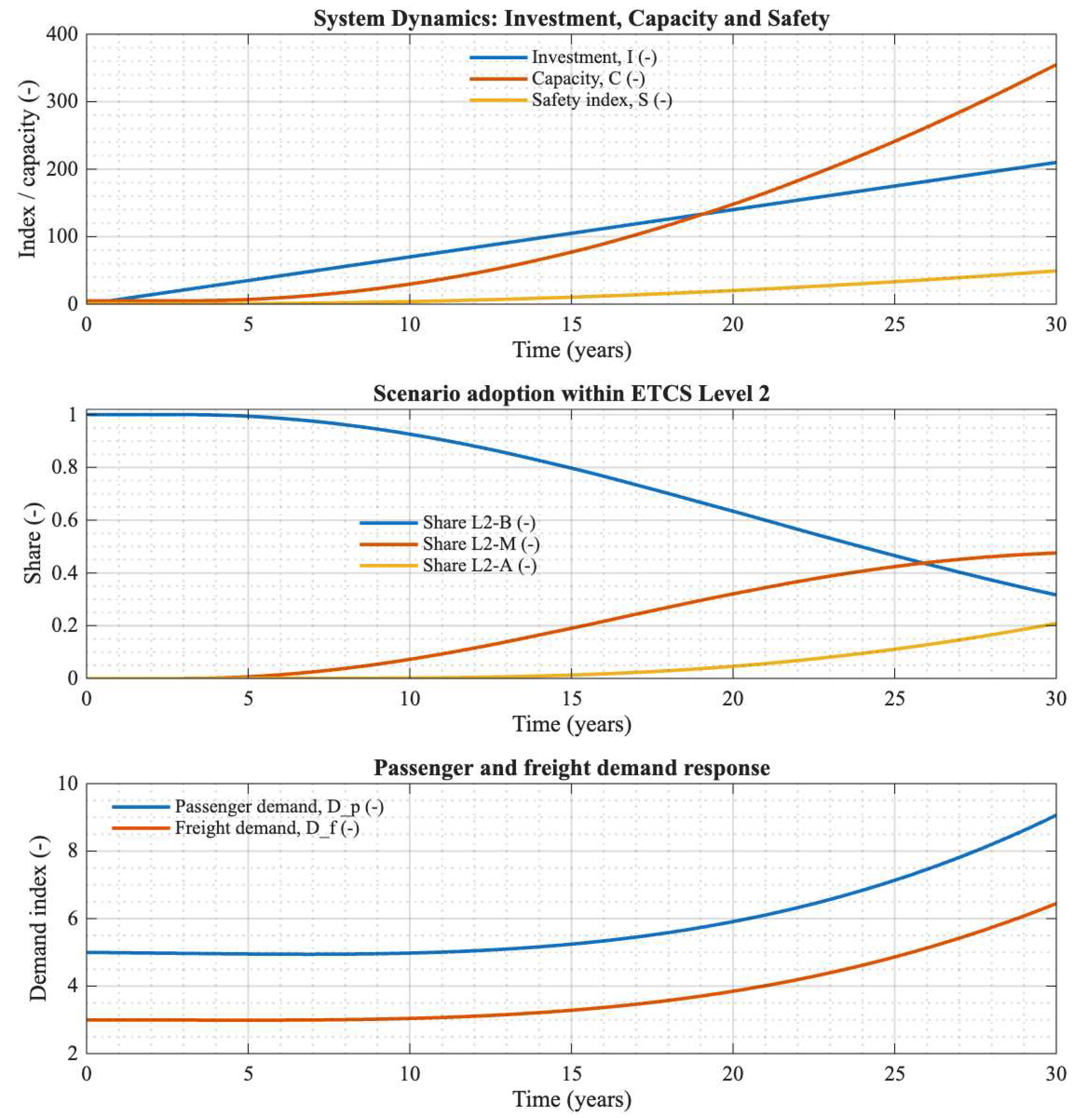
At this stage, the final graphs of the calculations that were performed will be demonstrated. The first graph to be illustrated will be the system dynamics model. In this case, it is demonstrated how the fundamental macro-level variables in the rail transport system are transformed over time, taking into account investment delays, as well as the modernisation of ERTMS from functionally baseline Level 2 to systemically modernised ETCS Level 2, as well as the rate of demand for passenger and freight transportation and safety indicators.
This figure demonstrates the standard concept of system dynamics. The upper graph shows the variables Invest, Capacity, and SafetyIndex, which can be interpreted as follows:
  • As investments (Invest) grow, with some delay, Capacity begins to grow rapidly;
  • The SafetyIndex indicator improves in parallel if investment attraction and modernisation activities are large enough. At the same time, if the created model takes into account negative feedback (degradation), the growth of SafetyIndex may slow down closer to the end of the period.
To ensure unified interpretation of the modelling results presented in Figure 6, Table 2 provides formalised and explicit definitions of the three ETCS Level 2 modernisation stages considered in this study. The table explains the operating rules, architectural assumptions, and key performance parameters that distinguish the baseline (L2-B), modernised (L2-M), and advanced (L2-A) configurations. It should be explicitly noted that all scenarios remain within the context of the standardised ETCS Level 2 architecture. The L2-A scenario represents an extended operational configuration of Level 2 with enhanced digital integration and automation support, rather than actual implementation of Level 3 or other non-standardised concepts. This structured differentiation ensures conceptual consistency in subsequent discrete event simulations, Markov-based reliability modelling, and block occupancy analysis using Petri nets, thereby enabling quantitative results to be interpreted in direct relation to clearly defined system assumptions.
The next important step will be a demonstration of the use of the DES (discrete event modelling) method, which is used to simulate systems where the key is the sequence and time cycle of individual events (arrival of rolling stock, occupancy or release of tracks, formation of queues). The specifics of the simulation are as follows:
  • Passenger (line 50A) and freight (line 51A) trains arrive in a Poisson stream in the model, at an interval of 2 h;
  • All train arrivals are linked into a single queue, which is distributed over time;
  • During the simulation, a check is performed when the track becomes free in order to start moving the next train;
  • The divergence between the actual time of train arrival and the time when it is possible to start moving again is calculated;
  • The average wait cycle time (avgWait) is calculated for each ERTMS level, taking into account the assumptions about the established minimum interval between rolling stock.
By performing these calculation steps, we obtain the total amount of rolling stock that arrived in a certain amount of time and the average waiting indicator, which is calculated in minutes. In addition, by transforming ERTMS levels (from basic to modernised and advanced), we see a reduction in the minimum headway, as well as how the increase in throughput affects queues and delays on the railway line. The results of using the DES method are shown in Table 3.
The obtained figures show the following picture of the simulation:
  • ERTMS Level 2. For a given period of 2 h, the average number of arriving trains is about 18 trains, and the waiting time is 1.53 min. These figures are explained by the fact that ERTMS 2 technology requires a larger fixed block or a large minimum interval, so a queue is formed during heavy traffic;
  • ERTMS Level 2 (modernised). Exploring this level, the number of trains is slightly higher (19.3) than in the previous generation of the system. The average waiting time is much shorter, at 0.21 min. This result is explained by improved technologies (LTE-R, virtual blocks) that make it possible to absorb the queue faster;
  • ERTMS Level 2 (advanced). This ERTMS level demonstrated the best results. When simulating this level, 26 trains arrived, but the average waiting time was 0 min. In the absence of constraints, and in the absence of abnormal situations, the avgWait value in the model is close to 0 (less than the simulation time step). This value represents a theoretical lower bound within the discrete event simulation framework and reflects the absence of queue formation under idealised coordination and headway assumptions.
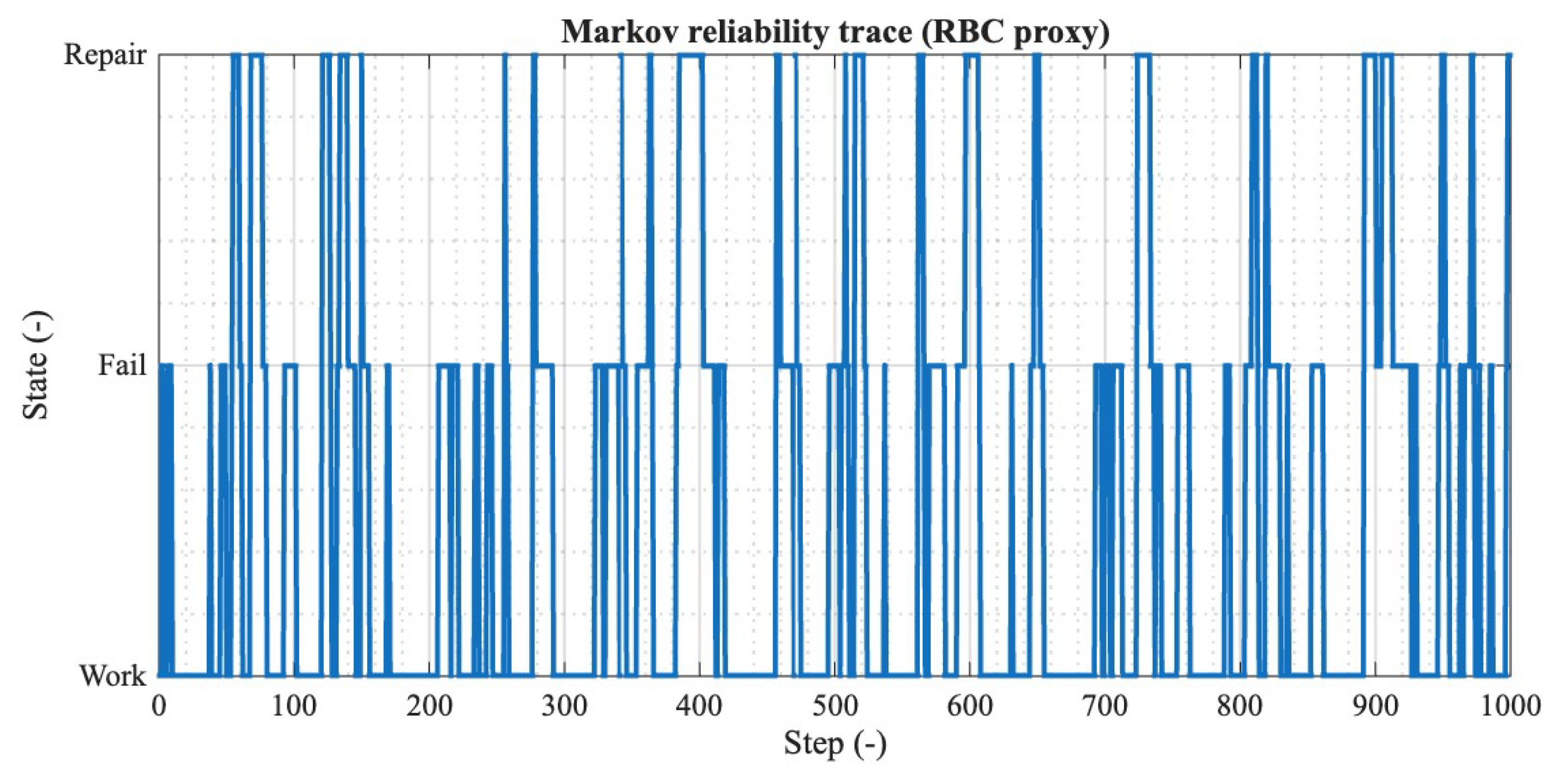
To understand the operational efficiency of each ERTMS level, it is necessary to study in detail the RBC (Radio Block Centre)—the fundamental component of the system, which forms the central element of train coordination. For a qualitative analysis, it is necessary to analyse the operating states of this device—Working (standard operation), Fail (system failure or breakdown), and Repair (procedure for recovery after abnormal situations). The method used to analyse this component is the Markov chain. Markov chains make it possible to quantitatively evaluate the operational efficiency of the RBC in ERTMS Level 2. By means of the transition matrix and the simulation process, which are included in this method and at many steps, we obtain the delegation of states and an indicator of how long the RBC is in a functional state, how often abnormal situations occur, and how long the repair period after a failure lasts. The consequence of this analysis is Figure 7, which shows the percentage indicators of the operational state.
The presented figure demonstrates the following:
  • All vertical lines, without exception, correspond to episodes when the RBC switches from one state to another. If the strip is at stage 1, then the RBC operates in the normal mode. Stage 2 illustrates a failure, and stage 3 indicates repair work;
  • All transformations of operating modes are specified by a transition matrix, where the sum of the probabilities in each row is equal to 1. In each action (from 1 to 1000), the next state is randomly determined based on the probability of transformation. Thus, it is possible to view how often the RBC is in each of the modes;
  • This is a graphical representation of RBC operation during the simulation actions, namely, how many times a failure state occurs, what the duration of the failure state is, and at what speed the component returns to normal operating mode.
As already noted, in addition to the graph, percentage indicators were also obtained, which illustrate the frequencies of the RBC being in each of the three modes. Overall, 60% of RBCs are in the Working mode, 28% are in the Fail state, and 12% are in Repair. Processing these indicators, we can conclude that the element in question, at ERTMS Level 2, is more often in working condition than not. However, when combining the Fail and Repair indicators (40%), it is clear that, at ERTMS Level 2, there is a substantial probability of train coordination obstacles, and therefore a smooth transition to ERTMS L2-M and L2-A scenarios will reduce the frequency of non-working conditions.
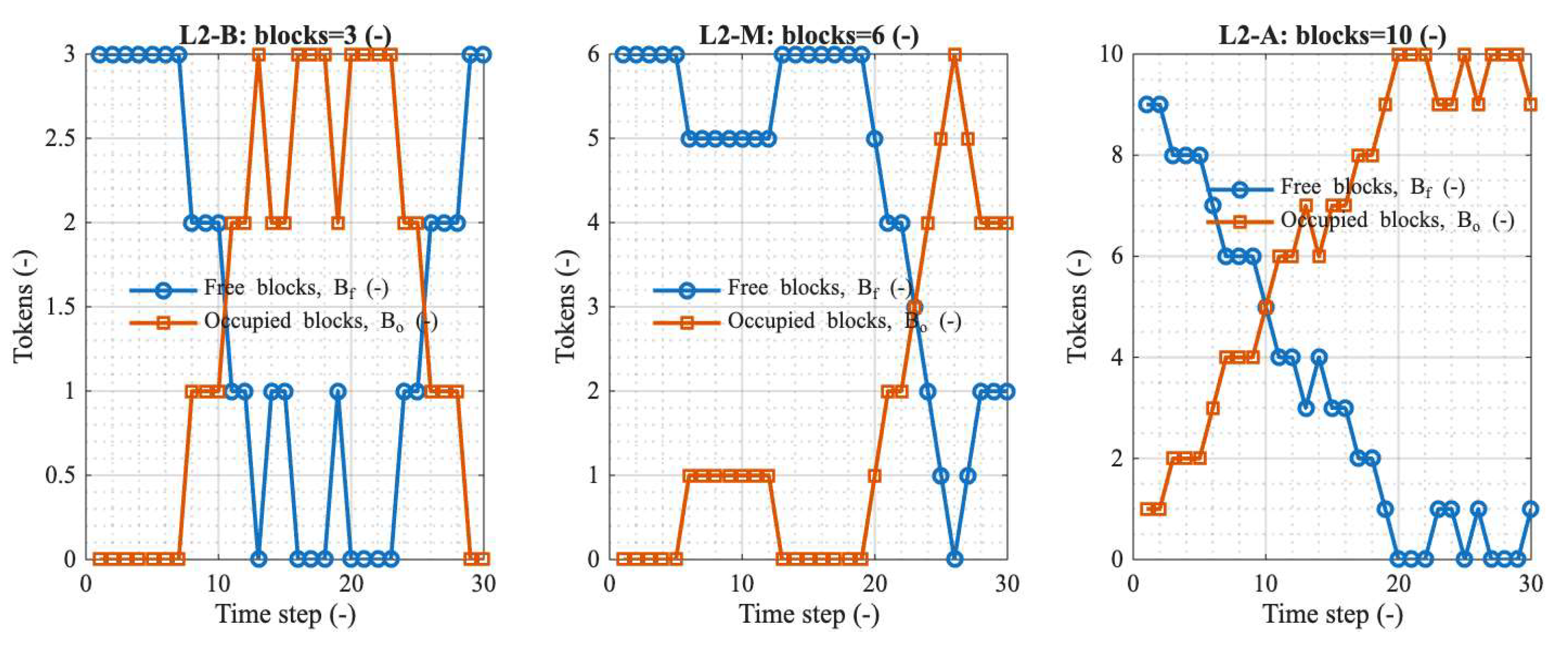
The next stage of this section of the paper will be concerned with the study of track block occupancy at each ERTMS level (from L2-B to L2-A). The method chosen for this area is Petri nets. Petri nets provide comprehensive capabilities for a clear understanding of the track block occupancy process. The general stages of the simulation will be the definition of the “block free/occupied” mode, the transition actions in which the rolling stock occupies and releases a certain block, safety testing, as well as the analysis of abnormal situations and throughput. For ERTMS Level 2, the Petri net method illustrates the state of the track blocks that are coordinated by the RBC. The actual trains that are on the coordinated track sections are shown, and the transition process is expressed by granting permission and actual occupation or release of the track by the rolling stock. For ERTMS Level 2 (modernised), the specificity of using Petri networks is that the state of the railway network is displayed by blocks that are dynamically transformed, chips are a dynamic illustration of rolling stock with their digital block sections, and transient processes are generated not only by fixed blocks, but also by continuous changes in the location of trains. In ERTMS L2-A, multi-aspect modelling is provided, due to the fact that this generation of the system provides for complete digitalisation of coordination of train movement, with a virtual absence of the human factor. The results of the analysis will be shown in Figure 8.
The Figure 8 shows three graphs that correspond to a specific ERTMS level and are interpreted by the following parameters: maxB (maximum number of available blocks for each level), arr (arrival interval of rolling stock), and dep (departure intensity). The Time step axis represents discrete time intervals in which the state of the track blocks was determined. The Tokens axis reflects the current state of the track. In this axis, a high OccupiedBlocks value indicates that a significant number of track blocks are occupied by trains. A similar FreeBlocks indicator demonstrates the availability of track blocks for new trains. In the graph, which displays the indicators at ERTMS Level 2 (L2-B), the maxB indicators are equal to 3, which means frequent fluctuations in occupancy and release of the railway track. In addition, systematic cycles are recorded, during which the indicator of free and occupied blocks changes, but invariably returns to the original level. Analysing the graph for ERTMS Level 2 (modernised), there is a larger set of available blocks, which ensures an increase in throughput. As seen in the graph, occupancy increases gradually, reaching a peak at step 20, where some blocks are quickly released. At L2-M, the railway lines are more dynamic, as indicated by the use of digital blocks. The chart visualising track status in the advanced ERTMS (ETCS) Level 2 scenario shows the largest number of block sections (10) and a high train arrival intensity, which leads to a high load on block resources. This trend corresponds to a more tightly coordinated concept of traffic management and operations aimed at automation. Automation options (such as ATO) are considered to be components of the broader evolution of ERTMS and corridor digitalisation. However, their detailed description is beyond the scope of this study. This modelling approach provides a practical tool for analysing line occupancy, supporting timetable and capacity design, and substantiating operational improvements oriented toward sustainable development. The last stage in this section of the article will be the correlation analysis. In our case, this is the relationships among Success Rate, Average Delay, Throughput, Incident Rate, Safety, Digital Security, and Resilience. The method used to perform the correlation is the Spearman method. The choice of this method is due to the fact that it allows us to analyse how the above indicators depend on each other, determine whether the ERTMS modification affects the key metrics of the efficiency and safety of the railway system, detect nonlinear and rank dependencies, and statistically confirm the reliability of the results. The data obtained during the simulation will be shown in Table 4.
To fully decipher the final figures in the table, it is necessary to indicate what each value in the correlation means. Values close to 1 are manifestations and demonstrate a clear picture of direct relationships (this can be judged by the analysed indicators). Values that are close to −1 indicate an inverse feedback relationship (one metric grows, the other falls). Figures close to 0 illustrate a weak or absent relationship. The figures given in the table are inseparable from each other (correlation ± 0.85) and show that any modernisation of one element has a positive effect on the others, while the failure of one component leads to failure of the entire system. It is worth noting that there is a strong dependence between the level of success and digital security; that is, improving digital work is the cornerstone of increasing the efficiency and safety of railway lines. In addition to these metrics, the table shows a strong correlation between average latency and robustness, indicating that high robustness results in higher costs.

6. From Results to Implementation: Implications and Roadmap

This section provides an integrated interpretation of the results using Markov chains, Petri nets, and Spearman correlation analysis and derives an implementation-oriented roadmap. When using the first method, it was noted that the baseline configuration demonstrates a high indicator of vulnerability to downtime in traffic coordination and communications (≈40% in the ETCS L2 scenario). From an operational standpoint, this provides an understanding that the working efficiency of the corridor is limited not only by the capacity of the railway infrastructure, but also by the availability of the control and communication chain. In practice, such a level of downtime leads to an increased risk of operating in a reduced-performance mode to reserve resources for recovery in the timetable and to an increased load on dispatch control. In terms of total costs, this provides for investments in additional virtualised deployment and fault-tolerant communications (in the course of technological upgrading), since increased availability directly protects the capacity gain of the railway corridor achieved at the traffic level. The implementation of Petri nets in the analysis of blocks substantiates the mechanism of capacity growth observed in discrete event modelling. Within the initial concept, there is an accumulation of resource conflicts, because fixed block sections and specified release conditions keep critical track elements occupied longer, which increases waiting time on the upstream connection. In the improved scenario, a more dynamic distribution and granting of movement authorities reduces the blocking time of shared resources, thereby decreasing the frequency of nonstandard situations in bottleneck sections. Therefore, the reduction of overlap in block occupancy forms a detailed explanation of the increase in capacity measured in DES—the improvement is not only the representation of a numerical artifact, but also the result of more efficient use of the resources of a unified infrastructure. The Spearman correlation analysis results indicate that intensification of system operation is associated with reliability and digital security metrics, rather than developing autonomously. Thus, this creates a synergy effect—investment in resilient communications, control architectures, and the maturity level of automation can simultaneously improve capacity and reduce waiting time. At the same time, this interrelation is also interpreted as a risk of cascading degradation: a field failure or a virtual failure in the central subsystem can unevenly and radically affect fundamental performance indicators, as a result of which delays increase, and the ability to pass a large amount of rolling stock decreases. Consequently, the modernisation stages of railway lines should prioritise those algorithms that minimise single points of failure (redundancy, graceful performance degradation, and explicit rollback modes), ensuring that the gain in operational efficiency due to process automation is preserved under failure conditions.

7. Scientific Discussion: Sustainability and SDG Implications

The dynamic and continuous development of technologies is a marker of the need to optimise and modernise key elements of large systems such as ERTMS. This scientific study focuses on the development of forward-looking solutions for digital enhancement and improvement of interoperability algorithms for EU railway information systems. In addition, the present article contributes to resilience in several dimensions—environmental, economic, and social—demonstrating how modernisation, rather than construction of new railway lines, delivers measurable gains in operational efficiency and safety. In terms of generalisability, the results are applicable to TEN-T rail corridors with mixed traffic and comparable characteristics, including ETCS Level 2 operation with fixed-block configurations, centralised traffic control, and equivalent interoperability models for passenger and freight services. Corridors with substantial traffic heterogeneity, materially different signalling infrastructures, or fully deployed moving-block systems may exhibit different absolute performance levels. Nevertheless, there is a reasonable likelihood that the systemic modernisation directions identified in this study will remain relevant. It should also be emphasised that the work aligns with the UN Sustainable Development Goals (SDGs):
  • SDG 9 (Industry, Innovation, and Infrastructure): digitalisation of control/communication subsystems (CCS), migration to FRMCS, ATO, GoA4, and interoperable TMS raise the technological readiness of railway infrastructure;
  • SDG 11 (Sustainable Cities and Communities): higher-capacity and more reliable passenger services on line 50A reduce road congestion/noise and improve accessibility without new land take;
  • SDG 13 (Climate Action): operational measures (shorter headways, eco-driving via ATO/TMS) and failure prevention reduce energy consumption and support a modal shift toward rail.
The results of this study are subject to several limitations associated with modelling assumptions, parameter sensitivity, and the degree of abstraction. The authors’ framework is intended for strategic, comparative assessment rather than detailed operational forecasting. The sensitivity of the findings is driven primarily by a limited set of core parameters: train-arrival intensity and traffic-flow organisation models, feasible headways and coordination delays, and the robustness parameters of the Radio Block Centre (RBC) and communications subsystems. Sensitivity validation indicates that changes in the average levels of these metrics (±10–20%) do not alter the relative ranking of the scenarios under study (L2-B, L2-M, L2-A), although absolute performance values may vary. Notably, increasing the arrival intensity or degrading communication reliability raises the average delay across all scenarios, while preserving the observed performance gap between the baseline and enhanced configurations. At the same time, improving coordination-delay metrics and automation effectiveness systematically reduces waiting time and increases throughput. A substantial relative effect is observed for the L2-A scenario. Given the comparative design of the study, all simulation scenarios were evaluated with fixed network topology, demand assumptions, and stochastic settings. This reduces parameter bias and allows the observed differences to be attributed primarily to technological and organisational changes, rather than to calibration artifacts.
Therefore, this result does not imply the complete elimination of delays in real operation. Instead, it indicates that, under the assumed advanced coordination and automation conditions, waiting times become negligible relative to the temporal resolution of the model and no longer constitute a dominant performance constraint. In real-world operation, residual delays will inevitably persist due to stochastic dwell times, dispatching recovery margins, variability in boarding processes, and external disturbances. Model calibration and validation were performed through baseline alignment and order-of-magnitude consistency checks using publicly available characteristics of the Belgian mixed-traffic railway infrastructure. However, detailed field data for signalling subsystems are not available in open sources, which constitutes a limitation for precise numerical parameterisation. Future research should therefore include a systematic sensitivity analysis with respect to key parameters, calibration based on infrastructure operator data where accessible, and a comprehensive assessment of the trade-offs among implementation costs, deployment risks, and the expected benefits of phased modernisation strategies.
As noted earlier, this paper’s contribution spans multiple directions. The environmental component entails energy efficiency and emission minimisation. The obtained results illustrate the following:
  • Reduction of dwell time and traction energy losses. Discrete event simulations show a decrease in the average waiting time from 1.53 min (L2-B) to 0.21 min (L2-M) and ≈0.00 min (L2-A) per train, which reduces stop-and-go and idle consumption that increase specific energy use and wear. In operation, shorter queues and smoother timetables mean lower energy costs per train-km. The specified waiting time of 0.00 min should be interpreted as an a priori lower bound in the context of the model’s resolution and under normal operating conditions. In practical operation, residual delays are likely, caused by stochastic waiting time, recovery margins, and deviations. Consequently, ≈0.00 indicates an almost complete absence of waiting time, not zero latency.
  • Greater capacity on existing assets. Capacity rises from 18.3 trains/2 h (L2) to 19.3 (L2-M) and 26.0 (L2-A), i.e., +5.5% and +42.1% versus L2; demand is absorbed without new construction, avoiding the embodied carbon of expansion projects;
  • Stability as a preventive measure against emissions due to failures. Markov analysis of the RBC reveals a substantial share of time in Fail (28%) and Repair (12%) states at L2; transitioning to L2-M/L2-A with modern communications and virtualisation reduces exposure to failures, lowering the number of rescue manoeuvres and detours with high energy intensity and emissions;
  • Digital catalysts for environmentally sound operations. The target stack (Long-Term Evolution-Railway/5G-FRMCS, ATO GoA4, predictive/decentralised control, TMS/OPTIMA) is compatible with energy-saving driving profiles, shorter headways, and maintenance data–mechanisms that reduce kWh per train-km and support “green” schedules.
In the economic context, the predominant results are as follows. The economic component concerns resource productivity and life-cycle value:
  • Capacity through signalling, not concrete. The modelled ~42% capacity increase with unchanged infrastructure demonstrates resource-efficient expansion and defers capital expenditure on new tracks/tunnels/platforms (and the associated embodied carbon);
  • Reduced costs associated with delays. The drop in average waiting time from 1.53 to 0.21 min (−86.3%) lowers crew, fleet utilisation, and slot costs, increasing the turnover of rolling stock assets and traction substations;
  • Reliability and RAMS compliance. The proposed migration path aligns with TSI CCS conformity assessment and RAMS practices, supporting a predictable OPEX model and rapid recovery after disruptions.
The social dimension covers safety, reliability, and service quality:
  • Safety and incident reduction. Correlation analysis shows strong relationships between Success Rate vs Incident Rate (−0.8929) and Throughput vs Safety (+0.9000), indicating simultaneous improvement in capacity and safety—key benefits for passengers, staff, and communities along the corridor;
  • Co-benefits of cybersecurity and resilience. A very high correlation between Success Rate and Digital Security (+0.9250) underscores that modern cyber-resilient architectures (L2-M/L2-A stack) are foundational for reliable and safe operations;
  • Reliability on key national arteries. The focus on line 50A (Brussels–Ghent–Bruges–Ostend) and line 51A (Bruges–Zeebrugge)—arteries of mixed passenger and freight traffic—is aimed at punctuality and reliability where the public impact is greatest.
The proposed approach, based on methodological triangulation, not only ensures a comprehensive analysis, but also reveals vulnerabilities—for example, long recovery periods after abnormal situations at ERTMS Level 2. Given the high degree of detail and substantiation of the proposed mechanism, its practical implementation requires highly qualified personnel and substantial initial investments. The following stages are proposed for implementation:
  • 2025–2027. Audit and analysis of the current state of Belgium’s railway information system. Identification of problem areas and fixation of baseline indicators for the current ERTMS Level 2;
  • 2028–2030. Transition to ERTMS Level 2 (modernised). Phased reorganisation using LTE-R and virtual blocks, replacement of encryption algorithms, and implementation of TMS and multi-factor authentication to increase system flexibility and minimise recovery time. Selection of a pilot section and conduct of experimental operations with level-appropriate components;
  • 2031–2033. Transformation to ERTMS Level 2 (advanced). Deep digitalisation of the information system using Fifth Generation New Radio (5G NR) and coordination of GoA4 with AI algorithms and digital twins for efficient resource allocation. Technical certification for integration of automated control.
The staged roadmap demonstrates the technical feasibility and system-level advantages of ETCS Level 2 modernisation; however, its practical implementation is accompanied by a set of challenges that require non-trivial treatment and must be explicitly acknowledged. First, the migration of the communications stack is a primary vulnerability. Transitioning from GSM-R to FRMCS entails substantial capital expenditures associated with radio-infrastructure upgrades, onboard equipment renewal, spectrum coordination, and certification procedures. During the transition, backward compatibility must be ensured to avoid service disruptions, implying parallel operation of legacy and next-generation communications systems and increasing overall system complexity. Second, interoperability and implementation risks arise from the concurrent operation of heterogeneous onboard units, interlocking systems, and traffic management platforms supplied by multiple vendors. Achieving interoperability among ETCS Level 2 subsystems, extended TMS functions, and new automation-support algorithms requires rigorous interface management, conformity assessment within the TSI CCS framework, and phased deployment strategies to minimise operational risk. Third, economic and scheduling constraints must be considered. Although the proposed approach emphasises capacity gains through signalling modernisation rather than construction of new infrastructure, upfront investments remain significant. Accordingly, timelines and sequencing should be aligned with national deployment plans, funding availability, and the TEN-T corridor’s priority to ensure economically rational implementation. The proposed roadmap should therefore be interpreted as a strategically and technically grounded transition framework rather than as a blueprint for immediate roll-out. Its value lies in identifying feasible modernisation steps, the associated risks, and the enabling conditions needed to translate digital performance gains into durable operational improvements.

8. Conclusions

  • This study demonstrates that technological upgrading of a mixed-traffic railway corridor leads to a quantitatively measurable performance gain when evaluated through multi-criterion triangulation of operational indicators, mechanisms, and downtime characteristics.
  • Using the Belgian railway infrastructure (lines 50A/51A) as a case study, the results indicate a substantial increase in infrastructure capacity, together with a noticeable reduction in average waiting time across the analysed scenarios.
  • The hybrid modelling environment—combining discrete event simulation for core performance indicators, Petri nets for block occupancy and conflict mechanisms, and Markov chains for assessing the reliability of coordination and communication subsystems—enables not only a formalised evaluation, but also an explanation of how operational improvements emerge under conditions of limited fault tolerance.
  • Spearman correlation analysis suggests that performance improvements are closely associated with safety, digital protection, and resilience indicators, highlighting both the synergistic effects of modernisation and the potential risk of cascading degradation in the event of failures in central system components.
  • From a methodological perspective, the novelty of the study lies not in the use of MATLAB itself, but in the coordinated integration of multiple auxiliary formalisms into a single, reproducible workflow that can be adapted to other European TEN-T railway corridors and modernisation programs.
  • The study is subject to limitations related to modelling assumptions, parameter sensitivity, and the level of abstraction applied to subsystem reliability assessment.
  • Consequently, future research should focus on
    (i)
    sensitivity analysis with respect to headways, dwell-time dynamics, and traffic structure;
    (ii)
    calibration and validation using field data where available;
    (iii)
    extended modelling of cybersecurity and degraded communication scenarios; and
    (iv)
    cost–benefit analysis to support implementation decisions and phased deployment planning.

Author Contributions

Conceptualisation, P.H. and D.B.; methodology, P.H., D.B. and N.B.; software, P.H.; validation, P.H., D.B. and N.B.; formal analysis, P.H.; investigation, P.H.; resources, P.H.; data curation, P.H.; writing—original draft preparation, P.H. and N.B.; writing—review and editing, D.B. and N.B.; visualisation, P.H.; supervision, D.B. and N.B.; project administration, D.B. and N.B. All authors have read and agreed to the published version of the manuscript.

Funding

This research received no external funding.

Institutional Review Board Statement

Not applicable.

Informed Consent Statement

Not applicable.

Data Availability Statement

The data supporting the findings of the study are publicity available from the cited open data sources (Infrabel Open Data Platform, European Commission, UNIFE, IEEE, Springer and MDPI databases), as referenced in the manuscript.

Acknowledgments

The authors express their gratitude to the Faculty of Transport Engineering at Vilnius Gediminas Technical University for providing academic guidance and technical resources used in modelling and validation. The MATLAB simulations and interoperability analyses were performed using university-provided computational tools.

Conflicts of Interest

The authors declare no conflicts of interest. The funders had no role in the design of the study; in the collection, analyses, or interpretation of data; in the writing of the manuscript; or in the decision to publish the results.

Abbreviations

The following abbreviations are used in this manuscript:
arrarrival interval of rolling stock
ATOAutomatic Train Operation
depdeparture intensity
ETCSEuropean Train Control System
FRMCSFuture Railway Mobile Communication System
GSM-RGlobal System for Mobile Communications—Railway
LERLabel Edge Power
LIALinked Increases Algorithm
LSRLabel Switch Router
maxBmaximum number of available blocks for each level
MPLSMultiprotocol Label Switching
MPTCPMultipath TCP
OLIAOpportunistic Linked Increases Algorithm
RBCRadio Block Centre
RMRRailway Mobile Radio
SCSsubcarrier spacing
STMSpecific Transmission Module
TMStraffic management system

References

  1. European Commission. Directorate-General for Mobility and Transport. History of ERTMS. Available online: https://transport.ec.europa.eu/transport-modes/rail/ertms/history-ertms_en (accessed on 22 January 2025).
  2. UNIFE. What Is ERTMS? 28 March 2024. Available online: https://www.ertms.net/wp-content/uploads/2024/03/What-is-ERTMS_Updated-factsheet-2024.pdf (accessed on 22 January 2025).
  3. Council of the European Union. Council Directive 96/48/EC of 23 July 1996 on the Interoperability of the Trans-European High-Speed Rail System. Official Journal of the European Communities. L 235. 17 September 1996, pp. 6–24. Available online: https://eur-lex.europa.eu/LexUriServ/LexUriServ.do?uri=OJ%3AL%3A1996%3A235%3A0006%3A0024%3AEN%3APDF (accessed on 22 January 2025).
  4. European Union Agency for Railways. Control Command and Signalling TSI. Available online: https://www.era.europa.eu/domains/technical-specifications-interoperability/control-command-and-signalling-tsi_en (accessed on 22 January 2025).
  5. Stankov, I.S.; Stefanova-Stoyanova, V.; Tsochev, G.R. An Overview of Intelligent Information Transport Management Systems in Rail and Water Transport. In Proceedings of the 10th International Scientific Conference on Computer Science (COMSCI), Sofia, Bulgaria, 30 May–2 June 2022; IEEE: New York, NY, USA, 2022; pp. 1–4. [Google Scholar] [CrossRef]
  6. Wille, C.; Grünhäuser, M. Transformation of Vehicle 2 Everything (V2X) communication to the railway sector. In Proceedings of the 11th International Congress on Transportation Research, Berlin, Germany, 20–22 September 2023; Available online: https://elib.dlr.de/196637/1/Paper_icttr23_wille.pdf (accessed on 22 January 2025).
  7. International Union of Railways (UIC); Telecom On-Board Architecture Workgroup (TOBA). Description and Evaluation of Possible FRMCS Migration Variants for Existing ETCS and Cab Radio On-Board Units (TOBA-7515), Version 1.2. 14 November 2019. Available online: https://uic.org/IMG/pdf/description_and_evaluation_of_possible_frmcs_migration_variants_for_existing_etcs_and_cab_radio_on-board_units-toba_7515-v1.2.pdf (accessed on 22 January 2025).
  8. Ericsson Corporation. Integrating FRMCS: Enhancing Rail Communications with 5G Technology. November 2022. Available online: https://www.ericsson.com/en/industries/rail?gclsrc=aw.ds&gad_source=1&gad_campaignid=618408397&gbraid=0AAAAADHBq_Uw8iaDnflxeUyJz5VT0muI1&gclid=EAIaIQobChMI0OaihcSckQMVlpWDBx0cuwCREAAYASAAEgIXNfD_BwE (accessed on 22 January 2025).
  9. Felez, J.; Vaquero-Serrano, M.A. Virtual Coupling in Railways: A Comprehensive Review. Machines 2023, 11, 521. [Google Scholar] [CrossRef]
  10. Peleska, J.; Haxthausen, A.; Lecomte, T. Standardisation Considerations for Autonomous Train Control. In Proceedings of the 11th International Symposium, ISoLA 2022, Rhodes, Greece, 22–30 October 2022; pp. 286–307. [Google Scholar] [CrossRef]
  11. Flammini, F.; De Donato, L.; Fantechi, A.; Vittorini, V. A Vision of Intelligent Train Control. In Reliability, Safety, and Security of Railway Systems. Modelling, Analysis, Verification, and Certification, Proceedings of the 4th International Conference, RSSRail 2022, Paris, France, 1–2 June 2022; Collart-Dutilleul, S., Haxthausen, A.E., Lecomte, T., Eds.; Lecture Notes in Computer Science; Springer: Cham, Switzerland, 2022; Volume 13294, pp. 192–208. [Google Scholar] [CrossRef]
  12. Lopez, I.; Aguado, M.; Ugarte, D.; Mendiola, A.; Higuero, M. Exploiting redundancy and path diversity for railway signalling resiliency. In Proceedings of the IEEE International Conference on Intelligent Rail Transportation (ICIRT), Birmingham, UK, 23–25 August 2016; IEEE: New York, NY, USA, 2016; pp. 432–439. [Google Scholar] [CrossRef]
  13. Lee, J.; Park, H. Method of reliable MPTCP. In Proceedings of the 20th International Conference on Advanced Communication Technology (ICACT), Chuncheon, Republic of Korea, 11–14 February 2018; IEEE: New York, NY, USA, 2018; pp. 488–491. [Google Scholar] [CrossRef]
  14. Dykan, V.; Kalicheva, N.; Obruch, H. Implementation of Digital Transformations in Railway Transport. In Transport Means 2023, Proceedings of 27th International Scientific Conference, Palanga, Lithuania, 4–6 October 2023; Kaunas University of Technology: Kaunas, Lithuania, Part I; pp. 463–467. Available online: https://ebooks.ktu.edu/reader/563027/&returnUrl%3DaHR0cHM6Ly9lYm9va3Mua3R1LmVkdS9yZWFkZXIvNTYzMDI3LyZyZXR1cm5VcmwlM0RhSFIwY0hNNkx5OWxZbTl2YTNNdWEzUjFMbVZrZFM5b2IyMWxMM0J5YjJSMVkzUXZOVFl6TURJMy9wcm9kdWN0LzU2MzAyNz9wcm9kdWN0VHlwZT1lYm9vayZ0aGVtZU5hbWU9THVjZW50LVRoZW1l?productType=ebook&themeName=Lucent-Theme (accessed on 22 January 2025).
  15. Kirdina, O.; Tokmakova, I.; Korin, M.; Dmytriiev, I. Strategic priorities for the development of railway transport enterprises in the context of ensuring their digital transformation. In Innovative Development of the Road and Transport Complex: Problems and Prospects; Levchenko, I.D., Ed.; PC Technology Center: Kharkiv, Ukraine, 2023; pp. 109–124. [Google Scholar]
  16. IEEE Std 802.11-2024; IEEE Standard for Information Technology—Telecommunications and Information Exchange between Systems—Local and Metropolitan Area Networks—Specific Requirements—Part 11: Wireless LAN Medium Access Control (MAC) and Physical Layer (PHY) Specifications. IEEE Standards Association: New York, NY, USA, 2024.
  17. Thales Group. Smart Digital Platform. 2022. Available online: https://www.thalesgroup.com/en/solutions-catalogue/smart-digital-platform (accessed on 22 January 2025).
  18. Liang, Y.; Liu, C.; Shi, X.; Chen, C.; Gao, Q. An Moblie Edge Compting Based Train Control System with LQG Control. In Proceedings of the 35th Chinese Control and Decision Conference (CCDC), Yichang, China, 20–22 May 2023; IEEE: New York, NY, USA, 2023; pp. 805–810. [Google Scholar] [CrossRef]
  19. EN 50126-1:2017; Railway Applications—The Specification and Demonstration of Reliability, Availability, Maintain-Ability and Safety (RAMS)—Part 1: Generic RAMS Process. CENELEC: Brussels, Belgium, 2017.
  20. EN 50128:2011; Railway Applications—Communications, Signalling and Processing Systems—Software for Railway Control and Protection Systems. CENELEC: Brussels, Belgium, 2011.
  21. EN 50129:2018; Railway Applications—Communication, Signalling and Processing Systems—Safety Related Electronic Systems for Signalling. CENELEC: Brussels, Belgium, 2018.
  22. Cecchetti, G.; Ruscelli, A.L.; Castoldi, P.; Ulianov, C.; Hyde, P.; Oneto, L.; Márton, P. Communication platform concept for virtual testing of novel applications for railway traffic management systems. Transp. Res. Procedia 2022, 62, 832–839. [Google Scholar] [CrossRef]
  23. European Commission. Commission Implementing Regulation (EU) 2023/1695 on the Technical Specification for Interoperability Relating to the Control-Command and Signalling Subsystems of the Rail System in the European Union and Repealing Regulation (EU) 2016/919. 32023R1695. 10 August 2023. Available online: https://eur-lex.europa.eu/eli/reg_impl/2023/1695/oj/eng (accessed on 22 January 2025).
  24. Infrabel. List and Geographical Position of the Main Tracks. 31 December 2024. Available online: https://opendata.infrabel.be/explore/dataset/geosporen/map/?disjunctive.linecalfa&disjunctive.linecnum&disjunctive.trackcode&q=50A&refine.linecalfa=50A&location=9,51.02412,3.62686&basemap=jawg.streets (accessed on 22 January 2025).
  25. Infrabel. List and Geographical Position of the Main Tracks. 31 December 2024. Available online: https://opendata.infrabel.be/explore/dataset/geosporen/map/?disjunctive.linecalfa&disjunctive.linecnum&disjunctive.trackcode&q=51A&refine.linecalfa=51A&location=12,51.28565,3.19445&basemap=jawg.streets (accessed on 22 January 2025).
  26. Infrabel. Monthly Imputation of Delays. 31 December 2024. Available online: https://opendata.infrabel.be/explore/dataset/toewijzingvertraging/information/?disjunctive.entity (accessed on 22 January 2025).
Figure 1. High-level architecture of the ERTMS/ETCS Level 2 system, illustrating the interactions among the onboard ETCS, Radio Block Centre (RBC), GSM-R communication network, interlocking, and traffic management functions (TMS/ATO).
Sustainability 18 01535 g001
Figure 2. Regulatory framework for ERTMS/ETCS Level 2 implementation according to Commission Implementing Regulation (EU) 2023/1695 (Clause 6.3.3), illustrating the staged conformity assessment, interoperability verification, and stakeholder responsibilities [23].
Sustainability 18 01535 g002
Figure 3. Methodological triangulation workflow and coupling among models.
Sustainability 18 01535 g003
Figure 4. Railway line 50A (Brussels–Ghent–Bruges–Ostend). Source: Infrabel [24], OpenStreetMap.
Sustainability 18 01535 g004
Figure 5. Railway line 51A (Bruges–Zeebrugge). Source: Infrabel [25], OpenStreetMap.
Sustainability 18 01535 g005
Figure 6. System dynamics across ETCS Level 2 modernisation scenarios (L2-B/L2-M/L2-A) (Source: this study, generated using MATLAB).
Sustainability 18 01535 g006
Figure 7. Markov RBC reliability (Source: this study, generated using MATLAB).
Sustainability 18 01535 g007
Figure 8. Track block occupancy across L2-B/L2-M/L2-A scenarios via the Petri nets method (Source: this study, generated using MATLAB).
Sustainability 18 01535 g008
Table 1. Comparative positioning of the proposed triangulation-based scenario assessment with respect to related studies.
Study (Ref.)Case StudyMethods UsedScenario DifferentiationReliability ModellingRoadmap
[1,2,3,4]EU NetworkConceptual/regulatory
[5]Generic transportITS architecture
[6,7,8]Rail communicationFRMCS/5G analysis
[9,10,11]Conceptual railControl/automation
[12,13]Rail subsystemsReliability/security
This studyLines 50A/51A (Belgium)DES + Petri + Markov chain + correlation✓ (L2-B/L2-M/L2-A)✓ (RBC Proxy)✓ (2025–2033)
Table 2. Quantitative scenario metrics.
CategoryL2-B (Baseline)L2-M (Modernised)L2-A (Advanced)
ETCS supervision modeFull supervisionFull supervisionFull supervision
Block principleFixed blocksFixed blocks (shortened)Fixed blocks with dynamic release
Train separation logicStatic headwayOptimised static headwayModel-based dynamic headway
RBC functionallyBasic movement authorityPredictive movement authorityContinuous movement authority optimisation
Driver involvementManual drivingDriver-assistedDriver-supervised
ATO integrationNoneATO GoA2ATO GoA2/A3 (supervised)
Traffic management systemConventional TMSRule-based TMSAlgorithmic TMS optimisation
Data communicationGSM-RGSM-R/transitional FRMCSFRMCS-ready
Human factor roleDominantReducedSupervisory
Automation levelGoA1GoA2GoA3
Standard complianceETCS L2 (TSI CCS)ETCS L2 (TSI CCS)ETCS L2 (TSI CCS)
Table 3. Results from using the DES method to analyse the simulate systems, where the key is the sequence and time cycle of individual events.
Scenario (ERTMS L2)Train Arrivals Considering the ERTMS Level (Trains)avgWait (min)
ERTMS Level 2 (basic)18.31.53
ERTMS Level 2 (modernised)19.30.21
ERTMS Level 2 (advanced)26.0≈0.00
Table 4. Spearman correlation analysis of ERTMS work metrics.
MetricSuccess RateAverage DelayThroughputIncident Rate SafetyDigital SecurityResilience
Success Rate 1.0000−0.85360.8643−0.89290.86070.92500.8571
Average Delay−0.85361.0000−0.89640.8714−0.8786−0.8964−0.9250
Throughput0.8643−0.89641.0000−0.87140.90000.88210.8857
Incident Rate−0.89290.8714−0.87141.0000−0.8964−0.8964−0.9179
Safety0.8607−0.87860.9000−0.89641.00000.91070.9000
Digital Security0.9250−0.89640.8821−0.89640.91071.00000.8929
Resilience0.8571−0.92500.8857−0.91790.90000.89291.0000
Disclaimer/Publisher’s Note: The statements, opinions and data contained in all publications are solely those of the individual author(s) and contributor(s) and not of MDPI and/or the editor(s). MDPI and/or the editor(s) disclaim responsibility for any injury to people or property resulting from any ideas, methods, instructions or products referred to in the content.