Article

The Impact Mechanism and Effect Evaluation of the National Big Data Comprehensive Pilot Zone on the Resilience of Manufacturing Enterprises


1
School of Economics, Liaoning University, Shenyang 110036, China
2
School of Economics and Management, Chongqing Normal University, Chongqing 401331, China
3
School of Economics, Sichuan University, Chengdu 610065, China
*
Author to whom correspondence should be addressed.
Sustainability 2026, 18(3), 1505; https://doi.org/10.3390/su18031505
Submission received: 4 December 2025 / Revised: 14 January 2026 / Accepted: 27 January 2026 / Published: 2 February 2026

Abstract

In the era of the digital economy, enhancing enterprise resilience has become a strategic imperative for sustainable manufacturing development. However, the micro-level mechanisms through which data element policies, specifically China’s National Big Data Comprehensive Pilot Zone, empower enterprise resilience remain insufficiently explored. To address this gap, this study leverages the policy rollout as a quasi-natural experiment and employs a multi-period difference-in-differences approach to analyze panel data of listed manufacturing firms. The results reveal that enterprises within pilot zones exhibit a 2.3% average increase in resilience compared to non-pilot counterparts. This effect is significantly amplified by enterprise digital transformation and regional innovation-entrepreneurship vitality. Mechanism analysis further identifies that the policy enhances resilience primarily by reducing supply chain coordination costs and improving relationship stability, with additional positive spillovers observed in adjacent cities. These findings highlight the disruptive potential of big data in reshaping corporate resilience paradigms and provide empirical support for scaling data-driven industrial policies to foster high-quality economic development.

1. Introduction

In the face of increasing global economic turbulence, enterprise resilience has emerged as a critical determinant of sustainable manufacturing competitiveness [1]. As the digital economy deepens, the core logic of resilience is evolving from passive resistance to proactive, data-driven adaptation [2,3]. Against this backdrop, China’s National Big Data Comprehensive Pilot Zone (NBDPZ) policy, implemented since 2015, serves as a major strategic intervention to integrate data elements into the real economy. This policy provides a unique quasi-natural experimental scenario for observing how government data governance empowers micro-level corporate resilience. Specifically, the policy context of the NBDPZ provides a distinct quasi-natural experimental setting. As global economies integrate data as a core factor of production, the Chinese government elevated big data to a national strategic level in 2014. By late 2016, the pilot zones had rapidly expanded to cover eight major regions, including cross-regional zones like Beijing-Tianjin-Hebei and regional demonstration zones such as the Pearl River Delta and Yangtze River Delta. This spatial layout forms a diffusion path of “policy pilot-institutional innovation-industrial upgrading” [4]. Unlike traditional industrial policies, the NBDPZ focuses on constructing data infrastructure and sharing mechanisms to break information silos. This systematic rollout allows for the isolation of the causal impact of data element integration on manufacturing transformation and resilience. However, a core question remains insufficiently answered: When data elements are injected into regional economic systems through policy interventions, can manufacturing enterprises break through traditional resource constraints and build a more resilient competitive position? The answer to this question not only concerns the evaluation of the policy efficacy of data elements empowering the real economy but also holds reference significance for industrial policy design in the context of global value chain restructuring.
The existing literature has explored the economic effects of the NBDPZ from multiple dimensions, yet the research perspectives require further enrichment. At the macro level, scholars have confirmed the pilot zones’ role in promoting regional economic growth [5], improving green total factor productivity [6], and optimizing innovation ecosystems [7]. At the micro level, studies have primarily focused on direct effects, such as improvements in enterprise productivity [8] and adjustments in strategic decision-making [9]. Notably, although some research has touched on the policy’s impact on enterprises’ digital capabilities [10], a systematic analytical framework of “policy shock-capability reconstruction-resilience enhancement” has yet to be established. The absence of such a framework leaves two critical issues unresolved: first, existing studies often treat enterprise resilience as a “black box” of policy effects, failing to reveal how data elements enhance risk resistance by reconstructing the resource base and organizational capabilities of enterprises; second, discussions on policy transmission mechanisms remain confined to a single dimension, overlooking the pivotal role of supply chain networks in the diffusion of data elements. These cognitive limitations make it difficult for existing conclusions to explain why enterprises within the same pilot zones exhibit significant differences in resilience performance, let alone provide theoretical support for precise policy implementation.
To address the aforementioned theoretical challenges, it is essential to return to the fundamental logic of dynamic supply chain coordination. According to Fisher’s [11] classic framework, supply chain optimization encompasses two interrelated dimensions: efficiency improvement through information sharing to reduce systemic friction and structural reinforcement through relationship-specific investments to enhance cooperative stability. This theory gains new explanatory power in the context of the digital economy: the NBDPZ, by constructing data-sharing platforms, not only mitigates the bullwhip effect caused by information asymmetry in traditional supply chains but also establishes digital trust mechanisms through technologies like blockchain, thereby reducing relationship governance costs. For instance, the standardization of supply chain financial data promoted by the pilot zones enables the credit of core enterprises to penetrate multiple levels of the supply chain, alleviating financing constraints for small and medium-sized enterprises [12]. This dual mechanism of “cost reduction” and “supply chain stabilization” provides a micro-level foundation for building enterprise resilience. Specifically, when enterprises are embedded in more efficient and stable supply chain networks, their buffer capacity to cope with market demand fluctuations and their efficiency in resource reorganization are significantly enhanced. However, existing studies often examine isolated dimensions of supply chain optimization, lacking systematic analysis of their synergistic effects and failing to explore these pathways within the context of policy interventions. This gap constitutes a crucial theoretical space for the present study to address.
Furthermore, the depth of policy effects is inevitably constrained by enterprise capability structures and regional innovation ecosystems. From the perspective of organizational capabilities, enterprise digital transformation is not merely a process of technology adoption but rather a systematic project involving the reconstruction of data governance systems, business process reengineering, and organizational cultural change [13]. Enterprises with strong digital absorption capabilities can translate policy dividends into data-driven decision optimization and technological innovation, thereby amplifying the resilience-enhancing effects of the pilot zones [14]. From the viewpoint of spatial economics, the vibrancy of urban innovation and entrepreneurship, as a manifestation of regional data element allocation efficiency, can strengthen the policy’s empowering effects on enterprise resilience through channels such as knowledge spillovers, talent mobility, and venture capital [15]. For example, the entrepreneurial clusters formed by the e-commerce ecosystem in the Hangzhou Pilot Zone not only accelerate the cross-industry flow of data elements but also compel traditional manufacturing enterprises to enhance their digital adaptability through competitive effects. However, the existing literature often treats digital transformation and regional innovation and entrepreneurship vibrancy as independent systems, overlooking their interactive roles in policy transmission. Therefore, revealing the synergistic moderating mechanism of “enterprise capabilities-regional ecosystems” represents an important perspective for further exploring policy efficacy.
In light of the preceding context, this research develops a theoretical analytical framework to examine the link between the NBDPZ policy and the resilience of manufacturing firms. This study employs panel data from Chinese listed companies, utilizing a difference-in-differences model and multi-dimensional robustness testing to systematically analyze the impact of the NBDPZ policy on the resilience of manufacturing enterprises. The study examines the moderating mechanisms of digital transformation and regional entrepreneurial vigor, together with the mediating effect of supply chain optimization. Additionally, it analyzes the heterogeneity of policy effects from three perspectives: urban endowments, industry characteristics, and enterprise capabilities. By establishing a complete analytical chain of “policy implementation-transmission mechanisms-boundary conditions,” this study elucidates the intrinsic logic of how data elements empower the reconstruction of resilience in the manufacturing sector.
The marginal contributions of this study are mainly reflected in the following aspects:
First, it expands the scope of policy evaluation for the NBDPZ, transcending the prevalent macro-level focus. While existing research predominantly concentrates on regional economic growth and technological innovation, this study extends the evaluation to the micro-level dimension of enterprise resilience. It reveals how policies empower enterprises to withstand risks and adapt to changes through data element integration and resource allocation optimization, providing new micro-level theoretical foundations for integrating digital technologies with the real economy.
Second, it improves the measurement system for enterprise resilience. Compared to the existing literature that relies on single dimensions such as financial indicators [16] or market performance [17], this study constructs a dynamic resilience indicator based on total factor productivity changes under crisis shocks. This method comprehensively reflects enterprises’ adjustment capabilities in labor, capital, and technology allocation efficiency, thereby effectively capturing the dynamic qualities of manufacturing enterprises in responding to systemic risks.
Third, it unveils the multi-level transmission mechanisms driven by data elements. This study systematically demonstrates the dual pathways of supply chain optimization: improving operational efficiency by reducing information friction through data sharing, and enhancing the stability of cooperative relationships through digital trust mechanisms. It also clarifies how enterprise digital transformation amplifies policy dividends by reconstructing decision-making models, while regional innovation vibrancy strengthens policy transmission by optimizing the factor allocation environment.
The fundamental framework of this study is as follows: The second part clarifies the policy background and theoretical arguments; The third part outlines the data sources, relevant variables, and empirical approach; The fourth part examines the primary empirical findings; The fifth part further examines the influence mechanism and the geographical scope impact of the comprehensive big data experimental region; The last part encapsulates the study findings and delineates policy implications.

2. Literature Review

The existing literature has extensively explored the economic effects of the NBDPZ from multiple dimensions, primarily focusing on macro-regional impacts and micro-enterprise performance.
At the macro level, scholars have confirmed the pilot zones’ positive role in promoting regional economic growth, improving green total factor productivity, and optimizing regional innovation ecosystems [18]. These studies generally agree that the pilot zones act as a “growth pole,” driving high-quality development through institutional innovation and industrial upgrading.
At the micro level, research has focused on direct operational outcomes, such as improvements in enterprise productivity and adjustments in strategic decision-making [19]. Notably, while some studies have touched on the policy’s impact on enterprises’ digital capabilities, a systematic analytical framework regarding “policy shock-capability reconstruction-resilience enhancement” has yet to be established. The absence of such a framework leaves two critical gaps: first, existing studies often treat enterprise resilience as a “black box” of policy effects, failing to reveal how data elements enhance risk resistance by reconstructing the resource base; second, discussions on transmission mechanisms remain confined to internal factors, overlooking the pivotal role of supply chain networks in the diffusion of data elements. These limitations make it difficult to explain why enterprises within the same pilot zones exhibit significant differences in resilience performance, highlighting the need for this study.

3. Theoretical Hypotheses

3.1. The Impact of NBDPZ on the Manufacturing Enterprises’ Resilience

As an institutional innovation for the market-oriented allocation of data elements, the NBDPZ policy holds its core value in reshaping the resource acquisition and capability-building pathways of manufacturing enterprises through policy interventions. Research indicates that the pilot zones directly impact enterprise resilience through three mechanisms. First, policy-driven integration of data infrastructure significantly reduces information asymmetry, enabling enterprises to capture market demand fluctuations and signals of technological change in real time. The industrial big data platforms established in the pilot zones break down data silos across the industrial chain, helping manufacturing enterprises identify supply chain risks in advance and adjust production plans. Second, the establishment of data-sharing mechanisms fosters collaborative innovation networks. By accessing the data resource pools of the pilot zones, enterprises overcome the resource constraints of traditional innovation activities, and the open innovation model effectively enhances their ability to cope with risks of technological supply disruptions [20]. Third, the agglomeration effect of data elements driven by policy guidance promotes the reallocation of advanced factors, such as digital talent and technological capital, within the region. The interdisciplinary digital talent cultivated through industry-education integration projects alleviates the human capital gap in enterprise digital transformation. This systematic policy not only optimizes the resource base of enterprises but also reduces data acquisition costs through economies of scale, providing sustained momentum for resilience building [21].
Therefore, Hypothesis 1 is put forward:
Hypothesis 1:
The manufacturing enterprises’ resilience in the region is bolstered by NBDPZ.

3.2. The Moderating Effect of Enterprise Digital Transformation

Digital transformation denotes the progressive integration of digital technologies, including information, computing, communication, and networking, into corporate operations to improve operational quality and efficiency [22]. At its core, digital transformation is the process by which enterprises convert data elements into dynamic capabilities. This process involves three dimensions: technology adoption, organizational change, and strategic restructuring, aiming to address shortcomings in production and operations through the application of advanced digital technologies [23]. At the technology adoption level, the use of advanced digital tools and intelligent production concepts can effectively improve process efficiency, reduce resource waste, and mitigate uncertainties caused by human errors. Comprehensive digital integration and unified data management enable the visualization and real-time monitoring of production processes, ensuring production efficiency and reliability. At the organizational change level, the construction of data platforms breaks down information barriers between departments, fostering the formation of cross-functional teams with agile decision-making capabilities. This enhances enterprises’ ability to respond quickly to market trends and strengthens their connections with customers, allowing them to flexibly handle market fluctuations. At the strategic restructuring level, digital technologies and data algorithms enable enterprises to explore new market segments, innovate, shape brand images, uncover new business values, and identify new growth opportunities. The effectiveness of policy implementation heavily depends on the efficiency with which enterprises internalize data elements into their core capabilities. As existing research has found, enterprises that fail to fully undergo digital transformation or exhibit low levels of transformation may weaken the expected economic performance within the pilot zones [24].
Therefore, research hypothesis 2 is proposed:
Hypothesis 2:
NBDPZ can interact with enterprises’ digital transformation to improve the manufacturing enterprises located in these zones.

3.3. The Moderating Effect of Regional Innovation and Entrepreneurship Activity

The dynamism of innovation and entrepreneurship has increasingly emerged as a fundamental metric for assessing a city’s innovation landscape and business vitality, encapsulating the distinctive attributes of a city regarding innovation, entrepreneurship, and entrepreneurial ecosystems [25]. In the spatial dimension, regional innovation and entrepreneurship vibrancy, as a concentrated reflection of the institutional environment, strengthen policy transmission effectiveness through three mechanisms. First, the activity of technology trading markets accelerates the cross-industry flow of data elements, enabling enterprises to acquire complementary digital technologies quickly. Second, the clustering of venture capital alleviates financing constraints for digital transformation, providing critical support, especially for small and medium-sized enterprises with limited resources. Third, an innovative cultural atmosphere reduces the social cognitive costs of technology adoption. When a region forms a collective “data-driven” mindset, the internal resistance to digital transformation within enterprises is significantly reduced [26]. The cultivation of such an innovation ecosystem exhibits path-dependent characteristics. Manufacturing enterprises located in the pilot zones gain first-mover advantages through institutional learning. However, caution is needed regarding the potential for “institutional arbitrage” behavior induced by policy incentives. Some enterprises may engage in superficial digital transformation to obtain subsidies, leading to resource misallocation. Therefore, the moderating effect of innovation and entrepreneurship vibrancy essentially represents a dynamic balancing process between market selection mechanisms and policy interventions.
Therefore, Hypothesis 3 is put forward:
Hypothesis 3:
NBDPZ can interact with urban innovation and entrepreneurship activity to jointly improve the manufacturing enterprise’s resilience located in these zones.

3.4. Channel Path Effect of Supply Chain Optimization

The supply chain, as a crucial link between internal production and external distribution, is essential for firms to use the policy benefits of the NBDPZ and attain resilient growth. This process is primarily realized through two core pathways: reducing supply chain coordination costs and enhancing supply chain stability, including the stability of relationships with customers and suppliers.
First, the NBDPZ integrates advanced technologies, including big data, cloud computing, and artificial intelligence, to provide exceptional insights for supply chain management. These sophisticated technologies provide the instantaneous capture, analysis, and processing of extensive data, hence enabling the forecasting of market demand, inventory variations, and supplier capacities. This substantially decreases the coordination expenses across diverse nodes in the supply chain. The use of big data technology allows organizations to better understand market dynamics, proactively modify production plans, and mitigate overproduction or shortages resulting from information asymmetry, therefore decreasing inventory holding costs and stockout costs [27]. This cost reduction enables firms to swiftly adapt strategies in volatile market conditions, maintain production stability, and preserve market competitiveness.
Second, the NBDPZ promotes the enhancement of supply chain stability, primarily reflected in the strengthening of relationships with customers and suppliers. Through big data analysis, enterprises can gain deeper insights into customer needs and predict consumption trends, thereby providing more personalized and customized services. This enhances customer loyalty and stabilizes customer relationships. Simultaneously, data analysis of suppliers helps enterprises identify key suppliers, establish long-term cooperation mechanisms, and optimize procurement strategies, reducing the risk of supply chain disruptions. The stability of relationships with customers and suppliers provides enterprises with stable input and output channels, lowering the risk of production halts due to supply chain breakdowns and enhancing their risk resistance and resilience. In the face of external shocks such as natural disasters or economic downturns, stable supply chain relationships ensure that enterprises can continuously obtain raw materials and distribute products, maintaining business continuity and minimizing losses.
Therefore, Hypothesis 4 is put forward:
Hypothesis 4:
The NBDPZ can improve the resilience of manufacturing enterprises in the pilot zone through supply chain optimization.
To present the information clearly, we have drawn the theoretical analysis framework diagram in Figure 1.

4. Data and Empirical Strategy

4.1. Data

This study’s research sample comprises A-share listed companies on the Shanghai and Shenzhen stock exchanges in China from 2007 to 2024, using data obtained from the CSMAR database. To ensure data completeness and consistency, the following screening criteria were applied to the original sample: data were primarily sourced from the CSMAR database, and samples with severe data deficiencies, financial firms, ST (special treatment) companies, companies listed after 2007 (as they were not impacted by the 2008 economic crisis), and delisted companies were excluded. To reduce the impact of outliers, all continuous variables were winsorized at the 1% level. The descriptive statistics for the primary variables are shown in Table 1.
All empirical analyses and data processing in this study were conducted using Stata 18.0 software.

4.1.1. Variable Explained

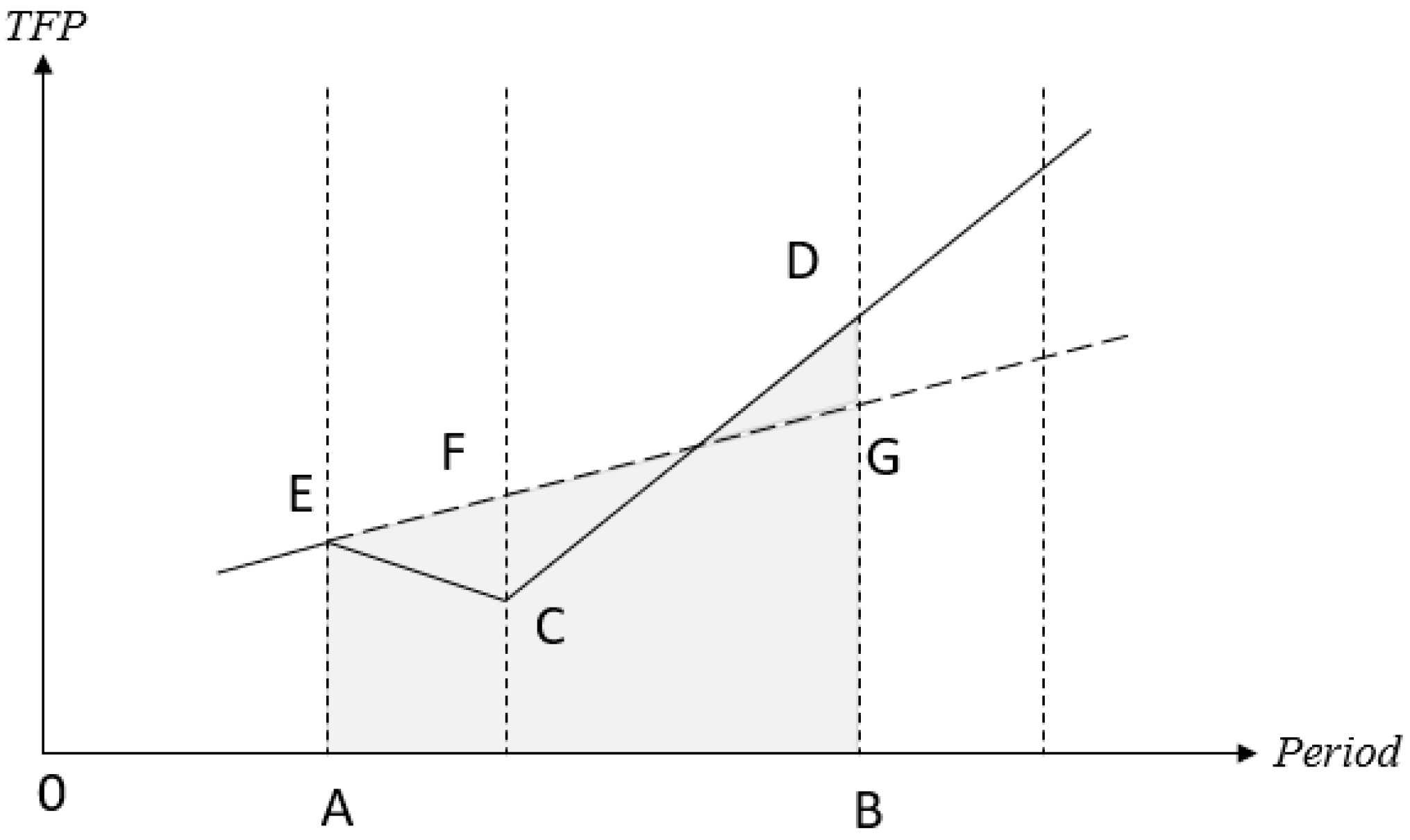
The explained variable is the manufacturing enterprises’ resilience (MER). The manufacturing enterprise resilience in this study refers to the ability of the enterprise to adjust itself in a short period of time and achieve sustainable development under the impact of major external environmental changes, that is, enterprise resilience. Enterprises’ TFP (Total Factor Productivity) can comprehensively reflect the growth degree driven by technological progress, management change, process optimization, economies of scale, and other technical efficiency improvements in addition to production factors such as labor, capital, technology, and talent [28]. Its ability to recover or correct under the impact of major external environmental changes can reflect the development resilience of an enterprise to a large extent. This study refers to Feng and Zhu’s [29] calculation idea of enterprise resilience, takes the 2008 financial crisis as the effect of the external environment, and measures the manufacturing enterprises’ resilience through the change trend and repair ability of enterprises’ TFP before and after the impact of the financial crisis. The specific calculation idea is shown in Figure 2:
In Figure 2, the solid line represents the actual value of the enterprise’s total factor productivity. The upward-sloping dashed line represents the potential value of the enterprise’s total factor productivity. By comparing the systematic differences between the actual and potential values of the enterprise’s total factor productivity, the resilience of the enterprise can be evaluated. Based on this logic, the calculation method for the resilience of manufacturing enterprises is as shown in Equation (1).
M E R i t = T F P i t / m _ T F P t h
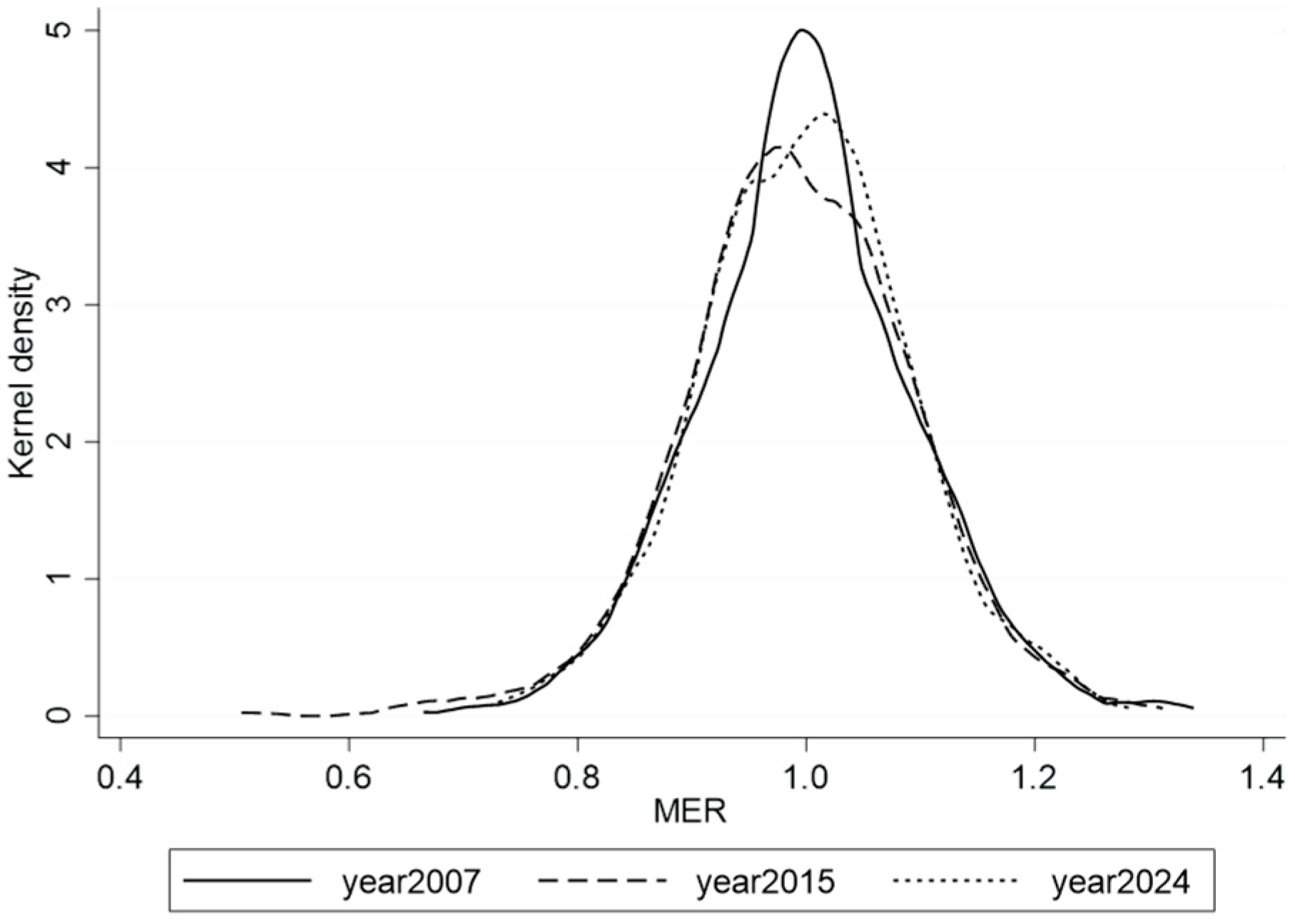
Among them, i is the manufacturing enterprise, t is the year, and h is the fine-molecule industry to which the manufacturing enterprise belongs. TFP is the actual value of manufacturing enterprises TFP, which is calculated by the OP method. m_TFP is the potential value of manufacturing enterprises’ TFP, which is measured by the annual average value of manufacturing enterprises by industry. Based on the aforementioned calculation method, the distribution of the resilience measurement results for manufacturing enterprises is shown in Figure 3.

4.1.2. Core Explanatory Variable

This research establishes the NBDPZ as a policy dummy variable. If a business is situated in a city classified as a big data pilot zone, the city dummy variable is given a value of 1; if not, it is assigned a value of 0. The time dummy variable is given a value of 1 for the year the city becomes a big data pilot zone, and the following years are examined; otherwise, it is assigned a value of 0. The interaction term between the city dummy variable and the time dummy variable signifies the policy dummy variable for the NBDPZ.

4.1.3. Control Variable

This study incorporates board size, cash liquidity, asset-liability ratio, enterprises’ age, equity nature, enterprise size, return on equity, and other variables into the model to mitigate the influence of extraneous factors. The size of the board of directors refers to the number of its members. Cash liquidity is the ratio of the net cash flow generated by an enterprise’s business operations to its total assets. The asset-liability ratio is the proportion of total liabilities to total assets. The enterprise age is the logarithm of the difference between the current year and the year when the enterprise was listed. The characterization of equity is contingent upon the identity of the dominant shareholder, with a value of 1 assigned to state-owned enterprises and 0 to others. The size of the firm is represented by the natural logarithm of total assets at the end of the year. Return on equity is the ratio of net profit to total assets.

4.2. Empirical Strategy

This study focuses on the economic effects of the NBDPZ, which aims to drive innovation and unlock the value of data elements. These pilot zones aim to advance the big data industry via institutional innovation and the establishment of industrial ecosystems, therefore optimizing regional economic structures and improving international industrial competitiveness. The creation of China’s NBDPZ offers a quasi-natural experimental framework for this research. The study used a difference-in-differences model to evaluate the policy’s impact on the resilience of manufacturing enterprises in the pilot regions. Cities identified as pilot zones comprise the treatment group, while non-designated cities serve as the control group. The research successfully determines the net impact of the policy by comparing the dynamic changes in resilience indicators of firms in both groups before and after policy implementation, therefore supporting the theoretical assumptions of Hypothesis 1. The baseline regression model is formulated as shown in Equation (2):
M E R i t = α + β 1 d i d i t + β 2 X i t + μ j + λ t + δ h + ε i t
Among them, i represents the enterprise, and t represents time. The explained variable represents the resilience level of manufacturing enterprises. did represents the dummy variable of NBDPZ. The β1 coefficient of NBDPZ is the regression result that this study focuses on. X i t represents a set of control variables to capture other factors that may affect enterprises’ resilience. In addition, city fixed effects μ j are included in the model to control for the city fixed effects that do not change over time. Year fixed effects λ t , which capture the impact of global macroeconomic or policy changes. Industry fixed effects δ h to control for industry fixed effects that do not change over time. Finally, ε i t denote the random error term.

5. Main Results Analysis

5.1. Parallel Trend Test

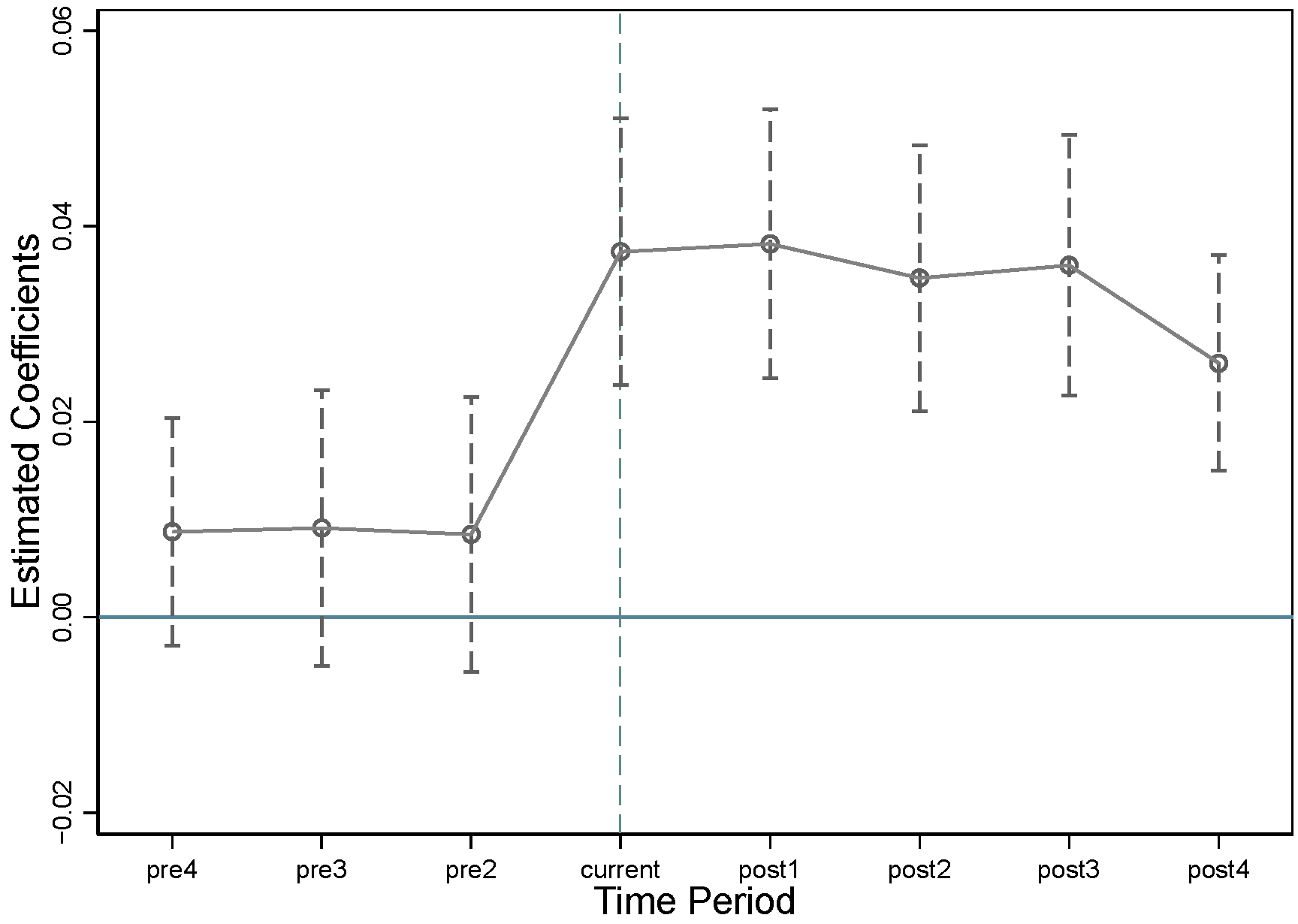
The parallel trend test, a fundamental requirement of the difference-in-differences methodology, is predicated on the premise that the treatment and control groups display identical temporal trends before the policy intervention. Based on this, this study treats the NBDPZ policy as a quasi-natural experiment, designating the year before the policy announcement as the baseline period (t = 0) and constructing an observation window of [−4, +4]. Figure 4 illustrates that prior to the policy implementation, the estimated coefficients for both the treatment and control groups do not substantially deviate from 0, signifying that the trends of the two groups were stable throughout the baseline period. However, after the policy implementation, the estimated coefficients for both groups show significant differences from 0, validating the fundamental assumption of parallel trends—that the treatment group and the control group exhibited similar trends before the policy implementation.

5.2. Benchmark Regression

The results of the test based on Model 2 are reported in Table 2. Column (4) of Table 2 shows that, after controlling for city, industry, and year fixed effects, the coefficient of the policy variable is 0.023 and statistically significant at the 1% level. This indicates that the NBDPZ has a significant positive effect on the resilience of manufacturing enterprises. Specifically, manufacturing enterprises within the pilot zones experienced a 2.3% increase in resilience compared to those outside the pilot zones, validating Hypothesis 1. This result aligns with the theoretical framework of digital technology empowering enterprise resilience discussed earlier.
First, the pilot zones provide enterprises with real-time market insights and production optimization solutions by constructing a data-sharing infrastructure. For example, big data-based dynamic supply chain scheduling significantly reduces the costs of supply-demand matching. Second [30], the policy-driven market-oriented allocation of data elements accelerates the transformation toward intelligent manufacturing, enabling enterprises to develop customized products through customer behavior data mining and construct a resilience enhancement path characterized by “prediction-adaptation-innovation.” These mechanisms collectively explain the micro-level logic of how the pilot zone policy systematically enhances enterprises’ ability to withstand shocks and recover through dual channels of technological penetration and institutional innovation.

5.3. Robustness Test

5.3.1. PSM-DID

The Propensity Score Matching method can replicate the circumstances of a randomized controlled trial, mitigate the impact of confounding variables, efficiently manage selection bias, and thus enhance the precision of causal inference [31]. This work utilizes the Propensity Score Matching Difference-in-Differences (PSM-DID) approach, using a 1:4 nearest neighbor matching to perform robustness tests. Upon completing the matching process, the common support assumption is confirmed, and the balancing test demonstrates an effective matching outcome. Thereafter, the difference-in-differences approach is used to re-evaluate Model (2), with the findings shown in Table 3. The findings indicate that the facilitative impact of the NBDPZ on the resilience of manufacturing businesses is statistically significant, suggesting that the baseline regression results are solid.

5.3.2. Exclude the Influence of Similar Policies

This study conducts robustness tests by controlling for the “City Brain” policy variable to exclude the interference of competing policies on the estimation results. The City Brain policy, initiated in 2016 in Hangzhou and gradually promoted nationwide, is a core strategy of China’s smart city initiative. It aims to build an urban intelligent central system by integrating technologies such as the Internet of Things, big data, and artificial intelligence, enabling real-time perception of urban operations, optimized resource allocation, and collaborative decision-making. This policy, along with the NBDPZ, forms an integral part of China’s digital governance system. Both policies focus on data element-driven approaches and seek to enhance urban governance efficiency and industrial competitiveness through technological empowerment. Based on the theory of controlling confounding factors in quasi-experimental designs, when there are competing interventions with highly overlapping policy goals and tools, it is necessary to isolate their independent effects through covariate adjustments. This study incorporates the City Brain policy dummy variable into the control variable system to identify the “net effect” of the National Big Data policy and avoid estimation bias caused by policy overlap.
In the robustness test, after adding the City Brain policy dummy variable to the baseline model (Table 3, Column 2), the coefficient sign and significance level of the NBDPZ remain largely unchanged, and the promoting effect on enterprise resilience remains robust. This indicates that the core policy effect is not derived from the synergistic effect of the City Brain policy, and the baseline regression results retain their explanatory power.

5.3.3. Exclude the Impact of External Event Shocks

This study performs robustness testing using sample screening techniques to exclude the possible influence of the COVID-19 pandemic on the assessment of policy impacts. Per the exogenous shock control theory, when a significant systemic event during the study period induces structural breakdowns in the outcome variable, it is essential to assess the robustness of the primary results using sample sensitivity analysis. The COVID-19 pandemic, as a worldwide public health emergency, has had an uneven influence on the functioning of manufacturing enterprises, owing to supply chain interruptions, workforce shortages, and other adverse consequences. This research used a subsample regression technique by excluding data to evaluate the reliability of the baseline findings. Upon excluding the samples and re-evaluating the model (Table 3, Column 3), the findings indicate that the coefficient sign and significance level of the NBDPZ are predominantly consistent, and their positive impact on enterprise resilience remains steadfast.

5.3.4. Endogeneity Test

This study employs the instrumental variable method to address potential endogeneity issues and enhance the credibility of causal inference. The study selects the terrain slope of prefecture-level cities as the instrumental variable to correct for endogeneity bias. The spherical distance from the city to Hangzhou, China, is determined by geographical features and is not affected by the micro-behavior of the sample enterprises. It is also unrelated to the unobservable factors that influence the resilience of enterprises, thus meeting the requirement of exogeneity. Furthermore, as a developed economic region, the distance between Hangzhou and other cities may affect the city’s ability to gain the leading edge in the digital economy and to absorb technological spillovers, thereby influencing whether the city is included in the national big data pilot zone. This meets the requirement of the correlation of the instrumental variable. The regression results of the instrumental variable method are reported in Table 4.
The findings in Table 4 indicate that, in the first regression step, the instrumental variable is significantly correlated with the pilot area policy variable. In the second-stage estimate, the coefficient of the pilot zone policy variable is considerably positive at the 1% significance level. The F-statistic is 84.76, and the Kleibergen-Paap rk Wald F statistic is significantly above the Stock-Yogo weak instrument test’s 10% threshold value of 16.38. The Kleibergen-Paap rk LM statistic is 115.083 (p = 0.0000), indicating the successful completion of the underidentification test. The findings demonstrate that the instrumental variable meets the validity criteria, and the primary policy impact remains strong after accounting for endogeneity, hence affirming that the study conclusions are not significantly influenced by endogeneity bias.

5.3.5. Placebo Test

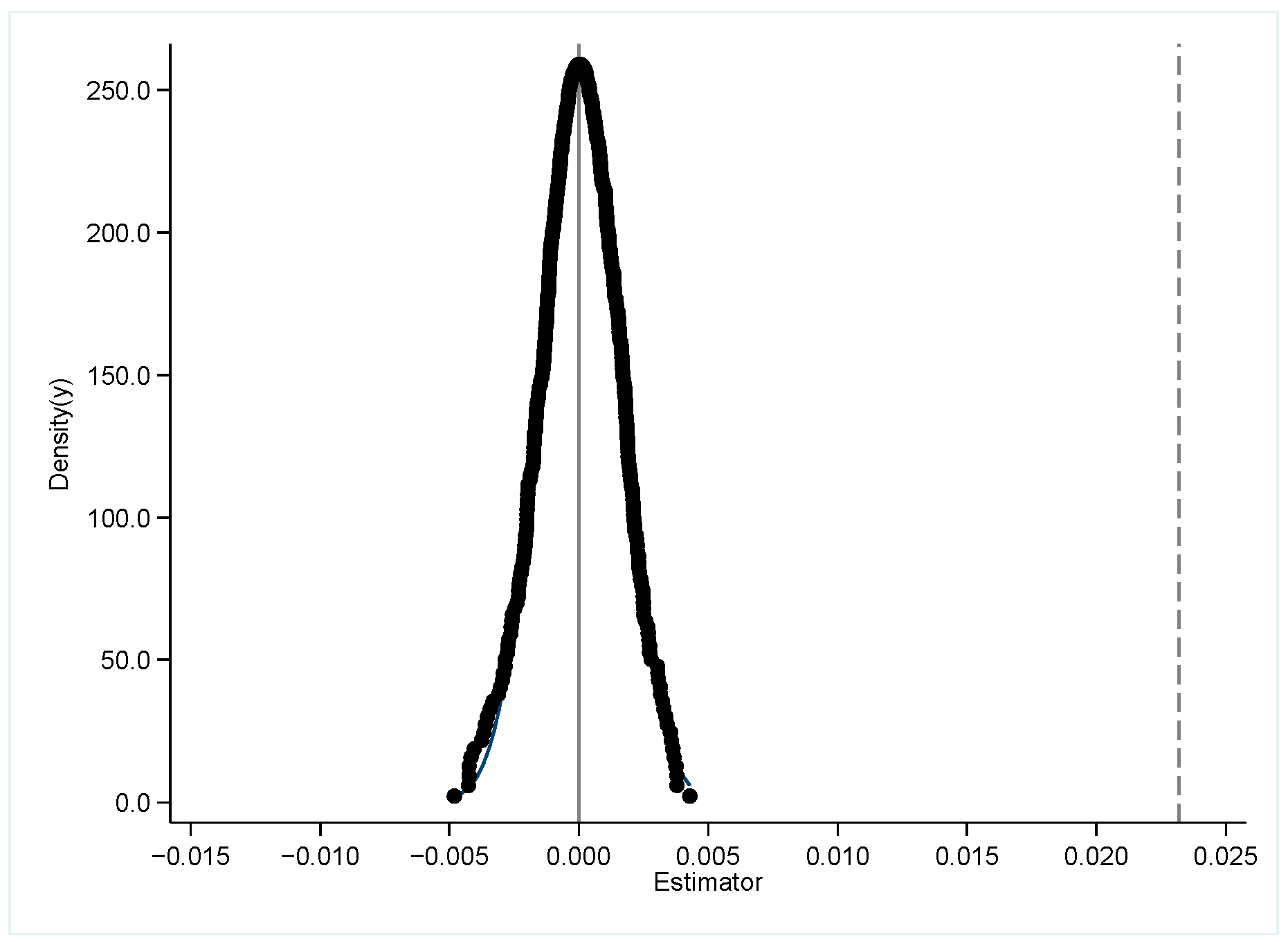
This study evaluated the possibility that the benchmark regression results were disturbed by potential confounding factors through placebo tests. In the test, the samples are randomly replaced 500 times, and the policy effect is re-estimated each time, the coefficient value is recorded, and the distribution of the placebo test coefficient is drawn (as shown in Figure 5). The benchmark regression coefficient value (0.023) resides in the lower tail of the distribution, suggesting that the benchmark regression outcomes are unlikely to be consistently influenced by unobserved variables.

5.4. Heterogeneity Analysis

5.4.1. Region and City Heterogeneity

This study rigorously analyzes the geographical heterogeneity of the policy impacts of the NBDPZ, using the idea of imbalanced regional economic growth and the theory of urban hierarchy. According to the core viewpoint of new economic geography [32], the interaction between geographical endowment differences and the institutional environment can shape path dependencies in regional development. This spatial lock-in effect may lead to differentiated impacts of policy interventions [33]. Specifically, the north–south (In this study, the division into northern and southern regions is based on the Qinling Mountains–Huai River line, with cities categorized as belonging to the northern or southern region according to the primary affiliation of their provincial-level administrative divisions. The northern region includes: Beijing, Tianjin, Hebei, Shanxi, Inner Mongolia, Liaoning, Jilin, Heilongjiang, Shandong, Henan, Shaanxi, Gansu, Qinghai, Ningxia, Xinjiang. The southern region includes: Shanghai, Jiangsu, Zhejiang, Anhui, Fujian, Jiangxi, Hubei, Hunan, Guangdong, Guangxi, Hainan, Chongqing, Sichuan, Guizhou, Yunnan, Tibet) differentiation originates from the gradient development strategy adopted during the reform and opening-up process. The southern regions, leveraging their coastal location advantages, were the first to develop an export-oriented economic system, while the northern regions face transformation pressures constrained by the inertia of traditional industries [34]. Meanwhile, the theory of urban hierarchy points out that there are structural differences between municipalities directly under the central government and ordinary prefecture-level cities in terms of factor allocation efficiency and policy implementation capabilities. The former accumulates high-quality resources due to its administrative status advantages, creating a “policy lowland” effect. The latter, constrained by financial limitations and governance capabilities, struggles to convert policy dividends. This dual heterogeneity determines that a single policy may exhibit asymmetric effects across different spatial units, necessitating stratified tests of the universality of policy effects.
The empirical results in Table 5 show that NBDPZ has a significant positive impact on the resilience of manufacturing enterprises in both southern and northern cities. NBDPZ also has a significant positive impact on the resilience of manufacturing enterprises in both central cities and non-central cities. In general, NBDPZ has a stronger positive impact on the resilience of manufacturing enterprises in the north and non-central prefecture-level cities.
This spatial heterogeneity can be explained through three theoretical mechanisms: First, the resource-based perspective suggests that although there are differences in the existing digital infrastructure between the north and the south, as well as between the central cities and other regions, the marginal improvement effect brought about by digital policies may be more pronounced in the north and non-central cities. Due to the lower initial level of digitalization in these areas, the resources supplemented by policies can be more effectively transformed into the enhancement of enterprise resilience. Second, the innovation system theory reveals that the regional innovation networks in the northern regions and non-central cities are not yet saturated. Policy intervention can more effectively activate the potential for “industry-university-research” cooperation. This latecomer advantage leads to a stronger knowledge spillover effect for similar policies in regions where the innovation ecosystem is not yet dense. Thirdly, the theory of policy implementation reveals that non-central ordinary-level cities are more sensitive to superior policies under the fiscal decentralization system. During the policy implementation process, the concentration of resources is higher, which, instead, reduces the losses in multi-level transmission, enabling the policy benefits to be more directly exerted at the enterprise level.
These theoretical mechanisms collectively form a three-dimensional explanatory framework of “resource endowment—innovation ecosystem—institutional effectiveness,” systematically elucidating the underlying logic of the spatial differentiation of policy effects. This provides a theoretical basis for optimizing regional policy design.

5.4.2. Industry Heterogeneity

Based on the industrial organization theory and resource-based theory, this study systematically investigates the industrial heterogeneity of policy effects in the NBDPZ. According to Porter’s value chain theory, industries with different factor intensity have essential differences in the process of value creation. This difference in factor structure determines the adaptability and policy responsiveness of enterprises’ digital transformation [35]. At the same time, market structure affects corporate innovation incentives through competition intensity, and the difference in monopoly degree may form a game pattern of “innovation compensation effect” and “X inefficiency” [36]. This double heterogeneity requires the deconstruction of the industrial transmission mechanism of policy effects from the dimensions of factor allocation efficiency and market power.
Table 6 shows that the pilot area significantly enhanced the resilience of enterprises in technology-intensive industries, capital-intensive industries, and labor-intensive industries. The policy effect was positive in both industries with low and high levels of monopoly. Relatively speaking, the effect of the pilot area was more pronounced in capital-intensive and low-monopoly industries. Capital-intensive industries typically have long supply chains and complex upstream and downstream linkages. Policy, through data element integration, can more effectively optimize resource allocation and supply chain collaboration, thereby achieving more significant resilience enhancement effects. In low-monopoly industries, due to more competitive markets and stronger innovation vitality, policy intervention can be quickly transformed into actual competitiveness of enterprises by reducing data acquisition barriers and promoting technology diffusion. In contrast, high-monopoly industries already have certain market power and resource barriers, and technology-intensive industries themselves have strong innovation self-adaptation capabilities. Therefore, the marginal enhancement effect of policy on them is relatively mild. This result demonstrates the positive role of the national big data pilot zone policies in compensating for the shortcomings of the market mechanism and stimulating competitive vitality.

5.4.3. Enterprise Heterogeneity

Based on the enterprise life cycle theory and the property rights system theory, this study systematically investigates the firm heterogeneity of the policy effect in the NBDPZ. According to the theory of enterprise growth, the growth stage focuses on scale expansion, while the maturity stage focuses on continuous innovation. Such stage characteristics determine the marginal effect difference in policy intervention [37]. At the same time, according to the theory of property rights, there are systematic differences in technological innovation incentives and market response efficiency between state-owned and non-state-owned enterprises due to differences in principal–agent structures.
This study employs the quantile method to categorize the life cycles of enterprises within various sub-industries of the manufacturing industry, distinguishing enterprise age into the start-up, growth, and maturity stages, and performing group regression analysis. The regression is performed by categorizing groups based on the ownership status of the enterprises, namely, whether they are state-owned or not. Table 7 presents the test findings. The results show that the pilot policy can significantly enhance the resilience of enterprises at the start-up, growth, and mature stages. The pilot policy has a significant positive impact on both non-state-owned and state-owned controlled enterprises. In general, the positive impact of the pilot policy is stronger on start-ups and state-owned enterprises.
Start-up enterprises usually encounter resource constraints and market uncertainties. Policies have effectively reduced their innovation trial-and-error costs by providing data infrastructure and public services. State-owned enterprises have institutional advantages in policy response and resource integration, enabling them to quickly convert policy benefits into organizational capabilities. Growth-stage enterprises are in a stage of rapid expansion, and policies help them optimize operations and market adaptation. Mature enterprises have strong internal stability, and the marginal improvement of policies on them is relatively gentle. This result demonstrates the inclusive and structural role of digital policies in filling market shortcomings and activating the vitality of enterprises of different ownership.

6. Mechanism Analysis

6.1. Moderating Effect Analysis

6.1.1. Moderating Effect Model

The moderating effect model in this study aims to reveal how digital transformation, innovation, and entrepreneurship activity regulate the transmission path of policy effect. According to the dynamic capability theory, digital transformation, as the carrier of the absorptive capacity of enterprises, may strengthen the policy effect through the chain mechanism of “data-driven decision-making, process reconstruction, and value creation.” According to the theory of innovation ecosystem [38], innovation and entrepreneurship activity, as a proxy variable of regional innovation ecosystem, may amplify policy dividends through the three-dimensional path of “knowledge spillover, resource reorganization, network coordination.”
To test Hypothesis 2 and Hypothesis 3, namely, whether digital transformation and innovation and entrepreneurship activity play a moderating role in the process of the NBDPZ affecting the resilience of manufacturing enterprises, this study introduces the level of digital transformation, innovation and entrepreneurship activity and their interaction terms with the policies of the NBDPZ based on the benchmark model to construct a moderating effect model. The moderating effect model is as follows:
M E R i t = a 1 + a 2 d i d i t + a 3 s z i t + a 4 d i d i t × s z i t + a 5 X i t + μ i + λ t + δ h + ε i t M E R i t = a 1 + a 2 d i d i t + a 3 c x i t n + a 4 d i d i t × c x i t n + a 5 X i t + μ i + λ t + δ h + ε i t
In the formula, s z i t is the proxy variable of digital transformation, c x i t n is the proxy variable of innovation and entrepreneurship activity, and n represents the subdividing type of innovation and entrepreneurship activity, specifically, innovation and entrepreneurship activity, attracting venture capital, the number of newly established enterprises, and the number of trademark registrations (fxcx, xjcx, and sbcx).

6.1.2. Moderating Variable

The first moderating variable is digital transformation (sz). This study draws on the research results of Wu et al. [39] and Zhao et al. [40], selects 160 terms related to digital transformation, and constructs A glossary of digital transformation enterprise terms for the annual reports of the enterprise. The keywords corresponding to each dimension are reported in Table 2. Then, it organizes and expands Python 3.8’s “jieba” thesaurus and eliminates stop words. The management discussion and analysis (MD&A) section of listed firms’ annual reports is then subjected to text analysis. The degree of digital transformation of each company from 2011 to 2020 is then determined by counting the frequency of relevant words.
The second moderating variable is innovation and entrepreneurial activity (cx). This research utilizes the China Regional Innovation and Entrepreneurship Index (IRIEC) from the Enterprise Big Data Research Center at Peking University to assess regional innovation and entrepreneurship activities. The study is further enhanced by examining venture capital appeal, the number of new firms, and the volume of trademark registrations to elucidate the nuanced dynamics of innovation and entrepreneurial activity. This research will use the average data from the prefecture-level cities governed by the four municipalities directly under the Central Government for empirical analysis.

6.1.3. Analysis of Moderating Effect Results

The test results are shown in Table 8. The findings indicate that the interaction term between digital transformation and policy variables is significantly positive, as are the coefficients of the interaction term involving the total index of innovation and entrepreneurship activity (cx), venture capital attractiveness (fxcx), the number of new enterprises (xjcx), the number of trademark registrations (sbcx), and policy variables. This result demonstrates the beneficial moderating influence of digital transformation and entrepreneurial activity on the moderating role of the NBDPZ regarding the resilience of manufacturing enterprises.
This result can be explained from dual theoretical perspectives: first, the dynamic capability theory reveals that digital transformation transforms policy dividends into efficiency improvement of resilience by reconstructing the capability chain of “perception-integration-reconstruction” of enterprises. Specifically, the use of digital technology diminishes the expenses associated with policy information decoding, enables enterprises to identify the technical interface and data resources provided by the pilot area more quickly, and achieves agile response through a modular organizational structure. Secondly, the theory of innovation ecosystem points out that venture capital activity (fxcx) accelerates technology commercialization by alleviating financing constraints, and the entrepreneurial density reflected by the number of new enterprises (xjcx) strengthens the knowledge spillover effect. Market-oriented innovation, represented by trademark registration (sbcx), enhances the value capture ability of policy dividends.

6.2. Channel Path Analysis

6.2.1. Channel Effect Model

In the traditional three-step method to test the mediating effect mechanism, it is necessary to overcome not only the endogeneity of core explanatory variables but also the endogeneity of mediating variables. That is very demanding. The mediating effect test of the three-step method has attracted the attention and discussion of scholars [41]. However, the two-step mediating effect mechanism test avoids the problem that the model has to overcome the endogeneity of mediating variables. Therefore, in order to empirically test the mediating role of supply chain optimization in the impact of the National Comprehensive Pilot Zone for Big Data on the resilience of manufacturing enterprises, we can test whether Hypothesis 4 is valid. The mediating effect model test in this study adopts a two-step method.
M E R i t = α + β 1 d i d i t + β 2 X i t + μ i + λ t + δ h + ε i t m e c i t m = α + β 1 d i d i t + β 2 X i t + μ i + λ t + δ h + ε i t
where m e c i t m is supply chain optimization, and the lower corner m represents the subdivision dimension of supply chain optimization, which is subdivided into two aspects: supply and demand coordination cost, and supply and demand stability.

6.2.2. Variable of Channel

Optimization of the supply chain. According to the dynamic coordination theory of the supply chain, supply chain optimization is the process of optimizing resource allocation efficiency by minimizing system friction and improving relationship stability. This research categorizes supply chain optimization into two aspects. The first factor is the expense associated with coordinating supply and demand throughout the supply chain. The cost aspect of supply and demand coordination emphasizes short-term operational efficiency, highlighting the immediate coordination capabilities of enterprises in information processing, inventory allocation, and other areas by quantifying the structural disparity between production response and market demand. This research uses the divergence of production fluctuations from demand fluctuations to assess the precision of supply and demand alignment throughout the supply chain.
The calculation formula is:
C o o r _ cost i t = σ ( c o s t i t + n i v i t - n i v i t 1 ) σ ( c o s t i t ) 1
In the formula, Coor_cost represents the coordination cost of supply and demand in the supply chain, σ represents the standard deviation of variables, cost represents the operating cost of enterprises, and inv represents the net inventory value of enterprises at the end of the year. The meaning of the numerator in the fraction is the volatility of production, and the meaning of the denominator is the volatility of demand.
Secondly, the stability of supply and demand within the supply chain. This research uses customer relationship stability and supplier relationship stability as metrics for assessing the supply and demand stability throughout the supply chain. The durability of customer relationships, seen through the lens of two-way embeddedness in transactional relationships, is quantified by calculating the ratio of repeat customers among the top five clients in the current year to that of the previous year, divided by five. The stability of supplier relationships is assessed by calculating the ratio of recurring suppliers among the company’s top five suppliers in the current year to 5, in comparison to the previous year.

6.2.3. Analysis of Channel Effect Results

This study utilizes the channel effect model to analyze the transmission mechanism of supply chain optimization regarding the impact of the NBDPZ policy on the resilience of manufacturing firms. The test results are shown in Table 9. The findings indicate that the pilot zone may significantly decrease the coordination costs of supply and demand within the supply chain and enhance the stability of customer relationships; however, its effect on the stability of supplier relationships is not statistically significant.
From the perspective of transaction cost theory, the pilot area reduces the coordination cost through three mechanisms: first, the application of big data technology compresses the information delay of supply chain nodes, reduces the information friction cost, and enhances the responsiveness of enterprises; Secondly, data-driven demand forecasting optimizes inventory management and reduces the risk of supply-demand mismatch as well as inventory holding costs and stockout costs. In the dimension of customer stability, policy effects deepen customer demand insight through data-driven customer portrait technology, build relationship-specific investment [42], and form a buffer mechanism against demand shocks. However, the failure of supplier stability transmission exposes the asymmetry of supply chain power structure: when suppliers have strong bargaining power, their governance model based on traditional contracts weakens the marginal benefits of data transparency, which confirms the core proposition of “scarce resource control determines value allocation” in the RBV.
Furthermore, the heterogeneity of mediating effects can be deconstructed through the dynamic capability framework. In the coordination cost dimension, the policy effect is realized through the chain reaction of “data visibility, process reengineering, and flexible production”. In the dimension of customer stability, it presents a spiral model of “demand insight-value co-creation—ecological lock-in” [43]. It is worth noting that although the mediating effect of supplier stability has not passed the empirical test, the theory of supply chain management points out that stable supplier relationships can enhance enterprise resilience by reducing the risk of supply interruption [44] and promoting technological collaborative innovation [45]. These findings provide a theoretical basis for the construction of a differentiated policy system, that is, the data-driven customer ecological construction should be strengthened on the demand side, and the power structure constraints should be solved through institutional innovation on the supply side, to finally realize the collaborative development pattern of “demand traction and supply upgrading.”

6.3. Further Analysis: The Impact of the “Pan-National” Comprehensive Big Data Pilot Zone

According to the theory of new economic geography, geographical proximity can break through administrative boundaries to form a pattern of regional coordinated development through mechanisms such as technology diffusion, factor flow, and market connection. As a highland of digital economy development, the policy dividend of the NBDPZ may radiate to the surrounding cities through channels such as infrastructure interconnection, knowledge spillover [46], and industrial chain coordination. The test of the effect of this “pan-pan-” policy can not only evaluate the depth of regional economic integration but also provide a decision-making basis for cross-administrative region policy coordination [47].
In existing studies, some scholars divided the control group into two sample groups according to whether it had a land border with the experimental group for research and analysis [48]. Based on this rationale, this research incorporates the land border cities of the pilot cities inside the experimental region into the experimental group and re-evaluates using Model (1). The regression results presented in Table 10 demonstrate that, following the inclusion of cities adjacent to the pilot area, the resilience of manufacturing enterprises in the experimental group exhibits a significant enhancement compared to the control group. The specific coefficient is 0.032, which is larger than the 0.023 of the benchmark regression result.
This finding has three theoretical implications: first, it verifies the applicability of the growth pole theory in the era of digital economy, that is, the experimental area, as the “polar core” of digital technology innovation, can drive the surrounding cities to form a “core-periphery” innovation ecosystem through technology diffusion and data element flow [49]. Secondly, the strength of the effect of border cities exceeds that of the control group of non-border cities, revealing the asymmetry between administrative and economic boundaries. Despite the cross-domain penetration of digital technology, institutional barriers still restrict the global sharing of policy dividends. This provides a theoretical basis for the construction of the digital economy spatial governance system of “core breakthrough—corridor connection—network radiation” and suggests that the policy dividend can be transformed into a sustained driving force for regional coordinated development through the innovation of a cross-domain data circulation mechanism and infrastructure co-construction.

7. Discussion

7.1. Dialogue with Existing Literature

The empirical results of this study confirm that the NBDPZ significantly enhances manufacturing resilience. This finding aligns with the broader academic consensus that digital transformation positively impacts enterprise performance. However, unlike previous studies that predominantly focus on “efficiency improvement” or “productivity growth”, our research uniquely identifies the “stabilizing effect” of data policies. While the existing literature often posits that digital technologies accelerate resource flow to boost GDP, our findings reveal that, under shock conditions, these technologies function more as a buffer than an accelerator. This distinguishes our work from the traditional “IT productivity paradox” discourse, offering a new perspective that data elements are not just growth drivers but survival anchors.

7.2. Comparison with International Studies

From an international perspective, this study offers a crucial comparison to the market-driven digital transformation models often observed in the United States and Europe. Research on “Industry 4.0” in Germany or digital ecosystems in the U.S. typically emphasizes enterprise-initiated technological adoption. In contrast, our findings highlight the efficacy of a “government-guided” model where state-led infrastructure construction (the Pilot Zones) overcomes the market failure of data fragmentation. This suggests that for developing economies lacking mature digital markets, the “Chinese model” of centralized data pilot zones provides a viable alternative path to building industrial resilience, complementing the Western paradigm of bottom-up innovation.

8. Conclusions and Implications

8.1. Conclusions

This study integrates the resilience of manufacturing enterprises into the policy effect evaluation framework of the NBDPZ, utilizing the NBDPZ as a quasi-natural experiment. It examines the impact of the NBDPZ on the resilience of manufacturing enterprises through panel data from A-share-listed enterprises in the Shanghai and Shenzhen stock markets spanning 2007 to 2024, employing a multi-time difference-in-differences model. The moderating influence of digital transformation, innovation, and entrepreneurial activity, together with the mediating impact of supply chain optimization (including supply and demand coordination costs and the stability of supply and demand relationships within the supply chain). The findings indicate that the NBDPZ significantly enhances the resilience of industrial firms. The resilience of manufacturing enterprises in the NBDPZ has improved by an average of 2.3% compared to those in the non-pilot zone. (2) At the mechanistic level, the synergistic effects of digital transformation, innovation, and the entrepreneurship activity index, along with each sub-dimension, have enhanced the impact of the NBDPZ on the resilience of manufacturing enterprises to varying extents. Furthermore, big data may enhance the resilience of manufacturing firms by decreasing the costs associated with supply and demand coordination and enhancing supply chain stability. (3) At the urban heterogeneity level, NBDPZ can significantly enhance the resilience of enterprises in the northern regions and non-central cities. At the industry heterogeneity level, NBDPZ has a more significant resilience-enhancing effect on enterprises with high capital intensity and low industry monopolistic characteristics. NBDPZ also plays a role in enhancing the resilience of manufacturing enterprises at various development stages and of different ownership types. Cities adjacent to the pilot cities of the national big data comprehensive experimental zone can leverage the advantages of this region to enhance the resilience of local manufacturing enterprises.
Although this study focuses on the Chinese context, the findings hold significant generalizability and international implications. The core challenges addressed—supply chain volatility and the urgency of digital adaptation—are universal issues facing the global manufacturing sector. The mechanism revealed in this study, where data agglomeration enhances resilience by reducing information friction and optimizing resource allocation, transcends national boundaries. For emerging economies, these findings validate a “government-guided” model for building digital infrastructure to overcome market failures in data accessibility. For developed economies, the results highlight that technological adoption alone is insufficient; it must be coupled with regional ecosystem synergy to maximize resilience. Therefore, the theoretical framework of “data element integration-supply chain optimization-organizational resilience” offers a universal reference for designing industrial policies in the digital era (see Table 11).

8.2. Policy Implications

Based on the above research conclusions, this study will provide the following policy implications for China and even other countries in the world:
At the government level, we should continue to promote the institutional innovation and regional coordinated development of the NBDPZ, fully consider the differences in resource endowments and urban function positioning between the north and the south, and build a differentiated policy supply system. In view of the technological agglomeration advantages of southern cities and municipalities directly under the Central Government, focus on improving the cross-regional data trading mechanism. Through the establishment of unified data rights confirmation, pricing, and circulation standards, the restriction of administrative boundaries on the flow of data factors can be broken, and a global linkage data factor market can be built for the resilience of manufacturing enterprises. For northern and ordinary prefecture-level cities, it is necessary to set up a special fund for digital transformation to support the construction of an industrial Internet platform and digital skills training. At the same time, the border cities will be included in the “digital corridor” planning, and technology spillovers will be guided through tax incentives and infrastructure co-construction to solve the bottleneck of digital transformation of traditional industries. In terms of institutional guarantee, it is necessary to promote the construction of data security governance and standard system simultaneously, formulate manufacturing data classification and classification guidelines and establish public data open platform to provide compliance data services for small and medium-sized enterprises, such as building supply chain risk early warning database, realizing “data available and invisible” through privacy computing technology, and reducing enterprise compliance costs and innovation risks. Systematically enhance the ability of enterprises to withstand external shocks.
The government needs to strengthen the policy synergy effect, deeply coupling the construction of pilot zones with digital transformation and the cultivation of innovation and entrepreneurship ecology, and forming a closed loop of “technology empowerment, institutional incentive, and ecological support” for resilience enhancement. In the sinking process of digital infrastructure construction, we should give priority to the layout of new digital infrastructure in county industrial clusters, implement intelligent transformation support policies for labor-intensive enterprises, break the bottleneck of initial investment in transformation, and improve operation flexibility through digital reconstruction of production processes. Through the construction of a regional innovation consortium, we can promote the sharing of data resources among universities, research institutions, and enterprises, build an innovation chain of “demand mining—technology R&D—business transformation”, and cultivate the dynamic adaptability characterized by rapid iteration. For highly monopolistic industries, it is necessary to improve the anti-monopoly data regulatory framework, forcibly open the core data interface of the industry, stimulate the vitality of market competition, and force enterprises to improve their resilience through data-driven innovation. In addition, a dynamic evaluation mechanism for policy effects should be established, and digital twin technology should be used to simulate the policy transmission path, focusing on monitoring the impact of mediating variables such as supply chain coordination cost and customer stability on enterprise resilience, to timely optimize the suitability of the policy toolbox.

8.3. Managerial Implications

At the enterprise level, it is necessary to grasp the window period of policy dividends, implement the in-depth transformation strategy of the “data-business-organization” trinity, and embed resilience into the core competence system. Enterprises in the growth stage should focus on the construction of the data center, optimize the product iteration path through customer behavior data mining, such as using advanced algorithms to analyze regional consumption preferences, dynamically adjust the product portfolio, and form a rapid response mechanism under demand fluctuations. Mature enterprises need to promote the modular transformation of the production system, introduce digital twin technology to build virtual factories, realize the optimization of the order response cycle and flexible production, and enhance the resilience of the supply chain through production flexibility. Non-state-owned holding enterprises can cooperate with technology companies to develop intelligent models for vertical industries, form customized solutions for pain points such as inventory management and capital turnover, transform policy support into actual benefits, and consolidate the ability to resist risks while reducing costs and increasing efficiency. In this process, enterprises need to pay special attention to the reconstruction of organizational capabilities, establish digital agile teams, break departmental data islands, cultivate the organizational culture of “data-driven decision-making”, and make resilience building permeate from the technical level to the management structure.
Furthermore, enterprises should rely on big data technology to reshape the supply chain governance model, build a new ecological network of “demand traction—digital collaboration”, and deeply embed resilience into the whole life cycle of the supply chain. Technology-intensive enterprises need to build a digital supplier collaboration platform to share capacity and inventory data in real time and automatically match the gap between supply and demand through smart contracts. For example, blockchain technology is used to realize the immutable and automatic settlement of purchase orders so as to improve transparency and reduce coordination costs. For industries with a low monopoly degree, customer portrait analysis and demand prediction should be strengthened, a dynamic safety inventory mechanism should be established, inventory management efficiency should be strengthened through the Internet of Things technology, and the buffer ability in market fluctuations should be significantly enhanced. At the same time, it is necessary to build a digital assessment system for supply chain resilience, quantify and monitor risk indicators such as supplier concentration and logistics interruption probability, implement diversified procurement and localized backup strategies for key links, and reduce the risk of chain interruption through structural optimization. By co-building regional supply chain hubs with enterprises in neighboring cities and sharing warehousing and logistics facilities and production capacity data, it can not only reduce operating costs through scale effect, but also enhance emergency response ability under sudden risks by relying on geographical proximity, and finally form a benign development pattern of “policy-enabling—data-driven—ecological synergy”, realizing the qualitative change in enterprise resilience from single-point breakthrough to system transition.
Furthermore, the findings of this research provide significant implications for nations globally to bolster the resilience of the industrial sector in the digital economy age. Developing nations may draw insights from the pilot zone’s experience, further the marketization of data factors in technology-intensive sectors by establishing regional digital innovation centers, and devise tailored transformation strategies grounded in the local industrial foundation. Intelligent manufacturing modules may be integrated into labor-intensive clusters to progressively enhance resilience. Developed nations may use the intermediate mechanism of supply chain optimization, fortify the establishment of a digital collaboration platform for the industrial chain, and employ blockchain and Internet of Things technology to improve the transparency and responsiveness of the supply chain. Emerging economies should focus on policy co-design, combine digital infrastructure investment with antitrust regulation, and break the block of traditional interest groups on technology diffusion. All countries need to pay attention to the linkage effect of “policy-capacity-ecology”, promote technology spillover by establishing cross-border data flow agreements, simulate policy shock transmission by relying on digital twin technology, and cultivate the data absorption capacity of small and medium-sized enterprises.

8.4. Limitations and Prospects

This study clarifies the process by which the NBDPZ influences the resilience of manufacturing enterprises using a multi-time difference-in-differences model, providing a unique perspective for evaluating digital economy policies. Initially, there are constraints regarding sample coverage and temporal relevance. The present study concentrates on A-share listed enterprises in Shanghai and Shenzhen, making it challenging to discern the varied responses of unlisted entities, including micro, small, and medium-sized enterprises, as well as county industrial clusters, which constitute a significant portion of the total manufacturing enterprises and serve a crucial supportive function in the supply chain. The policy effect may exhibit a temporal lag, and the current observation window fails to adequately include the long-term dynamics of technology diffusion, including the cumulative impact of digital infrastructure and the cyclical nature of organizational capability development. Secondly, the analysis of policy heterogeneity is insufficient; specifically, there are discrepancies in local practices about the degree of data accessibility and the strength of industry support in the experimental locations. Furthermore, the moderating influence of international environmental variables, such as global supply chain restructuring and the risk of technological blockades on policy effects, has not been incorporated into the analytical framework, thereby complicating the comprehensive delineation of policy effectiveness boundaries within an open economy.
Future research can be promoted in three aspects: first, build a “macro-meso-micro” cross-level database, integrate industrial enterprise census data, supply chain traceability information, and digital technology penetration indicators, especially paying attention to the “catch-up and differentiation” mechanism of small and medium-sized enterprises in digital transformation. Second, deepen the analysis of policy action mechanism, introduce institutional friction coefficient, digital ecological maturity, and other dimensions, and explore the amplification or dissipation effect of local government governance capacity and industrial cluster network structure on policy dividend. Third, we need to expand the perspective of international comparison and test the suitability of the digital pilot zone model in different institutional environments through transnational panel data, especially the policy innovation space of emerging economies under the constraints of data sovereignty.

Author Contributions

Conceptualization, Y.W. (Ye Wang), Y.W. (Yafei Wang) and J.L. (Jing Liu); Methodology, Y.W. (Yafei Wang); Validation, J.L. (Junnan Liu) and J.L. (Jing Liu); Formal analysis, Y.W. (Yafei Wang); Data curation, J.L. (Junnan Liu) and J.L. (Jing Liu); Writing—original draft, Y.W. (Ye Wang) and J.L. (Jing Liu); Writing—review & editing, Y.W. (Ye Wang), J.L. (Junnan Liu) and J.L. (Jing Liu); Visualization, Y.W. (Ye Wang) and J.L. (Junnan Liu); Supervision, Y.W. (Yafei Wang). All authors have read and agreed to the published version of the manuscript.

Funding

This research received no external funding.

Institutional Review Board Statement

Not applicable.

Informed Consent Statement

Not applicable.

Data Availability Statement

The original contributions presented in this study are included in the article. Further inquiries can be directed to the corresponding author.

Conflicts of Interest

The authors declare no conflict of interest.

Abbreviations

This table lists the relevant abbreviation terms used in the paper.
AbbreviationEnglish Meaning
NBDPZChina’s National Big Data Comprehensive Pilot Zone
TFPTotal Factor Productivity
MERmanufacturing enterprises’ resilience
PSM-DIDPropensity Score Matching Difference-in-Differences
szdigital transformation
cxinnovation and entrepreneurship activity
fxcxattracting venture capital
xjcxnumber of newly established enterprises
sbcxnumber of trademark registrations

References

  1. Gallopín, G.C. Linkages between vulnerability, resilience, and adaptive capacity. Glob. Environ. Change 2006, 16, 293–303. [Google Scholar] [CrossRef]
  2. Sanchis, R.; Poler, R. Enterprise resilience assessment—A quantitative approach. Sustainability 2019, 11, 4327. [Google Scholar] [CrossRef]
  3. Bianco, D.; Bueno, A.; Godinho Filho, M.; Latan, H.; Ganga, G.M.D.; Frank, A.G.; Jabbour, C.J.C. The role of Industry 4.0 in developing resilience for manufacturing companies during COVID-19. Int. J. Prod. Econ. 2023, 256, 108728. [Google Scholar] [CrossRef]
  4. Sun, W.; Mao, N.; Lan, F.; Wang, L. Policy Empowerment, Digital Ecosystem and Enterprise Digital Transformation: A Quasi Natural Experiment Based on the National Big Data Comprehensive Experimental Zone. China Ind. Econ. 2023, 9, 117–135. [Google Scholar] [CrossRef]
  5. Qiu, Z.; Zhou, Y. Development of Digital Economy and Regional Total Factor Productivity: An Analysis Based on National Big Data Comprehensive Pilot Zone. J. Financ. Econ. 2021, 47, 4–17. [Google Scholar] [CrossRef]
  6. Zhou, G.; Xu, H.; Jiang, C.; Deng, S.; Chen, L.; Zhang, Z. Has the Digital Economy Improved the Urban Land Green Use Efficiency? Evidence from the National Big Data Comprehensive Pilot Zone Policy. Land 2024, 13, 960. [Google Scholar] [CrossRef]
  7. Wang, X.; Li, N. Digital Technology Development, Industries-Universities-Research Collaboration and Enterprise Innovation Capability: An Analysis Based on National Big Data Comprehensive Experimental Zone. Sci. Technol. Manag. Res. 2022, 42, 1–8. [Google Scholar] [CrossRef]
  8. Zhang, Y.; Guo, X. Big data development and total factor productivity of enterprises:empirical analysis based on the national big data comprehensive pilot zone. Ind. Econ. Res. 2023, 2, 69–82. [Google Scholar] [CrossRef]
  9. Du, Z.; Zhao, C. Big Data Policy Governing Enterprises′ “Shift from Real to Virtual”: A Quasi-Natural Experiment Based on the National-Level Big Data Comprehensive Pilot Zone. East China Econ. Manag. 2024, 38, 1–12. [Google Scholar] [CrossRef]
  10. Sun, Z. How does the Development of Digital Economy Affect Manufacturing Enterprises to “Get Rid of Virtual Reality”: Evidence from National Big Data Comprehensive Test Area? Mod. Econ. Res. 2022, 7, 90–100. [Google Scholar] [CrossRef]
  11. Fisher, M.; Hammond, J.; Obermeyer, W.; Raman, A. Configuring a supply chain to reduce the cost of demand uncertainty. Prod. Oper. Manag. 1997, 6, 211–225. [Google Scholar] [CrossRef]
  12. Dyer, J.H. Specialized supplier networks as a source of competitive advantage: Evidence from the auto industry. Strateg. Manag. J. 1996, 17, 271–291. [Google Scholar] [CrossRef]
  13. Provost, F.; Fawcett, T. Data science and its relationship to big data and data-driven decision making. Big Data 2013, 1, 51–59. [Google Scholar] [CrossRef] [PubMed]
  14. Chen, C.; Pan, J.; Liu, S.; Feng, T. Impact of digital capability on firm resilience: The moderating role of coopetition behavior. Bus. Process Manag. J. 2023, 29, 2167–2190. [Google Scholar] [CrossRef]
  15. Tsiapa, M.; Batsiolas, I. Firm resilience in regions of Eastern Europe during the period 2007–2011. Post-Communist Econ. 2019, 31, 19–35. [Google Scholar] [CrossRef]
  16. Hu, H.; Song, X.; Guo, X. The Impact of Investor Protection on Corporate Resilience. Bus. Manag. J. 2020, 42, 23–39. [Google Scholar] [CrossRef]
  17. Fahlenbrach, R.; Rageth, K.; Stulz, R.M. How valuable is financial flexibility when revenue stops? Evidence from the COVID-19 crisis. Rev. Financ. Stud. 2021, 34, 5474–5521. [Google Scholar] [CrossRef]
  18. Yan, J.; Yu, W.; Zhao, J.L. How signaling and search costs affect information asymmetry in P2P lending: The economics of big data. Financ. Innov. 2015, 1, 19. [Google Scholar] [CrossRef]
  19. Shan, S.; Luo, Y.; Zhou, Y.; Wei, Y. Big data analysis adaptation and enterprises’ competitive advantages: The perspective of dynamic capability and resource-based theories. Technol. Anal. Strateg. Manag. 2019, 31, 406–420. [Google Scholar] [CrossRef]
  20. Sukumar, A.; Jafari-Sadeghi, V.; Garcia-Perez, A.; Dutta, D.K. The potential link between corporate innovations and corporate competitiveness: Evidence from IT firms in the UK. J. Knowl. Manag. 2020, 24, 965–983. [Google Scholar] [CrossRef]
  21. Ambrogio, G.; Filice, L.; Longo, F.; Padovano, A. Workforce and supply chain disruption as a digital and technological innovation opportunity for resilient manufacturing systems in the COVID-19 pandemic. Comput. Ind. Eng. 2022, 169, 108158. [Google Scholar] [CrossRef]
  22. Vial, G. Understanding digital transformation: A review and a research agenda. J. Strateg. Inf. Syst. 2019, 28, 118–144. [Google Scholar] [CrossRef]
  23. Zhang, Q.; Deng, S. The Impact of Digital Transformation on Firm Resilience: Evidence From the COVID-19 Pandemic. Econ. Manag. 2023, 37, 38–48. [Google Scholar]
  24. Yang, Z.; Guo, H.; Ding, J. Digital Transformation Rhythm and Firm Performance: Based on Absorptive Capacity Theory. J. Syst. Manag. 2025, 34, 215–230. [Google Scholar] [CrossRef]
  25. Wang, Y.; Shi, M.; Liu, J.; Huang, H. Research on the Impact of New Infrastructure Construction on Regional Innovation and Entrepreneurship Activity. Chin. J. Manag. 2024, 21, 711–720. [Google Scholar] [CrossRef]
  26. Jiang, N.; Li, P.; Ou, Z. Intellectual Property Protection, Digital Economy and Regional Entrepreneurial Activity. China Soft Sci. 2021, 10, 171–181. [Google Scholar]
  27. Piplani, R.; Fu, Y. A coordination framework for supply chain inventory alignment. J. Manuf. Technol. Manag. 2005, 16, 598–614. [Google Scholar] [CrossRef]
  28. Van Beveren, I. Total factor productivity estimation: A practical review. J. Econ. Surv. 2012, 26, 98–128. [Google Scholar] [CrossRef]
  29. Feng, T.; Zhu, Z. Exploratory Innovation and Firm Resilience—Evidence from NEEQ Listed Companies. J. Shanxi Univ. Financ. Econ. 2023, 45, 116–126. [Google Scholar] [CrossRef]
  30. Gunasekaran, A.; Papadopoulos, T.; Dubey, R.; Wamba, S.F.; Childe, S.J.; Hazen, B.; Akter, S. Big data and predictive analytics for supply chain and organizational performance. J. Bus. Res. 2017, 70, 308–317. [Google Scholar] [CrossRef]
  31. Rosenbaum, P.R.; Rubin, D.B. The central role of the propensity score in observational studies for causal effects. Biometrika 1983, 70, 41–55. [Google Scholar] [CrossRef]
  32. Krugman, P. Increasing returns and economic geography. J. Political Econ. 1991, 99, 483–499. [Google Scholar] [CrossRef]
  33. Boschma, R. Proximity and innovation: A critical assessment. Reg. Stud. 2005, 39, 61–74. [Google Scholar] [CrossRef]
  34. Lv, C.; Suo, Q.; Yang, H. Which Economic Gap Is Bigger in China? North-South or East-West. J. Quant. Technol. Econ. 2021, 38, 80–97. [Google Scholar] [CrossRef]
  35. Teece, D.J. The foundations of enterprise performance: Dynamic and ordinary capabilities in an (economic) theory of firms. Acad. Manag. Perspect. 2014, 28, 328–352. [Google Scholar] [CrossRef]
  36. Leibenstein, H. Allocative efficiency vs. “X-efficiency”. Am. Econ. Rev. 1966, 56, 392–415. [Google Scholar]
  37. Helfat, C.E.; Peteraf, M.A. The dynamic resource-based view: Capability lifecycles. Strateg. Manag. J. 2003, 24, 997–1010. [Google Scholar] [CrossRef]
  38. Autio, E.; Nambisan, S.; Thomas, L.D.W.; Wright, M. Digital affordances, spatial affordances, and the genesis of entrepreneurial ecosystems. Strateg. Entrep. J. 2018, 12, 72–95. [Google Scholar] [CrossRef]
  39. Wu, F.; Hu, H.; Lin, H.; Ren, X. Enterprise Digital Transformation and Capital Market Performance:Empirical Evidence from Stock Liquidity. J. Manag. World 2021, 37, 130–144+10. [Google Scholar] [CrossRef]
  40. Zhao, C.; Wang, W.; Li, X. How Does Digital Transformation Affect the Total Factor Productivity of Enterprises? Financ. Trade Econ. 2021, 42, 114–129. [Google Scholar] [CrossRef]
  41. Jiang, T. Mediating Effects and Moderating Effects in Causal Inference. China Ind. Econ. 2022, 5, 100–120. [Google Scholar] [CrossRef]
  42. Dyer, J.H.; Singh, H. The relational view: Cooperative strategy and sources of interorganizational competitive advantage. Acad. Manag. Rev. 1998, 23, 660–679. [Google Scholar] [CrossRef]
  43. Vargo, S.L.; Lusch, R.F. Evolving to a new dominant logic for marketing. J. Mark. 2004, 68, 1–17. [Google Scholar] [CrossRef]
  44. Hendricks, K.B.; Singhal, V.R. Association between supply chain glitches and operating performance. Manag. Sci. 2005, 51, 695–711. [Google Scholar] [CrossRef]
  45. Kogut, B. The network as knowledge: Generative rules and the emergence of structure. Strateg. Manag. J. 2000, 21, 405–425. [Google Scholar] [CrossRef]
  46. Jaffe, A.B.; Trajtenberg, M.; Henderson, R. Geographic localization of knowledge spillovers as evidenced by patent citations. Q. J. Econ. 1993, 108, 577–598. [Google Scholar] [CrossRef]
  47. Glaeser, E.L.; Kallal, H.D.; Scheinkman, J.A.; Shleifer, A. Growth in cities. J. Political Econ. 1992, 100, 1126–1152. [Google Scholar] [CrossRef]
  48. Yue, Z.; Wang, K. A Study on the Foreign Investment Promotion Effect of Overseas Economic and Trade Cooperation Zone Construction under the Belt and Road Initiative. Forum World Econ. Politics 2023, 4, 149–172. [Google Scholar]
  49. Audretsch, D.B.; Feldman, M.P. R&D spillovers and the geography of innovation and production. Am. Econ. Rev. 1996, 86, 630–640. [Google Scholar]
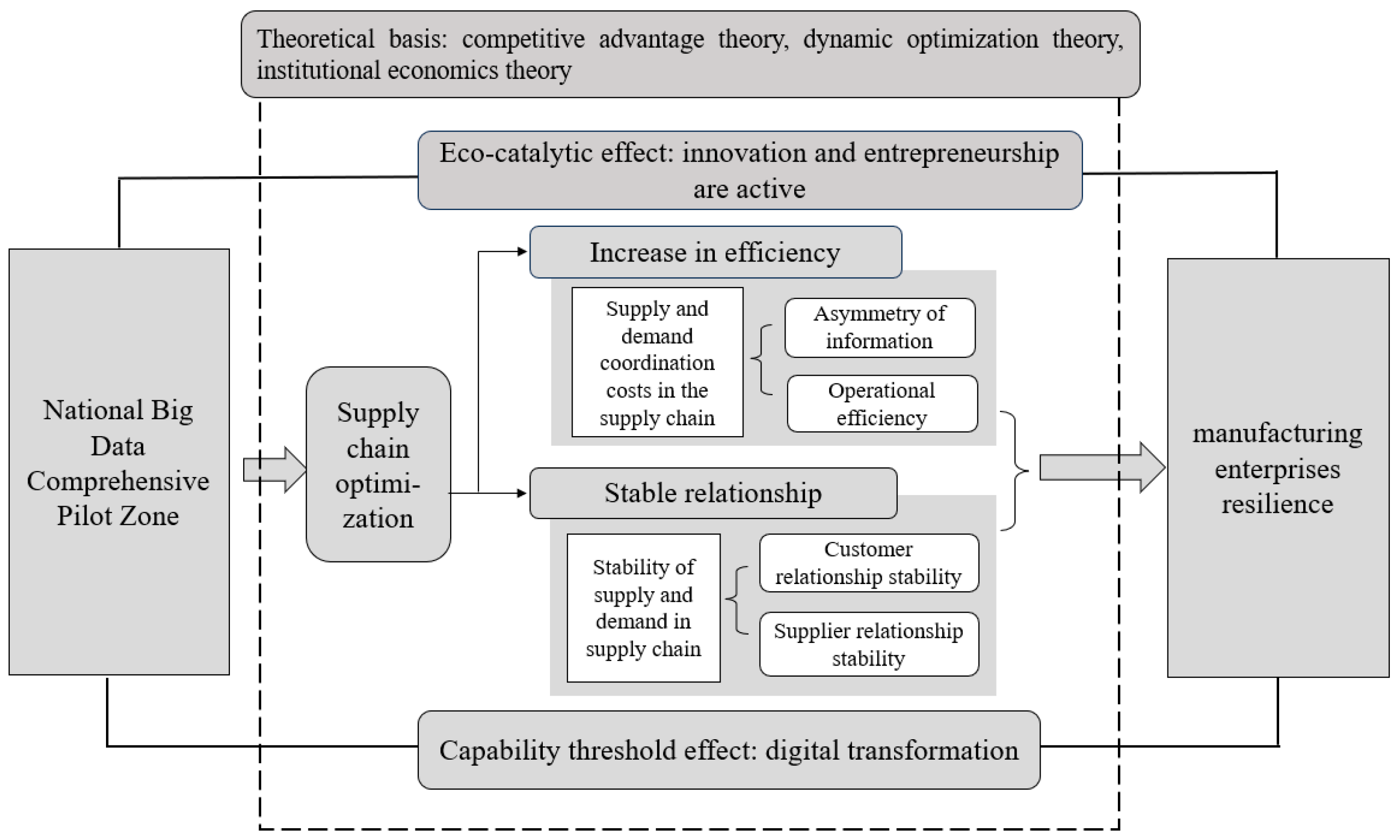
Figure 1. Theoretical framework.
Sustainability 18 01505 g001
Figure 2. Changes in TFP under the financial crisis.
Sustainability 18 01505 g002
Figure 3. The density estimation graph of the manufacturing enterprises’ resilience.
Sustainability 18 01505 g003
Figure 4. Parallel trend test.
Sustainability 18 01505 g004
Figure 5. Distribution of placebo test coefficients.
Sustainability 18 01505 g005
Table 1. Variable descriptive statistics.
Variable TypeVariableObsMeanStdMinMax
variable explainedMER11,0430.1000.0960.5061.383
core explanatory variableNBDPZ11,0430.1580.3650.0001.000
control variable of size of the board11,0432.1720.1890.6932.890
total cash flow11,0430.0520.073−0.6580.484
asset-liability ratio11,0430.4750.1910.0081.165
age11,0432.7050.5380.0003.555
nature of equity11,0430.5520.4970.0001.000
size11,04322.4271.32517.64127.638
return on equity11,0430.0500.347−16.8512.379
Table 2. Benchmark regression.
VarMER
(1)
MER
(2)
MER
(3)
MER
(4)
did0.029 ***0.011 ***0.0070.023 ***
(0.002)(0.003)(0.005)(0.002)
control variableYesYesYesYes
urban fixed effectNoYesYesYes
industry fixed effectNoNoYesYes
Year fixed effectsNoNoNoYes
N11,04311,04311,04311,043
R20.4580.5620.6350.652
Note: *** indicate significance levels at 1 percent, respectively, and estimated standard errors are in parentheses.
Table 3. Robustness test.
VarPSM-DID
(1)
Exclude the Influence of Similar Policies
(2)
Exclude the Impact of External Event Shocks
(3)
did0.023 ***0.024 ***0.026 ***
(0.002)(0.002)(0.002)
Urban Brain Policy −0.003
(0.002)
control variableYesYesYes
city/industry/year fix effectYesYesYes
N11,02811,0437948
R20.6550.6520.631
Note: *** indicates significance levels at 1 percent, and estimated standard errors are in parentheses.
Table 4. Endogeneity test.
VarPhase 1Phase 2
did 0.077 **
(2.55)
IV0.000007 ***
(9.21)
control variableYesYes
city/industry/year fix effectYesYes
F-statistics84.76
Kleibergen-Paap rk LM statistic115.083 (p = 0.0000)
Kleibergen-Paap rk Wald F statistic84.758
Stock-Yogo weak ID test critical values16.38
N10903
Note: *** and ** indicate significance levels at 1 and 5 percent, respectively, and estimated standard errors are in parentheses.
Table 5. Regional and urban heterogeneity analysis.
VarCity RegionCity Type
SouthNorthCentral Prefecture-Level CitiesNon-Central Prefecture-Level Cities
did0.023 ***0.024 ***0.025 ***0.028 ***
(0.004)(0.002)(0.002)(0.003)
control variableYesYesYesYes
city/industry/year fix effectYesYesYesYes
N7050396744206372
R20.6510.7070.6650.691
Note: *** indicates significance levels at 1 percent, and estimated standard errors are in parentheses.
Table 6. Industry heterogeneity analysis.
VarIndustry Factor CharacteristicsIndustry Monopoly Degree
Technology IntensiveCapital IntensiveLabor IntensiveHigh Degree of MonopolyLow Degree of Monopoly
did0.017 ***0.028 ***0.018 ***0.021 ***0.025 ***
(0.003)(0.005)(0.003)(0.004)(0.003)
control variableYesYesYesYesYes
city/industry/year fix effectYesYesYesYesYes
N57572645262945296514
R20.6990.7130.7620.7320.641
Note: *** indicates significance levels at 1 percent, and estimated standard errors are in parentheses.
Table 7. Enterprise heterogeneity analysis.
VarBusiness Life CycleNature of Enterprise Ownership
Initial StageGrowth StageMaturity StageState-Owned HoldingNon-State-Owned Holding
did0.023 ***0.022 ***0.019 ***0.027 ***0.012 ***
(0.003)(0.003)(0.005)(0.003)(0.003)
control variableYesYesYesYesYes
city/industry/year fix effectYesYesYesYesYes
N41093582335260944949
R20.6740.7000.7260.7170.694
Note: *** indicates significance levels at 1 percent, and estimated standard errors are in parentheses.
Table 8. Regression of the moderating effect.
Var(1)
Digital Transformation
(2)
Innovation and Entrepreneurship Activity Index
(3)
Attracting Venture Capital
(4)
Number of New Enterprises
(5)
Number of Registered Trademarks
did0.0216 ***0.0172 ***0.0174 ***0.0216 ***0.0118 **
(0.0021)(0.0029)(0.0022)(0.0025)(0.0043)
did × sz0.0005 ***
(0.0002)
sz0.0003 ***
(0.0001)
did × cx 0.0011 ***
(0.0004)
cx 0.0005 ***
(0.0001)
did × fxcx 0.0012 ***
(0.0003)
fxcx 0.0002 **
(0.0001)
did × xjcx 0.0008 **
(0.0003)
xjcx 0.0005 ***
(0.0001)
did × sbcx 0.0018 ***
(0.0043)
sbcx 0.0005 ***
(0.0001)
control variableYesYesYesYesYes
city/industry/year fix effectYesYesYesYesYes
N11,0438405840584058405
R20.6540.6340.6340.6340.635
Note: The sample sizes in columns (2) to (5) have been reduced because the third-party statistical measurement data only covers up to 2020. *** and ** indicate significance levels at 1 and 5 percent, respectively, and estimated standard errors are in parentheses.
Table 9. Regression of channel effect.
VarSupply and Demand Coordination Costs in the Supply ChainStability of Supply and Demand in the Supply Chain
Customer Relationship StabilitySupplier Relationship Stability
did−0.016 ***0.044 ***0.012
(0.005)(0.014)(0.017)
control variableYesYesYes
city/industry/year fix effectYesYesYes
N11,04311,04311,043
R20.1980.2520.319
Note: *** indicates significance levels at 1 percent, and estimated standard errors are in parentheses.
Table 10. Impact of the “broad” NBDPZ.
Var(1)(2)(3)(4)
Fdid0.012 ***0.025 **0.025 **0.032 ***
(0.002)(0.010)(0.010)(0.008)
control variableYesYesYesYes
urban fixed effectNoYesYesYes
industry fixed effectNoNoYesYes
Year fixed effectsNoNoNoYes
N11,04311,04311,04311,043
R20.4480.5630.6360.651
Note: The “broad” NBDPZ is based on the pilot cities of NBDPZ, and joins other cities connected with the pilot cities on land to form the “broad” NBDPZ. *** and ** indicate significance levels at 1 and 5 percent, respectively, and estimated standard errors are in parentheses.
Table 11. Summary of hypothesis testing results.
HypothesisContentEmpirical ResultStatus
H1The manufacturing enterprises’ resilience in the region is bolstered by NBDPZ.Significant positive coefficient (Table 2)Supported
H2NBDPZ can interact with enterprises’ digital transformation to improve resilience.Significant positive interaction (Table 8)Supported
H3NBDPZ can interact with urban innovation and entrepreneurship activity to improve resilience.Significant positive interaction (Table 8)Supported
H4The NBDPZ can improve resilience through supply chain optimization (cost reduction and stability).Significant mediating effect (Table 9)Supported
Disclaimer/Publisher’s Note: The statements, opinions and data contained in all publications are solely those of the individual author(s) and contributor(s) and not of MDPI and/or the editor(s). MDPI and/or the editor(s) disclaim responsibility for any injury to people or property resulting from any ideas, methods, instructions or products referred to in the content.