


Abstract
Organic fruit and vegetable production in the United States is increasingly popular, driven by consumer interest in foods associated with healthier lifestyles and environmentally friendly practices. This review synthesizes evidence on the production of this subsector from 1960 to 2021, using major literature databases (Agricola, ScienceDirect, and Google Scholar), to summarize health and environmental implications, economic importance, research trends, and persistent challenges. The production of fruits and vegetables is frequently reported to exhibit favorable quality and safety attributes, including higher antioxidant capacity and lower levels of cadmium, pesticides, and other chemical residues, supporting its relevance to nutrition and human health. This type of practice is also described as contributing to environmental restoration and preservation through improved soil conditions, reduced reliance on synthetic inputs, enhanced nutrient cycling, and climate-smart benefits such as increased soil organic matter and lower energy intensity. Nevertheless, it faces constraints that increase costs and limit scalability, including high labor demand, limited effectiveness and availability of some organic pest control tools, perishability, post-harvest losses, certification burdens, and market access regulations. Despite these barriers, data indicate growth: from 2007 to 2021, acreage increased by more than 100%, farm-gate value rose from $685 million to $1913 million, and the number of participating farms increased by more than 100%. Moreover, it accounts for 0.9% of the total value of the agricultural production in the U.S. Overall, the outlook for U.S. organic fruit and vegetables is encouraging, supported by expanding consumer demand, government support, and improved conditions for international trade.
1. Introduction
The term organic originated in Europe. Specifically, in England during the 20th century, growers opposed the use of synthetic fertilizers, and pioneers such as Sir Alfred Howard promoted these practices significantly [1]. Likewise, this movement was also thought to have begun in Germany during the same century. Moreover, a group of farmers, agronomists and doctors got together after participating in some lectures of the Austrian philosopher Rudolf Steiner and coined the term “biodynamic agriculture”, which constituted the first attempt to grow crops using only natural products, and since then, this practice has become more popular and is used as a tool for promoting the preservation of the environment and protecting people’s health. In the U.S., the organic movement gained momentum in the 1960s and 1970s as farmers began to view conventional practices as polluting and unsustainable, and many shifted gradually toward organic practices. Hence, the U.S. government elaborated organic policies. Additionally, organic practices experienced substantial growth and innovation [2,3]. Similarly, Goldman [4] documented that organic agriculture had become a significant industry in the U.S. at the beginning of the 21st century, with California leading the sector by value and acreage, followed by Washington, Pennsylvania, Oregon, and New York; the latter dominates overall organic sales. On the other hand, Vermont and Maine lead in the share or density of organic farms, showing high regional concentration in the Northeast. The states previously stated account for most of the nation’s organic production, even though organic farming is found in all 50 states [5].
Youngberg and DeMuth [3] indicated that the organic movement emerged in response to the need for a sustainable approach to addressing problems such as soil erosion and ground and surface water pollution, thereby making organic agriculture a reliable alternative. In addition, there is a notion that consuming organic products reduces exposure to harmful pesticides, thereby reducing the risk of chronic disease [6]. Likewise, public distrust of genetically modified crops and concerns about potential health risks were incentives for the production and consumption of organic fruits and vegetables [7]. Finally, higher levels of education and greater physical activity are associated with the consumption of organic fruits and vegetables. Consequently, raising awareness of it is necessary to promote this practice more and improve the living conditions of the U.S. population [8].
The organic production of fruits and vegetables in the U.S. has gained popularity in recent years. For example, in Iowa, small farmers are known to consider this type of production sustainable, and fruits and vegetables have become a significant share of their output [9]. However, most research focuses on other subsectors of agricultural production, which have distinct requirements. The organic production of fruits and vegetables is highly labor and input-intensive, and its products have a short shelf life. That is, they are highly perishable because they contain living tissues composed primarily of water. In addition, they respire and ripen. Consequently, their preservation is challenging because specialized handling is required. Therefore, further research is needed to address these problems. Additionally, research techniques for the chemical composition of horticultural and/or agronomic crops grown using conventional or organic methods differ substantially [10].
To this date, most published literature on the organic production of crops has not explicitly focused on fruits and vegetables. The U.S. Department of Agriculture publishes economic data related to this subsector. Nevertheless, it is unclear whether it has beneficial effects on the environment and human health, what its challenges are, or what its trends are. Therefore, the objective of this review is to outline these aspects to raise awareness and educate stakeholders, thereby contributing to the dissemination of this type of production and its improvement.
2. Materials and Methods
This review synthesizes published evidence on the organic production of fruits and vegetables in the U.S., covering the period from the emergence of the modern organic movement in 1960 through 2021. Only complete records with accessible titles, abstracts, and full texts were considered eligible for synthesis. On the other hand, publications containing statistical data obtained from reputable academic and governmental databases and websites were deemed appropriate for inclusion, given their credibility and relevance to the review.
2.1. Literature Search Strategy and Information Sources
A structured literature search was conducted using three databases that collectively index agricultural, environmental, and food-systems research: Agricola, ScienceDirect, and Google Scholar. Searches were performed using combinations of core terms related to (i) production system and certification, for example, “organic, certified organic, and USDA organic; (ii) commodity group, for instance, “fruits, vegetables, horticultural crops, produce”; and (iii) outcome areas central to this review. For example, “sustainability, nutritional value, health benefits, pesticide residues, soil health, greenhouse gas emissions, market trends, labor, and post-harvest losses”. In addition, Boolean operators (AND, OR, NOT) and phrase searching (quotation marks) were employed to improve retrieval precision and reduce irrelevant results.
2.2. Eligibility Criteria
Records were included if they met the following criteria:
- 1-
- Scope: Addressed organic production of fruits and/or vegetables, with clear relevance to the U.S. (national, regional, state, or farm-level studies).
- 2-
- Document type: Peer-reviewed journal articles and other citable, full-length sources that reported methods and findings. For example, empirical studies, systematic reviews/meta-analyses, policy, or economic analyses.
- 3-
- Content relevance: Provided evidence on at least one focal domain of this review: (1) health/nutrition and food quality attributes, (2) environmental implications, (3) economic importance/market, (4) challenges and constraints affecting adoption and performance.
Finally, records were excluded if they were not relevant to the U.S. organic fruit and vegetable systems, failed to distinguish between organic and conventional production, or were incomplete or duplicates across platforms.
2.3. Screening and Study Selection
Screening proceeded in two stages: (1) title/abstract review to remove clearly irrelevant items and (2) full-text review to confirm eligibility and extract evidence relevant to the review objectives. Because databases can return multiple versions of the same item, duplicates were removed before synthesis. Inclusion decisions prioritized sources that directly examined organic fruit/vegetable systems (rather than organic agriculture broadly) or that contributed essential context for interpreting U.S. trends and constraints.
2.4. Data Extraction and Evidence Synthesis
For each included source, information was extracted into a structured evidence table capturing, publication year, study geography/scale (U.S., region, state, farm); crop(s) or commodity group; comparator (organic vs. conventional, where applicable); and key findings mapped to the review domains (health/nutrition, environment, economics, and challenges). Evidence was synthesized qualitatively using a narrative (thematic) approach, organizing findings into the results subsections to highlight (i) reported health and food-quality attributes, (ii) environmental performance and resource implications, (iii) economic importance and growth indicators, and (iv) persistent constraints. For instance, labor intensity, pest management limits, perishability/post-harvest losses, certification, and market access burdens.
2.5. Conceptual Framework
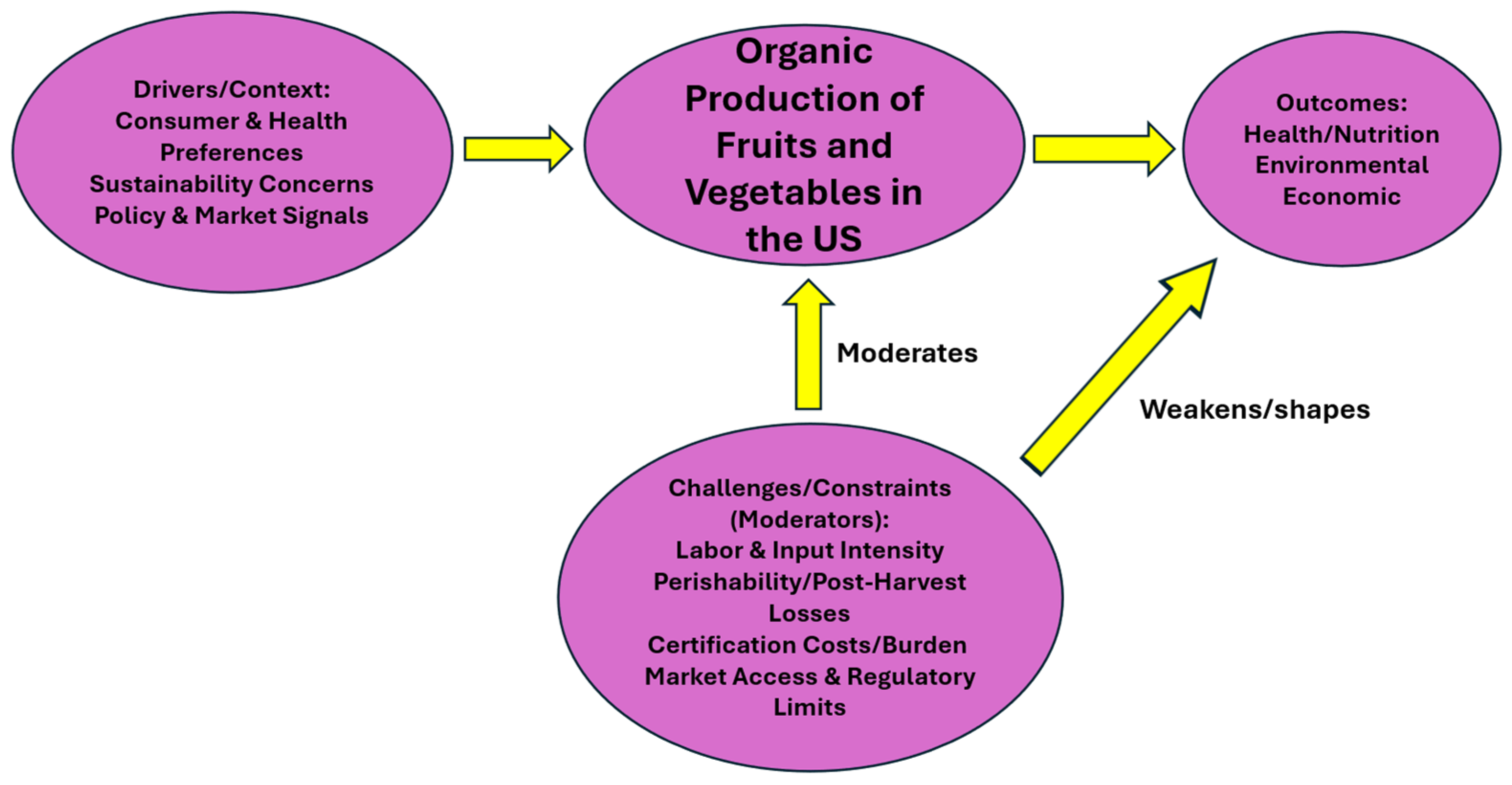
The conceptual framework employed (Figure 1) links drivers, the organic production system, and downstream outcomes, with constraints moderating relationships. Consumer health preferences, sustainability concerns, and policy/market signals stimulate the adoption of organic fruit and vegetable production. The core system (farm practices, certification, and supply-chain arrangements) produces outcomes across three domains: health/nutrition, environmental performance, and economic viability. These effects are shaped by labor, input intensity, perishability, post-harvest losses, certification costs, and market access or regulatory constraints. Finally, feedback occurs when outcomes influence consumer trust, demand, and policy attention, reinforcing or slowing future adoption and research priorities.
Figure 1.
Conceptual Framework.
3. Results and Findings
3.1. Health Benefits and Research Trends
Fruits and vegetables are an essential component of a healthy diet. Moreover, they are an important source of vitamins and minerals, which are necessary for normal bodily function. For example, they are a vital source of vitamin C, which is a potent antioxidant, and its deficit causes scurvy [11,12]. The presence of antioxidants in fruits and vegetables helps prevent diseases such as cancer. For instance, the appearance of cancer cells is closely linked to the presence of reactive oxygen species (ROS), which damage DNA and, consequently, enable cancer emergence. Hence, increasing the vitamin C content in fruits and vegetables helps prevent cancer, as demonstrated for blueberries by cultivating them organically [13]. Moreover, fruits such as strawberries exhibit high natural antioxidant activity [14]. Likewise, flavonoids and anthocyanins are phenolic compounds with antioxidant activity and are found in fruits and vegetables [15,16,17]. Furthermore, organic food has been documented to have higher antioxidant capacity, acidity, and phosphorus as well as lower levels of cadmium, pesticides, and other chemicals [18,19,20,21,22]. Additionally, organic practices increase the content of secondary metabolites in fruits and vegetables, which is associated with a reduced risk of cancer and cardiovascular disease [23].
A deficiency of lutein in the body is associated with macular degeneration, and vegetables such as lettuce and kale are good sources of it [24]. Additionally, the consumption of fruits and vegetables is associated with a healthy lifestyle, and when grown organically, they are considered more nutritious because environmentally friendly practices are used. For example, minimum tillage, organic pesticides, among others [25]. In addition, consuming organic fruits and vegetables as part of a well-balanced, regular diet and a healthy, active lifestyle can reduce obesity, enhance immune responses, lower cholesterol and blood pressure, and reduce the risk of non-Hodgkin lymphoma and preeclampsia [6,19,26,27]. In the same vein, the consumption of organic products in a population can be considered as an indicator of public health [28].
Fruits and vegetables are also consumed for preventive and curative purposes, which can be considered as a type of natural medicine [11]. In addition, government agencies, such as the U.S. Department of Agriculture, promote the enrichment of foods with compounds known to have health benefits. The latter indicates the U.S. government’s efforts to promote healthy diets to prevent disease and improve population health. Additionally, developing fruit and vegetable varieties with higher levels of health-beneficial compounds, when grown organically, is a promising approach to reducing pollution, improving soil chemical and physical properties, and enhancing human health. Thus, such an approach appears promising. Likewise, the development of varieties with longer shelf life and resistance to pests and diseases increases the availability of fruits and vegetables, reduces reliance on pesticides, and improves the profitability of this practice because varieties with longer shelf life and stronger pest and disease resistance can reduce post-harvest losses and pest-related yield losses, lowering input needs and improving marketable yields. This will thereby increase availability and potentially improve profitability in organic fruit and vegetable production. Hence, further research is expected in this area [29].
3.2. Environmental Impact of Organic Production of Fruits and Vegetables
Authors such as Kirchmann et al. [30], Rigby and Caceres [31], Trewavas [32,33], Edwards-Jones and Howells [34], and De Gregori [35] have criticized the implementation of organic practices, arguing that they are dogmas. After all, there is not enough scientific research on this topic. In the same vein, Niggli [36] noted that this lack of research presents an excellent opportunity to investigate this practice further and generate additional knowledge. Other authors have argued that the same recipe for this subject cannot be applied globally. Consequently, adjustments must be made in light of the realities faced by growers. However, implementing organic practices may improve environmental conditions by restoring and preserving ecological equilibrium. For example, Polushkina et al. [37] indicate that implementing organic growing practices contributes to environmental greening. In other words, soil fertility can be restored and a natural balance maintained. Thus, organic growing practices have emerged as an essential alternative to conventional farming. Likewise, organic farming practices can be considered a tool for sustainable development because they promote environmentally friendly approaches that transform consumption and production, enabling human beings to benefit from a sustainable society [38]. Also, these practices rely more on ecosystem function than on off-farm inputs. Hence, they fit within environmental preservation and restoration strategies [36].
It is essential to note that the world’s land area comprises 130.7 million km2. Nonetheless, the surface devoted to sustainable agricultural practices is less than half of this area [39]. Therefore, there is a need to increase this area to achieve sustainable development [40]. In the U.S., 3,630,594 acres are devoted to organic crop production, distributed across 17,000 farms, approximately [41].
Some techniques used to grow fruits and vegetables organically reduce pollution and improve the efficient use of nutrients such as phosphorus and potassium [42]. For example, fruiting trees and shrubs can establish long-term associations with mycorrhizal fungi, which enhances phosphorus uptake. Moreover, such an association can be established more efficiently when the soil remains undisturbed for long periods. Thus, in this case, conservation tillage is also helpful. Nevertheless, efforts are underway to implement this technique in vegetable crops, such as carrots [43]. In the same vein, the availability of nitrogen in organic systems is usually low. Consequently, it reduces nitrogen emissions to the environment, in contrast to traditional agricultural practices, which typically promote the buildup of excessive nutrients and use only a small portion. In other words, nutrients are lost to the point that some countries strictly control them [44]. Additionally, conventional production of fruits and vegetables can generate substantial CO2 emissions, resulting in a large carbon footprint. For example, vegetables such as cauliflower, potatoes, and peppers have a significant carbon footprint due to their intensive input requirements and cultural practices [45]. Likewise, the energy use and greenhouse gas emissions associated with transportation in the conventional food production and distribution system strengthen the case for more local food production, and organic production of fruits and vegetables fits within this case for the reasons previously described [46].
The use of organic practices helps improve the physical and chemical characteristics of soils. For example, long-term utilization of forest and animal waste in muscadine grapes helps ameliorate physical factors such as soil compaction, aggregate stability, and active carbon, as well as pH, and, most importantly, yield. That is, the use of cheap, readily available inputs increases production and lowers costs, creating an opportunity for small growers to improve their output without relying on external capital or inputs. Consequently, the grower’s profitability is augmented [45,47]. Furthermore, organic practices are included in the definition of regenerative agriculture because they help minimize the use of external inputs and soil disturbance [48].
Additionally, growing fruits and vegetables organically can be considered a climate-smart practice because it adds organic matter to the soil, which enhances the resilience of agricultural systems to climate change [49]. Furthermore, their cultural practices promote resource cycling, ecological balance, and the conservation of biological diversity. Additionally, it promotes resilience to climate change by enhancing carbon sequestration, reducing fossil fuel consumption, and, consequently, mitigating global warming [2,50,51,52]. In addition, perennial vegetables exhibit a high potential for carbon sequestration. In other words, there are 613 cultivated perennial vegetables, comprising 107 botanical families, which can sequester 22.7–280.6 MMT CO2-eq/yr on 4.6–26.4 Mha by 2050 [53].
Conventional crop production is highly energy-intensive due to the manufacture and use of synthetic fertilizers and pesticides. On the other hand, the use of organic inputs requires less energy to produce and apply [51]. Similarly, areas devoted to fruit and vegetable production are usually smaller than those dedicated to agronomic crops such as corn, sorghum, and cotton. Therefore, they require less fossil fuel to be prepared and offer greater potential for carbon sequestration. Moreover, many activities are performed manually. For example, harvesting, trimming, and related procedures. Thus, organic production of fruits and vegetables contributes to greater reductions in greenhouse gas emissions.
Organic practices can be used to restore fertility in fields where fruits and vegetables are grown. Howard and Wad [1] indicate that the maintenance of soil fertility is the first condition of any permanent system of agriculture because, in the ordinary process of crop production, fertility is steadily lost. Therefore, its continuous restoration is needed. For example, many vegetables have a short growing season. Thus, their nutrient intake is high and occurs over a short period. Consequently, soil fertility depletion is a problem. Hence, integrated soil fertility management approaches that leverage complementarities among different types of inputs, such as organic fertilizers, can be key for restoring and maintaining fertility in vegetable production [52,53,54]. Additionally, the use of organic practices can increase the abundance of many species and organisms. That is, they enhance biodiversity, which can contribute to pest control [55,56,57].
The practice of organic agriculture can be framed within the definition of environmental justice because it is focused on preserving, restoring, and maintaining the environment. Furthermore, organic agriculture usually depends on the sustainable use of locally available natural resources, the grower’s knowledge, and labor. Thus, it is more likely to satisfy the needs and aspirations of resource-poor growers, who typically produce more fruits and vegetables, than those that require expensive external inputs [44].
Organic fruit and vegetable production is distributed across the U.S. It has high potential for expansion due to governmental support, its positive environmental impact, and product demand. Remarkably, states such as California, Wisconsin, and Arizona, which are the leaders of this type of production, have implemented policies to regulate it. More states are following those examples, thereby ensuring the preservation and restoration of agricultural areas and their continued use by future generations [58].
3.3. Challenges
3.3.1. Post-Harvest Handling and Shelf Life
Many fruits and vegetables have a short shelf life; therefore, they are usually grown near the places where they are consumed. Losses of fruits and vegetables are estimated to range from 25% to 50% globally, from farm to fork [26]. In the US, 69% of losses occur after harvest and are attributable to price volatility, labor costs, availability, lack of refrigeration infrastructure, aesthetic standards, consumer preferences, quality-based contracts, and policies related to harvest and marketing [59]. In the same vein, Buzby et al. [60] documented that 14.8 and 23.4 billion pounds of fruits and vegetables are lost at the retail level, respectively. Additionally, such losses are estimated to cost $15.1 billion and $27.7 billion, respectively. However, this limitation could be partially mitigated by refrigeration and rapid transportation. Moreover, fruits and vegetables are also grown near population centers to reduce this limitation. For example, Kuo and Peters [61] reported that the main centers of organic production in the US are located near metropolitan areas in the Northeastern and Pacific Coast, Northern Great Lakes, and Mountain West regions (Figure 2).
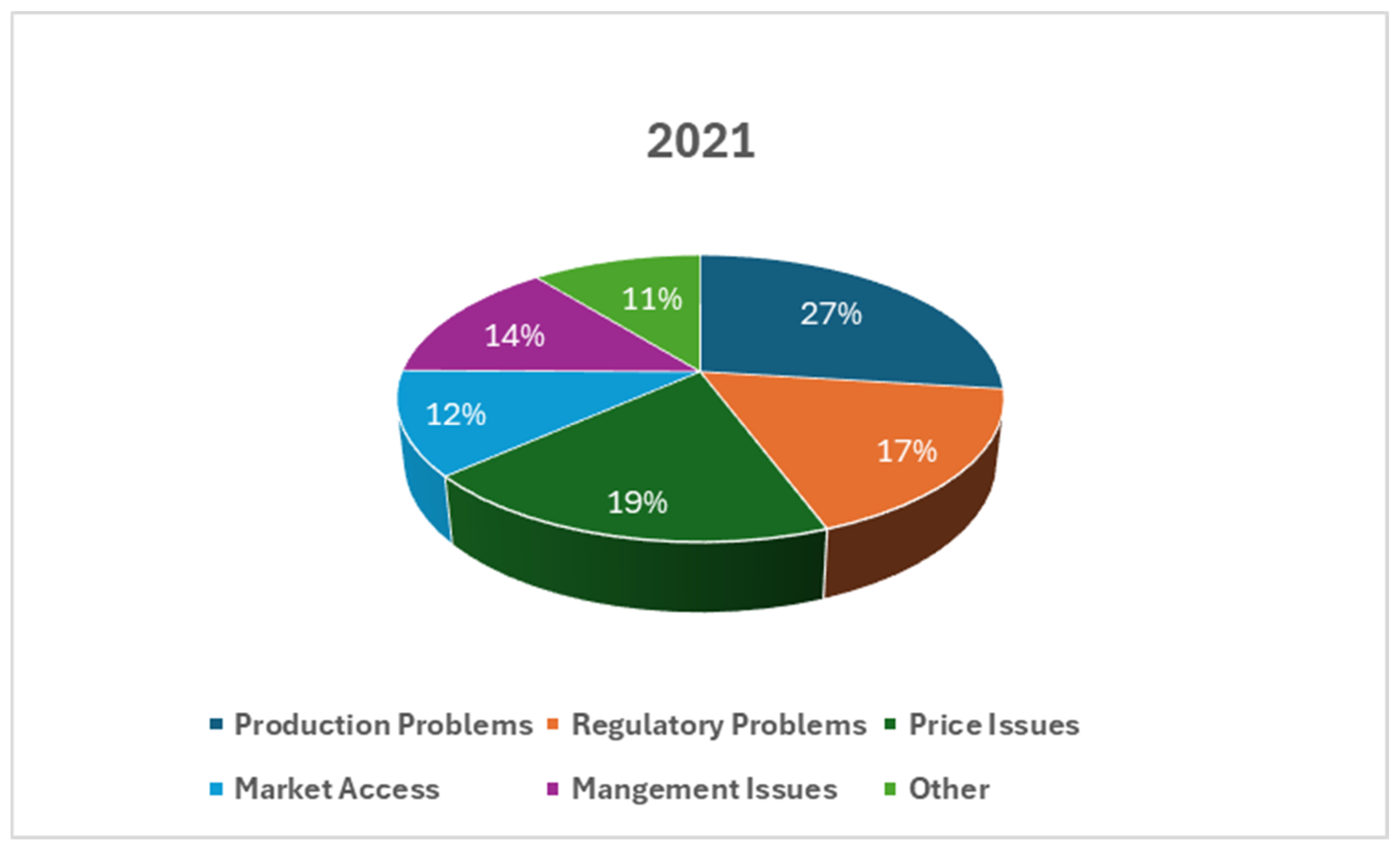
Figure 2.
Problems faced by organic farmers. Source: National Agricultural Statistical Service. US Department of Agriculture. Certified production survey 2021.
3.3.2. Farm Size and Marketing Strategies
Organic vegetable production is associated with small farming. Moreover, organic vegetable production in the U.S. occurs on farms of less than 10 acres. It is operated by younger, more educated, and less experienced growers than conventional growers. Most remarkably, they direct most of their production to farmers’ markets, a form of direct marketing [62]. Direct marketing strategies, such as farmers’ markets, roadside stands, and pick-your-own, help growers obtain higher prices and increase sales. In fact, they constitute a form of direct marketing. Farmers’ markets have become increasingly popular because they provide growers with a rapid outlet for their produce, thereby helping them remain in business. At the same time, consumers can obtain lower prices, and funds stay in the community [63].
3.3.3. Risk of Contamination
Many fruits and vegetables are eaten raw or fresh, which helps with the intake of vitamins and minerals that could be lost during the cooking process. Nevertheless, such a way of consumption may be risky because it may be contaminated with harmful pathogens and chemicals. For example, in 2017, romaine lettuce contaminated with Escherichia coli was linked to fatalities in the US and Canada [64]. Therefore, safe growing and post-harvest practices are needed to prevent such problems, especially for organically produced crops, which may increase production costs and microbial load when unsafe pre- and post-harvest practices are used.
3.3.4. Low Efficacy of Organic Pest-Control Tools
Growing fruits and vegetables is highly demanding. That is, it requires substantial inputs, primarily labor [65,66]. The latter is a high production-related cost and could strain budgets. For instance, tomatoes are among the most popular organic vegetables grown in the U.S. and require the most production labor hours, followed by beans, lettuce, and garlic [67,68]. However, vegetable production produces higher returns per acre than other crops [69]. Additionally, many workers are required to do sowing, cultivation, and harvesting. Also, the use of organic practices demands more time and labor. For example, weeds are typically removed manually [65], and many organic pesticides are less effective than conventional pesticides, potentially necessitating more applications. Moreover, their availability may be limited, and their cost may be higher. Consequently, production costs increase. Therefore, there is a need to develop more organic pesticides. Likewise, data published by USDA-NASS [70] indicate that organic farmers identified “production problems” as their primary concern, followed by price issues, market access, and regulatory constraints (Figure 2).
3.3.5. Low Productivity of Organic Production Systems
Lower yields than conventional production systems characterize organic production systems. Hence, boosting their productivity means higher incomes, greater economic resilience, and greater sustainability in rural areas. Nevertheless, the limitations previously stated may be partially mitigated by the higher prices buyers are willing to pay for organic products, which are often considered pesticide-free and more nutritious [51,53,61,66,71,72].
3.3.6. Risk Associated with Consuming Imported Fruits and Vegetables
Many fruits and vegetables are imported into the U.S. from other countries because they are produced at lower costs, there is a supply shortage, they are not produced locally, or they are out of season [73,74]. This is especially risky because regulations governing pesticide application in other countries may be weak or poorly enforced, thereby jeopardizing population health. Thus, developing additional technologies to reduce production costs and compete with such imports is essential, and organic fruit and vegetable production can assume this role because it employs less hazardous and polluting pesticides.
3.3.7. Demand for Labor
The agricultural sector is part of the primary sector of the economy. Consequently, its revenues are usually lower than those of the secondary and tertiary sectors. Thus, areas devoted to the primary sector are less developed than other areas. In other words, its salaries and wages are typically lower, thereby promoting migration to urban areas. Therefore, finding labor becomes difficult. Moreover, in situations such as the one previously described, governments normally intervene and subsidize farmers to maintain and/or bolster production, given its importance to the population [75]. This situation is exacerbated in the fruit and vegetable production subsector, which is characterized by high labor demand due to the manual nature of many activities.
Plants need constant care. Hence, workers typically work more than 40 h per week, and their schedules often vary, including early-morning shifts, weekends, and holidays. Additionally, implementing an agricultural workers program is a valuable policy for meeting labor demand. In this way, the government permits migrant workers to enter the U.S. for a specified period to work for agricultural companies. Nonetheless, many workers have limited English proficiency; consequently, training them is time-consuming and expensive [76]. Finally, the onerous and costly certification process constitutes a barrier for low-income farmers and an obstacle to adopting this type of production [44].
3.3.8. Discrepancies Between Federal and State Support
Federal and state-level support for organic fruit and vegetable production differs, and there is a need to harmonize policies on this subject. For example, state-level incentives for organic agriculture, particularly for fruits and vegetables, often provide more targeted support than federal programs [77]. In the Northeast, states such as Maryland and Vermont experienced a 115% increase in cover crop adoption from 2012 to 2017. In contrast, Pennsylvania, which lacked such a program, experienced a more minor increase [78]. Although federal programs such as the Environmental Quality Incentives Program (EQIP) and the Conservation Stewardship Program (CSP) are available nationwide, their complexity and administrative burden can limit access for small-scale or new farmers [79]. In contrast, state-level policies, such as California’s tailored incentives and extension services, are more flexible and locally responsive, thereby improving accessibility for small-scale farmers, especially those focusing on organic fruits and vegetables in the U.S. [80]. For instance, in California, there have been state-level organic certification programs geared towards improving transition effectiveness by using the detailed Pesticide Use Report (PUR) to monitor field-level practices, enabling precise tracking of pesticide trends and compliance, and mandating annual registration for all organic producers, including small farms often excluded from federal datasets [81]. Such efforts have been particularly critical for organic fruits and vegetables in the U.S., which require intensive monitoring to meet market standards. In contrast, federal programs such as the United States Department of Agriculture’s National Organic Program (USDA’s NOP) offer limited financial incentives and lack region-specific support systems [77]. However, the lack of uniformity across states creates inequities and confusion, limiting the nationwide effectiveness of organic programs. State efforts help bridge these gaps by reducing transaction costs and providing consistent support [82]. For instance, Maryland’s program enrolled more than 143,000 hectares annually, supported by more than $20 million [78].
Extension support for organic production of fruits and vegetables can vary at the state and federal levels, too. For example, Extension support for organic farmers, particularly those producing fruits and vegetables in the U.S, reflects these disparities, with federal and state-level programs offering distinct but uneven resources. Federal extension typically provides broad-based educational materials, yet it often lacks the localized, practice-specific insights that organic farmers require, prompting many to turn to peer networks and NGOs for actionable guidance [83]. In contrast, state-level extension programs, such as those in Georgia, offer more targeted, regionally adapted resources but struggle with agents’ limited knowledge of organic agriculture, underscoring the need for enhanced agent training to improve the effectiveness of support [84,85]. Additionally, state-level programs often leverage informal certification and branding strategies that effectively promote intensification by enhancing product value and marketability [86].
Organic transition subsidies differ notably between federal and state-level programs in both accessibility and effectiveness, especially for specialty crops like organic fruits and vegetables in the U.S. Federal subsidies, such as the USDA Organic Certification Cost-Share Program, provide broad, consistent support but often fail to fully address localized agricultural conditions, limiting their practical effectiveness [87]. State-level programs, exemplified by Sikkim’s mandatory organic policies, are highly targeted and capable of large-scale transformations. However, they sometimes provide insufficient financial support to farmers during critical transition phases, thereby risking yield reductions [88]. In contrast, Russia’s organic market indicates that, without substantial government investment, certification support, and incentives, market growth remains sluggish, underscoring the need for robust state intervention [89].
3.3.9. Market Accessibility
Growers’ perceptions significantly influence organic adoption, with evidence suggesting that improved knowledge about soil microbiomes could enhance organic uptake by increasing farmer welfare and reducing synthetic pesticide use [90]. This is particularly relevant for organic fruits and vegetables in the U.S., where soil health directly impacts product quality and certification outcomes. Additionally, market inefficiencies in organic produce distribution channels limit farmers’ ability to fully capture organic price premiums, thereby reducing incentives to transition despite strong consumer demand [91]. Collectively, these studies indicate the need for comprehensive, context-specific support that combines financial incentives, educational outreach, market development, and structural improvements at both the federal and state levels to facilitate effective transitions to organic agriculture [92].
3.3.10. Organic Food Fraud
Organic food fraud constitutes a challenge. As well. For instance, organic food fraud in the U.S. is driven by high demand, limited domestic supply, and the price premium on organic goods, creating incentives for mislabeling and counterfeit certification. Cases such as conventional grains, dairy, and even fruits and vegetables in the U.S. being falsely labeled as organic have undermined consumer trust and harmed legitimate producers [53]. The USDA’s reliance on third-party certifiers, including foreign agents, has weakened oversight, allowing fraudulent imports of Chinese products into the U.S., with up to 40% of organic food allegedly noncompliant and falsely labeled with the USDA Organic seal [93]. Organic food fraud threatens the credibility of the organic label, as seen in major scandals like the California Liquid Fertilizer case, where economic incentives and limited regulations, such as relaxed renewal procedures and a lack of testing, enabled synthetic inputs such as ammonium sulfate to be falsely marketed as organic for years, yielding millions in fraudulent profits [94]. As a result, congressional concern and media coverage have amplified calls for USDA reform and stricter enforcement to restore consumer confidence [95,96].
Blockchain traceability is an effective tool for preventing organic food fraud. Moreover, blockchain enhances traceability in organic supply chains by offering transparent, tamper-proof tracking from farm to fork, thereby addressing issues such as certification fraud and information asymmetry. It increases consumer trust, especially online, by improving visibility of product origin, quality, and environmental impact, which is particularly valuable for organic fruits and vegetables in the U.S., where traceability is critical for maintaining premium markets. For instance, the Fair food “Back to the Origin” initiative used blockchain to verify fair payments and product authenticity in the Indonesian nutmeg supply chain, empowering farmers through mobile validation and bypassing third-party intermediaries [97,98,99]. In China, Oracle’s blockchain-based system for agricultural product traceability combined QR codes and sensors to track fertilization, pest control, and harvests in real time, ensuring data authenticity and eliminating intermediaries [100]. Similarly, Serbia’s SAFE platform streamlined organic crop certification by integrating Internet of Things (IoT) sensors and blockchain to validate soil quality, water use, and compliance with agroecological practices [101]. Also, the U.S. government has established programs to prevent organic food fraud, for example, the National Organic Program Enforcement (NOP). Moreover, the NOP was established under the Organic Foods Production Act (OFPA) of 1990 to regulate organic labeling and prevent fraud. Only products certified to meet the NOP standards may legally display the USDA Organic seal [102]. The USDA accredits third-party certifiers to enforce organic standards, but producers choose their certifier, leading to inconsistent oversight; when violations occur, certifiers issue Notices of Noncompliance that can escalate to suspension or a five-year ban, while persistent fraud such as inflated Turkish organic corn exports has resulted in strengthened supervision protocols amid growing consumer distrust in the USDA Organic seal, mainly due to noncompliant large-scale operations [94]. According to a review of more than 500 Notices of Noncompliance (NONCs), most cited violations were administrative rather than substantive (e.g., paperwork errors, incomplete certifications), potentially diverting attention from more serious breaches of organic integrity [103]. Finally, consumer trust in organic labeling is jeopardized by the challenges previously described. Consumer trust in organic labeling depends on familiarity, credibility, and institutional reliability. For example, Italians and Poles favor the EU organic leaf Mark. In contrast, Germans and Britons trust national certifications such as Biosiegel and the Soil Association because of their local relevance and prior experience with food safety [104]. Perceived product quality, such as taste, healthfulness, and ethical standards, reinforces trust by aligning with consumer expectations and being transmitted from producers to retailers. Still, in a crowded market of overlapping labels, trust becomes fragile and increasingly dependent on clear, credible information sources [105]. Expert-certified labels, though initially less recognized, emerged as highly trusted once identified, as consumers perceived them as neutral, science-based, and free of commercial bias, offering a promising path to rebuilding trust and upholding organic integrity in an ever-evolving global food market [95]. This trust is especially critical for credence goods such as organic produce, including fruits and vegetables, where quality cannot be verified even after consumption; without strong confidence in certification systems, consumers are far less likely to purchase such products [106]. Most importantly, evidence from Denmark, Sweden, the UK, and the U.S. shows that consumer confidence in organic labels is highest where there is substantial state involvement, suggesting that public oversight may enhance the legitimacy and perceived reliability of eco-labeling schemes [107].
3.3.11. Strategies to Boost Consumption
Increasing the consumption of organic fruits and vegetables is an effective strategy to expand the adoption of organic practices in the U.S. Moreover, the adoption of organic production practices depends on demand for organic products and consumer consumption behavior. Therefore, awareness is required. Thus, strategies such as green marketing help achieve it. Green marketing involves promoting awareness of environmental health so that consumers are willing to pay for this purpose, potentially at higher prices, and may be conducive to lifestyle changes [38]. Thus, by promoting the environmental benefits of consuming organic fruits and vegetables, sales could increase, and consequently, more growers could be lured into this type of production.
Little is known about the effect of organic practices on fruit quality. However, Nunez de Gonzalez et al. [108] reported that the use of organic fungicides on strawberries does not affect variables such as pH, acidity, total soluble solids, sugars, and organic acid contents, instrumental color, and firmness. Additionally, they reported that flavor is not affected when organic fungicides are applied at appropriate timing and frequency. Likewise, Munne-Bosh and Bermejo [109] reported that organic farming could provide high-quality fruits by enhancing pollination and reducing protective treatments, which may ultimately increase the production of antioxidant compounds in fruits and vegetables. Similarly, Baransky et al. [19] reported that organically grown fruits and vegetables contain higher levels of antioxidant compounds. Hence, promoting organic fruit and vegetables by highlighting their quality may be an effective strategy to increase their consumption.
In conclusion, the organic production of fruits and vegetables in the U.S. has significant potential for expansion. However, it faces numerous obstacles that limit its performance. Nevertheless, further research and awareness are needed to overcome these obstacles and improve the profitability of this business, thereby enhancing growers’ revenues and the quality of life in rural areas in the U.S.
3.4. Economic Importance
The organic production of fruits and vegetables in the U.S. accounts for about 0.9% of the total value of agricultural commodities [70]. Moreover, the most produced and consumed fresh-market vegetables in the US are lettuce, followed by onions, tomatoes, carrots, and finally, pumpkins. However, by volume, tomatoes are the leading vegetable, with 5.57 million hundredweight (cwt), followed by potatoes at 5.25 million cwt and lettuce at 3.9 million cwt. Nonetheless, in organic production, lettuce is the leading vegetable, with 45,964 acres and a value of $275,586,310, followed by spinach with 26,165 acres and a value of $205,430,113, potatoes with 24,526 acres and a value of $182,858,472, and broccoli with 14,799 acres and a value of $134,919,747. Additionally, imports of organic vegetables are dominated by cucumbers, followed by tomatoes, squash, and bell peppers [71,110]. In addition, the U.S. has been the world’s largest and most valuable market for organic food since 2011 [76]. Notably, apples and berries are the most produced and consumed organic fruits in the U.S [42,59]. However, statistics such as acreage, volume, and yield are unavailable.
Most organic products are processed and consumed locally, particularly fruits and vegetables [111,112]. For example, Iowa experienced an increase in food markets aimed at establishing a direct link between producers and consumers without intermediaries. Moreover, industrialization led to a shift in fruit and vegetable production within the same state, in which, in some places, agronomic crops were replaced, and local production was substituted by production from other states [113].
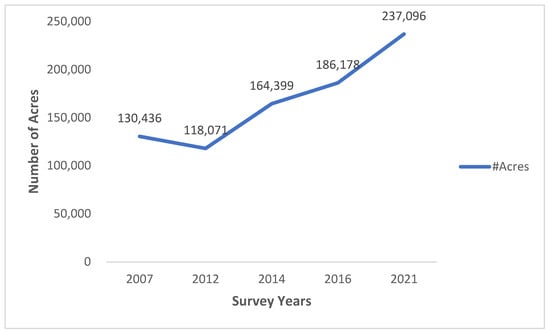
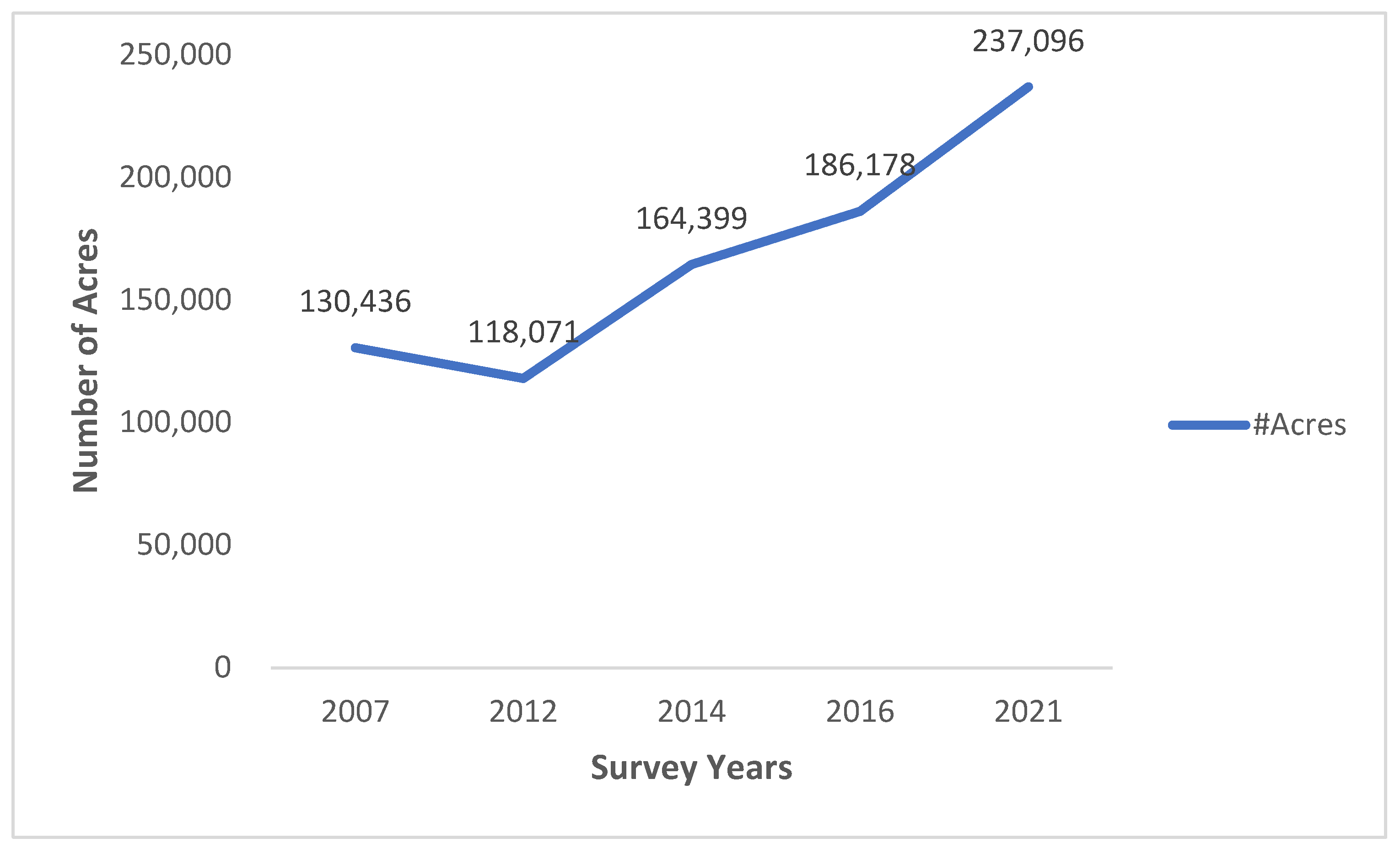
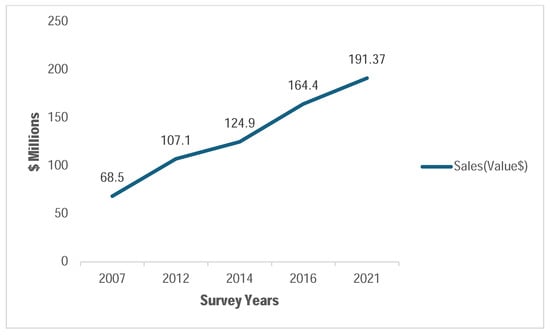
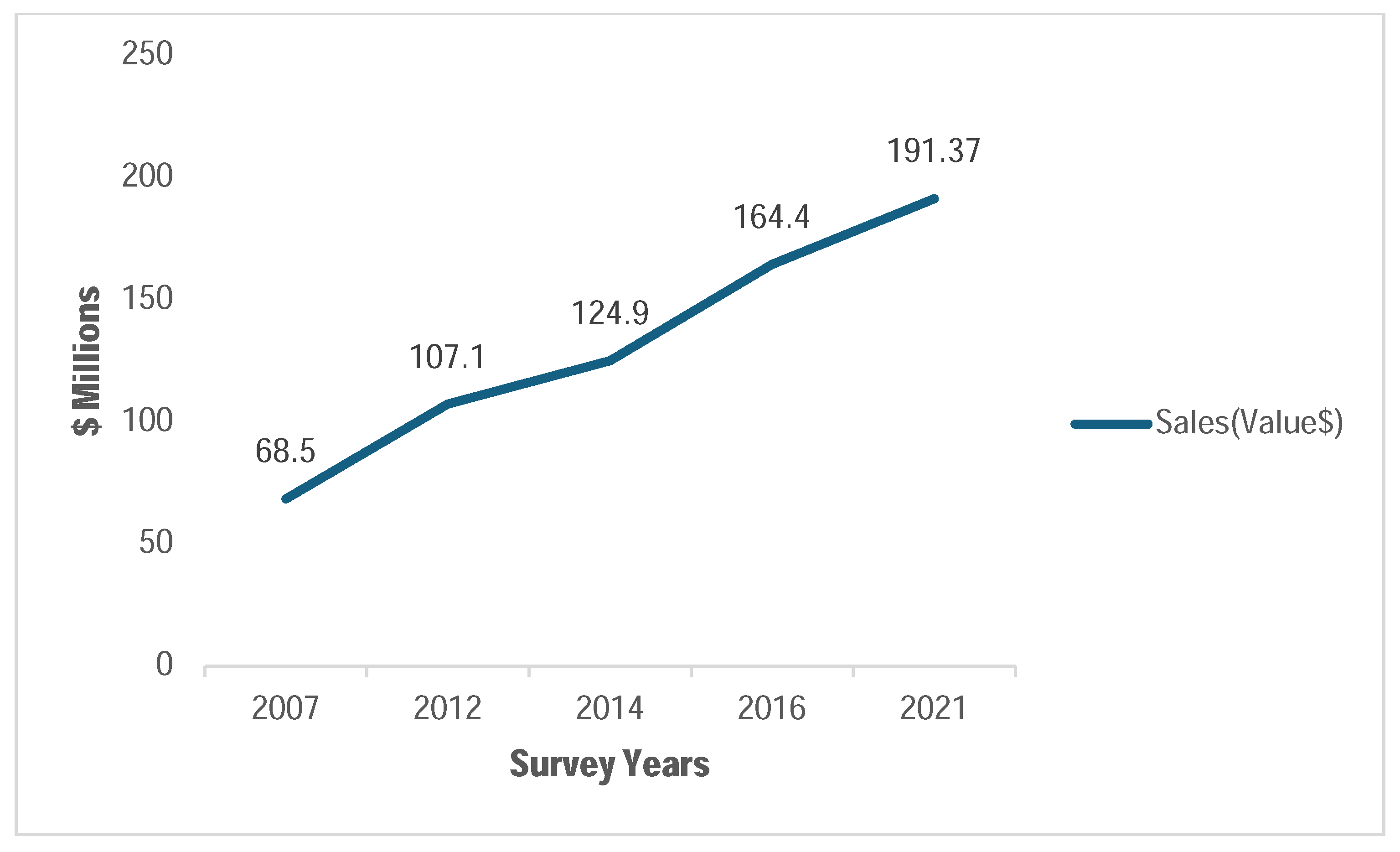
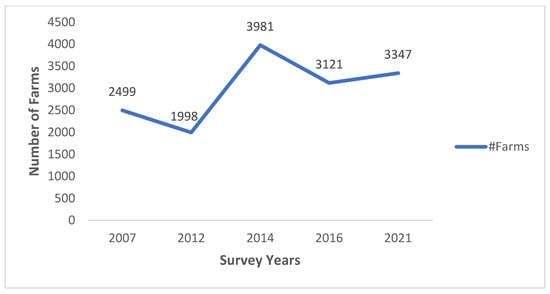
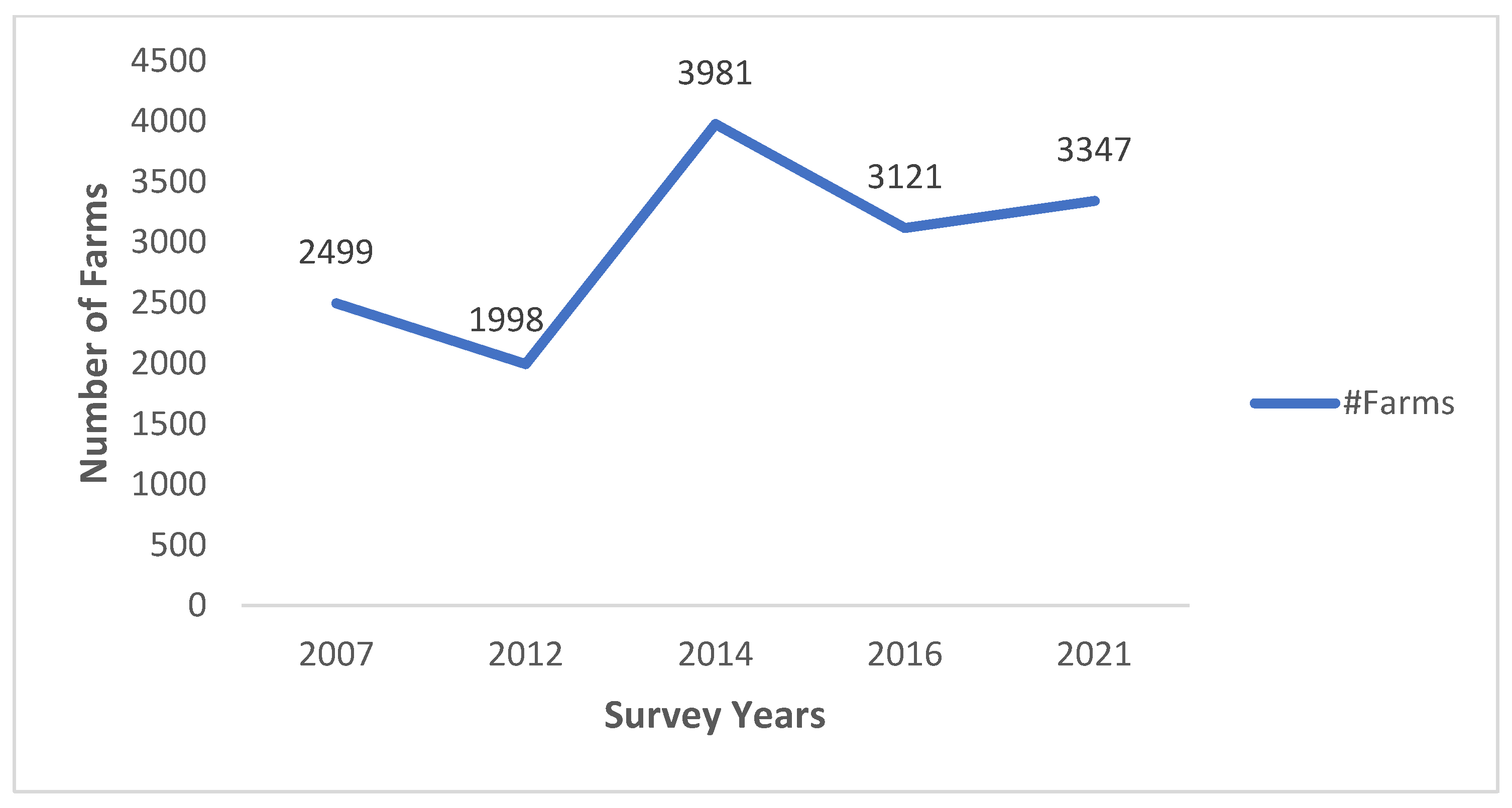
Organic fruit and vegetable production in the US has experienced steady growth over the last decade. According to USDA data [41,114] from 2007 to 2021, the area devoted to the production of organic fruits and vegetables increased by more than 100% (Figure 3). Its value increased from $685 million to $1913 million, representing more than a 200% increase (Figure 4). Finally, the number of farms involved in the production of organic fruits and vegetables grew by more than 100% (Figure 5). These figures indicate that consumers’ focus has increasingly shifted toward organic fruits and vegetables, and this trend is growing. In addition, more farms are devoted to producing organic fruits and vegetables, and their area is increasing [115]. Notably, the U.S. agricultural census is conducted every 5 years and is released with a lag. The US Department of Agriculture is currently conducting an agricultural census. Hence, data from 2022 to 2025 will be available soon.
Figure 3.
Area devoted to the organic production of fruits and vegetables. #Acres (number of acres) Source: National Agricultural Statistical Service. US Department of Agriculture. Organic production survey 2008, 2014, and certified production survey 2015, 2016 & 2021.
Figure 4.
Value of the organic production of fruits and vegetables in the U.S. Source: National Agricultural Statistical Service. U.S. Department of Agriculture. Organic production survey 2008, 2014, and certified production survey 2015, 2016, & 2021.
Figure 5.
Number of Farms devoted to the production of organic fruits and vegetables in the U.S. #Farms (Number of Farms). Source: National Agricultural Statistical Service. US Department of Agriculture. Organic production survey 2008, 2014, and certified production survey 2015, 2016 & 2021.
Additionally, the U.S. government allocates more funding to organic research to make this practice safer and more popular and offers incentives to growers to transition to organic production [58,59]. Remarkably, per capita vegetable availability declined to 376 pounds in 2024, the lowest level in the past 33 years [110]. The situation previously described can lead to higher prices, as demand for vegetables remains high, thereby creating opportunities to sell organic products at premium prices [116]. Finally, it is essential to note that international trade in organic fruits and vegetables has become easier due to the harmonization of national codes and regulations [58], creating opportunities for growers to expand sales into international markets and generate additional revenue.
4. Conclusions and Future Directions
Organic production of fruits and vegetables in the U.S. has expanded rapidly in response to consumer demand for food associated with safety and environmentally responsible production. Across the synthesized literature, organic systems are consistently linked to outcomes that matter for sustainability: reduced reliance on synthetic inputs, improved soil conditions and nutrient cycling, and potential climate-smart benefits through greater organic soil matter and lower energy intensity, alongside food-quality attributes such as lower pesticide residues and higher antioxidant properties. On the other hand, this subsector remains constrained by factors that can limit profitability and scalability, including high labor requirements, limited availability of organic pest-control tools, perishability and post-harvest losses, and the administrative and market-access burdens associated with certification and regulation. National indicators, nonetheless, point to a strong momentum: from 2007 to 2021, acreage devoted to the production of organic fruit and vegetables doubled from 130,436 to 237,096, farm-gate value increased from $685 million to $1913 million, and the number of participating farms rose by more than 100%, underscoring a durable market signal and growing producer participation.
Future progress will depend on targeted innovation and coordinated support. Thus, improvements in breeding and cultivar development to enhance nutrient content, pest/disease resistance, extended shelf life, and post-harvest handling, cold-chain access, and the availability of more effective organic pest-management options are needed. Additionally, establishing streamlined, equitable certification and technical assistance for small and novice growers can also help. Finally, harmonizing state and federal programs while strengthening integrity and traceability in organic supply chains will also help advance organic fruit and vegetable production in the U.S.
Author Contributions
Conceptualization, S.A.M.; methodology, S.A.M. and R.L.R.; investigation, S.A.M. and D.D.W.; writing—original draft preparation, S.A.M. and D.D.W.; writing—review and editing, S.A.M. and R.L.R.; supervision, R.L.R. All authors have read and agreed to the published version of the manuscript.
Funding
This research received no external funding.
Institutional Review Board Statement
Not applicable.
Informed Consent Statement
Not applicable.
Data Availability Statement
Data will be available upon request.
Acknowledgments
We acknowledge the National Institute of Food and Agriculture (NIFA) of the United States Department of Agriculture (USDA) for the funding support.
Conflicts of Interest
The authors declare no conflicts of interest.
Abbreviations
The following abbreviations are used in this manuscript:
| U.S. | United States |
| USDA | United States Department of Agriculture |
References
- Albert Howard, C.I.E.; Wad, Y.D. The Waste Products of Agriculture: Their Utilization as Humus; CABI: São Paulo, Brazil, 2021. [Google Scholar]
- Coleman, P. Guide for Organic Crop Producers; USDA Organic: National Center for Appropriate Technology; NCAT: Greensboro, NC, USA, 2012; pp. 1–3. Available online: https://www.ams.usda.gov/sites/default/files/media/GuideForOrganicCropProducers.pdf?source=post_page (accessed on 4 January 2025).
- Youngber, G.; DeMuth, S.P. Organic agriculture in the United States: A 30-year retrospective. Renew. Agric. Food Syst. 2013, 28, 294–328. [Google Scholar] [CrossRef] [Scilit]
- Goldman, D. Organic and conventional agriculture: Materializing discourse and agro-ecological managerialism. Agric. Hum. Values 2000, 17, 215–219. [Google Scholar] [CrossRef] [Scilit]
- Nseir, A. Growing Organic Agriculture Sector Gets a Boost from Northeast States. 2024. Available online: https://www.usda.gov/about-usda/news/blog/growing-organic-agriculture-sector-gets-boost-northeast-states#:~:text=While%20California%20was%20the%20leader%20in%20organic,in%20organic%20sales%20from%202017%20to%202022 (accessed on 19 December 2025).
- Vigar, V.; Myers, S.; Oliver, C.; Arellano, J.; Robinson, S.; Leifert, C. A systematic review of organic versus conventional food consumption: Is there a measurable benefit on human health. Nutrients 2020, 12, 7. [Google Scholar] [CrossRef] [Scilit] [PubMed]
- Peck, G.M.; Andrews, P.K.; Richter, C.; Reganold, J.P. Internationalization of the organic fruit market: The case of Washington State’s organic apple exports to the European Union. Renew. Agric. Food Syst. 2004, 20, 101–112. [Google Scholar] [CrossRef]
- Kesse-Guyot, E.; Péneau, S.; Méjean, C.; Szabo de Edelenyi, F.; Galan, P.; Hercberg, S.; Lairon, D. Profiles of organic food, consumers in a large sample of French adults: Results from the Nutrine-L-Sante cohort study. PLoS ONE 2013, 8, e76998. [Google Scholar] [CrossRef] [Scilit]
- Iles, K.; Ma, Z.; Erwin, A. Identifying the common ground: Small-scale farmer identity and community. J. Rural. Stud. 2020, 78, 25–35. [Google Scholar] [CrossRef] [Scilit]
- Brandt, K.; Srednicka-Tober, D.; Baranski, M.; Sanderson, R.; Leifert, C.; Seal, C. Methods for comparing data across differently designed agronomic studies: Examples of different meta-analysis methods used to compare the relative composition of plant foods grown using organic or conventional production methods, and a protocol for a systematic review. J. Agric. Food Chem. 2013, 61, 7173–7180. [Google Scholar] [CrossRef] [Scilit] [PubMed]
- Doseděl, M.; Jirkovský, E.; Macáková, K.; Krčmová, L.K.; Javorská, L.; Pourová, J.; Mercolini, L.; Remião, F.; Nováková, L.; Mladěnka, P. Vitamin C-Sources, Physiological Role, Kinetics, Deficiency, Use, Toxicity, and Determination. Nutrients 2021, 13, 615. [Google Scholar] [CrossRef] [Scilit] [PubMed] [PubMed Central]
- Zaniewicz-Bajkowska, A.; Franczuk, J.; Kosterna, E.; Rosa, R.; Panasz, M. The Effect of foliar feeding on yield quality and the content of selected nutritive value components of three melon (Cucumis melo L.) cultivars. Folia Hortic. 2011, 23, 9–14. [Google Scholar] [CrossRef] [Scilit]
- Panicker, G.K.; Nanjundaswamy, A.; Silva, J.L.; Matta, F.B. Organic farming systems increase anthocyanin and vitamin C content of rabbiteye blueberry (vaccinium ashei reade ‘tifblue’) on a heavy soil. Acta Hortic. 2017, 1180, 467–472. [Google Scholar] [CrossRef] [Scilit]
- Wang, H.; Cao, G.; Prior, R.L. Total antioxidant capacity of fruits. J. Agric. Food Chem. 1996, 44, 701–705. [Google Scholar] [CrossRef] [Scilit]
- Prior, L.R.; Cao, G. Antioxidant Phytochemicals in Fruits and Vegetables: Diets and Health Implications. HortScience 2000, 35, 588–592. [Google Scholar] [CrossRef] [Scilit]
- Kalt, W.; Cassidy, A.; Howard, L.R.; Krikorian, R.; Stull, A.J.; Tremblay, F.; Zamora-Ros, R. Recent Research on the Health Benefits of Blueberries and Their Anthocyanins. Adv. Nutr. 2020, 11, 224–236. [Google Scholar] [CrossRef] [Scilit] [PubMed] [PubMed Central]
- Medina-Lozano, I.; Bertolín, J.R.; Díaz, A. Nutritional Value of comercial and traditional lettuce (Lattuca sativa L.) and wild relatives: Vitamin C and anthocyanin content. Food Chem. 2021, 359, 129864. [Google Scholar] [CrossRef] [Scilit]
- Al Mutiri, M.R.; Al-Sowayan, N.S. The influence of organic and conventional food on human health. Food Nutr. Sci. 2021, 12, 1299–1305. [Google Scholar] [CrossRef]
- Barnaski, M.; Srednicka-Tober, D.; Volakakis, N.; Seal, C.; Sanderson, R.; Stewart, G.B.; Benbrook, C.; Biavati, B.; Markellow, E.; Giotis, C.; et al. Higher antioxidant and lower cadmium concentrations and lower incidence of pesticides residues in organically grown crops: A systematic literature review and meta-analysis. Br. J. Nutr. 2014, 112, 794–811. [Google Scholar] [CrossRef] [Scilit]
- Dangour, A.D.; Dodhia, S.K.; Hayter, A.; Allen, E.; Lock, K.; Uauy, R. Nutritional quality of organic foods: A systematic review. Am. J. Clin. Nutr. 2009, 90, 680–685. [Google Scholar] [CrossRef] [Scilit]
- Lairon, D. Nutritional quality and safety of organic food. A review. Agron. Sustain. Dev. 2010, 30, 33–41. [Google Scholar] [CrossRef] [Scilit]
- Nunez de Gonzalez, M.T.; Osburn, W.N.; Hardin, M.D.; Longnecker, M.; Garg, H.K.; Bryan, N.S.; Keeton, J.T. A survey of nitrate and nitrite concentrations in conventional and orhanic-labeled raw vegetables at retail. J. Food Sci. 2015, 80, 942–949. [Google Scholar] [CrossRef] [Scilit]
- Brandt, K.; Leifert, C.; Sanderson, R.; Seal, C.J. Agreocosystem management and nutritional quality of plant foods: The case of organic fruits and vegetables. Crit. Rev. Plant Sci. 2011, 30, 177–197. [Google Scholar] [CrossRef] [Scilit]
- Carpentier, S.; Knaus, M.; Suh, M. Associations between lutein, zeaxanthin, and age-related macular degeneration. Crit. Rev. Food Sci. Nutr. 2009, 49, 313–326. [Google Scholar] [CrossRef] [Scilit] [PubMed]
- Saba, A.; Messina, F. Attitudes towards organic foods and risk/benefit perception associated with pesticides. Food Qual. Prefer. 2003, 14, 637–645. [Google Scholar] [CrossRef] [Scilit]
- Bancal, V.; Ray, R.C. Overview of food loss and waste in fruits and vegetables: From issue to resources. In Fruits and Vegetable Wastes: Valorization to Bioproducts and Platform Chemicals; Springer Nature: Singapore, 2022. [Google Scholar]
- Torjuse, H.; Brantsaeter, A.L.; Haugen, M.; Alexander, J.; Bakketeig, L.S.; Lieblein, G.; Stigum, H.; Naes, T.; Swartz, J.; Holmboe-Ottesen, G.; et al. Reducing the risk of preeclampsia with organic vegetable consumption: Results from the prospective Norwegian Mother and Child Cohort Study. BMJ Open 2014, 4, e006143. [Google Scholar] [CrossRef] [Scilit] [PubMed]
- Ferreira, F.; Mendes-Moreira, P.; Botelho, G. Is organic agriculture a potential public health indicator? Evidence from literature. Open Agric. 2020, 5, 914–929. [Google Scholar] [CrossRef] [Scilit]
- Crosby, K.M.; Marquez, S.A.; Jifon, J.L.; Leskovar, D.I.; Isakeit, T.; Singh, J.; Patil, B.S. “Supermelon” and ‘Flavorific’: Two New Hybrid Muskmelon Cultivars with Resistance to Monosporascus cannonballus from Texas A&M AgriLife Research. HortScience 2023, 58, 804–807. [Google Scholar]
- Kirchmann, H.; Thorvaldsson, D. Challenging targets for future agriculture. Eur. J. Agron. 2000, 12, 145–161. [Google Scholar] [CrossRef] [Scilit]
- Rigby, D.; Caceres, D. Organic farming and the sustainability of agricultural systems. Agric. Syst. 2001, 68, 21–40. [Google Scholar] [CrossRef] [Scilit]
- Trewavas, A. Urban myths of organic farming. Nature 2001, 410, 409–410. [Google Scholar] [CrossRef] [Scilit]
- Trewavas, A. A critical assessment of organic farming and food assertions with particular respect to the UK and the potential environmental benefits of no-till agriculture. Crop Prot. 2004, 23, 757–781. [Google Scholar] [CrossRef] [Scilit]
- Edwards-Jones, G.; Howells, O. The origin and hazard of inputs to crop protection in organic farming systems: Are they sustainable? Agric. Syst. 2001, 67, 31–47. [Google Scholar] [CrossRef] [Scilit]
- De Gregori, T.R. Origins of the Organic Agriculture Debate; John Wiley & Sons: Hoboken, NJ, USA, 2003. [Google Scholar]
- Niggli, U. Sustainability of organic food production: Challenges and innovations. Proc. Nutr. Soc. 2015, 74, 83–88. [Google Scholar] [CrossRef] [Scilit] [PubMed]
- Polushkina, T.; Akimova, Y.; Kovalenko, E.; Yakimova, O. Organic Agriculture in the system of the sustainable use of natural resources. BIO Web Conf. 2020, 17, 00219. [Google Scholar] [CrossRef] [Scilit]
- Aceleanu, M.I. Sustainability and competitiveness of Romanian farms through organic agriculture. Sustainability 2016, 8, 245. [Google Scholar] [CrossRef] [Scilit]
- Kindall, H.W.; Pimentel, D. Constraints on the expansion of the global food supply. Ambio 1994, 23, 198–205. [Google Scholar]
- Boeing, H.; Bechthold, A.; Bub, A.; Ellinger, S.; Haller, D.; Kroke, A.; Leschik-Bonnet, E.; Müller, M.J.; Oberritter, H.; Schulze, M.; et al. Critical review: Vegetables and fruit in the prevention of chronic diseases. Eur. J. Nutr. 2012, 51, 637–663. [Google Scholar] [CrossRef] [Scilit] [PubMed] [PubMed Central]
- Mitchell, R. Organic Farm Land Gains Ground Across the U.S. Organic Produce Network. 2025. Available online: https://www.organicproducenetwork.com/organic-growers/usda-organic-farmland-expanding-despite-barriers-united-states (accessed on 20 December 2025).
- Watts-Williams, S.J.; Gill, A.R.; Nguyen, T.D.; Tavakkoli, E.; Jewell, N.; Brien, C. Arbuscular mycorrhizal fungi can improve the water use and phosphoru acquisition efficiencies of aerobically grown rice. J. Sustain. Agric. Environ. 2025, 4, e70040. [Google Scholar] [CrossRef] [Scilit]
- Organic Research Foundation. Research Data Base; Organic Research Foundation: Santa Cruz, CA, USA, 2025; Available online: https://ofrf.org/resource/2025-research-summary-on-conservation-benefits-of-organic-management/ (accessed on 24 February 2025).
- Halberg, N.; Alroe, H.F.; Knudsen, M.T.; Kristensen, E.S. Global Development of Organic Agriculture: Challenges and Prospects; Danish Research Center for Organic Food and Farming: Viborg, Russia, 2006; p. 41. [Google Scholar]
- Adewale, C.; Higgins, S.; Granatstein, D.; Stöckle, C.O.; Carlson, B.R.; Zaher, U.E.; Carpenter-Boggs, L. Identifying hotspots in the carbon footprint of a small-scale organic vegetable farm. Agric. Syst. 2016, 199, 112–121. [Google Scholar] [CrossRef] [Scilit]
- Pirog, R.; Van Pelt, T.; Enshayan, K.; Cook, E. Food, Fuel and Freeways: An Iowa Perspective on How Far Food Travels, Fuel Usage, and Greenhouse Gas Emissions; Leopold Center for Sustainable Agriculture: Ames, IA, USA, 2001; Available online: http://large.stanford.edu/courses/2014/ph240/pope1/docs/pirog.pdf (accessed on 19 December 2025).
- Panicker, G.K.; Kibet, L.; Mims, W.; Matta, F.B.; Silva, J.L. Long-term application of animal and forest waste on a vineyard and its effect on yield and soil health. Acta Hortic. 2022, 1355, 399–406. [Google Scholar] [CrossRef] [Scilit]
- Bless, A.; Davila, F.; Plant, R. A genealogy of sustainable agriculture narratives: Implications for the trans-formative potential of regenerative agriculture. Agric. Hum. Values 2023, 40, 1379–1397. [Google Scholar] [CrossRef] [Scilit]
- Scherr, S.J.; Shames, S.; Friedman, R. From climate-smart agriculture to climate-smart landscapes. Agric. Food Secur. 2012, 1, 11. [Google Scholar] [CrossRef] [Scilit]
- Gomiero, T.; Pimentel, D.; Paoletti, M.G. Environmental impact of different agricultural management practices: Conventional vs. organic agriculture. Crit. Rev. Plant Sci. 2011, 30, 95–124. [Google Scholar] [CrossRef] [Scilit]
- Singerman, A.; Delate, K.; Chase, C.; Greene, C.; Livingston, M.; Lence, S.; Hart, C. Profitability of organic and con-ventional soybean production under ‘green payments’ in carbon offset programs. Renew. Agric. Food Syst. 2011, 27, 266–277. [Google Scholar] [CrossRef] [Scilit]
- Tuomisto, H.L.; Hodge, I.D.; Riordan, P.; Macdonald, D.W. Does organic farming reduce environmental impacts? A meta-analysis of European research. J. Environ. Manag. 2012, 112, 309–320. [Google Scholar] [CrossRef] [Scilit] [PubMed]
- Toensmeier, E.; Ferguson, R.; Mehra, M. Perennial vegetables: A neglected resource for biodiversity, carbon sequestration, and nutrition. PLoS ONE 2020, 15, e0234611. [Google Scholar] [CrossRef] [Scilit]
- Mokwunye, A.U.; Jager, A.D.; Smaling, E.N.A. (Eds.) Restoring and Maintaining the Productivity of West African Soils: Key to Sustainable Development; CABI: São Paulo, Brazil, 1996; pp. xi–94. [Google Scholar]
- Sanchez, P.A.; Shepherd, K.D.; Soule, M.J.; Buresh, F.J.; Izac, A.M.N.; Mokwunye, U.A.; Kwesiga, F.R.; Ndiritu, C.G.; Woomer, P.L. Soil fertility replenishment in Africa: An investment in natural resource capital. In Replenishing Soil Fertility in Africa; Buresh, R.J., Sanchez, P.A., Calhoun, F., Eds.; Soil Science Society of America, American Society of Agronomy, SSSA Special Publication Number: Madison, WI, USA, 1997; Volume 51, pp. 1–46. [Google Scholar]
- Breman, H.; Debrash, S.K. Improving African food security. SAIS Rev. 2003, 23, 153–170. [Google Scholar] [CrossRef] [Scilit]
- Bengtsson, J.; Ahnström, J.; Weibull, A.C. The effects of organic agriculture on biodiversity and abundance: A meta-analysis. J. Appl. Ecol. 2005, 42, 261–269. [Google Scholar] [CrossRef] [Scilit]
- Raszap Skorbiansky, S. Organic Situation Report, 2025th ed.; Bulletin Number 281; US Department of Agriculture, Economic Research Service: Washington, DC, USA, 2025. Available online: https://ers.usda.gov/sites/default/files/_laserfiche/publications/110884/EIB-281.pdf?v=54268 (accessed on 8 August 2005).
- Astill, G. Food Loss: Why Food Stays on the Farm or off the Market; Economic Research Service, US Department of Agriculture: Washington, DC, USA, 2020. Available online: https://www.ers.usda.gov/amber-waves/2020/march/food-loss-why-food-stays-on-the-farm-or-off-the-market (accessed on 27 March 2025).
- Buzby, J.C.; Hyman, J.; Stewart, H.; Wells, H.F. The value of retail-and-consumer-level fruit and vegetable losses in the United States. J. Consum. Aff. 2011, 45, 492–515. [Google Scholar] [CrossRef] [Scilit]
- Kuo, H.J.; Peters, D.J. The socioeconomic geography of organic agriculture in the United States. Agroecol. Sustain. Food Syst. 2017, 41, 1162–1184. [Google Scholar] [CrossRef] [Scilit]
- Fernandez-Cornejo, J.; Greene, C.; Penn, R.; Newton, D. Organic vegetable production in the US: Certified growers and their practices. Am. J. Altern. Agric. 1998, 13, 69–78. [Google Scholar] [CrossRef] [Scilit]
- Hughes, D.W.; Brown, C.; Miller, S.; McConnell, T. Evaluating the economic impact of farmers’ markets using an opportunity cost framework. J. Agric. Appl. Econ. 2008, 40, 253–265. [Google Scholar] [CrossRef] [Scilit]
- Food and Drug Administration. Investigation Summary: Factors Potentially Contributing to the Contamination of Romaine Lettuce Implicated in the Fall 2018 Multi-State Outbreak of E. coli O157:H7; Food and Drug Administration: Silver Spring, MD, USA, 2019. Available online: https://www.fda.gov/food/outbreaks-foodborne-illness/factors-potentially-contributing-contamination-romaine-lettuce-implicated-three-outbreaks-e-coli (accessed on 7 February 2025).
- Klonsky, K. Comparison of Production Costs and Resource Use for Organic and Conventional Production System. Am. J. Agric. Econ. 2012, 94, 314–321. [Google Scholar] [CrossRef] [Scilit]
- Lohr, L. Benefits of U.S. Organic Agriculture; Department of Agricultural and Applied Economics, University of Georgia: Athens, GA, USA, 2002. [Google Scholar]
- McCoy, T. Organic vs Conventional (Synthetic) Pesticides: Advantages and Disadvantages; Virginia Cooperative Extension, Virginia Tech, Virginia State University: Ettrick, VA, USA, 2020; Available online: https://www.pubs.ext.vt.edu/ENTO/ENTO-384/ENTO-384.html (accessed on 2 February 2025).
- Silva, E.M.; Hendrickson, J.; Mitchell, P.D.; Bietila, E. From the field: A participatory approach to assess labor inputs on organic diversified vegetable farms in the upper midwestern USA. Renew. Agric. Food Syst. 2017, 34, 1–6. [Google Scholar] [CrossRef] [Scilit]
- Falk, C.L.; Pao, P.; Cramer, C.S. Teaching diversified organic crop production using the community-supported agriculture farming system model. J. Nat. Resour. Life Sci. Educ. 2005, 34, 8–12. [Google Scholar] [CrossRef] [Scilit]
- USDA-NASS. Certified Organic Survey 2021; United States Department of Agriculture, National Agricultural Statistics Service: Washington, DC, USA, 2022; pp. 1–151.
- Jacobsen, K.L.; Escalante, C.L.; Jordan, C.F. Economic analysis of experimental organic agricultural systems on a highly eroded soil of the georgia piedmont, USA. Renew. Agric. Food Syst. 2010, 25, 296–308. [Google Scholar] [CrossRef] [Scilit]
- Shreck, A.; Getz, C.; Feenstra, G. Social sustainability, farm labor, and organic agriculture: Findings from an exploratory analysis. Agric. Hum. Values 2005, 23, 439–449. [Google Scholar] [CrossRef] [Scilit]
- Oberholtzer, L.; Dimitri, C.; Jaenicke, E.C. International Trade of Organic Food: Evidence of US Imports. Renew. Agric. Food Syst. 2012, 28, 255–262. [Google Scholar] [CrossRef] [Scilit]
- Willer, H.; Kilcher, L. The World of Organic Agriculture. Statistics and Emerging Trends 2011; FiBL-IFOAM Report; IFOAM: Bonn, Germany; FiBL: Frick, Switzerland, 2011. [Google Scholar]
- Knutson, R.D.; Penn, B.J.; Flinchbaugh, B.L. Agricultural Food Policy, 4th ed.; Prestice Hall: Upper Saddle River, NJ, USA, 1983; Volume XVII, p. 521. [Google Scholar]
- Bureau of Labor Statistics, U.S. Department of Labor. Occupational Outlook Handbook, Agricultural Workers. 2025. Available online: https://www.bls.gov/ooh/farming-fishing-and-forestry/agricultural-workers.htm (accessed on 11 January 2025).
- Chami, B.; Niles, M.T.; Parry, S.; Mirsky, S.B.; Ackroyd, V.J.; Ryan, M.R. Incentive programs promote cover crop adoption in the northeastern United States. Agric. Environ. Lett. 2023, 8, e20114. [Google Scholar] [CrossRef] [Scilit]
- Wallander, S.; Smith, D.; Bowman, M.; Claassen, R. Cover Crop Trends, Programs, and Practices in the US; US Department of Agriculture: Economic Research Service: Washington, DC, USA, 2021. Available online: https://www.ers.usda.gov/amber-waves/2021/march/persistent-cover-crop-adoption-varies-by-primary-commodity-crop (accessed on 17 May 2025).
- Manteghi, Y.; Arkat, J.; Mahmoodi, A. Organic production competitiveness: A bi-level model integrating government policy, sustainability objectives, and blockchain transparency. Comput. Ind. Eng. 2024, 191, 110147. [Google Scholar] [CrossRef] [Scilit]
- Calabro, G.; Vieri, S. Limits and potential of organic farming towards a more sustainable European agri-food system. Br. Food J. 2024, 126, 223–236. [Google Scholar] [CrossRef] [Scilit]
- Wei, H.; Goodhue, R.; Zhang, M. Pesticide use and cropland consolidation in California organic agriculture. Ecol. Econ. 2024, 218, 108121. [Google Scholar] [CrossRef] [Scilit]
- Ramakrishnan, B.; Maddela, N.R.; Venkateswarlu, K.; Megharaj, M. Organic farming: Does it contribute to contaminant-free produce and ensure food safety? Sci. Total Environ. 2021, 769, 145079. [Google Scholar] [CrossRef] [Scilit] [PubMed]
- Alotaibi, B.A.; Yoder, E.; Brennan, M.A.; Kassem, H.S. Perception of organic farmers towards organic agriculture and role of extension. Saudi J. Biol. Sci. 2021, 28, 2980–2986. [Google Scholar] [CrossRef] [Scilit] [PubMed]
- Bui, H.T.M.; Nguyen, H.T.T. Factors influencing farmers’ decision to convert to organic tea cultivation in the mountainous areas of northern Vietnam. Org. Agric. 2021, 11, 51–61. [Google Scholar] [CrossRef] [Scilit]
- Olbrick Marabesi, A.; Kelsey, K.D.; Anderson, J.C.; Fuhrman, N.E. Building Bridges: Improving Extension Support to Organic Growers in North Georgia. J. Hum. Sci. Ext. 2021, 9, 1. [Google Scholar] [CrossRef] [Scilit]
- Ume, C.; Bahta, Y.T. Policy support strategies for organic farming extensification in Nigeria. Org. Agric. 2024, 14, 323–344. [Google Scholar] [CrossRef] [Scilit]
- Han, G.; Arbuckle, J.G.; Grudens-Schuck, N. Motivations, goals, and benefits associated with organic grain farming by producers in Iowa, US. Agric. Syst. 2021, 191, 103175. [Google Scholar] [CrossRef] [Scilit]
- Bhatt, A.; John, J. Including farmers’ welfare in a government-led sector transition: The case of Sikkim’s shift to organic agriculture. J. Clean. Prod. 2023, 411, 137207. [Google Scholar] [CrossRef] [Scilit]
- Klychova, G.; Zakirova, A.; Sharapova, V.; Ovchinnikova, M.; Matveeva, S.; Khayrullin, A. Organic Agriulture: Problems and prospects of development. In Proceedings of the BIO Web of Conferences, Saint Petersburg, Russia, 3–6 September 2024; Available online: https://www.bio-conferences.org/articles/bioconf/abs/2024/49/bioconf_bft2024_08020/bioconf_bft2024_08020.html (accessed on 17 May 2025).
- Meneses, M.A.; Gómez, M.I.; Just, D.R.; Kanbur, R.; Lee, D.R.; Lawell, C.Y.C.L. Organic Farming, Soil Health, and Farmer Perceptions: A Dynamic Structural Econometric Model. In Proceedings of the 2024 Agricultural & Applied Economics Association Annual Meeting, New Orleans, LA, USA, 28–30 July 2025. [Google Scholar]
- Li, Q.; Çakır, M.; Beatty, T.K.; Park, T.A. Differential price pass-through in organic and conventional fresh fruit and vegetable markets. Am. J. Agric. Econ. 2025, 107, 290–311. [Google Scholar] [CrossRef] [Scilit]
- Schlatter, B.; Trávníček, J.; Helbing, M.; Willer, H. Current statistics on organic agriculture worldwide: Area, operators, international trade and retail sales. In The World of Organic Agriculture. Statistics and Emerging Trends 2025; Research Institute of Organic Agriculture FiBL and IFOAM–Organics International: Frick, Switzerland, 2024; pp. 32–86. [Google Scholar]
- Liu, C. Is USDA organic a seal of deceit: The pitfalls of USDA certified organics produced in the United States, China, and beyond. Stanf. J. Int. Law 2011, 47, 333–378. [Google Scholar]
- Watkins, N. Organic Certification: Fraud in the Supply Chain; Loyola Marymount University: Los Angeles, CA, USA, 2016. [Google Scholar]
- Forbes, S.; Ramkrishnan Balasubramanian, M. The USDA National Organic Program and the Effort to Maintain Organic Food Integrity. Scitech Lawyer 2019, 15, 10–17. [Google Scholar]
- Van Ruth, S.M.; De Pagter de Witte, L. Integrity of organic foods and their suppliers: Fraud vulnerability across chains. Foods 2020, 9, 188. [Google Scholar] [CrossRef] [Scilit] [PubMed]
- Patelli, N.; Mandrioli, M. Blockchain technology and traceability in the agrifood industry. J. Food Sci. 2020, 85, 3670–3678. [Google Scholar] [CrossRef] [Scilit] [PubMed]
- Tao, Z.; Chao, J. The impact of a blockchain-based food traceability system on the online purchase intention of organic agricultural products. Innov. Food Sci. Emerg. Technol. 2024, 92, 103598. [Google Scholar] [CrossRef] [Scilit]
- Van Hilten, M.; Ongena, G.; Ravesteijn, P. Blockchain for organic food traceability: Case studies on drivers and challenges. Front. Blockchain 2020, 3, 567175. [Google Scholar] [CrossRef] [Scilit]
- Li, J.; Wang, X. Research on the application of blockchain in the traceability system of agricultural products. In Proceedings of the 2018 2nd IEEE Advanced Information Management, Communications, Electronic and Automation Control Conference (IMCEC), Xi’an, China, 25–27 May 2018; pp. 2637–2640. [Google Scholar] [CrossRef] [Scilit]
- Tegeltija, S.; Dejanović, S.; Feng, H.; Stankovski, S.; Ostojić, G.; Kučević, D.; Marjanović, J. Blockchain framework for certification of organic agriculture production. Sustainability 2022, 14, 11823. [Google Scholar] [CrossRef] [Scilit]
- Johnson, R. Food Fraud and Economically Motivated Adulteration of Food and Food Ingredients; Congressional Research Service: Washington, DC, USA, 2014; Available online: https://www.everycrsreport.com/files/20140110_R43358_49fbd73e7d154bb748c42f5f8d9e6e7bf564095d.pdf (accessed on 15 May 2025).
- Carter, D.; Adams, I.; Wright, S.; Scott, T. Appraising the administrative burden of USDA organic certification: A descriptive analysis of Notice of Noncompliance data. J. Agric. Food Syst. Community Dev. 2022, 11, 235–242. [Google Scholar] [CrossRef] [Scilit]
- Ladwein, R.; Romero, A.M.S. The role of trust in the relationship between consumers, producers, and retailers of organic food: A sector-based approach. J. Retail. Consum. Serv. 2021, 60, 102508. [Google Scholar] [CrossRef] [Scilit]
- Rupprecht, C.D.; Fujiyoshi, L.; McGreevy, S.R.; Tayasu, I. Trust me? Consumer trust in expert information on food product labels. Food Chem. Toxicol. 2020, 137, 111170. [Google Scholar] [CrossRef] [Scilit]
- Nuttavuthisit, K.; Thøgersen, J. The importance of consumer trust for the emergence of a market for green products: The case of organic food. J. Bus. Ethics 2017, 140, 323–337. [Google Scholar] [CrossRef] [Scilit]
- Sønderskov, K.M.; Daugbjerg, C. The state and consumer confidence in eco-labeling: Organic labeling in Denmark, Sweden, the United Kingdom, and the United States. Agric. Hum. Values 2011, 28, 507–517. [Google Scholar] [CrossRef] [Scilit]
- Nuñez de González, M.T.; Ampim, P.A.; Attaie, R.; Obeng, E.; Woldesenbet, S.; Mora-Gutierrez, A.; Wallace, R.F.; Jung, Y. Impact of Soil-Applied Biopesticides on Yield and the Postharvest Quality of Strawberry Fruits in Southeast Texas. Plants 2025, 14, 1197. [Google Scholar] [CrossRef] [Scilit]
- Munne-Bosch, S.; Bermejo, N.F. Fruit quality in organic and conventional farming: Advantages and limitations. Trends Plant Sci. 2024, 29, 878–894. [Google Scholar] [CrossRef] [Scilit]
- Davis, W.V.; Weber, C.; Wechsler, S.; Wakefield, H.; Lucier, G. Vegetable and Pulses Outlook: April 2024; United States Department of Agriculture, Economic Research Service: Washington, DC, USA, 2024. Available online: https://ers.usda.gov/sites/default/files/_laserfiche/outlooks/109067/VGS-372.pdf?v=76492 (accessed on 8 May 2025).
- Hansson, C.B.; Wackernagel, M. Rediscovering place and accounting space: How to re-embed the human economy. Ecol. Econ. 1999, 29, 203–213. [Google Scholar] [CrossRef] [Scilit]
- Rees, W.; Wackernagel, M.; Inch, J. Our ecological footprint: Reducing human impact on the earth//Review. Altern. J. 1997, 23, 35. Available online: https://www.proquest.com/scholarly-journals/our-ecological-footprint-reducing-human-impact-on/docview/218749297/se-2 (accessed on 6 May 2025).
- Hinrichs, C.C. The practice and politics of food system localization. J. Rural Stud. 2003, 19, 33–45. [Google Scholar] [CrossRef] [Scilit]
- USDA-NASS. Census of Agriculture: Organic Production Survey; USDA-NASS: Washington, DC, USA, 2007; Volume 3, pp. 1–297. Available online: https://www.nass.usda.gov/Surveys/Guide_to_NASS_Surveys/Organic_Production/ (accessed on 17 May 2025).
- USDA-NASS. Certified Organic Survey; USDA-NASS: Washington, DC, USA, 2016; pp. 1–110. Available online: https://www.nass.usda.gov/Surveys/Guide_to_NASS_Surveys/Organic_Production/ (accessed on 17 May 2025).
- Raszap Skorbiansky, S.; Spalding, A.; Carlson, A. Rising Consumer Demand Reshapes the Landscape for U.S. Organic Farmers. USDA: Economic Research Service. 2023. Available online: https://www.ers.usda.gov/amber-waves/2023/november/rising-consumer-demand-reshapes-landscape-for-u-s-organic-farmers (accessed on 22 May 2025).
Disclaimer/Publisher’s Note: The statements, opinions and data contained in all publications are solely those of the individual author(s) and contributor(s) and not of MDPI and/or the editor(s). MDPI and/or the editor(s) disclaim responsibility for any injury to people or property resulting from any ideas, methods, instructions or products referred to in the content. |
© 2026 by the authors. Licensee MDPI, Basel, Switzerland. This article is an open access article distributed under the terms and conditions of the Creative Commons Attribution (CC BY) license.