1. Introduction
“That Wonderful Volcanic Popcorn” was the title of an article in the December 1954 issue of
Popular Mechanics magazine, authored by Charles Ballenger and Richard Dunlop, exploring the versatile applications of expanded perlite. Ballenger and Dunlop write that expanded perlite “(…) can slash construction costs, cut heating bills, and increase fire protection (…) promises to increase the storage space in your refrigerator, help place cheaper meat and fruit on your table, and perform hundreds of industrial tasks. It even provides Hollywood movie makers with realistic dandruff for actors” [
1].
Is expanded perlite good for everything?
Expanded perlite is a lightweight, porous material obtained by thermal expansion of natural volcanic glass and has been used in construction and industry for several decades. Owing to its low density, favorable thermal and acoustic insulation properties, fire resistance, and chemical inertness, it has found applications in lightweight concretes, plasters, insulation systems, and prefabricated building elements. Although expanded perlite is not as widely recognized as conventional aggregates, its global production exceeds several million tons annually, indicating that it is an established industrial material rather than a niche solution.
However, despite its long history of use, expanded perlite has rarely been critically assessed in civil engineering from a life-cycle and circular economy perspective. Consequently, its actual role and limitations in modern, sustainability-oriented construction require a systematic and critical reassessment. Such a critical assessment has been made in the context of environmental performance and sustainability for selected applications, as reported in [
2].
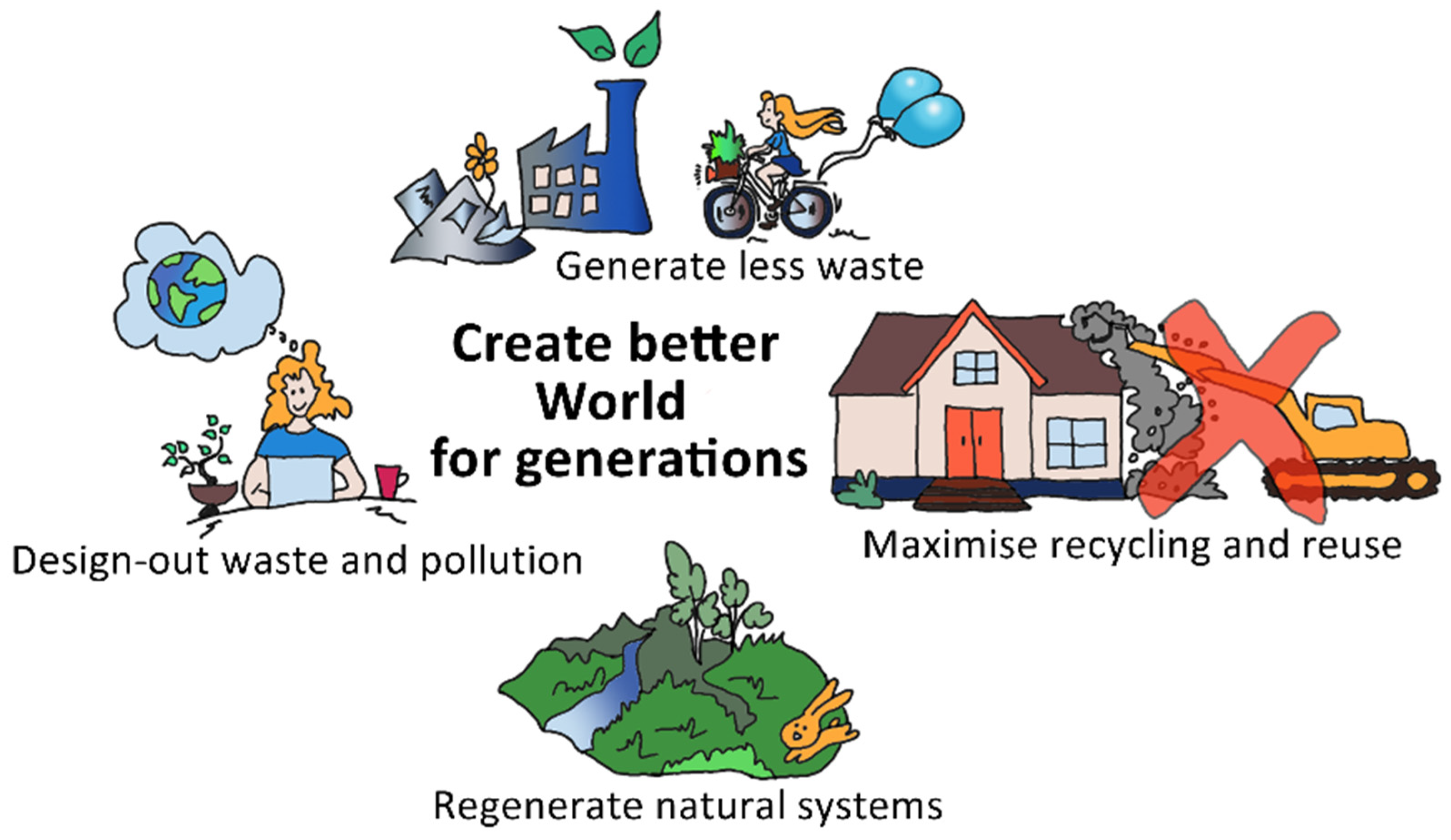
Global sustainability goals and regulatory frameworks are increasingly influencing material selection in civil engineering, encouraging solutions that reduce energy demand, emissions, and resource consumption throughout the entire life cycle. Consequently, construction materials are now evaluated not only on their in-service performance but also on durability, environmental footprint, and end-of-life scenarios. Recent sustainability-oriented research emphasizes the importance of reducing the clinker and cement content in construction materials as a key strategy to reduce greenhouse gas emissions associated with the building sector. Materials that combine desirable properties, such as strength, durability, thermal insulation, fire resistance, and acoustic performance, offer a more comprehensive approach to sustainable construction. It should be emphasized that, beyond operational energy, total energy demand over a building’s life cycle also includes embodied energy, defined as the energy consumed during the production of building materials, as well as during construction, demolition, and disposal. Consequently, building structures should be designed, constructed, and decommissioned in a manner that ensures the sustainable use of natural resources, with particular emphasis on promoting the reuse and recyclability of construction materials (
Figure 1).
Although several review papers on expanded perlite have been published in recent years, most focus on specific application areas or primarily summarize material properties and reported benefits [
2,
3].
In contrast, the present review adopts a critical and application-oriented perspective. Rather than merely compiling existing results, it differentiates between technically and environmentally justified uses of expanded perlite and those with limited practical relevance. The novelty of this paper lies in its systematic comparison of diverse application domains using combined criteria for scalability, functional performance, sustainability, circular-economy potential, and realistic implementation constraints. Based on this analysis, the review identifies priority application areas with the highest development potential, highlights key research gaps, and provides guidance for the rational and sustainable use of expanded perlite in civil engineering.
3. Overview of Properties
Perlite is a rhyolitic volcanic glass that contains 2% to 5% water locked within hardened lava [
9,
10]. The typical chemical composition of perlite contains mainly silicon dioxide (silica) (SiO
2), constituting approximately 70–75% of its composition, and aluminum oxide (Al
2O
3), usually accounting for around 12–15% of its composition. Silica is the primary element responsible for the glassy nature of perlite. Aluminum oxide contributes to the physical and chemical properties of the material. Moreover, perlite represents sodium oxide (Na
2O), potassium oxide (K
2O), calcium oxide (CaO), magnesium oxide (MgO), and iron oxide (Fe
2O
3). Sodium oxide is a minor component that can affect the behavior of perlite in certain applications. Potassium oxide contributes to the overall chemical makeup of the material. Calcium oxide is present in trace amounts in perlite, usually less than 1%. Its presence is dependent on the specific geological source of the perlite. The oxides of sodium (Na), potassium (K), magnesium (Mg), and iron (Fe) are present in smaller amounts. The composition of perlite varies by location, resulting in small differences in element concentrations.
Table 1 presents a representative chemical composition of expanded perlite from major regions with significant perlite deposits, and compares these regions with those having lower perlite deposits. The chemical composition of EP and crushed (unexpanded) perlite is typically the same, especially when measured by XRF [
11]. The data presented in
Table 1 are for EP. The XRD analysis showed that crystals were transformed into amorphous structures during the expansion process—particles without distinct crystal patterns. All elements observed in XRF are in the unordered network in an amorphous phase [
12,
13].
The differences in chemical composition of expanded perlite reported in
Table 1 are primarily related to the geological origin of the raw perlite deposits. Perlite is a volcanic glass derived mainly from rhyolitic magma, and its chemical composition depends on the mineralogy of the parent volcanic material, local geological conditions, and post-magmatic alteration processes. Variations in SiO
2, Al
2O
3, and alkali oxides (Na
2O and K
2O) reflect differences in magma chemistry and cooling history at individual deposits. Minor oxides, such as CaO, MgO, Fe
2O
3, and TiO
2, may also vary due to the presence of accessory minerals and impurities. It should be noted that the expansion process itself does not significantly alter the oxide composition of perlite. Therefore, the observed variability mainly originates from the raw material rather than from processing conditions.
Moreover, various mineral impurities in relatively low concentrations can be found in most perlite deposits. Still, it is important to note that perlite is chemically inert and non-toxic, making it safe for various applications. It does not release harmful substances into the environment or affect plant growth. This characteristic makes it suitable for agriculture, gardening, and food-related industries.
Toxicological studies indicate that EP exhibits relatively low toxicity. Animal experiments have shown that the oral lethal dose (LD
50) of EP exceeds 10 g·kg
−1 [
20]. Furthermore, no adverse effects were observed in chronic inhalation studies conducted in guinea pigs and rats at a concentration of 226 mg·m
−3 [
20]. Epidemiological studies of EP mine workers show no respiratory health effects. Although residents exposed to mining dust, including EP, may show a higher incidence of certain diseases, these findings require further investigation. Most countries regulate EP as a “nuisance dust” [
15]. Roubik et al. [
21] conducted pilot laboratory tests using expanded perlite to simulate gas exchange under avalanche snow conditions and to assess new avalanche safety equipment. Although this experimental setup does not directly reflect typical exposure scenarios in civil engineering applications, it provides useful insight into short-term inhalation behavior of expanded perlite particles under controlled conditions. The authors reported that the test participants were exposed to expanded perlite dust for a limited duration (up to 418 s) and explicitly recommended that each volunteer participate only once due to the still insufficiently recognized effects of perlite dust inhalation. These findings do not indicate direct health risks for construction applications, but they support the need for appropriate dust control measures during the production, handling, and installation of expanded perlite, particularly in loose or powdered forms [
21]. From a human health perspective, the most hazardous group is known as crystalline silica (SiO
2), including quartz, cristobalite, and tridymite [
15]. They are not inherently toxic minerals, but prolonged and excessive inhalation of their fine dust particles, especially in occupational settings, can pose health risks—respiratory issues and lung diseases. It is essential to follow proper safety measures and guidelines in workplaces where these minerals are handled to minimize potential health risks. This includes implementing engineering controls, such as local exhaust ventilation, using personal protective equipment (such as respirators), and following proper work practices to minimize dust generation and inhalation. Regulatory bodies and occupational health agencies provide guidelines and regulations to ensure worker safety in industries where exposure to crystalline silica is common [
22]. It is worth noting that the risk of exposure and associated health effects depends on the concentration and duration of exposure to RCS [
23,
24]. In non-occupational settings and when handled safely, the risk of exposure to harmful levels of these minerals is generally low.
From a practical perspective, dust generation associated with expanded perlite does not constitute a fundamental limitation of its application in civil engineering. However, it represents an important occupational health and processing constraint, particularly during production, handling, and installation of loose-fill perlite systems. In most construction applications, dust-related risks can be effectively mitigated through the use of appropriate engineering controls, personal protective equipment, material pre-treatment (e.g., hydrophobization or pelletization), and by favoring bound systems, such as perlite-based concretes, mortars, or panels. Consequently, dust exposure considerations primarily influence application methods rather than excluding expanded perlite from use.
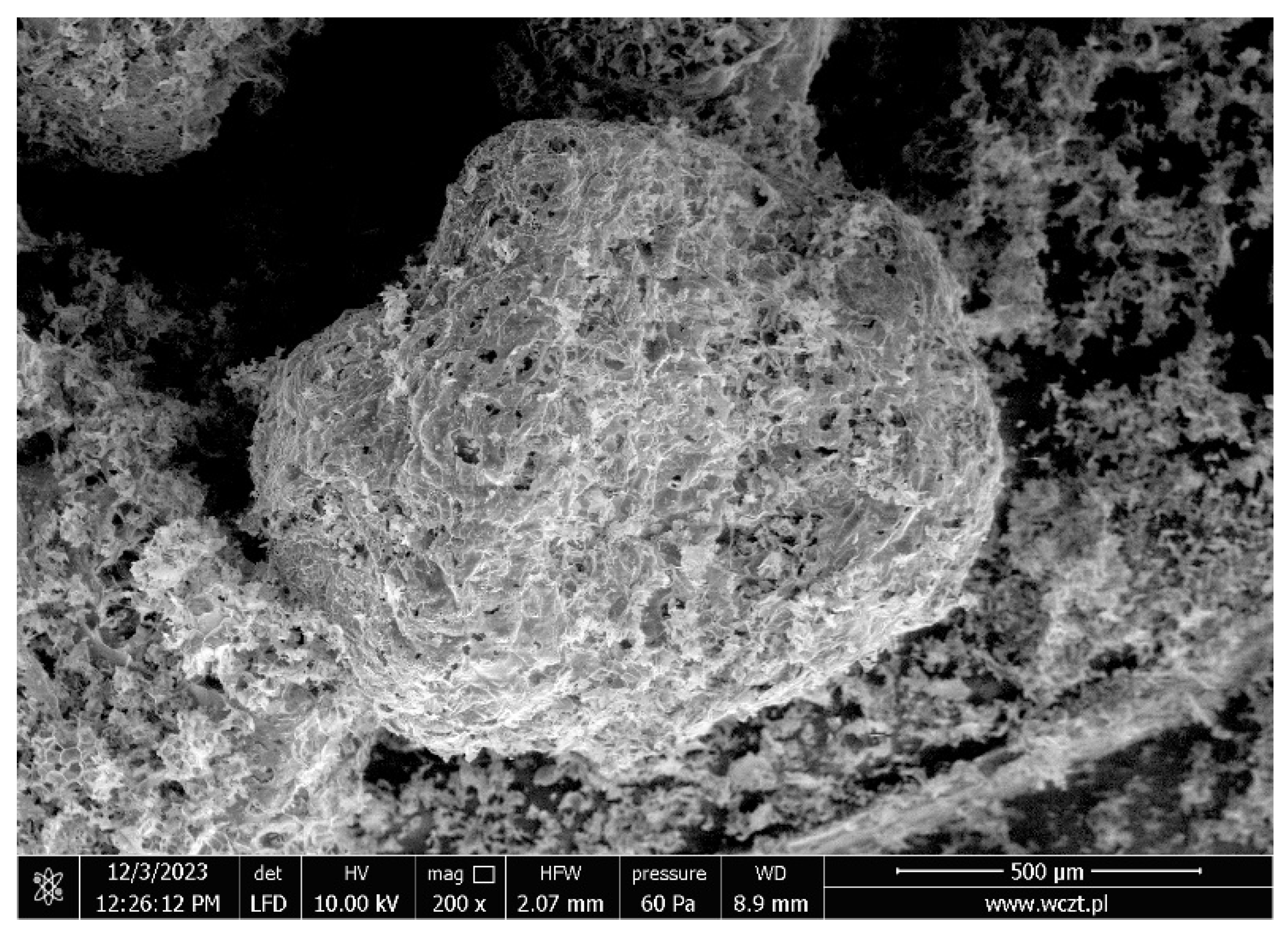
SEM morphological observations confirm the amorphous nature of expanded perlite (EP). The particles vary in size, typically ranging from a few micrometers to several millimeters, and are generally irregular in shape with a rough surface texture (
Figure 3). SEM images mostly show that EP has a foamy/spongy shape, but flake shapes were also observed in some studies, for example, in EP from Izmir, Turkey, as studied in [
15], or in EP from the Czech Republic, as studied in [
25].
The pH of aqueous suspensions or water extracts of expanded perlite is typically near neutral, ranging from approximately 6.6 to 8 [
26], which means it does not significantly affect the acidity or alkalinity of the surrounding environment. This characteristic makes it versatile for various soil types and gardening applications.
The loose bulk density of EP typically ranges from 25 to 400 kg·m
−3 [
10,
27,
28] and depends on factors such as degree of expansion, particle size, material quality, and moisture content [
5]. Among these, the expansion process is the most critical parameter, as greater expansion leads to lower density. For instance, perlites analyzed in [
13], despite originating from the same mining area, having similar chemical compositions, and exhibiting comparable SEM morphologies, showed markedly different true (skeletal) densities ranging from 0.84 to 2.45 g·cm
−3. Similarly, an imported EP used in Poland and analyzed in [
25] exhibited a skeletal density of 1.47 g·cm
−3 and a BET specific surface area of 3.02 m
2g
−1. Notably, the density of EP is significantly lower than that of unexpanded (raw) perlite, which typically ranges from 956 to 1342 kg·m
−3 [
29]. This low density imparts lightweight characteristics and excellent thermal insulation, making it suitable for a wide range of applications, including construction, horticulture, filtration, and various industrial uses.
The thermal conductivity of expanded perlite is influenced by its bulk density, moisture content, particle size, pore structure, and temperature. Typical values are comparable to those of common insulation materials and significantly lower than those of conventional aggregates. A comparison of thermal conductivity values for expanded perlite and selected building and insulation materials is presented in
Table 2.
Specific heat is around 837 J·kg
−1·°C
−1 [
17].
EP is a hydrophilic material and tends to absorb water. This feature, combined with its porous structure, enables it to retain a substantial amount of air and water, which is beneficial in applications such as horticulture, where moisture retention and aeration are crucial. EP can be treated to become hydrophobic for specific applications. Hydrophobic EP is used when water repellency is required, such as in certain industrial applications or construction materials. This treatment often involves coating the EP particles with a hydrophobic substance, which alters their surface properties to repel water. The hydrophobic treatment addresses the issue of high water absorption and poor freeze–thaw resistance, expanding its potential applications in building engineering [
35].
The aforementioned features, along with others such as high porosity, fire resistance, and low settling, are crucial in the context of specific applications, which will be discussed below.
4. Expanded Perlite in Civil Engineering
Civil engineering addresses complex challenges related to the design, construction, and maintenance of infrastructure, increasingly under constraints associated with sustainability and environmental protection. In this context, circular construction promotes the use of materials that reduce waste, improve resource efficiency, and enhance the energy performance of buildings. Consequently, growing attention is directed toward materials that combine structural and insulating functions while supporting circular economy principles and sustainable construction practices.
Quests for a material having appropriate structure and composition, unifying features both of building material and (thermally and acoustically) insulating material, and being environmentally friendly focused attention on the expanded perlite. Environmentally friendly means that EP is non-toxic, non-flammable, and exhibits chemical stability and corrosion resistance, contributing to its durability and long-term use [
35,
36]. However, evaluating expanded perlite from a life-cycle perspective is essential, including environmental LCA criteria such as energy demand, greenhouse gas emissions, resource depletion, transportation impacts, waste generation, and impact categories such as global warming potential, ecotoxicity, and land use, as well as selected social indicators considered in life cycle sustainability assessment (LCSA). Toboso-Chavero, Madrid-López, and Villalba et al. [
37] proved that perlite requires high energy consumption during all the manufacturing processes and a long road trip because perlite is a material extracted from open-pit mines. Transport between European countries from Turkey also contributed considerably to the environmental impacts of perlite, for example, transport to Spain—mainly in ecotoxicity and land use. Unfortunately, perlite also performed worse in the general social assessment [
37]. During the manufacturing and processing of expanded perlite, a significant amount of waste perlite is formed, posing challenges in waste management due to its low bulk density and dusting [
38,
39]. The conventional expansion technique for perlite suffers from technical disadvantages that affect product quality and limit its applications [
40,
41].
This is the field with the greatest need for change. Certain social indicators associated with perlite production should be improved, particularly in terms of reducing occupational injuries and enhancing noise and dust control, to achieve better overall management.
In the literature, one can find papers on results evaluating the suitability of waste perlite powder (dust) in polymer–cement composites. For example, Jaworska, Stańczak, and Łukowski [
42] found that it is possible to use waste perlite powder, which is a byproduct of perlite expansion and fractionation, as a component of structural polymer-cement composites. In addition, the environmental footprint of perlite can be reduced by reusing it as many times as possible.
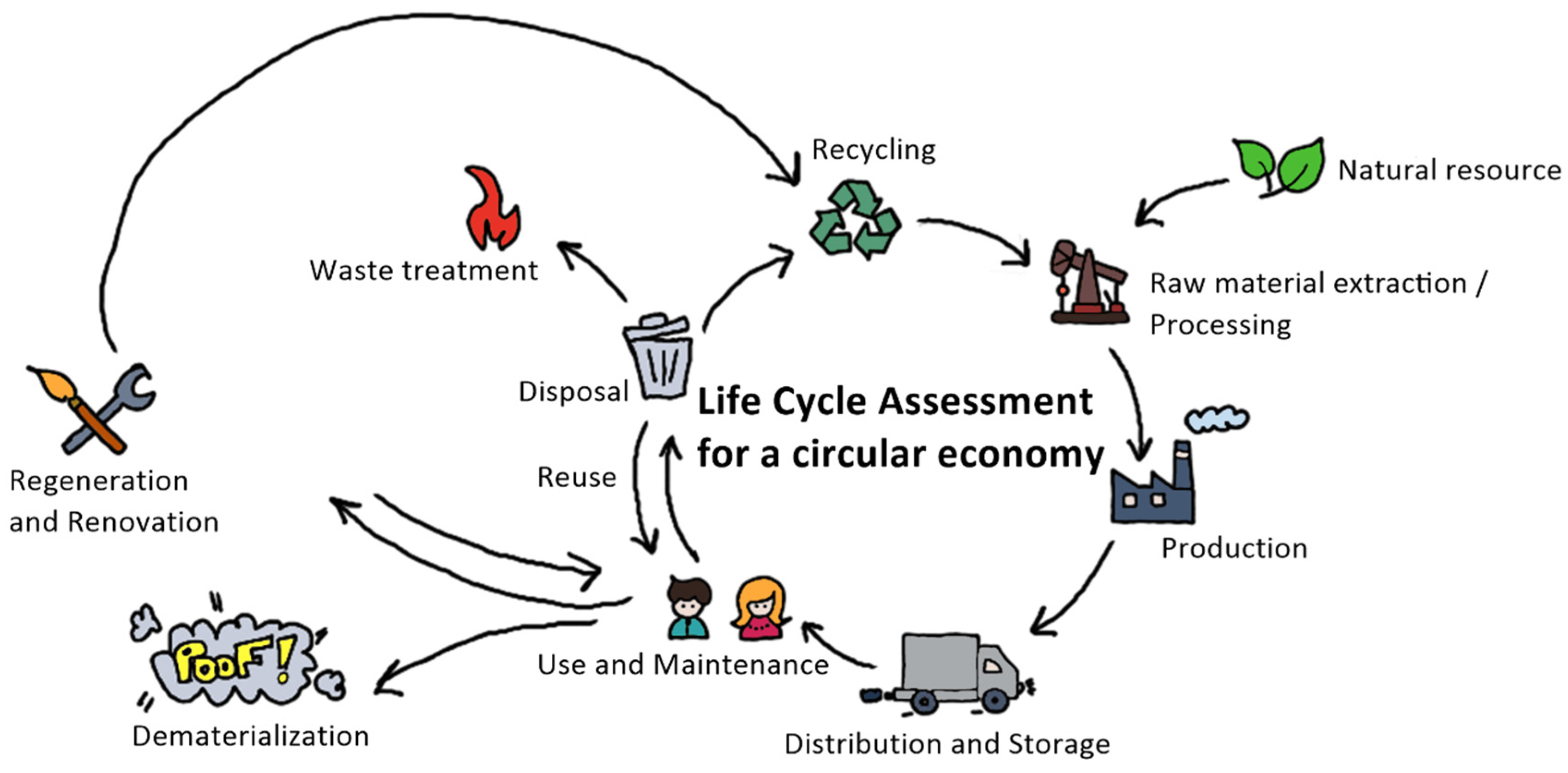
Figure 4 presents a conceptual life-cycle framework for construction materials within a circular economy. The framework encompasses all the main stages of a material’s life cycle, beginning with the extraction of natural raw materials and continuing through processing, production, distribution, and use in buildings. During the service life phase, construction materials contribute to key performance requirements, including thermal insulation, fire resistance, durability, and overall building functionality.
The framework emphasizes the importance of extending service life through appropriate use, maintenance, reuse, and renovation strategies to reduce demand for virgin resources. At the end-of-life stage, materials enter waste treatment processes, where recycling, downcycling, or disposal pathways may be applied depending on material composition, contamination, and the feasibility of separation. Recovered fractions may be reintroduced into the production cycle as secondary raw materials, thereby supporting partial closure of material loops.
In addition, the framework highlights strategies such as dematerialization and reuse to minimize waste generation and environmental impacts across the life cycle. The circular pathways illustrated should be understood as a target-oriented model rather than a fully closed-loop system, as their practical implementation is influenced by technological, economic, and logistical constraints, particularly at the end-of-life stage.
Within this general framework, expanded perlite (EP) is considered a representative example to illustrate both the opportunities and limitations of circularity in construction materials. In practice, achieving high circularity for EP remains challenging, as it is most commonly incorporated into composite construction systems such as concrete, mortars, plasters, or insulation layers, which complicates its separation after demolition. Although mechanical recycling of perlite-containing materials is technically feasible, it often results in downcycling rather than true material loop closure. Additional limitations arise from contamination with binders, coatings, or reinforcement, as well as from the limited application of selective demolition due to economic constraints.
Therefore, the circular economy model presented in
Figure 4 should be interpreted as an aspirational framework rather than a fully achievable closed-loop system under current technological and economic conditions. Increasing the circularity of expanded perlite at the end-of-life stage will require advances in material design (e.g., mono-material systems or design-for-disassembly approaches), improved demolition and sorting strategies, and life-cycle-based decision-making that accounts for realistic reuse and recycling pathways.
Nevertheless, when applied in sectors where feasible reuse or recycling routes can be ensured, the life cycle of expanded perlite may, in principle, follow the circular economy framework illustrated in
Figure 4. Moreover, expanded perlite waste has demonstrated potential for reuse in construction materials. For example, it has been incorporated into mortars and concrete to enhance durability and resistance to chemical corrosion and it may serve as a supplementary cementitious material with pozzolanic activity, potentially reducing carbon dioxide emissions associated with cement production [
38,
39]. Additional advantages of EP in civil engineering applications are discussed in the following chapters.
4.1. Expanded Perlite in Fireproofing and Fire Protection
EP is a popular material used in various fireproofing systems due to its unique properties and effectiveness in enhancing fire resistance. This material is non-flammable and does not contribute to the spread of flames. It remains stable at high temperatures, maintaining its structural integrity during a fire. It can withstand temperatures up to approximately 1000 °C without significant structural changes [
45]. Resistance to such high temperatures is important in chimneys, which control exhaust gases from heating devices to the outside of buildings. It is possible to recover more heat from perlite concrete chimneys with an air space than from popular local concrete chimneys. The recovery efficiency of perlite concrete chimneys is at least 23%, while local concrete chimneys have an efficiency equal to 5.5% [
46]. Moreover, using perlite concrete in producing a chimney casing and using air space as insulation ensures fire safety even without additional insulation layers [
46].
Fire resistance makes EP an ideal material for fire protection applications. Gravit et al. [
47] conducted the fire resistance tests with standard fire and hydrocarbon fire temperature cases of the steel columns with fire protection as Pyro-Safe Aestuver T slabs, which were produced from cement reinforced with fiberglass and EP with a bulk density of 690 kg·m
−3 (if dry). The column strength loss (R) ultimately occurred after 240 min in the standard fire case and after 180 min in the hydrocarbon fire case. Carabba et al. [
48] proved that using 13.0 wt. % of EP and 0.3 wt. % of hydrogen peroxide solution allowed obtaining a lightweight mortar with better fireproofing properties than cement-based mortar. Coating, including EP, can be thinner (5 mm less) to achieve the same properties. Blocks with a mix proportion comprising 467.7 kg·m
−3 of cement, 561.8 of kg·m
−3 sand, 239.4 kg·m
−3 of expanded perlite, and 280.6 kg·m
−3 of effective water, designed as C-PE60 due to lightweight density, load-bearing strength requirements for solid masonry units, low water absorption level, low ambient side surface temperatures, and low crack intensity after bushfire and building fire exposure, are recommended as the most suitable masonry unit for use in the external walls of bushfire shelters and other buildings in bushfire-prone areas.
EP can be combined with binders and applied to structural elements such as steel beams, columns, and walls as a spray or coating. Fire protection performance tests in [
49] proved by thermogravimetric analysis (TGA) and microcrystalline cellulose analysis (MCC), which showed that waterborne intumescent coatings with perlite could protect steel structures much longer than those without perlite. EP exerted a benign flame-retardant effect on intumescent coatings, acting as a barrier and protecting the underlying structure from high temperatures and flames. Fire-resistant boards or panels on a perlite basis are also used in walls, ceilings, and partitions to improve fire resistance and provide thermal insulation. These boards mix perlite with binders and other additives to create a lightweight and fire-resistant material. A fire-rated board can provide valuable time for humans to evacuate during a fire outbreak. The water-based intumescent binder can be mixed with vermiculite and perlite to construct the fire-resistant board [
50]. EP can be combined with other functional components, such as vermiculite or calcium silicate, to create fire-resistant or loose-fill insulation boards [
51]. These materials help reduce heat transfer, increase fire resistance, and improve overall energy efficiency. While EP has advantages in fire protection, it also presents challenges such as reduced workability and compressive strength in cementitious mixtures, which can be addressed by optimizing the percentage replacement of EP and using chemical admixtures such as superplasticizer [
52].
Overall, the reviewed studies demonstrate that expanded perlite significantly enhances fire resistance and thermal insulation performance of fire-protection systems while enabling reduced layer thickness and lower material density. Quantitative data indicate that EP-based systems can maintain structural integrity under standard and hydrocarbon fire exposure for several hours, reducing heat transfer compared to conventional cement-based fireproofing materials. These benefits are accompanied by partial reductions in workability and compressive strength in cementitious mixtures, which strongly depend on EP content and can be mitigated through optimized mixture design and the use of chemical admixtures such as superplasticizers. From a sustainability perspective, thinner fire-protection layers and partial replacement of energy-intensive constituents suggest a potential reduction in material consumption and associated CO2 emissions, although further quantitative assessment is required.
4.2. Expanded Perlite as an Insulation
Expanded perlite is used in construction mainly as acoustic and thermal insulation for ceilings, floors, walls, and roofs, as well as in the production of perlite concrete. Laying screed slabs on a bedding of perlite makes the whole structure light, warm, and quiet. EP can be used in granular form (loose-fill insulation) as a thermal and acoustic insulator in ceilings. Still, it was also proved that loose-fill perlite insulation can be employed above insulant layers on ceilings to inhibit convection losses, provided interstitial condensation will not occur within the insulant layer [
53]. The apparent thermal conductivity of an unprotected layer of perlite increases with either superimposed draught velocity or layer thickness. The heat transfer rate also increases, and the insulant encloses become leakier.
Similar conclusions regarding using EP as a loose-fill insulator in walls were presented in the literature. The authors proved that layer settlement occurred in vibration tests in walls where perlite was used as a loose-fill insulator. This means that the effectiveness of this form of insulation may be reduced because of, e.g., transport of prefabricated wooden walls with a perlite loose-fill insulation layer or during use due to wind, door, and window impacts [
54]. Other insulation materials showed no settling when filling procedures, and densities conformed to the relevant standards. When loose-fill thermal insulation is made of particulate-expanded perlite and cellulose fiber, it is rendered non-settling and resistant to separation by applying a permanently tacky material to the particulate-expanded perlite [
55].
Loose-fill EP insulation is a good and effective insulation material in certain applications. In this sense, before considering loose-fill perlite as an insulation system, assessing specific needs and work conditions is essential before choosing the most suitable solution for the project. Less demanding and effective are ready-made rigid systems like boards and panels. Loose-fill perlite is commonly used where blown-in insulation is practical. Rigid perlite boards/panels are more suitable for walls, roofs, floors, and other areas where solid insulation sheets are preferred.
Beyond its conventional role as a passive thermal insulation material, expanded perlite has also been increasingly investigated as a functional component in advanced thermal energy storage systems for buildings. In this context, particular attention has been given to phase change materials (PCM) incorporated into the building envelope to enhance thermal inertia and energy efficiency [
55]. A thermal energy storage composite was developed by impregnating paraffin into hydrophobic-coated expanded perlite (EPO) granules [
56]. The results demonstrated that incorporating the resulting PCM composite into concrete significantly enhanced thermal inertia and thermal energy storage capacity. Importantly, no PCM leakage was observed for paraffin/EPO composites containing up to 50 wt. % paraffin during concrete integration, a problem commonly reported for PCM systems based on porous materials [
57]. Kong et al. [
58] further confirmed that the leakage issues in composite phase change materials can be effectively mitigated; paraffin/EP PCM panels exhibited excellent thermal performance, including minimal temperature fluctuations, extended thermal lag, and high thermal storage capacity. Moreover, no significant degradation of thermal properties was observed after 1000 melting–freezing cycles. Expanded perlite-based phase change materials have therefore attracted considerable research interest. Li et al. [
59] investigated the thermal conductivity of composite PCMs based on carbon-modified expanded perlite, while Zhang et al. [
60] analyzed PCMs composed of nano-Al
2O
3-modified binary fatty acids supported on expanded perlite. Additionally, the thermal performance of capric acid–myristyl alcohol/expanded perlite composite PCMs for thermal energy storage was examined in [
61]. To further enhance paraffin retention, polyvinyl alcohol (PVA) was introduced to regulate the porous structure of expanded perlite (EP), significantly improving its paraffin adsorption capacity and inhibiting leakage. The resulting expanded perlite-based composite, termed FSPCM, exhibited excellent thermal properties and long-term cycling stability; the phase change enthalpy reached 174.6 ± 2.20 J·g
−1 and remained high even after 500 heating–cooling cycles [
61]. The panel developed in this study shows strong potential for application in building energy conservation. Beyond its role in thermal insulation systems, expanded perlite can also be used as a component of building materials, including concrete blocks. In perlite concrete, conventional sand is partially or fully replaced by EP, leading to significant changes in physical and rheological properties [
62,
63,
64]. In general, increasing the volumetric fraction of expanded perlite (EP) at the expense of sand reduces mechanical strength parameters [
65] but improves thermal insulation, fire resistance, lightness, workability, adhesion, capillary resistance, and acoustic performance.
Various aspects of human comfort in buildings are important: psychological, ergonomics, lighting, thermal comfort, and acoustic. Errors in the acoustic insulation of the building envelopes are difficult and costly and sometimes even impossible to correct. Acoustics plays a crucial role in buildings and has several important aspects and implications. The effect of EP on reducing sound transmission through the wall is more significant when it is present in the applied plaster rather than as a component of the masonry [
66]. The mean transmission loss of the brick wall can be increased by approximately 19 dB when plastered on both sides by plaster containing perlite. When perlite was a constituent of the gypsum wall blocks, the average transmission loss can increase by approximately 1 dB, [
67]. On the other hand, some authors observed that the panel with perlite alone exhibited 44.02% sound reduction while the conventional panel exhibited about 24.04% [
68]. Benjeddou et al. [
69] conclude that concrete blends with a percentage of more than 20% of EP can be placed in the category of acoustic insulation lightweight concrete. As acoustic insulation, EP helps create quieter and more peaceful spaces, enhances privacy, and reduces noise pollution, contributing to a more comfortable and pleasant living and working environment.
Overall, the reviewed studies indicate that expanded perlite-based insulation systems provide a significant reduction in thermal conductivity and improved acoustic performance compared to conventional solutions, while remaining non-combustible. However, loose-fill perlite insulation is sensitive to settlement and air convection effects, which may reduce long-term effectiveness unless properly stabilized. Rigid perlite-based boards and EP–PCM composites offer more reliable thermal performance, although their application remains limited by cost and mechanical constraints.
4.3. Expanded Perlite as a Construction Material
The expanded perlite content in blocks, bricks, or concrete used to build walls can significantly impact their strength and other properties. In general, the higher the expanded perlite content, the lower the overall density of the material, which can reduce the compressive strength of perlite blocks, bricks, or concrete. EP mainly replaces part of the aggregate but, less often, part of the cement [
70]. Jedidi et al. [
9] showed that the density of concrete decreased from 1710 for the control sample to 560 kg·m
−3 when 80% of the aggregate was replaced by EP, resulting in a substantial reduction in unit weight. Compressive strength after 28 days was equal to 3.4 MPa, 27.3 MPa lower than the control sample with 0% EP. The material used in these mixtures was characterized by a loose bulk density of 70 kg·m
−3. Other authors have reached similar results [
65]. Here, during the replacement of 80% aggregate by expanded perlite, the mass density of concrete decreased from 1937 (for the control sample) to 673 kg·m
−3, and compressive strength after 28 days decreased from 28.8 MPa to 1.1 MPa. When lightweight concrete contains 100% expanded perlite, the mass density of concrete decreased to 392 kg·m
−3, and compressive strength after 28 days was equal to 0.1 MPa. The above is also confirmed by Carabba et al. [
48]. They proved that when fully replaced sand by an EP, the compressive strength is low, 3.3 MPa on average, and is 8.0 MPa less compared to C-PE 60 and 30.3 MPa compared to blocks with 0% of expanded perlite. According to the requirement from AS 4773.2-2015 [
71], the minimum unconfined compressive strength for solid load-bearing and non-load-bearing units is 5 and 3 N·mm
−2, respectively. So, blocks without sand only marginally satisfy the non-load-bearing strength requirements and cannot be used to produce load-bearing solid masonry units. It is worth noting that if the density is 600–650 kg·m
−3 while maintaining strength of 3 MPa, these elements could be classified as autoclaved concrete masonry elements [
72]. Then, they could be used as load-bearing elements to erect building walls.
Maturation conditions are also of great importance, particularly during the early stages of hydration. Unlike conventional concrete, mixtures containing expanded perlite (EP) exhibit a different moisture evolution mechanism: the loss of internal relative humidity in capillary pores due to cement paste drying can be compensated by the gradual release of moisture from the expanded perlite particles. As a result, concretes incorporating EP show significantly reduced autogenous shrinkage [
73,
74].
The literature review indicates that further research aimed at developing perlite concrete blocks containing a high proportion of expanded perlite is justified. Such materials may enable the construction of external walls using single-layer technology in specific applications, particularly in low-rise buildings and under appropriate structural, regulatory, and safety conditions. In this approach, a single layer of blocks is intended to simultaneously fulfill load-bearing and thermal insulation functions. By avoiding the insulation stage, single-layer wall construction reduces technological complexity and shortens construction time. This can be advantageous in various climatic contexts, from southern European countries to regions with colder climates, assuming appropriate design and regulatory conditions. For example, in Poland, starting in 2021, the heat transfer coefficient (U) value for external walls of single-family buildings cannot exceed 0.20 Wm
−2K
−1. Considering commonly used construction products, not exceeding the value of U = 0.20 Wm
−2K
−1 is possible mainly by increasing the thickness of the thermal insulation material and/or using a material with better insulation parameters. This means that tightening the conditions for external wall insulation, depending on the construction and insulation material used, increases the thickness of the insulation, thereby generating additional costs. In Poland, most houses are built using double-layer technology with polystyrene or mineral wool insulation, but single-layer walls are also popular. The main advantage of single-layer technology is the simplicity and speed of execution, the walls are only finished by plastering them on both sides. Another strong point of single-layer walls is their high durability. Single-layer walls are usually more than 36 cm thick. This means that the cross-section of their structural layer exceeds that of a two-layer wall’s structural layer by more than 50%, which is typically 18 or 24 cm wide. Unfortunately, due to tightening regulations, there are few materials from which single-layer walls can be built. Building materials must have both the properties of construction and thermal insulation materials. These include autoclaved aerated concrete and porous ceramics. Aerated concrete blocks or porous ceramic blocks are used to build single-layer walls but blocks with 100% expanded perlite content are also available on the market (for example, System3E [
75]). The research conducted by Szlachetka, Dzięcioł and Dohojda [
25] on basic physical and mechanical parameters of pure perlite concrete blocks (PPC), i.e., containing 100% of EP instead of sand, demonstrated that the compressive strength of PPC depends strongly on the compaction procedure and curing conditions.
In their study, PPC samples compacted at a low displacement speed and formed under a maximum compaction force of 10,000 N achieved compressive strength values greater than 3 MPa for dry density class ~600–650 kg·m
−3 after 28 days of curing. These values indicate that, under optimal preparation conditions, PPC can meet the minimum compressive strength requirements corresponding to its density class for use in load-bearing elements of single-family buildings in European practice [
25].
In cases where significant structural repairs or concrete reinforcements are needed, EP may not provide the strength and stability compared to conventional materials designed for such purposes. Still, a study has investigated the effect of expanded perlite wrapped with various materials as a bacterial carrier and nutrient carrier on the crack-healing capacity of concrete [
76]. Particles of EP used in the proposed system were found to enhance the crack-healing ability of concrete. The healing of concrete cracks peaked when particles of expanded perlite immobilized with bacterial spores were wrapped with a low alkalinity material (potassium-magnesium phosphate). Water permeability experiments also confirmed this result. After 28 days of crack healing, the maximum value of completely healed crack width was 1.24 mm. Since the low cost of expanded perlite, it can be used as a bacterial carrier in large-scale self-healing concrete applications.
From a structural perspective, increasing expanded perlite content consistently reduces material density and thermal conductivity but leads to a pronounced decrease in compressive strength. Literature data indicate that high EP contents (>80% aggregate replacement) limit applications to non-load-bearing elements, whereas optimized mix designs can meet minimum strength requirements for single-layer wall systems. This highlights the need for careful balance between mechanical performance and insulation efficiency. It should be noted, however, that the applicability of single-layer wall systems based on expanded perlite concrete may be influenced by moisture transport properties, resistance to freeze–thaw cycles, and local climatic factors such as frost penetration depth.
4.4. Expanded Perlite as Soil Stabilization
Expansive soils containing swelling clay minerals pose a threat to pavements and lightweight structures. The cost of the damage from expansive soils exceeds those of all earthquakes, floods, tornados, and hurricanes combined. One of the soil stabilization methods is chemical stabilization using cementing materials (admixtures), such as Portland cement, asphalt cement (bituminous binder commonly used in asphalt pavements), lime, and some chemicals (e.g., silicates, polymers, and chrome-lignin). Applying these materials to the soil changes its structure to reach the desired effect. Calik and Sadogul [
77] investigated the effects of perlite and perlite-lime admixtures on the shear strength and durability of expansive soil containing smectite clay minerals. Apparent cohesion decreases with increasing perlite amounts for soil-perlite and soil-perlite-lime samples. The soil-perlite-lime samples have a higher apparent cohesion value than the soil-perlite samples. Increasing the perlite content improves the shear resistance angle. Samples stabilized with perlite alone did not show sufficient durability in durability tests. Adding perlite to expansive soil affects plasticity, particle size distribution, strength, and durability. However, adding lime and perlite has a much more significant effect on strength and durability. Expansive soil stabilized with lime and more than 30% perlite can be used as a suitable material for construction work in terms of strength and durability [
78]. Results showed that the perlite geopolymer activated by sodium hydroxide stabilized soil exhibits a denser and stronger microstructure, improving the mechanical properties of stabilized soil. Soft clay was stabilized by mixing with PG at 10, 20, 30, 40, and 50% by the dry weight of the soil [
79]. The samples were cured under 25 °C and 70 °C for 7, 14, and 28 days. The experimental results show that PG effectively increases the strength of stabilized soil. Of course, in heavily trafficked roadways subject to constant wear and tear, the lightweight nature of perlite concrete may lead to premature wear and reduced durability. Data in
Table 1 showed that perlites worldwide have a SiO
2/Al
2O
3 ratio ≈ of 5 or higher, so they should be usable with the necessary alkaline activators such as NaOH for making strong geopolymers. Study [
79] demonstrated that ground perlite can be combined with alkaline activators to produce mortars with mechanical strength comparable to that of Portland cement-based mortars. Although strength development at room temperature is slower than in conventional Portland cement mixtures, sufficient final strength can be attained through curing at moderately elevated temperatures for 24 h or less. Owing to its natural origin, perlite-based geopolymers may provide environmental, energy-related, and economic benefits compared to traditional Portland cement systems [
80]. The use of EP as an ingredient in non-sintered core–shell structured ceramsite is very promising [
81]. Dong Liu and Hong et al. [
81] aimed to create a high-water-absorption, mechanically strong ceramsite that is cost-effective and eco-friendly. High-quality excavated soil, such as that produced during subway construction, can be used to create new building materials through sintering, but the process is energy-intensive and pollutes the environment. An alternative method, cold bonding ceramiteization, involves stabilizing and solidifying soil waste at room temperature, reducing energy consumption and emissions. Combined with materials like Portland cement and EP, this technique can produce lightweight aggregates (ceramsite) with desirable properties for various applications, including municipal engineering and agriculture.
As a result of mixing EP with saline silty soil and calcium hydroxide, after curing, the skeleton of the soil particles can change from fine to coarse grains, modifying the soil’s characteristics. This feature, along with other specific properties of EP, enables EP to be used in conjunction with calcium hydroxide as a catalyst for improving saline silty soil [
82]. Sodium-saline silty soil can cause numerous problems in construction projects. Settlement and swelling are among the critical issues in such soils. Hosniyeh, Dabiri, and Majdi et al. showed that combining 3% EP with 5% calcium hydroxide reduced swelling of the improved soil by 82% and decreased average consolidation settlement by 64%.
In soil stabilization and geopolymer applications, expanded perlite contributes to improved shear strength, reduced swelling, and enhanced durability when combined with appropriate binders or alkaline activators. However, EP alone is insufficient to ensure long-term durability, and its effectiveness depends strongly on the mixture composition and curing conditions. These findings suggest that EP should be treated as a functional modifier rather than a standalone stabilizing agent.
5. Conclusions and Recommendations
Answering the question posed in the introduction—whether expanded perlite can be considered a universally suitable material—it can be concluded that its effective and sustainable use is limited to specific, well-defined applications in civil engineering. Moreover, the ease of working with EP means that one can quickly find an area where it can be used.
The search for low-cost and efficient solutions is justified, hence such great interest in EP. However, it should be remembered that perlite is a natural material with limited resources, so its use should be carried out sustainably, particularly in sectors where its properties have the greatest impact on energy, economic, and environmental efficiency.
When considering the use of EP in any field, remember that, as a natural aggregate, EP has environmental impacts during mining, causing landscape and habitat degradation. The production of EP consumes energy and generates greenhouse gas emissions, as well as pollutants such as dust and gases. Water used in EP production can be recycled, but transporting the material increases fuel consumption and greenhouse gas emissions. With environmental impact in mind, it is suggested to manage EP more sustainably, taking into account its wide use and recyclability, especially in the construction industry, and to discontinue its use where its use does not significantly improve any function or property and use a more sustainable alternative to EP.
There is still a need for scientific research to educate users on the rational use of EP, including its benefits, best practices, and proper handling. Based on the critical analysis of the reviewed literature, two application domains with the highest development potential were identified (
Table 3): (i) expanded perlite as a primary insulation and construction material in single-layer wall systems, and (ii) waste expanded perlite as a pozzolanic supplementary cementitious material. While expanded perlite has been investigated in a wide range of applications—including fire-protection systems, phase change materials (PCM), and loose-fill insulation—only these two domains consistently satisfy a combined set of criteria related to scalability, environmental performance, functional integration, circular economy relevance, and implementation feasibility.
The central message of this review is that expanded perlite should not be treated as a universal lightweight aggregate. Although its application range is wide, the literature indicates that meaningful benefits are achieved only in select use cases, particularly where thermal insulation, material circularity, and reduced carbon footprint are key factors. In other applications, the environmental costs of extraction, processing, and transportation may outweigh the functional gains, making alternative materials more appropriate.