Article

How Eco-Designed Retail Packaging Shapes Purchase Intention: Exploring the Mediating Role of Green Perceived Value

School of Art and Design, Wuhan Institute of Technology, Wuhan 430205, China
*
Author to whom correspondence should be addressed.
Sustainability 2026, 18(3), 1261; https://doi.org/10.3390/su18031261
Submission received: 26 November 2025 / Revised: 19 December 2025 / Accepted: 16 January 2026 / Published: 27 January 2026

Abstract

Growing environmental concerns and regulatory pressures are prompting firms to re-examine packaging design to advance sustainability. Focusing on eco-designed retail packaging in the new-style milk tea industry, this study investigates how specific attributes of eco-designed retail packaging influence consumers’ purchase intention. Data were collected from 425 university students in Wuhan. We measured eco-designed retail packaging (ECRP) with a six-dimension scale (functional, aesthetic, eco-materials, eco-information, eco-production, and innovation) and tested the mediating role of green perceived value (GPV) using structural equation modeling (SEM). Results show differentiated effects of ECRP dimensions on GPV and purchase intention. Functional design and clear eco-information increase both GPV and purchase intention, whereas using eco-materials while directly raising purchase intention reduces GPV. Aesthetics and innovation mainly operate through direct enhancement of purchase intention rather than via GPV. GPV mediates part of the effects of functional attributes, eco-materials, and eco-information on purchase intention. The findings imply that optimizing functionality, information clarity, and material choices in eco-designed retail packaging can simultaneously elevate GPV and purchase intention. As green packaging becomes an industry imperative, this study provides theoretical and practical guidance for sustainable packaging innovation and green industry development.

1. Introduction

The widespread use of single-use plastics and the mounting pressure of environmental protection and waste management have prompted firms and regulators to advance sustainable packaging practices, further underscoring the pivotal role of packaging in green transition [1,2]. At a global scale, initiatives such as the EU’s Circular Economy Action Plan and UN Sustainable Development Goals underscore the urgency of packaging reforms, yet significant gaps remain between these ambitions and actual adoption of sustainable solutions. However, much of the literature treats “sustainable packaging” as a unitary construct, emphasizing general attitudes or macro-level cognition while offering limited analysis of design attributes that can be operationalized by firms [3,4]. Notably, when environmental features are highly observable—such as visibly recycled materials or salient reusable structures—purchase intention can increase and environmental identity needs can be satisfied, which provides behavioral foundations for a micro-level focus on design attributes [5].
Although green consumer behavior has attracted substantial academic interest, much of the scholarship remains situated at a macro level, focusing on environmental attitudes or broad green marketing strategies. Systematic analysis of how specific packaging design elements shape consumer behavior remains limited [6]. However, cross-cultural variations in these effects and the underlying psychological pathways linking packaging cues to consumer decisions are under-explored, representing a notable research gap. Packaging is not merely a physical container; it also functions as a medium of brand–consumer communication, and the environmental value it conveys can strongly influence cognition and behavioral intention. Magnier and Crié (2015) [7] argue that acceptance of eco-friendly packaging reflects a balance between perceived benefits—such as material safety, ease of use, and a sense of social responsibility—and perceived sacrifices—such as concerns about hygiene and performance or potential price premiums. Aesthetic factors are closely tied to inferences about product quality, and to purchase intention [7]. Against this backdrop, eco-designed retail packaging has evolved into a systematic design concept and has been evaluated with a validated multidimensional scale that covers six dimensions: functional, aesthetic, eco-material, eco-information, eco-production, and innovation attributes [8].
In the food and beverage sector, the rapidly expanding market for new-style tea beverages in China generates substantial packaging waste and associated environmental pressure. Although environmental attributes of packaging often rank behind price and quality in purchase decisions, the global share of consumers who consider such attributes “very important” rose from 20% in 2020 to nearly 39% in 2025, with younger and higher-income groups showing strong willingness to pay a premium for sustainable packaging [9]. Within new-style tea beverages, several brands have introduced reusable cups and related green packaging initiatives that have received positive consumer feedback, indicating a maturing green consumption mindset. Similar patterns are observed internationally, as brands in other countries have begun piloting reusable and compostable packaging in response to rising sustainability expectations. Accelerating the transition to sustainable packaging has therefore become urgent for firms in this category and for society at large.
This study operationalizes eco-designed retail packaging (ECRP) through evidence-based, measurable micro-attributes to reduce the measurement error and interpretive ambiguity that often accompany blanket references to “sustainable packaging.” Specifically, ECRP comprises not only material and process metrics but also diagnostic cues embedded in structural/functional features and graphic information that shapes consumers’ attributions and quality inferences. The former conditions include ease of use and end-of-life recovery, whereas the latter conveys the visual articulation of environmental claims and associated credibility cues. Prior research shows that different material–graphic combinations can significantly alter consumers’ sustainability perceptions and overall product evaluations [10]. In parallel, recent mixed-methods studies have empirically specified and scale-validated the ECRP construct, providing an actionable pathway to integrate functional, aesthetic, eco-material, eco-information, eco-production, and innovation dimensions within a unified measurement framework [11].
A study on the driving factors of ‘sustainable packaging products’ found that the reason why consumers move from ‘favor’ to ‘pay’ often depends on whether they feel verifiable benefits in terms of convenience and function [12]. These availability cues jointly enhance the overall value judgment of the program through ‘perceived environmental protection and convenience’, thereby enhancing purchase intention. From the perspective of the psychological mechanism of green consumption, Green Perceived Value is the key intermediary variable linking ecological design packaging and purchase intention. For example, empirical work by Chen and Chang (2012) showed that increasing GPV and reducing perceived risk enhances purchase intention [13]. GPV reflects an overall value judgment formed after consumers weigh environmental benefits against personal costs; it encompasses perceptions of product function and quality as well as environmental responsibility and psychological gratification [14]. For example, Liu et al. (2025) define GPV as “the overall value that consumers assign to a product or service after considering their personal needs, expectations for sustainability, and preferences for environmental responsibility” [15]. Moreover, enjoyment of green product attributes can significantly enhance purchase intention, indicating that emotional appeal complements rational value assessments [16]. GPV can be further strengthened by social identity and psychological distance mechanisms, which reinforces purchase intention for green foods and demonstrates robustness across contexts [17]. Therefore, in the context of packaging design, if enterprises adopt ecological packaging with perfect functions, clear information, or environmentally friendly materials, consumers tend to enhance their purchase intention by enhancing green perceived value. It can be seen that GPV is not only the key intermediary variable of ecological design packaging affecting consumer behavior, but it also provides a core theoretical perspective for explaining the internal path of green consumption psychology.
At the mechanism level, we posit a mediation chain of “eco-packaging cues → green perceived value (GPV) → purchase intention.” GPV captures consumers’ overall trade-off between environmental and functional benefits and the associated sacrifices in money, time, and performance and thus serves as the pivotal psychological conduit linking eco-packaging to purchase intention [18]. A substantial body of evidence indicates that elevating GPV—when triggered by credible and readily identifiable ecological cues—significantly strengthens green purchase intention and remains robust across product categories and usage contexts, including sustainable-packaging settings [19]. Moreover, individual green consumption values (GCVs) moderate this process: when consumers place greater weight on environmental values, they perceive eco-cues as more diagnostic, which in turn raises GPV and ultimately translates into a stronger propensity to purchase.
Building on the above mechanism, this study empirically tests the proposed mediation in the new-style tea beverage sector. We operationalize eco-designed retail packaging (ECRP) with a validated six-dimensional scale and examine how each design dimension contributes to consumers’ purchase intention, directly and indirectly via GPV. Specifically, we disaggregate ECRP into functional, aesthetic, eco-material, eco-information, eco-production, and innovation attributes, thereby moving beyond prior holistic measures of sustainable packaging and enabling a more diagnostic attribution of effects at the attribute level [20]. This design-attribute lens clarifies which cues are more likely to be integrated into consumers’ value assessments (GPV) and which cues may operate through non-value routes (e.g., affective appeal), offering a more granular account of the “packaging–psychology–behavior” pathway. Moreover, by incorporating green consumption values (GCV) as a boundary condition, we specify when eco-cues are more likely to be perceived as diagnostic and translated into higher GPV and stronger purchase intention. Overall, this framework strengthens the theoretical precision of ECRP–GPV–purchase intention linkages and provides actionable guidance for sustainable packaging innovation and green marketing practice.
Our conceptual model integrates multidimensional packaging cues with a mediation process, offering a granular lens for green marketing. Furthermore, applying this framework to the new-style tea beverage sector demonstrates its practical relevance. Using a validated six-dimensional ECRP scale to operationalize packaging cues reduces measurement ambiguity, deepening insight. By disaggregating eco-design into six distinct dimensions, this study clarifies each attribute’s unique role, addressing holistic measures’ limitations. Situating green perceived value (GPV) as an intervening variable elucidates the psychological pathway linking packaging cues to purchase intention. Together, these contributions extend sustainable packaging theory by bridging micro-level design features and consumer behavior, providing a robust framework for future research.

2. Literature Review and Hypotheses

2.1. Eco-Designed Retail Packaging

Eco-design retail packaging (ECRP) refers to the integration of environmental principles into the material selection and production process and the identification, evaluation, and selection of sustainable packaging solutions based on life cycle thinking to reduce the impact on the environment during the whole process, from raw material acquisition to use until abandonment [21,22]. In recent years, as public concern about environmental issues has grown, scholarship has moved from “green packaging design” toward the broader notion of “eco-designed packaging,” seeking a more comprehensive understanding of how packaging shapes consumer psychology and behavior. Prior studies indicate that green packaging design can improve brand cognition and attitude and, by strengthening trust, promote purchase intention [23]. Nevertheless, much of this literature remains at a macro-perceptual level and lacks a structured analysis of disaggregated design attributes and their effects on consumers’ purchase intention. Accordingly, this study adopts the eco-designed retail packaging scale developed by Dinh et al. (2022), which partitions eco-designed packaging into six dimensions: functional, aesthetic, eco-material, eco-information, eco-production, and innovation attributes [8].
Functionality constitutes the foundational value of packaging and encompasses convenience, durability, and protective performance. For instance, Lisboa et al. (2022) demonstrate that functional sustainable packaging can improve user experience and work together with environmental attributes to enhance green perceived value (GPV) and green purchase intention (GPI) [24]. For example, protective materials and structures that reduce food waste elevate practical utility and simultaneously communicate environmental value [25]. Such integrated evaluations further strengthen purchase intention. Hence, functional attributes operate through higher GPV to promote GPI. Accordingly, we hypothesize that functional packaging attributes will positively influence consumers’ green perceived value and also directly increase their green purchase intentions.
H1a. 
Functional attributes positively affect green perceived value.
H1b. 
Functional attributes positively affect green purchase intention.
Similarly, aesthetic attributes of packaging serve as visual and design cues (e.g., natural colors, minimalist layouts, and ecological symbols) that can evoke green associations and enhance consumers’ affective experience. For instance, Shi et al. (2021) demonstrate that strong design aesthetics significantly raise perceived product value [26]. Within green packaging, creative and appealing appearances facilitate recognition of environmental ideals and can raise GPV. In other words, superior aesthetics first improve overall product evaluation and then, by elevating GPV, promote purchase intention. Therefore, we propose that aesthetic packaging attributes will enhance consumers’ green perceived value and also bolster their green purchase intentions.
H2a. 
Aesthetic attributes positively affect green perceived value.
H2b. 
Aesthetic attributes positively affect green purchase intention.
Among the six dimensions, eco-material and eco-information attributes are the most immediately observable to consumers. Eco-material attributes concern the environmental character of materials used in packaging, such as renewability, recyclability, and biodegradability. A recent study shows that consumers attend closely to packaging materials and often treat them as a primary basis for judging environmental friendliness [27]. The use of sustainable, eco-friendly packaging materials can highlight the genuine environmental substance of the package, alleviating consumers’ greenwashing concerns and increasing their green perceived value, which in turn strengthens green purchase intentions [28]. In this way, eco-material attributes highlight the environmental substance of the package, raising GPV and, in turn, strengthening purchase intention. Therefore, we hypothesize that the use of eco-friendly packaging materials will increase consumers’ green perceived value and in turn strengthen their green purchase intentions.
H3a. 
Eco-material attributes positively affect green perceived value.
H3b. 
Eco-material attributes positively affect green purchase intention.
Similarly, eco-information attributes (e.g., certification labels, quantified indicators, and educational statements) function as verification mechanisms for environmental claims. Clear and credible information reduces skepticism, reinforces value assessments, and, through the authority of third-party endorsement, can directly motivate purchase intention [29]. For instance, a study in Brazil finds that trust in firms’ environmental disclosures plays an important role in purchasing decisions [30]. Sufficient and truthful eco-information thus increases GPV by convincing consumers that the product is genuinely environmentally responsible, which subsequently elevates purchase intention. Accordingly, we expect that providing clear eco-information on packaging will increase consumers’ green perceived value and directly encourage their green purchase intentions.
H4a. 
Eco-information attributes positively affect green perceived value.
H4b. 
Eco-information attributes positively affect green purchase intention.
Eco-production attributes capture environmental and sustainability characteristics of the production process—for example, low carbon emissions, use of renewable energy, and waste reduction. Adoption of environmentally sound production technologies reduces the overall environmental footprint of packaging. The use of bio-based plastics such as PLA, for instance, can substantially lower carbon dioxide emissions during production [31]. A review by Zhang, T. et al. (2017) reports that eco-production practices raise evaluations of overall product value [32], and Michel, A. et al. (2017) further show that green practices in production significantly promote GPI [33]. We thus propose that environmentally conscious production practices in packaging will elevate consumers’ green perceived value of the product and also increase their green purchase intentions.
H5a. 
Eco-production attributes positively affect green perceived value.
H5b. 
Eco-production attributes positively affect green purchase intention.
Innovation attributes reflect the degree of novelty in packaging design, including new technologies, structures, or functions. Evidence suggests that innovative applications of eco-materials are well received; for example, 86% of consumers report a positive influence on purchase decisions when packaging is made from recycled plastic [34]. Innovation increases functional utility and communicates differentiated green effort; green innovation exerts significant positive effects on consumer attitudes and purchase intention [35]. Thus, innovative design—for example, combining eco-materials with smart features—can enhance distinctiveness and added value, strengthen GPV, and ultimately increase purchase intention. Therefore, we hypothesize that innovative packaging designs will enhance the perceived green value and stimulate consumers’ green purchase intentions.
H6a. 
Innovation attributes positively affect green perceived value.
H6b. 
Innovation attributes positively affect green purchase intention.
In summary, the dimensions of eco-designed packaging shape green purchase intention through their influence on GPV, forming a causal chain from eco-designed packaging to GPV and then to purchase intention.

2.2. Green Perceived Value

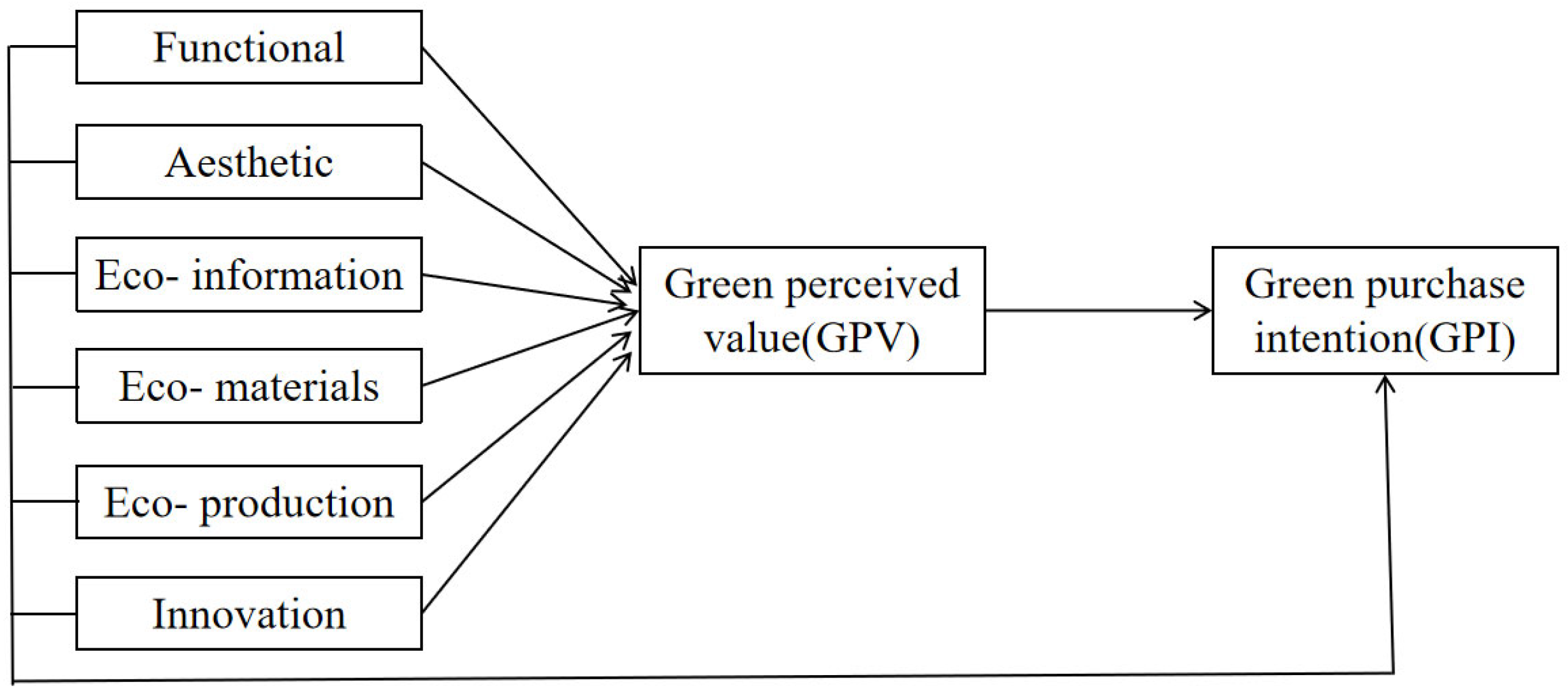
Green perceived value (GPV) refers to the overall trade-off that consumers make between environmental benefits and personal costs as well as the value judgment formed after a comprehensive evaluation of a product’s green attributes. GPV converts the multidimensional features of eco-packaging into purchase motivation and is distinct from traditional perceived value [36]. GPV places greater emphasis on environmental and social benefits and functions as a key psychological mechanism underlying green product purchases. Empirical evidence shows that higher GPV significantly strengthens green purchase intention (GPI), with a robust positive effect [13]. Further, prior research shows that green packaging can enhance green purchase intention through perceived value mechanisms [37]. Taken together, GPV—understood as the value perception of the green attributes of packaging—builds a bridge between eco-packaging attributes and purchase intention. Accordingly, in the model developed here, GPV serves as the central mediating mechanism linking the six dimensions of eco-designed retail packaging to purchase intention. Therefore, we hypothesize that GPV not only positively affects green purchase intention but also mediates the influence of all six eco-design packaging attributes on purchase intention. Figure 1 summarizes the conceptual model and hypotheses proposed in this study.
H7a. 
GPV positively affects purchase intention.
H7b. 
GPV mediates the relationships between functional, aesthetic, eco-material, eco-information, eco-production, and innovation attributes and purchase intention.
Figure 1. Research framework.
Sustainability 18 01261 g001

3. Materials and Methods

We surveyed undergraduate consumers in Wuhan, China, using random sampling. Data were collected on-site at multiple universities between April and June 2025 through paper questionnaires distributed and retrieved by the research team. In total, 425 valid responses were obtained (see Table 1). Respondents were explicitly instructed to envision a typical disposable milk-tea cup when evaluating packaging attributes. Approximately 28.2% of the participants were male and 71.8% were female; the mean age was about 20 years, with most participants between 18 and 22 years old. Because all measures relied on self-reports, the Harman single-factor test was applied to assess common method bias. The first unrotated factor explained roughly 33.0% of the variance, below the 40% threshold, indicating no serious common method bias.
All scales were adapted from prior studies and tailored to the milk-tea packaging context to ensure content validity. We used SPSS 27 and AMOS 28 for data analysis. The measurement model was first estimated via confirmatory factor analysis (CFA), followed by specification of the structural model to test the hypotheses stepwise [38]. Internal consistency was assessed with Cronbach α (recommended ≥ 0.70); composite reliability (CR; recommended ≥ 0.70) and average variance extracted (AVE; recommended ≥ 0.50) were also computed. Discriminant validity followed the Fornell–Larcker criterion, requiring correlations between any two latent variables to be lower than the square root of the AVE for each construct [39]. For the structural model, overall fit was evaluated using the χ2/df ratio, CFI, TLI, RMSEA, and SRMR. Mediation was tested with a bootstrap procedure based on 5000 resamples to estimate indirect effects and 95% confidence intervals; intervals that exclude zero indicate significant mediation.

4. Measures

This study tailored the eco-designed retail packaging (ECRP) scale to the characteristics of milk-tea packaging and specified six dimensions [8]. Functional attributes capture convenience and durability in use; aesthetic attributes assess attractiveness in color, graphics, and appearance; eco-information attributes examine environmental labels and on-pack claims; eco-material attributes gauge whether materials are renewable or biodegradable; eco-production attributes concern environmental impacts during manufacturing; innovation attributes focus on add-on functions such as thermal insulation, antimicrobial performance, and water resistance. Water resistance is treated as an innovation attribute because it generally involves advanced material or coating technology rather than basic packaging utility. One original item under the innovation dimension, “the package has a multi-compartment design” was removed. Preliminary interviews indicated that milk-tea cups are typically single containers without internal dividers, making the item unsuitable for this context. Prior literature suggests that, in new settings, items that are difficult to interpret or weakly correlated with others may be deleted to improve internal consistency; accordingly, this item was dropped before data analysis [40,41]. The green perceived value scale assessed overall value judgments of green products, and the purchase intention scale evaluated willingness to buy green products in the future. All items used a five-point Likert scale.
Table 2 reports descriptive statistics and correlations. Among the six dimensions, aesthetics had the highest mean (M = 4.24), indicating broad recognition of appearance design. Innovation (M = 3.79) and functionality (M = 3.72) also scored relatively high, suggesting favorable evaluations of convenience and add-on functions. Eco-material showed the lowest mean (M = 2.20), reflecting perceived shortcomings in material sustainability. Most correlations with green perceived value and purchase intention were positive and significant, and all inter-construct correlations were lower than the square roots of the corresponding AVEs, supporting discriminant validity. Table 3 shows Cronbach α values ranging from 0.62 to 0.86; except for a few dimensions slightly below 0.70, the remainder met or approximated the recommended threshold. Composite reliability ranged from 0.79 to 0.92, all above 0.70. Although some AVEs were slightly below 0.50, high CR values and significant factor loadings indicate acceptable convergent validity overall. Discriminant validity checks further showed that correlations between any two latent variables were lower than the square root of the AVE for each construct.

5. Structural Model

Structural equation modeling was used to test the hypothesized relationships. Model fit was adequate: χ2/df ≈ 2.34, comparative fit index (CFI) = 0.91, Tucker–Lewis index (TLI) = 0.90, root mean square error of approximation (RMSEA) = 0.057, and standardized root mean square residual (SRMR) = 0.048, all within recommended ranges. We checked multicollinearity using VIF (Variance Inflation Factor) and tolerance; all VIFs were below 3.3 (max = 2.412; mean = 2.086), indicating no severe multicollinearity (Table 4).
As shown in Table 5, most paths from packaging attributes to green perceived value (GPV) and green purchase intention (GPI) reached significance. Controlling for direct effects, functional attributes had a significant positive effect on GPV (β = 0.20, p < 0.001); GPV in turn positively affected GPI (β = 0.21, p < 0.001). The effect of aesthetic attributes on GPV was not significant (p > 0.10), yet the direct path to GPI was the largest (β = 0.51, p < 0.001), indicating that aesthetics primarily enhance GPI through a direct route. Eco-information attributes showed a significant positive effect on GPV (β = 0.51, p < 0.001) but a significant negative direct effect on GPI (β = −0.14, p < 0.05). Eco-material attributes had a significant negative effect on GPV (β = −0.24, p < 0.001) while exerting a significant positive direct effect on GPI (β = 0.12, p < 0.01). Eco-production attributes displayed no significant paths to either GPV or GPI. Innovation attributes did not significantly affect GPV but had a small positive direct effect on GPI (β = 0.10, p < 0.05). Finally, GPV continued to exhibit a significant positive effect on GPI (β = 0.21, p < 0.001), supporting its mediating role in the model.
We further employed a bootstrap procedure (5000 resamples) to examine the indirect effects of each packaging attribute via green perceived value (GPV). The results are summarized in Table 6. After including the direct paths, Table 6 reports the indirect effects of the packaging attributes on green purchase intention (GPI) through GPV, together with the corresponding 95% confidence intervals.
From Table 6, the 95% confidence intervals of the indirect effects for functional attributes, eco-information attributes, and eco-material attributes do not include zero, indicating statistical significance. Specifically, functional and eco-information attributes exert positive indirect effects on green purchase intention (GPI) by enhancing green perceived value (GPV), whereas the eco-material attribute exerts a negative indirect effect on GPI by lowering GPV. This pattern suggests that the effects of functional and eco-information attributes on GPI are partially mediated by GPV, while for eco-materials, despite a direct positive effect on GPI, the negative impact on GPV attenuates purchase intention (a significant negative indirect effect). In contrast, the indirect effects of aesthetic attributes and innovation attributes are not significant, indicating that these attributes influence GPI primarily through direct paths and have limited impact on GPV. The indirect effect of the eco-production attribute is likewise not significant, consistent with its direct-path results.

6. Discussion

This study shows that eco-designed retail packaging influences green perceived value (GPV) and green purchase intention (GPI) through distinct pathways. Functional attributes exert significant positive effects on both GPV and GPI, supporting H1a and H1b. Packaging with robust functionality—for example, extended freshness, product protection, and convenient use—strengthens consumers’ recognition of product value. At the psychological level, functional packaging communicates utilitarian benefits, thereby elevating perceptions of overall value, including environmental value [42]. This finding aligns with value theory: functional value, delivered through effective design, enhances perceived usage efficacy and benefit, which in turn raises GPV and GPI [15]. Consistent with the evidence in recent years, packaging that emphasizes sealing, protection, extension of shelf life, and easy opening and resealing can reduce losses and improve the ‘worth’ evaluation of the program in the context of household storage and use; thus, it is more conducive to conversion into purchase intention [43]. Such functionality embodies the functional dimension of green packaging and fosters stronger green evaluations and purchase intention. Aesthetic attributes show no significant effect on GPV (H2a not supported) but a significant positive effect on GPI (supporting H2b). Visual appeal appears to stimulate purchase interest through affective routes without materially altering perceptions of environmental performance. Prior research indicates that aesthetic elements attract attention and improve product evaluations and purchase propensity [44]. Consistent with Liu Wumei et al. (2020), nonverbal packaging elements such as visual design mainly shape preference and affective appraisal rather than functional cognition [45]. Accordingly, pleasing colors, patterns, and forms heighten aesthetic satisfaction and emotional engagement, thereby increasing purchase intention, while such visual cues do not inherently convey environmental information and thus do not substantially raise green value in the consumer’s mind.
Eco-material attributes have a significant negative effect on GPV (H3a not supported) but a significant positive effect on GPI (H3b supported). This apparent paradox may reflect ambivalent beliefs about recycled or biodegradable materials. On the one hand, eco-materials can cue concerns about quality or stability, prompting doubts about environmental efficacy and lowering GPV; on the other hand, environmentally oriented consumers are willing to pay for the perceived environmental value, thereby raising purchase intention. Although natural-fiber packaging is often perceived as greener than plastic, consumers often associate green materials with inferior durability or increased cost, which may dilute perceived value [46]. In short, eco-material packaging can attract environmental attention and increase GPI, but insufficient functionality or tactile quality may dilute the positive environmental signal in value judgments. One possible interpretation is that some consumers consciously trade off performance for sustainability, accepting minor shortcomings because of the green benefits, while others remain skeptical. However, this remains a conjecture requiring further empirical verification. Overall, these findings suggest that the relationship between eco-material cues, GPV, and GPI depends on consumer priorities, and different segments may perceive eco-materials differently.
Eco-information (for example, eco-labels and environmental claims) exerts a significant positive effect on GPV (supporting H4a) but a significant negative direct effect on GPI (H4b not supported, contrary to expectations). Clear and credible environmental information strengthens green cognition, consistent with evidence that environmental claims elevate perceived product greenness [47]. However, an observed negative direct effect on GPI suggests that excessive or overly emphatic ‘green’ messaging can trigger skepticism or psychological reactance. Xu Xiaoying et al. (2022) argue that overclaiming green attributes—such as over ‘greening’ packaging—violates environmental expectations and implies resource waste, thereby leaving a negative impression and dampening purchase intention [36]. A moderate, credible level of eco-information can therefore enhance GPV, whereas excessive or inauthentic messages may be perceived as greenwashing and undermine GPI.
Eco-production attributes (for example, the environmental character of the production process) have no significant effect on either GPV or GPI (H5a and H5b not supported). Green production characteristics are credence attributes that are difficult to observe at the point of purchase; production-process information rarely appears as a salient on-pack cue. As a result, eco-production fails to serve as an explicit decision cue. Firms that improve production-stage greenness without visible signaling or consumer education are unlikely to convert such latent value into purchase motivation. Innovation attributes do not significantly affect GPV (H6a not supported) but show a small positive effect on GPI (H6b generally supported). Creative or distinctive packaging can capture attention and modestly elevate purchase interest, yet novelty alone does not automatically confer green value. This explanation is consistent with recent evidence that unconventional or novel packaging expressions can enhance purchase intention (emotional channel) by stimulating curiosity and emotional arousal, but novelty itself is not equivalent to ‘green’ [48]. In the absence of clear and credible sustainable clues, it is difficult for consumers to interpret the uniqueness of design as environmental performance, thus limiting the improvement of GPV [49].
GPV exerts a significant positive effect on GPI (supporting H7a), indicating that a stronger perception of greenness increases purchase inclination. Prior studies similarly show that functional and affective value, by elevating GPV, significantly strengthen purchase intention [15]. Psychological gratification derived from eco-packaging—such as self-affirmation linked to reducing environmental burden—further translates into stronger motivation to buy. Regarding mediation (H7b), functional and eco-information attributes indirectly increase GPI via higher GPV, whereas aesthetic, production, and innovation attributes do not exhibit mediation because their effects on GPV are not significant. These results suggest heterogeneity in how GPV connects packaging dimensions to GPI: functional and eco-information cues directly engage cognitive appraisals of environmental performance and are readily integrated into GPV, whereas aesthetics and innovation primarily stimulate GPI through direct affective routes and contribute little to green cognition. Comparable conclusions have been reported in cross-cultural research, where sensitivity to functionality and eco-information tends to be higher, while green associations tied to aesthetics and innovation vary across countries [50].
Overall, the evidence corroborates GPV as a critical bridge linking packaging attributes to purchasing behavior. This conclusion aligns with Zhang Fan (2017), who argues that perceived value mediates between product attributes and consumer behavior [51]. Enhancing GPV therefore represents both a key psychological mechanism that drives green consumption and a practical pathway for firms to stimulate green purchases through packaging strategy.

7. Conclusions and Implications

7.1. Conclusions

This study systematically examines the mechanisms through which six categories of packaging attributes shape green perceived value (GPV) and green purchase intention (GPI) among consumers. The results indicate that functional attributes not only elevate GPI directly but also promote it indirectly by strengthening GPV. Aesthetic attributes increase GPI through a direct route, yet they do not significantly affect GPV. Eco-material attributes unexpectedly reduce GPV while still exerting a positive effect on GPI. Eco-information attributes enhance GPV but, likely owing to overclaiming, exert a negative effect on GPI. Eco-production attributes show no significant effects on either outcome. Innovation attributes do not affect GPV but display a modest positive effect on GPI. Overall, GPV significantly advances GPI and plays a key mediating role along the pathways associated with functional, material, and information attributes. Notably, this study focused on disposable milk-tea cup packaging; consumer responses to reusable packaging may differ. These findings enrich the literature on green consumption by demonstrating that the multidimensional character of packaging design produces complex and heterogeneous influences on consumer behavior, with GPV serving as an important mediator.

7.2. Implications

This study yields important implications for sustainable packaging design and green marketing practice. From a theoretical perspective, the work extends understanding of how packaging attributes shape green purchasing and highlights an integrated strategy that combines functionality, aesthetics, and environmental information. Managers should recognize that an eco-label or eco-material alone does not necessarily raise perceived green value; utilitarian functions and aesthetic value should be emphasized in tandem. For example, research on food packaging shows that coupling functional features (e.g., convenience, durability) with visual aesthetics (e.g., minimalist appearance, coordinated color palette) more effectively elevates overall perceived packaging value and, in turn, purchase intention compared to reliance on eco-materials alone [52]. Meanwhile, environmental information on packaging needs to be accurate and credible, avoiding any exaggerations or overstatements. A recent study on consumer detection of greenwashing indicates that when environmental claims are perceived as exaggerated or inconsistent, trust in packaging information declines and purchase intention is suppressed [53]. Marketing strategy should be calibrated to the level of consumer environmental knowledge, delivering targeted green messages and design to increase overall green perceived value. From a practical perspective, firms should attend to the differentiated effects of packaging elements on consumer behavior: visual appeal can directly stimulate purchase; functional design and environmental appeals are essential for building a green brand image and cultivating loyalty; and innovation, while attention-grabbing, must be paired with green functionality to strengthen value recognition over time. In summary, coherent integration of the six packaging attributes can raise green purchase intention and support a dual objective of economic and environmental performance.

7.3. Limitations and Future Research

Several limitations warrant attention. First, constraints in sample composition and research context may restrict generalizability; future research can validate the model across cultural settings and product categories to test the consistency of attribute effects. Second, a cross-sectional survey design prevents observation of long-term changes in consumer behavior; longitudinal studies or field experiments could further examine the dynamic impact of packaging design on actual purchase behavior. Third, this study relied on descriptive survey items without presenting participants with actual packaging images or samples. The lack of visual stimuli might limit ecological validity, as real-world packaging visuals can influence consumer perceptions. Fourth, the context was limited to disposable milk-tea cups; consumer responses to reusable or refillable packaging may differ and should be explored. In addition, the analysis focuses on the mediating role of green perceived value (GPV) and does not incorporate potential mediators or moderators such as affective experience and brand trust. Subsequent work may introduce psychological variables—such as environmental concern and perceived social value—to probe mechanism heterogeneity between packaging attributes and consumers’ green behaviors, thereby enriching theory and practice in the green packaging domain.

Author Contributions

Conceptualization, H.C. and K.Z.; methodology, H.C. and R.D.; software, C.K.; validation, K.Z., R.D. and H.C.; formal analysis, K.Z.; investigation, H.C.; resources, H.C.; data curation, Y.G.; writing—original draft preparation, H.C.; writing—review and editing, K.Z.; visualization, C.K.; supervision, H.C.; project administration, Y.G.; funding acquisition, H.C. All authors have read and agreed to the published version of the manuscript.

Funding

This research was funded by the 2024 Philosophy and Social Sciences Research Project of the Hubei Provincial Department of Education, grant number 24D033.

Institutional Review Board Statement

Ethical review for this study was waived by the Institution Committee of Wuhan Institute of Technology, as the study constitutes minimal-risk research. In accordance with the current research ethics management regulations of our institution, anonymous and non-interventional questionnaire-based social science studies of this nature qualify for an ethics review exemption.

Informed Consent Statement

Informed consent for participation was obtained from all subjects involved in this study.

Data Availability Statement

The raw data supporting the conclusions of this article will be made available by the authors on request.

Conflicts of Interest

The authors declare no conflicts of interest.

References

  1. Geyer, R.; Jambeck, J.R.; Law, K.L. Production, use, and fate of all plastics ever made. Sci. Adv. 2017, 3, e1700782. [Google Scholar] [CrossRef]
  2. Nguyen, A.; Parker, L.; Brennan, L. A consumer definition of eco-friendly packaging. J. Clean. Prod. 2020, 252, 119792. [Google Scholar] [CrossRef]
  3. Quoc, T.; Phuc, N.; Duong, N.H. Examining green packaging, branding, and eco-labeling strategies: The case of young consumers’ perceptions and responses in F&B industry. Clean. Responsible Consum. 2025, 16, 100258. [Google Scholar] [CrossRef]
  4. Boz, Z.; Korhonen, V.; Sand, C.K. Consumer considerations for the implementation of sustainable packaging: A review. Sustainability 2020, 12, 2192. [Google Scholar] [CrossRef]
  5. Polyportis, A.; Mugge, R.; Magnier, L. To see or not to see: The effect of observability of the recycled content on consumer adoption of products made from recycled materials. Resour. Conserv. Recycl. 2024, 205, 107610. [Google Scholar] [CrossRef]
  6. Tan, Z.; Sadiq, B.; Bashir, T.; Mahmood, H.; Rasool, Y. Investigating the impact of green marketing components on purchase intention: The mediating role of brand image and brand trust. Sustainability 2022, 14, 5939. [Google Scholar] [CrossRef]
  7. Magnier, L.; Crié, D. Communicating packaging eco-friendliness: An exploration of consumers’ perceptions of eco-designed packaging. Int. J. Retail Distrib. Manag. 2015, 43, 350–366. [Google Scholar] [CrossRef]
  8. Dinh, M.T.T.; Su, D.N.; Tran, K.T.; Luu, T.T.; Duong, T.H.; Johnson, L.W. Eco-designed retail packaging: The empirical conceptualization and measurement. J. Clean. Prod. 2022, 379, 134717. [Google Scholar] [CrossRef]
  9. McKinsey & Company. Sustainability in Packaging 2025: Inside the Minds of Global Consumers. 2025. Available online: https://www.mckinsey.com/industries/packaging-and-paper/our-insights/sustainability-in-packaging-2025-inside-the-minds-of-global-consumers (accessed on 12 September 2025).
  10. Zhou, Z.; Xu, J.; Shan, Y.; Hao, Y.; Lei, Z. Research progress on sustainable fashion consumption. Adv. Text. Technol. 2023, 31, 1–10. (In Chinese) [Google Scholar]
  11. Steenis, N.D.; van Herpen, E.; van der Lans, I.A.; Ligthart, T.N.; van Trijp, H.C.M. Consumer response to packaging design: The role of packaging materials and graphics in sustainability perceptions and product evaluations. J. Clean. Prod. 2017, 162, 286–298. [Google Scholar] [CrossRef]
  12. Duarte, P.; Silva, S.C.; Roza, A.S.; Dias, J.C. Enhancing consumer purchase intentions for sustainable packaging products: An in-depth analysis of key determinants and strategic insights. Sustain. Futures 2024, 7, 100193. [Google Scholar] [CrossRef]
  13. Chen, Y.S.; Chang, C.H. Enhance green purchase intentions: The roles of green perceived value, green perceived risk, and green trust. Manag. Decis. 2012, 50, 502–520. [Google Scholar] [CrossRef]
  14. Li, R.; Li, H. The impact of food packaging design on users’ perception of green awareness. Sustainability 2024, 16, 8205. [Google Scholar] [CrossRef]
  15. Liu, X.; Kim, T.H.; Lee, M.J. The Impact of Green Perceived Value Through Green New Products on Purchase Intention: Brand Attitudes, Brand Trust, and Digital Customer Engagement. Sustainability 2025, 17, 4106. [Google Scholar] [CrossRef]
  16. Liu, Y.; Wu, Y.; Feng, X.; Jung, E. A Study on the Driving Factors of Continued Use of Sustainable Ready-to-Drink Packaging: The Moderating Roles of Perceived Sustainability and Perceived Value Fit. Sustainability 2025, 17, 7797. [Google Scholar]
  17. Zheng, C.; Ling, S.; Cho, D. How social identity affects green food purchase intention: The serial mediation effect of green perceived value and psychological distance. Behav. Sci. 2023, 13, 664. [Google Scholar] [CrossRef]
  18. Woo, E.; Kim, Y.G. Consumer attitudes and buying behavior for green food products: From the aspect of green perceived value (GPV). Br. Food J. 2019, 121, 320–332. [Google Scholar] [CrossRef]
  19. Dantas, R.; Sabir, I.; Martins, J.M.; Majid, M.B.; Rafiq, M.; Martins, J.N.; Rana, K. Role of green and multisensory packaging in environmental sustainability: Evidence from FMCG sector of Pakistan. Cogent Bus. Manag. 2023, 10, 2285263. [Google Scholar] [CrossRef]
  20. Nickel, K.; Böhm, R.A. Power versus morality: Uncovering the underlying mechanisms of consumer response to perceived visual sustainability in package design. J. Prod. Brand Manag. 2025, 34, 215–230. [Google Scholar]
  21. Jagoda, S.U.M.; Gamage, J.R.; Karunathilake, H.P. Environmentally sustainable plastic food packaging: A holistic life cycle thinking approach for design decisions. J. Clean. Prod. 2023, 400, 136680. [Google Scholar] [CrossRef]
  22. Bher, A.; Auras, R. Life cycle assessment of packaging systems: A meta-analysis to evaluate the root of consistencies and discrepancies. J. Clean. Prod. 2024, 476, 143785. [Google Scholar] [CrossRef]
  23. Garaus, M.; Wagner, U.; Kummer, C. Cognitive fit, retail shopper confusion, and shopping value: Empirical investigation. J. Bus. Res. 2015, 68, 1003–1011. [Google Scholar] [CrossRef]
  24. Lisboa, A.; Vitorino, L.; Antunes, R. Gen Zers’ intention to purchase products with sustainable packaging: An alternative perspective to the attitude-behaviour gap. J. Mark. Manag. 2022, 38, 967–992. [Google Scholar] [CrossRef]
  25. Lu, W.; Mohamed, F.N. A study on design appeal of green packaging in China. South Asian J. Soc. Sci. Humanit. 2024, 5, 192–215. [Google Scholar] [CrossRef]
  26. Shi, A.; Huo, F.; Hou, G. Effects of design aesthetics on the perceived value of a product. Front. Psychol. 2021, 12, 670800. [Google Scholar] [CrossRef]
  27. Norton, V.; Waters, C.; Oloyede, O.O.; Lignou, S. Exploring consumers’ understanding and perception of sustainable food packaging in the UK. Foods 2022, 11, 3424. [Google Scholar] [CrossRef] [PubMed]
  28. Puwianti, L.; Anita, A.; Nurjanah, L. Understanding the Impact of Green Packaging on Purchasing Intention. J. Ilmu Manaj. Advant. 2025, 9, 55–63. [Google Scholar] [CrossRef]
  29. Zhuang, W.; Luo, X.; Riaz, M.U. On the factors influencing green purchase intention: A meta-analysis approach. Front. Psychol. 2021, 12, 644020. [Google Scholar] [CrossRef] [PubMed]
  30. Petkowicz, A.C.; Pelegrini, T.; Bodah, B.W.; Rotini, C.D.; Moro, L.D.; Neckel, A.; Spanhol, C.P.; Araújo, E.G.; Pauli, J.; Mores, G.d.V. Purchasing intention of products with sustainable packaging. Sustainability 2024, 16, 2914. [Google Scholar] [CrossRef]
  31. PARCEL Industry. Eco-Friendly Packaging Growth and Consumer Perceptions on Sustainability. 2025. Available online: https://parcelindustry.com/article-6466-Eco-Friendly-Packaging-Growth-and-Consumer-Perceptions-on-Sustainability.html (accessed on 14 September 2025).
  32. Zhang, T.; Cai, G.; Liu, S. Application of lignin-based by-product stabilized silty soil in highway subgrade: A field investigation. J. Clean. Prod. 2017, 142, 4243–4257. [Google Scholar] [CrossRef]
  33. Michel, A.; Baumann, C.; Gayer, L. Thank you for the music—Or not? The effects of in-store music in service settings. J. Retail. Consum. Serv. 2017, 36, 21–32. [Google Scholar] [CrossRef]
  34. Ruokamo, E.; Räisänen, M.; Kauppi, S. Consumer preferences for recycled plastics: Observations from a citizen survey. J. Clean. Prod. 2022, 379, 134720. [Google Scholar] [CrossRef]
  35. Ladhari, R. The movie experience: A revised approach to determinants of satisfaction. J. Bus. Res. 2007, 60, 454–462. [Google Scholar] [CrossRef]
  36. Xu, X.; Li, R. A literature review of consumer green purchase intentions from a green innovation perspective. Sustain. Dev. 2022, 12, 945–957. (In Chinese) [Google Scholar] [CrossRef]
  37. Pan, C.; Lei, Y.; Wu, J.; Wang, Y. The influence of green packaging on consumers’ green purchase intention in the context of online-to-offline commerce. J. Syst. Inf. Technol. 2021, 23, 133–153. [Google Scholar] [CrossRef]
  38. Anderson, J.C.; Gerbing, D.W. Structural equation modeling in practice: A review and recommended two-step approach. Psychol. Bull. 1988, 103, 411–423. [Google Scholar] [CrossRef]
  39. Mohammed, A.; Abdullah, A. Scanning electron microscopy (SEM): A review. In Proceedings of the 2018 International Conference on Hydraulics and Pneumatics—HERVEX, Băile Govora, Romania, 7–9 November 2018; pp. 1–9. [Google Scholar]
  40. Smith, J.D.; Rafferty, M.R.; Heinemann, A.W.; Meachum, M.K.; Villamar, J.; Lieber, R.L.; Brown, C.H. Pragmatic adaptation of implementation research measures for a novel context and multiple professional roles: A factor analysis study. BMC Health Serv. Res. 2020, 20, 125. [Google Scholar] [CrossRef]
  41. Torrey, A. Development and psychometric evaluation of an instrument to assess the treatment fidelity of a brief opportunistic intervention to reduce substance use among. Diss. Abstr. Int. Sect. B Sci. Eng. 2011, 72, 305. [Google Scholar]
  42. Brennan, L.; Francis, C.; Jenkins, E.L.; Schivinski, B.; Jackson, M.; Florence, E.; Parker, L.; Langley, S.; Lockrey, S.; Verghese, K.; et al. Consumer perceptions of food packaging in its role in fighting food waste. Sustainability 2023, 15, 1917. [Google Scholar] [CrossRef]
  43. Chan, R.B.Y. Drivers of divergent industry and consumer food waste behaviors: The case of reclosable and resealable packaging. J. Clean. Prod. 2023, 412, 137417. [Google Scholar] [CrossRef]
  44. Liu, C.; Samsudin, M.R.; Zou, Y. The multidimensional impact of packaging design on purchase intention: A systematic hybrid review. Humanit. Soc. Sci. Commun. 2025, 12, 785. [Google Scholar] [CrossRef]
  45. Liu, W.; Ma, Z.; Ye, F. The influence of packaging elements on consumers in the marketing domain and their underlying mechanisms. Adv. Psychol. Sci. 2020, 28, 1015–1028. [Google Scholar] [CrossRef]
  46. Wu, S.; Jin, T.; Yuan, Y.; Hu, Z. What makes me look greener? The influence of packaging characteristics of eco-friendly products on consumers’ green purchase intentions. J. Mark. Sci. 2022, 18, 24–40. (In Chinese) [Google Scholar]
  47. Neiba, N.; Singh, N.T. Effect of green marketing, green consumption values and green marketing approaches on organic purchase intention: Evidence from the Manipur. Int. Rev. Manag. Mark. 2024, 14, 18. [Google Scholar] [CrossRef]
  48. Das, M.; Balaji, M.S.; Paul, S.; Saha, V. Being unconventional: The impact of unconventional packaging messages on impulsive purchases. Psychol. Mark. 2023, 40, 1913–1932. [Google Scholar] [CrossRef]
  49. Dörnyei, K.R.; Bauer, A.S.; Krauter, V.; Herbes, C. (Not) communicating the environmental friendliness of food packaging to consumers—An attribute-and cue-based concept and its application. Foods 2022, 11, 1371. [Google Scholar] [CrossRef] [PubMed]
  50. Bravo, A.; Vieira, D. Modelling the purchase of green packaged products: The significant impact of the West–East cultural context. Sustainability 2024, 16, 1206. [Google Scholar] [CrossRef]
  51. Zhang, F. The Influence of Product Green Attribute Centrality on Consumer Behavioural Intentions. Master’s Thesis, Zhejiang University, Hangzhou, China, 2017. (In Chinese) [Google Scholar]
  52. Sonck-Rautio, K.; Lahtinen, T.; Tynkkynen, N. Consumer meaning-making of packaging functions for sustainable food packaging—Insights from qualitative research in Finland. Curr. Res. Environ. Sustain. 2024, 7, 100259. [Google Scholar] [CrossRef]
  53. Fella, S.; Bausa, E. Green or greenwashed? Examining consumers’ ability to identify greenwashing. J. Environ. Psychol. 2024, 95, 102281. [Google Scholar] [CrossRef]

Table 1. Demographic characteristics.
FrequencyPercentage (%)
GenderMale12028.2
Female30571.6
Age<2013231.0
20–292910.5
30–392
Table 2. Descriptive statistics and correlations.
Variable/DimensionMSD12345678
1. Functional3.720.45
2. Aesthetic4.240.560.66 **
3. Eco-information3.540.780.59 **0.51 **
4. Eco-materials2.200.71−0.38 **−0.35 **−0.42 **
5. Eco-production3.450.810.53 **0.38 **0.56 **−0.61 **
6. Innovation3.790.700.53 *0.43 **0.50 **−0.60 **0.68 **
7. GPV3.850.590.61 **0.51 **0.73 **−0.52 **0.53 **0.48 **
8. GPI4.260.680.61 **0.69 **0.41 **−0.26 **0.35 **0.40 **0.49 **
Note. Pearson correlations are shown in the lower triangle. * p < 0.05; ** p < 0.01.
Table 3. Analysis of reliability and validity for each variable and dimension.
Variable/DimensionCronbach’s αCRAVE
Functional0.690.790.36
Aesthetic0.620.790.49
Eco-information0.860.920.79
Eco-materials0.800.860.55
Eco-production0.730.850.66
Innovation0.660.810.59
GPV0.700.800.46
GPI0.890.920.70
Table 4. Collinearity diagnostics.
PredictorToleranceVIF
Functional 0.4302.235
Aesthetic0.5341.872
Eco-information 0.5371.861
Eco-materials0.5551.802
Eco-production0.4152.412
Innovation 0.4462.241
Table 5. Path estimates.
PathBetaC.R.p
Functional → GPV0.204.43***
Aesthetic → GPV0.061.360.176
Eco-information → GPV0.5112.59***
Eco-materials → GPV−0.24−5.91***
Eco-production → GPV0.00−0.090.931
Innovation → GPV−0.05−1.090.276
Functional → GPI0.214.06***
Aesthetic → GPI0.5111.14***
Eco-information → GPI−0.14−2.580.010
Eco-materials → GPI0.122.620.009
Eco-production → GPI0.020.300.765
Innovation → GPI0.102.000.046
GPV → GPI0.213.94***
Note. Significance levels: *** p < 0.001.
Table 6. Bootstrap mediation tests.
AttributeBeta95% CIp
Functional0.04[0.01, 0.08]***
Aesthetic0.01[−0.01, 0.04]n.s.
Eco-information0.11[0.05, 0.17]***
Eco-materials−0.05[−0.09, −0.02]***
Eco-production0.00[−0.03, 0.03]n.s.
Innovation−0.01[−0.03, 0.02]n.s.
Note. Significance levels: *** p < 0.001; n.s. = not significant.
Disclaimer/Publisher’s Note: The statements, opinions and data contained in all publications are solely those of the individual author(s) and contributor(s) and not of MDPI and/or the editor(s). MDPI and/or the editor(s) disclaim responsibility for any injury to people or property resulting from any ideas, methods, instructions or products referred to in the content.