
Stochastic–Fuzzy Assessment Framework for Firefighting Functionality of Urban Water Distribution Networks Against Post-Earthquake Fires

Abstract
1. Introduction
2. Method
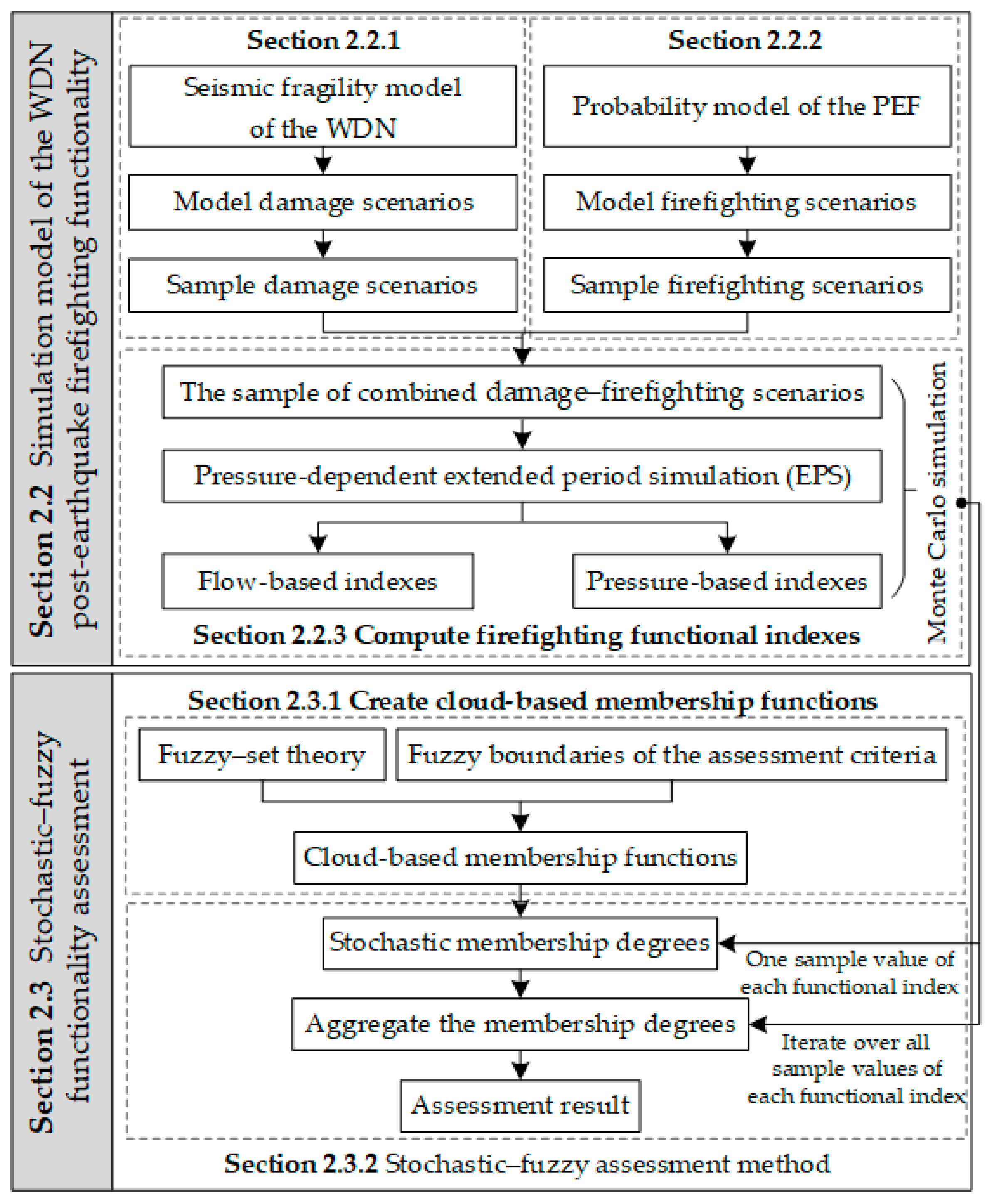
2.1. Overview
2.2. Simulation Model of the Post-Earthquake Firefighting Functionality
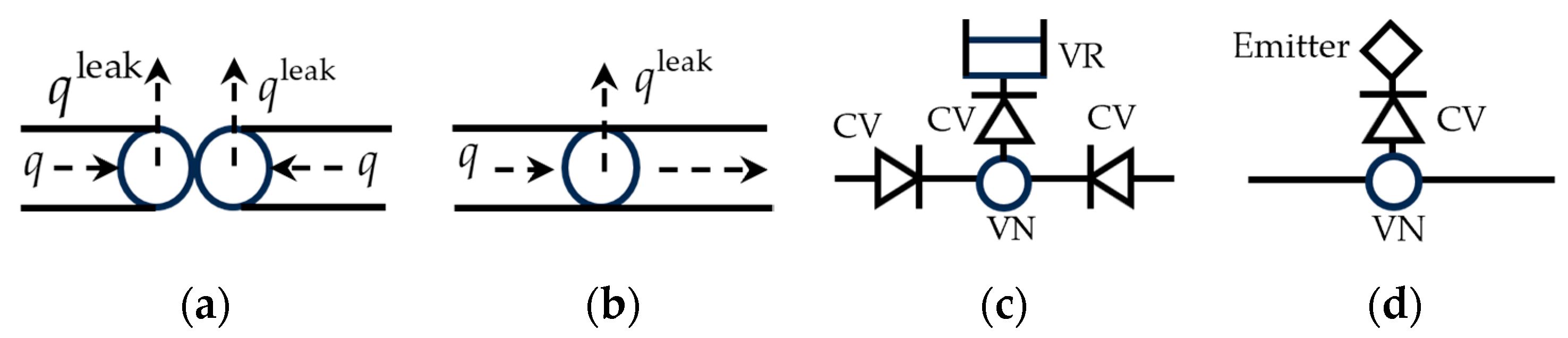
2.2.1. Sampling of the Seismic Damage of the WDN
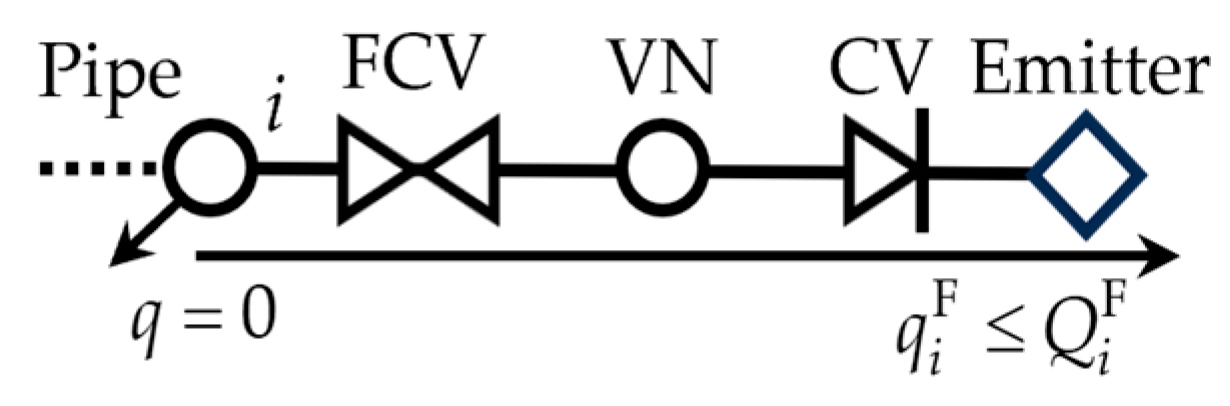
2.2.2. Sampling of Post-Earthquake Firefighting Scenarios
2.2.3. Computation of Firefighting Functional Indexes
2.3. Stochastic–Fuzzy Assessment of the Firefighting Functionality
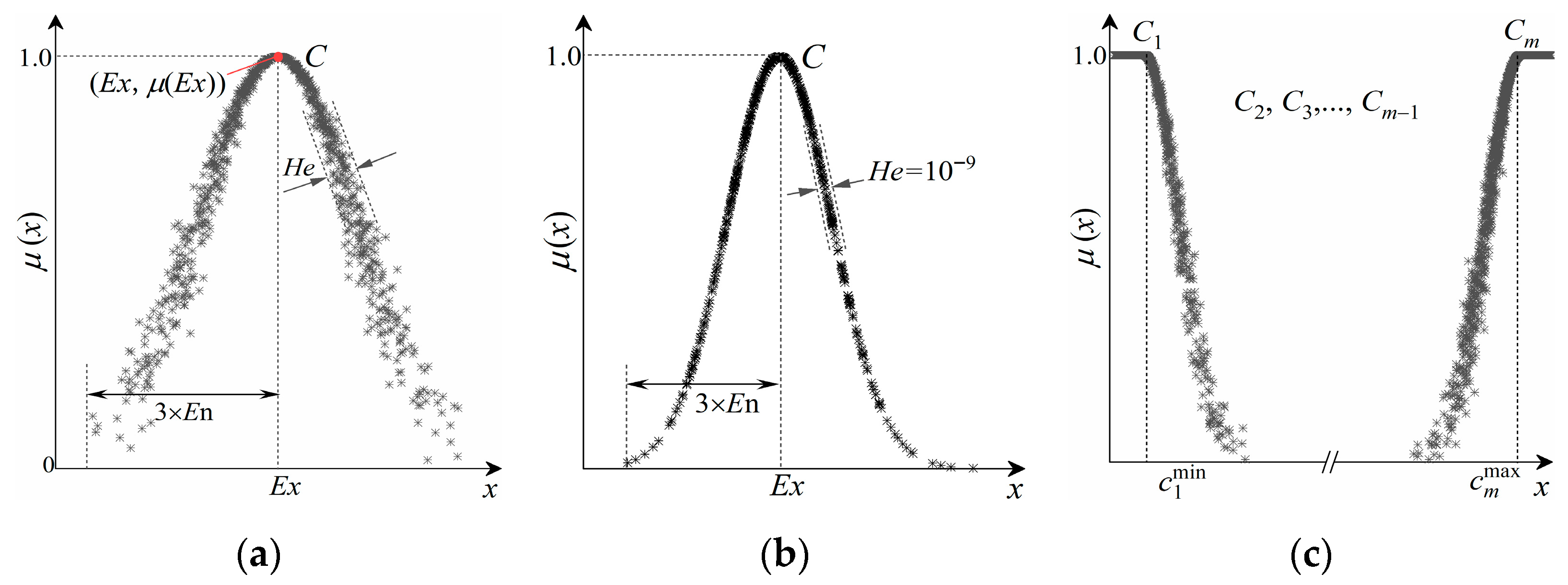
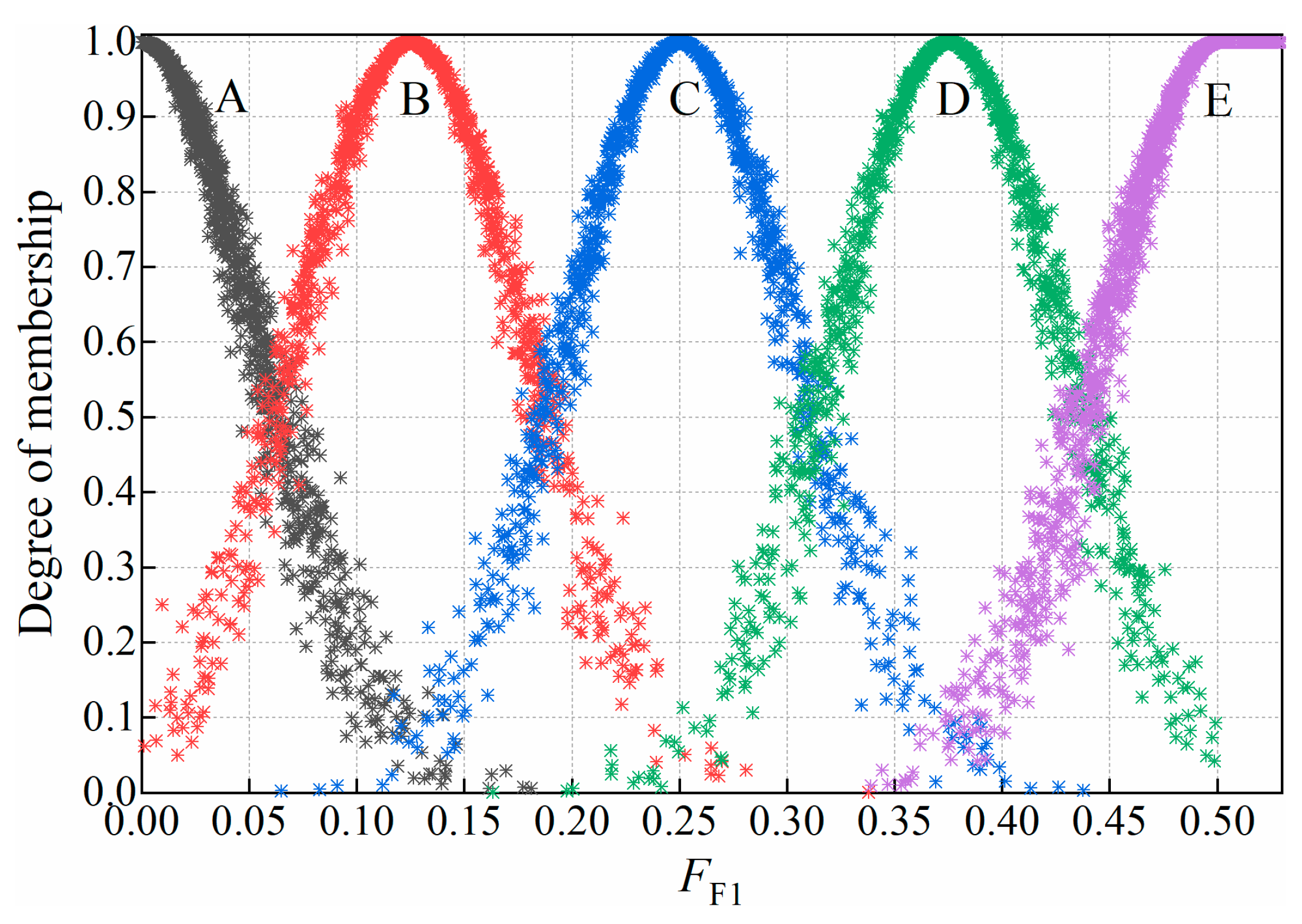
2.3.1. Creating Cloud-Based Membership Functions
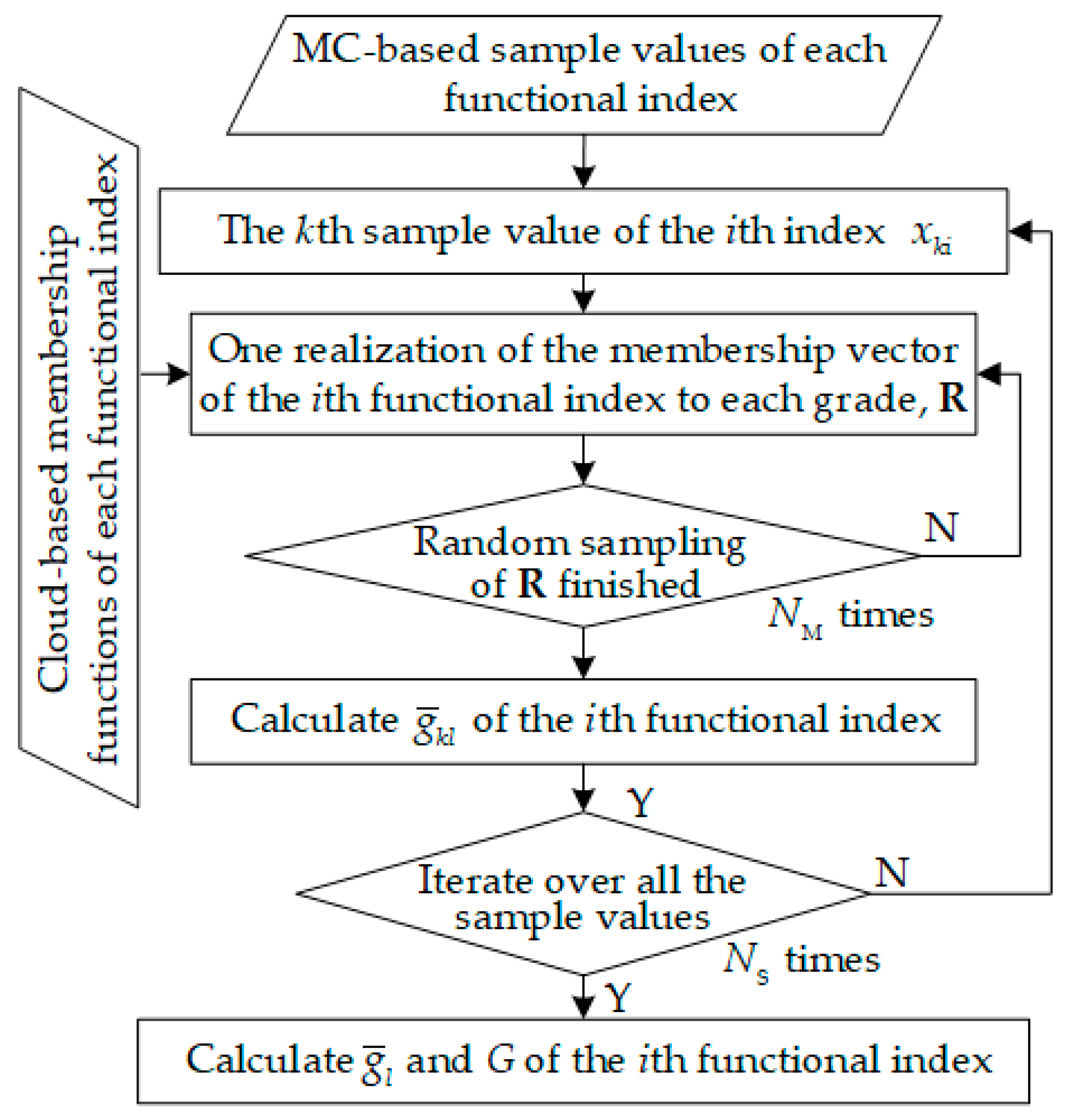
2.3.2. Stochastic–Fuzzy Assessment
3. Experimental Case Study
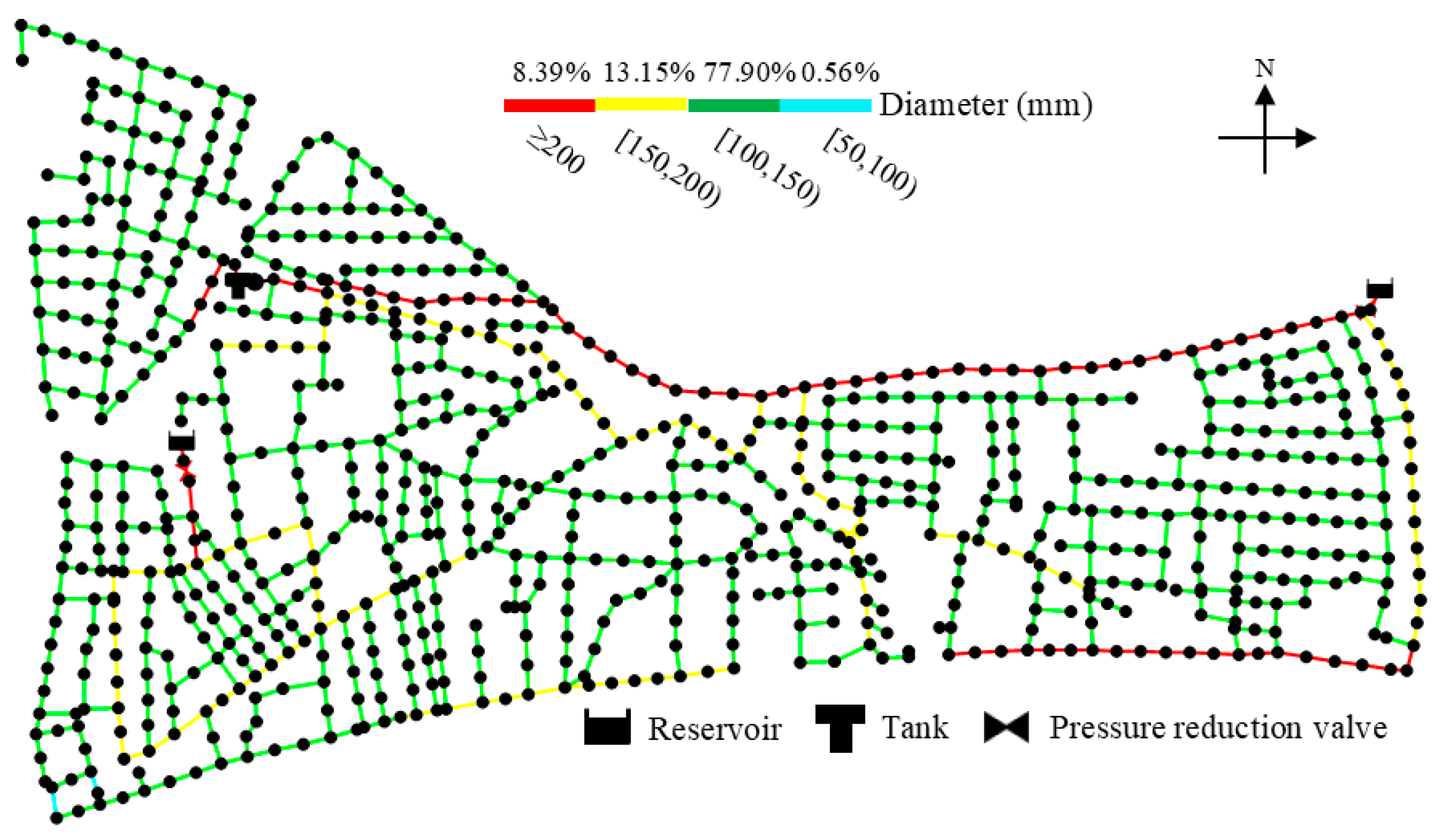
3.1. Overview of the Case
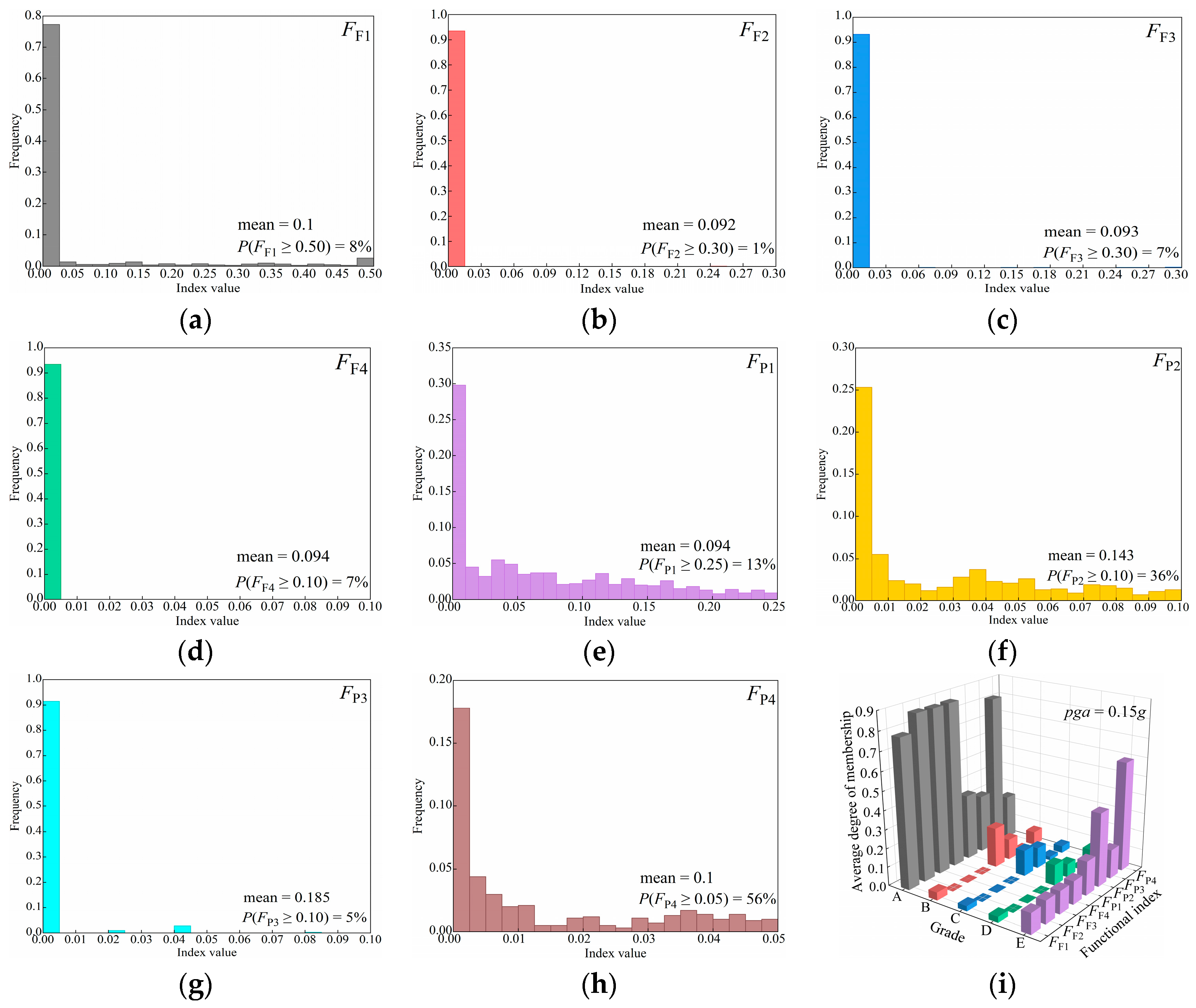
3.2. Results and Analysis
4. Discussion
4.1. Comparison with Backward Cloud-Based Assessment
4.2. Extension of the Fuzzy Set Theory
4.3. Implications and Limitations
- (1)
- The construction of seismic damage scenarios of WDNs should incorporate spatial correlations in seismic intensity. For a WDN with a small footprint, similarly to the L-Town network, the assumption of spatially uniform seismic intensity is applicable [23,24,36]. For large WDNs, characterizing this correlation using historical ground motion maps and site environments can yield more accurate damage scenarios, thereby rendering the assessment result more reliable [18].
- (2)
- PEF scenarios should incorporate fire spread dynamics and more flexible strategies for firefighting water supply. Fire spread can significantly increase the required flow rate and duration for firefighting operations. The proposed method needs to incorporate fire spread dynamics based on detailed data of the built environment and natural conditions. More advanced techniques, such as cellular automata or computational fluid dynamics, are promising for this type of modeling.
- (3)
- This study focused exclusively on firefighting and restricted domestic water use to the absolute minimum. Future efforts should optimize water rationing plans based on the water supply priorities, demand elasticity, and temporal use patterns of different consumers [51]. These plans determine water allocation to different consumers across time periods, thereby increasing firefighting flow rates while mitigating the impact of water shortages on consumers.
- (4)
- The determination of thresholds , , , , and should incorporate static subjective judgement into a dynamic process of data-driven calibration. Empirical thresholds with prior probabilistic distributions will first be established based on sensitivity analysis, historical firefighting data, and expertise. Subsequently, Bayesian updating can be utilized to iteratively refine these thresholds as new firefighting evidence becomes available [52,53]. This adaptive process enhances both the accuracy and credibility of these thresholds.
5. Conclusions
- (1)
- The flow- and pressure-based functional indexes revealed the cause of firefighting functionality degradation in terms of excessive firefighting flow and degraded water supply capacities, respectively. The indexes assisted in the decision of mitigating fire hazards or enhancing the supply capacity and anti-seismic capability of a WDN. For the L-Town network, these indexes indicated that enhancing supply capacity and anti-seismic resilience is more effective for reducing the risk of PEFs.
- (2)
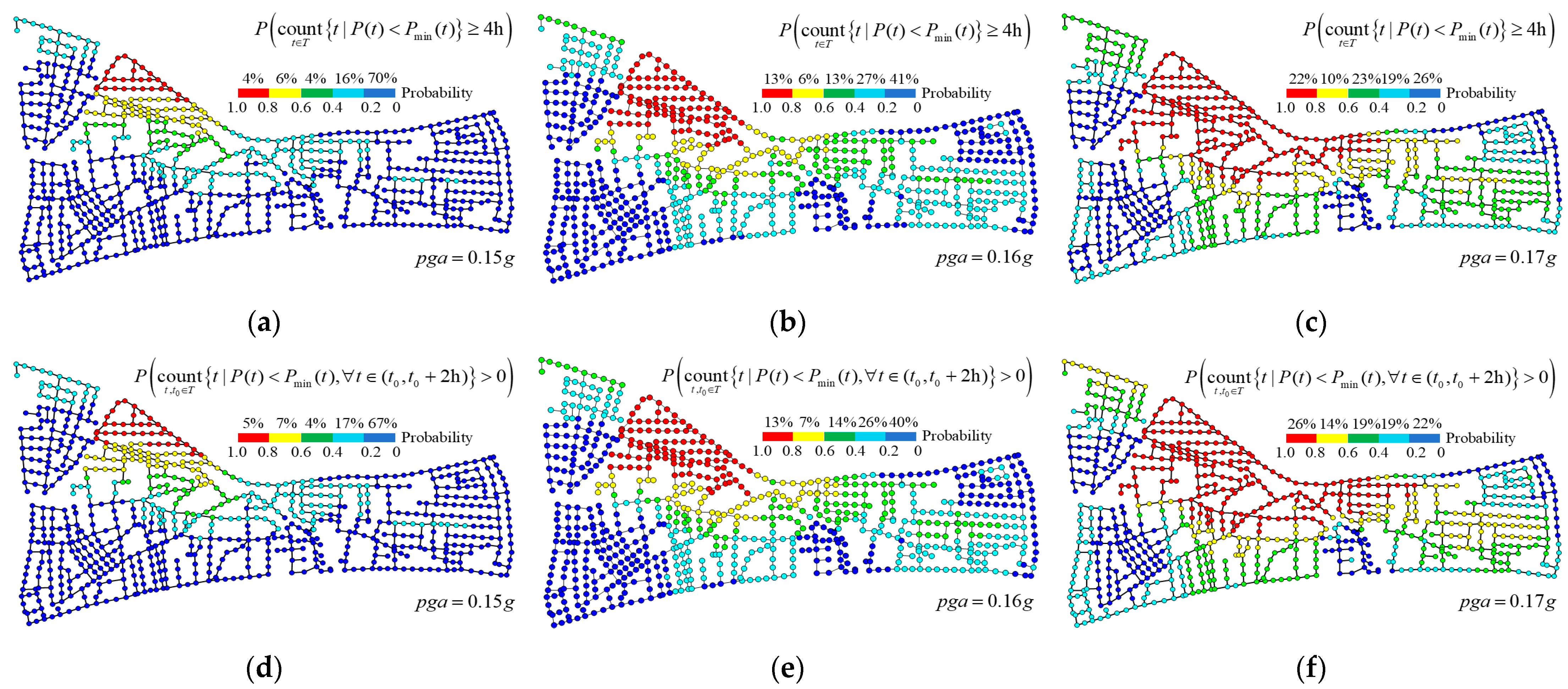
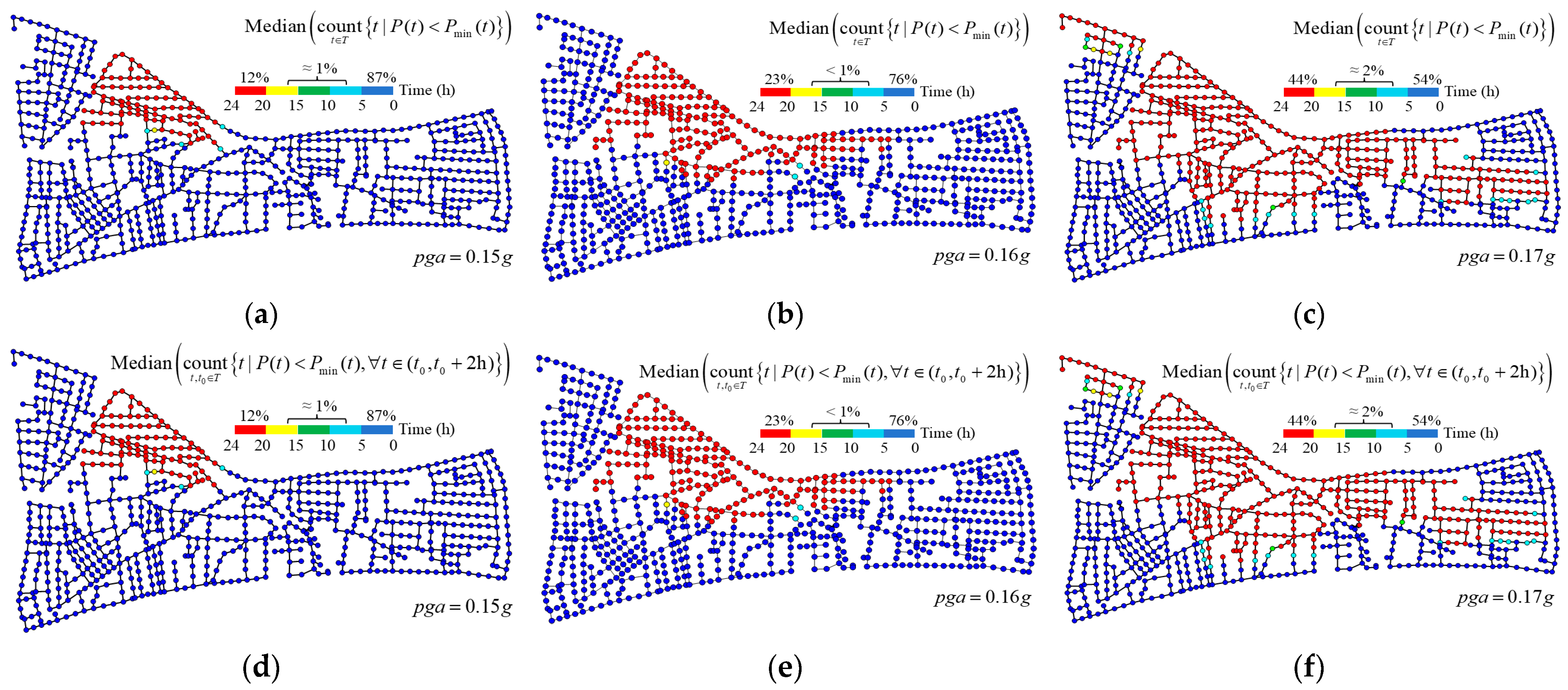
- The spatiotemporal characteristics of severe flow and pressure deficiency revealed the capability of firefighting resources to cope with concurrent fires and ensure sustained water replenishment to fire zones. For the L-Town network, water must be continuously supplemented within 24 h to specific areas with severely deficient pressure. This situation worsened with an increase in seismic intensity, inflicting a severe shortage of firefighting resources on the network.
- (3)
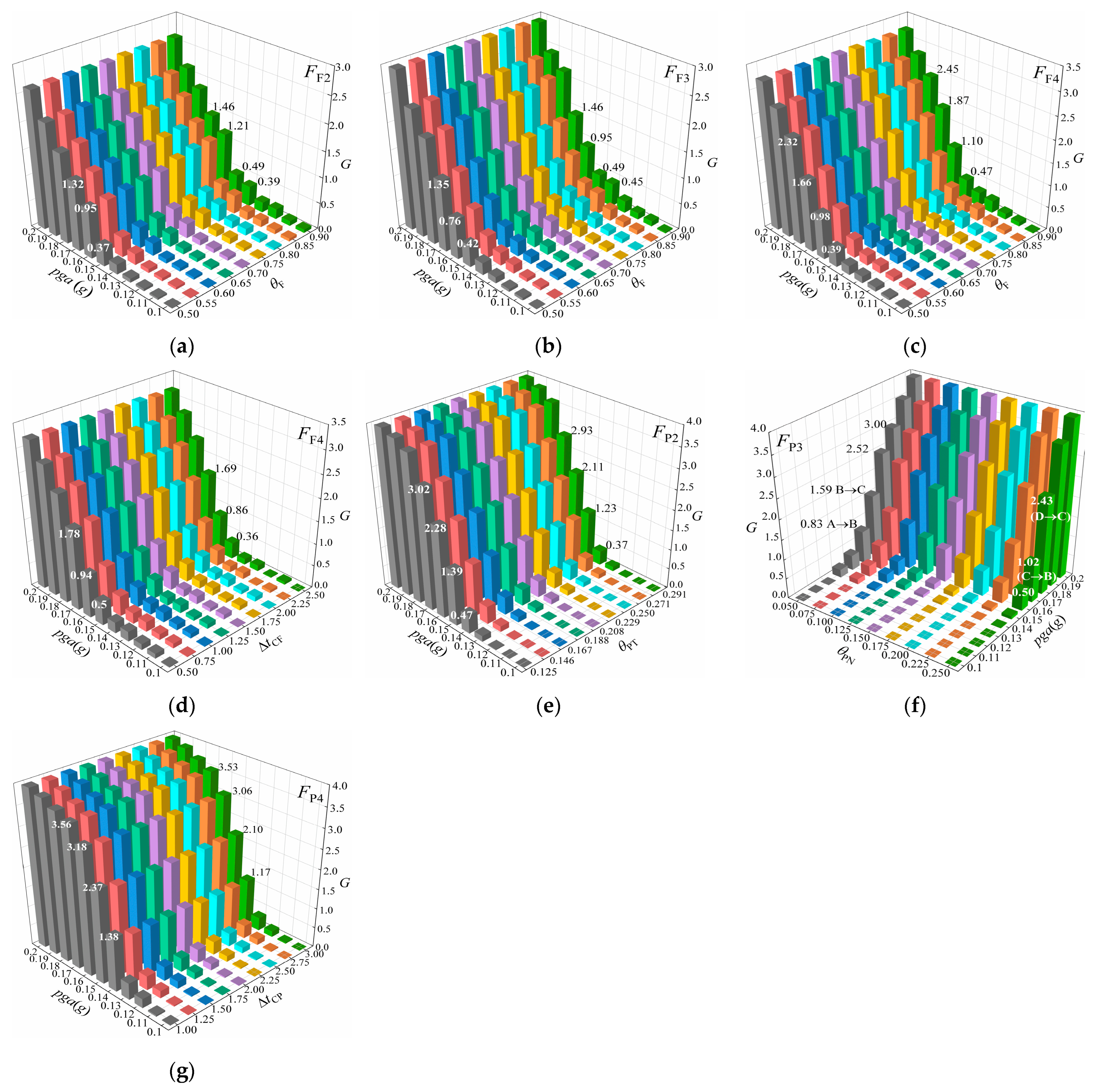
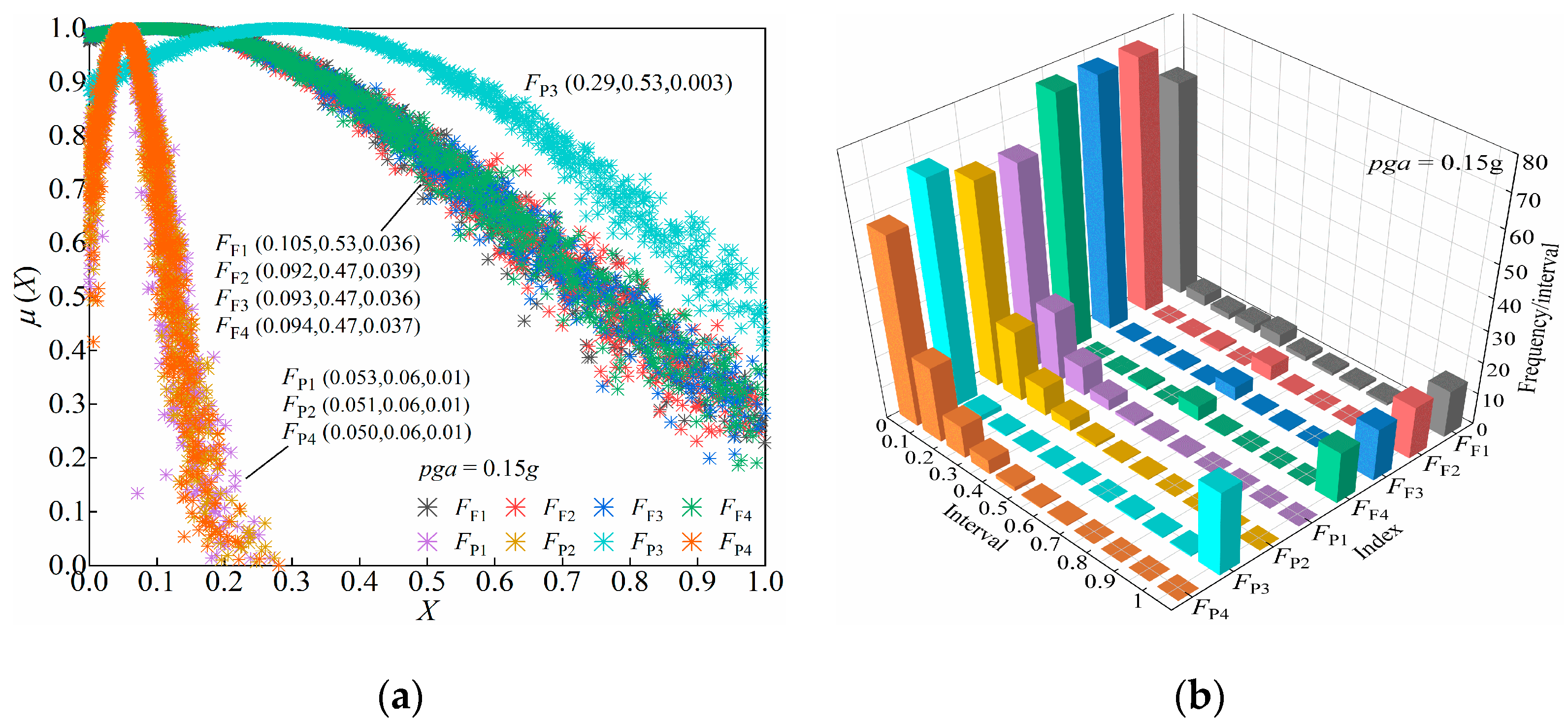
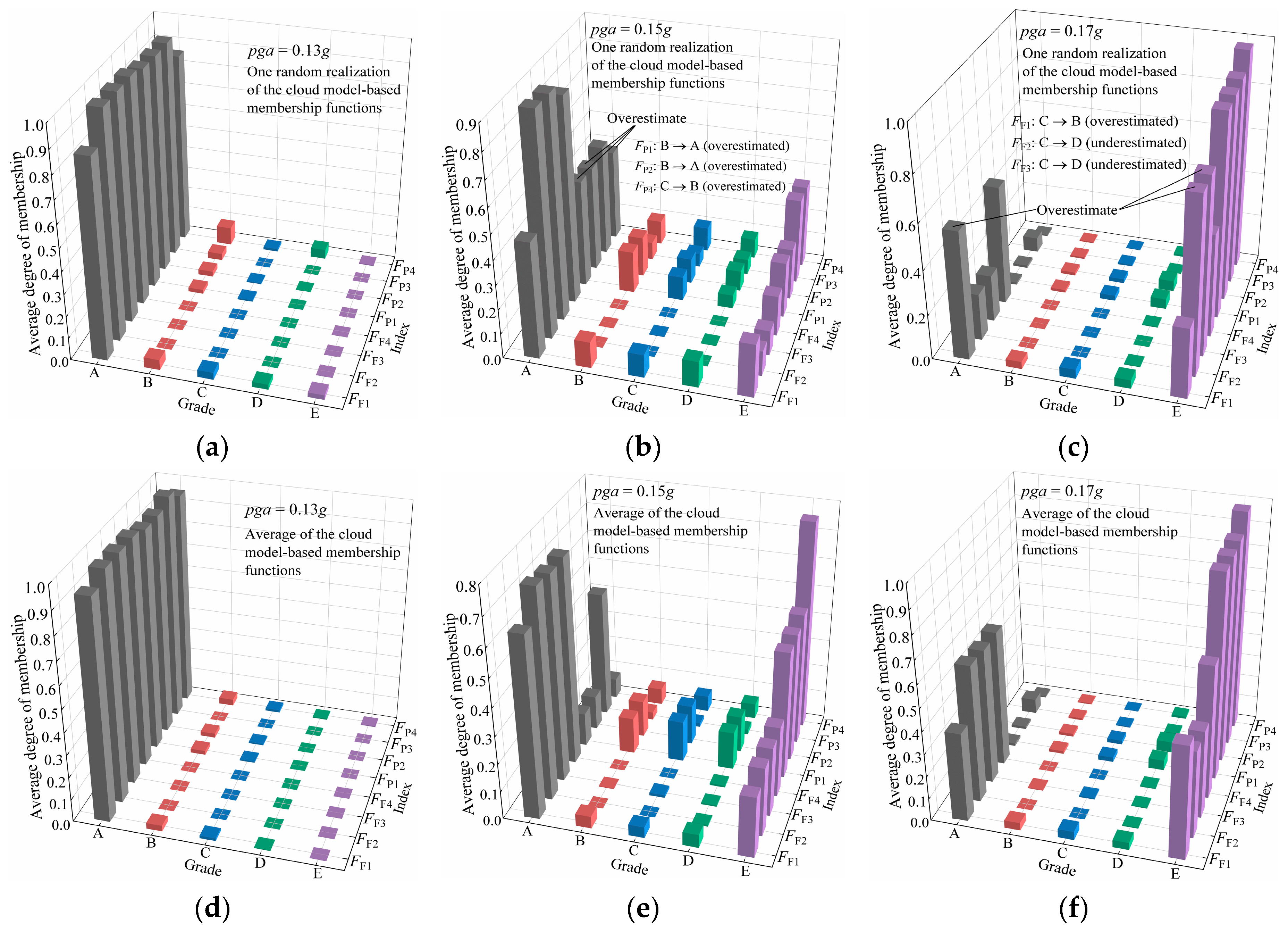
- The cloud model-based assessment method aligns the MC-based sample values of the functional indexes with qualitative assessment criteria with fuzzy boundaries. By overcoming the shortcomings of the mean MC-based values, the BCG algorithm, and fuzzy set theory, the proposed method can render the assessment result more reliable.
Author Contributions
Funding
Institutional Review Board Statement
Informed Consent Statement
Data Availability Statement
Acknowledgments
Conflicts of Interest
Abbreviations
| WDN | Water distribution network |
| MC | Monte Carlo |
| PEF | Post-earthquake fire |
| EPS | Extended period simulation |
| FCG | Forward cloud generator |
| BCG | Backward cloud generator |
References
- Arrighi, C.; Tanganelli, M.; Cristofaro, M.T.; Cardinali, V.; Marra, A.; Castelli, F.; De Stefano, M. Multi-risk assessment in a historical city. Nat. Hazards 2023, 119, 1041–1072. [Google Scholar] [CrossRef]
- Yan, M.M.; Yang, F.; Li, C.; Guo, D.H. Constructing a standard system of city sustainable development assessment technology based on the SDGs. Chin. J. Popul. Resour. 2024, 22, 275–290. [Google Scholar] [CrossRef]
- Grozdanić, G.; Cvetković, V.M.; Lukić, T.; Ivanov, A. Sustainable earthquake preparedness: A cross-cultural comparative analysis in Montenegro, North Macedonia, and Serbia. Sustainability 2024, 16, 3138. [Google Scholar] [CrossRef]
- Scawthorn, C.; O’rourke, T.D.; Blackburn, F.T. The 1906 San Francisco earthquake and fire—Enduring lessons for fire protection and water supply. Earthq. Spectra 2006, 22, 135–158. [Google Scholar] [CrossRef]
- Behnam, B. Post-Earthquake Fire Analysis in Urban Structures: Risk Management Strategies, 1st ed.; CRC Press Taylor & Francis Group: Boca Raton, FL, USA, 2016. [Google Scholar] [CrossRef]
- Lou, T.; Wang, W.; Izzuddin, B.A. A framework for performance-based assessment in post-earthquake fire: Methodology and case study. Eng. Struct. 2023, 294, 116766. [Google Scholar] [CrossRef]
- Baser, B.; Behnam, B. An emergency response plan for cascading post-earthquake fires in fuel storage facilities. J. Loss Prev. Process Ind. 2020, 65, 104155. [Google Scholar] [CrossRef]
- Li, Y.Z.; Gao, J.L.; Zhang, H.Y.; Deng, L.Q.; Xin, P. Reliability assessment model of water distribution networks against fire following earthquake (FFE). Water 2019, 11, 2536. [Google Scholar] [CrossRef]
- Hou, G.J.; Li, Q.W. Firefighting capacity evaluation of water distribution system subjected to multi-ignitions of post-earthquake fires. Struct. Saf. 2021, 88, 102035. [Google Scholar] [CrossRef]
- Li, W.N.; Mazumder, R.K.; Bastidas-Arteaga, E.; Li, Y. Seismic Performance Evaluation of Corroded Water Distribution Systems Considering Firefighting. J. Water Resour. Plan. Manag. 2024, 150, 04023075. [Google Scholar] [CrossRef]
- Jeon, S.S.; O’Rourke, T.D. Northridge earthquake effects on pipelines and residential buildings. Bull. Seismol. Soc. Am. 2005, 95, 294–318. [Google Scholar] [CrossRef]
- Federal Emergency Management Agency (FEMA). HAZUS97 Technical Manual; FEMA: Washington, DC, USA, 1997. [Google Scholar]
- American Lifelines Alliance. Seismic Fragility Formulations for Water Systems Part 1 Guideline; American Lifeline Alliance: Washington, DC, USA, 2001. [Google Scholar]
- Rossman, L.A. EPANET 2: Users’ Manual; U.S. Environmental Protection Agency (EPA): Cincinnati, OH, USA, 2000.
- GIRAFFE. GIRAFFE User’s Manual; School of Civil and Environmental Engineering, Cornell University: Ithaca, NY, USA, 2008. [Google Scholar]
- Klise, K.A.; Bynum, M.; Moriarty, D.; Murray, R. A software framework for assessing the resilience of drinking water systems to disasters with an example earthquake case study. Environ. Model. Softw. 2017, 95, 420–431. [Google Scholar] [CrossRef]
- Yoo, D.G.; Jung, D.; Kang, D.; Kim, J.H.; Lansey, K. Seismic Hazard Assessment Model for Urban Water Supply Networks. J. Water Resour. Plan. Manag. 2016, 142, 04015055. [Google Scholar] [CrossRef]
- Hou, B.W.; Xu, Q.Y.; Zhong, Z.L.; Han, J.Y.; Miao, H.Q.; Du, X.L. Seismic reliability evaluation of spatially correlated pipeline networks by quasi-Monte Carlo simulation. Struct. Infrastruct. Eng. 2024, 20, 498–513. [Google Scholar] [CrossRef]
- Long, L.; Yang, H.P.; Zheng, S.S.; Cai, Y.L. Seismic resilience evaluation of urban multi-age water distribution systems considering soil corrosive environments. Sustainability 2024, 16, 5126. [Google Scholar] [CrossRef]
- Emamjomeh, H.; Jazany, R.A.; Kayhani, H.; Hajirasouliha, I.; Bazargan-Lari, M.R. Reliability of water distribution networks subjected to seismic hazard: Application of an improved entropy function. Reliab. Eng. Syst. Saf. 2020, 197, 106828. [Google Scholar] [CrossRef]
- Liu, W.; Zhao, Y.G.; Li, J. Seismic functional reliability analysis of water distribution networks. Struct. Infrastruct. Eng. 2015, 11, 363–375. [Google Scholar] [CrossRef]
- Miao, H.Q.; Li, J. Serviceability evaluation of water supply networks under seismic loads utilizing their operational physical mechanism. Earthq. Eng. Eng. Vib. 2022, 21, 283–296. [Google Scholar] [CrossRef]
- Jia, R.; Du, K.; Song, Z.G.; Xu, W.; Zheng, F.F. Scenario reduction-based simulation method for efficient serviceability assessment of earthquake-damaged water distribution systems. Reliab. Eng. Syst. Saf. 2024, 246, 110086. [Google Scholar] [CrossRef]
- Hou, B.W.; Yang, C.X.; Wu, S.; Miao, H.Q.; Xu, C.S. Seismic retrofit optimization of water distribution systems based on the reduction of uncertain damage scenarios. Int. J. Disaster Risk Reduct. 2024, 112, 104756. [Google Scholar] [CrossRef]
- Wu, J.; Baker, J.W. Statistical learning techniques for the estimation of lifeline network performance and retrofit selection. Reliab. Eng. Syst. Saf. 2020, 200, 106921. [Google Scholar] [CrossRef]
- Hu, Z.; Zhu, J.C.; Jiao, H.M.; Zeng, W.; Yang, Z.J. Risk assessment of water distribution networks through an integrated model based on machine learning and statistical methods. Reliab. Eng. Syst. Saf. 2025, 264, 111338. [Google Scholar] [CrossRef]
- Wang, Q.A.; Chen, J.; Ni, Y.Q.; Xiao, Y.F.; Liu, N.B.; Liu, S.K.; Feng, W.S. Application of Bayesian networks in reliability assessment: A systematic literature review. Structures 2025, 71, 108098. [Google Scholar] [CrossRef]
- Kanta, L.; Brumbelow, K. Vulnerability, risk, and mitigation assessment of water distribution systems for insufficient fire flows. J. Water Resour. Plan. Manag. 2013, 139, 593–603. [Google Scholar] [CrossRef]
- Kanta, L.; Zechman, E.; Brumbelow, K. Multiobjective evolutionary computation approach for redesigning water distribution systems to provide fire flows. J. Water Resour. Plan. Manag. 2012, 138, 144–152. [Google Scholar] [CrossRef]
- Rokstad, M.M. Optimisation of fixed-outlet and flow-modulated pressure reduction measures in looped water distribution networks constrained by fire-fighting capacity requirements. Int. J. Environ. Res. Public Health 2021, 18, 7088. [Google Scholar] [CrossRef]
- Nerantzis, D.; Stoianov, I. Adaptive model predictive control for fire incidents in water distribution networks. J. Water Resour. Plan. Manag. 2022, 148, 04021102. [Google Scholar] [CrossRef]
- Chu-Ketterer, L.J.; Murray, R.; Hassett, P.; Kogan, J.; Klise, K.; Haxton, T. Performance and resilience analysis of a New York drinking water system to localized and system-wide emergencies. J. Water Resour. Plan. Manag. 2023, 149, 05022015. [Google Scholar] [CrossRef]
- Li, D.Y.; Liu, C.Y.; Gan, W.Y. A new cognitive model: Cloud model. Int. J. Intell. Syst. 2009, 24, 357–375. [Google Scholar] [CrossRef]
- Zadeh, L.A. Fuzzy sets. Inf. Control 1965, 8, 338–353. [Google Scholar] [CrossRef]
- Shen, Y.Y.; El Naggar, M.H.; Zhang, D.M.; Li, L.Y.; Du, X.L. Fuzzy-based method for seismic soil structure interaction and performance evaluation of subway stations. Soil Dyn. Earthq. Eng. 2025, 191, 109225. [Google Scholar] [CrossRef]
- Zhang, J.; Zhang, M.Y. Seismic robustness computational methodology of community building portfolio coupled with water supply network based on probability-cloud model. Comput.-Aided Civ. Infrastruct. Eng. 2024, 39, 1676–1698. [Google Scholar] [CrossRef]
- Tan, F.; Wang, J.; Jiao, Y.Y.; Ma, B.C.; He, L.L. Suitability evaluation of underground space based on finite interval cloud model and genetic algorithm combination weighting. Tunn. Undergr. Space Technol. 2021, 108, 103743. [Google Scholar] [CrossRef]
- Zhang, W.; Huang, Z.; Zhang, J.B.; Zhang, R.F.; Ma, S.K. Multifactor uncertainty analysis of construction risk for deep foundation pits. Appl. Sci. 2022, 12, 8122. [Google Scholar] [CrossRef]
- Tabucchi, T.; Davidson, R.; Brink, S. Simulation of post-earthquake water supply system restoration. Civ. Eng. Environ. Syst. 2010, 27, 263–279. [Google Scholar] [CrossRef]
- Zhang, Q.Z.; Zheng, F.F.; Chen, Q.W.; Kapelan, Z.; Diao, K.G.; Zhang, K.J.; Huang, Y. Improving the Resilience of Postdisaster Water Distribution Systems Using Dynamic Optimization Framework. J. Water Resour. Plan. Manag. 2020, 146, 04019075. [Google Scholar] [CrossRef]
- Isoyama, R.; Ishida, E.; Yune, K.; Shirozu, T.; IWA. Seismic damage estimation procedure for water supply pipelines. In Anti-Seismic Measures on Water Supply; IWA Publishing: London, UK, 2000; Volume 18, pp. 63–68. [Google Scholar]
- Zhao, S.J.; Xiong, L.Y.; Ren, A.Z. A spatial–temporal stochastic simulation of fire outbreaks following earthquake based on GIS. J. Fire Sci. 2006, 24, 313–339. [Google Scholar] [CrossRef]
- Mascheri, G.; Chieffo, N.; Tondini, N.; Pinto, C.; Lourenço, P.B. Assessing the cascading post-earthquake fire-risk scenario in urban centres. Sustainability 2024, 16, 9075. [Google Scholar] [CrossRef]
- GB 50974-2014; Technical Code for Fire Protection Water Supply and Hydrant Systems. Ministry of Housing and Urban-Rural Development PRC, The State Bureau of Quality and Technical Supervision PRC: Beijing, China, 2014.
- American Water Works Association (AWWA). Distribution System Requirements for Fire Protection; American Water Works Association: Denver, CO, USA, 1998. [Google Scholar]
- Vrachimis, S.G.; Eliades, D.G.; Taormina, R.; Kapelan, Z.; Ostfeld, A.; Liu, S.M.; Kyriakou, M.; Pavlou, P.; Qiu, M.N.; Polycarpou, M.M. Battle of the leakage detection and isolation methods. J. Water Resour. Plan. Manag. 2022, 148, 04022068. [Google Scholar] [CrossRef]
- GB 5749-2022; Standards for Drinking Water Quality. Administration for Market Regulation and Standardization Administration of China: Beijing, China, 2022.
- GB 50137-2011; Code for Classification of Urban Land Use and Planning Standards of Development Land. Ministry of Housing and Urban-Rural Development of the People’s Republic of China, General Administration of Quality Supervision, Inspection and Quarantine of the People’s Republic of China: Beijing, China, 2011.
- Yang, Y.S.; Tatano, H.; Huang, Q.Y.; Liu, H.; Yoshizawa, G.; Wang, K. Evaluating the societal impact of disaster-driven infrastructure disruptions: A water analysis perspective. Int. J. Disaster Risk Reduct. 2021, 52, 101988. [Google Scholar] [CrossRef]
- Bai, M.H.; Liu, Q. Evaluating urban fire risk based on entropy-cloud model method considering urban safety resilience. Fire 2023, 6, 62. [Google Scholar] [CrossRef]
- Jeong, H.S.; Abraham, D.M. Water Rationing Model for Consequence Minimization of Water Infrastructure Destruction. J. Water Resour. Plan. Manag. 2009, 135, 80–89. [Google Scholar] [CrossRef]
- Wang, Q.A.; Liu, Q.; Ma, Z.G.; Wang, J.F.; Ni, Y.Q.; Ren, W.X.; Wang, H.B. Data interpretation and forecasting of SHM heteroscedastic measurements under typhoon conditions enabled by an enhanced Hierarchical sparse Bayesian Learning model with high robustness. Measurement 2024, 230, 114509. [Google Scholar] [CrossRef]
- Wang, Q.A.; Huang, X.Y.; Ni, Y.Q.; Feng, W.S.; Wang, J.F.; Qiu, S.; Zhou, P.; Li, J.P.; Luo, Y. Uncertainty-awarded, high-precision multi-step prediction of structural health monitoring sensor streams under extreme typhoon events: An enhanced Bayesian dynamic linear model leveraging the kernel regression basis function for severe environmental adaptation. Measurement 2026, 262, 120050. [Google Scholar] [CrossRef]



| Form of Rupture | Leaking Area | Probability |
|---|---|---|
| Circular looseness | 0.8 | |
| Longitudinal cracking | 0.1 | |
| Pipe breach | 0.1 |
| Primary Index | Secondary Index | Tertiary Index |
|---|---|---|
| Firefighting functionality | Flow deficiency | Average level of deficient flow, |
| Number of nodes with severely deficient flow, | ||
| Duration of severely deficient flow, | ||
| Level of prolonged severely deficient flow, | ||
| Pressure deficiency | Average level of deficient pressure, | |
| Number of nodes with severely deficient pressure, | ||
| Duration of severely deficient pressure, | ||
| Level of prolonged severely deficient pressure, |
| G | Grade |
|---|---|
| Number of Residents (×104) | Flow Rate (m3/s) | Number of Residents (×104) | Flow Rate (m3/s) |
|---|---|---|---|
| ≤1.0 | 0.015 | 20.0~30.0 | 0.060 |
| 1.0~2.5 | 0.020 | 30.0~40.0 | 0.075 |
| 2.5~5.0 | 0.030 | 40.0~50.0 | 0.075 |
| 5.0~10.0 | 0.035 | 50.0~70.0 | 0.090 |
| 10.0~20.0 | 0.045 | ≥70.0 | 0.100 |
| A | B | C | D | E | ||
|---|---|---|---|---|---|---|
| (0, 0.053, 0.005) | (0.125, 0.053, 0.005) | (0.250,0.0531, 0.005) | (0.375, 0.0531, 0.005) | (0.5, 0.053, 0.005) | ||
| (0, 0.032, 0.003) | (0.075, 0.032, 0.003) | (0.15, 0.032, 0.003) | (0.225, 0.032, 0.003) | (0.3, 0.032, 0.003) | ||
| (0, 0.032, 0.003) | (0.075, 0.032, 0.003) | (0.15, 0.032, 0.003) | (0.225, 0.032, 0.003) | (0.3, 0.032, 0.003) | ||
| (0, 0.011, 0.001) | (0.025, 0.011, 0.001) | (0.05, 0.011, 0.001) | (0.075, 0.011, 0.001) | (0.1, 0.011, 0.001) | ||
| (0, 0.027, 0.003) | (0.063, 0.027, 0.003) | (0.125, 0.027, 0.003) | (0.188, 0.027, 0.003) | (0.25, 0.027, 0.003) | ||
| (0, 0.016, 0.002) | (0.0375, 0.016, 0.002) | (0.075, 0.016, 0.002) | (0.1125, 0.016, 0.002) | (0.15, 0.016, 0.002) | ||
| (0, 0.016, 0.002) | (0.0375, 0.016, 0.002) | (0.075, 0.016, 0.002) | (0.1125, 0.016, 0.002) | (0.15, 0.016, 0.002) | ||
| (0, 0.005, 0.0005) | (0.0125, 0.005, 0.0005) | (0.025, 0.005, 0.0005) | (0.0375, 0.005, 0.0005) | (0.05, 0.005, 0.0005) | ||
Disclaimer/Publisher’s Note: The statements, opinions and data contained in all publications are solely those of the individual author(s) and contributor(s) and not of MDPI and/or the editor(s). MDPI and/or the editor(s) disclaim responsibility for any injury to people or property resulting from any ideas, methods, instructions or products referred to in the content. |
© 2026 by the authors. Licensee MDPI, Basel, Switzerland. This article is an open access article distributed under the terms and conditions of the Creative Commons Attribution (CC BY) license.
Share and Cite
He, X.; Huang, H.; Xu, F.; Zhang, C.; Qin, T. Stochastic–Fuzzy Assessment Framework for Firefighting Functionality of Urban Water Distribution Networks Against Post-Earthquake Fires. Sustainability 2026, 18, 949. https://doi.org/10.3390/su18020949
He X, Huang H, Xu F, Zhang C, Qin T. Stochastic–Fuzzy Assessment Framework for Firefighting Functionality of Urban Water Distribution Networks Against Post-Earthquake Fires. Sustainability. 2026; 18(2):949. https://doi.org/10.3390/su18020949
Chicago/Turabian StyleHe, Xiang, Hong Huang, Fengjiao Xu, Chao Zhang, and Tingxin Qin. 2026. "Stochastic–Fuzzy Assessment Framework for Firefighting Functionality of Urban Water Distribution Networks Against Post-Earthquake Fires" Sustainability 18, no. 2: 949. https://doi.org/10.3390/su18020949
APA StyleHe, X., Huang, H., Xu, F., Zhang, C., & Qin, T. (2026). Stochastic–Fuzzy Assessment Framework for Firefighting Functionality of Urban Water Distribution Networks Against Post-Earthquake Fires. Sustainability, 18(2), 949. https://doi.org/10.3390/su18020949