Article

Hydroponic Nature-Based Wastewater Treatment: Changes in Algal Communities and the Limitations of Laser Granulometry for Taxonomic Identification


by
Aleksandra Bawiec
1,*,
Katarzyna Pawęska
1,*,
Dorota Richter
2 and
Mirosława Pietryka
2
1
Institute of Environmental Engineering, Wrocław University of Environmental and Life Sciences, 50-363 Wrocław, Poland
2
Department of Botany and Plant Ecology, Wrocław University of Environmental and Life Sciences, 50-363 Wrocław, Poland
*
Authors to whom correspondence should be addressed.
Sustainability 2026, 18(2), 909; https://doi.org/10.3390/su18020909
Submission received: 14 November 2025 / Revised: 18 December 2025 / Accepted: 12 January 2026 / Published: 15 January 2026

Abstract

The increasing need for sustainable wastewater treatment technologies has accelerated the development of Nature-Based Solutions (NBS), including hydroponic systems applied as tertiary treatment. This study aimed to assess changes in algal species composition in hydroponically treated municipal wastewater and to evaluate whether laser granulometry can be used as a rapid tool for preliminary identification of algal taxa. The experiment was conducted in a static hydroponic system with three macrophyte species (Pistia stratiotes, Limnobium laevigatum, and Myriophyllum verticillatum) under white and red–blue light conditions. Microscopic identification was compared with indirect indicators such as chlorophyll a concentration and particle size distribution (D-values) obtained using laser granulometry. The results showed a substantial reduction in cyanobacteria and a shift towards diatoms and green algae, demonstrating the ecological benefits of hydroponic NBS. However, regression analysis revealed no significant correlation between algal cell volume and D(3.0) or D(4.3) values (R2 < 0.06, p > 0.38), excluding the use of granulometric data for taxonomic purposes. This limitation complicates monitoring of potentially harmful cyanobacteria in effluent and may necessitate additional algal removal before discharge

1. Introduction

Water scarcity, increasing pollutant loads, and the continuous growth of wastewater volumes constitute major environmental challenges of the 21st century [1]. At the same time, progressively stricter regulations concerning effluent quality have increased the demand for advanced and sustainable wastewater treatment technologies [2]. Conventional treatment processes are energy-intensive and contribute both indirectly (CO2) and directly (e.g., N2O emissions) to greenhouse gas emissions, raising concerns regarding their long-term environmental, economic, and ethical sustainability [3,4,5].
In response, increasing attention has been directed toward Nature-Based Solutions (NBS), which utilize natural processes and ecosystem functions to provide effective wastewater treatment with low energy demand and limited chemical inputs [4,6,7]. Among NBS applied in water and wastewater management, constructed wetlands, purification ponds, hydroponic systems, and algae-based technologies are particularly prominent [8]. These systems rely on synergistic interactions between plants, microorganisms, and physicochemical processes, mimicking natural self-purification mechanisms.
Hydroponic wastewater treatment systems are commonly used as secondary or tertiary treatment stages and are based on direct contact between aquatic macrophytes and wastewater [9,10,11]. In such systems, plant roots provide extensive surfaces for microbial biofilm development, facilitating organic matter degradation and nutrient transformation [12,13]. Additionally, macrophytes may suppress cyanobacterial growth through nutrient and light competition, the promotion of grazing organisms, and the release of allelopathic compounds [14].
While the roles of macrophytes and bacteria in hydroponic systems have been widely investigated, algal and cyanobacterial communities developing within these systems remain relatively understudied, despite their key contribution to nutrient removal, oxygen production, and overall system performance [15,16,17,18]. Algae are highly efficient assimilators of nitrogen, phosphorus, and carbon and can significantly enhance wastewater treatment efficiency [19,20,21,22]. However, they also constitute an important fraction of suspended solids in treated effluents and may be discharged into receiving waters [23]. This is of particular concern in the case of cyanobacteria, which are capable of forming blooms and producing toxins that threaten aquatic ecosystems and public health [24,25].
Therefore, effective monitoring of algal communities in hydroponic NBS is essential, especially at the final stage of wastewater treatment. Microscopic identification remains the most accurate method for algal taxonomic analysis, but it is time-consuming, labor-intensive, and unsuitable for routine operational monitoring. As a result, indirect and rapid analytical methods are increasingly considered. Chlorophyll a concentration is commonly used as a proxy for total algal biomass and trophic status [26,27], but it provides no information on species composition. Laser granulometry, which allows rapid characterization of particle size distributions, has been proposed as a potential tool for indirect assessment of algal structure. This approach is based on the assumption that particle size parameters may reflect dominant algal morphologies and cell volumes. However, basic granulometric data often require complex numerical transformations and their applicability for taxonomic inference in complex wastewater matrices remains insufficiently validated [28,29].
Algal community structure in hydroponic systems is strongly controlled by environmental drivers. Light quality and photoperiod regulate photosynthetic efficiency, pigment composition, and growth dynamics of algae [30,31]. In particular, red and blue wavelengths are preferentially absorbed by chlorophyll pigments and may favor specific algal groups [31]. Simultaneously, macrophyte species influence algal development by modifying light availability, nutrient conditions, hydrodynamics, and habitat structure through shading effects, root-associated biofilms, and competitive interactions [14,32,33]. Despite their importance, the combined effects of plant species and light spectrum on algal community composition, and their implications for indirect monitoring tools, have rarely been investigated under controlled hydroponic wastewater treatment conditions.
The key knowledge gap addressed in this study is the limited understanding of whether rapid, indirect methods, particularly laser granulometry, can be used for preliminary identification of algal taxa in hydroponic wastewater treatment systems, and how environmental factors such as macrophyte species and light spectrum shape algal morphology and community structure.
The novelty of this work lies in the integrated assessment of algal species composition, chlorophyll a concentration, and laser-derived particle size distributions in a static hydroponic system operated under controlled lighting conditions and planted with different macrophyte species.
This study was based on the expectation that particle size distributions obtained by laser granulometry could, at least to some extent, reflect the dominant algal morphologies present in hydroponic wastewater treatment systems. In particular, it was assumed that equivalent diameter parameters describing particle volume would increase with the prevalence of larger algal cells or filamentous and colonial forms, thereby offering a rapid, indirect indication of algal community structure [28,29]. It was further expected that light quality would significantly influence algal biomass and composition, with red–blue illumination favoring chlorophyll-rich green algae due to more efficient absorption of photosynthetically active radiation compared to broad-spectrum white light [31]. It was also hypothesized that different macrophyte species would differentially shape algal community structure by altering light availability, substrate complexity, and competitive interactions, resulting in distinct algal assemblages [14,32,33]. Collectively, these expectations formed the basis for evaluating the applicability and limitations of laser granulometry as a monitoring tool under different environmental conditions in hydroponic nature-based wastewater treatment systems.

2. Materials and Methods

2.1. Experimental Setup

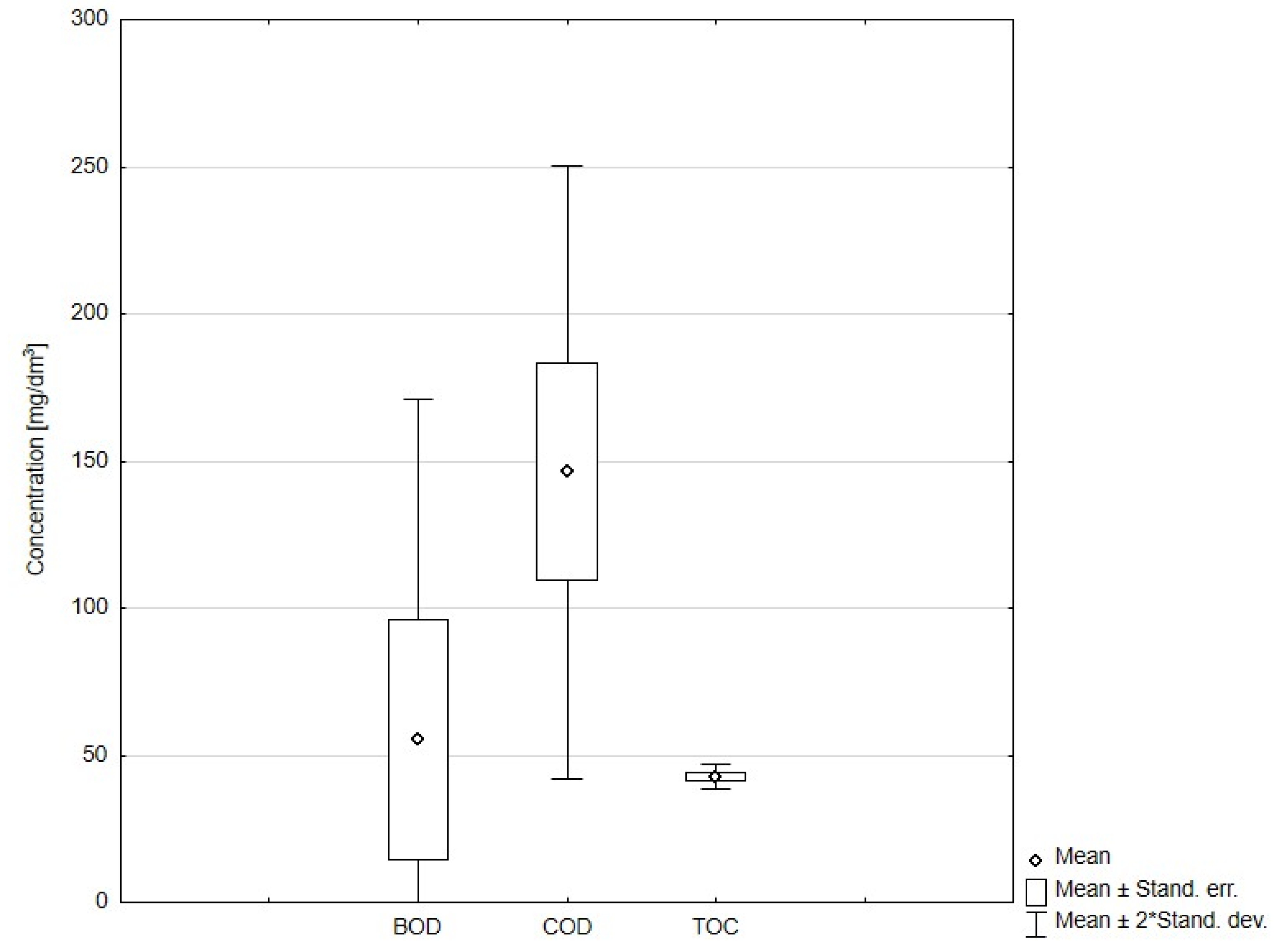
For the purposes of this study, a test setup was established consisting of eight tanks placed inside a climate-controlled chamber. The average air temperature was maintained at 21–23 °C through the use of thermostat-controlled air-conditioning units. Each 40 L tank, made of opaque plastic, has dimensions as follows: external dimensions of 77 × 39 cm at the upper edge and 68 × 30 cm at the lower edge, with a total height of 22 cm. Each tank was filled with 20 L of biologically treated wastewater to simulate the use of static hydroponics as a tertiary (third-stage) wastewater treatment method. The height of the wastewater surface was 11 cm. The wastewater originated from secondary settling tank. Three samples of wastewater were homogenized prior to distribution into the experimental tanks. The composition and variability of the components of the wastewater used as the medium, determined based on analyses of three samples of biologically treated wastewater, is shown in Figure 1 and Figure 2.
The pH of the wastewater was 7.5, the average measured conductivity was 888 µS/cm, and the total suspended solids content ranged from 5 to 15 mg/dm3. The mean values of individual wastewater parameters in the homogenized sample used as the experimental medium were as follows: TN 16.63 mg/dm3, Norg 3.78 mg/dm3, NH4+ 11.03 mg/dm3, NO2 0.37 mg/dm3, NO3 mg/dm3, PO43− mg/dm3, TP 1.03 mg/dm3, BOD 55.4 mg/dm3, COD 146.3 mg/dm3, and TOC 42.68 mg/dm3. Each tank was continuously aerated to maintain the dissolved oxygen (DO) concentration at 7–8 mg O2/L. DO levels were monitored using a portable oxygen meter (HI9146-04 with oxygen probe, Hanna Instruments, Woonsocket, RI, USA). For aeration, a Tetra APS 50 (TETRA U.S., Blacksburg, VA, USA) aquarium aeration unit was used, equipped with an air diffuser strip positioned along the diagonal at the bottom of the tank. The advantage of this setup was the maintenance of continuous, slow mixing of the wastewater caused by the movement of air bubbles.
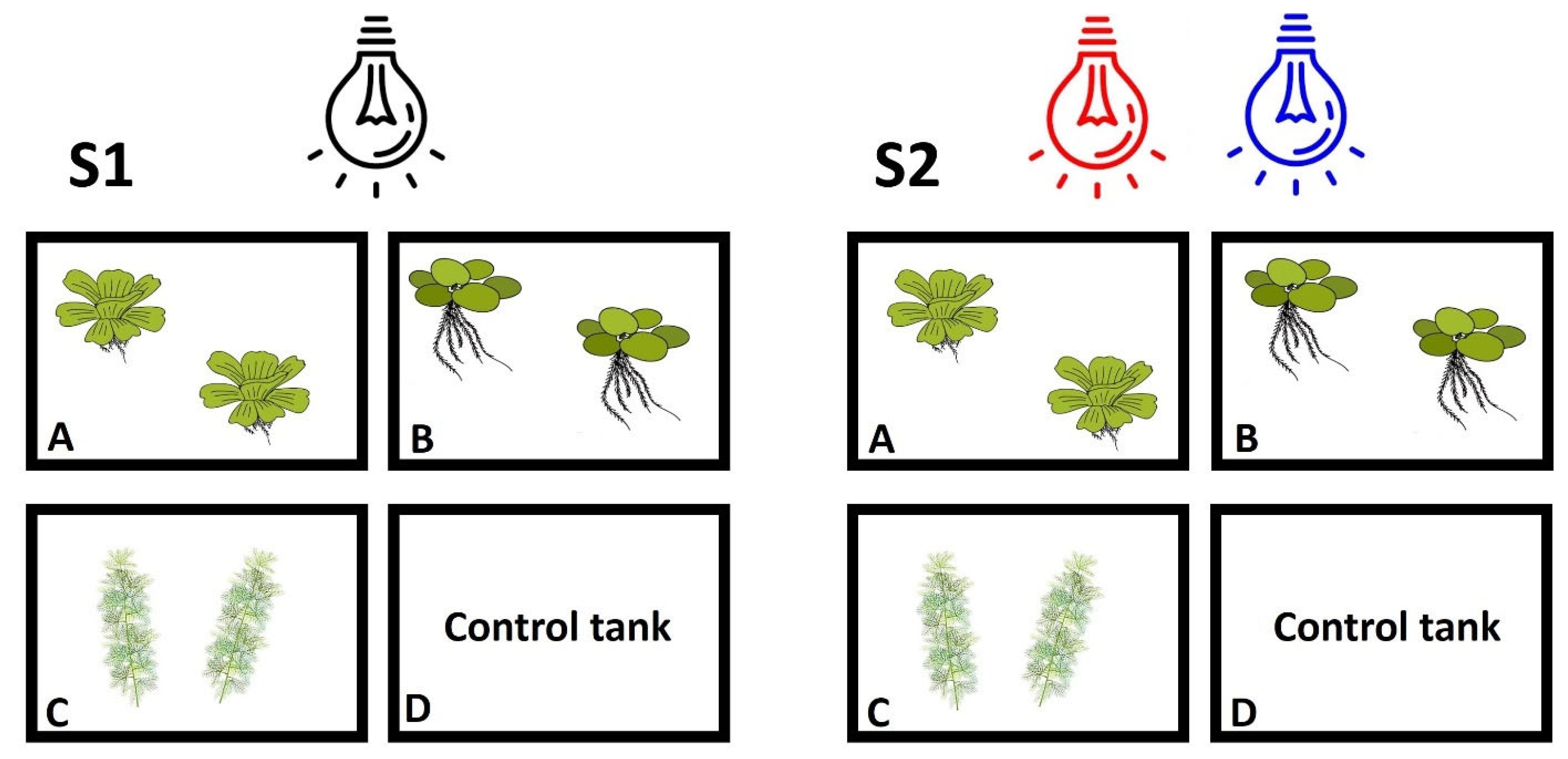
The climate chamber was divided into two sections, each equipped with a different artificial lighting setup. One section used broad-spectrum white light to simulate natural sunlight. The second section was illuminated with photosynthetically active radiation (PAR) wavelengths, using fluorescent lamps emitting red (625–675 nm) and blue (425–475 nm) light in a 2:1 ratio. The lamps used had a power rating of 30 W and were positioned 40 cm above the wastewater surface. In both sections, the lighting regime followed a 16 h light/8 h dark photoperiod. Each section contained four tanks: in three of them, different species of macrophytes were planted, while one tank served as a plant-free control (Figure 3). Three aquatic plant species were used in the experiment: Pistia stratiotes, Limnobium laevigatum and Myriophyllum verticillatum. Each tank contained 15 plant seedlings. To ensure uniform surface coverage with plants, a plastic mesh matrix was used, which allowed the seedlings to be held in a fixed position on the surface of the tank. The chosen plant species are well-known for their resistance to heavy metals and are commonly used in phytoremediation. Owing to their accumulation capacity and adaptability, they are already utilized in the wastewater treatment plant from which the biologically treated effluent used in the experiment was obtained. Since the system was isolated from the natural environment—both at the treatment plant and in the laboratory—the risk of these non-native species escaping and negatively affecting native ecosystems was eliminated.

2.2. Sampling and Analysis

During the experiment, the measurement series lasting 15 weeks was carried out. At the beginning of the experiment, after 5 weeks, and at the end of the experiment, measurements of chlorophyll a concentration, determination of the granulometric composition of suspended solids, and identification of algae and cyanobacteria species were carried out based on analyses of three samples taken from each tank.
Samples for algae and cyanobacteria species identification were collected and transported to Department of Botany and Plant Ecology, Wrocław University of Environmental and Life Sciences.
Morphological identification of cyanobacteria and algae was carried out using a Nikon Eclipse TE2000-S microscope equipped with a Nikon DS-Fi1 camera (Nikon Instruments, Inc., Melville, NY, USA), which enables the precise measurement and archiving of examined cells. Qualitative analyzes were conducted primarily on living material (preserved material was used for possible verification of qualitative analyses). The species were identified on the basis of specialist studies [34,35,36,37,38,39]. The taxonomy of cyanobacteria and algae was used according to Hoek et al. [40]. Qualitative and quantitative analyses of algal communities were performed on samples from each of the 8 tanks 5 and 15 weeks after the start of the experiment. Each sample taken was tested in five replicates. Species abundance was determined by estimating the number of units (cells, threads, colonies) of the tested species on a standard surface (18 × 18 mm coverslip). For this purpose, units of the tested species were counted in 6 visual strips. A modified method according to Starmach was used [34]: 1—single appearance, 2—5–20% coverslip coverage, 3—20–60% coverslip coverage, 4—60–90% coverslip coverage.
Chlorophyll a concentration was determined according to the PN-ISO10260 [41] standard—spectrometric determination of chlorophyll a concentration. Water samples were filtered using a vacuum pump-assisted filtration method through Whatman glass fiber filters without organic binders (47 mm in diameter), which retain more than 99% of particles larger than 1 µm. Hot ethanol (C2H5OH), a 90% (v/v) aqueous solution at 75 °C, was used for the extraction. To acidify a specified volume of the final extract, hydrochloric acid (HCl) with a concentration of 3 mol·L−1 was used. The sample volume ranged from 500 mL at the beginning of the experiment, when algal concentrations were low, to 200 mL in the fifteenth week, when a noticeable increase in algal abundance was observed. The sample volume was taken into account in the calculations, which were performed using the following formula:
ρ c   =   ( A A a ) K c   ×   R R 1   ×   10 3   V e V s · d
where
  • A = A665A750 the absorbance of the extract before acidification;
  • Aa = A665A750 the absorbance of the extract after acidification;
  • Ve the volume of the extract in milliliters;
  • Vs the volume of the filtered sample in liters;
  • Kc = 82 L/μg·cm the specific operational spectral absorption coefficient of chlorophyll a;
  • R = 1.7 the ratio of A/Aa for a pure chlorophyll a solution that has been converted to pheophytin by acidification;
  • d the optical path length of the cuvette, in centimeters;
  • 103 the dimensional coefficient for adjusting Ve.
Absorbance measurements at 665 nm (A665) and 750 nm (A750), relative to a reference cuvette filled with ethanol, were performed using a Thermo Scientific Evolution 220 UV–Vis spectrophotometer (Thermo Scientific™, Waltham, MA, USA).
The measurements of granulometric composition were made using the Malvern Mastersizer 2000 laser granulometer (Malvern Instruments Ltd., Worcestershire, UK) to determine the diameters of the particles in sewage as an indirect method of algae size identification. Chlorophyll a concentration and diameters of the particles were determined in Laboratory of Environmental Research in the Institute of Environmental Engineering, Wrocław University of Environmental and Life Sciences.
Statistical analyses—cluster and correlation analysis were performed using the STATISTICA 13.3 software.

3. Results and Discussion

3.1. Algae Species Identification

A total of 48 species of cyanobacteria and algae were identified in the wastewater samples analyzed during the experiment. These taxa belonged to three phyla: Cyanobacteria (blue-green algae), Heterokontophyta, and Chlorophyta (green algae) (Table 1). The most diverse group was Chlorophyta, comprising 20 taxa, which represented 42% of all identified species. Heterokontophyta, represented predominantly by the class Bacillariophyceae (diatoms), included 19 taxa, accounting for 40% of the total. The least numerous group was Cyanobacteria, with nine identified species, constituting 18% of all recorded taxa.
Only six species (12.5%) were identified in the biologically treated wastewater introduced into the experiment, all belonging to the phylum Cyanobacteria. These species disappeared during the experiment; only a single occurrence of Leptolyngbya sp. was recorded after 15 weeks in the control tank exposed to red and blue light. Notably, most tanks contained Planctolyngbya sp. during the experiment, although this species was not detected in the initial wastewater samples. In all tanks illuminated with artificial light simulating sunlight, a single occurrence of Eucapsis sp. was observed after 5 weeks. The same was found in red-and-blue-illuminated tanks containing Pistia stratiotes and Limnobium laevigatum. At the end of the experiment, only one tank (with Limnobium spp., under sunlight simulation) showed the presence of cyanobacteria (Planctolyngbya sp.), despite high abundance (20–60% of an 18 × 18 mm coverslip) of this species in the Pistia stratiotes tank after 5 weeks.
Diatoms (Bacillariophyceae) were not detected in the initial wastewater; however, after 5 weeks, they represented the dominant group. Gomphonema parvulum was particularly abundant and occurred in almost all tanks regardless of light conditions, both after 5 and 15 weeks. Nitzschia palea was the second-most frequent species, although less abundant. Epiphytic species such as G. parvulum and N. palea are commonly associated with aquatic macrophytes (e.g., Myriophyllum verticillatum) [32,33]. The highest abundance of diatoms was observed in tanks with M. verticillatum, particularly in the fifth week under artificial sunlight.
The last identified group belonged to the phylum Chlorophyta (green algae). These organisms were most abundant in the control tanks and in tanks with M. verticillatum under red and blue light. This was likely due to the absence (control) or limited coverage (M. verticillatum) of the wastewater surface compared to P. stratiotes and L. laevigatum. Increased transmission of photosynthetically active radiation (PAR) promoted the growth of chlorophyll-containing algae. Previous studies have shown that green algae grow more efficiently under red and blue light due to the presence of chlorophyll a and b, which absorb these wavelengths [31]. The morphology of M. verticillatum provided an appropriate substrate for filamentous algae, supporting epiphytic communities.
The replacement of cyanobacteria by diatoms and green algae may be considered beneficial from an ecological and sanitary perspective. Cyanobacteria are known to produce toxins (anatoxin, cylindrospermopsin, microcystin, nodularin, saxitoxin) that can threaten human and animal health [24]. Furthermore, even non-toxic cyanobacteria may significantly alter environmental conditions, including dissolved oxygen, light penetration, and pH, particularly in nutrient-rich waters. In eutrophic ecosystems, cyanobacterial blooms can form dense surface scums, inhibiting gas exchange between water and the atmosphere [25].

3.2. Chlorophyll a Concentration

During the experiment, chlorophyll a concentration was measured weekly in all tanks as an indirect indicator of total algal biomass [26]. A summary of chlorophyll a concentrations and the species composition observed in the fifth and fifteenth week of the experiment is provided in Table 2. Chlorophyll a concentration in the biologically treated wastewater introduced into the system was close to zero and was therefore not included in the table. The very low concentration of chlorophyll a in the initial wastewater likely resulted from the absence of diatoms and green algae and the exclusive presence of cyanobacteria. Although cyanobacteria contain chlorophyll a, its detection may be hindered by the dominance of other pigments (e.g., accessory chlorophylls and carotenoids) and by the low abundance of organisms. Consequently, the spectrophotometric method may not detect chlorophyll a when cyanobacteria occur in low numbers [42].
The analysis of the comparison of the concentration of chlorophyll a with the type of organisms present in the tested sewage samples showed that the highest concentrations of chlorophyll a are caused by the presence of both: diatoms and green algae. The highest chlorophyll a concentrations were observed in samples where green algae covered 20–60% and 60–90% of the coverslip.
Diatoms are microalgae containing two types of pigments: chlorophylls (a and c) and carotenoids. Chlorophyll is responsible for capturing light energy, particularly from the red and blue regions of the spectrum, which is utilized in photosynthesis, whereas carotenoids primarily function in photoprotection. The differences in chlorophyll a concentrations observed in the experiment, despite the presence of diatoms in all tanks, may be attributed to variations in the ratio of pigments among diatom species, even though their pigment composition is generally similar [43]. Significant differences between samples from tanks illuminated with sunlight-simulating light and red–blue light can be explained by rapid changes in photosynthetic pigment levels in response to environmental conditions. Light is the primary factor regulating pigment levels, and depending on the growth phase of algae, it induces genetic-level changes that modify pigment content. Sánchez-Saavedra and Voltolina [44] reported that a mixture of blue and green light significantly increases the chlorophyll content in diatom cells compared to white light. Red–blue illumination may have a similar effect, as blue light has been shown to stimulate diatoms to produce more photosynthetically active cells than under white light alone [45]. Furthermore, studies investigating the relationship between chlorophyll content and photoperiod have demonstrated that providing light during the day while maintaining a dark phase increases chlorophyll content and simultaneously decreases carotenoid content [46].
Green algae are photosynthetic autotrophic organisms and are among the most commonly used groups in wastewater treatment processes. Chlorophyll a, as the most abundant pigment in all photosynthetic organisms, plays a key role in the physiological processes of Chlorophyta. To adapt to changing environmental conditions, green algae have developed multiple light acclimation mechanisms that optimize both light and dark reactions of photosynthesis [47]. Total chlorophyll content in cells varies under exposure to different wavelengths of light. Mohsenpour et al. [48] demonstrated that exposure of certain green algae species to red light increases chlorophyll a content compared to other light types. This may explain the high chlorophyll a concentrations observed in samples from tanks illuminated with red and blue light, even when only small numbers of Chlorophyta were identified. Similarly to diatoms, maintaining a day/night light regime is critical for chlorophyll production. George et al. [49] showed that a light/dark photoperiod increases chlorophyll a concentration compared to continuous light or continuous darkness. In the present experiment, the selected light regime positively influenced chlorophyll a development in all photosynthetic organisms present in the tested reservoirs.

3.3. Granulometric Measurements

During the experiment, the granulometric composition of suspended particles in the sewage was analyzed to provide an indirect assessment of algal content. Only basic granulometric parameters obtained directly from the measurements (equivalent diameter values) were considered. The equivalent diameters D(1.0), D(2.0), D(3.0), D(3.2), and D(4.3) were determined as indicators of particle size predominating in polydisperse suspensions. D(1.0) corresponds to the length/diameter of the particle, D(2.0) represents the average particle surface area, and D(3.0) describes the average particle volume. The equivalent diameter D(3.2) characterizes particle structure in terms of the average surface area (size of the equivalent sphere based on surface), while D(4.3) represents the equivalent sphere based on volume [50]. In general, D(1.0), D(2.0), and D(3.0) describe particle shape and dimensions, D(3.2) reflects particle reactivity, and D(4.3) indicates particle mass, which influences, among other properties, sedimentation capacity [51].
The average equivalent diameter values obtained in the fifth and fifteenth weeks of the experiment for individual tanks are presented in Table 3.
Analysis of the data presented in Table 3 shows that, in tanks illuminated with artificial sunlight, the average equivalent diameters generally decreased between the fifth and fifteenth weeks of the experiment. The exception was D(4.3), which increased in all tanks except the one containing Myriophyllum verticillatum. In tanks illuminated with red and blue light, a decrease in the average equivalent diameters was also observed in most cases. The exception was the tank with Pistia stratiotes, where D(1.0), D(2.0), D(3.0), and D(4.3) increased, while D(3.2) decreased, following the same trend as in the other reservoirs. In tanks exposed to photosynthetically active light, the control tank and the tank with M. verticillatum exhibited smaller equivalent diameters in both the fifth and fifteenth weeks compared to tanks with P. stratiotes and Limnobium laevigatum. It should be noted that in tanks with Pistia stratiotes and Limnobium laevigatum, the sewage surface was completely covered by growing plants throughout the experiment, whereas in the M. verticillatum tank, plant growth was limited and some mortality was observed.
The results suggest that plant coverage significantly influenced the granulometric composition of suspended particles in the wastewater. Tanks with dense floating macrophytes (P. stratiotes and L. laevigatum) maintained larger equivalent diameters, likely due to the sedimentation and accumulation of particles beneath the plant canopy. Conversely, tanks with limited plant growth or plant mortality (M. verticillatum) exhibited smaller particle sizes, reflecting less retention and potentially increased fragmentation of suspended solids. Additionally, the type of illumination affected particle size dynamics, with red and blue light promoting particle aggregation in certain cases [52]. Overall, the combination of plant species and light regime played a critical role in shaping the particle size distribution in wastewater, which has implications for both algal biomass development and sedimentation efficiency in hydroponic treatment systems [53].
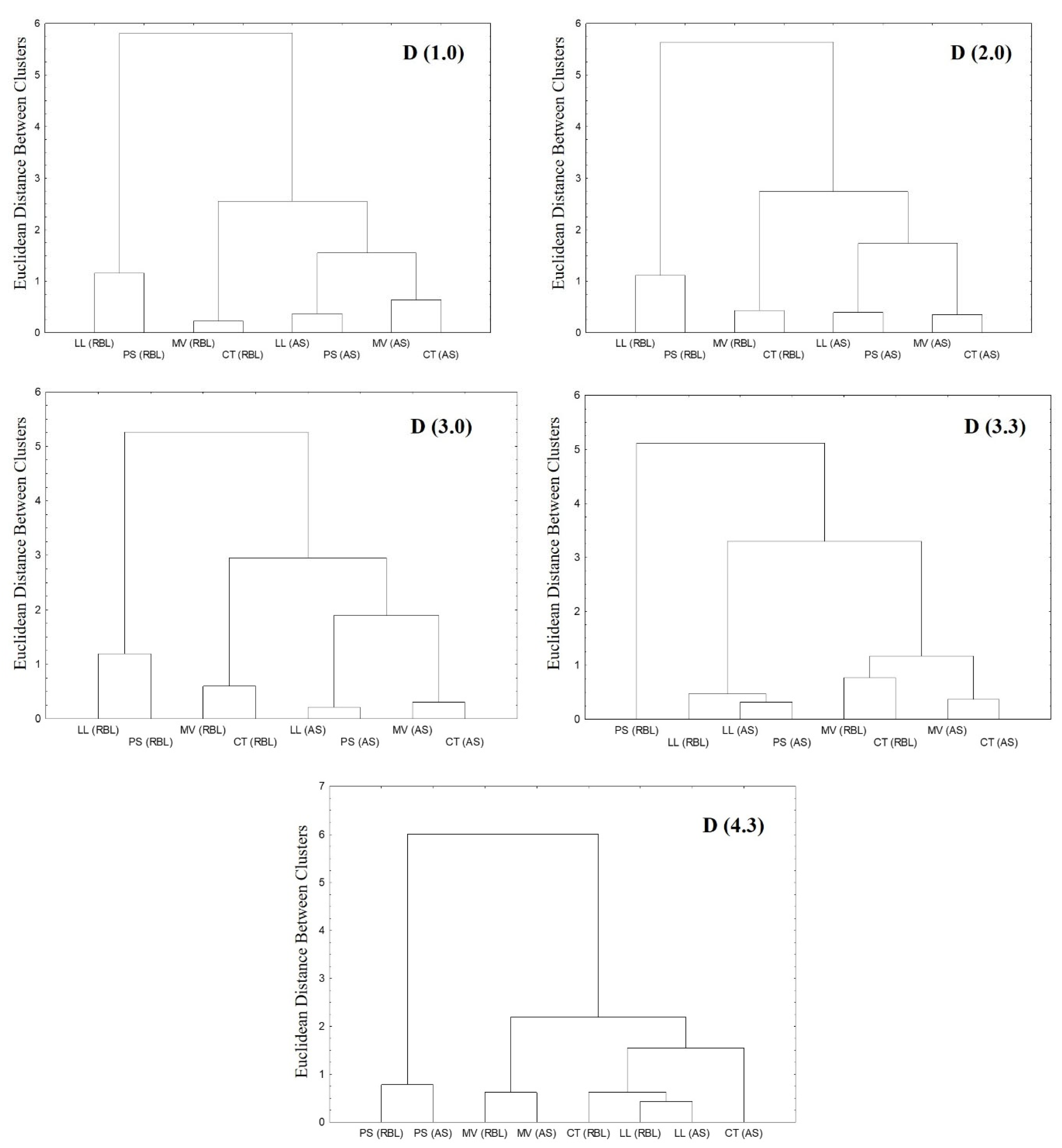
The similarities among individual reservoirs, based on the selected equivalent diameters, are presented in the hierarchical clustering dendrograms (Ward’s method, Euclidean distance) in Figure 4.
The height of the vertical lines (y-axis) represents the distance at which clusters are merged. In Ward’s method, this distance corresponds to the increase in total within-cluster variance following the merging of two clusters. Greater heights indicate larger increases in variance, reflecting lower similarity between clusters, whereas shorter heights indicate higher similarity.
For equivalent diameters describing particle shape and size, namely D(1.0), D(2.0), and D(3.0), cluster analysis revealed similar relationships. In this group, similarities were observed between control tanks and tanks with Myriophyllum verticillatum, as well as between tanks with Pistia stratiotes and Limnobium laevigatum, irrespective of the light type used. For the equivalent diameter D(3.2), no direct similarity was detected between particle sizes in the tanks with P. stratiotes and L. laevigatum illuminated with red and blue light. Cluster analysis of D(4.3) indicated similarity between tanks containing the same plant species, regardless of the lighting conditions.
To assess the potential use of granulometric data for the indirect identification of algae, the average equivalent diameters of suspensions from individual tanks were compared with the cell volume of the dominant microorganisms at each sampling time. Algal species occurring as a single individual (1) were excluded from the analysis. A list of the dominant species identified, along with cell volume calculated by the method developed by Hutorowicz [54], is provided in Table 4.
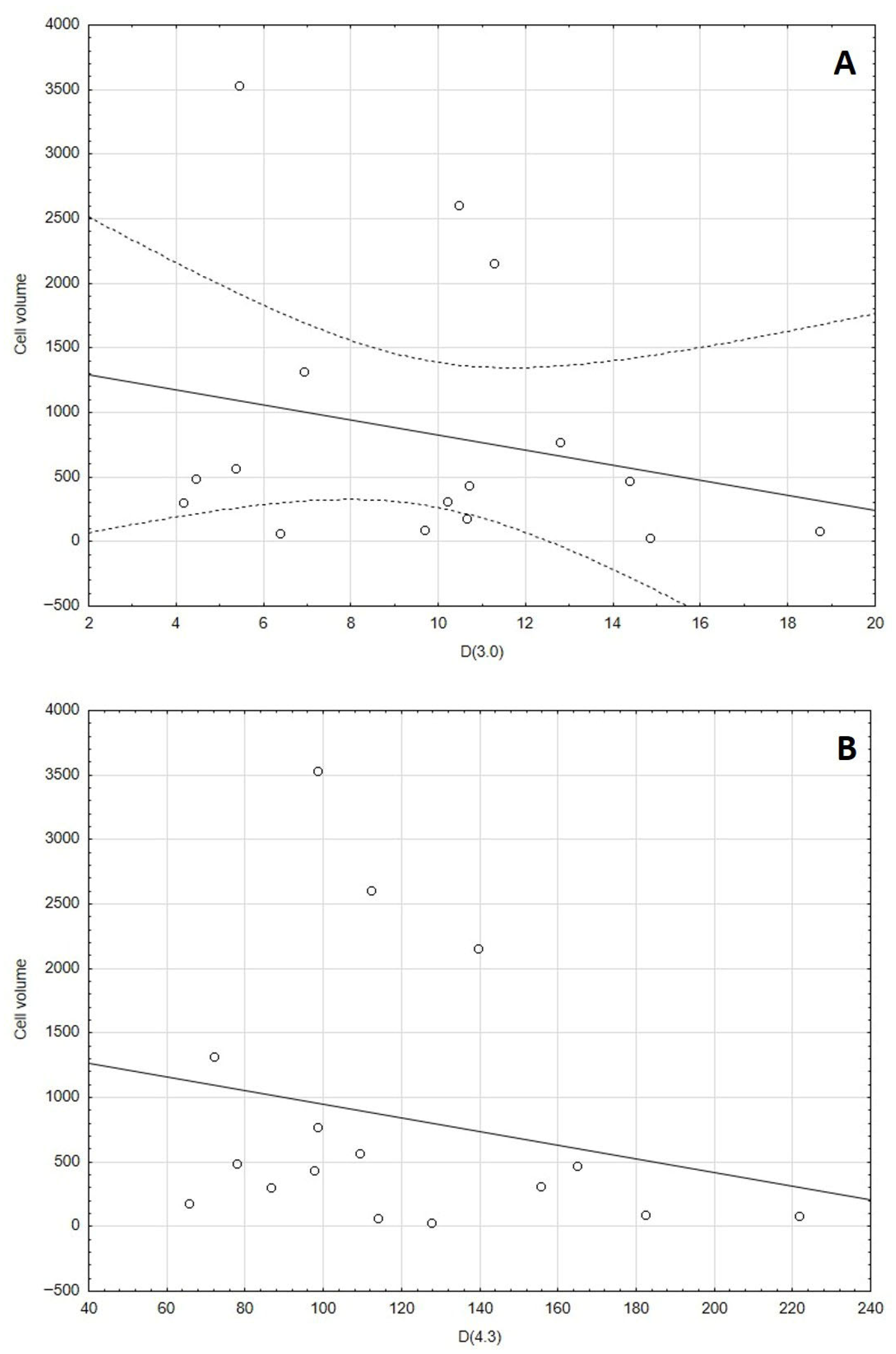
Cell volume values were determined for the algal taxa identified during microscopic analysis. These values were subsequently compared with the D(3.0) parameter, which represents the average particle volume, and D(4.3) which represents the equivalent sphere based on volume in order to assess whether a relationship exists between these two variables. A regression analysis was performed, and the resulting scatter plots are presented in Figure 5.
The scatter of data points, along with the weakly negative but nearly flat regression line and wide confidence intervals, indicates the absence of a meaningful relationship between D(3.0) and cell volume. This observation is consistent with the low coefficient of determination (R2 = 0.054) and the non-significant p-value (p = 0.386), confirming that D(3.0) does not statistically explain the variability in cell volume. Analysis of the data trend in the scatter plot for D(4.3), together with the obtained R2 value of 0.048 and a p-value of 0.415 indicates that the correlation between D(4.3) mean equivalent diameter and cell volume is also statistically insignificant.
The regression analysis performed in this study excludes the possibility of using rapid granulometric measurements for even preliminary identification of microalgal taxa in treated wastewater. Laser granulometry is inherently non-selective and records all suspended particles present in the sample. In wastewater, these include not only algal and cyanobacterial cells, but also colonies, filaments, bacterial aggregates, extracellular polymeric substances, organic detritus, and inorganic debris. Many of these components overlap in size ranges, producing composite particle size distributions that cannot be unambiguously attributed to algal morphology [28,29,51,52]. In addition, mucilaginous sheaths and colonial structures, common among cyanobacteria and some green algae, may artificially increase apparent particle size, whereas mechanical stress during aeration or sampling may fragment filaments and colonies, shifting distributions toward smaller diameters.
Laser diffraction assumes spherical particle geometry and reports equivalent spherical diameters (e.g., D(3.0), D(4.3)). This assumption might only be partially suited to microalgae, which exhibit a wide range of morphologies, including spherical (e.g., Chlorella), elongated (e.g., Ankistrodesmus), filamentous (e.g., Ulothrix, Oedogonium), and colonial forms (e.g., Scenedesmus, Radiococcus). Morphologically distinct taxa may yield similar equivalent diameters despite having very different cell volumes, surface areas, and ecological roles. Consequently, granulometry cannot distinguish between filamentous, colonial, and unicellular organisms, nor can it resolve mixed assemblages dominated by contrasting morphotypes [28,29,50]. The shape of individual particles requires more advanced optical methods, e.g., using a high-resolution microscope, which are expensive and time-consuming, making it impossible to obtain analytical information in real time. In monocultures or laboratory-grown algal suspensions with uniform morphology and minimal interference from non-algal particles, particle size distributions can reasonably reflect growth dynamics, aggregation, or harvesting efficiency [15,28,52]. Under such controlled conditions, granulometric analysis has been successfully used to track biomass development or flocculation behavior. However, the present results clearly demonstrate that in complex, polydisperse environments such as hydroponically treated wastewater, granulometry cannot provide taxonomically meaningful information.
The result of the analysis therefore excludes the possibility of using rapid granulometric measurements even for the preliminary identification of microalgal taxa present in water or wastewater. This limitation may have practical implications for hydroponic wastewater treatment systems used as a tertiary stage of purification, particularly in the context of ensuring environmental safety downstream of the discharge point. Specifically, determining whether harmful cyanobacteria are being released into the environment remains challenging. Without reliable and rapid methods for preliminary identification of microalgal taxa, it becomes difficult to monitor and control the potential outflow of toxin-producing cyanobacteria. This, in turn, raises concerns regarding ecological risks, public health, and regulatory compliance in surface waters receiving the treated effluent.

4. Conclusions

Hydroponic Nature-Based Solutions (NBS) applied as a tertiary wastewater treatment stage effectively reduced cyanobacteria and promoted the development of diatoms and green algae, contributing to improved effluent quality. This shift is environmentally advantageous, as it reduces the risk associated with toxin-producing cyanobacteria and supports the ecological safety of treated effluents discharged into receiving waters. However, the study demonstrated that laser granulometry, including parameters such as D(3.0) and D(4.3), cannot be used as a reliable tool for even preliminary identification of algal taxa. The absence of correlation between particle size distribution and algal cell volume (R2 < 0.06) indicates that rapid granulometric analysis is unsuitable for monitoring microalgal composition in wastewater.
This limitation is particularly important in the context of environmental safety below discharge points, where determining whether harmful cyanobacteria are released remains challenging. In the absence of fast identification methods, additional removal of algal cells and suspended solids may be required. Yet, conventional harvesting techniques are energy-intensive or rely on chemicals, which contradict the principles of NBS [55,56].
Further research is therefore needed to develop rapid, non-invasive analytical methods or to apply immobilization strategies that retain algal biomass within NBS systems. These developments remain the scientific objective of the authors and are essential to enhance the environmental safety, reliability, and sustainability of hydroponic wastewater treatment.

Author Contributions

Conceptualization, A.B.; Methodology, A.B., D.R. and M.P.; Validation, K.P. and D.R.; Formal analysis, A.B. and D.R.; Investigation, A.B., D.R. and M.P.; Resources, A.B.; Data curation, K.P. and M.P.; Writing—original draft, A.B., K.P. and D.R.; Writing—review and editing, A.B. and M.P.; Supervision, K.P.; Project administration, A.B.; Funding acquisition, A.B. All authors have read and agreed to the published version of the manuscript.

Funding

This research was funded by Wrocław University of Environmental and Life Sciences (within the project no. N060/0005/20).

Institutional Review Board Statement

Pistia stratiotes, Limnobium laevigatum, and Myriophyllum verticillatum plants were used in this study. All plants were selected from existing hydroponic wastewater treatment plant (Municipal Wastewater Treatment Plant, Paczków, Poland) and were kindly provided by WWTP’s authorities.

Informed Consent Statement

Not applicable.

Data Availability Statement

The original contributions presented in this study are included in the article. Further inquiries can be directed to the corresponding authors.

Conflicts of Interest

The authors declare no conflicts of interest.

References

  1. Boano, F.; Caruso, A.; Costamagna, E.; Ridolfi, L.; Fiore, S.; Demichelis, F.; Galvão, A.; Pisoeiro, J.; Rizzo, A.; Masi, F. A review of nature-based solutions for greywater treatment: Applications, hydraulic design, and environmental benefits. Sci. Total Environ. 2020, 711, 134731. [Google Scholar] [CrossRef] [PubMed]
  2. Environment Protection Authority Victoria. Code of Practice—Onsite Wastewater Management. In Guidelines for Environmental Management; Environment Protection Authority Victoria: Docklands, Australia, 2016; p. 891.4. [Google Scholar]
  3. Longo, S.; d’Antoni, B.M.; Bongards, M.; Chaparro, A.; Cronrath, A.; Fatone, F.; Lema, J.M.; Mauricio-Iglesias, M.; Soares, A.; Hospido, A. Monitoring and diagnosis of energy consumption in wastewater treatment plants. A state of the art and proposals for improvement. Appl. Energy 2016, 179, 1251–1268. [Google Scholar] [CrossRef]
  4. Campos, J.L.; Valenzuela-Heredia, D.; Pedrouso, A.; Val del Río, A.; Belmonte, M.; Mosquera-Corral, A. Greenhouse gases emissions from wastewater treatment plants: Minimization, treatment, and prevention. J. Chem. 2016, 2016, 3796352. [Google Scholar] [CrossRef]
  5. Herrera Melián, J.A. Sustainable Wastewater Treatment Systems (2018–2019). Sustainability 2020, 12, 1940. [Google Scholar] [CrossRef]
  6. Liquetea, C.; Udias, A.; Conte, G.; Grizzetti, B.; Masi, F. Integrated valuation of a nature-based solution for water pollution control. Highlighting hidden benefits. Ecosyst. Serv. 2016, 22, 392–401. [Google Scholar] [CrossRef]
  7. Cohen-Shacham, E.; Walters, G.; Janzen, C.; Maginnis, S. (Eds.) Nature-Based Solutions to Address Global Societal Challenges; IUCN: Gland, Switzerland, 2016. [Google Scholar] [CrossRef]
  8. Hoffmann, H.; Platzer, C.; Winker, M.; von Muench, E. Technology Review of Constructed Wetlands; Subsurface Flow Constructed Wetlands for Greywater and Domestic Wastewater Treatment; Deutsche Gesellschaft für Internationale Zusammenarbeit (GIZ) GmbH: Eschborn, Germany, 2011. [Google Scholar]
  9. Worku, A.; Tefera, N.; Kloos, H.; Benor, S. Bioremediation of brewery wastewater using hydroponics planted with vetiver grass in Addis Ababa, Ethiopia. Bioresour. Bioprocess. 2018, 5, 39. [Google Scholar] [CrossRef]
  10. García-Avila, F.; Avil’es-Anazco, A.; Cabello-Torres, R.; Guanuchi-Quito, A.; Cadme-Galabay, A.M.; Guti’errez-Ortega, H.; Alvarez-Ochoa, R.; Zhindon-Arevalo, C. Application of ornamental plants in constructed wetlands for wastewater treatment: A scientometric analysis. Case Stud. Chem. Environ. Eng. 2023, 7, 100307. [Google Scholar] [CrossRef]
  11. Shahid, M.J.; AL-surhanee, A.A.; Kouadri, F.; Ali, S.; Nawaz, N.; Afzal, M.; Rizwan, M.; Ali, B.; Soliman, M.H. Role of microorganisms in the remediation of wastewater in floating treatment wetlands: A review. Sustainability 2020, 12, 5559. [Google Scholar] [CrossRef]
  12. Mokuolu, O.; Olokoba, S.; Aremu, S.; Olanlokun, O. Fish pond wastewater hydroponic treatment potential of Citrullus colocynthis. J. Res. For. Wildl. Environ. 2019, 11, 118–126. [Google Scholar]
  13. Tibebu, S.; Worku, A.; Angassa, K. Removal of Pathogens from Domestic Wastewater Using Small-Scale Gradual Hydroponics Planted with Duranta erecta, Addis Ababa, Ethiopia. J. Environ. Public Health 2022, 2022, 3182996. [Google Scholar] [CrossRef]
  14. Nezbrytska, I.; Usenko, O.; Konovets, I.; Leontieva, T.; Abramiuk, I.; Goncharova, M.; Bilous, O. Potential Use of Aquatic Vascular Plants to Control Cyanobacterial Blooms: A Review. Water 2022, 14, 1727. [Google Scholar] [CrossRef]
  15. Liu, J.; Pemberton, B.; Lewis, J.; Scales, P.J.; Martin, G.J.O. Wastewater treatment using filamentous algae—A review. Bioresour. Technol. 2020, 298, 122556. [Google Scholar] [CrossRef]
  16. Chawla, P.; Malik, A.; Sreekrishnan, T.R.; Dalvi, V.; Gola, D. Selection of optimum combination via comprehensive comparison of multiple algal cultures for treatment of diverse wastewaters. Environ. Technol. Innov. 2020, 18, 100758. [Google Scholar] [CrossRef]
  17. Ross, M.E.; Davis, K.; McColl, R.; Stanley, M.S.; Day, J.G.; Semião, A.J.C. Nitrogen uptake by the macro-algae Cladophora coelothrix and Cladophora parriaudii: Influence on growth, nitrogen preference and biochemical composition. Algal Res. 2018, 30, 1–10. [Google Scholar] [CrossRef]
  18. Mohsenpour, S.F.; Hennige, S.; Willoughby, N.; Adeloye, A.; Gutierrez, T. Integrating micro-algae into wastewater treatment: A review. Sci. Total Environ. 2021, 752, 142168. [Google Scholar] [CrossRef] [PubMed]
  19. Li, Y.; Chen, Y.F.; Chen, P.; Min, M.; Zho, W.; Martinez, B.; Zhu, J.; Ruan, R. Characterization of a microalga Chlorella sp. well adapted to highly concentrated municipal wastewater for nutrient removal and biodiesel production. Bioresour. Technol. 2011, 102, 5138–5144. [Google Scholar] [CrossRef]
  20. Choi, H. Parametric Study of Brewery Wastewater Effluent Treatment Using Chlorella vulgaris Microalgae. Env. Eng. Res. 2016, 21, 401–408. [Google Scholar] [CrossRef]
  21. Gouveia, L.; Graça, S.; Sousa, C.; Ambrosano, L.; Ribeiro, B.; Botrel, E.P.; Neto, P.C.; Ferreira, A.F.; Silva, C.M. Microalgae biomass production using wastewater: Treatment and costs scale-up considerations. Algal Res. 2016, 16, 167–176. [Google Scholar] [CrossRef]
  22. Wang, Y.; Ho, S.H.; Cheng, C.L.; Guo, W.Q.; Nagarajan, D.; Ren, N.Q.; Lee, D.J.; Chang, J.S. Perspectives on the feasibility of using microalgae for industrial wastewater treatment. Bioresour. Technol. 2016, 222, 485–497. [Google Scholar] [CrossRef]
  23. Garbowski, T.; Bawiec, A.; Wiercik, P.; Pulikowski, K. Algae proliferation on substrates immersed in biologically treated sewage. J. Ecol. Eng. 2017, 18, 90–98. [Google Scholar] [CrossRef]
  24. Plaas, H.E.; Paerl, H.W. Toxic Cyanobacteria: A Growing Threat to Water and Air Quality. Environ. Sci. Tech. 2021, 55, 44–64. [Google Scholar] [CrossRef] [PubMed]
  25. Ma, J.; Wang, P. Effects of rising atmospheric CO2 levels on physiological response of cyanobacteria and cyanobacterial bloom development: A review. Sci. Total Environ. 2021, 754, 141889. [Google Scholar] [CrossRef] [PubMed]
  26. Schagerl, M.; Künzl, G. Chlorophyll a extraction from freshwater algae—A reevaluation. Biol. Bratisl. 2007, 62, 270–275. [Google Scholar] [CrossRef]
  27. Zhao, L.; Zhu, R.; Zhou, Q.; Jeppsen, E.; Yang, K. Trophic status and lake depth play important roles in determining the nutrient-chlorophyll a relationship: Evidence from thousands of lakes globally. Water Res. 2023, 242, 120182. [Google Scholar] [CrossRef]
  28. Bawiec, A.; Pawęska, K.; Pulikowski, K. Analysis of granulometric composition of algal suspensions in wastewater treated with hydroponic method. Water Air Soil Poll. 2017, 228, 366. [Google Scholar] [CrossRef]
  29. Garbowski, T.; Pulikowski, K.; Wiercik, P. Using laser granulometer to algae dynamic growth analysis in biological treated sewage. Desalination Water Treat. 2017, 99, 117–124. [Google Scholar] [CrossRef]
  30. Delgadillo-Mirquez, L.; Lopes, F.; Taidi, B.; Pareau, D. Nitrogen and phosphate removal from wastewater with a mixed microalgae and bacteria culture. Biotechnol. Rep. 2016, 11, 18–26. [Google Scholar] [CrossRef]
  31. Singh, S.P.; Singh, P. Effect of temperature and light on the growth of algae species: A review. Renew. Sustain. Energy Rev. 2015, 50, 431–444. [Google Scholar] [CrossRef]
  32. Hassan, H.F.; Salah, M.M.; Salman, J.M. Quantitative and qualitative variability of epiphytic algae on three aquatic plants in Euphrates River, Iraq. Iraq J. Aqua. 2007, 1, 1–16. [Google Scholar] [CrossRef]
  33. Abdel-Aal, E.I. Species composition and diversity of epiphytic microalgae on Myriophyllum spicatum in the El-Ibrahimia Canal, Egypt. Afr. J. Aquat. Sci. 2021, 46, 319–328. [Google Scholar] [CrossRef]
  34. Starmach, K. Metody Badań Plankton; PWRiL: Warszawa, Poland, 1955; pp. 1–133. (In Polish) [Google Scholar]
  35. Komàrek, J.; Fott, B. Chlorophyceae (Grünalgen). Ordnung: Chlorococcales. In Das Phytoplankton des Süβwassers. Systematik und Biologie; Huber-Pestalozzi, G., Ed.; Schweizerbart’sche Verlagsbuchhandlung: Stuttgart, Germany, 1983; Volume 7, pp. 1–1044. [Google Scholar]
  36. Komárek, J.; Anagnostidis, K. Cyanoprokaryota: Chroococcales. In Süβwasserflora von Mitteleuropa 19; Pascher, A., Ed.; Gustav Fischer Verlag: Jena, Germany; Stuttgart, Germany, 1993; pp. 1–549. [Google Scholar]
  37. Komárek, J.; Anagnostidis, K. Cyanoprocaryota: Oscillatoriales II. In Süβwasserflora von Mitteleuropa 19; Büdel, A.B., Krienitz, L., Gärtner, G., Schagerl, M., Eds.; Spektrum Akademischer Verlag: Wiesbaden, Germany, 2005; Volume 2, pp. 1–759. [Google Scholar]
  38. Bąk, M.; Witkowski, A.; Żelazna-Wieczorek, J.; Wojtal, A.Z.; Szczeponka, E.; Szulc, K.; Szulc, B. Klucz do Oznaczania Okrzemek w Fitobentosie na Potrzeby Oceny Stanu Ekologicznego wód Powierzchniowych w Polsce; Biblioteka Monitoringu Środowiska: Warszawa, Poland, 2012; pp. 1–452. (In Polish) [Google Scholar] [CrossRef]
  39. Škaloud, P.; Rindi, F.; Boedeker, C.; Leliaert, F. Chlorophyta: Ulvophyceae. In Süβwasserflora von Mitteleuropa Freshwater Flora of Central Europe 13; Büdel, W.B., Gärtner, G., Krienitz, L., Schagerl, M., Eds.; Springer Spektrum: Wiesbaden, Germany, 2018; pp. 1–288. [Google Scholar]
  40. Hoek, C.; Mann, D.G.; Johns, H.M. Alga: An Introduction to Phycology; Great Britain at University Press: Cambridge, MA, USA, 1995; pp. 1–623. [Google Scholar]
  41. ISO 10260; Water quality—Measurement of biochemical parameters—Spectrometric determination of the chlorophyll-a concentration. ISO: Geneva, Switzerland, 1992.
  42. Schagerl, M.; Müller, B. Acclimation of chlorophyll a and carotenoid levels to different irradiances in four freshwater cyanobacteria. J. Plant Physiol. 2006, 163, 709–716. [Google Scholar] [CrossRef] [PubMed]
  43. Kuczyńska, P.; Jemioła-Rzemińska, M.; Strzałka, K. Photosynthetic Pigments in Diatoms. Mar. Drugs 2015, 13, 5847–5881. [Google Scholar] [CrossRef] [PubMed]
  44. Sánchez-Saavedra, M.P.; Voltolina, D. Effect of photon fluence rates of white and blue-green light on growth efficiency and pigment content of three diatom species in batch cultures. Cienc. Marin. 2002, 28, 273–279. [Google Scholar] [CrossRef]
  45. Holdsworth, E.S. Effect of growth factors and light quality on the growth, pigmentation and photosynthesis of two diatoms, Thalassiosira gravida and Phaeodactylum tricornutum. Mar. Biol. 1985, 86, 253–262. [Google Scholar] [CrossRef]
  46. Wagner, A.H.; Jakob, T.; Wilhelm, C. Balancing the energy flow from captured light to biomass under fluctuating light conditions. New Phytol. 2006, 169, 95–108. [Google Scholar] [CrossRef]
  47. Masojídek, J.; Kopecký, J.; Koblížek, M.; Torzillo, G. The Xanthophyll Cycle in Green Algae (Chlorophyta): Its Role in the Photosynthetic Apparatus. Plant Biol. 2004, 6, 342–349. [Google Scholar] [CrossRef]
  48. Mohsenpour, S.F.; Richards, B.; Willoughby, N. Spectral conversion of light for enhanced microalgae growth rates and photosynthetic pigment production. Bioresour Technol. 2012, 125, 75–81. [Google Scholar] [CrossRef]
  49. George, B.; Pancha, I.; Desai, C.; Chokshi, K.; Paliwal, C.; Ghosh, T.; Mishra, S. Effects of different media composition, light intensity and photoperiod on morphology and physiology of freshwater microalgae Ankistrodesmus falcatus—A potential strain for biofuel production. Bioresour Technol. 2014, 171, 367–374. [Google Scholar] [CrossRef]
  50. Baliński, A. Basic issues related to the measurement of size and particle size distribution. Trans. Foundry Res. Inst. 2013, 53, 3–12. [Google Scholar]
  51. Kuśnierz, M.; Wiercik, P. Analysis of particle size and fractal dimensions of suspensions contained in raw sewage, treated sewage and activated sludge. Arch. Environ. Prot. 2016, 42, 67–76. [Google Scholar] [CrossRef]
  52. Quijano, G.; Arcila, J.S.; Buitrón, G. Microalgal-bacterial aggregates: Applications and perspectives for wastewater treatment. Biotechnol. Adv. 2017, 35, 772–777. [Google Scholar] [CrossRef]
  53. Marchese, A.; Bonifacio, M.; He, J. Effects of Light Quality Adjustment in Microalgal Cultivation. Processes 2025, 13, 1159. [Google Scholar] [CrossRef]
  54. Hutorowicz, A. Opracowanie Standardowych OBJĘTOŚCI Komórek do Szacowania Biomasy Wybranych Taksonów Glonów Planktonowych Wraz z Określeniem Sposobu Pomiarów i Szacowania [Development of Standard Cell Volume Estimation for Planktonic Algae biomass Determination]; GIOŚ: Olsztyn, Poland, 2006. (In Polish) [Google Scholar]
  55. Matter, I.A.; Bui, V.K.H.; Jung, M.; Seo, J.Y.; Kim, Y.-E.; Lee, Y.-C.; Oh, Y.-K. Flocculation Harvesting Techniques for Microalgae: A Review. Appl. Sci. 2019, 9, 3069. [Google Scholar] [CrossRef]
  56. Uzoejinwa, B.B.; Asoiro, F.U. Algae Harvesting. In Value-Added Products from Algae; Abomohra, A., Ende, S., Eds.; Springer: Cham, Switzerland, 2024. [Google Scholar] [CrossRef]
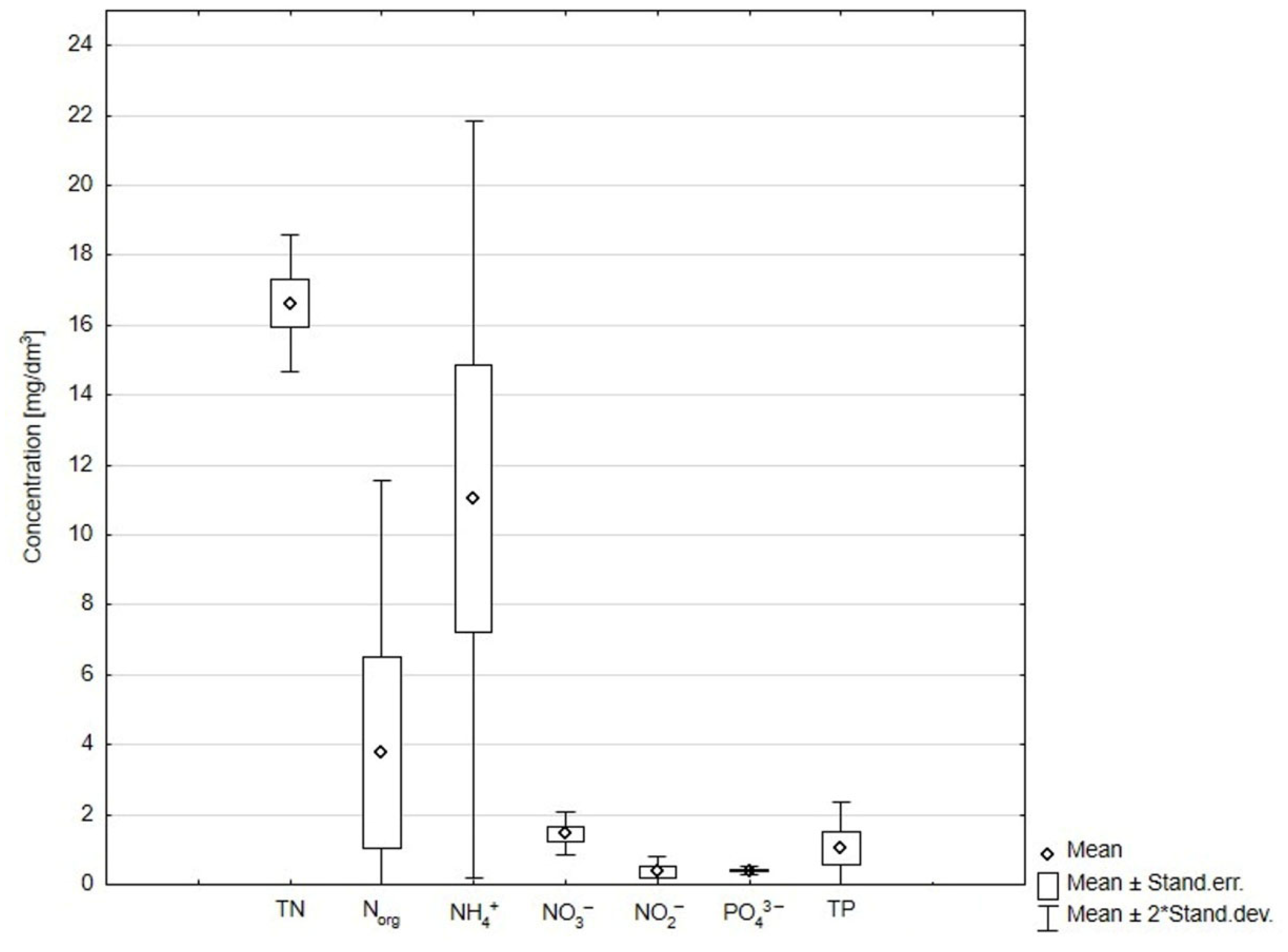
Figure 1. Concentration of nutrients in selected wastewater.
Sustainability 18 00909 g001
Figure 2. Concentration of organic matter and total organic carbon in selected wastewater.
Sustainability 18 00909 g002
Figure 3. Scheme of the experimental setup where S1 is Section 1 with light imitating sunlight and S2 is Section 2 with artificial PAR. (A–C) indicate the type of macrophyte used where (D) is a plant-free control.
Sustainability 18 00909 g003
Figure 4. Hierarchical clustering dendrogram of D(1.0), D(2.0), D(3.0), D(3.2) and D(4.3) within all tanks. PS—Pistia stratiotes, LL—Limnobium laevigatum, MV—Myriophyllum verticillatum, (AS)—artificial sunlight, (RBL)—red and blue light.
Sustainability 18 00909 g004
Figure 5. Dependence of D(3.0) (A) and D(4.3) (B) on cell volume.
Sustainability 18 00909 g005
Table 1. The list of cyanobacteria and algae identified in the tanks of the experimental system during the experimental series (START—biologically treated wastewater taken as a medium for the experiment, CT—control tank, PPistia stratiotes, LLimnobium laevigatum, MMyriophyllum verticillatum, 5W—5 weeks of experiment, 15W—15 weeks of experiment).
Artificial Light Imitating SunlightRed and Blue Light
SpeciesSTARTCT 5WCT 15WP 5WP 15WL 5WL 15WM 5WM 15WCT 5WCT 15WP 5WP 15WL 5WL 15WM 5WM 15W
Phylum Cyanobacteria (blue-green algae)
Aphanocapsa incerta (Lemm.) Cronberg et Komárek3
Aphanocapsa nubilum Komárek et Kling1
Eucapsis minor (Skuja) Elenkin2
Eucapsis sp. 1 1 1 1 11 1
Komvophoron sp.1
Leptolyngbya sp.2 1
Limnothrix redekei (Van Goor) Meffert 2 3
Planctolyngbya limnetica (Lemm.) Komárkova-Legnerová et Cronberg2
Planctolyngbya sp. 2 3 112 2 212
Phylum Heterokontophyta
Class Bacillariophyceae (diatoms)
Achnantidium sp. 1 2 1
Coconeis sp. 1
cf. Achnantidium sp. 2 2 2 2 3 3
cf. Pinnularia 1
Diatoma sp. 1
Diatoma vulgaris Bory 1 2 21
Eunotia bilunaris (Ehrenberg) Schaarschmidt 1 3 112 1
Fragilaria sp. 1
Gomphonema parvulum Lange-Bertalot, Richard 32222232 2443232
Lemnicola hungarica (Grunow) Round, Basson 21 32
Navicula radiosa Kützing 1
Navicula schmassmannii Hustedt 1 2
Navicula sp. 1 1 1
Navicula sp. 2 1 22
Navicula sp. 3 1
Nitzschia palea (Kützing) W. Smitch 3 2 11412 2 1133
Pinnularia gibba Ehrenberg 21 1 1
Stauroneisis sp. 1
Tabellaria sp. 1
Phylum Chlorophyta (green algae)
Ankistrodesmus fusiformis Corda 22
Characium ensiforme Hermann 3
Chlamydomonas sp. 1
Chlorella sp. 1 11
Chlorella sp. 2 1
Dicyosphaerium pulchellum Wod 1
Kirchneriella cf. rotunda (Kors) Hindak 1 1
Monoraphidium cf. fontinale Hind. 1 12
Monoraphidium griffithii (Berk.) Kom.-Legn. 3
Monoraphidium komarkovae Nyg. 1 2 1
Mougeotia sp. 2
Oedogonium sp. 3
Planktonema lauterbornii Schmidle 1
Pseudoclonium sp. 2
Radiococcus sp. 1
Scenedesmus acutus Meyen 2 2
Scenedesmus obliquus (Turpin) Kützing 2 3 2
Tetracistis sp. 1
Ulothrix tenerrima Kützing 121 33 33
Ulotrix tenuissima Kützing 3
Table 2. Concentrations of chlorophyll a (Chl a) and dominant identified organisms in the fifth and fifteenth week of research.
First Measurement SeriesChl a Concentration [μg/dm3]Dominant
Identified Organisms *
Chl a Concentration [μg/dm3]Dominant
Identified Organisms *
Type of LightType of Plant5 Weeks15 Weeks
ARTIFICIAL LIGHT IMITATING SUNLIGHTControl tank38.21diatoms (3)
+ blue-green
algae (2)
3100.28diatoms (2)
+ green algae (2)
Pistia
stratiotes
28.87diatoms (2)
+ blue-green
algae (3)
5.57diatoms (3)
Limnobium laevigatum17.89diatoms (2)
+ blue-green
algae (1)
399.35Diatoms (2)
+ blue-green
algae (1)
Myriophyllum verticillatum47.27diatoms (3)
+ blue-green
algae (2)
714.59diatoms (2)
RED AND BLUE LIGHTControl tank2391.25green algae (3)
+ diatoms (3)
2290.44green algae (3)
+ diatoms (2)
Pistia
stratiotes
73.86diatoms (4)2.13diatoms (4)
Limnobium laevigatum62.25diatoms (4)319.98diatoms (2)
Myriophyllum verticillatum1187.45green algae (4)
+ diatoms (4)
4148.59green algae (4)
+ diatoms (4)
* The number of organisms expressed in % coverage of the 18 × 18 mm coverslip: 1—single appearance, 2—5–20% of coverslip coverage, 3—20–60% of coverslip coverage, and 4—60–90% of coverslip coverage.
Table 3. Values of the average equivalent diameters identified in wastewater during the experiment.
Particles DiametersD(1.0)D(2.0)D(3.0)D(3.2)D(4.3)
Type of LightType of Plant5 Weeks15 Weeks5 Weeks15 Weeks5 Weeks15 Weeks5 Weeks15 Weeks5 Weeks15 Weeks
ARTIFICIAL LIGHT
IMITATING SUNLIGHT
Control tank3.8052.3056.1283.03010.6605.35032.26616.68365.66971.907
Pistia stratiotes3.2163.4255.2335.21410.2039.68438.78833.408155.573182.494
Limnobium laevigatum3.6983.4985.9785.68110.69210.45534.20035.40497.672112.270
Myriophyllum verticillatum3.9261.1586.1651.99511.2854.17337.82118.266139.56586.498
RED AND BLUE LIGHTControl tank2.2281.6092.8932.4415.4394.45519.22814.83698.46777.958
Pistia stratiotes5.4676.6498.33610.59814.37518.71872.74858.386164.817221.624
Limnobium laevigatum5.6704.5798.8657.42414.85412.78541.70737.909109.38298.560
Myriophyllum verticillatum2.1692.0103.5573.2936.9356.38026.35623.948127.755113.879
Table 4. Dominant species of identified organisms along with the cell volume.
SpeciesCell Volume
Cyanobacteria (blue-green algae)
Limnothrix redekei (Van Goor) Meffert176.6
Planctolyngbya sp.314.0
Bacillariophyceae (diatoms)
Achnantidium sp. 435.7
Diatoma anceps (Erenberg) Kirchner2154.8
Diatoma vulgaris Bory3532.5
Gomphonema parvulum Lange-Bertalot, Richard 474.9
Lemnicola hungarica (Grunow) Round, Basson565.2
Navicula schmassmannii Hustedt29.6
Navicula sp. 21316.3
Nitzschia palea (Kützing) W. Smitch94.5
Pinnularia gibba Ehrenberg2610.1
Chlorophyta (green algae)
Ankistrodesmus fusiformis Corda307.7
Characium ensiforme Hermann490.9
Monoraphidium cf. fontinale Hind.81.6
Monoraphidium griffithii (Berk.) Kom.-Legn.771.5
Monoraphidium komarkovae Nyg.62.0
Mougeotia sp.49,000.0
Oedogonium sp.2400.0
Pseudoclonium sp.2150.0
Scenedesmus acutus Meyen332.3
Scenedesmus obliquus (Turpin) Kützing230.8
Ulothrix tenerrima Kützing 5700.0
Ulothrix tenuissima Kützing10,400.0
Disclaimer/Publisher’s Note: The statements, opinions and data contained in all publications are solely those of the individual author(s) and contributor(s) and not of MDPI and/or the editor(s). MDPI and/or the editor(s) disclaim responsibility for any injury to people or property resulting from any ideas, methods, instructions or products referred to in the content.