Article

An LMDI-Based Analysis of Carbon Emission Changes in China’s Fishery and Aquatic Processing Sector: Implications for Sustainable Risk Assessment and Hazard Mitigation

1
School of Finance and Economics, Fuzhou Technology and Business University, Fuzhou 350715, China
2
College of Civil Engineering, Fuzhou University, Fuzhou 350108, China
3
Department of Civil and Environmental Engineering, United Arab Emirates University, Al Ain 15258, United Arab Emirates
*
Author to whom correspondence should be addressed.
Sustainability 2026, 18(2), 860; https://doi.org/10.3390/su18020860
Submission received: 24 November 2025 / Revised: 10 January 2026 / Accepted: 12 January 2026 / Published: 14 January 2026

Abstract

To align with disaster monitoring and sustainable risk assessment, the low-carbon transition of fisheries necessitates comprehensive carbon emission management throughout the supply chain. As China advances supply-side structural reform, transitioning from traditional to low-carbon fisheries is vital for the green development of the industry and its associated sectors. This study employs input–output models and LMDI decomposition to examine the trends and drivers of embodied carbon emissions within China’s fishery production system from 2010 to 2019. By constructing a cross-sectoral full-emission accounting system, the research calculates total direct and indirect emissions, exploring how accounting scopes influence regional responsibility and reduction strategies. Empirical results indicate that while China’s aquatic trade and processing have steadily developed, the sector remains dominated by low-value-added primary products. This structure highlights vast potential for deep processing development amidst shifting global dietary habits. Factor decomposition reveals that economic and technological development are the primary drivers of carbon emissions. Notably, technological progress within fisheries emerges as the most significant factor, playing a pivotal role in both driving and potentially mitigating emissions. Consequently, to effectively lower carbon intensity, the study concludes that restructuring the fishery industry is crucial. Promoting low-carbon development and enhancing the R&D of green technologies are essential strategies to navigate the dual challenges of industrial upgrading and environmental protection.

1. Introduction

In sustainable risk assessments, climate disasters triggered by excessive greenhouse gas emissions have become core targets for monitoring and early warning. As an industry profoundly impacted by climate change, fisheries align closely with carbon emission control and disaster mitigation objectives. Since the Second Industrial Revolution, greenhouse gas emissions generated by accelerated global economic growth have profoundly impacted the Earth’s environment, threatening human health and sustainable development. Excessive greenhouse gas emissions have led to global warming, making energy conservation and emission reduction critical challenges universally faced by nations today [1]. Consequently, the international community—comprising nations, regions, and environmental organizations—has invested substantial resources to reduce greenhouse gas emissions, with particular focus on carbon dioxide emissions. The adoption of the Paris Agreement stipulates a global commitment to maintaining the increase in average temperature well below 2 °C above pre-industrial levels, while endeavoring to limit the warming to 1.5 °C [2]. This commitment aims to propel the world toward a green, energy-efficient, and sustainable future.
Fish serve as a vital source of high-quality protein, playing a significant role in ensuring nutritional adequacy and health in human diets. In 2019, global aquatic product output exceeded the 1961 level by 118 million tons, representing a 58-fold increase over that year. Currently, aquaculture has become the primary market for human food sources [3]. The rapid expansion of aquaculture has played a crucial role in achieving Sustainable Development Goals 1 (SDG 1: No Poverty) and 2 (SDG 2: Zero Hunger) [4]. The expansion of trade scale drives energy consumption within industrial sectors, correspondingly increasing the total carbon emissions from fishery products and processed aquatic goods. In 2019, China’s fishery sector emitted 0.35 million tons of standard coal equivalent per 10,000 yuan of output value. According to the BP Statistical Review of World Energy, carbon emissions from fossil fuels and other primary energy sources reached 9.92 billion tons that same year. Traditional trade in aquatic products and fishery goods is characterized by high energy consumption. Although fishery sectors lacking technological advancements like deep processing have seen annual income growth amid socioeconomic expansion, raising per capita income for fishery workers, their production levels simultaneously accelerate energy resource depletion and expand greenhouse gas emissions. Against this backdrop, the low-carbon transformation of the fishery industry has become both imperative and fraught with significant challenges.
Carbon emission research encompasses a wide range of topics, primarily concentrated in agriculture, industry, services, and tourism [5,6], while continuously expanding into specific sectors such as residential, transportation, power generation, and construction [7,8,9]. According to a 2021 survey report by the Ministry of Agriculture and Rural Affairs, China’s marine fishery sector exhibits a unit carbon emission intensity 1.84 times higher than the average agricultural level. Moreover, the ecological environment quality of marine fisheries shows a significant decline, a situation that severely constrains the sustainable development of the marine economy [10]. Wu and Frolicher et al. argue that the rapid expansion of marine fisheries has led to issues such as water pollution and excessive carbon emissions [11,12]. Research by Suuronen et al. and Bastardie et al. indicates that, against the backdrop of vigorous marine economic development, enhancing energy conservation and emission reduction in marine fisheries contributes to strengthening the economic and environmental sustainability of fishing operations [13,14]. Wang et al. calculated the marine carbon emission efficiency across 11 coastal provinces in China and analyzed the dynamic relationship among marine carbon emission efficiency, trade openness, and financial development [15]. Xiang et al. found that carbon emissions change with the seasons because people use more energy for heating and cooling [16]. Shan et al. studied how carbon moves between industries in Northeast China to help leaders find the best ways to cut pollution [17]. Zhang et al. studied carbon emissions from China’s marine fisheries to help the industry become more sustainable [18]. Xiong et al. studied how carbon emissions and carbon sinks connect to economic growth in China’s ocean fishing industry to find better ways for development [19]. Zhang et al. measured how much carbon China’s ocean fishing produced from 2000 to 2021 and studied why these levels changed [20]. Zhang et al. established a high-resolution analytical framework utilizing BeiDou VMS big data to accurately quantify multi-pollutant emissions from fishing vessels and characterize their spatial-temporal patterns [21]. Zheng et al. evaluated maritime carbon responsibility among BRICS economies by introducing a shared responsibility framework, finding that China’s central role in global value chains accounts for over two-thirds of the coalition’s aggregate emissions [22]. Tu et al. decomposed the driving forces of urban passenger transport CO2 emissions across 46 global cities, identifying energy intensity and modal shifts as pivotal factors in offsetting urbanization-led growth [23]. Wang et al. established a deep learning framework using BeiDou VMS data to dynamically map fishing hotspots and evaluate the efficacy of fishery moratorium policies [24]. Fishing operations constitute the primary driver of increased carbon emissions in marine fisheries [25], including energy consumption during processing and aquaculture. In recent years, numerous countries have prioritized energy conservation and emission reduction as pivotal objectives and core indicators for fisheries’ modernization. They have launched research initiatives focused on marine fisheries’ energy efficiency and emission reduction, aiming to address prominent issues such as low utilization efficiency of production factors and carbon pollution—problems that conflict with sustainable development principles [26]. This serves as both a vital means to optimize marine ecosystems, drive fisheries’ economic transformation, and improve livelihoods in fishing communities, as well as a key pathway to develop a low-carbon marine economy and advance carbon neutrality goals [27].
To scientifically formulate carbon emission reduction strategies, it is first necessary to establish reasonable carbon emission measurements. To achieve both rationality and comprehensiveness in carbon measurement, scholars worldwide currently rely primarily on the input–output method for calculating embodied carbon emissions. This approach begins with the concepts and methodologies of carbon emission calculation, clarifying how the scope and methods of carbon accounting influence sectoral emission reduction costs. It also discusses the application of various accounting methods and their respective advantages and disadvantages. However, the lack of accounting for indirect emissions across sectors has led to significant neglect of this critical source of emissions. Although input–output models can fully reflect the flow of products and services throughout the production process, their application in the fisheries and aquatic products processing sectors has not yet reached the level of accounting for the entire value chain of industry products.
Therefore, through studying and organizing relevant literature on carbon emission constraints and accounting, this paper will conduct an in-depth analysis of the interrelationships among carbon emissions within China’s fishery products and aquatic processed products sectors across different regions. This analysis will focus on two key aspects: “carbon emission accounting for China’s fishery products and aquatic processed products sector” and “decomposition of carbon emission drivers in the fishery products and aquatic processed products sector.”

2. Methodology and Data

2.1. Data Sources

The input–output data used in this study were derived from the most recently released 2020 competitive multi-regional input–output (MRIO) table for 30 provinces in China (excluding Hong Kong, Macao, Taiwan, and Tibet), comprising 149 industrial sectors, as published by the National Bureau of Statistics of China (https://data.stats.gov.cn). In conjunction with the 2020 carbon dioxide emission inventory released by the same database, the original “fishery products” sector and the “aquatic products processing” sector in the input–output table were merged to form a unified fishery and aquatic processing sector.
Based on this integrated framework, a multi-regional input–output (MRIO) model was employed to calculate the complete (direct and indirect) carbon emission intensities for 152 industrial sectors across 30 Chinese provinces, using sectoral direct carbon emissions, direct emission coefficients, and related statistical information obtained from the China Input–Output Association, the National Bureau of Statistics, and other authoritative data sources. Data on embodied carbon emissions for the fishery and aquatic processing sector were obtained from the China Emission Accounts and Datasets (CEADs). Socioeconomic variables, including fishery employment and gross fishery output value, were sourced from the China Statistical Yearbook and the official website of the National Bureau of Statistics of China.

2.2. Carbon Emission Measurement Model

Carbon emission data by province and industry sector, along with total output data for each province, were provided by the National Bureau of Statistics database and the CEADs database. This enables the derivation of direct emission coefficients and direct emission intensities corresponding to each unit of output. In this paper, E = ( e j d ) denotes the direct emission coefficient matrix for industry j .
Set the direct carbon emission coefficient for each industrial sector unit output as e d . e d = [ e 1 d , e 2 d , , e j d ] . The vector element e j d represents the direct carbon emission coefficient for industry j . F d denotes the total carbon emissions across all industrial sectors, which is defined as follows:
F d = e d X
where X represents the total output column vector. The full emission intensity matrix can be obtained through the direct emission coefficient matrix:
F d = e d X = e d ( I A ) 1 Y = E d Y
where F d denotes the complete (embodied) carbon emissions induced by final demand; e d is the vector of direct carbon emission coefficients, and X represents the sectoral total output vector. According to the input–output framework, total output satisfies X = ( I A ) 1 Y , where I is the identity matrix, A is the direct input coefficient matrix, and ( I A ) 1 is the Leontief inverse matrix, whose elements measure the total (direct and indirect) production required from one sector to satisfy one unit of final demand in another sector. Defining E d = e d ( I A ) 1 as the complete carbon emission coefficient, the embodied carbon emissions can be compactly expressed as F d = E d Y .

2.3. Decomposition Model of Carbon Emission Factors

To analyze the changing factors influencing carbon emissions in China’s fishery products and processed aquatic products sector, this paper introduces an LMDI decomposition model for carbon emissions in this sector. This model breaks down the aggregate effect of carbon emission changes in the sector, quantitatively examining the contribution levels and trends of various component effects. The specific form of the LMDI decomposition model for carbon emissions in China’s fishery products and processed aquatic products sector is as follows:
C = s = 1 n P · G D P P · T G D P · C s T = s = 1 n ρ · σ · δ · φ
where C , P , and GDP represent the embodied carbon emissions, fishery workforce, and gross fishery output value of the fishery products and aquatic processed products sector, respectively; s denotes the province, where s = 1 , 2 , 3 30 ; T represents the technological input of the fishery products and aquatic processed products sector, reflecting the advancement of China’s technological level in this sector; C s denotes the embodied carbon emissions of the fishery products and aquatic processed products sector in province s; ρ = P denotes the fishery workforce; σ = G D P / P denotes the per capita gross production value of the fishery products and aquatic processed products sector, representing economic development factors; δ = T / G D P represents the technical input intensity of the fishery products and aquatic processed products sector in province s , reflecting the progress of science and technology in expanding production scale. It reflects the technological advancement effects that enhance production efficiency—such as the mechanization of traditional fisheries and the standardization of processing technologies—thereby boosting output in the fishery products and aquatic processed products sector; φ = C s / T represents the technical input effectiveness of the fishery products and aquatic processed products sector in Province s , reflecting the low-carbon fishery technology advancement factor. Technology helps the fishing industry save energy. People use better boats that do not waste fuel. They also use better food for the fish. These changes help the industry cut down on pollution. The carbon emission decomposition formula is as follows:
C = C t C 0 = ρ + σ + δ + φ
The formulas for each factor are as follows:
ρ = C t C 0 l n C t l n C 0 l n ( ρ t ρ 0 )
σ = C t C 0 l n C t l n C 0 l n ( σ t σ 0 )
δ = C t C 0 l n C t l n C 0 l n ( δ t δ 0 )
φ = C t C 0 l n C t l n C 0 l n ( φ t φ 0 )
In Equations (5)–(8), all parameters with a 0 index are the values in the base year, and those with a t index are the values in the target year.

3. Analysis of Empirical Results

3.1. Analysis of Carbon Emission Accounting and Carbon Emission Factor Decomposition Results for China’s Fishery Products and Aquatic Processed Products Sector

According to the methodology outlined by the IPCC (2006) [28], Equation (2) illustrates the carbon emission coefficients of various energy sources used in China’s waterway transportation industry. Significant differences exist among these coefficients. Coke and diesel exhibit relatively high coefficients, at 3.0757 and 3.1590, respectively, categorizing them as high-carbon-emission energy sources in this sector and significant contributors to total carbon emissions. Similarly, fuel oil and crude oil also have high coefficients, at 3.2351 and 3.0818, respectively, indicating that these energy sources generate considerable carbon emissions during usage. In contrast, natural gas has a notably low carbon emission coefficient of 2.1840, the lowest among all energy sources, highlighting its advantages in reducing emissions.
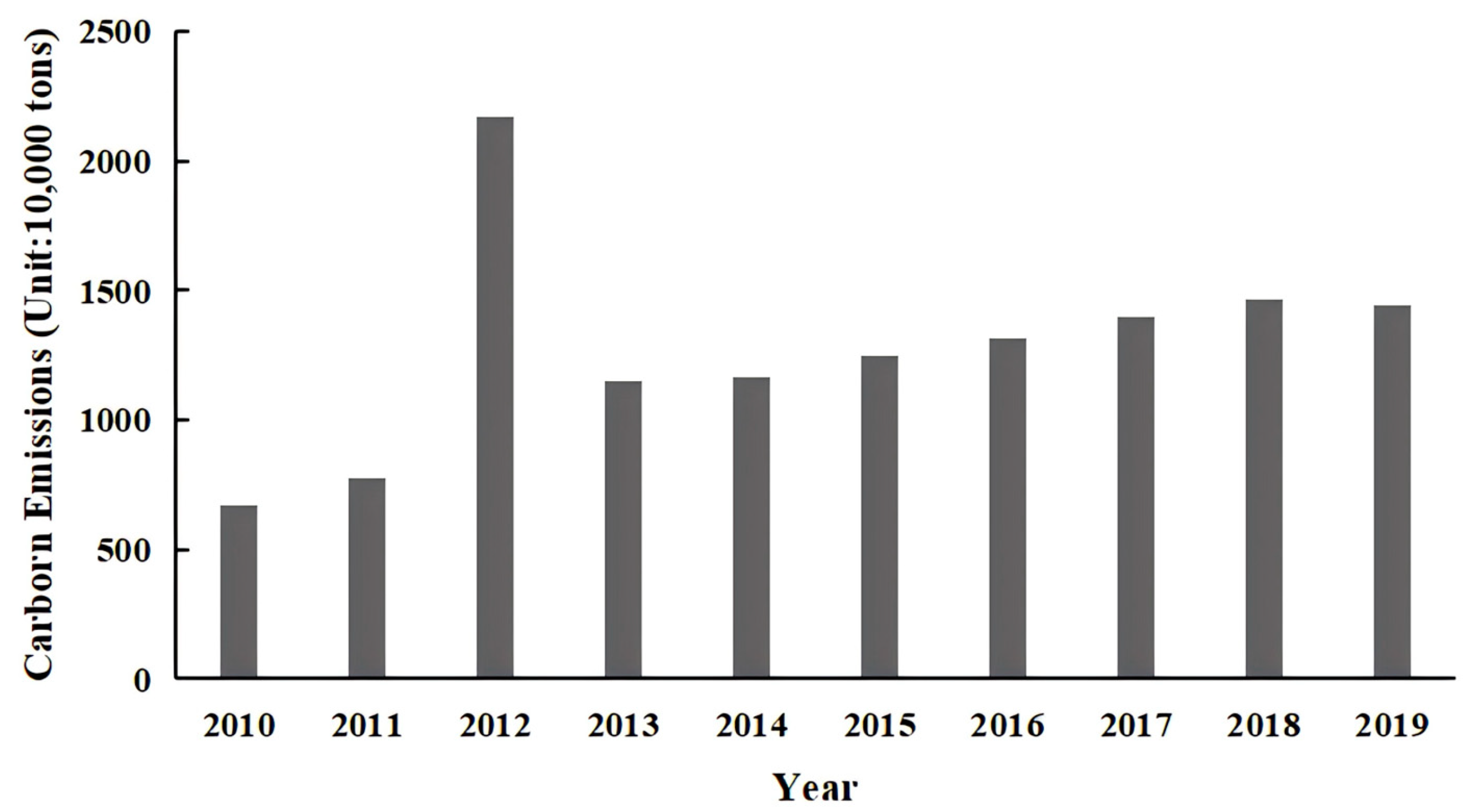
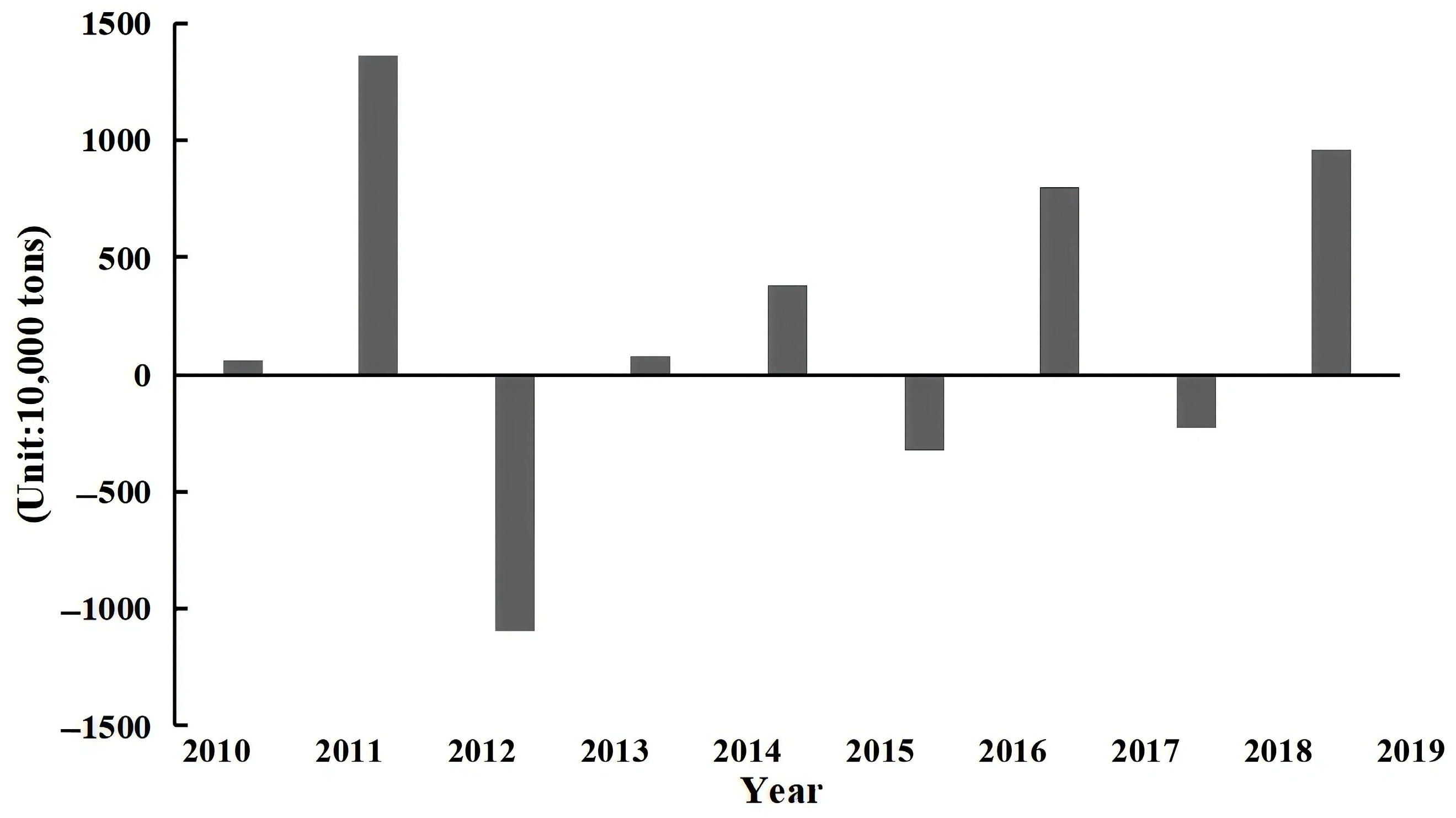
As shown in Figure 1, from 2010 to 2012, China’s fishery product and aquatic processed products sector experienced a sharp increase in carbon emissions alongside the total value of fishery production. During this period, carbon emissions from this sector peaked at 21.69953 million tons. The growth effect of the fishery economy in 2012 was particularly pronounced, far exceeding other years. This was compounded by the simultaneous large-scale expansion of primary and secondary fishery industries, coupled with the concentrated manifestation of carbon-increasing effects from general technological progress. Meanwhile, the mitigating effects of carbon-reducing factors were insufficient, leading to a sharp increase in carbon emissions that year. Following this peak, carbon emissions from fishery products and processed aquatic products declined rapidly in 2013 and gradually stabilized between 2013 and 2015. From 2015 to 2016, while the sector’s gross production value showed a downward trend, its carbon emissions continued to rise steadily. Notably, from 2018 to 2019, the sector’s GDP surged dramatically, increasing by 100% year-on-year. Despite this sharp economic growth, carbon emissions from the fishery and aquatic products processing sector did not rise but instead decreased.
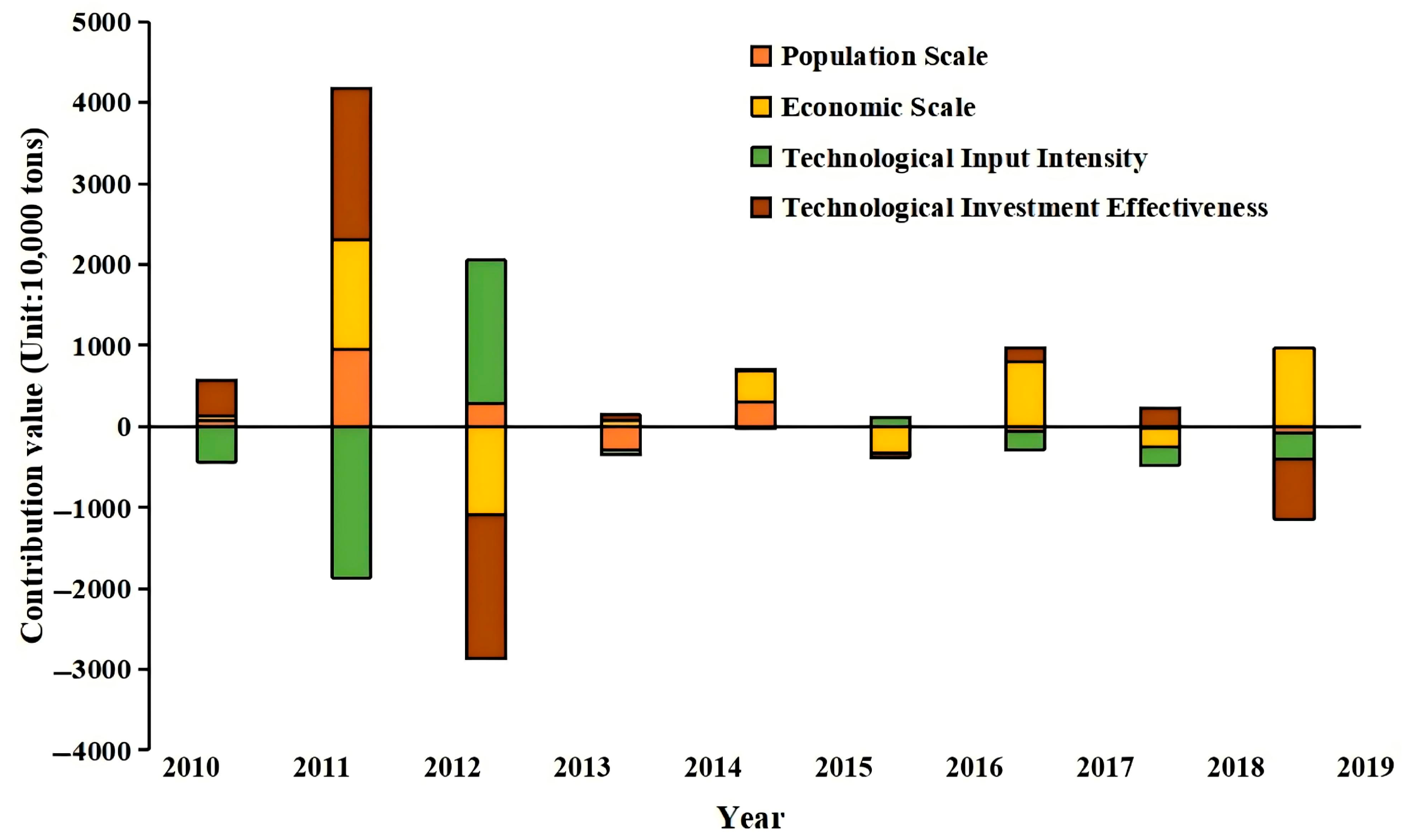
Based on Equations (5)–(8), the additive LMDI decomposition results for carbon emissions from China’s fishery products and processed aquatic products sector during 2010–2019 are obtained (Table 1). Figure 2 clearly illustrates the contribution rates and development trends of various factors within this sector. From 2010 to 2012, carbon emissions in China’s fishery and aquatic processed products sector continued to rise. Factors such as the economic development effect, population scale effect, and technology input effect all contributed to increased emissions. During this period, only the technology input intensity factor mitigated greenhouse gas emissions to a certain extent. From 2012 to 2014, the contribution rate of technological intensity to carbon emissions in this sector reached its peak. Concurrently, the economic development effect and technological efficiency effect made the most significant contributions to reducing carbon emissions in this sector. Considering the substantial decline in the sector’s GDP from 2012 to 2013–2014, the economic development effect became the primary factor reducing greenhouse gas emissions in this sector during that year, primarily due to the decline in sectoral GDP. From 2014 to 2016, China’s fishery products and aquatic processed products sector experienced a slight increase in carbon emissions while its GDP saw a modest decline. During this period, the contribution ratios of the technological input intensity factor and the technological input effectiveness factor to carbon emissions remained largely balanced, maintaining relative stability. From 2017 to 2019, China’s fishery products and aquatic processed products sector reached a turning point in 2018 with a slight increase in carbon emissions over the preceding five years, followed by a decline beginning in 2019. During this period, the economic development effect emerged as the primary contributor to the sector’s carbon emissions. Meanwhile, the factors of technological input intensity and technological input efficiency began to mitigate the carbon footprint of the fishery and aquatic products processing sector. Collectively, these factors enabled a reduction in carbon emissions in 2019 despite a sharp increase in the sector’s gross output value. Concurrently, annual GDP fluctuations in the fishery and aquaculture products processing sector ceased to be the most sensitive factor influencing its carbon emissions.

3.2. Annual Contribution Analysis of Factor Effects

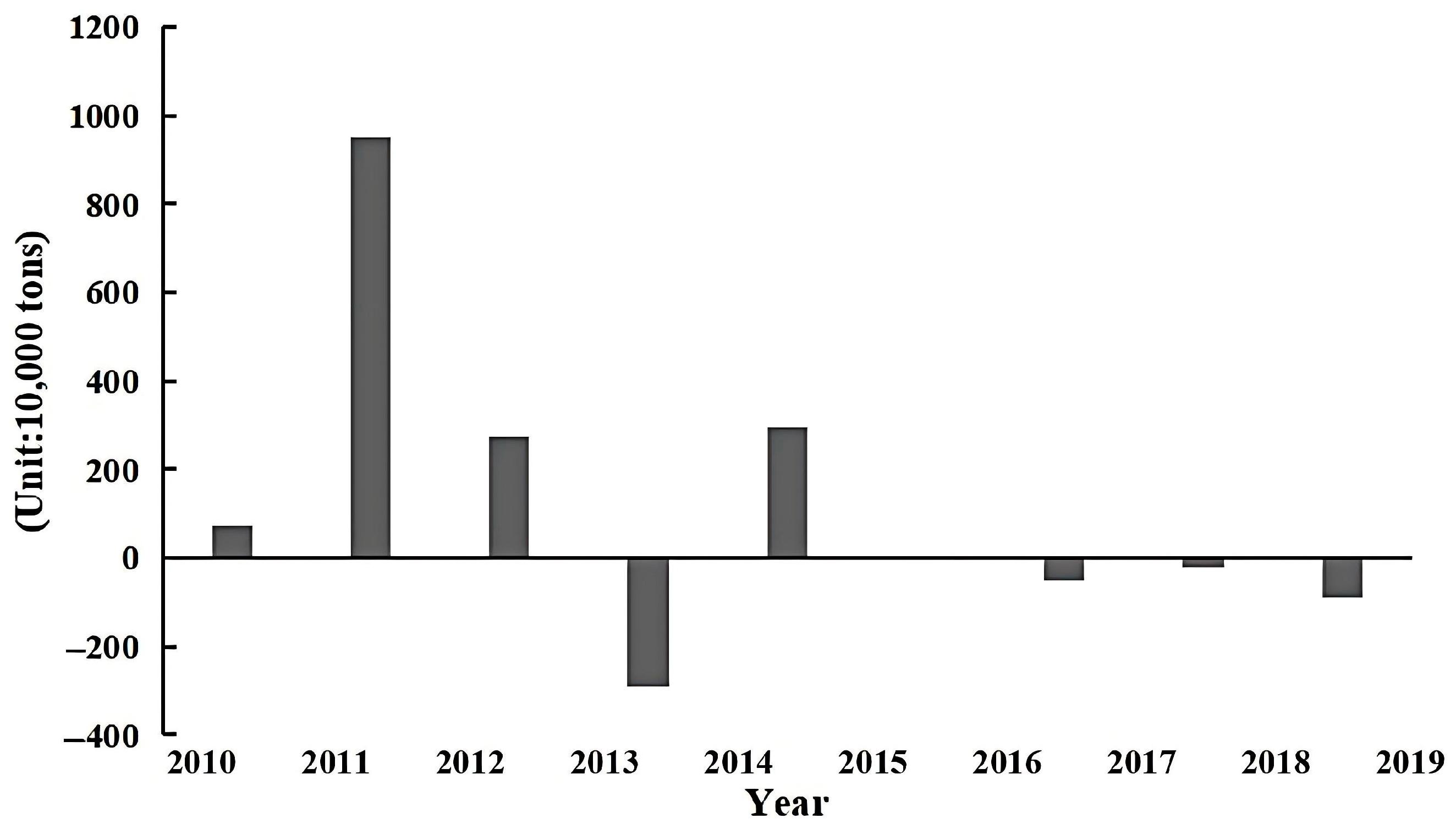
The population scale effect in China’s fishery products and aquatic processed products sector fluctuated significantly between 2010 and 2015, stabilizing during the 2015–2019 period. The sector’s population size effect peaked in 2016, with 1.615 million people engaged in fisheries nationwide. However, the peak contribution of this effect to carbon emissions occurred in 2012, followed by a significant decline during the period of rising national fishery employment from 2015 to 2016. Subsequently, during the 2016–2019 period, the population scale effect of carbon emissions in the fishery and aquatic products processing sector remained largely stable. As shown in Figure 3, the sector’s population scale effect fluctuated near the x-axis during this period, indicating that the number of people employed in the fishery and aquatic products processing sector is no longer the primary factor influencing the sector’s carbon emissions. The sensitivity of the sector’s carbon emissions to population size decreased.
Overall, compared to 2010, the fishery workforce decreased by 95,750 people in 2019. This decline in workforce size has, to some extent, contributed to the reduction in energy-intensive fishing activities, thereby lowering the sector’s embodied carbon emissions. Analysis of the period-by-period effects across different time intervals reveals that changes in the fishery workforce initially exerted a positive influence, which later turned negative. Moreover, the absolute magnitude of this change was relatively small compared to other factors. This indicates that changes in the fishing workforce do not exert a sustained influence on the sector’s embodied carbon emissions, and their capacity to drive emission reductions remains limited. This phenomenon likely correlates with China’s ongoing decline in the fishing workforce and the transformation of production and consumption patterns within the fishery and aquatic processed products sectors. With economic development and social progress, the fishery sector urgently requires green transformation and upgrading. Traditional fishing and processing models characterized by high energy consumption and emissions are gradually being phased out. The sector’s conventional fisheries are undergoing significant transformation. From a macro perspective, this shift positively drives carbon emission reductions in fisheries, contributing to the greening and sustainable development of fishery production.
The economic Scale impact of China’s fishery products and aquatic processed products sector is represented by the annual gross output value of the fishery products sector. The extent of low-carbon economic development in a region can be assessed by examining how variables influence carbon emissions. From 2010 to 2019, the cumulative effect of economic Scale in the fishery products and aquatic processed products sector on the sector’s embodied carbon emissions reached 8.1805 million tons, accounting for 89.04% of the cumulative embodied carbon emissions across all effects in the sector over the period.
Except for the 2012–2013 and 2014–2015 periods, the effects of economic Scale in the fishery sector were positive across all time periods, indicating that economic growth in the fishery products and aquatic processed products sector has consistently driven an increase in the sector’s implicit carbon emissions. From 2017 to 2018, the economic scale effect remained positive. During this period, economic growth was the main reason for the increase in carbon emissions. As people earned more money, their ability to buy products also increased. This growth caused the fishery sector to expand and use more energy. Consequently, the sector produced more carbon emissions (Figure 4). While economic growth in the fishery products and processed aquatic products sector has enriched material wealth, it has also consumed substantial energy resources. Annual GDP for fishery products and processed aquatic products serves as an indicator of the sector’s economic development level. From 2010 to 2019, China’s GDP for fishery products and processed aquatic products experienced sustained growth. Rising income levels boosted consumption capacity, further driving the expansion of fishery production scale and increasing energy consumption.
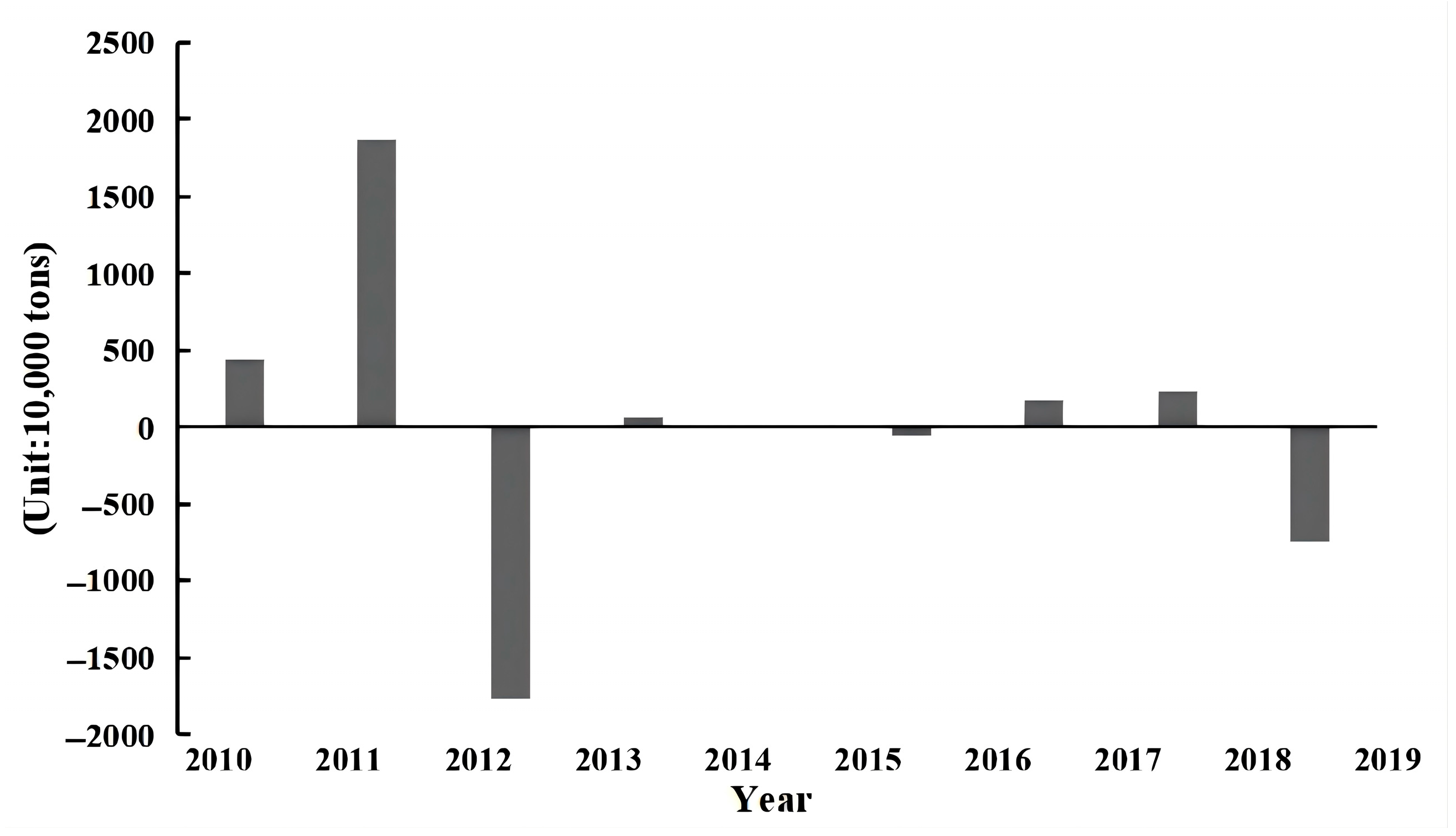
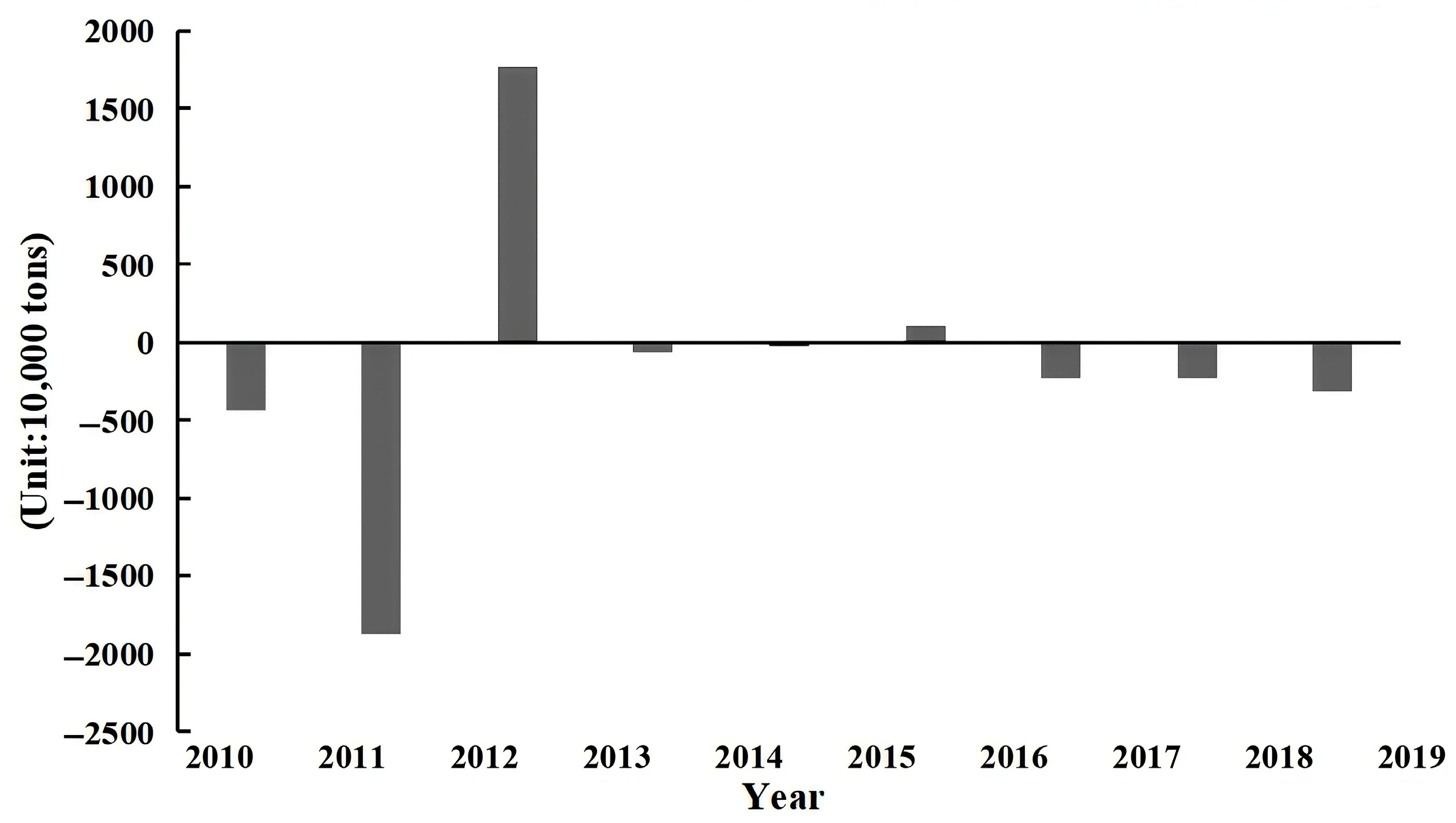
The technological input intensity of China’s fishery products and aquatic processed products sector refers to the proportion of funds allocated to scientific research and technical projects relative to the sector’s annual total production value. It reflects the level of technical focus on enhancing production efficiency through the mechanization of fishing operations, engineering upgrades in aquaculture, and other technologies that boost sector output. During 2010–2012, the technological input intensity factor exerted a negative pull on the sector’s carbon emissions, serving as the sole negative driver during this period. From 2012 to 2014, technological investment effectiveness replaced technological input intensity as the primary negative driver of carbon emissions, while technical investment intensity became the largest positive driver. Notably, during both periods, the absolute values of technological input intensity and technological investment effectiveness were identical. Consequently, the population scale effect and economic scale effect collectively became the primary drivers of the sector’s carbon emissions. This indicates that from 2010 to 2014, the effectiveness of technological investments in China’s fishery products and aquatic processed products sector was insignificant, and the sector exhibited a lag in reducing carbon dioxide emissions during the production process of fishery products and aquatic processed products.
During the period from 2014 to 2018, both the absolute values of technological input intensity and technological investment effectiveness were relatively low (Figure 5). The curves representing technological input effectiveness and input intensity fluctuated slightly around the x-axis, indicating that carbon emissions from China’s fishery products and aquatic processed products sector were largely unaffected by technological input intensity and investment effectiveness during this timeframe. In 2019, both technological intensity and technological effectiveness exerted a counter-cyclical pull on the fishery products and aquatic processed products sector. This suggests the sector may have begun prioritizing investments in low-carbon fishery technology projects, optimizing the technological research structure for the aquatic processed products industry, and increasing the proportion of low-carbon industrial chains across the entire sector. The feed processing industry contributed the highest net transfer volume to fishery products and aquatic processed products. Investments in fishery technology improvements accelerated research on energy-saving and emission reduction technologies and equipment for fisheries. Projects such as the development of high-efficiency, environmentally friendly feed promoted the transition of China’s fishery products and aquatic processed products sector from quantity-driven to quality-driven economic growth.
Technological investment effectiveness in China’s fishery products and processed aquatic products refers to the degree of carbon emissions change resulting from capital investment in technological optimization projects for these products. As shown in Figure 6, statistical results indicate that the technological investment effectiveness factor for this sector fluctuated significantly from 2010 to 2014, stabilizing between 2015 and 2018. By 2019, the factor’s constraint effect on the sector’s carbon emissions had markedly increased, coinciding with a notable reduction in emissions during the same period.
From a period-by-period perspective, the technological investment effectiveness in the fishery products and aquatic processed products sector exhibited a negative driving effect from 2010 to 2013, a positive driving effect from 2013 to 2015 and 2018 to 2019, and remained relatively stable in other years. This indicates that the technological investment effectiveness in this sector can significantly reduce its embodied carbon emissions in certain years. During these periods, the absolute value of the technological investment effectiveness in the fishery products and aquatic processed products sector significantly exceeded other influencing factors, making it the primary determinant of carbon emissions in this sector. Excluding these years, the overall effect of technological inputs on the sector’s embodied carbon emissions was not pronounced. Technological progress reflects the impact of low-carbon technologies developed for the fishery products and aquatic processed products sector, such as environmentally friendly fishing vessels and efficient, eco-friendly feed R&D, on the sector’s embodied carbon emissions. In 2019, China’s embodied carbon intensity in the fishery products and processed aquatic products sector decreased by 64.88% compared to 2010. This substantial change indicates that the contribution of energy retrofits and upgrades for fishing vessels, the transformation of traditional fishing operations, and the advancement of standardized fishery technologies to overall carbon reduction in China’s fishery sector is on the rise.

4. Discussion

This study addresses a gap in previous research by constructing a cross-sectoral comprehensive carbon accounting system that evaluates both direct and indirect carbon emissions in the fishery and aquatic product processing sector. While earlier studies have largely focused on direct emissions (e.g., Zhang et al. [18]; Xiong et al. [19]), our approach also captures embodied carbon transfers along the supply chain. Methodologically, we integrate a multi-regional input–output (MRIO) model with LMDI decomposition to quantify total emissions and reveal the dual role of technological factors: traditional technology investments aimed at scaling production tend to increase emissions, whereas R&D in low-carbon technologies—such as energy-efficient fishing vessels and environmentally friendly feed—can effectively drive emission reduction. This finding refines earlier discussions that treated technology as a single influencing factor (e.g., Shan et al. [17]) and offers more targeted policy insights for the low-carbon transition of fisheries. Furthermore, by linking emission dynamics to industrial structure and trade patterns, this study highlights the synergistic potential of developing deep processing and reducing the share of primary products to enhance both economic value and emission efficiency, providing new empirical evidence to support green development in the fishery sector.
This study has certain limitations in terms of data and model assumptions; for instance, the selection of emission factors may affect the accuracy of the results, and sensitivity analysis could be supplemented in the future. International experience (such as Norway’s electrified aquaculture) shows that technological upgrading is a common pathway. However, China needs to further integrate the goals of “carbon neutrality” and “ecological civilization construction” to promote systematic decarbonization of the industrial chain, thereby achieving a balance between ecological benefits and industrial development.

5. Future Outlook

(1)
To achieve sustainable development in aquatic products trade and promote its shift toward high-value-added, low-emission practices, traditional trade strategies should be transformed. Quality oversight of imported and exported aquatic products must be strengthened, and industrial restructuring should be pursued by reducing the proportion of high-carbon-emission aquatic products in exports. This approach will mitigate the adverse impact of green barriers on exports. Simultaneously, to establish an integrated green fishery platform encompassing aquaculture and processing, actively develop demonstration bases for aquaculture and processing. Strengthen the construction of the fishery industry chain centered on energy conservation and clean, efficient operations.
(2)
To advance the optimization and upgrading of the fishery industry structure and reduce the proportion of capture fisheries in total fishery production value, multiple enforcement measures will be implemented to strictly enforce the summer fishing moratorium system, ensuring effective management during the closed season. Efforts will be made to encourage the development of aquatic products toward deep processing industries, promote low-carbon fishery technology innovation, and extend the value chain of fishery products upstream and downstream.
(3)
To reduce carbon emissions per unit of fishery output and break free from the high-carbon lock-in dilemma, low-carbon fishery technological innovation is crucial. Government departments should encourage fishery enterprises to actively engage in international technical exchanges and cooperation, establish low-carbon fishery technology innovation platforms, increase investment in aquatic product technology R&D, and promote scientific and technological innovations related to low-carbon fisheries.
(4)
To promote low-carbon, green, and sustainable fishery development, it is essential to establish legal frameworks aligned with low-carbon fishery practices and formulate reasonable environmental regulatory policies tailored to regional conditions. Governments should prioritize low-carbon principles in fishery development, placing ecological conservation at the core of their efforts.

6. Conclusions

The series of problems triggered by global warming has increasingly highlighted the necessity of carbon emission efficiency. Against the backdrop of contemporary low-carbon emission reduction and green development, this study examines China’s fishery products and aquatic processed products sector. Using an input–output model, it assesses carbon emissions across China’s production sectors from 2010 to 2020. Building on this foundation, LMDI factor decomposition analyzes the primary spatiotemporal determinants and sensitivity trends of carbon emissions within China’s fishery products and aquatic processed products sector. Key findings are as follows:
(1)
The sustained expansion of China’s fishery trade in volume, variety, and scope provides a robust foundation for examining its carbon emission impacts, especially as global dietary shifts increasingly influence environmental outcomes through trade dynamics. Although the sector has attained significant economies of scale and diversified into high-value domains such as marine pharmaceuticals and chemicals, structural limitations remain. Notably, frozen and primary goods still account for 55% of total output, and exports are dominated by low-value-added semi-finished products. These disparities highlight a substantial opportunity for industrial upgrading through deep processing and value-chain extension.
(2)
Optimizing aquaculture production is essential for minimizing environmental costs amidst global resource scarcity. LMDI decomposition results highlight that while technological inputs are critical for emission reduction, traditional investments focused on scale expansion have inadvertently increased embodied carbon emissions by intensifying the use of vessels and feed. Moreover, the technical inability to comprehensively utilize nutrient-rich byproducts leads to significant resource waste and pollution. To ensure a sustainable transition, the sector must prioritize investments in low-carbon innovations, such as energy-efficient fishing vessels and environmentally friendly feed formulations.
(3)
As environmental awareness drives the global trend toward green consumption, advocating for sustainable seafood choices is essential to mitigate ecological pressures. Prioritizing species with lower environmental footprints, such as farmed bivalves and seaweed, helps preserve finite marine resources while meeting human nutritional needs. Additionally, high-consumption importing nations must curb excessive intake—which often exceeds dietary recommendations—to reduce resource waste and environmental burdens. Pursuing seafood self-sufficiency through local aquaculture and technological advancements further minimizes transportation-related emissions and strengthens the competitiveness of domestic markets.
(4)
Aquatic product trade significantly impacts the fishery carbon emission intensity directly. While indirect factors—such as economies of scale, technological innovation, and industrial modernization—collectively mitigate this intensity, the net effect of trade growth remains an increase in emissions. Nevertheless, moderate expansion and continuous technical upgrades offer strategic pathways for emission reduction. Crucially, environmental regulations possess a threshold effect: while appropriate policies are beneficial, excessive stringency may inadvertently exacerbate pollution, leading to the “more regulation, more pollution” phenomenon.

Author Contributions

Conceptualization, T.L.; Methodology, T.L.; Software, J.C.; Validation, S.X. and N.A.K.N.; Formal analysis, T.L., S.X. and J.C.; Investigation, S.X.; Data curation, C.C.; Writing—original draft, T.L. and S.X.; Writing—review & editing, T.L. and C.C.; Visualization, S.X. and J.C.; Supervision, N.A.K.N. and C.C.; Project administration, N.A.K.N. and C.C. All authors have read and agreed to the published version of the manuscript.

Funding

This research received no external funding.

Institutional Review Board Statement

Not applicable.

Informed Consent Statement

Not applicable.

Data Availability Statement

No new data were created or analyzed in this study.

Conflicts of Interest

The authors declare no conflict of interest.

References

  1. Chen, X.; Yu, Z.; Di, Q. Assessing the marine ecological welfare performance of coastal regions in China and analyzing its determining factors. Ecol. Indic. 2023, 147, 109942. [Google Scholar] [CrossRef]
  2. Rogelj, J.; den Elzen, M.; Höhne, N.; Fransen, T.; Fekete, H.; Winkler, H.; Schaeffer, R.; Sha, F.; Riahi, K.; Meinshausen, M. Paris Agreement climate proposals need a boost to keep warming well below 2 °C. Nature 2016, 534, 631–639. [Google Scholar] [CrossRef] [PubMed]
  3. Waite, R.; Beveridge, M.C.M.; Brummett, R.E.; Castine, S.; Chaiyawannakarn, N.; Kaushik, S.; Phillips, M. Improving Productivity and Environmental Performance of Aquaculture; World Resources Institute: Washington, DC, USA, 2014. [Google Scholar]
  4. Bene, C.; Lawton, R.; Allison, E.H. Trade matters in the fight against poverty: Narratives, perceptions, and (lack of) evidence in the case of fish trade in Africa. World Dev. 2010, 38, 933–954. [Google Scholar] [CrossRef]
  5. Xia, Q.; Tian, G.; Wu, Z. Examining embodied carbon emission flow relationships among different industrial sectors in China. Sustain. Prod. Consum. 2022, 29, 100–114. [Google Scholar] [CrossRef]
  6. Guo, Y.; Zhao, L.; Zhang, C. Energy resources, tourism development and growth-emission nexus in developing countries. Resour. Policy 2023, 81, 103407. [Google Scholar] [CrossRef]
  7. Li, F.; Ye, S.; Chevallier, J.; Li, L.; Wang, S.; Feng, L. Provincial energy and environmental efficiency analysis of Chinese transportation industry with the fixed-sum carbon emission constraint. Comput. Ind. Eng. 2023, 182, 109393. [Google Scholar] [CrossRef]
  8. Liu, Q.; Gao, J.; Cai, W.; Jiang, X.; Chen, X. A novel allocation method of regional carbon allowance in building sector: Perspective from coupling equity and efficiency. Environ. Impact Assess. Rev. 2023, 102, 107192. [Google Scholar] [CrossRef]
  9. Xu, L.; Wu, C.; Qin, Q.; Xu, X.; Zhang, C. Spillover effects and nonlinear correlations between carbon emissions and stock markets: An empirical analysis of China’s carbon-intensive industries. Energy Econ. 2022, 111, 106071. [Google Scholar] [CrossRef]
  10. Feng, C.C.; Ye, G.Q.; Jiang, Q.T.; Zheng, X.M.; Chen, G.B. The contribution of ocean-based solutions to carbon reduction in China. Sci. Total Environ. 2021, 797, 149168. [Google Scholar] [CrossRef]
  11. Wu, R.S.S. The environmental impact of marine fish culture: Towards a sustainable future. Mar. Pollut. Bull. 1995, 31, 159–166. [Google Scholar] [CrossRef]
  12. Frolicher, T.L.; Rodgers, K.B.; Stock, C.A.; Cheung, W.W.L. Sources of uncertainties in 21st century projections of potential ocean ecosystem stressors. Glob. Biogeochem. Cycles 2016, 30, 1224–1243. [Google Scholar] [CrossRef]
  13. Suuronen, P.; Chopin, F.; Glass, C.; Løkkeborg, S.; Matsushita, Y.; Queirolo, D.; Rihan, D. Low impact and fuel efficient fishing: Looking beyond the horizon. Fish. Res. 2012, 119, 135–146. [Google Scholar] [CrossRef]
  14. Bastardie, F.; Hintzen, S.; Feary, D.A. Reducing the fuel use intensity of fisheries: Through efficient fishing techniques and recovered fish stocks. Front. Mar. Sci. 2022, 9, 817335. [Google Scholar] [CrossRef]
  15. Wang, Q.; Ge, Y.; Li, R. Evolution and driving factors of ocean carbon emission efficiency: A novel perspective on regional differences. Mar. Pollut. Bull. 2023, 194, 115219. [Google Scholar] [CrossRef] [PubMed]
  16. Xiang, T.; Bian, J.; Li, Y.; Gu, Y.; Wang, Y.; Zhang, Y.; Wang, J. Seasonal contributions and influencing factors of urban carbon emission intensity: A case study of Tianjin, China. Atmosphere 2024, 15, 947. [Google Scholar] [CrossRef]
  17. Shan, S.; Li, Y.; Zhang, Z.; Zhu, W.; Zhang, T. Identification of key carbon emission industries and emission reduction control based on complex network of embodied carbon emission transfers: The case of Hei-Ji-Liao, China. Int. J. Environ. Res. Public Health 2023, 20, 2603. [Google Scholar] [CrossRef]
  18. Zhang, X.; Ye, S.; Shen, M. Driving factors and spatiotemporal characteristics of CO2 emissions from marine fisheries in China: A commonly neglected carbon-intensive sector. Int. J. Environ. Res. Public Health 2023, 20, 883. [Google Scholar] [CrossRef]
  19. Xiong, H.; Wang, X.; Hu, X. Research on the duality of China’s marine fishery carbon emissions and its coordination with economic development. Int. J. Environ. Res. Public Health 2023, 20, 1423. [Google Scholar] [CrossRef]
  20. Zhang, K.; Jiang, L.; Liu, W. Toward the construction of a sustainable society: Assessing the temporal variations and two-dimensional decoupling of carbon dioxide emissions in Anhui province, China. Sustainability 2024, 16, 9923. [Google Scholar] [CrossRef]
  21. Zhang, K.; Lin, Q.; Lian, F.; Feng, H. Estimating emissions from fishing vessels: A big Beidou data analytical approach. Front. Mar. Sci. 2024, 11, 1418366. [Google Scholar] [CrossRef]
  22. Zheng, S.; Nandasena, N.A.K.; Chen, C.; Wu, F. Sustainable Risk Governance in Maritime Transport: Embodied Carbon Emissions and Responsibility Distribution Across BRICS Coastal Economies. Sustainability 2025, 17, 3573. [Google Scholar] [CrossRef]
  23. Tu, M.; Li, Y.; Bao, L.; Wei, Y.; Orfila, O.; Li, W.; Gruyer, D. Logarithmic Mean Divisia Index Decomposition of CO2 Emissions from Urban Passenger Transport: An Empirical Study of Global Cities from 1960–2001. Sustainability 2019, 11, 4310. [Google Scholar] [CrossRef]
  24. Wang, F.; Liu, X.; Chen, T.; Feng, H.; Lin, Q. Investigating Catching Hotspots of Fishing Boats: A Framework Using BeiDou Big Data and Deep Learning Algorithms. J. Mar. Sci. Eng. 2025, 13, 905. [Google Scholar] [CrossRef]
  25. Hamdiyah, S.; Supriatna, J.; Prihanto, Y. Social and economic influences on CO2 emission from capture fisheries in West Java province. IOP Conf. Ser. Earth Environ. Sci. 2020, 530, 12026. [Google Scholar] [CrossRef]
  26. Liu, G.L.; Xu, Y.; Ge, W.F.; Yang, X.; Su, X.; Shen, B.; Ran, Q. How can marine fishery enable low carbon development in China? Based on system dynamics simulation analysis. Ocean Coast. Manag. 2023, 231, 106382. [Google Scholar] [CrossRef]
  27. Cao, L.; Chen, Y.; Dong, S.L.; Williams, A.; Polasky, S.; Kite-Powell, H.; Naylor, R.L. Opportunity for marine fisheries reform in China. Proc. Natl. Acad. Sci. USA 2017, 114, 435–442. [Google Scholar] [CrossRef]
  28. IPCC. 2006 IPCC Guidelines for National Greenhouse Gas Inventory; IPCC: Geneva, Switzerland, 2006. [Google Scholar]
Figure 1. Trends in carbon emissions from China’s fishery products and aquatic processed products sector.
Sustainability 18 00860 g001
Figure 2. LMDI decomposition results for the fishery products and aquatic processed products sector.
Sustainability 18 00860 g002
Figure 3. Trends in population scale effects.
Sustainability 18 00860 g003
Figure 4. Trends in economic scale effects.
Sustainability 18 00860 g004
Figure 5. Trends in the effect of technological input intensity.
Sustainability 18 00860 g005
Figure 6. Trends in the technological investment effectiveness.
Sustainability 18 00860 g006
Table 1. LMDI decomposition results for carbon emissions in China’s fishery products and aquatic processed products sector (unit: 10,000 tons).
YearPopulation ScaleEconomic ScaleTechnological Input IntensityTechnological Investment Effectiveness
20100000
201172.7713.13−433.82433.82
2012950.73537.39−1866.571866.57
2013275.98−1227.261773.17−1773.17
2014−290.13301.04−63.6063.60
2015296.50−211.46−20.6120.61
20165.985.88106.59−54.65
2017−51.88193.90−232.58177.62
2018−20.6984.38−234.83234.83
2019−88.991121.05−313.58−741.40
Disclaimer/Publisher’s Note: The statements, opinions and data contained in all publications are solely those of the individual author(s) and contributor(s) and not of MDPI and/or the editor(s). MDPI and/or the editor(s) disclaim responsibility for any injury to people or property resulting from any ideas, methods, instructions or products referred to in the content.