Article

Life Cycle Environmental Impact Assessment of Gold Production in an Artisanal Small-Scale Mine in Colombia

1
Department of Sciences and Methods for Engineering, University of Modena and Reggio Emilia, 42122 Reggio Emilia, Italy
2
Department of Civil, Environmental, Architectural Engineering and Mathematics, University of Brescia, Via Branze 43, 25123 Brescia, Italy
3
Group on Governance of Climate Change, Universitat Politècnica de Catalunya-BarcelonaTech, Av. Maristany, 16, 08019 Barcelona, Spain
4
InterMech—MO.RE.—Interdepartmental Center for Applied Research and Services in the Advanced Mechanics and Motor Engineering Sector, 42122 Reggio Emilia, Italy
5
National Research Council-Institute of Condensed Matter Chemistry and Technologies for Energy (CNR-ICMATE), Corso Stati Uniti 4, 35127 Padova, Italy
*
Author to whom correspondence should be addressed.
Sustainability 2026, 18(2), 770; https://doi.org/10.3390/su18020770
Submission received: 11 November 2025 / Revised: 29 December 2025 / Accepted: 5 January 2026 / Published: 12 January 2026

Abstract

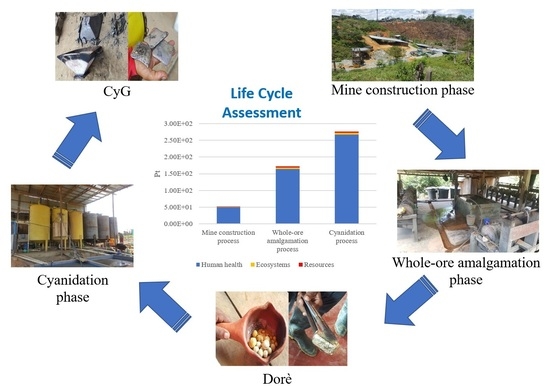
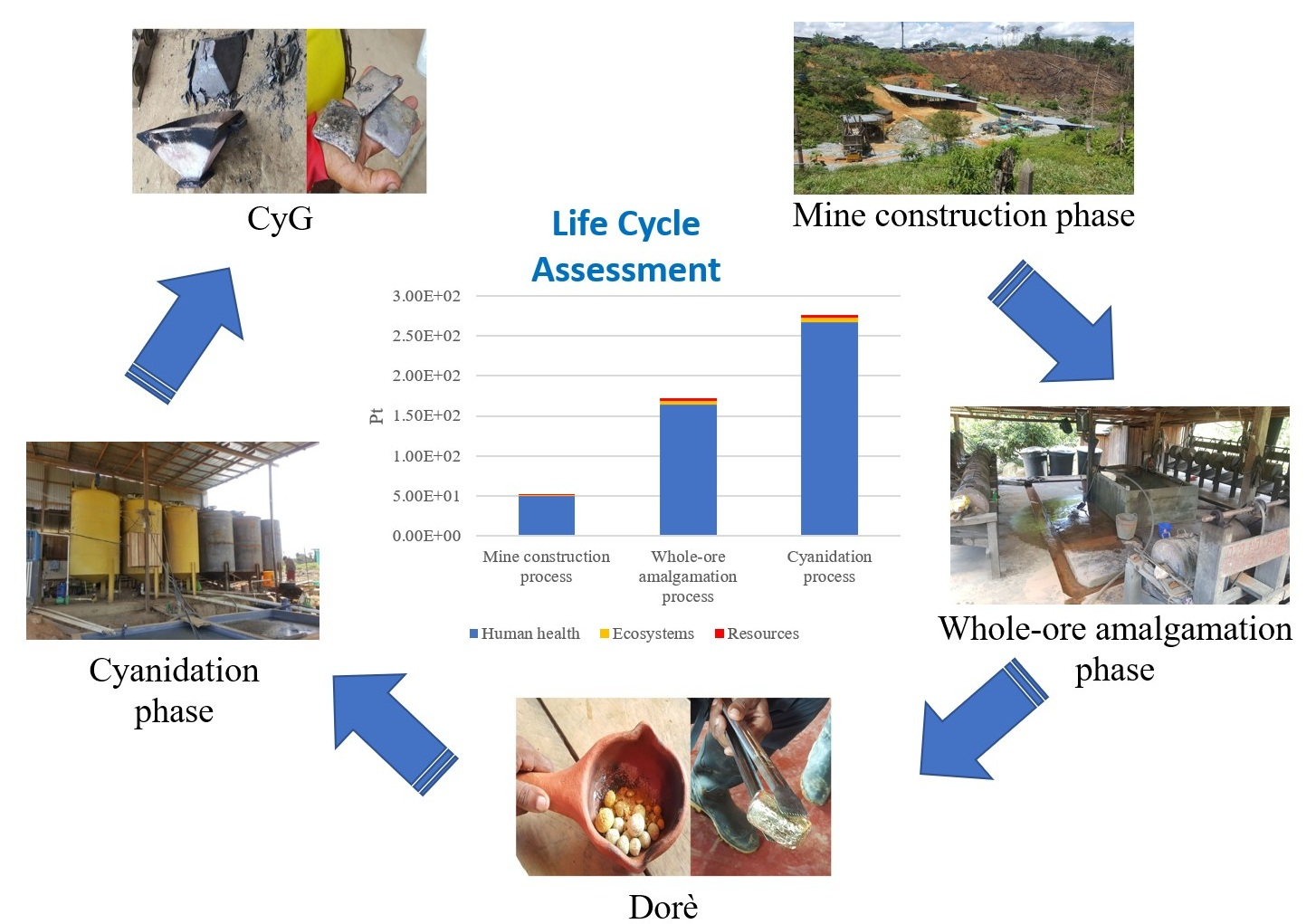
Small-scale artisanal mine production processes are characterized by significant environmental and human health impacts, especially in countries with ineffective economic resources and policies. This study accurately quantifies the impacts of artisanal gold production processes, identifying the dominating hotspots in a holistic perspective. The life cycle assessment (LCA) methodology was applied to perform an environmental sustainability appraisal for Doré and Cyanidation Gold (CyG) extraction from Mina Nueva, a small-scale artisanal mine managed by the local population, located in Asociación Campesina del Valle del río Cimitarra, near the city of Segovia in the department of Antioquia in Colombia. The obtained single-score LCA results showed a total damage of 4.99 × 1002 Pt, of which 55.2% was associated with the cyanidation process, 34.4% with the whole-ore amalgamation phase, and 10.4% with mine construction. A sensitivity analysis was also performed to study the potential effects of particulate emissions generated by the mine construction phase.

Graphical Abstract

1. Introduction

The annual total gold supply in 2023 averaged 4881.8 t (without considering the net producer edging of 17 t), of which the amount derived from mining (i.e., 3644.4 t) accounted for approximately 74.65%, while the remaining (i.e., 1237.3 t) came from recycling [1]. The extraction encompasses both large-scale industrial primary mining (LSM) and artisanal small-scale mining (ASM) [2]. ASM is based on rudimentary, low-technology, and labour-intensive methods [3] and is often also informal and, in some cases, illegal [4,5]. The proportion of Artisanal Small-scale Gold Mining (ASGM), which takes place informally or illegally, is estimated to be between 70% and 80% [6]. According to the United Nations Office on Drugs and Crime, UNODC [7], informal mining comprises small and medium-sized operating units individually owned and without any accounting records; it is characterized by preserving artisanal techniques without mechanical assistance and small-scale operations. On the other hand, illegal mining is typically developed without being registered in the National Mining Registry, hence without a mining title. It also includes mining covered by a mining title, but where the extraction, or part of it, takes place outside the area granted in the licence. It is extremely difficult for governments to obtain precise data for gold production from ASGM due to unreliable census methods, informality, and, in some cases, illegality [8,9]. International institutions estimated that ASGM accounts for approximately 12–20% of the annual newly mined gold supply [10,11,12], corresponding to 380–870 t of gold each year [8,9] and providing direct livelihoods for ca. 15–20 million people [8,12,13].
In 2023, worldwide gold demand was 4448 t (excluding OTC, i.e., over-the-counter) [14].
Despite representing a vital source of livelihood for hundreds of thousands of people [5], gold mining is also responsible for extensive environmental impacts, such as water contamination, deforestation, and loss of biodiversity [15,16,17]. Indeed, inadequate waste confinement and restoration of disused mines lead to a continuous and progressive release of toxic waste into the environment [18,19]. One of the primary sources of contamination is the extensive use of mercury in the amalgamation process [20,21], where the amalgam consists of 40–50% mercury and 40–60% gold and silver [18,20,22]. During the amalgamation combustion process, workers are exposed to high levels of colourless and odourless elemental mercury vapours [18,23]. Retorts are sometimes used, but they are not 100% efficient, with mercury continuing to be leached [21]. Additional human health and environmental hazards arise from further exposure to the mercury released into the soil and water compartments during waste processing [16,24].
Cheng et al. [9] recently reported an amount of Hg globally used in the ASGM sector of 640–1000 t/y, with 248–838 t/y of Hg emissions. Telmer and Veiga [25] estimated that 35% of the emitted mercury is released directly to the atmosphere, with the rest being instead released to the hydrosphere.
Mantey et al. [26] experimentally assessed (through Atomic Absorption Spectrometry, AAS) the extent to which ASGM influences mercury concentrations within different environmental media in the Western Region of Ghana, reporting average values equal to 13.3 mg/kg in slurry, 9.5 mg/kg in waste, and 12.2 mg/kg in soil, the latter exceeding the limit value of 1 mg/kg indicated by the SGVs—Soil Guideline Values for residential land use [27]. Indeed, it should be kept in mind that residential land often falls within the context of mining, since miners and their families typically live in the areas adjacent to the mines [28]. Mantey et al. [26] also analyzed the Hg content of surface drainage/water, which was found to average 12.9 mg/L, exceeding the potability value of 6 μg/L defined by the WHO—World Health Organization [27].
Mercury exposure can also affect the food chain; therefore, mercury poisoning represents a significant environmental and health concern [29], not limited to the mine neighbourhoods, placing at risk the health of billions of people [18,25,28,30].
A collection of data obtained from different studies and contexts on Hg content in urine samples from individuals involved or not involved in ASGM activities is reported in the protocol by Veiga and Baker [28]. Citing a few examples, a study carried out in Venezuela shows mercury levels in urine ranging from 2.5 to 912 μg/g creatinine, reaching extreme values between 1221 and 3260 μg Hg/g, with an overall average of 104.59 μg Hg/g. According to WHO, a subject exposed to about 40 μg/m3 of Hg in the air should show a value of 50 μg Hg/g creatinine, set as the maximum individual concentration in urine. Even at concentrations as low as 100 μg Hg/g creatinine, multiple health problems, including neurological damage, can occur. Mercury poisoning can be fatal or cause permanent damage to the nervous system, for example, through inhalation of 1200 to 8500 μg Hg/m3, equivalent to 1500 to 10,625 μg Hg/g creatinine, respectively. A study performed in Tanzania shows values above the limit set by WHO even in areas around ASGM activities [28].
Although most miners are aware of the above-mentioned mercury-related hazards, and despite the low recovery rate of ca. 30% [31,32], it is still used at ASGM sites [17] due to its relatively low cost, easy accessibility, simplicity, and rapidity of use [15,18], together with the lack of viable alternatives [33].
Indeed, a popular and more efficient alternative procedure for gold extraction is cyanidation [15,17] with cyanide, a chemical classified as highly polluting under the Water Framework Directive 2000/60/EC [34]. Particularly, sodium cyanide (NaCN) can be extremely hazardous at pH levels below 10, where hydrogen cyanide (HCN), a harmful gas at low level of long-term exposure and lethal at high exposure levels [35], can form vapours [31]. Moreover, cyanidation is frequently applied to waste from the amalgamation process that still contains precious metals and also mercury, thus forming cyano–mercury complexes [33]. Consequently, poor waste management practices result in mercury complexes that are easily solubilised by rain, thus quickly transported to streams, thereby increasing mercury’s bioavailability [18].
Concerning the present case study, according to the literature survey by Cheng et al. [9], Colombia is among the top five countries with the most significant ASGM. Gold production plays a dominant role in the economy of Colombia [36]. Approximately 72% of the country’s gold mining activity is performed in ASM, with 66% of the total being unregulated by the central government [37]. ASM can employ up to 300,000 people country-wide, of which at least half are ASG miners; however, only four out of ten miners are legal, and of those legal miners, only 50% comply with health and safety regulations [10].
The department of Antioquia represents the mining hub of Colombia [36], producing approximately 50% of Colombian gold [37] and releasing an average of 48 t of mercury into the environment every year [33]. The Colombian government has been attempting to address the use and release of mercury into the environment for years. For example, Law No. 1658 of 2013 encourages agreements, cooperative conventions, programmes, and international cooperation projects designed to limit the use of mercury or eliminate it altogether through the training of small-scale gold miners and research promotion. The Colombian government in 2013 regulated the use of mercury in all the industrial activities of the country [38], imposing in 2015 (law 2015 Resolución 631 [39]) a limit of 2 µgHg/L in wastewater produced in gold mining.
The aim of the present work is to assess the potential environmental impacts associated with the entire gold extraction process using the life cycle assessment (LCA) methodology. This study focuses exclusively on environmental impacts and does not evaluate governance, social, or conflict-related dimensions, as defined in responsible-sourcing or due-diligence frameworks. The contribution of each processing phase to the total impact were quantified in order to highlight the environmental hotspots of the analyzed system. This was achieved by building a specific inventory for each phase of the mining activities, employing primary and also secondary or tertiary data for those processes with low data availability. Although the consequences of amalgamation and cyanidation on both human and environmental health are well known, to the best of the authors’ knowledge, only a few studies are available in the scientific literature on the specific effects of mine construction, including the work by Valdivia and Ugaya [40]. In order to overcome the above-mentioned gap, a sensitivity LCA analysis was also performed with the effect to account for particulate emissions potentially generated during the mine construction process and their effects on workers’ health.

Novel Contributions of the Study

The present study advances the existing ASGM-LCA literature in several key aspects. Unlike most previous assessments, which focus primarily on mercury emissions from amalgamation or on isolated processing steps, this work provides a comprehensive, full-system life cycle assessment of artisanal gold production based on a real operational case in Colombia, encompassing mine construction, whole-ore amalgamation, and cyanidation within a unified system boundary. The analysis demonstrates that, beyond mercury-related impacts, cyanidation can represent a dominant contributor to multiple midpoint impact categories and to the overall environmental single score. Moreover, this study explicitly introduces particulate matter emissions associated with mine construction through a dedicated sensitivity scenario, an impact pathway that has been largely overlooked in ASGM-LCA studies to date. By quantifying their potential influence on human health impacts, the work reveals previously unaccounted environmental hotspots and provides new insights into the relative importance of different extraction phases. Overall, the study broadens the environmental perspective on ASGM and offers a more holistic basis for identifying priority areas for mitigation and future sustainability interventions.

2. Materials and Methods

2.1. A Brief Social and Environmental Overview of Mina Nueva Mine

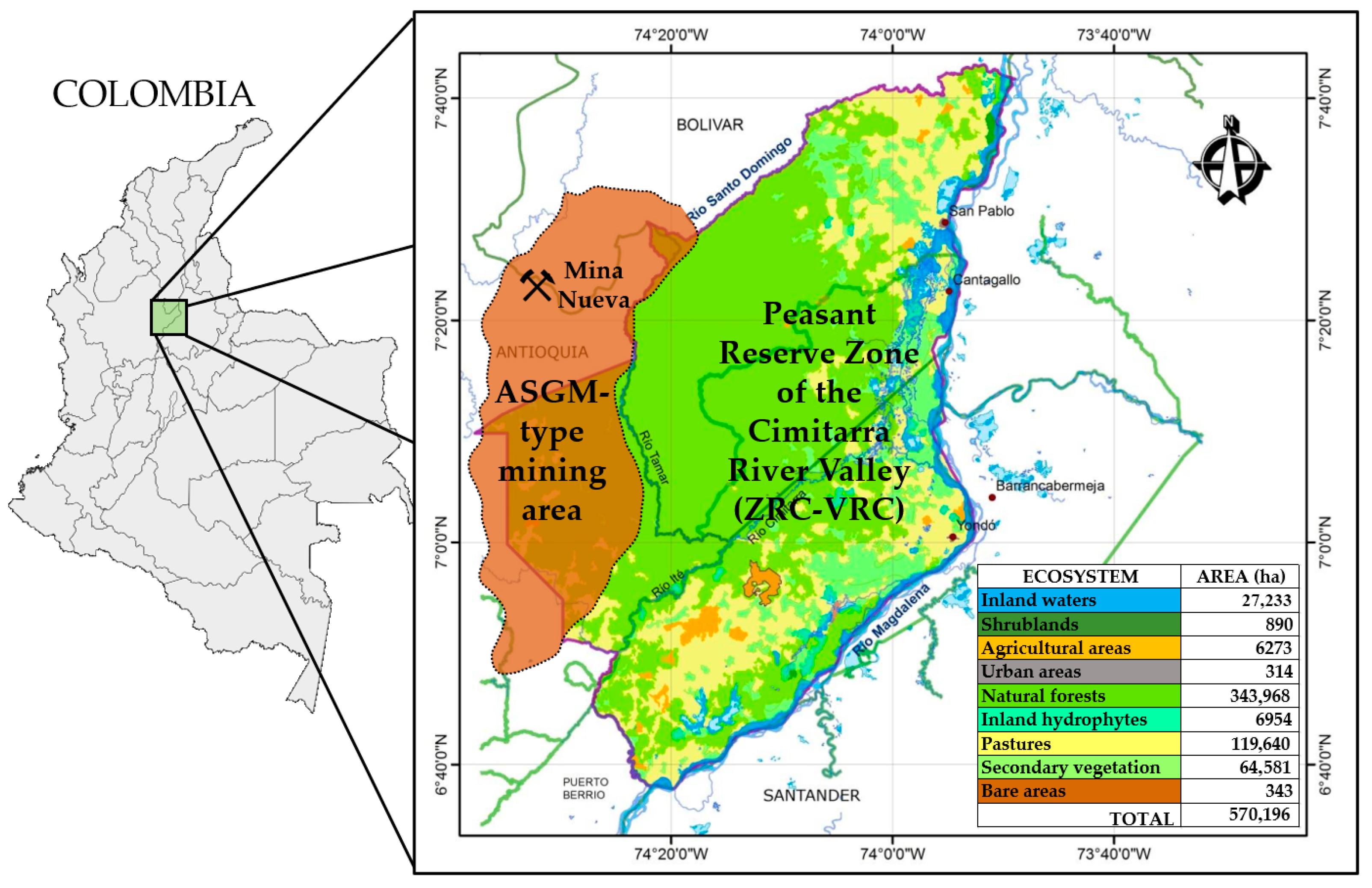
Mina Nueva is a locally managed ASGM situated in the Zona de Reserva Campesina del Valle del río Cimitarra (ZRC-VRC) (Figure 1), near the city of Segovia in the Antioquia department, one of the 32 departments of Colombia, in the northwest of the country. The ZRC-VRC is an area of great biodiversity [41], water, and natural resources [42]. It is a marginal rural area in the Serranía de San Lucas jungle whose communities are poor and riven by armed conflict [43]. Small-scale artisanal gold mining is the most popular local occupation [44,45,46].
The ZRC-VRC covers 1880 km2. Its population is approximately of 29,000 people, mainly farmers, miners, and fishermen living in 120 villages. There are approximately 30 artisanal mines in an area of ca. 700 km2 within the ZRC-VRC. The villages have average populations of ca. 300 people [44,45].
Mina Nueva is a “Beta” type mine, in which underground mines follow gold veins in quartz matrix rocks [47]. In 61.82% of the cases, the Beta process is preferred to other mining methods. The present case study included interviews with a total of 55 local people aged between 20 and 30, ten of whom work at the Mina Nueva mine. Mina Nueva was opened in 2012–2013, leading to the settlement of approximately 200–300 people, mostly miners with their families. Surveys showed that mining is the village’s primary source of livelihood, followed by commerce, livestock farming, timber production, and agriculture. Wood from the jungle is used as a support structure in the mine shafts, without any type of reforestation activity occurring [45,48].
As far as miners are concerned, male activities typically include extraction of the rocks and cyanidation, while women are usually devoted to separating the gold-bearing material from the inert rock. There is no child labour, but the workers’ children are present at the mining site due to the lack of geographically accessible schools [45,48].

2.2. Life Cycle Assessment (LCA)

The LCA methodology was applied in accordance with UNI EN ISO 14040–14044 regulations [49,50], and its constituting phases are detailed hereafter.

2.2.1. Goal and Scope Definition

The aim of this study was to evaluate the potential environmental impacts associated with Doré and Cyanidation Gold (CyG) extraction from the Mina Nueva mine, a locally managed small-scale and artisanal mine in Antioquia (Colombia).
Specifically, Dorè is obtained from the whole-ore amalgamation phase and the subsequent thermal separation of mercury [51], while CyG is obtained from the cyanidation phase [52].

2.2.2. The Function of the System, the System Studied, and Its Functional Unit

The function of the system is the extraction of Dorè and CyG, representing the end products of the studied Mina Nueva artisanal small-scale mine.
The system studied is the actual scenario of Mina Nueva mine, as described in the previous Section 2.1.
Since the study is mostly based on primary data (as detailed in the following sections) and is not directly scalable to higher amounts, the functional unit selected was the mass of Doré (12.58 g) and the mass of CyG (13.18 g) ready for sale, as obtained on average per day by the miners. These 25.76 g of valuable materials were derived from 128.6 kg of mineral rock, the latter corresponding to the average daily input of the two “Cocos” used for the whole-ore amalgamation process. In the studied system, gold is recovered within an integrated ASGM processing chain in which recovery steps occur sequentially, while gold-bearing products are co-produced from the same ore feed and operational infrastructure; defining the functional unit on the basis of daily production allows a consistent allocation of material and energy flows across co-produced gold-bearing outputs.

2.2.3. System Boundaries

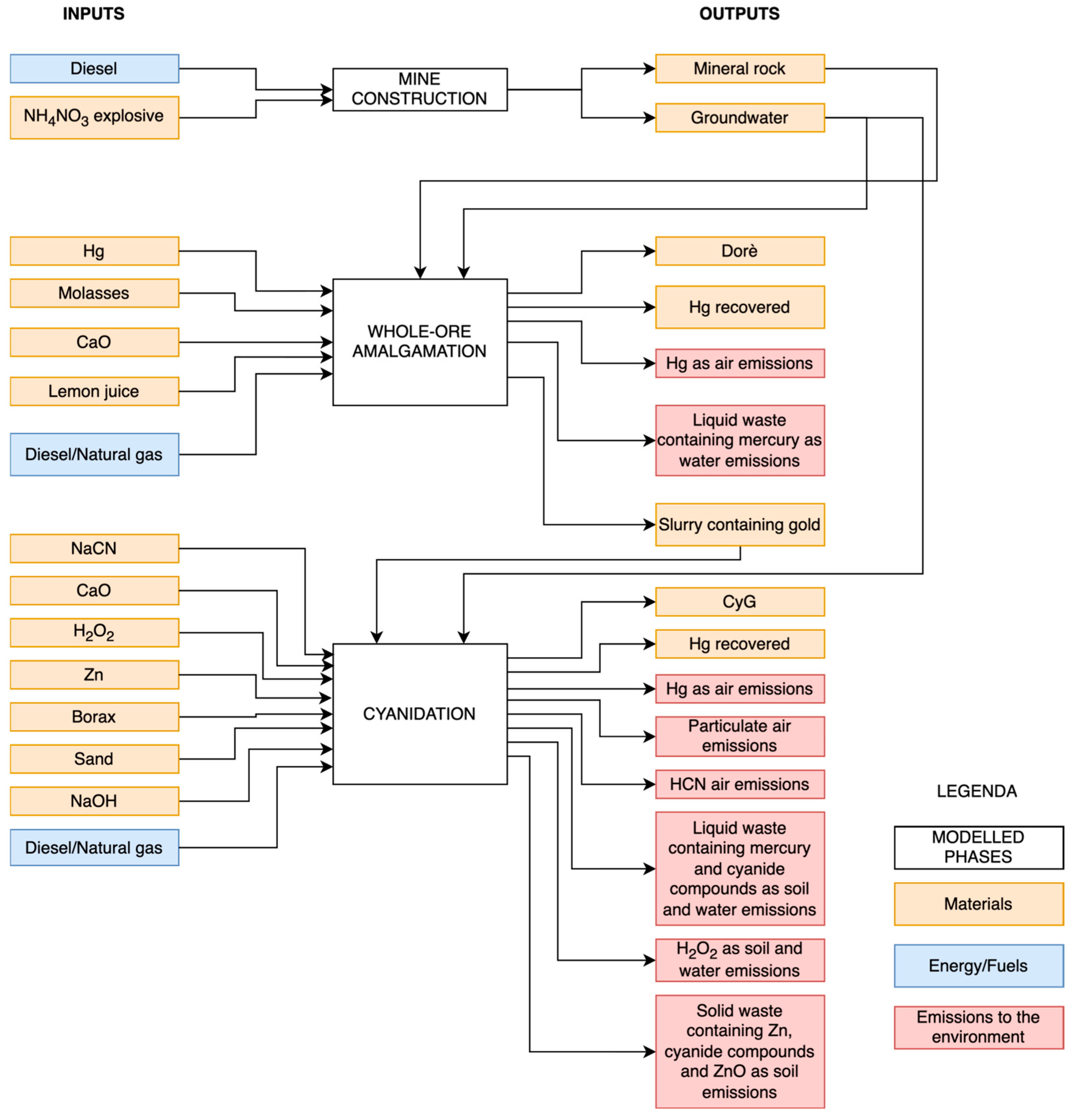
The system boundaries include the mine construction process, the whole-ore amalgamation process, and the cyanidation one. They are summarized in the flowchart reported in Figure 2.
The full detail of the different processes is reported in the Supplementary Materials section, also supported by detailed flowcharts (Figures S1–S5), the experimental composition of both Dorè and CyG (Tables S1 and S2), and a series of photographs captured on site (Figures S6–S29). Specifically, Figure S1 refers to the deforestation of the area selected for the mine construction. Figures S2–S4 show the system boundaries limited to the whole-ore amalgamation phase steps. Thermal separation of mercury from amalgam produces 12.58 g of Doré containing 47.08% of gold and 47.92% of silver, as detailed in Table S1. Figure S5 shows the system boundaries limited to one cycle of the cyanidation phase, for 6000 kg of residues from the previous whole-ore amalgamation phase. The as-obtained CyG contained 45.90% of silver and 33.47% of gold (33.47%), as detailed in Table S2.

2.2.4. Data Quality, Life Cycle Inventory, and Life Cycle Impact Assessment

When available, primary data supplied by project partners and collected on site from October 2015 to December 2017 at the ZRC-VRC in Colombia were used.
The study was the result of an international collaboration between ACVC (Asociación Campesina del Valle del río Cimitarra, the Cimitarra River Valley Farmers Association), CeTAmb LAB (Research Laboratory on Appropriate Technologies for Environmental Management in Countries with Limited Resources) of Brescia University (Italy), and the Department of Environmental Engineering of the University Institute de la Paz (UNIPAZ) in Barrancabermeja (Department of Santander, Colombia).
Since ASGM practices are widely characterized by low mechanization, rudimentary processing technologies, and persistent informality, which limit rapid technological upgrading, and Colombian ASGM operations have evidenced only gradual and partial adoption of cleaner technologies over the last decades [53], the process configuration and material flows documented for Mina Nueva in 2015–2017 can be considered representative of current artisanal gold extraction practices in the region.
The research team performed field measurements to detail the balance of matter and the complete inventory of the LCA model and collected direct information for both the whole-ore amalgamation and cyanidation processes. Specifically, 7000 m2 is the land area that is transformed from a natural condition (forest) into an area used for mechanical and manual processing, storage, power plant, mercury grinding and washing, dry crushing, sediment accumulation for cyanidation, and community cyanidation houses. Tunnels for gold rock mining are created on an area of 8000 m2. An area of 192 m2 is created for collecting water extracted from groundwater. These field data were integrated with further data collected through questionnaires and interviews with miners and local people. The primary data related to mercury concentrations in the various gold production stages, in both solid residues and wastewater amalgamation and cyanidation, were obtained by experimental sampling activities on the field and the surrounding sites and analyzed in the Chromatography and Mass Spectrometry Laboratory (Crom-Mass) at the Universidad Industrial de Santander, in Bucaramanga, Colombia. These analyses were carried out using the Lumex 915+ differential atomic absorption spectrophotometry analyser and combined with an RP-91C, required for the analysis of the mercury content of liquid and solid samples. The analyses of gold grade in mineral rock and amalgamation slurry, together with the analyses for the determination of Dorè and CyG compositions, were carried out at the CIMEX—laboratory of the Institute of Minerals of the Universidad Nacional de Colombia, Medellin.
When primary data were not available, they were estimated, or data from the published scientific literature or from the Ecoinvent database (v. 3.10) were used [54].
Where transport and thermal and electrical energy were concerned, the datasets of the Ecoinvent v.3.10 database were used, typically referring to the ‘Rest of the World’ geographic scenario.
The inventory was modelled in SimaPro v. 9.6.0.1 [55] by following the attributional approach based on the allocation at the point of substitution, i.e., APOS system model that performs an expansion of the allocation system to include all treatment processes required for any generated byproducts [56].
The use of avoided products was limited to the management of recovered materials, which are represented by the water in the mine construction process and the recovered mercury in the whole amalgamation process and the cyanidation process. The attributional modelling approach was selected according to the goal of the present study (as previously detailed in Section 2.2.1) that clearly lies in the early stages of any eventual future decision-making process by local policy makers [57,58].
It is important to note that the quality of potentially extractable Doré and CyG varies depending on the type of mineral rock input, the amount of mercury used, and the conditions of the artisanal mills, especially in the case of small-scale artisanal mines.
The complete inventories for all the different phases (i.e., mine construction, whole-ore amalgamation, and cyanidation) are detailed in Table S3 (referred to the functional unit, i.e., 2.576 × 10−02 kg of Doré and CyG), together with the necessary assumptions and calculation made for their modelling, as well as the precise names of the Ecoinvent datasets employed. The main assumptions adopted in the analysis are outlined below. Mercury emissions to water and soil associated with the whole-ore amalgamation phase were calculated based on experimentally measured mercury concentrations in the sludges produced during the three amalgamation cycles. Owing to the uncontrolled disposal of these sludges into the environment, mercury releases were assumed to be equally distributed between the water and soil compartments (Table S3). Mercury emissions to air during the same whole-ore amalgamation phase were estimated in the absence of direct air-sampling data. The estimates relied on an assumed mercury recovery efficiency of 99.9% for the thermal separation unit, as indicated by on-site operators during the preparation of the mass balance (Figures S2–S4). Mercury and cyanide emissions during the cyanidation phase were estimated based on stoichiometric reactions (Equations (S1)–(S6) in the Supplementary Material) and primary input data, including the amount of NaCN used and the results of experimental mercury characterization in the sludges. Consistent with the approach adopted for the whole-ore amalgamation phase, also in the cyanidation phase the uncontrolled discharge of effluent wastes into the environment was assumed to result in an equal distribution of the calculated mercury and cyanide emissions between the water and soil compartments (Table S3). In the absence of site-specific monitoring data, assigning emissions exclusively or predominantly to a single compartment would introduce an implicit bias toward one exposure pathway. The 50:50 soil–water distribution was therefore adopted as a neutral and conservative assumption.
A sensitivity analysis was also performed in order to investigate the potential effects on human health of fine particulate emissions that may be generated during the creation of the mine, the amount of which was assumed based on the literature in the absence of primary data.
The Life Cycle Impact Assessment (LCIA) was performed by using the global scale-oriented method ReCiPe2016, both at midpoint and endpoint levels, with a hierarchist (H) perspective [59], modified by the authors who supplemented it with relevant emitted substances (i.e., “Mercury compounds” and “Cyanide compounds”), not otherwise considered by the method, by adding them as contributors to human- and ecotoxicity-related impact categories. To calculate the ReCiPe 2016 characterization factors (CFs) of these newly added substances, the TRACI (i.e., Tool for the Reduction and Assessment of Chemical and Other Environmental Impacts) 2.1 method [60] was used as a reference method through a proportionality relationship with the CFs of other compounds contributing to the same impact categories and present in both methods. This approach was considered methodologically justifiable for comparative purposes, since both methods rely on the USEtox framework [61] for modelling fate, exposure, and effects in human toxicity and ecotoxicity categories.
Please refer to the Supplementary Material section for the details of the modifications performed to the impact assessment methods. Particularly, the characterization factors calculated for the newly added substances are detailed in Tables S4 and S5. The calculation of the potential environmental impacts was performed for 1 kg of valuable material obtained (corresponding to 488.35 g of Doré and 511.65 g of CyG). By considering the previously detailed functional unit (i.e., the average daily production of 0.02576 kg of Mina Nueva products), the amount of 1 kg for which the calculation was performed corresponds to the amount of Mina Nueva products obtainable in approximately 39 operational days. By considering the gold contained in both Doré and CyG (i.e., 47.08% and 33.47%, respectively), the amount of 1 kg of valuable material for which the calculation was performed also corresponds to 0.4012 kg of recovered gold. Therefore, in order to enhance the comparability with other ASGM and conventional gold LCA studies, the results of the present study were also referred to 1 kg of recovered gold.

3. Results and Discussion

The potential environmental impacts associated with the production of 1 kg of Mina Nueva products comprising both Doré and CyG are detailed at a midpoint level (i.e., classified in impact categories and quantified with respect to the corresponding substance of reference) in Table 1. In order to obtain the environmental impacts associated with 1 kg of recovered gold (detailed in Table S6), the results of Table 1 can be simply divided by the amount of gold contained in 1 kg of Mina Nueva products (i.e., 0.4012 kg).
From Table 1, it is clear that, for the majority of the impact categories considered by the employed method, the cyanidation phase is the one characterized by the highest impacts. The whole-ore amalgamation phase is the one contributing most to the impact categories Terrestrial Ecotoxicity and Mineral Resource Scarcity, while the mine construction phase significantly affects ozone formation, Human Health, Ozone Formation, Terrestrial Ecosystems, and Terrestrial Acidification categories. The results of Table 1 are summarized in terms of relative impact percentages in Figure S30 of Supplementary Materials section.
In order to assess the reliability of the LCA results obtained in relation to the possible uncertainties characterizing the inventory data, an uncertainty analysis was performed using the Monte Carlo (MC) stochastic method [62]. The MC analysis was performed on the previously reported characterization (i.e., midpoint) results, using 1000 iterations for each calculation and a 95% confidence interval (CI). The results are reported in Table S7 of the Supplementary Materials, which shows the mean, the median, the standard deviation (SD), the coefficient of variation (CV), the 2.5th and the 97.5th percentiles (i.e., 2.5% and 97.5%, respectively), and the standard error of the mean (SEM).
The MC results indicate that several impact categories relevant to the interpretation of the system exhibit low to moderate uncertainty, with CV (i.e., the ratio between the standard deviation, SD, and the mean, giving a measure of relative uncertainty) generally below 10–15%. These include Global Warming, Fossil Resource Scarcity, Mineral Resource Scarcity, Fine Particulate Matter Formation, Terrestrial Acidification, Ozone Formation (Human Health and Terrestrial Ecosystems), Freshwater Ecotoxicity, Land Use, and Stratospheric Ozone Depletion. For these categories, the mean and median values are very close, and the 2.5–97.5% percentile ranges are relatively narrow, indicating robust results.
Importantly, these robust categories correspond to impact indicators that are distributed across all main process phases, as shown by the midpoint results (Table 1). The consistency of process contributions, combined with low uncertainty, supports the robustness of the comparative assessment.
In contrast, toxicity-related impact categories, particularly human non-carcinogenic toxicity, are characterized by high CV, in some cases exceeding 100%. These categories are also dominated by a single life-cycle phase (primarily the whole-ore amalgamation and cyanidation processes), and their results are strongly influenced by background data, fate–exposure modelling, and the presence of long-tailed emission distributions. This behaviour is consistent with well-documented limitations of midpoint toxicity indicators in LCA, especially when using generic characterization models [59].
In addition, for selected substances not originally included in the ReCiPe 2016 Midpoint (H) method, supplementary characterization factors were introduced based on proportional scaling with TRACI 2.1, which shares a common USEtox-based modelling framework for toxicity-related impact categories. While this approach allows the inclusion of environmentally relevant mercury- and cyanide-related emissions, it mainly affects the absolute magnitude of toxicity-related midpoint indicators and their contribution to endpoint damage categories and single-score results. Therefore, toxicity dominance and the following single-score outcomes should be interpreted primarily in a comparative sense, with emphasis on relative trends and process contributions rather than on absolute numerical values.
Overall, the identification of the most impactful life-cycle stages and environmental hotspots must be primarily supported by the climate-, resource-, and air-emission-related midpoint categories that are characterized by low uncertainty. On the opposite highly uncertain categories provide complementary insights into potential environmental hotspots without altering the comparative interpretation of the system.
The endpoint (i.e., damage-oriented) results are obtained by grouping the results of the eighteen impact categories into the three damage categories (namely, Human Health, Ecosystem, and Resources) and by referring them at the point at which the environmental effect potentially occurs.
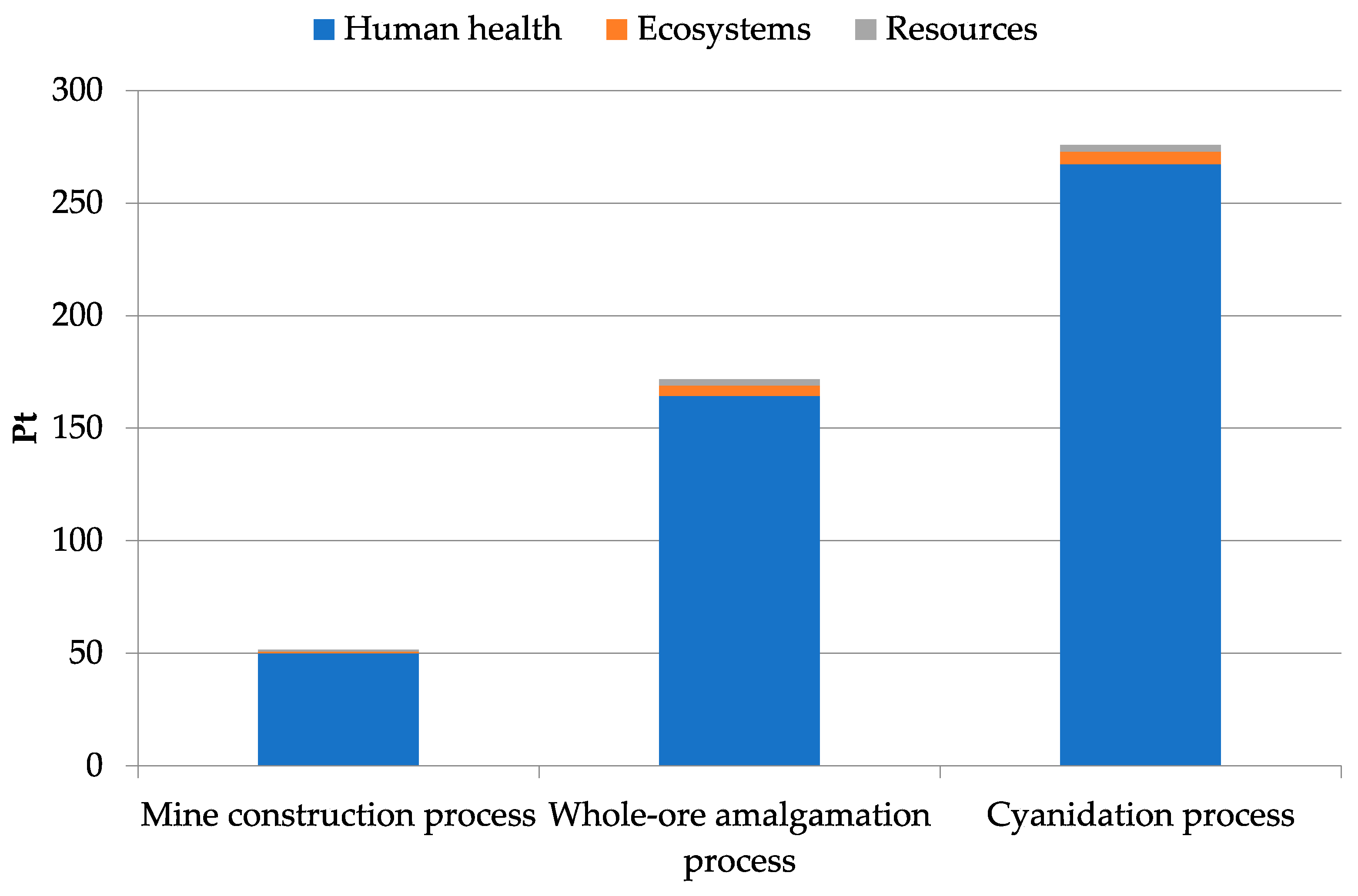
In order to more immediately compare the contributions of the different phases constituting the analyzed system (i.e., mine construction, whole-ore amalgamation, and cyanidation) to the whole environmental loads, the single-score results (i.e., expressed as environmental point, Pt: the higher its value is, the higher the potential environmental impact of that particular process results) are obtained, as calculated by the impact assessment method after normalization and weighting operations. They are summarized in Figure 3, and they are detailed in Table S8 of the Supplementary Material (the single-score results associated with 1 kg of recovered gold are instead detailed in Table S9).
The overall process is characterized by an environmental impact of 4.99 × 1002 Pt. Cyanidation is the phase that mostly (for 55.23%) contributes to that impact, followed by whole-ore amalgamation (for 34.39%) and mine construction (for 10.37%). Human Health is the damage category mostly affected, since it contributes 96.52% to the overall impact, followed by Ecosystem (contributing for 2.19%) and Resources (contributing for 1.29%).
The Human Non-carcinogenic Toxicity impact category (comprised in the Human Health damage category) is the one mainly (for 47.08%) contributing to the overall environmental impact. The damage on Human Health is mainly (for 20.81%) due to the emission of mercury (II) into air, the latter being associated for 53.05% and 46.94% to the whole-ore amalgamation and cyanidation phases, respectively.
The high contribution of the Human Non-carcinogenic Toxicity impact category indicates that the dominant environmental burden associated with the Mina Nueva system is linked to chronic exposure to toxic substances rather than to acute or carcinogenic effects. In real-world terms, this finding reflects the prolonged and repeated exposure of miners to hazardous substances released during ore extraction, handling, and processing, including metal-bearing dusts and contaminated effluents. Such exposures are often insufficiently mitigated in artisanal and small-scale mining operations, where the use of personal protective equipment and emission control systems is limited. Moreover, non-carcinogenic toxic effects may also extend beyond the workplace, affecting local communities through the dispersion of contaminants in air, soil, and water resources. The predominance of this impact category therefore highlights a persistent and diffuse health risk that may not manifest immediately but can significantly impair workers’ health and community well-being over time, reinforcing the need for preventive measures, monitoring, and targeted mitigation strategies.
The environmental impacts associated with each of the three macro processes were then analyzed in order to identify the main causes. The detailed single-score results are reported in Figures S31–S33 and Tables S10–S12, and only briefly summarized hereafter.
Concerning the mine construction phase, its total environmental damage is 5.18 × 1001 Pt, with the Human Health damage category representing the dominant (for 96.65%) contribution, particularly (for 34.41%) due to the emission of chromium into water as a consequence of the energy consumption by the diesel generator for the ventilation of the tunnels, extraction of water from the aquifer, and handling of the extracted rocks by the trolley.
In the case of the whole-ore amalgamation process, its total damage (referred to 0.48835 kg of Doré) is 1.72 × 1002 Pt, with Human Health being the main (for 95.75%) damage category, particularly as a result of the emission of mercury (II) in air, which is totally associated with the tailings sent in cyanidation process.
Concerning the cyanidation phase, the overall impact (referred to 0.51165 kg of CyG) is 2.76 × 1002 Pt, with the Human Health damage category representing the largest (for 96.97%) contribution. Its contribution is mainly due to the release of mercury compounds into the soil without being treated (22.38%).

Sensitivity Analysis

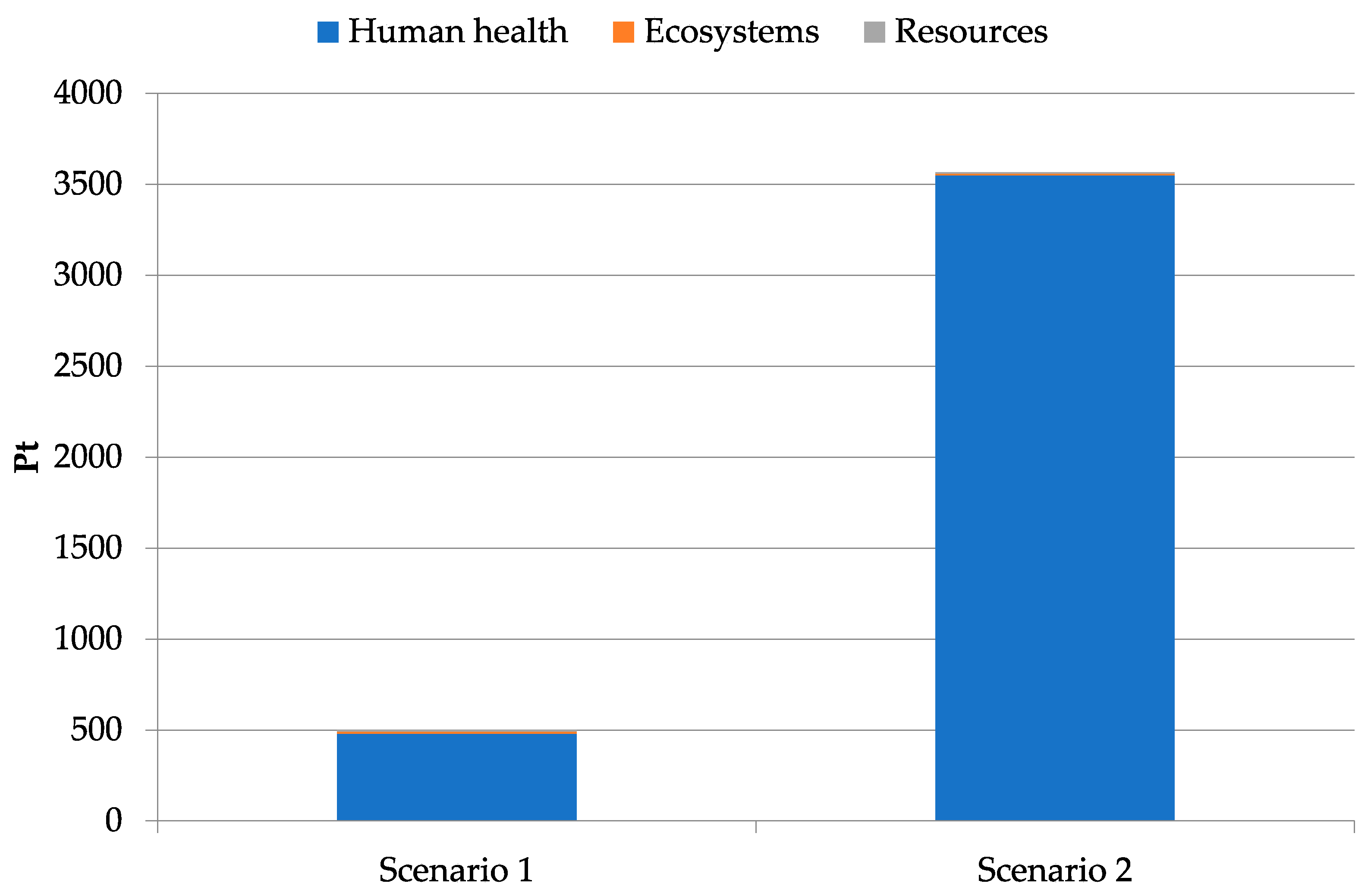
A sensitivity analysis was performed to compare the current scenario described above (from now named Scenario 1) with an alternative scenario (Scenario 2) that includes the implementation of fine particulate air emissions generated during the creation of the mine. This alternative Scenario 2 was idealized to accommodate workers’ concerns about particulate emissions generated during the blasting of the mining rock, despite the fact that no environmental sampling is available. Based on the literature sources, a dust generation rate of 10 kg of dust per kg of gold concentrate (80% Au) was adopted [40]. It should be noted that this value originates from studies conducted under controlled or semi-controlled conditions, in which dust abatement systems (e.g., water-based dust extraction) are typically in place. To adapt this literature-based value to the investigated ASGM case study—where no engineered dust control systems are implemented—the reported dust removal efficiency of 99.28% was taken from a dedicated literature analysis [63]. This value represents the abatement efficiency embedded in the reference data and was therefore inversely applied to approximate uncontrolled dust emissions under ASGM operating conditions. Given the high variability and site-specific nature of dust generation in artisanal and small-scale mining activities, this assumption was intentionally explored within a sensitivity analysis rather than incorporated into the baseline scenario. This approach allows the potential influence of particulate emissions on impact categories related to particulate matter formation to be evaluated, while explicitly acknowledging the uncertainty associated with the absence of direct measurements.
The calculated amount of dust for Scenario 2 was allocated among the three different particle sizes (i.e., <2.5 μm, >2.5 μm and <10 μm, >10 μm), according to the guidelines provided by the United States Environmental Protection Agency for emissions arising from material handling and processing of aggregate and unprocessed ore (including emissions from milling, grinding, crushing, screening, conveying, cooling, and drying of material generated through either the movement of the material or the interaction of the material with mechanical devices) [64]. The details of the calculations performed are reported in Table S13 of the Supplementary Materials.
The comparison between the two scenarios performed in terms of single score is detailed in Table 2 and summarized in Figure 4. The total damage for Scenario 2 (i.e., 3.57 × 1003 Pt) is approximately six times higher with respect to the damage associated with the original Scenario 1. This difference is exclusively due to the midpoint impact category Fine Particulate Matter Formation being equal to ca. 301 kgPM2.5 eq. for Scenario 2, thus more than thirty times the value calculated for Scenario 1 (i.e., 8.66 kgPM2.5 eq. as previously reported in Table 1).
Although the results obtained in the sensitivity Scenario 2 are in line with interviews conducted with miners who reported large amounts of airborne emissions of fine particulate matter as a result of ore rock blasting (to which the workers are exposed for long periods of time), surely the lack of primary data concerning dust emissions during mine construction phase represents a limitation of the present study. Therefore, an uncertainty analysis was also performed for Scenario 2 using the Monte Carlo simulation [62]. In particular, the calculated emissions in air of particulate matter were associated with the highest degree of uncertainty, applying to those values the pedigree matrix approach [65] for the calculation of the corresponding geometric standard deviation (SD2). The worst-case values of the five qualitative criteria (i.e., reliability, completeness, temporal correlation, geographical correlation, and further technology) were considered, as detailed in Table S13 of the Supplementary Materials. The results of the Monte Carlo uncertainty analysis performed for the Fine Particulate Matter Formation impact category (Table 3) indicate a moderate-to-high variability in the simulation outcomes. The coefficient of variation (CV = 41.5%) suggests that the results are substantially influenced by the uncertainty of the input parameters used in the life cycle inventory.
The mean value (300) is slightly higher than the median (272), implying a positively skewed distribution, with occasional high-impact iterations affecting the average. The standard deviation (124) and the 95% confidence interval (140–639) confirm a considerable spread in the possible results, which highlights the model’s sensitivity to variability in particulate emission-related data.
Nevertheless, the standard error of the mean (SEM = 3.93) is relatively low, indicating that the mean estimate is statistically robust and would remain stable upon repeated simulations. The findings demonstrate that while the model exhibits a certain degree of uncertainty, the central tendency of the results can be regarded as reliable for comparative assessments. The width of the confidence interval should, however, be taken into account when interpreting differences between scenarios.
Scenario 2 was developed exclusively as a sensitivity analysis to explore the potential influence of fine particulate matter emissions during the mine construction and blasting phase in the absence of primary monitoring data. The assumptions adopted represent a conservative, worst-case framework and should not be interpreted as a realistic or predictive emission scenario. Consequently, the results associated with Scenario 2 are not intended for quantitative comparison, regulatory assessment, or benchmarking against other mining operations. Rather, they should be interpreted as an exploratory tool to assess the model sensitivity to particulate emissions and as an indication of the possible magnitude of human health impacts if such emissions are substantial and poorly controlled.

4. Limitations and Potential Improvements of the Study

The present study is affected by some limitations mainly related to data availability and the need to introduce assumptions that are common in life cycle assessments of artisanal and small-scale gold mining systems. Although primary data were collected for several process inputs and outputs, direct environmental measurements were not available for all emission pathways.
Due to the uncontrolled disposal of sludges from the whole-ore amalgamation into the surrounding environment, mercury releases were assumed to be equally distributed between the water and soil compartments. Mercury emissions to air during the same phase were estimated in the absence of direct air-sampling data, relying on an assumed mercury recovery efficiency of 99.9% for the thermal separation unit, as indicated by on-site operators during the mass-balance reconstruction. While this assumption is consistent with typical retorting efficiencies reported in the literature, on-site atmospheric measurements would be required to better constrain this emission pathway.
Similarly, mercury and cyanide emissions during the cyanidation phase were calculated using stoichiometric reaction-based calculations combined with primary data on NaCN consumption and experimental mercury characterization in the sludges. In the absence of controlled waste management practices and site-specific monitoring data, the uncontrolled discharge of effluents was assumed to lead to an equal distribution of mercury and cyanide emissions between the water and soil compartments.
The uniform soil–water partitioning of mercury and cyanide emissions surely represents a simplifying assumption adopted to describe uncontrolled ASGM disposal practices in the absence of site-specific data. While alternative compartmental partitioning would affect the relative contribution of soil- versus water-mediated exposure pathways, it would not significantly alter the qualitative conclusion regarding the dominance of human non-carcinogenic category, which is governed by substance-specific toxicity rather than compartment allocation.
Additional uncertainty arises from the estimation of particulate matter emissions during the mine construction phase, which were derived from secondary literature data due to the lack of on-site measurements. Furthermore, the derivation of additional characterization factors for selected substances required assuming proportionality between the ReCiPe 2016 Midpoint (H) and TRACI 2.1 methods, based on their shared reliance on the USEtox framework. While this approach is methodologically justified, it represents an approximation that may affect the absolute magnitude of toxicity-related impact scores. Therefore, the resulting toxicity-related midpoint, endpoint, and single-score results should be interpreted as approximations, suitable for comparative analysis and hotspot identification but not as fully standardized ReCiPe values. Future work should aim to directly implement updated USEtox characterization factors or to compare multiple LCIA methods in parallel in order to further reduce uncertainty and improve the robustness of toxicity-related impact assessment.
Despite these limitations, the life cycle inventory was reported in a complete and detailed manner, explicitly documenting all assumptions, data sources, and calculation procedures in order to ensure maximum transparency and reproducibility of the study. This level of detail allows the results to be critically assessed, updated as improved primary data become available, and directly reused in future life cycle assessments of artisanal and small-scale gold mining systems.

5. Conclusions

In this work, an environmental sustainability analysis of the current artisanal gold mining process carried out in a small-scale artisanal mine in Colombia was performed by applying the LCA methodology.
For the majority of the impact categories at the midpoint level, cyanidation resulted the most impacting phase. This is confirmed by considering the single-score results. Indeed, the environmental impacts of the different phases constituting the overall studied process are characterized by the trend: mine construction < whole-ore amalgamation < cyanidation.
In particularly, the total environmental impact associated with the production of 1 kg of valuable materials (comprising 0.48835 kg of Doré and 0.51165 g of CyG) produced by the Mina Nueva mine was 4.99 × 1002 Pt. The main contributors to the impacts in the most affected categories were the emissions of mercury into air associated with both amalgamation and cyanidation.
A sensitivity analysis was performed to investigate the effects (on human health) related to fine particulate emissions potentially emitted in air during the mine creation phase. Since air samplings of these emissions were not available, literature data were used. This sensitivity scenario was characterized by an environmental impact, expressed as single score, of 3.57 × 1003 Pt—more than six times higher with respect to the original scenario—as a consequence of the introduction of air emissions of fine particulate matter, which increased the environmental damage related to the Human Health damage category. The results of the sensitivity analysis performed are well in line with human health-related issues reported by local miners worried and bothered by dust, despite being equipped with face masks. However, the results of Scenario 2 were derived from secondary data; hence, an interesting future development would be to replace the secondary data related to the atmospheric release of fine particulate matter during the mine construction phase with data derived from on-site environmental sampling. Therefore, they should not be considered for their quantitative values, but rather as an admonishment for potential human health impacts that is typically neglected by published ASGM-related LCA studies.
From a practical viewpoint this study indicates that mitigation strategies in artisanal and small-scale gold mining should primarily target cyanidation and amalgamation, which represent the main environmental hotspots, particularly due to mercury emissions. The sensitivity analysis further shows that particulate matter released during mine construction may substantially increase human health impacts, highlighting a risk often overlooked in ASGM LCAs. These findings support the adoption of mercury-free technologies, the implementation of basic dust-control measures, and the need for on-site environmental monitoring. In addition, the quantified impacts per kilogram of valuable material provide a useful benchmark for sustainability initiatives and responsible sourcing programmes.
From a policy and management perspective, the findings of this study provide quantitative, life-cycle-based evidence that can support both national regulatory frameworks and international responsible-sourcing initiatives for artisanal and small-scale gold mining. In the Colombian context, the identification of cyanidation, amalgamation, and potentially mine construction as key environmental and human health hotspots is directly relevant to the implementation and enforcement of existing policy instruments, such as Law No. 1658 of 2013 on the reduction and elimination of mercury use and Resolución 631 of 2015, which regulates wastewater discharges from mining activities. The results may assist local authorities in prioritizing environmental monitoring efforts, refining technical guidelines for ASGM formalization processes, and evaluating the effectiveness of mitigation measures promoted under current legislation, including mercury-free technologies and basic dust-control practices. At the international level, the transparent quantification of environmental impacts associated with ASGM provides a robust evidentiary basis that can complement qualitative risk assessments used in responsible sourcing schemes and due-diligence processes, such as those outlined in the OECD (Organization for Economic Co-operation and Development) Due Diligence Guidance for Responsible Supply Chains of Minerals from Conflict-Affected and High-Risk Areas. In this sense, the study contributes environmental performance indicators that may support the integration of life cycle thinking into sustainability standards, certification schemes, and supply-chain due-diligence frameworks, thereby strengthening efforts to reduce environmental and human health risks associated with ASGM.

Supplementary Materials

The following supporting information can be downloaded at https://www.mdpi.com/article/10.3390/su18020770/s1, “Supplementary Materials_Ruffini_et_al_R2” file. This supplementary material includes the details of the system boundaries of the LCA model, supplied with the detailed flowcharts of the mine construction phase (Figure S1), the whole-ore amalgamation phase (Figures S2–S4), and the cyanidation phase (Figure S5), with the experimentally determined composition of Dorè (Table S1) and CyG (Table S2) and a series of photographs related to the activities carried out at Mina Nueva mine (Figures S6–S29); the detailed Life Cycle Inventory (LCI) used to build the LCA model (Table S3); the details of the modifications performed to the ReCiPe 2016 Life Cycle Impact Assessment methods with the newly calculated characterization factors at midpoint (Table S4) and endpoint (Table S5) levels; some supplementary results including the relative midpoint environmental impacts associated with 1 kg of valuable Mina Nueva products (Figure S30); the detailed midpoint results associated with 1 kg of recovered gold (Table S6); the Monte Carlo uncertainties associated with 1 kg of valuable Mina Nueva products (Table S7); the detailed single-score results associated with 1 kg of valuable Mina Nueva products (Table S8) and to 1 kg of recovered gold (Table S9); the single-score results of the mine construction phase (Figure S31 and Table S10) of the whole-ore amalgamation phase (Figure S32 and Table S11) and of the cyanidation phase (Figure S33 and Table S12); the detailed calculation performed for the particulate matter emissions characterizing the mine construction phase of Scenario 2 with the associated uncertainties as calculated by the pedigree matrix (Table S13).

Author Contributions

V.R.: Writing—Original Draft, Formal Analysis, Conceptualization, Methodology, Investigation, Data Curation, Software; P.N.: Formal Analysis, Conceptualization, Methodology, Investigation, Data Curation, Software; F.H.G.: Writing—Original Draft, Conceptualization, Investigation, Resources, Data Curation; R.R.: Writing—Review and Editing, Methodology; C.M.: Writing—Review and Editing, Validation; M.V.: Writing—Review and Editing, Conceptualization, Methodology, Supervision, Project Administration; A.M.F.: Writing—Review and Editing, Conceptualization, Methodology, Supervision, Project Administration. All authors have read and agreed to the published version of the manuscript.

Funding

This research received no external funding.

Institutional Review Board Statement

Not applicable.

Informed Consent Statement

Not applicable.

Data Availability Statement

The original contributions presented in the study are included in the article; further inquiries can be directed to the corresponding author.

Acknowledgments

The inventory data for the LCA was obtained thanks to research carried out within the framework of the academic collaboration agreement between Brescia University’s CeTAmb LAB (Italy), University Institute of La Paz (Colombia), and Asociación Campesina del Valle del río Cimitarra, ACVC (Colombia). The authors thank Elisabetta Zerazion and Grazia Maria Cappucci for their collaboration in this work.

Conflicts of Interest

The authors declare no conflicts of interest.

References

  1. World Gold Council. Gold Demand Trends Full Year 2023. Supply. Available online: https://www.gold.org/goldhub/research/gold-demand-trends/gold-demand-trends-full-year-2023/supply#:~:text=Total%20gold%20supply%20in%202023,and%20recycling%20both%20posted%20growth.&text=Full%2Dyear%20recycled%20gold%20supply,record%20annual%20average%20gold%20price (accessed on 14 May 2025).
  2. Barume, B.; Naeher, U.; Ruppen, D.; Schütte, P. Conflict minerals (3TG): Mining production, applications and recycling. Curr. Opin. Green Sustain. Chem. 2016, 1, 8–12. [Google Scholar] [CrossRef]
  3. Sauerwein, T. Gold mining and development in Côte d’Ivoire: Trajectories, opportunities and oversights. Land Use Policy 2020, 91, 104323. [Google Scholar] [CrossRef]
  4. Hilson, G.; Maconachie, R. Artisanal and small-scale mining and the Sustainable Development Goals: Opportunities and new directions for sub-Saharan Africa. Geoforum 2020, 111, 125–141. [Google Scholar] [CrossRef]
  5. Kamundala, G. Formalization of artisanal and small-scale mining in eastern Democratic Republic of the Congo: An opportunity for women in the new tin, tantalum, tungsten and gold (3TG) supply chain? Extr. Ind. Soc. 2020, 7, 420–427. [Google Scholar] [CrossRef]
  6. World Gold Council. Lessons Learned on Managing the Interface Between Large-Scale and Artisanal and Small-Scale Gold Mining. Available online: https://www.swissbettergoldassociation.ch/sites/default/files/2022-04/ASGM-Report-2022-English.pdf (accessed on 10 February 2025).
  7. UNODC, United Nations Office on Drugs and Crime. Methodological Proposal for the Estimation of Illicit Financial Flows Associated with Illicit Cocaine Markets and Illicit Gold Mining in Colombia. Available online: https://www.unodc.org/documents/data-and-analysis/IFF/5_Colombia_-_IFFs_from_Cocaine_Trafficking_and_Illegal_Gold_Mining.pdf (accessed on 10 June 2025).
  8. Seccatore, J.; Veiga, M.; Origliasso, C.; Marin, T.; De Tomi, G. An estimation of the artisanal small-scale production of gold in the world. Sci. Total Environ. 2014, 496, 662–667. [Google Scholar] [CrossRef]
  9. Cheng, Y.; Watari, T.; Seccatore, J.; Nakajima, K.; Nansai, K.; Takaoka, M. A review of gold production, mercur consumption, and emission in artisanal and small-scale gold mining (ASGM). Resour. Policy 2023, 81, 10337. [Google Scholar] [CrossRef]
  10. World Gold Council, Press Release. ASGM Report 2022 Press Release. Available online: https://www.gold.org/news-and-events/press-releases/asgm-report-2022-press-release (accessed on 6 March 2025).
  11. IISD. Global Trends in Artisanal and Small-Scale Mining (ASM): A Review of Key Numbers and Issues International Institute for Sustainable Development. Available online: https://www.iisd.org/publications/global-trends-artisanal-and-small-scale-mining-asm-review-key-numbers-and-issues (accessed on 23 January 2025).
  12. UNEP United Nations Environment Programme. Artisanal and Small-Scale Gold Mining. Global Mercury Partnership. Global Mercury Partnership. Available online: https://www.unep.org/globalmercurypartnership/what-we-do/artisanal-and-small-scale-gold-mining-asgm (accessed on 27 January 2025).
  13. ASM Inventory. World Maps of Artisanal and Small-Scale Mining. The Artisanal and Small-Scale Mining Knowledge Sharing Archive. Available online: https://artisanalmining.org/Inventory/ (accessed on 5 February 2025).
  14. World Gold Council. Gold Demand Trends Full Year 2023. Available online: https://www.gold.org/goldhub/research/gold-demand-trends/gold-demand-trends-full-year-2023 (accessed on 10 February 2025).
  15. Mason, R.; Pirrone, N. Mercury Fate and Transport in the Global Atmosphere. In Emissions, Measurements and Models, 1st ed.; Springer: New York, NY, USA, 2009. [Google Scholar]
  16. Mazzantini, U. L’inferno al Mercurio Delle Miniere D’oro in Indonesia: Avvelenati Terra, Acqua, e Uomini. Green Report. Available online: https://www.greenreport.it/news/green-economy/5637-linferno-al-mercurio-delle-miniere-doro-in-indonesia-avvelenati-terra-acqua-e-uomini (accessed on 4 August 2025).
  17. Palacios, Y.; Rosa, J.; Olivero-Verbel, J. Trace elements in sediments and fish from Atrato River: An ecosystem with legal rights impacted by gold mining at the Colombian Pacific. Environ. Pollut. 2020, 256, 113290. [Google Scholar] [CrossRef]
  18. UNEP, United Nations Environment Programme. Reducing Mercury Use in Artisanal and Small-Scale Gold Mining. A Practical Guide. Available online: https://www.unep.org/resources/report/reducing-mercury-use-artisanal-and-small-scale-gold-mining-practical-guide (accessed on 10 February 2025).
  19. Palacios-Torres, Y.; Caballero-Gallardo, K.; Olivero-Verbel, J. Mercury pollution by gold mining in a global biodiversity hotspot, the Choco biogeographic region, Colombia. Chemosphere 2018, 193, 421–430. [Google Scholar] [CrossRef] [PubMed]
  20. Cordy, P.; Veiga, M.M.; Salih, I.; Al-Saadi, S.; Console, S.; Garcia, O.; Mesa, L.A.; Velásquez-López, P.C.; Roeser, M. Mercury contamination from artisanal gold mining in Antioquia, Colombia: The world’s highest per capita mercury pollution. Sci. Total Environ. 2011, 410–411, 154–160. [Google Scholar] [CrossRef]
  21. Aghaei, E.A.; Diaz, R.; Bogale Tadesse, B.; Browner, R. A review on current practices and emerging technologies for sustainable management, sequestration and stabilization of mercury from gold processing streams. J. Environ. Manag. 2019, 249, 109367. [Google Scholar] [CrossRef]
  22. Veiga, M.M.; Angeloci-Santos, G.; Meech, J.A. Review of barriers to reduce mercury use in artisanal gold mining. Extr. Ind. Soc. 2014, 1, 351–361. [Google Scholar] [CrossRef]
  23. Cordy, P.; Veiga, M.; Crawford, B.; Garcia, O.; Gonzalez, V.; Moraga, D.; Roeser, M.; Wip, D. Characterization, mapping, and mitigation of mercury vapour emissions from artisanal mining gold shops. Environ. Res. 2013, 125, 82–91. [Google Scholar] [CrossRef]
  24. Orimoloye, I.; Ololade, O. Potential implications of gold-mining activities on some environmental components: A global assessment (1990 to 2018). J. King Saud Univ. Sci. 2020, 32, 2432–2438. [Google Scholar] [CrossRef]
  25. Telmer, K.H.; Veiga, M.M. World emissions of mercury from artisanal and small scale gold mining. In Mercury Fate and Transport in the Global Atmosphere; Mason, R., Pirrone, N., Eds.; Springer: Boston, MA, USA, 2009; pp. 131–172. [Google Scholar]
  26. Mantey, J.; Nyarko, K.B.; Owusu-Nimo, F.; Awua, K.A.; Bempah, C.K.; Amankwah, R.K.; Akatu, W.E.; Appiah-Effah, E. Mercury contamination of soil and water media from different illegal artisanal small-scale gold mining operations (galamsey). Heliyon 2020, 6, e04312. [Google Scholar] [CrossRef] [PubMed]
  27. Clifford, M.J. Assessing releases of mercury from small-scale gold mining sites in Ghana. Extr. Ind. Soc. 2017, 4, 497–505. [Google Scholar] [CrossRef]
  28. Veiga, M.M.; Baker, R.F. Protocols for Environmental and Health Assessment of Mercury Released by Artisanal and Small-Scale Gold Miners; Produced for the Global Mercury Project; GEF/UNDP/UNIDO: Vienna, Austria, 2004. [Google Scholar]
  29. Taux, K.; Kraus, T.; Kaifie, A. Mercury exposure and its health effects in workers in the artisanal and small-scale gold mining (ASGM) Sector-A systematic review. J. Environ. Res. Public Health 2022, 19, 2081. [Google Scholar] [CrossRef]
  30. Esdaile, L.J.; Chalker, J.M. The Mercury Problem in Artisanal and Small-Scale Gold Mining. Chem. A Eur. J. 2018, 24, 6905–6916. [Google Scholar] [CrossRef]
  31. Drace, K.; Kiefer, A.M.; Veiga, M.M. Cyanidation of Mercury-Contaminated Tailings: Potential Health Effects and Environmental Justice. Curr. Environ. Health Rep. 2016, 3, 443–449. [Google Scholar] [CrossRef]
  32. Siegel, S.; Agrawal, S.; Mikha, D.; Vitamerry, K.; Le Billon, P.; Veiga, M.; Konolius, K.; Paul, B. Phasing Out Mercury? Ecological Economics and Indonesia’s Small-Scale Gold Mining Sector. Ecol. Econ. 2018, 144, 1–11. [Google Scholar] [CrossRef]
  33. Veiga, M. Antioquia, Colombia: The World’s Most Polluted Place by Mercury: Impressions from Two Field Trips. United Nations Industrial Development Organization. Available online: https://redjusticiaambientalcolombia.files.wordpress.com/2011/05/final_revised_feb_2010_veiga_antioquia_field_trip_report.pdf (accessed on 12 July 2021).
  34. Kosai, S.; Nakajima, K.; Yamasue, E. Mercury mitigation and unintended consequences in artisanal and small-scale gold mining. Resour. Conserv. Recycl. 2023, 188, 106708. [Google Scholar] [CrossRef]
  35. Veiga, M.M.; Angeloci, G.; Hitch, M.; Velasquez-Lopez, P.C. Processing centres in artisanal gold mining. J. Clean. Prod. 2014, 64, 535–544. [Google Scholar] [CrossRef]
  36. Rochlin, J. Informal gold miners, security and development in Colombia: Charting the way forward. Extr. Ind. Soc. 2018, 5, 330–339. [Google Scholar] [CrossRef]
  37. Defensoría Delegada para los Derechos Colectivos y del Ambiente; Defensoría del Pueblo, Colombia. MINERÍA DE HECHO EN COLOMBIA. Available online: https://www2.congreso.gob.pe/sicr/cendocbib/con4_uibd.nsf/F11B784C597AC0F005257A310058CA31/$FILE/La-miner%C3%ADa-de-hecho-en-Colombia.pdf (accessed on 28 July 2025).
  38. Congreso de Colombia. LEY 1658 DE 2013. Por Medio de la Cual se Establecen Disposiciones Para la Comercialización y el Uso de Mercurio en las Diferentes Actividades Industriales del país, se Fijan Requisitos e Incentivos Para su Reducción y Eliminación y se Dictan Otras Disposiciones. Available online: http://www.suin-juriscol.gov.co/viewDocument.asp?ruta=Leyes/1685943 (accessed on 28 July 2025).
  39. MADS, Ministerio de Ambiente y Desarrollo Sostenible de Colombia. RESOLUCIÓN 631 DE 2015 Diario Oficial No. 49.486 de 18 de Abril de 2015. 2015. Available online: https://www.minambiente.gov.co/wp-content/uploads/2021/11/resolucion-631-de-2015.pdf (accessed on 28 July 2025).
  40. Valdivia, S.M.; Ugaya, C.M.L. Life Cycle Inventories of Gold Artisanal and Small-Scale Mining Activities in Peru. J. Ind. Ecol. 2011, 15, 922–936. [Google Scholar] [CrossRef]
  41. Arbeláez, E.; Villamizar, D.; Trujillo, N. New voucher specimens and tissue samples from an avifaunal survey of the Middle Magdalena Valley of Bolívar, Colombia, bridge geographical and temporal gaps. Wilson J. Ornithol. 2021, 132, 773–779. [Google Scholar] [CrossRef]
  42. Ruiz Reyes, M. In Search of Ordenamiento Ambiental Territorial in the Peasant Reserve Zones of Colombia. Master’s Thesis, Syracuse University, Syracuse, NY, USA, 2015. Available online: https://surface.syr.edu/etd/292 (accessed on 10 February 2025).
  43. Betancur, M.S. MINERÍA DEL ORO, TERRITORIO Y CONFLICTO EN COLOMBIA. Retos y Recomendaciones Para la Protección de los Derechos Humanos y del Medio Ambiente. Heinrich-Böll-Stiftung, Oficina Bogotá—Colombia. Available online: https://co.boell.org/sites/default/files/2019-12/20190612_Mineri%CC%81a%20del%20oro%2C%20territorio%20y%20conflicto%20en%20colombia%20para%20web.pdf (accessed on 10 February 2025).
  44. Portuguez, A.L.M. The Cimitarra River Valley Rural Reserve Zone: An Unfinished Exercise in Citizen Participation and Collective Management of Territory. Cuad. Geogr. Rev. Colomb. Geogr. 2011, 20, 21–33. [Google Scholar]
  45. ACVC, UNDP and Soluterra. Technical Report: Estudio Participativo de Tenencia de la Tierra y el Territorio, Usos y Conflictos en la Zona de Reserva Campesina del Valle del río Cimitarra—Cartografía. 2014. Available online: https://reservacampesinariocimitarra.org/wp-content/uploads/2022/07/Informe-final-PNUD-ACVC-20072014-4_compressed.pdf (accessed on 20 April 2025).
  46. Vargas, P.; Sonia, C. Peasant reserve zones as a frame for the guarantee of collective rights of peasant collectivities in Colombia: The case of Cimitarra River Valley. Global Campus Europe—EMA. European Master’s Degree in Human Roghts and Democratisation. Master’s Thesis, University of Deusto, Bilbao, Spain, 2017. [Google Scholar]
  47. Spiegel, S.J. Labour challenges and mercury management at gold mills in Zimbabwe: Examining production processes and proposals for change. Nat. Resour. Forum 2009, 33, 221–232. [Google Scholar] [CrossRef]
  48. ACVC, INCODER, PDPMM. Plan de Desarrollo Sostenible de la Zona de Reserva Campesina del Valle del río Cimitarra ZRC—Asociación Campesina del Valle del río Cimitarra. 2012. Available online: https://reservacampesinariocimitarra.org/wp-content/uploads/2022/07/PLAN-DE-DESARROLLO-ZRC-VALLE-RIO-CIMITARRA-2_compressed.pdf (accessed on 20 April 2025).
  49. ISO 14040:2021; Environmental Management—Life Cycle Assessment—Principles and Framework. UNI EN ISO: Milan, Italy, 2021.
  50. ISO 14044:2021; Environmental Management—Life Cycle Assessment—Requirements and Guidelines. UNI EN ISO: Milan, Italy, 2021.
  51. Veiga, M.M.; Maxson, P.A.; Hylander, L.D. Origin and consumption of mercury in small-scale gold mining. J. Clean. Prod. 2006, 14, 436–447. [Google Scholar] [CrossRef]
  52. Torkaman, P.; Veiga, M.M. Comparing cyanidation with amalgamation of a Colombian artisanal gold mining sample: Suggestion of a simplified zinc precipitation process. Extr. Ind. Soc. 2023, 13, 101208. [Google Scholar] [CrossRef]
  53. Baena, O.J.R.; Mendoza, L.E.M. Sustainability of the artisanal and small-scale gold mining in northeast Antioquia-Colombia. Sustainability 2021, 13, 9345. [Google Scholar] [CrossRef]
  54. Ecoinvent Center, Ecoinvent Database Version 3.10. Life Cycle Inventories. Available online: http://www.ecoinvent.ch (accessed on 27 August 2025).
  55. Pré Sustainability SimaPro. Available online: https://www.pre-sustainability.com/simapro (accessed on 27 August 2025).
  56. Wernet, G.; Bauer, C.; Steubing, B.; Reinhard, J.; Moreno-Ruiz, E.; Weidema, B. The ecoinvent database version 3 (part I): Overview and methodology. Int. J. Life Cycle Assess. 2016, 21, 1218–1230. [Google Scholar] [CrossRef]
  57. Tillman, A.M. Significance of decision-making for LCA methodology. Environ. Impact Assess. Rev. 2010, 20, 113–123. [Google Scholar] [CrossRef]
  58. ILCD Handbook, General Guide for Life Cycle Assessment—Detailed Guidance. Available online: https://eplca.jrc.ec.europa.eu/uploads/ILCD-Handbook-General-guide-for-LCA-DETAILED-GUIDANCE-12March2010-ISBN-fin-v1.0-EN.pdf (accessed on 30 January 2025).
  59. Huijbregts, M.A.J.; Steinmann, Z.J.N.; Elshout, P.M.F.; Stam, G.; Verones, F.; Vieira, M.; Zijp, M.; Hollander, A.; Van Zelm, R. ReCiPe2016: A harmonized life cycle impact assessment method at midpoint and endpoint level. Int. J. Life Cycle Assess. 2017, 22, 138–147. [Google Scholar] [CrossRef]
  60. Bare, J.C. Tool for the Reduction and Assessment of Chemical and Other Environmental Impacts (TRACI), Software Name and Version Number: TRACI Version 2.1, User’s Manual; US EPA: Washington, DC, USA, 2012. [Google Scholar]
  61. Rosenbaum, R.K.; Bachmann, T.M.; Gold, L.S.; Huijbregts, M.A.J.; Jolliet, O.; Juraske, R.; Koehler, A.; Larsen, H.F.; MacLeod, M.; Margni, M.; et al. USEtox—The UNEP-SETAC toxicity model: Recommended characterisation factors for human toxicity and freshwater ecotoxicity in life cycle impact assessment. Int. J. Life Cycle Assess. 2008, 13, 532–546. [Google Scholar] [CrossRef]
  62. Bieda, B. Application of stochastic approach based on Monte Carlo (MC) simulation for life cycle inventory (LCI) to the steel process chain: Case study. Sci. Total Environ. 2014, 481, 49–655. [Google Scholar] [CrossRef] [PubMed]
  63. Shuda, H.; Shihang, L.; Hao, J.; Xu, Z. Study on the effect of multi-stage filtration strategy on the wet filtration dust collector performance. Environ. Technol. Innov. 2025, 38, 104128. [Google Scholar] [CrossRef]
  64. United States Environmental Protection Agency. AP-42, Compilation of Air Pollutant Emission Factors, Volume I: Stationary Point and Area Sources, Appendix B.2: Generalized Particle Size Distributions, Category 3: Mechanically Generated/Aggregated, Unprocessed Ores. Available online: https://www.epa.gov/sites/default/files/2020-11/documents/appb-2.pdf (accessed on 27 October 2025).
  65. Ciroth, A.; Muller, S.; Weidema, B.; Lesage, P. Empirically based uncertainty factors for the pedigree matrix in Ecoinvent. Int. J. Life Cycle Assess. 2016, 21, 1338–1348. [Google Scholar] [CrossRef]
Figure 1. Physical map of the ZRC-VRC showing its artisanal gold mining production area and Mina Nueva site, Colombia.
Sustainability 18 00770 g001
Figure 2. Flowchart showing the system boundaries of Dorè and CyG extraction at the Mina Nueva mine.
Sustainability 18 00770 g002
Figure 3. Single-score results associated with the obtainment of 1 kg of Mina Nueva products, comprising both Doré (0.48835 kg) and CyG (0.51165 kg).
Sustainability 18 00770 g003
Figure 4. Single-score environmental impact comparison between the two scenarios considered referred to the obtainment of 1 kg of Mina Nueva products.
Sustainability 18 00770 g004
Table 1. Midpoint environmental impacts associated with the obtainment of 1 kg of Mina Nueva products comprising both Doré (0.48835 kg) and CyG (0.51165 kg).
Impact CategoryUnitTotalMine Construction ProcessWhole-Ore Amalgamation ProcessCyanidation
Process
Global warmingkg CO2 eq4.66 × 10031.14 × 10031.44 × 10032.08 × 1003
Stratospheric ozone depletionkg CFC11 eq3.56 × 10−031.10 × 10−031.06 × 10−031.40 × 10−03
Ionizing radiationkBq Co-60 eq6.01 × 10018.03 × 10001.80 × 10013.41 × 1001
Ozone formation, Human healthkg NOx eq2.91 × 10011.21 × 10017.64 × 10009.40 × 1000
Fine particulate matter formationkg PM2.5 eq8.66 × 10003.22 × 10002.21 × 10003.23 × 1000
Ozone formation, Terrestrial ecosystemskg NOx eq3.00 × 10011.23 × 10017.92 × 10009.76 × 1000
Terrestrial acidificationkg SO2 eq1.83 × 10017.06 × 10004.75 × 10006.49 × 1000
Freshwater eutrophicationkg P eq7.37 × 10−018.18 × 10−022.33 × 10−014.23 × 10−01
Marine eutrophicationkg N eq4.60 × 10−011.36 × 10−021.76 × 10−012.71 × 10−01
Terrestrial ecotoxicitykg 1,4-DCB1.46 × 10061.08 × 10047.66 × 10056.87 × 1005
Freshwater ecotoxicitykg 1,4-DCB1.80 × 10031.97 × 10014.44 × 10011.73 × 1003
Marine ecotoxicitykg 1,4-DCB7.85 × 10023.68 × 10011.95 × 10025.53 × 1002
Human carcinogenic toxicitykg 1,4-DCB2.00 × 10033.16 × 10024.85 × 10021.20 × 1003
Human non-carcinogenic toxicitykg 1,4-DCB5.95 × 10043.24 × 10022.40 × 10043.52 × 1004
Land usem2a crop eq8.26 × 10024.26 × 10021.67 × 10022.34 × 1002
Mineral resource scarcitykg Cu eq1.66 × 10032.67 × 10009.36 × 10027.23 × 1002
Fossil resource scarcitykg oil eq1.29 × 10033.16 × 10024.01 × 10025.70 × 1002
Water consumptionm3−3.39 × 1002−5.48 × 10028.72 × 10011.22 × 1002
Table 2. Detailed comparison between Scenario 1 and Scenario 2 expressed in terms of single-score results. F.U. = 1 kg of Mina Nueva products comprising both Doré (0.48835 kg) and CyG (0.51165 kg).
Damage CategoryUnit Scenario 1Scenario 2
Human healthPt4.82 × 10023.55 × 1003
EcosystemPt1.09 × 10011.09 × 1001
ResourcesPt6.44 × 10006.44 × 1000
Table 3. Results of the uncertainty analysis for the Fine Particulate Matter Formation impact category, of 1 kg of Mina Nueva products comprising both Doré (0.48835 kg) and CyG (0.51165 kg), obtained by considering Scenario 2 and using the ReCiPe 2016 Midpoint (H), method modified by the authors.
Impact
Category
UnitMeanMedianSDCV %2.5%97.5%SEM
Fine particulate matter formationkg PM2.5 eq3.00 × 10022.72 × 10021.24 × 10024.15 × 10011.40 × 10026.39 × 10023.93 × 1000
Disclaimer/Publisher’s Note: The statements, opinions and data contained in all publications are solely those of the individual author(s) and contributor(s) and not of MDPI and/or the editor(s). MDPI and/or the editor(s) disclaim responsibility for any injury to people or property resulting from any ideas, methods, instructions or products referred to in the content.