


Abstract
The building sector is significantly responsible for the world’s energy consumption and carbon emissions. Net-zero energy buildings (NZEBs) have become an effective solution to move towards sustainability, maximizing energy efficiency, and minimizing carbon footprint. However, achieving net-zero energy targets requires a comprehensive understanding of building performance from the perspectives of technologies, materials, and strategies, for which existing studies have a knowledge gap. This study aims to bridge the knowledge gap within existing studies through an empirical investigation. Based on a review of the literature, this study employs semi-structured interviews in the United Kingdom (UK) with industrial professionals experienced in NZEBs. The qualitative data collected from interview participants are analyzed minutely using NVivo to identify key themes and patterns, including 14 technologies, 12 materials, and seven strategies for NZEBs. Based on the literature review and, more importantly, the interview analysis, a conceptual framework is well established to describe an NZEB as a complex system that must incorporate appropriate technology adoption, careful material selection, and successful strategy implementation into consideration. This study provides a comprehensive understanding of NZEBs from a systematic point of view. It also contributes to the full fulfillment of Sustainable Development Goals (SDGs) established by the United Nations (UN).
1. Introduction
Sustainable development has become a strong ethos in the modern world, which is based on economic growth, environmental protection, and social well-being [1,2]. The building sector is no exception. In terms of environmental impacts, buildings are responsible for 30% to 40% of greenhouse gas emissions globally [3,4]. On the other hand, approximately 30% to 40% of the final energy worldwide is consumed in buildings [5,6]. For these reasons, the need to reduce energy consumption and carbon emissions in the building sector to fulfill SDGs has become a widely accepted consensus, being evident in national and international programs in recent years [7,8].
Addressing these challenges necessitates the increasing adoption of NZEBs. NZEBs can be defined as buildings in which the total energy consumed on an annual basis is balanced by the energy produced from renewable sources [9,10]. They are designed to realize energy conservation, carbon reduction, and environmental protection in the building sector [11,12]. The concept of NZEBs aligns with the broader SDGs regarding energy and carbon performance, health and well-being, and sustainable cities and communities [13,14]. NZEBs bring substantial advantages, including saved operational costs, increased asset values, and minimized environmental impacts [15,16].
Despite the advantages of NZEDs, there are still challenges of scaling up [17,18,19]. For example, almost all existing studies have explored NZEBs from a single perspective, such as Aste et al. [20], Chandel et al. [21], and Shirinbakhsh and Harvey [22] from the perspective of photovoltaic (PV) technology, Bruno et al. [23], Karjalainen et al. [24], and Ni et al. [25] from the perspective of wood material, and Krarti and Karrech [26], Lohwanitchai and Jareemit [27], and Punia et al. [28] from the perspective of cost–benefit strategy. NZEBs rely on various technologies, materials and strategies. Unsurprisingly, almost all existing studies have focused on a particular technology, material, or strategy. As a result, an overall view and a comprehensive understanding of NZEBs are missing; therefore, there is a knowledge gap within existing studies.
This study attempts to bridge the knowledge gap within existing studies by taking different technologies, materials, and strategies into consideration for NZEBs. It defines the following three main research objectives: (1) summarize NZEB principles and standards from the literature review; (2) identify the technologies adopted, materials selected, and strategies implemented for NZEBs through an empirical investigation; and (3) establish a conceptual framework to describe an NZEB as a complex system, which integrates appropriate technology adoption, careful material selection, and successful strategy implementation. Based on the realization of these research objectives, it provides a comprehensive understanding of NZEBs from a systematic point of view.
2. Literature Review
The literature review shows that NZEBs are mainly based on the following principles and standards to minimize energy consumption and carbon emissions: energy efficiency, renewable energy, passive house, and sustainable assessment.
2.1. Energy Efficiency
NZEBs must be energy-efficient [29]. Analyzing data obtained from numerous sources, such as energy meters, heating, ventilation and air-conditioning (HVAC) systems, and lighting systems, makes it possible for designers, engineers and managers to predict energy demand and optimize energy performance [30]. Smart building systems or solutions, such as building management systems (BMSs) and digital twins, provide opportunities for real-time optimization of energy use, offering building automation, energy management, occupant comfort, health, and safety all in one [31].
2.2. Renewable Energy
In addition to reducing energy consumption and improving energy performance, NZEBs also hold the key to overcoming environmental challenges by introducing renewable energy from such sources as solar, wind, tide, hydrothermal and geothermal [32]. For example, solar PV panels contribute significantly to the generation of renewable energy, meeting energy demand. They are widely used in NZEBs, particularly in warmer climates where advanced cooling technologies are preferred [33]. In contrast, solar thermal systems address heating and hot water requirements [34].
2.3. Passive House
A passive house brings about improved indoor environments and minimized energy consumption by leveraging local climate and building conditions [35]. Integrating passive methods, such as improved building envelopes, natural ventilation, and daylighting, into NZEBs prevents heat loss and gain, reduces the need for active heating and cooling, optimizes energy performance, and mitigates environmental impacts [36]. As a result, temperature fluctuations are smoothed out, creating consistent and comfortable indoor environments and improving human life and work productivity [37].
2.4. Sustainable Assessment
Assessment schemes and standards are necessary to ensure that NZEBs achieve and maintain high levels of energy efficiency and wider environmental sustainability [38]. The Building Research Establishment Environmental Assessment Method (BREEAM), Leadership in Energy and Environmental Design (LEED), and other schemes are widely recognized for evaluating sustainable buildings [39]. These schemes provide comprehensive frameworks for assessing the sustainable value of buildings, especially in terms of building energy performance [40].
3. Research Methods
This study started with a review of the relevant literature on NZEBs. Energy and carbon performance of NZEBs is a key focus of the literature review. The literature review helped identify the development of NZEBs and the knowledge gap within existing studies. Based on the identification of the knowledge gap, the need for this study was well justified and the objectives of this study were well defined. The literature review also helped formulate interview questions about NZEBs. Semi-structured interviewing represents a qualitative research methodology, which allows participants to explain their thoughts and experiences, seeking themes and patterns rather than quantifying them [41]. It enables the exploration of individual opinions and professional insights. In the building sector, there has been a shift from a dominance of quantitative methods to an increasing adoption of qualitative methods [42]. This is because qualitative analysis can offer important and useful information that is often missed by quantitative analysis [43].
In this study, industrial professionals with at least five years of experience in the building sector and at least two years of experience in NZEBs were selected as interview participants. For empirical studies adopting qualitative methodology, saturation can typically be achieved with 9–17 interviews, particularly in homogeneous populations [44]. This sample size was adopted in this study to ensure that enough information could be obtained, thus enabling the emergence of themes and patterns and providing clear evidence for the research topic. In this study, a total of 12 industrial professionals were interviewed to collect in-depth information about technologies, materials and strategies for NZEBs. Digital communication tools, such as Skype, Microsoft Teams, Google Meet, and Zoom, have become more and more popular for qualitative research in recent years [45]. Microsoft Teams was used in this study as an online communication platform to conduct all the interviews.
A profile of interview participants (i.e., interviewees) is presented in Table 1. The interviewees played different roles in their organizations in the building sector. Their roles have close relevance to NZEBs during different phases. With their consent, all interviews were recorded and transcribed to ensure credibility and integrity. This study utilized thematic analysis to analyze the data collected from the interviews. The interview transcripts were reviewed before being imported to NVivo, which made it easier to identify and code the key concepts as themes and patterns. Each node represents a coded keyword or phrase in interview transcripts. Parent and child nodes were created after coding. Word Clouds were used to show the frequency of each node and the relationship between different nodes. Matrix Coding Queries were employed to visualize and compare the interviewees’ responses to technologies, materials, and strategies for NZEBs.
Table 1.
Profile of interview participants.
A complex system is composed of many elements that are determined by how they play their roles and how they interact with each other [46,47]. Based on the literature review and, more importantly, the interview analysis, a conceptual framework is well established in this study to describe an NZEB as a complex system that involves technologies, materials, and strategies as three key interactive elements. In doing so, attention is paid to NZEBs from the perspective of a complex system. Details about the conceptual framework of NZEBs can be found later in Section 5.
4. Qualitative Data Analysis
In this study, 14 technologies, 12 materials, and seven strategies are identified through interviews. According to the interviewees in this study, these technologies, materials, and strategies are commonly witnessed in NZEBs.
4.1. Technologies
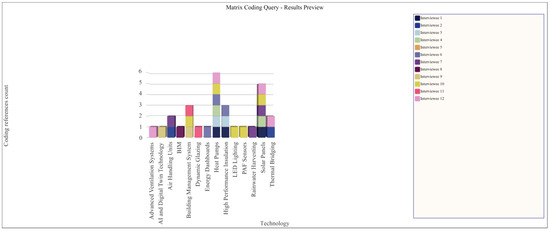
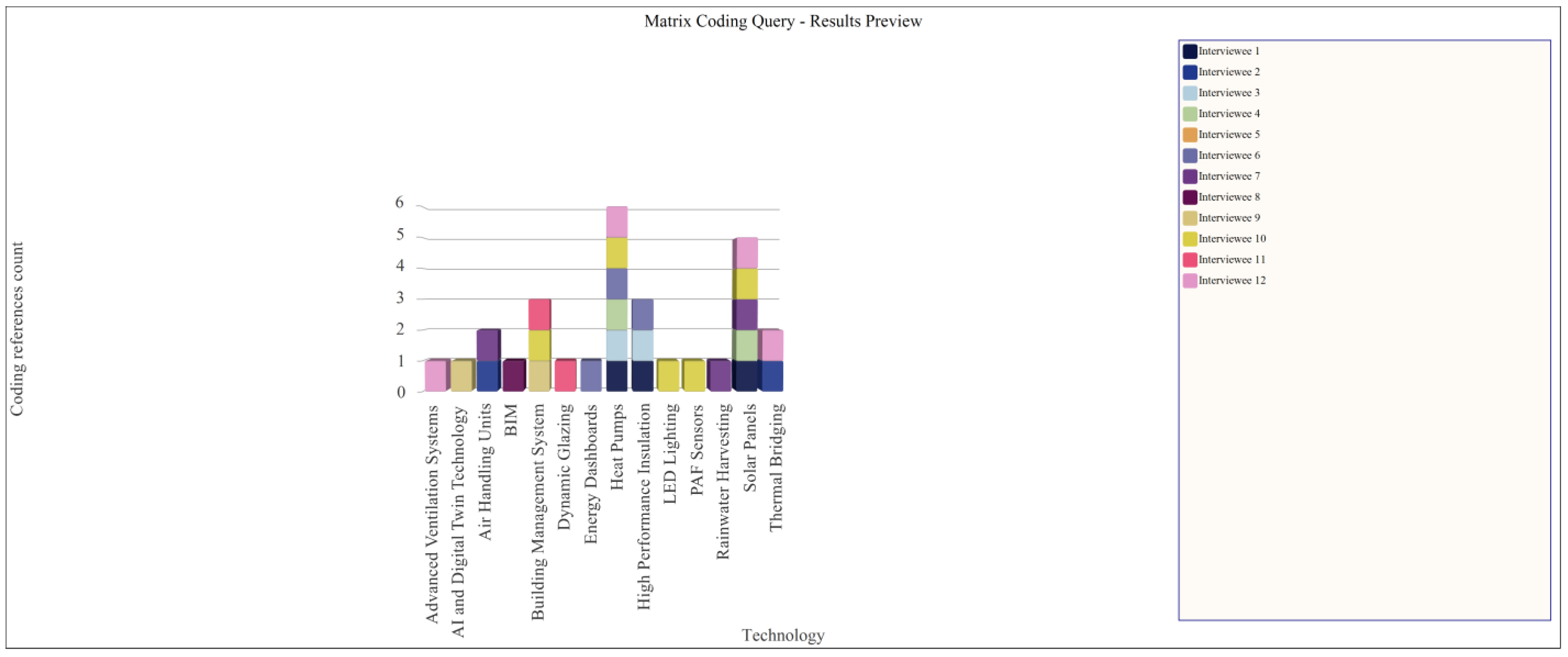
Figure 1 illustrates the frequency of the technologies for NZEBs. In this study, a total of 14 technologies are identified through the interviews. Heat pumps are the most frequently identified for NZEBs, followed by solar panels (i.e., solar PV panels), BMSs (i.e., building management systems), high-performance insulation, air handling units, and thermal bridging technologies, all of which are identified by multiple interviewees. On the other hand, eight other technologies are identified by only one interviewee, including advanced ventilation systems, artificial intelligence (AI), and digital twin technologies, building information modeling (BIM), dynamic glazing, energy dashboards, light-emitting diode (LED) lighting, pressure and airflow (PAF) sensors, and rainwater harvesting. In this study, every interviewee identified at least one technology for NZEBs.
Figure 1.
Matrix coding query based on the technologies adopted for NZEBs.
4.1.1. Heat Pumps
Heat pumps are not devices that generate heat. Instead, they transfer heat from one place to another using much less energy than heat generation through conventional methods, such as burning fuel and using electricity. They are essential for NZEBs because they drastically reduce energy demand for heating and cooling, which is the largest proportion of energy consumption in buildings. This explains why heat pumps are identified by six interviewees in this study. Interviewee 4 said, “We have solar panel heat pumps, air source heat pumps, ground source heat pumps, and water source heat pumps” made in “the UK, France, and China”.
According to Interviewee 12, unlike conventional heating methods, such as boilers that rely on burning fuel, heat pumps move heat generated from renewable sources, such as solar panels and ground sources, for heating and cooling in buildings. This complies with the principle of utilizing renewable energy for NZEBs. Since heat pumps need little energy to work, Interviewee 10 believed that the adoption of heat pumps helps elevate the energy performance certificate (EPC) rating. In addition to building energy performance improvement, NZEBs also benefit from the adoption of heat pumps for decarbonization, which is a consensus among the six interviewees in this study.
4.1.2. Solar Panels
Solar panels represent renewable energy and sustainable initiatives, providing a highly effective solution that can significantly lower energy costs and reduce carbon emissions. They can generate energy on-site where roof space is available. According to five interviewees in this study, solar panels are the second most frequently identified technology for NZEBs. Interviewee 4 stated,
“…we applied solar panels to provide on-site electricity, which also helped us to reduce our operational carbon emissions…”
This highlights the crucial role that solar panels play in reducing the dependence on grid electricity, making buildings more resilient. However, financial constraints exist. For this reason, Interviewee 7 expressed,
“While many clients are excited about the potential of solar energy, the initial costs often make them think twice.”
According to the interviewees who identified solar panels as a technology for NZEBs, government incentives make it possible to decrease the prices and increase the ease of adopting solar panels. They advocated for the development of better financial models and targeted awareness campaigns to encourage a wider adoption of solar panels to pursue NZEBs.
4.1.3. Building Management Systems
BMS is a central platform that automatically monitors and controls various systems in a building, including HVAC, lighting, security, and fire safety. It enables real-time monitoring, control, and optimization of energy consumption, enhancing energy efficiency and lowering operational costs. The importance of BMSs to NZEBs is highlighted by three interviewees in this study, describing BMSs as the third most frequently identified technology. Interviewee 10 identified its benefits as follows:
“We implement a lot of energy-saving integrations, which can range from a sensor to a more accurate control system. The main part of all the solutions is BMS.”
In buildings, BMSs can significantly improve building energy performance by ensuring that various building systems, especially HVAC systems and lighting systems, operate appropriately. Interviewee 11 believed:
“BMS is the one that manages to control everything and make sure that there is no conflict between the heating system and the cooling system.”
Although a BMS may be an expensive system, according to the interviewees with an emphasis on BMSs, the adoption of BMSs can often lead to significant energy savings by minimizing energy use. As a result, BMSs play a crucial role in achieving NZEB targets.
4.1.4. High-Performance Insulation Technologies
High-performance insulation technologies refer to advanced solutions used to reduce the flow of thermal energy or minimize the heat transfer in buildings. Enhancing insulation performance is essential for achieving energy efficiency in buildings. Providing high-performance insulation in new buildings or upgrading insulation in existing buildings significantly reduces heat loss and improves thermal comfort. This explains why Interviewee 1 highlighted,
“We have to insulate the floors, the walls, the roofs and upgrade the windows. So, these are the basic standards that we try to achieve for any low/zero energy buildings.”
4.1.5. Thermal Bridging Technologies
Thermal bridging refers to weak points of building insulation in many places, such as wall-wall corners, wall-window junctions, wall-roof junctions, and wall-floor junctions, where heat escapes easily. To prevent heat escape, buildings need effective insulation solutions, with the support of high-performance insulation materials, to address thermal bridging. For this reason, thermal bridging technologies are crucial in improving energy efficiency in NZEBs. Interviewee 2 emphasized,
“We looked at air tightness and improved thermal bridging significantly in our projects to ensure better insulation and energy savings.”
This is agreed by Interviewee 12, who believed that more and more attention is being paid to addressing thermal bridging in different types of NZEBs, such as residential buildings, office buildings, and commercial buildings.
4.1.6. Air Handling Units
An air handling unit (AHU) is a central component of the HVAC system in a building that is often responsible for 30–50% of building energy consumption. The primary job of AHUs is to take in outside air, condition it, and then circulate it throughout the building. According to Interviewees 2 and 7, modern AHUs often include heat recovery ventilators, which capture 60–80% of the heat from exhaust air and transfer it to incoming fresh air. In doing so, the energy needed to heat or cool new air is reduced dramatically. Interviewee 7 said,
“Air handling units with energy recovery can significantly reduce heating and cooling loads if implemented properly.”
For these reasons, AHUs play a vital role in improving indoor air quality, thermal comfort, and energy efficiency in NZEBs.
4.1.7. Other Technologies for NZEBs
In addition to the technologies identified by multiple interviewees mentioned above, eight other technologies are also identified for NZEBs in this study (see Figure 1). Although they are identified by only one interviewee, it does not undermine their value and potential. BIM and dynamic glazing are selected here to demonstrate their contributions to the achievement of NZEB targets.
BIM is a digital representation of the physical and functional characteristics of buildings or other physical assets. It involves the generation and management of building information in digital forms. It can be used throughout the lifecycle of a building from design, through construction, to operation. It has a critical role to play in the modeling and analysis process to well inform sustainability decisions. The use of BIM makes it possible to enhance energy efficiency and reduce carbon footprint, contributing to NZEBs. Interviewee 8 emphasized,
“A massive player in measuring operational performance is BIM. … So we have to run a lot of tests and analyses using Revit or any other BIM tools. … BIM can be used to avoid energy waste.”
Dynamic glazing is a type of class that can change its optical and thermal properties in response to environmental conditions or occupant needs, providing a high-performance building envelope solution and a key advancement in NZEB technologies. For example, on sunny days or in warmer months, dynamic glazing darkens to reduce heat gain. On cloudy days or in colder months, it lightens to allow more sunlight, diminishing heating requirements. It is acknowledged as a transformative NZEB technology due to its ability to balance natural lighting, energy efficiency, and thermal comfort. Interviewee 11 stated, “We are able to upgrade the glazing” by adopting dynamic glazing. Despite its obvious benefits, its implementation comes with a challenge of high costs. To address this challenge, Interviewee 11 recommended employing advanced energy modeling tools to make a cost–benefit analysis of dynamic glazing.
4.2. Materials
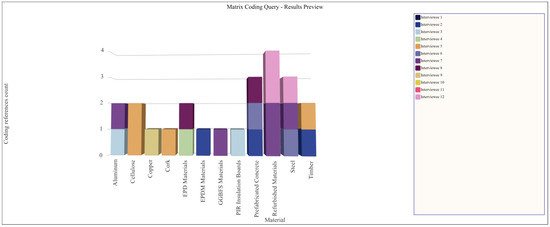
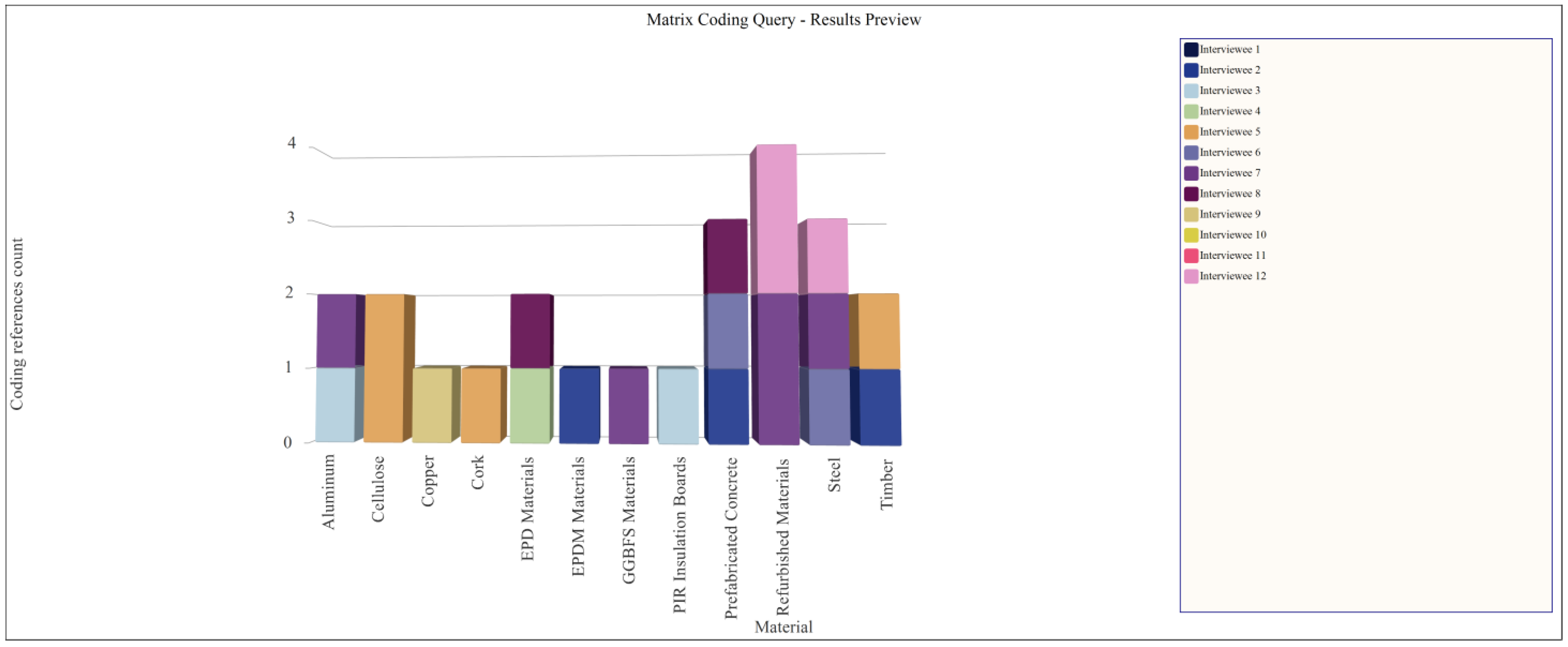
Figure 2 presents the frequency of the materials selected to minimize lifecycle environmental impacts and achieve NZEB targets. Prefabricated concrete, timber, aluminum, steel, environmental product declaration (EPD) materials, and recycled materials are identified by multiple interviewees. On the other hand, cellulose, copper, cork, ground granulated blast furnace slag (GGBFS) materials, ethylene propylene diene monomer (EPDM) materials, and polyisocyanurate (PIR) insulation boards are identified by only one interviewee. Despite that, they can significantly contribute to NZEBs.
Figure 2.
Matrix coding query based on the materials selected for NZEBs.
4.2.1. Prefabricated Concrete
Prefabricated concrete, or precast concrete, refers to concrete components or modules that are manufactured in a factory and then transported to a construction site for assembly and installation. It has high insulation capability mainly due to effective integration with supplementary insulation layers. It is often chosen for its excellent thermal mass, making it an ideal material for NZEBs that emphasize sustainability. Interviewee 6 noted,
“Precast concrete is a good way to go now, and it complies with a lot of the NZEB stuff as well, which has other implications than the size of the foundations and stuff like that, as well as design leading time due to its superior insulation potential.”
4.2.2. Timber
Timber is a natural material widely utilized in sustainable buildings due to low embodied carbon, low thermal conductivity, and high circular capability. It has natural insulation strengths that help regulate indoor temperatures, reducing the energy needed for heating and cooling in buildings. As a result, the use of timber significantly contributes to the improvement of energy efficiency in NZEBs. This explains why Interviewee 5 emphasized the selection of timber from sustainable sources, “Timber is very popular because of its sustainability and its benefits”. On the other hand, the interviewees in this study believed that it is necessary to carefully consider the optimal utilization of natural resources when using timber for NZEBs. For example, Interviewee 5 expressed, “We should care about how we get this timber and where we get it from.” In other words, Interviewee 5 called for minimizing the environmental damage caused by the process of harvesting trees.
4.2.3. Aluminum and Steel
Both aluminum and steel are metals. Aluminum is often used in external wall systems due to its advantages in durability and aesthetics. According to Interviewee 7, aluminum frames are often integrated into brick slip cladding systems, which enhance thermal insulation while maintaining structural performance. Interviewee 7 said,
“…external walls would have aluminum frames and then the brick slips would be installed and there would be installation and then a layer of gypsum board and then plaster and painted well…”
With regard to NZEBs, steel can be selected because of its durability, with materials chosen for a projected lifespan of 60 years. Interviewee 6 expressed, “…so everything was selected with a 60-year lifespan on it, and so was the steel frame.” On the other hand, attention is also given to steel due to its significant embodied carbon and energy-intensive production processes. For this reason, Interviewee 7 emphasized the environmental impact of using steel and the importance of incorporating recycled steel to minimize the carbon footprint. Interviewee 7 explained,
“…steel is costing them high on embodied energy and carbon in the long run. So, what we did was we asked them to retain more elements of the building and introduce recycled steel from the site and other materials that can be reused…”
4.2.4. EPD Materials
EPD materials refer to building materials or products that have environmental product declarations. According to lifecycle assessment (LCA), EPD is a formalized and independently verified document that provides transparent and comparable information about the environmental impact, such as energy and carbon performance, of a material or product throughout its lifecycle. It is one of the most important ways of assessing and communicating the sustainability of building materials or products. According to Interviewees 4 and 8, it plays a critical role in the process of material selection to choose the most appropriate materials that support NZEBs. For example, Interviewee 4 said,
“…we need to consider EPD materials, according to EPD environmental product declaration…Yeah, it’s not mandatory yet, but it will be mandatory in the future if manufacturers are obligated to provide the environmental impact of that material.”
4.2.5. Recycled Materials
Recycled materials are building materials that are recovered from waste materials or previously used products. There are various types of recycled materials, such as recycled concrete, recycled wood, recycled steel, recycled glass, recycled plastic, reclaimed bricks, and so on. The reuse of recycled materials reduces the need for new raw materials, decreases waste, and facilitates the circular economy in built environments. For this reason, both Interviewees 7 and 12 supported the reuse of recycled materials in NZEBs. For example, Interviewee 7 believed that 90 to 97% of steel in the UK is recycled. Interviewee 7 further added,
“…the bricks were in good condition, so we asked them to reuse the bricks, the steel and of course, using GGBFS in concrete …”
4.2.6. Other Materials for NZEBs
Besides the materials for NZEBs mentioned above, other materials for NZEBs include cellulose, copper, cork, EPDM materials, GGBFS materials, and PIR insulation boards. Although they are identified by only one interviewee, their value cannot be underestimated. In the following, cellulose, cork, GGBFS materials, and PIR insulation boards are analyzed because they are more related to thermal insulation and energy efficiency in buildings.
Cellulose and cork are recognized as natural insulation materials, whose importance to NZBEs is highlighted by Interviewee 5. On one hand, both have many advantages, such as a low level of embodied carbon, a high capacity to absorb carbon emissions, and a high capability for recycling and reuse. On the other hand, both are excellent thermal insulators and therefore play an important role in saving building energy and improving indoor comfort. Just as Interviewee 5 explained:
“… avoid the toxic or non-toxic materials that are high in carbon kind of insulations, like wool and so on, and use more low-end carbon insulations and materials like cellulose and cork and so on, which is a key factor…”
GGBFS is a byproduct of steel production and is increasingly used in concrete mixes. It is advantageous over traditional cement because of its low embodied carbon. It contributes to the durability of concrete, leading to sustainable benefits. More importantly for NZEBs, concrete with GGBFS can improve thermal mass, which moderates indoor temperatures by absorbing heat during the day and releasing it at night. In doing so, less energy is consumed for heating and cooling systems in buildings. According to Interviewee 7, “That’s why we kind of suggest to our clients that they should use GGBFS” for sustainable buildings, especially for NZEBs. Interviewee 7 further added, “…using GGBFS in the concrete, the granulated blast furnace, it helps, of course …”
PIR insulation boards are rigid plastic foam panels. They can be used for roofs, walls, and floors due to high-performance insulation. They also have the advantages of durability, recyclability, and reusability. The very low thermal conductivity enables them to keep heat inside a building in winter and outside the building in summer. As a result, the use of PIR insulation can significantly reduce heat transfer, lower energy demand, and enhance energy efficiency. All these contribute to the achievement of NZEB targets. On one hand, Interviewee 3 believed, “PIR will give you a really good performance”. On the other hand, Interviewee 3 recommended against using too much PIR because, according to fire safety ratings, the fire resistance of PIR is considered moderate instead of excellent.
4.3. Strategies
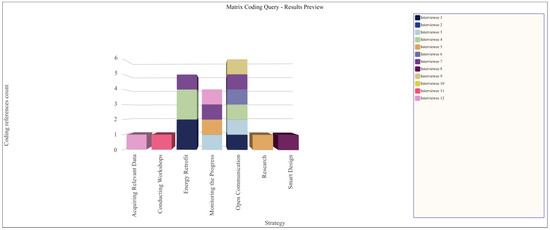
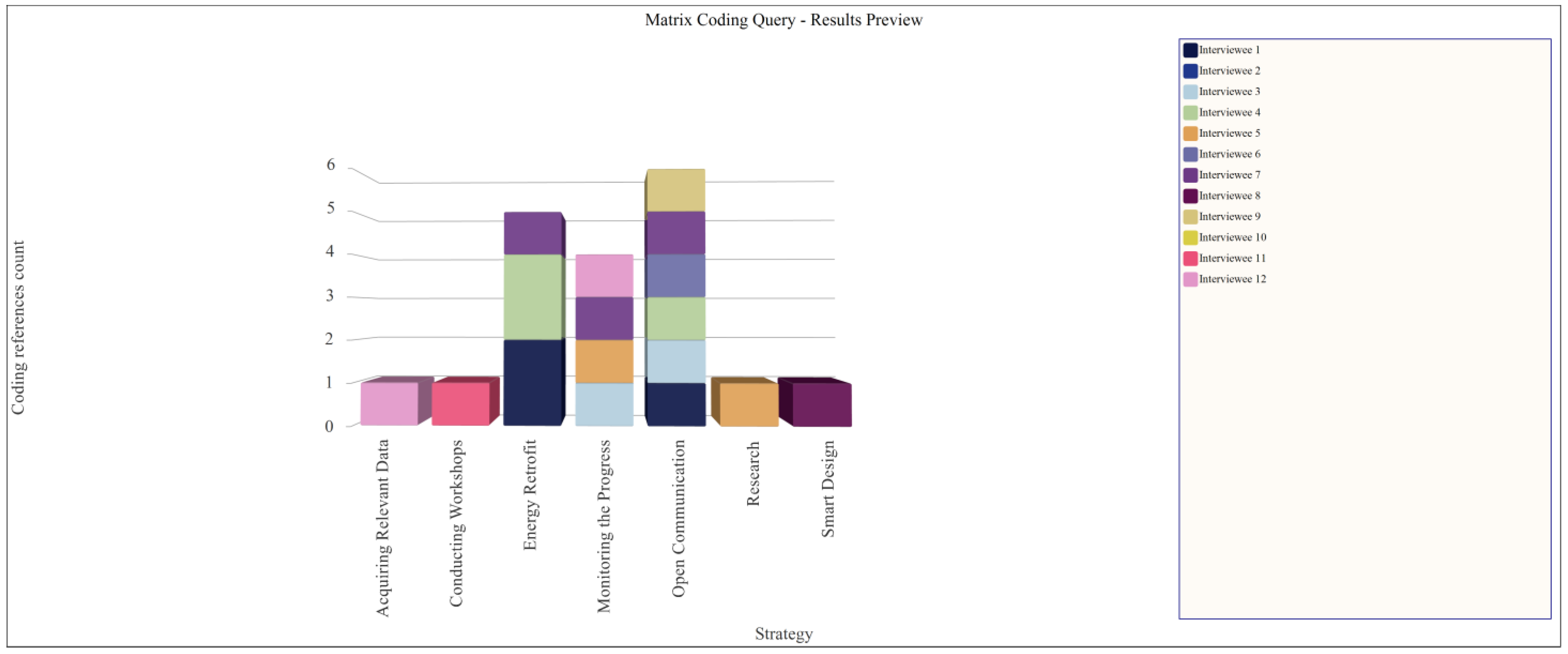
Figure 3 illustrates the frequencies of the strategies implemented to address the challenges that NZEBs face. Open communication emerges as the most frequently identified strategy, followed by energy retrofit and progress monitoring, all of which are identified by multiple interviewees. Other strategies to address the challenges that NZEBs face include acquiring relevant data, conducting workshops, research, and smart design, each of which is identified by only one interviewee.
Figure 3.
Matrix coding query based on the strategies implemented for NZEBs.
4.3.1. Open Communication
Communication is crucial for achieving success in NZEB projects, coordinating between stakeholders to tackle challenges. For this reason, it is identified by five interviewees in this study. For example, Interviewee 3 emphasized the necessity of clear and timely communication,
“Even though emails are great for communicating with people, I think the likes of a Teams meeting, as you know, when you see someone face to face. So you can explain to them clearly, like here, this is the problem. This is what you need to do and solve many problems.”
The significance of centralized information sharing in NZEB projects is also identified in this study, specifically that having a shared hub for documents helps keep all stakeholders informed. Interviewee 3 further stated,
“…there’s always kind of like not a SharePoint, but there’s a hub where all the information is uploaded… So, it was kind of a review of the use of that from the project managers being like guys, we’re going to upload everything you need to this hub. That’s where it’s going to be…”
There is a consensus that it is also important in NZEB projects to build and maintain open communication channels to ensure transparency and minimize conflicts between stakeholders. For example, Interviewee 4 expressed,
“…we have regular meetings with them, presenting, expressing issues, problems or talking about our progress, our procedures and whatever happens. What are the risks that we’re facing? We have to keep them updated about what might happen and what they might go through if it’s compromised. Open communication channel and this is a collaborative style…”
4.3.2. Energy Retrofit
Energy retrofit plays a vital role in achieving NZEB targets, particularly when it comes to upgrading existing structures to align with contemporary energy efficiency standards. Upgrading existing building fabric and insulation is crucial for energy retrofit aimed at minimizing energy loss and optimizing energy performance. Energy retrofit towards NZEBs generally starts with building fabric, which means prioritizing improvements to a building’s core structures and envelopes before upgrading systems or adding renewables. Just as Interviewee 1 explained,
“When you do a full-scale retrofit, the fabric should reach certain new values. So, we need to understand how we can achieve the U value for all this fabric and envelopes.”
This is agreed by Interviewee 4. After upgrading building fabric for walls, roofs, and floors, Interviewee 4 drew attention to window replacement regarding high-performance insulation,
“They have single-glazed windows. Very soon, you will understand that this is the area that you need to improve from single-glazed to double-glazed or triple-glazed.”
4.3.3. Progress Monitoring
Four interviewees highlighted the significance of monitoring the progress throughout the building lifecycle, particularly in ensuring adherence to sustainable principles and standards. Interviewee 7 realized the difficulty of enforcing proposed sustainable measures,
“…the real challenge would be implementing them and monitoring them. Throughout the life cycle of the project, there are no very strict ways to enforce all the proposals and look after them.”
Both Interviewees 7 and 11 suggested continuous performance monitoring during the building lifecycle. For example, Interviewee 11 mentioned,
“You should keep assessing the building performance and having a feedback loop from continuous performance assessment to inform your decisions and to improve the energy and carbon performance.”
4.3.4. Other Strategies for NZEBs
In the following, two of the four other strategies are selected to analyze how to overcome challenges and implement NZEBs. Smart design is highlighted in this study, revealing strong enthusiasm for innovative and thoughtful design strategies. Smart design strategies are identified with a focus on sustainability, in particular, energy and carbon performance. For example, Interviewee 8 pointed out that architectural design can significantly enhance energy efficiency by using smart design approaches and optimizing daylighting through facade adjustments, stating,
“…they designed certain facades and to improve the daylighting. You know so the way they calculated, like how far inset the windows were into the building and depending on the angle, helped maximize natural light while minimizing glare…”
On the other hand, research, or research and development (R&D), is described as vital for the pursuit of NZEBs. It is also considered crucial for validating design decisions and ensuring that NZEBs perform as intended. Interviewee 5 mentioned,
“…the performance assessment after post-occupancy evaluation gives a different value. When you complete the design values and then compare the actual values, there’s always a 30 to 35% gap and research helps us understand where the mistakes lie…”
Furthermore, Interviewee 5 stressed that attention must be paid to research or R&D to keep informed about advancements in sustainable building technologies, approaches and methods for the achievement of NZEB targets, saying,
“…every day when you wake up, you see more modernized technologies. This is a growing field. This is a futuristic field, and this is an advancing field. What I can suggest is we have to keep ourselves updated about the different technologies, different approaches, different methods that can promote the building in your performance…”
5. Conceptual Framework and Discussion
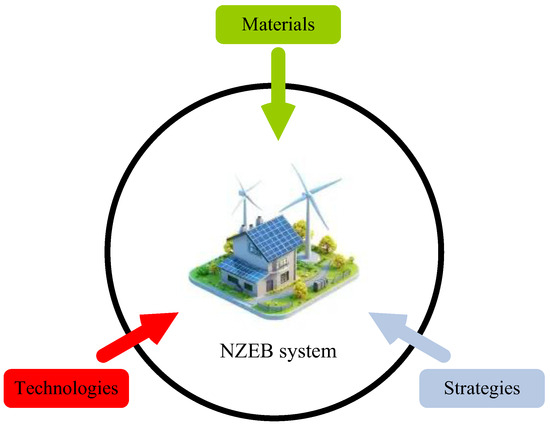
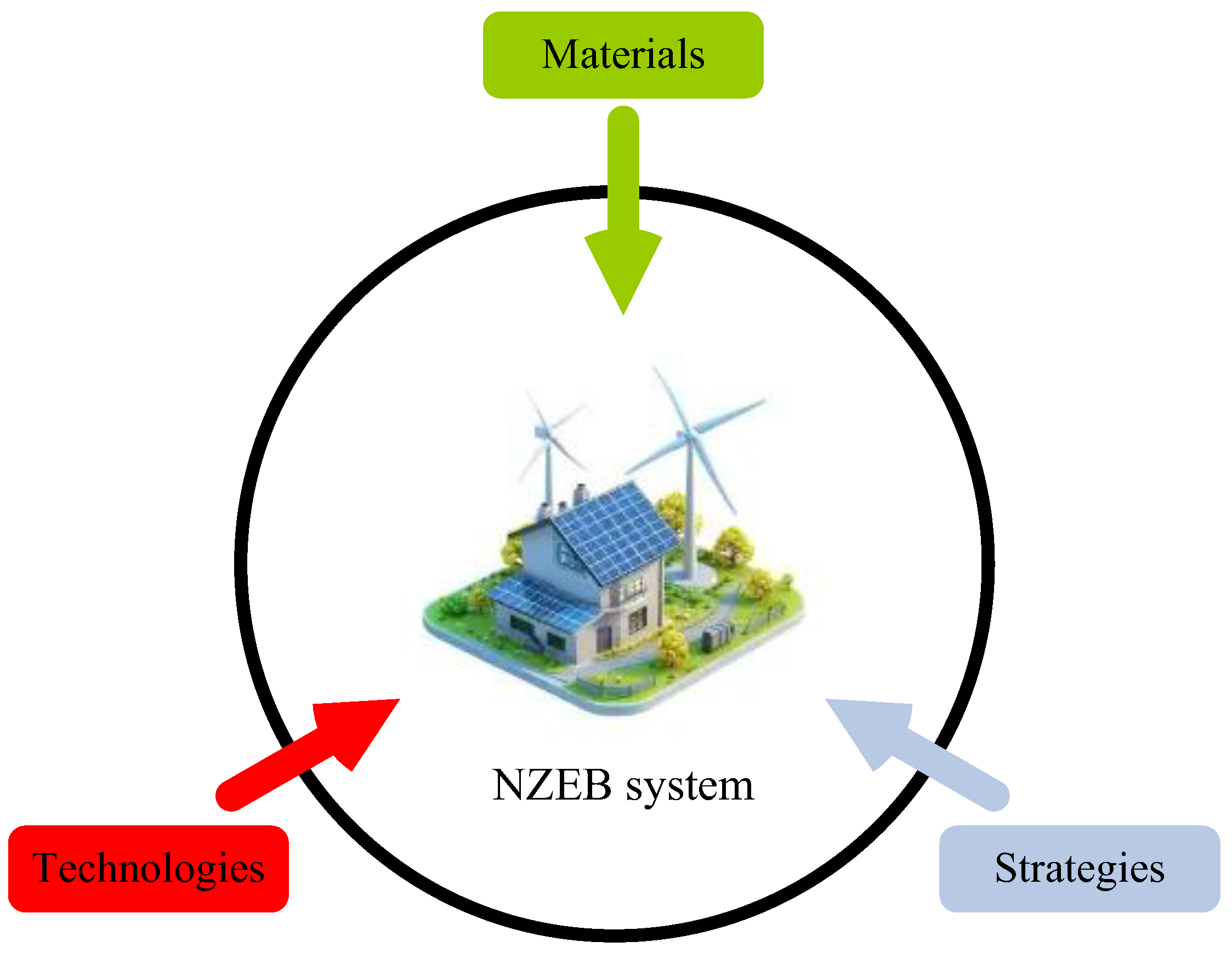
A complex system consists of many elements, determined by how the elements play their roles and how they interact with each other [46]. Although some studies have explored the feasibility of using complex system theory for buildings, for example, Shen and Gao [48] studied the sustainable design in community buildings, and Çıdık and Phillips [49] investigated the impact of organizational culture on building safety from a complex system perspective, none of the studies have paid attention to complex systems for NZEBs. Based on the literature review and, more importantly, the interview analysis, a conceptual framework is developed in this study (see Figure 4). As a result, this study presents the first research attempt to describe NZEBs as a complex system. In the complex system described by the conceptual framework, technologies, materials, and strategies represent different elements and play different roles. Based on their integration, the whole system functions and performs well.
Figure 4.
Conceptual framework to describe an NZEB as a complex system.
Firstly, technologies act as the enablers of NZEBs in the conceptual framework. The interview analysis underscores the importance of new and smart technologies, such as heat pumps, solar panels, and BMSs, in improving energy efficiency and reducing carbon emissions. Although these technologies have higher initial capital costs than conventional technologies, they can realize the optimal performance and deliver the best value throughout the building lifecycle. For this reason, it is necessary to take lifecycle costing into account when considering NZEBs. On the other hand, appropriate technology adoption is not the only key to NZEB success. Instead, the framework conceptualizes appropriate technology adoption as an enabling force of NZEBs that must be incorporated alongside careful material selection and successful strategy implementation.
Secondly, the conceptual framework positions materials as the determinants of NZEBs. To achieve NZEB targets, buildings must be energy-efficient, which requires materials to have excellent thermal properties. The interview analysis demonstrates that prefabricated concrete, timber, and some other innovative materials are excellent thermal insulators, lowering energy demand, minimizing energy waste, and eliminating energy inefficiency. The selection of such materials provides a solid basis for NZEB success. In addition to the energy-efficient advantages of materials, the interview analysis also draws attention to their carbon neutrality, fireproof resistance, durability, and circularity when selecting them for NZEBs. That is to say, it would be ideal if the materials with excellent energy performance could be selected for NZEBs without compromising their performance in other key aspects.
Thirdly, strategies can be described in the conceptual framework as the interventions of NZEBs that align with technological and material considerations throughout the building lifecycle. Open communication supports stakeholder coordination through in-person or online meetings or using digital communication tools, mitigating potential conflicts, facilitating collaborative efforts, and reinforcing accountable behaviors. Progress monitoring ensures compliance with sustainable principles and standards, and minimization of possible discrepancies between design intentions and operational outcomes. NZEBs are achievable for both new and existing buildings. As a strategy for NZEBs, energy retrofit makes it possible for existing buildings to be deeply upgraded with a focus on achieving dramatic energy savings and leveraging renewable energy sources.
Although technologies, materials, and strategies play different roles, they are not siloed. Instead, they interact with each other, jointly contributing to NZEB success. For example, energy retrofit, a strategy for NZEBs, represents a deep energy upgrade for existing buildings, which relies on high-performance insulation technologies and materials. Without high-performance insulation technologies and materials, net-zero energy retrofit will lose its ground. For this reason, the conceptual framework seamlessly integrates technologies, materials, and strategies as three elements into a complex system. When pursuing NZEBs, there is a need to consider both individual elements and their integration. This is because each element is an indispensable part of the whole system. On the other hand, the behavior of the whole system is not simply the sum of its parts. Instead, how different elements connect, influence, and respond to one another is pivotal to determining its overall performance.
6. Conclusions
Unlike existing studies that have explored NZEBs from one single perspective, this research performs an empirical investigation and identifies 14 technologies, such as heat pumps, solar panels, and BMSs, 12 materials, such as prefabricated concrete, timber, and steel, and seven strategies, such as open communication, energy retrofit, and progress monitoring, for the delivery of NZEBs. Based on the literature review and, more importantly, the interview analysis, a conceptual framework is well established in this study to describe an NZEB as a complex system that integrates technologies, materials, and strategies as its three key elements. The technology-material-strategy integration illustrates that it is not appropriate to look at NZEBs from one single perspective. Instead, sufficient attention must be given to appropriate technology adoption, careful material selection, and successful strategy implementation as a synthesis. In other words, it is the interactive integration between technologies, materials, and strategies that determines the overall performance of NZEBs and ensures the ultimate success of NZEBs.
Although NZEBs are widely recognized as an effective solution to move towards sustainability, they face various challenges of scaling up in reality. This research is the first attempt that provides a comprehensive understanding of NZEBs from a systematic point of view. It has great potential to address the challenges of upscaling NZEBs, based on the technology-material-strategy integration. In recent years, the importance of LCA to NZEBs has been increasingly highlighted because LCA offers a holistic approach to assess the environmental impacts of a building across its entire lifespan. Despite studies such as Kathiravel et al. [50] with a focus on HVAC systems in NZEBs and Antypa et al. [51] with a focus on building components in NZEBs using the LCA approach, the convergence of LCA and NZEBs has been little studied regarding technologies, materials, and strategies for NZEBs. For this reason, future research is recommended to explore LCA in the context of NZEBs, taking technologies, materials, and strategies into account. In doing so, it is expected that LCA can better support NZEBs by contributing to long-term sustainability. In addition to technologies, materials, and strategies, NZEBs also have socio-ecological as well as wider sustainable implications. For this reason, a socio-ecological as well as wider sustainable analysis of NZEBs is recommended for future research to better understand NZEBs in both research and practice.
Author Contributions
Conceptualization, L.G. and X.M.; methodology, L.G. and X.M.; software, L.G.; formal analysis, L.G.; investigation, L.G.; data curation, L.G.; writing—original draft, L.G. and X.M.; writing—review and editing, X.M.; visualization, L.G. and X.M.; supervision, X.M. All authors have read and agreed to the published version of the manuscript.
Funding
This research received no external funding.
Institutional Review Board Statement
The study was conducted in accordance with the Declaration of Helsinki and approved by the Ethics Committee of Research & Enterprise Directorate at Queen’s University Belfast (protocol code EPS 24 178 and date of approval 20 June 2024).
Informed Consent Statement
Informed consent was obtained from all subjects involved in the study.
Data Availability Statement
The original contributions presented in this study are included in the article. Further inquiries can be directed to the corresponding author.
Conflicts of Interest
Author Linita George was employed by the company Creagh Concrete. The remaining authors declare that the research was conducted in the absence of any commercial or financial relationships that could be construed as a potential conflict of interest.
References
- Liu, T.; Chen, L.; Yang, M.; Sandanayake, M.; Miao, P.; Shi, Y.; Yap, P.S. Sustainability considerations of green buildings: A detailed overview on current advancements and future considerations. Sustainability 2022, 14, 14393. [Google Scholar] [CrossRef] [Scilit]
- Srivastava, S.; Raniga, U.I.; Misra, S. A methodological framework for life cycle sustainability assessment of construction projects incorporating TBL and decoupling principles. Sustainability 2022, 14, 197. [Google Scholar] [CrossRef] [Scilit]
- Ürge-Vorsatz, D.; Khosla, R.; Bernhardt, R.; Chan, Y.C.; Vérez, D.; Hu, S.; Cabeza, L.F. Advances toward a net-zero global building sector. Annu. Rev. Environ. Resour. 2020, 45, 227–269. [Google Scholar] [CrossRef] [Scilit]
- Zarco-Periñán, P.J.; Zarco-Soto, F.J.; Zarco-Soto, I.M.; Martínez-Ramos, J.L.; Sánchez-Durán, R. CO2 emissions in buildings: A synopsis of current studies. Energies 2022, 15, 6635. [Google Scholar] [CrossRef] [Scilit]
- Attia, S. Net Zero Energy Buildings (NZEB): Concepts, Frameworks and Roadmap for Project Analysis and Implementation, 2nd ed.; Butterworth-Heinemann: London, UK, 2018. [Google Scholar]
- Shen, L.; Ma, Z.; Liu, C. Study on life-cycle carbon emission of urban residential buildings: A case study of Xi’an. Sustainability 2025, 17, 1602. [Google Scholar] [CrossRef] [Scilit]
- Amini Toosi, H.; Famiglietti, J.; Motta, M. Life cycle cost analysis of nearly-zero energy buildings: An introduction to the methodologies. In Life Cycle Costing; Muthu, S.S., Ed.; Springer: Cham, Switzerland, 2023; pp. 27–49. [Google Scholar] [CrossRef] [Scilit]
- Ercal, O.; Shafique, M. Rethinking net zero: A new perspective on achieving net zero energy buildings. Sustain. Horiz. 2026, 17, 100163. [Google Scholar] [CrossRef] [Scilit]
- Brown, D.; Tokede, O.; Li, H.X.; Edwards, D. A systematic review of barriers to implementing net zero energy buildings in Australia. J. Clean. Prod. 2024, 467, 142910. [Google Scholar] [CrossRef] [Scilit]
- Moghaddasi, H.; Culp, C.; Vanegas, J.; Ehsani, M. Net zero energy buildings: Variations, clarifications, and requirements in response to the Paris Agreement. Energies 2021, 14, 3760. [Google Scholar] [CrossRef] [Scilit]
- Deng, S.; Wang, R.A.; Dai, Y.J. How to evaluate performance of net zero energy building: A literature research. Energy 2014, 71, 1–16. [Google Scholar] [CrossRef] [Scilit]
- Tirelli, D.; Besana, D. Moving toward net zero carbon buildings to face Global Warming: A narrative review. Buildings 2023, 13, 684. [Google Scholar] [CrossRef] [Scilit]
- Sachs, J.D.; Schmidt-Traub, G.; Mazzucato, M.; Messner, D.; Nakicenovic, N.; Rockström, J. Six transformations to achieve the sustainable development goals. Nat. Sustain. 2019, 2, 805–814. [Google Scholar] [CrossRef] [Scilit]
- Arshad, M.O.; Haleem, A.; Nadeem, M. Understanding the energy retrofit strategies towards Net Zero Energy Building in sync with the SDGs: A review and bibliometric analysis. J. Build. Eng. 2025, 106, 112574. [Google Scholar] [CrossRef] [Scilit]
- Mohammed, B.U.; Wiysahnyuy, Y.S.; Ashraf, N.; Mempouo, B.; Mengata, G.M. Pathways for efficient transition into net zero energy buildings (nZEB) in Sub-Sahara Africa. Case study: Cameroon, Senegal, and Côte d’Ivoire. Energy Build. 2023, 296, 113422. [Google Scholar] [CrossRef] [Scilit]
- Mavrigiannaki, A.; Pignatta, G.; Assimakopoulos, M.; Isaac, M.; Gupta, R.; Kolokotsa, D.; Laskari, M.; Saliari, M.; Meir, I.A.; Isaac, S. Examining the benefits and barriers for the implementation of net zero energy settlements. Energy Build. 2021, 230, 110564. [Google Scholar] [CrossRef] [Scilit]
- Khashehchi, M.; Thangavel, S.; Rahmanivahid, P.; Heidari, M.; Kumar, A. Net zero energy buildings: Design considerations, challenges, and applications. In Sustainable Technologies for Energy Efficient Buildings; Meena, C.S., Kumar, A., Singh, V.P., Ghosh, A., Eds.; CRC Press: Boca Raton, FL, USA, 2024; pp. 136–155. [Google Scholar] [CrossRef] [Scilit]
- Li, Q.; Ma, R.; Yang, M.; Wang, W.; Chen, J. Net zero energy buildings for low-carbon cities: Progress, challenges, and future directions. J. Build. Des. Environ. 2025, 3, 202559. [Google Scholar] [CrossRef] [Scilit]
- Mahmoodi, M.; Rasheed, E.; Le, A. Systematic review on the barriers and challenges of organizations in delivering new net zero emissions buildings. Buildings 2024, 14, 1829. [Google Scholar] [CrossRef] [Scilit]
- Aste, N.; Del Pero, C.; Leonforte, F.; Ounis, S.; Abdelrahim, A.M.G. The role of photovoltaic technology in achieving net zero energy target in residential buildings. Energy Strategy Rev. 2024, 55, 101543. [Google Scholar] [CrossRef] [Scilit]
- Chandel, R.; Chandel, S.S.; Prasad, D.; Dwivedi, R.P. Experimental analysis and modeling of a photovoltaic powered thermoelectric solid-state cooling system for transition towards net zero energy buildings under different solar loading conditions. J. Clean. Prod. 2024, 442, 141099. [Google Scholar] [CrossRef] [Scilit]
- Shirinbakhsh, M.; Harvey, L.D. Feasibility of achieving net-zero energy performance in high-rise buildings using solar energy. Energy Built Environ. 2024, 5, 946–956. [Google Scholar] [CrossRef] [Scilit]
- Bruno, R.; Bevilacqua, P.; Cuconati, T.; Arcuri, N. Energy evaluations of an innovative multi-storey wooden near Zero Energy Building designed for Mediterranean areas. Appl. Energy 2019, 238, 929–941. [Google Scholar] [CrossRef] [Scilit]
- Karjalainen, M.; Ilgin, E.; Yli-Äyhö, M.; Soikkeli, A. Complementary building concept: Wooden apartment building: The Noppa toward zero energy building approach. In Zero-Energy Buildings; InTech Open: London, UK, 2021; pp. 1–14. [Google Scholar]
- Ni, S.; Zhu, N.; Zhang, Z.; Hou, Y.; Li, S. The operational performance of net zero energy wooden structure building in the severe cold zone: A case study in Hailar of China. Energy Build. 2022, 257, 111788. [Google Scholar] [CrossRef] [Scilit]
- Krarti, M.; Karrech, A. Cost benefits of net zero energy homes in Australia. Buildings 2024, 14, 1107. [Google Scholar] [CrossRef] [Scilit]
- Lohwanitchai, K.; Jareemit, D. Modeling energy efficiency performance and cost-benefit analysis achieving net-zero energy building design: Case studies of three representative offices in Thailand. Sustainability 2021, 13, 5201. [Google Scholar] [CrossRef] [Scilit]
- Punia, A.; Sharma, S.K.; Syal, P. Cost benefit analysis of retrofitting for existing building as net zero energy building: A case study in composite climate zone. In Proceedings of the International Conference on Innovative Technologies for Clean and Sustainable Development (ICITCSD–2021), Chandigarh, India, 14–15 October 2021; Kanwar, V.S., Sharma, S.K., Prakasam, C., Eds.; Springer: Cham, Switzerland, 2022. [Google Scholar] [CrossRef] [Scilit]
- Belussi, L.; Barozzi, B.; Bellazzi, A.; Danza, L.; Devitofrancesco, A.; Fanciulli, C.; Ghellere, M.; Guazzi, G.; Meroni, I.; Salamone, F.; et al. A review of performance of zero energy buildings and energy efficiency solutions. J. Build. Eng. 2019, 25, 100772. [Google Scholar] [CrossRef] [Scilit]
- Athienitis, A.K.; O’Brien, W. Modeling, Design, and Optimization of Net-Zero Energy Buildings; Ernst & Sohn: Berlin, Germany, 2015. [Google Scholar]
- Qiang, G.; Tang, S.; Hao, J.; Di Sarno, L.; Wu, G.; Ren, S. Building automation systems for energy and comfort management in green buildings: A critical review and future directions. Renew. Sustain. Energy Rev. 2023, 179, 113301. [Google Scholar] [CrossRef] [Scilit]
- Li, Y.; Arulnathan, V.; Heidari, M.D.; Pelletier, N. Design considerations for net zero energy buildings for intensive, confined poultry production: A review of current insights, knowledge gaps, and future directions. Renew. Sustain. Energy Rev. 2022, 154, 111874. [Google Scholar] [CrossRef] [Scilit]
- Mohammed, G.A.; Mabrouk, M.; He, G.; Abdrabo, K.I. Towards sustainable cities: A review of zero energy buildings techniques and global activities in residential buildings. Energies 2023, 16, 3775. [Google Scholar] [CrossRef] [Scilit]
- Shakeel, S.R.; Yousaf, H.; Irfan, M.; Rajala, A. Solar PV adoption at household level: Insights based on a systematic literature review. Energy Strategy Rev. 2023, 50, 101178. [Google Scholar] [CrossRef] [Scilit]
- Elaouzy, Y.; El Fadar, A. Energy, economic and environmental benefits of integrating passive design strategies into buildings: A review. Renew. Sustain. Energy Rev. 2022, 167, 112828. [Google Scholar] [CrossRef] [Scilit]
- Taleb, H.M. Using passive cooling strategies to improve thermal performance and reduce energy consumption of residential buildings in UAE buildings. Front. Archit. Res. 2014, 3, 154–165. [Google Scholar] [CrossRef] [Scilit]
- Younsi, Z.; Naji, H. Numerical simulation and thermal performance of hybrid brick walls embedding a phase change material for passive building applications. J. Therm. Anal. Calorim. 2020, 140, 965. [Google Scholar] [CrossRef] [Scilit]
- Kim, Y.; Yu, K.H. Study on the certification policy of zero-energy buildings in Korea. Sustainability 2020, 12, 5172. [Google Scholar] [CrossRef] [Scilit]
- Ferreira, A.; Pinheiro, M.D.; de Brito, J.; Mateus, R. A critical analysis of LEED, BREEAM and DGNB as sustainability assessment methods for retail buildings. J. Build. Eng. 2023, 66, 105825. [Google Scholar] [CrossRef] [Scilit]
- Awadh, O. Sustainability and green building rating systems: LEED, BREEAM, GSAS and Estidama critical analysis. J. Build. Eng. 2017, 11, 25–29. [Google Scholar] [CrossRef] [Scilit]
- Madondo, S.M. Data Analysis and Methods of Qualitative Research: Emerging Research and Opportunities; IGI Global: Hershey, PA, USA, 2021. [Google Scholar]
- Agyekum-Mensah, G.; Reid, A.; Temitope, T.A. Methodological pluralism: Investigation into construction engineering and management research methods. J. Constr. Eng. Manag. 2020, 146, 04020006. [Google Scholar] [CrossRef] [Scilit]
- Stanghellini, G.; Ballerini, M. Qualitative analysis: Its use in psychopathological research. Acta Psychiatr. Scand. 2008, 117, 161–163. [Google Scholar] [CrossRef] [Scilit] [PubMed]
- Hennink, M.; Kaiser, B.N. Sample sizes for saturation in qualitative research: A systematic review of empirical tests. Soc. Sci. Med. 2022, 292, 114523. [Google Scholar] [CrossRef] [Scilit]
- Hewson, C. Qualitative approaches in internet-mediated research: Opportunities, issues, possibilities. In The Oxford Handbook of Qualitative Research; Leavy, P., Ed.; Oxford University Press: Oxford, UK, 2014; pp. 423–450. [Google Scholar]
- Thurner, S.; Hanel, R.; Klimek, P. Introduction to the Theory of Complex Systems; Oxford University Press: Oxford, UK, 2018. [Google Scholar]
- Espinosa, A.; Walker, J. A Complexity Approach to Sustainability: Theory and Application, 2nd ed.; World Scientific: Hackensack, NJ, USA, 2017. [Google Scholar]
- Shen, T.; Gao, C. Sustainability in community building: Framing design thinking using a complex adaptive systems perspective. Sustainability 2020, 12, 6679. [Google Scholar] [CrossRef] [Scilit]
- Çıdık, M.S.; Phillips, S. Buildings as complex systems: The impact of organisational culture on building safety. Constr. Manag. Econ. 2021, 39, 972–987. [Google Scholar] [CrossRef] [Scilit]
- Kathiravel, R.; Zhu, S.; Feng, H. LCA of net-zero energy residential buildings with different HVAC systems across Canadian climates: A BIM-based fuzzy approach. Energy Build. 2024, 306, 113905. [Google Scholar] [CrossRef] [Scilit]
- Antypa, D.; Petrakli, F.; Gkika, A.; Voigt, P.; Kahnt, A.; Böhm, R.; Suchorzewski, J.; Araújo, A.; Sousa, S.; Koumoulos, E.P. Life cycle assessment of advanced building components towards NZEBs. Sustainability 2022, 14, 16218. [Google Scholar] [CrossRef] [Scilit]

Disclaimer/Publisher’s Note: The statements, opinions and data contained in all publications are solely those of the individual author(s) and contributor(s) and not of MDPI and/or the editor(s). MDPI and/or the editor(s) disclaim responsibility for any injury to people or property resulting from any ideas, methods, instructions or products referred to in the content. |
© 2026 by the authors. Licensee MDPI, Basel, Switzerland. This article is an open access article distributed under the terms and conditions of the Creative Commons Attribution (CC BY) license.