


Abstract
Extremely low-frequency magnetic fields (ELF-MFs) generated by high-voltage power lines raise concerns about their potential impact on health and well-being. Previous research suggests that chronic exposure to ELF-MFs can contribute to sleep disturbances, headaches, and mood disorders, possibly through physiological stress responses and melatonin disruption. This study examines whether self-reported happiness mediates the relationship between exposure to ELF-MFs and health symptoms among people living near a 161 kV transmission line in the city of Or Akiva in Israel. A total of 427 participants completed questionnaires on physical symptoms and life satisfaction, while fixed-site ELF-MF measurements were conducted at and around homes. The structural equation modelling (SEM) was then applied to assess the direct and indirect effects of exposure to ELF-MFs, complemented by logistic regressions for confounder analysis. The results indicate that higher exposure to ELF-MFs was associated with lower happiness and increased symptoms, including poor sleep and reduced mobility (p < 0.05). On the contrary, greater happiness was correlated with fewer headaches, better sleep quality, improved mobility, and reduced perceived need for medical care (p < 0.01). Mediation analysis also revealed that happiness partially buffers the adverse effects of ELF-MFs on headaches, mood, and sleep problems (p < 0.05).
1. Introduction
Extremely low-frequency magnetic fields (ELF-MFs), generated by power lines and electrical equipment, have raised public health concerns due to their potential adverse effects on health and well-being [1,2]. Although previous studies have linked chronic ELF-MF exposure to various health problems—including poor sleep, frequent headaches, and mood disturbances—the exact biological mechanisms underlying these effects remain unclear [3]. Epidemiological and experimental research suggests that ELF-MF exposure can induce physiological stress responses that negatively affect health (for example, by elevating oxidative stress and inflammatory biomarkers) [4,5]. In particular, ELF-MF exposure has been found to affect circadian regulation: it may disrupt melatonin and cortisol rhythms, hormones crucial for sleep maintenance and mood stability [6,7]. This disruption of melatonin production is one hypothesized pathway by which ELF-MFs could contribute to sleep disturbances and depressive mood disorders [6,7]. Indeed, some studies report that long-term ELF-MF exposure is associated with poor sleep quality, higher stress, and symptoms of depression and anxiety in exposed individuals [3]. Nevertheless, findings have not always been consistent, and debates continue over how and to what extent ELF-MFs directly cause these health issues [8].
At the same time, psychological and social factors—such as resilience, social support, and overall life satisfaction—may modulate the health effects of environmental stressors. There is growing recognition that positive psychological states might buffer individuals against some of the negative impacts of chronic environmental exposures. Happiness, defined as a general sense of well-being and life satisfaction, has been extensively studied in relation to health outcomes [9]. A robust body of evidence links positive emotional states with better physical health. For example, higher happiness (and related positive affect) is associated with reduced systemic inflammation, enhanced immune function, and improved cardiovascular health [9,10]. Happier individuals also tend to manage stress more effectively and show lower rates of depression and anxiety [11]. These protective benefits suggest that happiness and other positive emotions may mitigate some of the harm caused by chronic stressors such as ELF-MF exposure. In other words, a person’s emotional well-being could influence how strongly an external hazard translates into health symptoms.
Most research on ELF-MFs to date has focused on direct physical health effects, documenting symptoms such as headaches, fatigue, irritability, and sleep disturbances among those exposed [12]. However, far less is known about the role of psychological factors in this context. It remains unclear whether maintaining a positive emotional state (e.g., feeling happy) can reduce the adverse health outcomes associated with ELF-MF exposure, or if happier people simply experience fewer symptoms for other unrelated reasons. In other words, does happiness actively mediate the relationship between ELF-MF exposure and health, or is it merely an outcome of better health (with no causal role)? This question represents a key knowledge gap in understanding the full impact of ELF-MFs on affected communities.
To address this gap, we conducted a case study in Or Akiva, Israel—a small city intersected by several high-voltage power lines—to examine the mediating effect of happiness on the association between ELF-MF exposure and self-reported health symptoms. We surveyed 427 residents living at varying distances (10–400 m) from a 161 kV transmission line and measured their residential ELF-MF exposure. Using structural equation modeling (SEM), we tested four sets of relationships: (a) the direct effects of ELF-MF exposure on health symptoms; (b) the direct effect of ELF-MF exposure on happiness; (c) the direct effects of happiness on health outcomes; and (d) the indirect (mediated) pathways from ELF-MFs to health through happiness. We hypothesized that higher ELF-MF exposure would be associated with worse health symptoms and lower happiness, but that happiness would significantly attenuate (i.e., mediate or buffer) the adverse effects of ELF-MFs on health. Findings from this study can inform public health initiatives by highlighting not only the risks of ELF-MF exposure but also potential psychological resilience factors that could be targeted to improve health outcomes in affected communities.
2. Materials and Methods
2.1. Study Area and Spatial Context
Or Akiva is a medium-sized town with about 21,000 residents, located on the coastal plain, 50 km north of Tel Aviv, and 3 km east of the Mediterranean coast. The southwest neighborhood of Or Akiva, adjacent to the power line, forms the study area. The neighborhood is primarily formed by low-rise detached houses and small apartment buildings aligned in parallel (10–400 m) from the power line corridor. This spatial configuration allows for an assessment of environmental sensitivity based on proximity, similar to spatially adaptive modeling approaches used in environmental susceptibility analyses [13].
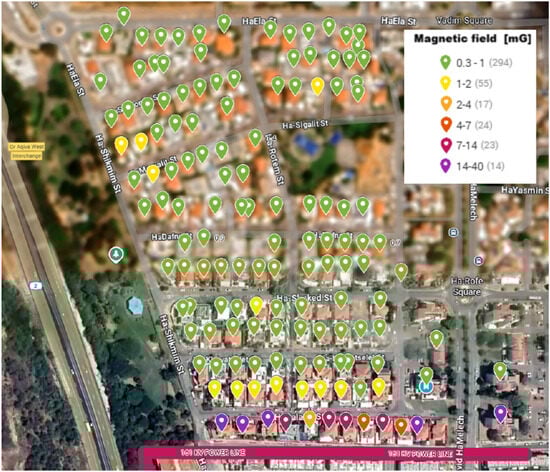
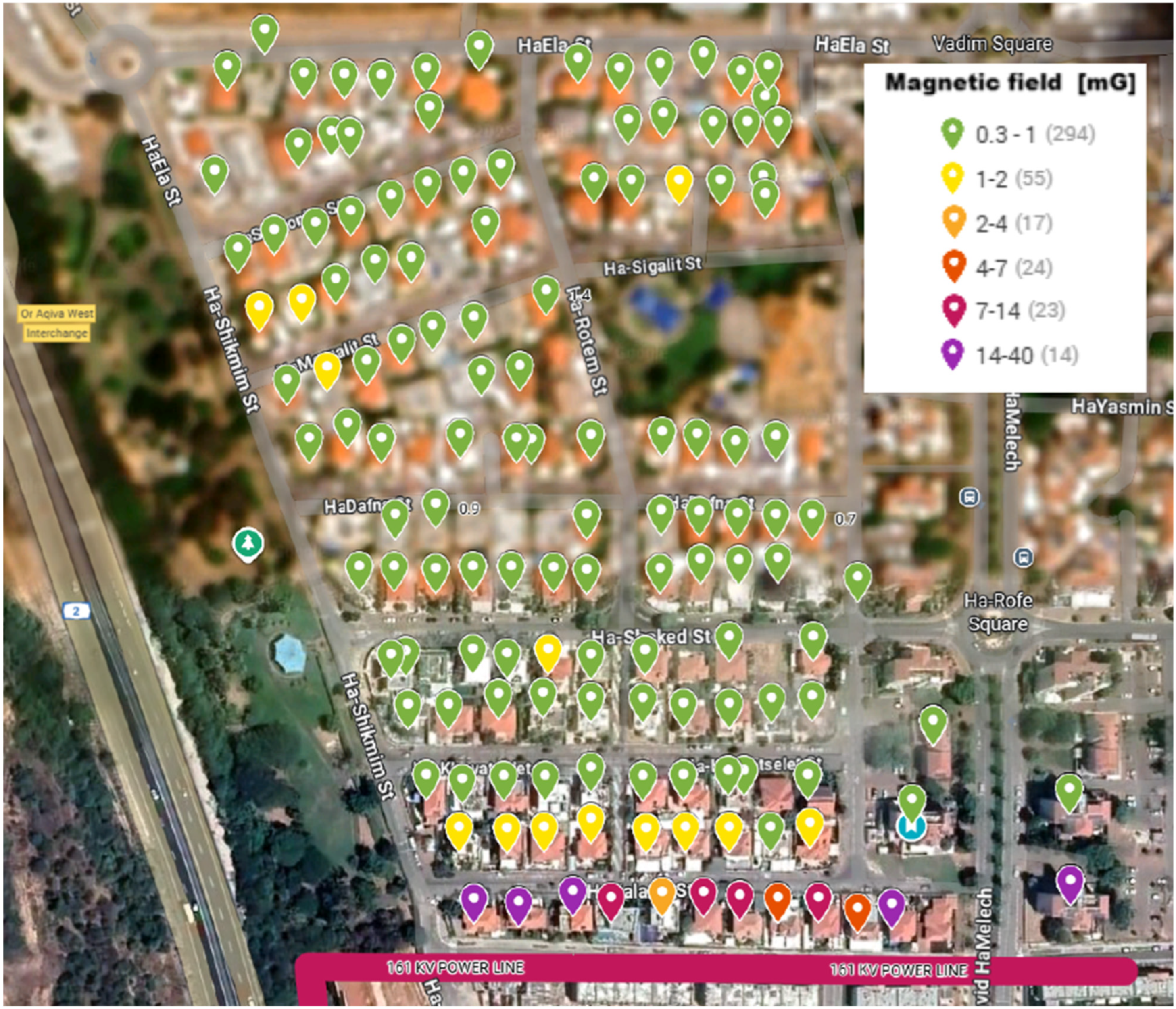
Figure 1 provides a map of the study area, indicating the route of the power line and the locations where ELF-MF measurements and resident surveys were conducted. A total of 427 adult residents, living approximately 10–400 m from the 161 kV power line, were recruited using stratified random sampling to ensure diverse representation by age, gender, occupation, health status, and neighborhood. This sampling design yielded a broad cross-section of the community. Inclusion criteria required that participants be at least 18 years old, have lived at their current address for a minimum of two years, and have no diagnosed neurological conditions that would independently affect their health (thus avoiding major confounders unrelated to ELF-MF exposure). All participants provided written informed consent prior to enrollment, and the study protocol was approved by the Ethics Committee of the Israel Ministry of Education.
Figure 1.
Map of the study area (source: Google Maps, © Google) in Or Akiva, Israel, showing participant locations and measured ELF-MF levels. The 161 kV high-voltage power line (represented by the magenta horizontal band at the bottom line) runs adjacent to residential neighborhoods. Colored symbols indicate the magnetic field strength in milligauss (mG) measured at each location, with warmer colors (orange/red) representing higher ELF-MF exposure and cooler colors (green) representing lower exposure. Participants were recruited from homes at distances ranging from 10 m (highest exposure) to 400 m (lowest exposure) from the power line.
Colored markers indicate the magnetic field strength in milligauss (mG) measured at each location, with cooler colors (green) representing lower exposure and warmer colors (orange/red) representing higher exposure. The color scale is as follows:
Green: 0.3–1 mG
Yellow: 1–2 mG
Orange: 2–4 mG
Red: 4–7 mG
Purple: 7–14 mG
Dark Purple: 14–40 mG
Participants were recruited from homes located at distances ranging from approximately 10 m (highest exposure) to 400 m (lowest exposure) from the power line.
2.2. Participants and Sampling
As previously mentioned, the sample of 427 adults represents the adult population of the specific neighborhoods in Or Akiva located in proximity to the power lines. Statistically, for Structural Equation Modeling (SEM), a sample size of >200 is generally considered adequate to ensure stable parameter estimates [14]. Given the specific geographic constraints of the exposure zone, n = 427 is a robust sample that allows for high statistical power.
The two-year residency criterion was selected to ensure that participants had been exposed to the environmental conditions (ELF-MFs) for a sufficient duration to potentially develop chronic effects or symptoms, rather than transient responses [15,16].
2.3. Survey and Exposure Measurement
Each participant completed a structured questionnaire (see Appendix A for the full instrument), based on the World Health Organization’s WHOQOL-BREF quality-of-life survey (World Health Organization, 1996) [14]. The WHOQOL-BREF assesses four broad domains: physical health, psychological health, social relationships, and environment. We added specific questions to capture additional demographic and lifestyle factors, perceived environmental exposures, and common symptoms potentially related to ELF-MFs. Collected demographic variables included age, gender, employment status and sector, work hours, and years of residence in the neighborhood. Lifestyle factors—such as physical activity level (daily, weekly, rarely), diet (e.g., vegetarian or frequency of meat consumption), alcohol use, and pet ownership—were also recorded.
The key outcome variables were self-reported health symptoms and well-being indicators. Participants were asked about the frequency or severity of various symptoms, including: headaches; sleep problems (e.g., insomnia, poor sleep quality); negative mood states (feelings of anxiety, depression, or irritability); physical pain or discomfort (e.g., musculoskeletal pain); mobility difficulties (any limitation in movement or daily physical activities); and any perceived need for medical treatments or interventions. Each symptom was rated on an ordinal scale (typically 1–5, with higher values indicating more severe or more frequent symptoms). For example, headache frequency was rated from 1 (“not at all”) to 5 (“every day”), and sleep satisfaction was rated from 1 (“very dissatisfied”) to 5 (“very satisfied”). Participants also rated their general happiness on a 5-point Likert scale, from 1 (“very happy”) to 5 (“usually unhappy”). For analysis, we reverse-coded this item so that higher values reflect greater happiness. This single-item happiness measure served as our key mediator variable, representing the respondent’s overall life satisfaction or well-being.
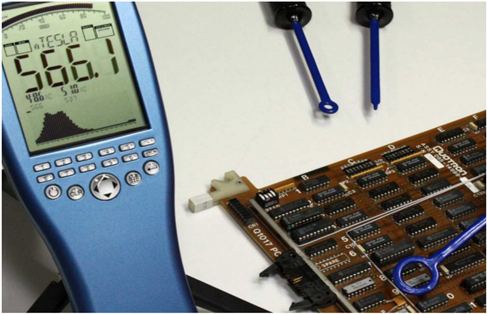
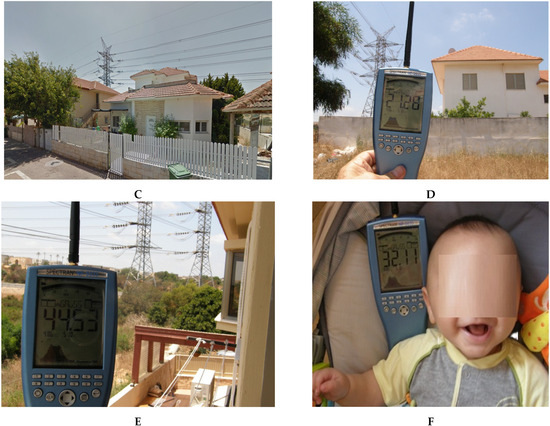
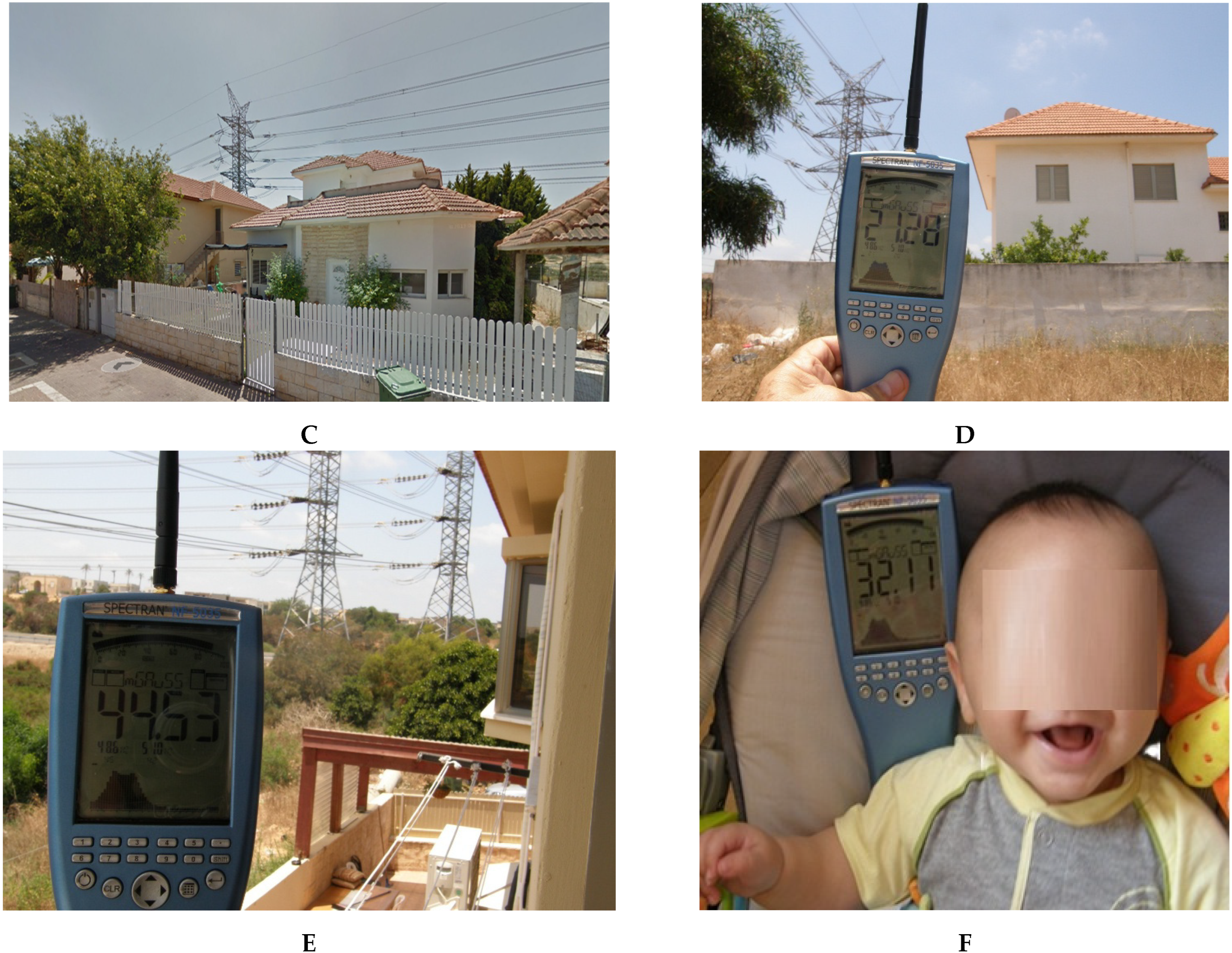
In parallel with the survey, we assessed each participant’s ELF-MF exposure through in situ magnetic field measurements. A trained technician visited each participant’s home and immediate surroundings with a Spectran NF-5035 Spectrum Analyzer (Aaronia AG, Strickscheid, Germany), equipped with both E-field and H-field sensors (see Figure 2: Aaronia Spectran NF-5035 Spectrum Analyzer). Measurements of the magnetic flux density (in milligauss, mG) were taken at fixed locations both outdoors (just outside the home, on the side facing the power line) and indoors (typically in the main living area). All measurements were conducted during daytime hours (between late morning and late afternoon) under similar conditions for each home to maintain consistency. For each household, we recorded the objective ELF-MF level as the average magnetic field strength measured at that residence (combining indoor and outdoor readings). In addition, the survey asked participants to report their perceived ELF-MF exposure, rated on a Likert scale from 1 (“not at all exposed”) to 5 (“very much exposed”), as an indicator of the individual’s subjective risk perception of living near the power line.
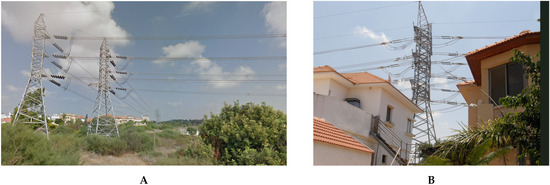
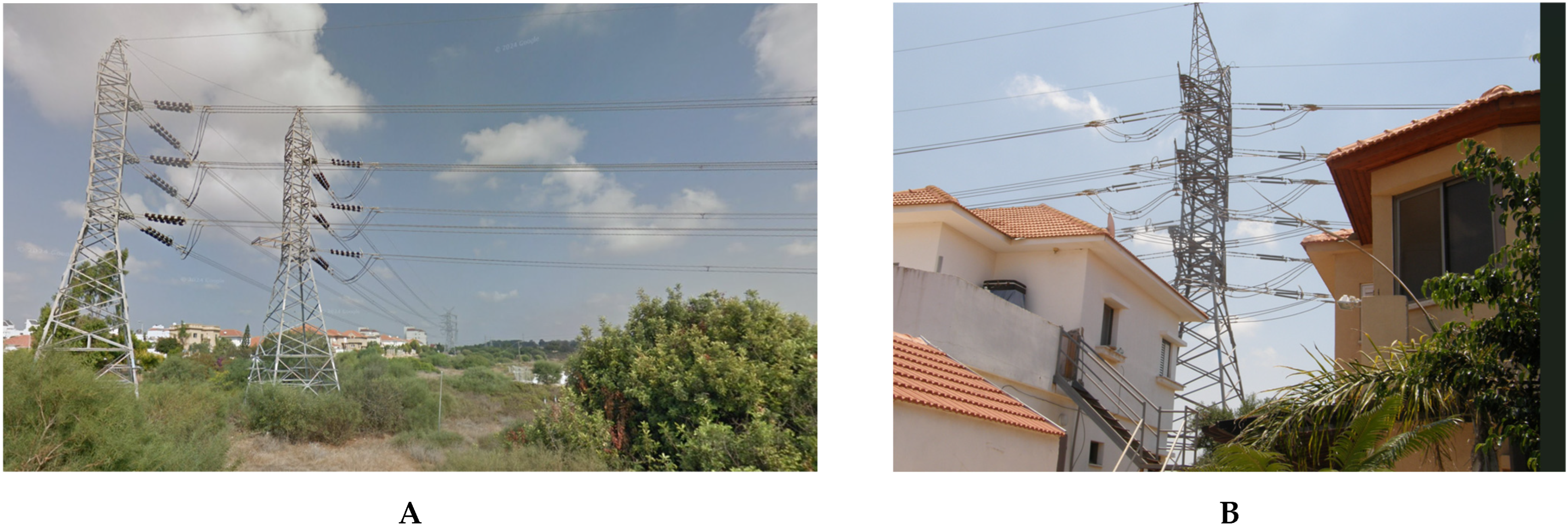
Figure 2.
The reported images (A–F) depict the surveyed buildings, the power lines, and the measurement equipment used for the study. Field measurement setup and study environment. (A) Typical low-rise residential building in the study area; (B) 161 kV High-voltage power lines traversing the neighborhood; (C) Outdoor measurement location near building façade; (D) Indoor measurement setup in living area; (E) Aaronia Spectran NF-5035 Spectrum Analyzer used for data collection; (F) Close-up of the spectrum analyzer display showing 50 Hz signal.
We summarized continuous variables using mean and standard deviation (mean ± SD). We first examined the distribution of measured ELF-MF exposure levels across households and the prevalence of reported symptoms in the sample. Pearson correlation coefficients were calculated to explore simple bivariate associations between ELF-MF exposure (as a continuous variable in mG) and each health outcome and well-being measure.
Device Placement and Background Assessment: Prior to installing the 24h continuous monitoring device Tenmars TM-192D Field Meter (Tenmars Electronics Co., Ltd., Taipei, Taiwan) in a participant’s bedroom, a comprehensive background assessment was conducted using the NF 5035 spectrum analyzer. This process included scanning the apartment to identify potential sources of extremely low-frequency magnetic fields (ELF-MFs), such as stray currents resulting from the use of metallic water pipes for grounding and variations in grounding configurations. Additional sources, including electrical appliances, were also evaluated. To minimize interference, each monitoring device was positioned at least 1 m away from any electrical appliance or localized magnetic field source. This protocol ensured that recorded data primarily reflected exposure from high-voltage power lines, thereby enhancing the validity and reliability of measurements.
To control for potential confounders, we performed multiple logistic regression analyses for several key binary outcomes (e.g., comparing participants who reported frequent headaches vs. those who did not, using a threshold) with demographic and lifestyle covariates. Specifically, age, gender, and relevant lifestyle factors were entered as covariates to adjust for differences that might influence health independent of ELF-MFs.
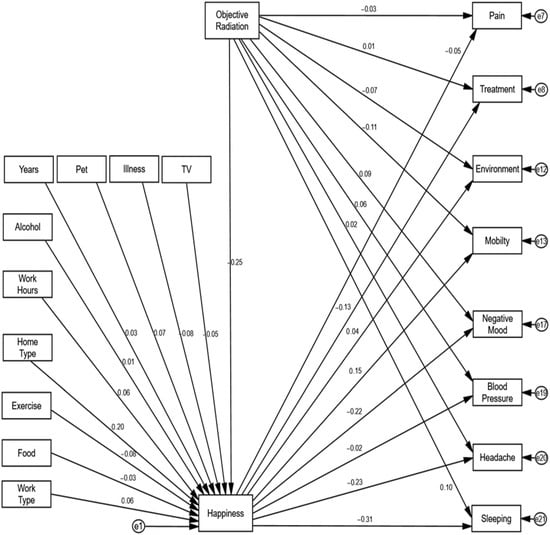
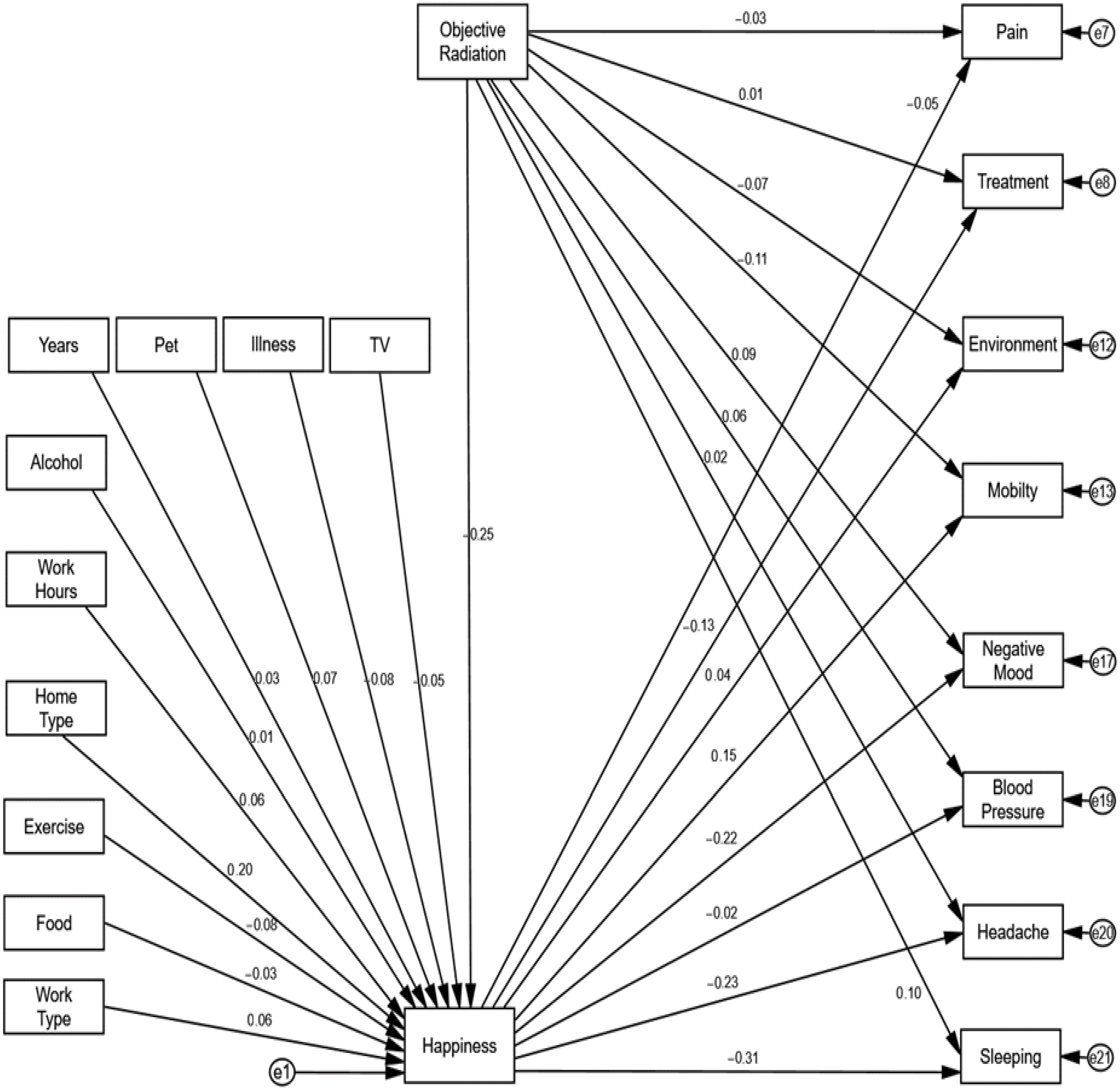
Our primary analysis employed structural equation modeling (SEM) to rigorously test the hypothesized relationships between ELF-MF exposure, happiness, and health outcomes (as depicted conceptually in Figure 3). SEM is a multivariate technique that allows simultaneous estimation of multiple interrelated paths, making it well-suited for testing mediation effects in complex models. We specified an SEM in which ELF-MF exposure (the objective measured value in mG) has direct paths to each health outcome (headaches, sleep disturbances, negative mood, mobility difficulty, etc.), as well as an indirect path to those outcomes via happiness (the mediator). Happiness was also modeled to have direct effects on each health outcome. In addition, we included relevant covariates (control variables) that could influence happiness or health outcomes based on our collected data. For example, physical activity, alcohol use, and presence of chronic illness were allowed to predict happiness in the model (to account for lifestyle or health differences that might affect baseline well-being) [17,18]. Similarly, demographic factors like age, sex, and employment status were tested for associations with certain symptoms, though those found to be non-significant were trimmed from the final model to maintain parsimony. Model estimation was carried out using the maximum likelihood method in IBM SPSS AMOS, Version 29.0 (IBM Corp., Armonk, NY, USA).
Figure 3.
Happiness-based SEM model of the relationships between ELF-MFs and health symptoms: shows how ELF-MF radiation exposure affects different health variables, either directly or indirectly via happiness as a mediating variable.
We evaluated overall model fit with standard indices, including the chi-square goodness-of-fit (with degrees of freedom), Comparative Fit Index (CFI), Tucker–Lewis Index (TLI), and Root Mean Square Error of Approximation (RMSEA). Generally, a chi-square to df ratio near 1–2, CFI/TLI values > 0.95, and RMSEA < 0.05 indicate a good fit. We also checked that there were no major violations of normality or linearity assumptions; the ordinal symptom ratings were treated as quasi-continuous indicators in the SEM given their roughly symmetric distributions (this approach is acceptable under maximum likelihood estimation) [19].
To test mediation, we used bootstrapping (5000 resamples) to obtain confidence intervals (CIs) for the indirect effects of ELF-MFs on outcomes through happiness. A mediation effect was considered statistically significant if the 95% bootstrap CI for the indirect path (ELF-MFs ➔ happiness ➔ outcome) did not include zero. We also computed the proportion of the total effect of ELF-MFs on each outcome that was mediated by happiness.
Research Hypotheses: Based on prior literature and theory [10,20], we posited the following:
H0
(Null Hypothesis). There is no significant relationship between ELF-MF exposure and happiness, and no significant relationship between ELF-MF exposure and health outcomes (such as sleep disturbances, headaches, mood issues, etc.). Under H0, happiness does not mediate any exposure–outcome link.
H1
(Alternative Hypothesis). Higher happiness significantly reduces the negative impacts of ELF-MF exposure on health outcomes (e.g., poor sleep quality, limited mobility, negative mood). In other words, happiness acts as a mediator that buffers the adverse health effects of ELF-MF exposure. Under H1, we expect to see significant indirect effects of ELF-MFs on health outcomes via happiness, even if some direct effects of ELF-MFs on outcomes are present.
3. Results
3.1. Descriptive Overview
The table in Appendix B presents the descriptive statistics of the primary study variables. In summary, the sample’s self-reported happiness averaged 3.56 (±1.23 SD) on a 1–5 scale, indicating a moderate level of life satisfaction on average. ELF-MF exposure levels measured in participants’ homes ranged widely (mean 4.53 mG, SD 7.57 mG), reflecting substantial variability—some homes, particularly those closest to the power line, experienced much higher magnetic field strengths (e.g., in the 10–20 mG range), whereas those farther away had average exposure levels below 1 mG. In terms of health complaints, headache frequency had a mean of 2.19 (±1.23) on a 1–5 scale, suggesting that occasional headaches were common in the sample. Self-rated sleep quality/satisfaction averaged 2.30 (±0.95) on a 1–5 scale (lower values indicate worse sleep satisfaction), meaning many individuals were not fully satisfied with their sleep. Negative mood ratings (such as frequency of feeling anxious or down) averaged around the mid-point of the scale (not shown here in detail, but included in Appendix B). These patterns align with an initial expectation that those living near the power line might experience some impacts on well-being: overall, participants reported moderate levels of happiness and somewhat frequent minor health symptoms.
Bivariate correlation analysis (not tabulated) provided initial insights: ELF-MF exposure showed small-to-moderate positive correlations with the frequency of headaches, the degree of sleep problems, and the level of negative mood, and it showed a negative correlation with happiness. Conversely, happiness was negatively correlated with most symptom measures—that is, happier individuals tended to report fewer health-related symptoms. These simple correlations set the stage for the multivariate SEM analysis of the hypothesized mediation effect.
3.2. SEM Model Outcomes
The results of the SEM analysis are summarized in Table 1 and illustrated in Figure 3 (conceptual model) and Figure 3 (empirical results path diagram). Table 1 presents the standardized path coefficients for key relationships, along with 95% confidence intervals and p-values.
Table 1.
Summary of key SEM path coefficients (standardized).
Figure 3 shows the happiness-based SEM model of the relationships between ELF-MFs and health symptoms, illustrating how ELF-MF exposure affects different health variables either directly or indirectly via happiness as a mediating variable.
Table 2 provides detailed parameters of the estimated SEM model (including covariates). The table is organized by blocks of variables: first the control variables predicting happiness, then the direct effects of objective radiation (OR) on outcomes, then the effects of happiness (HP) on outcomes, and finally the specific mediated paths.
Table 2.
Parameters of the estimated SEM model.
3.3. Key Findings from SEM
Direct effects of exposure: Increased ELF-MF exposure had significant direct effects on several adverse health outcomes in the model. Specifically, higher exposure was associated with more frequent sleep disturbances (β ≈ 0.10, p = 0.019) and with worse mobility (greater difficulty in movement; β ≈ −0.11, p = 0.048). The effect of exposure on negative mood (feeling bad or depressed) was positive in sign but did not reach statistical significance at the 0.05 level (β ≈ 0.09, p = 0.12). Similarly, the direct effect of exposure on headache frequency was positive but non-significant (β ≈ 0.02, p = 0.62) in the SEM model. Exposure also did not significantly predict some other outcomes like reported pain or blood pressure issues (not central to our hypotheses, but included in the survey). Importantly, ELF-MF exposure had a significant negative direct effect on happiness (β ≈ −0.25, p = 0.039), indicating that people with greater objective exposure levels tended to report lower life satisfaction.
Direct effects of happiness: Happiness, in turn, showed strong beneficial direct effects on many of the health outcomes. Participants with higher happiness scores reported fewer headaches (β ≈ −0.23, p = 0.001), better mobility (β ≈ 0.15, p = 0.004; note a positive coefficient here means higher happiness associated with higher mobility functioning), less negative mood (β ≈ −0.22, p = 0.001), better sleep (fewer sleep problems; β ≈ −0.31, p = 0.001), and a lower perceived need for medical treatment (β ≈ −0.13, p = 0.008). The effect of happiness on pain complaints was negative but not significant (β ≈ −0.05, p = 0.27). Happiness also did not significantly affect two minor outcomes (self-reported blood pressure problems and an environmental satisfaction rating) included in the model. These results underscore that happiness is strongly associated with a more favorable health profile: people who are happier tend to experience fewer stress-related symptoms and better perceived health.
Mediation (indirect effects): Crucially, the mediation analysis indicated that happiness significantly buffered several of the relationships between ELF-MF exposure and health symptoms. The indirect paths “ELF-MF exposure → lower happiness → worse outcome” were statistically significant for: headache frequency (indirect effect coefficient ≈ +0.009, reflecting that higher exposure leads to more headaches through lowering happiness, p = 0.029), mobility difficulties (indirect effect ≈ −0.005, higher exposure leads to worse mobility via reduced happiness; negative sign here means the indirect effect contributes to mobility impairment, p = 0.021), negative mood (indirect effect ≈ +0.009, p = 0.023), sleep disturbances (indirect effect ≈ +0.010, p = 0.034), and perceived need for medical treatment (indirect effect ≈ +0.005, p = 0.025).
In each of these cases, the sign of the indirect effect indicates that happiness mitigates the impact of exposure. For example, the positive indirect effect on headaches implies that ELF-MF exposure would have resulted in even more frequent headaches were it not partially counteracted by the reduction in happiness (and happier individuals experiencing fewer headaches). The negative indirect effect on mobility means ELF-MFs’ harmful impact on mobility is partly offset by the positive effect of happiness on mobility. In simpler terms, these mediation results support the idea that emotional well-being buffers some of the stress-related effects of ELF-MF exposure.
It is notable that for outcomes like headaches and mood, the total effect of ELF-MF exposure on the outcome can be considered a combination of a direct effect (which was not significant for these particular outcomes) and an indirect effect through happiness (which was significant). Thus, even where we did not observe a measurable direct association between exposure and a symptom (e.g., headaches in the SEM model), we did find evidence of an indirect association channeled through happiness. This suggests that high ELF-MF exposure elevates risk of certain symptoms largely by eroding emotional well-being, which in turn leads to more symptoms.
All control variables (covariates such as age, gender, etc.) were examined in the SEM. None of the control variables had significant effects on happiness (all p > 0.05), and a few had expected small effects on some health outcomes (for instance, older age was associated with slightly more mobility issues, as one might expect, independent of exposure or happiness). For brevity, those coefficients are not detailed here since they are not the focus of this study.
In the results, β refers to the standardized path coefficient (indicating the change in the dependent variable in standard deviations for a one-standard-deviation change in the predictor), and the p-value indicates statistical significance (set at <0.05).
4. Discussion
We investigated the interplay between chronic ELF-MF exposure, psychological well-being (happiness), and health symptoms among residents of Or Akiva, Israel. To our knowledge, this study is one of the first to explicitly test happiness as a mediating factor in the relationship between an environmental exposure and health outcomes. The results suggest that while ELF-MF exposure can adversely affect both health and happiness, a happier emotional state may buffer or mitigate some of these negative health effects.
Direct effects of ELF-MF: Consistent with prior research on electromagnetic fields and health, we found that higher long-term ELF-MF exposure was associated with more frequent headaches, worse sleep, and some increase in mobility difficulties. These findings align with community and occupational studies that document non-specific symptoms (like headaches, fatigue, irritability, and insomnia) in populations exposed to elevated magnetic fields. For instance, a survey of individuals with presumed electromagnetic hypersensitivity in Finland reported headaches and sleep disturbances as prevalent complaints. Although our study did not address high-intensity or short-term exposure scenarios, the chronic, low-level exposure in a residential setting still showed measurable links to well-being. Notably, even in a relatively healthy general population, sleep quality emerged as significantly lower among those living closest to the power line—a result echoing previous reports that ELF-MFs might disrupt sleep patterns, potentially through mechanisms involving nocturnal melatonin suppression [4,21]. Likewise, the association with headaches is in line with multiple surveys of people living or working near power sources, as well as studies of “electromagnetic hypersensitivity” sufferers, who often report headaches as a primary complaint. Our findings reinforce that these symptoms are not limited to self-identified EHS cases but can manifest in the general population at higher exposure levels, even if many people may not immediately attribute their symptoms to the environmental cause.
Role of happiness: Beyond these direct effects, our study’s novel contribution is demonstrating the partial mediation via happiness. We found that residents with higher ELF-MF exposure tended to report lower happiness, which in turn was strongly related to reporting fewer symptoms. This supports a stress-buffering model: chronic ELF-MF exposure may act as an environmental stressor that not only induces physical strains (e.g., oxidative stress, as suggested by Yakymenko et al., 2016 [5]) but also erodes emotional well-being. In turn, diminished emotional well-being (lower happiness) makes people more susceptible to perceiving or experiencing health problems, perhaps by reducing their psychological resilience. Individuals who manage to maintain a more positive outlook under stress might cope better, either through physiological pathways (such as blunted cortisol responses and lower systemic inflammation) [20,22] or through behavioral pathways (such as healthier daily routines and better self-care). Our findings are congruent with the broad literature linking positive affect to improved health outcomes and stress tolerance [9,23]. Even though cause-and-effect cannot be definitively established here (due to the cross-sectional design), the observed mediation pattern is suggestive: it hints that improving happiness could be a mechanism to alleviate some health impacts of an environmental hazard.
It is important to note that the mediation was only partial. ELF-MF exposure still had residual direct associations with certain symptoms (like headaches) independent of happiness. This implies that while fostering happiness may help, it is not a substitute for reducing harmful exposures. Environmental management remains paramount in addressing the root cause of risk. In practical terms, even the most optimistic, happy person might still suffer some physical effects if exposed to sufficiently high ELF-MF levels. Our results indicate that happiness buffers but does not completely nullify exposure effects—a finding that aligns with intuition and with other contexts (for example, a very healthy lifestyle can reduce but not entirely eliminate the health risks of air pollution).
Comparisons and context: The concept of psychological factors modifying environmental health effects is gaining attention in public health research. Analogous findings exist in other domains—for example, studies have shown that people with higher optimism or stronger social support experience less adverse impact from chronic air pollution or noise exposure on outcomes like sleep quality and blood pressure, respectively. Our study adds evidence in the context of electromagnetic fields, aligning with a psychobiological perspective that resilience factors (like happiness, optimism, social support) can modulate how strongly the body reacts to chronic stressors. Specifically, our observation that happiness correlates with fewer stress-related symptoms (headaches, insomnia, mood disturbance) resonates with the idea that a positive emotional state may dampen the physiological stress response—for instance, through lower stress hormone levels or reduced inflammation. Interestingly, a recent exploratory study by Okamura et al. (2020) [18] found that objectively evaluated sleep efficiency and resting heart rate were better in individuals who reported being happier, supporting our result that happiness and sleep quality go hand-in-hand [24,25]. We extend such findings by tying them into an environmental exposure context: not only is happiness associated with better sleep and health in general, but it appears particularly valuable in an exposure scenario by counteracting some exposure-related effects.
Additionally, our results build on prior research by our team in a different setting. In an earlier case study of office workers near a high-voltage line, we observed that employees’ worry and perceived exposure were associated with certain symptoms, above and beyond actual measured ELF-MF levels. That finding underscored the role of negative psychological perceptions in amplifying health complaints. The present community study complements this by showing the flip side: a positive psychological factor (happiness) can dampen health complaints under the same environmental conditions. Together, these pieces of evidence point to a broader conclusion that psychological factors—whether negative perceptions or positive well-being—are integral to understanding and managing the human health impact of ELF-MF exposure [18].
Limitations: There are several limitations to consider. First, the study’s cross-sectional design means we cannot establish causality or directionality unequivocally. We hypothesized that ELF-MF exposure leads to lower happiness and worse health, but it is also conceivable that individuals with poor health or certain negative dispositions might, for example, perceive their environment more negatively or report lower happiness (reverse causation). Our use of objective exposure measurements helps mitigate the concern that it is all perception-based, but we cannot fully untangle cause and effect with a one-time survey. Longitudinal or experimental studies (e.g., interventions to increase happiness, or following people before and after changes in exposure) would be needed to confirm the causal mediation effect.
Since our study is an epidemiological survey, it did not involve clinical laboratory tests or invasive electrical inspections of private homes. In future studies, measures of oxidative stress, along with antioxidant concentrations and other biochemical markers, could be assessed using non-invasive saliva tests. Additionally, investigating the role of grounding currents in plumbing as a potential source of magnetic fields would strengthen the interpretation of findings.
Second, all health symptoms and happiness were self-reported, which introduces the possibility of reporting bias. People who are unhappy might over-report symptoms, or those with many symptoms might rate themselves as unhappy—a form of common method variance that could inflate associations. We attempted to address this by using SEM (which can account for measurement error to some extent) and by controlling for numerous covariates, but self-report bias remains a consideration. Relatedly, our measurement of happiness was a single-item scale. While this simple measure has the advantage of brevity and was straightforward for participants, a multi-item validated well-being scale (e.g., the Satisfaction with Life Scale or a positive affect scale) could capture the construct more reliably. That said, our single happiness item did show expected correlations with known determinants (for instance, it was higher among those without chronic illness and among those who exercised more), lending some credibility to it.
While happiness has been shown to predict lower morbidity and increased longevity, it is important to acknowledge that health itself may influence happiness, suggesting a potential bidirectional relationship between affect and health [26]. In our mediation model, happiness was conceptualized as a mediator; however, reverse causality remains plausible. For example, individuals experiencing chronic headaches or insomnia may become unhappy as a consequence of their health condition, rather than (or in addition to) unhappiness contributing to the onset of such symptoms.
Our cross-sectional data cannot disentangle this. Future studies might use cross-lagged panel designs or intervention experiments (e.g., deliberately improving happiness through an intervention and observing if health complaints subsequently drop) to sort out the direction of effects.
Another limitation is the specific sample and setting: a single town with a particular infrastructure layout (one major power line through a residential area). The generalizability of our quantitative estimates may be limited; however, the fundamental relationships observed should be applicable in other communities near power lines, even if the effect sizes vary. Cultural factors or individual differences in risk perception could moderate how strong the happiness–health connection is in different contexts—for instance, if a community is very aware of and fearful about power line radiation, that might amplify stress and diminish happiness more than in a community that is less concerned.
Strengths: Despite limitations, the study has notable strengths. We collected objective exposure data for each participant’s home, rather than relying solely on distance proxies or subjective reports. This strengthens confidence that our ELF-MF metric reflects true differences in environmental conditions [27]. We also had a relatively large sample (n = 427) from a community setting, providing decent statistical power to detect mediation effects. By incorporating a wide array of covariates (demographics, lifestyle factors, etc.), we attempted to isolate the specific role of happiness and reduce confounding. Our use of SEM allowed us to simultaneously model complex relationships and correct for measurement error, which is appropriate for testing mediation in observational data. Furthermore, the context of studying an everyday environmental exposure (rather than, say, an experimental acute exposure) gives our findings direct relevance for public health policy in real communities.
Public health implications: If our findings reflect causal relationships, they carry an encouraging message: enhancing psychological well-being could be a viable intervention avenue to help communities facing unavoidable environmental stressors. While primary prevention (reducing the hazardous exposure itself) is critical, secondary prevention (bolstering resilience among the exposed population) can complement it. In practice, it may be difficult to eliminate or relocate a longstanding high-voltage power line that runs through a neighborhood, but it is feasible to invest in community programs that improve quality of life and mental health for the residents. Even relatively simple interventions—such as organizing social support groups, providing stress management education, or improving local green spaces and community centers—might increase collective happiness and thus buffer health impacts.
Cultural factors or individual differences in risk perception could moderate the strength of the happiness–health connection. For instance, if a community is highly aware of and fearful about power line radiation, this might amplify stress and diminish happiness more than in a less concerned community [28,29].
For example, community centers might offer mindfulness or relaxation training workshops, which have been shown to improve sleep and reduce stress in various groups [24,25].
Previous studies measuring ELF-MF levels directly in bedrooms have reported associations with reduced sleep quality and circadian rhythm disruption. For example, Bagheri et al. (2019) found significant correlations between bedroom magnetic field levels and sleep disturbances [30]. Similarly, Touitou and Selmaoui (2012) highlighted the potential for nocturnal ELF-MF exposure to suppress melatonin secretion [6].
Urban planning could also contribute by creating parks or recreation areas in the neighborhood, giving residents outlets for physical activity and stress relief. These interventions are low-cost in comparison to infrastructural changes and can enhance residents’ well-being regardless of the environmental exposure.
These findings align with earlier reports describing the ‘Microwave Syndrome,’ where non-specific symptoms such as headaches, fatigue, and sleep disturbances were linked to electromagnetic exposure [27,31]. While the term itself remains debated, the symptom cluster observed in our study mirrors these historical descriptions, suggesting a consistent pattern of physiological response to environmental electromagnetic stressors. Our findings essentially support a two-pronged approach to environmental health: reduce the hazard and strengthen the individual. Reducing the hazard in this case means technical and regulatory efforts to minimize ELF-MF exposure in residential areas. This includes careful urban planning (siting new high-voltage lines away from homes and schools), improvements in transmission line design and insulation to reduce emitted magnetic fields, and routine monitoring of field levels in neighborhoods near power infrastructure. These measures directly address the source of exposure and help prevent high-risk scenarios. On the other hand, strengthening the individual (and community) involves improving psychological and social well-being, so that people are more resilient to the stressors that remain. This approach aligns with a holistic view of sustainability and environmental health—acknowledging that people’s perceptions, resources, and coping abilities influence how strongly an external hazard translates into actual health outcomes [17]. Reducing exposure lowers the dose of the hazard, while increasing happiness (or related resilience factors) lowers the sensitivity of the population to that dose.
5. Conclusions
- Our findings advocate for a dual strategy in environmental health policy: combining technical mitigation with community resilience-building. While reducing ELF-MF exposure through urban planning remains the primary goal, this study demonstrates that enhancing psychological well-being can serve as a vital secondary buffer against environmental stressors. Public health initiatives in proximity to power infrastructure should therefore integrate stress-reduction programs and community support systems. Future research should further explore these psychobiological pathways using longitudinal designs and biomarkers to better inform sustainable urban living standards. Environmental risk mitigation: Technical and regulatory efforts should continue to minimize ELF-MF exposure in residential areas. This includes careful urban planning (siting new high-voltage lines away from homes and schools), improvements in transmission line design and insulation to reduce emitted magnetic fields, and routine monitoring of field levels in neighborhoods near power infrastructure. These measures directly address the source of exposure and help prevent high-risk scenarios. For example, enforcing buffer zones around new power lines or investing in underground cabling where feasible could substantially reduce community ELF-MF levels.
- Promoting psychological resilience: At the same time, our results underscore the value of community-level initiatives to bolster mental and emotional well-being as a complement to exposure reduction. Public health programs in affected areas could incorporate stress-reduction workshops, mental health services, and social activities aimed at improving quality of life. Community organizations and local governments might facilitate support networks or group activities that enhance residents’ sense of happiness and cohesion. Even interventions not directly related to ELF-MFs—such as community exercise classes, hobby groups, or neighborhood beautification projects—can foster a more positive day-to-day experience for residents. By improving general happiness and life satisfaction, these efforts may reduce the degree to which an environmental hazard translates into perceived illness.
In practice, building resilient communities means acknowledging that completely eliminating certain exposures (like existing power lines) is often not feasible, but we can still equip the community with tools to cope better. The present study provides evidence that positive emotional well-being (happiness) can partly protect against the adverse health effects of ELF-MF exposure. While caution is warranted in interpreting cross-sectional data, the implications are clear: public health responses to environmental hazards should be multidimensional, combining exposure control with efforts to enhance community well-being. By doing so, we not only mitigate risk at its source but also empower individuals to lead healthier, more resilient lives in the face of environmental challenges.
Finally, we encourage future research to build on these findings. A longitudinal study that follows residents over time—especially if some individuals relocate relative to power lines (moving closer or farther)—could provide stronger evidence of causality between ELF-MFs, happiness, and health. Incorporating biomarkers of stress (such as cortisol levels or inflammatory markers like C-reactive protein) would also be valuable. This would allow direct observation of whether happier individuals exhibit blunted biological stress responses to ELF-MF exposure, reinforcing the mediation hypothesis on a physiological level. Additionally, including detailed measures of mental health (e.g., clinical anxiety/depression scales) and socioeconomic factors could help disentangle confounders that were beyond the scope of our current data. It may also be worthwhile to explore other positive psychology constructs—such as optimism, sense of coherence, or resilience—as potential mediators or moderators of environmental health effects. If happiness can buffer ELF-MF impacts, perhaps related traits can as well. Understanding these relationships will further inform comprehensive strategies to protect health in an era where technological infrastructure and human well-being must sustainably coexist.
Author Contributions
L.S.R.-S. designed the study, performed data collection and analysis, and wrote the initial draft. S.G. contributed to study design, assisted with data acquisition (field measurements) and interpretation, and reviewed the manuscript. B.A.P. supervised the research, provided guidance on methodology and analysis, and substantively revised the manuscript. All authors have read and agreed to the published version of the manuscript.
Funding
This research received no external funding.
Institutional Review Board Statement
The study was conducted in accordance with the Declaration of Helsinki, and approved by the Ethics Committee of the Israel Ministry of Education (protocol code was No. 40555543 and date of approval was 2 September 2012).
Informed Consent Statement
Informed consent was obtained from all subjects involved in the study.
Data Availability Statement
The survey and exposure data supporting the findings of this study are available from the corresponding author on reasonable request.
Acknowledgments
The authors thank the Municipality of Or Akiva for facilitating community outreach and all the residents who participated in the study. We are also grateful to Jonathan Dubnov and Peng Jia for their insightful comments on an earlier draft, and to the anonymous reviewers whose feedback helped improve this manuscript.
Conflicts of Interest
The authors declare no conflicts of interest.
Appendix A. Survey Variables (With Response Scales and Summary Statistics)
| Variable Name | Question | Units | Min | Max | Average |
| Alcohol consumption | What are your weekly drinking habits? | 1–5 | 1 | 4 | 1.6 |
| Exercise | What is your level of physical activity? | 1–5 | 1 | 5 | 4.2 |
| Food | What is your type of diet? | 1–5 | 1 | 5 | 3.0 |
| Home type | What is your type of residence? | 1–2 | 1 | 2 | 1.2 |
| Illnesses | Do you suffer from any chronic diseases? | 1–2 | 1 | 2 | 1.2 |
| Pets | Do you have a pet at home such as a dog or a cat? | 1–2 | 1 | 2 | 1.3 |
| TV | How many hours do you watch TV a day? | 1–5 | 1 | 5 | 2.4 |
| Work hours | How many hours do you work a day? | 1–5 | 1 | 5 | 3.1 |
| Work type | What is your field of employment in which you work? | 1–5 | 1 | 5 | 4.4 |
| Years | How many years do you live in the current address? | 1–5 | 2 | 5 | 4.0 |
| ELF-MF, mG (OR) | What is the measured radiation intensity? | 1–5 | 0.30 | 36.40 | 4.5 |
| Happiness | What is your level of happiness/satisfaction? | 1–5 | 0 | 5 | 2.4 |
| Blood pressure | Do you suffer from high blood pressure? | 1–2 | 1 | 2 | 1.1 |
| Environment | How healthy is your physical environment? | 1–5 | 1 | 4 | 2.9 |
| Headache | Do you suffer from headaches? | 1–5 | 1 | 12 | 2.2 |
| Mobility | How far can you move from place to another? | 1–5 | 1 | 5 | 3.3 |
| Negative Mood | How often do you have negative emotions such as bad mood, despair, anxiety or depression? | 1–5 | 1 | 5 | 2.5 |
| Pain | To what extent physical pain prevents you from doing what you need to do? | 1–5 | 1 | 5 | 2.7 |
| Sleeping | How satisfied are you with your sleep? | 1–5 | 1 | 5 | 2.9 |
| Treatment | How much medical care needs you have in your daily life? | 1–5 | 0 | 5 | 2.7 |
Appendix B. Descriptive Statistics of Key Study Variables
| Variable Name | Coding | Mean | SD |
| Alcohol drinking | 1: Not at all, 2: Occasionally, 3: 1–3 times a week, 4: Once a day, 5: More than twice. | 1.59 | 0.64 |
| Exercise | 1: Every day, 2: 2–5 times a week, 3: Once a week, 4: 1–3 times a month, 5: Not at all | 4.17 | 1.10 |
| Food | 1: Vegetarian, 2: Poultry or fish, 3: Combination of poultry, fish, and red meat, 4: Red meat 1–2 times a week, 5: Red meat every day | 2.97 | 0.85 |
| Home type | 1: Detached house, 2: Apartment in the building | 1.19 | 0.40 |
| Illnesses | 1: Yes, 2: No | 1.20 | 0.40 |
| Pets | 1: No, 2: Yes | 1.31 | 0.46 |
| TV | 1: 0, 2: 1–2, 3: 2–4, 4: 5–6, 5: More than 6 | 2.43 | 0.87 |
| Work hours | 1: More than 12 h, 2: 9–12 h, 3: 7–9 h, 4: Less than 6 h, 5: Does not work | 3.08 | 0.97 |
| Work type | 1: Agriculture or fishing, 2: Heavy industry or manufacturing, 3: High-tech industry, 4: Construction and contracting work, 5: Services | 4.39 | 1.00 |
| Years | 1: Up to 2 years, 2: 3–6 years, 3: 7–11 years, 4: 12–16 years, 5: 16 years or more | 4.03 | 0.96 |
| ELF-MF, mG (OR) | 1: Less than 1 mG, 2: Between 1–2 mG, 3: Between 2–4 mG, 4: Between 4–10 mG, 5: More than 10 mG | 4.53 | 7.57 |
| Happiness | 1: Very happy, 2: Quite satisfied, 3: Sometimes do not know how I feel, 4: Sometimes unhappy, 5: Usually unhappy | 3.56 | 1.23 |
| Blood pressure | 1: Yes, 2: No | 1.15 | 0.36 |
| Environment | 1: Not at all, 2: A little, 3: Moderately, 4: Quite a lot, 5: Very much | 2.93 | 0.74 |
| Headache | 1: Not at all, 2: Occasionally, 3: 1–3 times a month, 4: 1–3 times a week, 5: Every day | 2.19 | 1.23 |
| Mobility | 1: Very bad, 2: Quite bad, 3: Neither good nor bad, 4: Good, 5: Very good | 3.34 | 0.93 |
| Negative Mood | 1: Not at all, 2: A little, 3: Occasionally, 4: Most of the time, 5: Always | 2.55 | 1.22 |
| Pain | 1: Not at all, 2: A little, 3: Moderately, 4: A lot, 5: Very much | 2.72 | 1.01 |
| Sleeping | 1: Very dissatisfied, 2: Dissatisfied, 3: Somewhat satisfied, 4: Satisfied, 5: Very satisfied | 2.30 | 0.95 |
| Treatment | 1: Not at all, 2: A little, 3: Moderately, 4: Quite a lot, 5: Very much | 2.68 | 1.10 |
| Number of valid observation | 427 | ||
Appendix C. Measurement Equipment Used in the Study
- A.
- Aaronia NF-5035 Spectrum Analyzer
- Features:
- Frequency range: 1 Hz–1 MHz
- Integrated 3D magnetic-field measurement coil
- Typical level range: 1 nT to 2 mT
- Filter bandwidth: 0.3 Hz (min)–10 MHz (max)
- Typical precision (base unit): ±3%
- Analog input range: 200 nV (min)–200 mV (max)
- FFT resolution: 1024 points
- Vector power measurement (I/Q) and True RMS: Yes
- Weight: 430 g
- Tripod connection: 1/4”
The SPECTRAN NF-5035 is a high-end, real-time EMC spectrum analyzer designed for extremely low-frequency (ELF) signal analysis. It provides precise measurements of electric and magnetic fields in the low-frequency range, making it essential for:
- EMC/EMI pre-compliance testing
- Environmental safety studies
- Occupational health assessments
Key characteristics include high sensitivity, broad frequency coverage, and an inte grated award-winning 3D isotropic magnetic sensor.
- Core Technical Specifications
| Parameter | Specification | Units | Notes |
| Frequency Range | 1 Hz–1 MHz | Hz/MHz | Expandable up to 20 MHz or 30 MHz |
| Typical Accuracy | ±3% | % | High precision for compliance checks |
| H-Field Measurement | 1 pT–500 μT | pT/μT | Detects extremely weak magnetic fields |
| E-Field Measurement | 0.1 V/m–5000 V/m | V/m | Suitable for multiple standards |
| Analog Input Range | 200 nV–200 mV | nV/mV | Via DDC AC-in port (−150 dBm/Hz) |
| Filter Bandwidth (RBW) | 0.3 Hz–10 MHz | Hz/MHz | User-selectable resolution bandwidth |
| FFT Resolution | 1024 points | — | For detailed spectral analysis |
| Weight | 420 g | g | Lightweight and portable |
- Key Features and Advantages
- Integrated 3D Isotropic Magnetic Sensor: Ensures accurate, direction-independent measurements, eliminating positioning errors.
- Real-Time Spectrum Analysis: High-performance DSP with FFT/DFT for instant spectrum display.
- Advanced Measurement Capabilities: Includes Vector Power (I/Q) and True RMS detection for complex signals.
- Software & Interface: PC Analyzer Software CDM 2.06.00 for remote control and analysis; USB 2.0 connectivity; high-resolution LCD display.
- Application in Research
Ideal for environmental magnetic field studies, including ELF-MF exposure analysis from power lines (50 Hz/60 Hz). Its sensitivity and isotropic measurement capability ensure reliable data for compliance testing and scientific research.
- B.
- Tenmars TM-192D Field Meter
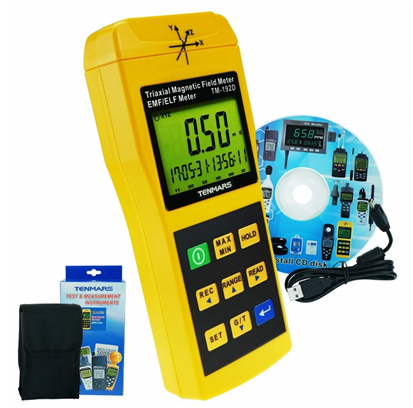
- Features:
- Frequency range: 30 Hz–2000 Hz
- Triple-axis measurement of low-frequency electromagnetic fields
- Three-channel sensors for quick and easy measurement
- Built-in USB communication for data logging (capacity: 500 or 9999 datasets)
- Magnetic field units: Tesla (T) or Gauss (G)
- Functions: Data Hold (HOLD), Maximum Hold (MAX), Minimum Hold (MIN)
- Auto: or manual range selection
- Overload: indication and low-battery detector
- Auto: power-off for safety
- Specifications:
- Display: 4-digit, triple LCD
- Measuring range: 20, 200, 2000 mG; 2, 20, 200 μT
- Resolution: 0.01, 0.1, 1 mG or 0.001, 0.01, 0.1 μT
- Frequency response: 30 Hz–2000 Hz
- Sensor: Triple-axis (X, Y, Z)
- Accuracy:
- ○
- ±(3.0% + 30 dgt) at 50/60 Hz
- ○
- ±(2.5% + 5 dgt) at 50/60 Hz
- ○
- ±(5.0% + 5 dgt) at 30/2000 Hz
- Sample rate: 2.5 times/s
- Overload indication: “OL” displayed
- Power supply: 9 V battery (NEDA 1604, IEC 6F22, JIS 006P)
- Battery life: Approx. 100 h
- Instrument: SPECTRAN® NF-5035 Handheld EMC Spectrum Analyzer
- Manufacturer: Aaronia AG, Euscheid, Germany|Series: SPECTRAN NF Handheld Analyzers
Appendix D
Table A1.
Associations between ELF-MF exposure, happiness, and health outcomes: Results from multiple logistic regression analyses.
Appendix E
Table A2.
Demographic Characteristics of Study Participants with Or Akiva Population Comparison.
References
- Eskandani, R.; Zibaii, M.I. Unveiling the biological effects of radio-frequency and extremely low-frequency electromagnetic fields on the central nervous system performance. BioImpacts 2023, 14, 30064. [Google Scholar] [CrossRef] [Scilit]
- Tokpınar, A.; Altuntaş, E.; Değermenci, M.; Yılmaz, H.; Baş, O. The impact of electromagnetic fields on human health: A review. Middle Black Sea J. Health Sci. 2024, 10, 47–55. [Google Scholar] [CrossRef] [Scilit]
- Klimek, A.; Rogalska, J. Extremely low-frequency magnetic field as a stress factor—Really detrimental? Insight into literature from the last decade. Brain Sci. 2021, 11, 14. [Google Scholar] [CrossRef] [Scilit] [PubMed]
- Pall, M.L. Electromagnetic fields act via activation of voltage-gated calcium channels to produce beneficial or adverse effects. J. Cell. Mol. Med. 2013, 17, 958–965. [Google Scholar] [CrossRef] [Scilit] [PubMed]
- Yakymenko, I.; Tsybulin, O.; Sidorik, E.; Henshel, D.; Kyrylenko, O.; Kyrylenko, S. Oxidative mechanisms of biological activity of low-intensity radiofrequency radiation. Electromagn. Biol. Med. 2016, 35, 186–202. [Google Scholar] [CrossRef] [Scilit] [PubMed]
- Touitou, Y.; Selmaoui, B. The effects of extremely low-frequency magnetic fields on melatonin and cortisol, two marker rhythms of the human circadian system. Dialogues Clin. Neurosci. 2012, 14, 381–399. [Google Scholar] [CrossRef] [Scilit]
- Megha, K.B.; Arathi, A.; Shikha, S.; Alka, R.; Ramya, P.; Mohanan, P.V. Significance of melatonin in the regulation of circadian rhythms and disease management. Mol. Neurobiol. 2024, 61, 5541–5571. [Google Scholar] [CrossRef] [Scilit]
- Kalisch, R.; Baker, D.G.; Basten, U.; Boks, M.P.; Bonanno, G.A.; Brummelman, E.; Chmitorz, A.; Fernàndez, G.; Fiebach, C.J.; Galatzer-Levy, I.; et al. The resilience framework as a strategy to combat stress-related disorders. Nat. Hum. Behav. 2017, 1, 784–790. [Google Scholar] [CrossRef] [Scilit]
- Pressman, S.D.; Jenkins, B.N.; Moskowitz, J.T. Positive affect and health: What do we know and where should we go? Annu. Rev. Psychol. 2019, 70, 627–650. [Google Scholar]
- Diener, E.; Oishi, S.; Tay, L. Advances in subjective well-being research. Nat. Hum. Behav. 2018, 2, 253–260. [Google Scholar] [CrossRef] [Scilit]
- Sharma, S. The relationship between mental health, resilience, and happiness. Int. J. Indian Psychol. 2019, 7, 537–549. [Google Scholar]
- Hagström, M.; Auranen, J.; Ekman, R. Electromagnetic hypersensitive Finns: Symptoms, perceived sources and treatments—A questionnaire study. Pathophysiology 2013, 20, 117–122. [Google Scholar] [CrossRef] [Scilit]
- Peng, Z.; Ahmad, I.; Dar, M.A.; Belete, M.; Abebe, M.K.; Fentaw, G.; Sisay, M.; Taye, Z.M.; Amakelew, S.; Zewdu, G.S. Spatially adaptive modeling of soil erosion susceptibility using geographically weighted regression integrated with remote sensing and GIS techniques. Sci. Rep. 2025, 15, 42894. [Google Scholar] [CrossRef] [Scilit] [PubMed]
- World Health Organization. WHOQOL-BREF: Introduction, Administration, Scoring and Generic Version of the Assessment (Field Trial Version); World Health Organization: Geneva, Switzerland, 1996. [Google Scholar]
- Ironson, G.; Banerjee, N.; Fitch, C.; Krause, N. Positive emotional well-being, health behaviors, and inflammation measured by C-reactive protein. Soc. Sci. Med. 2018, 197, 235–243. [Google Scholar] [CrossRef] [Scilit]
- Levine, G.N.; Cohen, B.E.; Commodore-Mensah, Y.; Fleury, J.; Huffman, J.C.; Khalid, U.; Labarthe, D.R.; Lavretsky, H.; Michos, E.D.; Spatz, E.S.; et al. Psychological health, well-being, and the mind-heart-body connection: A scientific statement from the American Heart Association. Circulation 2021, 143, e763–e783. [Google Scholar] [CrossRef] [Scilit]
- Spinhoven, P.; Elzinga, B.M.; Penninx, B.W.J.H.; Giltay, E.J. Temporal relationships between happiness and psychiatric disorders and their symptom severity in a large cohort study. BMC Psychiatry 2021, 21, 356. [Google Scholar] [CrossRef] [Scilit]
- Okamura, H.; Mihara, K.; Tsuda, A.; Morisaki, T.; Tanaka, Y.; Shoji, Y. Subjective happiness is associated with objectively evaluated sleep efficiency and heart rate during sleep. Sustainability 2020, 12, 4630. [Google Scholar] [CrossRef] [Scilit]
- Kline, R.B. Principles and Practice of Structural Equation Modeling, 4th ed.; Guilford Publications: New York, NY, USA, 2015. [Google Scholar]
- Kalaitzaki, A.; Tsouvelas, G.; Koukouli, S. Social capital, social support, and perceived stress in college students. Stress Health 2020, 36, 377–385. [Google Scholar]
- Chen, T.-L.; Chang, S.-C.; Hsieh, H.-F.; Huang, C.-Y.; Chuang, J.-H.; Wang, H.-H. Effects of mindfulness-based stress reduction on sleep quality and mental health for insomnia patients: A meta-analysis. J. Psychosom. Res. 2020, 135, 110144. [Google Scholar] [CrossRef] [Scilit]
- Raz-Steinkrycer, L.S.; Dubnov, J.; Gelberg, S.; Jia, P.; Portnov, B.A. ELF-MF exposure, actual and perceived, and associated health symptoms: A case study of an office building in Tel Aviv-Yafo, Israel. Sustainability 2022, 14, 11065. [Google Scholar] [CrossRef] [Scilit]
- Azizi, E.; Ayoobi, F.; Shamsizadeh, A.; Moghadam-Ahmadi, A.; Shafiei, S.A.; Khoshdel, A.; Mirzaei, M.R. Effect of short-time exposure to local extremely low-frequency magnetic fields on sleepiness in male rats. Basic Clin. Neurosci. 2022, 13, 519–529. [Google Scholar] [CrossRef] [Scilit]
- Navarro, E.A.; Segura, J.; Portolés, M.; Gómez-Perretta, C. The Microwave Syndrome: A preliminary study in Spain. Electromagn. Biol. Med. 2003, 22, 161–169. [Google Scholar] [CrossRef] [Scilit]
- Mild, K.H.; Oftedal, G.; Sandström, M.; Wilén, J.; Tynes, T. Comparison of symptoms experienced by users of analogue and digital mobile phones: A Swedish-Norwegian epidemiological study. Arbetslivsrapport 1998, 1998, 23. [Google Scholar]
- Song, C.F.; Tay, P.K.C.; Gwee, X.; Wee, S.L.; Ng, T.P. Happy people live longer because they are healthy people. BMC Geriatr. 2023, 23, 440. [Google Scholar] [CrossRef] [Scilit]
- Pressman, S.D.; Cohen, S. Does positive affect influence health? Psychol. Bull. 2005, 131, 925–971. [Google Scholar] [CrossRef] [Scilit]
- ATSDR. Exposure Dose Guidance for Life Expectancy and Exposure Factor; U.S. Department of Health and Human Services: Washington, DC, USA, 2021. [Google Scholar]
- Huss, A.; Roosli, M.; Brink, M. Noise and electromagnetic fields-outcome assessment in environmental epidemiology. Int. J. Hyg. Environ. Health 2010, 213, 105–110. [Google Scholar]
- Bagheri, H.M.; Khanjani, N.; Ebrahimi, M.H.; Haji, B.; Abdolahfard, M. The effect of chronic exposure to extremely low-frequency electromagnetic fields on sleep quality, stress, depression, and anxiety. Electromagn. Biol. Med. 2019, 38, 96–101. [Google Scholar]
- Slovic, P. Perception of risk. Science 1987, 236, 280–285. [Google Scholar] [CrossRef] [Scilit] [PubMed]

Disclaimer/Publisher’s Note: The statements, opinions and data contained in all publications are solely those of the individual author(s) and contributor(s) and not of MDPI and/or the editor(s). MDPI and/or the editor(s) disclaim responsibility for any injury to people or property resulting from any ideas, methods, instructions or products referred to in the content. |
© 2026 by the authors. Licensee MDPI, Basel, Switzerland. This article is an open access article distributed under the terms and conditions of the Creative Commons Attribution (CC BY) license.