Review

Healthcare Decarbonisation Education for Health Profession Students: A Scoping Review

by
Nuala McLaughlin-Borlace
1,*,
Gary Mitchell
1,
Nuala Flood
2,
Laura Steele
3,
Tara Anderson
1,
Fadwa Al Halaiqa
4,
Dalal Hammoudi Halat
5,
Norfadzilah Binti Ahmad
6,
Tracy Levett-Jones
7,
Jesús Sánchez-Martín
8 and
Stephanie Craig
1
1
School of Nursing and Midwifery, Queen’s University Belfast, Belfast BT9 7BL, UK
2
School of Natural and Built Environment, Queen’s University Belfast, Belfast BT9 5AG, UK
3
Queen’s Business School, Queen’s University Belfast, Belfast BT9 5EE, UK
4
Pre-Clinical Affairs, College of Nursing, Qatar University, Doha P.O. Box 2713, Qatar
5
QU Health Office of Assessment and Accreditation, QU Health, Qatar University, Doha P.O. Box 2713, Qatar
6
Faculty of Nursing, International Islamic University Malaysia, Kuantan Campus, Kuantan 25200, Pahang, Malaysia
7
School of Nursing and Midwifery, University of Technology Sydney (UTS), Ultimo 2007, Australia
8
Facultad de Educación y Psicología, Universidad de Extremadura, 06006 Badajoz, Spain
*
Author to whom correspondence should be addressed.
Sustainability 2026, 18(2), 1068; https://doi.org/10.3390/su18021068
Submission received: 28 November 2025 / Revised: 7 January 2026 / Accepted: 16 January 2026 / Published: 21 January 2026

Abstract

Climate change is the greatest health threat of the 21st century, with healthcare contributing approximately 4–5% of global greenhouse gas emissions. Decarbonising healthcare, the deliberate reduction of emissions across all healthcare activities, is essential to reduce the health sector’s environmental impact while maintaining equitable, high-quality care. Preparing future health professionals for sustainable, low-carbon practice is increasingly recognised as critical; however, education on healthcare decarbonisation remains inconsistent and weakly embedded in curricula. This scoping review mapped existing educational resources for pre-registration health profession students. Following the JBI methodology, six databases (Scopus, Web of Science, MEDLINE, CINAHL, PsycINFO, and GreenFILE) were searched in April 2025 (updated in October 2025). Data were thematically analysed. In total, 32 studies met inclusion criteria, comprising 17 mixed-methods, 11 quantitative, and 4 qualitative designs. Most interventions were multimodal, addressing sustainability or climate change through simulation, digital, formal, or didactic methods. Knowledge and attitudes were the most frequently evaluated outcomes. Thematic analysis identified knowledge and awareness, attitudes and emotional responses, behavioural intent and action, identity formation through collaborative learning, and barriers to decarbonisation. Findings suggest that blended, interactive, and technology-enhanced education improves knowledge, attitudes, and identity, but sustained impact requires longitudinal, skills-based, and policy-aligned interventions to drive meaningful healthcare decarbonisation action.

1. Introduction

Climate change poses an unparalleled threat to human health and places increasing strain on healthcare systems worldwide [1]. Driven largely by human activity, including fossil fuel combustion, deforestation, and industrialisation, climate change encompasses sustained alterations in temperature, precipitation, and weather patterns, leading to global warming [2], with current atmospheric carbon dioxide levels reaching unprecedented highs [3]. The healthcare sector itself contributes substantially, generating around 4–5% of global greenhouse gas emissions [4]. The Lancet Countdown report highlights escalating health consequences, including rising mortality from extreme heat, deteriorating air quality, threats to food security, and expanding infectious disease risks, emphasising the need for equitable, health-focused climate action [5].
Decarbonising healthcare has emerged as an urgent priority to mitigate the sector’s environmental impact while safeguarding health outcomes. Healthcare decarbonisation refers to actions that reduce or eliminate carbon dioxide emissions across healthcare systems, including transitioning to renewable energy, improving energy efficiency, and adopting low-carbon practices [6]. These emissions are classified as Scope 1 (direct provider emissions), Scope 2 (indirect emissions from purchased energy), and Scope 3 (other indirect emissions across the supply chain, including pharmaceuticals, medical products, food, and patient travel) [7].
Decarbonisation represents a targeted, measurable component of sustainability, focused specifically on reducing greenhouse gas emissions within healthcare systems [6]. Sustainability, in contrast, is broader, encompassing environmental, social, and economic dimensions and guiding the long-term, equitable functioning of health systems. Healthcare systems face a paradox whereby the growing health needs created by climate change lead to increased healthcare activity, which in turn generates additional emissions. Decarbonisation addresses this tension by prioritising emission reduction through coordinated actions at system, organisational, and clinical levels while remaining embedded within the wider sustainability agenda. These actions contribute directly to climate mitigation goals while also supporting resilient and equitable healthcare delivery [8].
Global and national policies, including the United Nations (UN) Climate Change Conference (COP26) health commitments led by the Alliance for Transformative Action on Climate Change and Health (ATACH), Health Care Without Harm’s 2023 Europe’s Operation Zero, the World Health Organization’s (WHO) 2023 Operational framework for building climate-resilient and low-carbon health systems, and Delivering a Net Zero National Health Service (NHS) in the United Kingdom, have set ambitious targets to transform healthcare towards sustainability and emphasise the need for both technological solutions and professional practice shifts supported by education [9,10,11,12].
Such practice involves not only awareness and values related to environmental responsibility but also competencies that support measurable decarbonisation outcomes. At the macro level, strategies include addressing energy grid emissions, improving infrastructure efficiency, and reducing supply chain emissions, including those from agriculture and food provision. At the meso and micro levels, actions range from reducing low-value care to selecting low-carbon options, such as anaesthetic gases or dry-powder inhalers, rationalising the use of personal protective equipment (PPE), adopting sustainable procurement policies, and incorporating telehealth to reduce travel-related emissions [13]. These multi-level approaches demonstrate how individual, team, and system-level interventions collectively contribute to healthcare decarbonisation.
Key concepts underpinning education in this area include sustainability, defined by Brundtland as “meeting the needs of the present without compromising the ability of future generations to meet their own needs,” and planetary health, which recognises the intrinsic interconnectedness between human health and the health of the environment [14] (p. 43), [15]. In healthcare, these concepts translate to maintaining the capacity of health systems to provide equitable, quality care while minimising environmental harm. While sustainability provides a broad systems-oriented framework, decarbonisation is distinguished by its specific focus on emissions reduction, requiring both technical knowledge and systems thinking to inform clinical and organisational decision making. This framing aligns with the vision set out in the 2030 Agenda for Sustainable Development published by the United Nations in 2015 [16]. Healthcare decarbonisation aligns most directly with SDG 3 (Good Health and Well-being), SDG 7 (Affordable and Clean Energy), SDG 12 (Responsible Consumption and Production), and SDG 13 (Climate Action), with further links to SDG 9 (Industry, Innovation, and Infrastructure) and SDG 10 (Reduced Inequalities). Given healthcare’s contribution to emissions and the influence of health professionals, there is a clear need to develop and evaluate educational resources that promote sustainable, low-carbon practice within health profession training programmes.
Health professionals are trusted influencers capable of advocating for sustainable practices [17]. However, many remain under-equipped to address climate-related health risks [18,19]. Higher education represents a critical window to embed decarbonisation principles, shaping students’ behaviours and decision making early in their careers [20,21]. Competency frameworks, such as those from the Global Consortium on Climate and Health Education (GCCHE), provide guidance, but barriers remain, including limited educator training, constrained resources, and lack of interdisciplinary integration [22,23,24]. These gaps limit the capacity of higher education to equip future professionals with competencies specifically required to support healthcare decarbonisation, including mitigation-oriented practice change and systems-level action.
Educational provision remains variable, with students and educators calling for more inclusion of sustainability, climate change, and planetary health in curricula [25,26,27]. A range of educational initiatives has been developed to introduce health profession students to sustainability, climate change, and planetary health concepts, including didactic modules, online learning platforms, simulation-based activities, and innovative approaches, such as educational board games [28,29,30]. While these initiatives have demonstrated improvements in students’ knowledge, attitudes, and skills, there is comparatively less emphasis on educational strategies that explicitly prepare students to deliver low-carbon healthcare or engage in mitigation-oriented practice.
A growing body of literature has examined how climate change and sustainability are integrated into health professions education. Reviews have identified factors influencing sustainability education, including students’ pre-existing environmental behaviours, self-directed learning, and the role of educators, alongside barriers, such as curriculum overload and limited faculty expertise [31]. Other reviews have examined diverse educational approaches across multiple health professions, reporting positive impacts on student knowledge, attitudes, and skills, though no single method has emerged as superior [32]. Increased attention to climate education since 2015 has been noted, with calls for more scalable and practice-ready curricula [33]. Additional work has emphasised the value of interprofessional education while also highlighting challenges related to institutional support, assessment, and curriculum embedding [34,35,36]. Core environmental competencies, such as systems thinking and resource stewardship, have been identified, reinforcing alignment with broader healthcare competencies [37]. However, none of these reviews have focused explicitly on healthcare decarbonisation as a distinct educational domain, underscoring the need for a clearer understanding of how decarbonisation is currently addressed within health professions education.

2. Materials and Methods

2.1. Research Question

This scoping review aimed to systematically map the existing literature on educational resources for teaching healthcare decarbonisation to pre-registration health profession students. The purpose was to identify the scope and characteristics of existing educational approaches, highlight evidence gaps, and inform future curriculum and resource development. The review addressed the following research question: “What current educational resources about healthcare decarbonisation are available to pre-registration health profession students?” This was achieved via the following objectives:
  • To identify and examine the current literature on educational strategies for teaching healthcare decarbonisation to pre-registration health profession students.
  • To explore the content and effectiveness of different educational resources in relation to student outcomes.
  • To map the evidence on pedagogical approaches to healthcare decarbonisation education for pre-registration health profession students to inform the co-design of an educational resource on healthcare decarbonisation.
  • To identify any gaps in existing research regarding healthcare decarbonisation education for pre-registration health profession students.

2.2. Study Design

Given the breadth and heterogeneity of the literature, a scoping review methodology was selected to enable an exploratory synthesis without restrictions on study design, intervention type, or outcomes [38]. The review was conducting using the Joanna Briggs Institute (JBI) methodology for scoping reviews (ScRs) and guided by the Preferred Reporting Items for Systematic Reviews and Meta-analysis extension for scoping reviews (PRISMA-ScR) checklist (Table S1) [39,40,41].
The protocol for this scoping review was registered on the Open Science Framework (registration https://doi.org/10.17605/OSF.IO/2W7UP) on 14 April 2025.

2.3. Inclusion and Exclusion Criteria

2.3.1. Types of Sources

This scoping review included a range of study designs. Experimental and quasi-experimental designs included randomised controlled trials, non-randomised controlled trials, before-and-after studies, and interrupted time-series studies. Analytical observational designs considered for inclusion were prospective and retrospective cohort studies, case-control studies, and analytical cross-sectional studies. Descriptive observational designs, such as case series, individual case reports, and descriptive cross-sectional studies, were also eligible. All manner of qualitative research approaches were considered within the scope of this review. Systematic reviews that met the inclusion criteria were examined for relevant references that may not have been identified through database searches. These were included if they satisfied the eligibility criteria. Only studies published in English were considered due to the language proficiency of the research team. No date restrictions were applied. No critical appraisal of included studies was undertaken, in keeping with the Joanna Briggs Institute (JBI) methodology for scoping reviews, which prioritises the identification and mapping of available evidence over evaluation of study quality [39]. The purpose of this review was to describe the scope, characteristics, and trends within existing educational research on healthcare decarbonisation, rather than assessing effectiveness or methodological rigour. Accordingly, findings should be interpreted as indicative of patterns and gaps in the literature, not as a measure of intervention quality. Grey literature was excluded to ensure methodological consistency and to focus on peer-reviewed empirical studies that provided sufficient methodological detail for structured data extraction. As no formal critical appraisal was conducted, limiting inclusion to peer-reviewed sources helped maintain a baseline standard of quality and reporting. This approach reduced heterogeneity and enhanced transparency within the evidence mapping process.

2.3.2. Population, Concept, and Context (PCC) Framework

Eligibility criteria were developed using the Population, Concept, and Context (PCC) framework recommended by the Joanna Briggs Institute (JBI), which was prioritised as the primary organising model to maintain conceptual coherence and reduce complexity [40]. This review included studies involving pre-registration health profession students (nursing, medicine, dentistry, and pharmacy) aged 18 or over, with no restrictions on gender or ethnicity. It aimed to explore the use and impact of educational resources on healthcare decarbonisation, including outcomes, experiences, and behaviours related to this education. Relevant studies addressing related topics, such as climate change, sustainability, and planetary health, were included only if there was reference to decarbonisation within the intervention or its associated outcomes. To clarify how indirect references to decarbonisation were operationalised, studies were included if they explicitly linked educational content to emissions-related healthcare practices, systems-level change, or mitigation-relevant behaviours. Related topics, such as climate change, sustainability, and planetary health, were eligible only when these links to decarbonisation were clearly described within the intervention or associated outcomes. All types of educational approaches and settings, such as workshops, serious games, face-to-face teaching, and clinical or higher education environments, were considered, with no geographical limitations. Pilot testing of inclusion and exclusion criteria among reviewers was conducted to ensure consistent study selection. A detailed description of the eligibility criteria is included in Table 1.

2.4. Search Strategy

The search strategy was developed by the review team. An initial limited search of MEDLINE was conducted to identify relevant articles on the topic. The PEO (Population, Exposure, Outcome) framework was used to develop the review question and the search strategy. Although PEO is more commonly associated with etiologic or risk studies to determine the effect of an exposure on health outcomes, it can be appropriately adapted for educational reviews to explore how exposure to specific teaching methods, curricula, or learning environments impact students’ outcomes [42]. In this review, “Population” referred to pre-registration health profession students (e.g., medicine, nursing, pharmacy, dentistry, allied health, etc.); “Exposure” referred to decarbonisation-related education (e.g., decarbonisation, climate change, planetary health, SDGs); and “Outcome” referred to educational delivery and learning processes (e.g., curriculum, pedagogy, training, e-learning). These definitions guided the search strategy and ensured the inclusion of studies involving the target learners, relevant sustainability exposures, and educational outcomes. Text words contained in the titles and abstracts of these articles, keywords, and the index terms used to describe them were used to develop a comprehensive search strategy for MEDLINE (Table S2). This strategy, including all identified keywords and index terms, was then adapted for each database and/or information source, including, for example, the use of MeSH terms where available. Manual screening of reference lists of all included sources of evidence was completed to identify additional or potentially missed studies. The six databases searched were CINAHL, PsycINFO, MEDLINE, GreenFILE, Scopus, and Web of Science on 30 April 2025 (n = 28), and searches were updated on 25 October 2025 (n = 32). This combined approach ensured both systematic coverage and verification of potentially overlooked studies. The search terms listed in Table 2 were used.

Study Selection

Following the search, all identified citations were collated, converted to RIS files, uploaded into EndNote, a reference management system, and then subsequently imported into Covidence (https://www.covidence.org/ accessed 1 May 2025), a screening and data extraction tool designed to streamline literature review processes. Duplicates were removed. Titles and abstracts were independently screened by NM and SC to assess eligibility based on the inclusion criteria. Potentially relevant sources were retrieved in full text. Full-text screening was completed by NM and SC. Reasons for the exclusion of sources at the full-text stage were documented and reported via Covidence. Any disagreements between reviewers at any stage of the selection process were resolved through discussion (NM, SC, and GM). The results of the search and the study selection process are reported in full in the final scoping review and presented using a PRISMA-ScR flow diagram (Figure 1) [41].

2.5. Data Extraction

NM completed data extraction for all papers included in the scoping review (Table S3). This was independently checked for accuracy by SC and GM. The JBI Template for Source of Evidence Details, Characteristics, and Results Extraction Instrument was selected in accordance with the review protocol [43]. The instrument was adapted to suit study needs and utilised for data extraction. The tool was piloted with three studies. The review team agreed that all relevant data for the review were extracted before proceeding with the data extraction process.
Data extraction was guided by this revised tool, which facilitated the collection of key information on participants, concept, context, study methods, and findings relevant to the review questions. As this is a scoping review, no critical appraisal of evidence was undertaken. No studies focused exclusively on healthcare decarbonisation; therefore, all extracted data were drawn from studies in which the topic was addressed alongside other subjects, such as sustainability, climate change, and planetary health. The adapted version is attached (Table 3).

2.6. Data Synthesis and Reporting

Data were analysed using a combined content and thematic analysis approach to identify, interpret, and synthesise patterns across the included studies. In line with JBI ScR guidance, a basic content analysis was conducted following Pollock et al.’s (2023) three phases of preparation, organising, and reporting [40,44]. Thematic analysis was undertaken using Braun and Clarke’s six-step framework, involving familiarisation with the data, inductively generating initial codes, searching for themes, reviewing themes, defining and naming themes, and writing up [45]. This process was led by NM and independently reviewed by SC and GM alongside collaborative discussion to achieve consensus on final themes and to ensure rigour. Findings are presented narratively and supported by tables and figures to illustrate key results.

3. Results

A total of 17,788 results were identified by the review search strategy. A combined 11,324 results were removed due to duplication (n = 11,267 by Covidence; n = 57 manually), leaving 6464 results identified for title and abstract screening. A total of 6137 studies were excluded at this stage due to not aligning with the review eligibility criteria (Table 1). A total of 327 full-text articles were retrieved for screening. However, five of these could not be retrieved due to barriers, including paywalls and unavailability via public or institutional databases. Therefore, 322 full-text articles were screened. A total of 290 articles were excluded for reasons detailed in the PRISMA diagram (Figure 1). Of these, 33 were literature reviews, which were excluded in line with study eligibility criteria, which specified inclusion of only empirical studies (Table 1). However, the reference lists and content of all excluded reviews were manually searched to identify any additional relevant primary studies. After full-text screening, 32 articles were included in the review [46,47,48,49,50,51,52,53,54,55,56,57,58,59,60,61,62,63,64,65,66,67,68,69,70,71,72,73,74,75,76,77]. A PRISMA-ScR flowchart detailing this process is presented in Figure 1. Initial searches were completed in April 2025 (n = 28) and updated in October 2025 (n = 32). The four additional studies identified through the update were screened, assessed, and incorporated using the same eligibility criteria and data-charting procedures.

3.1. Characteristics of Included Studies

All studies included in the review were published within the last 10-years (2015–2025) [46,47,48,49,50,51,52,53,54,55,56,57,58,59,60,61,62,63,64,65,66,67,68,69,70,71,72,73,74,75,76,77]. Most studies were published in 2025 (n = 9) [46,47,48,49,50,51,52,53,54]. The majority were published within the last 5 years (n = 27) [46,47,48,49,50,51,52,53,54,55,56,57,58,59,60,61,62,63,64,65,66,67,68,69,70,71,72]. Study participants included nursing students (n = 16) [48,49,50,51,52,53,55,57,61,68,69,73,74,75,76,77], medical students (n = 13) [46,47,56,58,59,62,63,64,65,67,70,71,72], dentistry students (n = 2) [54,60], and health professions students (n = 1) [66]. No included studies had pharmacy student participants. This represents a notable gap given the substantial contribution of medicines and pharmaceuticals to healthcare-related emissions. Sample sizes ranged from n = 12 to n = 676 with a mean sample size of n = 213 across the total 32 included studies [46,47,48,49,50,51,52,53,54,55,56,57,58,59,60,61,62,63,64,65,66,67,68,69,70,71,72,73,74,75,76,77]. The majority of studies were completed in the United Kingdom (UK) (n = 9) [57,60,70,71,73,74,75,76,77], followed by the United States of America (USA) (n = 4) [58,59,61,72], Australia (n = 3) [49,51,67], Turkey (n = 3) [50,53,65], Spain (n = 3) [55,68,69], Germany (n = 2) [62,63], Egypt (n = 2) [46,52], Indonesia (n = 1) [48], The Netherlands (n = 1) [56], Canada (n = 1) [65], Austria (n = 1) [64], Peru (n = 1) [60], and Mexico (n = 1) [66]. All studies (n = 32) were completed in higher educational settings [46,47,48,49,50,51,52,53,54,55,56,57,58,59,60,61,62,63,64,65,66,67,68,69,70,71,72,73,74,75,76,77]. A total of n = 17 utilised a mixed-methods approach, n = 11 were quantitative, and n = 4 were qualitative. The two most frequently used quantitative analysis methods were the Wilcoxon signed-rank test (n = 9) [55,56,62,63,65,69,72,73,75] and t-tests (n = 8) [47,51,52,53,54,57,58,67]. For qualitative data, thematic analysis (n = 10) [48,49,56,58,60,63,66,67,70,71] and content analysis (n = 8) [47,58,60,61,63,64,68,74] were the most common approaches to analysis.

3.2. Study Results

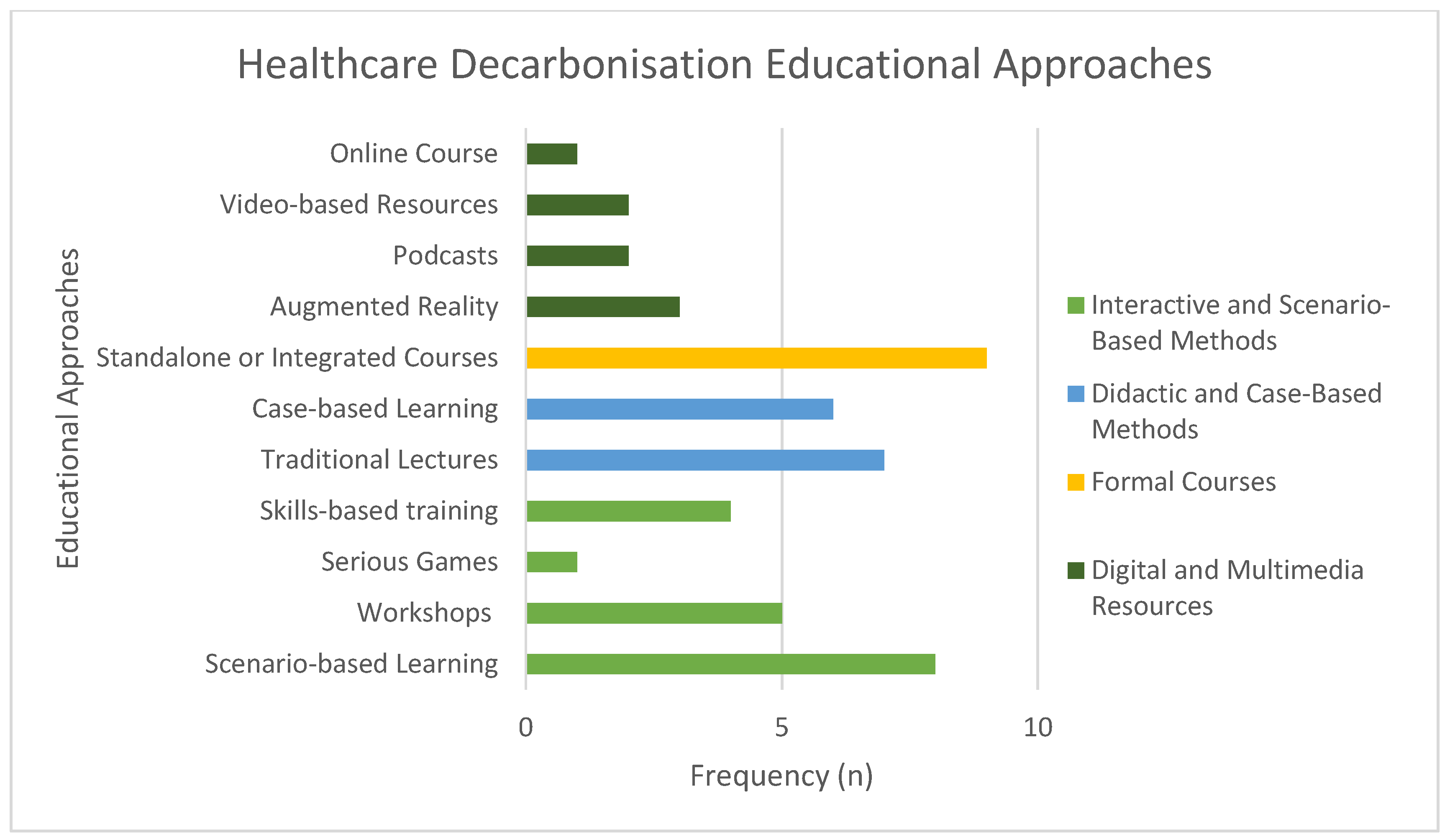
Content analysis was conducted for all 32 included studies, examining the frequency and characteristics of intervention types, topic areas, measured outcomes, and evaluation methods. Most studies (n = 22) employed a multimodal or blended approach [46,47,49,54,56,57,58,59,60,61,62,63,64,66,67,69,70,71,72,73,74,75,76], integrating multiple educational strategies, while n = 10 used a single instructional method [48,50,51,52,53,55,65,68,77]. Educational approaches were grouped into four broad categories (Figure 2): (1) interactive and simulation-based methods, e.g., scenario-based learning (n = 8) [55,60,68,69,73,74,75,77], workshops (n = 5) [60,67,70,71], serious games (n = 1) [56], and skills-based training (n = 4) [51,61,65,77]; (2) didactic and case-based methods, e.g., traditional lectures (n = 7) [46,54,56,57,58,59,62,67], case studies, or case-based learning (n = 6) [54,58,60,67,73]; (3) formal courses, e.g., standalone or integrated courses (n = 9) [46,47,48,53,59,62,63,67,72]; and (4) digital and multimedia resources, e.g., augmented reality (n = 3) [55,68,69], podcasts (n = 2) [57], video-based resources (n = 2) [52], and an online course (n = 1) [46]. Case-based learning focused on analysing case examples, while scenario-based learning involved interactive or simulated situations; therefore, they were categorised separately.
Across the included studies, the most common overarching topic focus was sustainability (n = 16) [49,51,54,55,57,60,61,66,68,69,70,71,73,74,75,77], closely followed by climate change (n = 12) [47,49,52,53,56,58,59,61,62,63,67,72] and planetary health (n = 3) [47,62,65]. One study addressed both sustainability and climate change [60]. All studies met the inclusion criterion of incorporating content related to healthcare decarbonisation within their educational intervention, though the framing ranged from explicit (e.g., carbon footprint and resource stewardship) to implied (e.g., sustainable clinical decision making).
A wide range of outcomes were measured, including, most frequently, knowledge (n = 18) [46,47,54,56,57,58,59,60,61,62,63,65,67,69,70,72,73,75] and attitudes (n = 17) [53,54,55,56,57,58,59,60,62,67,69,70,72,75,77]. Other outcomes included awareness (n = 6) [55,56,60,68,69,72], perceptions (n = 4) [64,68], self-efficacy/confidence (n = 4) [52,57,59,61], behaviour (n = 4) [49,60,73,74], change in practice (n = 2) [60,73], beliefs (n = 2) [59,72], eco-anxiety (n = 2) [52,53], environmental literacy (n = 1) [53], acceptability (n = 1) [57], and barriers and facilitators (n = 1) [71]. Knowledge and attitudes dominated the evaluations, with far fewer studies assessing behavioural change or measurable practice change.
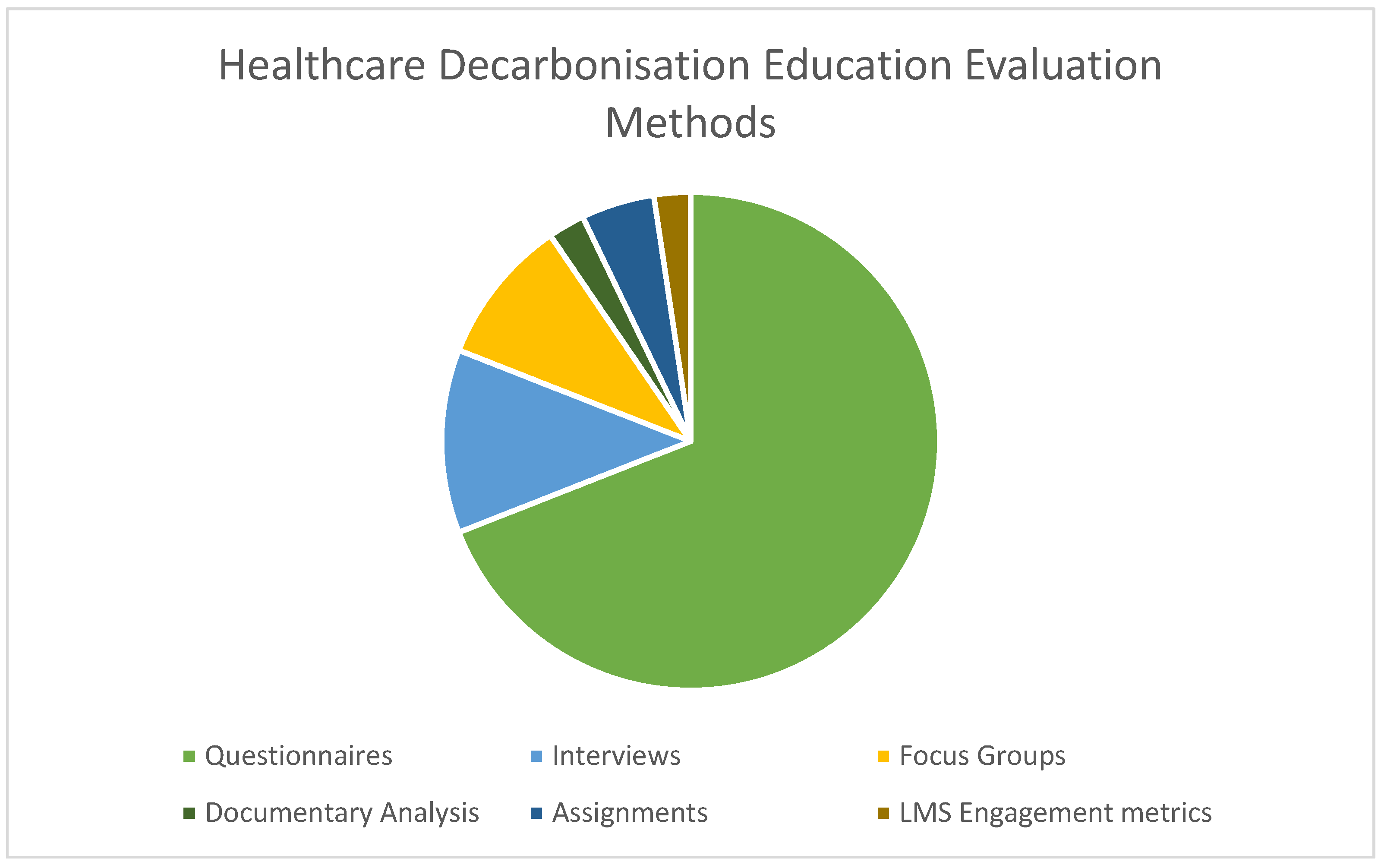
Evaluation methods (Figure 3) were predominantly questionnaires (n = 29) [46,47,48,49,51,52,53,54,55,56,57,58,59,60,61,62,63,64,65,67,68,69,70,72,73,74,75,76,77], supported by interviews (n = 5) [48,58,63,66,68], focus groups (n = 4) [56,57,70,71], documentary analysis (n = 1) [60], LMS engagement metrics (n = 1) [47], and assignments/project outputs (n = 2) [46,66]. Among the questionnaires, pre- and post-test designs (n = 20) [46,49,51,52,53,54,55,56,57,58,60,62,63,65,67,69,70,72,73,75] were more common than post-test only (n = 9) [47,48,59,61,64,68,74,76,77], reflecting a general preference for short-term pre–post measurement rather than long-term follow-up. Student feedback was collected using open-text feedback sections in n = 13 of the evaluations [49,56,57,58,60,61,63,66,67,68,70,71,74].
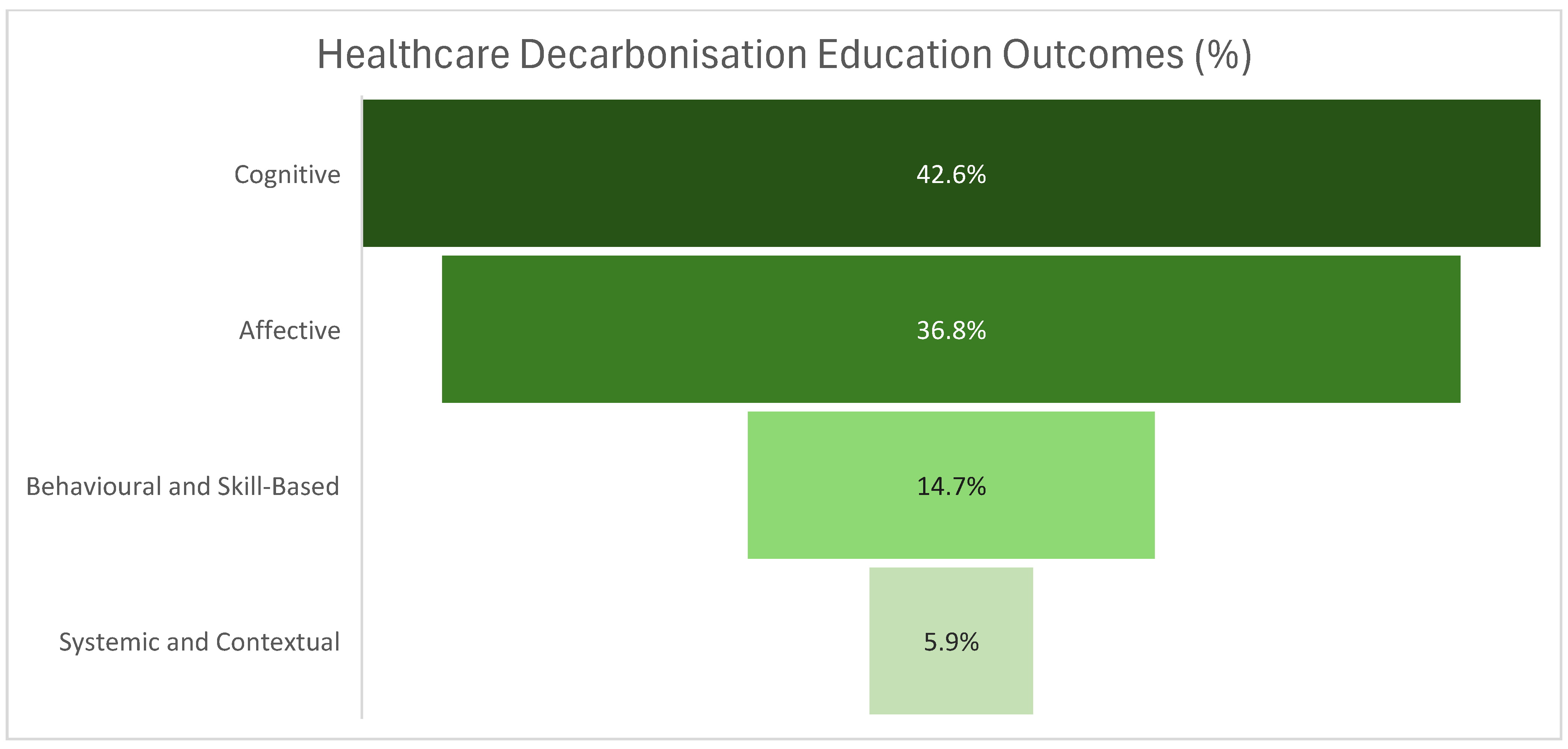
A wide range of outcomes were measured across the included studies (Figure 4), grouped into four broad domains: cognitive, affective, behavioural or skill-based, and systemic or contextual outcomes. Cognitive outcomes (n = 29) were the most frequently assessed and included knowledge (n = 17) [46,47,54,56,57,58,59,60,61,62,63,65,67,69,70,72,73,75], awareness (n = 6) [55,56,60,68,69,72], perceptions (n = 5) [64,68], environmental literacy (n = 1) [53], and relevance (n = 1) [57]. These outcomes reflected students’ understanding and comprehension of sustainability, planetary health, and healthcare decarbonisation concepts. Affective outcomes (n = 25) included attitudes (n = 17) [53,54,55,56,57,58,59,60,62,67,69,70,72,75,77], beliefs (n = 2) [59,72], eco-anxiety (n = 2) [52,53], concern (n = 1) [68], value (n = 1) [57], acceptability (n = 1) [57], and engagement (n = 1) [66]. These captured changes in students’ emotional responses, motivation, and values related to sustainability and environmental responsibility. Behavioural and skill-based outcomes (n = 10) encompassed behaviour (n = 5) [49,60,73,74], change in practice (n = 2) [60,73], skill (n = 1) [51], usefulness (n = 1) [69], and effectiveness (n = 1) [46]. These outcomes examined the degree to which participants translated learning into applied or intended actions, including sustainable behaviours and professional practices. Systemic and contextual outcomes (n = 4) consisted of barriers and facilitators (n = 1) [71] and impact (n = 1) [46], with additional references to contextual understanding of systems-level factors that support or constrain sustainability integration. Although all included studies addressed healthcare decarbonisation either explicitly or indirectly, the outcomes measured varied in their proximity to emissions reduction. Some studies assessed decarbonisation-relevant outcomes (e.g., carbon-informed clinical decision making or waste reduction), while others focused on broader sustainability or pro-environmental outcomes that function as proxy indicators but do not directly quantify decarbonisation impact.
Overall, the analysis continues to show a prevalence of blended educational interventions focused on knowledge and attitudinal development, evaluated primarily through self-reported data, with limited yet slowly increasing use of behavioural and practice-based outcome measures. Following thematic analysis, the following five themes emerged from the data. A summary of thematic findings can be found in Table 4.

3.2.1. Theme 1: Building a Decarbonisation Mindset

Across health professions, educational interventions consistently improved students’ knowledge, awareness, and understanding of healthcare decarbonisation [46,48,49,50,55,56,57,60,63,64,65,66,69,70,71,75,76,77]. Participants increasingly recognised the interconnectedness between climate change, health outcomes, and clinical practice, reframing sustainability as a professional responsibility rather than a peripheral concern [55,56,69,70,71]. Recent course-based planetary health teaching reported similar attitudinal shifts, with students explicitly linking sustainable healthcare to their emerging professional identity [46,48]. Knowledge gains were observed using both objective and self-reported measures. Objective improvements included statistically significant post-test score increases [46,62,65,67] and enhanced ability to identify carbon-intensive clinical practices, such as high-emission anaesthetic gases, wasteful procurement, or excessive PPE use [54,75]. Self-reported outcomes demonstrated students’ heightened awareness of system-level drivers of emissions, including procurement decisions, single-use culture, and waste management practices [48,49,50,60,76].
Indirect sustainability outcomes, such as recycling, waste segregation, and personal sustainable behaviours, were also reported alongside decarbonisation-specific outcomes [60,66,77]. While these proxy behaviours do not directly measure carbon reduction, they support the development of a sustainability mindset that may facilitate future decarbonisation actions. Interventions with practical relevance to professional practice were particularly impactful. Examples included scenario-based learning, augmented reality platforms, planetary health modules, simulation-based sessions, and sustainable quality improvement projects [51,57,58,65,70,71]. These approaches enabled students to connect decarbonisation to safe, evidence-based care, fostering intrinsic motivation to act as future change agents [49,57,58,63].
Attitudinal shifts reinforced knowledge gains. Nursing students showed year-on-year increases in recognising the professional importance of climate change, with “excellent” attitude ratings more than doubling post-intervention [55]. Medical and dental students also demonstrated large effect sizes for knowledge and awareness improvements [52,54,60]. Some studies reported sustained effects over time, particularly when follow-up testing was conducted [65]. One study indicated that 70% of students proposed at least one personal action, 58% proposed health-related professional actions, and 30% proposed non-health professional actions, reflecting progression from personal to professional climate–health agency [66].

3.2.2. Theme 2: From Concern to Constructive Engagement

Students frequently expressed positive attitudes toward climate change mitigation and sustainability, linking these responsibilities to professional identity and ethical duty [48,56,63,70]. Emotional responses ranged from concern and eco-anxiety to hope, empowerment, and agency. Constructive eco-anxiety emerged when climate change was presented as a pressing problem accompanied by practical solutions, allowing students to channel worry into proactive engagement [53,70]. Regression analysis in one study showed that stronger pro-environmental attitudes correlated with higher eco-anxiety, moderated by students’ perceived capacity to act [53].
The framing of educational interventions influenced emotional outcomes. Solution-focused teaching fostered optimism, professional engagement, and motivation [46], while workshops framing climate change as a solvable challenge inspired rather than overwhelmed students [70]. Immersive activities illustrating the scale of the problem sometimes heightened climate-related distress [56], yet even these responses coexisted with a greater sense of urgency for action and moral responsibility, including intergenerational equity [63]. Some interventions directly reduced climate-related distress, with one study reporting large effect size reductions in general climate anxiety [52]. These findings suggest sustainability education can simultaneously enhance knowledge, shape attitudes, and support psychological resilience, helping students move from helplessness to empowered engagement.

3.2.3. Theme 3: Translating Awareness into Decarbonisation Practices

Knowledge and attitude improvements frequently translated into behavioural intent and, in some cases, direct practice change. Professionally focused actions were most commonly reported, including optimising investigations, using PPE appropriately, switching to low-carbon inhalers, and advocating for sustainable clinical practices [49,50,51,57,60,65,68]. Some students assumed leadership roles, promoting decarbonisation among peers, patients, and colleagues [57,60,68].
Personal lifestyle behaviours, such as transport, diet, and energy use, were less consistently influenced, often showing modest or short-lived improvements [48,55,69,73,75]. Spillover effects were noted, with students reporting that learning inspired family, friends, or wider peer groups to adopt sustainable behaviours [57,61]. One study observed that personal and household actions often progressed to professional, health-related behaviours, illustrating movement from awareness to actionable competence [66].
Confidence and self-efficacy emerged as critical enablers. Multiple studies reported substantial post-intervention increases in environmental self-efficacy (ESE) [52,72], with students more prepared to question unsustainable practices in clinical placements [73,76]. Perceived capability to engage in sustainable clinical practice also increased [46], with one study reporting a rise in students feeling responsible for informing patients about climate-health impacts from 71.2% to 93.2% (p = 0.003) and for informing society from 62.7% to 83.1% (p = 0.003) post-intervention [56]. Behaviour change was more likely when interventions provided practical, context-specific strategies and hands-on application, such as simulations, waste management training, and advocacy workshops [50,61,65]. These findings underscore the importance of equipping students with actionable skills and contextually relevant tools to sustain long-term decarbonisation behaviours.

3.2.4. Theme 4: Becoming Low-Carbon Change Agents

Interventions contributed to shaping students’ professional identity, positioning sustainability and decarbonisation as integral to safe, high-quality care [55,56,57,58,61,67,69,70,73,75]. Collaborative and experiential methods, peer discussion, peer role modelling, and interprofessional exchanges fostered belonging and collective responsibility [61,70,73,75]. Technology-enhanced learning, including scenario-based learning, augmented reality, serious games, podcasts, and simulations, increased engagement and realism, allowing students to apply sustainability concepts to authentic clinical contexts [55,56,57,69]. Reflective activities, such as structured debriefs and facilitated discussions, enabled exploration of tensions between competing professional priorities (e.g., infection control vs. decarbonisation), supporting the development of refined decision making frameworks [59,65,76].
Emotional and moral reflection reinforced identity formation. Discussions of grief, worry, and moral responsibility prompted students to see sustainable practice as an ethical duty, rather than solely technical compliance [56,64]. Interactive and applied methods were preferred over didactic teaching, with >80% rating them as engaging, relevant, and professionally applicable [62,67,73,75]. High satisfaction rates were reported, including 94% endorsement for active participation [62] and 84% recommending collaborative training to peers [61]. Delivery by passionate clinicians linking content to clinical roles was particularly valued [58,70,71].
Students requested greater complexity and depth, clearer learning objectives, more consistent facilitation quality, longitudinal integration within curricula, and stronger advocacy training [56,58,59,62,65,67,70]. These findings indicate that collaborative, reflective, and technology-enhanced pedagogies do more than transfer knowledge—they actively shape professional identity, cultivating graduates who view themselves as healthcare decarbonisation change agents.

3.2.5. Theme 5: Barriers to Decarbonisation Action

Despite increases in knowledge, motivation, and intent, students consistently reported barriers that hindered the translation of learning into practice. Hierarchical and cultural constraints were prominent, with students hesitant to challenge senior staff or established norms due to fear of damaging professional relationships or violating expectations of deference [55,69,76]. Limited prior training in sustainability or decarbonisation compounded this lack of confidence, leaving many feeling unqualified or powerless to influence change during placements [60].
Structural and organisational challenges also constrained practice. Students highlighted the absence of recycling facilities, limited availability of sustainable clinical alternatives, time pressures that deprioritised sustainability, and entrenched institutional habits that reinforced carbon-intensive practices [51,60]. Practical dilemmas frequently arose at the intersection of infection control, patient safety, and environmental responsibility, a tension amplified during the COVID-19 pandemic by increased single-use waste and persistent uncertainty regarding clinical waste segregation and disposal [51,68,76].
Emotional barriers were similarly influential. Climate helplessness, worry about the scale of systemic challenges, and uncertainty regarding effective advocacy often left students unsure how to operationalise decarbonisation principles without compromising patient care [56,71]. Even motivated students reported limited guidance and few role models to support sustainable practice. These findings underscore that educational interventions alone are insufficient. Translating learning into actionable decarbonisation behaviours requires multi-level support, including psychologically safe spaces, practical, context-specific training, clear pathways for advocacy, and alignment of institutional policies with sustainability priorities. Addressing hierarchical, structural, and emotional barriers is essential for empowering students to act as effective agents of change within healthcare systems.
Overall, educational interventions across health professions improved knowledge, attitudes, and awareness of decarbonisation while fostering professional identity and agency. Behavioural and practice-level outcomes were enhanced when interventions were context-specific, applied, and included hands-on, reflective, or collaborative elements. Challenges remain in translating awareness into practice due to structural, cultural, and emotional barriers, highlighting the need for multi-level strategies combining education with supportive systems.

4. Discussion

This scoping review aimed to assess the extent and nature of the current literature on healthcare decarbonisation education, synthesise the pedagogical approaches employed across health professions, and provide evidence to inform the development of future resources that strengthen knowledge, attitudes, and behaviours for sustainable practice. As a scoping review, the findings are descriptive and exploratory, intended to map the nature, range, and characteristics of existing educational interventions rather than to determine the comparative effectiveness of different pedagogical approaches. Thirty-two studies were included, mostly published within the past five years, spanning nursing, medicine, and allied health. Interventions typically addressed sustainability, climate change, or planetary health more broadly, reflecting a growing recognition of environmental responsibility in healthcare education. Pedagogical approaches were diverse and often multimodal, combining scenario-based learning, workshops, didactic teaching, case studies, simulation, and digital innovations, such as augmented reality or podcasts. Outcomes were primarily measured in terms of knowledge and attitudes, often through pre/post questionnaires, with limited attention to behaviour, skills, or long-term retention. These findings suggest that while educational interventions effectively raise awareness and understanding, translation into sustained behavioural change remains limited, highlighting the need for targeted strategies that connect learning mechanisms to practice outcomes.
Consistent with prior literature, this review found that clinically relevant and scenario-based approaches were particularly effective in contextualising environmental responsibility within practice. Structured interventions, such as reflection, simulation, and collaborative learning, effectively develop the affective domain, fostering empathy, ethical reasoning, and emotional competence alongside cognitive and technical skills [78]. Approaches such as Sustainable Quality Improvement (SusQI) have been shown to effectively motivate learners and provide a practical framework for operationalising planetary health concepts [79]. These insights support a conceptual model in which pedagogical strategies (scenario-based, collaborative, reflective) influence learning mechanisms (knowledge, attitudes, self-efficacy, professional identity), which, in turn, drive decarbonisation outcomes (behavioural intent, observed practice, advocacy), integrating theory and practice within a coherent framework. However, the predominance of short-term evaluation designs, particularly pre- and post-tests for knowledge, may limit understanding of whether these cognitive gains are retained or enacted longitudinally in clinical practice.
The review also highlighted the emotional dimensions of climate–health education. Several interventions triggered eco-anxiety, echoing findings from wider research [80,81]. In contrast, solution-focused, reflective, and collaborative approaches appeared to mitigate distress and instead foster constructive engagement. This aligns with theories of transformative and social learning, where role models, feedback, and applied learning convert emotional responses into motivation and self-efficacy for sustainable action [82,83,84,85]. These findings suggest that addressing affective responses is central to enabling sustainability learning to result in agency and motivation towards decarbonisation action.
Despite improvements in knowledge, attitudes, and professional identity, this review found limited evidence of sustained behaviour change. Awareness alone rarely leads to enduring action [86]. Applying the Behaviour Change Wheel [87] illustrates how interventions can target capability, opportunity, and motivation to facilitate measurable decarbonisation practices. Interventions incorporating simulations, skills training, or applied practice were more likely to promote behavioural intent, consistent with wider evidence supporting experiential learning [88,89]. However, sustainability considerations must also guide educational delivery, as simulation and bedside teaching carry measurable carbon footprints, emphasising the need to decarbonise the educational process itself [90,91].
Some interventions went beyond knowledge and behaviour, shaping professional identity by positioning students as change agents. Collaborative, reflective, and interprofessional learning fostered responsibility and agency, reinforcing the potential for learners to engage in both individual and systemic decarbonisation [92,93,94]. Embedding opportunities for identity development, advocacy training, and peer-led initiatives can strengthen the capacity for students to influence organisational and policy-level sustainability actions.
Across included studies, decarbonisation education was situated within a health context, emphasising the clinical relevance of sustainability. Interventions highlighted links to respiratory and cardiovascular disease, heat-related illness, infectious disease, maternal and child health, mental health, and health system pressures [46,50,51,52,53,55,56,57,58,59,62,63,64,65,67,68,69,70,71,72,73]. Explicit framing of health co-benefits, such as improved air quality, active lifestyles, and reduced waste, strengthened learners’ motivation and confidence to implement decarbonisation in clinical settings [56,59,62,71,95,96,97,98]. Practical examples, such as heat–health scenarios [55,69], waste management [51,68,73], and carbon-related clinical decisions [52,65], facilitated application to patient care. This demonstrates how curriculum design can integrate context-specific, applied learning that links environmental literacy to professional practice.
However, structural and cultural barriers remain significant. Hierarchical constraints, entrenched routines, and infection control requirements, especially post-COVID-19, limit the translation of learning into practice [99,100]. Longitudinal reinforcement, supportive networks, and institutional prioritisation are critical for converting educational gains into sustained action [101].
Emerging reviews provide important context for positioning these findings. Recent evidence has identified enablers, such as educator engagement and self-directed learning, but also barriers, like curriculum overload and institutional inertia [31]. Other reviews have emphasised growing awareness among healthcare workers but reiterated the difficulty of implementation without organisational support [35]. Consistent gains in knowledge, attitudes, and skills have also been observed, in line with this review’s findings on multimodal approaches [32]. Further research has documented the rapid growth of climate health education but noted a lack of scalable, practice-ready, and clinically embedded curricula, reinforcing the limited behavioural translation observed in this review [33]. Additional studies have highlighted the need for interprofessional collaboration and consistent assessment frameworks, aligning with our emphasis on identity and interprofessional learning [34,36]. Finally, key environmental competencies, such as systems thinking and resource stewardship, have been outlined, yet these competencies remain unevenly operationalised within educational interventions, despite their close alignment with healthcare decarbonisation [37]. Compared with these reviews, the present study contributes by focusing specifically on healthcare decarbonisation, a distinct, measurable, and mitigation-oriented component of sustainability education, given the sector’s significant carbon footprint. While prior reviews have addressed climate change and sustainability education more broadly, they have not explicitly examined decarbonisation or its translation into low-carbon clinical practice. By filling this gap, this review highlights both the potential of current pedagogical approaches and the need to evaluate their longer-term behavioural and systems-level impact.
In summary, health profession students are increasingly exposed to sustainability-focused education that enhances knowledge, attitudes, and professional identity. Translation into sustainable behaviours requires contextually embedded, applied, and longitudinal education, reinforced by institutional support and opportunities for advocacy. Integrating pedagogical strategies with mechanisms of learning and concrete decarbonisation outcomes provides a coherent framework to guide curriculum development, foster professional identity, and support systems-level sustainability action in healthcare.

4.1. Relevance to Health Profession Education and Recommendations

This review offers an important look into how sustainability and decarbonisation education can be meaningfully integrated into health professions curricula. Across the included studies, several recurring challenges emerged that represent key “pain points” for learners: gaps in foundational knowledge [46,62,67], limited confidence in applying principles to practice [50,60,65], emotional responses, such as eco-anxiety [53,56], and systemic or cultural barriers that constrain sustainable action in clinical practice [55,68,71,72]. At the same time, several enabling factors were identified, including interactive and context-specific teaching approaches [65,70,73,74], blended and technology-enhanced methods [46,57,71], reflective and collaborative learning opportunities [60,63,65], visible role modelling [56,65], and alignment with wider institutional and policy priorities [54].
These findings highlight priority touchpoints for education design. Effective interventions should build cognitive knowledge while fostering agency, advocacy, and professional identity [63,65,75] and addressing the emotional dimensions of learning [52,53]. Embedding sustainability content longitudinally, rather than as isolated sessions, supports application to practice [56,65,71]. Opportunities to rehearse practical skills, receive feedback, and observe sustainability modelled in clinical contexts may help bridge the gap between intention and action [61,64,72]. Future research requires stronger evaluation designs, including longitudinal and controlled studies, mixed-methods approaches, and objective indicators of practice change to move beyond self-reported outcomes. This review distinguishes decarbonisation-specific outcomes from broader sustainability or pro-environmental outcomes. While many interventions influenced attitudes and general environmental behaviours, fewer assessed outcomes directly linked to emissions reduction in healthcare. Although proxy outcomes may support long-term decarbonisation, their relationship to measurable carbon reduction remains indirect, highlighting the need for future research to align measures with decarbonisation-relevant clinical practices and systems-level actions. Most studies came from high-income countries, highlighting the need for research and educational development in low- and middle-income settings, which face greater climate-related health impacts and would benefit from strengthened capacity-building for decarbonisation. This review maps the evidence base and generates practical recommendations to guide the development of relevant, impactful, and contextually grounded educational resources for health professions education.

4.2. Strengths and Limitations

This scoping review has several notable strengths. It draws on a body of predominantly recent studies, most of which were published within the last four years, highlighting the increasing momentum and relevance of decarbonisation and sustainability education in healthcare curricula. The inclusion of diverse health professional student groups, alongside a variety of multimodal and blended teaching methods, provides a broad picture of how such education is currently being delivered. Importantly, the review captured rich thematic understanding of pedagogical strategies, learner outcomes, and areas for improvement. Methodologically, the review was conducted in accordance with internationally recognised JBI guidance for scoping reviews, ensuring a transparent, rigorous, and reproducible process of evidence synthesis.
Several limitations should be acknowledged. Most included studies primarily assessed knowledge gains and attitudinal shifts using self-reported outcomes, with few examining long-term behavioural changes or the application of skills in clinical practice through longitudinal designs, leaving uncertainty about the sustainability of educational impact. The evidence base was also uneven across professional groups, with medicine and nursing students dominating, while pharmacy and allied health students were largely absent, limiting generalisability across the health professions. Geographically, the majority of studies were conducted in high-income countries, which may reduce applicability to low- and middle-income settings, where resource constraints, climate-related health burdens, and healthcare structures differ. Intervention heterogeneity, in terms of content, duration, and outcomes, further complicates synthesis and comparison. In relation to the review methodology, a formal appraisal of study quality was not conducted, consistent with scoping review guidance [40]. However, this limits the ability to comment on the methodological robustness of included studies. Despite comprehensive database searches, publication and indexing bias may be present, with educational interventions reported in newer, niche, or less widely indexed journals potentially overlooked. Restricting inclusion to English-language publications may also have excluded relevant evidence from non-English-speaking contexts, narrowing the global perspective on decarbonisation education. Finally, the review excluded grey literature and non-peer-reviewed educational materials, which may underrepresent real-world decarbonisation education embedded within institutional curricula and professional standards, potentially biasing findings toward small-scale academic evaluations. Future research should prioritise longitudinal, multi-professional, and geographically diverse studies, incorporating objective measures of practice change and institutional-level curricula mapping to strengthen the evidence base.

5. Conclusions

Health profession students commonly experience challenges in understanding and applying concepts of sustainability and decarbonisation. This includes gaps in knowledge, limited confidence to act, emotional responses, such as eco-anxiety, and difficulty translating learning into clinical practice due to systemic and cultural barriers. Educational interventions addressing these challenges, particularly those using blended, interactive, and technology-enhanced approaches, have been shown to improve knowledge, awareness, attitudes, and professional identity related to low-carbon healthcare. Importantly, focusing explicitly on healthcare decarbonisation adds value beyond general sustainability education by providing measurable, actionable targets for emissions reduction within clinical and organisational contexts, linking learning directly to patient care and health system impact. While many interventions successfully foster behavioural intent and, in some cases, observable sustainable practices, structural and hierarchical constraints continue to limit action. This review highlights that decarbonisation-focused education uniquely equips students with the skills, systems thinking, and agency needed to implement low-carbon practices, bridging the gap between broad environmental awareness and concrete clinical or organisational change. This underscores the need for longitudinal, skills-based, and contextually embedded education that aligns with institutional policies to support meaningful and lasting decarbonisation in healthcare practice.

Supplementary Materials

The following supporting information can be downloaded at https://www.mdpi.com/article/10.3390/su18021068/s1, Table S1: Preferred Reporting Items for Systematic reviews and Meta-Analyses extension for Scoping Reviews (PRISMA-ScR) checklist, Table S2: MEDLINE search strategy, Table S3: JBI source of evidence details, characteristics, and results extraction instrument (adapted).

Author Contributions

Conceptualisation, N.M.-B., G.M., N.F., L.S., T.A. and S.C.; methodology, N.M.-B., G.M., N.F., L.S., T.A. and S.C.; software, N.M.-B., G.M., T.A. and S.C.; validation, G.M. and S.C.; formal analysis, N.M.-B., G.M., T.A. and S.C.; writing—original draft preparation, N.M.-B.; writing—review and editing, N.M.-B., G.M., N.F., L.S., T.A., S.C., F.A.H., D.H.H., N.B.A., T.L.-J. and J.S.-M. All authors have read and agreed to the published version of the manuscript.

Funding

This research is funded by a Department for the Economy (DfE) Northern Ireland Postgraduate Research Studentship.

Institutional Review Board Statement

Not applicable.

Informed Consent Statement

Not applicable.

Data Availability Statement

The original contributions presented in this study are included in the article/Supplementary Material. Further inquiries can be directed to the corresponding author. This review has been developed in accordance with established guidelines and reporting standards, the Joanna Briggs Institute (JBI) methodology for scoping reviews (ScRs) (https://jbi.global/scoping-review-network/resources accessed 1 April 2025), and the PRISMA Extension for Scoping Reviews (PRISMA-ScR) (https://www.prisma-statement.org/scoping accessed 1 April 2025). Artificial intelligence or AI-assisted tools were not used in the design, data collection, analysis, or drafting of this manuscript. All authors have read and agreed to the published version of the manuscript.

Conflicts of Interest

The authors declare no conflicts of interest.

Abbreviations

The following abbreviations are used in this manuscript:
UNUnited Nations
ATACHAlliance for Transformative Action on Climate Change and Health
WHOThe World Health Organization
IPCCIntergovernmental Panel on Climate Change
GCCHEGlobal Consortium on Climate and Health Education
JBIJoanna Briggs Institute
PRISMA-ScRPreferred Reporting Items for Systematic Reviews and Meta-analysis extension for ScRs
PCCPopulation Concept Context
PEOPopulation Exposure Outcome
PPEPersonal Protective Equipment
ESEEnvironmental Self-Efficacy
SBLScenario-Based Learning
AEBCDAccelerated Experience-Based Co-Design

References

  1. World Health Organization (WHO). Health and Climate Change Global Survey Report 2021: Tracking Global Progress Toward Climate-Resilient and Environmentally Sustainable Health Systems. 2021. Available online: https://www.who.int/publications/i/item/9789240038509 (accessed on 26 August 2025).
  2. IPCC. Climate Change 2023: Synthesis Report. Contribution of Working Groups I, II and III to the Sixth Assessment Report of the Intergovernmental Panel on Climate Change; Core Writing Team, Lee, H., Romero, J., Eds.; IPCC: Geneva, Switzerland, 2023; pp. 35–115. [Google Scholar]
  3. Karliner, J.; Slotterback, S.; Boyd, R.; Ashby, A.; Steele, K.; Wang, J. Health care’s climate footprint: The health sector contribution and opportunities for action. Eur. J. Public Health 2020, 30, ckaa165.843. [Google Scholar]
  4. Pichler, P.; Jaccard, I.; Weisz, U.; Weisz, H. International comparison of health care carbon footprints. Environ. Res. Lett. 2019, 14, 064004. [Google Scholar] [CrossRef]
  5. Romanello, M.; Napoli, C.; Green, C.; Kennard, H.; Lampard, P.; Scamman, D.; Walawender, M.; Ali, Z.; Ameli, N.; Ayeb-Karlsson, S.; et al. The 2023 report of the Lancet Countdown on health and climate change: The imperative for a health-centred response in a world facing irreversible harms. Lancet 2023, 402, 2346–2394. [Google Scholar] [CrossRef] [PubMed]
  6. Hough, E.; Cohen Tanugi-Carresse, A. Supporting Decarbonization of Health Systems—A Review of International Policy and Practice on Health Care and Climate Change. Curr. Environ. Health Rep. 2024, 11, 266–278. [Google Scholar] [PubMed]
  7. Or, Z.; Seppanen, A.-V. The role of the health sector in tackling climate change: A narrative review. Health Policy 2024, 143, 105053. [Google Scholar] [CrossRef]
  8. Mirow, J.; Venne, J.; Brand, A. Green health: How to decarbonise global healthcare systems. Sustain. Earth Rev. 2024, 7, 28. [Google Scholar]
  9. Blom, I.M.; Beagley, J.; Quintana, A.V. The COP26 health commitments: A springboard towards environmentally sustainable and climate-resilient health care systems? J. Clim. Change Health 2022, 6, 100136. [Google Scholar] [CrossRef]
  10. Health Care Without Harm (HCWH). Designing A Net Zero Roadmap for Healthcare: Technical Methodology and Guidance. 2022. Available online: https://noharm-europe.org/sites/default/files/documents-files/7186/2022-08-HCWH-Europe-Designing-a-net-zero-roadmap-for-healthcare-web.pdf (accessed on 26 August 2025).
  11. World Health Organization (WHO). Operational Framework for Building Climate Resilient and Low Carbon Health Systems. Report. 2023. Available online: https://www.who.int/publications/i/item/9789240081888 (accessed on 26 August 2025).
  12. National Health Service (NHS). England. Delivering a ‘Net Zero’ National Health Service. Report. 2022, pp. 1–76. Available online: https://www.england.nhs.uk/greenernhs/publication/delivering-a-net-zero-national-health-service/ (accessed on 26 August 2025).
  13. Braithwaite, J.; Smith, C.L.; Leask, E.; Wijekulasuriya, S.; Brooke-Cowden, K.; Fisher, G.; Patel, R.; Pagano, L.; Rahimi-Ardabili, H.; Spanos, S.; et al. Strategies and tactics to reduce the impact of healthcare on climate change: Systematic review. BMJ 2024, 387, e081284. [Google Scholar] [CrossRef]
  14. Brundtland, G.H. Our Common Future: Report of the World Commission on Environment and Development. Geneva, UN-Document A/42/427. 1987. Available online: http://www.un-documents.net/ocf-ov.htm (accessed on 26 August 2025).
  15. Mago, A.; Dhali, A.; Kumar, H.; Maity, R.; Kumar, B. Planetary health and its relevance in the modern era: A topical review. SAGE Open Med. 2024, 12, 20503121241254231. [Google Scholar] [CrossRef]
  16. United Nations (UN). Transforming Our World: The 2030 Agenda for Sustainable Development; United Nations (UN): New York, NY, USA, 2015; Available online: https://sdgs.un.org/2030agenda (accessed on 28 August 2025).
  17. Maibach, E.; Frumkin, H.; Ahdoot, S. Health professionals and the climate crisis: Trusted voices, essential roles. World Med. Health Policy 2021, 13, 137–145. [Google Scholar] [CrossRef]
  18. Orhan, R.; Middleton, J.; Krafft, T.; Czabanowska, K. Climate action at public health schools in the European region. Int. J. Environ. Res. Public Health 2021, 18, 1518. [Google Scholar] [PubMed]
  19. Chen, T.T.; Pinho-Gomes, A.C.; Hamacher, N.; Nabbe, M.; Duggan, K.; Zjalic, D.; Magalhaes, D.; Campbell, H.; Cadeddu, C.; Demetriou, C.A.; et al. Climate and health capacity building for health professionals in Europe: A pilot course. Int. J. Public Health 2025, 70, 1608469. [Google Scholar] [CrossRef] [PubMed]
  20. World Health Organization (WHO). WHO Guidance for Climate Resilient and Environmentally Sustainable Health Care Facilities. 2020. Available online: https://iris.who.int/handle/10665/335909 (accessed on 28 August 2025).
  21. Zaleniene, I.; Pereira, P. Higher education for sustainability: A global perspective. Geogr. Sustain. 2021, 2, 99–106. [Google Scholar] [CrossRef]
  22. Sorensen, C.; Campbell, H.; Depoux, A.; Finkel, M.; Gilden, R.; Hadley, K.; Haine, D.; Mantilla, G.; McDermott-Levy, R.; Potter, T.M.; et al. Core competencies to prepare health professionals to respond to the climate crisis. PLOS Clim. 2023, 4, 10. [Google Scholar]
  23. Abo-Khalil, A.G. Integrating sustainability into higher education: Challenges and opportunities. Heliyon 2024, 10, e29946. [Google Scholar] [CrossRef]
  24. Brand, G.; Collins, J.; Bedi, G.; Bonnamy, J.; Barbour, L.; Ilangakoon, C.; Wotherspoon, R.; Simmons, M.; Kim, M.; Schwerdtle, P.N. “I teach it because it is the biggest threat to health”: Integrating sustainable healthcare into health professions education. Med. Teach. 2021, 43, 325–333. [Google Scholar] [CrossRef]
  25. Gupta, D.; Shantharam, L.; MacDonald, B.K. Sustainable healthcare in medical education. BMC Med. Educ. 2022, 22, 689. [Google Scholar]
  26. McLean, M.; Gibbs, T. Addressing Code Red for humans and the planet. Med. Teach. 2022, 44, 462–465. [Google Scholar]
  27. Redvers, N.; Guzman, C.A.F.; Parkes, M.W. Towards an educational praxis for planetary health. Lancet Planet. Health 2023, 7, 77–85. [Google Scholar] [CrossRef]
  28. Levett-Jones, T.; Moroney, T.; Bonnamy, J.; Cornish, J.; Moll, E.C.; Foster, A.; Lapkin, S.; Pich, J.; Richards, C.; Tutticci, N.; et al. Healthy planet, healthy people boardgame evaluation. Nurse Educ. Today 2025, 152, 106753. [Google Scholar] [CrossRef]
  29. Gruenberg, K.; Apollonio, D.; MacDougall, C.; Brock, T. Sustainable pharmacy education. Innov. Pharm. 2017, 8, 3. [Google Scholar] [PubMed]
  30. Walpole, S.C.; Mortimer, F. Sustainable healthcare education in UK medical schools. Public Health 2017, 150, 134–148. [Google Scholar] [CrossRef] [PubMed]
  31. Almazan, J.U.; Manabat, A.; Kavashev, Z.; Smagulova, M.; Colet, P.C.; Balay-odao, E.M.; Nurmagambetova, A.; Bolla, S.R.; Syzdykova, A.; Dauletkaliyeva, Z.; et al. Sustainability in education and healthcare field: An Integrative Review of Factors, Barriers, and the Path Forward for Informed Practices. Health Prof. Educ. 2024, 10, 304–318. [Google Scholar] [CrossRef]
  32. Bray, L.; Meznikova, K.; Crampton, P.; Johnson, T. Sustainable healthcare education: A systematic review. Med. Teach. 2022, 45, 157–166. [Google Scholar] [CrossRef]
  33. Brennan, M.E.; Madden, D. Climate change and sustainability themes in health education. J. Clim. Change Health 2023, 9, 100200. [Google Scholar] [CrossRef]
  34. Dalapati, T.; Nick, S.E.; Chari, T.A.; George, I.A.; Hunter Aitchison, A.; MacEachern, M.P.; O’Sullivan, A.N.; Taber, K.A.; Muzyk, A. Interprofessional climate change curriculum. Educ. Sci. 2023, 13, 945. [Google Scholar] [CrossRef]
  35. McCauley, P.R.; Mathur, K.; Miab, R.K.; Cohen, N.; Henriques-Thompson, K. Environmental sustainability, healthcare workers and healthcare students: A literature review of attitudes and learning approaches. Health Prof. Educ. 2024, 10, 12. [Google Scholar] [CrossRef]
  36. McKinnon, S.; Breakey, S.; Fanuele, J.R.; Kelly, D.E.; Eddy, E.Z.; Tarbet, A.; Nicholas, P.K.; Viamonte Ros, A.M. Roles of Health Professionals in Addressing Health Consequences of Climate Change in Interprofessional Education: A Scoping Review. J. Clim. Change 2022, 5, 100086. [Google Scholar] [CrossRef]
  37. Parker, G.; Berta, W.; Shea, C.; Miller, F. Environmental competencies for healthcare educators and trainees: A scoping review. Health Educ. J. 2020, 79, 327–345. [Google Scholar]
  38. Munn, Z.; Peters, M.D.J.; Stern, C.; Tufanaru, C.; McArthur, A.; Aromataris, E. Systematic review or scoping review? Guidance for authors when choosing between a systematic or scoping review approach. BMC Med. Res. Methodol. 2018, 18, 143. [Google Scholar]
  39. Peters, M.; Godfrey, C.; McInerney, P.; Munn, Z.; Tricco, A.; Khalil, H. JBI Manual for Evidence Synthesis: Scoping Reviews (2020 version). 2020. Available online: https://synthesismanual.jbi.global (accessed on 28 August 2025).
  40. Peters, M.D.J.; Marnie, C.; Tricco, A.C.; Pollock, D.; Munn, Z.; Alexander, L.; McInerney, P.; Godfrey, C.M.; Khalil, H. Updated methodological guidance for the conduct of scoping reviews. JBI Evid. Synth. 2020, 18, 2119. [Google Scholar] [CrossRef]
  41. Tricco, A.C.; Lillie, E.; Zarin, W.; O’Brien, K.K.; Colquhoun, H.; Levac, D.; Moher, D.; Peters, M.D.J.; Horsley, T.; Weeks, L.; et al. PRISMA Extension for Scoping Reviews (PRISMA-ScR): Checklist and Explanation. Ann. Intern. Med. 2018, 169, 467–473. [Google Scholar]
  42. Hosseini, M.-S.; Jahanshalou, F.; Akbarzadeh, M.A.; Zarei, M.; Vaez-Gharmaleki, Y. Formulating research questions for evidence-based studies. J. Med. Surg. Public Health 2024, 2, 100046. [Google Scholar] [CrossRef]
  43. Joanna Briggs Institute (JBI). JBI Template Source of Evidence Details, Characteristics and Results Extraction Instrument (Appendix 10.1). 2024. Available online: https://jbi-global-wiki.refined.site/space/MANUAL/355863340 (accessed on 28 August 2025).
  44. Pollock, D.; Peters, M.D.J.; Khalil, H.; McInerney, P.; Alexander, L.; Tricco, A.C.; Evans, C.; de Moraes, É.B.; Godfrey, C.M.; Pieper, D.; et al. Recommendations for extraction, analysis and presentation of results in scoping reviews. JBI Evid. Synth. 2023, 21, 520. [Google Scholar] [CrossRef] [PubMed]
  45. Braun, V.; Clarke, V.; Hayfield, N.; Davey, L.; Jenkinson, E. Doing Reflexive Thematic Analysis. In Supporting Research in Counselling and Psychotherapy; Bager-Charleson, S., McBeath, A., Eds.; Palgrave Macmillan: Cham, Switzerland, 2023; pp. 19–38. [Google Scholar]
  46. Elhosy, H.S.; Aref, S.R.; Rizk, M.H. Evaluation of Planetary Health and Sustainable Healthcare Online Course for Undergraduate Medical Students: A Quasi-experimental Study. Med. Sci. Educ. 2025, 35, 2501–2513. [Google Scholar]
  47. Moro, C.; Phelps, C.; Veer, V.; McLean, M. Successfully integrating sustainability into medical science education with mixed-method iterative approaches. Adv. Physiol. Educ. 2025, 49, 979–989. [Google Scholar] [CrossRef]
  48. Merduaty, R.C.; Jacinta, H.A.; Saptura, R.; Susanti, S.S.; Wanda, D.; Lokmic-Tomkins, Z. Integrating climate change education in preregistration nursing degree in Indonesia: A case study. Nurse Educ. Today 2025, 155, 106878. [Google Scholar] [CrossRef]
  49. Wang, B.; Sheehy, L.; Frotjold, A.; Power, T.; Saravanos, G. Sustainability in undergraduate nursing clinical simulation: A mixed methods study exploring attitudes, knowledge and practices. Nurse Educ. Today 2025, 153, 106805. [Google Scholar] [CrossRef]
  50. Kaşıkçı, M.; Bağcı, Y.; Yıldırım, Z.; Nacak, U.A. Carbon footprint awareness of nursing students: A qualitative study. BMC Nurs. 2025, 24, 346. [Google Scholar] [CrossRef]
  51. İlaslan, N.; Şahin Orak, N. Sustainable healthcare education using cooperative simulation in developing nursing students’ knowledge, attitude and skills: A randomized controlled study. Nurse Educ. Today 2025, 151, 106706. [Google Scholar] [CrossRef]
  52. Eweida, R.S.; O’Connell, M.A.; Zoromba, M.; Mahmoud, M.F.; Altheeb, M.K.; Selim, A.; Atta, M.H.R. Video-based climate change program boosts eco-cognizance, emotional response and self-efficacy in rural nursing students: Randomised controlled trial. J. Adv. Nurs. 2025, 81, 8371–8383. [Google Scholar] [CrossRef]
  53. Çolak, M.; Dogan, R.; Dogan, S. Effect of Climate Change and Health Course on Global Warming Knowledge and Attitudes, Environmental Literacy, and Eco-Anxiety Level of Nursing Students. Public Health Nurs. 2025, 42, 1315–1324. [Google Scholar] [CrossRef]
  54. Dixon, J.; Baird, H.M.; Field, J.; Martin, N. Longitudinal integration of environmental sustainability in the dental curriculum. J. Dent. 2025, 156, 105710. [Google Scholar] [CrossRef] [PubMed]
  55. Álvarez-Nieto, C.; Parra-Anguita, L.; Álvarez-García, C.; Montoro Ramirez, E.M.; López-Franco, M.D.; Sanz-Martos, S.; López Medina, I.M. Sustainability education in nursing degree for climate-smart healthcare: A quasi-experimental study. Int. J. Sustain. High. Educ. 2024, 25, 278–292. [Google Scholar] [CrossRef]
  56. Stevens, M.; Israel, A.; Nusselder, A.; Mattijsen, J.C.; Chen, F.; Erasmus, V.; van Beeck, E.; Otto, S. Evaluation of medical students’ knowledge and attitudes towards climate change and health following a novel serious game. BMC Med. Educ. 2024, 24, 626. [Google Scholar] [CrossRef] [PubMed]
  57. Anderson, T.; Stark, P.; Craig, S.; McMullan, J.; Anderson, G.; Hughes, C.; Gormley, K.; Killough, J.; McLaughlin-Borlace, N.; Steele, L.; et al. Co-design and evaluation of an audio podcast about sustainable development goals for undergraduate nursing and midwifery students. BMC Med. Educ. 2024, 24, 1253. [Google Scholar]
  58. Ribeiro, V.; Grossi, E.; Levin-Carrion, Y.; Sahu, N.; DallaPiazza, M. Interactive mapping and case seminar introducing medical students to climate change, environmental justice and health. MedEdPORTAL 2024, 20, 11398. [Google Scholar] [CrossRef]
  59. Kline, M.C.; Malits, J.R.; Baker, N.; Shirley, H.; Grobman, B.; Callison, W.E.; Pelletier, S.; Nadeau, K.; Jones, D.S.; Basu, G. Implementation and initial evaluation of a longitudinal, integrated curricular theme and competency framework. PLoS Clim. 2024, 3, e0000412. [Google Scholar]
  60. Coronel-Zubiate, F.T.; Farje-Gallardo, C.A.; Rojas de la Puente, E.E. Environmental impact of waste in dental care: Educational strategies to promote environmental sustainability. Environ. Technol. Resour. Proc. Int. Sci. Pract. Conf. 2024, 11, 340–344. [Google Scholar] [CrossRef]
  61. Tremblay, B.; Hawkins, J. Climate and Health: Impact of Climate Education on Nursing Student Knowledge and Intent to Act. Nurse Educ. 2024, 49, 85–90. [Google Scholar] [CrossRef]
  62. Lemke, D.; Holtz, S.; Gerber, M.; Amberger, O.; Schütze, D.; Müller, B.; Wunder, A.; Fast, M. From niche topic to inclusion in the curriculum—Design and evaluation of the elective course “climate change and health”. GMS J. Med. Educ. 2023, 40, Doc31. [Google Scholar] [PubMed]
  63. Müller, L.; Kühl, M.; Kühl, S.J. Changes in student environmental knowledge and awareness due to mandatory elective. GMS J. Med. Educ. 2023, 40, Doc32. [Google Scholar] [PubMed]
  64. Gundacker, C.; Himmelbauer, M. Impact of climate change on the medical profession: A newly implemented course. GMS J. Med. Educ. 2023, 40, Doc30. [Google Scholar] [PubMed]
  65. Luo, O.D.; Londono, C.A.; Prince, N.; Iny, E.; Warnock, T.; Cropper, K.; Girgis, S.; Walker, C. The Climate Wise slides: An evaluation of planetary health lecture slides for medical education. Med. Teach. 2023, 45, 1346–1348. [Google Scholar]
  66. Rogers, H.H.; Tucker, M.; Couig, M.P.; Svihla, V. Interprofessional course on climate change and public health preparedness. Int. J. Environ. Res. Public Health 2023, 20, 5885. [Google Scholar] [CrossRef]
  67. Slimings, C.; Sisson, E.; Larson, C.; Bowles, D.; Hussain, R. Preparing future doctors in a destabilised world. Environ. Educ. Res. 2022, 28, 786–801. [Google Scholar] [CrossRef]
  68. López-Medina, I.M.; Álvarez-García, C.; Parra-Anguita, L.; Sanz-Martos, S.; Álvarez-Nieto, C. Perceptions and concerns about sustainable healthcare of trained nursing students. Nurse Educ. Pract. 2022, 65, 103489. [Google Scholar]
  69. Álvarez-Nieto, C.; Álvarez-García, C.; Parra-Anguita, L.; Sanz-Martos, S.; López-Medina, I.M. Scenario-based learning and augmented reality for nursing students. BMC Nurs. 2022, 21, 245. [Google Scholar] [CrossRef]
  70. Clery, P.; d’Arch Smith, S.; Marsden, O.; Leedham-Green, K. Sustainability in quality improvement (SusQI): A case-study in undergraduate medical education. BMC Med. Educ. 2021, 21, 425. [Google Scholar]
  71. Marsden, O.; Clery, P.; d’Arch Smith, S.; Leedham-Green, K. Sustainability in Quality Improvement (SusQI): Challenges and strategies for translating undergraduate learning into clinical practice. BMC Med. Educ. 2021, 21, 555. [Google Scholar] [CrossRef]
  72. Gomez, J.; Goshua, A.; Pokrajac, N.; Erny, B.; Auerbach, P.; Nadeau, K.; Gisondi, M.A. Teaching medical students about the impacts of climate change on human health. J. Clim. Change Health 2021, 3, 100020. [Google Scholar]
  73. Richardson, J.; Clarke, D.; Grose, J.; Warwick, P. Sustainability education in nursing: A cohort study. Int. J. Sustain. High. Educ. 2019, 20, 747–760. [Google Scholar]
  74. Aronsson, J.; Clarke, D.; Grose, J.; Richardson, J. Student nurses exposed to sustainability education. Nurs. Health Sci. 2020, 22, 803–811. [Google Scholar] [CrossRef] [PubMed]
  75. Richardson, J.; Grose, J.; Bradbury, M.; Kelsey, J. Scenario-based learning for sustainability in nursing. Nurse Educ. Today 2017, 54, 51–55. [Google Scholar]
  76. Grose, J.; Richardson, J. Sustainability and health scenario challenge. Nurs. Health Sci. 2016, 18, 256–261. [Google Scholar]
  77. Richardson, J.; Grose, J.; O’Connor, A.; Bradbury, M.; Kelsey, J.; Doman, M. Nursing students’ attitudes toward sustainability. Nurs. Stand. 2015, 29, 36–41. [Google Scholar] [CrossRef]
  78. Potgieter, L.; Filmalter, C.; Maree, C. Teaching, learning and assessment of the affective domain of undergraduate students: A scoping review. Nurse Educ. Pract. 2025, 86, 104417. [Google Scholar] [CrossRef]
  79. Stanford, V.; Barna, S.; Gupta, D.; Mortimer, F. Teaching skills for sustainable health care. Lancet Planet. Health 2023, 7, e64–e67. [Google Scholar]
  80. Er, S.; Murat, M.; Ata, E.E.; Köse, S.; Buzlu, S. Nursing students’ mental health and eco-anxiety. Int. J. Ment. Health Nurs. 2024, 33, 1315–1326. [Google Scholar]
  81. Eren, D.C.; Yildiz, M.K. Is climate change awareness a predictor of anxiety among nursing students?: A cross-sectional study. Nurse Educ. Today 2024, 143, 106390. [Google Scholar] [CrossRef]
  82. Wang, H.; Safer, D.L.; Cosentino, M.; Cooper, R.; van Susteren, L.; Coren, E.; Nosek, G.; Lertzman, R.; Sutton, S. Coping with eco-anxiety: An interdisciplinary perspective for collective learning and strategic communication. J. Clim. Change Health 2023, 9, 100211. [Google Scholar] [CrossRef]
  83. Bandura, A. Social Learning Theory; Prentice Hall: Englewood Cliffs, NJ, USA, 1977. [Google Scholar]
  84. Mukhalalati, B.; Elshami, S.; Eljaam, M.; Hussain, F.N.; Bishawi, A.H. Social theories of learning in health professions education. Front. Med. 2022, 9, 912751. [Google Scholar] [CrossRef] [PubMed]
  85. Horsburgh, J.; Ippolito, K. Learning from role models in clinical settings. BMC Med. Educ. 2018, 18, 156. [Google Scholar]
  86. Arlinghaus, K.R.; Johnston, C.A. Advocating for behaviour change with education. Am. J. Lifestyle Med. 2017, 12, 113–116. [Google Scholar]
  87. Michie, S.; van Stralen, M.M.; West, R. The behaviour change wheel. Implement. Sci. 2011, 6, 42. [Google Scholar] [CrossRef]
  88. Diaz-Navarro, C.; Armstrong, R.; Charnetski, M.; Freeman, K.J.; Koh, S.; Reedy, G.; Smitten, J.; Ingrassia, P.L.; Matos, F.M.; Issenberg, B. Global consensus statement on simulation-based practice. Adv. Simul. 2024, 9, 19. [Google Scholar] [CrossRef]
  89. Elendu, C.; Amaechi, D.C.; Okatta, A.U.; Amaechi, E.C.; Elendu, T.C.; Ezeh, C.P.; Elendu, I.D. Impact of simulation-based training in medical education: A review. Medicine 2024, 103, e38813. [Google Scholar] [CrossRef]
  90. Mitchell, K.; Canham, R.; Hughes, K.; Tallentire, V.R. Simulation-based education and sustainability: Creating a bridge to action. Adv. Simul. 2025, 10, 27. [Google Scholar] [CrossRef]
  91. Jack, S.; Hughes, R.; Dhugga, A.; Oshodi, K.; Palta, C.; Jankowska, M.; Tso, S.; SWFT Medical Education Sustainability Group. A novel approach for quantifying the carbon footprint of different medical education teaching modalities in an NHS hospital trust. Clin. Teach. 2025, 22, e70179. [Google Scholar]
  92. Redman, A.; Rowe, D.; Brundiers, K.; Brock, A. What motivates students to be sustainability change agents in the face of adversity? Sustain. Clim. Change 2021, 14, 313–322. [Google Scholar]
  93. Homeyer, S.; Hoffmann, W.; Hingst, P.; Oppermann, R.F.; Dreier-Wolfgramm, A. Effects of interprofessional education for medical and nursing students: Enablers, barriers and expectations for optimizing future interprofessional collaboration: A qualitative study. BMC Nurs. 2018, 17, 13. [Google Scholar] [CrossRef] [PubMed]
  94. Nagel, D.A.; Penner, J.L.; Halas, G.; Philip, M.T.; Cooke, C.A. Experiential learning in interprofessional education: A scoping review. BMC Med. Educ. 2024, 24, 139. [Google Scholar] [CrossRef] [PubMed]
  95. Beevers, S.; Assareh, N.; Beddows, A.; Stewart, G.; Holland, M.; Fecht, D.; Liu, Y.; Goodman, A.; Walton, H.; Brand, C.; et al. Climate change policies reduce air pollution and increase physical activity: Benefits, costs, inequalities, and indoor exposures. Environ. Int. 2025, 195, 109164. [Google Scholar] [PubMed]
  96. Walton, H.; Dajnak, D.; Holland, M.; Evangelopoulos, D.; Wood, D.; Brand, C.; Assareh, N.; Stewart, G.; Beddows, A.; Lee, S.Y.; et al. Health and associated economic benefits of reduced air pollution and increased physical activity from climate change policies in the UK. Environ. Int. 2025, 196, 109283. [Google Scholar] [CrossRef]
  97. Moutet, L.; Bernard, P.; Green, R.; Milner, J.; Haines, A.; Slama, R.; Temime, L.; Jean, K. The public health co-benefits of strategies consistent with net-zero emissions: A systematic review. Lancet Planet. Health 2025, 9, e145–e156. [Google Scholar] [CrossRef]
  98. World Health Organization (WHO). Health Co-Benefits of Climate Action. 2025. Available online: https://www.who.int/teams/environment-climate-change-and-health/climate-change-and-health/capacity-building/toolkit-on-climate-change-and-health/cobenefits (accessed on 27 November 2025).
  99. Aboueid, S.; Beyene, M.; Nur, T. Barriers and enablers to implementing environmentally sustainable practices in healthcare: A scoping review and roadmap. Healthc. Manag. Forum 2023, 36, 405–413. [Google Scholar]
  100. Lu, G.F.; Luo, Y.; Huang, M.Q.; Geng, F. The impact of career calling on learning engagement: The role of professional identity and need for achievement in medical students. BMC Med. Educ. 2025, 25, 238. [Google Scholar] [CrossRef]
  101. Olsson, D.; Gericke, N.; Boeve-de Pauw, J. Effectiveness of education for sustainable development: A longitudinal study. Environ. Educ. Res. 2022, 28, 405–429. [Google Scholar] [CrossRef]
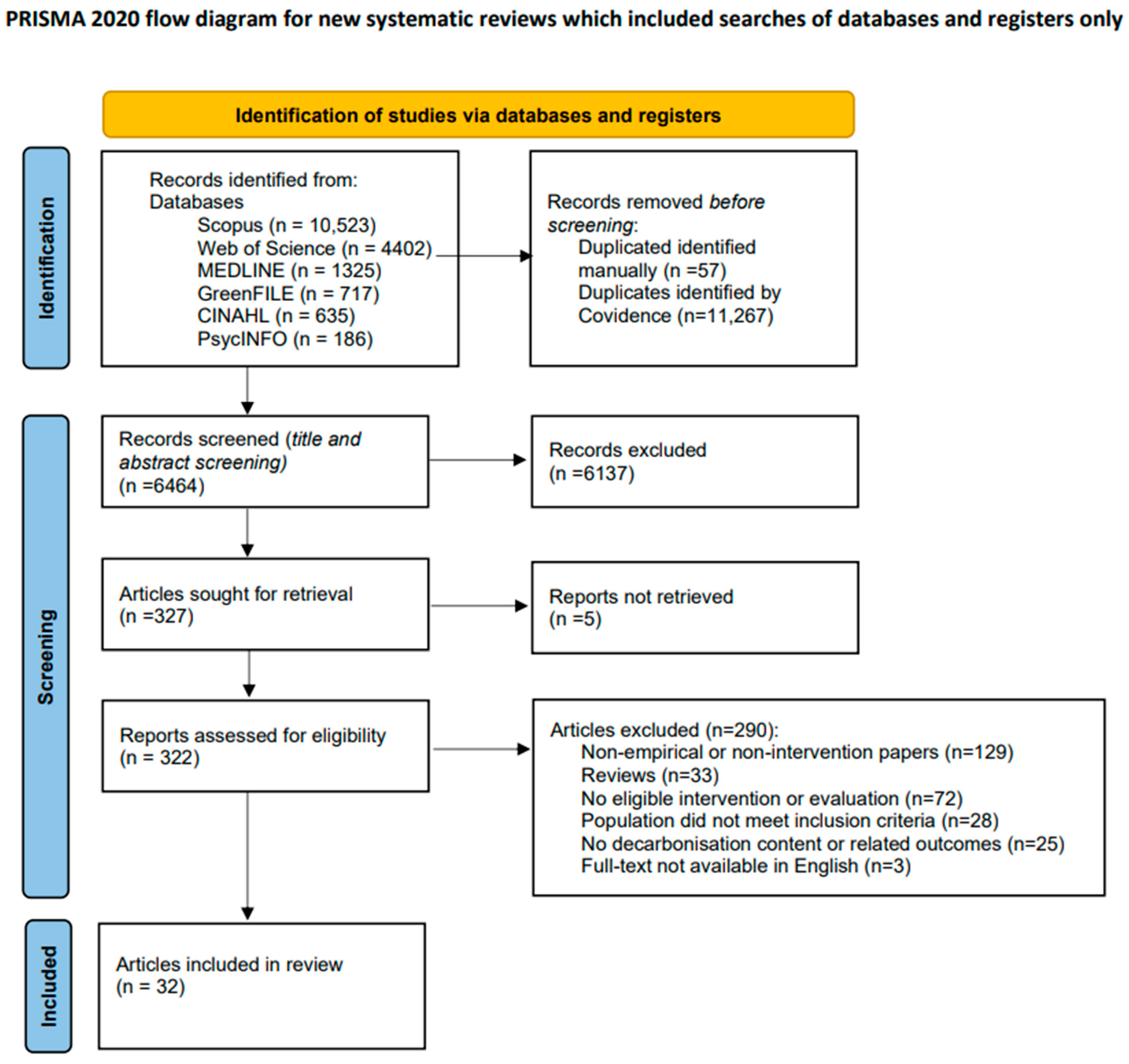
Figure 1. PRISMA flow diagram.
Sustainability 18 01068 g001
Figure 2. Educational approaches content analysis (bar graph).
Sustainability 18 01068 g002
Figure 3. Healthcare decarbonisation education evaluation methods (pie chart).
Sustainability 18 01068 g003
Figure 4. Healthcare decarbonisation education evaluation outcomes (funnel chart).
Sustainability 18 01068 g004
Table 1. Review inclusion and exclusion criteria.
InclusionExclusion
Study CharacteristicsEmpirical studies
Literature reviews (to search reference lists)
English language
Non-empirical studies
Studies not in the English language
ParticipantsMore than 50% of participants are pre-registration health profession students (nursing, medicine, pharmacy, dentistry)
Aged 18 years or older
Less than 50% of participants are pre-registration health profession students (nursing, medicine, pharmacy, dentistry)
Participants under 18 years of age
Post-graduate students
Registered health professionals
Non-health profession students
ConceptEducational resources related to healthcare decarbonisation
Studies reporting student outcomes and experiences
Education on climate change, sustainability, or planetary health (if decarbonisation is discussed)
Educational resources with no content relating to decarbonisation
Studies without student-specific outcomes or experiences
Education on climate change, sustainability, or planetary health (if no decarbonisation is discussed)
Studies with no educational intervention
ContextAll types of educational resources
Higher education setting
Clinical teaching areas (as long as population is correct)
All geographical locations
Studies conducted outside of educational or clinical training settings
Table 2. Search terms (PEO).
Population“Nursing Students” OR “Medical Students” OR “Pharmacy Students” OR “Dental Students” OR “Health Professions Students” OR “Nursing Education” OR “Medical Education” OR “Allied Health Education” OR “Health Education”
ExposureDecarboni?ation OR Sustainability OR “Climate change” OR “Planetary health” OR “Sustainable Development Goals” OR SDGs OR “Environmentally Friendly” OR “Green Skills”
OutcomeEducation OR Curriculum OR “E-learning” OR Training OR Pedagogy OR “Instructional Design” OR Learning OR “Learning Interventions” OR “Blended Learning” OR “Learning Management System” OR “Virtual Classroom” OR “Flipped learning” OR “Active Learning”
Table 3. Data extraction template.
CitationCountry of OriginAimPopulationConceptContextStudy DesignData CollectionData AnalysisKey Findings
e.g., Smith, J., et al. (2025)The country or region where the study was conductedThe main objective or research question of the studyDetails of participants, sample size, age, or other relevant demographicsThe main topic or focus of the studySetting or environment of the studyThe methodological approach usedMethods used to gather dataTechniques or tools used to analyse the dataMain results relevant to the review
Table 4. Summary of thematic results.
ThemeKey FindingsBehavioural/Practice OutcomesPedagogical/Contextual Notes
1. Building a Decarbonisation MindsetImproved knowledge, awareness, and understanding of healthcare decarbonisation;
recognition of climate–health-professional practice link;
reframing decarbonisation as professional responsibility
Identification of carbon-intensive practices (anaesthetic gases, PPE, procurement)
Self-reported awareness of system-level drivers
Scenario-based learning
Augmented reality
Planetary health modules
Simulation
Quality improvement projects
Practical relevance enhances intrinsic motivation
2. From Concern to Constructive EngagementPositive attitudes toward climate mitigation and sustainability; eco-anxiety transformed into constructive engagement;
moral responsibility and professional accountability
Increased willingness to engage in sustainability-related actions
Emotional resilience supports action
Solution-focused framing fosters optimism and agency
Immersive approaches can heighten distress but also urgency
Structured workshops
3. Translating Awareness into Decarbonisation PracticesKnowledge and attitudes frequently translated into professional action; spillover to personal behavioursClinical actions: optimise investigations, appropriate PPE use, low-carbon inhalers, advocacy for sustainable clinical practices
Leadership roles in peer engagement
Context-specific interventions
Simulations
Waste management training
Advocacy workshops enhance actionable competence
4. Becoming Low-Carbon Change AgentsProfessional identity shaped around sustainability;
recognition of ethical duty to reduce healthcare’s environmental impact
Active engagement as change agents
Interprofessional collaboration
Peer mentoring
Advocacy
Reflective and applied decision making
Collaborative and experiential learning
Scenario-based learning
Serious games
Podcasts
Augmented reality
Structured debriefs
5. Barriers to Decarbonisation ActionHierarchical, structural, and emotional barriers limit translation of learning;
uncertainty about advocacy and operationalisation
Reduced opportunity for practice-level change due to institutional constraints, time pressures, and lack of role modelsHighlights need for multi-level support: safe learning environments, applied training, advocacy pathways, and alignment of institutional policies with sustainability
Disclaimer/Publisher’s Note: The statements, opinions and data contained in all publications are solely those of the individual author(s) and contributor(s) and not of MDPI and/or the editor(s). MDPI and/or the editor(s) disclaim responsibility for any injury to people or property resulting from any ideas, methods, instructions or products referred to in the content.