


Abstract
Despite the immense potential of digital intelligence technologies to enhance corporate profitability, manufacturing enterprises often face the “digital–green paradox”, which indicates that while companies invest in digital and intelligent transformation, their energy consumption increases rather than promoting green transition. To provide reasonable transformation solutions for manufacturers still caught in this paradox, this paper adopts a single-case study approach from a product lifecycle perspective. Focusing on FAW-Volkswagen—a manufacturing enterprise demonstrating outstanding performance in digital-intelligent green transformation—this study conducts an in-depth investigation into the stage characteristics and underlying mechanisms. The results show that the following: (1) The digital-intelligent green transformation of manufacturing enterprises is an iterative process evolving from “green design, low-carbon production, intelligent service to enterprise spiral value-added”, with distinct digital-intelligent empowerment models at each stage. (2) By leveraging digital-intelligent technologies, manufacturing enterprises can build a multi-tiered “internal-external dual circulation” green development system encompassing the “enterprise—industrial chain—full ecosystem,” driving comprehensive green upgrades across the entire industry and ecosystem. This paper reveals the intrinsic mechanisms through which digital-intelligent technologies facilitate manufacturing enterprises’ green transformation. It expands and enriches the research context and theoretical implications of product lifecycle management, offering management insights and strategic references for other enterprises pursuing green transformation and upgrading pathways in the digital-intelligent economy era.
1. Introduction
Against the backdrop of rapid global manufacturing development, the green transformation of manufacturing enterprises has become an increasingly central issue in corporate strategy and environmental sustainability. In recent years, countries worldwide have placed particular emphasis on the development themes of “greening” and “low-carbonization.” The 30th Conference of the Parties (COP30) to the United Nations Framework Convention on Climate Change (UNFCCC) focused on multiple critical climate issues, calling for global collaboration to find shared solutions to the climate crisis, urging accelerated efforts to reduce emissions and enhance climate resilience, advancing an inclusive and equitable transition. As the green and low-carbon transformation of manufacturing deepens, numerous challenges have begun to surface. At the micro level, some enterprises lack the capability to transition [1], which severely constrains the high-quality development and green transformation of manufacturing. Faced with complex, interwoven systemic challenges, simple organizational coordination and digital technology adoption alone can no longer meet the practical demands of developing green, high-quality productive forces. Precision control and trade-off analysis enabled by digital intelligence—leveraging digital technology and artificial intelligence—offer new approaches and methodologies for manufacturing’s green transformation.
In recent years, more enterprises have embedded digital technologies into their management transformation processes to drive business development [2]. Previous scholars have researched and validated the positive impacts of digitalization on corporate supply chain management [3], product R&D [4], and human resource management [5], while also attempting to explore the pathways and mechanisms by which platformization assists manufacturing enterprises in bridging the digital divide during transformation and upgrading through case studies [6]. With continuous technological advancements, digital-intelligence technologies have flourished, marking a new phase in digital transformation and a development leap [7]. Their application has driven practical exploration of intelligent business models [8], accelerated the formation of new productive forces in manufacturing enterprises [9], and become a key driver for manufacturing transformation. Digital intelligence represents the fusion of digitalization and intelligentization [10]. Building upon digital processing, it employs artificial intelligence algorithms and machine learning to conduct deep data mining and predictive analysis, enabling intelligent decision-making and optimized resource allocation to enhance operational efficiency.
Previous scholars have consistently focused on the digital and intelligent transformation as well as the green transformation of manufacturing enterprises. On the one hand, empirical studies on the digital and intelligent empowerment of enterprise development have primarily focused on its driving factors [11], transformation pathways and models [12], and the impact mechanism on service-oriented transformation [13]. For instance, Liu et al. (2025) [14] deeply explored the influence mechanism of digital and intelligent technologies on internal enterprise development, yet research on the process mechanism of digital and intelligent empowerment for internal development in manufacturing enterprises remains scarce. On the other hand, some of the literature has examined the impact mechanisms of policies on corporate green transformation [15,16,17]; the role of technological progress in corporate green transformation [18,19,20,21] and green innovation [22,23,24]; and the selection of green transformation models [25,26]. Existing research predominantly focuses on confirmatory studies of policy or technological progress influencing corporate green transformation. Moreover, studies on technological progress are often confined to the digitalization level, relying on external drivers or treating enterprises as monolithic entities for generalization. Research on pathways for technological progress to drive holistic green transformation from a digital-intelligence perspective, incorporating temporal dimensions [26] and analyzing internal operational contexts, remains insufficient. However, digital intelligence—which adds “integrated management across the entire data lifecycle and all scenarios, with greater emphasis on ecosystem scale and collaboration depth” [27], along with characteristics such as intelligent production, smart decision-making, and process optimization, determines the feasibility and urgency of exploring pathways for digital-intelligent empowerment to drive green transformation in manufacturing, building upon existing research on “digitalization”.
Essentially, digital and intelligent empowerment of manufacturing enterprises’ green transformation spans the entire lifecycle. The product lifecycle defined by the marketing theory comprises four stages: introduction, growth, maturity, and decline [28]. Product lifecycle management (PLM) is a comprehensive methodology and strategy for tracking, managing, and optimizing the entire lifecycle of a product from concept to retirement. Existing research indicates that the entire product lifecycle encompasses the acquisition and processing of raw materials and energy, product manufacturing, assembly and packaging, transportation and sales and product use and maintenance, as well as recycling and waste disposal [29,30]. Lifecycle Assessment (LCA) serves as a management tool for evaluating resource consumption and environmental impacts across a product’s entire lifecycle. By quantifying environmental impacts at each stage, LCA assists enterprises in making more environmentally conscious decisions and effectively evaluates the potential environmental effects of products across sectors such as agriculture and manufacturing [31,32,33]. However, its application in research remains scattered overall; it is essential to examine the evolution path and intrinsic driving mechanisms of digital-intelligent technologies in promoting green transformation through the product lifecycle perspective.
To address the aforementioned pressing practical challenges and theoretical gaps, this paper focuses on the traditional industrial manufacturing sector. Employing an exploratory single-case study methodology, this paper selects FAW-Volkswagen Automotive Co., Ltd. (hereinafter referred to as FAW-Volkswagen) as the case subject. Based on its successful practices in enabling internal green transformation through digital and intelligent technologies, as well as empowering external industrial chains and ecosystems as a chain owner enterprise, the research questions are concentrated on two aspects: Firstly, what is the dynamic process of digital and intelligent empowerment for green transformation in traditional industrial enterprises? Secondly, what are the mechanisms through which digital and intelligent empowerment drives sustainable green development within enterprises, along industrial chains, and across ecosystems? By addressing these questions, this paper unlocks the black box of the green transformation process enabled by digital and intelligent technologies in manufacturing enterprises. It delineates the product lifecycle stages and defines key objectives for each phase, aiming to construct a digital and intelligent product lifecycle management model for manufacturing enterprises, providing practical insights for developing specific application strategies that enable manufacturing enterprises to rapidly and efficiently leverage digital and intelligent technologies for green transformation.
2. Research Methods
2.1. Method Selection
This study adopts a single-case study method for the following reasons: Firstly, the core question centers on how manufacturing enterprises can effectively leverage digital and intelligent technologies to empower green transformation, and the single-case study method is well-suited to addressing “how” research questions. It employs “thick description” to deeply reveal the patterns of process evolution [34,35]. Secondly, this study examines the dynamic process of enterprises’ digital and intelligent green transformation. The case study method holds distinct advantages in illustrating dynamic processes, enabling in-depth analysis of the underlying mechanisms driving process changes. Thirdly, as “digital and intelligent transformation” represents a new phase in recent technological development, the practical application of digital and intelligent empowerment for green transformation in manufacturing enterprises has not yet been thoroughly interpreted. The single-case study method is well-suited for extracting underlying patterns and theoretical generalizations from specific phenomena [36]. The rich case materials and data ensure the depth of the case study, facilitating a better understanding of the issue and analysis of relevant mechanisms. Finally, this study aims to reveal a reference paradigm for the digital and intelligent empowerment of green transformation in manufacturing through research on FAW-Volkswagen, a leading manufacturing enterprise. By exploring an illustrative single case, it seeks to abstract and refine the underlying mechanisms of this process, with the results offering insights for other enterprises.
2.2. Case Selection
Based on the principles of theoretical sampling, enlightenment, and typicality in case selection [34], this study selects FAW-Volkswagen Automotive Co., Ltd. (referred to as FAW-Volkswagen) as the case study subject. Firstly, the principle of theoretical sampling requires that the case subject fully embodies the primary relationships among the constructs encompassed by the research question throughout its development process. FAW-Volkswagen holds a pivotal position within China’s automotive industry. Since initiating its green transformation through digital and intelligent means, the company has implemented a “full-lifecycle carbon reduction strategy”. This transformation process involves key constructs such as green design and low-carbon production, facilitating the explanation of the dynamic and complex mechanisms underpinning digitally and intelligently enabled green transformation. Secondly, FAW-Volkswagen’s digital and intelligent empowerment of green transformation holds a strong knowledge base. As an early adopter among traditional manufacturing enterprises in leveraging digital and intelligent technologies for green transformation, it has demonstrated outstanding performance in transitioning from traditional to intelligent manufacturing in recent years. By effectively addressing challenges, its data and experiences provide crucial reference points for green transformation and upgrading across diverse manufacturing enterprises. Thirdly, the principle of typicality requires the case sample to possess industry and corporate representativeness to enhance the universality of research conclusions. FAW-Volkswagen has achieved remarkable results in digital and intelligent green transformation. Its five major production bases have earned multiple honors, including “National Environmental Protection Grade A Enterprise,” “National Green Factory,” “Three-Star Green Building Certification,” and “National Green Supply Chain Management Factory,” empowering carbon reduction with high standards. Moreover, beyond driving internal digital and intelligent development, FAW-Volkswagen has adopted a “point-to-area” approach. Through its radiating influence, it has propelled the digital, intelligent, and green development of the automotive industry across northeast China. This exemplifies the successful extension of empowerment from internal operations to broader industrial advancement. The extensive data and experience behind this transformation facilitate in-depth exploration of the dynamic and complex process of digital-intelligence empowerment in green transition, lending significant typicality to addressing the research questions in this paper.
2.3. Stage Division
With the continuous advancement of emerging technologies, manufacturing enterprises are progressively integrating them into their internal production operations. Based on key milestones in FAW-Volkswagen’s transformation process and through multiple discussions and confirmations with senior leadership, the company’s transformation journey has been divided into two distinct phases, “digitalization” and “digital intelligence,” as illustrated in Figure 1.
Figure 1.
FAW-Volkswagen’s digital and intelligent transformation process.
Phase One: Digital Development Stage (2014–2020). During this phase, FAW-Volkswagen continuously explored effective solutions for applying digital technologies across production, logistics, sales, and other operations. After gaining a deep understanding of how digital technologies could be seamlessly integrated with existing production equipment and management processes, the company acquired new digital production and management resources through collaborative development, technology introduction, and digital talent cultivation. This marked a period of deep digital development for FAW-Volkswagen, laying a solid foundation for the company’s subsequent digital and intelligent transformation.
Phase Two: Digital Intelligence Development Stage (2021–present). During this phase, driven by rapid advancements in artificial intelligence and big data technologies, FAW-Volkswagen recognized the inseparable link between digital intelligence technologies and the sustainable development of both the enterprise and the industry. Consequently, in 2021, the company launched a comprehensive digital intelligence transformation across its entire operations. This early initiative established its technological advantages in empowering manufacturing development through digital intelligence. Furthermore, by integrating digital intelligence technologies, corporate development strategy, and the national “dual carbon” goals, it sharpened its core competitive edge and propelled the automobile industry’s broader digital-intelligent and green transformation, contributing to sustainable green development in manufacturing.
2.4. Data Collection
This study primarily collected case data through three methods: in-depth interviews, field observations, and secondary sources. It utilized both primary and secondary data as research materials. Primary data included (1) semi-structured in-depth interviews with internal company employees and (2) field observations and participation in internal company meetings and other activities. Secondary data comprised (1) publicly available materials such as FAW-Volkswagen’s official website, online media interviews, and the literature and (2) FAW-Volkswagen archival materials, such as company annual reports and product manufacturing documentation. Data from multiple sources were complemented and cross-validated with each other to ensure the interpretability and persuasiveness of the case materials.
To guarantee the reliability and validity of this case study, this paper formed a “triangulated evidence chain” based on interview data, observation notes, literature sources, and archival records, ensuring data richness and accuracy to obtain more rigorous research arguments. Simultaneously, the core research questions gradually crystallized through multiple rounds of interviews. Key constructs—including green design, low-carbon production, and smart services—were progressively validated during these discussions, enabling a more accurate reconstruction of FAW-Volkswagen’s digital-intelligence-driven green transformation process. Table 1 details the case data collected through this multi-channel, multi-method approach.
Table 1.
Data source.
2.5. Data Analysis
This study followed existing case research recommendations for analyzing qualitative data, dividing the coding and analysis process into three interconnected, iterative stages until theoretical saturation was achieved, yielding robust conclusions. Employing open coding, axial coding, and selective coding methodologies, the research repeatedly inducted, iterated, and extracted key constructs from FAW-Volkswagen’s digital-intelligence-enabled green transformation process. These constructs were then interconnected to form a coherent data structure. During the first-order concept analysis phase, two independent teams conducted back-to-back sentence-by-sentence reading, refinement, induction, and labeling of raw data, assigning codes relevant to the research themes. Following iterative discussions and revisions, the teams established first-order concepts such as “full-lifecycle carbon reduction strategy” and “AI-empowered production process optimization.” During the second-order thematic analysis phase, the relevant theories and literature were reviewed based on the research questions. Through iterative discussions and revisions, first-order concepts sharing common characteristics were grouped into second-order themes. In the third-order aggregation analysis phase, the theoretical logic of enterprises’ digital and intelligent empowerment for green transformation was synthesized from the product lifecycle perspective. Following multiple rounds of communication with domain experts and corporate practitioners, four aggregated analytical dimensions were ultimately established. The three-stage analytical process involved iterative refinement within existing theoretical frameworks, data, and coding outcomes. Through in-depth examination of the sample case’s processes and implementation mechanisms, the research team identified the intrinsic logic of transformation grounded in the product lifecycle perspective, supported by robust empirical and theoretical evidence.
3. Case Analysis and Findings
Based on the case study materials, this paper found that in its digital and intelligent empowerment of green transformation, FAW-Volkswagen focused on four key areas: internal green design, low-carbon production, intelligent service, and enterprise spiral value-added. The company efficiently implemented digital and intelligent green transformation within its operations. Building upon this foundation, it also fully leveraged its role as a chain leader. Through an internal and external dual-circulation model encompassing the “enterprise—industrial chain—full ecosystem,” it synergistically empowered enterprises and industries to advance toward high-end and green development through digital and intelligent means.
3.1. Green Design Process
Green design entails considering the impact on resources and the environment throughout every stage of product lifecycle design. While fully accounting for product quality, functionality, cost, and development cycle, it prioritizes optimizing relevant factors to minimize negative environmental impacts during manufacturing, aligning with green and eco-friendly principles and requirements. Currently, manufacturing enterprises can drive comprehensive industrial upgrading through forward-thinking product design, which plays a vital role in advancing manufacturing development. For industrial design, the core of green design lies in the “3R” principle—Recycle, Reuse, and Reduce. This is not a static design approach but a dynamic process that can be implemented at various levels, unifying environmental demands with user needs within the product (Table 2).
3.1.1. Digital Intelligence and Cyclical Strategy Guidance
Digital intelligence and green transformation have emerged as prevailing trends in corporate development in recent years, making strategic planning crucial for overall business growth. Case studies reveal that FAW-Volkswagen’s strategic support for digital and green development manifests primarily through two approaches: an internal full-lifecycle carbon reduction strategy and the simultaneous advancement of “point, line, and surface” initiatives.
- Full-lifecycle carbon reduction strategy
Manufacturing enterprises with green development concepts and strategic awareness are more inclined to allocate funds toward green technology R&D, thereby fully leveraging the enabling role of digital and intelligent technologies in corporate green transformation. To actively respond to China’s “dual carbon” strategy, FAW-Volkswagen integrated support for these goals with the company’s sustainable development. In 2023, it launched a “Full-Lifecycle Carbon Reduction” strategy to establish a comprehensive carbon reduction chain. This initiative fully leveraged digital and intelligent technologies to implement carbon reduction across the entire product lifecycle—from development and raw material selection to logistics, manufacturing, delivery, and usage—ensuring the company’s continuous green development. Additionally, FAW-Volkswagen initiated a collaboration with China Automotive Data Co., Ltd. in 2022 to conduct full-lifecycle carbon footprint accounting. This effort quantified carbon emissions across the product supply chain, manufacturing processes, and usage phases, providing essential data references for setting reduction targets and developing improvement measures.
- 2.
- Advancing points, lines, and surfaces in synchrony
Within an enterprise, projects, processes, and data are closely interlinked, collectively forming the core of operational management. Therefore, digital and intelligent empowerment of internal development must simultaneously address these three components to synergistically enhance business operational efficiency. FAW-Volkswagen advanced efficient resource allocation while enhancing operational efficiency and ensuring product quality. As A2 stated, “During digital and intelligent transformation, enterprises implement three-dimensional approach—points, lines, and surfaces. Points represent key projects, lines denote processes, and surfaces signify data. Through project transformation, streamlining corporate architecture, and data governance and application, all operations from order placement to delivery are now presented online.”
3.1.2. Base Construction
During the digital and intelligent transformation process, establishing a foundational platform at the source through design and planning is crucial for subsequent transformation and green development. Case studies reveal that FAW-Volkswagen’s foundational platform construction primarily manifests in two aspects: multi-platform integration and coordination of products and intelligent process reengineering.
- Multi-platform integration and coordination of products
Manufacturing enterprise platforms play a pivotal role in modern manufacturing. By leveraging digital and intelligent technologies to integrate data, empower analytics, and optimize operations, they enhance the core competitiveness of enterprises. FAW-Volkswagen understood that a company’s digital and intelligent transformation requires continuous expansion built upon a solid foundation. Over the past few years, through exploration based on its own business practices, the company has established a foundation tailored to its transformation needs. This included a technology platform, data platform, industrial internet platform, ERP, and more. As a result, it has gained the capability to integrate massive cross-domain data. For instance, the Connected Vehicle Department effectively integrated three platforms—in-vehicle apps, backend cloud platforms, and mobile apps—to establish seamless end-to-end connection. The company’s self-developed “R&D Efficiency Platform” seamlessly connected the entire process from requirement gathering to development, testing, building, and deployment. The “Integrated Operations and Maintenance Platform” addressed operational needs by providing unified monitoring, management, and control capabilities, meeting the business units’ increasing demands for system stability, availability, and reliability. Through the integrated coordination of multiple platforms, the company has established a digital and intelligent foundation that provides stable support for its ongoing intelligent and green development.
- 2.
- Intelligent process reengineering
Through the digital and intelligent empowerment enabled by integrating key technologies such as smart manufacturing systems, manufacturing enterprises can achieve comprehensive intelligent upgrades across their entire business processes. This approach effectively reduces operational costs while significantly boosting work efficiency. FAW-Volkswagen has not only leveraged digital and intelligent technologies to empower every corporate process during its digital transformation phase but also established seamless integration across all business workflows. This ensured comprehensive data convergence and interoperability across multiple platforms while enabling the online presentation of all operations. The company has intelligently restructured its legacy business processes, reducing over 7000 process documents to just over 1600 optimized workflows. These were categorized under a structured framework into 17 process domains—including 5 core external customer-facing processes and 12 internal support processes. This end-to-end approach broke down departmental silos, unified data, and enabled data-driven intelligent decision support. Ultimately, it achieved process optimization, streamlining, and reduced logistics costs.
3.1.3. Human–Machine–Product Collaboration
FAW-Volkswagen’s green design strategy not only focuses on digital intelligence, cyclical guidance, and base construction but also emphasizes internal design and optimization across all stages. This holistic approach enables detailed planning and effective implementation of the company’s green development initiatives. Case studies reveal that FAW-Volkswagen’s human–machine–product collaboration primarily manifests in two aspects: full-chain digital-intelligent integration and the establishment of a digital intelligence talent system. This dual-pronged approach accelerates the company’s digital-intelligent green transformation.
- Full-chain digital-intelligent integration
The digital and intelligent transformation of traditional manufacturing enterprises is essentially a process of integrating internal and external resources and technologies. After achieving deep integration across the entire value chain, comprehensive digital and intelligent empowerment is realized. FAW-Volkswagen leveraged a multi-stakeholder collaborative development model encompassing enterprises, products, and users within a digital-intelligence ecosystem. Seizing the opportunities of the era, it rapidly applied industry-leading models and technologies like DeepSeek across the entire automotive lifecycle—spanning R&D, production, supply, sales, and service—across all links and scenarios. This achieved multidimensional breakthroughs throughout the entire cycle, reducing corporate energy consumption and enhancing product quality while delivering better product experience upgrades for customers.
- 2.
- Establishment of a digital intelligence talent system
Digital intelligence talent serves as the bridge connecting technological advancement with corporate innovation practices. The human capital upgrade driven by the accumulation of such talent effectively empowers manufacturing enterprises in their green transformation. Therefore, beyond leveraging industry-leading models to empower end-to-end digital and intelligent development, FAW-Volkswagen placed particular emphasis on building an internal talent ecosystem for digital and intelligent expertise, providing a stable foundation for the company’s comprehensive digital transformation. In recent years, FAW-Volkswagen’s Connected Vehicle Department has collaborated closely with Mosi Technology to build a robust digital and intelligent R&D team. This team focused on the entire process of automotive IT development—including interaction design, software development, product design, and data security—driving breakthroughs and advancements in core intelligent business areas such as intelligent connectivity and smart cockpits, strengthening its core competitiveness.
Table 2.
Green design core coding and evidence presentation.
3.2. Low-Carbon Production Process
Through green design, FAW-Volkswagen has defined the direction and path for its digital and intelligent empowerment of green and low-carbon transformation, providing targeted guidelines for subsequent strategy formulation and implementation. Case analysis reveals that for FAW-Volkswagen as an automotive manufacturer, the most critical phase of its green transition lies in the low-carbon production stage. Low-carbon production refers to adopting low-energy consumption, low-pollution, and low-emission manufacturing methods to achieve the goal of controlling total carbon emissions [37], enhancing resource utilization efficiency, and establishing a clean energy structure. Its core lies in technological innovation, institutional innovation, and shifts in development perspectives within manufacturing enterprises (Table 3).
3.2.1. Cultivating “Internal Capabilities”
With the continuous advancement of digital and intelligent technologies, enabling manufacturing enterprises’ production stages through technologies like artificial intelligence has become increasingly crucial. Cultivating enterprises’ digital and intelligent “internal capabilities” is particularly vital, as intelligent decision-making enhances production efficiency while reducing energy consumption. Case studies reveal that FAW-Volkswagen’s development of these internal capabilities is primarily manifested in two aspects: AI-empowered production process optimization and the implementation of demand-driven supply, as well as chain-driven operations.
- AI-empowered production process optimization
Digital and intelligent technologies such as artificial intelligence can be fully integrated into the production processes of manufacturing enterprises, effectively enhancing their manufacturing technological process and driving the evolution of the manufacturing sector toward high-end, intelligent, and green development. FAW-Volkswagen leveraged an intelligent reporting system to automatically allocate production tasks and perform data analysis, significantly boosting production efficiency. With the application of AI-driven smart manufacturing technology, FAW-Volkswagen has achieved remarkable improvements in product quality alongside enhanced production efficiency. Automated and intelligent production processes minimized the potential impact of human factors on product quality, elevating production efficiency, stability, and reliability. FAW-Volkswagen has established five innovation centers: Smart Logistics, Intelligent Manufacturing, Vehicle Delivery, Quality Control, and Intelligent Management. The company has successfully pioneered multiple domestically first-of-their-kind production processes, driving continuous innovation in intelligent manufacturing. This has laid a solid foundation for maintaining its leading position within the industry.
- 2.
- Demand-driven supply and chain-driven operations
Precise control over the balance between supply and demand within an enterprise facilitates the assurance of raw material supply, optimizes inventory management and cost control, and promotes the company’s green transformation. FAW-Volkswagen leveraged digital and intelligent technologies to optimize the precision of product components while optimizing production workflows. This seamless integration of operations has further enhanced production efficiency and reduced energy consumption. In February 2024, FAW-Volkswagen officially launched the E-lane3 project. Its digital twin system provided real-time virtual simulation of goods movement, enabling operational monitoring. By “measuring supply based on demand and driving operations through the supply chain,” it achieved seamless coordination within production and across manufacturing, procurement, and sales. This significantly boosted efficiency while reducing energy consumption. By presenting operations online and leveraging data-driven intelligent decision support, the company optimized processes and boosted production efficiency, thereby continuously advancing green transformation.
3.2.2. Borrowing from “External Resources”
Enterprise digital and intelligent green production requires not only cultivating core digital and intelligent production capabilities but also leveraging external forces. By adopting cutting-edge digital and intelligent technologies, companies can effectively empower production transformation. Case studies reveal that FAW-Volkswagen has driven comprehensive evolution of both hardware and software through two approaches: embedding GAI (Generative Artificial Intelligence) into multiple application scenarios and strengthening its self-developed AI capabilities. This dual strategy has effectively propelled the company’s green and low-carbon transformation.
- Embedding GAI into multi-scenario applications
Traditional manufacturing enterprises possess certain technological expertise and advantages in the industrial sector, but their foundations in digital and intelligent technology R&D remain relatively weak. To address these shortcomings, FAW-Volkswagen has leveraged external resources to integrate generative AI into multiple internal application scenarios. For instance, FAW-Volkswagen has pioneered the full integration of DeepSeek’s model suite into its intelligent cockpit systems. By establishing flexible AI matrix platform architecture, it seamlessly integrated proprietary automotive large models, industry-leading AI agents, and DeepSeek. This significantly enhanced its AI capabilities, enabling smarter services tailored to diverse driving scenarios.
- 2.
- Strengthening self-developed AI “internal capabilities”
While leveraging existing digital and intelligent tools can help manufacturing enterprises rapidly acquire digital technologies and resources, companies also face challenges integrating external technologies with their internal legacy systems. To effectively enhance its digital and intelligent capabilities, FAW-Volkswagen initiated research into large AI models in 2023, training its own large models and achieving deep integration with vehicle functions. Simultaneously, it has integrated leading industry-wide general-purpose large models to extensively expand diverse vehicle usage scenarios. In 2025, FAW-Volkswagen leveraged DeepSeek capabilities to conduct joint training of its proprietary models. While harnessing external generative AI to empower product development and intelligent services, the company further enhanced its proprietary models’ capabilities. This provided robust support for higher-quality intelligent technology R&D.
3.2.3. Integration of Internal and External Elements
FAW-Volkswagen has deeply integrated digital and intelligent capabilities both internally and externally, achieving comprehensive transformation across its production processes. Case studies reveal that through data-driven decision-making and expanding application scenarios, FAW-Volkswagen has driven the holistic evolution of products, vigorously advancing the company’s green transformation.
- Data-driven decision-making
Data is critical to overall decision-making and strategic direction. Driving innovation in digital and intelligent technologies not only requires the rational allocation of data resources but also relies on the externalities and network effects of data [38]. FAW-Volkswagen’s data-driven intelligent production model enabled faster production efficiency and more precise product quality while effectively supporting reduced energy consumption. FAW-Volkswagen effectively leveraged data for intelligent decision-making and actively promoted data-driven intelligent manufacturing. After establishing foundational digital and intelligent transformation platforms—including technical platforms, data platforms, industrial internet platforms, and ERP systems—it integrated massive cross-domain data streams. By applying digital and intelligent technologies to drive data-based decisions, and through collecting and analyzing diverse production line data to monitor and optimize processes, the company achieved “cost reduction and efficiency enhancement,” realizing data-driven intelligent manufacturing.
- 2.
- Expanding application scenarios
For traditional industrial enterprises, the requirement lies in the deep integration of digital and intelligent technologies with diverse specific scenarios, rather than simple technology transplantation. Through comprehensive digital and intelligent transformation across all scenarios, it drives the sustainable development of manufacturing enterprises. Building upon the use of leading models like DeepSeek to empower intelligent R&D and smart cockpits, FAW-Volkswagen has embedded these technologies into production and management processes. The company has established an intelligent service platform, continuously expanded intelligent application scenarios, and explored multi-scenario applications. FAW-Volkswagen leveraged AI technology to deeply analyze user needs, optimize production processes, enrich driving experiences, and innovate marketing approaches. Through digital and intelligent innovation, it broke down boundaries between various stages and fostered coordinated development across multiple segments and production processes. By extending application scenarios both upstream and downstream in production, it created intelligent products that better align with the local market.
Table 3.
Low-carbon production core coding and evidence presentation.
3.3. Intelligent Service Process
Promoting the integrated and coordinated development of digital intelligence and service-oriented transformation in manufacturing represents a key direction for advancing the deep integration of advanced manufacturing and modern services [39]. During the green design phase, FAW-Volkswagen completed the strategic design and foundational setup. In the low-carbon production phase, it leveraged digital-intelligence technologies to progressively enhance the efficiency and precision of its production lines while reducing energy consumption. Also, it effectively utilized AI and other digital-intelligence technologies to deliver intelligent services. This ensures the core advantages of the company’s products are fully demonstrated at the client end, thereby effectively driving the digital-intelligence and green development of the entire enterprise chain (Table 4).
3.3.1. Building Product Advantages
Building product advantages is crucial for sustainable development. Case studies reveal that FAW-Volkswagen has achieved the construction and advancement of product advantages through AI ecosystem collaboration and the establishment of a smart ecological service network.
- AI ecosystem: win-win cooperation
Industrial enterprises operate within a complex value chain system. Building a collaborative AI ecosystem is essential for digital and intelligent transformation. Through mutual cooperation and breaking down industry barriers, they can achieve the integration and sharing of internal and external digital and intelligent technologies and resources, thereby collectively enhancing competitive advantages. FAW-Volkswagen has actively pursued in-depth collaborations with tech giants such as Huawei, iFlytek, and DJI. For instance, its deep partnership with iFlytek resulted in the customization of the Avatar voice assistant, enabling users to perform various operations through simple voice commands. And it partnered with Alibaba Cloud to leverage big data and AI technologies, building upon an integrated smart factory solution; this collaboration has driven comprehensive digital and intelligent transformation across manufacturing, logistics, marketing, and office operations. The new generation of its Magotan model not only featured the IQ.Pilot intelligent driving assistance system but also incorporated DJI’s smart driving solutions, further enhancing driving convenience and safety.
- 2.
- Establishing a smart ecological service network
The boundary-spanning theory indicates that platform development in the digital ecological phase enables dynamic and flexible organizational boundaries, thereby promoting information flow and knowledge exchange between organizations [40]. While deepening collaborations with leading enterprises across other industries to enhance the digital intelligence level and quality of its products, FAW-Volkswagen also focused on building a smart ecosystem service network. This aimed to create a mesh structure both within and between enterprises and break down barriers to deliver more convenient and high-quality services to users through digital intelligence. FAW-Volkswagen’s Connected Car Division and Sales Company have reengineered FAW-Volkswagen “Super App.” The app achieved intelligent linkage with upstream and downstream enterprises and utilized big data-driven price comparison models to offer users more benefit options. As A5 stated, “Our goal is to build an ecosystem that delivers broader, more affordable services to users.”
3.3.2. Integration of Addition and Subtraction
With the rapid advancement of digital and intelligent technologies, enterprises must strike a balance between service quality and energy consumption. While ensuring an optimal user experience, they should enhance energy efficiency through systematic management to promote sustainable development. Case analysis reveals that FAW-Volkswagen’s “integration of addition and subtraction” approach fully meets customer needs while reducing redundant consumption. Through coordinated advancement, the company drives its long-term development by advancing service intelligence.
- “Plus” user experience
Through the application of technologies such as artificial intelligence, enterprises can drive innovation across business operations and product services, thereby enhancing user experience and building new competitive advantages. FAW-Volkswagen prioritized intelligent user experiences: the company believed that core automotive functions, performance, and experiences were shifting from being defined by traditional hardware to being defined by software. As A4 stated, “For automakers to stand out in this wave of digital and intelligent development, intelligent connectivity is paramount. While enhancing the user experience through digital and intelligent technologies, we also provide continuous source of momentum for the company’s sustainable growth.”
- 2.
- Intelligently “reducing” redundancy
Beyond enhancing user experience through intelligent technologies, manufacturing enterprises should also extend “intelligent and convenient services” to the manufacturing end, fully realizing the efficient allocation of resources and empowering green development. FAW-Volkswagen’s E-Chain Cube project demonstrated meticulous attention to customer needs. Through digital and intelligent supply chain logistics solutions, it achieved “no detail too small” in handling personalized electronic components. It reduced redundant consumption in corporate storage and streamlined production logistics costs. This demonstrated that agile personalized services need not necessarily increase resource consumption. Through the integration of “addition and subtraction,” FAW-Volkswagen efficiently promoted the synergistic development of enterprise intelligence and green initiatives.
3.3.3. Omni-Channel Penetration Intelligent Marketing
Comprehensive intelligent penetration across marketing channels also provides effective strategies for implementing intelligent services at the intermediary level, enabling enterprises to leverage digital intelligence to achieve precise alignment between products and users. Case studies reveal that FAW-Volkswagen has achieved comprehensive penetration of intelligent marketing through precision communication, lead management, and operational decision-making based on customer flow trend analysis.
- Precision communication and lead management
Digital intelligence technologies can provide traditional manufacturing enterprises with intelligent marketing services spanning creative concept selection, content generation, targeted dissemination, and real-time interaction. This approach effectively reduces corporate sales costs, broadens distribution channels, and enables faster, more flexible responses to increasingly diverse market demands and shifts. FAW-Volkswagen’s new media AI content operations digital platform has fully integrated the DeepSeek large model, bringing fresh approaches to the brand’s content production and marketing pathways while better fulfilling the automobile industry’s “intelligent service” segment. In the communication phase, AI can dynamically adjust communication strategies in real time based on market shifts and consumer feedback, ensuring smooth information delivery. For lead management, FAW-Volkswagen employed AI to the screen and evaluated massive volumes of leads, boosting sales conversion rates. This enhanced the company’s intelligent service capabilities and built a customer-centric corporate intelligence system. The synergy of precision in communication and mass-scale lead management constructed an intelligent bridge for corporate–customer interaction.
- 2.
- Customer flow trends—operational decision-making
Utilizing digital and intelligent technologies to monitor and analyze customer flow enables the collection of data on movement trends and behavioral patterns. This not only helps businesses understand customer movement patterns but also provides crucial insights for resource allocation, service optimization, and the formulation of market strategies. FAW-Volkswagen employed AI to analyze data and predict customer flow trends, providing dealers with scientific operational decision-making support. This approach reduced redundant marketing models, empowering marketing across all dimensions and stages. Simultaneously, after introducing the DeepSeek large model, the company achieved over 200% improvement in content production efficiency. The company’s AI applications not only forecasted customer flow trends to optimize operational management but also delivered more precise personalized services to consumers. This further enriched operational decision-making, enabling high-quality, sustainable development through comprehensive integration of intelligent marketing strategies across all domains.
Table 4.
Intelligent service core coding and evidence presentation.
3.4. Enterprise Spiral Value-Added Process
Spiral value-added is a strategic methodology and model for accelerating the growth of core competitiveness in the knowledge economy. It describes how a company’s core competitiveness evolves in a spiral pattern over time, representing a cyclical and progressively ascending developmental process. As an industry leader, FAW-Volkswagen prioritizes the recycling service ecosystem and drives comprehensive transformation within the automobile industry, thereby achieving a spiraling ascent in both corporate and industrial value (Table 5).
3.4.1. Recycling-Remanufacturing
For the sustainable development of manufacturing enterprises, recycling and reusing obsolete equipment and materials has become increasingly vital as an environmental solution and a strategy for long-term corporate growth. Case analysis reveals that FAW-Volkswagen achieves spiraling value enhancement in its recycling-remanufacturing cycle by establishing a platform for intelligent matching and implementing a “design-remanufacture cycle”.
- Platform development—intelligent matching
The extension of green transformation from the corporate level to the ecosystem level primarily focuses on the formation of green circular industrial chains and the establishment of green consumption ecosystems [41]. FAW-Volkswagen prioritized maximizing waste utilization from the outset of production. By establishing a platform dedicated to recycling, processing, and selling scrap materials, the company enabled intelligent matching of used equipment and resources between enterprises. For instance, stamping scrap aluminum was sold back to aluminum sheet suppliers for raw material processing, reducing energy consumption in aluminum sheet manufacturing. This approach drove development in the recycling and remanufacturing sectors among relevant enterprises, thereby contributing to society’s green development. As A5 stated, “By connecting upstream and downstream enterprises through platforms, we ensure waste materials and equipment are directed to appropriate processing facilities. This transforms waste into valuable resources for reuse—that is the essence of green circular development.”
- 2.
- Design-remanufacture cycle.
Remanufacturing is a quintessential green manufacturing model that significantly reduces enterprises’ raw material procurement costs and energy consumption while extending product lifecycles, thereby creating a virtuous cycle from production to service. FAW-Volkswagen recognized that waste generated in one phase could be reused in other phases. This maximized material utilization and avoided redundant consumption from repeated production and procurement. Therefore, FAW-Volkswagen implemented “self-recycling” by integrating packaging material resources across the company, like recycling pre-production waste cardboard boxes in after-sales logistics; innovating modular tools to enable the reuse of metal-specific equipment; and implementing RO deep treatment at base wastewater treatment plants to achieve wastewater recycling, while employing process technologies to reduce reliance on virgin resources for automotive raw materials. This ensured comprehensive resource utilization throughout the entire lifecycle—from design to recycling and remanufacturing. By addressing recyclability at the design stage and reusing waste resources, the company innovated product processes while optimizing resource allocation, thereby achieving spiraling value enhancement.
3.4.2. Industrial Empowerment
The digital and intelligent green development of individual enterprises can significantly boost operational efficiency in the short term. However, to achieve sustained breakthroughs in the long run, it is crucial for such enterprises to take the lead in driving the overall advancement of industries. Therefore, strategic planning by major industry enterprises must extend beyond internal boundaries, with comprehensive industry-wide strategies being particularly vital. Case analysis reveals that FAW-Volkswagen has empowered continuous value enhancement in the automotive sector by fostering collaborative carbon reduction through a “Green Partners” initiative and spearheading the industry’s digital and intelligent transformation.
- Green partners collaborate on carbon reduction
Enterprises leverage coordination to engage diverse stakeholders in value creation, with green standards serving as a key mechanism to drive upstream and downstream companies toward collaborative green development [26]. FAW-Volkswagen, as the first enterprise to establish green partner standards in China, has continuously driven over 1000 dealers and nearly 100 core suppliers to enhance their environmental management capabilities through evaluation systems and complimentary training. Building on this foundation, the company collaborated with upstream and downstream enterprises to advance green transformation across multiple dimensions, including supplier environmental management systems, eco-friendly products, and process innovation. Furthermore, FAW-Volkswagen required partners to comply with relevant environmental regulations and standards while pursuing continuous innovation and improvement. By evaluating suppliers’ performance in resource utilization and energy consumption, it encouraged upstream and downstream enterprises to actively adopt green production methods, driving the ongoing advancement of green technologies and products across the industry.
- 2.
- Leading the digital and intelligent transformation of industries
The internal practices of green and low-carbon development by chain owner enterprises form the foundation for further driving coordinated low-carbon development across the industrial ecosystem [42]. Due to its outstanding performance in product manufacturing and other areas, FAW-Volkswagen has earned multiple honors for its production bases, including the “National Intelligent Manufacturing Demonstration Unit” title, Chengdu Smart Factory designation, and awards in national-level APP application competitions. As a leading enterprise in the automobile industry, FAW-Volkswagen deeply understood its corporate social responsibility. While driving its own high-quality development through digital and intelligent technologies, it leveraged successful pioneering experience to effectively lead and propel the transformation and upgrading of the entire automotive industry.
3.4.3. Value Co-Creation
The co-creation of value across an entire industry requires not only a macro-level perspective for in-depth analysis of the industry as a whole but also multi-stakeholder collaboration to efficiently allocate resources, thereby achieving optimal industrial development. Case analysis reveals that FAW-Volkswagen has empowered the industry’s collective value creation through the virtuous competition of altruistic values and the “dual-circulation” strategy—both internal and external—enabling synergistic value enhancement across the entire industrial ecosystem.
- Virtuous competition of altruistic values
Value co-creation in manufacturing enterprises is not only reflected in close collaboration with customers but also encompasses cooperative relationships with other businesses and partners. By jointly enhancing product quality and service standards, it drives the improvement of competitiveness across the industrial chain. The automobile industry is currently embroiled in a fierce price war, with companies relentlessly cutting prices to capture a greater market share. FAW-Volkswagen, however, reshaped the competitive landscape by prioritizing “quality and safety”—a philosophy rooted in customers’ unwavering trust in a brand’s excellence and service—driving the systemic shift in mindset. As A2 stated, “The true battleground for the entire automobile industry should be in vehicle quality and service. The most critical task now is a shift in mindset—remaining steadfastly customer-centric to deliver long-term benefits.” Thus, FAW-Volkswagen championed a virtuous competition of altruistic values, which represented the optimal path for the sector’s progress, customer satisfaction, and the collective advancement of all enterprises within the industry—a path of shared value creation.
- 2.
- Dual-circulation strategy.
In the ecological phase, extensively interconnected ecosystems enable more diversified value creation through synergistic symbiosis, positioning them ahead of enterprises outside the system [40]. FAW-Volkswagen drove transformation in industrial thinking while actively collaborating with multiple stakeholders including the government, industry, academia, and research institutions. For instance, it has established partnerships with universities to create “Industry-Education Integration Bases for Intelligent Automotive Welding Production Lines” and a “Talent Development Base.” Through these university–enterprise collaborations, it deepened industry–education integration and enhanced the quality of applied talent cultivation. It deepened cooperation with suppliers and research institutes to jointly build green supply chain systems, driving overall carbon reduction across the industrial chain. Furthermore, it engaged in diverse collaborations with governments, local enterprises, and state-owned enterprises to improve resource allocation efficiency and utilization benefits among multiple stakeholders. This approach not only achieved industrial upgrading but also effectively promoted employment and economic structural optimization. Thus, it not only drove “internal circulation” through the entire product lifecycle from “green design to intelligent service,” but also collaborated with multiple external stakeholders to build “external circulation.” This dual-circulation model empowered the automobile industry ecosystem, enabling the co-creation of value.
Table 5.
Enterprise spiral value-added core coding and evidence presentation.
4. Conclusions and Discussions
4.1. Research Conclusions
Digital intelligence serves as a key driver for manufacturing enterprises to achieve green transformation. However, existing research on green transformation has yet to provide a comprehensive theoretical framework for enterprises’ digital-intelligent green transformation from the product lifecycle perspective. Through case analysis, this paper finds that the digital-intelligent green transformation of manufacturing enterprises begins with green design. Through digital intelligence and cyclical strategy guidance, base construction, and human–machine–product collaboration, enterprises can discern the direction of digital-intelligent advancement across macro-level stages of the product lifecycle, showing that green design is the foundation of enterprises’ digital and intelligent green transformation.
Subsequently, enterprises undergo iterative development through two critical phases: low-carbon production and intelligent service. The initial phase focuses on optimizing production processes and enhancing precision in production management through cultivating “internal capabilities,” borrowing from “external resources,” and integrating both. This achieves low-energy production and high-performance product configurations, forming the core of digital-intelligent green transformation. The latter phase focuses on building product advantages, the integration of addition and subtraction, and omni-channel penetration intelligent marketing. This enables the effective expansion of precision services across all stages, fostering synergistic development among enterprise products, services, and green transformation, showing that intelligent service is the key to enterprises’ digital and intelligent green transformation.
The digital and intelligent capabilities of manufacturing enterprises comprise intelligent manufacturing capabilities, digital and intelligent operational capabilities, and digital and intelligent connectivity capabilities [43]. The increasing diversification of entities can drive the continuous expansion of value networks, thereby establishing value networks at the system level [44]. Enterprises’ intelligent technologies play a pivotal role in sustainable development [45], and this process embodies the organic unity among technological breakthroughs, industrial upgrading, and economic growth [46]. Therefore, after fully empowering their green development through digital and intelligent technologies, enterprises will drive a spiral value growth for themselves, their industrial chains, and even the broader ecosystem through recycling and remanufacturing, industrial empowerment, and co-creation of value. This represents the objective of enterprises’ digital and intelligent green transformation. Based on this, this paper further refines and constructs an iterative transformation model from green design to enterprise spiral value-added, as shown in Figure 2, drawing upon the case study and literature research and grounded in the logic of product lifecycle management.
Figure 2.
Manufacturing enterprise internal circulation path.
Furthermore, this paper’s case study reveals that enterprises not only drive internal high-end and green development through the four-stage “internal circulation” but also leverage their role as leading enterprises to guide broader transformation. By collaborating with multiple stakeholders—including the government, industry, academia, and research institutions, this process evolves from corporate “internal circulation” to the industrial chain, then expands to the overall manufacturing ecosystem’s “external circulation,” forming a three-stage synergistic “transition” from internal to external. This steady, step-by-step approach deeply empowers the digital-intelligent and green development of enterprises, effectively addressing the digital–green paradox and achieving coordinated, efficient digital-intelligent green transformation across the entire industry. Therefore, this study effectively supplements existing corporate internal and external development strategies and frameworks by revealing the micro-level connections within the “dual-cycle model of internal and external synergy” and among its various components and stakeholders. The specific cyclical pathways are illustrated in Figure 3.
Figure 3.
Manufacturing enterprise dual-circulation path.
4.2. Theoretical Contributions
Firstly, this paper proposes a stage-based theoretical model of digital-intelligent empowerment for manufacturing enterprises’ green transformation throughout the product lifecycle. It effectively addresses the critical challenge of how traditional manufacturing enterprises can leverage digital and intelligent technologies to drive their green transformation. Although digital intelligence has, to a certain extent, been defined as a unique advantage and capability for enterprises [47], existing research has primarily focused on the impact of digital and intelligent technologies on variables such as green technology innovation [48], green process innovation [49], and operational management [10], treating manufacturing enterprises as a “whole,” lacking dynamic definitions and analyses of green transformation from the viewpoint of internal sub-processes. Based on these gaps, this study dissects the “inside-out” green transformation pathway. It connects the previously isolated “four stages” within enterprises and extends them across three levels: “internal operations → supply chain → entire industrial ecosystem.” This achieves a synergistic effect where the sum is greater than its parts, effectively expanding the theoretical implications and applicable scenarios of digital intelligence and green transformation from both temporal and spatial perspectives.
Secondly, this paper systematically examines the entire process of FAW-Volkswagen’s digital-intelligence-driven green transformation. It innovatively proposes that a manufacturing enterprise’s green transition constitutes an iterative transformation process from green design to enterprise spiral value-added, thereby extending the product lifecycle concept and expanding the theoretical framework. Through in-depth dialog with the existing literature, it is found that existing product lifecycle research has been applied to product development and application pattern analysis across various disciplines such as electromechanical engineering [50], exhibiting distinct signs of dispersion and fragmentation. To date, no unified research approach or framework exists for leveraging the product lifecycle to drive sustainable development in manufacturing enterprises. Through in-depth case analysis, this paper not only comprehensively and systematically reveals the evolution of strategies enabling digital and intelligent technologies to empower green design, low-carbon production, intelligent service, and even enterprise spiral value-added. It also expands upon existing product lifecycle management (PLM) frameworks, fully demonstrating the diverse ways AI is applied across different stages and the resulting outcomes. This provides manufacturing enterprises with an operational structural framework model, enriching the theoretical implications of PLM.
In summary, this research innovatively unlocks the black box of the digital-intelligent green transformation process in manufacturing enterprises, fostering dialog among three critical fields: digital intelligence, green transformation, and product lifecycle management. Consequently, this study not only achieves significant theoretical innovation and contribution but also offers important practical insights for guiding manufacturing enterprises in effectively leveraging digital-intelligent technologies to empower green transformation and advance sustainable development.
4.3. Practical Implications
Firstly, manufacturing enterprises should grasp the characteristics of each stage in the digital-intelligence technology-driven green transformation, using “green design,” “low-carbon production,” “intelligent service,” and “enterprise spiral value-added” as macro-level guiding principles, developing a targeted digital-intelligence green development path and implementation strategy tailored to the enterprise. Manufacturing enterprise managers should establish their own phased, stage-by-stage digital-intelligence green development roadmap from the product lifecycle perspective. They must adeptly identify industry opportunities and competitive threats, integrating these insights into a full-lifecycle product design. Through precise digital and intelligent planning across all stages, they can avoid detours and secure competitive advantages.
Secondly, leading enterprises must not only leverage digital and intelligent technologies to empower individual green transformations but also fully utilize their guiding role to drive digital-intelligent green transformation across entire industrial chains and ecosystems. Therefore, leading enterprises should set the pace for industry development, exemplify best practices, and positively guide other companies toward shared digital-intelligent green growth. By leveraging technology as a catalyst, they can drive comprehensive industrial transformation and upgrading. The spiraling ascent of corporate value relies not only on meticulously charted development paths but also on the virtuous competition of altruistic value. Ultimately, through a dual internal-external circulation model, they can lead the entire ecosystem toward the co-creation of value.
4.4. Research Limitations and Future Prospects
Firstly, this study used a single-case research method to analyze FAW-Volkswagen’s digital and intelligent green development path. Although the selected case is typical and representative, the single case study still has limitations in terms of replicability and generalizability. The digital and intelligent transformation models may vary slightly across different manufacturing sectors. Future research could employ large-sample empirical studies or multiple case studies to further validate the results presented in this paper.
Secondly, this study focused on FAW-Volkswagen as the primary subject, examining its digital and intelligent green development process. However, this digital and intelligent transformation is not achieved in isolation. It requires the collaborative participation of multiple stakeholders, including other enterprises within the supply chain and intelligent R&D platforms. Future research should broaden the scope to analyze the specific roles and contributions of an enterprise and its associated stakeholders during the digital, intelligent, and green transformation process. By examining the similarities and differences in their impacts, such research could provide valuable insights for communication and collaboration among enterprises during their digital, intelligent, and green development paths.
Author Contributions
Conceptualization, C.Z. and Y.X.; Methodology, C.Z.; Validation, Y.X.; Formal analysis, C.Z. and Y.X.; Investigation, C.Z.; Data curation, Y.X.; Writing—original draft, C.Z. and Y.X.; Writing—review and editing, C.Z. and Y.X.; Supervision, C.Z. All authors have read and agreed to the published version of the manuscript.
Funding
This research was funded by the Jilin Provincial Social Science Fund Project: Research on Digital Empowerment Pathways for Green and Low-Carbon Transformation in Jilin Province’s Manufacturing Sector; Jilin University National Development and Security Research Special Project: Identification, Formation Mechanisms, and Countermeasures for Artificial Intelligence Technology Lock-in (GAY2024ZXY08); Jilin University Special Research Project on Labor Relations: Challenges and Responses in Building Harmonious Labor Relations in the Era of Artificial Intelligence (2023LD005); and Jilin University Postgraduate Education Teaching Reform Project: Research and Practice of Blended Learning Models in Graduate Education under the Context of Educational Informatization (2024JGZ006). Funding applicant: Chaohui Zhang.
Institutional Review Board Statement
This study is waived for ethical review by the Institutional Review Board of Jilin University in China as it involves minimal-risk research with anonymous adult participants and no collection of sensitive personal data.
Informed Consent Statement
Informed consent was obtained from all subjects involved in the study.
Data Availability Statement
The data presented in this study are available on request from the corresponding author.
Conflicts of Interest
The authors declare no conflicts of interest.
References
- Wang, Y.G.; Wang, L.L.; Li, X. Research on the iterative transformation from digital search to digital ecosystem: A case study of digital transformation based on schneider electric. J. Manag. World 2023, 39, 91–114. [Google Scholar]
- Liu, S.C.; Yan, J.C.; Zhang, S.X.; Lin, H. Can corporate digital transformation promote input-output efficiency? J. Manag. World 2021, 37, 170–190+13. [Google Scholar]
- Li, Z.; Zhang, X.; Tao, Z.; Wang, B. Enterprise digital transformation and supply chain management. Financ. Res. Lett. 2024, 60, 104883. [Google Scholar] [CrossRef] [Scilit]
- Liu, P.S.; Chin, J.F.; Ab-Samat, H.; Xie, Z.P. Digital variant design V-model for rapid product development. Int. J. Adv. Manuf. Technol. 2025, 139, 2103–2121. [Google Scholar] [CrossRef] [Scilit]
- Zhang, J.; Chen, Z. Exploring human resource management digital transformation in the digital age. J. Knowl. Econ. 2024, 15, 1482–1498. [Google Scholar] [CrossRef] [Scilit] [PubMed]
- Du, Y.; Cao, L.; Tan, C. How does platformization help manufacturing companies to bridge the digital divide of transformation and upgrading? An exploratory case study based on Zongshen Group. J. Manag. World 2022, 38, 117–139. [Google Scholar]
- Qi, Y.D.; Hao, Y.; Hou, N.; Zhou, E. Research on the digital and intelligent transformation of equipment manufacturing enterprises: Takes Sunward Intelligent Equipment as an example. Bus. Manag. J. 2022, 44, 25–45. [Google Scholar] [CrossRef]
- Wang, B.; Tao, F.; Fang, X.; Liu, C.; Liu, Y.; Freiheit, T. Smart manufacturing and intelligent manufacturing: A comparative review. Engineering 2021, 7, 738–757. [Google Scholar] [CrossRef] [Scilit]
- Guo, X.; Zhang, X.; Gui, Y. Intelligent transformation empowers the new quality productivity of enterprises: Theoretical mechanism and empirical evidence. J. Adv. Comput. Intell. Intell. Inform. 2025, 29, 880–893. [Google Scholar] [CrossRef] [Scilit]
- Chen, J.; Liu, Y.H. Operations management innovation enabled by digitalization and intellectualization: From supply chain to supply chain ecosystem. J. Manag. World 2021, 37, 227–240+14. [Google Scholar]
- Wang, Y.; Su, X. Driving factors of digital transformation for manufacturing enterprises: A multi-case study from China. Int. J. Technol. Manag. 2021, 87, 229–253. [Google Scholar] [CrossRef] [Scilit]
- Zhao, M.; Fu, X.; Cui, L.; Zhu, H.; Zhang, H. Impact and improvement pathways of intelligent transformation on enterprise green technology innovation under renewable energy substitution. Appl. Energy 2025, 392, 126010. [Google Scholar] [CrossRef] [Scilit]
- Yu, B.J.; Gong, T.T.; Zhu, H.; Li, X. Digital intelligence technology application and servitization transformation of manufacturing enterprises: The chain mediating effect of innovation resources allocation and dual innovation capabilities. Sci. Technol. Prog. Policy 2025, 42, 57–68. [Google Scholar]
- Liu, R.; Wang, Y. Enhancing enterprise value creation through intelligent digital transformation of the value chain: A deep learning and edge computing approach. J. Knowl. Econ. 2025, 16, 2601–2619. [Google Scholar] [CrossRef] [Scilit]
- He, J.; Xue, H.; Yang, W.; Zhong, Y.; Fan, B. Green credit policy and corporate green innovation. Int. Rev. Econ. Financ. 2025, 99, 104031. [Google Scholar] [CrossRef] [Scilit]
- Tan, W.; Yan, E.H.; Yip, W.S. Go green: How does Green Credit Policy promote corporate green transformation in China. J. Int. Financ. Manag. Account. 2025, 36, 38–67. [Google Scholar] [CrossRef] [Scilit]
- David, L.K.; Wang, J.; Angel, V.; Luo, M. Environmental commitments and innovation in China’s corporate landscape: An analysis of ESG governance strategies. J. Environ. Manag. 2024, 349, 119529. [Google Scholar] [CrossRef] [Scilit]
- Usman, A.; Ozturk, I.; Hassan, A.; Zafar, S.M.; Ullah, S. The effect of ICT on energy consumption and economic growth in South Asian economies: An empirical analysis. Telemat. Inform. 2021, 58, 101537. [Google Scholar] [CrossRef] [Scilit]
- Yu, H.; Su, X.; Yang, Y.; Yao, S. Digital transformation, green investment, and green transformation: The moderating effects of industrial policy. Pol. J. Environ. Stud. 2025, 34, 6927–6942. [Google Scholar] [CrossRef] [Scilit]
- Dai, X.; Yang, S.Z. Digital empowerment, source of digital input and green manufacturing. China Ind. Econ. 2022, 9, 83–101. [Google Scholar]
- Cao, Y.; Li, X.; Hu, H.; Wan, G.; Wang, S. How does digitalization drive the green transformation in manufacturing companies? An exploratory case study from the perspective of resource orchestration theory. J. Manag. World 2023, 39, 96–112+126+113. [Google Scholar]
- Feng, H.; Wang, F.; Song, G.; Liu, L. Digital transformation on enterprise green innovation: Effect and transmission mechanism. Int. J. Environ. Res. Public Health 2022, 19, 10614. [Google Scholar] [CrossRef] [Scilit] [PubMed]
- He, K.; Chen, W.Y. Can digital transformation improve corporate green innovation? Technol. Anal. Strateg. Manag. 2025, 37, 1509–1525. [Google Scholar] [CrossRef] [Scilit]
- Zhang, H.; Wu, J.; Mei, Y.; Hong, X. Exploring the relationship between digital transformation and green innovation: The mediating role of financing modes. J. Environ. Manag. 2024, 356, 120558. [Google Scholar] [CrossRef] [Scilit]
- Li, J.F.; Li, X.Y. Causes, pathways, and strategies for green transformation in manufacturing enterprises—An analysis from carbon neutrality perspective. Mod. Manag. Sci. 2023, 5, 124–132. [Google Scholar]
- Xie, X.M.; Han, Y.H. How can local manufacturing enterprises achieve luxuriant transformation in green innovation? A multi-case study based on attention-based view. J. Manag. World 2022, 38, 76–106. [Google Scholar]
- Shen, X.Y.; Wu, S.Q. The relationship among digital intelligence, dual network embedding and new venture resilience—Empirical analysis based on small and medium-sized integrated circuit enterprises in the Yangtze River Delta region. Stud. Sci. Sci. 2024, 42, 797–804. [Google Scholar]
- Vernon, R. International investment and international trade in the product cycle. Q. J. Econ. 1966, 80, 190–207. [Google Scholar] [CrossRef] [Scilit]
- Zhong, D.J.; Wang, J.Q. The application of life cycle assessment in motor production. Mach. Tool Hydraul. 2007, 5, 51–52+22. [Google Scholar] [CrossRef]
- Duan, C.L.; Zou, J.H. Research on the brand communication innovation mechanisms driven by digital twin in the perspective of metaverse: Product lifecycle analysis based on service-oriented manufacturing. J. Commun. Rev. 2023, 76, 30–39. [Google Scholar]
- Lai, X.; Chen, Q.W.; Gu, H.H.; Han, X.B.; Zheng, Y.J. Life cycle assessment of lithium-ion batteries for carbon-peaking and carbon-neutrality: Framework, methods, and progress. J. Mech. Eng. 2022, 58, 3–18. [Google Scholar]
- Tragnone, B.M.; D’Eusanio, M.; Petti, L. The count of what counts in the agri-food Social Life Cycle Assessment. J. Clean. Prod. 2022, 354, 131624. [Google Scholar] [CrossRef] [Scilit]
- Soares, L.A.P.; Firmino, A.S.; de Oliveira, J.A.; Silva, D.A.L.; Saavedra, Y.M.B.; Moris, V.A.d.S. Comparative LCA of automotive gear hobbing processes with flood lubrication and MQL. Int. J. Adv. Manuf. Technol. 2022, 119, 1071–1090. [Google Scholar] [CrossRef] [Scilit]
- Eisenhardt, K.M. Building theories from case study research. Acad. Manag. Rev. 1989, 14, 532–550. [Google Scholar] [CrossRef] [Scilit]
- Yin, R.K. Case Study Research: Design and Methods; Sage Publications: Thousand Oaks, CA, USA, 2014. [Google Scholar]
- Gioia, D.A.; Corley, K.G.; Hamilton, A.L. Seeking qualitative rigor in inductive research: Notes on the Gioia methodology. Organ. Res. Methods 2013, 16, 15–31. [Google Scholar] [CrossRef] [Scilit]
- Gao, M.; Zhang, Z.X. Positioning and policy suggestions of China’s agricultural green development under the targets of carbon peaking and carbon neutrality. J. Huazhong Agric. Univ. (Soc. Sci. Ed.) 2022, 1, 24–31. [Google Scholar]
- Zhu, W.P. Digital finance, capital misallocation and corporate innovation. Int. Rev. Econ. Financ. 2024, 96, 103696. [Google Scholar] [CrossRef] [Scilit]
- Wang, X.L. The development mechanism of coupling and synergy between digital intelligentization and servitization in manufacturing industry. Contemp. Econ. Manag. 2025, 47, 56–67. [Google Scholar]
- Zhou, W.H.; Cheng, Y. How can digital platforms build the value co-creative organization by boundary crossing? RD Manag. 2021, 33, 31–43. [Google Scholar]
- Leidner, D.E.; Sutanto, J.; Goutas, L. Multifarious roles and conflicts on an interorganizational green IS. MIS Q. 2022, 46, 591–608. [Google Scholar] [CrossRef] [Scilit]
- Zhang, Y.P.; Guo, B.W.; Li, S.J.; Wang, M. How can chain owners drive the green and low-carbon development of industries? A case study on the construction of Haier’s “Sustainable Lighthouse Factory”. J. Manag. World 2025, 41, 199–227. [Google Scholar] [CrossRef]
- Le, Z.; Juhong, C.; Hailin, D.; Hao, W. Digital intelligence capability of manufacturing enterprises: Dimension exploration and scale development. Sci. Technol. Prog. Policy 2024, 41, 79–88. [Google Scholar]
- Annarelli, A.; Battistella, C.; Nonino, F.; Parida, V.; Pessot, E. Literature review on digitalization capabilities: Co-citation analysis of antecedents, conceptualization and consequences. Technol. Forecast. Soc. Change 2021, 166, 120–635. [Google Scholar] [CrossRef] [Scilit]
- Liu, Y.; Song, P. Research on the influence of firm digital intelligence transformation and management innovation on performance and sustainable development: Empirical evidence from China. Sustainability 2024, 16, 7578. [Google Scholar] [CrossRef] [Scilit]
- Zhou, W.; Xu, L.Y. On new quality productivity: Connotative characteristics and important focus. Reform 2023, 10, 1–13. [Google Scholar]
- Paiola, M.; Gebauer, H. Internet of things technologies, digital servitization and business model innovation in BtoB manufacturing firms. Ind. Mark. Manag. 2020, 89, 245–264. [Google Scholar] [CrossRef] [Scilit]
- Li, J.; Yang, H.; Zhong, S.; Zhong, Y. Exploring the effect of integration development of digital intelligence on green technology innovation quantity and quality. Sustainability 2025, 17, 4339. [Google Scholar] [CrossRef] [Scilit]
- Tian, H.; Li, Y.F.; Zhang, Y. Digital and intelligent empowerment: Can big data capability drive green process innovation of manufacturing enterprises? J. Clean. Prod. 2022, 377, 134261. [Google Scholar] [CrossRef] [Scilit]
- Yang, C.; Li, T.; Wang, M.Y.; Yang, D.; Meng, Y. Product life cycle assessment method based on incomplete information imputation. J. Mech. Eng. 2025, 61, 311–325. [Google Scholar]
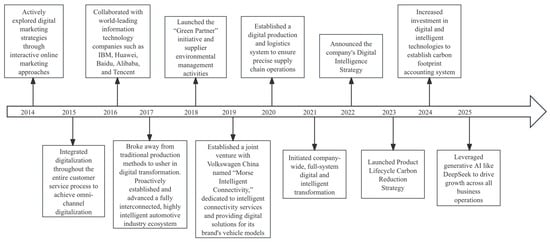
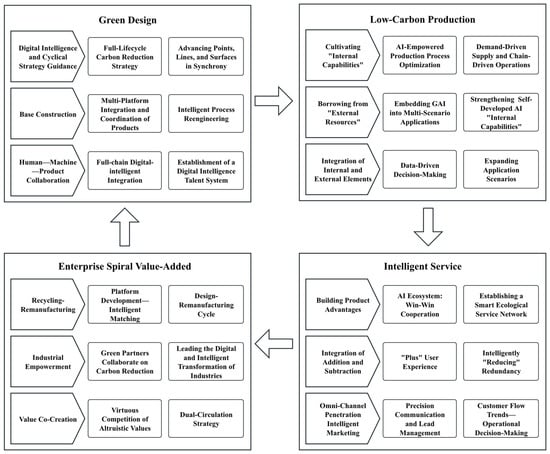
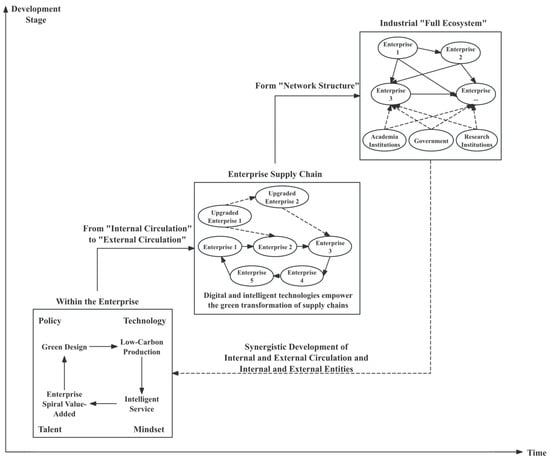
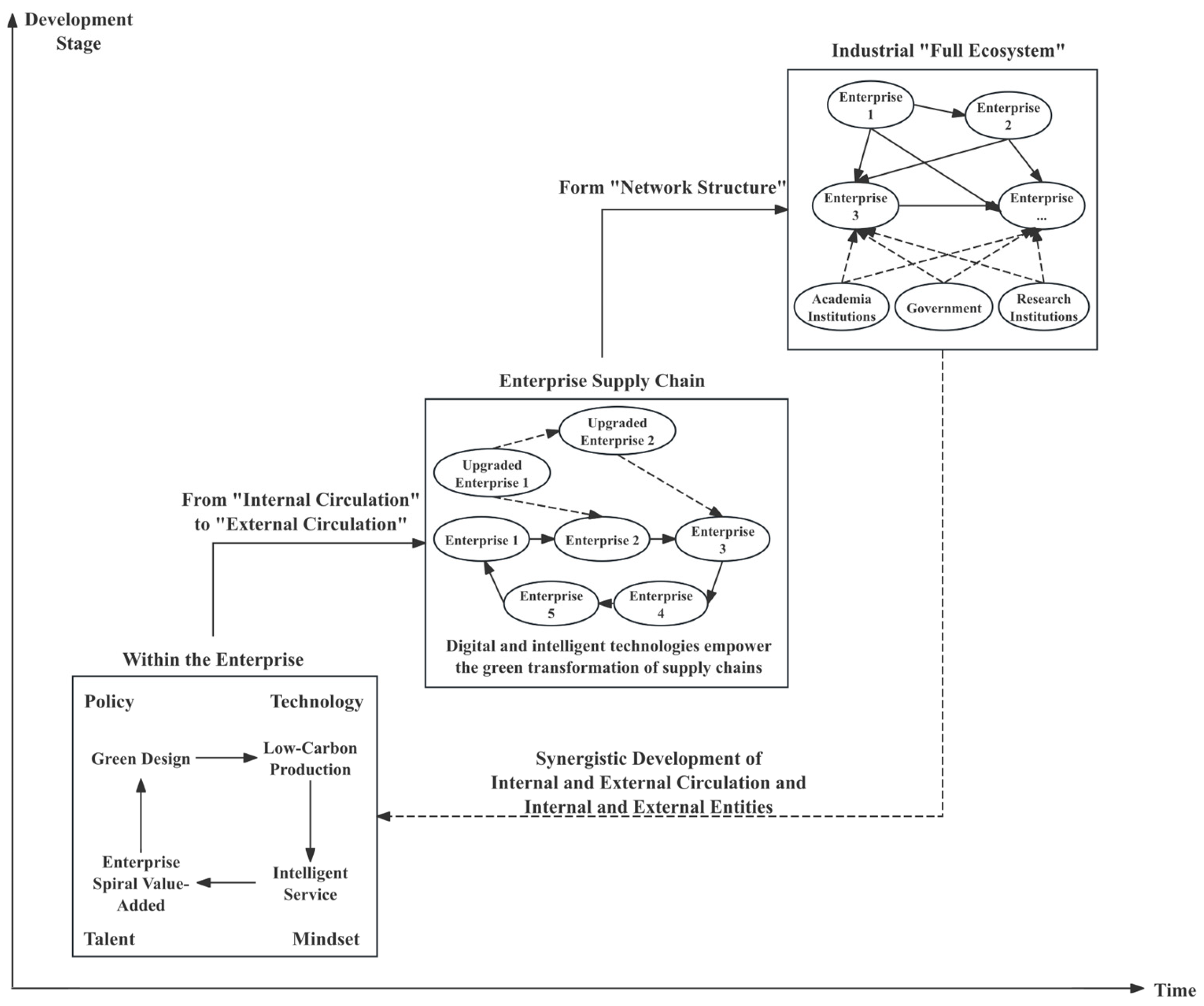

Disclaimer/Publisher’s Note: The statements, opinions and data contained in all publications are solely those of the individual author(s) and contributor(s) and not of MDPI and/or the editor(s). MDPI and/or the editor(s) disclaim responsibility for any injury to people or property resulting from any ideas, methods, instructions or products referred to in the content. |
© 2026 by the authors. Licensee MDPI, Basel, Switzerland. This article is an open access article distributed under the terms and conditions of the Creative Commons Attribution (CC BY) license.